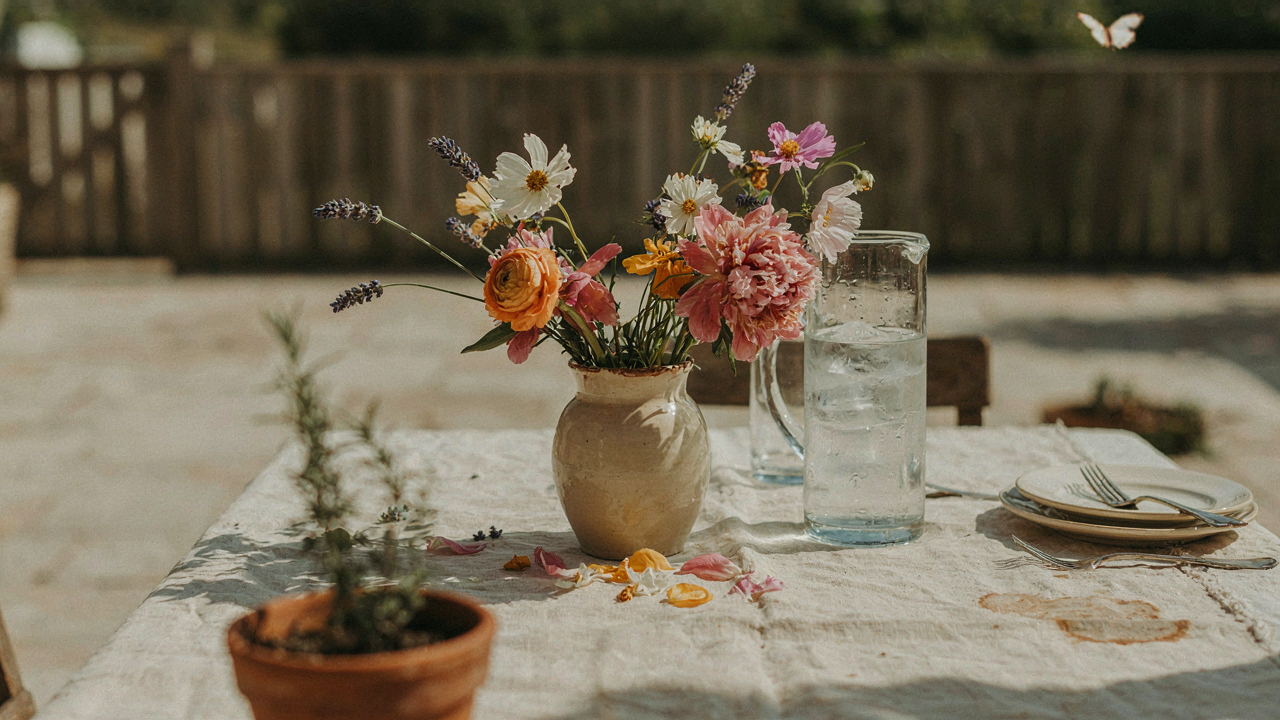
The Thermodynamics Of Tablescaping
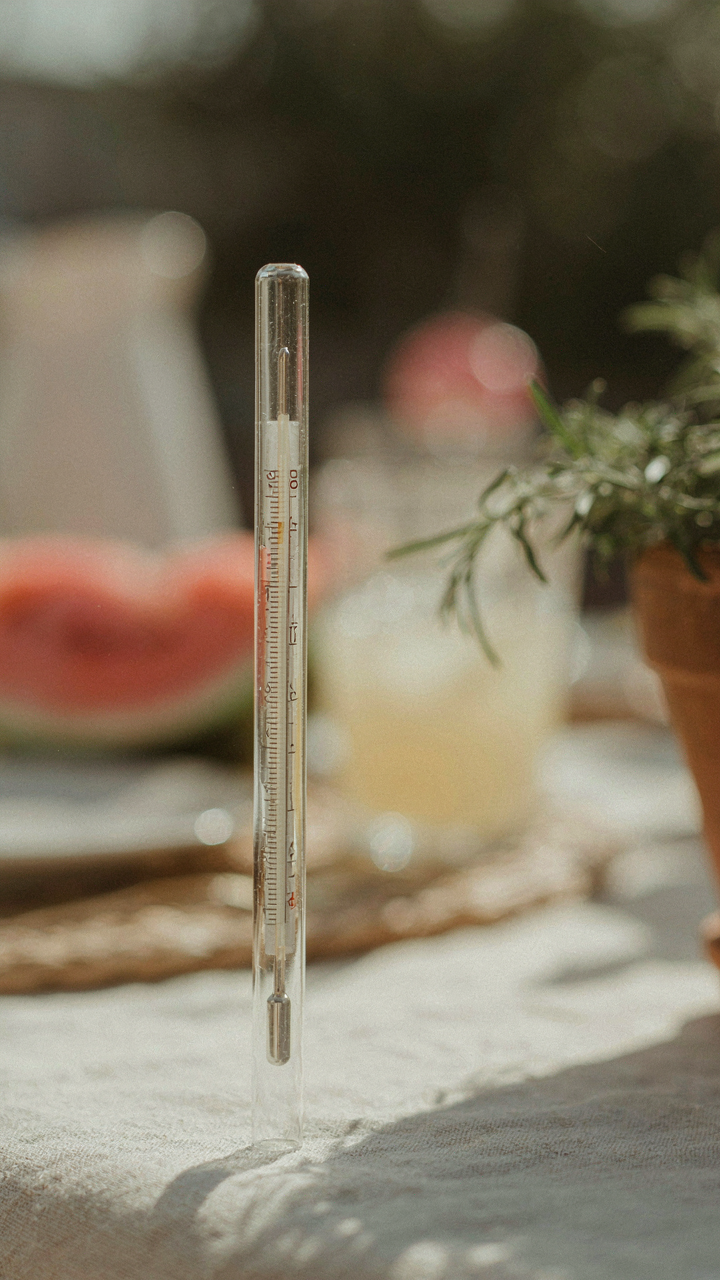
Stop Pretending Your Setup Survives Heat
You want your table to look intentional at the 3pm mark, not salvaged. That requires understanding heat transfer, the physics mechanism that moves thermal energy from hot surfaces into your materials. Summer sun doesn’t just sit on your table—it conducts into fabrics, radiates through glass, and convects through the air around every object you’ve placed. Acknowledge this or watch your setup degrade in real time.
Cloth napkins absorb radiant heat and wrinkle faster than you reset place settings. Stone or marble surfaces conduct heat upward into whatever sits on top—flowers wilt, food sweats, ice melts ahead of schedule. Use tablecloths with high thread count linen or linen blends that resist heat absorption better than cotton. Darker colors absorb more infrared radiation, so pale or white linens keep the surface temperature lower. Shade the table with an umbrella or pergola—this cuts radiant heat input by 60 to 80 percent, depending on coverage density. The mechanism is simple: reduce heat reaching the table, extend the life of everything on it.
Water Loss Through Air
Flowers and greens dehydrate on a summer table because evaporation accelerates in heat and low humidity. This isn’t about wilting from lack of water—it’s about moisture leaving plant cells faster than the stem can replace it. Every exposed surface loses water to the air, and summer conditions make that process aggressive. Misting napkins or flowers during service is theater, not strategy.
Submerge floral stems in water-filled vessels deep enough to keep stems drinking throughout service. Use closed florist foam or gel rather than exposed stem cuts in shallow water—this reduces evaporation surface area by half. Wrap the base of centerpiece arrangements loosely in damp cloth or moss to slow moisture loss from the sides. Keep table linens and napkins in sealed containers until 30 minutes before guests arrive, not laid out an hour early. Place water glasses filled to the rim and chill them before service so condensation slows rather than accelerates during the meal.
The Durability Protocol: Materials That Matter
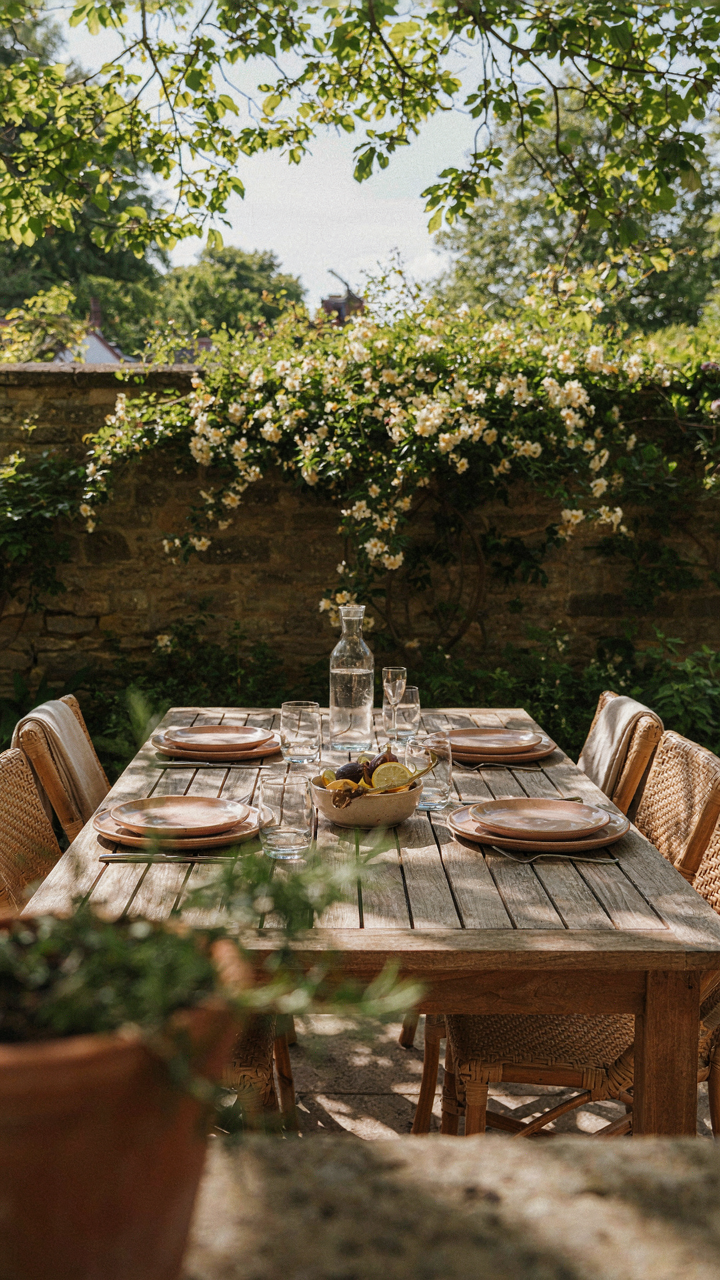
Choose Materials Built For Heat And Humidity
You want your tablescape to photograph well on Instagram without looking destroyed by 3 PM. The real issue is this: most decor fails because people choose based on aesthetics alone, ignoring the physics of outdoor environments. Heat accelerates decay. Humidity warps and rusts. Wind topples. Pick materials that resist these forces, not materials that look good in still-life photos.
Fabric napkins fade and absorb moisture within hours. Linen wrinkles predictably in humidity. Paper placemats curl. Ceramic and glass handle heat and moisture without degradation because they’re already fired or treated. Metal that’s treated resists rust longer than raw iron. Stone, sealed wood, and powder-coated aluminum survive the afternoon. Unglazed pottery absorbs water and stains. The common advice is to just use “outdoor-friendly” pieces, but that’s lazy. Specify the material composition and its treatment history. A napkin ring made from untreated wood will swell and crack by hour two.
Secure Everything Against Wind And Movement
Wind doesn’t just blow things over. It creates micro-movements that loosen connections and shift weight distribution. Apply physics here: friction and mass determine stability. Lighter items move first. You anchor them by increasing either surface contact or total weight. Clamp napkins under plates instead of folding them loose. Use clip-style napkin rings that grip fabric. Double-weight your centerpieces by nesting containers or adding sand to the base before flowers go in.
Anchor tablecloths with adhesive tape designed for outdoor use or clips on all four corners. Never rely on weight alone to hold a lightweight cloth in a breeze. String lights need tensioning, not just hanging. Wrap decor items that sit loosely on the table. When you build a tablescape, treat every element as something that will move if you don’t engineer against it. Start anchoring before the event begins, not during it.
Hydration Hacks For Outdoor Table Setting Ideas
Where Water Actually Needs To Live
You want your table to look effortless. That’s the real fear here—that guests notice you sweating over logistics instead of just enjoying the setup. The mechanism is simple: water sources fail outdoors because people place them where they look balanced instead of where physics demands them. Borrowing from thermodynamics, think of your table as a heat sink. The perimeter loses temperature fastest, so that’s where your water station belongs—not centered for symmetry, but positioned where sun exposure is lowest and where guests naturally migrate for refills without disrupting the meal.
Direct sunlight kills cold water in minutes. A table’s center receives peak UV all afternoon, which is why bottled water placed there reaches room temperature by dessert. Place your primary water pitcher or dispenser along the shaded edge—typically the north side in the Northern Hemisphere, or wherever the table’s shadow falls longest. Keep a secondary water source at the table’s entry point so guests hydrate before sitting. This reduces mid-meal trips and keeps people from reaching across food or plates.
Ice Survival In Open Air
Everyone knows ice melts outdoors. Nobody actually changes their setup because of it. The real problem isn’t that ice disappears—it’s that you’re using the wrong containment system and restocking at the wrong intervals. Thermal retention works like this: double-walled barriers slow heat transfer, and frequent small restocks outlast one massive ice load. A standard bucket sitting in the sun loses half its ice in under an hour. Use a stainless steel double-walled cooler or insulated drink dispenser instead, positioned under an umbrella or shade structure, not on the table itself. Restock every 30 to 45 minutes rather than hoping one batch lasts the meal.
Pre-chill all glassware and serving vessels two hours before guests arrive. A cold glass slows the ice-to-water conversion by 40 percent compared to room-temperature glass. Use block ice or larger ice forms instead of cubes—they melt slower due to lower surface-area-to-volume ratio. Keep your secondary ice supply in a cooler under the table, not visible, so you can top off the serving station quietly without appearing frantic or unprepared.
The Guest Psychology Of Easy Entertaining
Needs Over Wants In Table Design

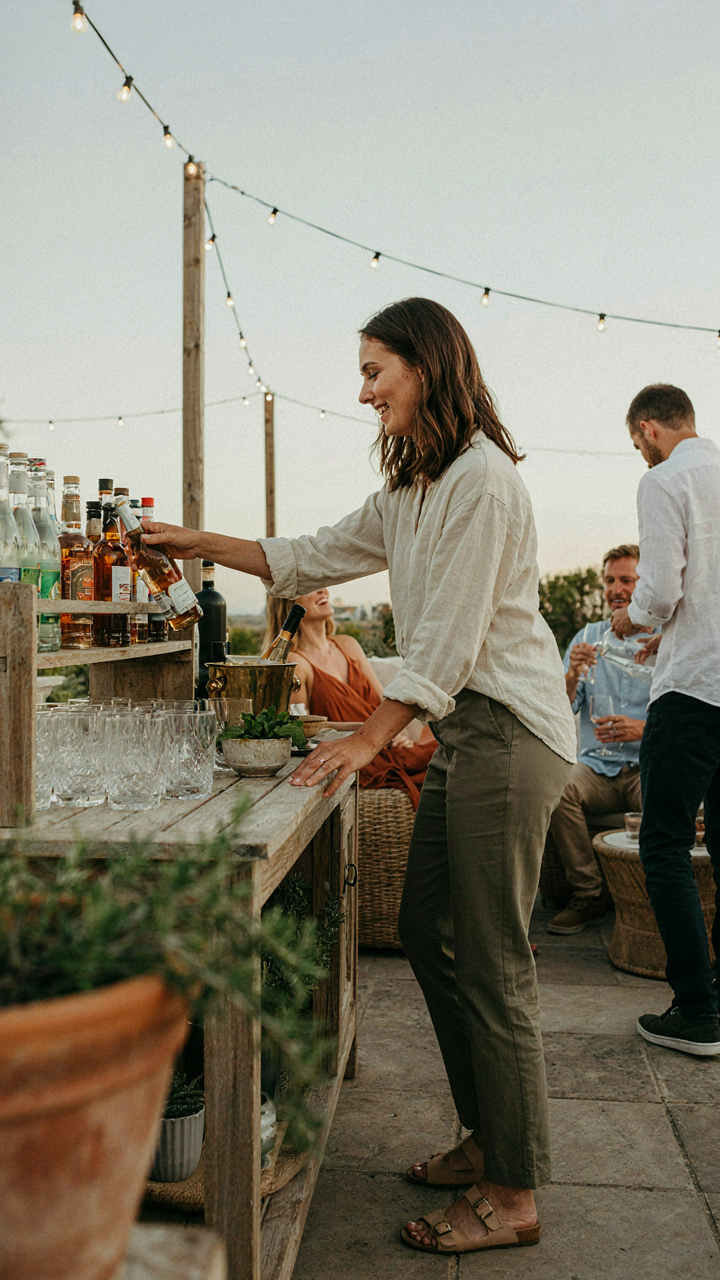
You care about this section because you’re afraid guests will judge your tablescape and assume you don’t have your life together. Here’s the mechanism: guests don’t remember what they wanted. They remember what they needed and didn’t have to ask for. In behavioral economics, this is called the friction tax. Every time someone asks “where’s a napkin” or “can I move this,” you’ve added friction to their experience. A summer tablescape that anticipates needs removes requests before they happen.
The common advice says make it beautiful and functional. That’s incomplete. Make it invisible. Guests should never think about the table itself. They should think about the person next to them. This means water glasses filled before sitting, napkins placed where hands instinctively reach, and plates sized so nobody has to squeeze elbows. The table serves one purpose: it gets out of the way so conversation happens.
Movement Patterns Beat Symmetry
Symmetry is boring furniture arrangement masquerading as design. What matters is throughput: how many people can access food, drinks, and seating without creating bottlenecks. Think in terms of traffic flow from naval architecture, where every movement is mapped for efficiency. A centered table creates two lanes of blocked access. A rectangular arrangement with defined serving zones and clear pathways lets guests move without collision.
The setup determines behavior before anyone sits down. If wine lives on one end and water on the other, people circulate. If everything clusters in the middle, guests crowd one spot and abandon the rest. Place serving elements at different elevations and positions so movement feels natural, not forced. This prevents the visual hierarchy problem where guests ignore entire sections of the table because the eye guides them to one focal point.
Color Palette Bright: Beyond Aesthetics
Dark Colors Absorb Heat First
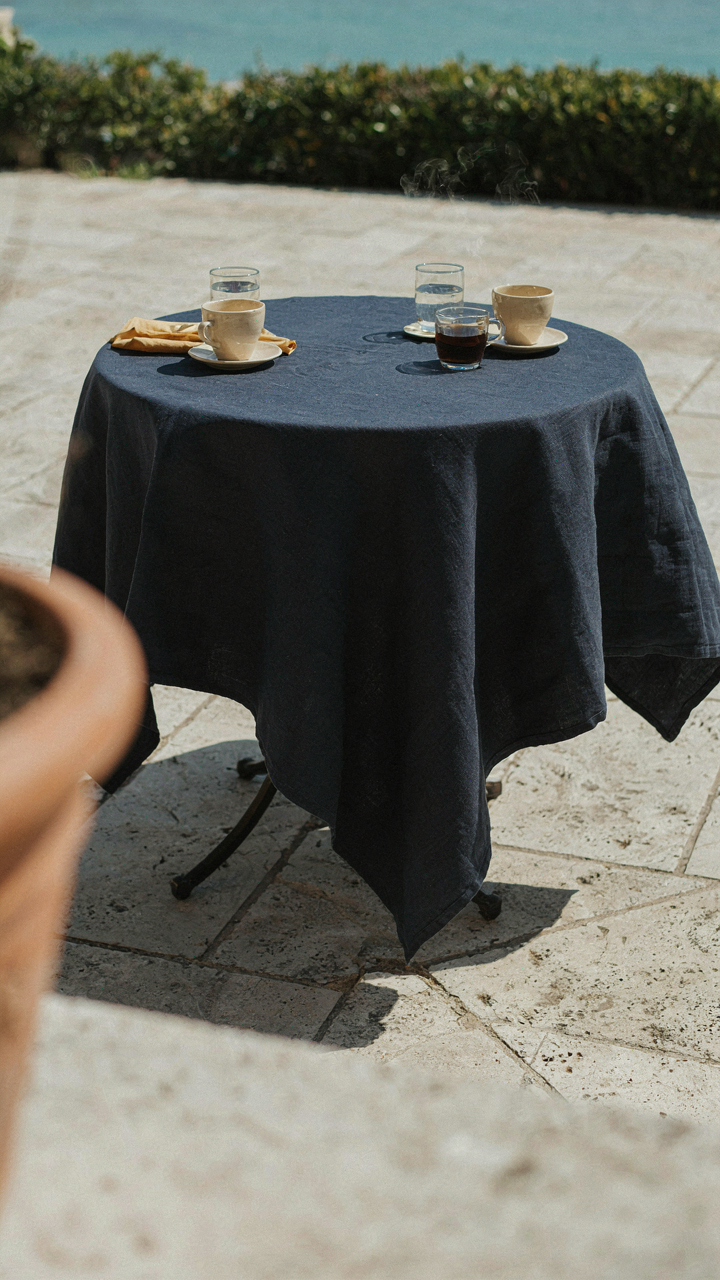
You want your tablescape to look intentional, which means you’re probably drawn to deep jewel tones or navy. That’s the status move. Here’s what actually happens: physics governs this more than design does. Dark fabrics and surfaces absorb solar radiation faster than light ones. Black absorbs roughly 95 percent of incoming sunlight. This matters because your table linens, runner, or place mats will heat up under direct sun, transferring that temperature to food, beverages, and anything touching the surface.
Linen wrinkles faster when hot. Candles sweat or pool. Butter melts into puddles. The color choice isn’t really aesthetic once the sun hits it—it’s a thermal problem masquerading as a design decision. Light colors reflect heat. Cream, ivory, pale gray, and white reflect between 80 and 95 percent of solar radiation. Your table stays cooler. Your food lasts longer before it looks defeated. This is why outdoor dining in hot climates defaults to light linens. It’s not tradition. It’s thermodynamics.
Material Fails Under Contrast
The common advice is to “choose colors that pop.” That’s incomplete. High contrast between materials and temperature creates stress. Here’s the real mechanism: when one part of your tablescape heats faster than another, the materials expand at different rates. Polyester thread holding together cotton napkins will loosen. Silk next to linen creates visible wrinkling as humidity and heat hit each fiber differently. A dyed tablecloth and its undyed border don’t absorb color the same way, so they age at different speeds under UV exposure. The bright color you chose fades unevenly. Your tablescape looks worn by hour three.
Material integrity depends on consistency, not contrast. Use linens from the same weave and fiber type across all elements. Pair natural fabrics with natural dyes when possible—they degrade predictably. Synthetic dyes on cotton shift color differently than synthetic dyes on linen. If you’re using multiple materials, test them together in direct sun for at least two hours before the meal. This tells you which will fail first and lets you adjust placement or swap pieces before guests arrive.
Summer Home Decor: The Biomimicry Approach
Materials That Survive What You Can’t Control

You want your table to look intentional three hours in, not like you gave up. That’s the real anxiety here. Biomimicry—the design discipline of copying nature’s solutions to problems—applies directly. Plants don’t fight their environment; they adapt to it. Your tablescape should do the same. Instead of fighting heat, humidity, and time, choose materials that thrive under those exact conditions.
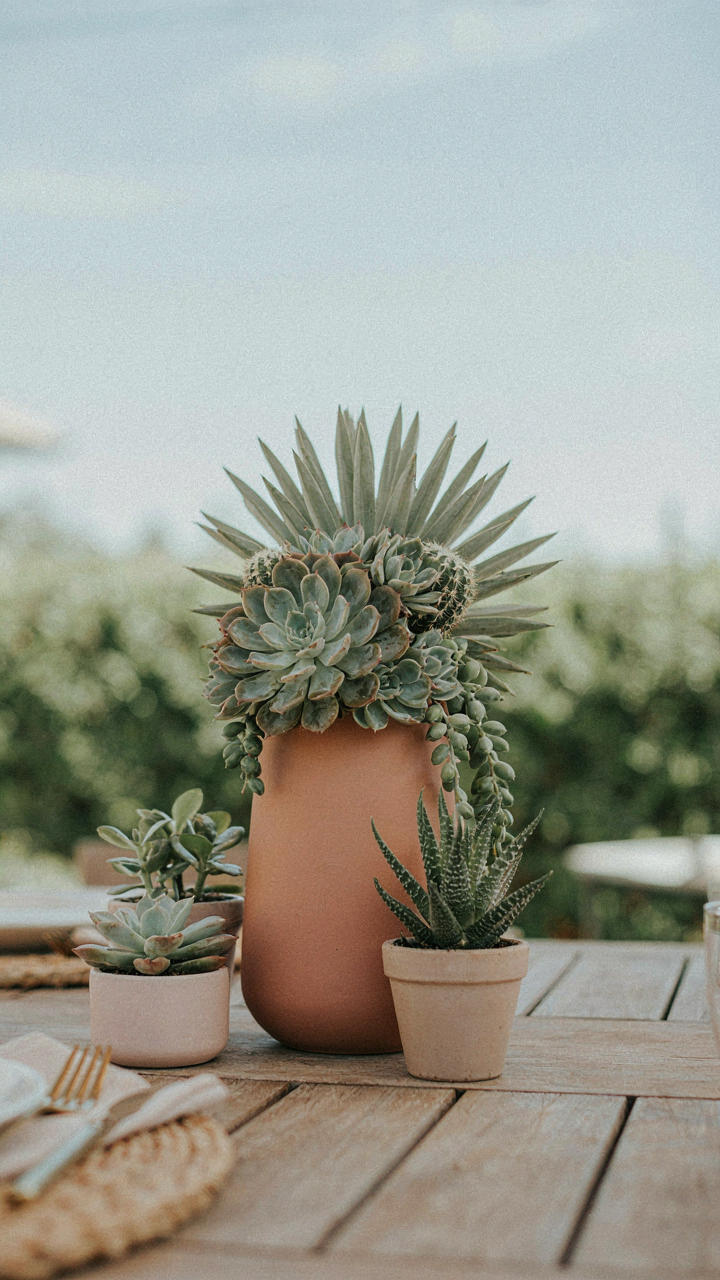
Linen wrinkles. Silk wilts under moisture. Paper softens. Wood swells. But certain materials mimic plant cuticles and insect exoskeletons: they shed water, resist UV damage, and stabilize under temperature swings. Glazed ceramics, sealed stone, and treated metals don’t degrade. They perform. Use them as your structural backbone, not as accent pieces. The table surface itself becomes the immune system of your design.
Systems Over Single Elements
Biological adaptation isn’t about one perfect leaf; it’s about redundant, interlocking systems. Your tablescape fails when you depend on a single cooling mechanism or one centerpiece to carry the visual weight. Spread function across multiple elements that work together. A tiered centerpiece uses height to reduce surface area exposure to heat. Scattered smaller arrangements distribute visual interest so one wilting stem doesn’t collapse the entire composition.
Group similar materials together rather than scattering contrasts everywhere. When ceramics cluster with ceramics and plants with plants, you create micro-environments. Shade from height protects lower elements. Air circulates between intentional gaps. The arrangement itself becomes the defense system. This isn’t decoration; it’s engineering. Build redundancy into every decision so the system degrades gracefully instead of catastrophically.
Tablescape Inspiration: The Supply Chain Fallacy
Build With What Grows Near You
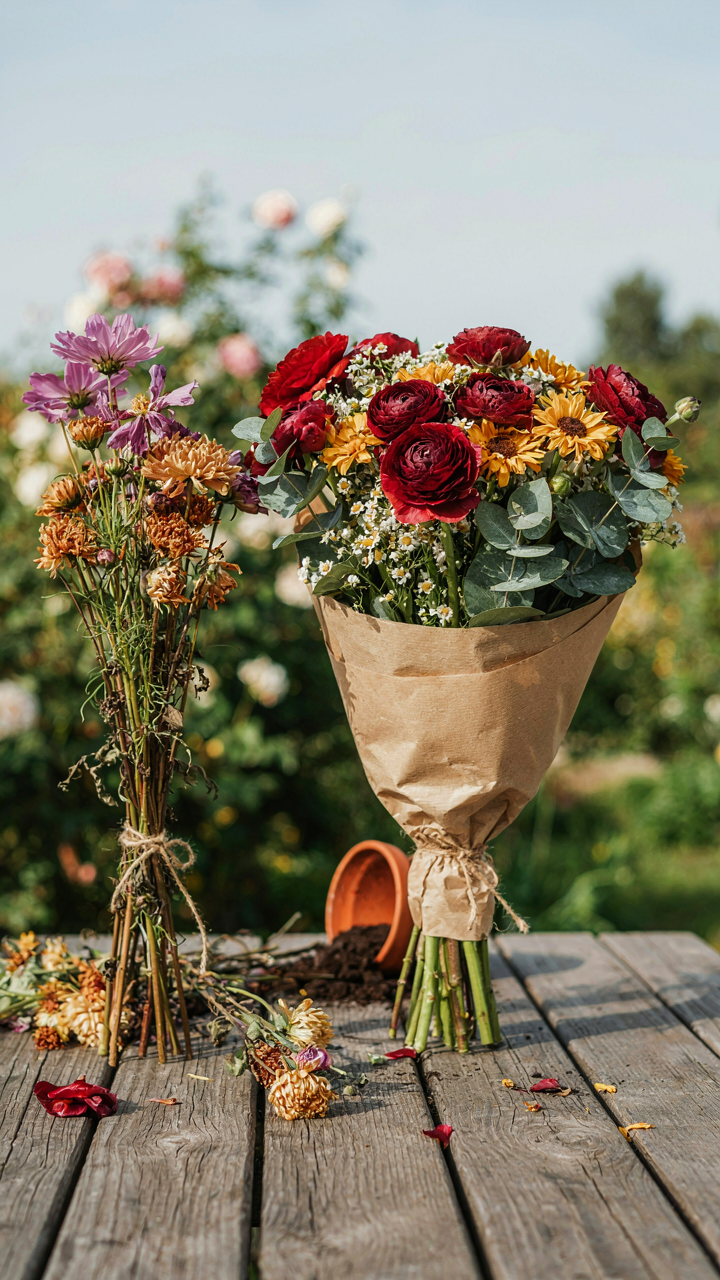
You want to look like you have taste without doing the work. That’s the real reason you’re reading this. The mechanism is simple: imported florals and foliage travel days before hitting your table, losing structural integrity with every mile. Local materials arrive fresh because the distance is measured in hours, not weeks. Floriculture operates on a degradation curve—cut flowers lose water through their stems at a predictable rate, and time spent in transit accelerates that loss exponentially.
Source from regional growers or farmers markets three days before your event, maximum. Peonies, dahlias, zinnias, and hydrangeas are summer staples in most climates because they’re bred to thrive locally and tolerate the stress of cutting. Buy woody stems like eucalyptus or local greenery that can handle heat and dehydration better than delicate imports. Visit the supplier in person to assess condition, not online photos. You control freshness only when you shorten the supply chain yourself.
The Import Problem Nobody Names
Most tablescape advice tells you to hunt for exotic blooms or specialty foliage. This is incomplete guidance masking a logistics problem. Tropical flowers like anthuriums or birds of paradise require climate-controlled shipping, and even with it, they wilt under the shock of temperature change and low humidity in a dining room. Summer heat makes this worse—the temperature delta between a refrigerated truck and your outdoor table creates stress that no misting fixes. You’re paying premium prices for flowers that arrive compromised and deteriorate faster than local alternatives.
Build your summer tablescape with plants that evolved for heat and sun. Native grasses, local wildflowers, and hardy shrubs stay rigid in high temperatures because they’re adapted to handle it. Skip the mail-order specialty vendors unless the event is indoors with climate control. The real cost isn’t the price per stem—it’s the wasted setup time on flowers that wilt before the main course arrives.
The Perishable Paradox: Lemon Table Decor And Italian Party
Design With Decay Built In
You want the tablescape to look intentional, not like you forgot about it. That’s the real fear underneath all this. The mechanism is simple: perishable decor works only when you design for its death from the start, not when you treat wilting as failure.
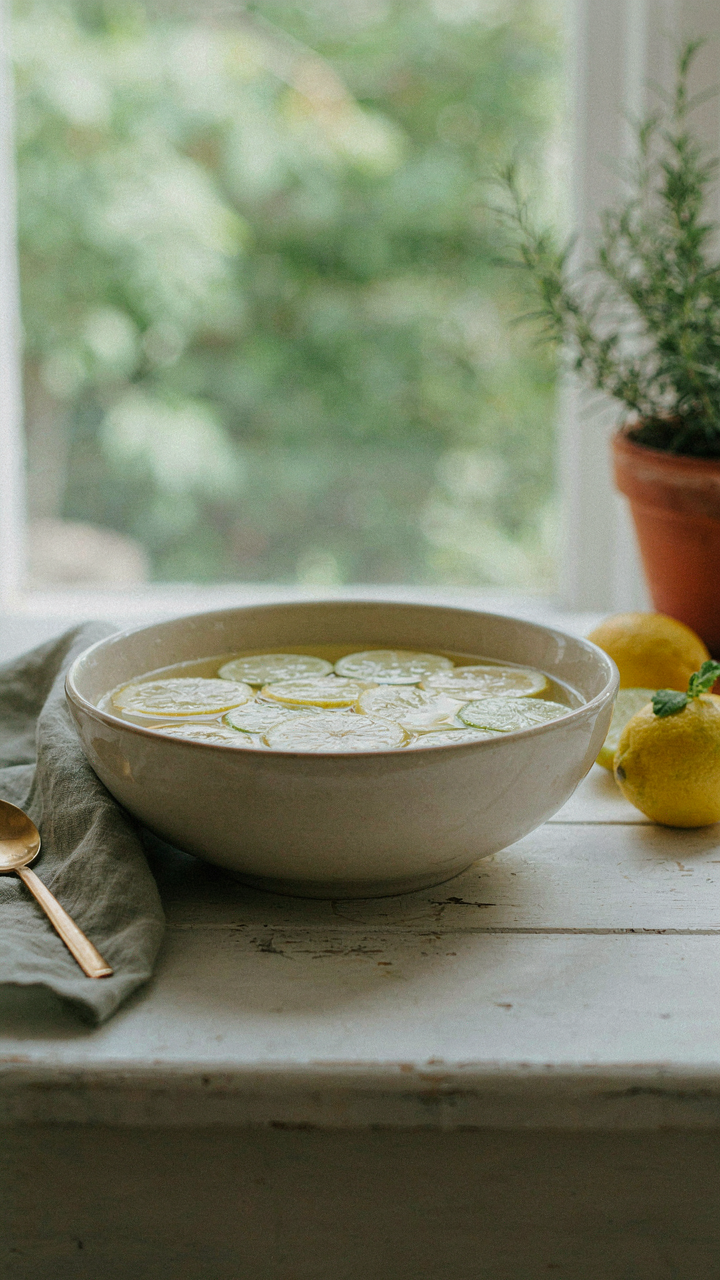
Italian summer entertaining actually solved this centuries ago. Fresh citrus on tables wasn’t decoration—it was functional and temporary by design. Lemons and limes oxidize, dry out, develop brown spots. Accept this. Build your color story around the first two hours, not the dessert course. The table doesn’t need to look identical at hour five.
Place Delicate Elements Last, Not First
Forget the advice to set your entire table the morning of. That’s how you get wilted herbs and brown-edged florals by dinner. Set your structural pieces—runners, plates, glassware—early. Wait to add soft, perishable layers until guests arrive or thirty minutes before service.
Timing is a supply chain problem. Delicate elements have a shelf life once exposed to heat and air. Fresh herb sprigs, cut flowers, and citrus garnishes degrade fastest. Install them last, cluster them densely so they protect each other from air exposure, and accept that the back corner will look different than the center by dessert. Document the table at peak, not at cleanup.
Summer Table Aesthetic: Function Over Form
Guests Need To Eat And Move

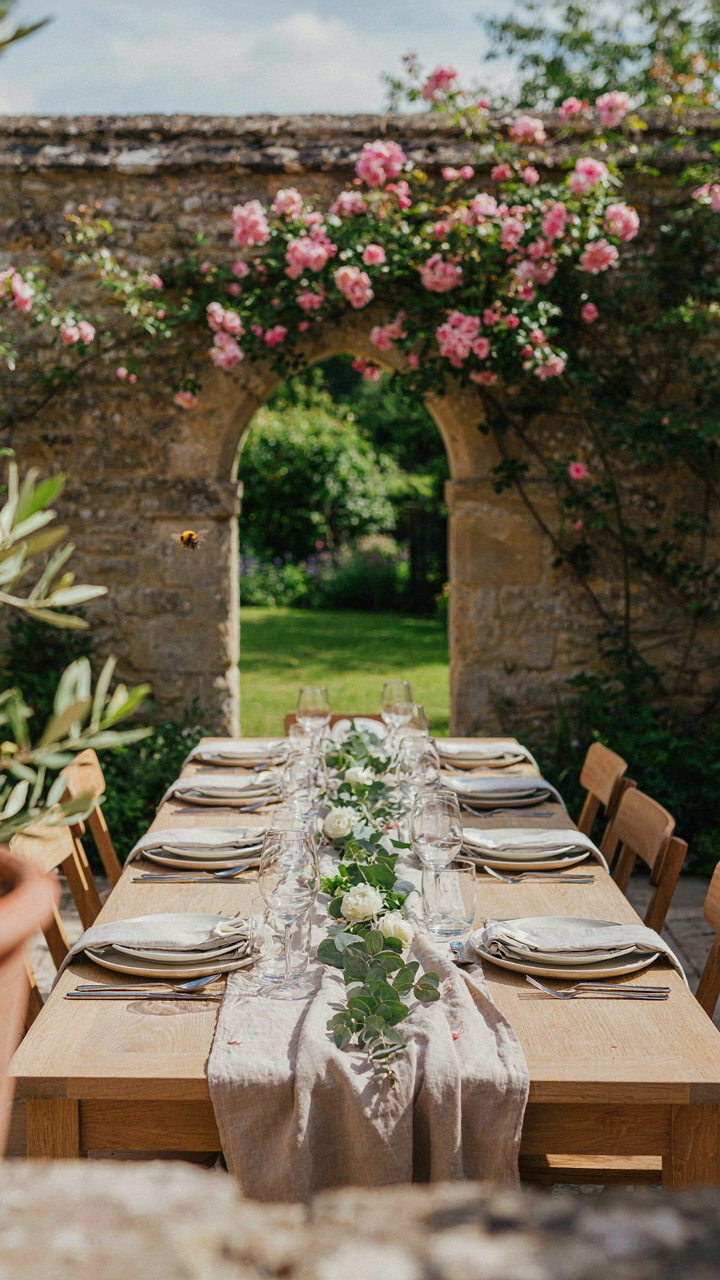
You want your table to look intentional, not like you tried. That’s the real fear underneath this. Here’s the mechanism: a tablescape optimized for Instagram fails the moment someone needs to cut their food. Borrow from ergonomics, the field that measures how humans interact with their environment. Your table’s layout must account for reach, sightlines, and arm movement without obstruction. A centerpiece that forces guests to crane their necks or shift plates around it isn’t design—it’s sabotage masquerading as aesthetics.
Utility comes first because it’s invisible when it works. Place water glasses where guests can refill without asking. Position salt and pepper within arm’s reach of each seat. Keep the centerpiece low enough that two people across from each other maintain eye contact. Flatware belongs on the table before anyone sits, not passed mid-course. When your guests stop thinking about logistics, your design succeeds.
The Stripped Table Wins Every Time
Everyone loads their table with objects and calls it layering. Wrong move. The consensus advice is that more elements equal sophistication. Strip the table instead. Remove one item from your mental design, then remove one more. The table that looks composed isn’t the one drowning in details—it’s the one with precisely what it needs and nothing else.
Superfluous adornments create visual noise that fatigues guests within twenty minutes. A single statement vase works harder than five scattered around the table. Cloth napkins in one color beat napkins in three coordinating shades. White plates let the food be the visual anchor. When you remove clutter, guests notice the quality of what remains: the linen, the glassware, the actual meal. Every item on your table should have a job.
Your Tablescape Isn’t Wilting; Your Planning Is
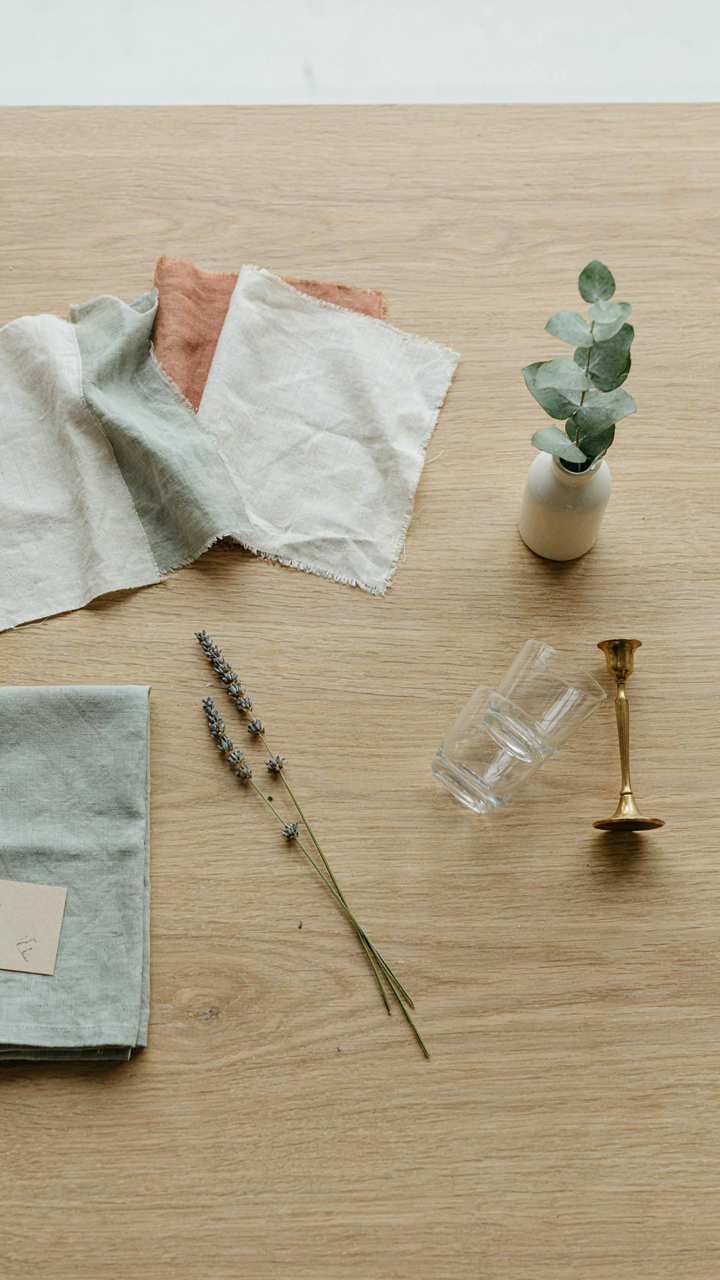
Most people treat their tablescape like a last-minute decoration project. They don’t. A summer table fails because you ignored the real work: intentional material selection, strategic timing, and ruthless editing. Stop adding more. Start removing everything that doesn’t earn its place. Pull out your phone right now and photograph every element you’re considering. If it doesn’t hit you in that photo, it won’t hit your guests at dinner. A tablescape either commands attention or distracts from it.