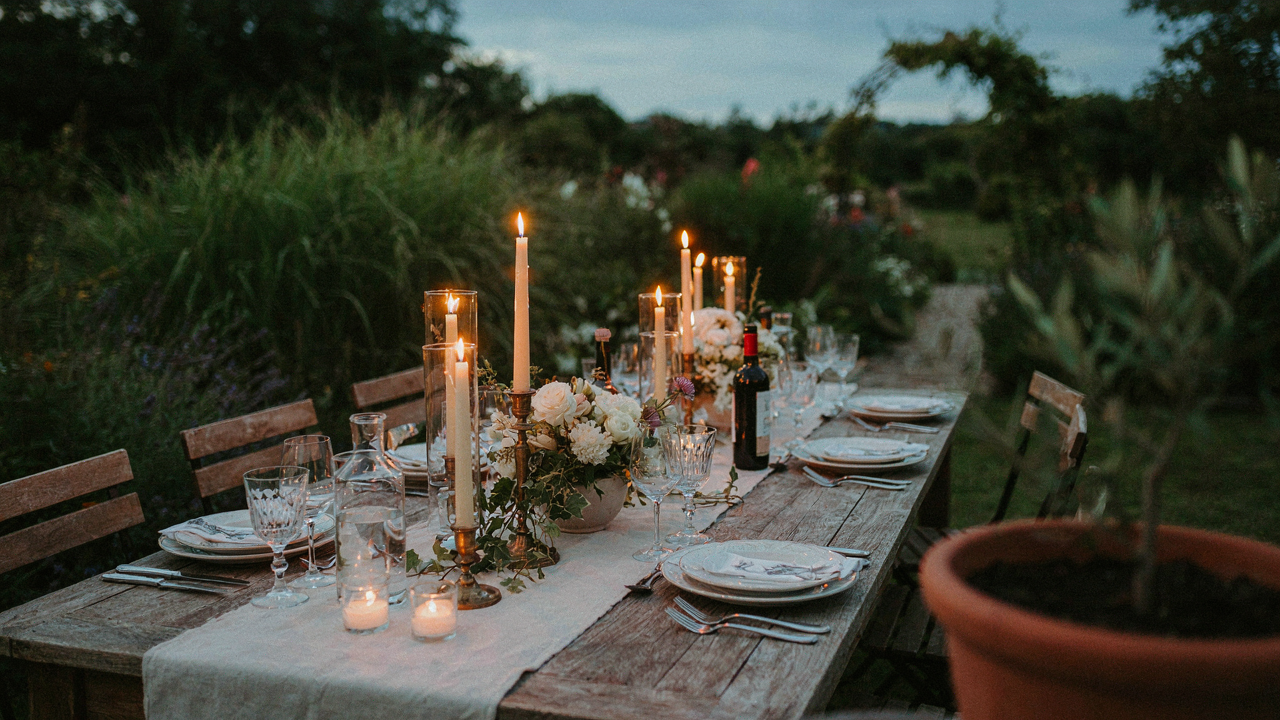
Deconstruct The Problem: Why Your Candle Centerpiece Ideas Fail The Breeze Test
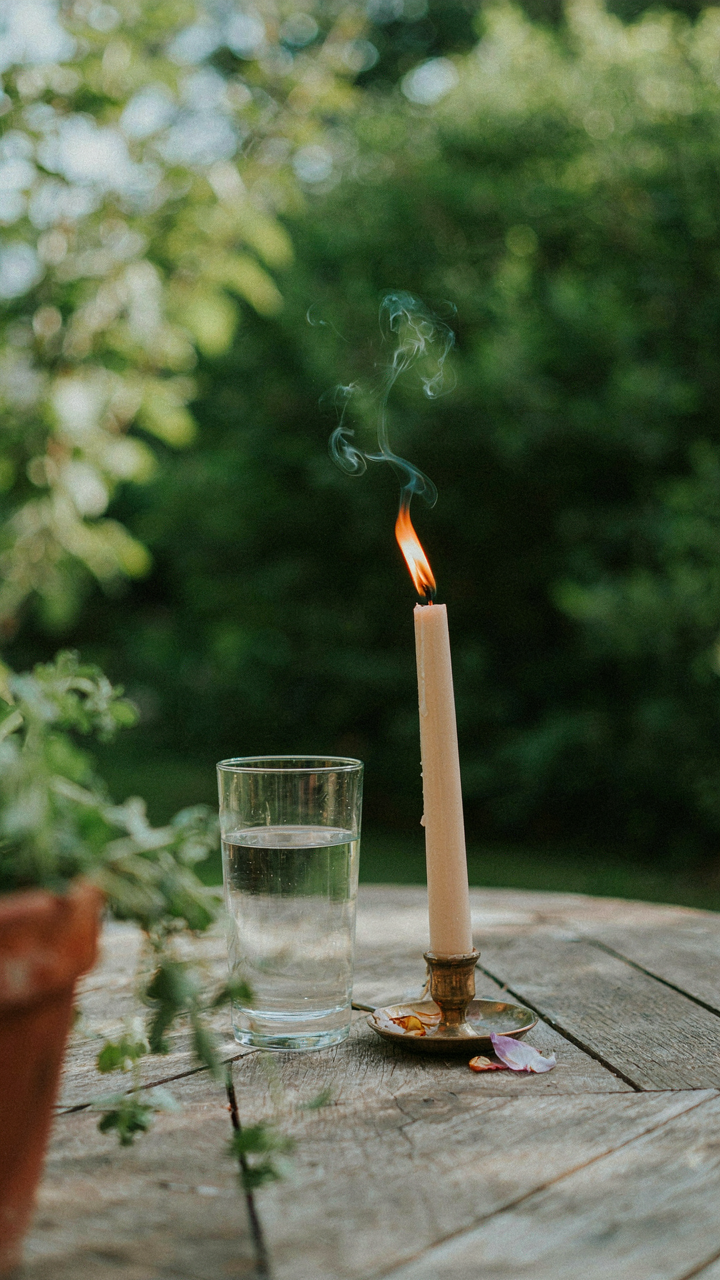
What Everyone Gets Wrong About Flame Stability
You want your centerpiece to look intentional, not fragile. That’s the real motive here. But most people believe flame dies because wind is simply too strong, which misses the actual mechanism. The flame doesn’t fail from force alone. It fails because moving air disrupts the thermal column that keeps the wick burning at the right temperature. You can have brutal wind and a stable flame if you understand what’s actually being attacked.
The common advice says “use larger candles” or “put them in glass holders.” Incomplete. Larger candles burn hotter, yes, but they still extinguish if the air disruption is severe enough. Glass helps, but only if positioned correctly relative to airflow direction. What matters is that the flame sits in a microclimate where the convection pattern stays intact. This isn’t about blocking wind—it’s about controlling how air moves around the burning wick itself.
The Actual Physics Of Flame Extinction
Flame requires three things: fuel, oxygen, and heat at the ignition temperature. Physics calls this the fire triangle. In centerpiece design terms, moving air is the fourth variable that collapses the triangle. Wind doesn’t remove fuel or oxygen in abundance. It cools the wick below the ignition point by forcing cold air into the combustion zone before the wick can regenerate heat.
A flame burns in a stable updraft column when left undisturbed. Sideways wind shears this column, forcing cooler air across the wick surface faster than the flame can maintain its temperature gradient. The wick stops vaporizing fuel. Extinction happens in seconds. Your job is building a container geometry that either blocks the shear force or redirects lateral airflow into a pattern that preserves the thermal column. This is why placement inside versus outside a vessel matters more than people admit.
The Microclimate Dome Protocol For Enduring Table Settings

How Air Pockets Keep Flames Alive

You want your centerpiece to work without babysitting it, and that requires you to stop treating wind as a single force and start treating it as a pressure differential. In physics, pressure moves from high to low, and a flame dies when that differential collapses the combustion zone around the wick. An enclosed air pocket reverses this: it traps warm air and prevents external wind from collapsing the flame’s microclimate. The dome doesn’t block wind—it creates a pressure buffer.
The depth and shape of your enclosure matter more than the material. A shallow dome with a wide opening lets wind penetrate at table level where it does the most damage. A deeper enclosure with a narrow opening at the top forces external air to move slower, reducing the pressure shock. Test your dome geometry by observing how smoke from an extinguished candle behaves inside it—if smoke rises straight up and exits from the top only, your air pocket is working. If it swirls or gets pushed sideways, your opening is too large and your pressure buffer has failed.
Materials That Stabilize Without Smothering
Glass is the consensus choice, but it’s only correct if you understand why: it conducts heat away from the flame slowly enough to prevent temperature collapse while allowing you to monitor burn quality. Hurricane-style cylinders work, but standard drinking glasses work just as well if the wick has clearance. The mistake most people make is choosing material based on aesthetic appeal rather than thermal conductivity and opening size.
- Clear borosilicate glass: Handles temperature fluctuations without cracking. Requires minimal wall thickness to maintain structural integrity while allowing heat to stabilize inside.
- Frosted or etched glass: Diffuses light while maintaining thermal properties of clear glass. The surface texture creates micro-turbulence that slows external air movement.
- Ceramic vessels with high-fire clay: Insulates better than glass but blocks light visibility. Use only if you accept reduced flame monitoring as a trade-off for maximum wind protection.
- Polished stone or marble inserts: Stable at table level, absorbs and radiates heat evenly. Requires a glass or ceramic top to complete the microclimate seal.
- Stainless steel mesh screens: Lightweight dome structures that allow airflow while breaking wind patterns. Must pair with glass base to prevent heat loss at the flame level.
Apply one rule: your enclosure’s opening should never exceed the candle’s flame height. A two-inch flame needs an opening no wider than two inches. Measure twice before building. The dome seals your microclimate; an oversized opening is the same as no dome at all.
Architectural Defenses For Resilient Table Candle Decor
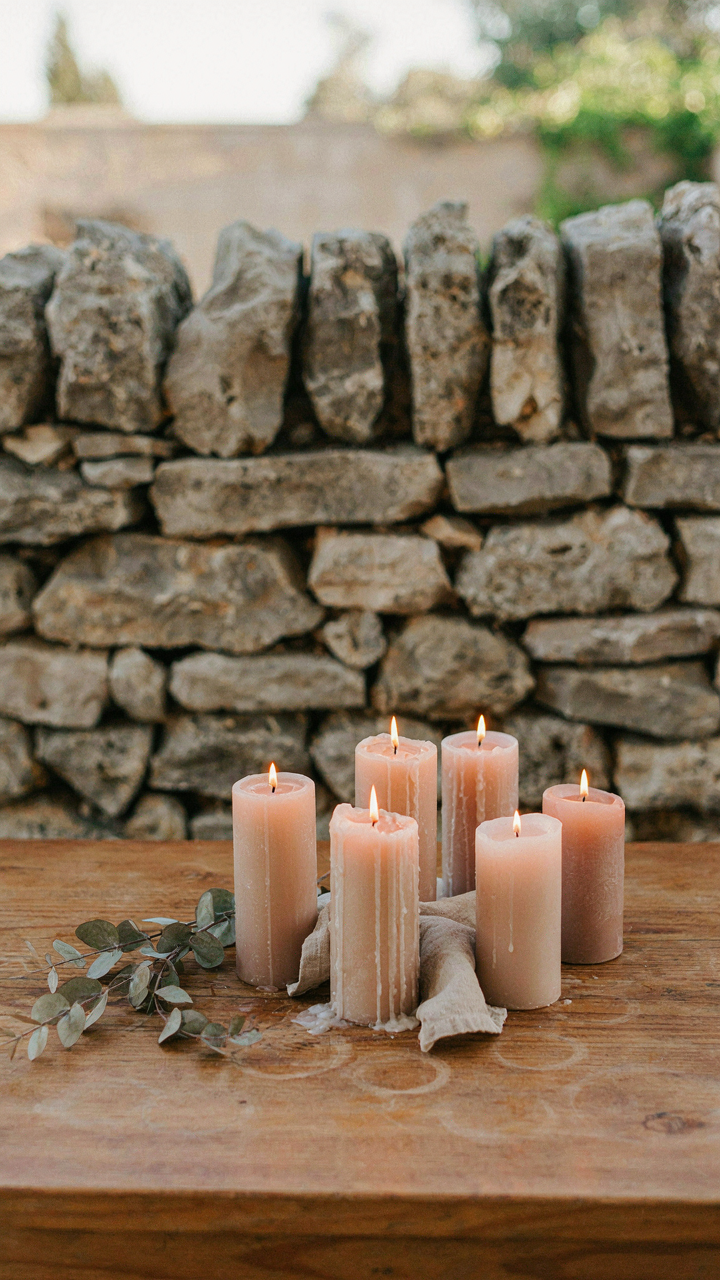
How Structure Blocks Wind Before It Reaches Flame

You want your centerpiece to look intentional, not defensive. That’s the real problem nobody admits. Civil engineering solves this by designing barriers that redirect force rather than absorb it. A candle centerpiece uses the same principle: you’re not fighting wind, you’re channeling it around the flame zone.
The mistake most people make is thinking tall glass holders work. They don’t, because wind doesn’t hit straight on. It wraps around objects. A cylinder only protects what’s directly behind it. You need a tiered structure. The outer perimeter captures wind first. Wider base elements force air up and over the flame, not through it. This is why hurricane-style lanterns work better than votives in open holders.
Airflow Geometry That Neutralizes Turbulence
Fluid dynamics calls this principle “streamlining.” A candle centerpiece becomes streamlined when air moves around it predictably instead of creating chaotic eddies that extinguish the flame. The mechanism: smooth surfaces and graduated shapes slow velocity before the air reaches the fire.
Cluster your candles inside asymmetrical containers that taper inward at the top. The wider base catches wind first and forces it to decelerate. Rocks, sand, or decorative elements inside the holder break airflow further. Multiple small barriers create friction that dissipates energy. Don’t use perfect cylinders or spheres. Irregular surfaces and slight angles force the wind to work harder to reach the wick. Test this directly: light a candle in an open jar, then in one surrounded by pebbles. The second burns longer because turbulence dies before it reaches the flame.
The Unseen Enemy: Convection Currents And Your Candle Centerpieces
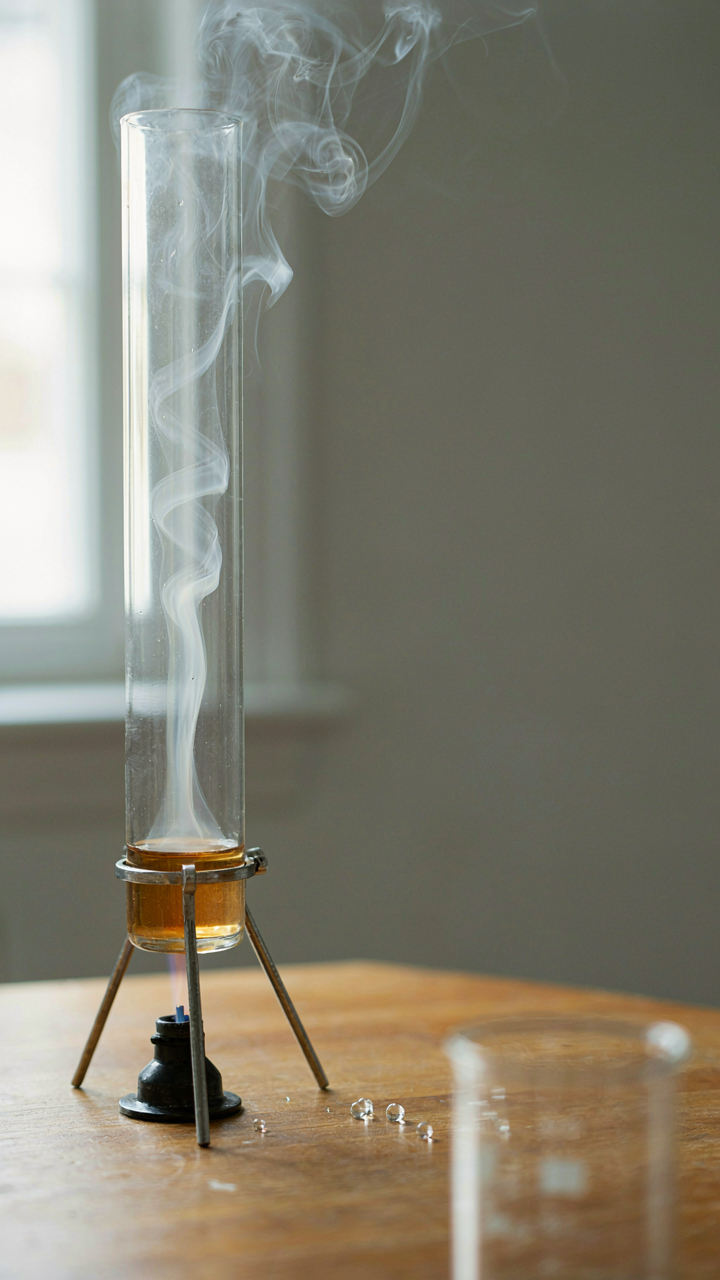
Why Your Centerpiece Keeps Guttering Out

You want your tablescape to look intentional, not like the wind owns it. Here’s what nobody tells you: convection currents—the physics term for rising warm air creating circulation patterns—are the actual mechanism killing your flame, not just wind speed. Your lit candle generates heat. That heat rises. Cool air rushes in to replace it. This cycle repeats whether you’re indoors or outdoors, and it’s ruthless.
The common advice to “just use windbreaks” misses the real problem. A windbreak stops horizontal air movement. It does nothing for the vertical convection loop your candle creates around itself. The flame flickers because the heat column destabilizes. Air pressure differentials form pockets of turbulence directly above the wick. You need to interrupt the rise itself, not just shield from gusts. Most people waste money on decorative hurricane glass that’s either too loose or positioned wrong to actually work.
Breaking The Heat Cycle Before It Starts
Convection responds to one thing: obstruction of the vertical pathway. You place your centerpiece inside a barrier that channels rising heat outward and away from the flame zone without blocking it completely. Think of it like creating a chimney effect, but in reverse. The barrier must have openings at the base for cool air intake and an exit point higher up where the hot air has already stabilized and lost its turbulent force.
Glass hurricanes work, but only when they sit flush to the table surface with no gaps underneath. Ceramic or metal vessels with a rim height of at least four inches above the candle do the same job. The mechanism is straightforward: cool air enters low, warm air exits high, the flame sits in the middle of a controlled thermal zone. Position your centerpiece out of direct wind paths when possible, and ensure whatever enclosure you use allows airflow. Stagnant air inside a sealed container will extinguish the flame faster than a breeze ever could.
Strategic Placement For Rustic Wedding Tables: Harnessing Natural Windbreaks
Identify Where Wind Actually Dies

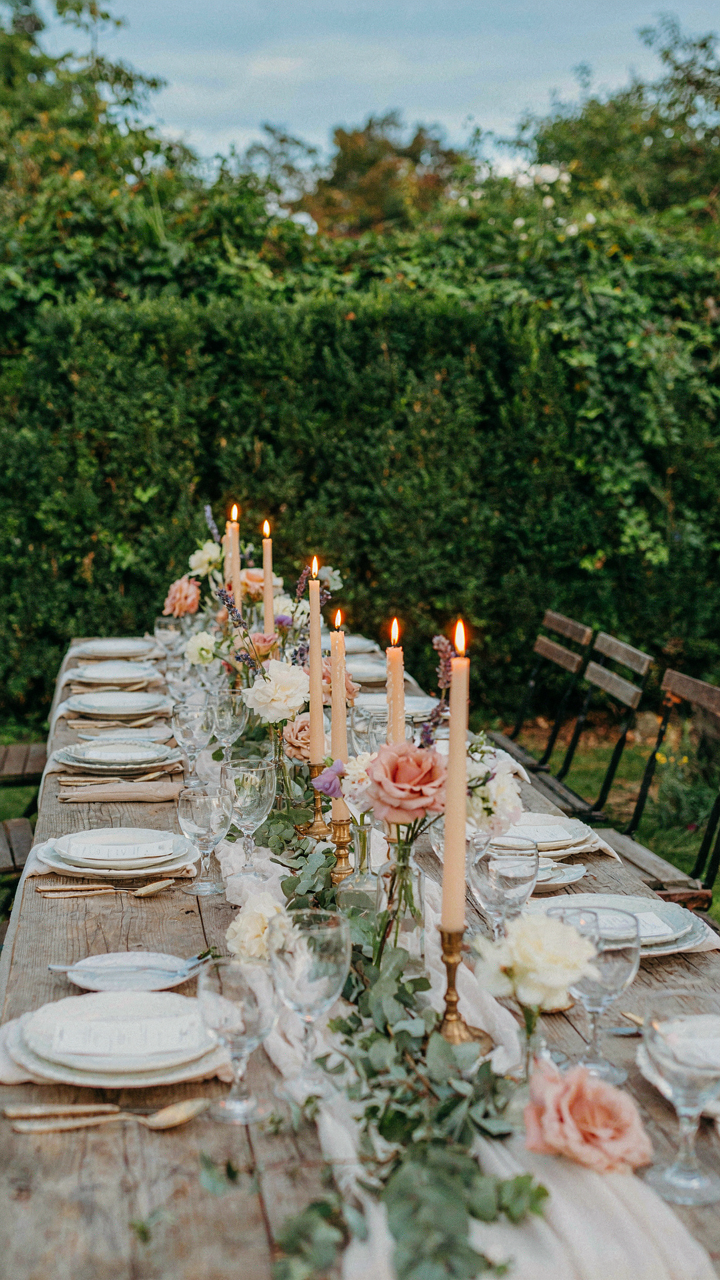
You want your centerpieces to look effortless, which means you’re avoiding the hard truth: most outdoor table placement fails because people don’t map airflow before they set candles down. Borrow from fluid dynamics, which treats wind like water flowing around objects. Your candle centerpiece becomes an obstruction point, and wind either accelerates around it or settles behind it. The mechanism is simple: wind speed drops exponentially in the shadow zone behind any solid mass. Buildings, trees, fence lines, even dense foliage create these dead zones where air movement slows by 40 to 60 percent depending on obstacle density and wind angle.
Scout your venue during the time of day your reception runs. Wind patterns change with sun position and terrain heat. Position tables in the lee side of structures, never perpendicular to prevailing wind direction. Identify tree clusters, hedgerows, or architectural features that create natural barriers. If your venue is wide open with no obstructions, wind will kill any flame design you choose, and no centerpiece trick fixes that problem.
Orchestrate Table Geometry For Maximum Shelter
The common advice here is wrong: people think clustered centerpieces on one table help each other, but multiple flames actually create turbulence that makes wind worse. Instead, think about table orientation itself as your first defense layer. Position the long axis of each table perpendicular to the dominant wind direction so guests sit inside the table’s wind shadow. Your centerpiece placement then matters more than the centerpiece design itself. Place candles toward the interior of the table, away from the table edge that faces the wind source, and surround them with opaque elements like flowers, glassware, or wooden blocks that function as secondary windbreaks.
Test this setup 30 minutes before guests arrive. Light the candles and observe flame behavior from all four sides. If wind still gusts the flames, you’re in an unsuitable location or your centerpiece needs physical enclosure, not better placement strategy. The rule is mechanical: your candle stays lit when solid mass blocks the horizontal wind vector hitting it.
Candle Centerpiece Ideas As Aerodynamic Forms: Redirecting Airflow
Shaping Holders To Guide Wind Away

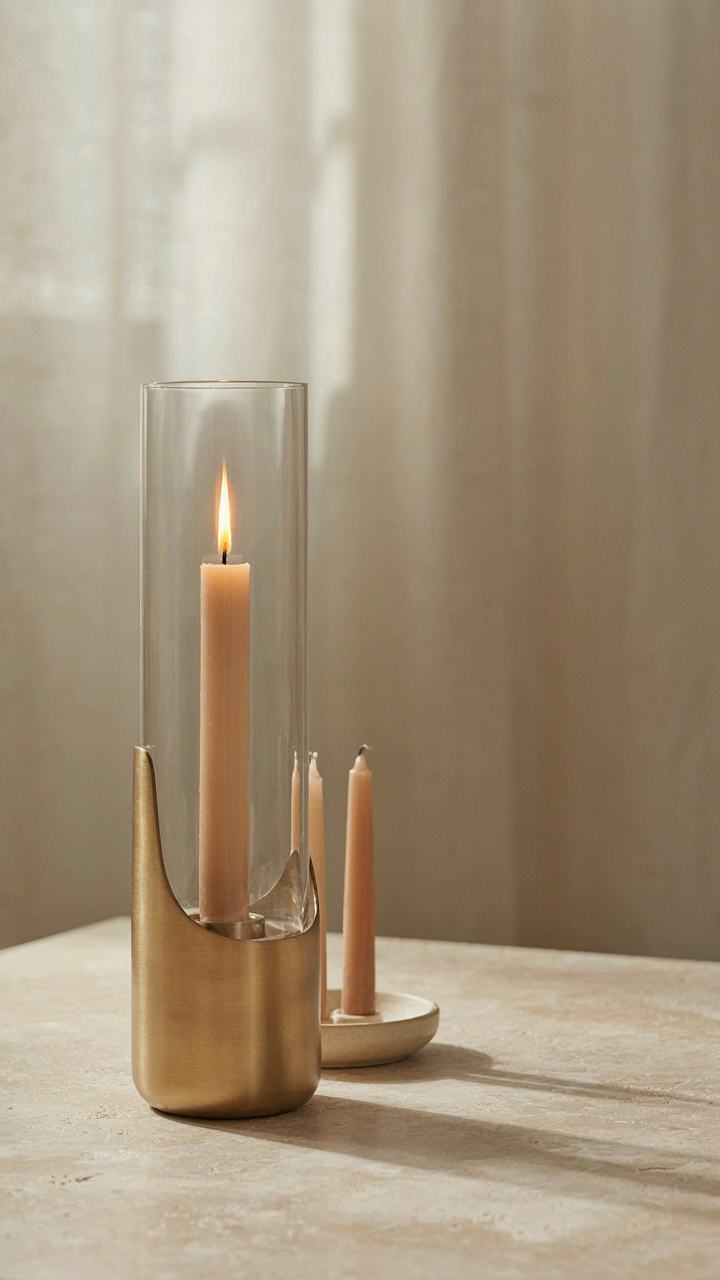
You want your centerpiece to look intentional, not like you’re bracing for failure. The real mechanism: airflow behaves predictably around solid geometry, and you either work with that physics or you fight it. Tapered holders and curved walls redirect wind laterally instead of down the flame. Cylinder shapes perform worst because they channel air straight down the center. Wider bases with narrower tops create a venturi effect that pushes moving air outward and upward, away from the wick.
Conical and dome-shaped holders aren’t decorative choices, they’re functional redirects. The angle matters more than the material. A 45-degree taper performs better than a gentle slope because the deflection happens faster, before wind has time to penetrate deeper into the holder. Hurricane glass designs work this way intentionally, with a tall cylinder that shields the flame while the open top allows heat to escape. Test your holder by lighting the candle and watching where the wind pushes the flame. If it leans hard, your geometry isn’t steep enough.
Surface Texture And Its Effect On Turbulence
Smooth surfaces and rough surfaces create different air behavior around your centerpiece. Turbulence follows material physics, not decoration. Ridged, textured, or embossed holder walls create tiny eddies that break up laminar airflow before it reaches the flame. This sounds backwards, but rough surfaces actually outperform smooth ones in windy conditions because they disrupt the coherent stream of moving air. Polished glass or metal holders allow wind to slide across unimpeded and funnel directly into the center.
The trade-off exists because roughness also increases drag, which means the wind slows down before it hits your candle. Metal holders with hammered or frosted finishes show this advantage clearly. Frosted glass holders perform measurably better than clear glass in outdoor settings. Pick your centerpiece holder based on finish, not just shape. A smooth tapered holder beats a rough cylinder, but a rough dome beats both of them.
The “Inertia Block” Method For Stable Pillar Candles
Mass And Friction Beat Wind Every Time

You want your centerpiece to look intentional, not hastily shoved into a corner because the wind keeps killing it. Here’s what actually works: apply physics. Wind exerts force. Mass and friction resist it. A pillar candle sitting loose on a table has neither. The real mechanism is contact resistance between candle base and surface, plus the candle’s own weight creating downward pressure that friction can leverage.
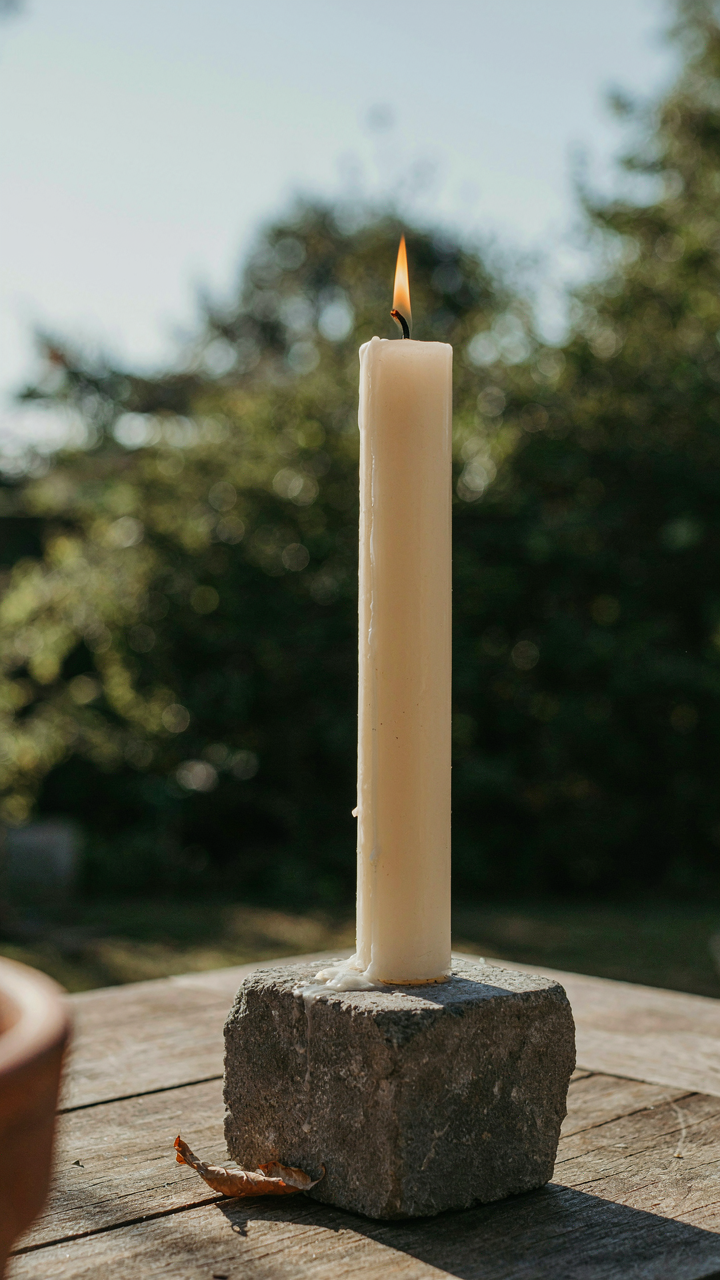
Most advice tells you to use holders or containers. That’s incomplete. The actual play is selecting a base material with high friction coefficient, then adding mass beneath the candle. Concrete, slate, or rough stone surfaces grip pillar candles better than polished marble or glass. The candle itself becomes part of the resistance system, not a victim sitting on top of it.
Weighted Bases For Non Negotiable Stability
Outdoor wind doesn’t care about your aesthetic preferences. You need ballast. A weighted base solves this by lowering the center of gravity and increasing the force required to tip the candle over. Think of it as leverage in reverse: the wider and heavier the base, the more torque wind needs to apply to create movement.
Concrete planters, stone blocks, or metal vessels work because they provide both weight and a stable footprint. Fill hollow bases with sand or small stones to add mass without changing the visual profile. Secure the candle to the base using heat resistant adhesive or mounting putty designed for candles. This prevents sliding even when gusts shift sideways instead of pushing head on.
Beyond The Flame: What Truly Extinguishes Ambience

The Doubt You Can’t Ignore

You care about this section because a dead centerpiece candle signals incompetence to guests. The real mechanism is psychological: flickering uncertainty creates cognitive load. Your brain treats an unstable flame like an unsolved problem. It demands attention. This breaks the ambient effect entirely. People stop enjoying the space and start monitoring the candle instead.
Neuroscience calls this the “cocktail party problem”—your attention snaps toward unpredictable stimuli. A wobbling flame is unpredictable. A steady one disappears into the background where it belongs. The candle stops being noticed only when it performs consistently. Inconsistency is what kills ambience, not darkness.
Engineering Consistency Into Design
Common advice tells you to just use windscreens or taller containers. That’s incomplete. Windscreens work, but they address symptoms, not the root problem: fuel delivery. Borrowing from thermodynamics, think of your centerpiece as a combustion system requiring stable input. The flame flickers when wax melt pools unevenly or air pressure shifts around the wick.
Your protocol: use a container with walls at least two inches high around the wick, ensure the wick sits centered in a stable melt pool, and position the centerpiece away from HVAC vents and open windows. A stable flame needs consistent fuel access and predictable airflow. Control both, and your ambience survives the breach.
Your Candles Don’t Blow Out Because Of The Wind; They Blow Out Because Your Understanding Of Atmospheric Control Is Naive
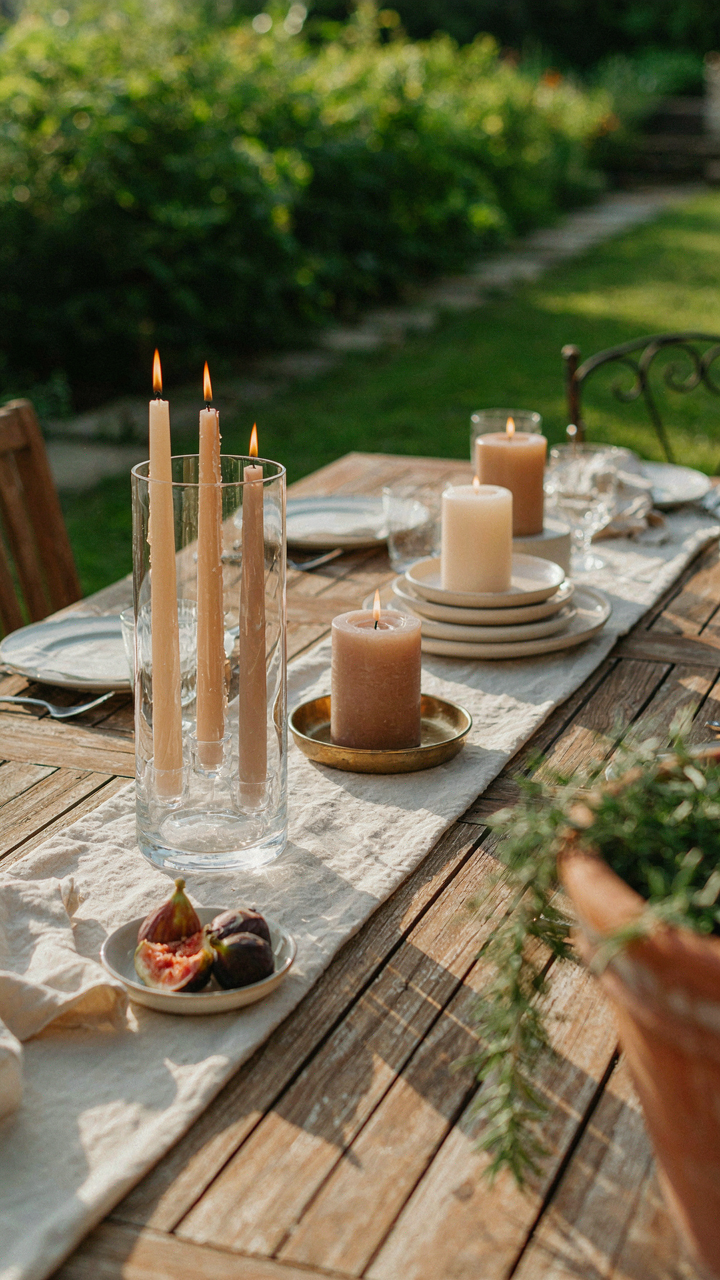

Most people treat wind like an enemy to dodge. You treat it like a variable to design around. Stop buying candles. Start buying windbreaks. Glass cylinders, recessed holders, tiered arrangements that funnel air instead of fighting it. Tomorrow, audit your current setup and move one candle behind a physical barrier. The difference between a centerpiece that dies and one that thrives isn’t luck. It’s architecture.