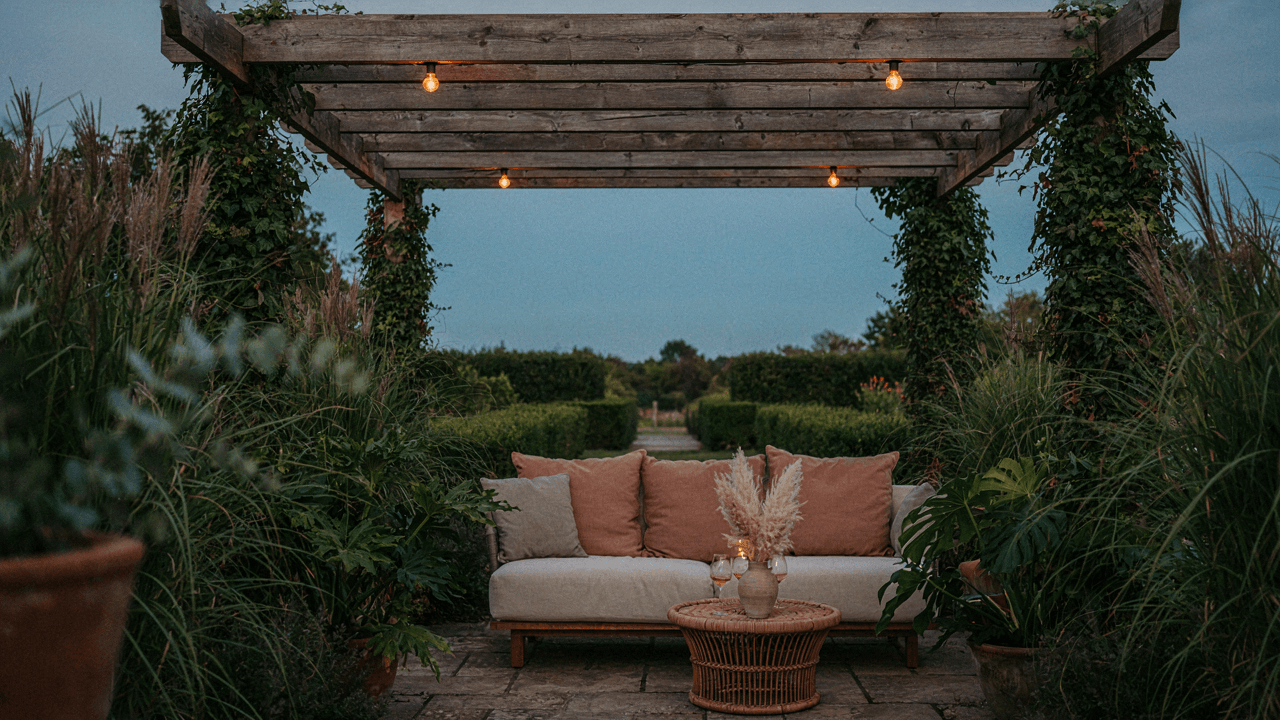
Beyond Shade: The Microclimate Manipulation Protocol For Your Pergola Patio

Where The Sun Actually Is
You want shade without looking like you’re hiding. That’s the real pitch here. But most people design pergolas based on gut feel instead of where the sun actually travels. Solar geometry is the physics framework that governs light angle and duration. Your pergola’s overhang depth is the direct application of this principle, and it must change seasonally to work at all.
The sun’s altitude varies between 27 degrees in winter and 70 degrees in summer at 40 degrees north latitude. This means a pergola that blocks midday heat in July will flood your seating area with winter light you likely want. Horizontal slats or a retractable shade layer positioned on the south and west faces intercepts rays before they hit the sitting zone. Measure your latitude, calculate solar noon angles for both solstices, then set your overhang depth to block summer sun while permitting winter penetration. This isn’t aesthetics. It’s load management.
Channeling Air Like Thermal Plumbing
Most pergola advice treats wind as a nuisance to block. This is backward. Airflow dynamics from fluid mechanics shows how pressure differentials drive movement through confined spaces. Your pergola seating area functions as a thermal mass that either radiates or absorbs heat depending on wind velocity and direction. You’re not creating a still box. You’re engineering a cooling corridor.
Pergolas positioned perpendicular to prevailing summer breezes accelerate air movement through the seating zone without creating dead pockets. Slatted overhead surfaces allow hot air to escape upward while ground-level openings on the windward side pull cooler air inward. Vegetation on the structure’s eastern and western edges blocks lateral sun load while funneling breeze through the center. The depth, width, and orientation of your pergola columns act as baffles that control velocity. Monitor actual wind patterns on your site for three days before finalizing placement.
Edison String Lights: Engineering Evening Ambiance, Not Just Illumination
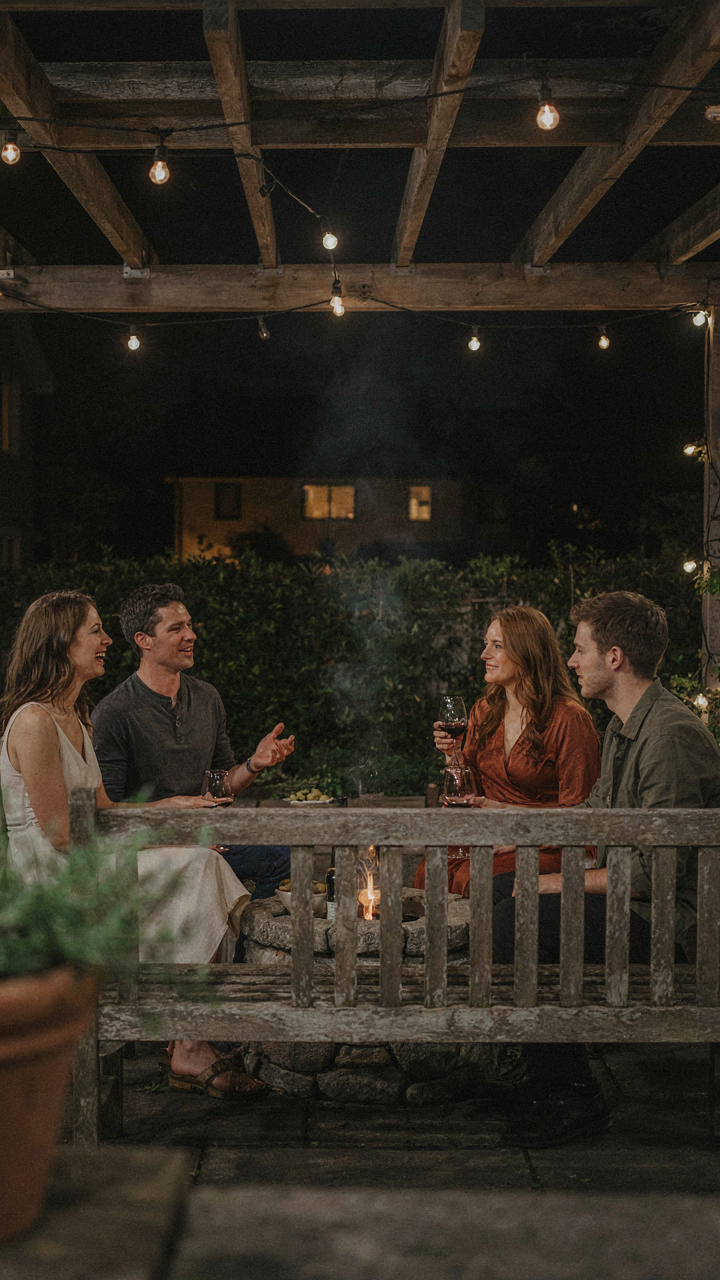
Color Temperature Controls Mood More Than Brightness

You want people to feel like they belong in your space. That’s the real reason you care about light temperature. The mechanism is simple: color temperature triggers neurological responses that either relax or activate your nervous system. Warm light (2700K or lower) suppresses cortisol production. Cool light (5000K and above) mimics daytime and keeps people alert. In a pergola seating area, you’re not lighting a workspace. You’re engineering a state. Choose 2700K Edison bulbs. This is non-negotiable if you want the space to feel intentional rather than accidental.
The difference between 2700K and 4000K is the difference between people lingering and people checking their phones. Warm light also makes skin tones appear softer and more flattering, which unconsciously signals safety and comfort to your guests. Color rendering index (CRI) matters too. Edison filament bulbs typically hit 99 CRI, meaning colors appear natural and saturated under their glow. LED Edison bulbs marketed as vintage should hit 90 CRI minimum or they’ll flatten the visual depth of your seating area. Don’t compromise here. The cheapest option will ruin the entire effect.
Placement Creates Focal Points, Not Coverage
Lighting designers steal from theater. The key principle is layering. High, low, and mid-level light sources create visual drama and define the space’s hierarchy. Most people string lights overhead in a grid pattern and call it done. This is wrong. Overhead light flattens everything and creates unflattering shadows on faces. Strategic placement means putting some bulbs at eye level or slightly above seating, others higher for ambient fill, and some lower to highlight ground level.
Place primary strings along the pergola’s perimeter at about 8 to 10 feet high. Add secondary strings at 6 to 7 feet high on the back side of seating areas to cast light toward faces, not down on them. If your pergola has a roof structure, run additional strings diagonally across the top rather than parallel. This breaks up the visual monotony and creates pockets of deeper shadow, which actually makes the lit areas feel more intimate by contrast. The goal is zones of light and shadow, not uniform brightness.
The Timber Pergola’s Thermal Mass Advantage: A Physics Lesson

How Wood Stores And Releases Temperature

You want to know this because it makes your pergola seating area feel comfortable without you having to buy expensive cooling systems or admit the climate where you live is brutal. Thermal mass in physics describes an object’s capacity to absorb and store heat energy, then release it gradually. Wood acts as a thermal buffer. Solid timber beams absorb solar radiation during peak afternoon hours, store that energy in their cellular structure, then release it slowly as evening temperature drops.
This cycle means your pergola moderates the microclimate beneath it. On hot afternoons, the wood absorbs enough radiant heat to prevent seating surfaces from becoming untouchable. At dusk, as ambient temperature falls, the stored energy releases back, keeping the space warmer longer than bare ground or metal structures would. The thicker the beam cross-section, the greater the thermal mass effect. A six-by-six timber pergola outperforms a two-by-four frame because density multiplies storage capacity.
Material Density Controls Microclimate Stability
Different timber species have different densities, and density determines thermal performance. Hardwoods like oak, cedar, and ipe store more heat per volume than softwoods because their cellular structure is tighter. A cedar pergola with four-inch beams creates a measurable temperature differential compared to thin pressure-treated lumber. The mechanism is simple: more wood mass means more heat absorption and slower release rates.
Wood density also affects moisture behavior, which compounds the thermal effect. Dense timber resists rapid moisture gain and loss, stabilizing humidity levels in the seating area beneath. This prevents the seating zone from swinging between extreme conditions. Cedar pergolas maintain relative humidity better than softwood alternatives because their tight grain structure resists vapor exchange. Choose timber thickness and species based on your afternoon high temperatures and evening cool-down rates, not aesthetics. A four-inch timber pergola in a hot climate absorbs enough heat to measurably delay evening cooling.
Seating Area Outdoor As Command Center: A Military Strategy
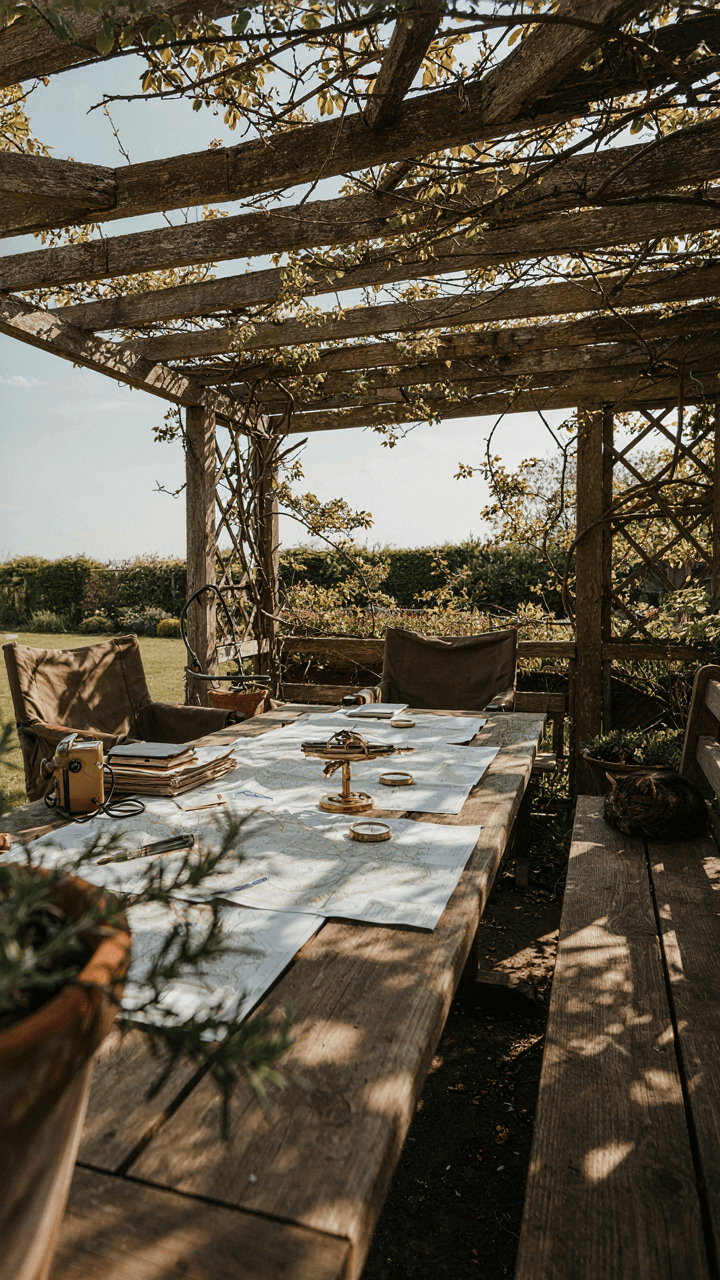
Line Of Sight And Defensible Space

You want this space to feel like yours because control signals safety, and safety signals status. Military doctrine calls this principle “command of terrain,” and your pergola seating area is terrain you occupy. The mechanism is simple: whoever sees without being seen owns the psychological advantage. Position your seating to face the entry point of your space, not away from it. Backs to walls matter. Sight lines to exits matter more.
The common advice says “arrange seating for conversation.” That’s incomplete. Conversation happens anywhere. What separates a gathering spot from a defensive position is the ability to monitor approach vectors without rotating your head. Your pergola should command views of your property’s perimeter, your home’s doors, and any path a guest takes to reach you. This isn’t paranoia. This is how humans actually behave when they feel secure enough to relax. Arrange furniture so the primary seating faces outward, not inward toward a table.
Strategic Furniture Arrangement For Control
Placement determines who leads the interaction, and most people never think about this deliberately. In small-group dynamics, the person with the best vantage point—the one who doesn’t have to crane or twist—sets the frame for the entire gathering. Position the dominant seat (typically a lounge chair or bench) on the highest or most elevated part of your pergola platform. Secondary seating radiates from there, slightly lower or angled inward. This creates a natural hierarchy without hostility.
Distance matters as much as angle. Keep seating clusters tight enough to hear without shouting, but with clear sight lines between seats. Avoid forcing people into arrangements where their backs face the open space or entry points. A single misplaced chair that breaks sightlines weakens the entire setup. Test the arrangement before committing to permanent placement. Sit in each seat for five minutes. If you feel exposed or blocked, your guests will too. The setup works when everyone can see everyone and the property simultaneously.
Modern Pergola: Minimalist Design For Maximum Environmental Leverage
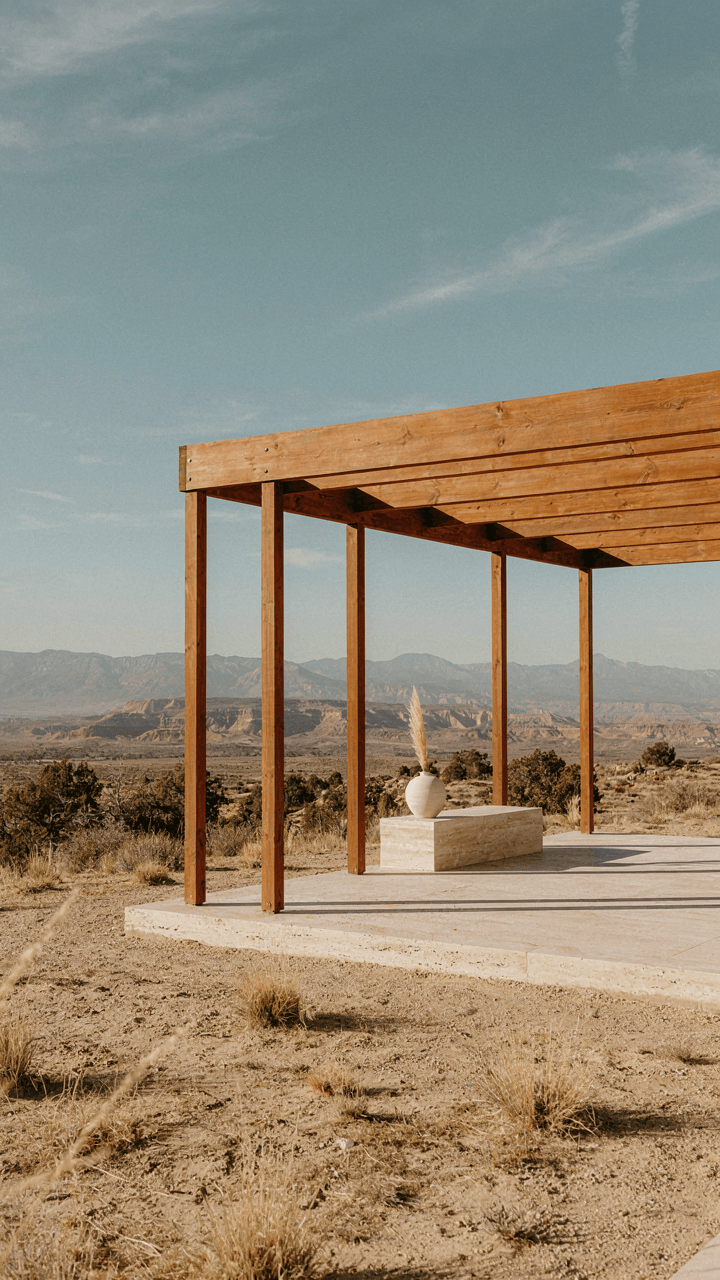
Clean Lines For Unobstructed Views

You want minimalism because you think it looks expensive. What actually matters: empty space forces your eye to land on what remains, which means every structural element and material choice becomes visible and therefore judged. This is signal amplification, borrowed from information theory. A pergola seating area with restrained beam patterns and no visual clutter broadcasts intentionality instead of decoration.
The common advice says “less is more.” That’s lazy. Specific truth: fewer posts, wider beam spacing, and horizontal sightlines that extend to landscape or architecture beyond the structure create perceived spaciousness. You’re not removing elements randomly. You’re removing everything that competes for attention, which forces your seating area to anchor the space through geometry alone, not ornamentation.
Integrated Tech For Seamless Control
Smart control systems for pergolas solve a real friction point that most people never name: you sit down, the sun moves, and you’re either uncomfortably exposed or you get up and manually adjust a shade or mister. Motorized louvers, retractable screens, and irrigation timers eliminate decision fatigue at the exact moment you want to relax. The mechanism is pure: reduce active choices in the environment to extend passive comfort duration.
Install motorized systems with manual overrides so you don’t create dependency on batteries or apps during failure states. Wireless controls integrate into existing home automation platforms, but hardwired backup switches mounted on pergola posts cost less and outperform when networks drop. Automate louver angles to track sun position throughout the day, adjusting every hour rather than requiring human intervention at 3 PM and 6 PM.
Wood Pergola Materiality: A Deeper Look Than Just “Natural”

The Real Cost Of Rot And Neglect

You’re buying a wood pergola seating area because it looks expensive and permanent, but neither is true without constant intervention. The mechanism is simple: exposed wood degrades through moisture infiltration, UV damage, and fungal colonization. Cedar and redwood rot from the inside out. Pressure-treated lumber leaches chemicals and still fails at joints. The wood you see on day one becomes compromised wood within three to five years without a maintenance protocol.
Most people learn this the hard way. They install a pergola, enjoy it for one season, then watch it deteriorate into an eyesore they avoid sitting under. The real decision isn’t which wood looks best. It’s deciding whether you’ll pressure wash annually, sand and reseal every two years, or replace structural members as they fail. If you won’t commit to that work, composite materials outperform wood on every metric except initial cost.
Sourcing Pressure And The Aesthetic Trap
The economics of timber harvesting have nothing to do with what looks good in your backyard. Sustainable certification means the tree farm replants, not that the wood resists rot better. FSC or PEFC labels signal ethical sourcing, but they don’t change material performance. Design trends push reclaimed or handpicked timber because it photographs well. That’s marketing, not engineering.
The trade-off is real: certified sustainable sources cost more and often come from slower-growing species that are denser but harder to work with. Fast-growth pressure-treated lumber is cheap and widely available because it solves the rot problem chemically, not structurally. Neither option is objectively superior. The choice depends on whether you prioritize years of low maintenance or years of high maintenance with better optics. Choose maintenance level first, then select the material that delivers it.
Garden Pergola: Cultivating Privacy And Sensory Dominance
Plants That Block Sight Lines

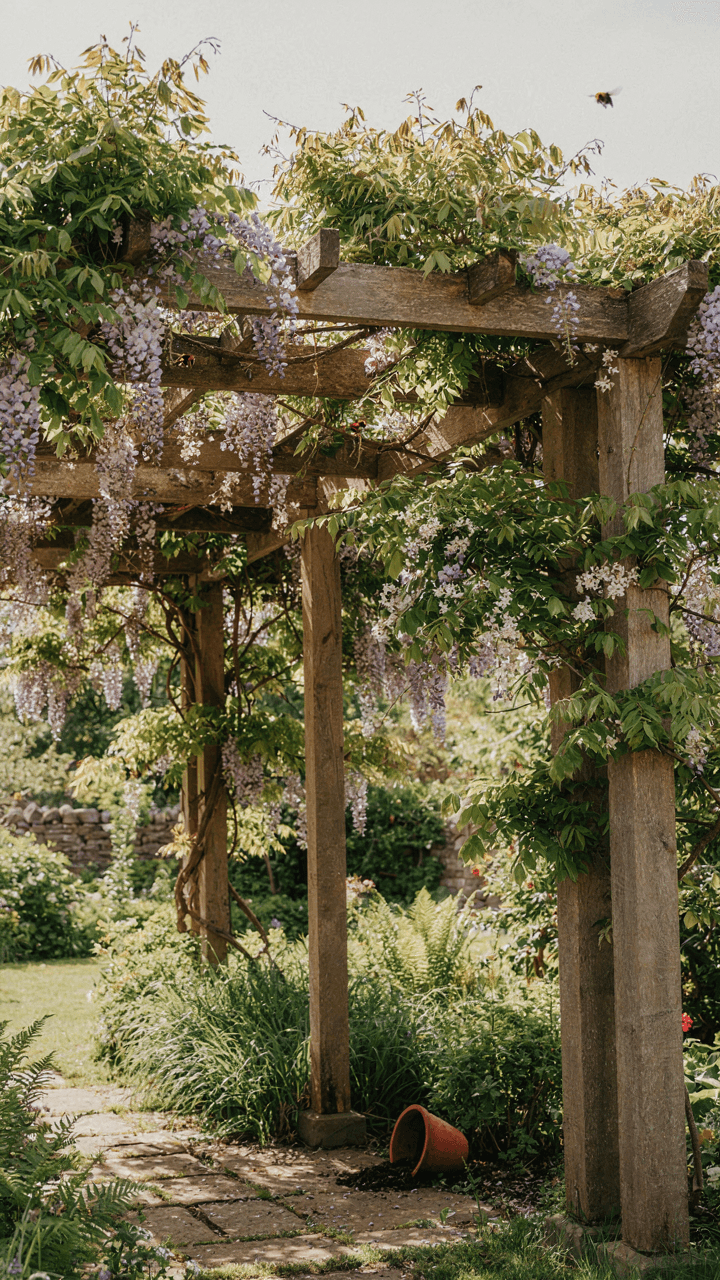
You want privacy because you’re tired of performing for neighbors. The mechanism is simple: layering vegetation at different heights stops the eye before it reaches your seating zone. Most people plant one screen and call it done. That fails because sight works like light penetrating layers. You need depth, not density.
- Climbing vines on structure: Train clematis or jasmine up pergola posts to create the first barrier. They fill vertical space while keeping the canopy open overhead, blocking lateral sightlines without darkening the seating area itself.
- Mid-height shrubs (4-6 feet): Place evergreen shrubs like boxwood or privet along the perimeter. These hold their foliage year-round and sit above eye level when seated, stopping views without requiring vines to establish.
- Perimeter ground layer (2-3 feet): Low ornamental grasses or dwarf hedging fill gaps at ground level. They disguise the base of taller plants and prevent sightlines through gaps that destroy privacy illusion.
- Deciduous canopy integration: Existing trees above the pergola create dappled overhead coverage. Plant beneath them to use their natural screening while your slower-growing vines mature on the structure itself.
- Staggered spacing pattern: Offset plants rather than planting in straight rows. Staggering forces views to navigate around multiple obstacles instead of finding clear sight corridors through aligned gaps.
Botanical layering works because the human eye seeks the path of least resistance through space. Three overlapping layers of plants at different heights block that path entirely. Install the mid-height shrubs first, then add vines to the structure, then ground cover. This sequencing builds your privacy wall while allowing each layer to establish without competing for the same vertical real estate.
The Invisible Boundary: Sound And Scent
You already know privacy means more than what people see. Sound carries intention, and scent lingers in memory longer than any image. Most pergola design ignores this, treating the space like a silent, odorless void. That’s the problem. A pergola seating area becomes truly private when it disrupts the sensory information that tells others you’re there.
Wind blocks vegetation but also redirects air movement, which carries both sound and scent. Plant dense evergreens on the windward side to interrupt noise propagation. Fragrant plants like lavender or honeysuckle don’t mask external sounds, they change what the brain processes when it hears them. Your neighbor’s dog barking registers as less intrusive when lavender scent occupies the same sensory channel. Meanwhile, water features like small fountains emit white noise that physically masks conversation and activity within the pergola. Position these on the side facing the most traffic or neighboring properties. The effect compounds when you combine three layers: dense plantings for wind interruption, fragrant species for scent masking, and hardscape sound features to fill acoustic gaps.
Edison Bulb String Lights: The Illusion Of Rustic Charm Vs. Raw Power

The Math Behind The Glow

You want them to look good in photos. That’s the real reason you’re reading this. But here’s what actually matters: Edison bulbs are marketing disguised as lighting. The mechanism is simple. Lumens measure light output. Most Edison bulbs clock 40 to 60 lumens each. A standard incandescent A19 bulb produces 800 lumens. String Edison bulbs create ambiance, not illumination. They’re decorative first, functional second.
For a pergola seating area to have actual visibility at dusk, you need 200 to 300 lumens minimum across the sitting zone. That’s roughly five to eight Edison bulbs strung overhead, spaced close together. Watts mean nothing here. A 4-watt LED Edison bulb and a 60-watt vintage one both produce similar light output, but the LED runs cooler and lasts years longer. Calculate lumens per bulb, multiply by quantity, then measure the real coverage you get. This is the only metric that determines whether people can see their food or read a page.
Color Temperature And How Your Brain Responds
This isn’t about preference. This is neuroscience borrowing from the circadian rhythm field, which tracks how light wavelengths trigger biological responses in your body. Your pergola seating area operates the same way. Warm light at 2700K (the Edison bulb standard) suppresses melatonin production slower than cooler light. This keeps people relaxed, seated, and in your space longer.
But common advice gets this backwards. People assume warm light always means “cozy.” Wrong. Warm light at insufficient lumens creates a dim, strain-prone environment. Your guests squint. Their pupils dilate to compensate. The relaxation effect flips to mild frustration. Run 2700K Edison bulbs at adequate lumens (through proper quantity and spacing), and the mechanism works. People linger. Conversation deepens. The space functions. Install a few Edison bulbs at low lumen density, and you’ve paid for decoration, not design.
The Real Obstacle Isn’t Styling, But Your Failure To Weaponize Your Environment For Ultimate Control


Most people build a pergola seating area and stop. They treat it like decoration instead of a tool. Your space controls your mood, your energy, your productivity. A pergola seating area becomes powerful when you design it to manipulate light, temperature, and focus at specific times. Stop asking what looks good. Start asking what you need from this space at 6 PM, then build backward. Design your environment first, aesthetics follow. Your surroundings don’t inspire you—they either enable you or sabotage you.