The “Scarcity To Sanctuary” Framework: Repurposing For Your Budget Backyard

See Past What Things Were Made For
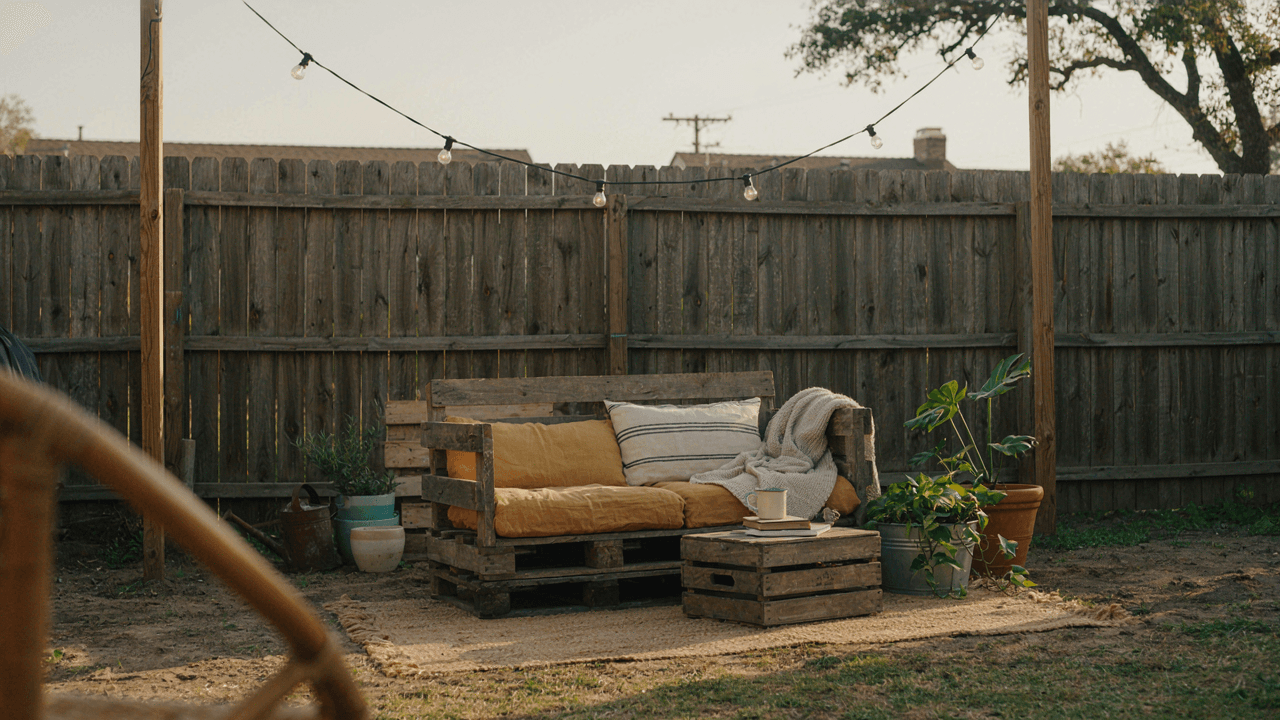
You want permission to spend less and still feel like you have taste. Here’s the mechanism: most people see an object’s original function as its ceiling. They don’t. Economics calls this “asset repurposing”—taking a depreciated item and extracting value by changing its application entirely. A wooden ladder becomes a plant stand. A cast iron skillet becomes a fire pit centerpiece. The item doesn’t change. Your backyard does.
The gap between “thrift store find” and “backyard feature” exists only in your imagination before you buy it. Walk through aisles looking for bones, not finished products. Ask yourself what problem this solves in your space. A weathered door frame can divide zones. Old metal grates can become pergola infill. Brass candlesticks can anchor planters. Most people see junk because they’re still thinking about what the original owner discarded.
Utility Shapes Ambiance, Not The Reverse
Everyone says “make it feel like a retreat.” That’s backward. The common advice gets this inverted: people assume ambiance comes first, then they force function around it. Wrong. A firepit that doesn’t heat properly doesn’t feel cozy—it feels pointless. A seating area that causes neck strain isn’t relaxing. Ambiance emerges from objects that work.
Start with what your body needs in that space. Seating that supports your back for two hours. Shade that blocks the afternoon sun without creating a wind tunnel. Water features positioned to mask street noise, not compete with it. Once the utility layer is solid, visual harmony follows naturally. The mechanism is simple: successful spaces solve problems first, then look good doing it.
Unlocking The Hidden Value In Cheap Backyard Finds

What To Actually Hunt For At Thrift Stores

You’re hoping that thrift stores are treasure chests where you’ll find rare vintage pieces for pennies—but that’s not why you’re really here. You want permission to believe you’re smarter than people who pay retail. The mechanism is simple: thrift stores work as filtering systems. Someone else already decided an item wasn’t worth keeping. Your job is identifying which discarded items solve specific backyard problems without requiring restoration skills you don’t have.
Most people waste time on broken furniture and rusted decorative pieces. Stop. Hunt for functional categories instead: intact outdoor seating frames, ceramic pots without cracks, metal grating or grilles, wooden pallets in good condition, and glass or acrylic panels. These items either work as-is or need minimal intervention. Examine hinges, joints, and structural integrity before checkout. A chair with a torn cushion saves money. A chair with a bent frame wastes it.
Negotiating Lower Prices Than The Sticker Says
Thrift store pricing uses anchoring from retail economics. The sticker price sits 60 to 70 percent below new retail—which sounds good until you realize it’s still arbitrary. Most thrift staff have minimal authority to move prices, but bulk purchases change the equation. When you buy five items instead of one, you shift from customer to transaction problem. A manager suddenly appears. Margins matter less than moving volume.
Ask directly: “What’s your bulk discount on multiple pieces?” Don’t negotiate the individual price. Negotiate the total transaction. Visit near closing time when staff want to clear the floor. Bring a cart with multiple items ready to go. You’re not haggling like a flea market vendor. You’re showing them you’ll reduce their labor cost by taking five things at once. They approve the discount to move inventory faster, not because you’re charming.
DIY Garden Projects: Strategic Placement For Impact

Zone Planning: Function Over Form

You want your backyard to feel intentional without spending money, which means you’re really after permission to stop overthinking it. Borrow from military strategy: commanders don’t place troops randomly across terrain—they position them where they control movement and sight lines. Your thrift store finds need zones, not scattered placement.
Divide your backyard into three functional areas: circulation (pathways and entry points), gathering (seating clusters), and visual rest (planted or textured sections). A weathered bench placed at the end of a cleared pathway works harder than one shoved in a corner. The mechanism is constraint—limiting where people can move forces them to experience your space deliberately. Map these zones before you buy or place anything.
Create Focal Points Without Extravagance
The common advice here is wrong: focal points don’t require expensive sculptural pieces or professional design. A single element your eye lands on—an old mirror hung on a fence, a tall thrift-store urn filled with plants, a wooden ladder leaned against a wall—anchors the entire visual field. One strong focal point per zone prevents visual noise and makes a small space read as intentional.
Place your focal point where two sightlines intersect: the corner where a pathway turns, the spot visible from your main seating area, the frame of your backdoor window. Thrift store mirrors and architectural salvage work because they’re unexpected in outdoor space, which automatically draws attention. The action is this: identify where people naturally pause or look first, then put something deliberate there.
The “Sensory Immersion” Protocol For Your Oasis

How Sound Actually Changes Perception

You want people to think your space feels bigger and more intentional than it is. That’s the real driver here. Sound engineering does that work. In acoustic design, we call this “masking”—the principle that dominant frequencies hide unwanted noise and compress perceived space. A water feature or wind chimes don’t just add ambiance. They literally mask traffic noise, neighbor conversations, and the sound of the street. The mechanism is straightforward: moving water produces broadband noise that covers everything else in its frequency range. Thrift stores stock ceramic fountains, old birdbaths, and copper basins constantly. A $15 secondhand fountain plus a submersible pump ($20-30 new) creates acoustic masking that makes your yard feel enclosed and private, even if it’s not.
Wind chimes work differently but serve the same function. They create irregular sound events that your brain registers as intentional design rather than accident. The physics here matters: heavier materials (metal, wood) produce lower frequencies that carry farther and mask more effectively than cheap aluminum. Dense plants amplify this effect by absorbing high frequencies and reflecting the lower tones back into your space. Position chimes near property lines where wind flows naturally, not in dead zones. This isn’t decoration. It’s acoustic boundary creation on a budget.
Texture And Light As Mood Control
The common advice here is wrong. People tell you to add “cozy lighting” and “soft textures” without naming what those actually do to your nervous system. Light wavelength directly affects cortisol and melatonin production. Warmer color temperatures (2700K and below) suppress cortisol spikes. Thrift stores overflow with old lamps, Edison bulbs, and fabric scraps. A $3 brass floor lamp with a 2700K bulb ($5-8) creates localized warm zones that signal safety to your brain. You’re not creating ambiance. You’re manipulating circadian response through chromatic choice.
Textiles do similar work on texture perception. Rough, irregular surfaces feel more “natural” and trigger lower stress responses than smooth, uniform ones. Layering thrifted throw blankets, worn rugs, and weathered wood creates visual complexity that feels intentional rather than sparse. Your eye has more to process, which paradoxically makes the space feel larger and more refined. The protocol: position warm lighting at ground level or eye level in seating areas, layer textiles with visible wear patterns, and use matte finishes over reflective ones. This combination signals abundance and care without requiring new purchases.
Fire Pit Area: Beyond The Store Bought Pit

Salvaged Materials Beat Retail Every Time

You want the fire pit because it signals you’ve optimized your outdoor space without spending like you’re building a resort. Here’s the mechanism: fire pits work because they create a contained thermal zone and a social anchor point. Retail pits charge you for branding and finish work you don’t need. Salvaged materials give you the same function at 70 percent less cost.
- Reclaimed bricks: Source from demolished chimneys, old patios, or demolition sites. Stack them in circles without mortar. Heat tolerance is built in since they’ve already survived years of firing.
- River rocks and field stone: Free or cheap from creek beds and property clearance. Larger stones (fist-sized and up) work best. Avoid river rocks near water sources as trapped moisture can cause them to crack when heated.
- Metal drums: 55-gallon food-grade drums from restaurants or industrial suppliers often cost under 20 dollars used. Cut a door in the side for airflow and wood loading. The metal dissipates heat evenly.
- Cast iron grates from old stoves: Salvage yards and estate sales stock these regularly. They rest inside brick circles or drum pits and hold wood above the coals for even burning.
- Steel rings from cable spools: Often free or discounted from utility companies. These create instant pit perimeters. No assembly required beyond setting them level on gravel or sand.
The real advantage isn’t aesthetics. A fire pit built from salvage heats faster because the materials aren’t uniform. Irregular stones and bricks create airflow pockets that natural pits would charge you to engineer. You build it in a weekend and adjust it as you use it.
Local Rules And Real Consequences
Most jurisdictions allow residential fire pits under specific conditions. Many restrict them by distance from structures (typically 15 feet minimum), lot size, or season. Check your local fire marshal’s website first. A citation costs between 200 and 1000 dollars and forces removal. That wipes the budget advantage immediately.
The actual mechanism is liability mapping. Your municipality protects itself by drawing boundaries where fire risk drops to an insurable level. This isn’t negotiable opinion. Call the fire department non-emergency line and ask what the rules are for your address. Some areas ban open flames entirely. Others allow them year-round. Your neighbor’s setup tells you nothing about your specific zone. Document the approval in writing before you build.
Backyard Inspiration From Unexpected Sources

When Function Dictates What You Actually Build

You want your backyard to look intentional, not like you assembled it from leftovers. The mechanism that separates a curated space from a cluttered one is constraint. Industrial design applies this ruthlessly: form follows function, meaning you strip away decoration and keep only what solves a problem. This eliminates the decision paralysis that kills most budget builds.
Start by identifying what your space actually needs to do. A shaded seating area. Water containment for plants. Visual separation from the neighbor’s fence. Every thrift store find you bring in should solve one of these problems first, look good second. This reverses the typical approach where people buy something because it’s cheap or pretty, then awkwardly force it into their yard. Cheap pieces fail faster when they’re doing nothing.
Patterns That Work Because Nature Already Solved Them
Biomimicry is the practice of copying solutions from living systems because evolution has already run millions of tests you don’t have the budget to run. In backyard design, this means studying how water moves, how plants arrange themselves for light access, and how animals create shelter with minimal material. You’re not decorating. You’re implementing systems that already work.
Observe how rain flows through your yard during storms. Low spots collect water. High spots drain fast. Work with this instead of against it. Notice which corners of your yard stay cool in summer and which bake. Plant strategically there. Study how vines grow on thrift store trellises you find. They naturally fill gaps efficiently. Copy that structure when arranging secondhand planters or furniture groupings. The pattern that emerges from nature’s constraints is more coherent than anything you’d invent on your own.
Optimizing Your Backyard Oasis Ideas For Longevity
Making Thrifted Pieces Weather The Years

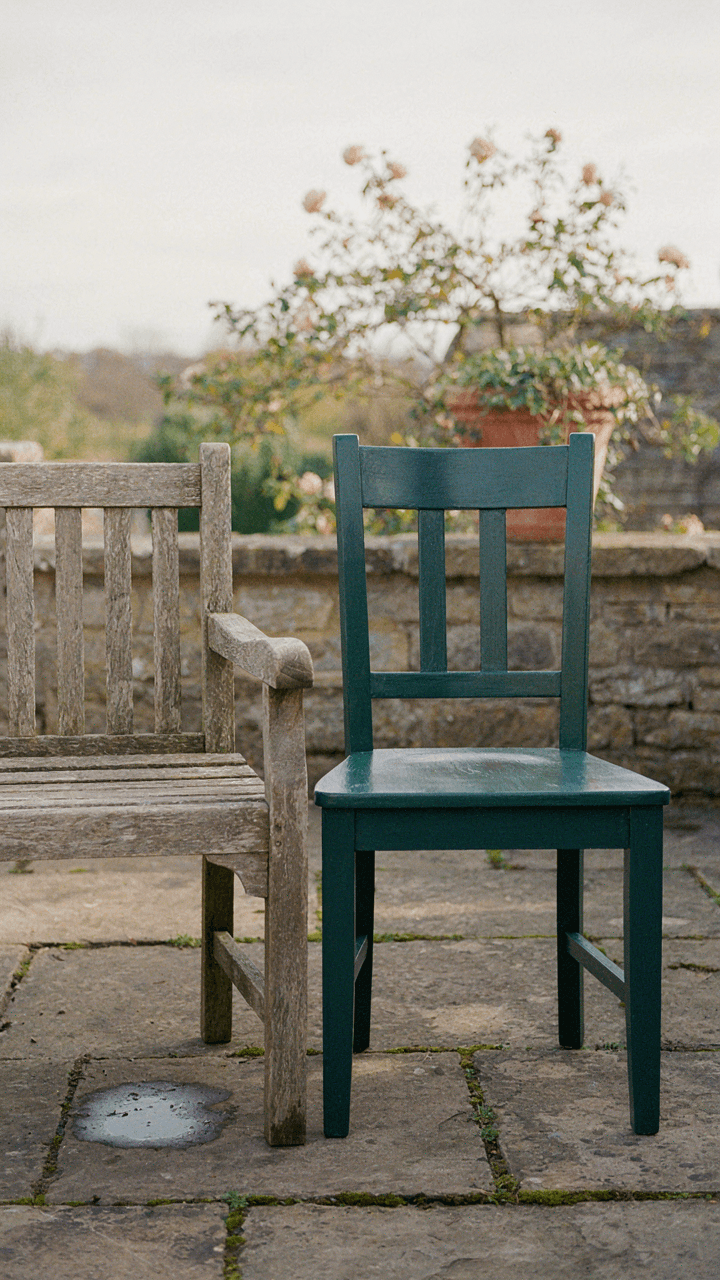
You’re worried thrift store finds will fall apart the moment rain hits them. That’s not the real problem. The real problem is that you don’t know which materials actually survive outdoor conditions and which ones were never meant to. Borrowing from materials science: treat thrifted items like load-bearing structures. Some materials handle stress cycles better than others. Metal rusts without proper sealing. Wood rots without protection. Ceramics and cast concrete survive decades with minimal intervention.
Test thrifted pieces before committing them to permanent outdoor placement. Put them through a moisture cycle first. Leave a wood chair outside for a week, then inspect the joints and finish. Metal patio furniture needs a wire brush to remove surface rust, then a rust-inhibiting spray or outdoor paint. Apply two coats minimum. For fabric seats, replace them with outdoor-grade material or accept that they’ll need replacement every two to three years. This isn’t laziness. It’s the operating cost of the system.
Low Effort Plants And Durable Materials
Skip the advice that says native plants require no maintenance. They still need water during establishment and during drought. The real move is choosing perennials over annuals and materials that don’t degrade. Sedums, ornamental grasses, and creeping junipers handle neglect better than flowering perennials that demand deadheading and feeding. Concrete, gravel, and stone age gracefully and require almost nothing from you once installed.
The material hierarchy for durability: stone lasts indefinitely. Concrete lasts 30-50 years. Wood lasts 10-20 years depending on treatment. Metal lasts 15-30 years with maintenance. Fabric lasts 3-5 years outdoors. Use this when assembling your space. Build the hardscape from stone and concrete first. Add treated wood elements second. Swap out fabric and metal accents as needed. This stacks cheap replaceable pieces over the permanent bones of your oasis, keeping your budget flexible year to year.
The Perceived Value Amplification Model

How Arrangement Elevates What You Already Own

You want people to think you have taste and money without spending either. That’s the real motive here, and there’s nothing wrong with naming it. Economics calls this signaling theory: you communicate status through arrangement, not acquisition. A thrift store chair placed intentionally in a garden corner signals differently than the same chair abandoned on a patio. Context rewires perception. The placement, grouping, and framing of objects creates the illusion of deliberate curation.
Thrift items become gallery pieces when you apply spatial discipline. Distance matters. Clustering three mismatched planters on a side table reads as intentional design. Spreading them across the yard reads as clutter. Height variation, sightline consideration, and negative space around objects force the viewer’s brain to interpret them as chosen, not discarded. The mechanism isn’t magic. It’s forcing contrast through deliberate emptiness and focal points. Someone viewing your yard makes a snap judgment: “This person knows what they’re doing” or “This person just put stuff outside.” The difference is arrangement mathematics, not budget.
Scarcity Becomes Exclusivity When You Rename It
The common advice says “make do with what you find.” That’s weak. Reframe the constraint itself. Psychology calls this cognitive reframing: your limited budget becomes a design philosophy, not a limitation. Scarcity is the actual mechanism that makes thrift finds valuable. If everyone could buy the exact same piece new, it has no narrative. When you acquire something rare because you hunted for it, the story changes. You didn’t compromise. You curated.
Name this openly to yourself first. Call your backyard space a “collected series” not a “budget build.” Language rewires how you see it and how others perceive it. A weathered vintage side table isn’t a cheap substitute for new furniture. It’s a one-of-a-kind industrial relic that cost you three dollars instead of three hundred. The frame transforms the object. Your guests will ask where you found pieces because they read as intentional acquisitions, not necessity purchases. End each thrift find by assigning it a deliberate purpose in your oasis design before placing it anywhere.
Cultivating A True Oasis: The Personal Connection
Objects That Reflect Your Actual Life

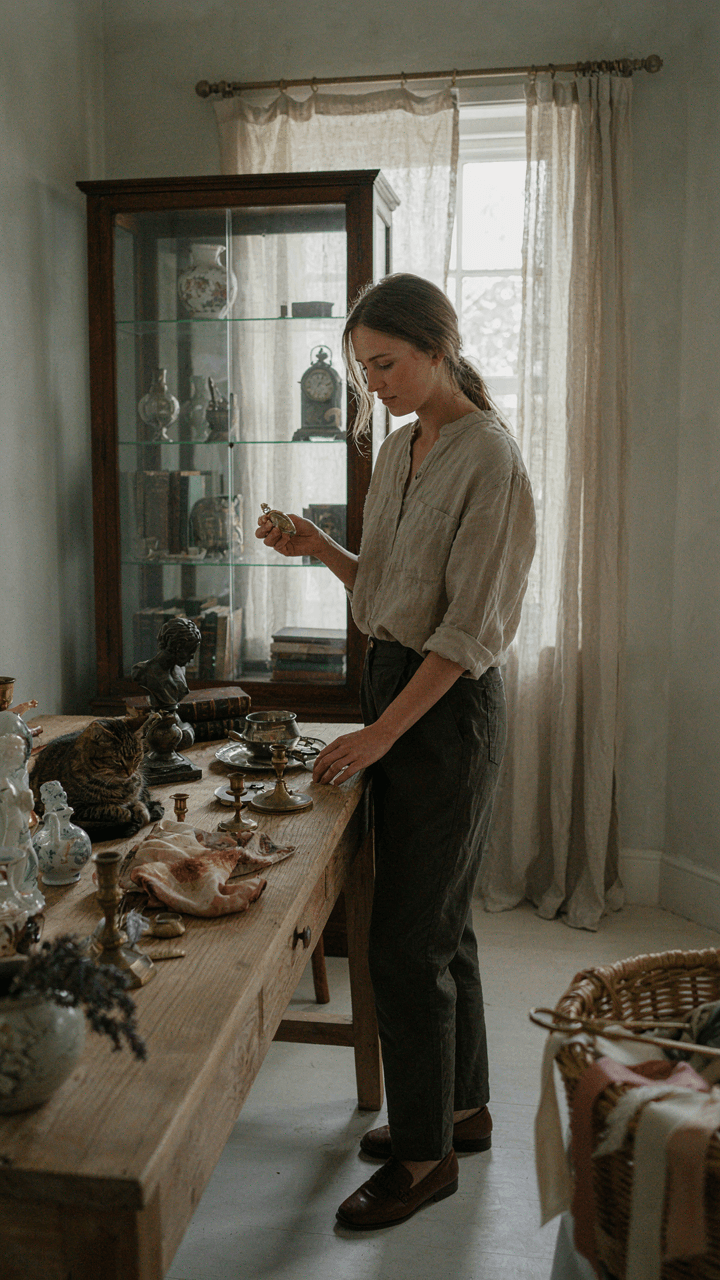
You want this to feel intentional because a yard filled with random thrift finds looks like you stopped trying halfway through. The real mechanism is curation, which is just filtering through noise until only signal remains. Buy pieces that connect to something you actually do or value, not pieces that look good in someone else’s yard on Instagram. A weathered bench matters if you sit on it. A vintage planter matters if you use it. Everything else is decoration pretending to be function.
The difference between a curated space and a cluttered one isn’t the number of objects. It’s constraint. Thrift stores train you to spot the rare piece among thousands of disposable ones. Apply that same filter to your backyard. Don’t buy a rusted metal sign because it’s vintage. Buy it because it marks something real in your life. This is how you build a space that works instead of one that just sits there looking styled.
The Story Each Piece Actually Carries
Every object has a previous life, and people assume that history matters aesthetically. It doesn’t always. What matters is whether you can articulate why a piece belongs in your space. The yard becomes an oasis when it tells your story, not someone else’s design narrative. This doesn’t require philosophy. It requires honesty about what you do there and what tools or objects make that better.
Find one piece each week that solves a real problem or fills a genuine gap. Maybe it’s a freestanding shelf for plant staging. Maybe it’s a side table that holds drinks during gatherings. Maybe it’s an old ladder that becomes vertical plant storage. Document why each piece entered your space, not just what it cost. That documentation becomes the permission structure to stop shopping and start building. Your oasis only holds together when every element earns its spot through function or memory, not just inventory.
Beyond Instagram: The Unphotographed Reality Of Your Space

Design For Yourself, Not The Algorithm
You want strangers to validate your taste. That’s the real reason you’re reading this section. The mechanism is simple: social media trains you to externalize your judgment. You stop asking “Do I like this?” and start asking “Will this photograph well?” This kills authentic design because the camera sees two dimensions and you live in three.
Build your oasis around how your body moves through it, not how it frames. Where do you actually sit? Which corner catches afternoon light without glare? Where do you hear neighbor noise? These questions have no Instagram answer. A thrift store wicker chair matters only if you’ll use it repeatedly, which you won’t if it’s positioned for aesthetics instead of comfort and function.
The Sanctuary That Lasts Beyond The First Month
Sustained use beats initial excitement. This is the difference between ownership and decoration. A space you designed for yourself compounds—you spend more time there, you notice what works, you adjust without guilt. A space you designed for perception atrophies. You stop using it because the performance ended.
Your real reward is the unnamed Thursday evening when you sit in your backyard and forget to check your phone. That happens only when every element serves your actual life, not your feed. To build this, spend two weeks using your space before adding anything else. Document what you actually need, not what looks good in photos. Then source those specific items from thrift stores. This protocol prevents 80 percent of wasted budget on unused pieces.
Your Real Obstacle Isn’t Money, It’s The Scarcity Mindset Blocking Your Vision Of Abundance In Plain Sight

Most people walk past treasure every single day. You see a broken chair at a thrift store and think worthless. Someone else sees a weekend project worth fifty dollars saved. The backyard oasis on a budget doesn’t exist because you lack resources. It exists because you refuse to see what everyone else discarded. Stop scrolling design inspiration. Go to the nearest thrift store today and buy one thing that makes zero sense to you right now. Your abundance problem is a perception problem.