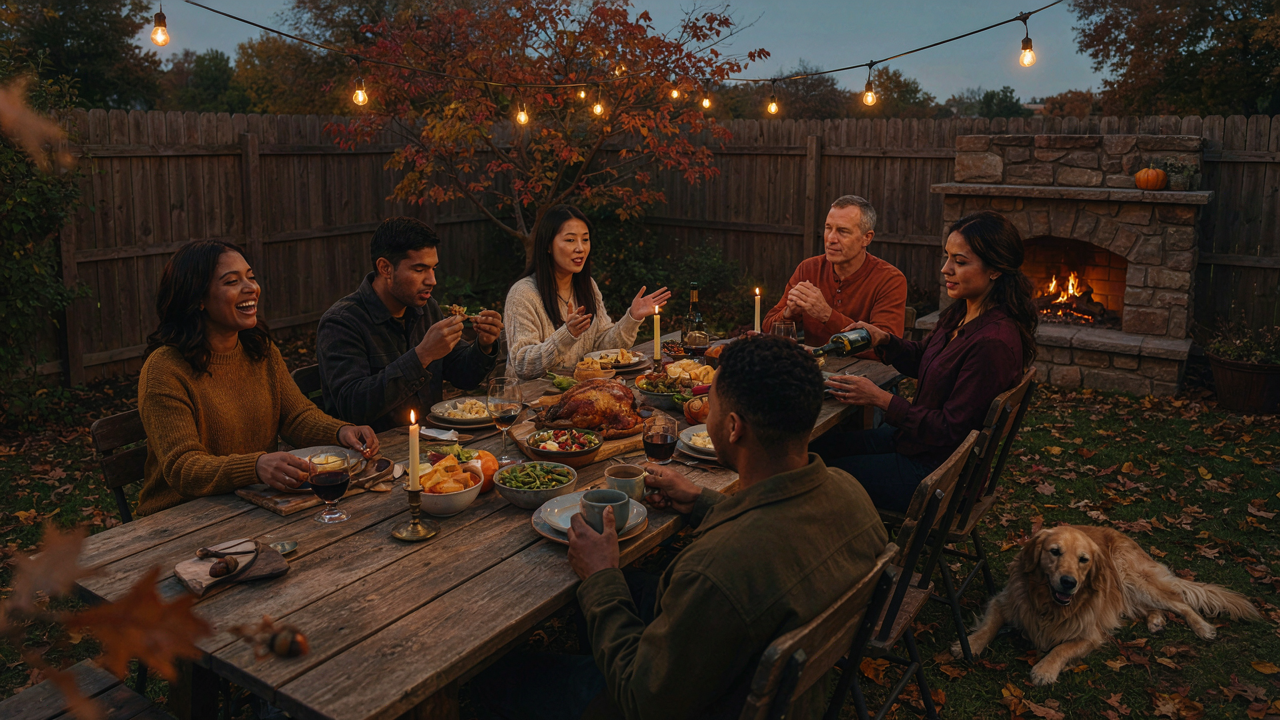
Beyond The Blanket: The Friendsgiving Authenticity Protocol
Comfort Over Curation
You want people to think you have your life together. The mechanism is simple: most outdoor friendsgiving aesthetics fail because they optimize for the photograph instead of the actual experience. You set up those Pinterest-perfect tableaus, and then your guests sit in the cold for three hours while you panic about napkin placement. The real cost isn’t the effort—it’s the attention you’re dividing between hosting and performing.
Strip the setup down to what solves an actual problem. A good outdoor table needs: something to eat off, something to drink from, enough light so people see their food, and protection from wind that doesn’t look like you’re preparing for a hurricane. Everything else is distraction. The moment your guests feel physically comfortable, they relax. That’s when real conversation happens. That’s the whole point.
Function Beats Trend Cycles
Common advice says rotate your decor with Pinterest trends. That’s wrong. Trends exist because they’re cheap to replicate and easy to photograph, not because they improve the experience. Outdoor friendsgiving happens once a year—this isn’t a space where trend-chasing makes tactical sense. You’re wasting mental energy and money on things that will look dated in six months while ignoring what actually works year after year.
Build your setup around problems that don’t change. Guests get cold, so use heaters or fire pits. The sun sets early in fall, so install lights before dinner starts. Wind moves napkins and centerpieces, so weight things down or pick durable pieces. The table surface gets wet, so use materials that handle moisture without degrading. Every element you add should solve a real constraint. When you operate this way, your setup looks intentional because it is—not because it matches a seasonal mood board.
The Un Decorated Table: Why Less Is More
Stripping Away What Doesn’t Matter

You want a decorated table because you believe decoration proves you tried. It doesn’t. The mechanism is simple: attention is finite. Every centerpiece, napkin ring, and place card fights for cognitive real estate your guests have limited amounts of. The minimalist design movement proved this in the 1960s by removing ornament and forcing form to justify itself. Apply that principle here. An outdoor friendsgiving table with nothing but essentials creates space for actual interaction instead of visual noise competing for attention.
Most people clutter tables because they confuse abundance with care. Thanksgiving culture sold us the idea that more decoration equals more effort equals more respect. That’s backward. A bare wooden table with good food and clear sightlines between people communicates confidence. It also solves a practical problem: outdoor elements degrade decorations faster than indoors. Wind knocks over centerpieces. Sun fades napkins. Rain ruins place cards. Strip these away and you remove failure points while improving the actual experience.
Connection Requires Clear Sightlines
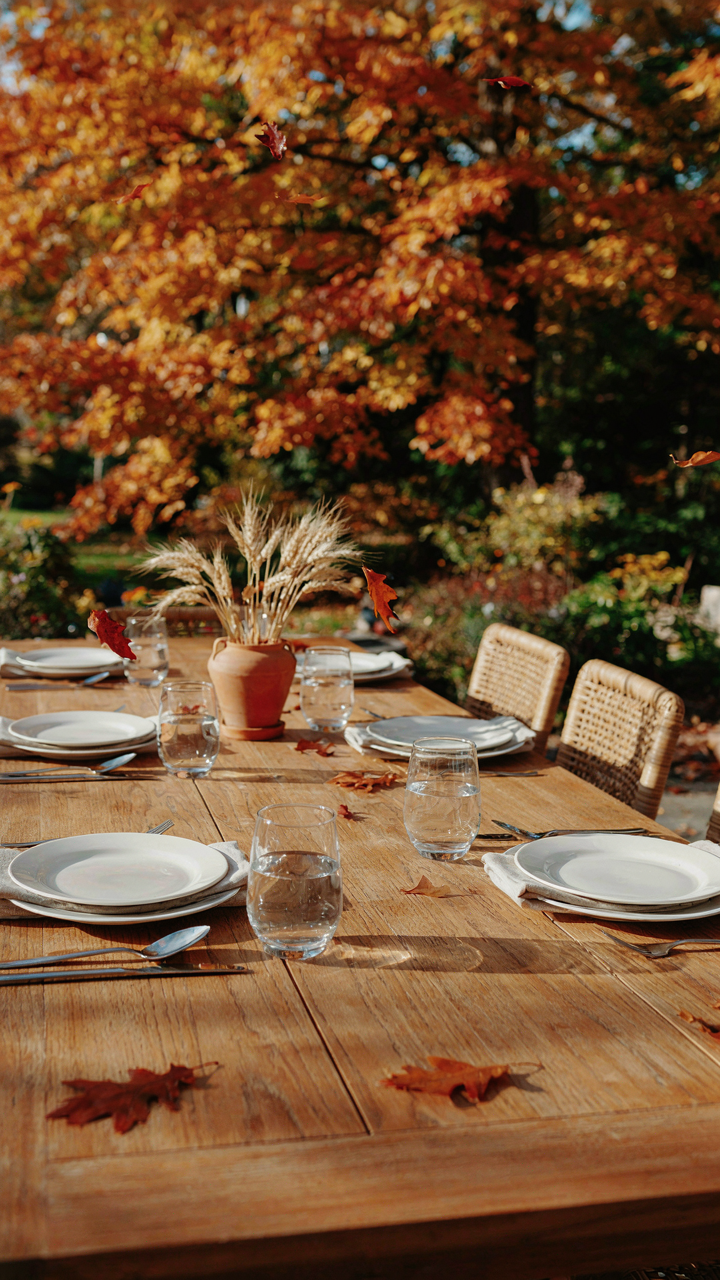
A table designed for conversation needs unobstructed views. Place five decorative items between six people and you’ve created visual barriers that fragment attention. Keep the table surface clear except for plates, glasses, and serving dishes. The food itself becomes the centerpiece through its presence and quality, not through props surrounding it. This directness works because human connection operates on eye contact and unblocked communication paths. Remove obstacles and conversation flows naturally.
The second layer is functional minimalism. Provide what people actually use: napkins, utensils, cups, plates. Skip the extras. A wooden cutting board with bread. A simple serving spoon in each dish. Let the meal’s structure support itself through clarity rather than decoration supporting the meal through visual weight. Your job is to make the gathering effortless to navigate, not impressive to photograph. When guests sit down and see open table space, they relax instead of calculating where to put their hands.
The Fire Pit Fallacy: Engineering Warmth, Not Just Heat
Where Your Fire Actually Sits Matters More Than Size
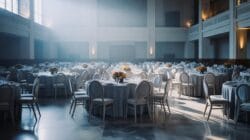
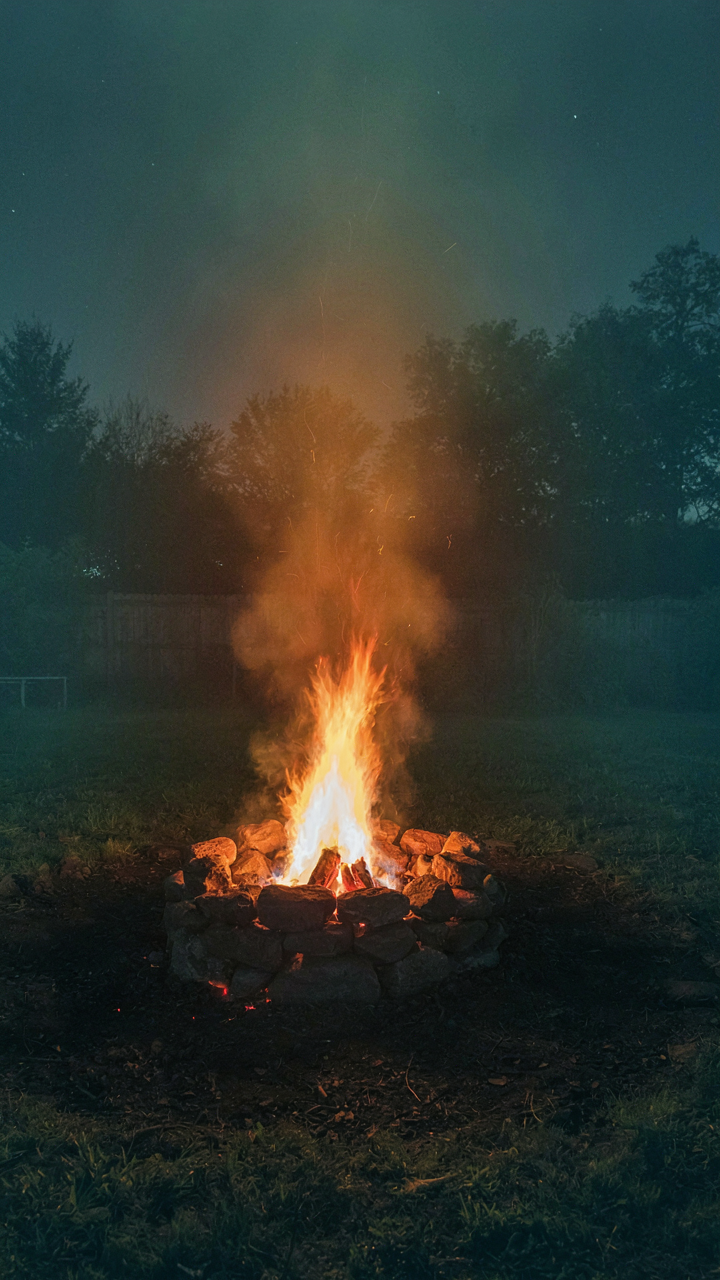
You want the fire pit to look intentional, which is why you’re reading this section. The real mechanism is simple: heat radiates outward in a dome pattern, not uniformly in all directions. Most people plop the pit in the middle of the table arrangement and wonder why half the guests stay cold. Thermodynamics governs this. The inverse square law states that heat intensity drops with the square of distance from the source. Place your fire pit off-center, slightly elevated on a stone base or metal stand, positioned where the prevailing wind won’t blow smoke across your dining area. Guests sitting perpendicular to the wind direction get radiant heat; those downwind get smoke and resentment. The pit should sit three to four feet from the table edge, not nestled in the middle like a decorative centerpiece.
Proximity without obstruction is the actual goal. Tables arranged in a U-shape or open-sided horseshoe around the pit let heat reach people without creating a physical barrier between diners. If you must use a center pit, lower it into the ground by twelve to eighteen inches so faces and torsos stay in the radiant zone while maintaining clear sightlines. The setup forces a choice: comfort or conversation. Choose the arrangement first, then position the fire to serve that arrangement.
Hardwood Density Determines Burn Duration And Heat Output
Forget the aesthetic fire that burns down in ninety minutes and leaves your guests shivering. Thermodynamic principles apply directly to fuel selection. Dense hardwoods burn hotter and longer because their molecular structure stores more energy per volume. Oak, hickory, and ash contain roughly 25 to 30 million BTUs per cord. Softwoods like pine ignite faster but release energy quickly, leaving you constantly feeding the fire and dealing with excessive smoke. The common advice to use “seasoned wood” is incomplete. Properly seasoned hardwood should measure below 20 percent moisture content. Split your logs six to eight months in advance, stack them in open air away from direct rain, and cover the top only. This specific timing matters more than wood type.
Build your fire in layers for sustained output. Start with a base of larger diameter logs (four to six inches), leaving finger-width gaps for airflow underneath. Add a secondary layer of medium logs perpendicular to the base. This structure creates an updraft that sustains combustion without constant intervention. Add new logs only when the existing bed drops below coals, not when flames diminish. A properly constructed hardwood fire maintains surface temperature for four to five hours with minimal tending, keeping guests warm throughout the entire dinner without the distraction of constant maintenance.
Dining Al Fresco, Defying The Elements
Wind Breaks That Actually Work

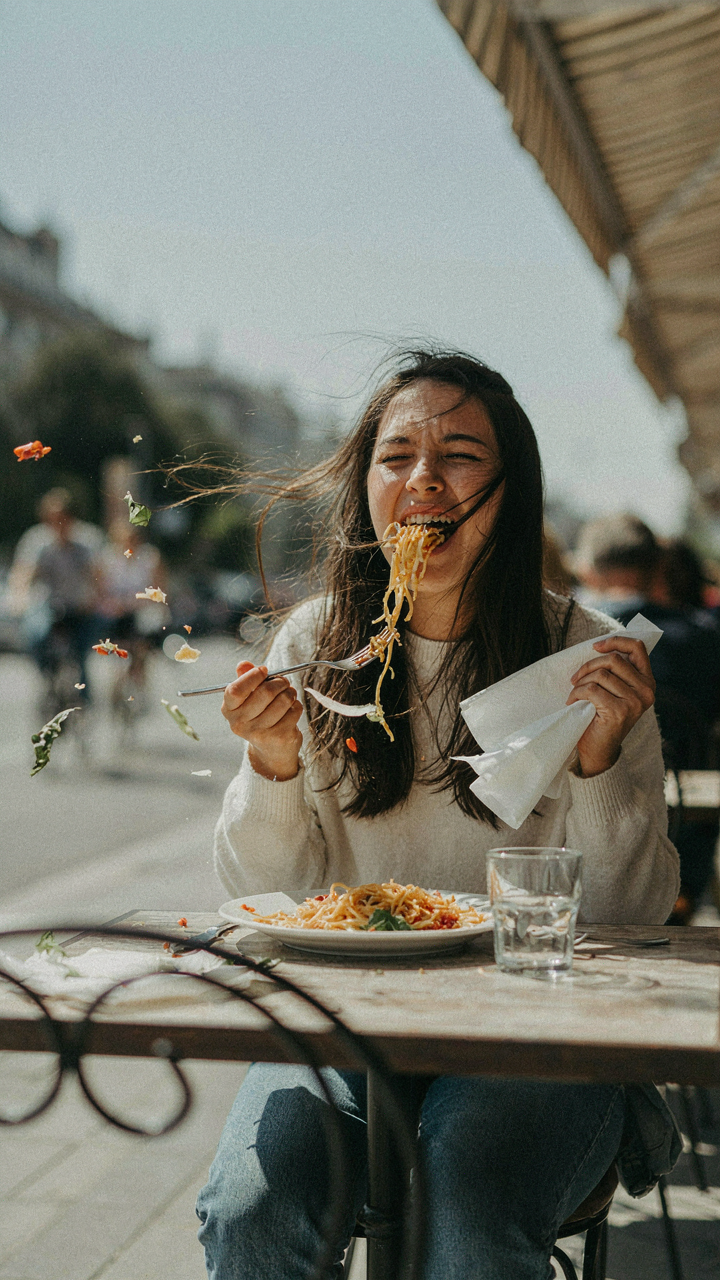
You want people to stay seated instead of abandoning your table halfway through. Wind kills outdoor dining faster than cold does because it makes food taste like nothing and forces guests into defensive posture. The mechanism is simple: moving air accelerates heat loss from food and disrupts scent molecules before they reach your nose, so your brain registers the meal as bland even when it isn’t.
Windbreaks work best when positioned perpendicular to prevailing wind direction, not behind the table. Hedges, fencing, or cloth panels create dead zones where air velocity drops sharply. Height matters more than density. A four-foot barrier stops ground-level wind more effectively than dense shrubs that channel gusts over the top. Install breaks on the upwind side and ensure they’re spaced at least six feet from seating to avoid feeling trapped.
Lighting That Extends Your Window
Fall darkness arrives early, and most people botch this by hanging string lights and calling it done. String lights create pools of dim visibility surrounded by black space, which makes your pupils dilate and contract constantly, causing eye fatigue. Your guests won’t stay long because their brains interpret poor visibility as a sign to leave.
Position ambient lighting at table height or slightly below, not overhead. Lanterns with LED bulbs placed around the perimeter create consistent illumination without harsh shadows. Use warm color temperature (2700K or lower) to avoid disrupting melatonin production and to make food look appetizing. Backup battery-powered lights in case grid power fails, and test everything an hour before guests arrive so you’re not troubleshooting in the dark.
The Friendsgiving Outside Ideas Menu: Substance Over Showmanship
Dishes That Survive The Journey

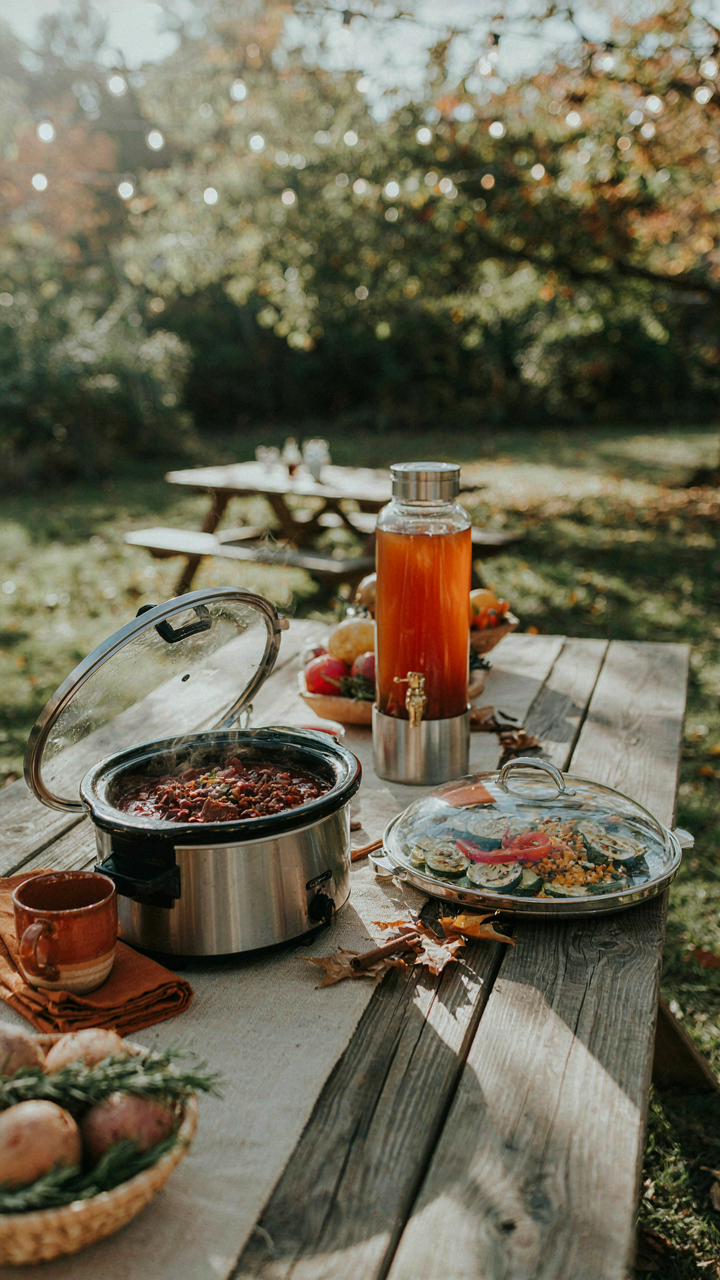
You want people to think you’re more organized than you actually are. Here’s the real mechanism: outdoor friendsgiving menus fail because hosts treat them like indoor dinner parties, then panic when food cools down or spills during transport. The solution is borrowing from catering logistics. Caterers use thermal mass as their operating principle—foods that hold temperature and texture through transit and sitting time. This means braised dishes, grain-based sides, and anything already combined wins. Skip the delicate, temperature-sensitive plays.
Roasted root vegetables, slow-cooked proteins, and sturdy grains travel intact and taste better cold or room-temperature than their hot-plate counterparts. Sheet pan meals, Dutch oven braises, and grain salads aren’t fancy, but they eliminate the variable that kills most outdoor meals: the lag between cooking and eating. Transport containers matter less when the food itself doesn’t deteriorate. Build your menu around dishes that improve or stay stable during the one to three hour window between your kitchen and the table outside.
Serving Without The Apparatus
Everyone gives the same garbage advice here: use slow cookers and chafing dishes. That’s wrong because it creates logistics you don’t need and locks you into electricity or fuel you might not have outside. The better move is strategic batching. Bring food out in phases instead of all at once. Appetizers first, then mains, then sides as people eat. This keeps food fresher, reduces serving surface clutter, and gives you an actual rhythm instead of a static spread that looks picked-over after twenty minutes.
Set up your serving area as a line, not a buffet circle. People move through faster, you control portion sizes without seeming stingy, and traffic doesn’t create a jam where everyone stands idle. Pre-plate components when possible—bread and butter already on plates, proteins plated, sides in small bowls people grab. Fewer decisions and fewer hands touching serving spoons means cleaner food and faster movement through the line.
Fall Bonfire Party: The Art Of Structured Spontaneity
Zones Over Schedules

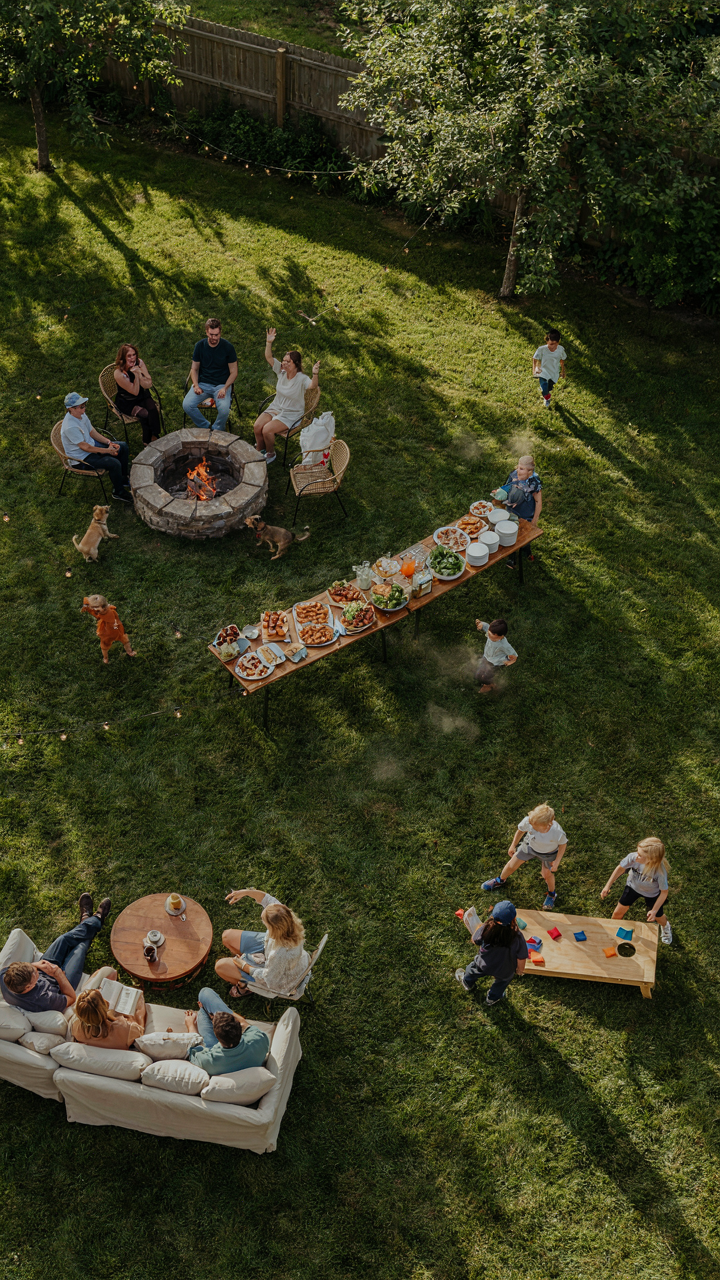
You want people to feel free while actually knowing what to do. That’s the real tension here. Borrow from retail design’s concept of “anchor zones.” Create distinct activity areas around your yard—fire pit, food table, seating clusters, lawn games—without announcing a timeline. People self-organize into these spaces based on energy and mood, not because you told them when to eat or when to socialize. The structure disappears into the environment.
Placement matters more than permission. Position the bonfire where it naturally draws people without blocking conversation paths. Set the food table visible but not in the walk-through zone. Put games far enough from the fire that people don’t accidentally migrate there. When zones work spatially, guests navigate the party on their own rhythm. You’ve designed autonomy, not enforced it.
Proximity Creates Momentum
Forced group activities kill real conversation. Instead, arrange seating so small clusters can form, merge, and split without awkwardness. Bench seating along the fire encourages side-by-side talking. Scattered chairs let people rotate in and out. The mechanism here is simple: accessibility reduces friction. If someone wants to join a conversation, they shouldn’t have to interrupt a planned activity or climb over people to get there.
Conversation happens at edges and transitions, not in the center of attention. Position yourself between zones so you can move people naturally from one area to another without announcing it. Mention something to one person that another person overhears, and they’ll drift over. Hand someone a drink and introduce them to the group nearest the fire. You’re not hosting an event—you’re engineering low-resistance social movement.
The Fall Flannel Party: Practicality As Aesthetic

Texture That Signals Intentionality
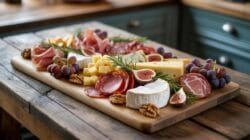
You want people to think you planned this without trying. That’s the real game here. The mechanism is simple: rough textures read as honest. They signal you weren’t chasing Instagram. Burlap, raw wood, unfinished linen, and weathered metal all communicate restraint. This isn’t maximalism masquerading as taste. These materials age visibly and don’t require maintenance theater. They’re the opposite of precious.
The flannel party aesthetic borrows from industrial design, where form follows function and materials display their actual properties instead of hiding them. You’re using visible wear as your design language. Unbleached cotton runners, reclaimed barn wood tabletops, and cast iron serving pieces don’t need refinement because they already possess it through use. Start with your table surface. If it’s new wood, leave it unsealed. If you have access to salvaged timber, use that. The imperfections aren’t flaws to cover. They’re your content.
Layers Work Against Weather, Not For Instagram
Temperature drops eight degrees when the sun sets in fall. You address this through clothing protocol, not by adding decorative blankets everywhere. Layering in thermodynamics means creating air pockets between materials to trap heat. Apply that directly: ask guests to bring a specific item when you invite them. Not a vague “bring a sweater.” Tell them “bring a wool layer or flannel shirt.” This removes the guessing game and ensures people dress functionally instead of fashionably cold.
Your table setup reinforces this. Position it near your house or a windbreak. Have actual blankets folded on chairs before people sit. Don’t drape them as decor first and expect people to use them later. They won’t. Provide exterior heaters if budget allows, but don’t rely on them. They create false comfort and expensive fuel burn. The real protocol: check the actual temperature at your dinner time one week prior, then build your layer guidance and seating proximity around that data point.
Friendsgiving Table Ideas: The Functionalist Approach
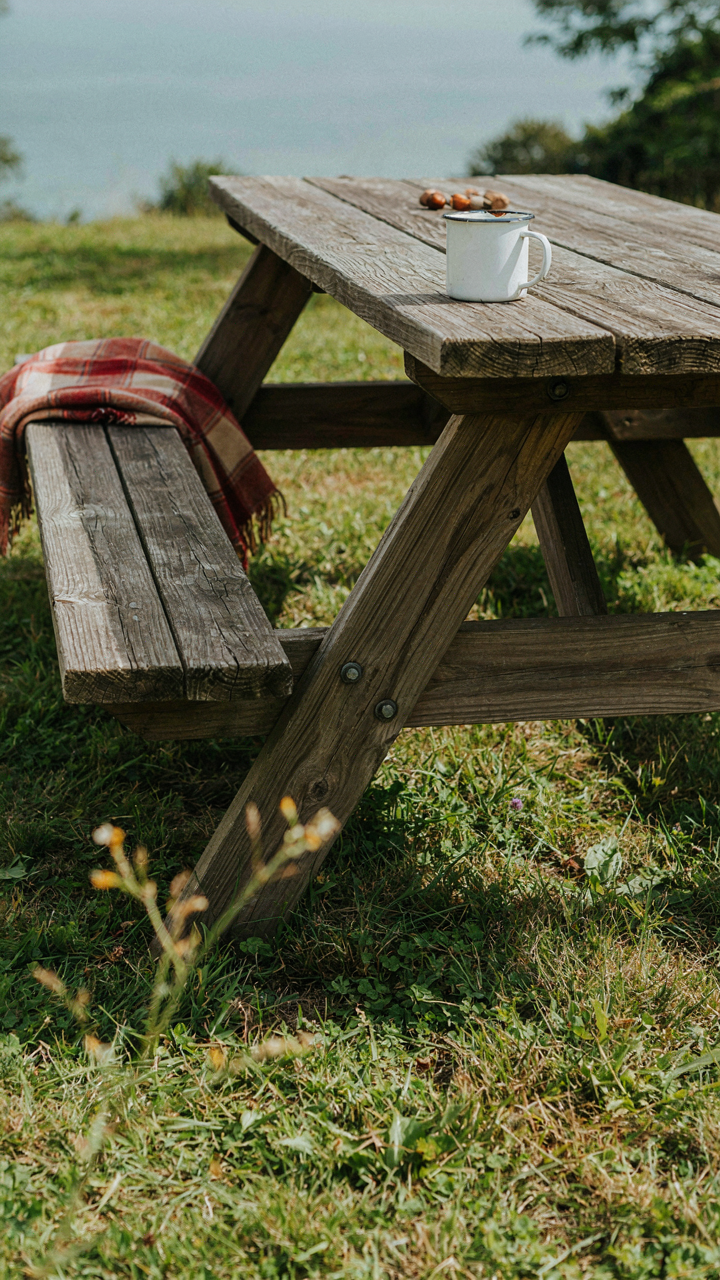
Surfaces That Don’t Fall Apart
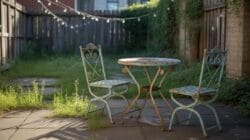
You care about this because you don’t want your table collapsing mid-meal and looking incompetent in front of people you’re trying to impress. The mechanism is simple: outdoor surfaces fail when water sits on them or temperature swings stress the material. Pick surfaces that shed water or tolerate it.
Polycarbonate and marine-grade plywood outperform standard wood. Polycarbonate won’t warp in freeze-thaw cycles. Marine plywood resists swelling because its veneer layers don’t absorb moisture like regular lumber. Concrete and sealed stone work too, though they’re heavy and permanent. Avoid untreated wood and particle board outdoors, even under a tent. Humidity wins eventually.
Setup And Teardown Protocol
Getting people to help move furniture requires systems, not vibes.
- Modular table sections: Build your surface from 2×4-foot segments instead of one 8-foot slab. Two people move each piece without strain. Stack them vertically after the meal instead of carrying them horizontally through doorways.
- Leg system that clicks in place: Use bolt-together legs or magnetic connectors instead of bolting everything down. Swapping takes minutes, not a screwdriver hunt.
- Designated staging zone: Establish one spot 15 feet from the eating area where you stack plates, centerpieces, and linens before service. Reduces walking distance by half.
- Color-coded transport bins: Mark bins by zone (table, place settings, serving). One person grabs the blue bin instead of three people standing around deciding what goes where.
- Evening pack-in sequence: Work backward from service time. Pull centerpieces at 30 minutes post-meal, then linens, then plates. Don’t let everything pile up at once.
Assign roles before guests arrive. One person handles surfaces, one manages linens, one clears plates. Rotation kills the illusion that cleanup just happens. Document your sequence on a printed sheet so next year you skip the planning step and execute immediately.
The Real Obstacle To Memorable Friendsgiving? Your Inability To Embrace Imperfection
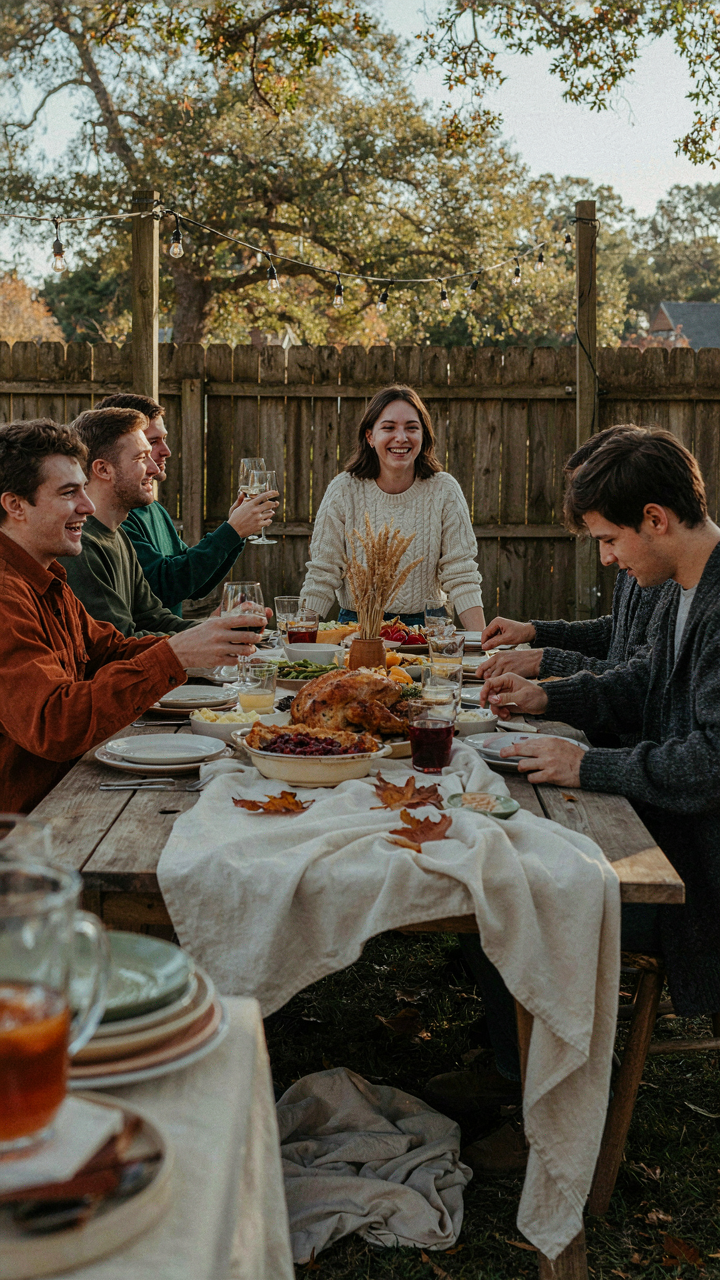

You’re overthinking the table. The centerpiece will shift. The food won’t arrive at the same time. Someone will spill wine. Your outdoor friendsgiving doesn’t need Instagram perfection—it needs you present. Pick one element you care about today and let everything else fall apart beautifully. The people you love won’t remember the napkin fold. They’ll remember you showed up.