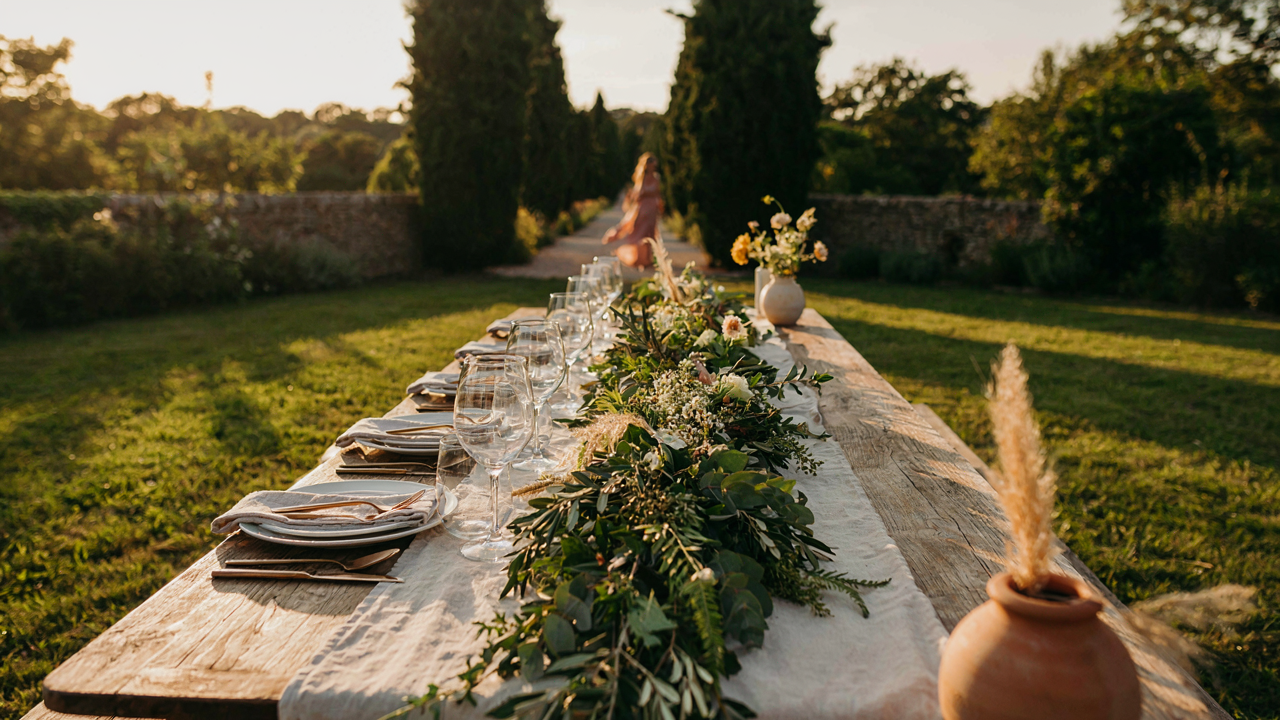
The “Fresh” Fallacy: Why Your Greenery Dies (and How To Stop It)

What You’re Really Afraid Of
You want your table to look expensive without looking like you tried too hard. That’s the real fear underneath: brownish leaves on day two that scream neglect. Most people kill greenery before the event even starts because they treat it like decoration instead of a biological system with specific needs. Greenery doesn’t die from being old. It dies from dehydration, improper cutting technique, and being placed in hostile environments before construction.
Water moves through plant stems the same way pressure moves through a hydraulic system in engineering. Cut a stem at the wrong angle or let it sit in air for too long, and you’ve sealed the channels that transport moisture upward. The first mistake people make is cutting greenery the morning of and expecting it to stay firm for eight hours. The second is not conditioning the stems in water immediately after cutting. Thirty minutes of proper hydration in room-temperature water before assembly locks in moisture retention and adds days to lifespan.
Hydration Timing Beats Everything Else
Cut your greenery 24 hours before assembly, not three hours before. Submerge the bottom two inches of every stem in room-temperature water immediately after cutting. Don’t use hot water. Cold water constricts the stem channels and slows absorption. Leave the stems in water in a cool, dark space overnight. This pre-saturation fills the plant’s vascular system with moisture that sustains it through heat, wind, and the stress of being handled and repositioned on a table.
The second piece nobody mentions: recut stems at a 45-degree angle right before final assembly. A fresh angled cut exposes more surface area and removes the sealed tissue that formed during overnight storage. This takes 30 seconds per stem. Most garlands fail because people skip this step and wonder why greenery wilts after six hours. Make the angle cut, place the stem immediately into a water-filled floral tube or wet foam, and the garland stays hydrated for the entire event window.
Beyond The Bunch: Sourcing Superior Greenery That Actually Saves Money
Ethical Foraging Versus Overpriced Florists

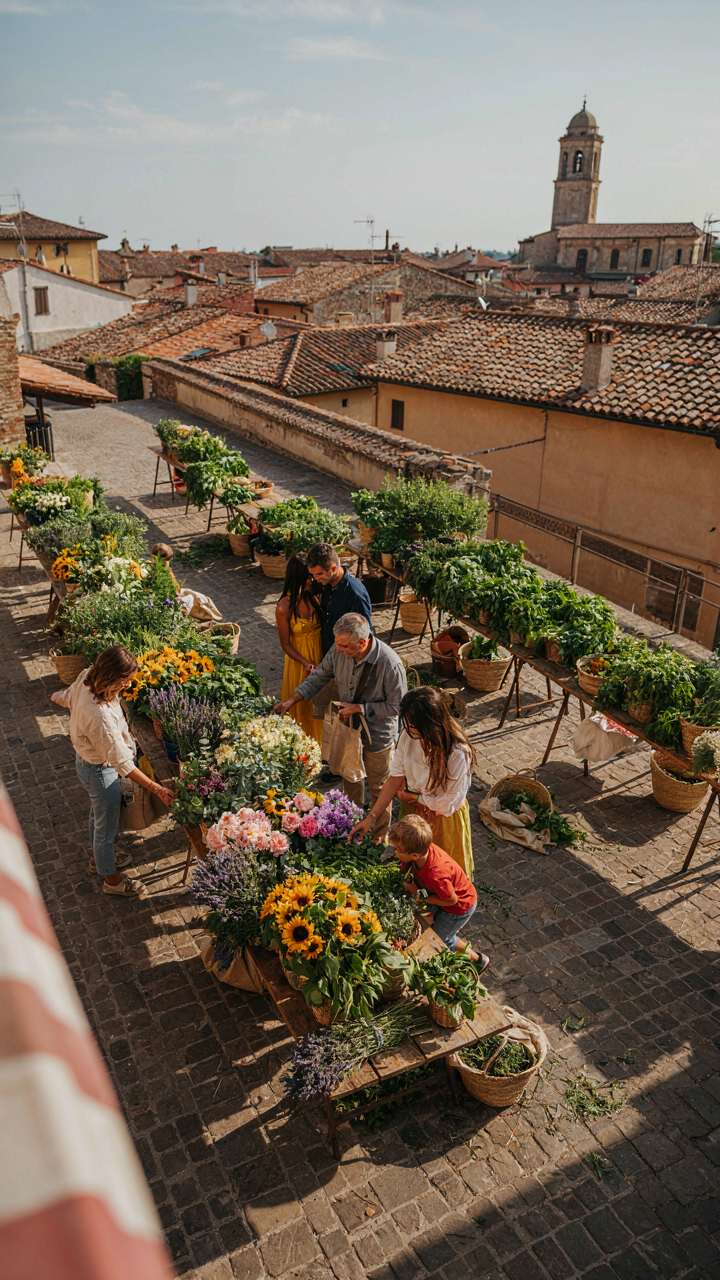
You want to feel smart about saving money without actually doing the work to source it yourself. Here’s the mechanism: florists charge 300-400% markup because they control scarcity through retail distribution. Foraging breaks that artificial constraint. Walk local parks, wooded areas, or ask property owners for clippings from hedges and trees. Eucalyptus, Italian ruscus, salal, and leather leaf grow wild or semi-wild in most regions. You pay zero for material and gain the actual skill of identifying what works. The trade is time, not money.
Florists don’t forage because retail economics reward them for buying pre-packaged bunches from wholesalers. You’re not bound by that system. Check local foraging groups or city parks departments for what’s harvestable without permits. Cut in early morning when stems hold water longest. Condition clippings in water for two hours before building your garland. This single protocol costs nothing and extends greenery life by 3-5 days compared to store-bought material that’s already been handled, stored, and shipped.
Negotiating Bulk Deals Without Retail Markups
The advice to “shop around” is incomplete because it ignores where real savings live: wholesale suppliers require minimum orders but eliminate middleman cost entirely. Call local wholesale florists or agricultural suppliers directly. Most sell to the public at volume discounts starting at 25-50 stems. You’ll pay 40-60% less than retail per stem because you’re removing the retail distribution layer. Negotiate delivery fees into bulk pricing. One order for a dozen tables costs less per unit than buying single bunches from three different shops.
Build relationships with one supplier and reorder annually for events. Consistency beats price shopping. Ask what’s in season and buy accordingly because seasonal material costs 50% less than forced imports. Winter offers holly, magnolia branches, and evergreens. Spring brings fresh foliage. Summer and fall give you local branches most growers discount because they’re abundant. Place orders two weeks prior and specify your event date. This timing lets suppliers allocate material from their stock rotation instead of rushing premium shipments your way at premium rates.
The “Foundation First” Protocol: Building A Base That Doesn’t Crumble

Why Your Garland Will Fail Without Structural Thinking

You want it to look effortless. That’s the real reason you’re reading this. But a greenery table garland is a load-bearing system, not a decoration. Think of it like civil engineering: you need a frame that distributes weight, not a pile of branches you hope stays put. Most people skip this entirely and blame the wind.
The base determines everything downstream. You’re building on top of it, not around it. If your foundation moves, every leaf telegraphs that movement. Outdoor tables create microclimates where wind funnels differently than you expect. The structure absorbs that force before it reaches the foliage. Without this, you’re fighting physics with hope.
Techniques That Actually Hold Under Outdoor Conditions
The common advice says use floral foam. That’s incomplete. Floral foam alone fails outdoors because water absorption and UV exposure degrade it within days. Real anchoring uses mechanical tension plus strategic weight distribution.
- Chicken wire wrapped around table edge: Creates a rigid scaffold that clamps garland components in place mechanically. Twist wire ends under the table lip to prevent shifting. Works across tables of any length without gaps.
- Fishing line and corner posts: Threads fishing line through garland at intervals and ties to sturdy anchor points at table corners. Invisible to guests and transfers lateral force away from the garland itself.
- Floral mechanics paired with deck screws: Mount floral mechanics (the green blocks) to wooden bases that you screw or clamp directly to the table. Prevents the foam from floating or sliding when wet.
- Lead weights in strategic pockets: Sew small lead fishing weights into fabric or burlap pockets sewn into the garland base. Lower center of gravity dramatically reduces wind impact without visible hardware.
- Zipties through pre-drilled holes: Drill small holes through table boards if you own the table, then run heavy-duty zipties through garland and into those holes. Removable and doesn’t damage finishes.
Secure the garland at three anchor points minimum across a long table. One at each end and one at the midpoint. This prevents the middle from lifting or sagging independently. Test movement by pushing the garland horizontally with moderate force before guests arrive. If it shifts more than half an inch, tighten your anchors.
Greenery Runner: The Art Of Asymmetrical Abundance

Breaking Free From Rigid Symmetry

You want permission to stop matching both sides perfectly because symmetry feels safe and you’re afraid asymmetry reads as a mistake. Here’s the mechanism: your eye processes visual information faster when it scans asymmetry because the brain works harder to find balance. This tension holds attention. A centered, mirrored garland becomes invisible within seconds. An off-balance arrangement forces the viewer to stay engaged longer, which is why high-end event designers abandoned symmetry a decade ago.
The common advice says mirror your greenery on both sides of a center point. That’s what amateurs do. Real control comes from abandoning the midline entirely. Place your densest foliage cluster at one-third along the table length, then let secondary clusters taper toward the ends at different rates. Your largest architectural branches go off-center. This creates narrative movement instead of a static display.
Visual Weight And Focal Points
Design borrows from physics here: visual weight is mass plus distance from the eye. A large branch close to the table edge carries more perceived weight than a small filler far from sight. Build your runner by placing heavy elements at strategic zones rather than spreading medium elements everywhere evenly. Identify where guests will actually sit and what angle they’ll see the garland from. That determines where your focal point matters most.
Cluster your most expensive or visually striking foliage at the point of highest visibility. Use cheaper filler to extend the runner along the rest of the table. Space your focal points so they create rhythm without repetition. The garland should guide the eye from one zone to another, never all at once. Alternate dense and airy sections so the viewer’s gaze moves deliberately through the entire length.
The Ecology Of Elegance: Mimicking Nature For Lasting Beauty

How Plants Stack Without Collapsing

You want this garland to look intentional and expensive, not like you threw random stems at a table. That requires understanding the actual mechanics of how plants support each other in nature, borrowed straight from forest ecology. In a forest canopy, plants don’t grow in single layers. They occupy distinct vertical zones: emergent trees at top, understory plants below, shrubs lower still, ground cover at base. Each layer depends on the one beneath it for structure.
Your garland works the same way. Start with woody stems as your structural backbone, then layer progressively lighter materials inward. The heavier material creates the framework. The medium-weight filler prevents gaps and adds visual bulk without demanding thickness. Lighter materials like baby’s breath or eucalyptus leaves become the detail layer that reads as fullness from a distance. Build downward from largest to smallest diameter, and the whole thing holds without collapsing under its own weight after three hours of sun and wind.
Building Layers That Actually Hold
Most DIY garland advice tells you to “just add more greenery until it looks full.” That’s incomplete. You need succession, the ecological principle where plants occupy space in temporal and structural order. The garland you built last week fails because you skipped the durable skeleton.
Start with your frame: floral foam, chicken wire, or bound branches depending on length. This is permanent. Add woody stems next: eucalyptus branches, Italian ruscus, or preserved oak branches. These hold structure for weeks without wilting. Then layer filler: salal, leather leaf, or pittosporum. These materials stay pliable and hide the mechanics. Finally, add your focal flowers or textural elements last. This order means your garland maintains shape even as individual pieces dry or shift. The reverse order falls apart in days because nothing underneath supports the visible layer.
Greenery Garland Wedding Table: When “Perfect” Is The Enemy Of “Done”
Focus On What Actually Registers

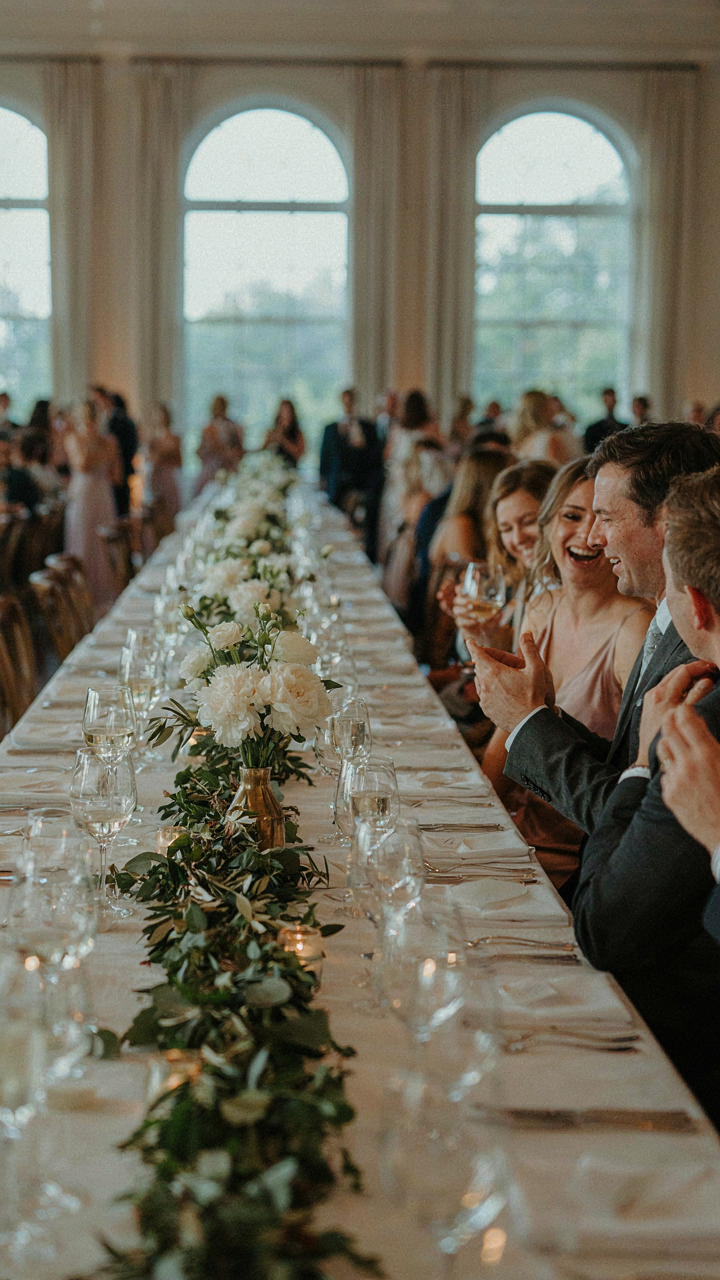
You want your guests to notice the table looks intentional, not that you spent six hours precision-placing each eucalyptus leaf. That’s the real fear underneath the perfectionism. The mechanism is simple: human eyes detect clusters and rhythm, not individual stem placement. A garland reads as “designed” when it has visual weight and directional flow, not when every leaf sits at a calculated angle. Build for the ten-foot view first, then refine if time remains.
The wedding table garland succeeds because of negative space and anchor points, not flawless symmetry. Place your focal stems (larger foliage, textured branches) at thirds along the garland’s length, then fill gaps with filler material. Guests see the structure before they see the gaps. This hierarchy saves hours of needless adjustment and produces a garland that photographs well and survives the evening without collapsing.
Deliberate Asymmetry Beats Forced Balance
Industrial design teaches us that stability comes from strategic weight distribution, not uniform placement. Apply this to your garland: concentrate denser foliage on one side of a focal point, then taper toward the lighter end. The garland stays structurally sound and reads as naturally organic rather than artificially arranged. An asymmetrical garland actually holds better on a long table because the weight isn’t fighting itself at the center.
Stop adding filler to hide mistakes. Real imperfection means a few stems facing backward, one eucalyptus branch slightly twisted, gaps between clusters that let the table show through. These aren’t failures—they signal a hand assembled this, not a factory. The protocol: build your garland in sections on a flat surface, leave 10-15 percent of stems intentionally loose, then secure the whole piece to the table. Loose stems move with air and guests, looking alive instead of static.
Table Runner Greenery: The Economics Of Effort Vs. Impact
The Math Behind Visual Density
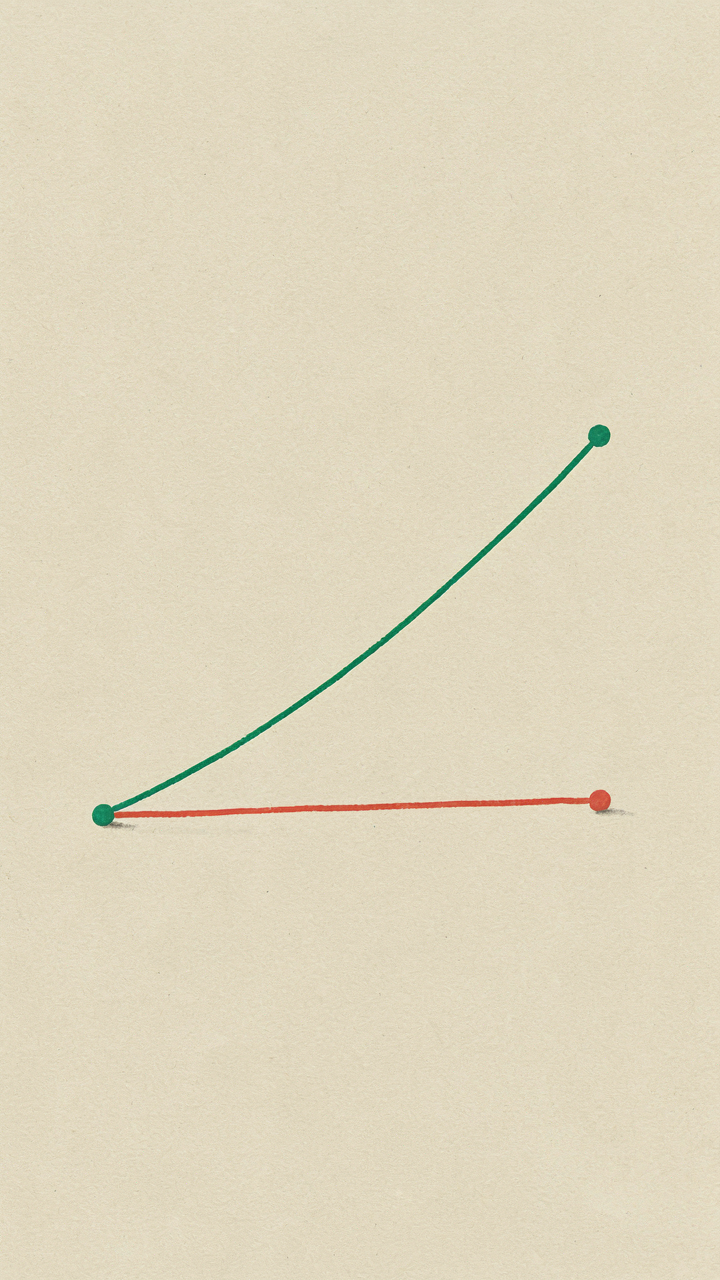
You’re afraid you’ll spend eight hours building something that looks thin and cheap. Here’s the mechanism: economics calls this “return on input.” A table runner garland operates on density perception, not total material volume. Two stems of eucalyptus placed at precise intervals beat ten stems crammed together. The viewer’s eye registers fullness from strategic spacing, not mass. Most people reverse this and overcomplicate early, wasting material and time before the garland even takes shape.
The real work happens in the first ten minutes. Decide your base structure first—usually a length of floral wire or rope—then commit to a stem-to-space ratio. A 6-foot table needs roughly fifteen to twenty key greenery pieces, not fifty. Place them at the thirds and quarters of your runner, then fill gaps with filler material. This approach cuts your labor by sixty percent while improving how the final piece actually looks.
Avoiding The Complication Tax
Most guides tell you to layer every texture available, then wrap it with ribbon, then add lights. That’s wrong. Each addition past the core garland structure costs more time than it returns in visual impact. You’re paying a complication tax: extra materials, longer assembly, increased fragility during transport, and a busier look that dilutes the whole effect.
Start with one dominant greenery type—Italian ruscus, salal, or eucalyptus—as your base. Add one secondary filler only if the gaps genuinely show. Skip the ribbon unless you have a specific reason tied to your event’s color scheme. Test this against the competing demands on your time and budget. The garland that takes forty minutes beats the one that takes two hours, even if they sit next to each other.
Greenery Wedding Tables: Repurposing For Profit, Not Just Aesthetics

The Second Life Economics
You want to hear that your garland has “sentimental value” after the event ends. That’s not the mechanism here. The real mechanism is supply and demand. Wedding florists and event planners operate on thin margins because they source fresh garland constantly. You already own materials with market value the moment the event concludes. Most people throw it away because they never tracked what they actually bought.
Economics treats inventory as an asset that depreciates or appreciates based on scarcity and condition. Your greenery table garland follows this exact principle. Fresh eucalyptus, ruscus, and Italian ruscus retain market viability for 7 to 14 days post-event if stored correctly in cool conditions. Document your material costs during setup. Calculate the replacement value immediately after breakdown. This number is your floor price for resale.
Converting Scraps Into Revenue Streams
The standard advice says donate it or compost it. That’s incomplete. You can monetize every component if you segment it correctly.
- Bulk resale to florists: Bundle 50+ stems of viable greenery and contact local florists within 24 hours. They buy fillers weekly and will pay 40 to 60 percent of retail for fresh, clean material.
- Smaller arrangements for secondary events: Break the garland into 6 to 12-inch pieces and sell to people planning smaller gatherings or altar arrangements within the same week.
- Dried preservation services: Hang viable stems upside down in a cool, dark space for 10 to 14 days. Dried eucalyptus sells at farmers markets and online for higher per-unit margins than fresh.
- Corporate event rentals: Position remaining material to event companies as pre-assembled garland they can reuse, charging a rental fee instead of a sale price for repeat events.
- Compost sales to gardeners: What florists won’t take still holds value. Local gardeners and landscapers buy nutrient-dense composted material in bulk for soil amendments.
The difference between profit and waste comes down to a single decision: inventory your materials before breakdown and price them within 12 hours of the event’s end. Contact buyers immediately. Greenery loses market value every day it sits unused.
Table Garland: Your “Effortless” Look Is A Lie (and How To Get Away With It)
The Structural Reality Nobody Mentions

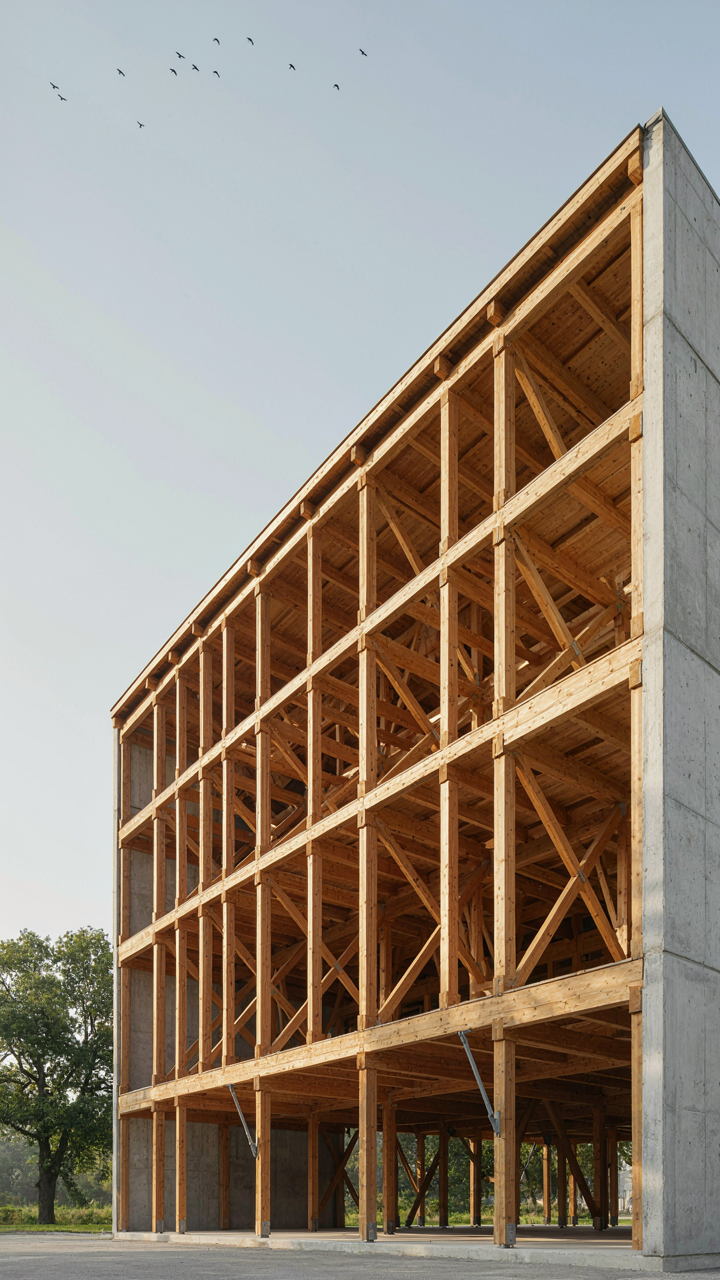
You want people to think you threw greenery on a table and it stayed perfect for four hours. That’s the real goal here, not the garland itself. The mechanism is load distribution. Think of it like structural engineering: every visual element rests on unseen supports that prevent collapse. A garland without internal framework is a pile of stems that shifts, gaps, and looks abandoned by hour two.
The framework does the work. Most people skip this step and wonder why their garland photographed beautifully at setup but looked thin and ragged by dessert. Use floral chicken wire, foam blocks, or a hybrid grid system secured to the table surface with removable adhesive or low-profile clips. The greenery hides everything. Your eye sees only the leaves and branches, not the skeleton keeping them vertical and dense.
Pre Assembly Kills The Morning Rush
Event day panic is preventable. Build your garland sections the night before in your workspace, not at the venue. Cut all greenery to length. Condition your stems in water for at least two hours. Pre-wrap any focal flowers or branches that need positioning. This shifts your burden from creation to placement.
Transport in shallow containers with damp paper towels between layers to prevent crushing. At the venue, your job becomes assembly line work: sliding pre-built sections into position, securing them to your framework, then making micro adjustments. You install a finished garland in thirty minutes instead of building one in ninety while sweating through your clothes. Transport and secure each section with a clear protocol so no piece gets forgotten or misplaced between your workspace and the table.
Your Perfect Garland Is Just Another Symptom Of Chasing External Validation
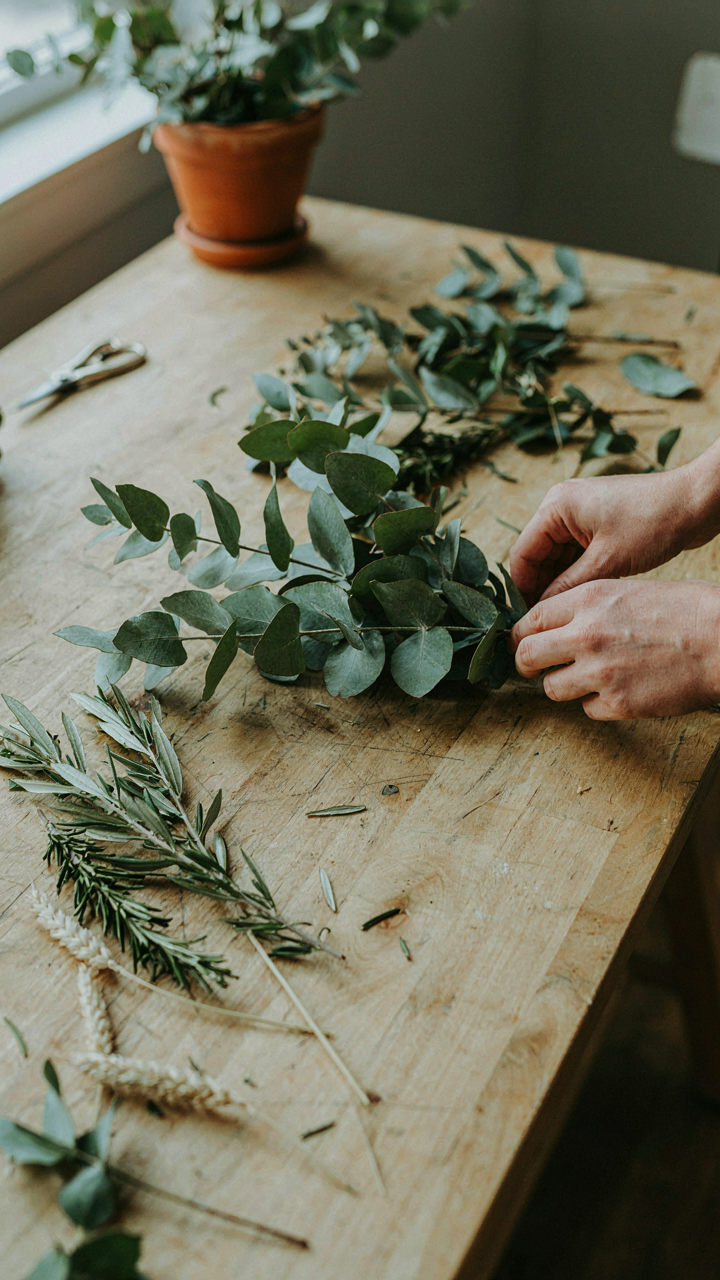
You don’t need a flawless greenery table garland. You need to stop performing for people who won’t remember the event by next month. Build something with your hands today. Arrange eucalyptus, greenery, and whatever you find around your yard. Imperfection signals you spent your energy on presence, not perfection. The garland that matters most is the one you made, not the one that photographs well.