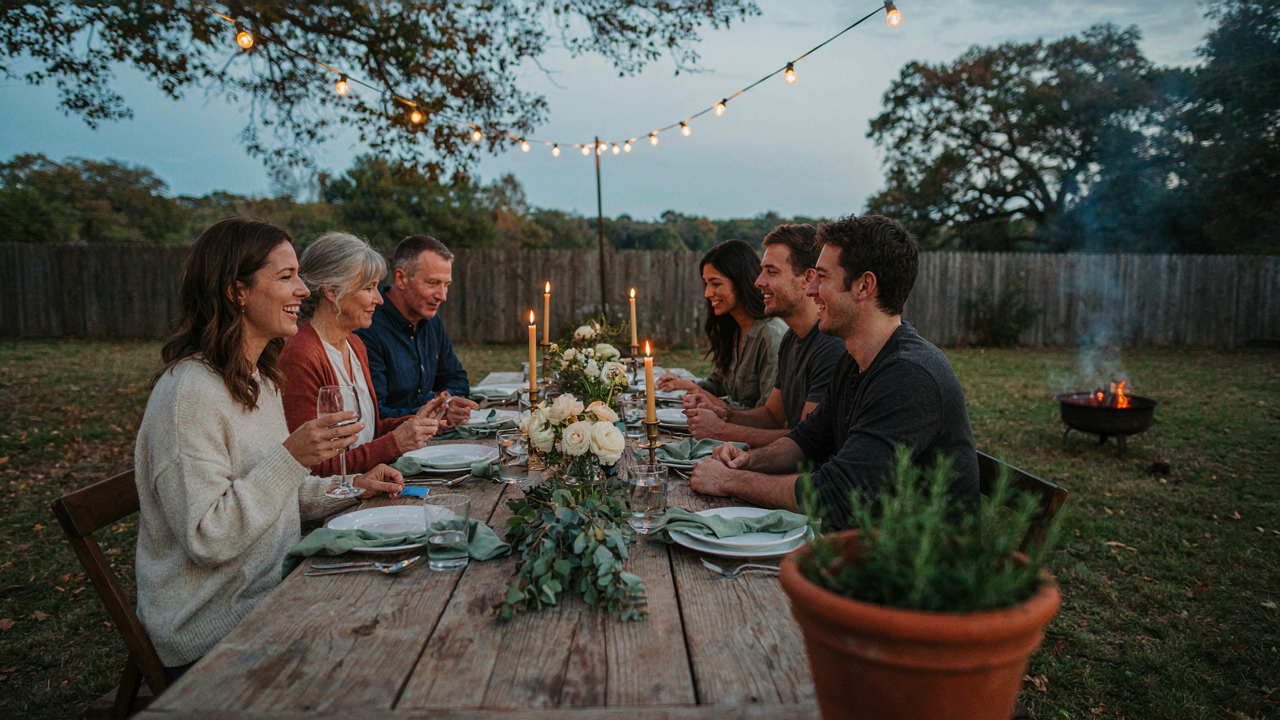
The “Scarcity As Social Proof” Protocol: Beyond Basic Backyard Supper Club
Why Fewer Guests Hit Harder
You want the invite to mean something. That’s the real motive here. Scarcity works in economics like gravity works in physics—it’s not optional, it’s the force that determines perceived value. A backyard supper club with twelve invited guests creates tension that forty guests destroys. People show up differently when they know they barely made the cut.
The math is simple: smaller guest lists force conversation depth. Eight people at a table talk. Twenty people form clusters and default to surface chat. Your budget stays the same per person, but the perceived investment from guests climbs because they’re not competing for attention. They came because they were chosen, not because they saw it on a group chat.
The Economics Of “No”
Most hosting advice tells you to invite everyone. That’s advice designed for people who confuse attendance with success. Exclusivity on a budget works because you’re not spending more money—you’re spending selectivity, which costs nothing but creates everything. Economics calls this artificial scarcity, and it’s how luxury brands maintain margin while you maintain impact.
When you tell someone “I’m doing a small supper club and I’d love to have you,” that phrase lands different than a mass invitation. They feel selected. The budget constraint becomes invisible because the social signal is loud. Your guest limit isn’t a limitation—it’s a filter that makes the experience feel rare before it happens.
The Anti Recipe Playbook: Dinner Club Menu Engineering

Build Flavor Through Ingredient Layers

You want to look like you spent three hours and a hundred dollars on protein when you actually spent forty minutes and twenty. That’s the real game here. The mechanism is ingredient synergy from culinary chemistry, not expense. Cheap cuts contain collagen that breaks down into gelatin under heat, creating mouthfeel indistinguishable from expensive meat. Stack flavors through acid, fat, and umami rather than relying on premium ingredients to carry the meal.
Braised chicken thighs with tomato, garlic, and anchovy paste reads as sophisticated because three flavor compounds hit simultaneously, not because the chicken cost extra. A one pound chuck roast becomes restaurant quality through twelve hours in a low oven with stock and aromatics. The conversion happens through time and technique, not money. Build your menu around proteins that reward slow cooking and flavor layering: thighs over breasts, shoulder over loin, whole fish over fillets. These cuts cost half as much and taste twice as developed when you understand how heat and acid interact with collagen and connective tissue.
One Pot Means One Problem Solved
Forget the advice about plating perfection and multiple courses. The dinner club lives or dies on logistics. A single pot on the table solves three problems at once: it keeps food hot, eliminates the pretense of restaurant service, and forces you to commit to a menu that actually works for groups. Borrowing from production engineering, think of your pot as the constraint that defines the entire system. When you remove variables (no sauce station, no side dish coordination, no temperature management across four dishes), execution becomes mechanical.
The French cassoulet and Spanish paella exist not because peasants lacked ambition but because one vessel fed people reliably. Your backyard supper club operates under identical pressure. Pick a vessel and build backward from it. A six-quart Dutch oven or enameled cast iron determines portion count, cooking time, and the type of proteins and vegetables that actually work. You announce the menu, prep components in advance, and execute one braised dish that arrives tableside finished. The pot stays in view because its presence is the event, not the food inside it.
Atmosphere Leverage: Outdoor Evening Gathering Inspiration Without Debt
Borrowed Ambiance Over Bought Decor

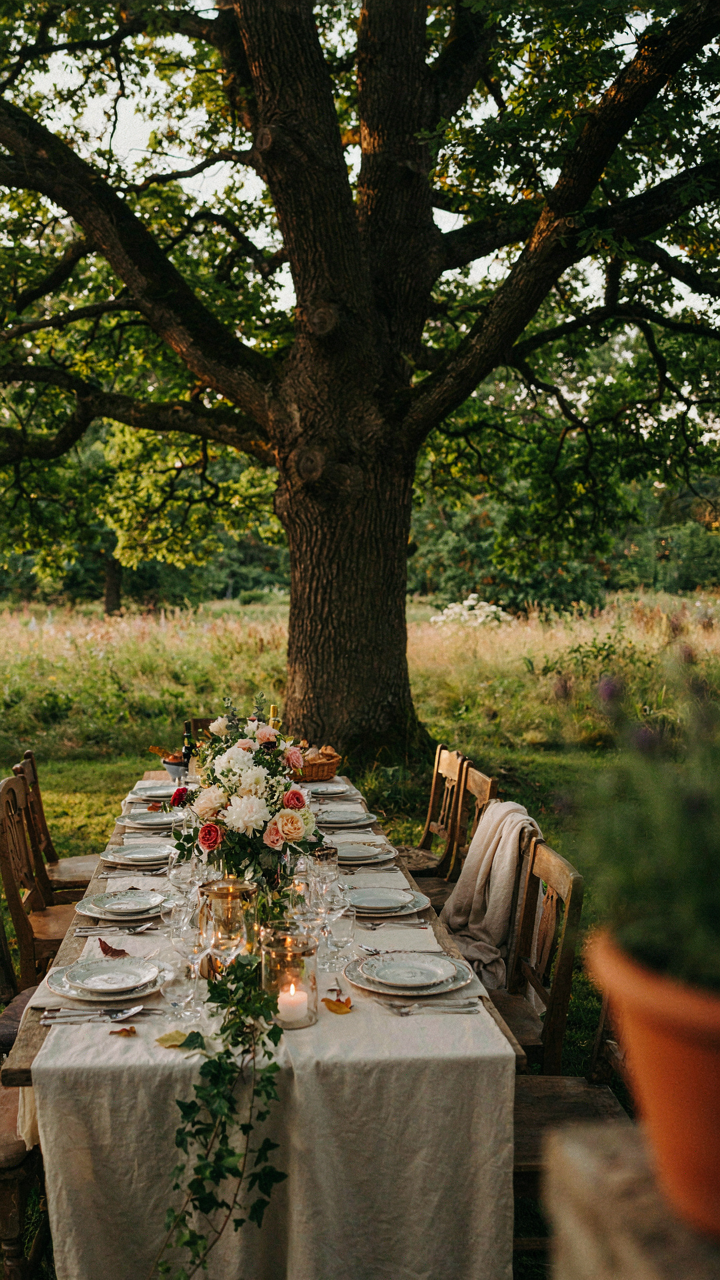
You want people to think you have taste and resources without spending money on decorations that’ll sit in a garage for eleven months. The mechanism is borrowed context: you’re not decorating a space, you’re curating what already exists and letting guests project value onto it.
Existing architecture does the heavy lifting. A fence becomes a backdrop. Mature trees frame the gathering. Uneven ground creates intimacy by forcing closer seating. The goal isn’t to hide these elements but to arrange seating and tables to emphasize them. Your neighbor’s well-maintained yard five feet over doesn’t matter because you’ve anchored attention inward through positioning.
DIY Lighting: Physics Of Mood Creation
Lighting operates on a simple optical principle: human pupils dilate in low light, which triggers parasympathetic activation and perceived intimacy. You’re not creating ambiance, you’re manipulating pupil response through lumen placement.
String lights hung at eye level between two fixed points (house to fence post, tree to tree) cost fifteen to thirty dollars and work because they’re low wattage, warm temperature, and positioned to eliminate harsh shadows. Candles in glass holders on tables amplify this effect without adding cost. The protocol: test placement two hours before guests arrive, adjust height so no direct bulb sits in sightline, and ensure no light directly illuminates faces from below. Warm white bulbs only, never daylight or cool white.
The “Guest As Asset” Model: Strategic Delegation For Outdoor Dinner Parties
Why People Actually Contribute

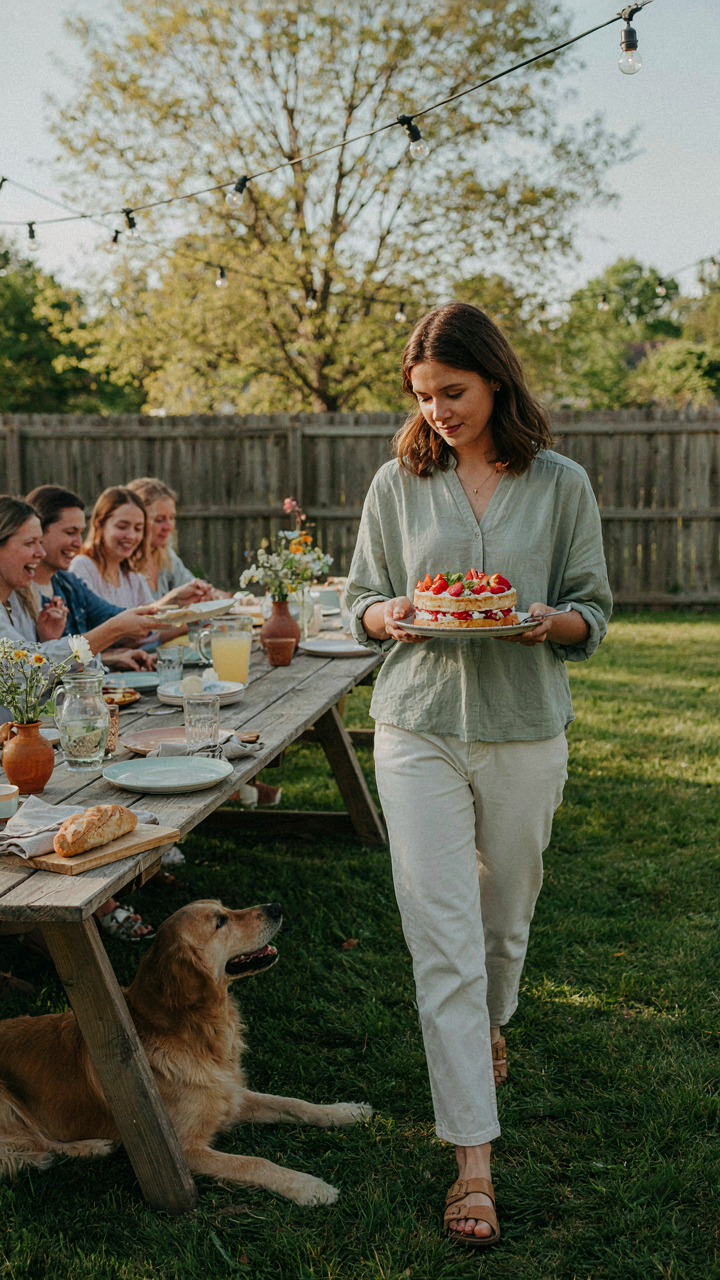
You want guests to feel invested without admitting you need their help to keep costs down. Economics calls this “revealed preference” – people signal what they value through their actions, not words. At a backyard supper club, this means guests stop being consumers and become stakeholders. They contribute because participation creates ownership. You’re not asking for favors. You’re building a system where everyone’s self-interest aligns with the event’s success.
A guest who brings wine doesn’t just fill a gap in your budget. They now have skin in the game. They arrive early to see their contribution land well. They talk up the event because it reflects on their judgment. The mechanism is simple: delegate thoughtfully, and people invest more energy than if you’d just asked them to show up. This transforms economics from scarcity into abundance.
When Potluck Becomes Strategy
Most hosting advice treats potluck like a cop-out, a sign you couldn’t afford to feed people alone. That’s wrong. Potluck is a design choice, not a failure. The real difference between chaotic potluck and curated experience is specificity. Instead of “bring something,” you assign dishes by constraint. Request appetizers under ten dollars. Ask one guest for a dessert that travels well. Tell another to handle cold drinks for six people. Specificity kills guesswork and prevents five casseroles showing up.
Control the frame, and people rise to meet it. You’re not running a buffet. You’re orchestrating a meal where each contribution solves a known problem. Ask a guest comfortable with grilling to handle proteins. Request someone who bakes to manage bread. Assign another the salad station. Each person now owns one piece, which means they execute with pride instead of minimum effort. Write down who handles what two weeks prior and confirm once more seven days out. This prevents gaps and duplicates.
Cozy Outdoor Dinner Party: The Forgotten Art Of Service

Watch Before They Ask

You want to look like you have your act together without spending money on staff. The mechanism is simple: anticipation beats reaction every time. In service terminology, this is called “reading the table”—the ability to detect need before the guest articulates it. Most backyard hosts treat service like a checkbox: deliver food, refill drinks when asked, clear plates when empty. That’s not service. That’s order fulfillment.
Real service operates on friction reduction. You move through the space noticing small gaps: a guest reaching for water that’s two feet away, someone gesturing toward an empty bread basket, a wine glass sitting half-full for five minutes. You close these gaps before they become conscious thoughts. This requires you to stay off your phone and actually watch the table during the meal. Position yourself where you can see faces and body language, not hidden in the kitchen.
The Gesture That Reshapes Everything
One small, unexpected action creates more loyalty than a perfect meal does. Forget formal plating techniques and mise en place perfection. Budget supper clubs succeed because the host noticed something specific about a guest and acted on it. Maybe you remembered that someone mentioned they don’t eat shellfish and you quietly prepared a protein swap without making it awkward. Maybe you noticed someone shivering and brought out a blanket before they asked. Maybe you set aside the last portion of dessert for the person who arrived late to the table.
The protocol is this: identify one guest need or preference before service starts, then execute it invisibly. Write it down during the planning phase so you don’t forget under pressure. This single gesture signals that you see people as individuals, not as bodies to feed. It costs almost nothing but reshapes how guests remember the entire night. That’s the real transaction happening at a backyard supper club.
Resourceful Aesthetic Outdoor Dinner Party: Scavenger Hunt Decor

What You Can Forage Right Now

You want your table to look intentional without spending money, which is really about controlling how people perceive your effort level. The mechanism is simple: natural elements signal that you designed the space deliberately rather than defaulted to it. Foraged materials work because they’re specific to your location and season, making them impossible to replicate from a big box store.
Walk your property and neighborhood two days before the event. You’re hunting for structural material, not just color. Branches with interesting angles, seed pods, fallen leaves, moss, stones with texture, and flowering weeds all function as visual weight on a table.
- Branches and twigs: Collect bare or leafed branches with natural curves. Strip leaves from lower sections and arrange in clusters down the table center as sculptural elements rather than traditional floral filler.
- Seed pods and grasses: Ornamental grasses, milkweed pods, and dried seed heads hold their form for hours. Bundle them into small bunches tied with kitchen twine at place settings.
- Moss and ground cover: Moss creates immediate texture. Lay it across the table surface in patches between place settings or wrap it around the base of candles for anchor points.
- Stones and rocks: Smooth river rocks or interesting stone pieces ground a table visually. Use them to weigh down napkins, separate table zones, or create focal points between settings.
- Fallen leaves and petals: Season-specific leaves add color without cost. Scatter them as a table runner or arrange them deliberately under glassware for layered depth.
The constraint forces better design decisions. You can’t buy your way out of this, so you solve the problem with proportion and placement instead. Arrange foraged materials in odd numbers and clusters rather than symmetrical rows. This mimics how nature actually distributes elements and looks more sophisticated than evenly spaced store-bought decorations.
Household Items As Table Infrastructure
Most budget advice tells you to raid your kitchen drawers, which misses the actual principle at work: you’re borrowing from industrial design, where constraint breeds form. The real leverage isn’t in finding stuff you own, it’s in understanding that ordinary objects become decor when they’re deployed with intention and repetition.
Your mason jars, empty wine bottles, tin cans, and old plates aren’t filler. They’re the actual structure of the table. Consistency is the move. Five identical mason jars down the center with foraged branches inside reads as deliberate. Five mismatched containers with the same branches reads as accidental. Group similar household items by size, color, or material. This transforms them from random clutter into a visual system.

Repurpose items by assigning them specific roles: containers hold branches or flowers, plates or wooden boards become chargers under dinnerware, glasses or jars become candleholders wrapped with twine, and fabric scraps or old napkins become place card holders. The gap between “stuff from my house” and “table design” closes when each object has a clear function and appears more than once. Set everything two days early so you stop seeing these items as household objects and start seeing them as design elements.
The Zero Waste Alchemy Method: Beyond The Outdoor Dinner
Composting And Conscious Consumption
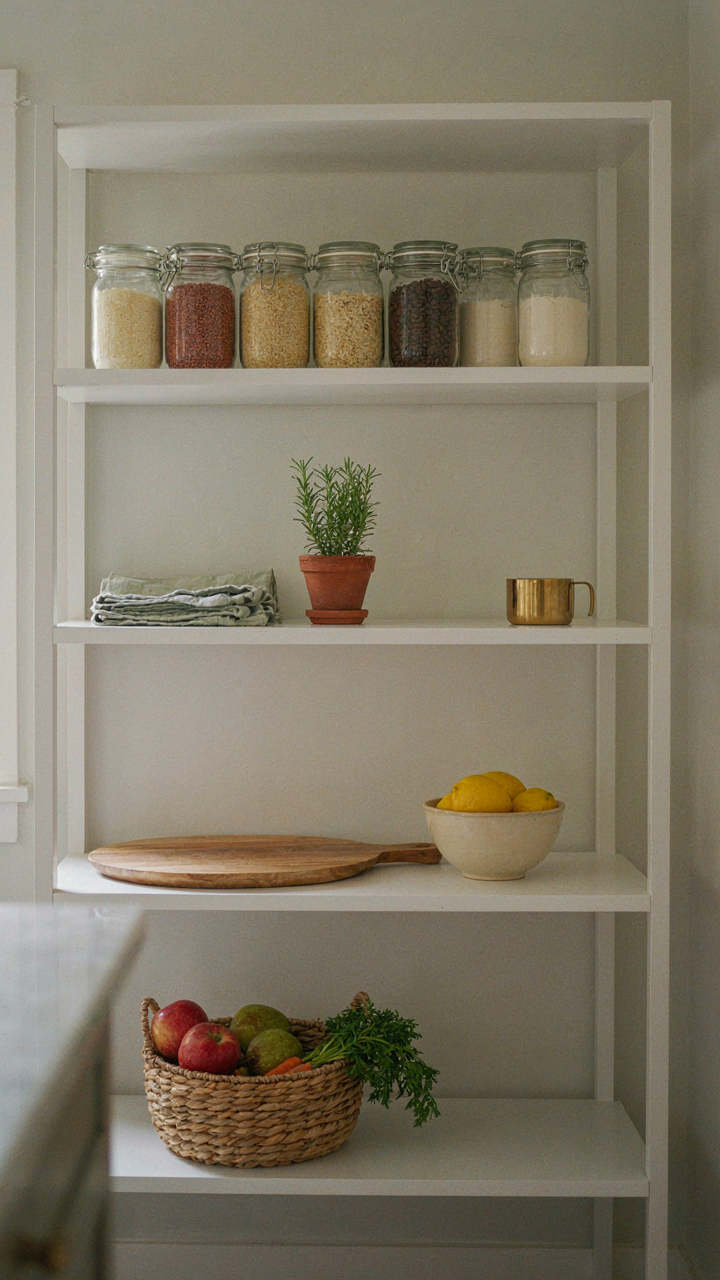
You want to feel virtuous about waste without actually changing how you shop. The mechanism here is inventory control, borrowed from supply chain management. Zero waste doesn’t mean composting scraps—it means knowing exactly what enters your kitchen and designing the menu backward from what you already own or can repurpose.
Most supper club hosts buy ingredients, cook, then figure out what to do with excess. Flip it. List what’s in your pantry, freezer, and fridge first. Build the menu around those items. Vegetable scraps, stale bread, and trim become stock, croutons, and garnish during prep, not after service. This cuts shopping by 30-40 percent and kills the waste problem at its source.
Leftover Transformation: Next Day Value
The “leftover” is a failure of imagination, not a resource problem. Economics teaches us about marginal utility—the value of one additional unit decreases as you accumulate more. A roasted chicken loses appeal served twice the same way. It gains value when transformed into three distinct dishes that don’t read as repetition.

Cook proteins intentionally for reuse. A braise becomes the base for a hand pie filling. Roasted vegetables become a grain bowl component or a composed salad. Leftover bread becomes panzanella or breadcrumbs for binding. The second service should taste distinct enough that guests don’t recognize the source material. This doubles your ingredient efficiency and your event’s perceived complexity without requiring new shopping.
Post Event Amplification: Supper Club At Home, The Follow Up Loop

The Thank You That Demands Return
You want guests to come back because repeating an event costs less than recruiting new ones. The mechanism is simple: a thank you note becomes a preview. Most people send generic gratitude. They miss the lever. Your note should reference a specific moment from the dinner, name one dish or conversation, then hint at what comes next. This transforms obligation into curiosity. People respond to specificity because it proves you paid attention, not just that you’re polite.
Send the note within 48 hours while the event still occupies mental real estate. Include one photo from the evening if you took candids during setup or the meal itself. Close with a date range for the next gathering, not a vague “let’s do this again.” Example: “Next supper club lands in six weeks—same backyard, new menu, your feedback welcome.” You’ve now created an anchor point instead of leaving them to assume the evening was a one off. The deadline matters because it separates intention from action.
Mining The Room For Structural Data
Feedback loops in event design work like medical diagnostics: you gather symptoms to identify which systems failed. After your supper club, send a three question form to guests within a week. Ask what dish they remember most, what they’d change about the flow, and who they’d bring next time. Don’t ask for feelings or general impressions. Feelings are noise. You need specifics about execution. Did the pace drag between courses? Did someone dominate conversation? Did the lighting make it hard to see the food?

Compile responses and identify patterns. If three guests mention the same timing issue, that’s data worth acting on. If two people name different dishes as their favorite, you’ve learned what resonates. Use this to adjust your next event’s menu, seating arrangement, or timing. Your second supper club should be demonstrably better because you measured the first one, not because you guessed. Create a simple spreadsheet to track these notes by date so you stop repeating mistakes.
The Only Real Obstacle To A Memorable Supper Club? Your Own Perceived Inadequacies

You don’t need a perfect kitchen, a culinary degree, or a trust fund. You need to stop waiting for permission. The people you invite don’t care about your plating skills or whether you bought organic. They care that you created something. Text three friends right now and pick a date. Your backyard supper club dies in your head long before it dies in reality.