The Pre Mortem Protocol: Before You Even Buy A Napkin
What Actually Goes Wrong
You want this to feel effortless because that’s what signals you have resources and taste. The mechanism is simple: you’re running a complex system outdoors with zero margin for error, and most people skip the thinking phase entirely. They buy decorations and hope. That’s how you end up with a ruined evening and nothing to show but wasted money.
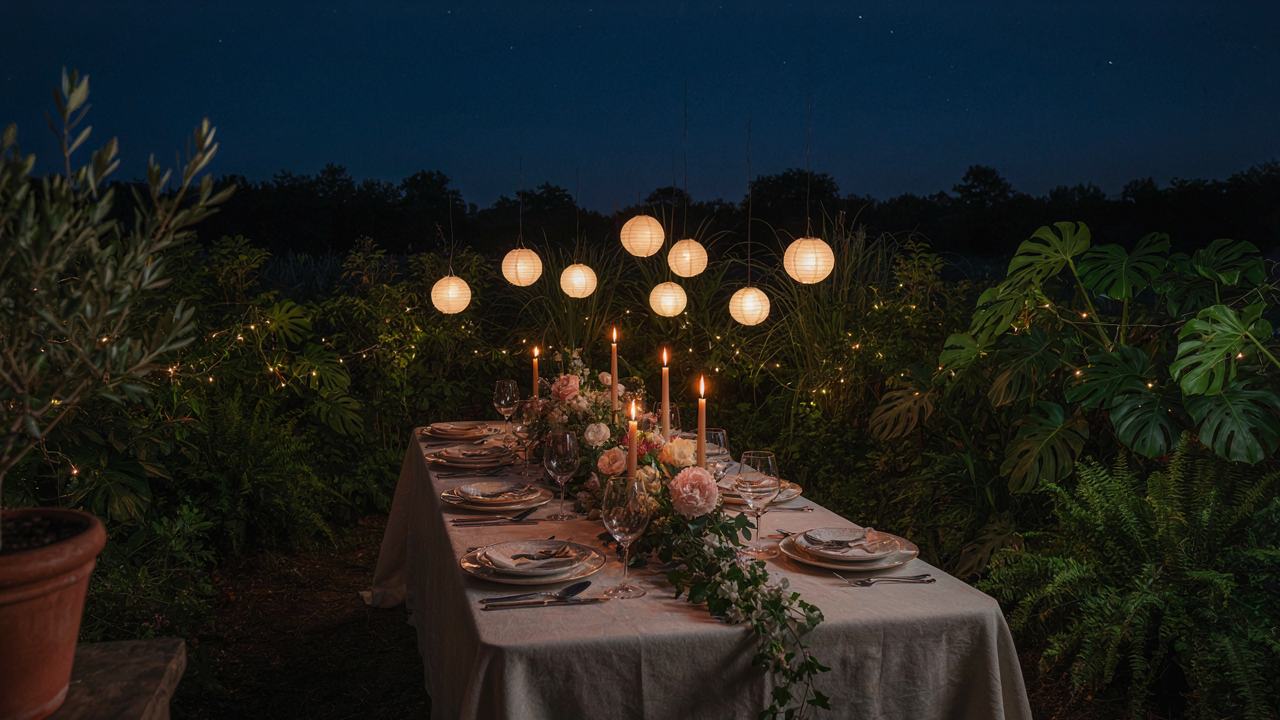
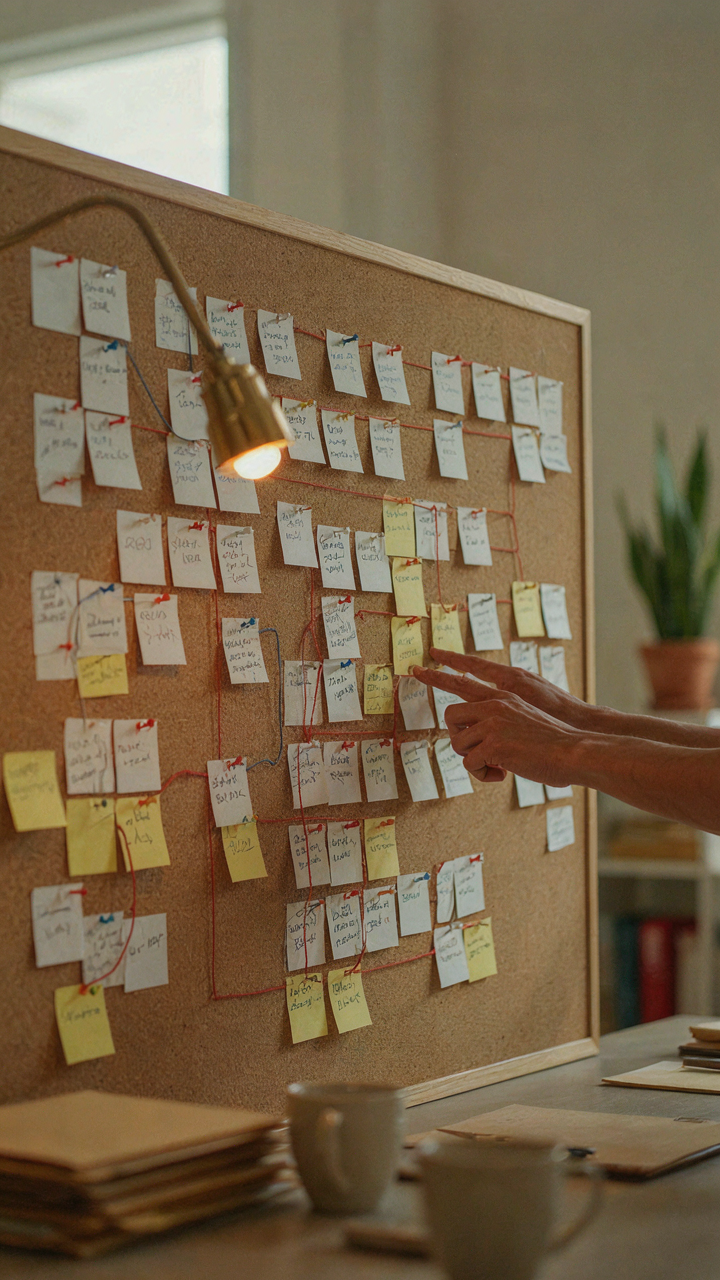
A pre-mortem isn’t pessimism. It’s borrowed from medical and military protocol, where teams imagine a project has already failed, then work backward to name the actual cause. Your dinner party under the stars has a failure point nobody talks about directly: the environment itself doesn’t care about your vision. You’re not controlling variables. You’re negotiating with them. Start by listing five specific disasters that could happen at your location and time. Not vague ones. Specific. Rain at 8 PM. Bugs swarming the table. A guest with a severe food allergy showing up. The generator failing mid-service. Wind scattering napkins and place cards. Once you name them, you build countermeasures into the plan instead of improvising during the event.
The Site Walk That Saves The Evening
Don’t scout your location once. Scout it twice: once during daylight and once during the actual time your event will run. Wind patterns shift between afternoon and dusk. Bugs emerge at different times. Uneven terrain that feels manageable in bright sun becomes a liability when guests navigate it in low light wearing heels or dress shoes.
Bring a notebook. Mark where the sun actually sets relative to where people will sit. Check for low branches that could hit tall guests. Test your phone’s flashlight to see if you need additional lighting. Walk the path guests will take from their car to the table. Look for roots, slopes, or obstacles. Check if the ground holds water after recent rain. Identify where wind funnels between buildings or trees. These details determine whether your evening runs smoothly or becomes a sequence of small disasters that compound into a bad memory.
Illumination As Utility, Not Ambiance: The Photon Doctrine
Task Lighting Versus Mood Lighting: Know The Difference

You want people to think your dinner party is effortless. That means you’re willing to sabotage the actual function of light to hide the mechanics. Stop.
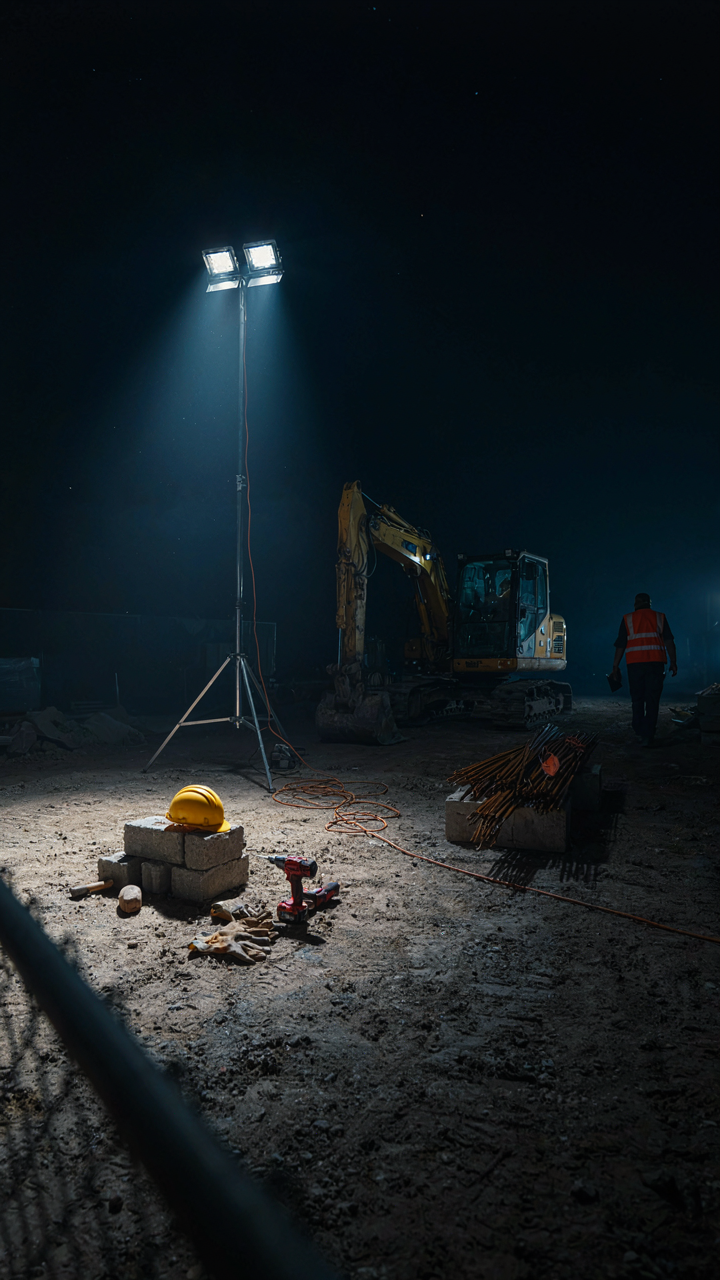
Task lighting serves a single function: it lets people see what they’re doing. Plates, food, faces, the glass rim. Mood lighting obscures. The distinction matters because you’ll deploy both, and confusing them creates either harsh shadows across faces or people cutting their chicken in darkness. Task lighting needs direct angle and sufficient lumens to eliminate shadows on the table surface. Mood lighting works at the periphery, creating definition without function. Most hosts flip this: they dim the table lights to feel romantic, then wonder why guests stop eating.
Lumens measure light output. A dinner table needs 300 to 500 lumens minimum, depending on surface color and ambient darkness. Warm color temperature (2700K) works for task lighting at dinner because it doesn’t trigger the same glare response as cooler tones. Position task lights 4 to 6 feet above the table centerline. Mood lighting gets placed 8 to 12 feet out, lower, angled away from sightlines. This separation lets you control one without degrading the other. Test this forty-eight hours before guests arrive by sitting at the table at the actual dinner time, in actual darkness, and assessing whether you can distinguish food colors and facial features without strain.
Strategic Placement Of Power Sources
String lights fail strategically because hosts treat them as decoration first and power infrastructure second. They’re not.
Your power source location determines whether lights flicker midway through the main course or hold steady. Most outdoor circuits weren’t designed for continuous draw from multiple fixture strings. Place your main power source within 50 feet of the table, ideally closer. Run a dedicated outdoor-rated extension cord rated for the total amperage your lights require. Do not split power across multiple circuits unless you’ve verified they’re on separate breakers. String light wattage compounds fast: ten 5-watt bulbs equal 50 watts, which seems trivial until you add heating lamps or speakers. Most standard outdoor circuits handle 15 amps at 120 volts. Calculate total wattage, divide by 120, confirm you stay under amperage limits with 20 percent headroom. A cord rated for outdoor use prevents voltage drop over distance. Position your power source on a dry surface away from foot traffic and away from where guests might place drinks. Run the cord along the perimeter, not across the seating area. Secure it with cable clips every 3 to 4 feet so it doesn’t become a tripping hazard. Test the setup seventy-two hours prior by running all lights simultaneously for a minimum of two hours to catch any breaker trips before they happen during dinner.
The Comfort Contingency Plan: Guests Are Not Stoics
When The Temperature Drops, People Leave
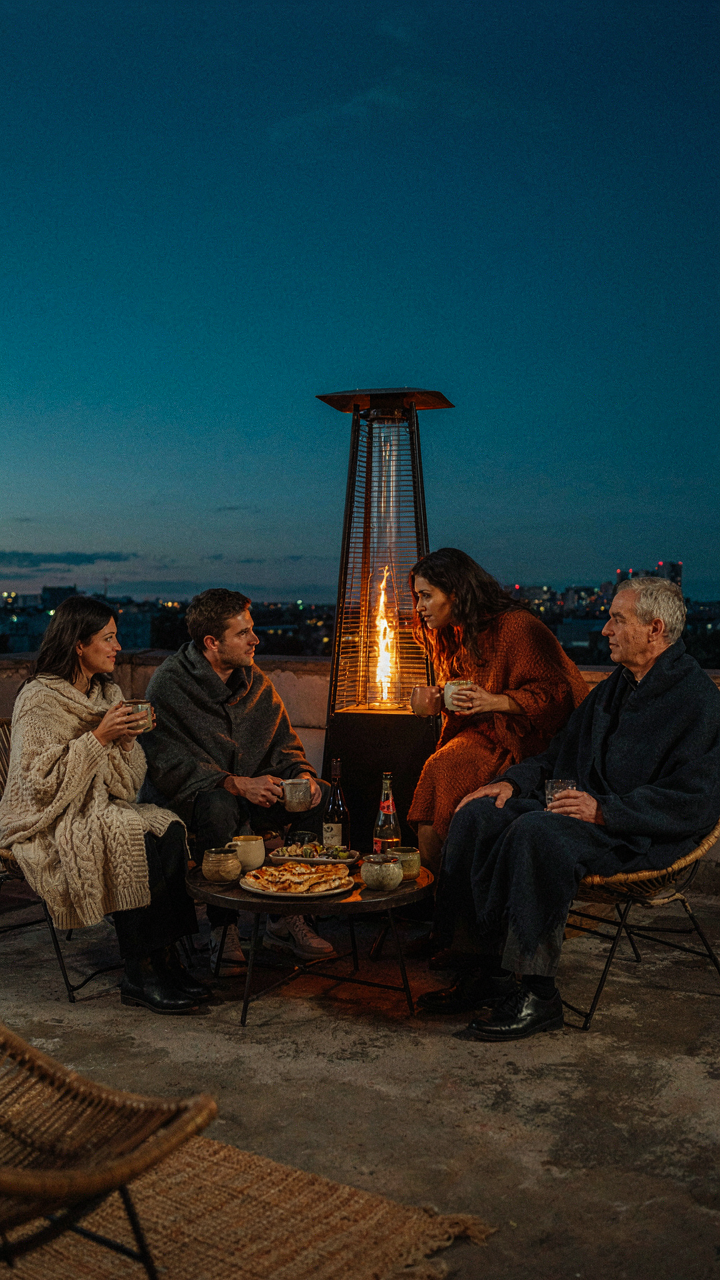
You want your guests to stay because the event feels effortless, not because they’re trapped in discomfort. Temperature control isn’t luxury—it’s retention. Use thermodynamics: heat dissipates into open air, so you need active replacement. Blankets work for seated guests but signal “this might get cold,” which plants doubt before arrival. Infrared heaters are the mechanism. They warm the body directly, not the air, so wind doesn’t kill their effect.
Place heaters strategically around seating zones, not randomly. Test them before guests arrive. Know your climate’s sunset pace—when the temperature will drop and how fast. Patio heaters burn propane or natural gas. Radiant heaters use electricity. Both require clearance from structures and fabric. If the night gets genuinely cold, accept it upfront: schedule the dinner earlier or have a swift exit strategy into your home or heated tent. Don’t pretend outdoor comfort scales infinitely.
Insects Ruin Everything If You Let Them
Bug pressure is a biological variable most hosts ignore until mosquitoes arrive. The mistake: thinking repellent alone stops the problem. It doesn’t. Mosquitoes navigate by CO2 and heat signature. DEET-based repellents deter landing, but they don’t create a perimeter. Citronella candles smell pleasant and do almost nothing against serious swarms. Acknowledge this plainly before planning timing.
Deploy layered defense. Repellent on skin is the first layer. Overhead netting or screens create the second. Schedule dinner before dusk or after peak feeding hours—mosquitoes are most active at dawn and dusk. If your location has severe insect pressure, use fans. Air movement disrupts their flight patterns. As a last resort, accept that some nights will have bugs and provide relief: repellent stations, indoor retreat space, or move to a less exposed area. Your job is reducing friction, not pretending it doesn’t exist.

Edible Logistics: The Culinary Field Kitchen
Keeping Food Safe When Nothing Stays Still
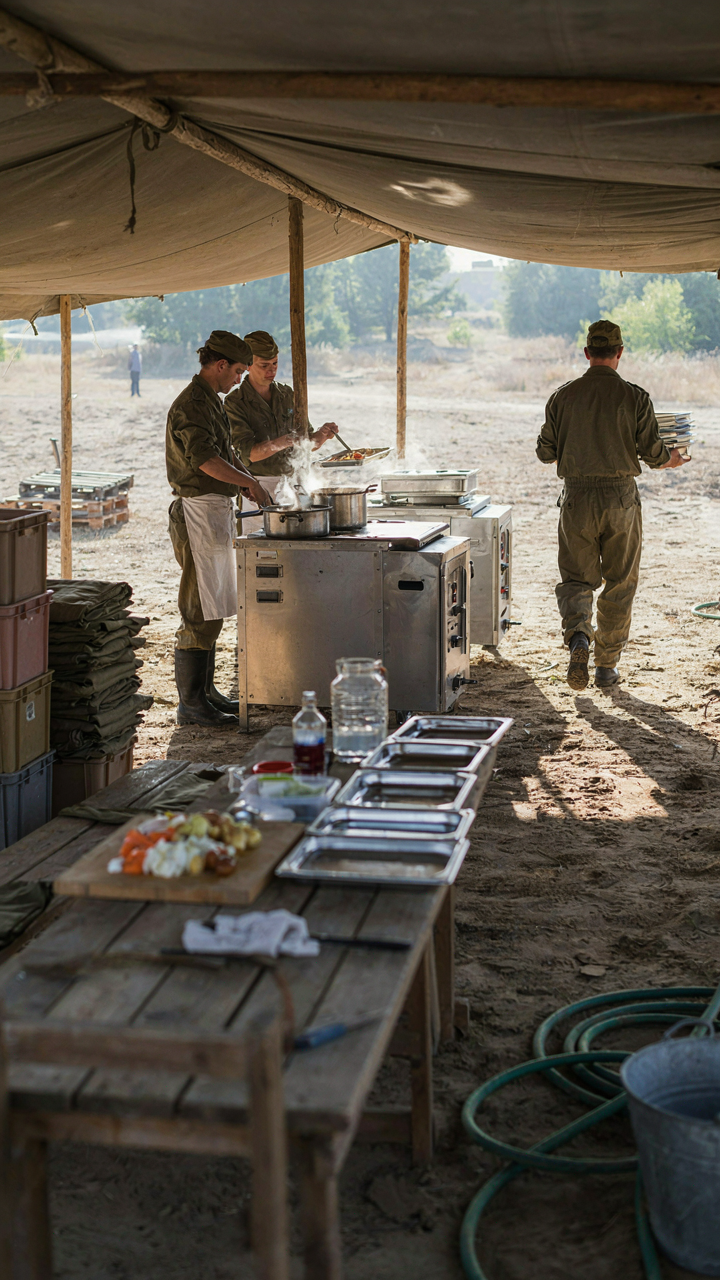
You care about this because food poisoning kills the narrative you’re building around this event. You want to host, not cause a health crisis. Think of outdoor food service like military supply chains: the enemy isn’t malice, it’s entropy. Heat degrades, cold abandons food, and exposure invites contamination. The mechanism is time and temperature separation. Hot food must stay above 140°F or drop below 40°F within two hours, or bacteria multiply past safe thresholds. Outdoors, you lose the controlled environment that indoor kitchens guarantee. Sun accelerates spoilage. Shade becomes precious real estate.
Set up a dedicated food station away from guest traffic. Use ice baths for cold items, not ambient air. Bring hot food in insulated containers and serve from those containers, not from plates left open. Transport all raw ingredients in coolers, keep them sealed until prep time, and never set perishables on uncovered surfaces where insects or dust land. The rule is simple: minimize the time food spends exposed to air and temperature swing. Cross-contamination happens when raw and cooked items share space, so designate separate prep zones even if you’re working in a tight area.
Serve Fast, Walk Once
Common advice says to plate everything ahead of time. That’s wrong. Plated food sits and either gets cold or collects bugs while you’re still greeting guests. The real mechanism is friction reduction, not bulk preparation. Serve family-style from a central station using large platters and shared utensils. This cuts your serving trips by 70 percent and keeps food hot longer because it sits in bulk, not scattered across individual plates.
Design your serving layout before guests arrive. Place the table upwind of where people sit so smoke and dust don’t blow over the food. Keep beverages and appetizers at a separate station from main courses so early diners don’t clog the line. Use serving utensils sized for the portion, not tiny spoons that force multiple trips. Set out plates, napkins, and utensils within arm’s reach of the food. Walk the full route once before service starts to spot gaps or awkward reaches. This single walk removes 90 percent of logistical friction.

The Unseen Infrastructure: Powering Your Celestial Wedding
Power Source Selection Matters More Than Location
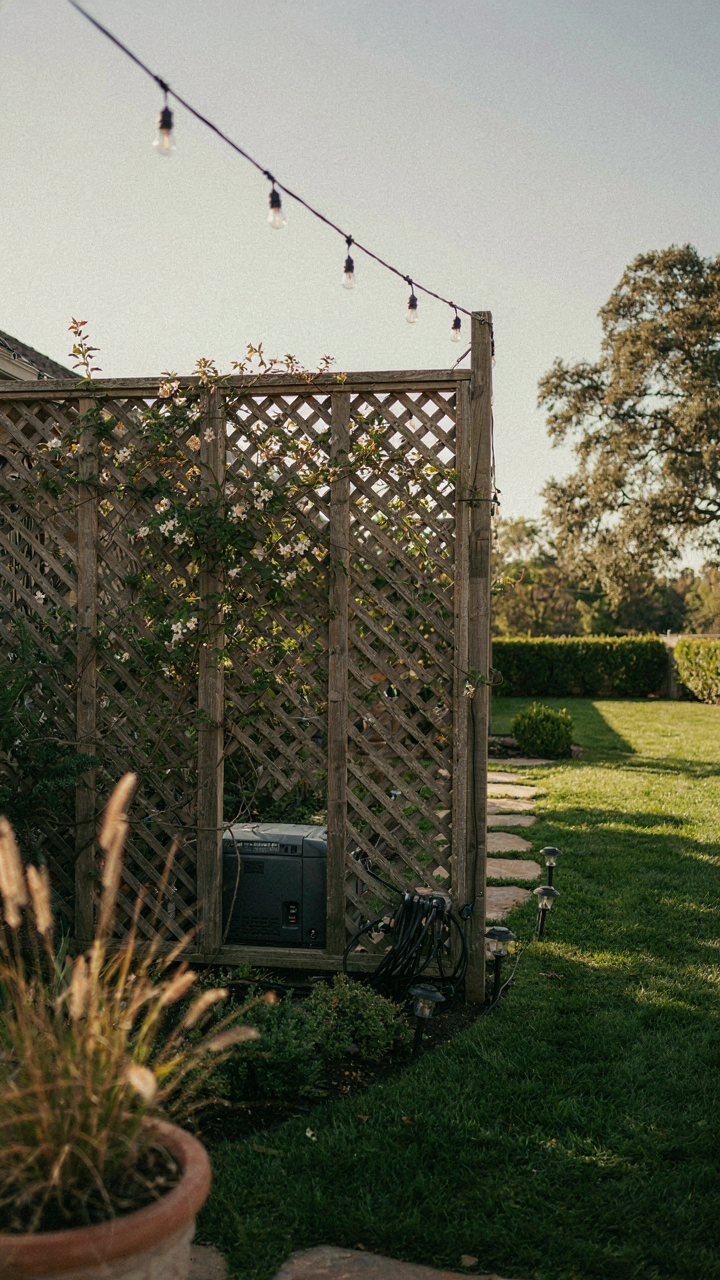
You want this to look effortless, which means you’re terrified of visible wires and dead phones at the wrong moment. Here’s the mechanism: power density trades against portability. A generator produces consistent voltage over hours but creates noise and fumes. A battery bank is silent but depletes fast under load. An extension cord from your house works if your venue sits within 100 feet and you accept the trip hazard you’ll pretend doesn’t exist.
Match your choice to actual amp draw, not guesses. LED string lights pull 1-2 amps. A speaker system pulls 5-10 amps depending on volume. A small refrigerator pulls 3-5 amps continuously. Add these numbers. If your total exceeds 15 amps, a standard household outlet won’t sustain it without breaker failure. A portable generator rated 3000 watts handles most dinner setups without struggle. Battery banks marketed as “all-day” last maybe four hours under real load, not marketing load.
Cable Management Stops Being Aesthetic And Becomes Liability
The real problem isn’t how cables look, it’s where feet go after dark when lighting fails. Trip hazards aren’t minor inconveniences, they’re liability events. Duct tape and hope is not a system.
Run cables along table legs, under tablecloths weighted at edges, or buried shallow in garden soil if your venue permits. Thick cables create bigger trip surfaces than thin ones, so use thinner gauge where voltage drop allows it, thicker gauge where distance demands it. Mark cable pathways with solar path lights at dusk so guests navigate consciously. Test every route in low light before guests arrive. Your job is to make infrastructure invisible while making hazards visible.

The Soundscape Of Silence: Beyond Background Music
How Sound Dies Outdoors
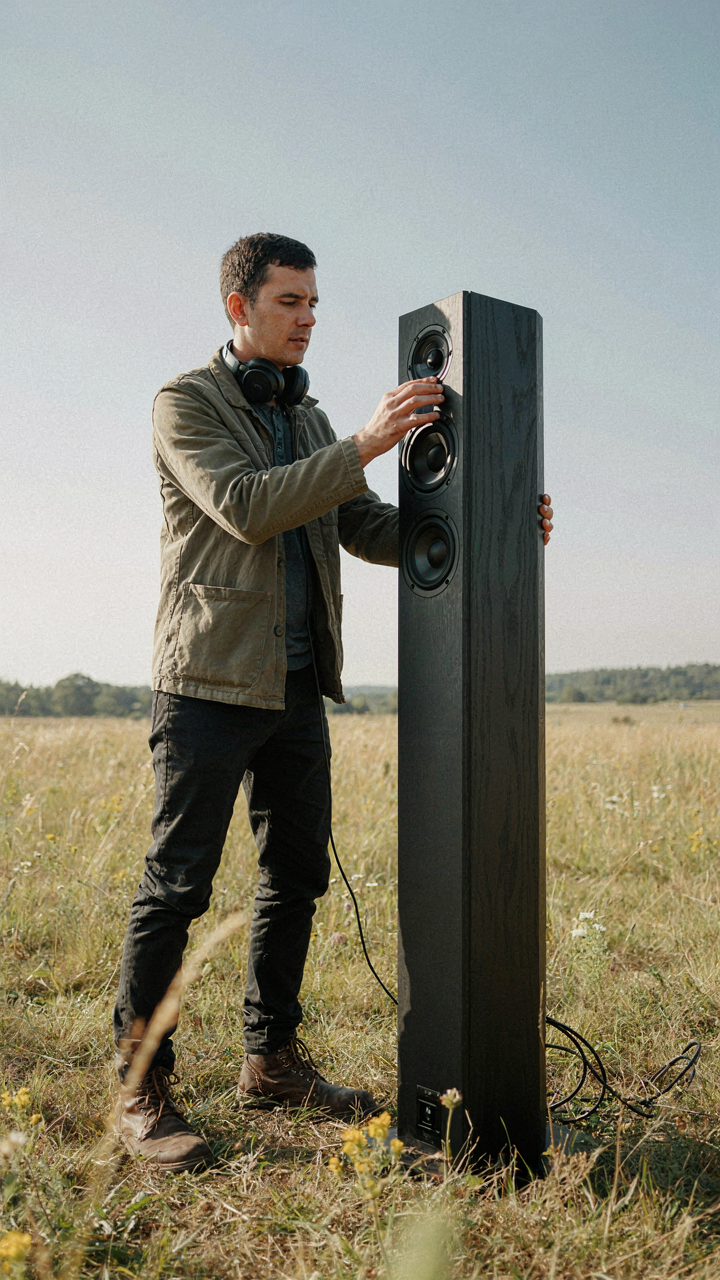
You want background music to feel intentional, not like you’re compensating for awkwardness. Here’s what actually happens: sound travels in waves that require physical surfaces to bounce off. Outdoors, you have none. Acoustic physics calls this “absorption”—soft surfaces absorb sound energy, hard surfaces reflect it. Your backyard has grass, trees, and open air. Sound doesn’t bounce around a dinner table under stars the way it does indoors. It dissipates. Most people ignore this and blast a speaker, creating noise instead of ambiance.
The mechanism is direct. Low frequencies travel farther than high frequencies outdoors, which means your bass-heavy playlist becomes a muddy rumble at distance while higher notes vanish entirely. Place a single speaker at table height, pointed toward diners rather than away from them. Keep volume at conversational level—around 50 to 60 decibels, roughly the sound of normal speech. This forces sound to travel shorter distances where it stays intact. Test it before guests arrive by standing at the far edge of your space and checking if you hear music or just feeling it in your chest.
Let The Environment Speak First
Silence is not what you’re after. Emptiness is death at a dinner party. What you actually want is control over what fills the void, and here’s where most hosts get it backwards: they assume they need to add sound when the real work is managing what’s already there. Natural soundscapes—wind in trees, crickets, distant water—create psychological comfort without demanding attention. They’re already happening. Your job is to make sure human noise doesn’t drown them out.
Eliminate sources of competing sound before you add anything. Turn off outdoor equipment, ask neighbors to hold off on leaf blowers, silence phone notifications on the table. Wind chimes are a mistake unless you live on a windy property and want constant unpredictability. If you’re near a highway or train line, accept it won’t disappear and position seating as far from the source as possible. The protocol is simple: identify what noise exists, remove what you can control, then layer music only at volumes that coexist with natural sound rather than override it.

The “Starry Night Wedding” Misconception: Real Stars Vs. Fake Sparkle

How To Kill Light Pollution Without Killing The Mood
You want the stars to feel magical because you think it proves your dinner party is sophisticated. The mechanism is simpler: your eyes need darkness to see stars at all. Light pollution isn’t poetic tragedy—it’s a physics problem. Astronomers call it “sky glow,” the upward scatter of artificial light that drowns out celestial objects. Your backyard lights, your guests’ phone screens, and your neighbor’s security floodlights all contribute. The solution requires removing competing light sources, not adding romantic ones.
Start by identifying which lights actually serve function versus atmosphere. Turn off porch lights, landscape uplighting, and decorative string lights aimed upward. Use warm amber bulbs only if you need ambient lighting, keeping them low and directed downward. Position them behind structures so light doesn’t spill skyward. Give guests ten to fifteen minutes after sunset for their pupils to dilate and adjust to darkness. The stars become visible not because you’ve added magic, but because you’ve removed the interference blocking what’s already there.
Strategic Placement Of Accent Lighting
Everyone puts lights everywhere and calls it ambiance. What actually works is separating the zones where people need to see from the zones where they don’t. Think of it as tactical illumination: light where function demands it, darkness where the view demands it. Place warm lights at table level for eating and conversation. Keep lights behind seated guests so their night vision stays intact while they look up. String lights work only if they’re low-voltage and positioned at eye level or below, never overhead creating sky glow.
The perimeter of your outdoor space should be darker than the center. Position accent lights to frame pathways and define the eating area without bleeding upward. Use warm color temperature bulbs, ideally 2700K or lower, which emit less blue light that scatters in atmosphere. Avoid white or cool-toned lights entirely—they ruin both night vision and the view. Test your setup at dusk and adjust before guests arrive. The goal is directional light that serves its purpose without competing with the sky.

Waste Management: The Unromantic Reality Of Outdoor Dinner Parties
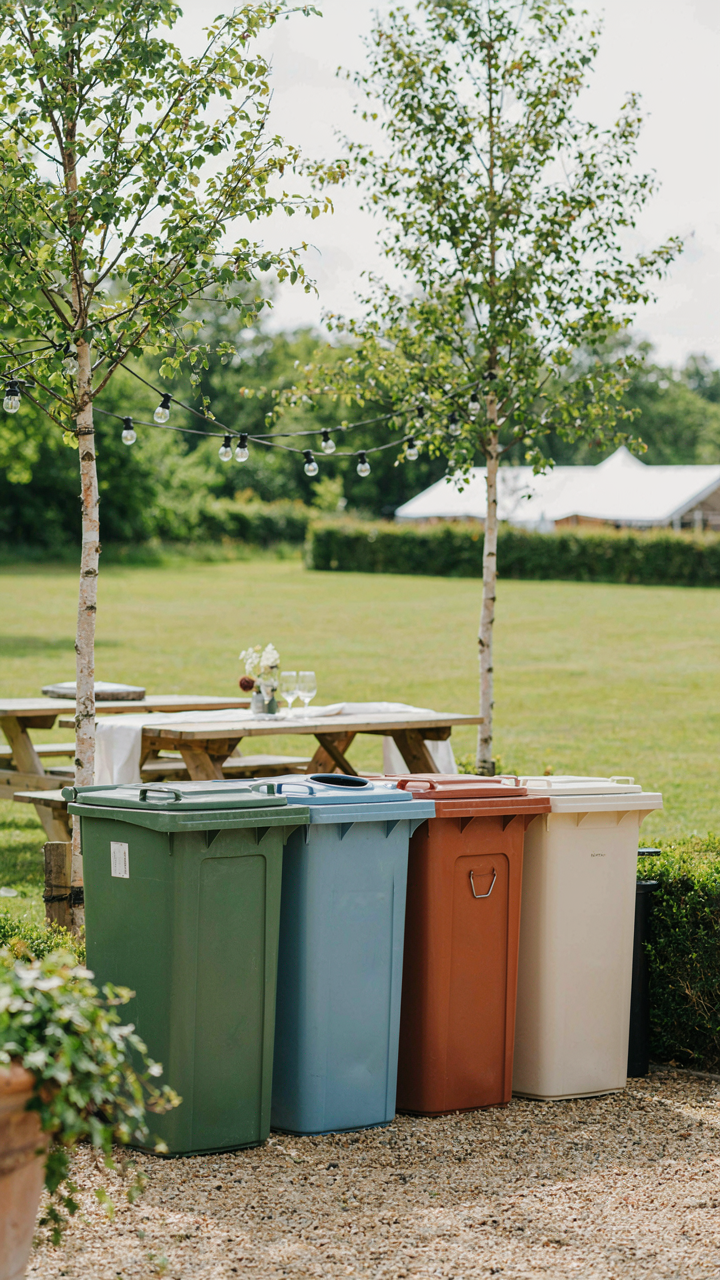
Pre Sorted Refuse Stations
You want people to remember the evening, not the trash pile you left behind. The real mechanism here comes from systems design: you’re building redundancy. Every waste stream needs its own container before guests arrive, positioned where they’ll actually use it. Most people set out one trash bin and wonder why napkins end up in the flower beds.
Create stations for three categories minimum: compost, recycling, and trash. Place them at the perimeter, not the center table. Each station needs a clear visual marker so guests don’t hesitate. The hesitation is where contamination happens. Use separate containers with lids to contain smell and prevent animals from investigating mid-meal. Position them upwind of seating areas. Label them bluntly: “Compost,” “Recycling,” “Trash.” Ambiguity kills compliance.
Efficient Disposal And Fast Extraction
Waste doesn’t leave on its own. You need a removal protocol that runs during the dinner, not after everyone leaves. Designate one person to work the stations every thirty minutes, consolidating full bags into a holding area away from view. This keeps the space clean while guests eat and prevents the visual collapse that kills the entire vibe.
Source heavy duty bags beforehand. Regular bags split under wine bottles and wet food. Pack out everything the same night, not the next morning. Overnight sitting attracts pests and creates morning cleanup dread. Use opaque bags for recycling and compost so guests don’t see the accumulation building. Your job is to make waste disappear silently while the party runs.

The Weather Warfare Manual: Your Tactical Rain Check

Read The Microclimate, Not The App
You care about this because a canceled dinner party tanks your social credibility. Here’s what nobody tells you: the weather app lies for your zip code, not your backyard. Meteorology borrows from fluid dynamics, and your outdoor space has its own air flow patterns. A valley lot collects cold air and fog. Elevated terrain sheds it. Trees funnel wind. A neighbor’s structure blocks sun or traps humidity. Check the forecast for your specific coordinates, not your city center. Then walk the dinner space three hours before guests arrive.
Microclimates shift by season and time of day. Summer heat radiates off pavement and rises. Winter cold sinks into grass and low ground. An app cannot map these variations. Hyperlocal forecast services exist, but your eyes and skin provide faster data. Feel air temperature at table height where guests sit. Notice wind direction. Spot cloud formations building on the horizon. If you see towering cumulus clouds forming west of your location by mid-afternoon, you have maybe two hours before systems move in.
The Retreat Protocol
- Tent or Canopy Rental: Covers 15×20 feet minimum. Rent freestanding frames that don’t require ground stakes if your space won’t permit them. Delivery should arrive 24 hours before the event.
- Indoor Backup Space: Identify a room that accommodates your full guest count comfortably. Clear it of clutter two days prior. Ensure adequate lighting and ventilation for a crowd.
- Weather Decision Deadline: Set a hard call time, typically 4 hours before dinner starts. Earlier decisions prevent wasted prep and guest confusion. Communicate the pivot plan when sending invitations.
- Table and Chair Repositioning: Stage furniture indoors in a secondary location. Practice moving it once. Time the setup so you know exactly how long transition takes under pressure.
- Lighting Continuity: If moving indoors, string lights or lanterns don’t transition well. Install permanent fixtures in your backup space or use plug-in alternatives you’ve tested beforehand.
Pivoting late destroys the event’s tone. Guests sense panic. Your food gets cold while you scramble to resetup. Make the decision window non-negotiable. Check conditions at the 4-hour mark. If wind exceeds 20 miles per hour, if rain probability hits 60 percent or higher, or if temperature drops below your guest comfort threshold, execute the retreat. Set this standard now so you don’t negotiate with yourself when stakes feel high.
The Aftermath Protocol: Post Celebration Demobilization
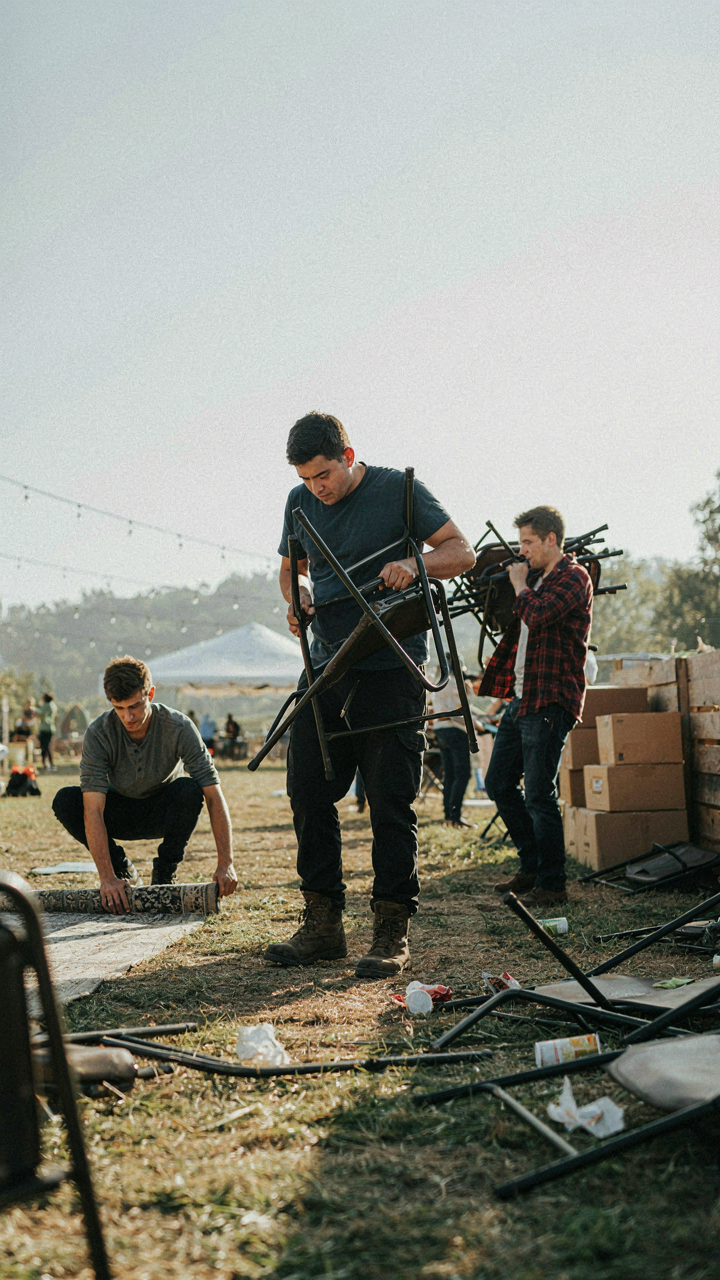
Strike The Set Before Fatigue Kills Execution
You want to leave before the mess becomes someone else’s problem, but that’s not why you care about this section. You’re afraid the cleanup will take longer than the party itself and eat your entire next day. The military calls this demobilization: the organized withdrawal of resources after an operation concludes. Your dinner party has a physical footprint that expands the moment guests leave. Start breakdown within fifteen minutes of the last person departing, not tomorrow morning.
The difference between a two-hour cleanup and a six-hour disaster is momentum. Wet food hardens. Table linens collect dew and mildew. Forgotten glassware breaks under morning light when you move chairs. You need a system, not good intentions. Assign yourself one zone and work it completely before moving zones. Tables clear first, then chairs stack, then ground debris. Do not drift between tasks. The moment you stop moving with purpose, cleanup becomes suffering.
Assign Roles Like Roles Matter
Common advice says ask guests to help. This fails because undefined help creates chaos: three people cleaning one surface while dishes pile up unwashed. Use a military supply chain model: one person handles removal, one handles washing, one handles storage. This eliminates decision fatigue and prevents the same task getting done twice.
Brief your designated cleanup crew before guests arrive. Tell them where items go. Show them the storage areas. State the end condition: what does “done” look like? Empty tables, clear ground, dishes washed and dried in place. One person manages trash and compost separately. One person handles glassware and plates. One person folds linens and stacks furniture. Assign someone to do a final walk of the space at the end. Cleanup ends when they confirm the ground looks untouched.
Your True Obstacle Isn’t The Stars; It’s Your Romanticized Incompetence
You don’t need a better plan. You need to stop treating a dinner party under the stars like some untouchable fantasy reserved for people with Instagram aesthetics. The gap between you and someone who actually executes this is zero skill and maximum action. Pick a date this week. Tell three people. Buy the food tomorrow. Everything else collapses the moment you stop performing uncertainty and start moving. Your incompetence only wins if you admire it from the sidelines instead of failing forward under an open sky.