The Illusion Of Effortless: It’s Always A System
What “Effortless” Actually Means
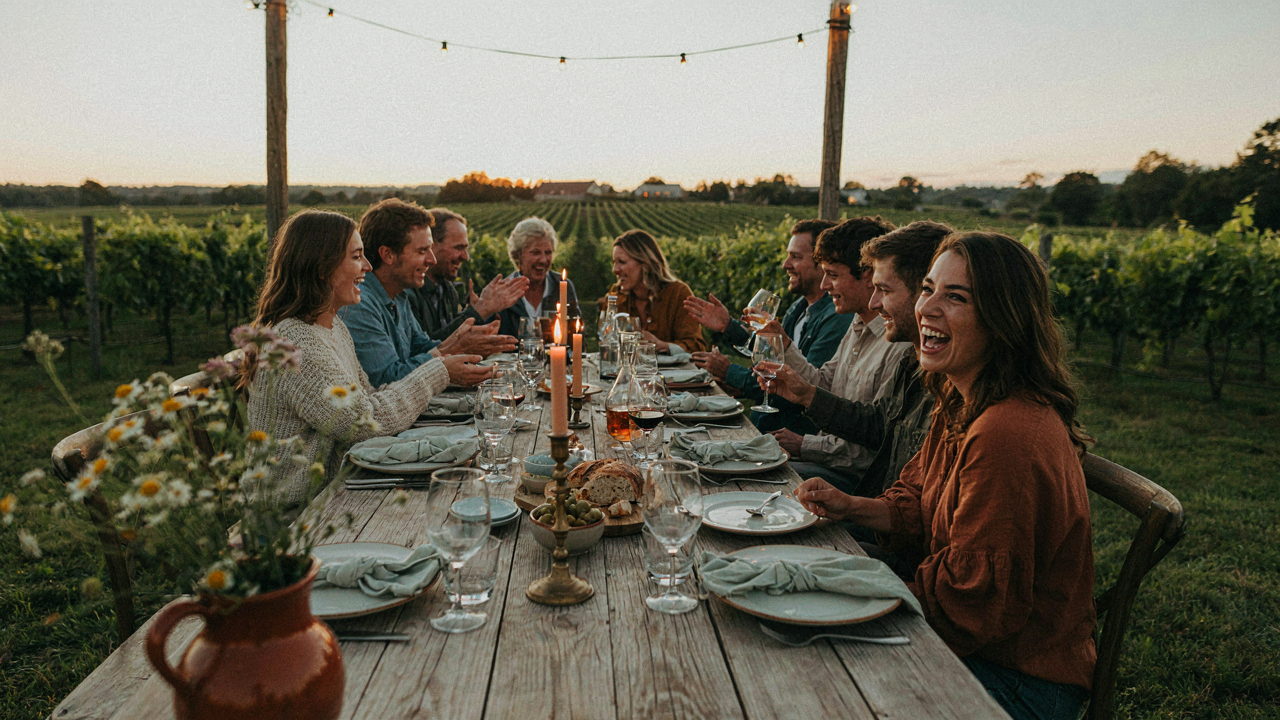
You want to believe a farm table dinner party happens without planning because admitting otherwise means confronting how much work you’re avoiding. Here’s the mechanism: effortlessness isn’t the absence of labor. It’s the presence of decision made before guests arrive. The prep work doesn’t disappear. It moves upstream. You’re not eliminating effort, you’re pre-loading it so the experience feels unplanned.
People confuse a calm host with a host who did nothing. The calm host decided the table layout three days prior. They plated components in advance. They know exactly when to pull bread from the oven. This isn’t intuition. It’s a choreographed sequence that looks improvised because you never see the rehearsal.
Where The Real Work Lives
The farm table dinner party aesthetic borrows from theater production: you stage a scene. The difference between professional staging and amateur chaos is blocking. Theater blocks every movement. Farm table hosts do the same, but pretend they didn’t. You decide sight lines before anyone sits down. You plan traffic flow from kitchen to table. You choose which tasks happen when and who handles what.
Most advice tells you to “keep it simple” or “let your guests help.” That’s incomplete. The real system is this: you frontload all decisions about food prep, timing, and table arrangement into the 48 hours before service. On service day, you execute the system without improvising. You don’t ask guests to help because you’ve already predetermined exactly how much capacity you have to manage variables.
The Minimalist’s Harvest Table Outdoor Dinner Parties Protocol
Start With What Actually Matters

You’re worried people will think your dinner looks cheap or poorly planned. Here’s the mechanism: constraint forces specificity, and specificity reads as intentional. When you decide upfront what you refuse to compromise on—three things, maximum—every other decision becomes obvious. You stop searching for what to add and start seeing what breaks the line. This is how farm table dinners actually look refined instead of scattered.
The non-negotiables aren’t about budget or aesthetics. They’re about function. Pick one: the table surface itself (raw wood, specific grain), the lighting (sunset timing, specific source), or the food presentation (what’s plated versus what’s family-style). Everything else folds into serving that one anchor point. You’re not collecting pretty things. You’re building a system where each element reinforces one decision you’ve already made.
Strip Everything That Doesn’t Defend Your Choice
Most advice says “add texture” or “layer in materials.” That’s wrong. The real play is removing anything that contradicts your non-negotiable. If your anchor is raw wood and natural light, then cloth napkins in heavy patterns actively fight against it. Tiered serving stands, multiple tablescapes, color coordination schemes—these aren’t additions that help. They’re noise that dilutes what you actually decided to emphasize.
The protocol: after you set your non-negotiable, do a single pass through your full setup and ask one question per item: does this strengthen or weaken the one thing I chose? If it weakens, it goes. Candles work if your anchor is warm evening light. They don’t work if your anchor is the wood itself. Serving platters matter if your anchor is food presentation. They add nothing if your anchor is the table surface. You end up with fewer things doing more work, which is what effortless actually means.
Tuscan Dinner Party: Borrowed Abundance, Not Bought
What You Already Have Around You
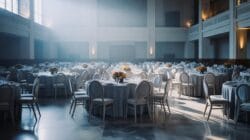
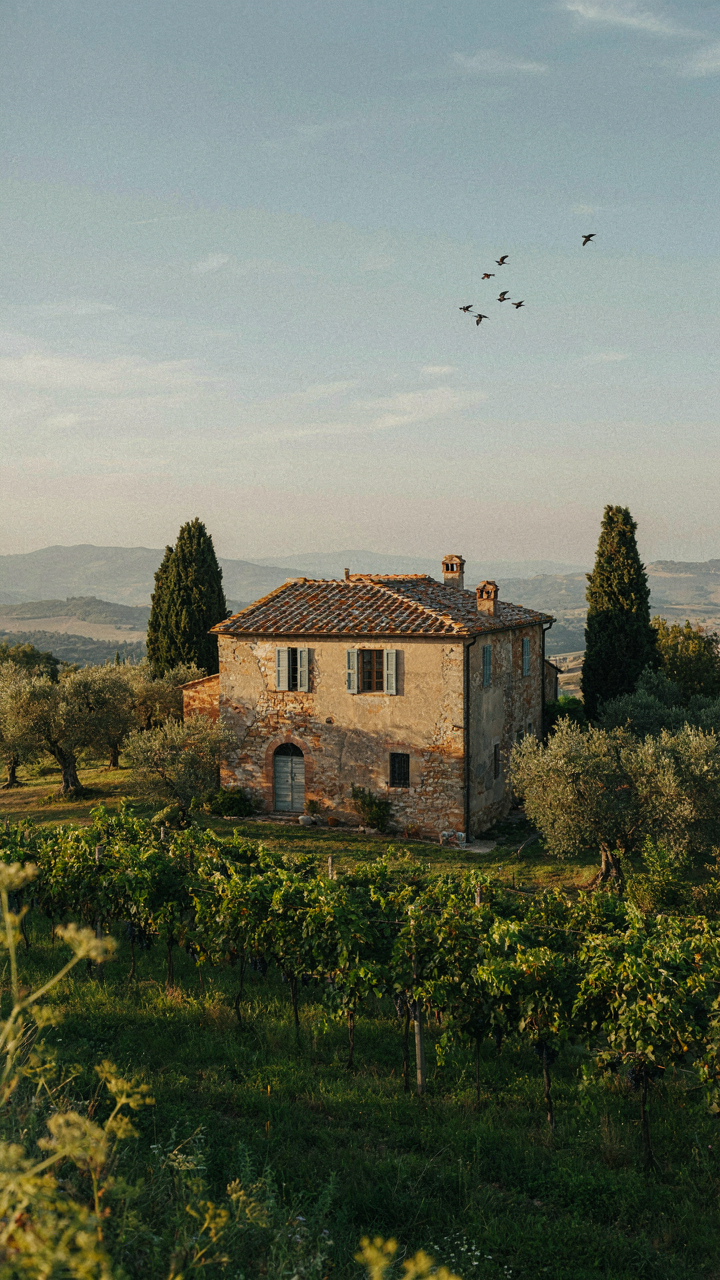
You want this to look expensive without the bill. That’s the real fear underneath. The mechanism is simple: Tuscan design emerged from scarcity, not wealth. Rural Tuscany in the medieval and Renaissance periods relied on what grew locally and what lasted across seasons. Olive branches, terra cotta from regional clay, dried herbs, stone, linen. These weren’t chosen for aesthetic reasons first—they were chosen because they were free or nearly free. You can replicate this by working backward from what surrounds your location, not from Instagram.
Stop shopping for “Tuscan elements” online. Your region already produces things that serve the same function: local branches with character, stones from your area, seasonal produce at farmers markets, linen from stores that actually exist near you. The table doesn’t need to scream Tuscany. It needs to show restraint and use what’s abundant where you live. A farm table dinner party that borrows from your actual surroundings reads as intentional. One assembled from purchased “rustic decor” reads as performance.
The Real Work Is Elimination, Not Acquisition
Everyone tells you to forage for accents. What they miss is that foraging is actually a constraint-based design system. You move through a specific geography, collect what thrives there, and build the table from actual limits. This forces decisions instead of paralyzing you with options. The work isn’t finding more things—it’s removing things that don’t belong.
Walk your property or neighborhood three days before the dinner. Note what’s growing, what’s weathered, what catches light. Collect sparingly. A few branches. Some stones. Dried grasses if they’re present. Then build the table around these pieces as anchors. Everything else—linens, plates, glasses—should recede. Limitation creates the aesthetic. Add one more element only after confirming the previous ones already communicate the mood you want.
The Outdoor Table Setting: Constraints Breed Creativity

Work Within Your Actual Site, Not Pinterest

You want the dinner to look like it happened by accident, which is why you’re secretly hoping the setting will do the work for you. It won’t. The mechanism is constraint. In architecture and design, constraints force specificity. Your yard has a slope, bad light on one side, a fence line, existing trees. These aren’t problems to solve around. They’re the actual design brief. The best outdoor tables sit where they sit because that spot solves three problems at once, not because it’s centered or symmetrical.
Stop trying to make your space look like somewhere else. A farm table under mature oaks reads differently than the same table in open sun. The trees create shadow patterns that change through dinner. The proximity to property lines shapes how guests move and gather. Work backward from what your site gives you naturally, then build the setting into that logic. Your constraint is your style.
Weather Becomes Your Texture
The common advice treats weather as a threat to manage. That’s incomplete. Weather operates like a material in the same way a sculptor uses stone. Stone dictates shape. Weather dictates mood, sightline, and comfort zones at your table. Rain changes how people cluster. Wind creates movement in linens and centerpieces. Evening temperature shifts where guests sit longest. You don’t fight these conditions. You design the table so weather improves the experience rather than detracts from it.
Positioning matters more than decoration. Face the table away from prevailing wind so it hits your back, not plates and glasses. Angle toward fading light in summer so golden hour lands on faces, not your lap. If rain threatens, a transparent acrylic overhead lets light through while protecting food. You’re not adding atmosphere. You’re removing friction between the weather and the meal.
The Cyberspace Feedback Loop Of Backyard Long Table Dinner Envy

When Instagram Becomes Your Guest List

You want people to think you’re the kind of person who hosts effortless farm table dinners. That’s the real thing happening here. Social media operates on a cybernetic loop: the algorithm shows you what performs, your brain registers it as a standard you should match, you perform the same thing, the algorithm rewards it, and now everyone sees a narrowed version of reality that feels like the only way to do it. The farm table dinner party suffers most from this because the medium itself is visual and the stakes feel personal. When you scroll through curated tablescape photos for an hour before hosting your own dinner, you’ve already distorted your perception of what “good” looks like. You’re not comparing yourself to your actual friends anymore. You’re comparing yourself to a highlight reel that took three hours to photograph and doesn’t show the hour spent resetting plates for angles.
The feedback loop doesn’t just affect aesthetics. It creates artificial scarcity and complexity. You start believing that farm table dinners require specific branded linen, particular ceramic styles, or flowers from a certain type of farm. None of that is true. The algorithm doesn’t reward simplicity or authenticity—it rewards visual consistency and recognizable tropes. So the people hosting actual good dinners go invisible while the people performing dinner-hosting get the engagement. Your nervous system can’t tell the difference between the two on a screen.
Stop Documenting, Start Eating
The fastest way to break the loop is to commit to zero phones at the table before anyone arrives. Not as a rule you announce. Just don’t have them there. No staging shots of the food. No catching the light at the perfect moment. No documentation period. This doesn’t require willpower because you’re removing the option, not resisting temptation. When your hands aren’t occupied with framing a shot, you notice actual conversations. You hear which people talk over others. You catch when someone’s wine glass empties. You see the real texture of the evening instead of the version your camera would flatten into two dimensions. The dinner becomes about the people in front of you, not the people you’re performing for on a feed.
Presence is the mechanism that breaks the cycle because presence generates its own feedback. Real laughter from real people in your backyard hits different than engagement metrics. Once you experience an actual good dinner—where the food gets cold because everyone’s talking, where you forget to play host because you’re genuinely interested in what someone said—the Instagram version looks hollow. You’ll still care about how things look, but you’ll care because it matters to the people there, not because it matters to strangers scrolling. The shift happens when you stop treating the dinner as content and start treating it as an event.
Rustic Outdoor Dinner Party: The Power Of Pre Emption

Failure Points You’re Actually Going To Hit

You want the dinner to feel spontaneous because spontaneity signals you’re not desperate to impress anyone. That’s the real fear underneath. But spontaneity only works when you’ve eliminated the variables that kill it. Think of this like supply chain management: you identify bottleneck nodes before they choke your operation. Your bottlenecks aren’t production delays. They’re the moments when guests arrive and nothing is ready, or food sits out too long, or the table setup forces you to scramble mid-service.
Common failures follow patterns. You’ll run into them unless you name them first and build barriers against them.
- Temperature collapse: Hot food cools fast outdoors, especially on windy evenings. Guests stall in conversation, food hits unsafe temperatures before serving.
- Seating chaos: You haven’t assigned seats or marked them. Guests hover, unsure where to sit, creating awkward clustering and bottlenecks.
- Lighting gaps: Dusk hits faster than you expect. The table becomes dim mid-meal, forcing you to scramble for candles or flashlights.
- Bathroom access disaster: No clear pathway, no soap, no towels. Guests return tracking dirt or feel uncomfortable asking where it is.
- Beverage abandonment: Glasses empty, nobody knows where to refill. You become the permanent server instead of a participant.
- Surface scarcity: No room for plates, glasses, or serving spoons. Everything piles on the table in a chaotic heap.
Once you map these, you stop treating dinner prep as guesswork. You treat it as a sequence of interventions designed to keep the experience flowing while you’re actually present at the table, not locked in crisis mode in the kitchen.
Pre Assembly And Staging Systems
Batch work by zone and by timing window, not by dish or course. This is different from what most food prep advice tells you. Most advice groups work by recipe: prep all vegetables, then all proteins, then all sauces. That’s wrong for dinner parties because you’ll forget what stage you’re at and why timing matters. Instead, organize by when each element must be ready and where it physically lives.
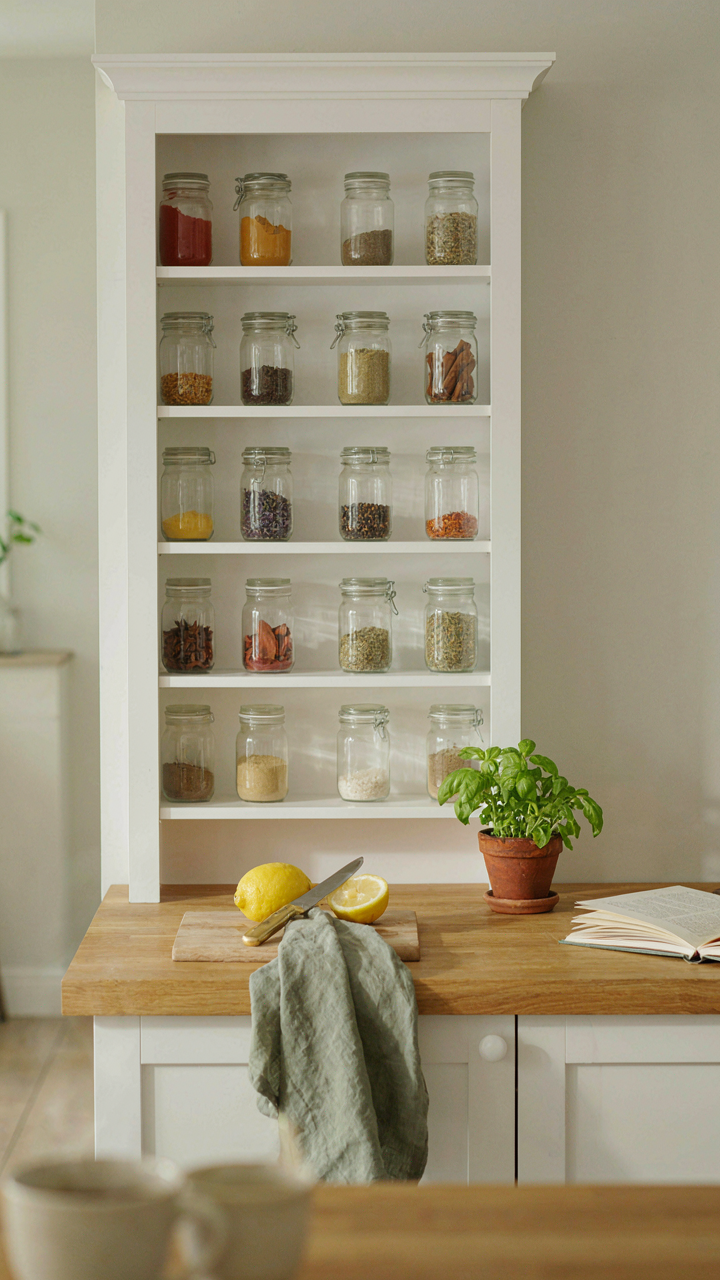
Create a staging area separate from where guests will see. This is your command center: prep table with labeled containers, holding station near the grill or stove, beverage station with pre-filled pitchers and glasses, plate staging area with stacks ready for service. Everything lives where you grab it, in order, without hunting. Set your table the morning of, not an hour before. Fold napkins, place cards, glasses, and utensils finished. Run a final light sweep an hour before guests arrive to catch what you missed. The act of pre-setting removes the mental load of deciding where everything goes while people are watching you work.
Farm Table Setting: Function Dictates Form
Utility Over Visual Noise
You want the table to look intentional without appearing staged, which masks your real fear: that guests will clock the effort and judge you for trying too hard. Here’s what actually matters. Farm table design borrowed from industrial engineering the principle of constraint: remove everything that doesn’t serve eating, drinking, or conversation. A table crowded with decorative objects forces guests to navigate around them. They interrupt sightlines. They get in the way of reaching for bread or wine. The mechanism is simple. Fewer obstacles between people and food creates more actual interaction.
Start by removing one thing you think looks nice. Then remove another. A single low centerpiece that doesn’t block eye contact beats a graduated arrangement of five candles and scattered foliage. Linen that doesn’t slide matters more than the color. Plates that stack efficiently matter more than unusual shapes. Every element you keep must earn its place by making the meal function better, not by filling empty space.
Comfort As The Real Status Signal
Luxury doesn’t live in difficulty anymore. That’s outdated thinking. Real status is showing people they can relax at your table without performing. Farm table dining moved away from rigid formal place settings because the mechanism works: when guests know exactly where things go and how to use them, they stop thinking about logistics and start thinking about conversation.
Set the table so someone’s first instinct is correct. Napkins go to the left or on the plate, not folded into swans. Glasses positioned where reaching for them won’t knock over a fork. Chairs at consistent heights so no one sits lower than their neighbor. Bread plates optional if you’re serving bread family-style. Water pitchers and wine bottles accessible without asking, not locked behind a host. The protocol is this: test your setup by sitting down as a guest. If you notice the table before the people around you, fix it.

Beyond The Photo Op: Cultivating Real Connection
Room Layout Determines Where Attention Goes
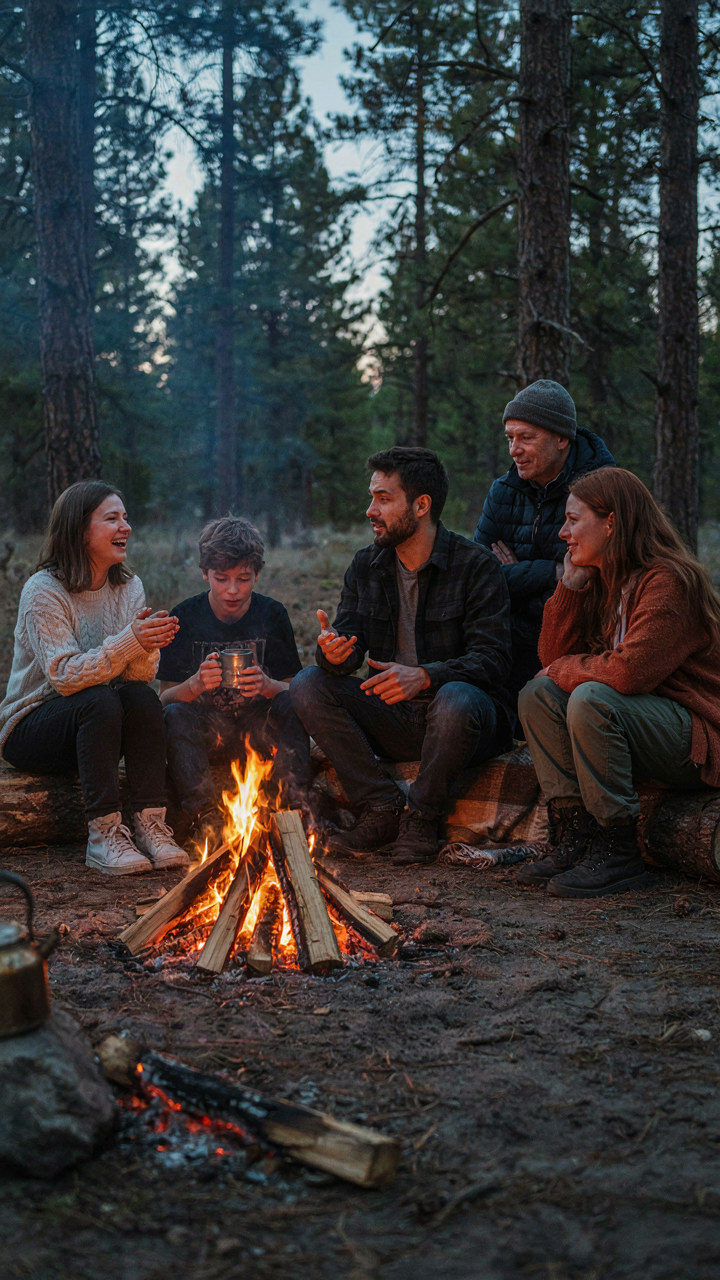
You want people to feel relaxed and connected, but you’re actually terrified the dinner won’t look good in photos. That’s the real fear, and it kills actual connection before dessert arrives. Borrow from acoustic engineering: sound travels in patterns based on room geometry. Sight and conversation work the same way. Long rectangular tables force eye contact down a line instead of across clusters. Round or square configurations create multiple conversation nodes where side conversations don’t feel like you’re excluding the head of the table.
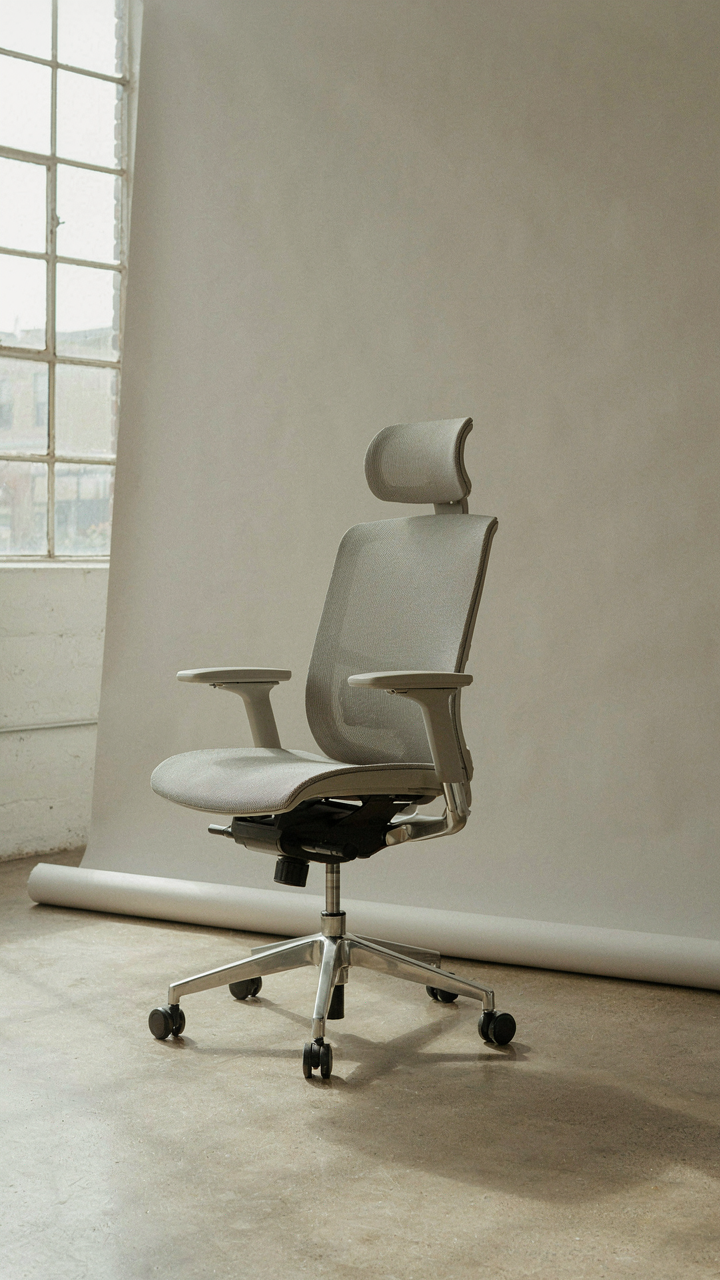
Position the table to pull people toward each other, not toward walls or kitchen doors. Remove high-back chairs that create visual barriers. Keep the dining zone separate from the kitchen enough that people don’t watch you work, but close enough that you’re present. Place the table where natural light hits faces during the meal, not backlighting that washes everyone out. This isn’t about aesthetics. It’s about removing the friction between people talking.
Interaction Before Presentation
Everyone tells you to set an Instagram-worthy table first. That advice is backwards. The real mechanism: people mimic the energy they observe in their environment. If your table is so precious that guests worry about touching things, they’ll sit rigid and polite instead of leaning in. Farm table styling should signal permission to engage, not permission to admire.
Skip the fussy place card holders and use handwritten names on kraft paper. Use linens that look good but can actually be stained without ruining the night. Choose glassware and plates that feel substantial, not delicate. Remove the bread basket before people sit so they focus on conversation, not reaching. The table should disappear into the background after the first thirty seconds. That’s when real connection starts.

The Only Real Failure Is Caring What They Think
You’re overthinking the table because you think imperfection reveals incompetence. It doesn’t. It reveals you stopped performing. Your guests came to eat and belong, not to grade your napkin fold. Tonight, set one thing intentionally beautiful on your farm table. Leave everything else real. Then watch how nobody remembers the centerpiece but everyone remembers feeling wanted. That’s the only metric that matters.