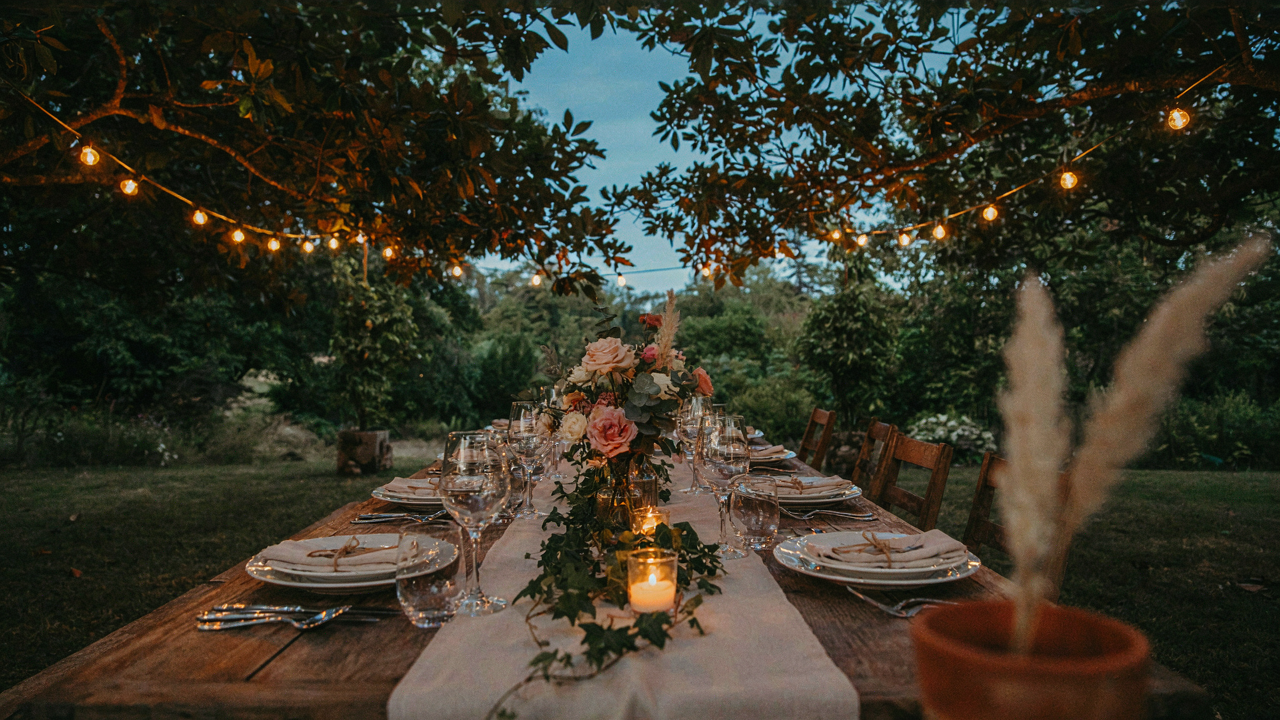
The Kinematic Placement Principle: Optimizing Flow
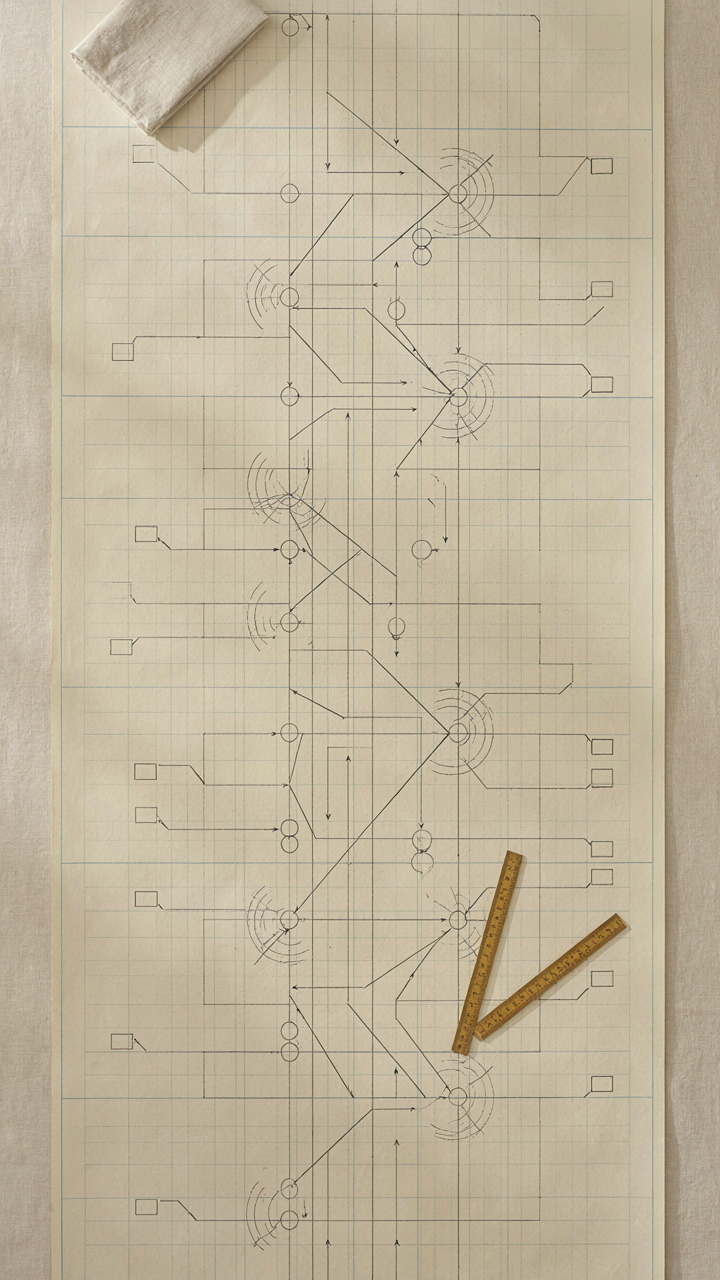
Group Guests By Conversation Velocity
You want people to think you’re a master at seating because you’re afraid a dead table makes you look bad. The real mechanism is this: conversation moves through a group at different speeds depending on who sits where. Borrow from fluid dynamics—some people are high-viscosity (they slow interaction), others low-viscosity (they accelerate it). Position your low-viscosity people at table thirds, not clustered together. This creates friction breaks that prevent one dead zone from spreading across the entire table.
The common advice is to “mix personalities.” Wrong. You need to distribute energy strategically. Put your one natural storyteller at the table’s center-right, not the head. Put someone who asks good questions across from them. Position quiet people next to talkers, not between two other quiet people. The silent person becomes a listener in a two-person dynamic, not a bottleneck. Calculate table sections of four to five people, then seed each section with one person who naturally drives conversation forward.
The Path Between Chairs Determines Engagement
Most people obsess over chair placement and ignore the gaps. Kinematics studies how objects move through space—apply that here. If guests can’t move between seats without excusing themselves past three other people, they won’t leave. If they can’t leave, they’re trapped in one conversation. They check their phone instead of working the room. Space chairs eighteen inches apart minimum at a long table. This isn’t aesthetic; it’s functional. You’re designing for actual human movement, not decoration.
Wider gaps also let servers work without touching guests. It lets people stand up, stretch, move to the drink station, and return without broadcast. Make one chair per gap accessible from behind without disturbing anyone. Don’t create a bottleneck where the only path to the bathroom runs alongside the table’s weak side. Before setting anything, walk the perimeter and trace where people will actually move. That path becomes your design constraint, not an afterthought.
The Sensory Dominance Hierarchy: Beyond Just “Looks”
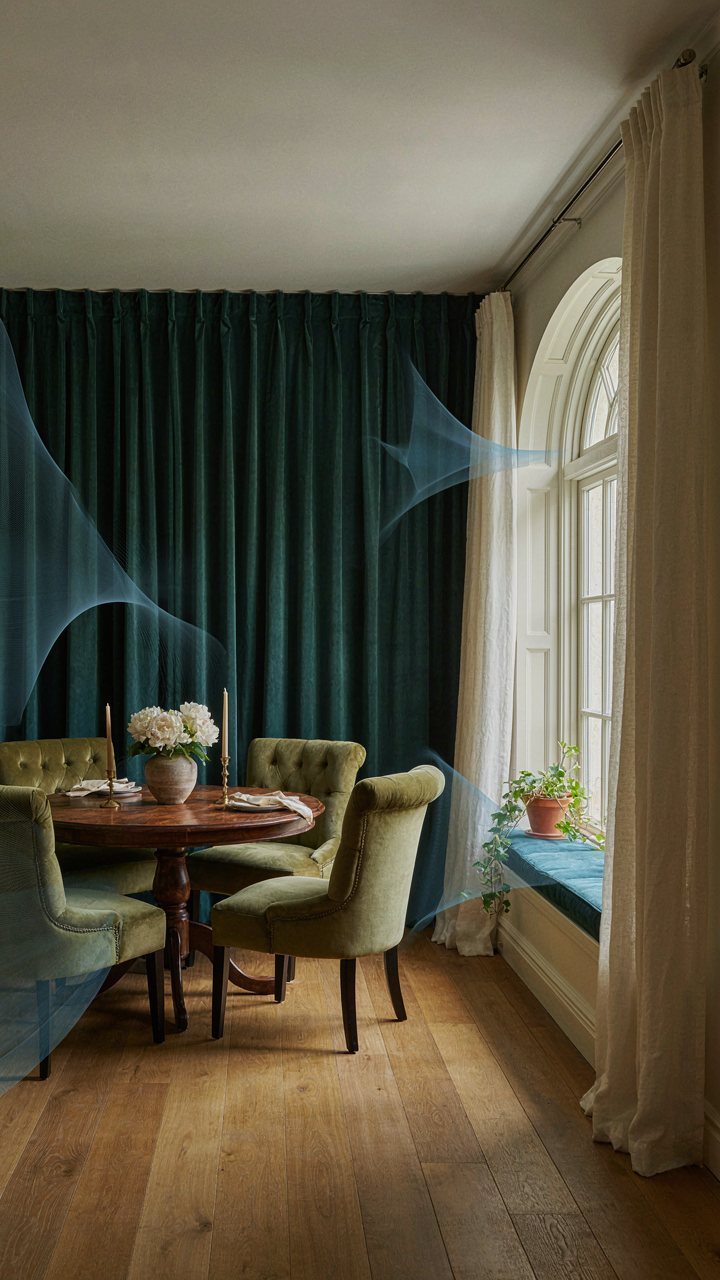
Sound Design Controls Conversation Flow

You want people to think your dinner was effortless. The mechanism that makes this possible is acoustic absorption. In acoustics, we call this “damping”—sound waves lose energy when they hit soft materials instead of bouncing off hard surfaces. At a long table, damping determines whether guests lean in to hear or shout across the space.
Hard surfaces amplify. Wood tables, stone patios, and glass reflect sound back into the crowd, creating feedback chaos. Textiles kill this dead. Layer a linen tablecloth, add cloth napkins, place guests on padded chairs, and hang fabric panels or curtains if your space is exposed. The difference is immediate: conversation volume drops, intimacy rises, people actually listen instead of competing for acoustic dominance.
The Subtle Olfactory Layer
Scent works as a framing device, not decoration. Most advice about long table dinners ignores smell entirely because it’s invisible—but your guests’ brains register it before they sit down. A single dominant aroma at table setup creates expectation and memory.
Choose one source only. A lit candle placed one seat away from the table (not on it) or fresh flowers in a low arrangement outside the table perimeter works. Avoid competing scents: no candle and flowers and cologne and cooking smells firing at once. The goal is one coherent signal that passengers unconsciously associate with the event. Place your olfactory anchor ten minutes before guests arrive and position it where air naturally moves it across the seating area.
The “Elevated Dinner Party” Not About Price, But Precision
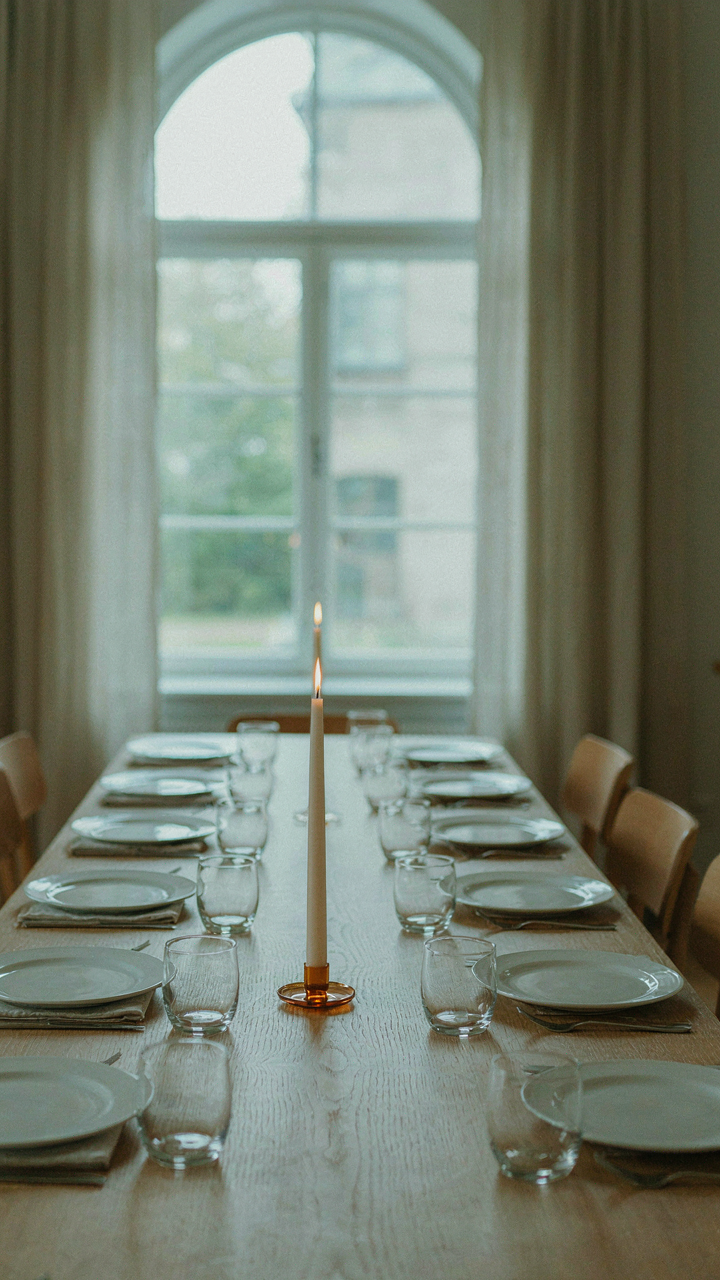
Restraint Compounds Connection
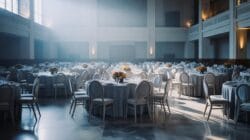
You want people to think you have taste. That’s the real reason you’re reading this section. The mechanism is simple: clutter demands attention, so your guests attend to objects instead of each other. Minimalist decor works because it removes cognitive load from the visual field. Your brain processes fewer competing stimuli, which means it defaults to processing the people across the table.
This doesn’t mean bare wood and empty plates. It means one statement piece per zone, or none. A single tall arrangement at the table center, low enough that sightlines cross over it. Candlesticks instead of a candelabra. White linen instead of patterned. The Renaissance understood this: they didn’t clutter the table because they understood that abundance of objects reads as anxiety, not wealth. Restraint compounds connection because it eliminates the subconscious work of filtering visual noise.
Light Sculpts The Social Field
Lighting is not decoration. In architectural practice, lighting designers call this “layering”—and you layer light the same way you layer social hierarchy at a table. Overhead fixtures flatten faces and kill intimacy. You need directional light that hits the table surface and bounces up onto faces, creating definition without harshness.
Two practical mechanisms: first, place light sources below eye level or slightly offset from center, so faces catch warm upward light rather than cold downward glare. Second, use dimmers or multiple fixture types so you can shift mood as the meal progresses. Warm light during appetizers activates conversation. Slightly cooler light during the main course maintains alertness. The light you choose determines whether people lean in or lean back.
The “Long Outdoor Wedding Table” Fallacy: It’s A System, Not A Scene
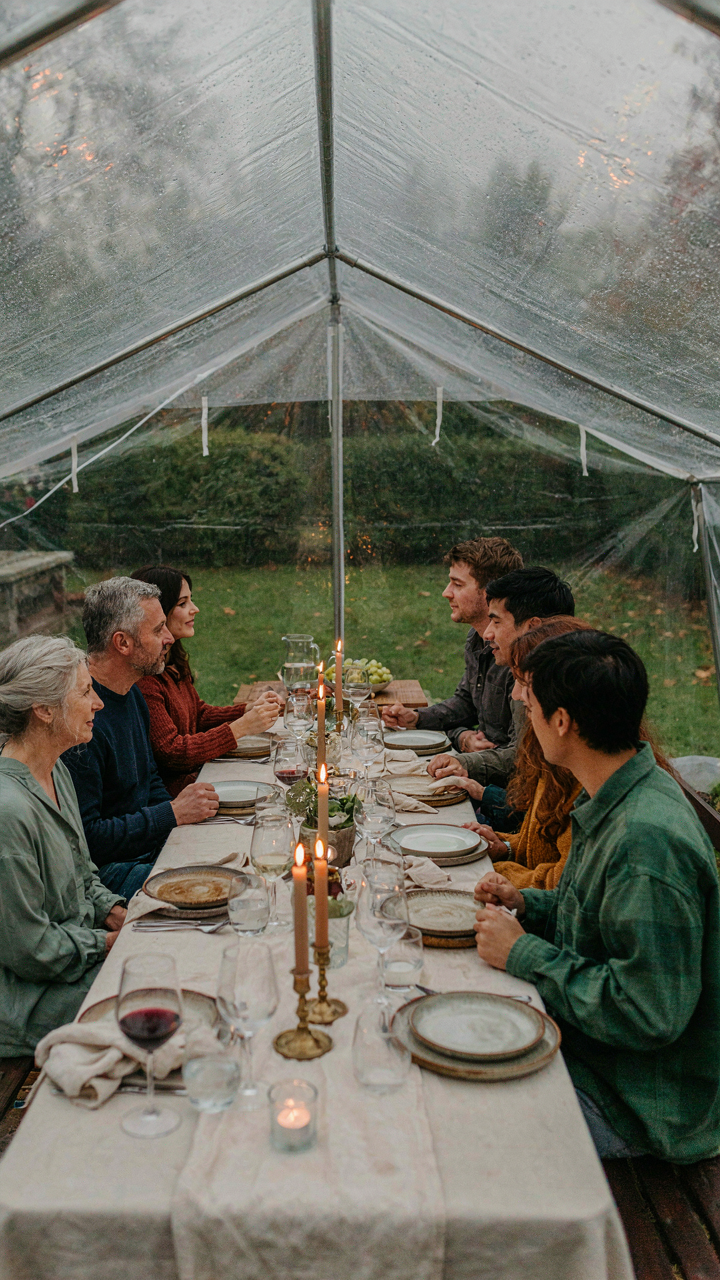
Weather Protection Before The First Guest Arrives

You want the table to look untouched by nature because you think that signals control. It doesn’t. What signals control is anticipating what weather will do and building barriers before it happens. Most hosts treat weatherproofing as damage control on the day of the event. That’s reactive. A long table in open air faces three mechanical threats: wind load on tall centerpieces, water pooling on the surface, and UV degradation of textiles. You stop these before setup day, not during it.
Tension and angle are everything here. A table runner secured only at the ends will billow in wind that shouldn’t matter. Anchor it at intervals with weighted clips or sewn-through loops. For the table surface itself, slight crown or camber in the top prevents standing water from collecting during or after rain. Most outdoor tables are flat by default. You can add thin rubber shims under two legs along the length to create a 1-2 degree slope away from your serving area. Test it with water before guests arrive.
Electrical Infrastructure As Foundation
Power grid planning is infrastructure design, borrowed from industrial systems thinking. In that field, you call unavailable infrastructure a “single point of failure.” A long table without planned electrical access is a single point of failure for heating, cooling, lighting, and refrigeration. Most hosts plug in a string of extension cords and hope. That’s not a system. It’s improvisation disguised as decoration.
Map your electrical needs before you choose the table location. Heated outdoor dining requires either a heat lamp above the table or a heated serving surface beneath it. Both need 120V circuits routed from your home or a generator. LED lighting for evening service needs its own circuit separate from heat load. Coolers for beverages must stay accessible without crossing the table. Run conduit or heavy-gauge cable along the table’s outer edge or beneath it if possible. Test all connections under full load one week before service to catch shorts or inadequate amperage.
The “Long Table For 20 People” Conundrum: The Logistics Of Scale
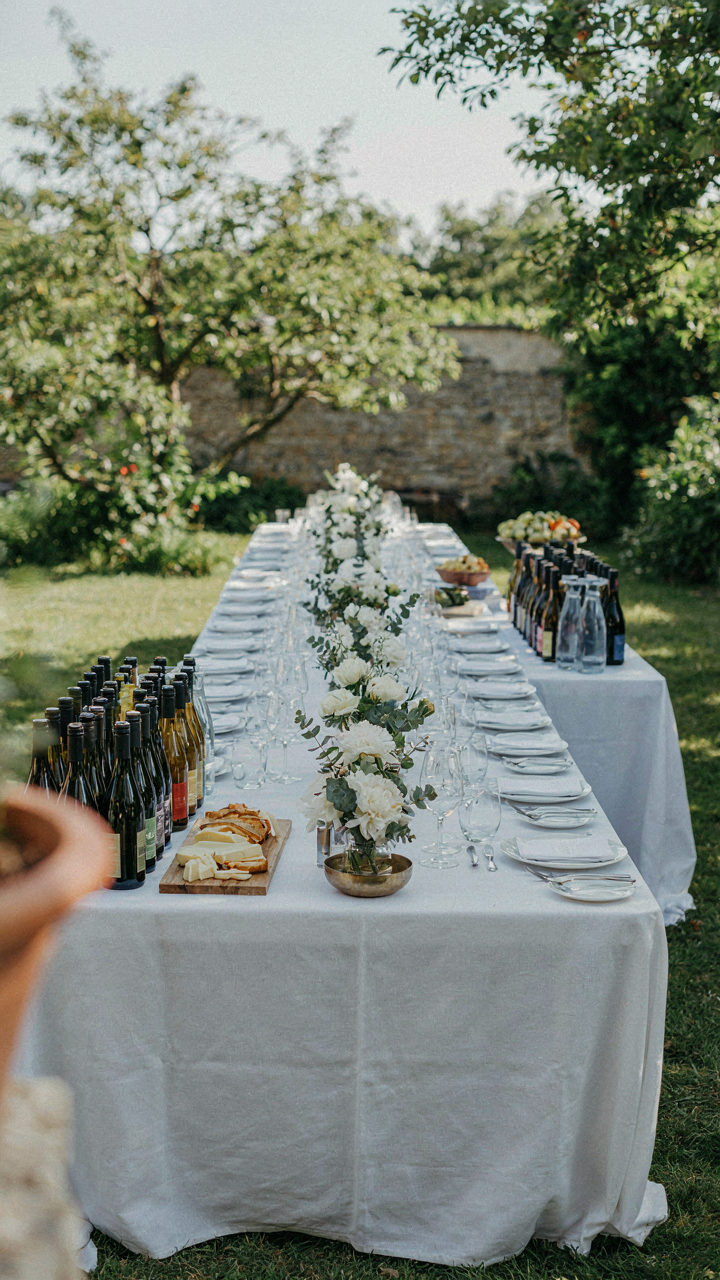
How To Stock A Moving Corridor

You want to know this because you’re afraid of running out of wine at minute 47 and looking like you didn’t plan. Here’s the mechanism: treat your long table like a supply chain with fixed endpoints and variable consumption rates. Food and drink move in one direction—from kitchen to table—and you control the velocity by managing stations, not by hoping guests self-serve responsibly. At 20 people, centralized distribution fails. You need two points of access: one at each table head. This prevents bottlenecks and lets you refill without interrupting conversation.
Stock each endpoint with enough for half your guests, then rotate. Pre-chill twice the wine you think you’ll need in a secondary cooler inside, not visible. Beer goes in a low-profile bin at table’s edge—accessible but not the visual anchor. Water pitchers stay on the table itself, never removed. The real move is this: your staff or co-host walks the length every eight minutes, not on request. You catch empty glasses before guests notice them.
Clearing Before The Table Breaks
Conventional wisdom says clear plates between courses to reset the space. That’s incomplete. The real constraint at 20 people isn’t the plates—it’s the conversation rhythm you’re trying to maintain. Industrial kitchen operations call this “flow optimization,” and the principle maps directly here: clear only what stops the next phase from starting. Don’t clear salad plates immediately after the last fork drops. Clear them when you’re plating the main course, two minutes before you serve. This keeps momentum without interruption.
Station your clearing crew or yourself at the table’s midpoint, not at one end. Work outward in both directions simultaneously. This takes 90 seconds per course and keeps the sightlines open. Use large, flat trays—not stacks of small plates that take multiple trips. For trash, designate a discrete bin outside the view line, 15 feet from the table. Scrape and stack plates there, not at the table edge. After the main course clears, a five-minute gap before dessert feels intentional, not awkward. The protocol is: clear only what prevents progression.
The Conversation Architecture Protocol: Engineering Dialogue
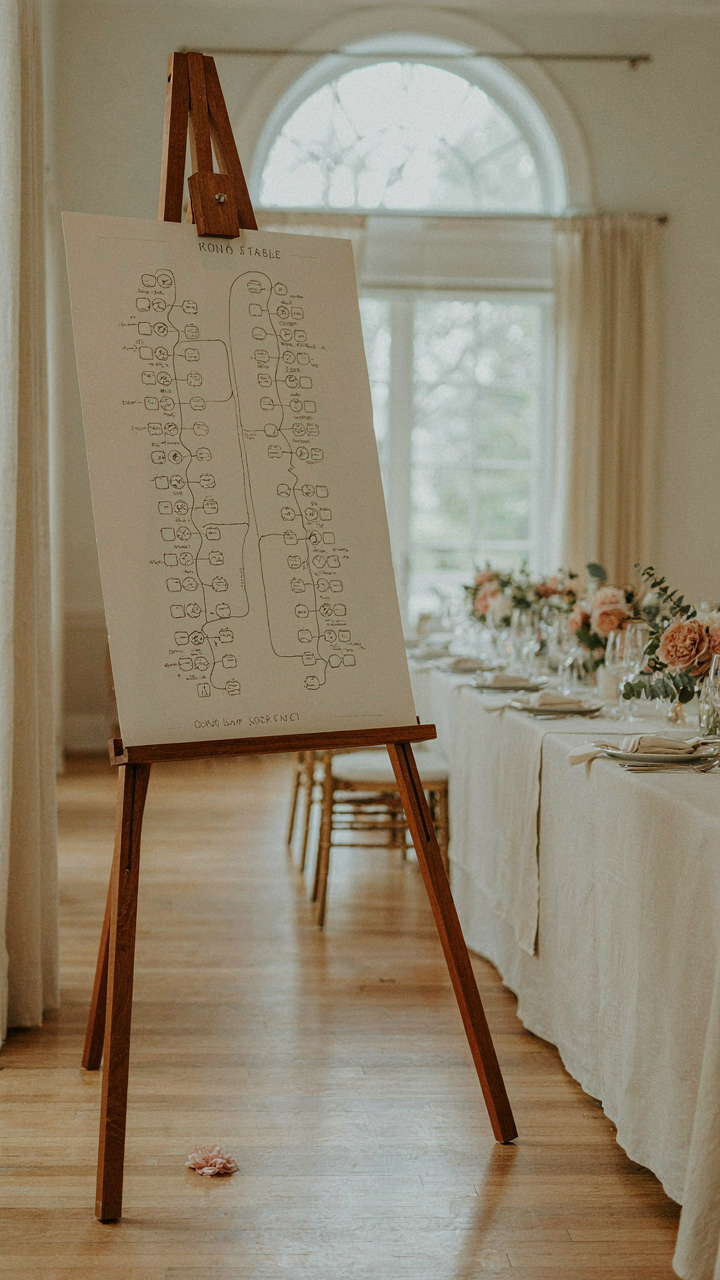
Seating Charts As Social Algorithms

You want people to think you’re a natural host who effortlessly creates magic. The truth is uglier: you’re terrified of dead air and awkward silences revealing you didn’t plan. A seating chart is a social algorithm. Like network topology in systems design, seat placement determines information flow and connection probability. Bad placement isolates nodes. Good placement creates redundancy so conversation doesn’t collapse when one pair runs dry.
The common advice says “mix people up” or “separate couples.” That’s incomplete. You need a structural constraint: seat people so each person has at least one strong connection point and one exploration point. A strong connection is someone they know or share clear common ground with. An exploration point is someone different enough to generate actual topics but not so alien the conversation requires translation. Position introverts with slight angle toward extroverts, never directly across from them. Direct eye contact across a table creates pressure. Angle creates permission.
Icebreakers: Tools That Earn Their Place
Most icebreakers are filler that waste oxygen. You ask “what do you do” and get a job title nobody remembers in thirty seconds. Real icebreakers unlock specificity without interrogation. They’re conversation primers, not conversation itself. Plant one question that points toward genuine interest rather than demographic sorting. This works because specificity is the antidote to small talk.
At table setup, slot your icebreaker into the first fifteen minutes when people are still forming conversational clusters. Use questions that reveal preference or decision, not background. “What made you choose this over that” generates story. “Tell me about the last thing you learned that surprised you” beats “where are you from.” Hand off the question to one person and let them pass it. You don’t lead the whole table through it. The mechanism here is giving strangers permission to be interesting instead of polite. Seat people, ask one real question, then step back and let tension create conversation.
The “Dining Table Wedding” Mastering The Microclimates
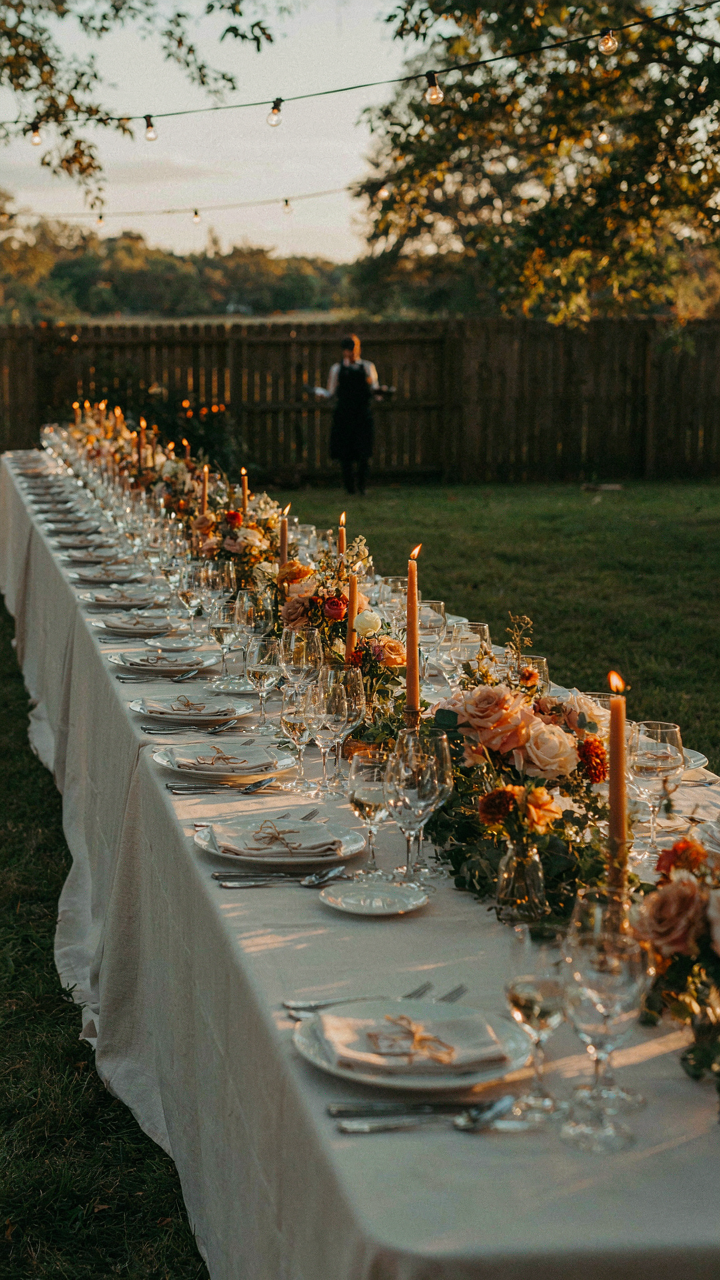
Temperature Zones: Ensuring Guest Comfort

You care about this because a cold guest leaves early and tells people your event was poorly run. The mechanism is simple: heat rises, cold air pools, and a long table creates multiple thermal zones you cannot control with one solution. Think of your table as a heat diffusion problem. The ends cool faster than the center. Guests in shade cool 8-12 degrees faster than those in sun. Wind direction changes the equation entirely.
Placement matters before anything else. Position your table perpendicular to prevailing wind, not parallel. This breaks the wind channel that runs the length of the table. If sun exposure is uneven, accept it: the shaded side will be 5-10 degrees cooler all evening. Move high-value guests to the warmer zone, not as an insult but as logistics. Supplemental heat sources work only in dead-calm conditions. Most backyard hosts waste money on outdoor heaters that dissipate uselessly. Instead, time your dinner start after peak sun hours but before the ground releases its stored heat.
Pest Control: Unobtrusive Deterrents
Your guests should never see, hear, or think about insects. This means prevention beats reaction every time. The common advice is wrong: citronella candles do not stop mosquitoes. They mask human scent minimally and only work in a tight radius. Real pest control requires understanding what attracts them in the first place.
- Standing water elimination: Empty all planters, bird baths, and low points on your property 24 hours before guests arrive. Mosquitoes breed in stagnant water, period.
- Perimeter spraying: Apply approved outdoor insecticide to grass edges and shrubs 2-3 hours before dinner. Let it dry completely before guests arrive so no residue transfers to clothing.
- Fan placement: Position a large oscillating fan at table level, perpendicular to seating. Moving air disrupts insect flight patterns and makes landing difficult without annoying guests.
- Lighting strategy: Use warm-toned lights only. Cool white and blue wavelengths attract flying insects aggressively. Keep lights 15+ feet from the dining area if possible.
- Natural barriers: Plant mint or lavender in pots positioned at table corners. Insects avoid these plants, and they work passively without chemicals near food.
Deploy these steps in sequence, not isolation. A fan alone fails. Insecticide alone fails. The combination creates an environment where pests have multiple reasons to leave. Check your local pest activity calendar before the event. Timing matters. Some regions have seasonal swarms you cannot outrun with tricks.
The Real “Long Dinner Table Decor”: It’s About Service, Not Stuff
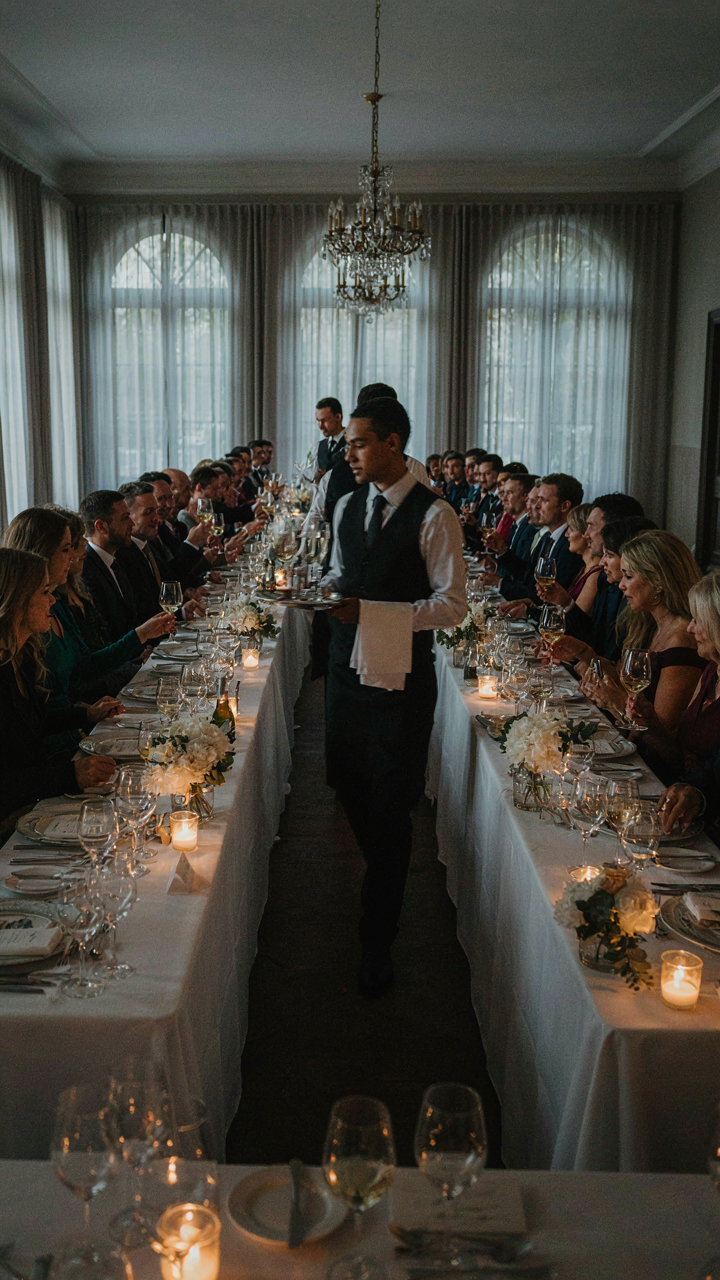
How Servers Move Without Collision

You want people to think your dinner was effortless. That’s the real reason you care about this section. Here’s what actually matters: borrow the concept of flow rate from fluid dynamics. Your service routes are channels. Bottlenecks kill flow. The path from kitchen to table to clearing station must work like a one-way valve, not a traffic jam.
Map your kitchen exit to one end of the table. Assign one side as the serving lane, one side as the clearing lane. Servers approach from behind. Never cross the table. Never reach over guests. The moment a server blocks another server or hesitates at a chair, you’ve created friction. Bad rhythm spreads. Everyone feels the awkwardness. Set the rule before service starts: plates move in one direction, then clear in the opposite direction on the next pass.
Stations That Answer Before They’re Asked
Guests won’t tell you they need water. They’ll sit there thirsty and judge you quietly. Place a water station at each end of the table, not in the middle. Put it on a narrow console or butler’s table. Include glasses, water pitcher, and a small napkin stack. Do the same for wine if you’re pouring. Position these at least two feet from the table corners so people access them without standing up and blocking others.
The second station strategy is the bathroom check. Before guests sit, know where bathrooms are. If you have fewer than two bathrooms for more than eight guests, rent a portable unit positioned discretely away from the dining area. Stock it before anyone arrives. Anticipating the need prevents the awkward question mid-meal. Same principle applies to coat storage. Have a designated area outside the dining space. Guests shouldn’t wonder where to put their jacket or bag.
Your Fear Of Social Awkwardness, Not Logistics, Is The Real Constraint
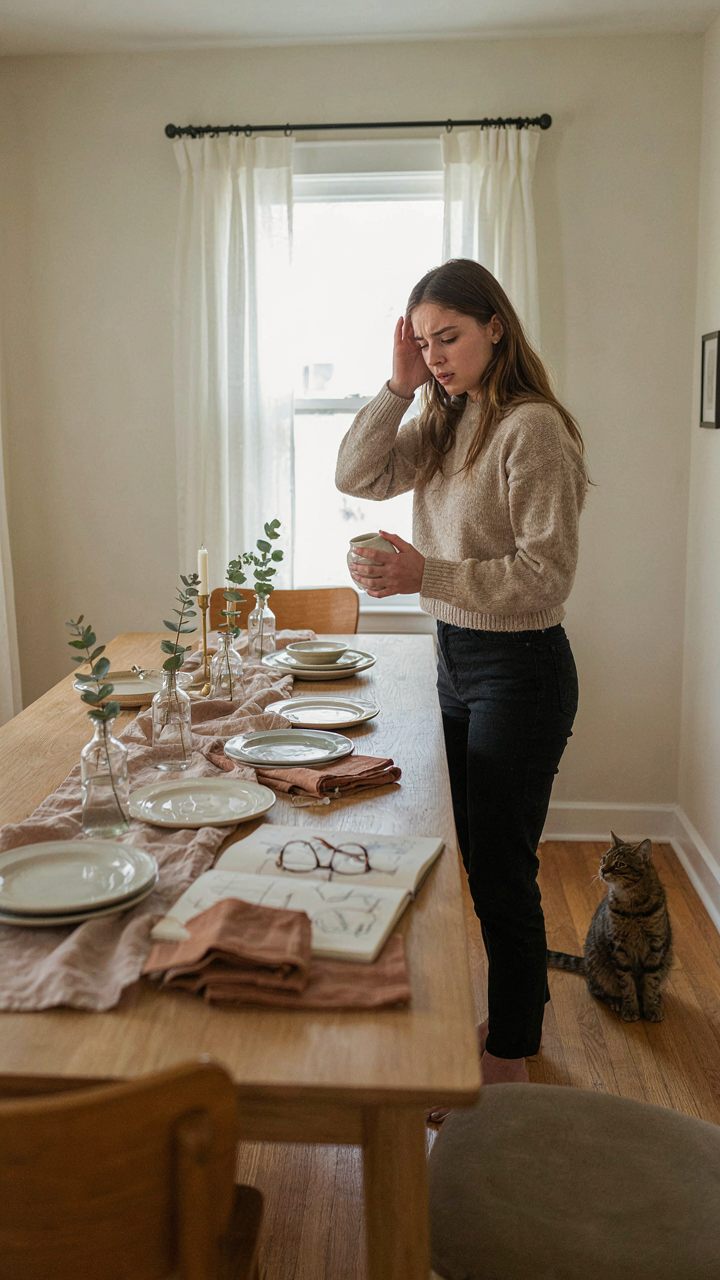

You’re overthinking the setup because you’re actually afraid nobody will show up or they’ll leave early. The table arrangement, lighting, and seating chart are just props for your real anxiety. Stop optimizing details and start inviting people who actually want to be there. The best long table dinner setup is one where you stopped waiting for permission to host. Send three invitations today.