The Unseen Battlefield: Microclimates That Wreck Your Backyard Camping Aesthetic
Where Cold Air Pools And Wind Funnels
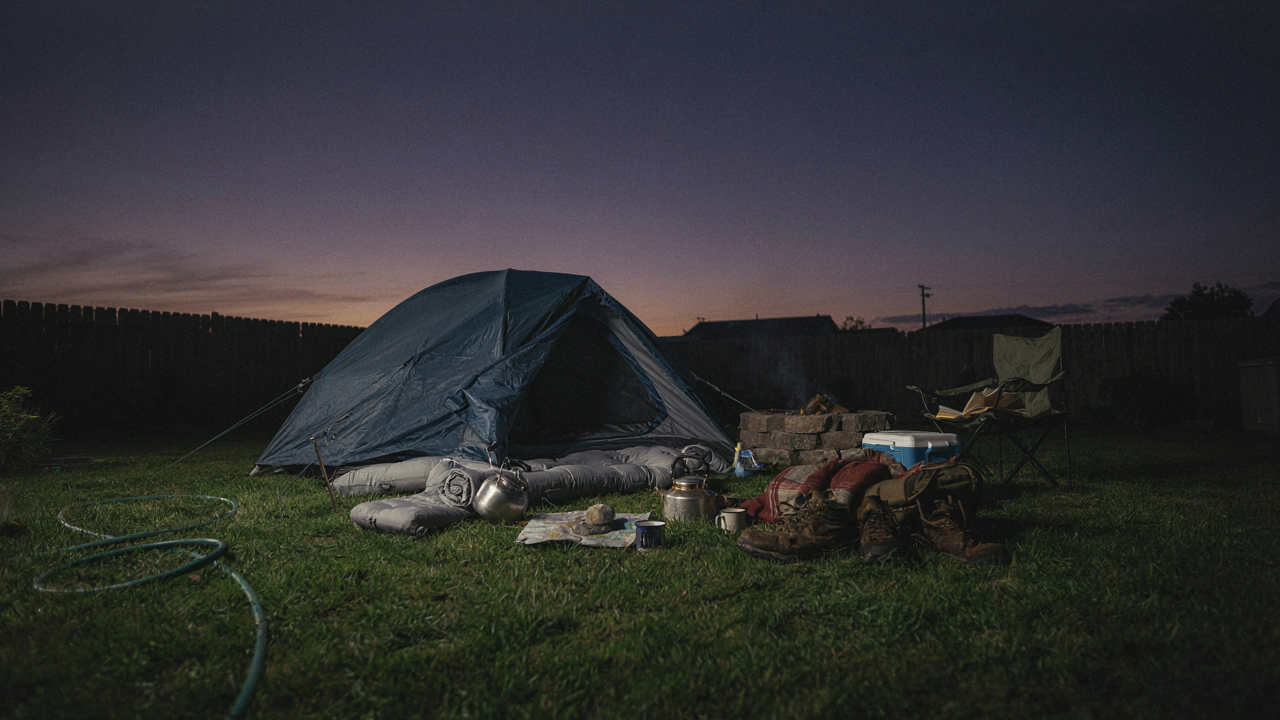
You care about this because you don’t want to admit your backyard setup failed for reasons you can’t see. Wind tunnels and cold sinks operate on the same principle as fluid dynamics in engineering: air moves downhill and gets trapped in low points, creating pockets of hostile conditions. Most yards have a drainage pattern nobody talks about. Water flows downhill. So does cold air. Your tent location isn’t random. If you place it in a depression between fence lines or near a tree line on the north side, you’ve built a cold sink. Temperature drops 5-10 degrees at ground level compared to higher terrain, and that gap widens after sunset. Wind funnels form when air gets squeezed between structures. A gap between two fences acts like a nozzle. Wind velocity increases through compression. You feel this as a constant breeze that collapses tent fabric and kills comfort. Most people blame poor tent stakes. The real problem was site selection.
Identify your yard’s geometry before you stake anything down. Walk the perimeter and note where water would flow after heavy rain. Mark fence gaps, tree clusters, and structures that create wind corridors. These are your no-go zones. The best camping spot sits on the slight high ground where cold air slides away naturally, and wind passes over rather than through. Test this by standing in candidate locations at dusk. If you feel a breeze that’s not present ten feet away, you’ve found a funnel. Choose the flat section with neither pooled air nor constant wind pressure.
How Sun Angle Destroys Your Night Setup
Shade patterns shift twelve hours before you need them. You map shade at 2 PM and think you’re covered. By 6 PM, the sun angle has changed enough to shift shadows ten feet. Worse, shade on June 15th looks nothing like July 15th because solar declination moves the sun’s path across the sky. Trees that blocked harsh afternoon sun now cast shadows elsewhere. North-facing tent entrances feel cool in morning but face direct sun by 4 PM if a tree’s shadow has moved. You need to understand where direct sunlight actually hits at tent bedtime, not just during setup. Most people assume that because a structure casts shade at midday, it will at night. The earth rotates. Angles change.
Document your yard’s shadow positions at 5 PM and again at 9 PM on the actual camping date. Photograph the exact spots where direct sun hits the tent. Your sleeping bag will absorb and hold that heat, making the interior uncomfortable even after sunset. Position your tent so morning sun hits the entrance, not the sides, because that allows interior heat to escape gradually without cooking the tent fabric. If you’re camping in summer, early morning sun hitting the tent entrance is your friend. If you’re camping in shoulder seasons, afternoon shade before sunset is the priority. Choose your tent location based on where the sun actually is when you’re trying to sleep, not where it was at lunch.
The “Perfect Spot” Fallacy: Why Your Prime Real Estate Is A Trap
Water Flows Downhill, Even When You Can’t See It
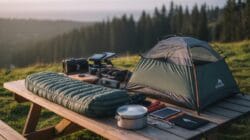
You want that flat, open patch near the center of your yard because it looks good and feels safe. But hydrology doesn’t care about optics. Water moves through soil following gravity and the path of least resistance, which means the “best” spot often becomes a collection point for runoff you didn’t anticipate.
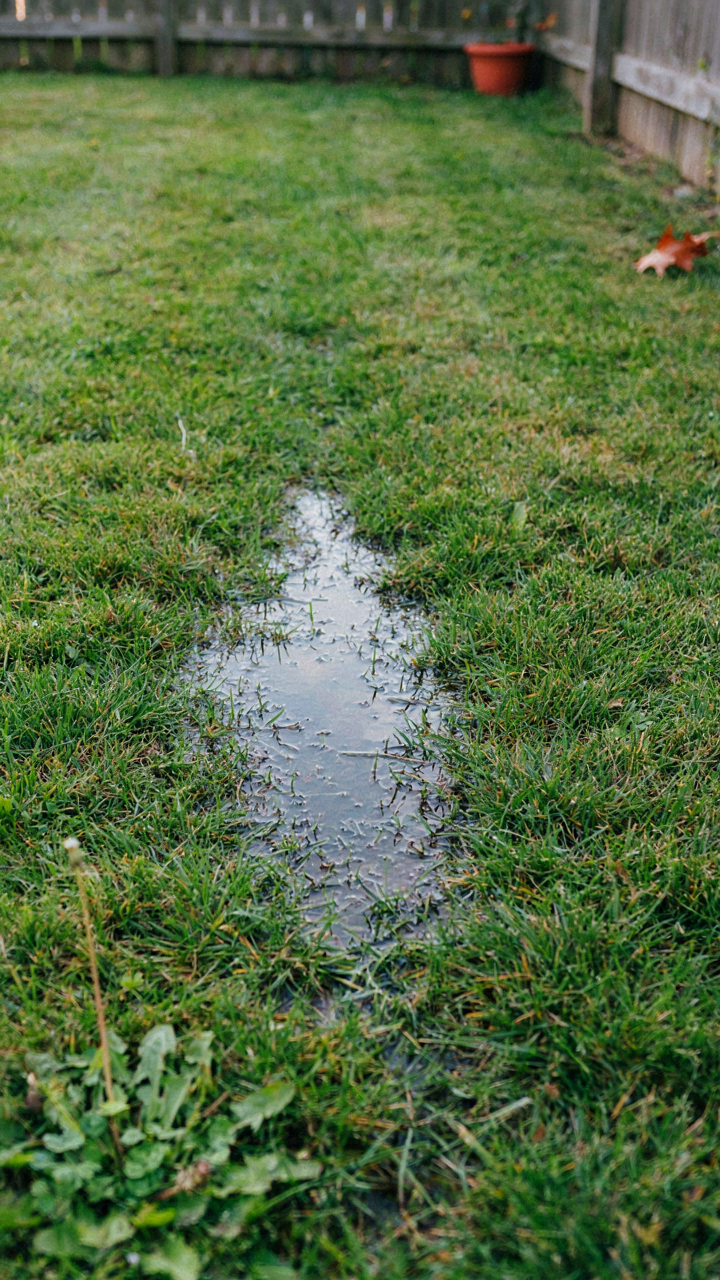
Most people check if the ground feels wet on the day of setup. That’s useless. Rain falls hours later, and water moves through soil and across surfaces at night when you’re asleep. The soil absorbs water until saturation, then flows laterally. A spot that’s dry at 6 PM becomes damp by midnight if it sits downslope from higher ground, even slightly higher ground you didn’t notice.
To assess drainage properly, observe your yard after rain. Where do puddles form? Where does water sit? Those patterns repeat. A spot that stays dry after heavy rain is your baseline. If you don’t have that data, find the highest point in your yard and set up there. High ground has nowhere to drain toward. Set your tent on a slight slope, pitched downhill, so water running under the tent keeps moving instead of pooling beneath you.
Roots Create Lumps You Didn’t Know Existed
Tree roots spread horizontally, not vertically. They often lie just below the surface, especially near established trees and shrubs. A patch of grass that looks smooth hides a network of raised sections where roots push soil upward. Sleeping on top of these roots means your back spends eight hours bridging gaps instead of resting.
The mistake is visual inspection alone. Walk the spot barefoot and feel the ground with your feet, not your eyes. Step deliberately, shift your weight, find the irregularities. Roots near trees can extend twenty to thirty feet from the trunk depending on the species and age. A seemingly open yard near mature trees is often compromised. If you find roots, move further from the tree line. The real cost isn’t discomfort, it’s sleep loss, which compounds over the night and ruins the next day.
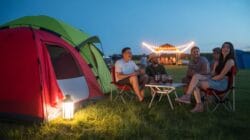
The Acoustic Signature Protocol: Silence Your Backyard Camping Ideas For Kids
Where Noise Lives
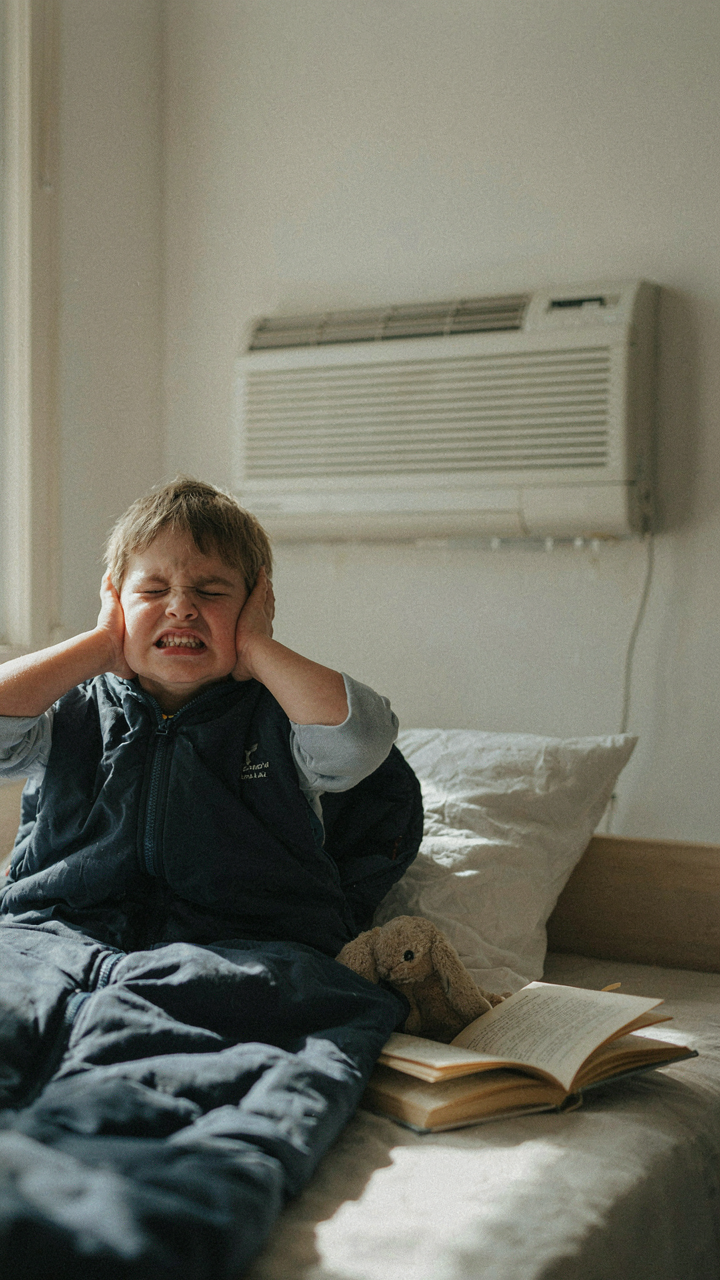
You want your kids to sleep through the night without waking up at 2 AM asking why the neighbor’s air conditioning sounds like a helicopter landing. That’s the real fear here, but you’re framing it as wanting a “peaceful camping experience.” The mechanism is simple: sound travels in predictable patterns based on source distance, frequency, and what’s between the source and your tent. Ambient noise doesn’t ruin sleep randomly—it does it by crossing a decibel threshold your nervous system registers as a threat. Map your acoustic environment the way military strategists map terrain. Identify every constant noise generator within 200 feet: HVAC units, traffic from nearby roads, neighbor pools, landscaping equipment on a schedule. Most people skip this step entirely and then blame bad luck when a child won’t sleep.
Document when each noise occurs, not just that it exists. A unit that runs from 6 to 9 AM matters less than one firing up at midnight. Traffic patterns change by day and time. HVAC systems cycle on temperature thresholds. Note the frequency range too—low rumble travels farther than high-pitched noise. This gives you actionable data instead of vague complaints. You’ll discover that the biggest disruptors follow schedules you can plan around or predict during setup.
Natural Barriers Work Better Than You Think
The common advice is to use white noise machines or earplugs, but that’s treating the symptom, not the source. Dense vegetation and earth berms actually interrupt sound propagation because they absorb acoustic energy rather than reflect it. Hedges, shrubs, and tree lines don’t just look nice—they function as acoustic baffles the same way insulation works in construction. Position your tent behind existing landscape features whenever possible. If your yard is open, you’re broadcasting every noise directly into the sleeping zone.
Dense plantings reduce noise by 5 to 10 decibels per 30 feet of depth, depending on vegetation type and thickness. Evergreens work year-round. Layered plantings (ground cover, shrubs, small trees) perform better than single species. If you can’t plant, fabric barriers and tarps create temporary dampening when positioned between noise source and tent. Tent placement matters as much as the barriers themselves—position the door facing away from known noise sources, and use the tent body as a secondary shield. The goal is to stack small reductions into meaningful silence.
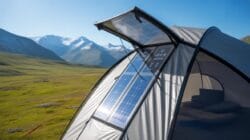
The Illumination Delusion: Light Pollution And Your Backyard Camping Experience
Where Your Light Actually Goes
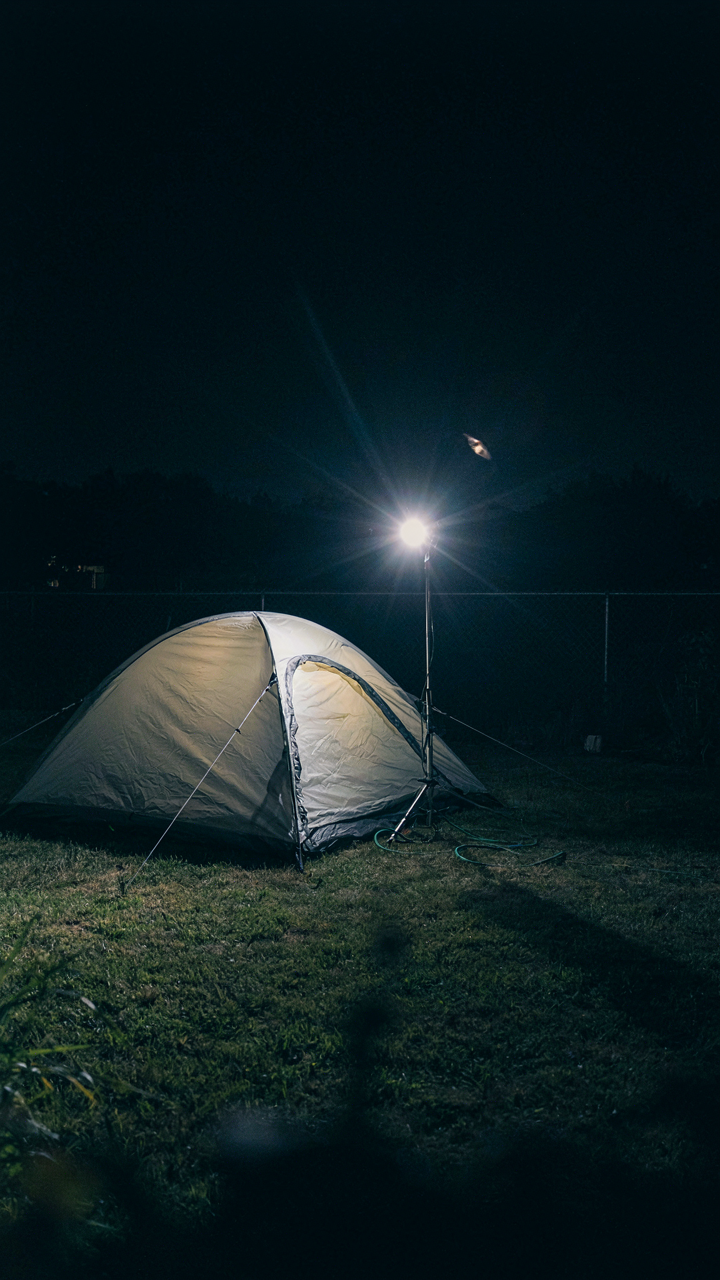
You want to feel like you’re camping without leaving home, but you’re terrified of sitting in actual darkness. That fear ruins the setup before it starts. Light behaves predictably. It doesn’t spread evenly from your source. It scatters upward and sideways first, then pools below. Your porch light, phone flashlight, and car headlights bounce off surfaces and create ambient glow that fills your entire camping zone. This is the same principle astronomers call light pollution: unwanted illumination that destroys your ability to see and adapt.
Most people bring every light source they own. Phone, lantern, headlamp, string lights. Each one compounds the problem. The human eye needs 20 to 30 minutes in darkness to reach useful night vision. Every time you turn on a light, you reset that clock. Your pupils contract. Melatonin production stops. The entire neurological system that makes camping feel different gets interrupted. This isn’t subtle. It’s the difference between feeling like you’re actually outside versus feeling like you’re in your backyard at dusk.
Red Light After Dark
Most camping lighting advice skips this: color temperature matters more than brightness. A 5000K white light destroys your adapted vision instantly. A red light preserves it. This comes from biology. Your rod cells, which handle night vision, are blind to red wavelengths. They stay functional and dilated. Use red headlamps or cover white lights with red film. Start your campout with red lighting only. Only after your eyes adapt fully can you justify white light for tasks like cooking.
The mechanical part is simple. Buy a red headlamp under 100 lumens, or wrap your existing flashlight in red cellophane secured with rubber bands. Keep it on a dimmer setting. Position all light sources low and pointed down, never up or outward. This prevents scatter. If you need white light later, use it for specific work only, then return to red. Your brain won’t feel the disruption. Your sleep that night will reflect it.

The Proximity Paradox: Your “Safe” Backyard As A Vector For Pests

Where Insects Actually Live Near Your Tent
You want to believe your backyard is pest-free because it’s yours and you control it. It isn’t. Your yard is an active insect habitat whether you see the residents or not. Mosquitoes breed in standing water you don’t notice. Ants build colonies under grass. Flies congregate near decomposing organic matter. The mechanism is simple: insects don’t distinguish between “your space” and “their space.” They follow resources.
Standing water is the primary vector. A bottle cap’s worth accumulates in a folded tarp corner, a clogged gutter, or the depression your tent stake creates. Mosquitoes lay eggs in water that sits for five days or less. Eliminating standing water within thirty feet of your sleeping area cuts mosquito populations by seventy percent because you’re removing the breeding cycle itself, not fighting adult insects. Walk your yard before setup. Dump every low spot. This is non-negotiable.
Blocking Movement Before It Reaches Your Tent
Sound and light deter some wildlife. Scent blocks most invasions. This isn’t folklore—it’s applied ecology. Create a scent perimeter around your camp using materials that actively repel, not mask. Ammonia-soaked rags placed ten feet from your tent entrance confuse larger animals’ navigation systems. Peppermint oil on the tent’s bottom edge deters crawling insects. These work because they create a chemical boundary, not an aesthetic one.
Light attracts flying insects toward your tent, not away from it. Use red or amber headlamps instead of white. White light pulls insects like a beacon. Position your cooking area and lantern at least twenty feet downwind from sleeping gear. Smoke from a campfire also masks human scent. Sound deterrents are overrated—consistent noise from speakers doesn’t stop determined wildlife, but it does disrupt your sleep quality. Skip the speaker. Rely on scent barriers and light discipline instead. Set up your perimeter before dusk, when insects transition to active feeding.

The Psychological Warfare Of Unpreparedness: Mindset For Camping In Backyard Ideas
Your Comfort Baseline Is Not The Baseline
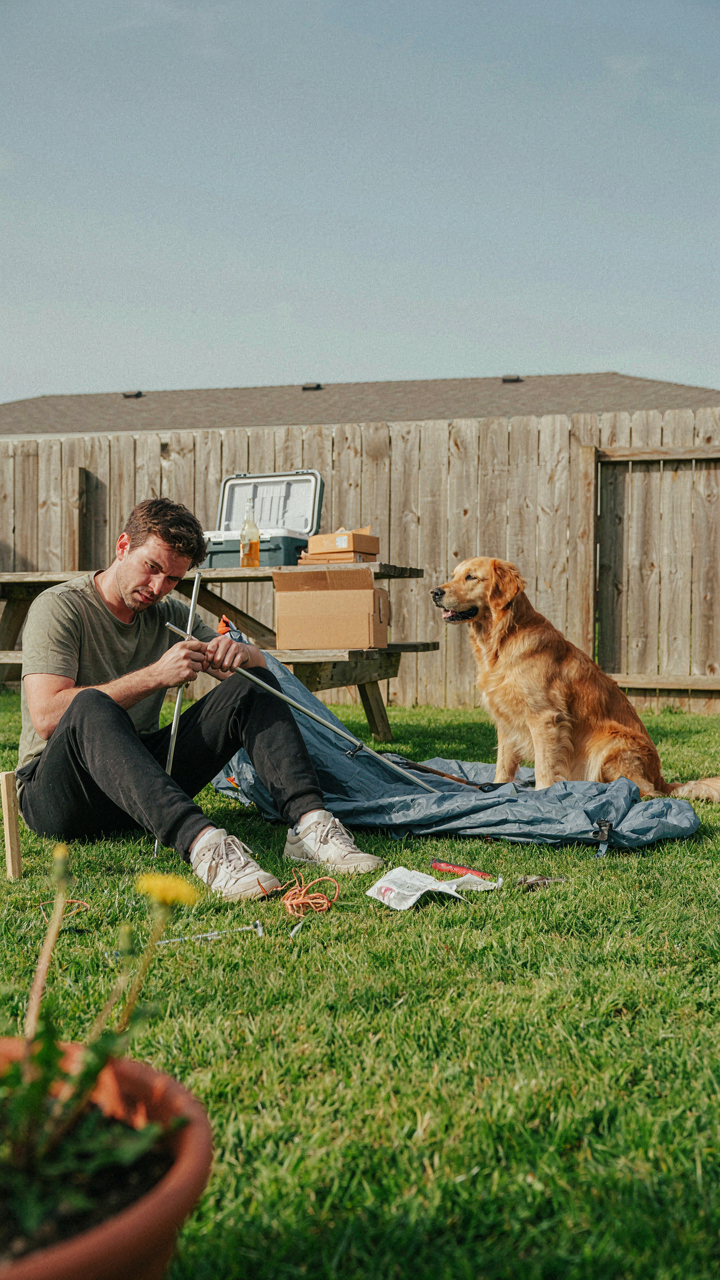
You want this to feel easy because easy means you did it right. That’s the real trap. The mechanism at play here is anchoring: you’re comparing a backyard campout to hotel stays and living room couches, not to what a backyard actually offers. Ground is hard. Tents are thin. Cold moves differently outside. You can’t change physics by wanting comfort. Reset your reference point first.
The backyard campout works when you stop treating it as a compressed version of indoor living. It’s a different environment with different rules. Your sleeping bag won’t match your bed. Your pillow won’t match your pillow. The sounds are unfamiliar. None of this means failure. It means you’re actually camping. Accept the premise or don’t show up.
Friction Is The Feature, Not A Bug
Military strategists call controlled discomfort “hardening.” You’re building tolerance, not entertainment. The cold wakes you up at 3 AM because your body processes temperature differently outside. That’s not a mistake in your setup. That’s the point working. Your brain expects resistance and gets none indoors, so any friction feels like failure.
Treat minor discomfort as calibration data, not grounds for cancellation. Slightly damp sleeping bag? You learn humidity management. Waking early from cold? You learn layering depth. Every irritation teaches you something about how to camp better next time. This is how skill builds. Avoid it and you’ll repeat the same setup mistakes forever.
The Energy Conservation Model: Your Body As A Camp In Backyard System
How Your Body Loses Heat
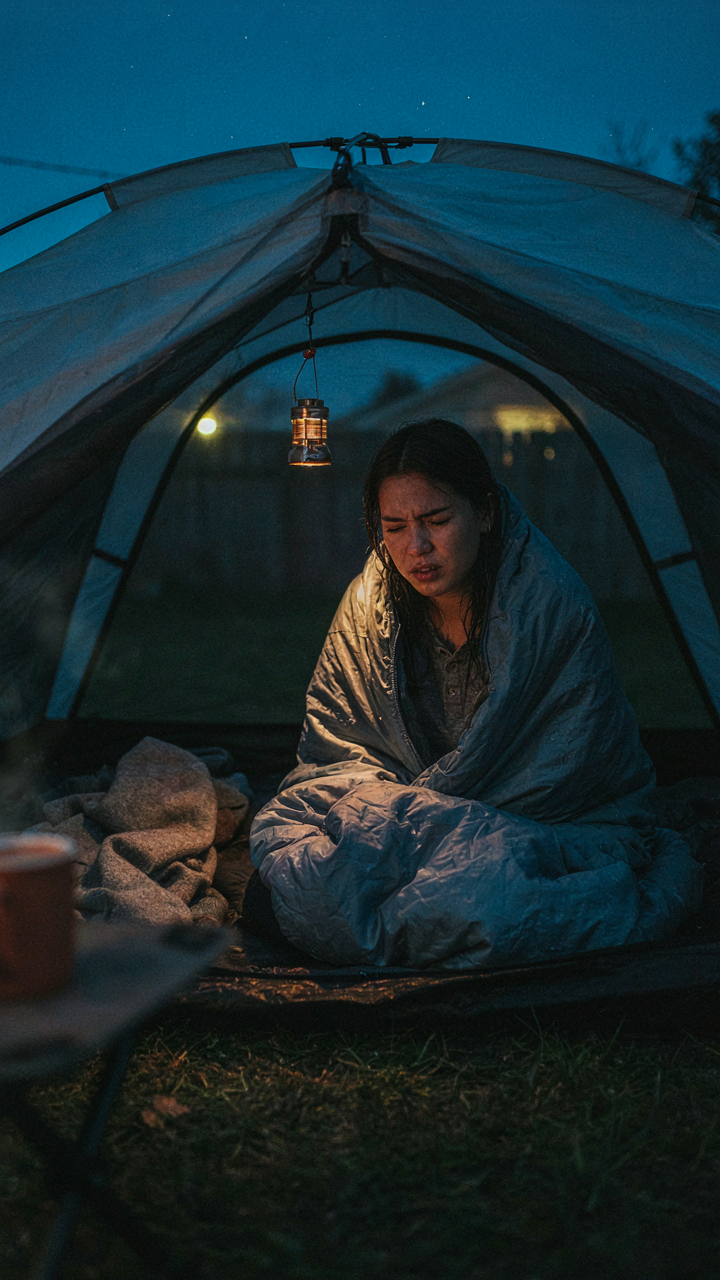
You care about this because you don’t want to freeze while everyone else sleeps fine, and that gap feels like weakness. It’s not. Thermoregulation is the biological engine that runs your entire night, and most people sabotage it before they even lie down. Your body loses heat through four mechanisms: radiation, convection, conduction, and evaporation. Radiation accounts for roughly 60 percent of heat loss in still air. Your skin radiates infrared energy outward constantly. A sleeping bag blocks some of it, but poor positioning or wrong fabric choice lets it escape untouched.
Conduction is direct contact heat transfer to cold surfaces. Your body sits on the ground, and the earth pulls warmth from underneath faster than your sleeping bag insulates from below. This is why the pad matters more than the bag itself. Most people flip this priority. Convection moves your body heat away through air movement. Wind amplifies this. Even inside a tent, air currents form around your body. Evaporation drains heat when sweat or moisture on your skin meets dry air. Night sweats in a poorly ventilated bag create a feedback loop: you get damp, you get cold, you stay cold.
Fuel And Hydration Drive Your Engine
Your metabolism is your furnace during sleep, and dehydration kills it. Eat a meal with carbohydrates and fat two hours before bed. This gives your body fuel to burn through the night and generate heat from the inside. Most people skip this, thinking they’ll sleep better on an empty stomach. They won’t. They’ll shiver. Your body needs glycogen to maintain core temperature. Drink water consistently throughout the evening, not all at once. Dehydration thickens your blood, restricts circulation to extremities, and drops your core temperature by a fraction of a degree. That fraction matters at night.
Electrolytes accelerate hydration absorption. If you’re camping in warm months, plain water works. In cooler weather, add sodium to your water. This forces your body to retain fluid instead of excreting it. Pack a high-fat snack to eat right before sleep: nuts, cheese, or a protein bar. Fat burns slower and hotter than carbs. Your body will metabolize this fuel through the night and maintain warmth without waking you up. This protocol—carb meal two hours prior, hydration all evening, fat snack before sleep—creates sustained internal heat generation you can count on.

The Gear To Context Mismatch: Why “Camping Gear” Fails In Your Yard Camping
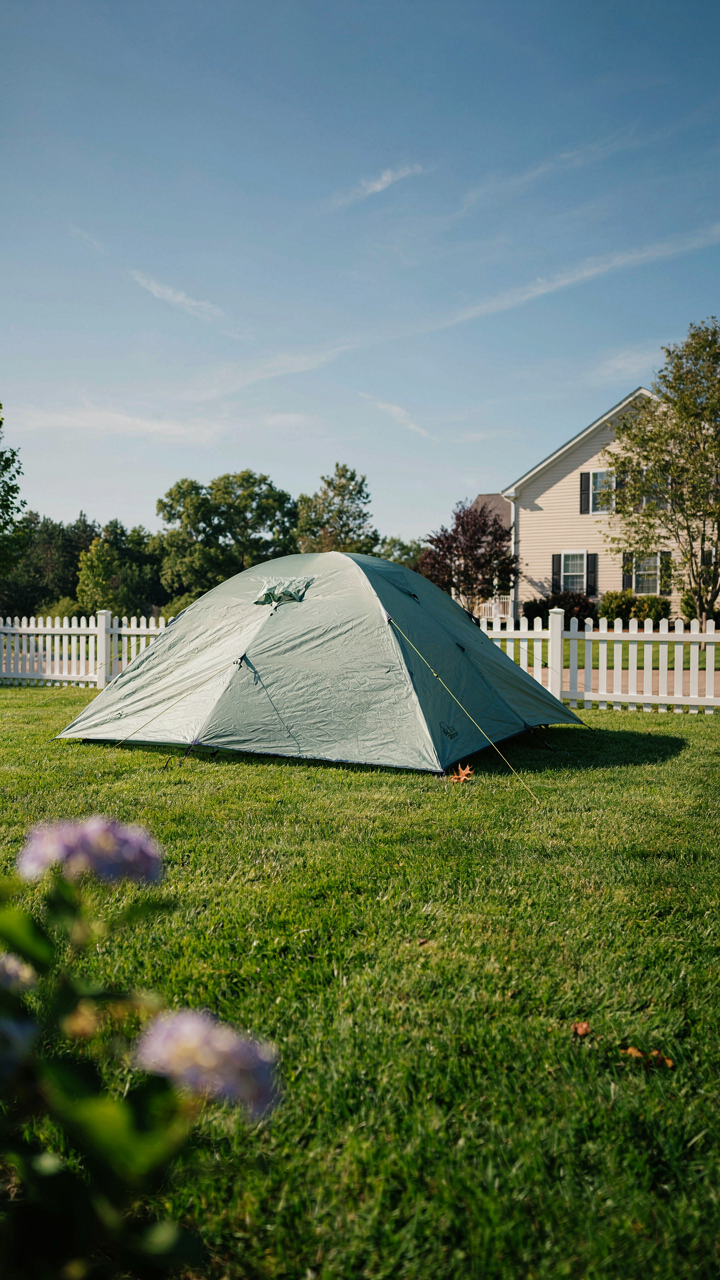
Wilderness Gear Designed For The Wrong Problem
You buy the expensive tent because you’re afraid you’ll look unprepared, but the real issue is that backcountry gear solves problems your backyard doesn’t have. Wilderness tents prioritize weight, packability, and protection from exposure. Your backyard tent needs ventilation control, easy setup in low stakes, and compatibility with proximity to your house. These are opposite design constraints. A three-season backpacking tent sheds rain efficiently but traps humidity when you’re stationary fifty feet from your bedroom for one night.
The mistake isn’t buying quality gear. It’s importing a tool optimized for a different context entirely. Backcountry equipment assumes you’ll abandon the site tomorrow and never return. Backyard camping assumes you’ll set up once, stay put, and potentially need to troubleshoot in the dark while your spouse watches from the patio. A pegging system that works on rocky alpine terrain wastes time on soft suburban grass. You’re paying for solve problems you don’t face while ignoring the ones you do.
Redefine Comfort As Your Actual Design Constraint
The conventional advice says “roughing it builds character.” That’s rationalization masquerading as wisdom. Comfort isn’t weakness—it’s the variable that determines whether your family repeats the experience or resents you for it. In systems design, constraint mapping identifies which factors control the outcome. For backyard camping, comfort isn’t optional decoration. It’s the primary constraint that decides participation.
Comfort means sleeping surfaces that don’t compress flat by 3 AM. It means temperature regulation you can adjust without leaving the tent. It means bathroom access without a flashlight expedition. It means not waking up because condensation dripped on your face. When you optimize for these specifics, your gear list changes completely. You choose an air mattress with proper insulation over a thin foam pad. You add a tent with operable vents instead of sealed weatherproofing. You position gear for easy exit, not minimal volume. This isn’t camping—it’s controlled outdoor rest that people actually want to repeat.
The “Quick Setup” Illusion: The Art Of Deliberate Camping Set Up
Plan Before You Pack
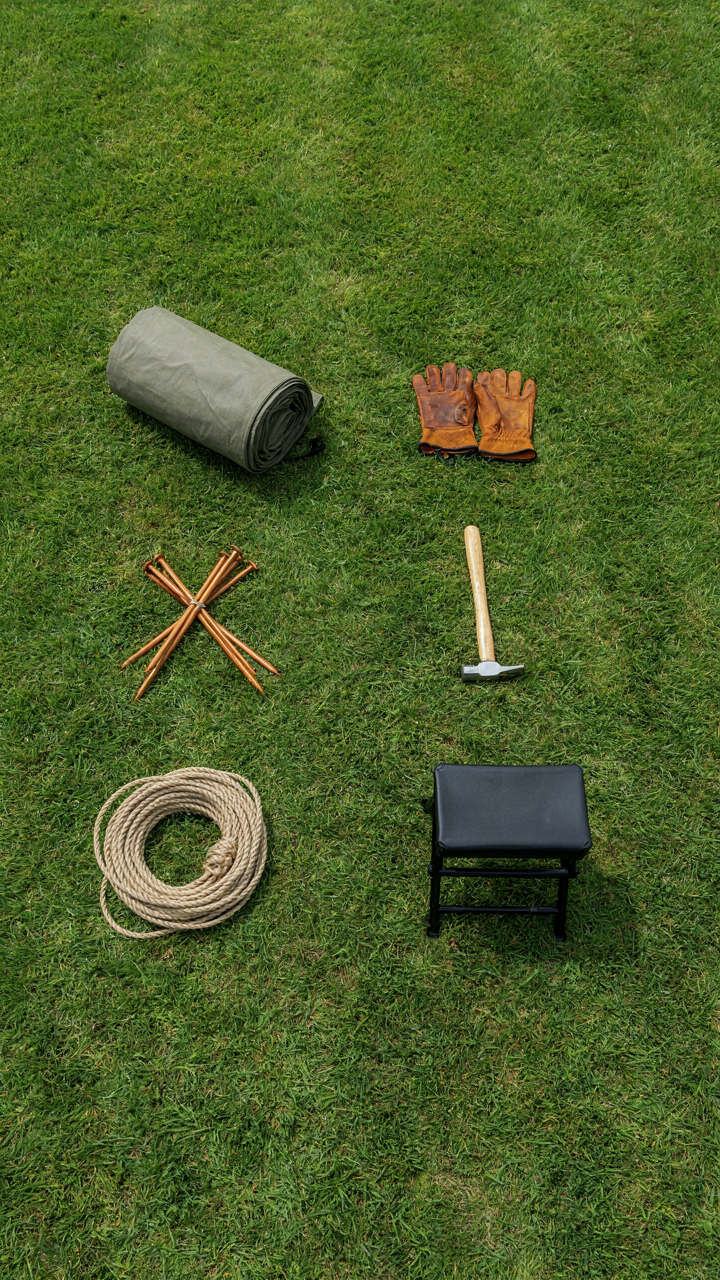
You want to believe setup takes thirty minutes because admitting it takes two hours means confronting poor time management. The real mechanism: sequential deployment beats random assembly every time. Think of it like construction logistics—you don’t frame walls before pouring the foundation. Backyard camping follows the same principle. Lay out your entire operation on paper first, identifying dependencies and bottlenecks before you touch a single stake.
Most people skip this step and create friction at every stage. They unroll the tent and realize the ground isn’t level. They position the fire ring and discover it blocks the tent entrance. They hang a lantern and find no suitable branch. A pre-setup walkthrough eliminates these cascades of adjustment.
- Ground inspection and leveling: Walk the campsite and identify high spots, rocks, roots, and drainage patterns. Mark the tent footprint with sticks before unpacking anything.
- Traffic flow mapping: Define clear paths between tent, fire ring, water station, and bathroom access. Avoid crossing these routes repeatedly during setup.
- Anchor point inventory: Scout for trees, stakes, and tie-down locations before unpacking gear. Check rope length and weight capacity against your equipment.
- Lighting coverage zones: Identify where lanterns and headlamps create shadows or dead zones. Position them to illuminate cooking areas and pathways first.
- Wind direction and exposure: Face tent entrances away from prevailing wind. Position the fire ring downwind from sleeping areas to avoid smoke drift.
Execution matters more than speed. Lay the tent first, then arrange supporting infrastructure around it. This prevents repositioning later. Deploy staking in a specific order: corners first, then guy lines, then secondary anchors. Each step builds on the previous one. When you finish, your setup holds. Nothing shifts during the night.
Deconstruction As A System
Breaking down camp fast depends entirely on how you assembled it, not on magical efficiency tricks during takedown. The operations management principle applies here: reverse your setup sequence in perfect mirror image. Tent goes down last, not first, because you use it throughout the morning.
Start by extinguishing and fully cold the fire ring at least two hours before departure. Remove coolers and supplies from the site. Collapse non-tent structures like shade canopies and tables next. Only then do you begin the tent breakdown, starting with guy lines and stakes in reverse order from deployment. This mirrors your setup exactly. You’ll finish faster because you’re following a proven pattern instead of improvising. Pack each item into its designated bag immediately after removal. Loose gear scattered across the site creates delays and forgotten items. The final step: photograph the campsite from several angles before leaving. You’ll catch forgotten stakes, trash, or disturbed ground that needs restoration.
The False Sense Of Security: Why Your Backyard Camping Ideas Are Flawed
What Your Backyard Actually Threatens
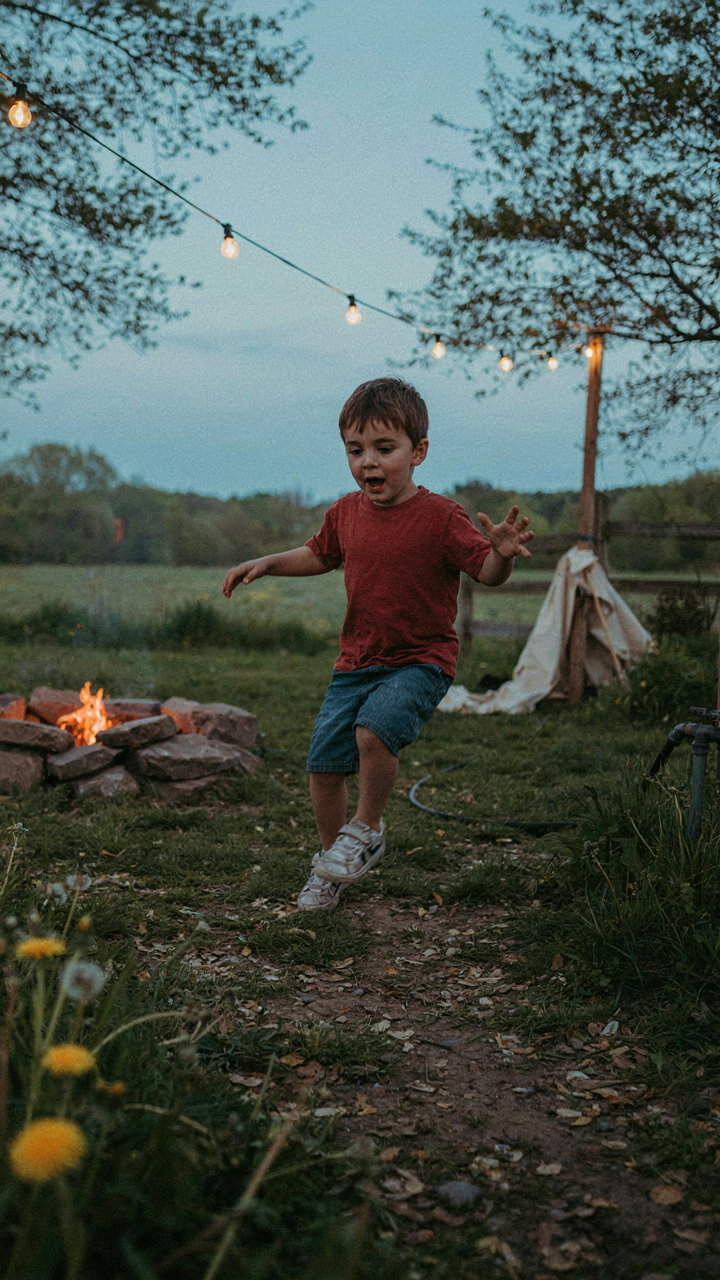
You think backyard camping is safe because it’s close to home, and that comfort blinds you to real hazards. The security principle from risk assessment states that proximity breeds complacency, and your backyard is ground zero for this failure. You’ve walked that space a thousand times in daylight. At night, in a tent, your mental map becomes useless. The terrain hasn’t changed. Your ability to navigate it has.
Most people conflate “nearby” with “controlled.” Your home is thirty feet away, so nothing bad can happen. This reasoning collapses the moment you face an actual problem. A child wakes disoriented in darkness and stumbles toward the fence line instead of the tent opening. An animal visits because your setup attracts it, not because you’re isolated. A medical issue surfaces and suddenly the distance to your phone or first aid supplies matters. Backyard camping isn’t inherently safer than camping elsewhere. It’s just familiar, which makes you lazy about preparation.
Plan For What Goes Wrong, Not What You Hope Happens
Emergency preparedness isn’t about fear. It’s about decision-making. The moment something breaks, your options compress. You either have a plan or you improvise under stress, and improvisation fails predictably.
Start with a specific contingency for each risk your backyard presents. Weather hits harder than expected, so you need a bailout route to the house that works in the dark—a rope guide or cleared path, not a hope that you’ll remember. Someone gets injured, so you keep a first aid kit outside the tent, not inside your pack. Power goes out, so you have a flashlight that works, not one you borrowed from the junk drawer yesterday. Your kid panics, so you’ve run through a “stay in tent” protocol before sleep, not during the emergency. Document these plans on paper before the night starts. The act of writing forces you to spot gaps you’d otherwise miss.
The Real Obstacle Isn’t The Gear You Lack, But The Self-deception That Your Backyard Is Truly Safe
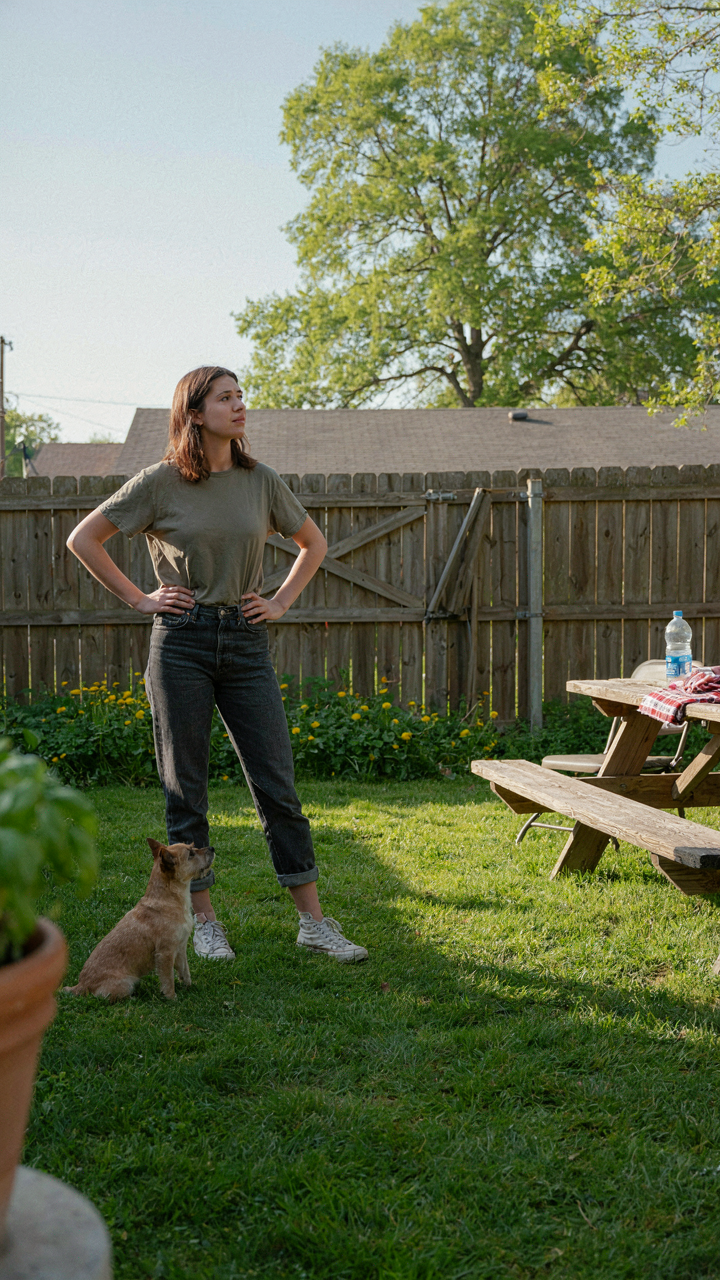
You already know what kills a backyard campout. You’ve read it all. The real problem is you keep thinking tonight will be different, that discomfort won’t actually show up. Stop negotiating with yourself. Walk outside right now and sit where you’ll sleep. Feel the temperature drop. Notice what wakes you. Your backyard campout setup fails because you planned it indoors. The night doesn’t care about your intentions.