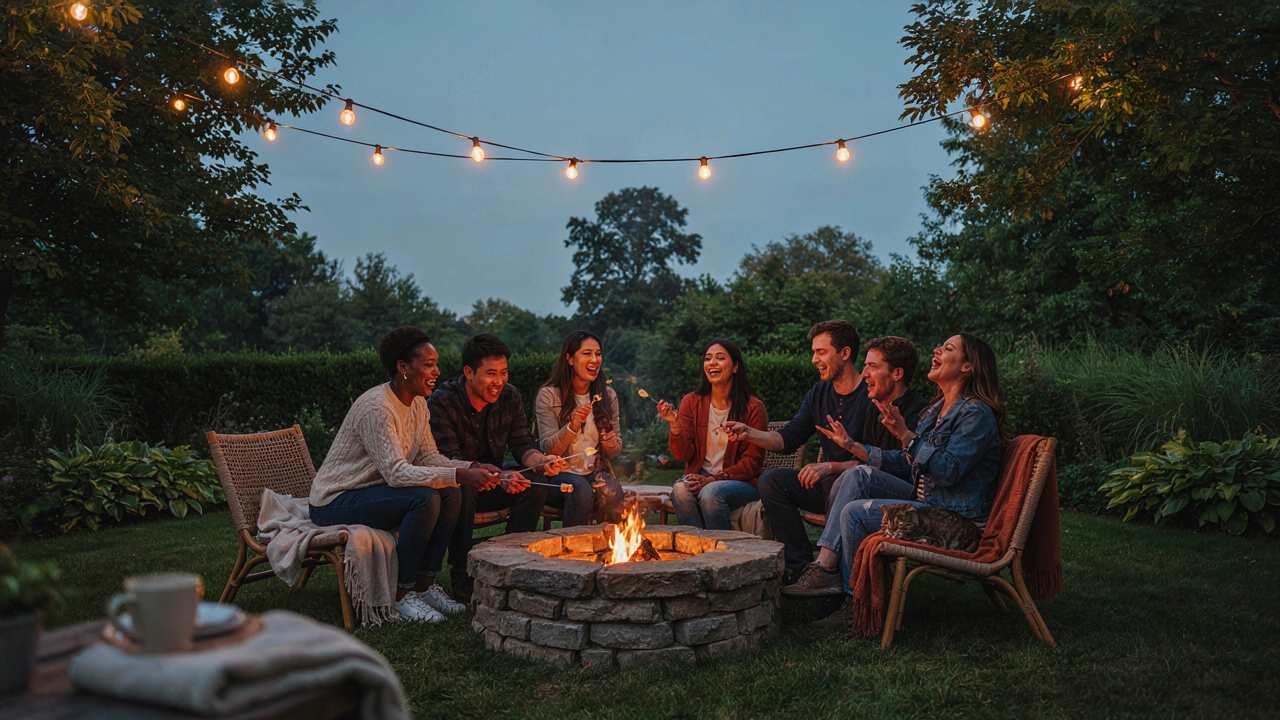
Beyond S’mores: The Fire Pit Party Core Principle
Why People Actually Show Up
You think people come for the fire and the snacks. They don’t. You’re afraid that without novelty or spectacle, nobody will care, so you over-engineer the experience. The real mechanism is social permission. People come because a fire pit creates legitimate reason to stand together without forced eye contact or agenda. Like a theater’s fourth wall in dramaturgy, the fire itself becomes the invisible contract that lets conversation happen naturally. Remove that permission structure and you’ve just got an awkward gathering in someone’s backyard.
The fire pit removes friction from social interaction. Nobody has to justify why they’re there or what they’re doing. The fire gives everyone a focal point that isn’t another person’s face. This matters because most social gatherings fail at the basic level of comfort. Your job isn’t to entertain. Your job is to architect the conditions where people feel safe enough to actually connect. That changes everything about how you plan.
The Mechanism Behind Real Connection
Rejecting surface-level activities sounds counterintuitive when every fire pit guide tells you to plan lawn games and competitions. That’s lazy advice. Those activities fragment attention and create winners and losers in a space that should feel inclusive. Instead, the real principle is constraint design from systems thinking. You limit options, not expand them, so people naturally gravitate toward conversation. A fire pit with seating, silence-compatible activity like tending the fire, and zero planned entertainment actually generates more engagement than a schedule packed with distractions.
The constraint forces presence. When there’s nothing to do but sit, talk, or watch the fire, people either leave or engage. Most stay. They bring their actual selves instead of performing a role. You control this by removing chairs that face away from the group, eliminating screens, keeping alcohol moderate enough that people stay coherent, and starting early enough that fatigue doesn’t set in. These are operational details, not suggestions. Execute them and the party works. Ignore them and you’ll end up with fragments of people scattered across your yard, physically present but mentally absent.
The Minimalist’s Bonfire Activity Ideas: Less Is More

Strip Away The Noise First

You want to host a fire pit party because you’re afraid a quiet night with people will expose how little you actually have to offer them. The real mechanism is simple: people remember fire pit parties because of what gets removed, not what gets added. Every activity you layer on top dilutes attention. Most hosting advice tells you to stock ten games, craft stations, and entertainment options. That’s wrong. It creates decision fatigue and fractures the group’s focus. A fire pit naturally concentrates people. Talking becomes the default. You’re not competing with that—you’re protecting it.
The minimalist approach borrows from industrial design’s concept of “constraint as clarity.” Every element either serves the fire’s gravitational pull or works against it. Remove the phone chargers, the cornhole board, the speaker playing background music. Remove the seating arrangements that let people face away from each other. What remains: fire, seating that faces inward, and darkness pressing in from all sides. This setup makes conversation inevitable because no competing stimulus exists. People either talk or sit in silence, and silence at a fire pit doesn’t feel awkward—it feels intentional.
Presence Over Playlist
The consensus move is to curate playlists and activities that keep energy high. That’s not presence. That’s performance anxiety masked as hosting. Presence means you’re actually available to the people in front of you instead of managing logistics in your head. When you have only fire, seating, and drinks, you’re not running a production. You’re attending a gathering.
A fire pit party’s job is singular: create conditions where people choose to stay. They stay because proximity to flames, ambient warmth, and the hypnotic flicker of burning wood trigger the same neurological state as tribal gatherings—attention folds inward. No activity competes with that. Your only protocol is to tend the fire itself. Feed it consistently so it never dies mid-conversation. Let that single, tangible task be your contribution. Everything else emerges from the people present.
The Unspoken Rules Of Fire Pit Gathering Dynamics
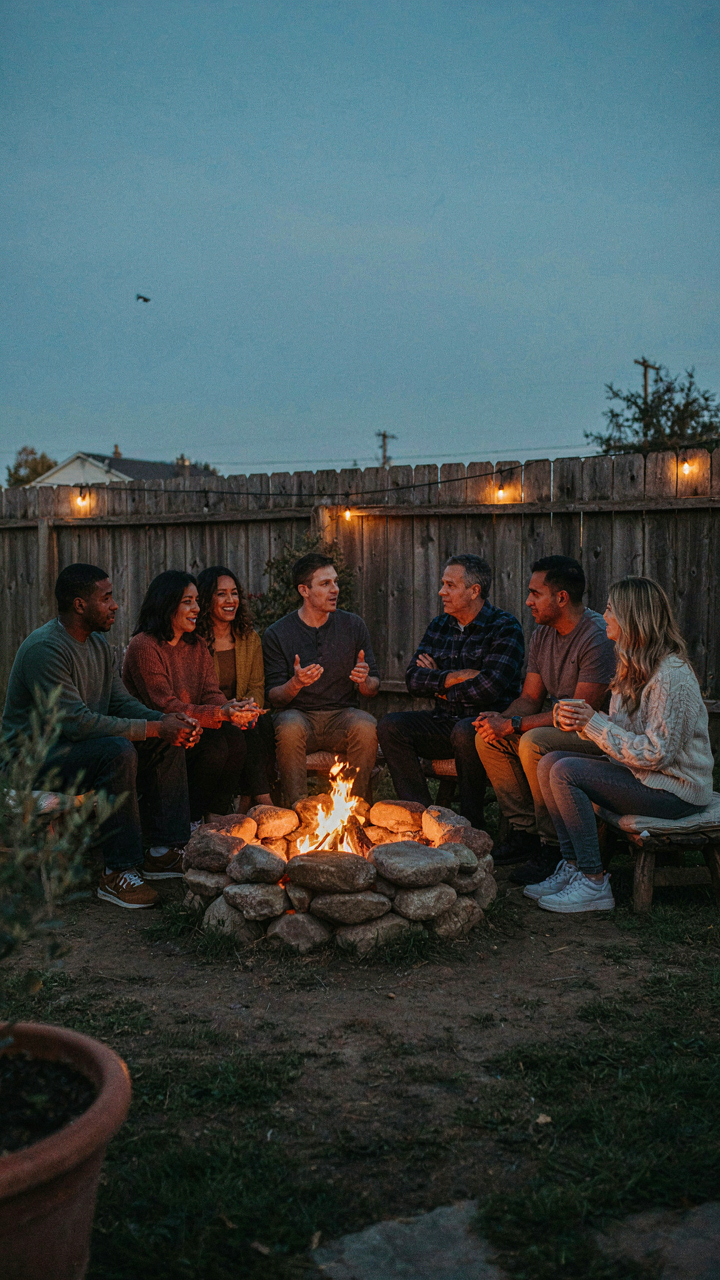
The 150 Person Ceiling That Kills Momentum

You want your fire pit party to feel exclusive without looking like you’re gatekeeping. That’s the real fear underneath the question of how many people to invite. Dunbar’s Number from evolutionary psychology tells us humans maintain stable social bonds with roughly 150 people maximum. Beyond that threshold, group cohesion fractures and you stop having a party—you host a crowd watching a fire.
Most hosts ignore this and invite whoever responds to the group text, then wonder why conversations die and people cluster into separate pods instead of mixing. The mechanism is simple: your brain processes intimacy in smaller groups. When you exceed roughly 30 to 50 people at a fire pit, you’ve split the attention economy so thin that no single conversation dominates. Invite fewer people with intentional overlap instead of maximizing the headcount.
Strategic Positioning Over Random Seating
Game theory in social dynamics teaches us that position determines influence. Someone sitting directly across the fire sees and addresses the whole circle. Someone tucked to the side becomes an observer. The common advice tells you to “let people find their spot”—that’s lazy reasoning that guarantees dead zones and power vacuums.
Map your fire pit space like a war room: place people who ask questions or tell stories in sight lines where the group naturally faces them. Put newcomers within two seats of established members who’ll loop them into conversation. Seat people who don’t know each other at non-adjacent spots so they lean toward the center fire rather than turning inward as a dyad. The fire itself becomes the pivot point for engagement, not a backdrop for isolated conversations. Your job is designing sightlines and proximity so the group naturally orbits toward the flame and each other.
The Alchemist’s Fire Pit Party Ideas: Transforming The Mundane
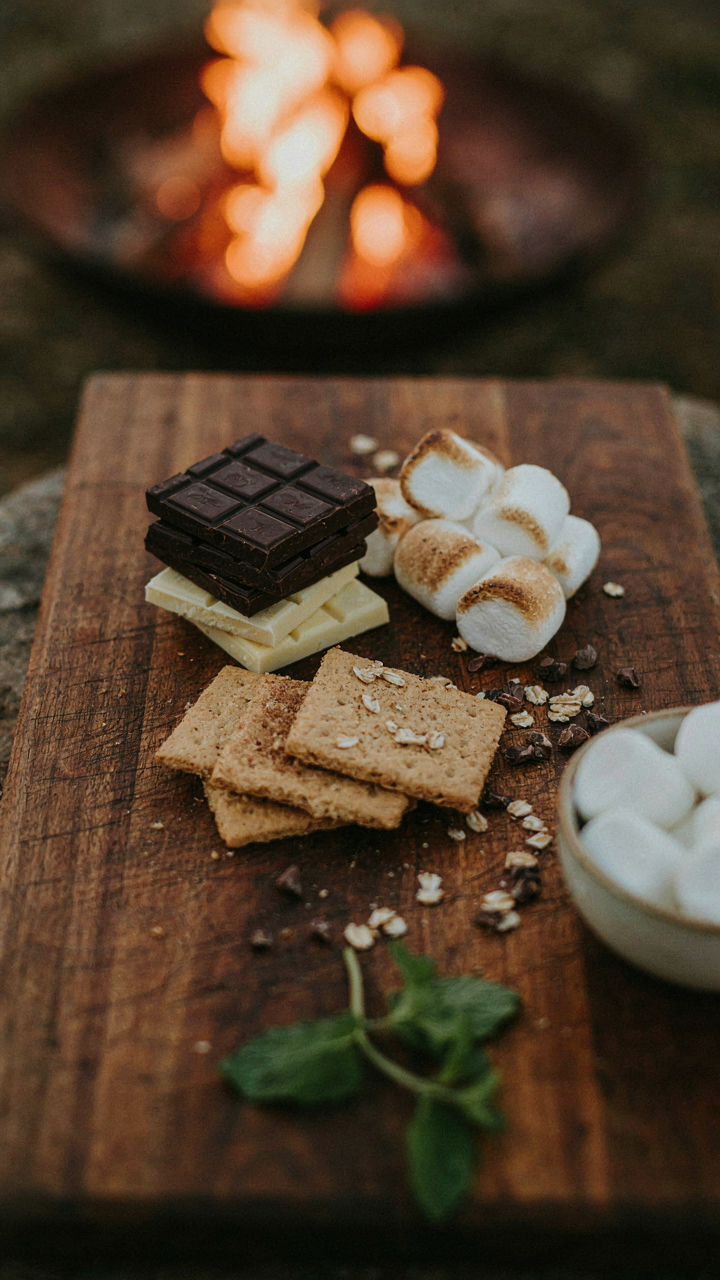
Food And Drink That Signals Intention

You want people to think you put thought into this. That’s the real driver. Most hosts treat fire pit food as an afterthought—chips, store-bought dips, whatever fits in a cooler. The mechanism is simple: constraint breeds creativity. When you limit your menu to three or four items done right, guests register that as intentional instead of lazy.
The difference between memorable and forgettable comes down to temperature and texture contrast. Serve food warm and cold simultaneously. Grilled flatbread with charred edges, cold marinated vegetables, hot soup in mugs. Beverage-wise, skip the premixed cocktails. Bring one spirit, one mixer, let people assemble. This transfers the burden of choice away from you and makes guests feel agency. The cognitive load shifts from “did the host forget something” to “what do I want to make.”
Mood Through Objects And Placement
Atmosphere isn’t decoration. It’s the removal of friction between people and conversation. Industrial designers call this “affordance”—the quality of an object that suggests how to use it. Apply this to your fire pit setup: position seating in a circle, not rows. Place drinks within arm’s reach of every seat, not centralized. String lights overhead not for beauty but to extend usable time past dusk without killing the fire’s glow.
The non-obvious move is controlling sight lines. If guests can see the house, the yard beyond, other distractions, their attention fractures. Create a defined perimeter with landscape, fencing, or dense seating arrangement. Use sound intentionally too—ambient music at conversation volume, not background noise you have to talk over. The goal is sensory containment. Everything points inward toward the fire and the people around it. This is why fire pit parties work: the fire does the heavy lifting of focal direction for you.
The “Party Essential” Protocol: What Truly Matters
Safety Without Killing The Vibe

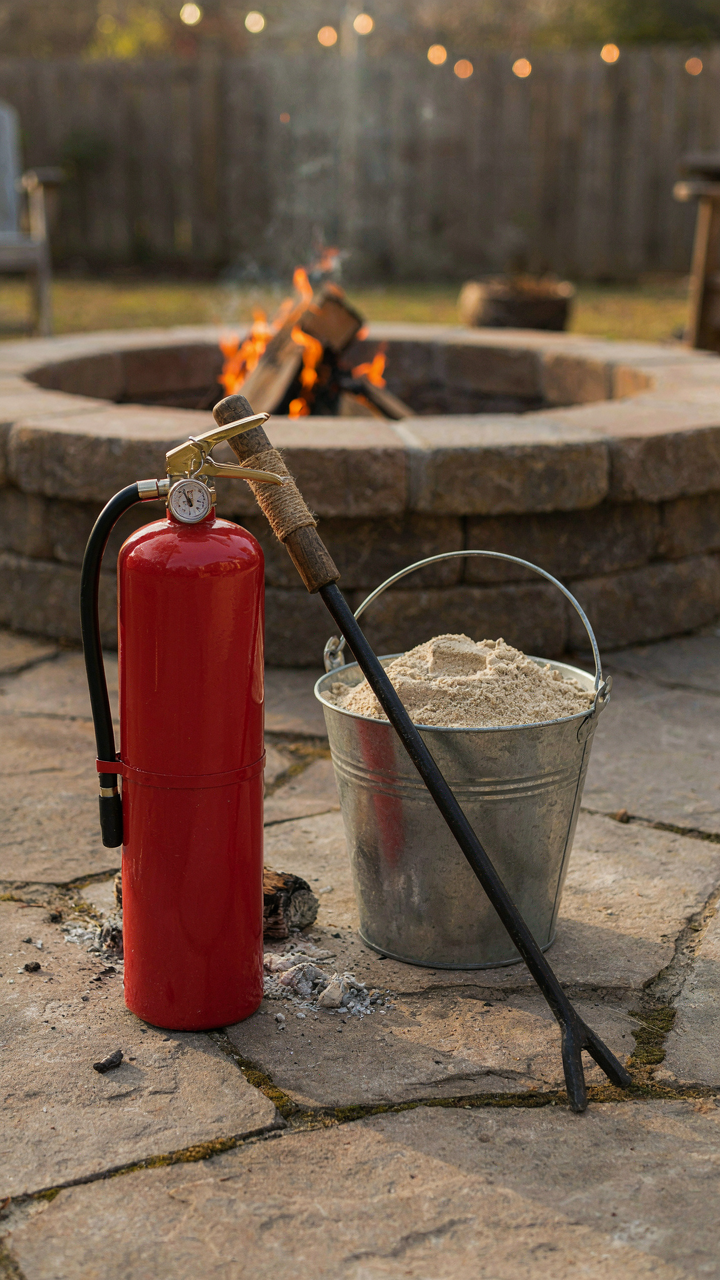
You want people to think you’re competent, not paranoid. Here’s the mechanism: safety failures at fire pits don’t announce themselves. They compound. In thermodynamics terms, you’re managing heat dissipation—the fire’s energy spreads through radiation, convection, and conduction. Most hosts ignore the third one entirely. Your guests will sit too close. The ground around the pit radiates heat upward. Unseen burns happen on legs and lower backs. A metal fire ring or pit insert manages this by containing the heat source and creating predictable temperature zones around the perimeter.
Position the pit at least twelve feet from structures and overhanging branches. Clear dead leaves and debris in a ten-foot radius. Keep a garden hose or water source within arm’s reach, not fifty feet away in the garage. Set out simple rules when people arrive: no reaching over the fire, no throwing random materials into it, no leaving it unattended. These aren’t kill-joy restrictions. They’re the prerequisites for a party that doesn’t end in liability or injury.
Lighting And Sound Create Separate Atmospheres
The common advice says add string lights and a speaker. That’s incomplete. Lighting and sound operate on different principles—light creates visual hierarchy and spatial definition, while sound fills the dead space and masks awkwardness. Separate them strategically. String lights overhead establish the boundary of the gathering zone and prevent people from wandering into darkness where they feel unsafe. This changes behavior. They cluster intentionally rather than spreading thin.
- Overhead string lights: Install on poles or trees at eight to ten feet high. They define the party space without causing glare or heat interference with the fire.
- Ground-level accent lighting: Use solar stake lights or low LED strips around seating areas. These guide movement and prevent trips without competing with the fire’s natural glow.
- Speaker placement and volume: Position speakers at human ear level, not ground level. Start at conversational volume. Sound should fill gaps between talk, not dominate it.
- Color temperature alignment: Use warm white lights (2700K) that complement firelight. Cool white lights create visual discord and make people feel colder than they are.
- Audio content strategy: Queue instrumental or ambient music with no lyrics. Lyrics trigger conversation pauses as people unconsciously listen. Instrumentals stay in the background.
Audio and light work together to establish psychological comfort. When lighting is clear and sound is purposeful, guests relax into the space instead of performing. The fire pit becomes the focal point, not a nervous gathering around darkness and silence. Test your setup during daylight. Adjust speaker angles so no one hears distortion. Position lights so they don’t blind people facing the fire. This is how you move from adequacy to intentional design.
Beyond Campfire Stories: Igniting Real Conversation
Questions That Actually Matter

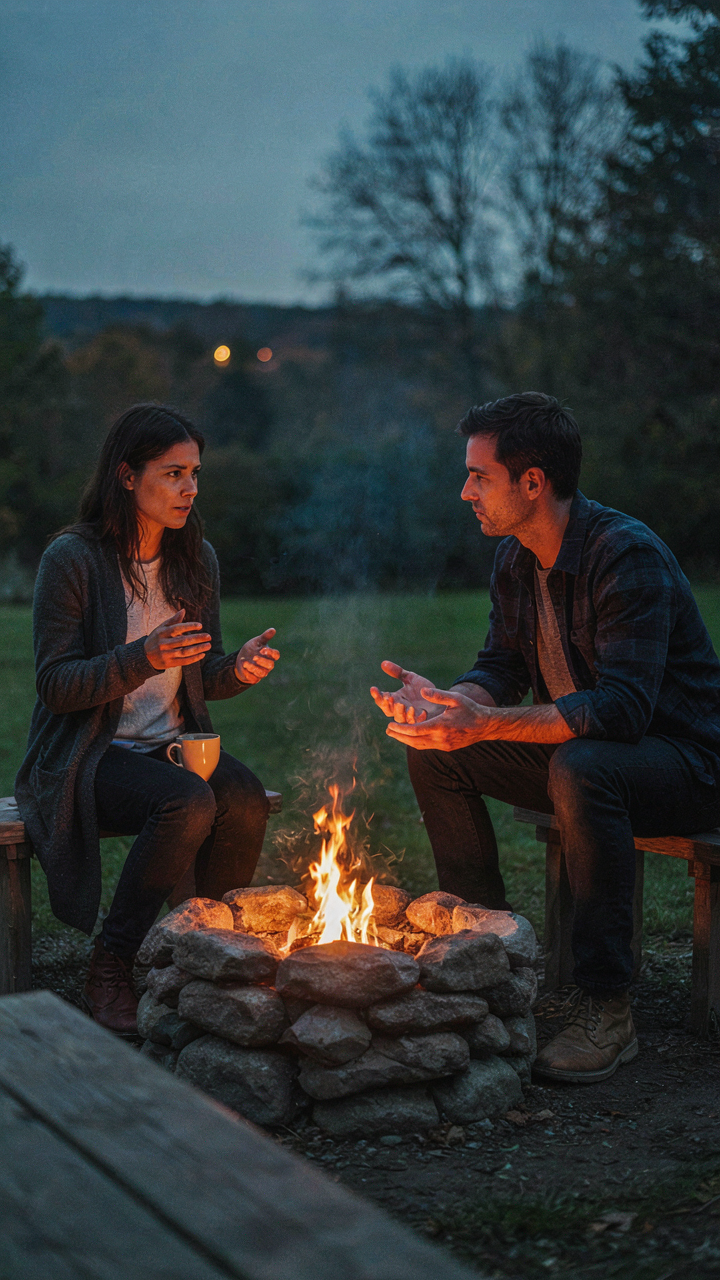
You want people to remember your fire pit party because you want to matter to them. The mechanism is simple: people bond over ideas that threaten their current worldview, not comfort. Most hosts default to safe small talk because conflict feels risky. It isn’t. The real risk is hosting a forgettable night where nothing meaningful happened and nobody changed how they think about anything.
Plant a question early that forces people to take a position. Not politics or religion as gotchas, but real tensions: “What’s a skill you spent years learning that’s now worthless?” or “When did you stop believing something everyone around you still believes?” These questions work because they require people to examine themselves before answering. The fire creates permission for depth that a living room doesn’t.
The Mechanics Of Real Exchange
Small talk is a transaction where both parties agree nothing important will happen. Kill that agreement immediately. Once someone answers a real question, the next person either escalates vulnerability or deflects. Don’t let them deflect. Ask a follow-up that reveals mechanism, not just opinion. Instead of “That sounds tough,” say “So what made you realize it was wrong?” This keeps the conversation moving into territory where people actually think.
Manage the group size around the fire intentionally. More than eight people and you lose the ability to track who’s been silent and who’s performing. At seven or fewer, someone will notice when you’re asking fewer follow-ups and call it out. Rotate who you direct questions toward. The person sitting quietly isn’t thoughtful. They’re anxious. Draw them in with a specific prompt tied to something they mentioned earlier. This forces integration and kills the audience mentality.
Bonfire Party Ideas Backyard: Maximizing Your Space
The Geometry Of Conversation

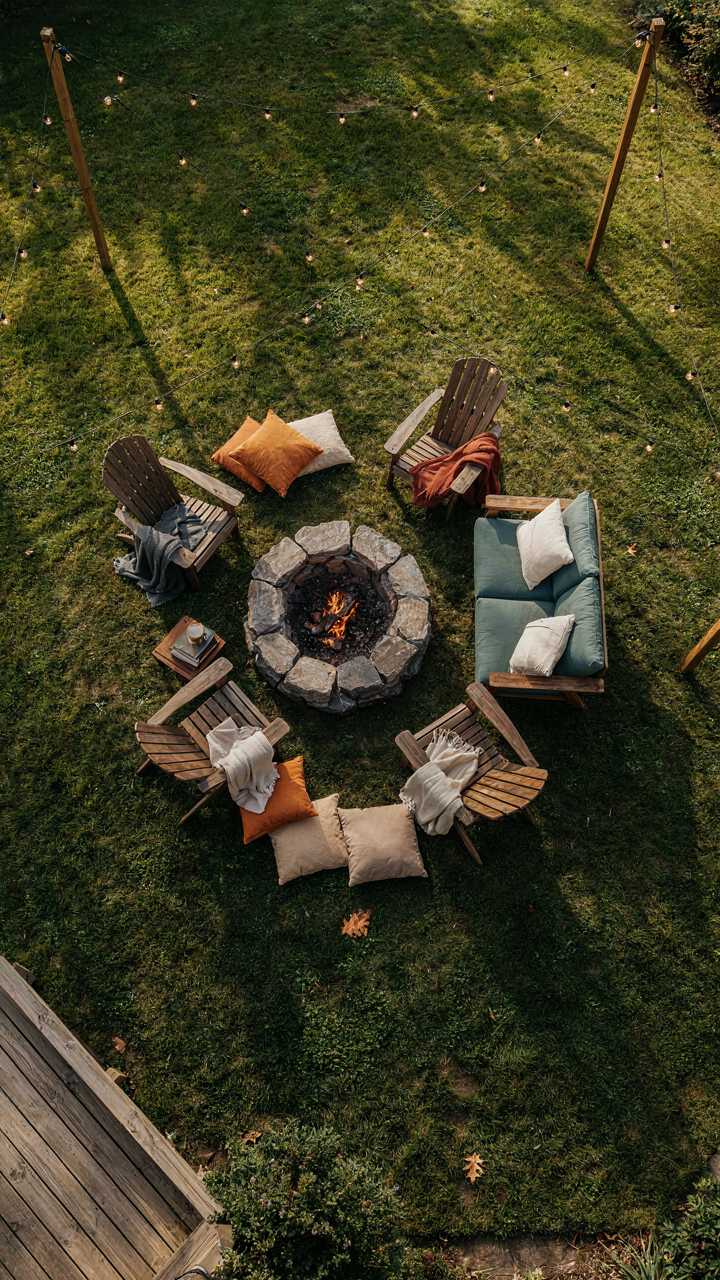
You want people to remember this because you’re afraid it’ll feel empty or awkward. The real mechanic is proximity and sightlines. Borrowing from theater design, you need a focal point that acts as the stage, and seating arranged in the round so everyone sees the fire and each other simultaneously. This isn’t decoration. It’s infrastructure for attention. When people can’t see each other’s faces, conversation dies.
Position the fire pit as your true center, not an afterthought. Arrange seating in a semicircle or full circle facing the flames, keeping the outer edge no more than twelve feet away. Closer distances force intimacy and lower voice volume, which paradoxically makes people lean in. Remove chairs that create side conversations or dead zones. The goal is one coherent group, not clusters. People remember parties where they felt included in a single story, not fragmented into smaller rooms.
Comfort Precedes Everything Else
Most advice says “bring blankets and bug spray” as though discomfort is inevitable. It’s not. Discomfort is a choice. The mechanical issue is thermal regulation and irritant exposure. A guest who’s cold, wet, or getting bitten by mosquitoes will leave early and tell others the party was mediocre, even if it wasn’t. You prevent this before anyone arrives.
Set up heat sources beyond the fire. Outdoor heaters or a second smaller fire to the side extend the season and give people options. Check weather seventy-two hours before and again twenty-four hours before. If rain is possible, have a tent or covered area ready, not scrambled together last minute. Stock insect repellent, provide sweaters or a blanket station, and keep the ground clear of wet patches. The person who doesn’t shiver, itch, or step in mud remembers the party as successful regardless of who showed up.
Bon Fire Party Ideas For Adults: Cultivating Maturity
Drinks That Signal Intention

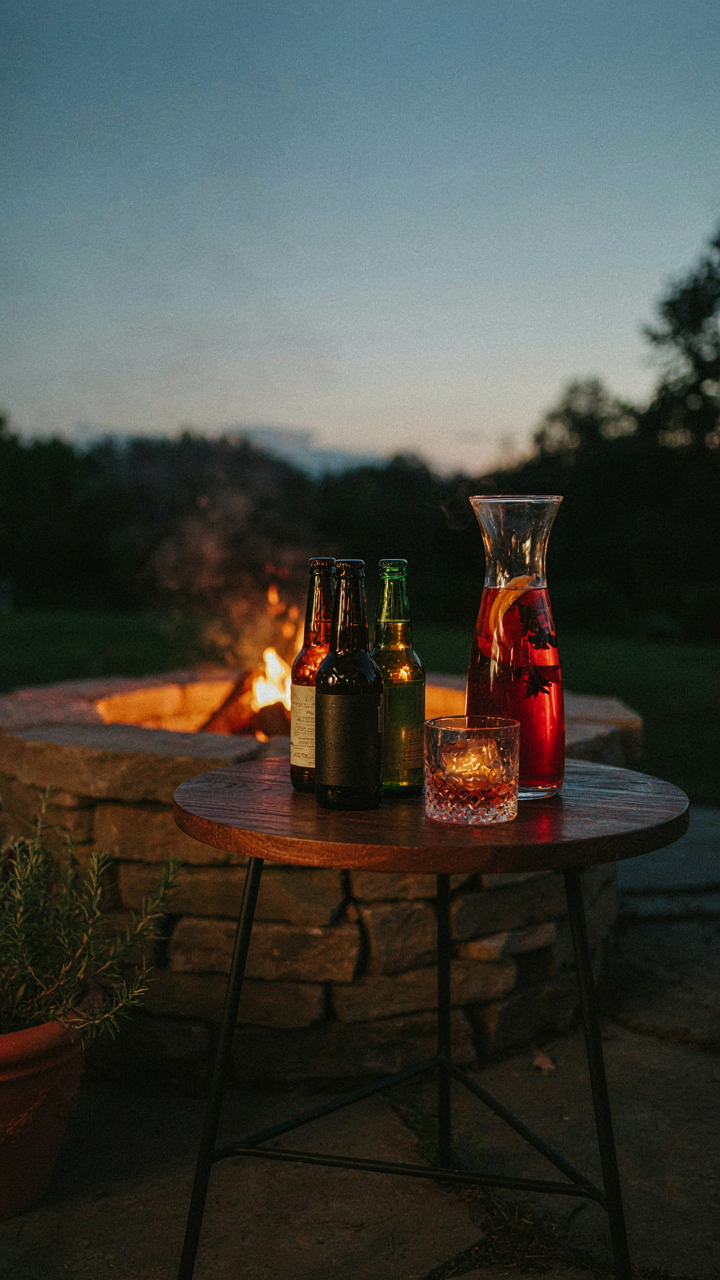
You want people to think you have taste. That’s the real reason this matters. Here’s the mechanism: beverage choice operates like economics—scarcity and specificity create perceived value. Adults don’t drink because they’re thirsty. They drink because the drink itself communicates something about the host and the event. Generic beer and basic wine say you didn’t prepare. Curated options say you respect their time.
Craft spirits work better than quantity. A bottle of good bourbon or rye, paired with one solid mixer—ginger beer, quality tonic, fresh citrus—gives people actual choices without overwhelming them. Temperature control matters more than variety. Warm drinks kill a fire pit gathering. Keep spirits in an insulated cooler, not sitting out. Hot toddies work in winter fire pits because the warmth serves a function, not just novelty.
Conversation Structures That Actually Work
Most hosts think adult engagement means hoping people naturally click. It doesn’t. You need to engineer collision points. Psychology calls this “propinquity”—proximity increases likelihood of connection. At a fire pit, physical setup forces proximity, but you must design the actual interaction framework.
Ask one specific question that rotates around the circle instead of relying on ambient conversation. “What skill do you wish you’d learned earlier?” works better than “How’s work?” because it demands real thinking and reveals character. Limit the group to six to ten people. Beyond that, you fragment into side conversations and lose the gathered energy. Set a two-hour window, not an open-ended evening. Scarcity of time sharpens attention.
The Real Obstacle Isn’t The Fire, It’s Your Fear Of Genuine Connection


You don’t need a bigger fire pit or better snacks. You need permission to let people matter. Most hosts treat gatherings like logistics problems instead of opportunities to build actual relationships. The fire pit party becomes memorable when you stop performing and start listening. Text one person today who you’ve been meaning to reconnect with. Invite them. The best fire pit parties aren’t about the fire, they’re about the person sitting next to you who finally feels like someone cares enough to ask real questions.