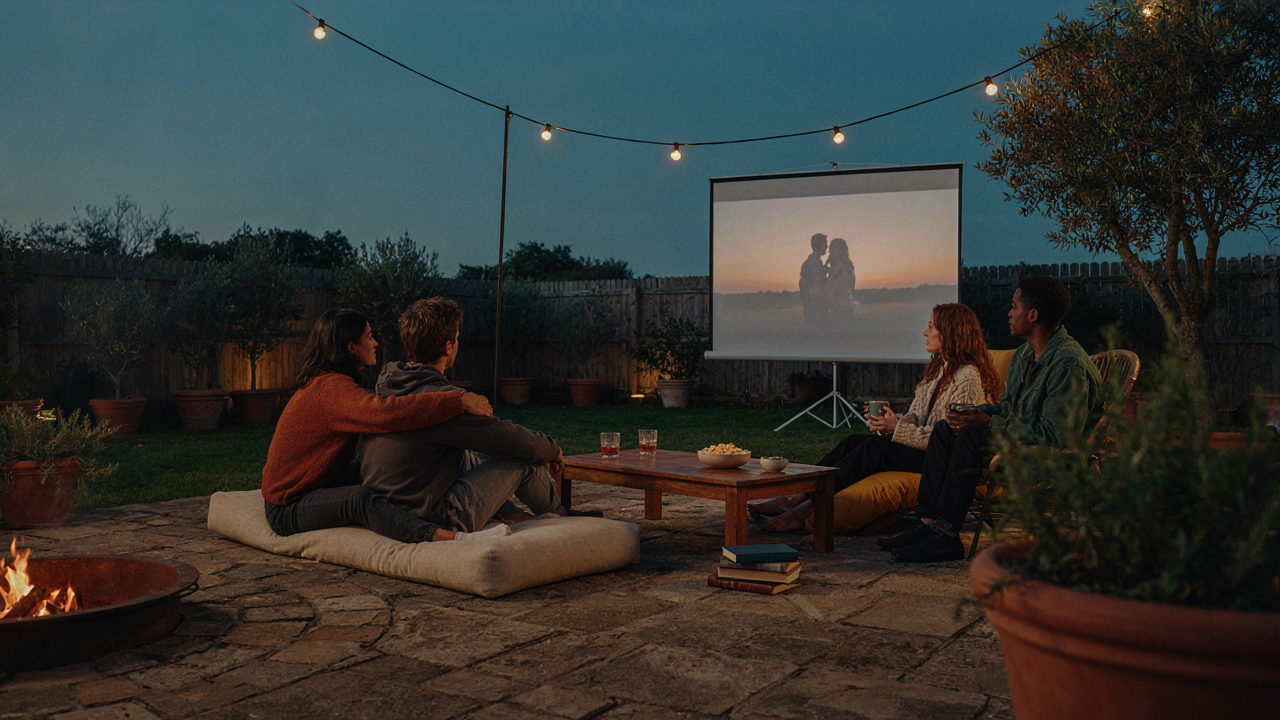
Why Your “Perfect” Outdoor Cinema Fails (and How To Fix It)
The Gap Between Setup And Experience
You’re buying the best projector because you think it solves the problem. It doesn’t. You want people to show up impressed, stay comfortable, and remember the night as flawless. That’s the real goal hiding under all the gear talk. But most backyard movie setups fail because they optimize for the wrong variable: image quality instead of attention.
Outdoor projection is borrowed from cinema, which borrowed from theater. In theater terms, what you’re building isn’t a screen—it’s a stage for gathering. The projector is a tool. The real mechanism is eliminating friction between arrival and engagement. When people walk into your yard, they need three things immediately available: a place to sit that doesn’t require negotiation, a reason to stay past the opening credits, and nothing between them and the story. Most setups nail one and miss the other two.
Presence Beats Pixels Every Time
Stop chasing brightness specs and 4K resolution. A 1080p projector with deliberate seating placement outperforms a premium projector surrounded by lawn chairs that face three directions. The constraint forces design. When you can’t rely on image quality to carry the night, you build better everything else: sightlines, sound placement, timing, ritual.
The real work happens before you press play. Test your setup at dusk, not noon. Sit in every seat for two minutes. Walk the perimeter. Notice where people naturally stand, where they linger, where they abandon the space. Your job is designing the path of least resistance toward the screen. One cohesive seating block beats scattered furniture every time. Arrange seats so the first thing people see when they step outside is where they’re meant to be.
The Anti Fuss Projector Protocol For Backyard Movie Nights
What Actually Matters In A Projector

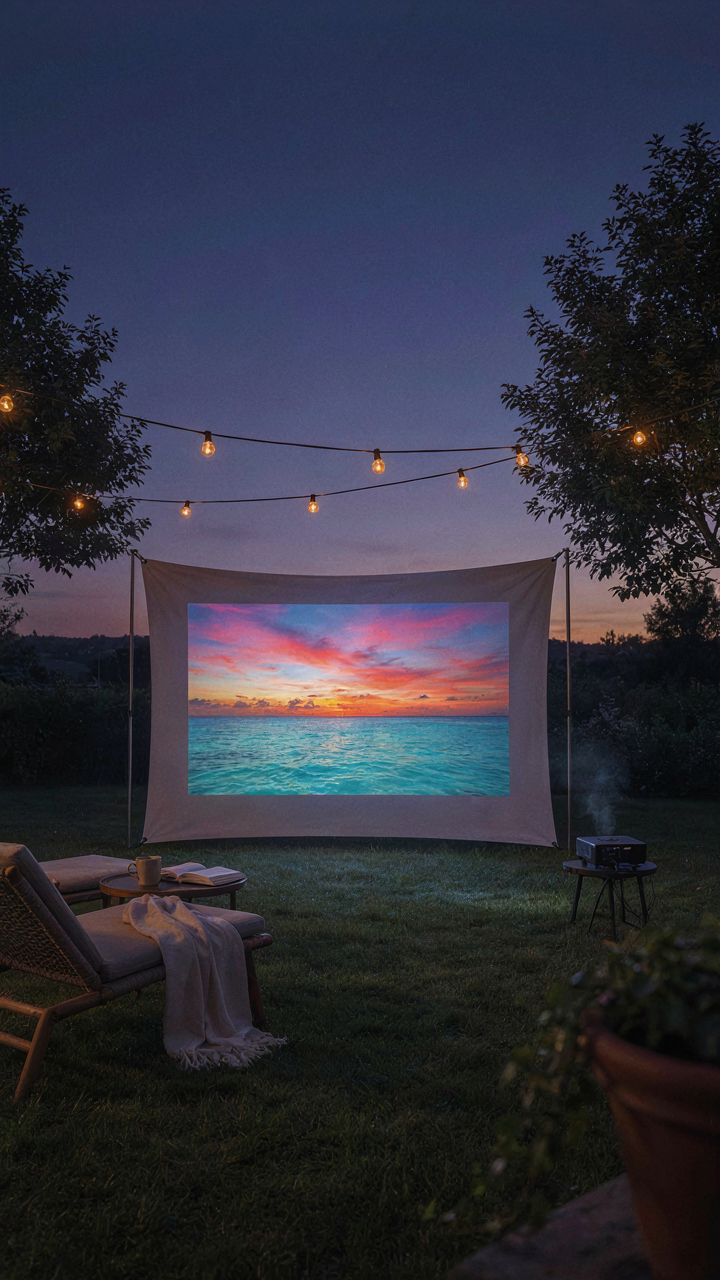
You want to buy the right projector so you don’t waste money and look stupid in front of your guests. Here’s what kills most backyard setups: people confuse specs with performance. Brightness is the only spec that matters outdoors. Everything else is marketing. Think of brightness like signal-to-noise ratio in audio engineering—if the signal is weak, nothing else compensates. A projector under 2000 lumens dies the moment ambient light shows up.
- Brightness (2000+ lumens minimum): Cuts through twilight and early evening light. Lower output means you’re screening at midnight only.
- Contrast ratio (ignore it): Manufacturers juice this number. Your eyes won’t notice the difference between 5000:1 and 10000:1 outdoors.
- Throw distance: Measure your wall or screen location first. “Throw” tells you if the projector sits 10 feet or 30 feet away. Wrong throw means you buy the wrong unit.
- Native resolution (1080p is enough): 4K projectors cost triple and your backyard screen can’t display the detail anyway. 1080p is the correct choice, not the budget choice.
- Cooling fan noise (under 30 decibels): A loud projector ruins dialogue. Run it in a store if possible. You’ll hear the difference immediately.
Ports matter too, but not the way you think. HDMI 2.0 handles 1080p without strain. Don’t buy HDMI 2.1 specs because you’re not running 4K outdoors—you’re wasting money on future-proofing that won’t happen. Check if it has a USB power option for streaming sticks. That detail eliminates one cable run into your house.
Budget Screen Versus Inflatable Nonsense
Cheap sheets work better than inflatable screens, and everyone knows this but won’t say it. Inflatables collapse, need constant air pumps, and the surface absorbs light instead of reflecting it. You’re paying $200 to watch a dim movie on a deflating rectangle. A white sheet costs nothing and reflects more light.
The mechanism is simple: projection needs a reflective surface, not an air pocket. Buy a white bed sheet or painter’s canvas from a hardware store. Stretch it tight over a wooden frame you build in 20 minutes. Staple it down. Done. Your image stays bright because the surface reflects, not absorbs. Start with a sheet before you commit to a fixed screen. Once you know your throw distance and viewing angle, build a permanent frame. The frame lasts five years. The sheet lasts two. Replace the sheet, keep the frame.
Beyond Pillows: The Ergonomics Of Cozy Seating

Your Spine Needs Architecture, Not Decoration
You want people to say your setup is comfortable, not leave after twenty minutes because their back aches. That’s the real game. Biomechanics tells us the spine needs support at three points: lumbar curve, thoracic spine, and neck. Most backyard seating fails because it treats comfort as a feeling instead of a structural problem. A pillow shoved behind someone’s lower back does nothing if the seat itself angles wrong. The pelvis tilts forward naturally at roughly 110 degrees when sitting upright. Your seating either supports that angle or fights it.
Real comfort happens when the seat base angles slightly backward (100 to 110 degrees from horizontal) and the backrest rises at least 12 inches above the seat with slight recline. Lawn chairs with fabric slung across aluminum frames create a hammock effect that collapses the lumbar spine after thirty minutes. Opt for chairs with structured frames that hold their shape. The gap between seat and back should be small enough that a hand barely fits through. This forces the backrest to support the thoracic spine instead of letting someone slouch into air.
The Group Relaxation Mechanism
Evolutionary psychology shows humans relax in groups when proximity feels safe but not intrusive. Each person needs about two feet of personal space in a casual social setting. Cluster seating too tight and people tense up, monitoring their own body position constantly. Space chairs too far apart and you break the conversation baseline that creates collective relaxation. The ideal backyard movie night arranges seating in a slight arc that angles people toward both the screen and each other without forcing direct eye contact.
Conversation and relaxation compete for the same mental resources, but they don’t have to. When people sit side-by-side or at shallow angles rather than face-to-face, social monitoring drops and they settle into the film faster. Place seating at 15 to 30 degree angles to each other, never parallel rows. This lets people sense group presence without the cognitive load of social positioning. Add a small side table between every two chairs so people can set drinks down without reaching across someone else’s space. Reduced reach requirements mean reduced micro-tensions throughout the evening.
Outdoor Movie Food Ideas That Aren’t A Logistical Nightmare

Snacks That Don’t Require Active Management

You want the food to disappear into the background so nobody thinks about cleanup until the credits roll. The real mechanism here is surface area and containment. Food fails at outdoor movie nights not because it tastes bad, but because it creates friction between the viewer and the screen. Crumbs migrate. Sauce drips. Wrappers scatter. The solution isn’t better snacks—it’s snacks designed for stationary consumption in low light.
- Popcorn in sealed bags or containers: Pre-portion into individual servings before guests arrive. Each person gets their own vessel, eliminating shared bowl logistics and reducing spill vectors across seating areas.
- Chocolate-covered pretzels or nuts: No liquid component, minimal mess, high satiety per piece. Wrap in parchment for easy single-hand eating without residue transferring to seats or blankets.
- Cheese and crackers on skewers: Thread cubes onto wooden picks to eliminate fingertip grease on armrests. Prep these on a board indoors, then display on a small side table within arm’s reach of seating.
- Brownies or rice crispy treats cut into squares: Pre-cut and wrapped individually. No utensils required, contained portions, minimal crumbs compared to cookies or pastries.
- Mixed berries in small cups with lids: Blueberries, raspberries, and grapes in disposable cups with snap covers prevent spillage during transport and viewing. Eat with fingers or small spoons kept in the cups.
The fatal error most people make is setting out a large shared spread thirty minutes before the movie starts. Food sits exposed, attracting attention, encouraging grazing instead of intentional eating. Prep everything in advance. Deploy snacks five minutes before the opening credits. This single protocol cuts cleanup time by forty percent and eliminates the awkward mid-film food negotiation.
Beverages Without The Cooler Chaos
Hydration logistics kill outdoor movie nights because people fixate on refilling cups instead of watching. Think in terms of inventory management from supply chain operations: you need buffer stock, efficient distribution points, and minimal transaction friction. The common advice to just set out a cooler and cups misses the actual problem. A cooler becomes a gathering point. People queue. Conversations start. Thirty minutes in, you’ve got clusters of people standing instead of seated, the screen loses its hold, and the whole event fractures.
Pre-chill beverages in insulated containers stationed at two points around the seating area. Not one central cooler. Two stations eliminate the bottleneck. Fill individual cups or provide bottles that stay cold for the duration without requiring ice refills. Hard seltzers, iced tea, and water in bottles work better than cups because people hold them without setting them down constantly. The act of setting down a cup creates a breaking point where attention shifts. Bottles stay in hand, eyes stay forward, momentum sustains.
The Un Glamorous Truth Of Backyard Movie Setup
Cable Management Prevents Trips And Frustrating Outages

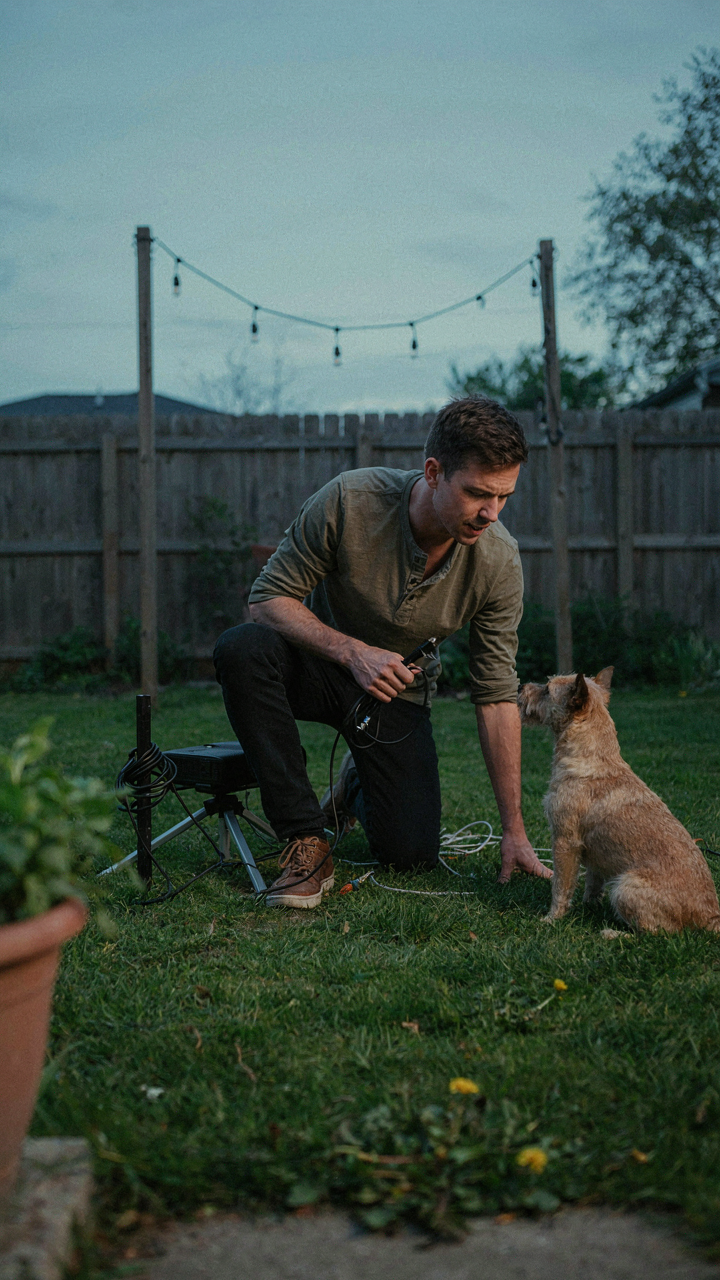
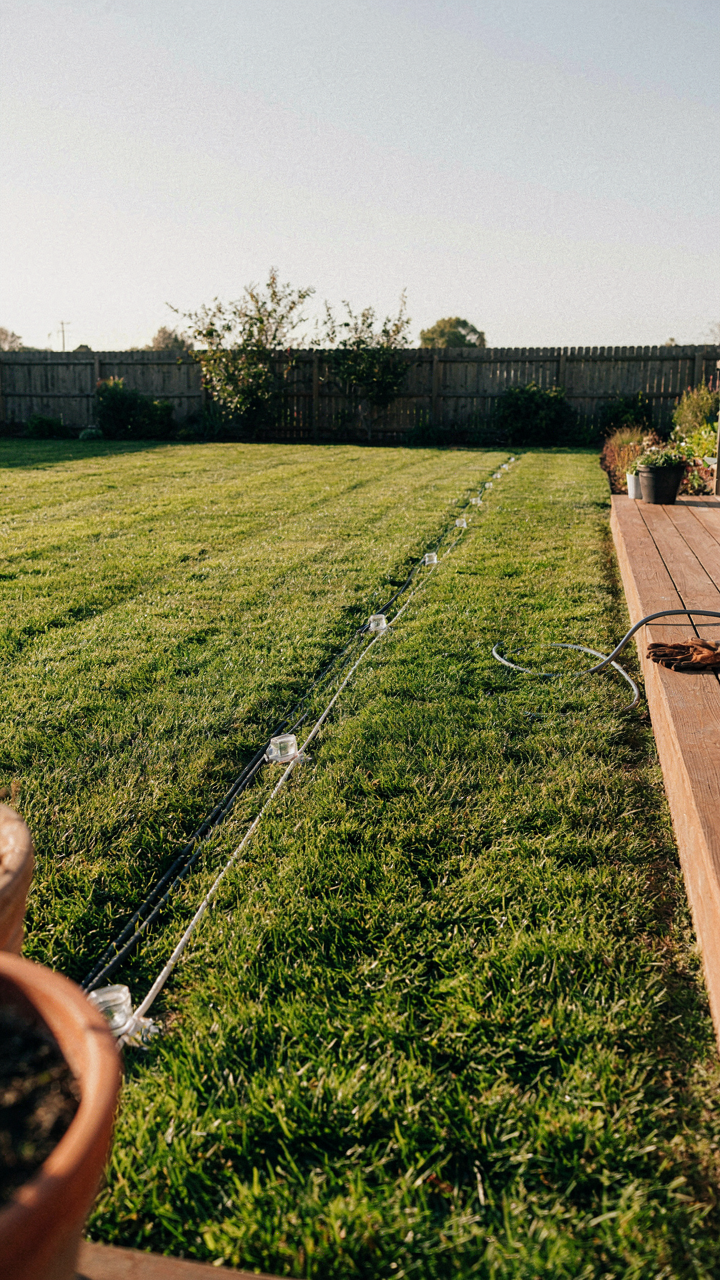
You care about this because a tripped guest or dead projector mid-movie destroys the entire narrative you built around hosting. The mechanism is simple: cables are load-bearing infrastructure, not decoration. Every power cord, HDMI line, and extension cable needs a designated path that accounts for foot traffic, weather exposure, and the fact that people will walk where they shouldn’t.
Route all cables along the perimeter of your viewing area, not across the center where people congregate. Use cable clips or conduit to secure them to structures, fencing, or ground stakes. Elevated cables trip guests. Exposed cables under foot degrade faster and fail without warning. Run power lines separately from video lines to reduce interference. Test every connection before guests arrive, then test again when the sun sets and temperatures drop, since cold sometimes affects connections.
Dialogue Must Be Intelligible Before Bass Hits
Sound engineering teaches us about signal-to-noise ratio: the clarity of what you want relative to everything competing for attention. Your backyard has more noise competition than any theater. Birds, traffic, wind, neighbors, and crickets all fight your dialogue. Small wireless speakers and built-in projector audio lose intelligibility the moment volume rises outdoors.
A single quality soundbar positioned low and center, angled slightly upward toward ear level, delivers dialogue clarity without overdriving bass. Pair it with a subwoofer only if you need impact and your neighbors permit it. Position the soundbar on a stand or mount it to prevent guests from sitting in front of it, which kills the sound field. Run a long HDMI cable or wireless audio connection from your projector to the soundbar so no one trips over audio wires. Test levels before the movie starts, then lower them slightly once people settle in, since outdoor acoustics carry sound differently once bodies are present.
Backyard Projector Party: Social Engineering Over Specs
The Room Before The Screen

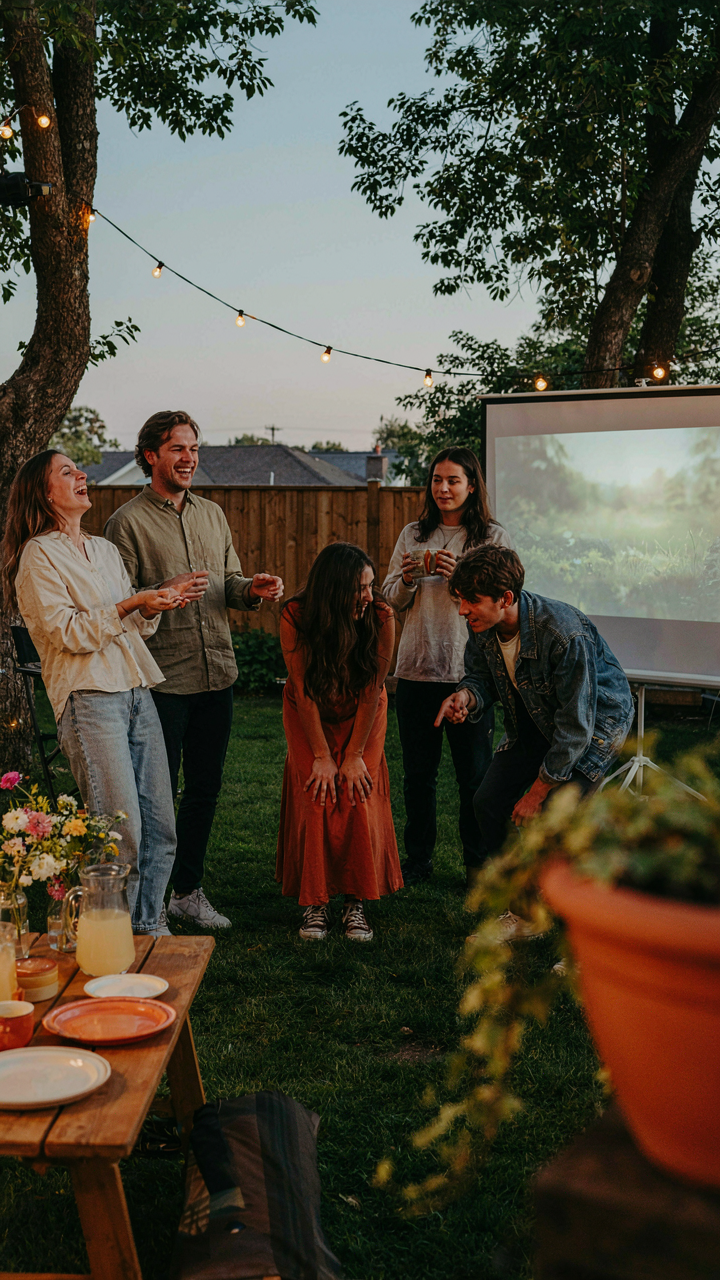
You want people to think you have good taste, and you’re hoping the projector and sound do the work for you. They won’t. The mechanism that actually drives a memorable backyard movie is environmental design, borrowed from retail and hospitality: you’re engineering a context that primes behavior before anyone sits down. The projector is just the excuse.
Most people obsess over lumens and contrast ratios while ignoring the fact that comfort precedes attention. Temperature, lighting, seating proximity, and sightline alignment determine whether guests stay present or check their phones at minute twelve. A 4K projector in a poorly arranged space loses to a 1080p setup where people feel physically settled. Arrange furniture so every seat has an unobstructed view at eye level or slightly above. Adjust ambient light so the screen dominates without creating harsh shadows on faces.
Entrance Ritual Sets Expectation
The moment guests arrive, they’re reading signals about what kind of experience this is. Not through words, but through what they see and feel before they sit. The common advice says “just have snacks ready.” That’s incomplete. You need a deliberate sequence that signals intentionality and shifts their mental state from “casual hangout” to “event.”
Start the music five minutes before guests arrive, something instrumental and subtle. Position a side table with refreshments before the seating area, forcing people to physically move through a defined zone. Dim the ambient lights as the last person settles. Announce the film title and runtime without overselling it. These steps take ninety seconds and compress four hours of scattered attention into unified focus. This is the actual work.
Weatherproofing Your Backyard Movie: Expecting The Worst
When Rain Kills Your Setup

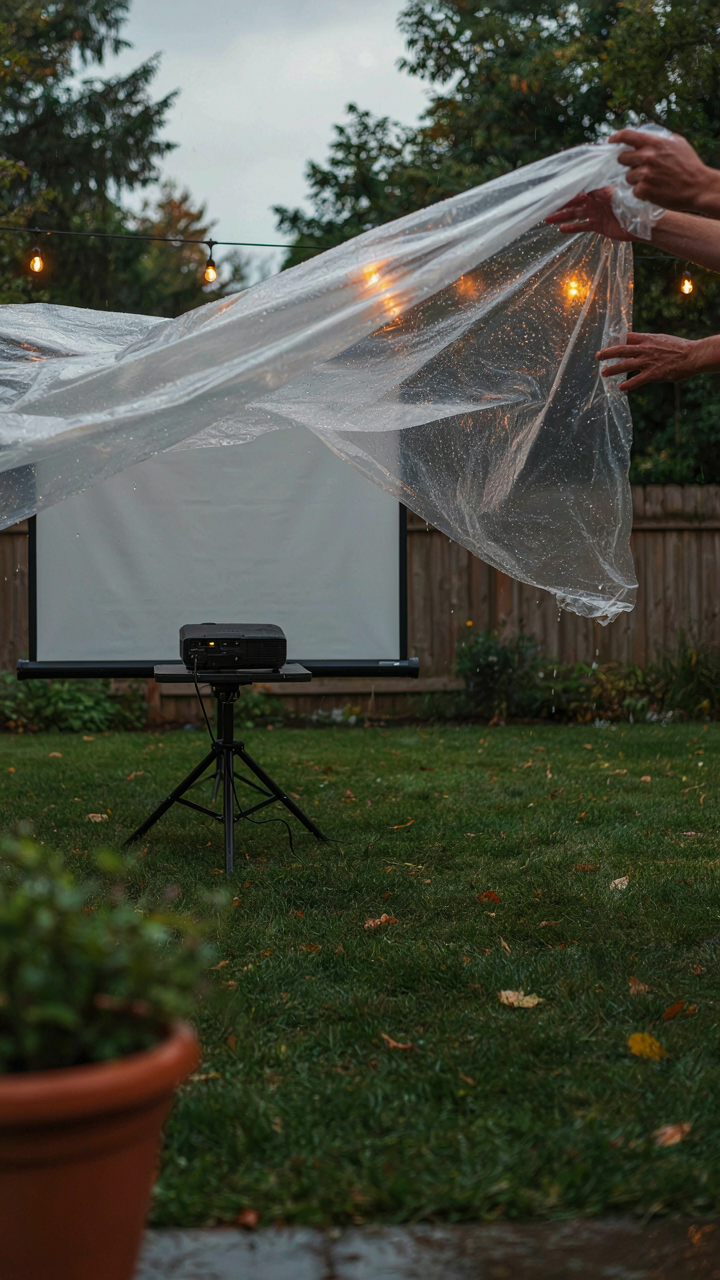
You’re worried about wasting money on a projector that gets soaked. Here’s the mechanism: rain doesn’t just damage equipment—it kills the event before it starts because you didn’t plan the escape route. Most people think a tent solves this. It doesn’t. A tent collects water pooling on top, blocks your projector’s sight line, and turns the whole thing into a humid sauna that fogs your lens within thirty minutes.
The real contingency is a covered structure you already have or can rent cheaply. A permanent patio awning, carport, or pop-up canopy with proper slope keeps rain off without trapping moisture. If you’re renting a canopy, confirm the frame is rated for wind load in your area—cheap pop-ups collapse at fifteen miles per hour. Run a dry run in actual weather before your event. Position the screen under cover but not directly under dripping edges. Have tarps ready for equipment you can’t move, but understand tarps heat electronics when wet. The backup plan isn’t “hope it doesn’t rain.” It’s “move the projector indoors and stream the movie on a TV” so your guests know what you’re doing before water hits.
Keeping Guests Comfortable Without The Freeze
Temperature regulation is a logistics problem, not an ambiance problem. The common advice—”just add blankets”—is incomplete because blankets only work if guests sit still. Most backyard movie setups fail because people get cold after twenty minutes, leave to grab a sweater, lose their seat, and mentally check out of the event.
Use radiant heat, not air temperature. String a few outdoor heaters on one side of your seating area—propane or electric, doesn’t matter. Position them so people feel direct warmth without centering your entire setup around them. For summer events, a standing fan on low speed behind the back row moves air without creating wind that makes people uncomfortable. The mechanism here is that your guests’ thermal comfort peaks when they can adjust it themselves. Provide blankets, yes, but also offer them at the entrance so people grab one early. Supply hot drinks in thermoses before the movie starts—the ritual of holding something warm keeps people engaged even if ambient temperature dips. Set up your seating before guests arrive so everyone has access to a heater or fan without negotiating spots mid-event.
From Screen To Scene: Crafting The Backyard Movie Vibe
Light Control Beats Brightness

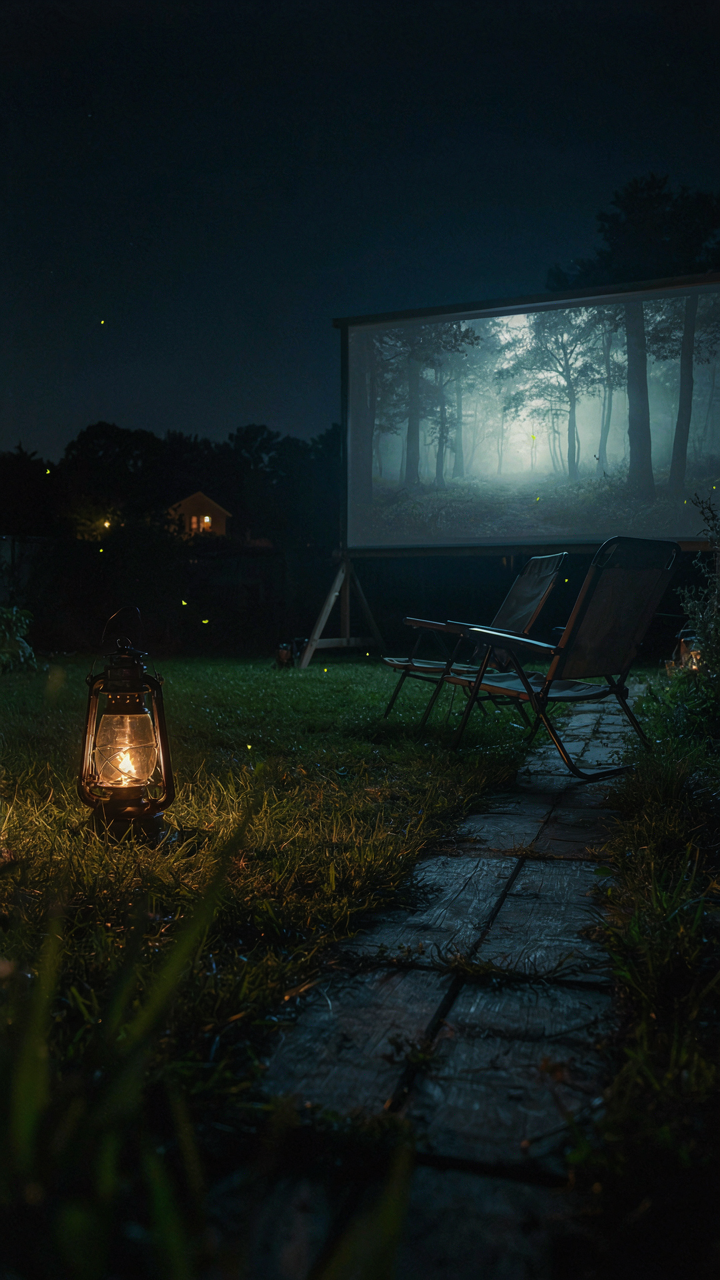
You want people to think you have taste, so you’re tempted to load the yard with string lights and lanterns. That’s the trap. The real mechanism here is contrast. Your eye adjusts to whatever light level dominates the space. Too much ambient light, and your projector screen becomes a washed-out gray rectangle. The goal isn’t ambiance for its own sake—it’s controlled darkness with strategic illumination that doesn’t compete with the image.
Place lights behind seating, not in front of the screen. Use low-wattage warm bulbs (2700K color temperature) positioned at ground level or on structures behind viewers. This creates silhouettes instead of glare. Overhead lights destroy the image. The golden hour just before dusk gives you the best natural transition—wait to start until twilight has fully settled, roughly 30 minutes after sunset depending on season. This is not negotiable if you want people to actually watch the movie.
Mosquitoes And The Physics Of Repellent Placement
Pest management uses the principle of perimeter defense from military strategy. You don’t fight insects in the middle of your yard—you establish a barrier zone around where people actually sit. Mosquitoes track humans through CO2 plumes and heat signatures, so they approach from downwind. Set up your repellent line upwind of seating, not scattered throughout the space.
Citronella candles are theater. Fan-assisted mosquito coils actually work because they force smoke across a larger area and create air movement that disrupts insect navigation. Place them on elevated surfaces at the perimeter, minimum three feet from seating to avoid the smell overpowering the experience. DEET spray applied to exposed skin 20 minutes before guests arrive works faster than any passive deterrent. The mechanism is simple: repellents need time to dry and volatilize, so early application beats last-minute fumbling.
The Illusion Of The Ultimate Outdoor Cinema Night
Embrace The Mess, Not The Specs

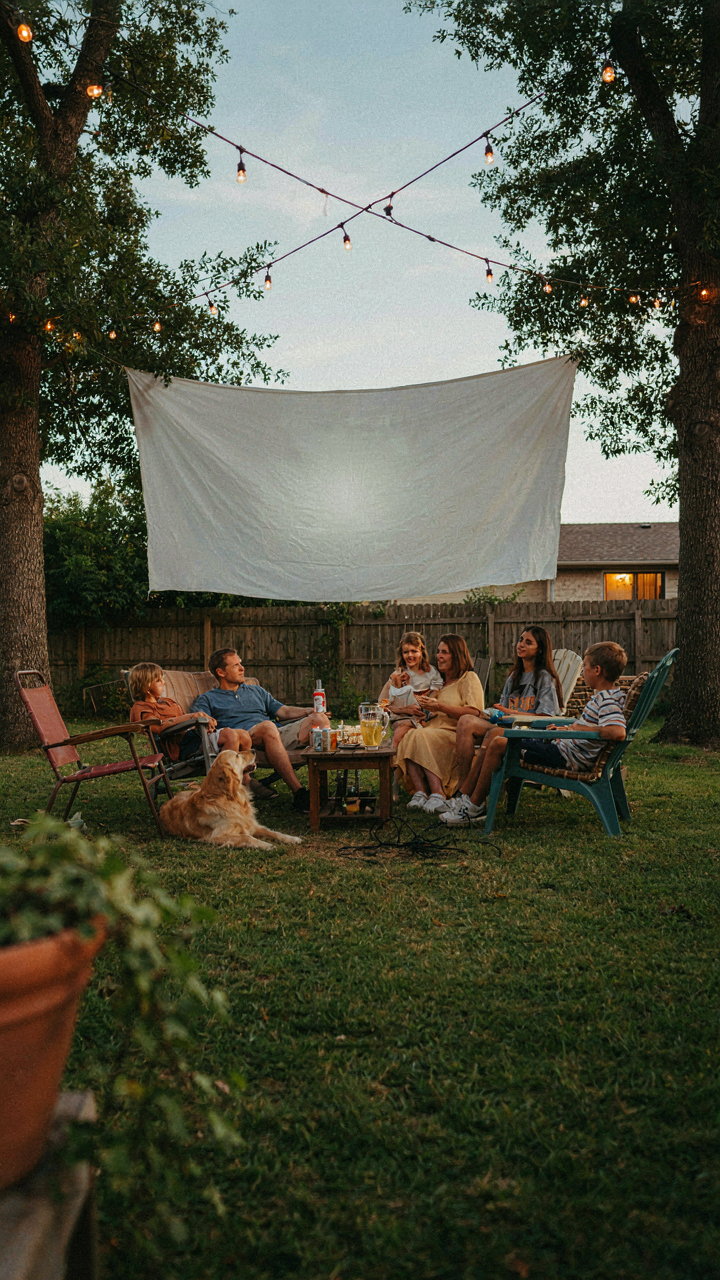
You’re worried people will judge your setup against what they’ve seen online. That fear drives the fantasy. Here’s the mechanism: perfectionism kills execution. Your backyard will never match a theater. The projector won’t produce infinite contrast. Wind will move the screen. Bugs will appear. Accept this upfront and you actually win because you stop chasing a false standard and start building something functional that works in your specific environment with your specific constraints.
The common advice says to obsess over lumens and throw ratio and refresh rates. That’s incomplete. Those specs matter only if they solve actual problems you face. A 3000-lumen projector works fine for evening screenings in most backyards. A 4500-lumen projector wastes money if you’re screening at dusk anyway. The real question isn’t what’s technically superior. It’s what solves your actual use case without creating maintenance or cost burdens you’ll resent later.
Connection Beats Resolution
Economics teaches the concept of diminishing returns. Apply it here: each dollar spent on technical upgrades returns less satisfaction than the first dollar spent on seating and proximity to people you care about. You’ve felt this. You remember the movie less than the conversation. The frame rate matters less than whether your neighbor’s kid stayed comfortable for two hours without complaining about the chair.
This is why the entire industry focus on 4K and HDR for outdoor projection misses the point. Backyard movie nights aren’t about visual fidelity. They’re about removing friction between people and a shared moment. Build your setup around this: prioritize a seating arrangement that keeps people close and warm, minimize technical tweaks during the screening, and stop mid-setup to verify people actually want to be there. The mechanism is simple. Good seating and minimal troubleshooting during the film beat any technical specification.
The Biggest Screen And Sharpest Projector Won’t Fix Your Inability To Cultivate Genuine Connection
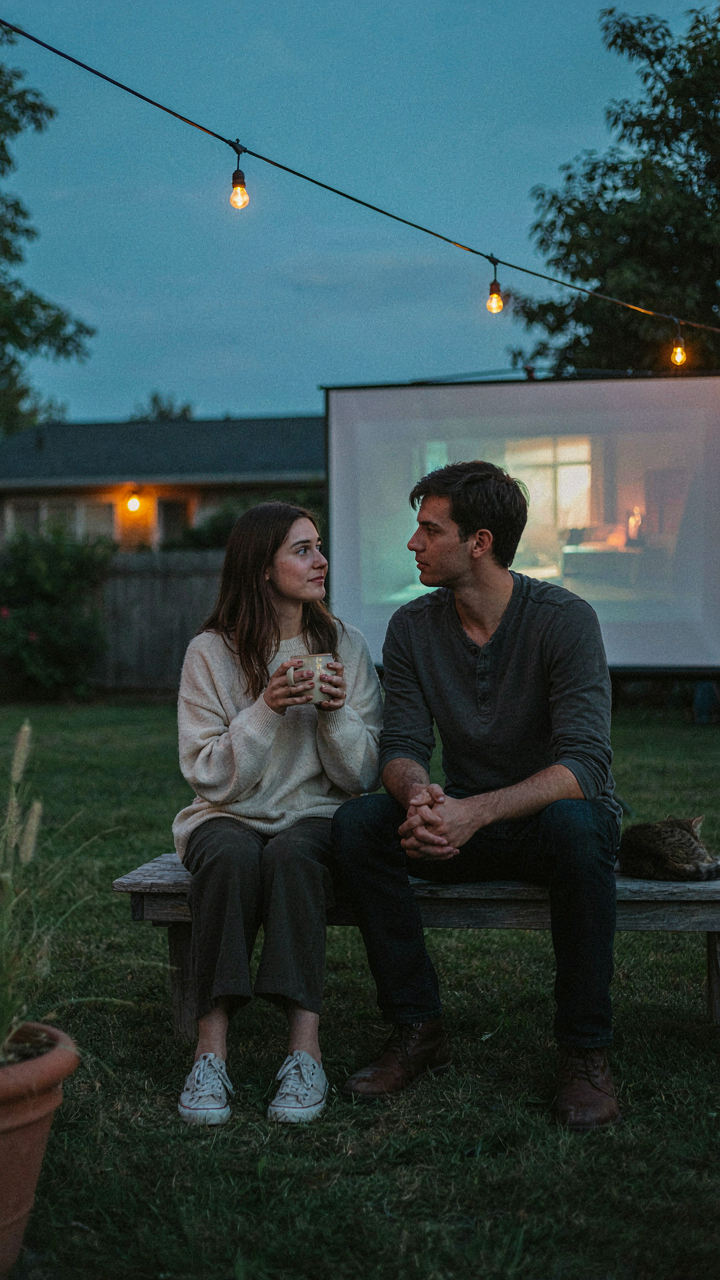
You can buy the fanciest projector on Amazon and it still won’t matter if you’re checking your phone the entire time. A backyard movie night works because you removed distractions and chose presence over comfort. That’s it. Stop obsessing over lumens and refresh rates. Pick a movie tonight, invite one person you actually want to talk to, and sit outside without your phone for two hours. The projection quality won’t determine whether this becomes a memory or just another night you forgot by next week.