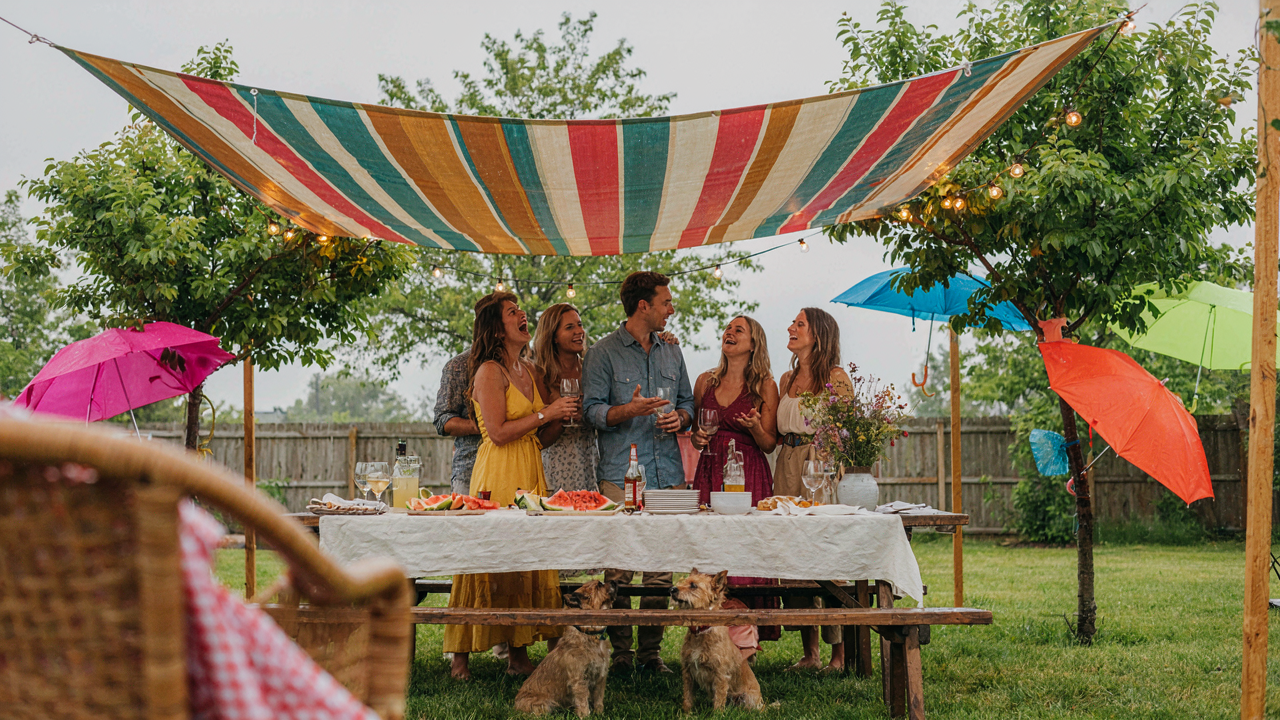
The Uninvited Guest Protocol: Embracing The Inevitable Downpour
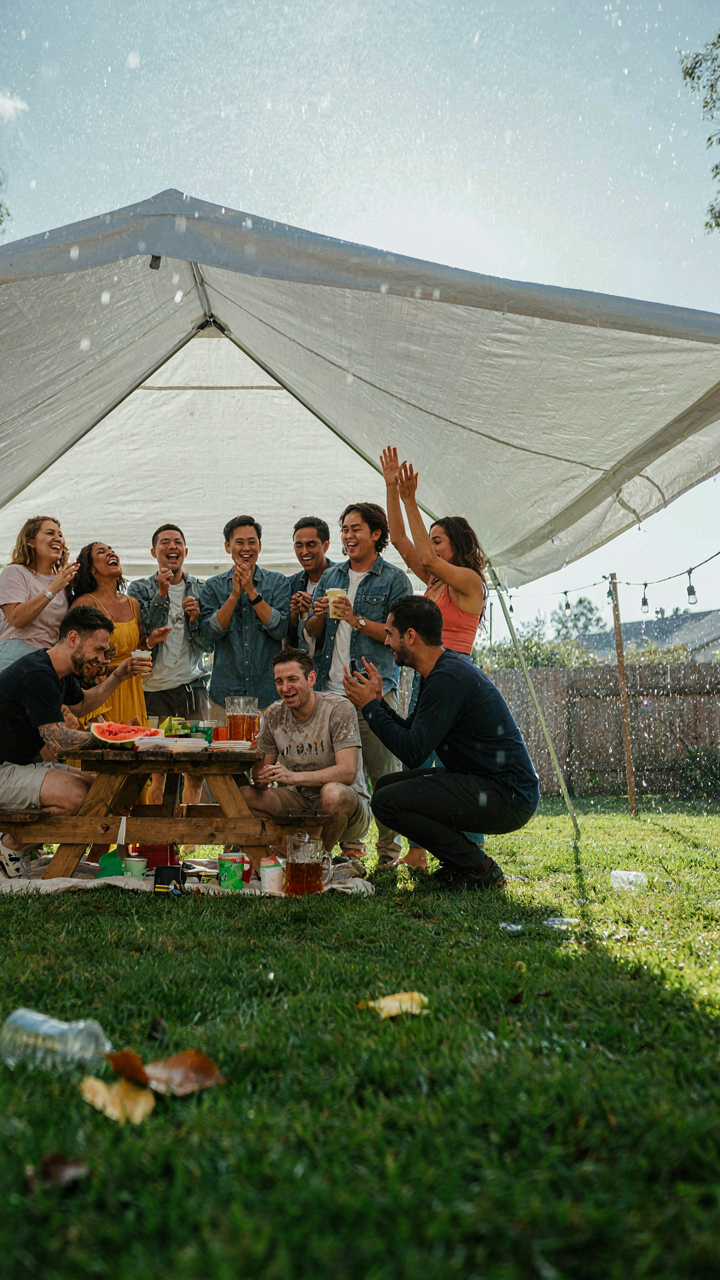
Stop Fighting The Weather You Can’t Control
You want the rain plan so you don’t look incompetent in front of your guests. Here’s the real mechanism: most people treat weather as a failure of planning instead of a constraint to design around. Rain isn’t a problem to solve. It’s a boundary condition. The moment you stop trying to prevent rain and start building the party to function within it, you eliminate the entire category of stress that kills outdoor events.
Systems thinking teaches us that constraints force innovation. In a backyard party, rain is your constraint. When you accept that some rain will fall regardless of your preparations, you shift from prevention mode to integration mode. Your infrastructure, timeline, and guest experience become designed for wet conditions as the baseline, not the backup plan.
Weather As Feature, Not Flaw
The common advice says “have a tent just in case.” That’s incomplete. A tent designed as an afterthought sits empty until it rains, wasting space and money while guests remain exposed during the critical first hour. Instead, architect your party so rain changes the experience without breaking it. This means covering high-traffic zones first, positioning activities to migrate indoors naturally, and using covered areas as gathering points from the start.
Guests adapt faster than you think. They don’t resent rain if the host has already decided it’s part of the event. What they resent is chaos, unprepared transitions, and the host’s visible panic. Set your party structure so that when rain comes, you execute a known protocol, not improvise. The guest experience stays intact because the rain trigger simply activates predetermined zones and activities you’ve already planned into existence.
The “Adaptive Canopy” Method: Beyond The Pop Up Tent
Where Water Actually Pools On Your Property

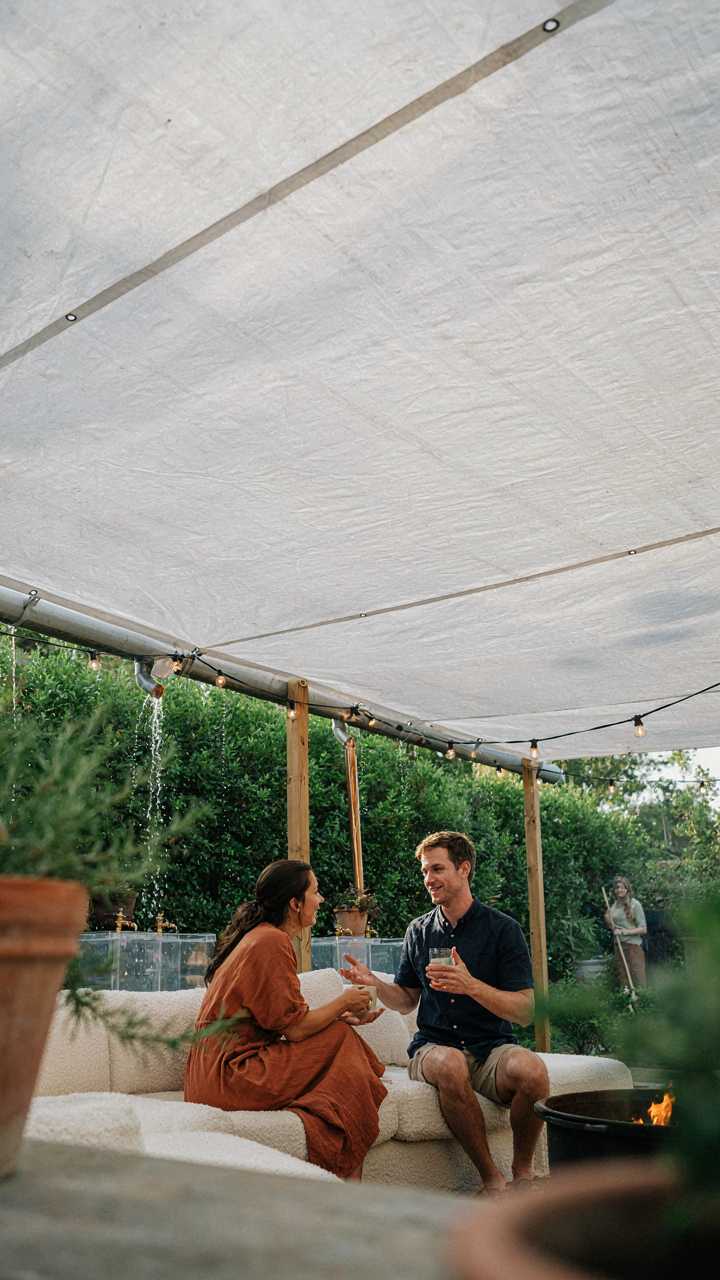
You want to look like you had this handled, so you’re here looking for the shelter hack that makes rain irrelevant. The real mechanism is water flow, not rain coverage. Most people drop a tent where it looks good, then watch water channel underneath it during a storm because they ignored the land’s natural drainage pattern.
Placement beats size every time. Scout your yard before the party. Identify the high points and low points. Rain doesn’t fall straight down in wind. It moves laterally. Position your main canopy on higher ground, perpendicular to the wind direction you typically see during storms in your season. This forces water to sheet away from the gathering zone, not pool under it. The difference between a dry event and soggy guests is often just 10 feet of repositioning.
Layers That Reconfigure, Not Just Expand
Military logistics treats redundancy as system resilience, and your rain plan needs the same layered approach. One massive tent fails catastrophically. Multiple smaller shelters fail gracefully. A 20×20 canopy plus two 10×10 pop-ups let you anchor coverage where people actually congregate, not where a single frame dictates.
Set your primary canopy over the food and central seating. Position secondary canopies over entry points and high-traffic zones. This setup handles variable rain intensity without forcing everyone under one structure. When a storm shifts direction, you move people, not equipment. If wind gusts threaten one section, guests move to another. You’re building optionality into the physical layout, not betting everything on weather predictions you don’t have. The protocol: scout placement at setup, confirm wind direction 30 minutes before guests arrive, and position secondary canopies as overflow, not decoration.
Rainfall As A Feature: Crafting Memorable Rainy Party Ideas
Activities Enhanced By Light Rain

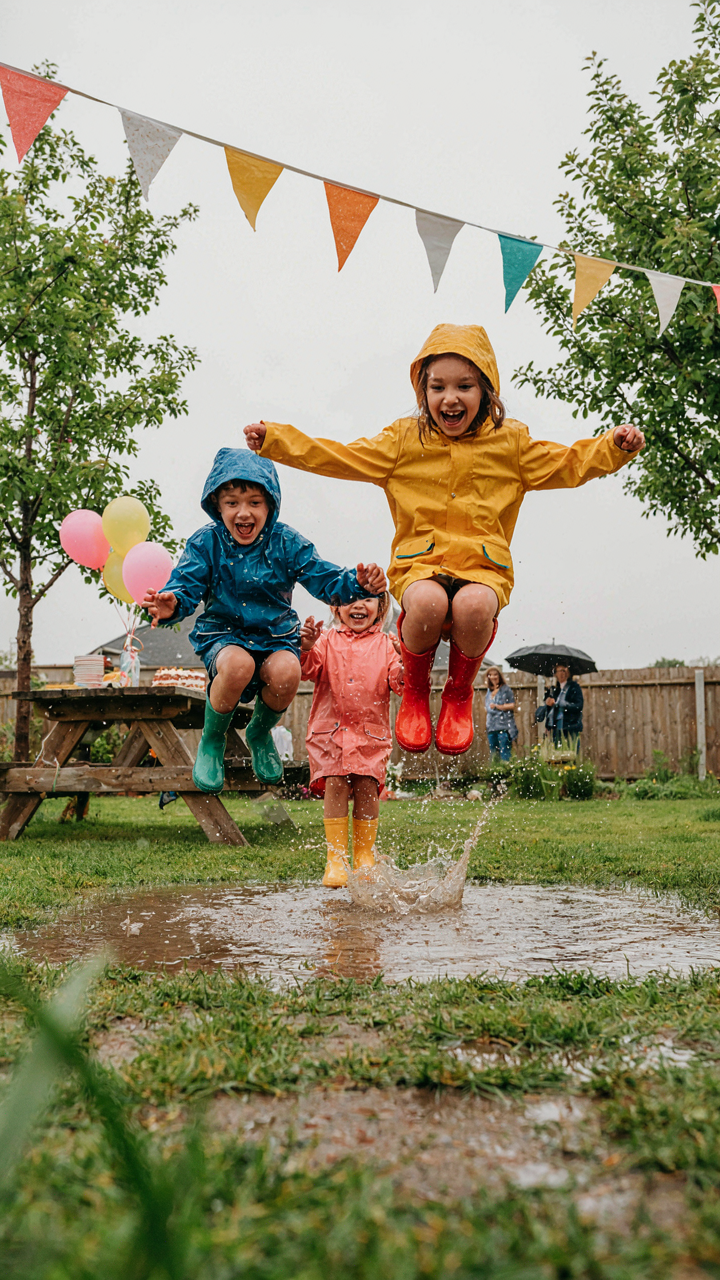
You want rain to feel like a bonus, not a disaster, because that’s the only way guests remember your party instead of your failure to predict weather. The mechanism is borrowed from event design: constraint breeds creativity. Light rain narrows the field of what’s possible, which forces you to build tighter experiences instead of spreading attention across ten mediocre options.
Lawn games transform under light rain. Cornhole boards stay playable if you wipe them down. Giant Jenga becomes grip-dependent strategy instead of pure physics. Croquet on wet grass slows the game enough that conversation happens between shots. The rain doesn’t ruin these activities; it changes the difficulty curve and makes winning feel earned. Fire pits stay functional under light rain if you position them under partial cover and use dry wood stored beforehand. Guests huddle closer, which kills the awkward standing-around problem.
Weather Themed Event Ideas
Framing rain as the party’s theme instead of its enemy removes the psychological burden of failure. You’re not recovering from bad luck; you’re executing a decision. This works because guest expectations shift before they arrive. Send the invite mentioning “rain or shine garden gathering” and they show up mentally prepared instead of disappointed.
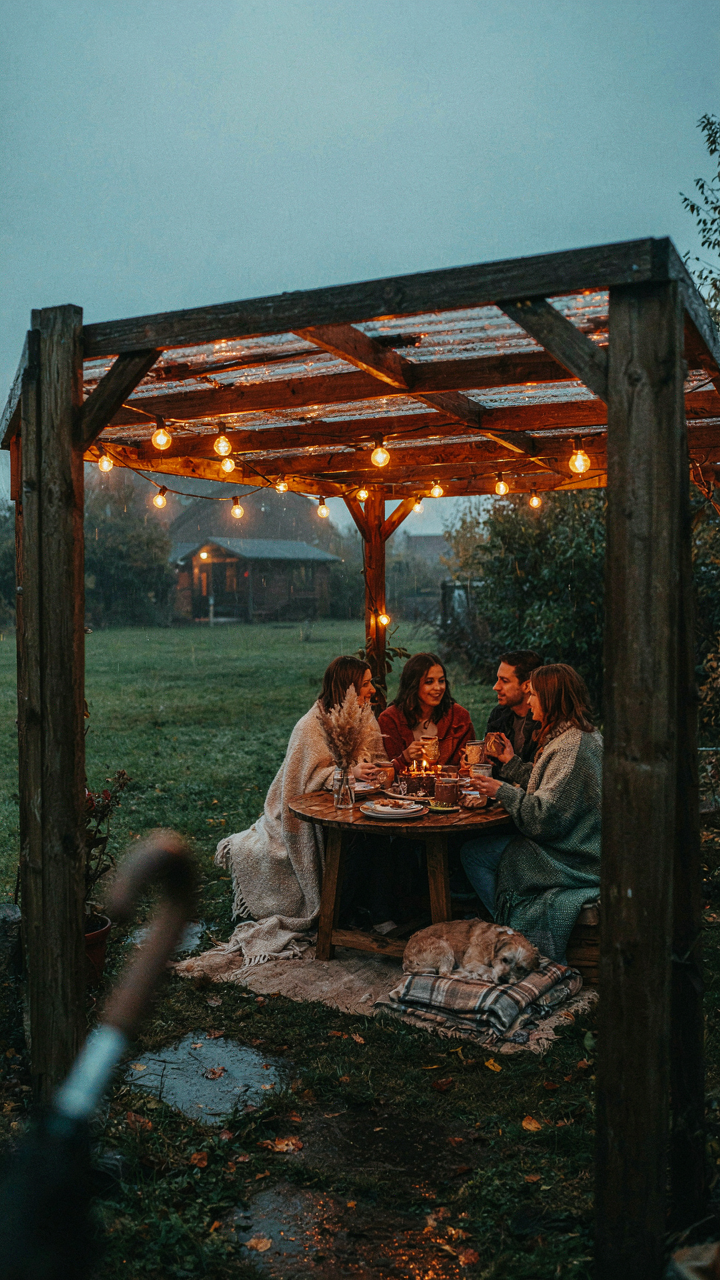
Serve drinks specifically for wet weather: hot cider, hot chocolate, coffee. These aren’t backup options; they’re the stated menu. Outdoor string lights perform better in rain than full sun because they’re more visible and create intimacy instead of ambiance. Set up covered seating zones before guests arrive so nobody has to ask where to stand. The party still happens in the yard; the rain simply determines which activities dominate the schedule and which conversations deepen under shared shelter.
The Hydrological Party Layout: Flood Proofing Your Fun
Where Water Actually Goes

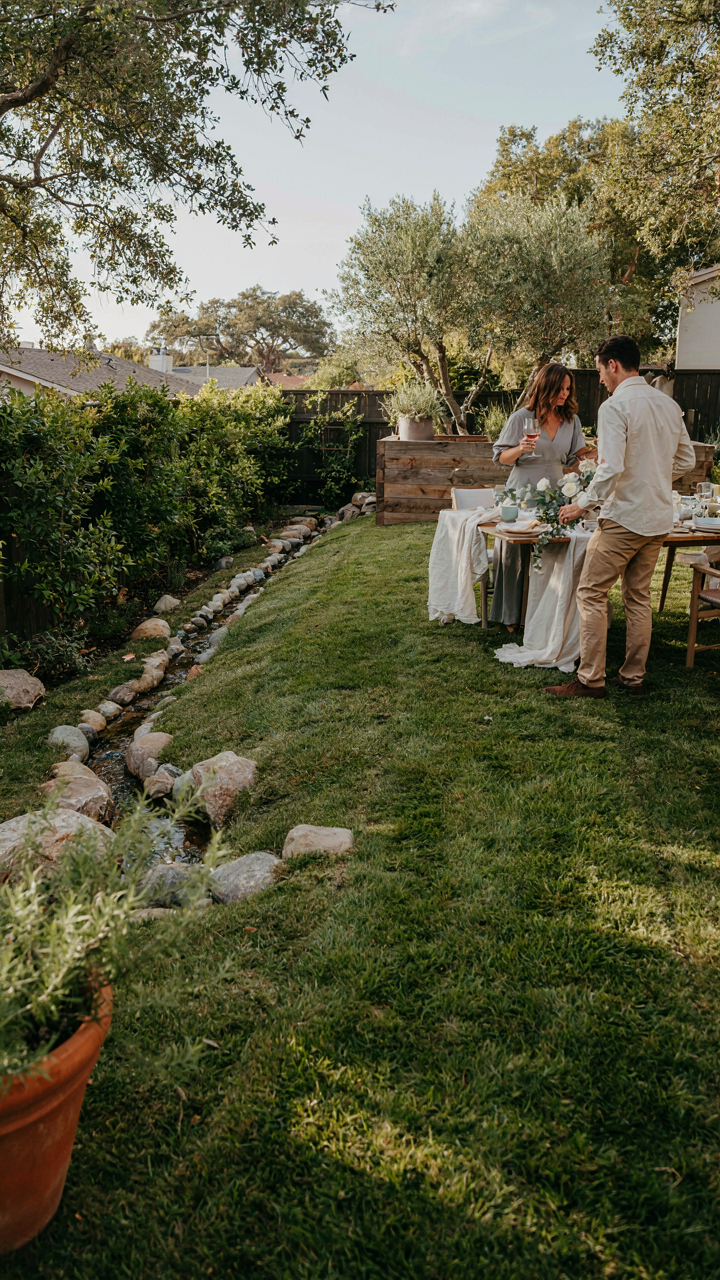
You want to look like you planned for this, even though you’re hoping it doesn’t rain. That’s the real reason you care about water flow. The mechanism comes from civil engineering: water follows the path of least resistance downhill. Your backyard isn’t flat. It slopes somewhere, and rain will concentrate there like a magnet pulling metal shavings.
Map your yard’s actual topography before guests arrive. Walk it after a hard rain and watch where puddles form. That’s your low point. Now work backwards: identify which party zones sit between the high point and that low point. Those intermediate areas become your staging grounds for temporary barriers, drainage paths, or relocated activities.
Gutters And Ground Truth
Most rain planning advice stops at “just use a tent.” That’s incomplete because it ignores the ground beneath the tent. Water doesn’t vanish when it hits soil. It pools, saturates, and creates mud. The real issue is velocity and volume. You need to move water away from foot traffic and seating before it accumulates.
Dig shallow trenches on the downhill side of your party zone before the event. Depth of three to four inches works. Line them with landscape fabric and fill with pea gravel. This creates a channel that water follows without creating visible trenches that guests notice. Run this channel to your yard’s natural drainage point or a storm drain. The fabric prevents soil from washing into the gravel and clogging the system.
Emergency Diversion Tactics: When Plan A Drowns
The Indoor Pivot Before Rain Hits

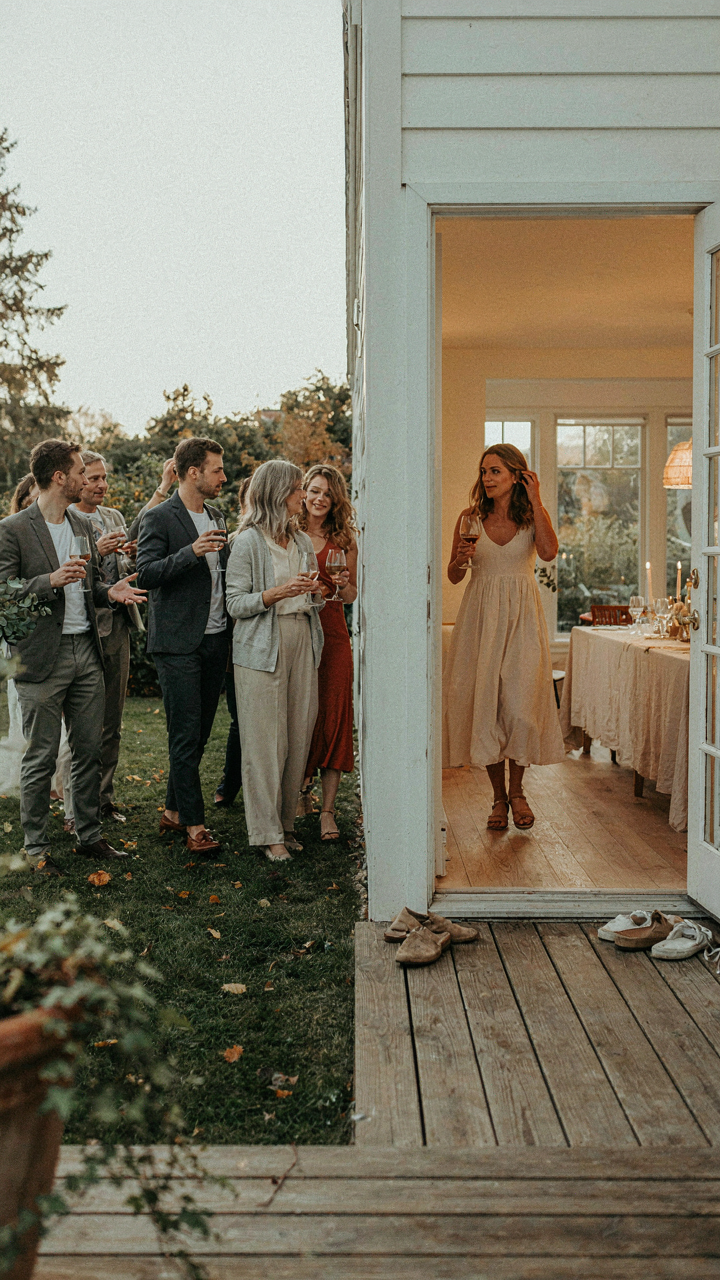
You’re worried people will judge you for a ruined event. That fear makes you freeze instead of act. The mechanism is simple: pre-arranged indoor spaces eliminate the gap between decision and execution. When rain arrives, you don’t debate or scramble. You activate a predetermined zone. This isn’t backup thinking. It’s forward infrastructure.
Identify your indoor anchor point weeks before the party. This is the room or area with the highest usable square footage and lowest transition friction. If your home lacks space, negotiate access to a neighbor’s garage, basement, or covered structure beforehand. Get written or verbal confirmation. The goal isn’t perfection. The goal is eliminating the moment of hesitation when weather turns.
Rapid Zone Conversion Without Chaos
Military logistics call this “contingency staging.” You’re creating predetermined checkpoints so the shift from outdoor to indoor happens as a series of small, practiced moves rather than one panicked scramble. Most hosts wait until rain starts, then improvise. That delay costs you thirty minutes of guest discomfort and broken momentum.
Map your transition route now. Identify which outdoor stations move inside first: food tables, drinks, seating clusters. Assign these zones to specific indoor locations on paper. Mark clear pathways. Test moving at least one station before the event. This isn’t overthinking. This is the difference between guests helping you adapt and guests watching you fail. Execute the full transition within ten minutes of the rain call.
The “Meteorological Opportunist” Playbook: Leveraging Forecasts

Reading The Forecast Like A Military Decision

You want this section to tell you there’s a formula that removes doubt. There isn’t one. Game theory teaches us that decisions under uncertainty depend on payoff matrices, not certainty. A rain forecast is your payoff matrix. Probability percentages don’t tell you whether to rent a tent. They tell you what you lose if you guess wrong versus what you gain if you guess right.
A 40% rain chance doesn’t mean the same thing to a 50-person dinner party and a 200-person wedding. The cost structure is different. The damage from cancellation is different. Your real move is reverse-engineering the forecast number into a personal decision threshold. If the host absorbs financial loss on a tent rental but gains reputation from not canceling, a 40% chance now justifies spending. The forecast itself doesn’t change. Your interpretation of it does.
Mapping Resources To Actual Risk Probability
Most backyard party planning wastes money on backup gear that never deploys because the forecast improved by game day. Strategic resource allocation means you don’t decide “do we need a tent” in a vacuum. You decide it as a function of: the percentage probability, the financial cost of that resource, and the time required to deploy it. Tents take three hours to install. A pop-up canopy takes fifteen minutes. That execution time difference changes your cutoff probability for ordering each one.
Build a simple matrix: list your backup resources (tent, canopy, tarps, heaters, moved-indoors contingency). Assign each a cost and deployment time. Then set a probability threshold for each. If rain odds hit 50%, order the canopy but skip the tent rental. If odds hit 70%, order both. If odds stay below 35%, deploy nothing. Check the forecast seventy-two hours out, again at forty-eight hours, and lock your decision at twenty-four hours. After that point, changing course costs more than committing.
Beyond The Drip: Creating “Rainy Day Birthday Party Ideas” That Shine
Making Indoor Space Feel Like Outside

You want people to forget it’s raining so they don’t resent you for the weather. That’s the real fear here. The mechanism is simple: outdoor parties work because they lack friction and visual boundaries. Your move is stealing that feeling by removing walls psychologically, not physically. Use open floor plans, remove furniture to create zones, and blast natural light. Skylights and large windows aren’t luxuries—they’re the difference between a basement party and an event.
Bring the sensory inputs that make outdoor gatherings work. Play ambient soundscapes of rain or wind instead of silence. Set up stations people move between rather than forcing everyone into one room. This mimics the natural drift of backyard gatherings. Temperature matters too—keep it cool, around 65-68 degrees. Cold air makes people feel alert and present. Stagnant heat kills energy faster than a closed door.
The Elements That Actually Stick
Most advice here is garbage. People tell you to “think positive” or add balloons. Wrong. You need novelty that justifies the indoor pivot and makes the rain part of the story, not a failure. Think like a designer using constraints—in design, a limitation forces creativity that makes work memorable. Your constraint is the rain.
- Humidity-controlled lounges: Set up seating areas with controlled humidity using dehumidifiers, so moisture doesn’t wreck comfort or make people feel clammy throughout the event.
- Transition zones at entry points: Create mudroom-style areas where guests shed wet gear immediately, preventing tracking water through clean spaces and setting expectation for the vibe.
- Strategic ventilation placement: Install portable air movers and fans to push humid air toward open windows or exhausts, keeping air fresh without creating awkward drafts.
- Rain-view focal points: Position seating so guests face windows where rain is visible, turning weather into entertainment rather than something to ignore.
- Acoustic dampening for echo: Wet conditions amplify sound, so add soft furnishings, curtains, or temporary panels to prevent the institutional echo that kills atmosphere.
The protocol is clear: measure humidity before guests arrive. If it exceeds 55%, run dehumidifiers for two hours minimum. Position all seating to leverage windows as visual anchors. This transforms rain from obstacle into design element. Guests remember this, not the original outdoor plan.
Outdoor Wedding Rain: The Ultimate Test Of Adaptability
When The Tent Becomes Non Negotiable

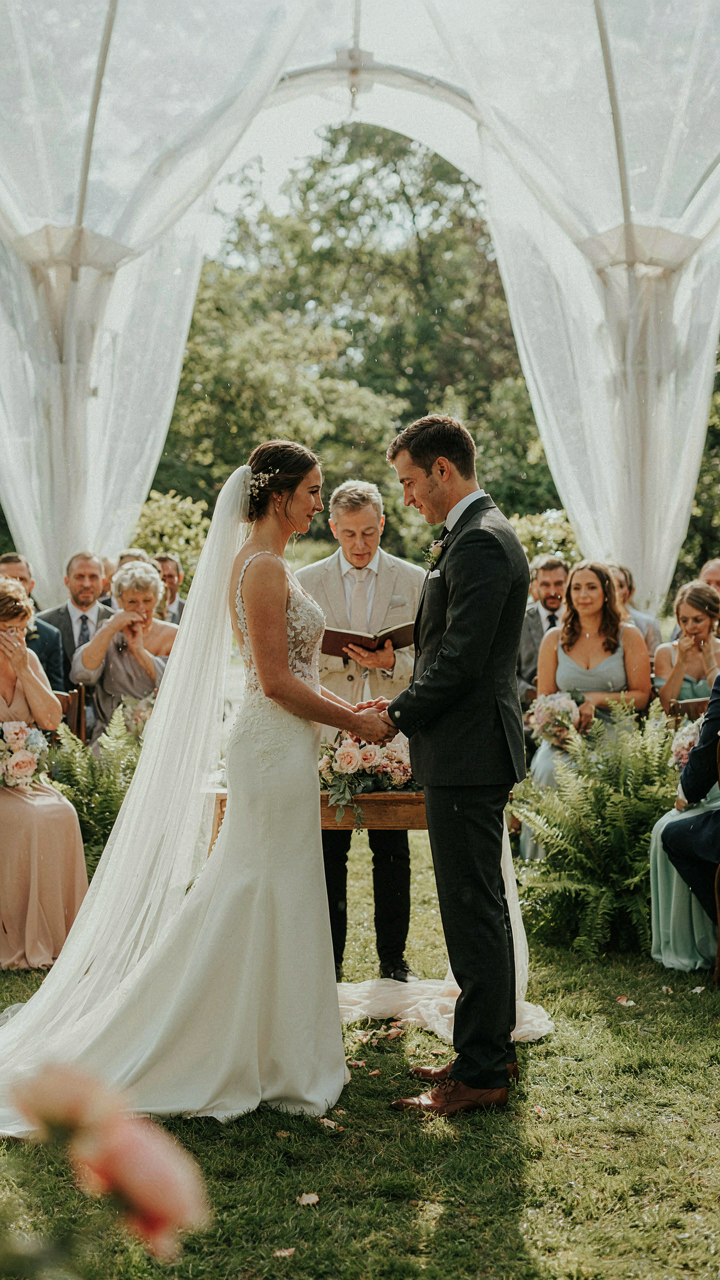
You care about this because rain on your wedding day feels like a personal failure, like you didn’t plan hard enough or didn’t deserve better weather. The mechanism is simple: elegance under pressure is a design problem, not a luck problem. Borrowed from architecture, the concept of “structural integrity” applies here—your party’s visual coherence depends on how well the rain plan reinforces rather than fights the original vision.
Tent coverage solves the immediate problem but creates a new one: enclosed space changes how light, sound, and movement feel. Most people throw up a tent and call it done. Wrong move. The tent is infrastructure. What matters is whether guests feel sheltered or trapped, whether the space still reads as an event or as damage control. Strategic positioning of the tent relative to the house, bar, and dance area determines flow. Lighting inside the tent becomes critical because natural brightness disappears. Uplighting or string lights transform a canvas tent from warehouse vibes into an intentional space.
Discomfort Reveals Poor Logistics
When guests get wet or cold, they don’t blame weather. They blame you for not thinking it through. This is a supply chain problem masquerading as a weather problem. The real test isn’t whether it rains—it’s whether you’ve pre positioned heating, dry seating, and clear sightlines to cover before anyone notices they need it.
Heaters belong at entry points and in seating areas, not scattered randomly. Blankets stay folded in a basket near high traffic zones, not piled on a back table. Pathways from parking to covered space must be lit and cleared. Guests in wet clothes gravitate toward exits. A simple protocol: assign one person to monitor comfort stations every thirty minutes and restock as needed. The difference between a memorable event and one guests complain about for years is whether you treated weather as an afterthought or a variable you controlled.
The “Bubble Station” Blueprint: Turning Puddles Into Play
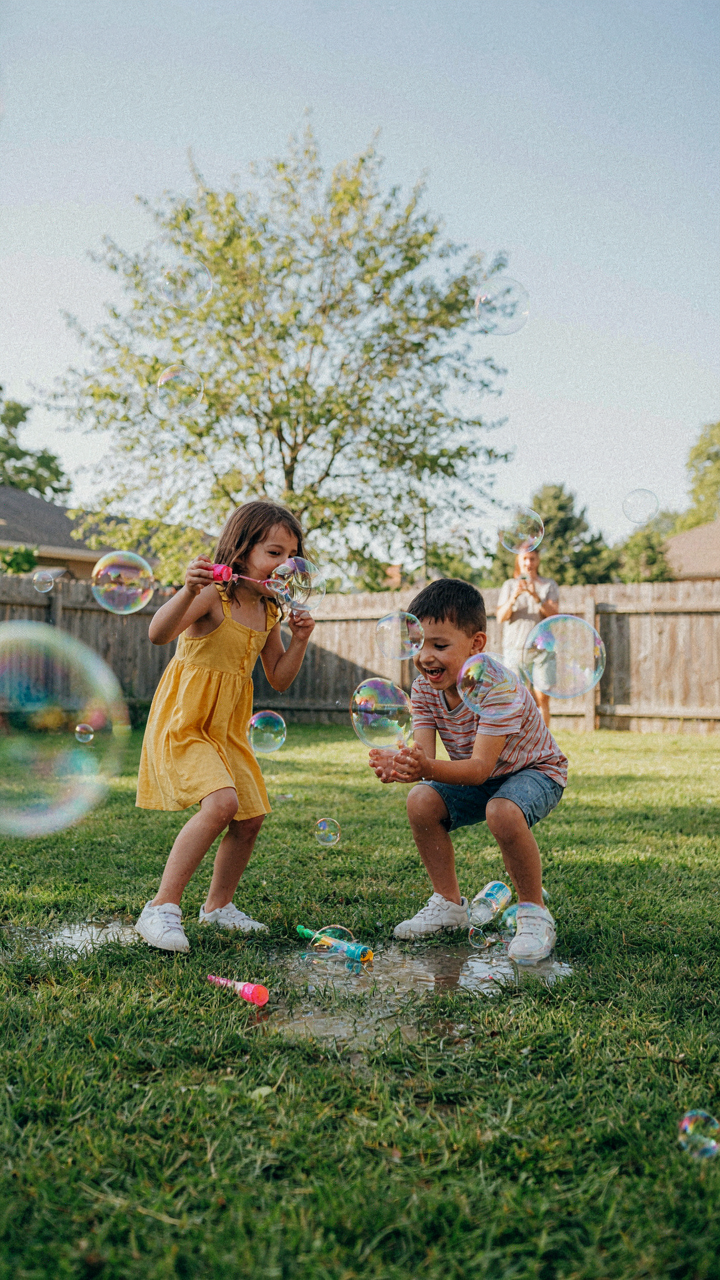
Low Cost Entertainment That Actually Holds Attention

You’re worried rain will tank your party and waste the money you spent on setup. The real mechanism is this: wet weather doesn’t kill entertainment—bad planning does. People don’t hate rain; they hate boredom. The difference between a ruined party and a remembered one is whether you’ve given guests something to do that feels intentional, not like a fallback.
Start with a tarp station. A 20 by 20 foot tarp costs thirty dollars and transforms into a game floor in seconds. Cornhole boards, card tables, and giant Jenga move under it. The barrier isn’t the weather—it’s your willingness to shift from outdoor furniture to covered activity zones. Most people skip this step and wonder why guests cluster inside the house.
Water Activities That Scale Without Chaos
This isn’t about turning your yard into a splash park. The principle comes from industrial design: constraint drives creativity. Limited materials force you to use what’s already there. Puddles, buckets, and hoses become the raw resource. Rain gives you water you’d normally pay to fill a pool, so use it.
Set up bucket relay races or water balloon tosses under a canopy. Lay out a mud kitchen for kids with old pots, wooden spoons, and funnels. Adults respond to water balloon cornhole or giant water gun stations. The key is containment: all water activities happen in one zone with tarping underneath, not spread across the yard. This prevents the yard from becoming a muddy disaster and keeps the activity bounded. End the water station by 6 PM—let people dry off before evening activities shift indoors or to the covered patio.
The Anti Fragile Host: Building Resilience Into Every Event
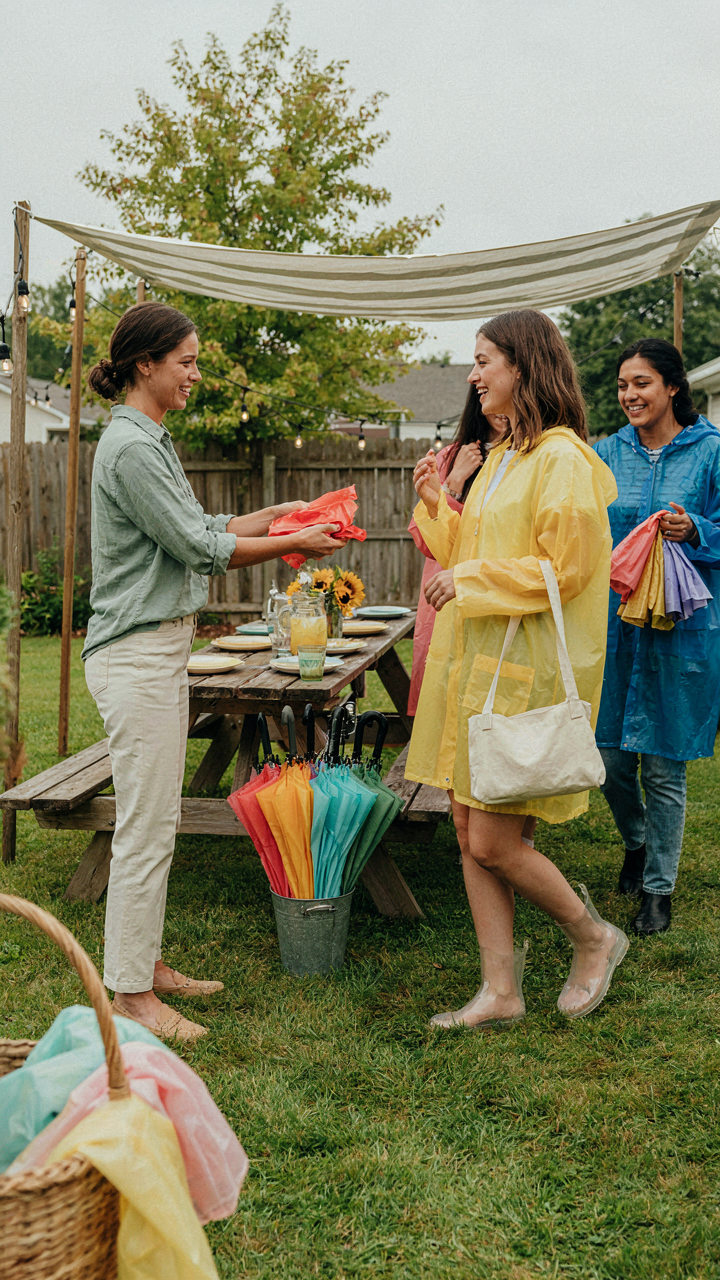
When Plans Break, You Don’t
You want to look like you had everything under control even when weather destroyed your setup. That’s not vanity—it’s the difference between guests remembering a disaster and remembering a party. Antifragility, borrowed from systems design, means building structures that improve when stress hits them. Most hosts design for perfection. The anti-fragile host designs for the moment perfection fails.
Your rain plan stops being reactive the moment you stop treating weather as an exception. Instead, treat it as data that your system must absorb. This means redundancy in shelter, multiple serving stations so wet guests don’t bottleneck at one dry spot, and backup power for lights that actually runs independent of your main setup. The mechanism is simple: every critical function has a second path. When rain forces guests into covered areas, your backup bar location doesn’t disappear—it activates. When the ground turns soft, your backup flooring material (plywood sheets, outdoor rugs rated for wet) goes down before people sink.
Recovery Momentum Builds Faster Than You Think
The real damage after rain isn’t the weather—it’s the psychological shift from “party” to “salvage operation.” Don’t let that happen. Have a crew of two or three people assigned to specific cleanup zones before the event starts. When rain hits, they move simultaneously: one handles standing water with a pump or wet vac, one wraps exposed electronics, one repositions furniture and social zones into covered areas. Guests notice action more than they notice rain.
The celebration doesn’t pause for recovery—it shifts. Your announcement isn’t “we’re dealing with this problem.” It’s “we’re moving to the covered area, drinks are over there, music follows in two minutes.” You’ve redirected energy instead of killing momentum. The specific protocol: identify your wet-weather gathering spot now, stock it fully now, and brief whoever’s helping you on the exact sequence of moves before guests arrive. This eliminates the panicked decision-making that turns a wet party into a failed one.
The Real Obstacle Isn’t The Rain, It’s Your Rigidity
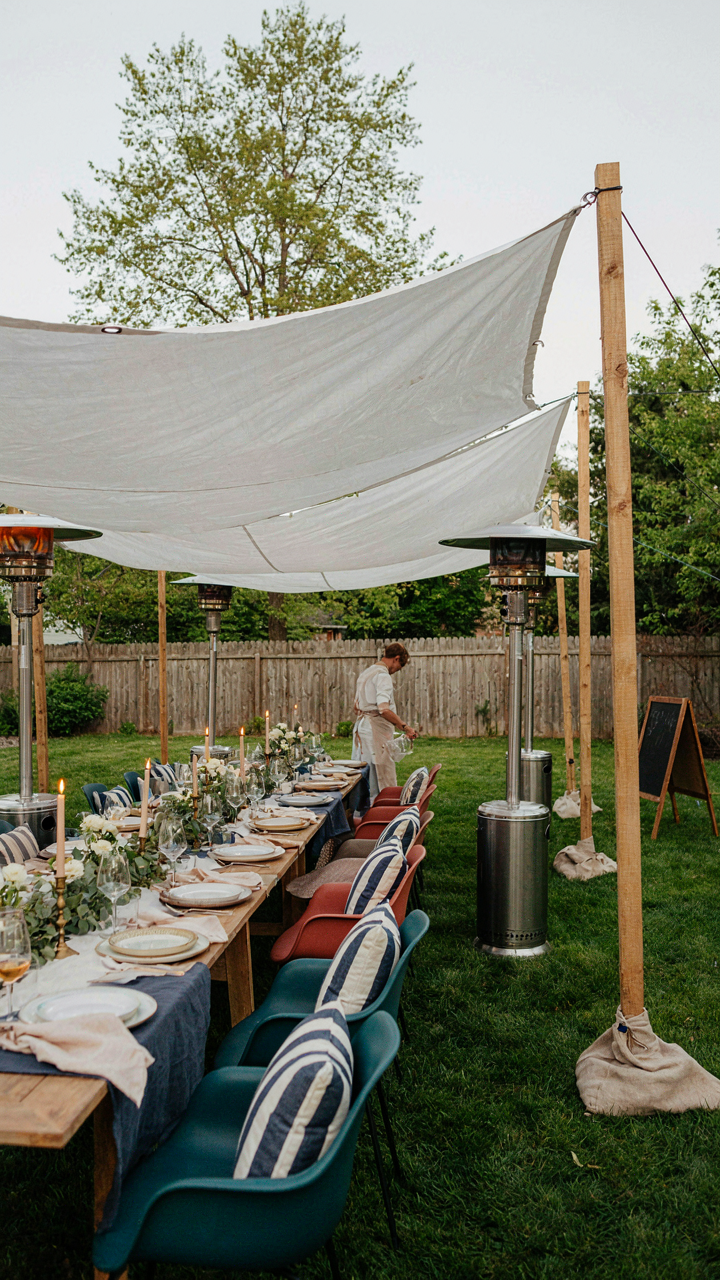
Most people treat a backyard party rain plan like insurance they hope to never use. That’s the mistake. The best hosts don’t fight weather. They expect it. They prepare contingencies before guests arrive, not during the downpour. Today, pick one rain scenario for your next gathering and build your backup setup around it. Tent placement. Interior flow. Covered areas. Write it down. Share it with whoever’s helping you host. The difference between chaos and a memorable night isn’t luck. It’s someone who decided weather wouldn’t ruin the party.