The Illusion Of Green Thumbs: Why Your Balcony Garden Fails

You’re Killing Plants Because You Won’t Face The Math
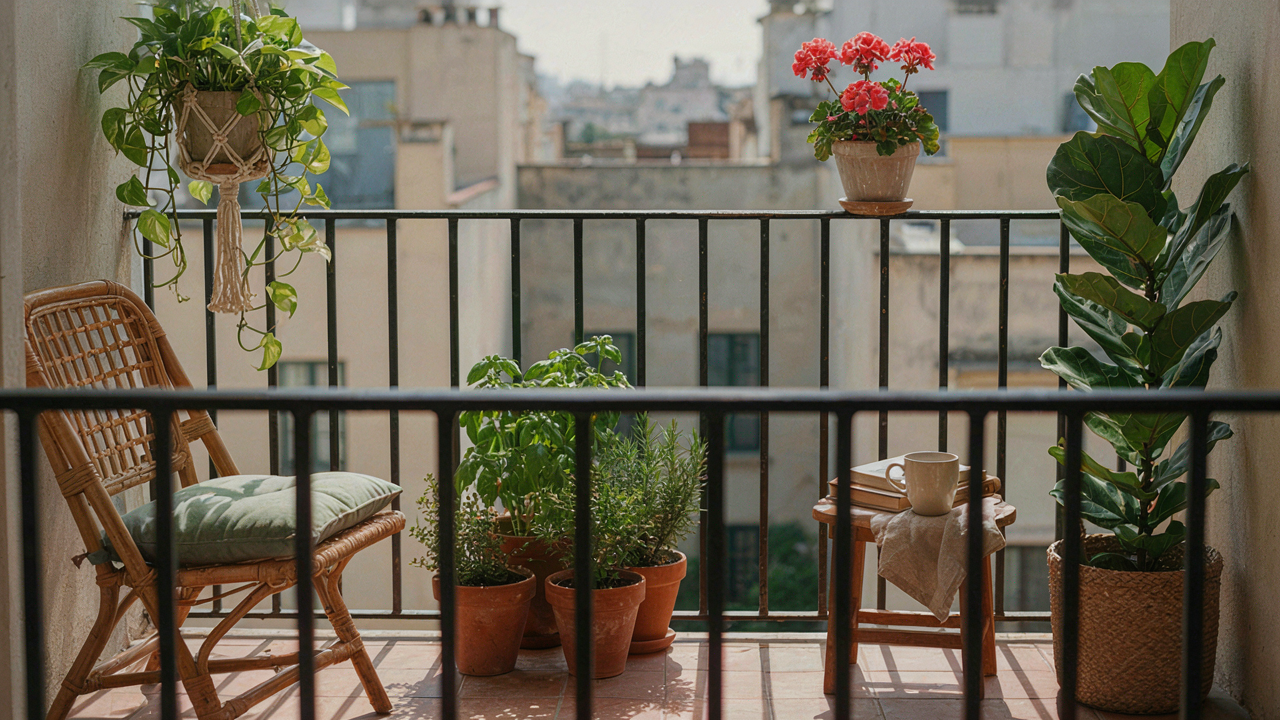
You want proof that your setup works without admitting you don’t understand the constraints. That’s the real reason you’re here. The mechanism is simple: most balcony gardens fail because people treat them like outdoor gardens compressed into a smaller space. They don’t compress. The variables change. A balcony receives either full sun, partial shade, or deep shade depending on building orientation and neighboring structures. Most apartments don’t get the six to eight hours of direct sunlight that standard vegetable and herb guidance requires. You’re working with reflected light, afternoon shadows, and wind that dries soil faster than ground-level gardens.
Watering failures dominate balcony deaths. Containers lose moisture through sides and bottom, not just the soil surface. Wind accelerates evaporation. You check soil moisture the way you would in a pot indoors, but outdoor containers behave differently. Light miscalculation is the second killer. You place a shade-tolerant plant in actual shade, not dappled afternoon light. Space feels unlimited until you realize four containers block your door or create a wind tunnel that snaps stems. These aren’t character flaws. They’re design problems you solve with data, not guilt.
What Actually Grows When Space Vanishes
Balcony gardens operate under the same principle as guerrilla agriculture: maximum output from minimum footprint. The constraint forces efficiency. Herbs like basil, mint, and oregano thrive in containers because they evolved in rocky Mediterranean soils with limited water retention. They expect scarcity. Leafy greens, particularly spinach and arugula, produce faster in containers than in ground soil because their roots stay warmer from reflected heat off concrete and tile. Compact tomato varieties bred for determinate growth produce full yields in five-gallon buckets. Strawberries fruit year-round in vertical systems because they don’t demand deep root zones.
The plants that fail are the ones you forced into balcony conditions they weren’t built for: sprawling tomato indeterminates, root vegetables needing twelve inches of soil, perennials expecting winter dormancy in exposed wind. Stop fighting species compatibility. Select plants engineered for container life and limited light. Basil produces more leaves per square inch in a confined pot than sprawling in a garden bed because you harvest constantly and it branches denser. Measure your balcony’s actual sunlight hours with phone tracking apps over three days. Buy plants that match that number exactly. Don’t assume. Verify. Then plant accordingly.
The Vertical Advantage: Maximizing Your Small Balcony Decor
Stacking Height To Reclaim Ground Space

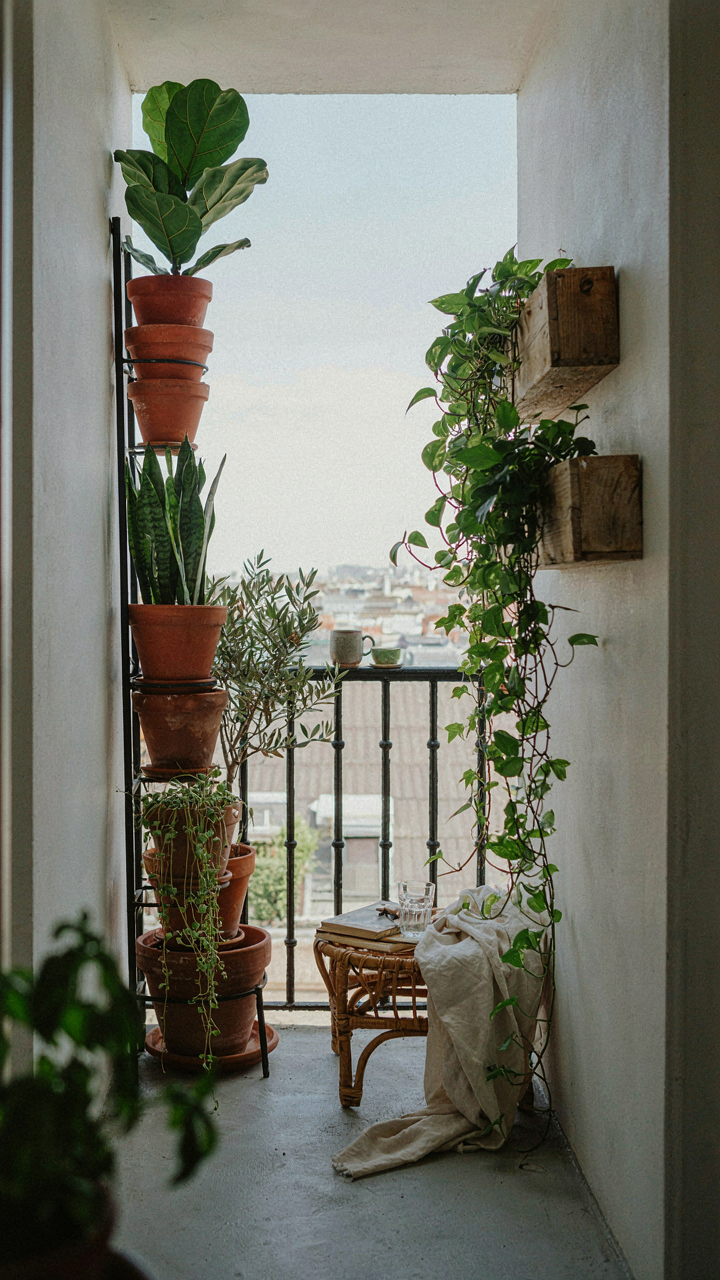
You want to feel like you have more room than you actually do. The real mechanism here comes from architecture: the concept of usable floor area versus volumetric capacity. A balcony garden nook operates on a fixed footprint, but vertical stacking multiplies your planting real estate without eating into the ground you walk on. Tiered planters and wall-mounted solutions aren’t decoration—they’re spatial compression technology. You go up instead of out.
Wall-mounted systems work because they use dead space that already exists. Install brackets or trellising directly onto your balcony wall or railing. This removes the dependency on floor real estate for every single plant. Tiered planters stack incrementally, creating a pyramid structure that concentrates plants upward. The top tier catches the most direct light, the middle tiers get filtered exposure, and the lower tier adapts to shade—each zone naturally sorts itself by light tolerance.
Self Watering Containers And Modular Stacking
Everyone says to “choose the right containers.” That’s incomplete advice. The real advantage lives in the engineering underneath. Self-watering containers use a wicking mechanism—typically a fabric strip or porous material—to draw water from a reservoir up into the soil on demand. This eliminates daily watering and prevents the cascading failure that kills most balcony gardens: inconsistent moisture. Modular designs let you reconfigure your layout without replacing everything when conditions change.
Modular containers stack or connect via interlocking bases, creating a system instead of isolated pots. You adjust height, density, and plant arrangement by swapping units, not starting over. The self-watering component extends the interval between waterings from daily to every three to five days, depending on temperature and plant type. This matters because apartment life interrupts routines—travel, unpredictable schedules, fatigue. Build your system so it tolerates your real life, not an imaginary disciplined version of yourself.
Sunlight Scarcity: Choosing Balcony Plants Ideas For Small Spaces
Measure Your Balcony’s Light Profile

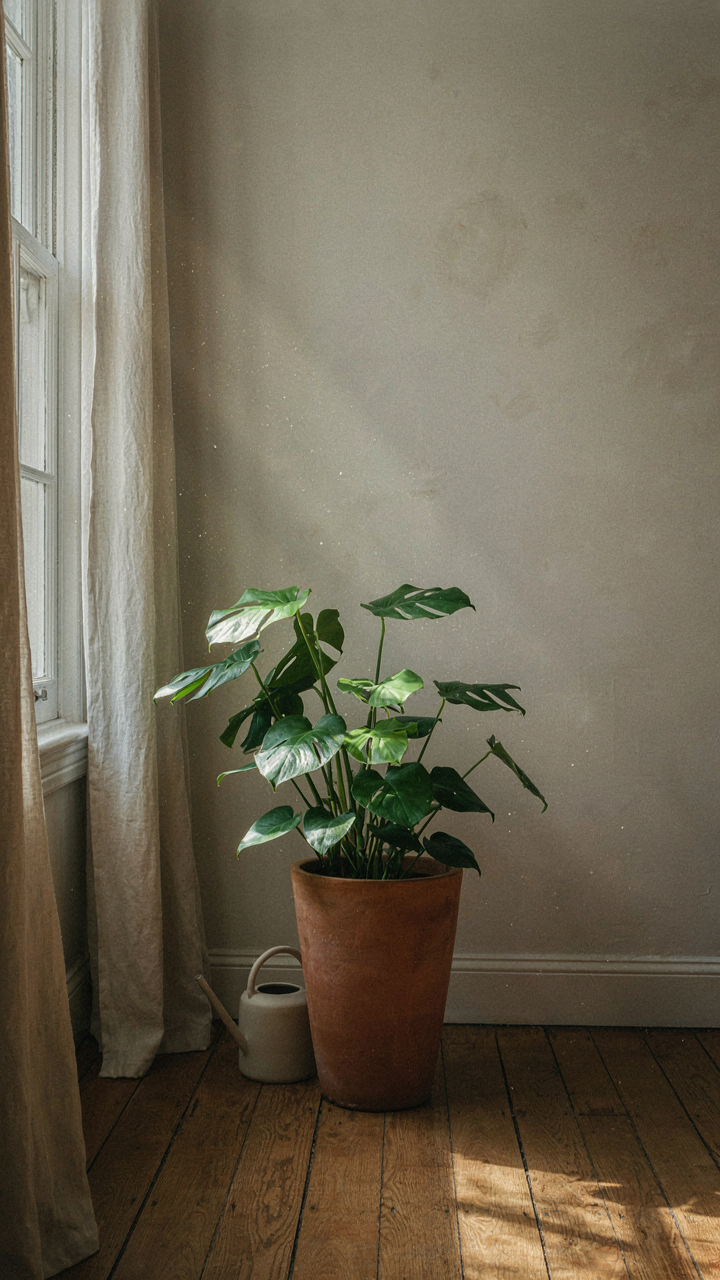
You want a balcony garden nook because you’re afraid a cramped apartment means you can’t grow anything real. That’s the real fear hiding under this question. Here’s the mechanism: light isn’t binary. It’s a spectrum measured in foot-candles or lux, and your balcony occupies a specific position in that spectrum based on sun angle, building shadow, and geographic latitude. Most apartment dwellers guess wrong because they assume “gets some sun” means sufficient light. It doesn’t.
Track your balcony’s light over two weeks at three times daily: morning, midday, afternoon. Note shadow patterns cast by adjacent buildings or structures. Document which hours receive direct beam versus reflected or diffuse light. This data determines whether you’re working with a true sunny balcony (six-plus hours direct), partial shade (three to six hours), or deep shade (under three hours). Your plant selection hinges entirely on this metric, not on hope.
Shade Tolerant Herbs And Low Light Foliage
The standard advice says herbs need full sun. That’s incomplete. Culinary herbs split into two categories: Mediterranean types like basil and oregano that genuinely require intensity, and temperate species that thrive in partial shade. Mint, parsley, and chives produce usable yields in four to five hours of indirect light. Foliage plants actually prefer shade because intense balcony heat stresses them and fades leaf color. Your light constraint becomes an advantage here, not a limitation.
Build your shade-adapted nook with mint as a productivity anchor since it tolerates neglect and poor light. Layer in pothos or philodendron on shelving to fill vertical space without demanding direct sun. Add parsley for culinary output and Japanese painted fern for texture. Positioning these in tiered containers forces you to move them during seasonal light shifts, which prevents root stagnation and keeps them responsive to changing sun angles through the year.
The “Balcony Oasis” Protocol: Engineering Your Microclimate
Blocking Wind, Trapping Moisture

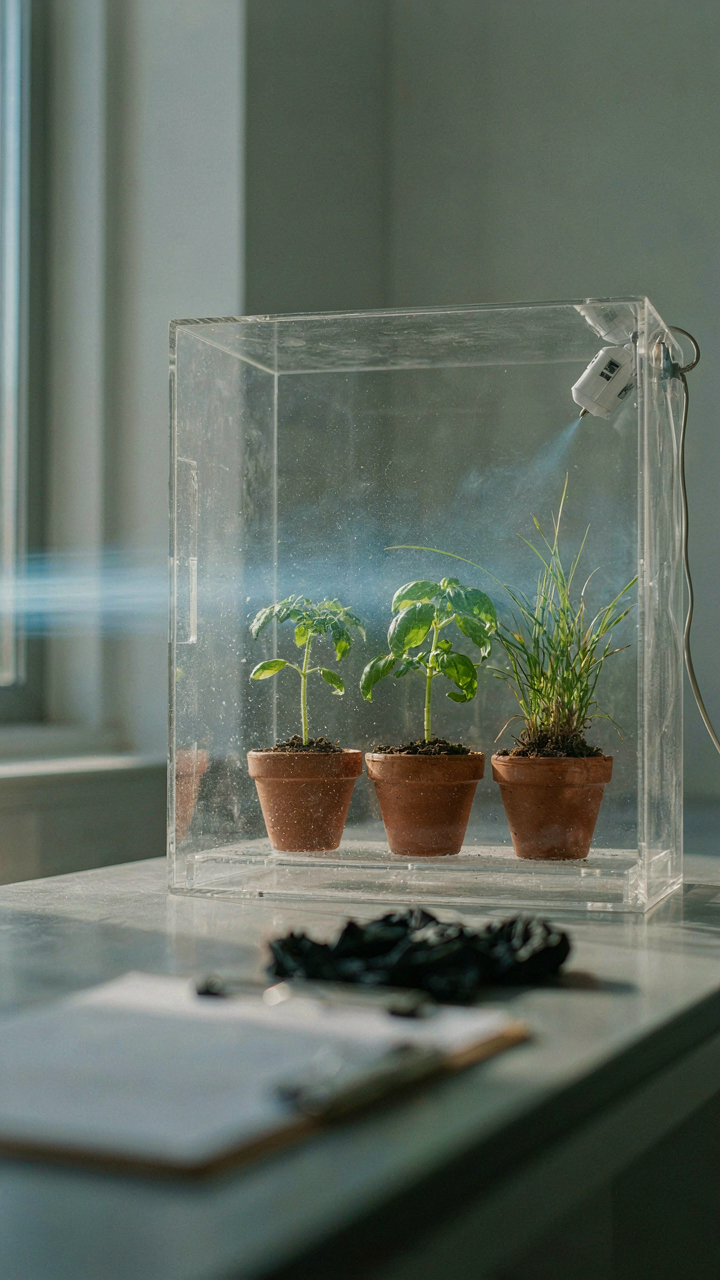
You want people to believe your apartment garden is effortless, when really you’re solving a physics problem. Treating your balcony like a fluid dynamics challenge—where wind is the primary force degrading your plants—is the only framework that works. Urban balconies funnel air between buildings, drying soil and shredding leaf surfaces faster than ground-level gardens. Install a solid or semi-permeable barrier on the windward side. Polycarbonate panels, bamboo screens, or even stacked planters block gusts without creating dangerous vortexes that worsen conditions on the lee side.
Humidity matters because water moves through air pressure gradients. Plants lose moisture through transpiration at rates wind accelerates dramatically. A windbreak reduces air velocity and allows moisture to accumulate in the micro-layer around leaves. Group pots densely rather than spacing them out. This creates a collective humidity zone where plants shelter each other. The practical step: measure your dominant wind direction for one week, then position your barrier accordingly.
Density Creates Synergy
Most balcony gardeners space plants far apart, treating each pot as independent. They’re wrong. Dense placement triggers real biological interdependence that changes growth rates. Taller plants shade shorter ones from harsh afternoon sun. Broader foliage buffers wind before it reaches delicate stems. Moisture from one plant’s drainage feeds neighboring root zones. Group by water need first, then by height and leaf spread to maximize shelter.
Start with your tallest plants at the back or sides, depending on sun exposure. Layer shorter varieties forward. Position climbing or trailing plants where they’ll eventually form natural screens for wind. Leave narrow gaps for access only, not airflow. This transforms a scattered container collection into a functioning ecosystem where each plant reduces stress on its neighbors. The protocol is simple: cluster by species need, not by aesthetic balance.
DIY Vs. Done For You: Homemade Balcony Garden Ideas
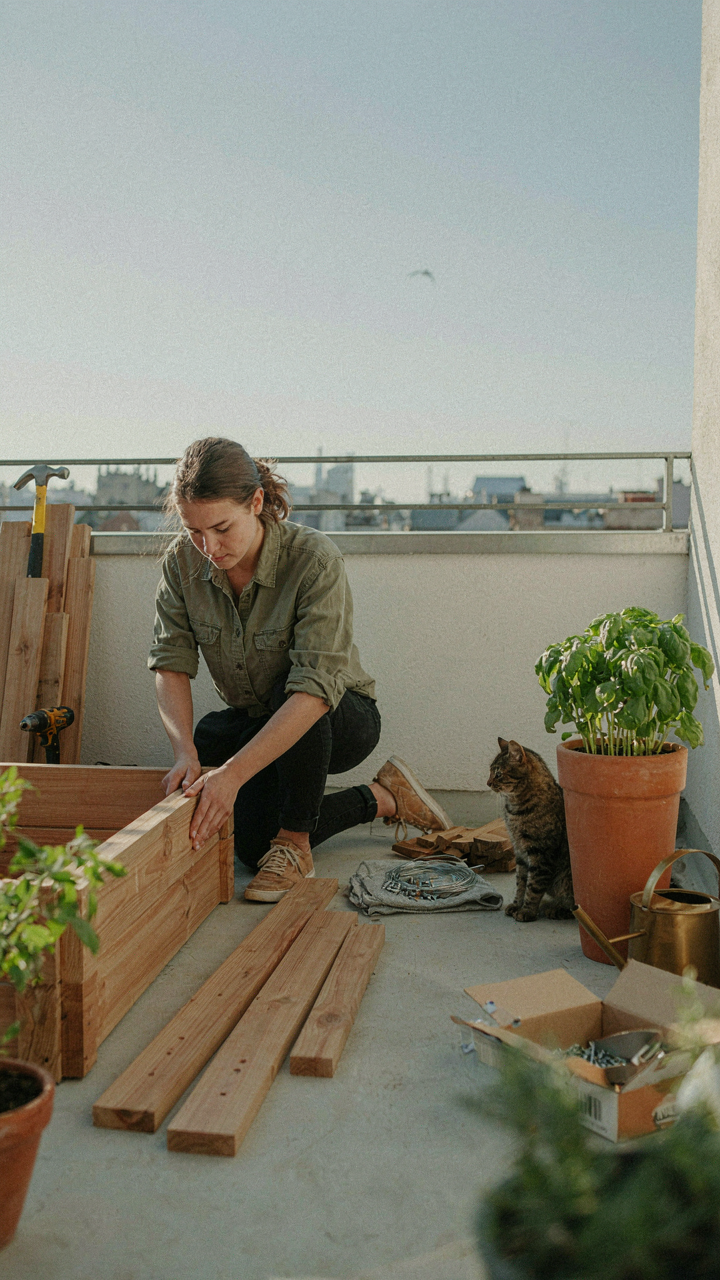
Building It Yourself Costs Less Money

You want to believe a finished balcony garden nook proves your taste. The real mechanism is simpler: you’re deciding between capital expense now or labor expense later. Buying premade raised beds, trellises, and planters transfers your problem to the manufacturer’s supply chain. Building components yourself trades cash for time, but only if that time has actual zero opportunity cost. Most apartment dwellers overestimate their free time and underestimate the coordination required to source materials, cut wood, and assemble on a balcony with limited space.
The math favors DIY only when you already own tools and materials sitting unused. A basic wooden planter box costs fifteen to forty dollars in materials but demands a drill, saw, and sandpaper you may not possess. Buying the same box finished runs thirty to eighty dollars. The hidden cost is your first tool purchase, which breaks the economics unless you build five boxes minimum. Pre-made systems win for apartment dwellers who value consistency over savings and move within three years.
Reclaimed And Repurposed Materials Work
Borrowing from industrial design, constraints drive innovation. A balcony garden nook operates under severe physical limits: load capacity per square foot, wind exposure, and drainage containment. Repurposing existing materials eliminates the constraint of material selection because you work with what exists.
- Wooden shipping pallets: Free or five dollars from businesses. Sand, treat with non-toxic sealant, add landscape fabric, fill with soil. Pallets create shallow planter beds perfect for herbs and shallow-rooted greens without major structural stress.
- Five-gallon food-grade buckets: Restaurants discard these constantly. Drill drainage holes in the bottom, paint the exterior if needed, and use for individual plants. Weight is distributed across multiple buckets rather than concentrated in one large container.
- Reclaimed wood fence panels and boards: Source from demolition sites or neighbors replacing fencing. These become trellises, vertical planter backing, or privacy screens. Wood weathers naturally and blends into balcony aesthetics without effort.
- Old wire shelving units: Thrift stores stock these at two to eight dollars. Repurpose as tiered plant stands that maximize vertical space while allowing light penetration between levels. Metal construction handles moisture better than particle board.
- Vintage metal chairs and stools: Convert into plant stands by adding a tray on the seat surface or hanging planters from the frame. Repurposing furniture creates visual interest and uses existing structure instead of building from raw materials.
Repurposed materials cut costs by sixty to eighty percent compared to retail garden components, but sourcing takes three to four times longer than ordering online. The payoff emerges only if you enjoy hunting materials or have them already available. The protocol is simple: photograph what you own, measure your balcony dimensions, then identify one material that solves one problem before adding complexity.
The Minimalist’s Balcony: Function Over Floral Fluff
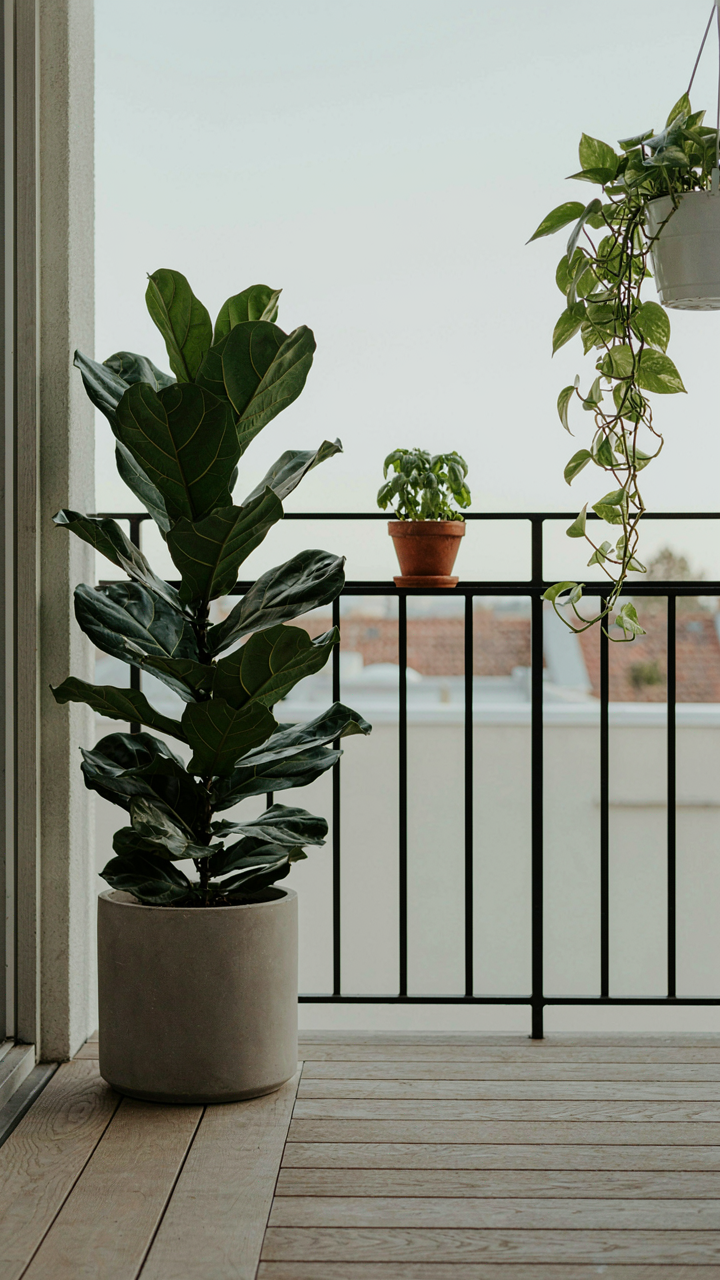
Design For Leverage, Not Labor

You want a balcony garden that makes you look intentional without turning into a second job. Here’s the mechanism: physics teaches leverage—the ability to move mass with minimal force applied at the right point. Your balcony garden works the same way. Stack vertical planters instead of spreading them horizontally. Use gravity-fed watering systems instead of hand-watering daily. Position plants where wind and sun do the work for you, not against you. One strategic choice compounds into months of saved effort.
The real work happens in the first two weeks of setup. After that, the system either carries itself or it doesn’t. Most people fail because they design for beauty first and physics second. They buy decorative pots that don’t drain properly. They place shade plants in full sun. They overcrowd the space and create dead zones where nothing gets light or airflow. Start by mapping your balcony’s sun hours and wind patterns for one week. That data replaces all the guessing.
Strip Away Everything That Doesn’t Produce
Most balcony garden advice tells you to add decorative elements, ambient lighting, and seating nooks. That’s wrong for a minimalist approach. Your goal is productivity per square foot, not Instagram scenery. Remove decorative plant stands. Skip the ornamental stones or moss poles that look nice but waste space. Cut the garden markers, the ceramic watering cans, the bistro chairs. These items occupy real estate that could hold food-producing plants or reduce your maintenance load.
What stays: containers, soil, plants, and one watering method. That’s it. A minimalist balcony garden runs lean because constraints force efficiency. You notice which plants actually thrive versus which ones just take up room. You see exactly how much water you need and can adjust a single drip line instead of managing five different watering schedules. The system becomes transparent because nothing obscures what’s actually working.
The Water Management Matrix: Sustaining Your Tiny Balcony Garden
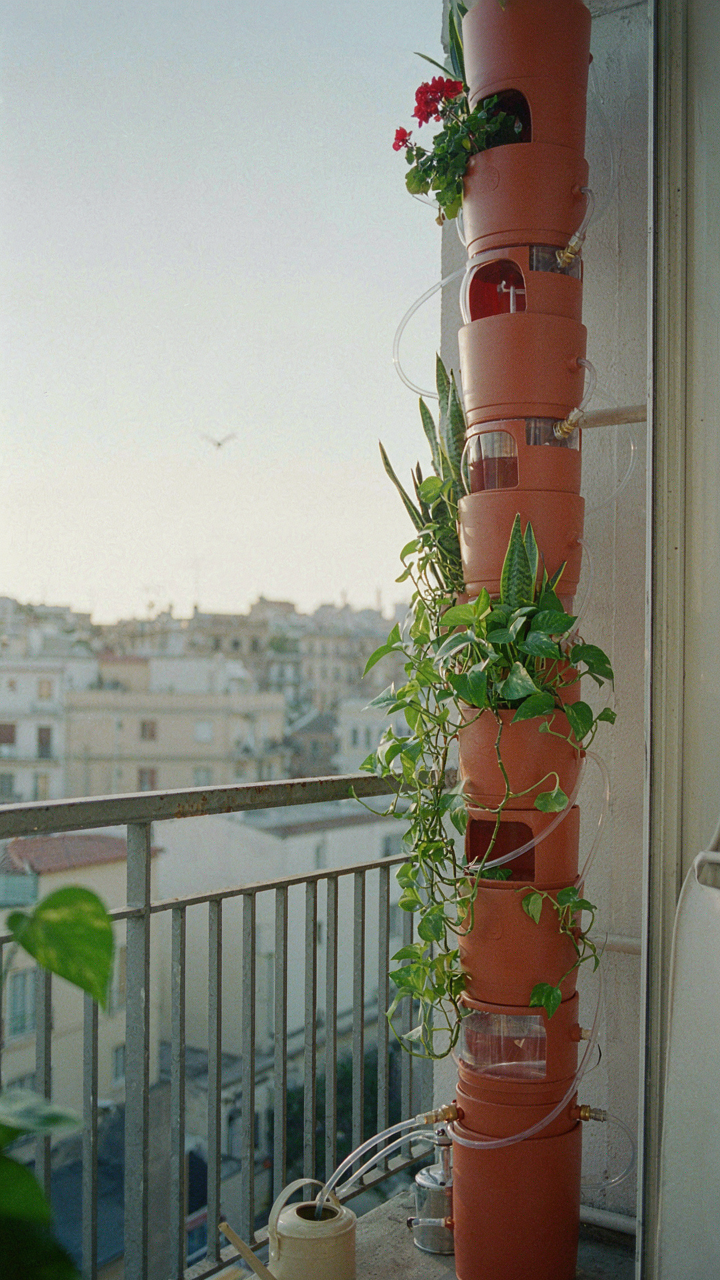
Drip Systems And Passive Watering

You want a balcony garden that doesn’t demand your attention every morning—that’s the real concern here, not romance with nature. Borrowing from hydraulic engineering, think of your balcony as a closed system where pressure and flow rate determine survival. Drip irrigation solves this by delivering water directly to soil, not foliage, cutting waste and preventing fungal issues common in dense planter clusters.
Self-watering planters use capillary action to feed roots on demand. The mechanism is simple: a water reservoir sits below soil, connected by a wick or porous material that pulls moisture upward as the soil dries. This replaces the guesswork of hand watering. Most apartments lack consistent daily schedules, so these systems eliminate the guilt of brown plants and the false urgency of “checking on things.” Install a drip line on a basic timer for mixed containers, or use self-watering pots for individual specimens that need different moisture levels.
Capturing And Rationing Water
The standard advice treats rainwater harvesting like a hobby. It’s not—it’s a resource allocation problem that compounds over a season. A small rain barrel or collection tray on your balcony captures runoff, reducing municipal water use and lowering your utility cost. The calculus works if you live in a climate with regular precipitation; in dry regions, focus effort elsewhere.
Conservation mechanics matter more than collection. Mulch the soil surface in planters to reduce evaporation by up to 50 percent. Use saucers under pots to catch drainage and recycle it back into the same container within hours. Group plants with similar water needs together so you’re not overwatering drought-tolerant species to keep thirsty ones alive. The protocol: measure your balcony’s sun exposure in hours, match plants to that reality, and adjust watering frequency monthly as seasons shift.
Pest Control: Not A Battle, But A Balance

When Your Garden Stops Working Against You

You want pest control that doesn’t require chemicals or constant vigilance—you want to feel like you have it under control without actually managing it. Here’s the real mechanism: Integrated pest management borrows from ecology, treating your balcony garden nook as a system in equilibrium rather than a war zone. The goal isn’t elimination. It’s threshold management. Pests exist. Your job is keeping populations below the damage level by stacking small frictions they encounter.
Start with exclusion and monitoring. Install fine mesh netting around vulnerable plants before infestations begin, not after. Scout your plants twice weekly, checking leaf undersides where spider mites and aphids hide. Remove infested leaves immediately. This sounds simple because it is. Most apartment dwellers skip this step and reach for spray instead. The spray becomes the default because they never built the observation habit. Do the scouting first.
Plants That Work Together By Design
Companion planting isn’t mystical. It’s applied biology. Certain plant combinations reduce pest pressure because insects navigate by smell, and aromatic plants mask or overwhelm the signals they use to locate hosts. Marigolds emit compounds that deter whiteflies and spider mites. Basil repels thrips. These aren’t guarantees—they’re friction points that nudge pest behavior elsewhere.
Stock your balcony nook with these signal-disruption plants alongside your vegetables or ornamentals. You’ll reduce pest arrival rates and give predatory insects like ladybugs better hunting grounds. When pests do arrive in smaller numbers, they face higher predation pressure. The system becomes self-regulating without you spraying anything. Rotate your companion plants seasonally to prevent pest populations from adapting to their presence.
Beyond The Green: Integrating Balcony Decor
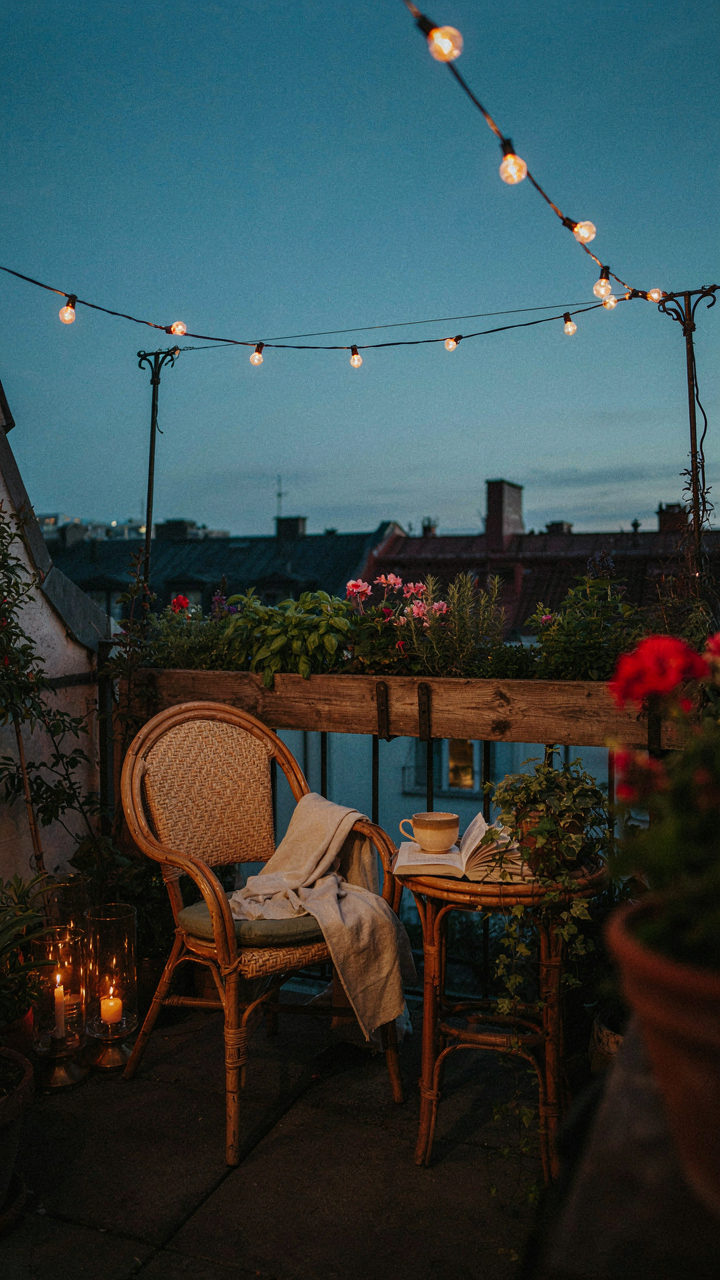
Light Creates The Perception Of Space

You want this section because you’re worried your balcony garden nook will look cramped or unfinished without the right setup. Here’s the mechanism: light behaves like real estate. It expands perceived area. Dim balconies feel smaller than they are. Bright ones feel larger. This is physics, not opinion. Strategic lighting doesn’t just illuminate plants. It redefines your entire balcony’s functional footprint.
Most people default to overhead fixtures or nothing. Wrong move. Overhead light flattens depth and makes plants look uniform and dull. Install low-angle lighting instead, either wall-mounted or ground-level. Aim beams at plant foliage from the side. This creates shadow and dimension, making a four-by-eight balcony read as deeper. Use warm color temperature (2700K or below) for evening ambiance. Cool light (5000K) washes out living things. Pick one approach and commit to it.
Seating That Doubles As Infrastructure
Most balcony seating wastes potential. A chair sits there looking nice. That’s it. Real seating on a garden nook does multiple jobs simultaneously. A storage bench holds soil, tools, and pots while you sit. A side table becomes a potting station and drink surface. Every piece must earn its footprint or leave. Your balcony has maybe forty square feet of usable space. Nothing gets to be decorative only.
Start with one multipurpose piece: a weatherproof bench with built-in storage underneath. Cedar or composite materials survive moisture and UV without constant maintenance. Position it where you’ll actually use it, not where it looks best from inside. Add one small side table next to it for plants you’re currently tending or your morning coffee. The mechanism is elimination of wasted motion. You sit, you reach, you work. Distance between seat and activity should be arm’s length maximum.
The Perpetual Harvest: Designing For Continuous Yield
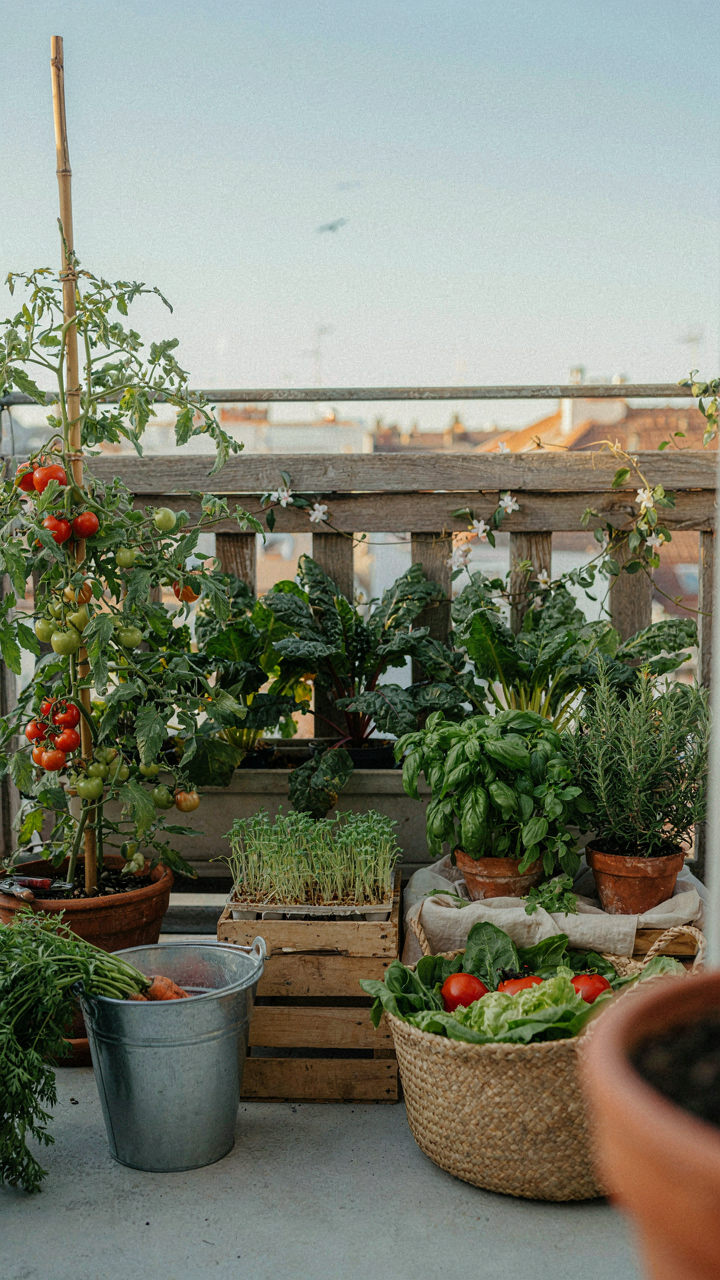
Stagger Your Plantings, Not Your Timing
You want to feel like you’re doing gardening instead of accepting that you have gaps where nothing grows and you’re buying groceries again. The real mechanism is borrowed from agricultural succession planning: you plant the same crop on a two-week offset, treating your balcony like a production schedule instead of a static garden. This eliminates the feast-famine cycle where everything matures at once or dies off together. A ten-square-foot balcony can’t absorb fifty heads of lettuce in week four and zero in week five.
The setup is simple. Designate three to four container slots for the same crop. Week one: plant slot A. Week two: plant slot B. Week three: plant slot C. By week four, slot A reaches harvest while slot B is mid-growth and slot C just sprouted. You harvest continuously and replant the emptied container with the next round. This isn’t theoretical. It’s how commercial growers keep shelves stocked. Your balcony operates on identical logic, scaled down. Rotate which crops occupy which slots each season to prevent soil depletion in any single container.
Extract Maximum Density From Square Footage
The conventional advice says grow one plant per pot and call it vertical gardening. That’s advice for people who want a hobby, not yield. You’re working with constraint, so you need to compress. Density means planting edibles that occupy different vertical zones simultaneously in one container: shallow-rooted herbs at soil level, mid-tier greens above them using a tiered trellis system, and vine crops climbing up the structure itself.
A single five-gallon container can produce basil, leaf lettuce, and pole beans when stacked properly. The mechanism is root-depth separation. Basil roots max out at six to eight inches. Lettuce spreads horizontally but pulls from the twelve to fourteen inch zone. Beans send roots deeper while their vines climb. You’re not competing for the same resources. Plant dense initially, then thin aggressively once seedlings establish. Dense plantings also shade each other’s soil, reducing water loss in wind exposure, which balconies always have. Water less often, grow more, and lower your failure rate through microclimate self-regulation.
Stop Romanticizing Dirt; Start Engineering Your Escape
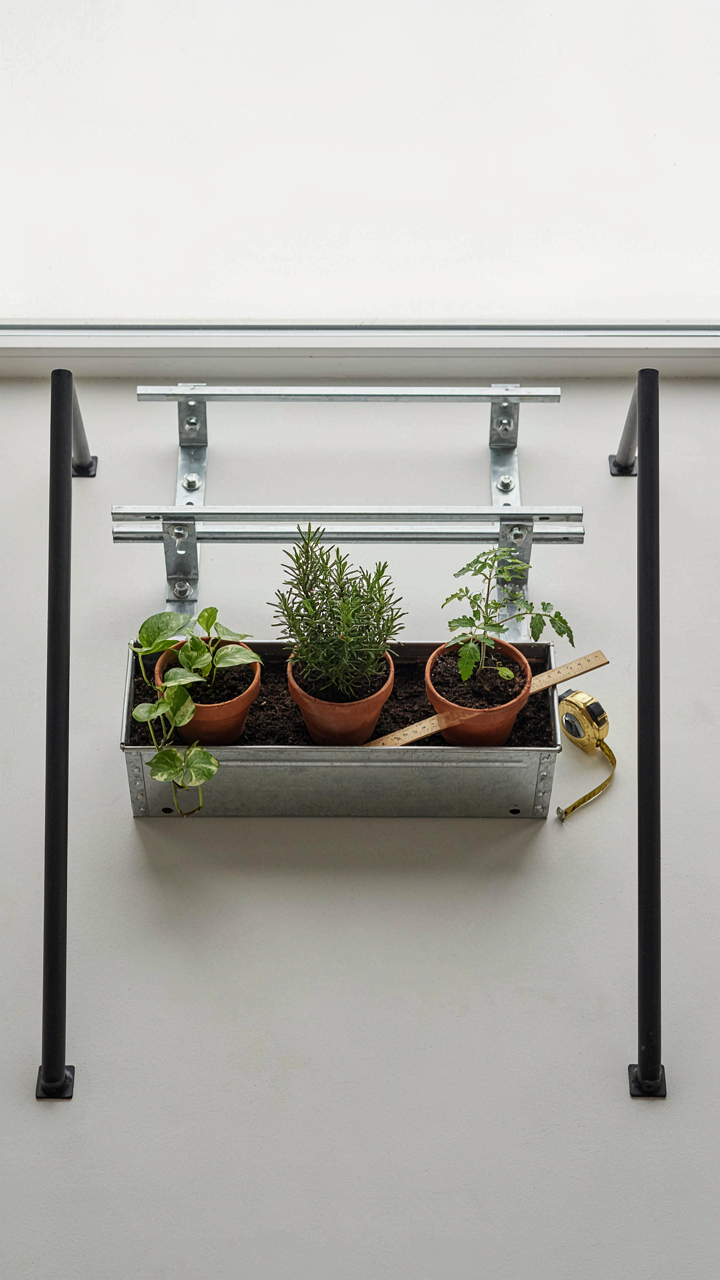
You don’t need a balcony garden nook to feel alive. You need a system that works without you thinking about it. Most people fail because they chase aesthetics instead of building constraints. Pick one plant tomorrow, one container, one spot. Put it there. Show up every third day with water. That’s it. The magic isn’t in the garden. It’s in you proving you can keep something alive when everything else feels broken.