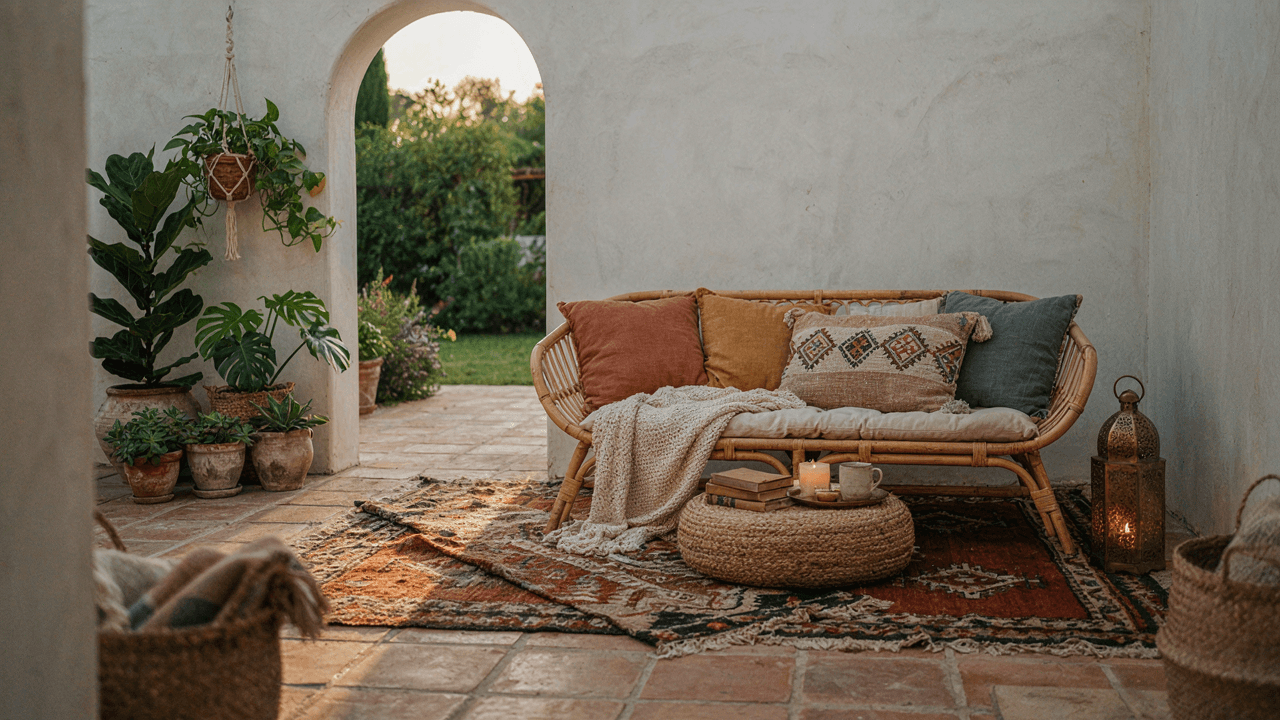
The Illusion Of Effortless Boho: Why Your Patio Feels “Off”
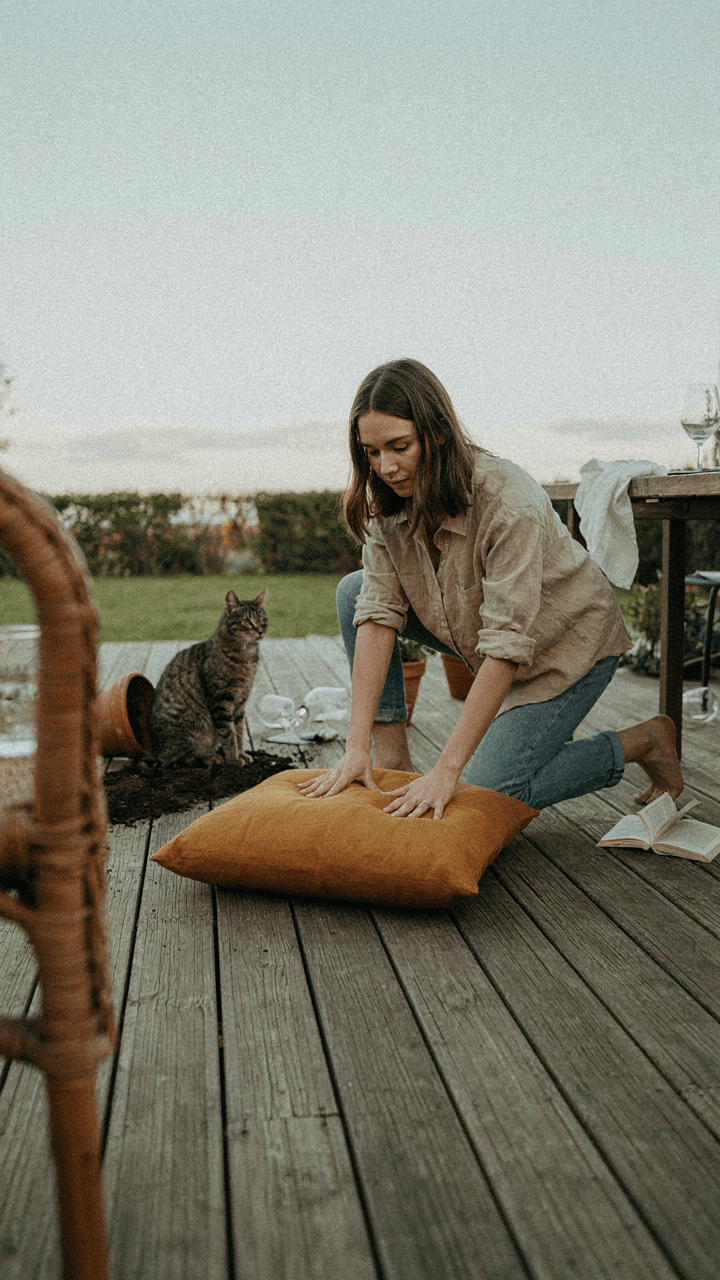
Boho Chic Gets Mistranslated Into Clutter
You want people to think you live this way naturally, that you just woke up surrounded by texture and didn’t try. That’s the real appeal. But most boho patios fail because people confuse abundance with intentionality. They stack rugs, throw cushions everywhere, add plants until the space feels crowded rather than layered. The mechanism is simple: boho aesthetics came from necessity, not decoration. Nomadic cultures and bohemian communities used what they had, where function and form merged. Today’s mistake is treating boho as a permission slip to buy more.
The average approach adds objects until the patio looks “full.” This produces visual noise instead of rhythm. Actual boho design requires restraint disguised as spontaneity. Every rug, cushion, and plant serves spatial function first, visual interest second. You’re not decorating. You’re orchestrating depth and movement through intentional placement. Without this framework, your patio reads as indecisive, not effortless.
The Actual Purpose Of An Outdoor Room
Boho patios aren’t about aesthetics alone. They’re about creating a functional transition space between your interior life and the outside world. This matters because most people treat their patio as an afterthought to their home, not as a distinct environment with its own purpose. The real work happens when you define what your patio actually solves for: a retreat space, a social zone, a work area, or a reflection point. Without clarity on purpose, every design choice becomes arbitrary and contradictory.
Once you lock the purpose, every material choice becomes tactical. A layered approach to rugs, plants, and cushions isn’t random styling. It’s creating micro-zones within the space that support different activities or moods. The rug anchors a seating area. Plants define boundaries without walls. Cushions provide comfort zones for specific functions. When these elements align with actual use, the patio feels coherent instead of forced. Your design process starts with behavior, not with buying things.
The Strategic Layering Protocol For Boho Patio Design
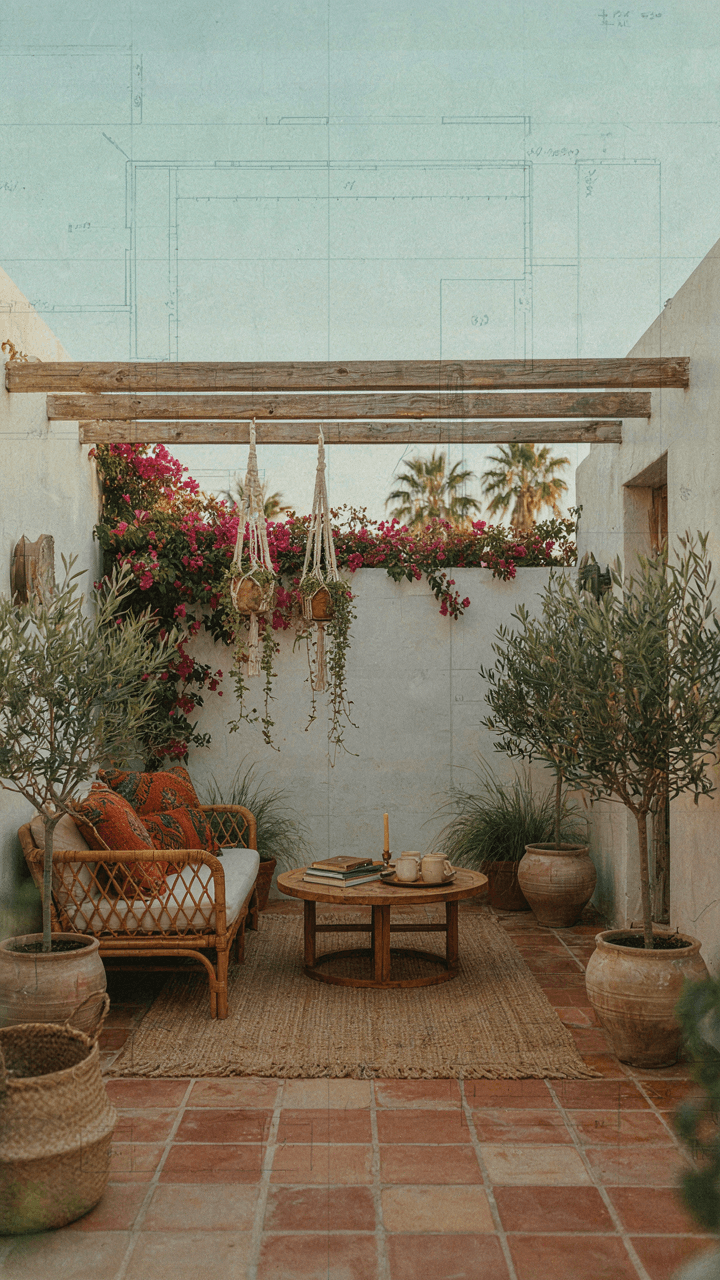
Start With Ground And Seat

You want your patio to feel intentional without looking staged, which means you’re really after permission to mix things freely without appearing chaotic. That permission comes from a solid foundation. In architecture, the base determines what stands above it. Your rug is that base. A quality outdoor rug anchors the entire space, defines the seating zone, and prevents your furniture from floating in an empty yard. Choose a rug at least six feet by nine feet with a pattern that suggests (not screams) bohemian influence—think geometric weaving or muted earth tones rather than bright, obvious prints.
Once the rug sits, place your primary seating piece on it. A sectional, sofa, or cluster of chairs forms your anchor. This isn’t decorative. It’s functional. The seating piece establishes scale and gives you an actual reason for everything else to exist around it. Secondary elements like low tables, plant stands, or hammocks work only when they respond to the seating, not the other way around. Your furniture arrangement should let people move and sit without thinking about it.
Layer Texture Through Cloth And Green
The real mistake people make is treating plants and cushions as decoration instead of structural elements that shift how a space breathes. Textiles in boho design work like layering in climate systems—each layer traps something different and creates insulation between zones. Add cushions to your seating in varying thicknesses and fabrics: linen, cotton, wool blends. Mix solid colors with subtle patterns. Avoid matching sets. The inconsistency is the point.
Plants do two jobs simultaneously. They add visual depth and actually change the microclimate of your patio by creating shade and air movement. Position taller plants at the edges or corners to frame the space. Group smaller potted plants in clusters of three or five rather than spacing them evenly. For lighting, string lights or lanterns should hang at least eight feet up to cast ambient light without creating harsh shadows on faces. This layering—rug, seating, cushions, plants, light—means each element serves multiple functions instead of occupying space as decoration.
Beyond The Instagram Filter: Authenticity In Boho Outdoor Spaces
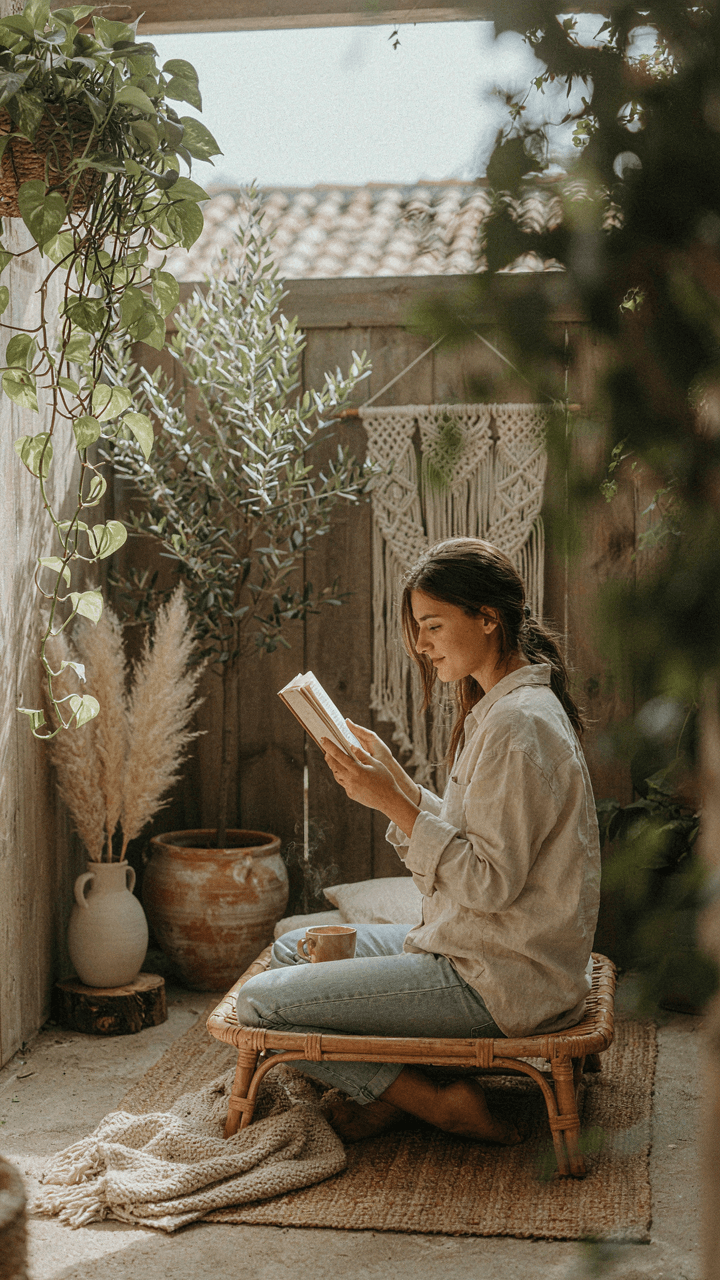
Curation Over Consumption: Choosing Pieces With Personal Meaning

You want permission to buy more stuff and call it design. Here’s the mechanism that actually matters: boho patio decor works when each piece answers a specific question about how you live, not how the algorithm says you should. Most people reverse this. They source the aesthetic first, then retrofit their life around it. The gap between those two approaches determines whether your space feels collected or cluttered.
Start by identifying three anchor pieces you already own or genuinely need. A rug with color you actually wear. Cushions that match seating you use daily. Plants that thrive in your climate without constant intervention. Build outward from function. Every addition should solve a problem or reinforce a pattern you’ve already established in your space. This prevents the common trap of boho becoming a graveyard of impulse buys masquerading as intentionality.
Mixing Old And New: The Art Of The Intentional Mismatch
Most advice treats old and new as a decorative choice. It’s not. Mixing eras creates visual contrast that keeps a patio from feeling like a catalog showroom. A vintage kilim rug paired with a new linen cushion works because the eye reads the difference and interprets it as deliberation rather than accident. Intentional mismatch requires one rule: make sure the mismatch is visible and purposeful, never apologetic.
Source one substantial vintage or secondhand piece first. A reclaimed wooden side table. An older woven throw blanket. Then add new elements that complement it functionally. The new pieces anchor the old ones contextually and prevent your space from reading as thrift store overflow. This layering approach, borrowed from interior design precedent, creates depth without chaos. The mechanism is simple: contrast requires a baseline to contrast against.
The “Boho Bio Dome” Principle: Cultivating Living Elements
Matching Plants To Your Actual Environment

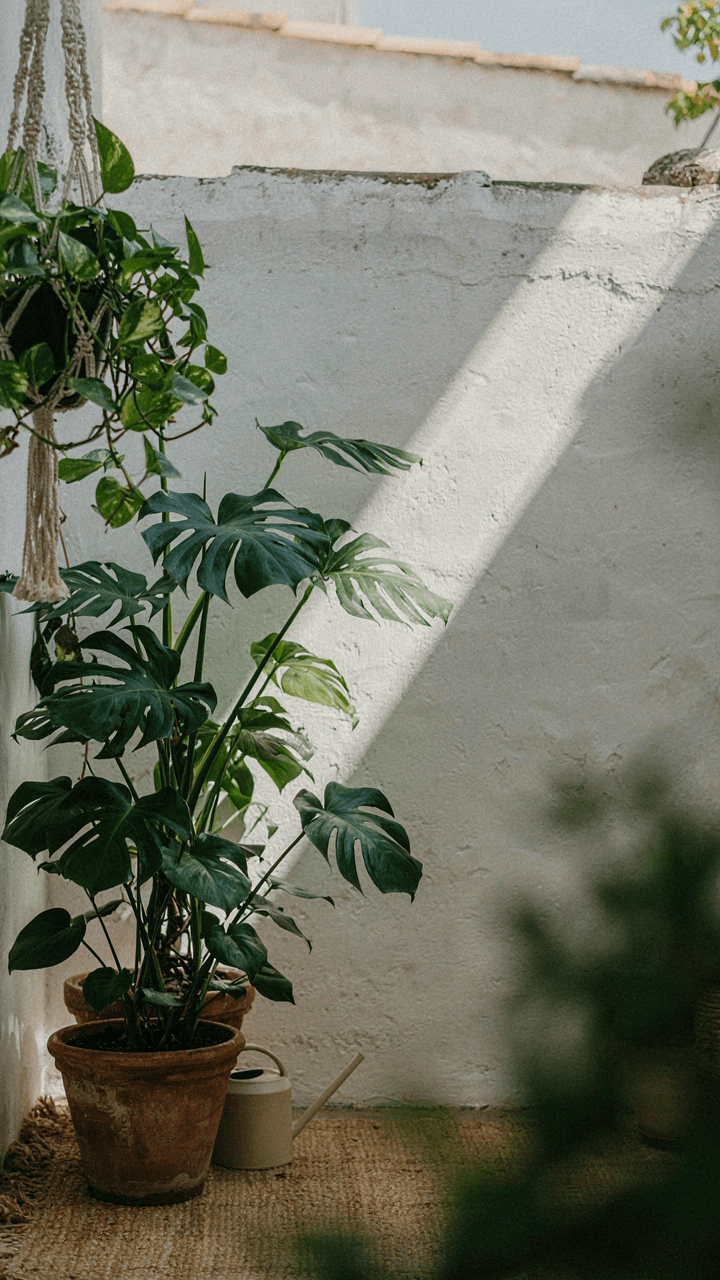
You want plants because they look good in photos and signal that you have taste. The real mechanism is photosynthesis, and it only works if light reaches the leaves. Most people buy plants for aesthetic appeal, then watch them die because they ignored the physics of their specific patio.
Start by measuring actual sunlight hours on your patio at different times of day. Full sun means six or more hours of direct light. Partial shade means two to six hours. Most boho patios get dappled light through overhead structures or nearby trees, which demands shade-tolerant species like pothos, philodendron, or ZZ plants rather than sun-hungry succulents. Your microclimate determines survival, not your design intention.
Climate zone matters equally. Desert climates tolerate drought-resistant plants like echeveria and agave. Humid regions favor ferns and calathea. Temperate zones give you flexibility but still require cold-hardiness research. Check your USDA zone before buying anything. A plant that thrives in zone 9 dies in zone 6 during winter, no matter how much you like its look. The selection process is non-negotiable because dead plants aren’t boho, they’re neglect.
Vertical Structure And Real Space Economics
Hanging planters and vertical gardening aren’t decoration tactics, they’re density strategies from urban agriculture. You’re solving a geometric problem: maximize plant volume without consuming floor or table space.
Hanging planters work when mounted on pergolas, fence lines, or overhead beams where they don’t block sightlines. Macramé hangers look boho but serve a function: they distribute weight across suspension points and let you adjust height quickly. Wall-mounted planters stack growing real estate vertically, perfect for herbs or trailing vines like string of pearls. Tiered plant stands compress multiple plants into one footprint without the hanging hardware. The choice depends on your patio’s structural capacity and available wall space, not aesthetic preference alone.

Vertical placement also improves air circulation around foliage, which reduces fungal issues in humid climates. Position trailing plants at eye level or above so growth cascades downward naturally, creating visual depth. Stack height strategically: taller plants in back, shorter ones forward, to avoid blocking views or creating dead zones where nothing grows well. Start with one vertical element, then add more only if the first thrives in your specific conditions.
Rugged Individualism: Choosing The Right Rug For Your Boho Patio

Material Matters More Than Aesthetics
You want a rug that looks intentional and costs less than your car payment. Here’s what actually determines whether your boho patio rug survives: material selection operates on the same principle as building structural load capacity. A rug’s durability depends on fiber composition and weave density, not on how well it photographs. Polypropylene withstands weather and UV exposure better than natural fibers, but it shows dirt faster. Jute and sisal look authentic to boho design lineage but degrade quickly outdoors without protection. Wool costs more upfront but resists fading and holds its shape under temperature swings.
The real decision is whether you want authentic materials that require maintenance or practical synthetics that fake the look. Outdoor rugs rated for patio use have backing treatments that prevent water pooling and mold growth. Natural fiber rugs need a sheltered overhang or seasonal storage to last more than two seasons. Check fiber content before purchase, not after the first rain. Most boho patio rugs sold as “all-weather” use polypropylene or acrylic cores with jute or wool overlays to split the difference between durability and appearance.
Pattern And Territorial Anchoring
Most boho patio advice says pick whatever pattern speaks to you. That’s incomplete. Your rug functions as a visual boundary that defines where your patio zone begins. Geometric patterns in earth tones (ochre, rust, charcoal) ground a seating area and create psychological separation from the rest of your yard. Tribal or Moroccan-inspired patterns anchor spaces more effectively than abstract designs because they signal intentionality and structure within apparent randomness.

Size and placement matter more than pattern choice. A rug that covers 60 to 70 percent of your seating arrangement keeps furniture groupings cohesive and prevents the scattered look. Position the rug so front furniture legs sit on it and back legs touch the edge. This simple rule prevents your patio from fragmenting into disconnected zones. Choose a pattern density that hides dirt between cleanings but remains visible enough to serve as a visual anchor.
The Comfort Calculus: Layered Cushions And Seating For Your Boho Backyard Patio
Your Spine Doesn’t Care About Aesthetics
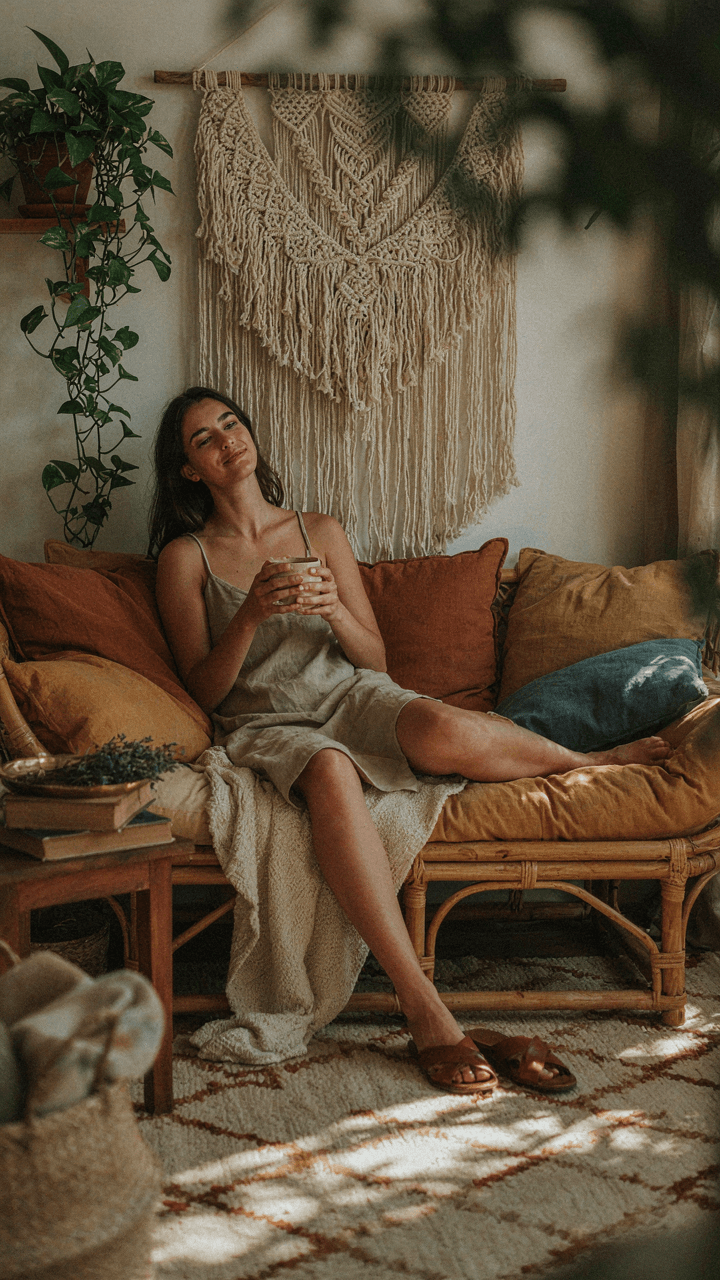
You want your patio to look like you have your life together while actually being able to sit on it without pain. Here’s the mechanism: boho seating fails because people prioritize visual depth over spinal alignment. The ergonomic reality is simple. Your lumbar spine needs support at a specific angle, roughly 110 to 120 degrees from your thighs. Most boho cushions get this wrong by being too soft or too thin, collapsing under body weight within weeks.
Start with a firm base layer. A 5-inch cushion with high-density foam under the seat holds shape and supports proper posture. Top this with a 3-inch softer layer for plushness. The seat should angle slightly forward, about 5 degrees, to prevent lower back strain. Armrests need to hit your elbows at roughly 90 degrees when you’re seated. Test this before buying. Sit for ten minutes, not ten seconds. If your shoulders rise or your lower back aches, the cushion stack is wrong.
The Perceived Value Trap
Behavioral economics teaches that scarcity and layering create perceived value. Apply that directly to boho patio cushions: the more layers visible, the more expensive the piece feels, and therefore the more your brain assigns it value, even if the support underneath is identical. This is why boho design works psychologically. Multiple textures, throws, and stacked pillows signal abundance and investment.

The trap is mistaking visual layering for actual comfort. Three thin cushions stacked don’t equal one proper cushion. What matters is density and height at the base, then visual variety on top. Use one quality 5-inch cushion, then add thin decorative layers: a 2-inch firm insert, then a 1-inch linen cover, then a throw blanket draped visibly. Your guests perceive luxury. Your spine gets support. Update the cushion stack when compression reaches one inch of permanent indentation, typically every two to three years depending on usage.
Boho Patio Ideas Outdoor Spaces: Lighting That Actually Works
The Three Layers You’re Missing
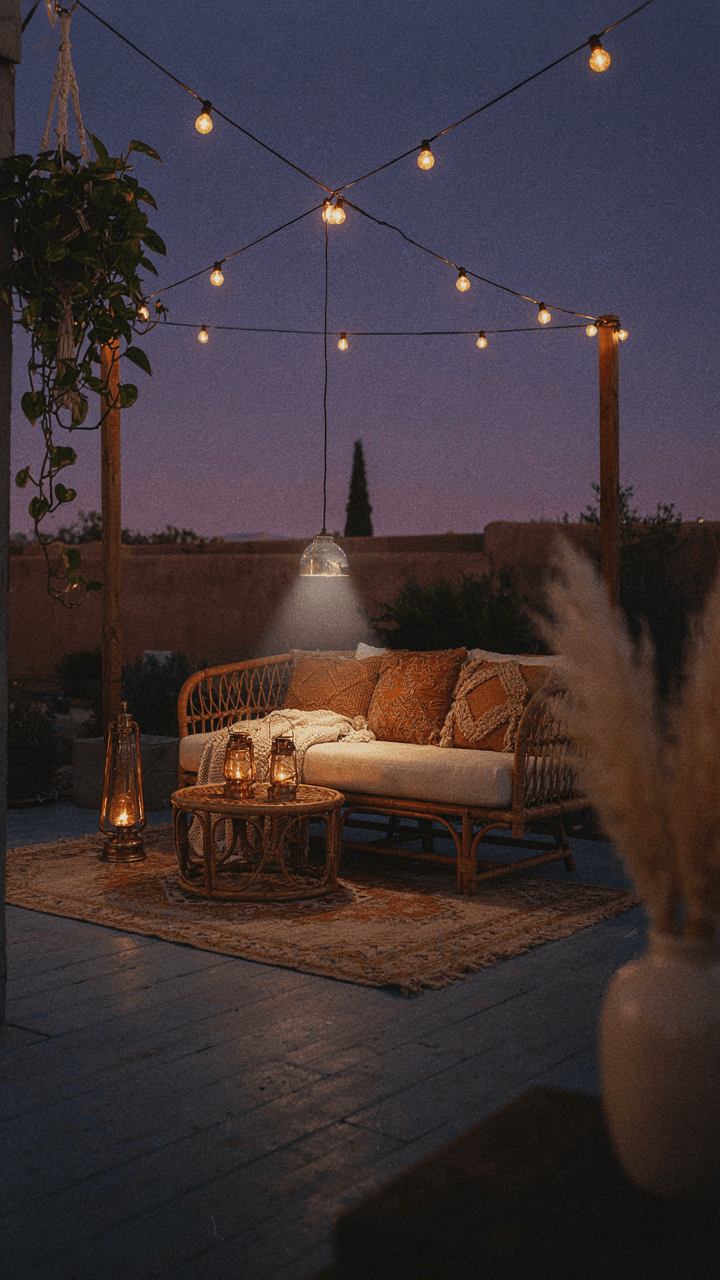
You want your patio to feel intentional after sunset because an unlit outdoor space signals you haven’t finished the job. Here’s the mechanism: lighting operates on three distinct layers borrowed from architectural practice, and boho design requires layering in the same way you layer rugs and cushions. Ambient lighting sets the base mood. Task lighting handles function. Accent lighting highlights what you’ve actually spent money on. Most people skip this framework and dump string lights everywhere, which creates visual noise instead of depth.
Ambient lighting comes from overhead sources that wash the entire space evenly. Low-voltage string lights strung 8 to 10 feet overhead work here, but so do uplighting fixtures aimed at trees or structures. The goal isn’t brightness—it’s consistent illumination that lets people move safely and see faces. Task lighting near seating areas, tables, or bar zones handles the functional gaps ambient light leaves. A single lantern on a side table or a recessed fixture above a conversation zone solves this. Accent lighting is what separates boho from generic. Directional lights aimed at potted plants, woven wall hangings, or textured fabric create shadow and visual interest. This layer takes five minutes to add but changes how the space photographs and feels.
Solar Placement And The Safety Mechanism
Solar-powered lights sound appealing because they cost nothing to run, but most people position them wrong and get disappointed. The real mechanism here is sight line management and charging efficiency working together. Solar lights need direct sun exposure during the day—minimum four to six hours, ideally unobstructed by trees or structures. A light placed under an overhang or in afternoon shade won’t charge fully and dims early or fails entirely. Position solar path lights along walkway edges and step zones, not scattered randomly. This doubles as wayfinding, which solves safety and aesthetic problems simultaneously.

For charging zones, map your patio’s sun path by observing where direct light lands midday. Plant solar stake lights there during the day, then relocate them to low-traffic ground areas at night if needed. Solar lanterns work better than stake lights in boho settings because they’re portable and look intentional rather than functional. Group them in threes or fives along planter edges or near seating to avoid the scattered-yard-sale effect. Every solar light you place should solve a literal safety problem first—steps, edges, uneven ground—then serve the ambiance goal second. This priority order keeps the space functional rather than decorative.
The “Boho Deck Ideas” Manifesto: Integrating Your Deck Into Your Aesthetic
Railings, Pergolas, And Structural Elements As Design Opportunities
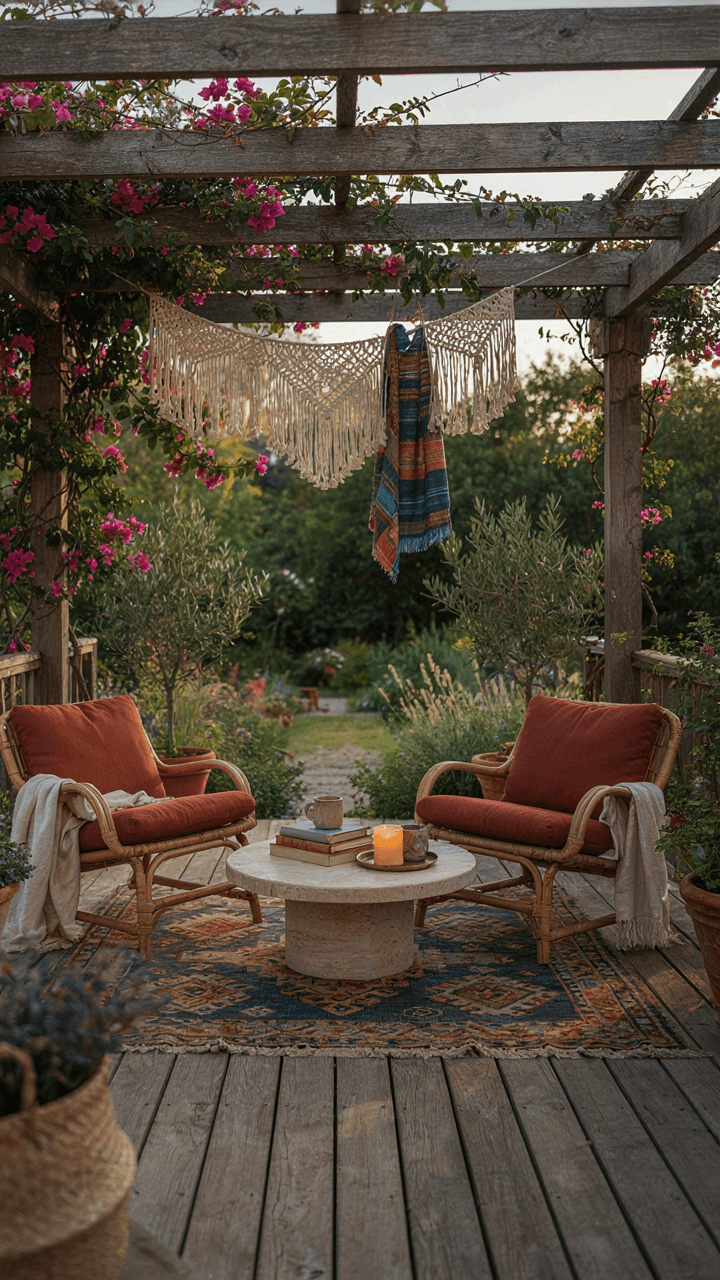
You want your deck to feel intentional rather than like a box tacked onto your house. The mechanism is constraint. Boho design thrives when you treat fixed structural elements as anchors, not obstacles. Railings, pergolas, and posts become the skeleton that everything else hangs from. They set the visual rhythm. Ignore them and your rugs and cushions float without meaning.
Wood railings with horizontal slats echo the linear patterns found in macramé and woven textiles. Metal railings, particularly wrought iron or powder-coated steel, create contrast without fighting boho’s organic aesthetic. A pergola overhead becomes a framework for climbing plants like jasmine or clematis, which soften harsh lines while filtering light onto cushions below. The structure does the heavy lifting. Your decor fills the space it creates.
Bridging Interior And Exterior Flow
Most advice treats indoor and outdoor as separate rooms with different rules. That’s wrong. The real mechanism is visual continuity through repeated elements. A boho patio decor approach means your rug color palette, textile weaves, and cushion textures echo what people see walking out the door. If your interior uses warm terra cotta and cream tones, extend those to your outdoor pillows and runner rugs. If you layer cushions inside with varied fabrics and patterns, do the same outside.

Transitions fail when people shift aesthetics at the threshold. Your deck should feel like a logical expansion of the interior, not a departure from it. Place a large boho patio rug right at the door line to signal the shift without breaking the visual thread. Use planters indoors and outdoors in matching materials. Repeat one cushion pattern from your sofa onto your deck seating. The continuity makes the entire home read as one cohesive space, which is where the perception of intentionality lives.
Your Boho Yard Ideas: Beyond The Patio Edge
Spreading The Aesthetic Into Surrounding Space
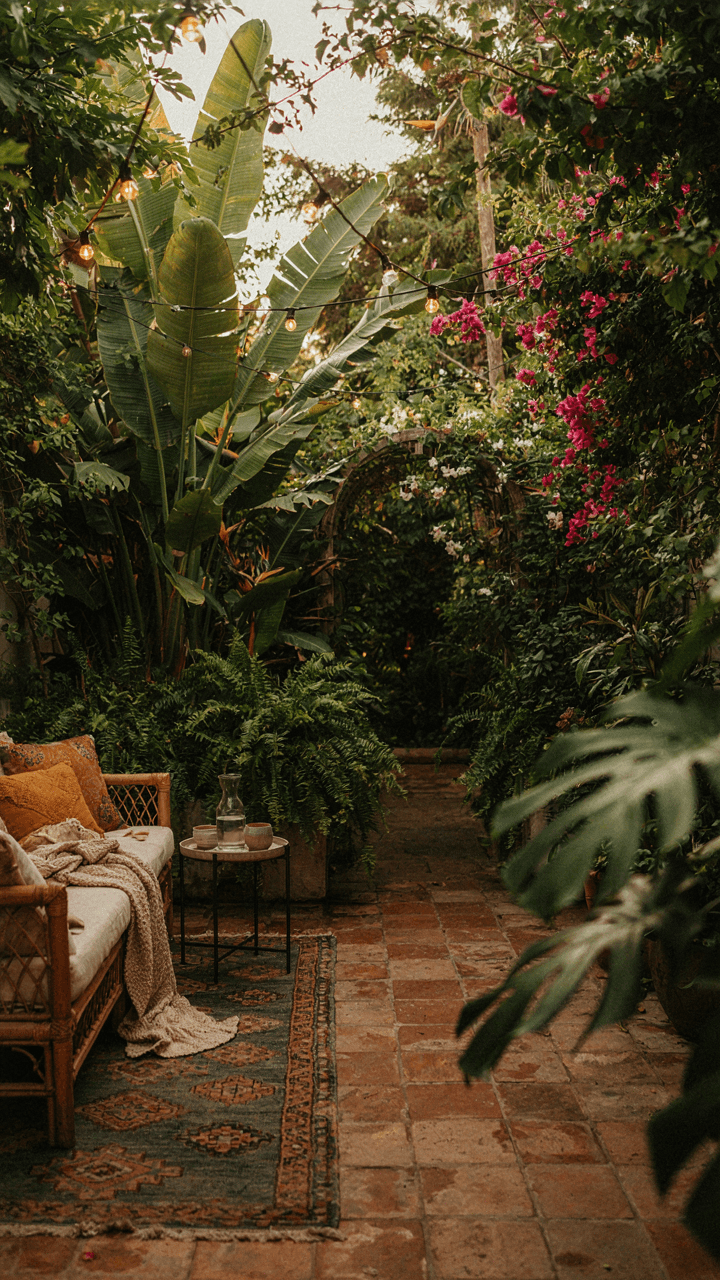
You want people to notice the whole property looks intentional, not like you decorated one corner and gave up. The mechanism is transition. Boho patio decor fails the moment it stops—when viewers see hard lines between your curated space and the rest of your yard. Borrowing from landscape architecture’s principle of visual continuity, treat your yard like a gradient, not a binary. Plants that echo your patio planting scheme repeat the aesthetic outward. Low potted clusters near the patio edge shift to mid-height plantings, then taller perennials and shrubs as you move away. This prevents visual collision.
Material repetition anchors the extension. If your patio uses woven poufs or macramé, mirrors of those textures appear in planters, garden edging, or wrapped tree stakes. Stone or gravel pathways connecting zones signal intentional design rather than afterthought landscaping. The key is restraint: don’t plant every species at once. Select three to five plant types that repeat throughout the yard in varying densities. This creates coherence without appearing overdone or theme-park artificial.
Carving Out Distinct Zones For Function
Most people treat the boho patio as a single gathering space, then wonder why it feels chaotic when they add seating, plants, and food. Zoning solves this. Use physical markers—area rugs, raised planters, or gravel boundaries—to define separate activities within your yard. A fire pit becomes its own gathering nucleus, distinct from a dining zone ten feet away. A meditation corner seated behind larger plants operates independently. These zones don’t require walls or structures. Layered rugs and cushion clusters create perceived boundaries that your eye registers as distinct spaces.
Connectivity matters. Pathways—even simple gravel runs—link zones without blurring them. This prevents visual noise. Fire pits work best with low seating to contain the gathering; dining zones need table-height definition; meditation nooks require privacy from sightlines. Each zone gets its own plant density and cushion placement. When you physically separate function, people instinctively use spaces correctly instead of clustering everywhere at once.
Your Boho Patio Isn’t A Sanctuary If You Don’t Understand Your Own Psychology
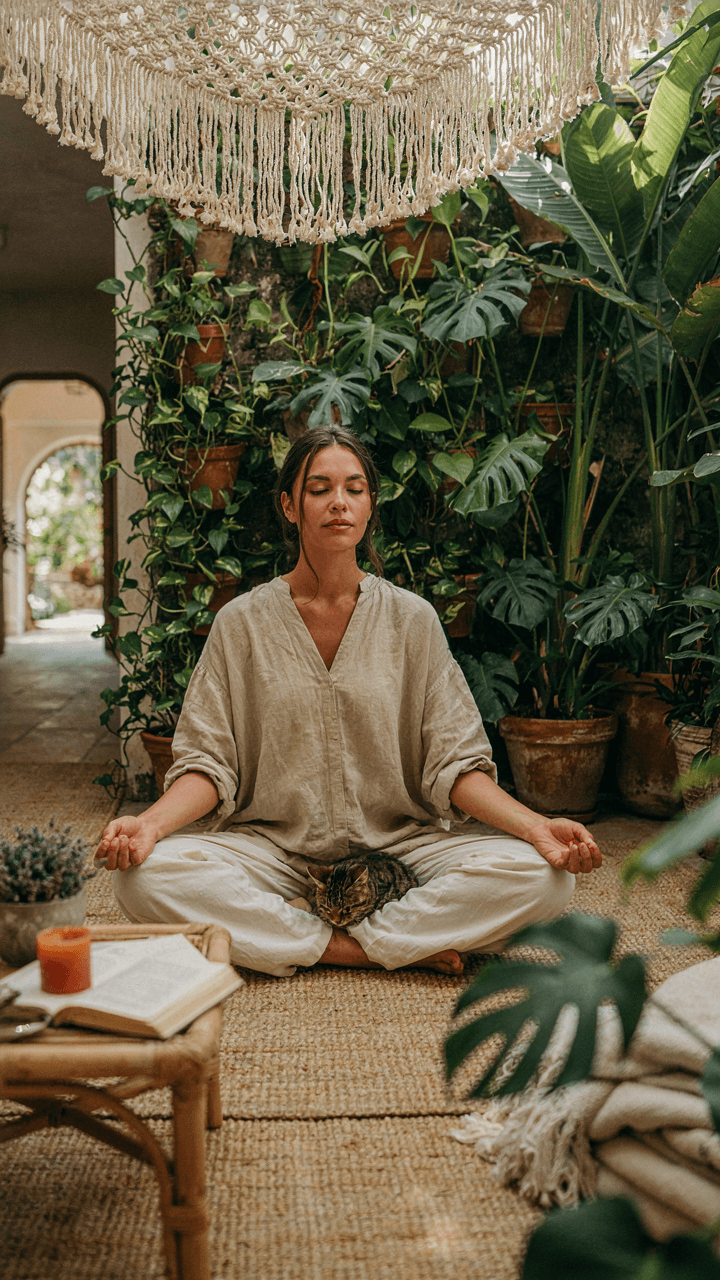
Most people throw rugs and plants on a patio and call it done. They miss the real game. Your boho patio works because it mirrors how your brain wants to feel. Chaos with intention. Growth without control. Comfort without perfection. Before you add another cushion, sit in your space for ten minutes and ask what you’re actually avoiding in your life. Then design around that. Pull one plant you’ve been hesitating on and place it where you’ll see it first. Your environment shapes your psychology, but only if you’re honest about what you need from it first.