
The Mosquito Mirage: Why Common Solutions Fail Outdoor Dinner Parties
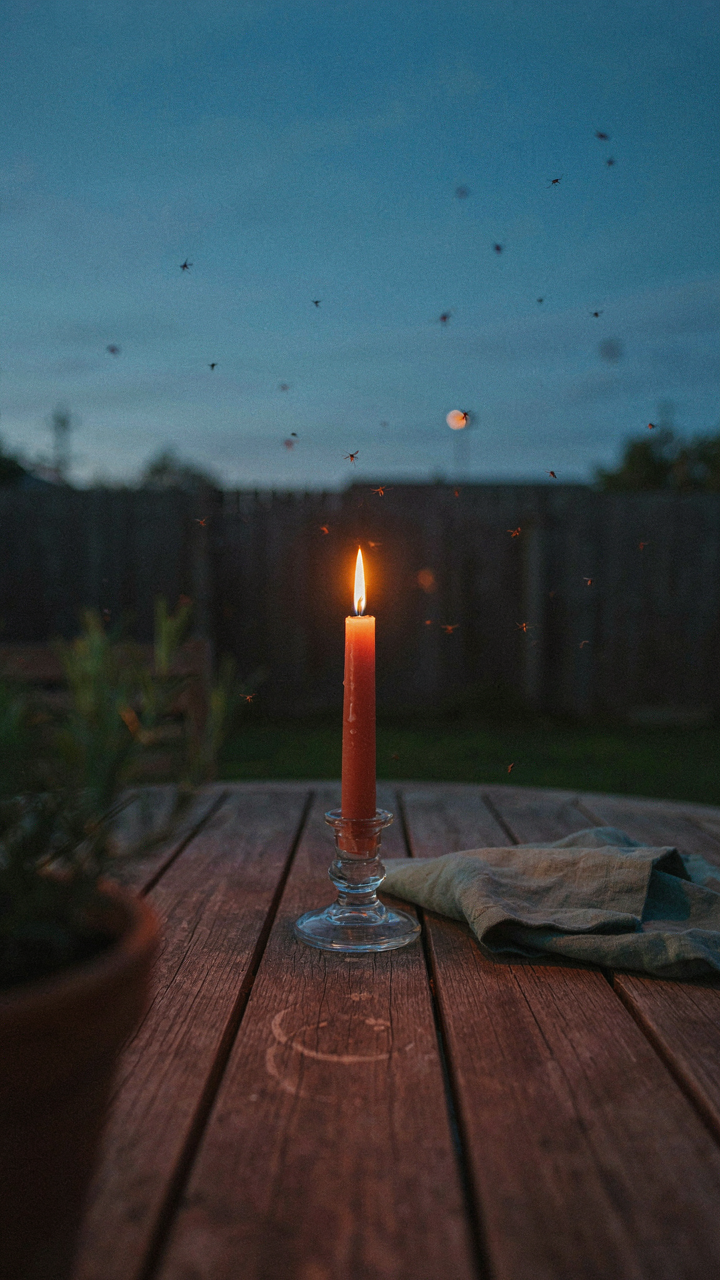
Citronella Candles Don’t Work The Way You Think
You want the candle to solve the problem so you don’t have to think about it anymore. Here’s what actually happens: citronella produces a scent mosquitoes detect, but the chemical diffusion rate from a candle is too slow to create a protective perimeter. A mosquito approaches from downwind and encounters the scent only after it’s already in your seating zone. The flame itself creates updrafts that disperse the oil unpredictably, leaving gaps in coverage. Distance matters more than you assume—citronella only affects mosquitoes within a few feet under ideal conditions, and wind collapses that radius entirely.
The real problem is that citronella addresses perception, not behavior. Mosquitoes don’t flee from the smell; they navigate around it. You’re broadcasting an alert signal while hoping it functions as a barrier. Even multiple candles fail because they work independently instead of creating an overlapping chemical field. A single strategic intervention point defeats the entire setup. Stop treating citronella as a solution and start treating it as ambient noise that makes you feel like you tried.
Topical Bug Spray Has A Range Problem
The personal repellent industry won’t state this plainly: DEET and picaridin only protect the skin they touch. You spray your arm but expose your neck. You coat your legs but the mosquito lands on your scalp. Reapplication sounds simple until you factor in sweat, clothing contact, and time decay—the chemical concentration drops after two to three hours regardless of activity level. You’re creating a false sense of security around your body while your guests apply it inconsistently and forget about it entirely.
The mechanism is straightforward: topical repellents work through direct chemical contact, not environmental protection. They’re personal armor, not perimeter defense. At a dinner party, you need both—and repellent alone leaves the space itself undefended. A mosquito avoids one person only to target another. The strategy fails because you’ve treated individual protection as a substitute for environmental control, which creates the false belief that telling guests to “use bug spray” solves the problem. It doesn’t. You need a layered approach that addresses the airspace, not just the skin.
The Stagnant Water Protocol: Your First Line Of Backyard Bug Repellent Defense

Where Mosquitoes Actually Breed

You want a bug free backyard party because you’re tired of being the host who lets guests get torn apart. Here’s the mechanism: mosquitoes need standing water to complete their life cycle, and most backyards contain multiple breeding sites nobody notices. Biology teaches us about vectors, and in mosquito ecology, standing water is the vector’s nursery. A female deposits eggs in as little as a bottle cap of stagnant water. Within seven to ten days, those eggs become biting adults. Most people focus on repellent sprays and ignore the root cause sitting in plain sight.
Start with a methodical walk around your entire property. Check gutters, downspouts, plant saucers, birdbaths, tarps with pooled water, and flower pots. Even the depression in a tree stump holds enough water for breeding. Move or empty everything that collects water. If you can’t move it, cover it or drill drainage holes. This isn’t optional prep work. This is the first action before any guest arrives.
How To Manage Water Without Ruining The Setup
Standing water near your patio isn’t just a mosquito problem, it’s a design failure. The real move is managing water flow so nothing pools in the first place. Slope your ground slightly away from seating areas. If you have a deck or patio, install or repair any drainage channels underneath. Birdbaths and fountains work only if you change the water every two days minimum. Stagnant birdbath water breeds mosquitoes faster than almost anything else on your property.
For temporary setups, position items strategically before the party. Clear gutters the day before. Check that downspouts direct water away from gathering zones. If rain falls during your event, walk the perimeter after and remove any new pools. This takes fifteen minutes and prevents an entire evening from becoming unpleasant. The simple rule: if water can sit for more than forty eight hours, remove it or drain it completely.
The Airflow Advantage: Dispelling Mosquito Gathering Points

Fans Disrupt The Flight Pattern

You want mosquitoes gone so you can look relaxed while hosting. Here’s the mechanism: mosquitoes are weak fliers. Aerodynamics rules apply here like they do to aircraft. A fan creates turbulence they cannot navigate. Their wing power caps out around 1 mph of sustained flight against resistance. A standard box fan or oscillating pedestal fan running on high generates wind speeds between 5-10 mph at normal party distances. Mosquitoes hit the air current and lose directional control. They drift away or exhaust themselves trying to hold position.
Placement matters more than wattage. Position fans at ground level pointing upward and outward from seating areas, not across them. This creates an invisible barrier rather than pushing bugs in circles around your guests. The effect compounds with multiple fans. Two fans on opposite corners of a standard deck cover roughly 400-600 square feet of protected space when run continuously. Fans do nothing to kill mosquitoes. They simply make the zone uninhabitable for their feeding window.
Wind Creates Natural Resistance
Mosquitoes evolved to operate in still air. They’re ambush predators, not pursuit hunters. Any consistent breeze above 3 mph degrades their ability to locate and approach hosts. This is biomechanics, not preference. Their antennae detect carbon dioxide plumes and body heat. Wind disperses both signals and forces them to fight for stable positioning.
Natural wind patterns on your property are free tools most people ignore. Tree placement, structure orientation, and landscape features all channel or block airflow. Sites downwind from tree lines or open to prevailing breezes naturally suppress mosquito activity. You can amplify this by removing dense shrubs near seating areas and avoiding enclosed corners where still air pools. The protocol is simple: identify where wind naturally flows on your property, then position your party zone there.
The Light Trap Fallacy: Understanding Mosquito Vision
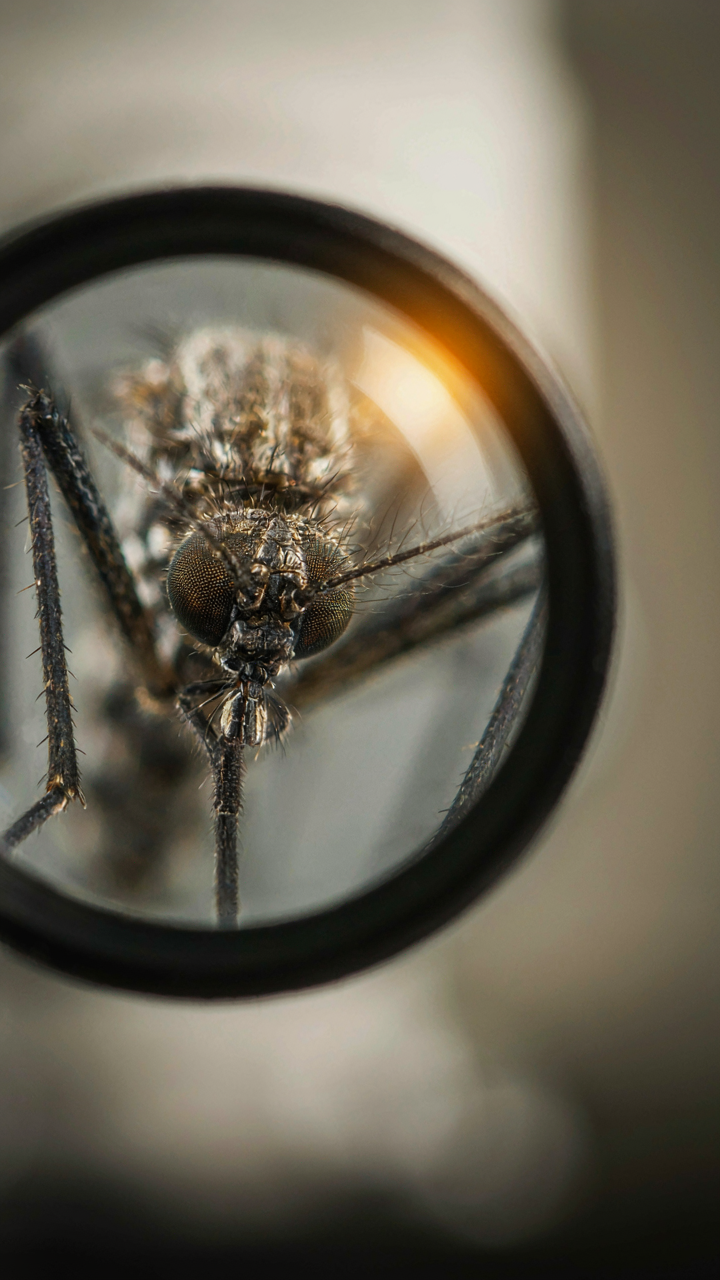
How Mosquitoes Actually See Light

You want to believe a bug zapper will solve this because it feels like a clean, passive solution. Here’s the mechanism: mosquitoes don’t hunt by light the way moths do. In biology, we call this signal detection, and most backyard hosts get the targeting wrong. Female mosquitoes navigate by detecting carbon dioxide plumes and body heat, not by seeking out bright objects. They use light only as a secondary orientation tool during approach, not as their primary hunting signal. Your porch light doesn’t magnetize them the way folklore suggests.
The standard advice says “turn off your lights to avoid bugs.” That’s incomplete. Mosquitoes will hunt you in total darkness because they’re tracking your breath and body temperature. Turning off lights helps slightly by removing one navigation aid, but it doesn’t address their actual targeting system. The real problem is you’re focusing on the wrong variable. Eliminating light eliminates a minor factor. You need to eliminate CO2 production and heat signature instead.
Choosing Lighting That Reduces Pest Pressure
Yellow and amber bulbs work, but not because they’re invisible to mosquitoes. They work because they attract fewer flying insects overall, which means less competition for mosquitoes and fewer insect-attracted predators nearby. Use sodium vapor or amber LED bulbs rated 2200K or lower in color temperature. These emit wavelengths that don’t trigger the compound eyes of most flying insects as effectively as standard white or blue light does. The reduction in overall insect volume makes the space less appealing as a feeding ground.
Position lights at the perimeter of your space, not at the gathering area. This pulls insect activity away from where people congregate. If you must have ambient lighting near seating, use motion-activated fixtures that operate only when needed. The goal isn’t to create a bug-free zone through light alone, it’s to make your zone less convenient than alternatives nearby. Redirect the insect pressure outward, not inward.
The Perimeter Defense Doctrine (Military Strategy): Securing Your Outdoor Party Mosquito Tips

Map Your Kill Zone First

You want to host a party without looking paranoid about bugs. Here’s the mechanism: mosquitoes don’t teleport. They fly in from specific vectors, and most people never identify where those vectors actually are. Military strategy calls this establishing your operational area. For a bug-free backyard party, your operational area is the zone where guests gather, eat, and stand still long enough for mosquitoes to land. Define it precisely: patio, deck, lawn section, or the perimeter around your tables.
The boundary matters because it determines where you concentrate your defenses. A ten-by-twenty-foot patio needs different protection than a sprawling yard. Mosquitoes travel along edges—tree lines, fence rows, shrub borders. They don’t cruise the open middle of your party space unless something draws them. Mark your actual gathering zone first, then look outward. Everything beyond that line is where you stage your first layer of defense, not where your guests stand.
Station Your Arsenal At Entry Points
Most backyard advice stops at “use a fan” without explaining why. Fans work because they disrupt the aerodynamic approach mosquitoes use to land on skin. Deploy them at the perimeter entry points—where guests walk in, where the tree line meets your patio, where wind naturally funnels into your space. Repellents follow the same logic: place them strategically, not randomly around the yard.
The critical entry points are where air and mosquito traffic converge. Put a fan near the main path guests use to enter your party zone. Position citronella or mosquito-repelling plants at the upwind side, where breezes carry scent toward the perimeter before mosquitoes reach your guests. Oscillating fans work better than stationary ones because they create moving air that prevents any consistent landing zone. Your goal is to make approach difficult, not impossible, so mosquitoes naturally drift elsewhere. Start your defense at the boundary, then tighten it as you move toward where people actually stand.
The Scent Signal Suppression: Beyond Citronella Candles

Plants That Repel Mosquitoes Through Active Compounds

You want a bug free backyard party without looking like you’re sweating the details. The truth is you’re not fighting mosquitoes with smell alone—you’re disrupting their navigation system. Mosquitoes locate hosts through CO2 plumes and skin odors, but certain plants emit volatile compounds that mask or overwhelm these signals. Placement matters more than the plant itself because proximity determines concentration.
- Lavender: Releases linalool and linalyl acetate compounds that interfere with mosquito olfactory receptors. Plant in clusters near seating areas where airflow naturally carries the scent toward guests.
- Basil: Contains methyl cinnamate and eugenol, which actively repel Aedes and Culex species. Place in pots on tables or near entry points; crushed leaves release stronger concentrations.
- Marigolds: Produce thiophenes that reduce mosquito attraction to nearby humans. Border garden edges and pathways, not isolated corners—dispersed placement maximizes coverage.
- Rosemary: Emits 1,8-cineole, which confuses mosquito sensory organs. Position upwind of seating if prevailing wind allows; dense plantings work better than single specimens.
- Mint species: Strong menthol content overwhelms mosquito detection at close range. Contain in pots to prevent invasive spreading; place near high-traffic zones and food service areas.
Generic advice says plant these anywhere and call it done. The real mechanism is concentration gradient—you need plants dense enough and positioned close enough to create a perceptible scent barrier. A single lavender plant across the yard does nothing. Ten plants clustered around your seating zone creates an actual suppression field.
Decoding How Mosquitoes Actually Find You
Mosquitoes operate through olfactory biology, the same field that guides dogs and sharks to targets. Think of your body’s scent plume as a navigation beacon—CO2, lactic acid, and ammonia form the signal. Most people assume citronella masks your scent. It doesn’t. It competes for receptor binding, which is why concentration and timing matter more than the product itself.
The receptors on a mosquito’s antennae detect specific molecular structures. When you flood the zone with plant compounds, you’re not erasing your smell—you’re creating signal noise. Your skin still radiates CO2 and body heat. But if the mosquito’s olfactory system receives 50 different competing signals, the cost of investigation rises. She moves to the next yard where the path to a host is clearer. Timing your plant placement for peak outdoor hours when you’re actually hosting maximizes this effect.
The Food Cover Imperative: Protecting Your Spread From Bugs Away Outdoors

Why Uncovered Food Attracts Insects

You want your guests to remember the food, not the bugs crawling through it. Here’s what actually happens: insects use olfactory receptors to detect volatile organic compounds released by exposed food from up to 100 feet away. A mosquito doesn’t need to see your potato salad. It smells the proteins, sugars, and fermentation byproducts. That’s the signal that pulls them in.
Most people think bugs care about the food itself. They don’t. Insects hunt the chemical signature. Fruit, meat, sweets, and fermented items broadcast the strongest signals. When you leave food exposed during warm hours, you’re essentially running a dinner bell for every flying pest within range. The mechanism is biological recruitment, not random landing.
Cover Solutions That Actually Work
Everyone says “just use a mesh tent,” which is half the answer and completely misses the timing problem. Mesh tents work only if bugs can’t access the food before you deploy them. The real move is understanding that food emits more scent as temperature rises. Cool food covered immediately upon serving stays off the radar longer than any mesh solution applied too late.
Use mesh food covers, but deploy them the moment food hits the table, not ten minutes after your guests arrive. Pair this with a secondary layer: store high-scent items like fruit and proteins in sealed coolers with tight lids until serving time. Switch items to covered serving dishes instead of leaving raw platters open between refills. The discipline matters more than the equipment. Your protocol is what stops the signal from broadcasting.
The Clothing Code: Your Personal Outdoor Party Mosquito Prevention Tips

What You Wear Actually Works

You want to look good at your party without being eaten alive. That’s the real tension here, and most people pretend it doesn’t exist by wearing whatever they grabbed. But your clothing is a barrier system, and mosquitoes read it like a perimeter they either breach or respect. Light colors reflect heat that mosquitoes use to locate you, while dark colors absorb and radiate it—making you a warmer target. Loose, lightweight fabrics create air gaps that prevent mosquitoes from landing flush against your skin, which they need to pierce through.
Fabric weave density matters more than material type. Tight weaves physically obstruct mosquito proboscis penetration. Cotton at high thread count works as well as synthetics. The mechanism is basic physics: mosquitoes can’t land and feed if the surface texture breaks their approach angle. Wear long sleeves and pants in light colors, loose fit. Tuck pants into socks if you’re serious. This isn’t fashion—it’s engineering.
Treatment Changes The Math
Permethrin-treated clothing inverts the entire problem. Instead of relying on physical obstruction alone, you’re adding a neurotoxin layer that kills mosquitoes on contact. This is chemistry, and the advantage is decisive. Permethrin bonds to fabric fibers and persists through multiple washes, meaning you don’t re-treat after every party. The mosquito doesn’t need to land successfully—exposure to the treated surface ends the encounter.
Most clothing brands now offer permethrin-treated versions specifically for outdoor use. Pre-treat your own clothing by spraying it evenly and letting it dry completely before wearing. One application lasts roughly six months through regular washing. This is the single most reliable clothing-based mosquito defense because it removes the requirement for perfect fit or continuous vigilance about your outfit. Treat your clothes and stop thinking about it.
Integrated Pest Management: The Holistic Outdoor Party Mosquito Solutions

Stack Methods For Exponential Returns

You want this section because you’re tired of picking one tactic and watching mosquitoes ignore it. Here’s the mechanism: mosquitoes are not one vulnerability. They’re multiple vulnerabilities that exist simultaneously. Ecology teaches us about niche saturation. In a bug free backyard party context, saturation means removing every entry point and food source at once, so mosquitoes have nowhere to land, breed, or feed. One method fails. Three methods stacked fail together exponentially less.
The mistake everyone makes is choosing between DEET, fans, or drainage. You do all three plus a fourth. CO2 reduction via fans disrupts their navigation. Repellent blocks their landing zone. Drainage eliminates breeding habitat. These aren’t competing solutions. They’re layers that compress mosquito survival options into zero. Time spent on individual tactics vanishes. Time spent stacking them compounds into a party where you actually sit still without scratching.
Sustained Strategies Beat Seasonal Fixes
One-off preparations don’t create a bug free backyard party. Sustainability does. Most people treat mosquitoes like a party problem, not a property problem. The real gap is between treating your yard before the event and treating your yard for the season. Permanent water removal beats temporary applications. Native plantings that repel mosquitoes beat candles you light three times yearly. Gutters cleaned monthly beat gutters cleaned once before summer.
The protocol is structural. Install rain barrel screens so water collects without mosquito breeding. Cut vegetation that holds moisture within ten feet of seating areas. Test drainage after rain to confirm standing water disappears within two days. Stock your yard with plants that naturally repel mosquitoes, like lavender and marigold, on rotation. Consistency in these actions builds immunity into your space instead of relying on repeat interventions.
The Only Real Failure Is Believing A Candle Can Solve A Systemic Environmental Problem

You stop mosquitoes by attacking their habitat, not their mood. They breed in standing water. They hide in dense vegetation. You eliminate these first, then deploy your defenses. Everything else is theater. Stop buying solutions that treat symptoms while the root thrives three feet from your deck. Walk your yard today and identify one water source you can drain. This single action beats every citronella stick you’ll ever light.
The bug free backyard party starts with what you remove, not what you add.