The Unseen Architecture: Mapping Guest Flow
Where People Actually Stand
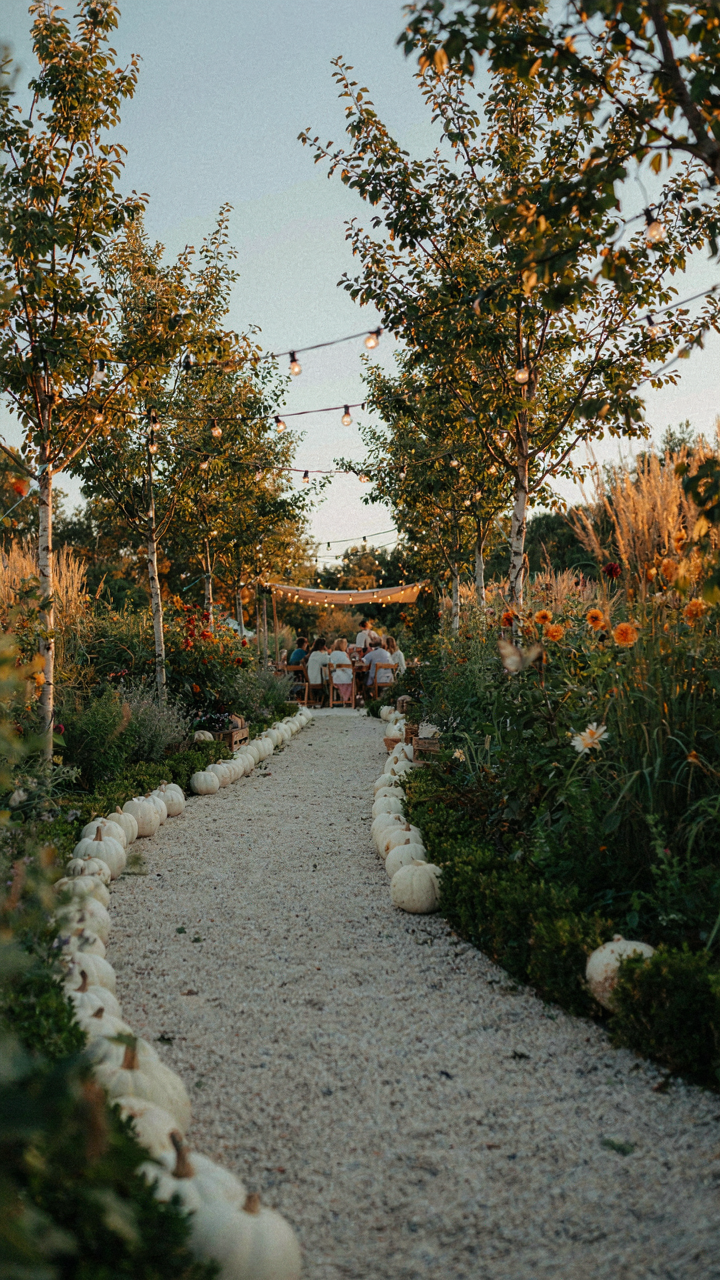
You want your party to feel effortless because you’re terrified guests will cluster awkwardly or leave early. The real mechanism is this: people follow paths of least resistance, and those paths are set by your physical layout before anyone arrives. Movement isn’t random. It obeys friction. Pumpkins and hay bales create literal barriers or corridors that funnel traffic without seeming intentional. Most hosts treat decor as decoration. That’s the mistake. Treat it as architecture.
Arrange your pumpkins and hay bales to define walking routes, not just fill empty space. Place hay bales perpendicular to natural traffic flows, not parallel. A bale running alongside the house creates a wall guests walk past. A bale perpendicular to it becomes a waypoint they navigate around. Pumpkins clustered near the entry force people outward into the yard. Pumpkins sparse in the middle leave a dead zone. The layout must guide feet before it guides eyes.
Tension And Release
Traffic engineering uses a principle called chokepoint optimization, and your yard needs both compression and expansion zones. A chokepoint is anywhere guests must narrow their path. An open zone is where they spread out and linger. Hay bales stacked near your food table or seating create a natural bottleneck that actually increases time people spend in that area because they slow down and interact. But you need release valves too. Leave wide open zones near the perimeter so groups can splinter off without feeling trapped. The tension-release cycle keeps energy moving.
Dense pumpkin groupings at the party’s entry work as a compression zone. They make the space feel full and intentional immediately. Then scatter pumpkins sparsely as you move deeper into the yard to create breathing room. Place hay bales to anchor social clusters around the fire pit or beverages. The bales themselves become seats and barriers simultaneously. Guests won’t wander aimlessly if you’ve already decided which zones are for standing, which are for sitting, and which are for passing through.
Pumpkins: More Than Just Orange Orbs
The Variety Play

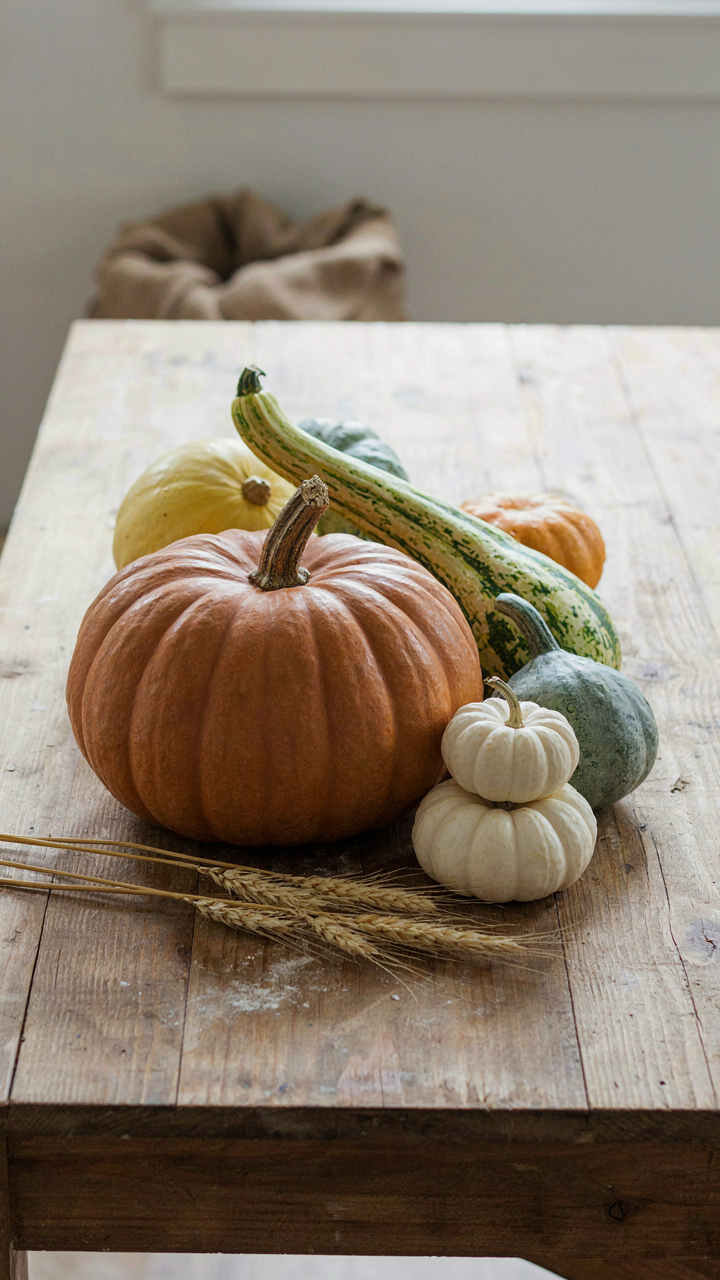
You want people to think you put thought into this. That’s the real reason you’re reading about pumpkin variety. Most hosts treat pumpkins like a checkbox: grab orange ones, done. The actual mechanism is visual contrast and depth. Scale variation creates perceived sophistication without requiring skill. A tablespace with three pumpkins of different sizes reads as intentional. Two sizes read as accidental.
Beyond the standard carving pumpkin, you have gourds, miniatures, and the pale varieties bred for decoration rather than pie filling. Lumina pumpkins are white and hold detail better than orange for side lighting. Fairytale pumpkins are flat and ribbed, borrowed from heirloom gardening, and work as conversation anchors because they look wrong. Warty gourds add texture without requiring storage space for seeds. The color range shifts from the expected orange into cream, green, and rust, which photographs better and reads as curated.
Functional Pumpkins
The common mistake is treating pumpkins as decoration only. Pumpkins are containers. A large hollowed pumpkin holds serving dishes, dips, or candy without needing separate hardware. Smaller ones become luminaries when you carve simple geometric patterns and place battery-operated lights inside. This borrowed from landscape lighting design: warm light creates perceived intimacy in outdoor space.
Functional integration reduces clutter and eliminates the need for extra tables or stands. Scoop out a pumpkin’s interior and nest a metal or ceramic bowl inside for chili, soup, or guacamole. Use smaller pumpkins as candleholders by carving a shallow cavity at the top and inserting a pillar candle. This approach works because it removes the visual separation between decor and utility. Your guests remember the experience, not the effort.
Hay Bales: The Versatile Foundation
Seating That Doesn’t Look Like Seating
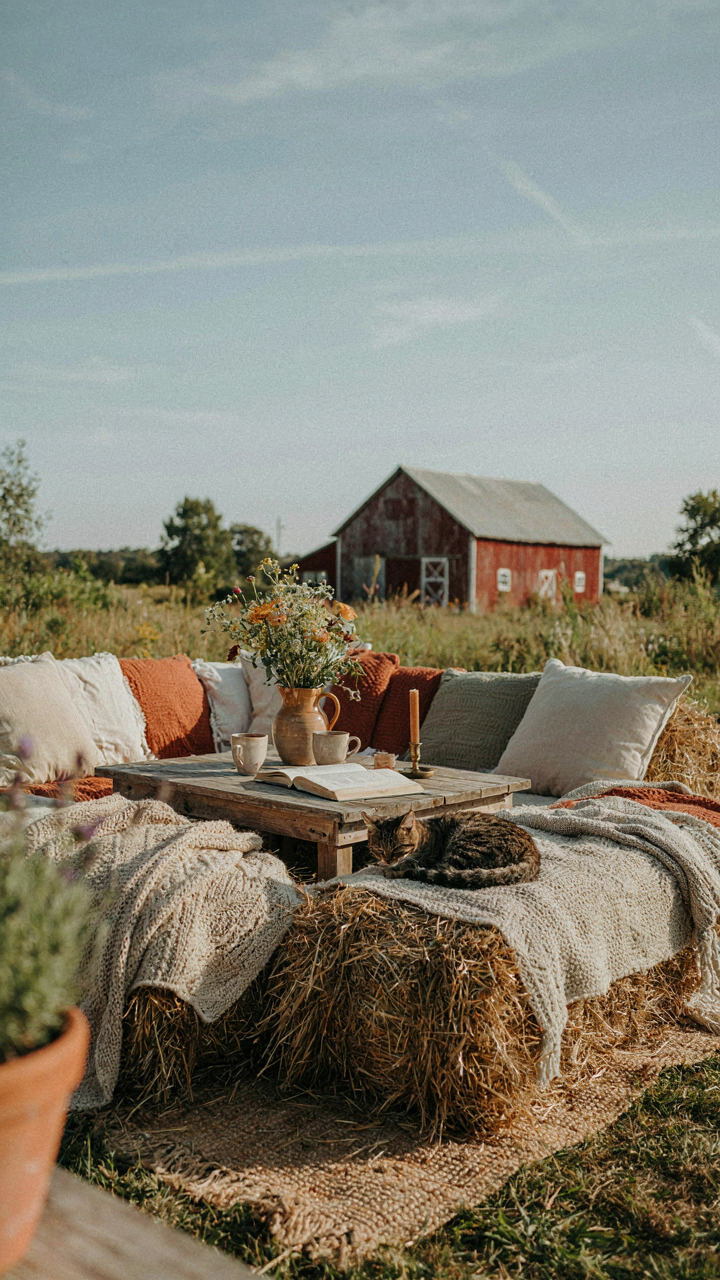
You want people to sit without admitting you’re using hay bales as cheap furniture. That’s the real tension here. The mechanism is visual hierarchy: if hay dominates the landscape as functional seating, your guests feel the budget constraint. But if pumpkins, blankets, and positioning make hay feel like intentional decor that happens to be siteable, the psychology flips. Stack bales in clusters. Drape them with neutral canvas or wool throws. Place pumpkins on top as bookends. This transforms hay from obvious utility into layered staging where sitting becomes secondary to the visual narrative.
The shift works because you’re controlling what gets perceived first. A bare hay bale reads as “we needed seating fast.” A hay bale under a tartan blanket with gourds positioned on the ends reads as “we styled this moment.” Height variation matters too. Mix standard bales with doubled stacks to create sight lines that move the eye around the space rather than landing on the seating function. Your guests will sit comfortably while absorbing a designed environment, not a inventory solution.
Building Depth Without Bulk
Textile layering operates on the principle of visual compression: multiple thin layers create the illusion of richness while staying structurally lightweight. Most people throw one blanket on hay and call it done. That’s lazy. The real tactic is counterintuitive. Start with a fitted canvas base layer that grips the hay and prevents shifting. Add a secondary layer of heavier wool or linen in a coordinating neutral. Top that with a thinner decorative throw in a contrasting weave or subtle pattern. This three-layer system gives texture without clutter.
The comfort payoff is immediate. Guests sink into defined cushioning rather than compacting hay beneath them. Visually, the bale now reads as an intentional seating feature rather than raw agricultural material. Position pumpkins and gourds between layers at corners to anchor the styling and create stopping points for the eye. This prevents the common mistake of a flat, one-dimensional look. Change throw placement weekly or per party to keep the setup feeling deliberate rather than static. That’s the mechanism that separates styled from neglected.
The Fall Bonfire Ignition Protocol
Where To Place Your Fire Pit

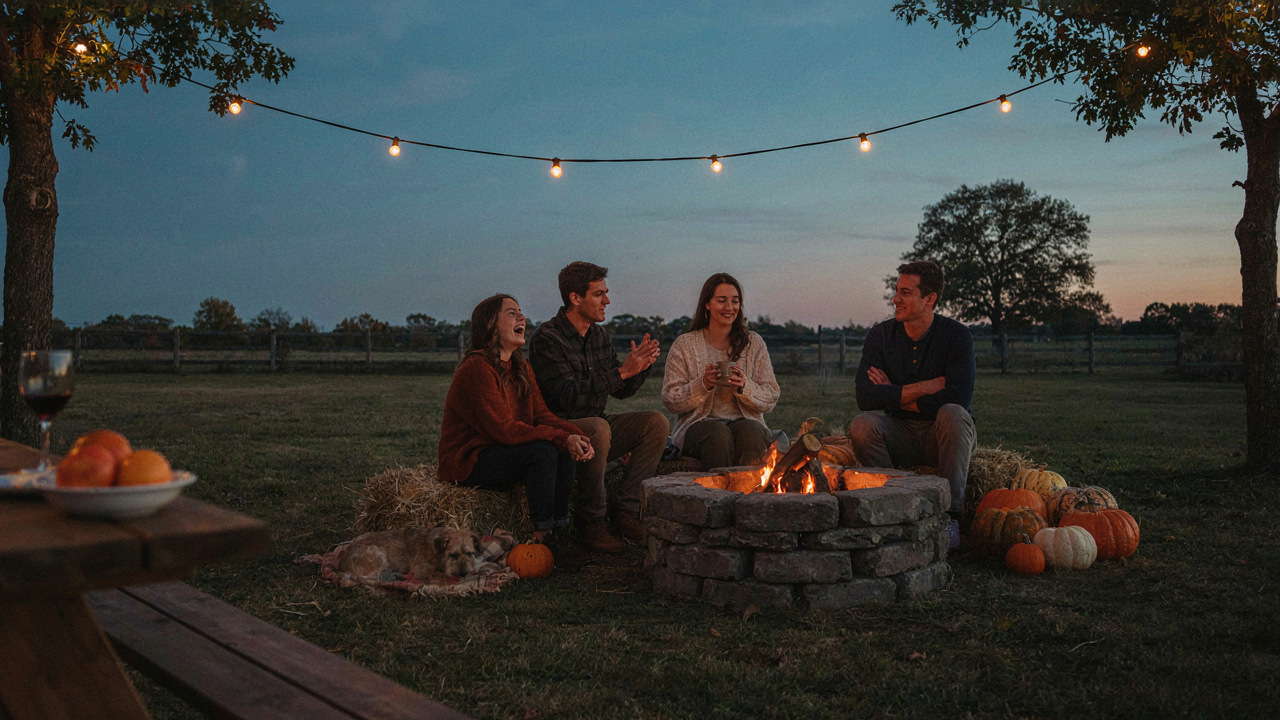
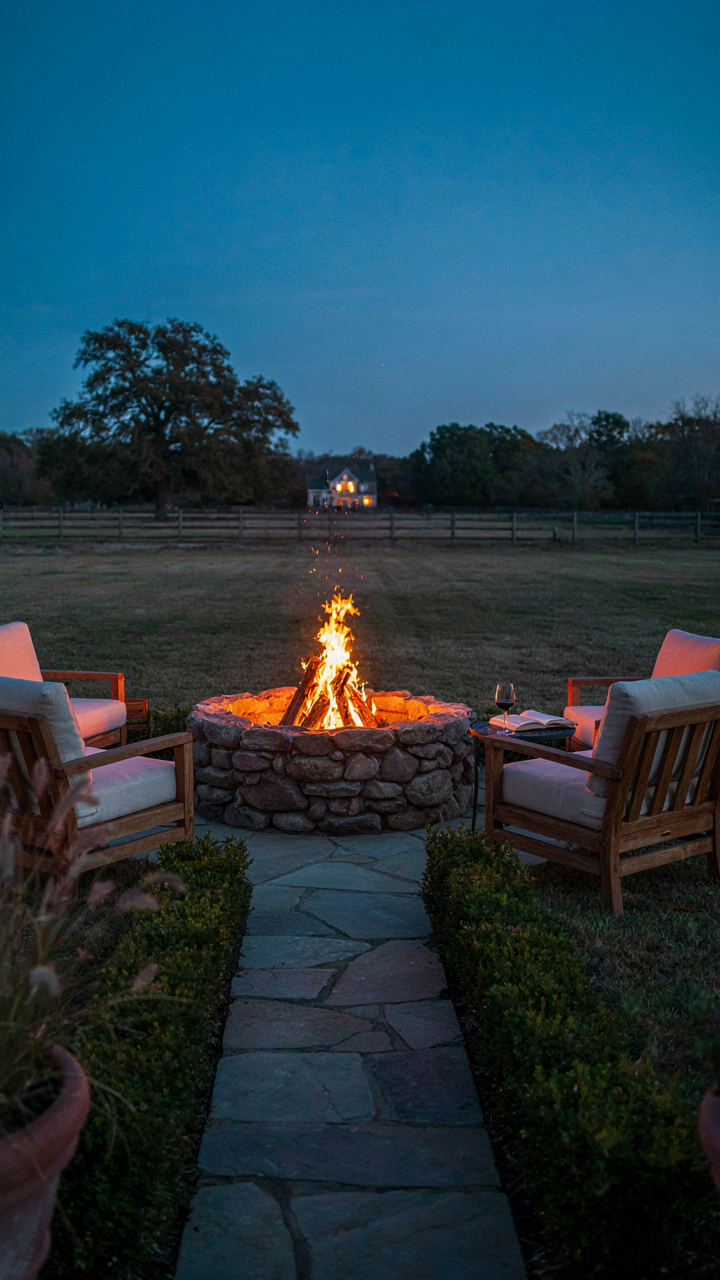
You want people to gather around the fire because it makes you look like you’ve got your life together. What actually matters is the fire pit’s position relative to wind direction, seating sight lines, and escape routes. Place the pit at least 10 feet from structures, trees, and overhanging branches. Position it downwind of your main seating area so smoke drifts away from guests. Orient seating in a loose circle, not a line, so people face each other and the flame becomes a focal point, not a distraction.
The secondary layer is sight lines to the rest of your yard. If guests sit with their backs to pumpkins and hay bale arrangements, the decor becomes part of the scene rather than scenery they forget. Leave clear walking paths between the fire and house. Never place the pit where it blocks access to drinks, bathrooms, or exits. A fire pit that forces awkward navigation kills the gathering before the first log burns.
Wood Selection And Smoke Control
The consensus says burn hardwood for longer fires. That’s incomplete. The real mechanism is density and moisture content, not wood type alone. Softwoods like pine ignite fast but burn hot and produce excessive creosote and sparks, which create smoke and ash that pepper guests. Hardwoods like oak and maple burn slower with less smoke because their cellular density creates a more controlled combustion. The hidden move: source wood that’s been seasoned for at least six months. Green wood produces thick smoke that drives people indoors, killing your entire party.
Never burn pressure treated wood, plywood, or painted lumber. These release toxins. Avoid woods that spark aggressively like pine, fir, and birch. Oak, maple, and hickory burn clean and steady. Start with kiln dried wood if you can’t source properly seasoned splits. Keep wood stacked at least five feet away from the fire pit itself. Have enough fuel staged before guests arrive so you’re not scrambling mid-party. The fire dies when the host disappears to find wood.
Harvest Party Ideas For Adults: Beyond Child’s Play
Strip The Aesthetic Down To Material

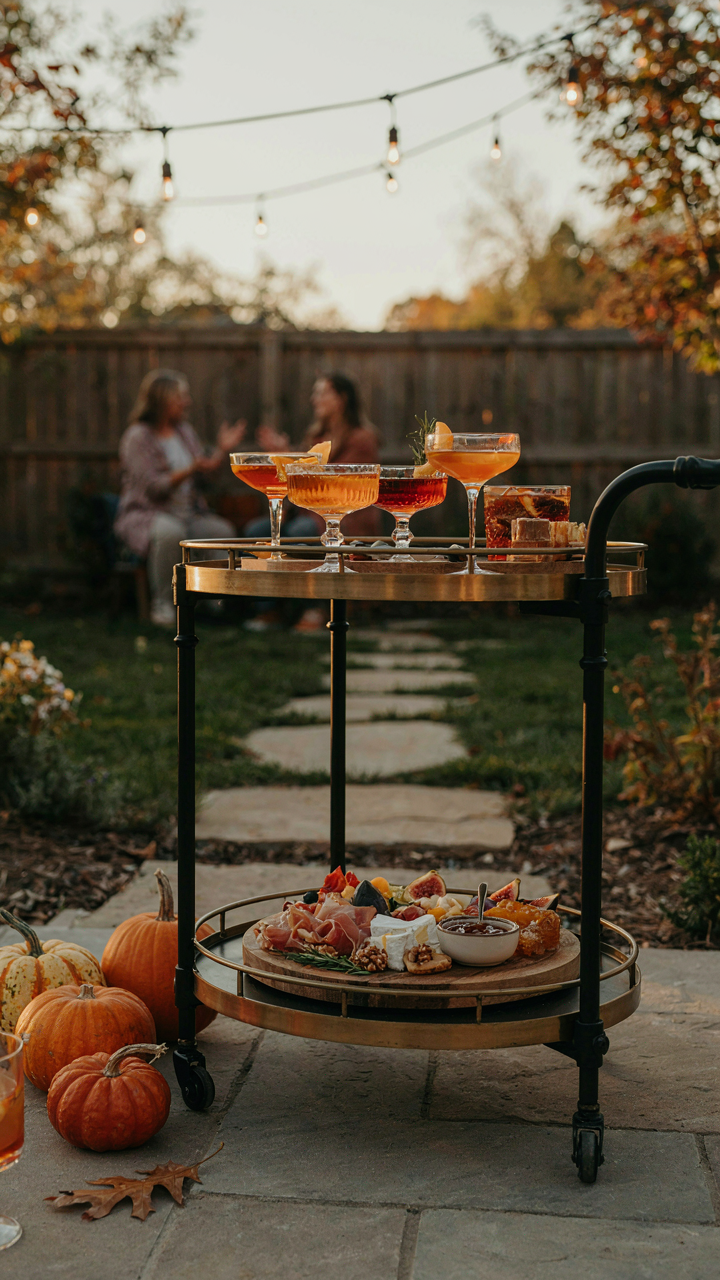
You want adults to take your party seriously instead of feeling like they walked into a theme park. The real mechanism is contrast: when everything around them screams “fall,” nothing signals sophistication anymore. Ditch the plastic jack-o-lanterns, the cartoon hay bale covers, the neon orange everything. Adults register material quality before they register anything else.
Real hay bales have texture and weight. Actual pumpkins have variation in color and form. Burlap, when used as table runners or wall accents, has a weave pattern that catches light. Copper or weathered metal decor reads as intentional rather than seasonal. The shift isn’t about removing pumpkins—it’s about treating them as objects with inherent form instead of vessels for forced themes. Set them at varying heights on pedestals or wooden stands. Let scale and placement do the work instead of stickers and glitter spray paint.
Conversation As The Core Activity
Common advice here is wrong: most fall party guidance treats activities as filler between eating. Activities should be the reason people stay and talk to each other. In game theory terms, you’re designing an information exchange system where adults reveal something about themselves while playing. This keeps attention on humans, not on the pumpkins.
Harvest-themed activities that actually work require low stakes and genuine choice. A tasting station where guests rate ciders or apple varieties creates natural comparison and debate. A “guess the weight” contest on a pumpkin works only if you announce the winner in a way that matters to the group. Card games using autumn elements or a simple cornhole tournament gives people a frame to interact within. The activity itself isn’t the point—it’s the excuse for standing near someone and talking. Assign no teams beforehand. Let people self-sort. People stay longer when they choose their own group.
Lighting: Sculpting The Night (Fall Backyard Party)
What Light Actually Controls

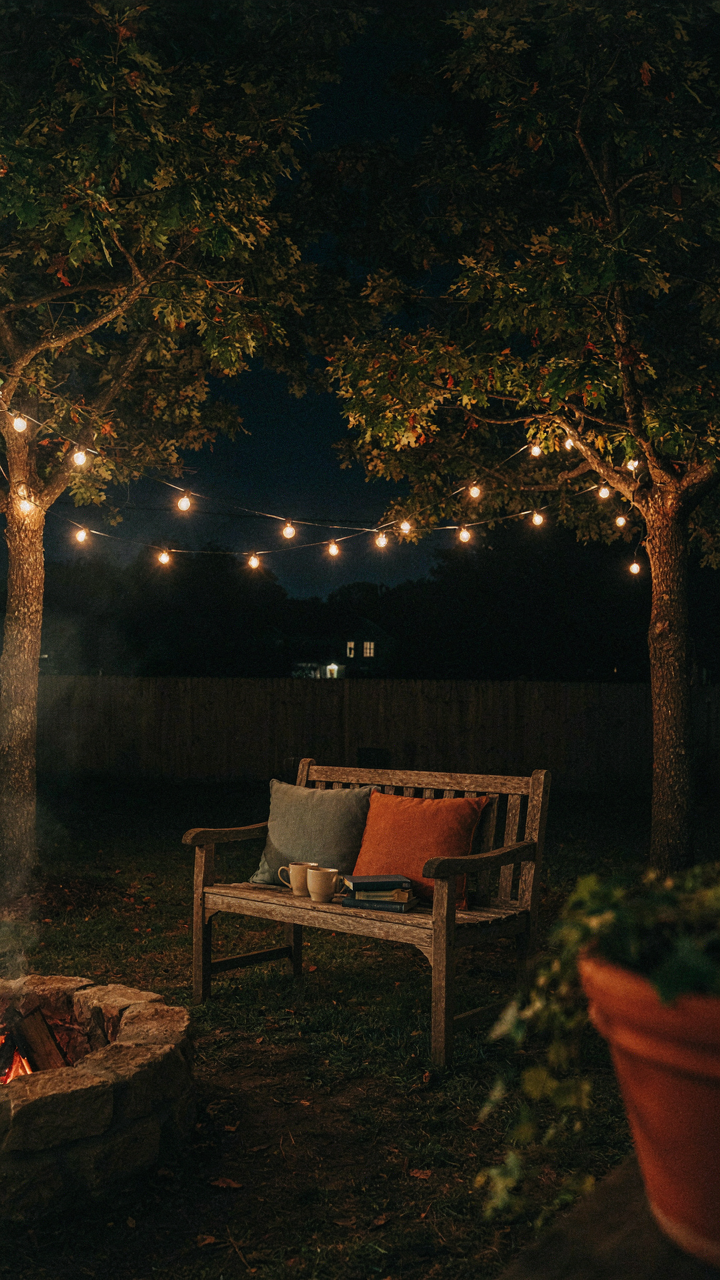
You want people to stay outside instead of drifting inside to your couch. Lighting is the lever. Most people throw up string lights and call it done, missing the actual mechanism: light directs attention and controls perceived space. Think of lighting as you would hierarchy in information architecture—each layer of light establishes what matters and what recedes. Visibility alone isn’t the goal. Direction is.
Strategic placement means you highlight what you designed (pumpkin clusters, hay bale seating, the food table) and conceal what kills mood (trash cans, fence edges, that corner of dead grass). Guide foot traffic through placement, not signage. People follow light paths without thinking about it. Position brighter sources near entry points and seating zones, dimmer accents deeper into the yard. This creates intentional flow.
Building Depth With Multiple Sources
Most people grab one string of lights and wonder why the yard feels flat. You need ambient light first—the baseline that lets people see without strain. This is your overhead layer: overhead strings, lanterns hung from trees, or uplighting on structures. Task lighting comes second: localized brightness around food prep, the bar area, or activity zones where people actually do things. Accent lighting is third—the mood layer that creates visual interest without functional purpose.
The layering prevents dead zones where guests clump uncomfortably. String lights alone leave gaps between strings where shadows pool and people avoid standing. Add uplighting on pumpkins or hay bales, position solar stake lights along pathways, and hang paper lanterns at varying heights to fill those voids. This multiplied approach costs less than one expensive installation and delivers 5x the perceived quality. End with a walk-through at dusk to identify any dark pockets, then add a single light source to each gap.
The “Bonfire Party” Atmospheric Blueprint
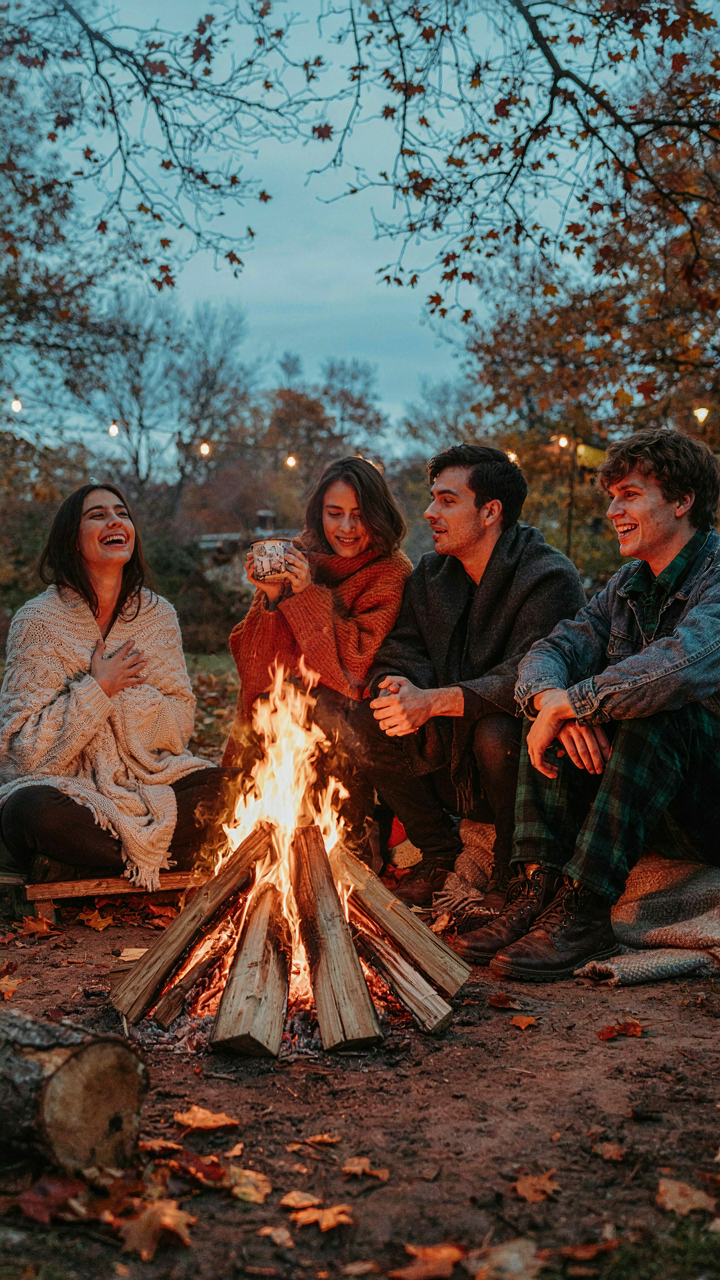
Heat Management Extends The Event Window
You want people to stay longer because extended time means more photos, more memories, more perceived value of hosting. That’s the real math. Thermal comfort is pure physics: objects lose heat to surroundings, and humans abandon environments when their core temperature drops below comfort threshold. Fire pits radiate heat in a cone pattern, effective only within 8-10 feet. Blankets work because they trap body heat rather than generate it. Space heaters rated for outdoor use fill dead zones where fire doesn’t reach.
Position the fire pit as the centerline, not decoration. Hay bales arranged in a semicircle around it create seating that doubles as insulation from ground cold. Layer blankets on each bale—wool retains warmth even when damp, cotton does not. Propane heaters work fast but require clearance from structures; position them at the perimeter where guests can access them without standing directly in front of the fire. Test your setup 30 minutes before guests arrive. People leave cold events early, period.
Layered Sensory Input Creates Immersion
Forget the advice that tells you to “add ambiance with scents and sounds.” That’s incomplete. Neuroscience calls this multisensory integration: the brain processes simultaneous inputs from different sensory channels and creates a unified perception of environment. A fall party with only visual elements (pumpkins, hay) registers as flat. Add one scent—cinnamon or woodsmoke—and the brain locks into “fall” faster. Add sound, and the experience becomes difficult to leave.
Cinnamon sticks placed near the fire pit release scent as heat rises. Woodsmoke from the fire is free and authentic. Play acoustic music or folk cover playlists at low volume—loud enough to register, quiet enough to allow conversation. Texture matters: have guests sit on hay and blankets, not chairs. The combination of warmth from the fire, rough texture of straw, woody smoke smell, and ambient sound creates a memory the brain files as “significant.” This is why people remember the event weeks later. Stack dried corn stalks near the fire for both texture and additional scent when they warm up.
The Permaculture Approach To Decor (Fall Fest Party Ideas)
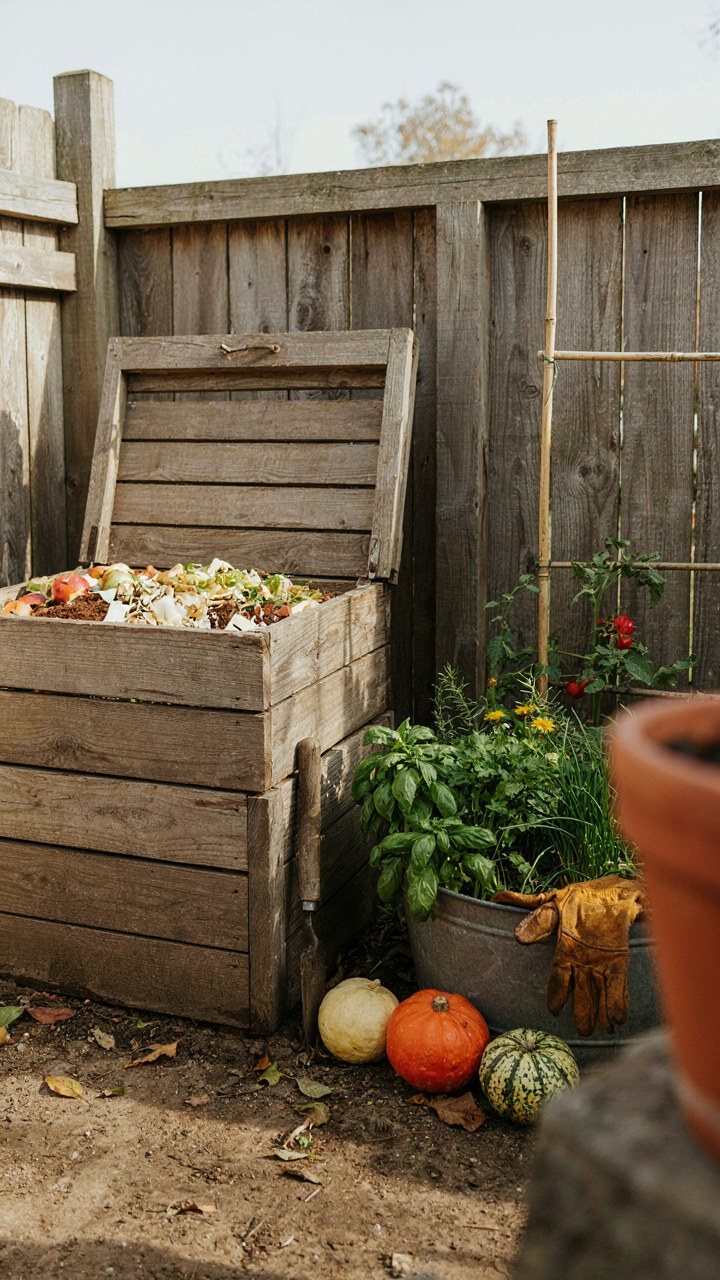
Elements That Earn Their Space
You want your fall party to look intentional without looking like you hired someone. That requires abandoning the idea that decor exists only to be looked at. Permaculture operates on stacking functions: every element performs multiple roles simultaneously. Your hay bales don’t just stage pumpkins. They provide seating, define the gathering zone, act as windbreaks, insulate the ground for outdoor comfort, and break up sight lines that make backyards feel flat. Pumpkins don’t just sit there orange and round. They’re edible after the party, they’re natural soil amendments when broken down, they anchor smaller decorative pieces, and their weight stabilizes arrangements in wind.
Stop treating decoration and utility as separate categories. The moment you see them as one system, you stop overspending on things nobody needs. Lay out your space first by where people actually sit and move. Place hay bales along those pathways. Cluster pumpkins where they frame views or create natural focal points. This forces every piece to work. Nothing exists purely for Instagram. Your setup becomes efficient because it has to be.
Patterns That Match What Already Works
Nature doesn’t do random. It uses recursive patterns that repeat at different scales because they’re mechanically sound. In design biology, this is called fractal patterning: the same structure appears whether you’re looking at a pinecone, a spiral galaxy, or a river system. Your fall yard contains the same patterns already. Spiral arrangements happen naturally when pumpkins cluster around a center point. Branching happens when hay bales create pathways that split off from a main zone. Layering happens when you stack sizes from ground level up.
Copy these patterns into your decor intentionally. Arrange pumpkins in concentric circles rather than straight lines. Use hay bales to create branching pathways that funnel guests toward key areas. Stack smaller gourds on top of bales at varying heights to mimic the layering you see in actual forest edges. This feels right because your brain recognizes the patterns from nature. It registers as complete and coherent without your guests knowing why. The mechanism is recognition, not decoration. Patterns your eye already accepts require no mental processing effort.
Debunking “Effortless”: The Strategic Fall Backyard Party
The Aesthetic You Plan Beats The Accident You Hope For

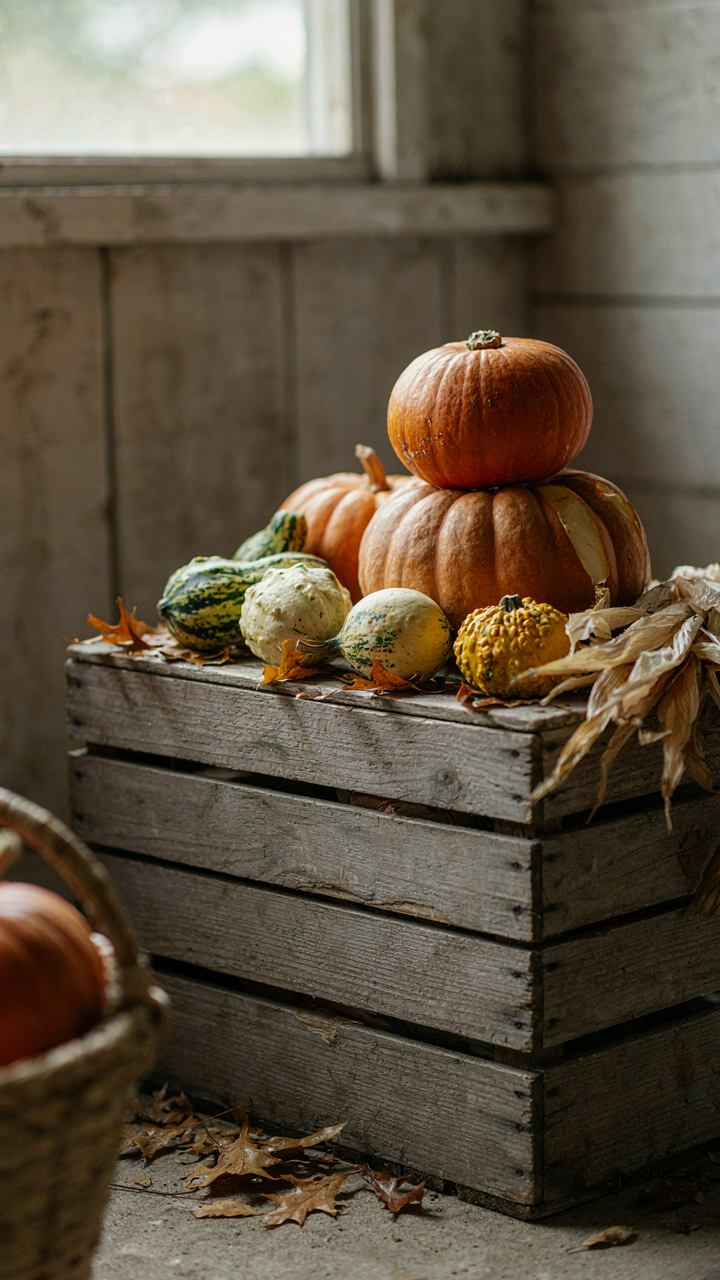
You want people to think you didn’t try. That’s the real anxiety driving this section. The mechanism is simple: perceived effort kills status. So you stage imperfection instead of chasing polish. Controlled asymmetry beats symmetrical precision. A hay bale positioned at an angle reads as organic. Centered and level reads as trying too hard. Pumpkins clustered in threes or fives create visual rhythm. Evenly spaced pumpkins signal overthinking. The gap between “looks effortless” and “is effortless” is where the actual work happens.
Most people assume fall decor defaults to charming. It doesn’t. Randomness looks lazy, not curated. You need a visual anchor point—usually your largest pumpkins or hay bale grouping—then build asymmetrical balance around it. Test this layout on a phone photo from fifteen feet away. If it reads as intentional from that distance, the distance disappears at party time. If it reads as haphazard, guests notice the disorder before they notice anything else. The cognitive load of visual chaos drains the room’s energy before the first person arrives.
Pre Visualize, Then Stress Test Your Setup
Most people set up the morning of. Terrible move. You’ll make substitutions under time pressure, the weather will force last-minute pivots, and you’ll lack the mental space to problem-solve. Do this instead: scout your backyard space seventy-two hours before the party. Photograph the light at the time your guests arrive. Identify shadow zones. Note where wind channels through fence gaps. Hay bales break down and compress unpredictably. Buy two extra bales and test how they stack and position. Pumpkins roll or tip if you place them on uneven ground. Walk every inch of your setup zone with boots on to catch dips and holes.
Build a rough layout using cardboard boxes as pumpkin placeholders and outdoor cushions as hay bales. Take photos from multiple angles. This step costs zero money and reveals every logistical problem before execution. You’ll catch sight line issues—blocked pathways, clusters that obstruct conversation flow, lighting gaps. You’ll confirm pumpkin sizes work at scale. You’ll know exactly which corner needs height variation and which needs visual weight redistribution. On party day, you move actual materials to pre-marked positions, adjust for real-time conditions, and finish with strategic buffer time rather than panic. The setup becomes installation, not creation.
Beyond The Instagram Shot: The Real ROI Of Fall Backyard Party Ideas
Memories As Currency
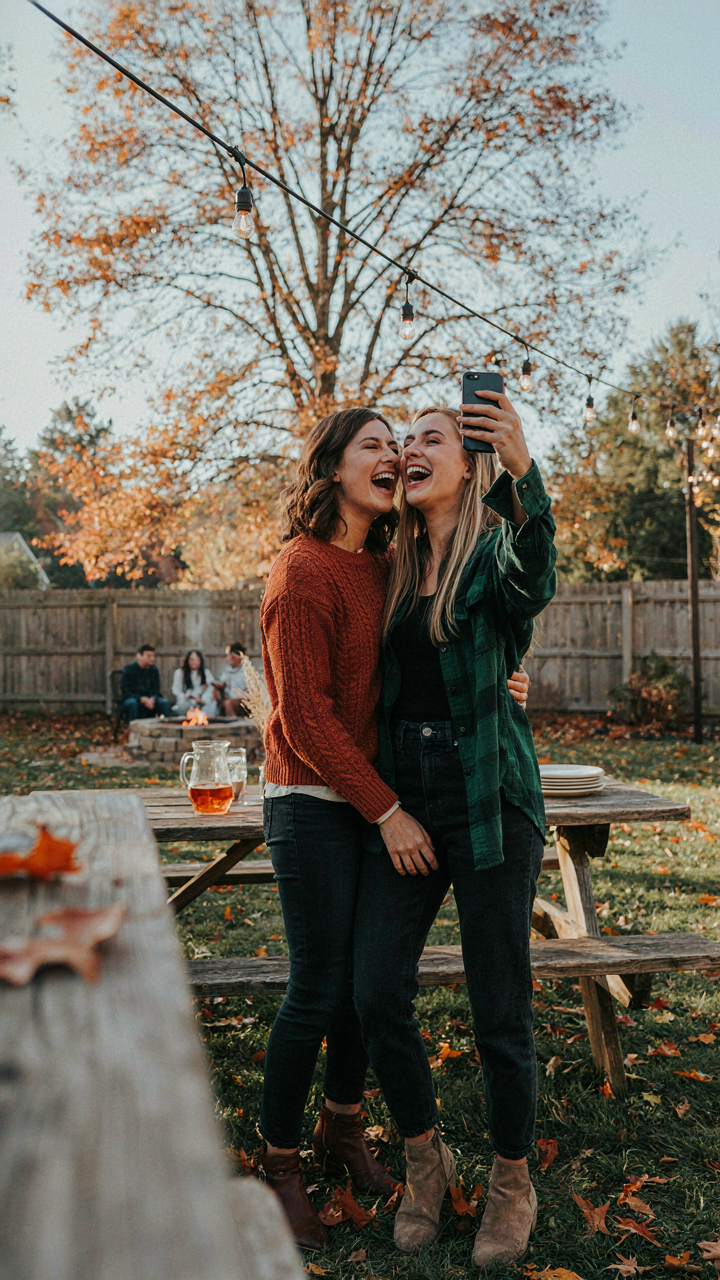
You’re reading this because you want proof that effort converts to worth. Here’s the mechanism: memory formation requires social presence and sensory novelty, not production value. A fall backyard party creates recall through participation, not polish. Your guests remember who was there and what they felt, not whether the hay bales were stacked at the optimal angle. The pumpkins and decorations serve one job: anchoring the moment so the brain stores it. That’s not decoration. That’s infrastructure for memory.
The economics of this are straightforward. A moment people actually remember generates behavioral loyalty that lasts years. Someone who recalls a specific October evening at your place will show up to future events, recommend you to others, and maintain social connection with less friction than someone who just attended a flawless but forgettable gathering. The production value doesn’t drive memory formation. Genuine interaction does. The hay bales and pumpkins just remove friction from that interaction by creating an obvious gathering place and giving people something to physically engage with.
Authenticity Trumps Trends
The common advice says chase seasonal trends to stay relevant. Wrong framing. Trends die in weeks. Authenticity compounds. When you host a fall backyard party that reflects actual preferences instead of what decor blogs dictate, you create something guests recognize as yours. They return because they know what to expect: your specific aesthetic, your specific crowd, your specific vibe. Pumpkins and hay bales work because they’re regionally grounded and seasonally logical, not because they’re trending. Lasting impact comes from consistency, not novelty.
The protocol is simple: decide what a fall gathering means to you, then build from that foundation instead of from Pinterest boards. If you prefer minimal decor, use pumpkins strategically rather than saturating the space. If you prefer abundance, commit fully without hedging. Either choice, executed with conviction, reads as authentic. Guests sense the difference between a party designed around actual preference and a party designed around perceived expectations. Execute one approach completely rather than mixing signals with half measures.
Your Party Isn’t Bland Because Of The Decor; It’s Bland Because Your Approach Lacks Strategic Intent
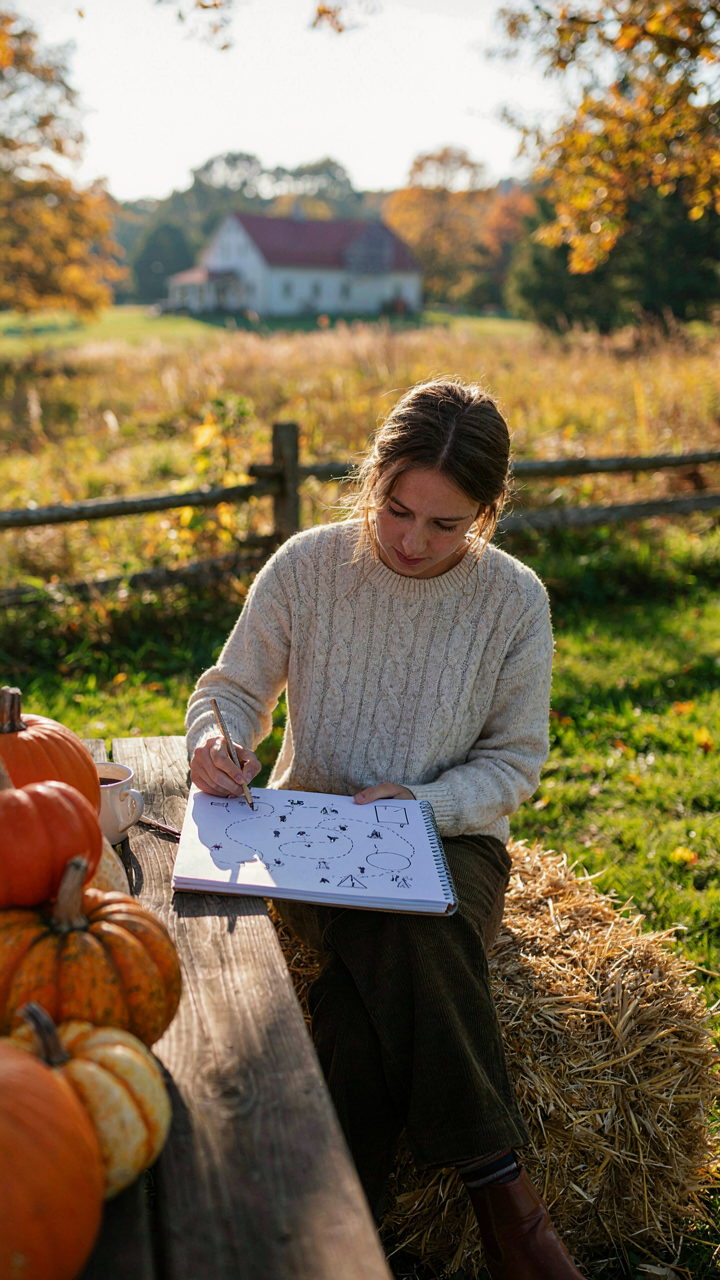
Most people buy pumpkins and hay bales because they saw Pinterest. You need to buy them because you’re building an atmosphere that makes people feel something specific. Before you touch a single decoration, decide what vibe you’re creating. Are guests coming to relax or to feel alive? Answer that first. Then arrange every element toward that single goal. Stop decorating by accident. Pick one thing today that contradicts the generic fall setup everyone else is doing, and commit to it fully. Your party won’t stand out because it matches the seasonal checklist better than the rest; it’ll stand out because you had the guts to break it.