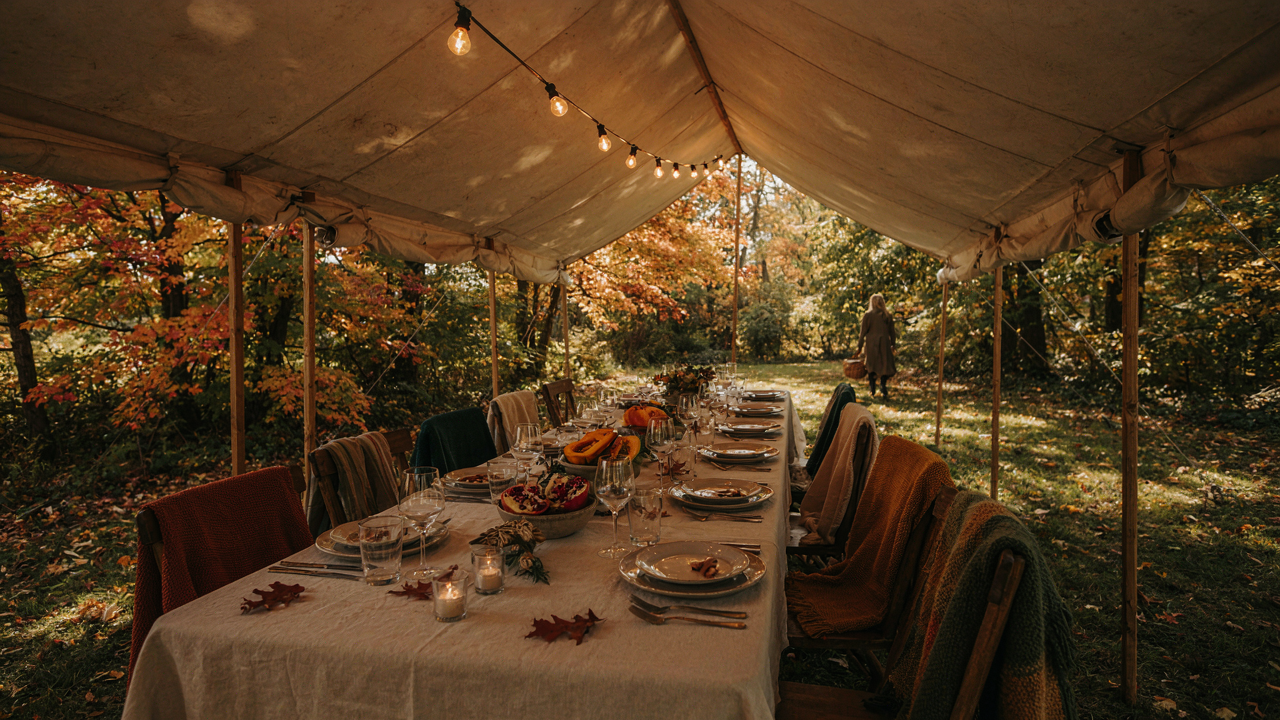
The Brutal Truth About Outdoor Thanksgiving
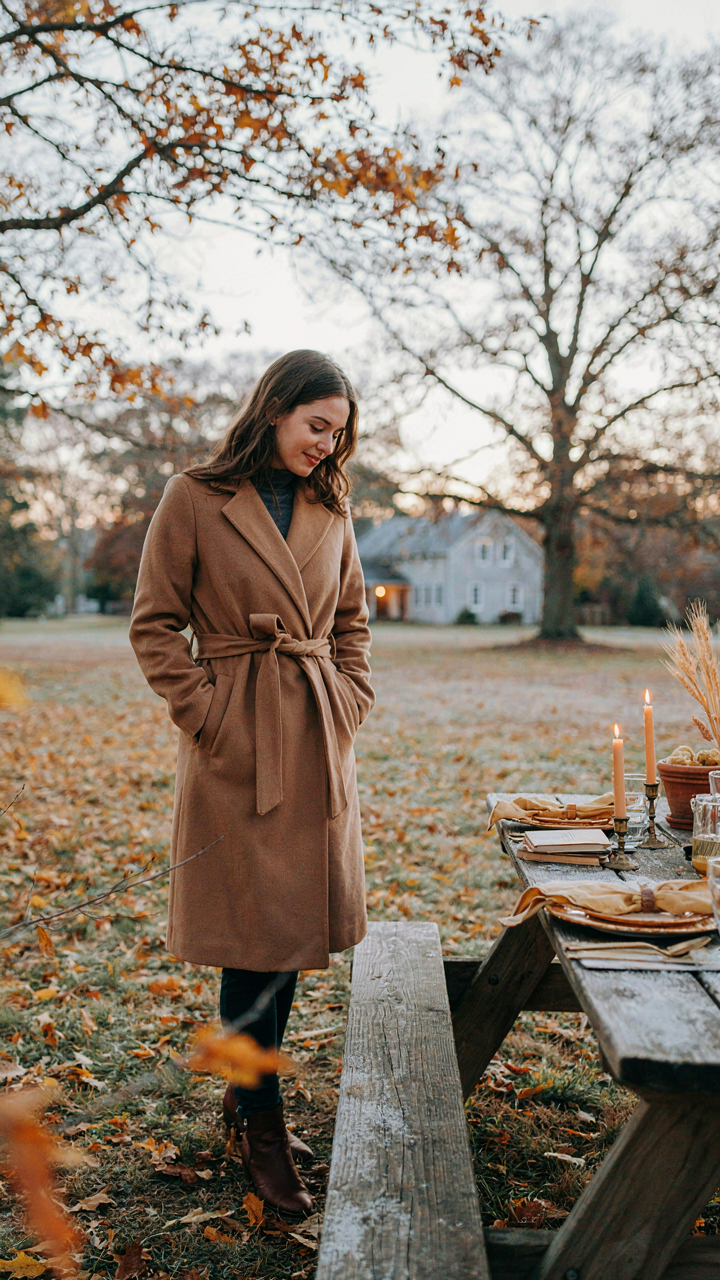
Your Backyard Isn’t A Magazine
You want people to think you’re the kind of person who hosts outdoors in November. That’s the real motive here, and it matters because that motive will make you buy things you don’t need and ignore what actually works. Outdoor dining operates on the same principle as thermodynamics: heat loss is constant and directional, so you either control the energy source or you fail. There’s no middle ground where intention and ambiance substitute for physics.
The magazine version of outdoor Thanksgiving doesn’t exist in November. Professional shoots happen in September with rented heaters, styled props, and models who aren’t actually eating. Real outdoor dining at this time of year requires a different framework entirely. You’re managing heat retention, not creating a scene. The sooner you abandon the fantasy, the sooner you build something functional.
Comfort Beats The Narrative
Comfort determines whether guests return or make excuses next year. Most people default to underestimating the cold, then overcompensate with expensive fire pits or heaters they barely use. The real mechanism is radiant heat: you need a continuous source nearby, not aspirational ambiance. A 40-degree evening demands active temperature control, not hope.
Start with the baseline: what temperature do you actually need to maintain? Work backward from there. Blankets, windbreaks, and overhead coverings solve the problem cheaper and more effectively than rental heaters. The best outdoor Thanksgiving dinner is the one where no one is thinking about being cold, which means you’re doing the thinking for them beforehand.
The Microclimate Mastery Method For Outdoor Thanksgiving
Where Heat Actually Goes

You want the dinner to feel warm without looking like you tried too hard. That’s the real calculation here. The mechanism is this: outdoor temperature isn’t the problem. Air movement is. Wind strips heat from surfaces and bodies faster than static cold ever will. A 45-degree windless evening feels tolerable. A 45-degree evening with 10 mph wind feels brutal. Trees, structures, and terrain create dead zones where wind dies. Position your table in one.
Identify existing natural barriers first. A tree line blocks wind from one direction. A house wall reflects and traps heat on its south or west face. A fence or hedge creates a pocket on its lee side. These aren’t decorative elements. They’re load-bearing infrastructure for comfort. Scout your property before you build the menu. The microclimate dictates what’s actually feasible.
Heat Retention And Radiant Release
Thermodynamics calls it radiation and convection. Outdoor Thanksgiving calls it the difference between guests staying or leaving early. Radiant heat moves through space without warming air. A fire pit, heater, or dark surface in sunlight releases energy outward in all directions. Convection moves heat through air itself, which is inefficient outside where wind disrupts it. Deploy radiant sources, not air-based heating, and position them where people gather.
Dark surfaces absorb solar radiation during the day and release it slowly as evening arrives. Concrete patio, dark tablecloth, even dark clothing on guests all contribute stored warmth. Reflective surfaces like white walls bounce heat away but can redirect radiant output from a fire pit back toward seating. Arrange your setup so radiant devices face the eating area directly. Measure success by whether guests remove layers, not by what a thermometer reads.
Beyond The Blanket: Strategic Heating For Your Outdoor Fall Dinner Party
The Heat Math Nobody Mentions
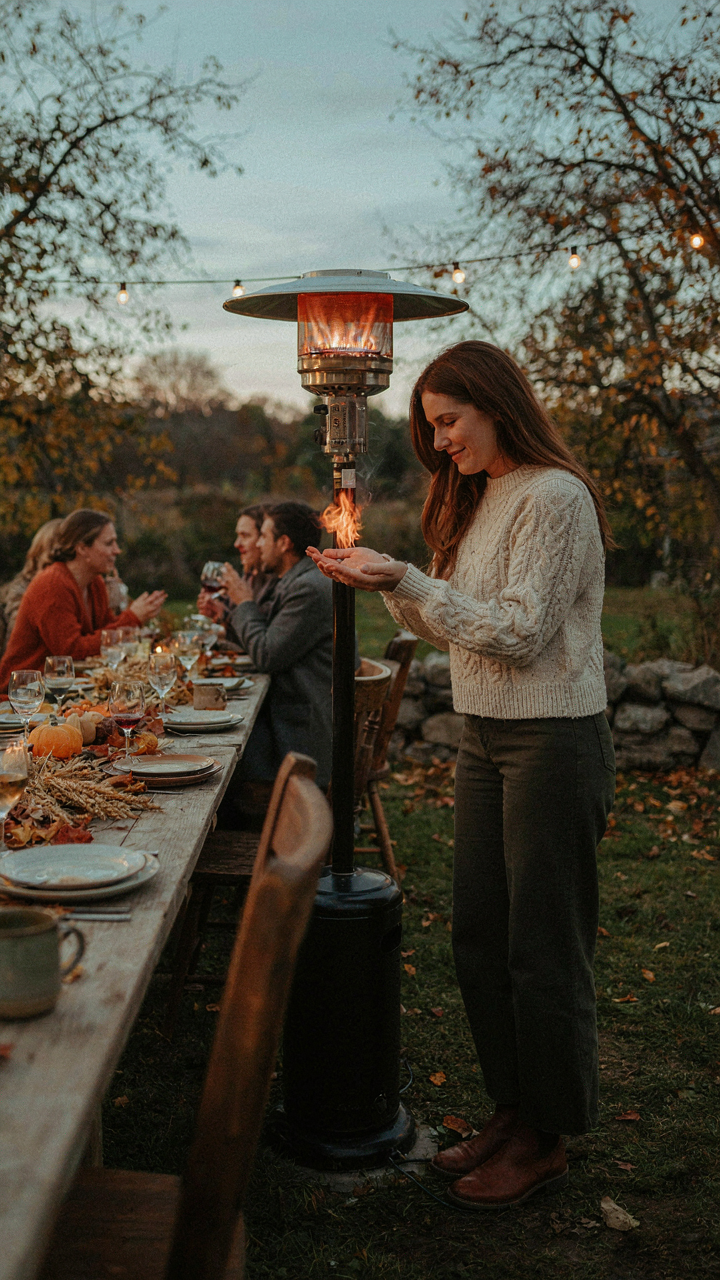
You want your guests comfortable so they stay longer and actually enjoy the food instead of counting minutes until they can leave. Here’s the mechanism: outdoor heating works on radiant transfer, not ambient air temperature. Unlike indoor heating that warms a closed space, outdoor heaters emit infrared radiation that travels in straight lines and heats objects and people directly. This means a 40-degree night feels bearable under a focused heat source even though the air temperature hasn’t changed. The math is physical, not psychological.
Propane patio heaters output 30,000 to 40,000 BTUs and heat a 15-foot radius effectively. Tabletop models run smaller at 10,000 to 12,000 BTUs but work well for intimate seating clusters. Wood fire pits generate heat inconsistently and require active management. Electric infrared heaters plug into standard outlets and deliver steady warmth without fuel logistics. The choice depends on your setup scale and how much intervention you want to manage during dinner.
Placement That Actually Works
Heating placement is geometric, not decorative. Position heaters perpendicular to prevailing wind, not directly downwind where draft disperses the radiant field. If wind shifts during the meal, your guests freeze. Place heaters behind or beside seating zones, not in the center where they distract visually and create hot spots in the middle while perimeter guests stay cold. Low mounting heights work better than tall stands because heat rises and disperses.
Stagger multiple heaters around the table rather than clustering them in one corner. Space them 8 to 10 feet apart so radiant zones overlap. Test positioning before guests arrive by standing at each seat for 30 seconds and assessing whether you feel direct warmth. If you don’t feel it immediately, guests won’t either. Adjust heaters 2 to 3 feet until the warmth reaches every seat consistently.
The Un Instagrammable Outdoor Thanksgiving Table
Abandon The Centerpiece Trap

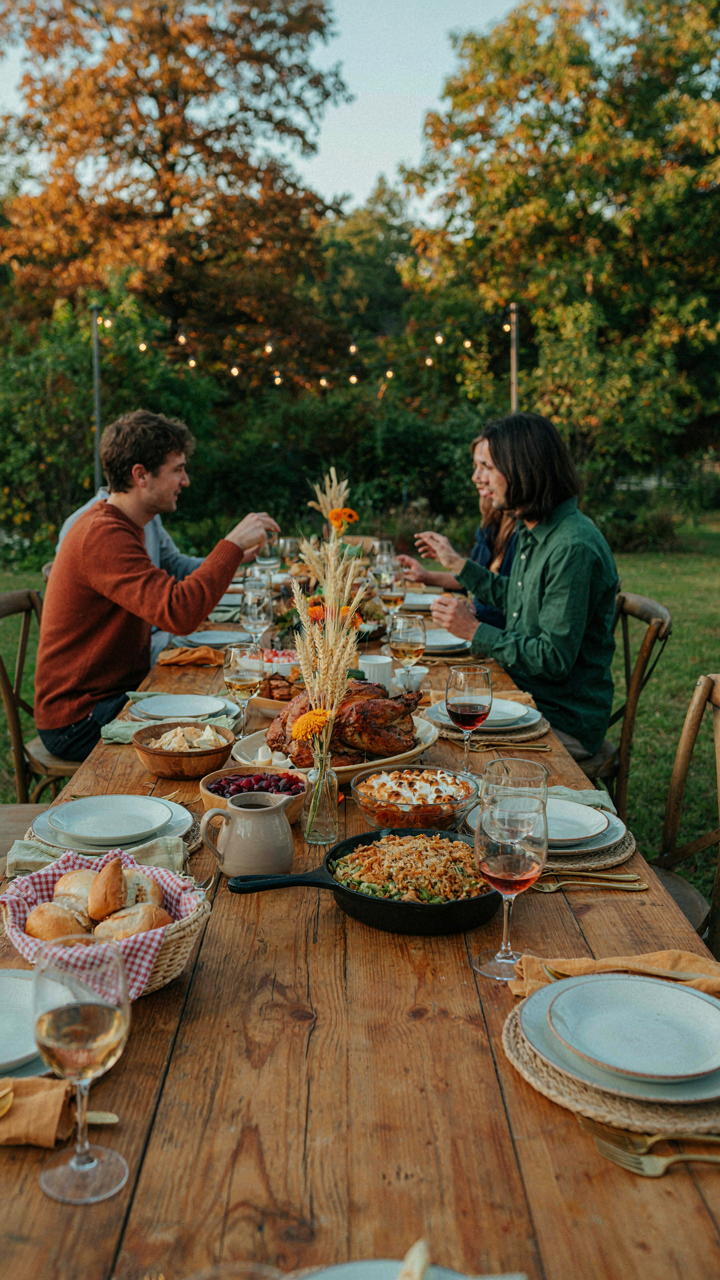
You want the table to look intentional, not like you didn’t try. That’s the real fear here. But the mechanism is simple: a centerpiece is theater for people who aren’t eating. It blocks sightlines, takes up real estate, and forces guests to move food around it. Outdoor tables have different physics than indoor ones. Wind, uneven ground, and space constraints make a focal point liability instead of asset.
Skip the elaborate arrangement entirely. Use that table space for what people actually need: serving dishes, condiments, water pitchers, and elbow room. A single low element—potted mums or a simple wooden board with bread—works if you need something. But most outdoor Thanksgiving tables function better without it. The meal itself becomes the visual.
Surfaces That Survive Neglect
Forced finery fails outdoors. You need materials that don’t demand apologies when someone spills wine or a gust kicks napkins around. Linen tablecloths wrinkle, tear, and require vigilance. Canvas drop cloths, burlap runners, or heavy cotton don’t. They’re honest. They look intentional when imperfect and cost a fraction of what you’d spend on something fragile.
Wood, galvanized metal, and concrete as table surfaces beat polished finishes every time. They age visibly and look better for it. Use enamelware, ceramic, or durable stoneware instead of delicate plates. Your guests won’t notice the difference in quality once they’re eating and warm. They’ll notice if your setup requires constant adjustment.
Weatherproofing Your Friendsgiving Table Ideas
When Weather Turns The Meal Into A Liability

You’re worried your guests will leave early. That’s the real concern here, and it’s valid. Weather doesn’t ruin outdoor Thanksgiving dinners—poor contingency planning does. Think of this like military logistics: you need a primary position, a fallback position, and supply lines that work in both. Your table setup requires the same redundancy. Most people skip this entirely and hope for clear skies. That’s not a strategy.
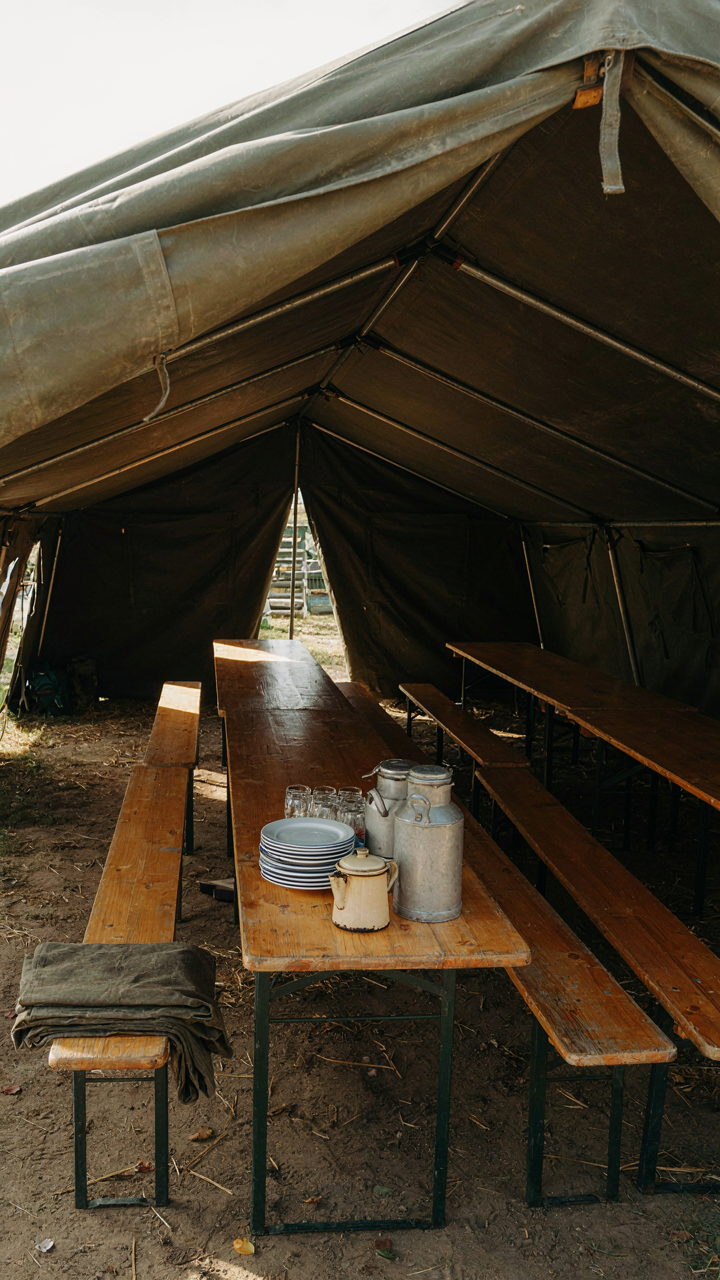
Your contingency plan lives in three tiers. Tier one: have a covered space ready within thirty seconds of needing it—a garage, screened porch, or tent already erected. Tier two: know your threshold for abandoning outdoor service before guests arrive, not when rain starts. Tier three: pre-stage indoor table configurations so you can pivot without chaos. The mechanism that stops disaster is deciding in advance, not deciding in the moment.
Anchoring Tables And Decor Against The Elements
Wind moves horizontally; rain moves at an angle; both accelerate table chaos. Secure elements against wind and rain before guests sit down, not after the first gust hits. The common advice to use tablecloths is incomplete—a tablecloth alone flaps and traps water, turning into a sail. You need weight and friction working together. Use tablecloths with clips rated for your local wind speed, or skip them entirely and anchor plates with non-slip mats underneath instead.
Centerpieces get top-heavy and catch wind like sails. Lower your arrangements to table height and use a weighted vase or secure it with museum putty rated for outdoor use. Serving dishes need lids or domes; open platters become weather collection systems. Place serving tables where tree cover or structures block crosswinds. The protocol: test your setup in isolation before guests arrive, simulate wind by walking past tables quickly, and adjust based on what moves.
The Logistics Of Outdoor Thanksgiving Dinner
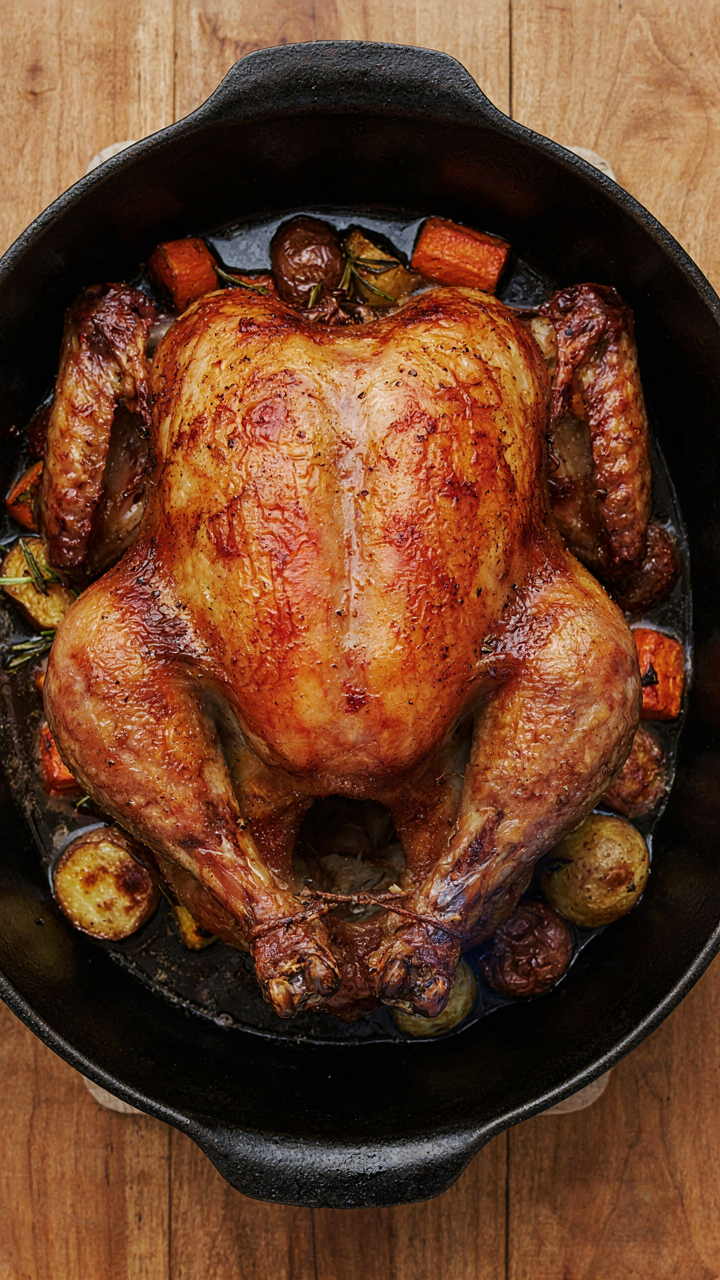
Getting Food From Kitchen To Table

You care about this because you’re afraid the food will arrive cold and you’ll look incompetent. That’s the real fear. The mechanism is simple: heat loss accelerates exponentially once food leaves the controlled environment of your kitchen. Temperature drops fastest in the first five minutes of transit. You need to minimize that window and insulate aggressively during it.
Use insulated carriers, not decorative serving dishes. Line them with towels, add aluminum foil barriers, and keep lids sealed until the last possible moment. Hot foods lose temperature through conduction (direct contact with cold surfaces), convection (air circulation), and radiation (heat escaping into cooler surroundings). You control conduction by adding layers. You control convection by keeping containers sealed. You control radiation by covering everything. Serve in waves—not all at once. This keeps late arrivals hot and lets you troubleshoot without losing your entire meal to cold air exposure.
Managing Trash And Leftovers Outside
The common advice here is wrong: people say “just put a trash bin nearby.” That fails because you’ll have three separate waste streams (compost, recycling, trash), guests won’t sort correctly in cold conditions, and you’ll spend an hour cleaning up scattered napkins and plates afterward. You need a sorting system that’s physically impossible to misuse.
Set up three clearly labeled containers at serving stations and the exit point. Position them so foot traffic naturally flows past them. Use dark bags so people see the container, not the bag. Collect plates as people finish eating—don’t wait for them to wander off with dishes. Scrape leftovers into one container, stack plates in another, then consolidate everything once guests leave. Keep a separate cooler for quality leftovers you’re actually saving, separate from the disposal pile.
Illumination: More Than Just String Lights For Thanksgiving Tablescapes Outdoor
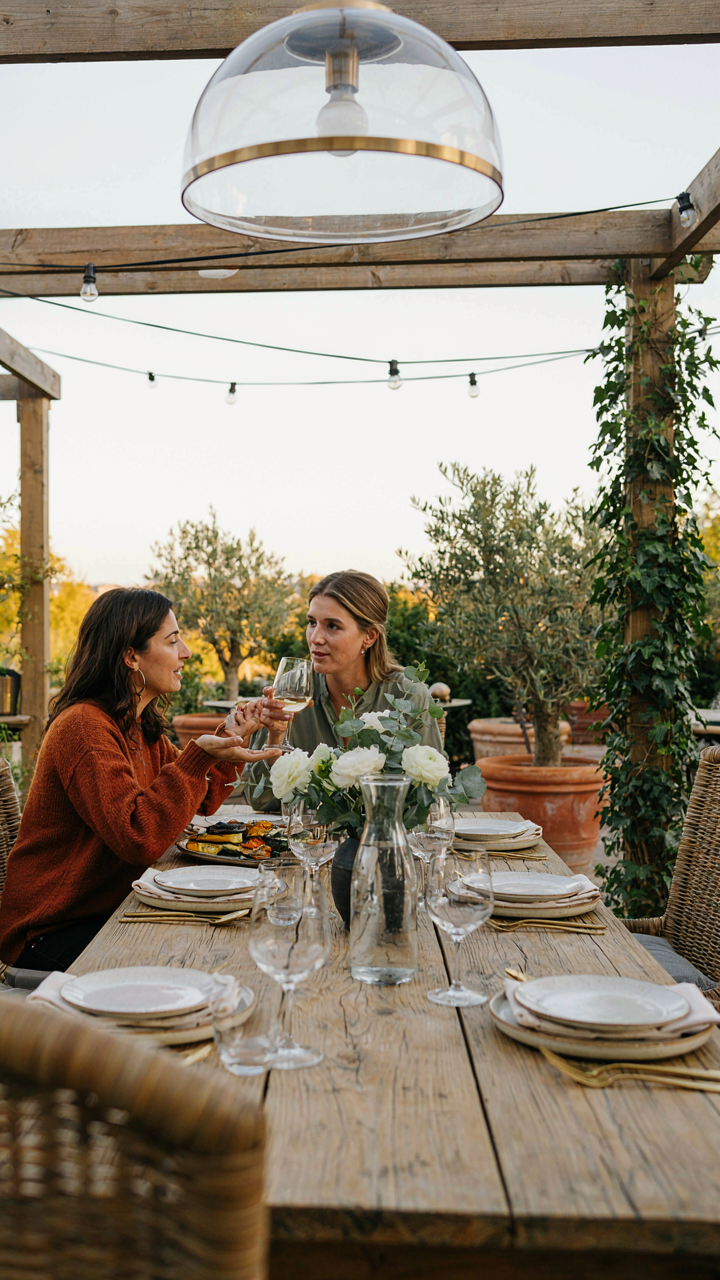
Layered Lighting Solves The Visibility Problem First

You want people to see your food and each other without looking like you’re running an interrogation. That’s the real motive. Lighting isn’t decoration here, it’s infrastructure. Apply the physics principle of light diffusion: multiple weak sources beat one strong source. String lights alone create pools of brightness surrounded by dead zones. Your guests navigate shadows and strain to cut turkey. Real outdoor thanksgiving lighting uses three distinct layers working together.
Task lighting handles the table itself. Overhead fixtures, pendant lights hung at seven feet, or focused spotlights on the food eliminate shadows on plates and faces. Ambient lighting fills the space between tables and seating areas so people move safely without tripping. Accent lighting highlights architectural elements, trees, or structures to define the dining zone boundaries. Each layer operates independently so you adjust intensity without killing the entire setup.
Power Source Logistics Determine What Actually Works
Most people run extension cords across the yard and hope. That fails when rain hits or someone trips the breaker. Your power source must handle the total wattage you’re running and sit in a protected location. Calculate your load: LED string lights draw 0.5 to 1 watt per bulb, task lights draw 40 to 100 watts each depending on type. A standard outdoor outlet handles 15 amps at 120 volts, which totals 1,800 watts maximum. That’s the hard limit you’re working within.
Run dedicated circuits if your home’s electrical panel allows it. If not, use a heavy-gauge extension cord rated for outdoor use, kept clear of foot traffic and water pooling. Battery-powered LED lights offer flexibility but need charging every four to six hours depending on capacity. Solar lights won’t generate enough output for task lighting in November darkness but work fine for accent layers. Test your entire setup during daylight to catch failures before guests arrive.
The Menu Manifesto: Adapting Food For Outdoor Dinner Table
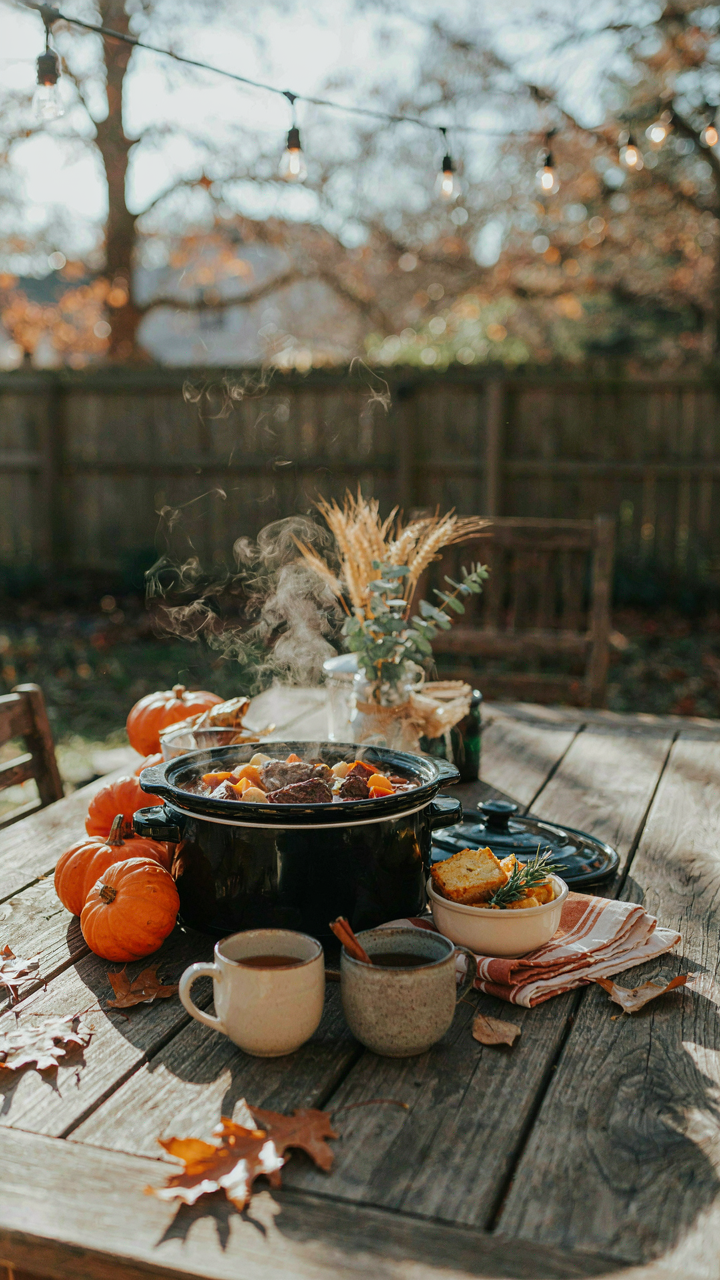
Dishes That Hold Their Structure In Cold

You want your food to look intentional, not abandoned. That’s the real fear here—serving something that looks like it’s already halfway through failing. The mechanism is simple: cold air contracts food, changes texture, and exposes weak preparation immediately. Hot dishes stay forgiving for a window. Cold dishes expose everything.
- Root vegetables and braises: Slow-cooked meats and root vegetables actually improve in cool air. They stay moist, hold their shape, and taste better at 50-60 degrees than at 140. The starch and collagen set properly.
- Bread and stuffing: Cool outdoor temps work in your favor here. Bread stays crisp on the outside longer. Stuffing holds structure and doesn’t dry out as fast as it would under heat lamps indoors.
- Grain-based sides: Quinoa, wild rice, and farro maintain texture better than mashed potatoes in cool weather. They don’t separate or weep. They actually taste better slightly cooled.
- Roasted poultry: Whole birds or large cuts hold temperature longer outdoors than you’d expect. Dark meat stays moist. The skin stays crisp without the sweat condensation that kills it indoors.
- Acidic preparations: Dishes with vinegar, citrus, or fermented elements taste sharper and fresher in cool air. Cranberry sauce, pickled vegetables, and vinegar-based gravies hit harder at lower temperatures.
The common mistake is treating outdoor Thanksgiving like a scaled-up indoor dinner. It’s not. Cool air is a tool, not a problem. Build your menu around what thrives when temperature stays constant and the environment doesn’t fight your food. Skip anything that depends on sustained heat to mask its flaws.
Temperature Management Without Infrastructure
Food safety outdoors isn’t about luck or hope—it’s about physics. Cold air below 50 degrees acts as a passive refrigerant. Above 60 degrees, you’re in the danger zone faster than indoors because there’s no insulation, no climate control, and nothing slowing bacterial growth. The real mistake most people make is confusing “it’s cool outside” with “food stays safe.” They don’t.
Use insulated serving vessels, not open platters. A cooler packed with ice underneath a table keeps dishes at 40 degrees or below. Keep hot foods in covered pots until the moment you plate them—the air itself won’t keep them hot, but a covered pot will hold warmth for an hour. Don’t plate everything early. Plate in batches as guests sit down. Raw vegetables, cheese, and bread can sit out longer than cooked proteins. Keep cooked turkey, stuffing, and gravy in insulated containers between refills, pulling only what you need.
The Guest Experience: Beyond The Food For Outdoor Thanksgiving

Comfort Infrastructure That Works

You want people to remember your event, not complain about being cold afterward. That’s the real math. Comfort is a logistics problem, not a vibe problem. Most hosts pretend amenities don’t matter because they’re unsexy to plan. They’re wrong. Cold guests leave early, eat less, and don’t talk to each other. Temperature control, wind breaks, and light create the container where actual connection happens.
- Heaters positioned at seating zones: Propane or electric patio heaters placed at least six feet from the dining perimeter warm the eating area without creating fire hazards or overwhelming the space with noise.
- Blankets and throws near seating: Stack wool or heavy cotton blankets on unused chairs before guests arrive. People use them without asking, and they cost less than renting heaters.
- Layered lighting on timers: String lights overhead plus battery-operated uplights on tables eliminate harsh shadows and signal the event ends at a specific time, giving people permission to leave.
- Wind barriers or natural screens: Arrange tables with buildings, fences, or trees as windbreaks. Even eight miles per hour wind cuts perceived temperature by five to ten degrees.
- Covered transition spaces: A tent or covered patio between indoor and outdoor areas lets guests move without temperature shock and gives stragglers a reason to gather before sitting.
The mistake hosts make is treating comfort as last minute. It’s not. You scout the site two weeks before and map where wind hits, where shade falls at 4pm, and which corners get dark after sunset. Then you position gear accordingly. Test your heaters the day before. Check that blankets are actually accessible and clean. This work happens before anyone shows up.
Presence Over Presentation
Everyone talks about conversation starters and table arrangements like those drive connection. They don’t. Conversation happens when you remove friction, not when you engineer it. The real mechanism comes from behavioral economics: people engage more deeply when their basic needs are met and they feel the host is actually paying attention. Your job is to be present and available, not performing.
Most outdoor Thanksgiving events fail because the host disappears into the kitchen or paces between zones trying to manage everything. That creates anxiety in guests. They feel abandoned. Instead, designate one person to handle food rotation and refills while you stay visible, move between groups, and ask specific questions about people’s actual lives. Thanksgiving is the one meal where people expect you to sit down. Do it. Your presence matters more than perfect timing on the second course.
The Real Obstacle Isn’t The Weather; It’s Your Expectation Of Perfection
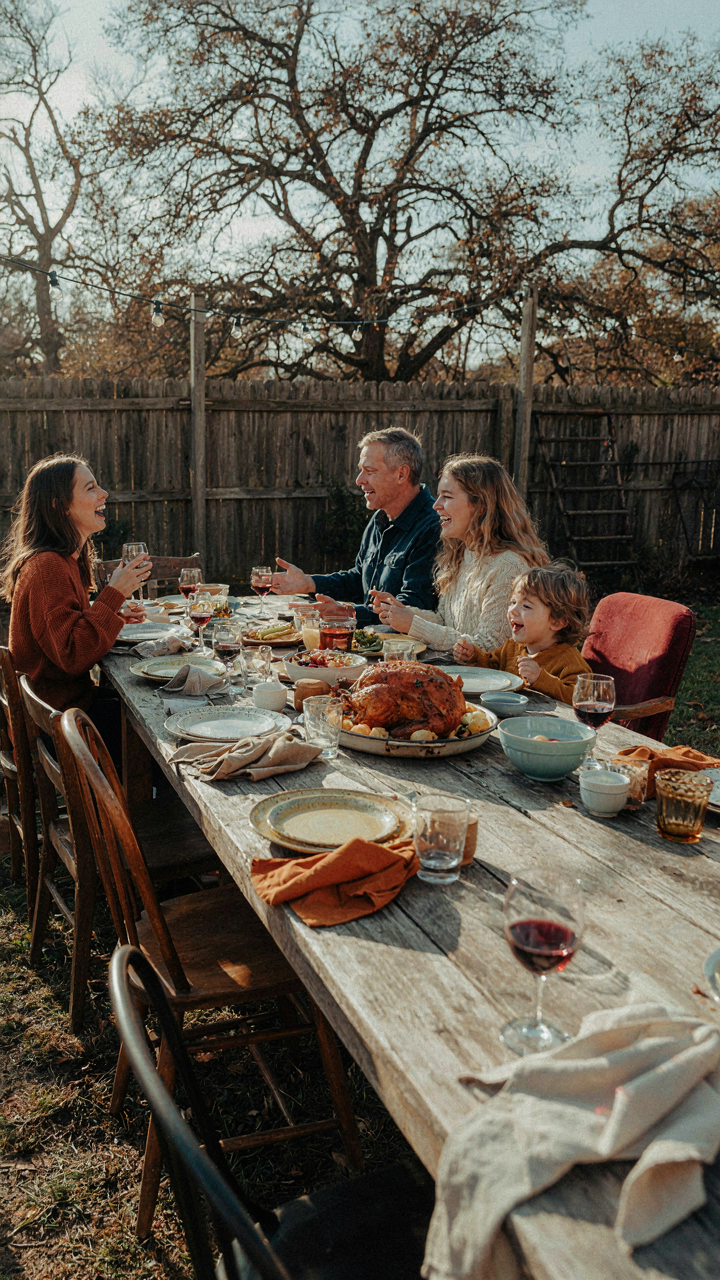
You’re not failing at outdoor Thanksgiving dinner because it’s cold. You’re failing because you’re trying to replicate your grandmother’s indoor fantasy outside. Stop it. Messy beats perfect. Cold turkey tastes the same as warm turkey. Your guests came for the experience, not a magazine shoot. Today, pick one element to let go of completely. Tomorrow, host like you actually believe that.