The Acoustic Illusion: Why “Quiet” Often Sounds Worse

Loudness Versus Decibels Are Not The Same Thing
You want to turn it down so neighbors don’t complain, but you’re terrified the party will sound dead. That tension is real, and it’s not about being paranoid. Human ears don’t perceive sound linearly. Psychoacoustics tells us that loudness is a sensory experience, not a measurement. A 60 decibel speaker at low frequencies disappears into the room. The same 60 decibels at mid-range frequencies feels invasive and present. You can reduce actual output while maintaining perceived volume by shifting frequency balance, not by cutting power across the board.
The mistake most people make is treating decibel reduction like a volume knob. It is not. A speaker pushing 85 dB of bass-heavy content travels through walls and soil. A speaker pushing 75 dB of mid and high-range only stays localized to your space. Your neighbor hears one as a problem. They barely notice the other. The mechanism is simple: low frequencies have longer wavelengths and penetrate structure. High frequencies dissipate quickly. Control the spectrum, not just the wattage.
Muffled Sound Triggers Listening Fatigue Faster
Turning down volume without EQ adjustment creates an acoustic dead zone that makes people lean in, talk louder, and unconsciously demand more from the system. This is psychology meeting physics. When clarity drops, the human brain works harder to extract meaning from speech and music. The party attendees respond by increasing their own volume to compensate. You end up with a worse neighbor situation because your guests forced the system to perform worse than it would at a properly tuned, slightly higher volume. Clear sound at moderate levels beats muddy sound at any level.
The fix is counterintuitive: boost treble and upper midrange slightly while reducing bass and low midrange by 3 to 6 dB. This makes 70 dB sound crisp and intelligible without the muffle that triggers fatigue. Your guests hear the music clearly, talk at normal levels, and the system never needs to climb in volume. Set your EQ before the party starts and measure it from the property line where it matters most, not from the speaker itself.
The Inverse Square Law: Your Secret Weapon Against Sound Bleed
How Sound Travels And Why Distance Matters

You care about this because you want to throw a party without your neighbors filing complaints or worse. Here’s what actually happens: sound doesn’t travel in a straight line like a beam. It radiates outward from the speaker in all directions, and the farther it goes, the weaker it gets. Physics calls this the inverse square law. In audio terms, every time you double your distance from a speaker, the sound pressure level drops by 6 decibels. This isn’t theory. This is how wave propagation works in open space.
Most backyard setups ignore this entirely and just crank volume. That’s the trap. Instead, treat your speaker placement like a strategic asset. Put the speaker 10 feet from your guests and 40 feet from the property line. At that distance multiplier alone, your neighbor receives roughly one-quarter the acoustic energy. You’re not just turning down volume. You’re redirecting where sound goes and how fast it dissipates. The math does the work for you.
Place Speakers On Your Side Of The Party
Directional speaker placement beats high wattage every single time. Mount or position your speakers to point toward the center of your party zone, not toward the edges of your property. Use the speakers as a boundary anchor, not a broadcast tower. If you elevate speakers 4 to 6 feet high on a stand, you create a coverage pocket. The sound reaches your guests before it scatters into the surrounding air. This isn’t about pointing speakers away from neighbors. It’s about controlling where the energy concentrates.
Cluster your guests tightly around the sound source. A 20-person party in a defined 30-by-30-foot zone requires far less speaker power than the same 20 people spread across your whole yard. The closer people are to the speaker, the lower you can set the volume and still have everyone hear clearly. This is the inverse square law working backward. Your neighbors experience half the decibels while your guests experience twice the clarity. Set up physical markers or furniture to define the listening area.
The “Golden Birthday” Sweet Spot: Defining Your Sound Perimeter
How Far Does Your Sound Actually Travel
You want neighbors to not hate you without killing your party vibe—that’s the real tension here. Sound propagates in all directions until obstacles stop it, following acoustic physics principles where distance and barriers control attenuation. Doubling your distance from the speaker reduces perceived volume by roughly 6 decibels, but this math only works if nothing blocks the path. Most people guess their sound’s reach and get it wrong because they don’t account for how terrain and structures bend acoustics unpredictably.
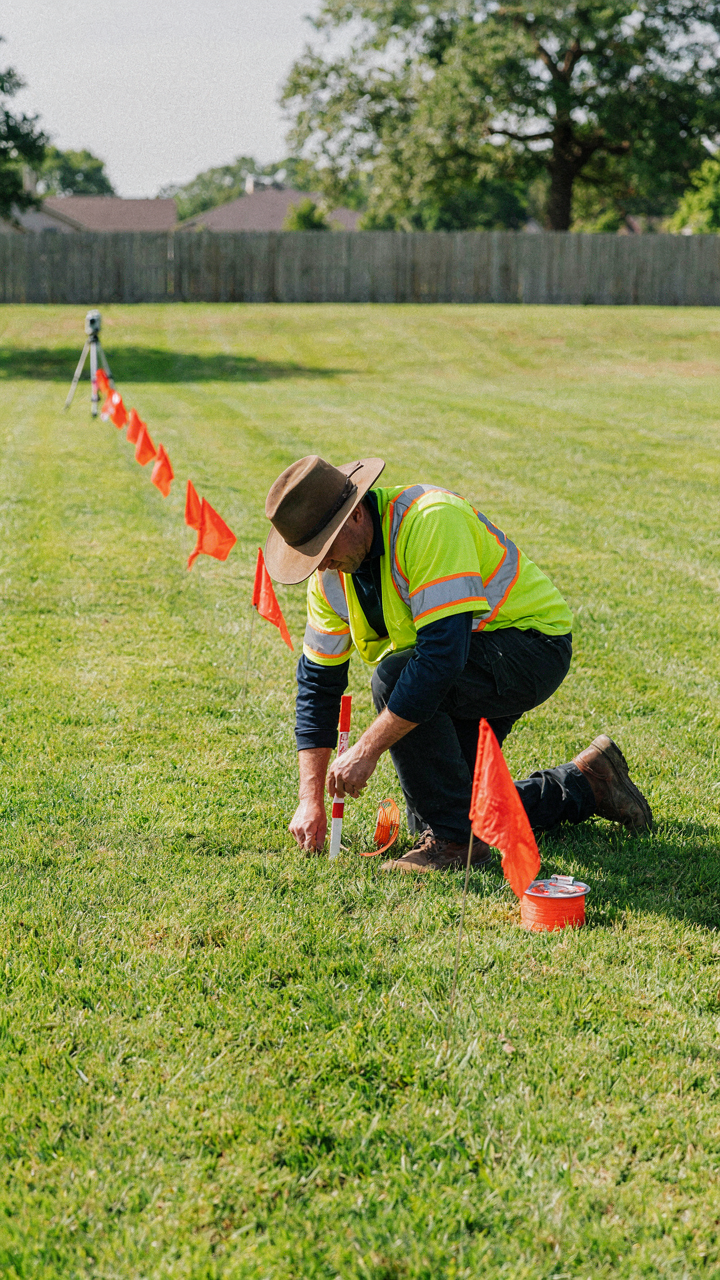
Measure your actual distances on a map or pacing. Mark where your property line ends, then add 50 feet beyond it. That zone matters because sound carries farther than your intuition suggests, especially at night when air density changes. Place a phone at speaker distance, play your setup at party volume, then walk the perimeter while recording decibel levels with a meter app. This tells you whether neighbors three houses down hear your bass or just perceive muffled rhythm.
Strategic Placement Beats Volume Control
Barriers stop sound waves from traveling linearly—this is the core mechanism from acoustic engineering that changes your setup. Dense barriers like solid fences, hedges, or earthen berms absorb or redirect sound rather than just reducing volume. Most setups fail because people maximize speaker volume and then try to fix the problem with distance, which wastes your party quality and annoys neighbors anyway since sound still travels.
Position your speakers against existing structures or install temporary barriers on the property line closest to neighbors. Stagger barriers at angles rather than flat walls, which bounce sound back into your yard unpredictably. Place speakers low and behind or inside dense coverage when possible—hedges at least six feet tall work better than fencing, and solid materials outperform gaps. The goal is blocking direct line-of-sight paths to neighboring windows and outdoor spaces, not achieving perfect silence everywhere.
The Outdoor DJ System: Why More Speakers Can Mean Less Annoyance
Distributed Audio Covers Ground Without Cranking Volume

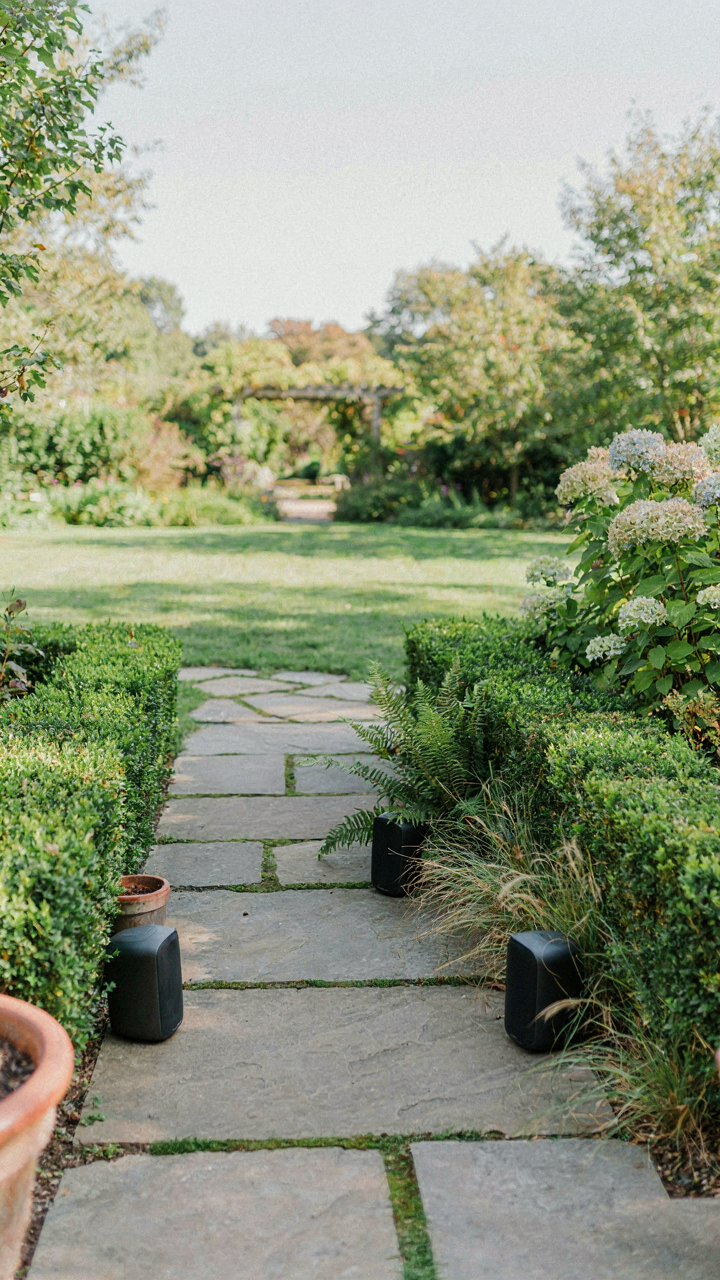
You want neighbors to forget your party exists, not remember it for weeks. The mechanism is simple: one loud speaker creates a pressure wave that travels outward and hits property lines hard. Multiple smaller speakers spread acoustic energy evenly across your yard, which means you hit the same perceived volume at every listening position while running each individual unit quieter.
Physics calls this the inverse square law. In audio terms, it means sound pressure drops as distance doubles. When you distribute speakers across your space instead of stacking power in one location, you’re fighting that law by resetting the distance calculation multiple times. A guest thirty feet from your DJ booth hears the same level as someone fifteen feet away because a second speaker handles that zone independently.
Sound Placement Kills Dead Zones And Hotspots
Most people string up two speakers and call it done. That creates exactly what kills a party vibe: some spots where bass disappears and others where vocals cut your ears. The real work is mapping your yard acoustically before the first guest arrives, then positioning speakers to overlap coverage without creating phasing issues where sound waves collide and cancel.
Use a simple test: walk your yard with a phone playing consistent music at a set volume, and note where the sound gets thin or boomy. Place secondary speakers to fill those gaps, not to add more volume everywhere. Mount them at ear level when seated, typically four to five feet high. Space them so overlap zones feel cohesive rather than doubled-up or thin.
The DJ Booth Blueprint: Strategic Speaker Orientation
Directing Sound Like A Weapon, Not A Broadcast

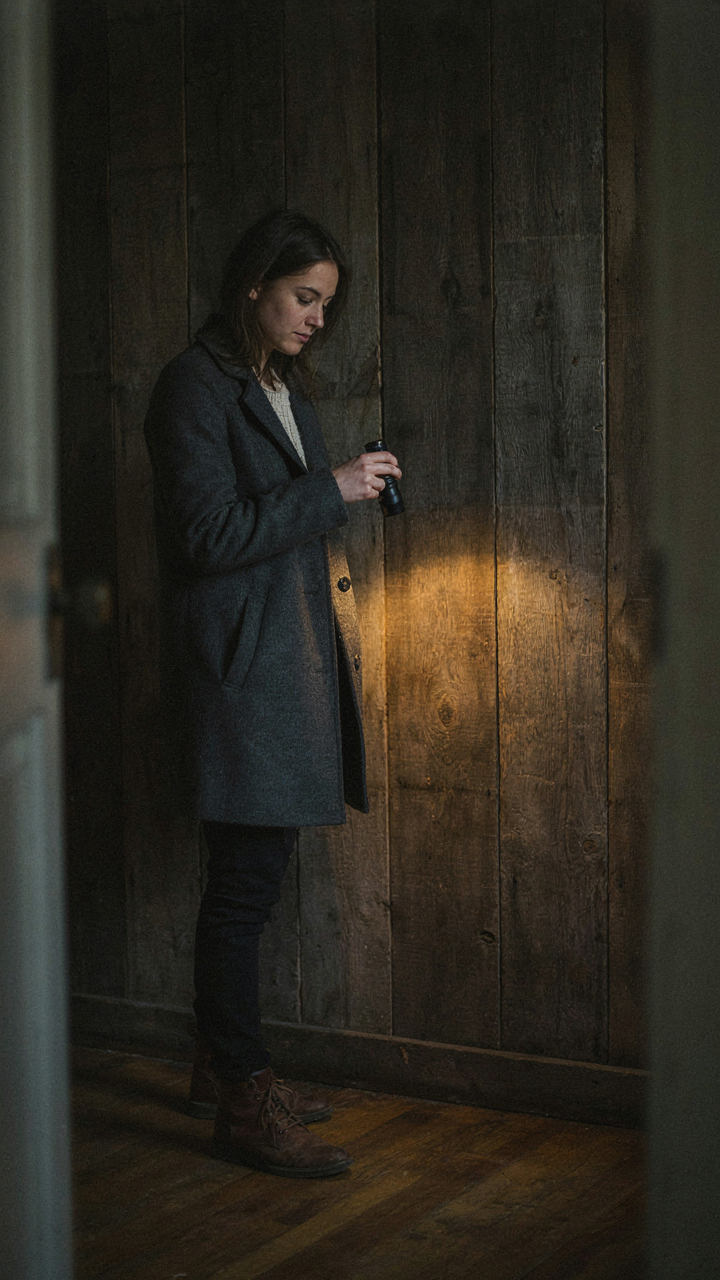
You want your neighbors to ignore the party, not resent it. That’s the real problem hiding under “speaker placement.” This isn’t about volume—it’s about beam control. Directional speakers work like a flashlight, not a lightbulb. Point them at your crowd, not at property lines. Most people buy omnidirectional speakers and wonder why sound bleeds everywhere. The mechanism is simple: speakers radiate sound in predictable patterns. Choose your speakers first based on their polar response, then position them accordingly.
Speakers with narrow dispersion patterns concentrate sound in a defined zone. Wide dispersion spreads sound across 180 degrees or more, guaranteeing neighbor complaints at identical volumes. A typical bookshelf speaker has narrower horizontal dispersion than a line array, which matters tactically. Check the manufacturer’s polar pattern diagram before buying. If it doesn’t exist, the speaker is probably omnidirectional garbage. Position narrow-dispersion speakers to face your seating area directly, not rotated outward.
Angles And Elevation Cut The Real Work In Half
Physics governs sound projection through direct pathways and reflections. Angle your speakers ten to fifteen degrees inward from the outer edges of your party zone. This convergence point contains sound within your intended space while reducing what travels sideways toward neighboring yards. Elevation changes the game more than most people realize. Speakers mounted at ear level when seated project horizontally. Elevate speakers four to six feet and they project downward into the crowd rather than continuing horizontally toward fences and adjacent properties.
Sound traveling downward dissipates faster through grass and ground absorption than sound traveling horizontally at fence height. Place main speakers on stands or mounted positions that angle slightly down toward your crowd’s head level. Delay speakers positioned farther back should sit lower to maintain even coverage without creating hot spots. Test the setup by walking the perimeter of your yard and listening for sound pressure changes. Adjust angles in five-degree increments until the sound feels contained within your space, then measure and lock those positions in.
The Backyard Band Party Protocol: Subwoofers For Clarity, Not Just Bass
Why Bass Feels Different Than Other Frequencies

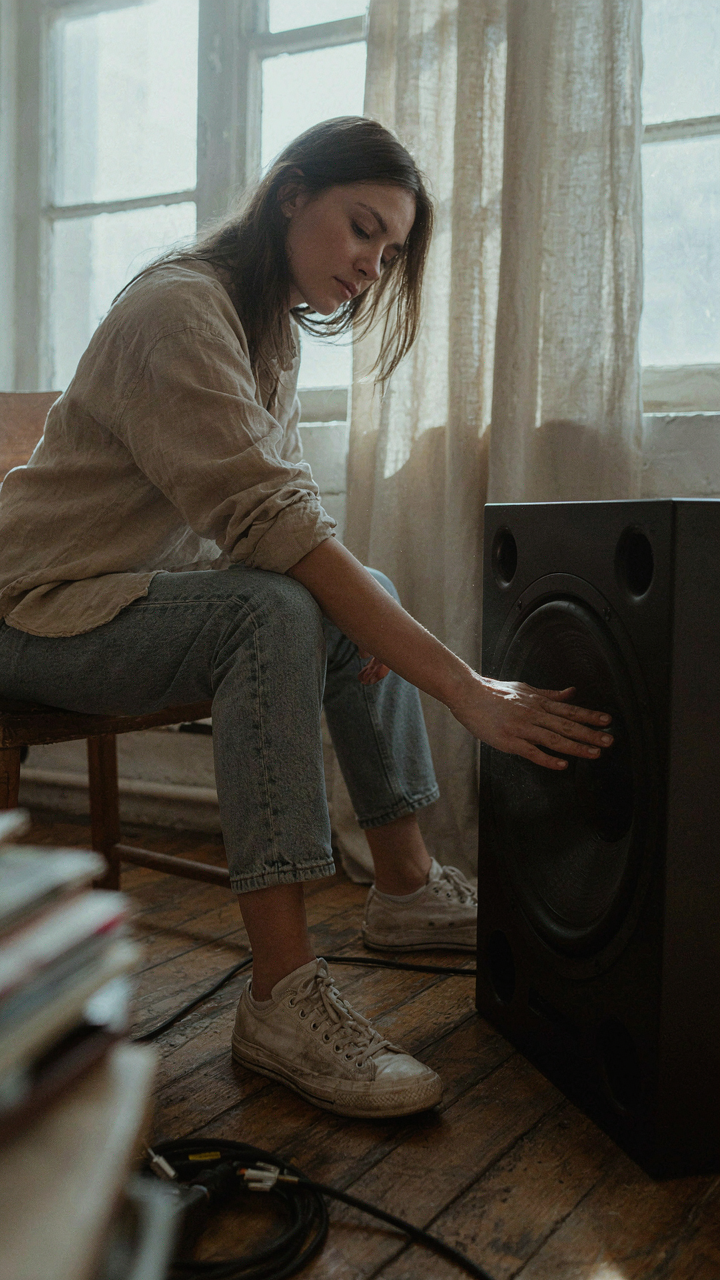
You want the subwoofer so neighbors don’t call the cops while your party still hits. That’s the real issue. Here’s the mechanism: psychoacoustics treats bass as a tactile sensation, not just sound. Below 80 Hz, your body feels pressure waves more than your ears process them as pitched audio. This is why a neighbor three houses down hears treble clearly but low end as a rumble they can’t locate. The human ear loses directional accuracy below 100 Hz, which means bass feels omnidirectional and invasive even at moderate volumes.
Subwoofers operate in a perceptual sweet spot where your guests feel impact without the sound propagating as easily through walls and across property lines. Low frequencies bend around obstacles differently than mids and highs, but they also dissipate faster indoors when managed correctly. Most people add subwoofers for “more bass,” which is backwards. You add them for controlled, localized bass that keeps energy inside your space and off your neighbor’s patio.
Strategic Subwoofer Placement For Felt, Not Heard, Bass
Place the subwoofer in a corner where two solid walls meet, never in the open middle of the yard. Corner placement amplifies bass response through boundary reinforcement, a physics principle where walls act as acoustic mirrors. This concentrates low frequency energy into your party zone instead of spreading it across the neighborhood. A subwoofer at the corner of your house and a fence creates a natural acoustic pocket that feels powerful to guests within ten feet but travels less distance to neighboring properties.
The specific corner matters more than the wattage. Position it where guests naturally congregate, not where sound travels toward fences. Keep the subwoofer pointed inward toward people, angled slightly up if it has directional tuning. Run it 6 to 8 dB lower than you think necessary. That low end should be felt in the chest, not heard as distortion or boom. Set crossover frequency between 80 and 120 Hz depending on your satellite speakers, then cut bass at the source instead of adding more subwoofer power.
The “Neighborly Buffer” Strategy: Creating Acoustic Fences
Deploy Distance As Your First Weapon

You want permission to throw the party without the guilt call at 10 PM. Here’s what military strategists call a buffer zone: physical space between your sound source and the property line where sound pressure drops predictably. Every doubling of distance reduces sound intensity by 6 decibels. Place speakers 20 feet from the fence instead of 5 feet, and you’ve already won half the battle before treating a single surface.
The mistake everyone makes is assuming speaker placement doesn’t matter if you “turn it down.” It does. Distance works geometrically. Sound spreads outward in all directions from your speakers. A speaker 30 feet from a neighbor’s bedroom window sends far less acoustic energy through their walls than the same speaker at 10 feet, regardless of volume setting. This is physics, not opinion. Position your main speakers pointing away from neighboring properties and toward the center of your yard where guests gather.
Absorption And Diffusion For Real Backyards
Sound either gets absorbed, reflected, or transmitted through materials. You can’t eliminate neighbors hearing your party, but you can strip the high frequencies that carry most of the annoyance. Absorption removes energy. Diffusion scatters it. Both work together in a backyard DJ setup to reduce what actually reaches the property line.
- Heavy fabric barriers: Hang outdoor curtains or canvas tarps between speakers and fences. Fabric absorbs mid and high frequencies before sound reaches hard reflective surfaces like wood or vinyl siding.
- Acoustic panels outdoors: Rigid fiberglass or mineral wool panels rated for outdoor use absorb more efficiently than fabric alone. Mount them on temporary stands behind or beside speakers, not against fences where they reflect into yards.
- Mass loading blankets: Professional movers use these. They’re dense and absorb low frequencies better than standard fabric. Drape them strategically around speaker placement zones to trap bass energy.
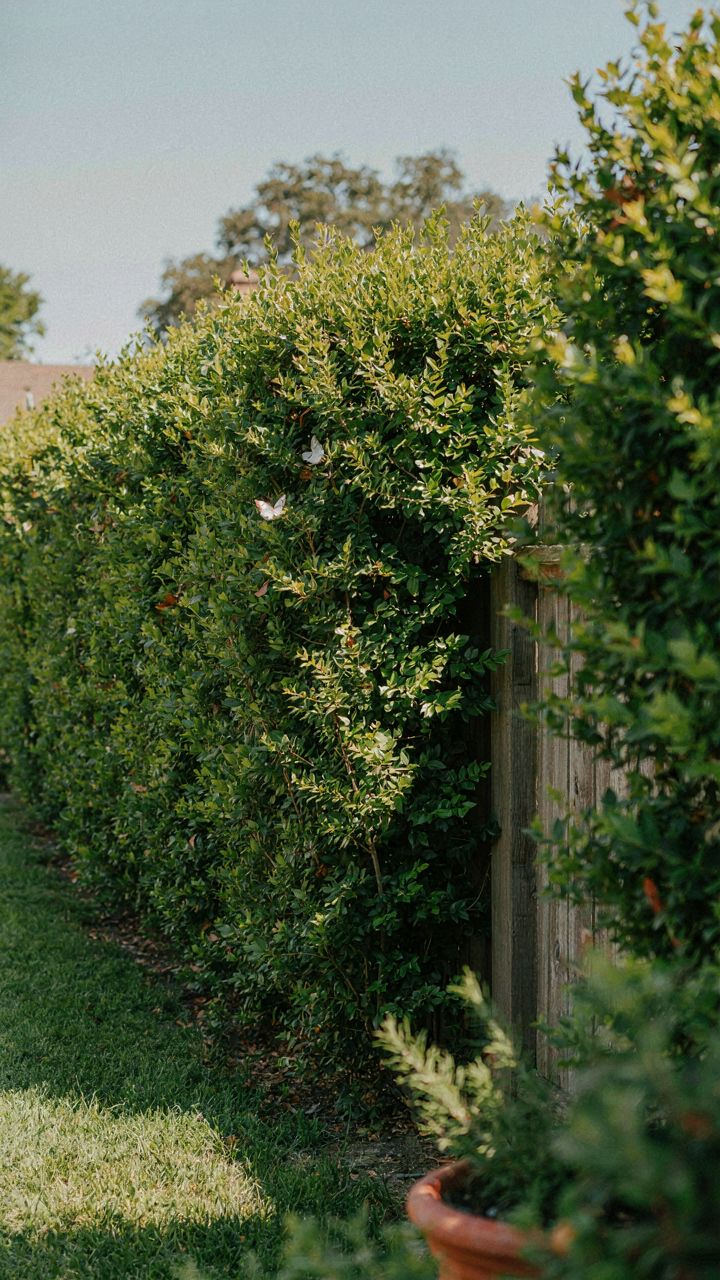
- Landscaping as buffer: Dense shrubs, hedges, and bamboo screens provide both absorption and psychological distance. They work best in layers rather than single-plant placement. Evergreens retain absorption year-round.
- Ground coupling reduction: Elevate speakers on rubber isolation pads instead of placing them directly on grass or pavement. This decouples vibration transmission into the earth, which travels far and excites neighboring structures.
The real leverage comes from combining methods. A single tarp does almost nothing. A tarp plus elevated speakers plus distance from the property line creates compounding effect. Start with distance as your baseline, then layer absorption materials progressively until you hit the acoustic performance you need. Measure your setup by walking to the fence line during a test run and adjusting speaker angle or adding material until the sound reaches acceptable levels at the property boundary.
The “Outdoor DJ” Calibration: Tuning Your Sound For The Open Air
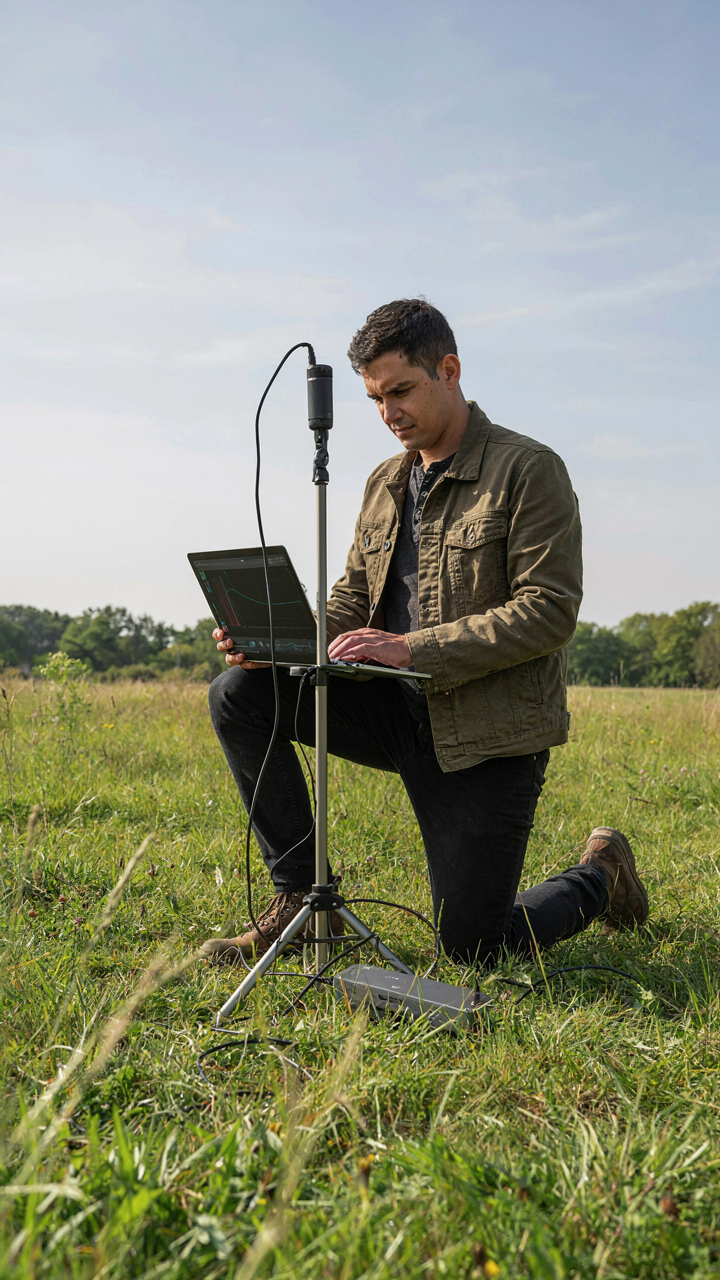
EQ Adjustments For Open Air Acoustics
You want your setup to sound controlled and intentional, not like you’re fighting the environment. Here’s the mechanism: outdoor sound behaves like acoustic physics in an untreated room, except there’s no room. Sound waves don’t bounce off barriers the way they do indoors. Instead, they disperse. Your ear perceives midrange frequencies as dominant because they travel without degradation, while bass drops off at distance and treble scatters. Boost bass by 3 to 6 decibels at 80 to 120 hertz, and reduce midrange harshness around 2 to 4 kilohertz by 2 to 3 decibels. This compensates for what the open air takes away.
Most party setups ignore this entirely and crank volume instead. That’s the trap. Start with your speaker’s built-in EQ settings if it has them, or use a separate equalizer between your source and amp. Test at the actual party location during daylight first. Walk twenty feet away and listen. Adjust treble down slightly if neighbors’ windows are within line of sight. The goal isn’t to make the system sound “better” in isolation. It’s to make it sound balanced where people will actually stand.
Frequency Ranges That Carry And Irritate
The common advice is to keep volume down. That’s incomplete. What matters is which frequencies you’re amplifying, because some travel and annoy faster than others. Treble above 4 kilohertz carries through walls and windows better than bass does. High-frequency energy is directional but persistent. A neighbor two houses over won’t hear your bass hitting 60 hertz, but they’ll hear a vocal sibilance peak at 8 kilohertz. It cuts through distance like a blade.
Roll off everything above 10 kilohertz using your speaker’s treble control or a parametric EQ. Reduce presence peaks around 5 to 8 kilohertz by 4 to 6 decibels. Avoid vinyl or compressed digital sources that have exaggerated treble artifacts. Most streaming services compress audio to save bandwidth, which pushes high frequencies forward. This is why a party from a Spotify playlist sounds harsher than one from a local FLAC file at the same volume. Your neighbors perceive harshness not as loudness but as aggression. Control treble and you control perception.
The Backyard DJ Party Communication Code: Proactive Neighbor Engagement

Tell Them Before They Complain

You want to throw a party without feeling guilty or getting the cops called. That’s the real fear here. The mechanism is simple: neighbors don’t resent noise they anticipated. They resent surprise noise that violates their sense of control over their own space. Give them control through advance notice, and you eliminate the complaint before it forms.
Reach out 3 to 7 days before the event. A direct conversation beats a note every time. Tell them the start time, end time, and music type. Mention you’re managing volume with directional speakers. This isn’t asking permission—you’re setting a frame where they’re already informed. Most neighbors accept what they see coming. They reject what ambushes them.
Offer Specifics, Not Apologies
Generic “we’ll keep it down” statements fail because they’re unverifiable. Neighbors can’t hold you accountable to a feeling. Instead, give them concrete variables they can track: music stops at 10 PM, you’re using a subwoofer directional setup aimed away from their property line, guests park on your side only, no amplified vocals after 9 PM.
Include a direct contact method—your phone number, not your friend’s. This signals you take the commitment seriously and gives them a release valve for minor issues before they escalate to authorities. Position yourself as someone who solves problems in real time, not someone they need to bypass. This transforms you from a variable they can’t predict into a stakeholder they can communicate with.
The “DJ Setup” Of Respect: Knowing When To Fold ‘Em
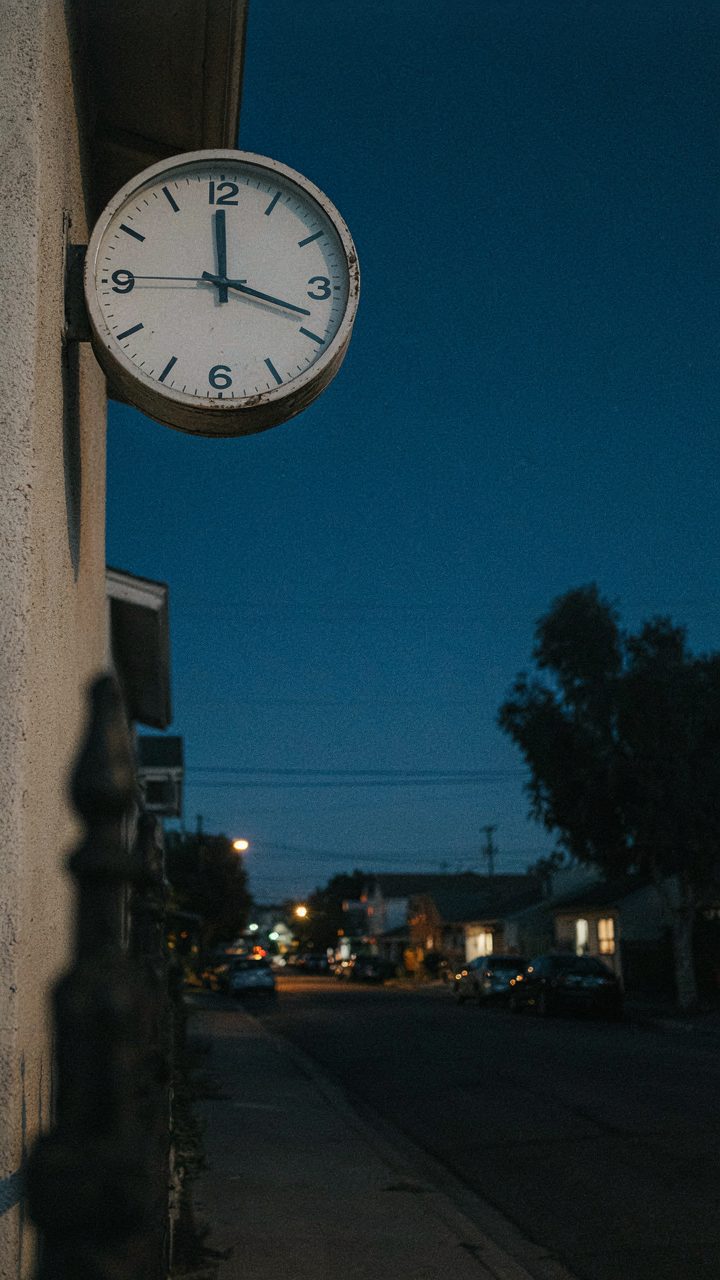
Know Your Local Noise Laws Before You Press Play
You’re hoping the cops don’t show up and kill your vibe—that’s the real fear underneath all this. Here’s the mechanism: most jurisdictions operate under noise ordinances tied to decibel limits and quiet hours, not vibes. Research your specific city or county code. Most residential areas enforce quiet hours between 10 PM and 7 AM on weekdays, sometimes stricter on weekends. Decibel limits typically max out at 55-70 dB during the day, dropping to 45-55 dB at night. Your local police non-emergency line has this information. Call them first, not after the neighbors complain.
The ordinance exists regardless of your intent. A violation complaint triggers a response whether you knew the rule or not. Check your lease or HOA rules too—they often impose stricter standards than municipal code. Document what you find in writing. Send yourself an email with the limits and quiet hours for your zone. This removes the guessing game and gives you a hard boundary to plan around. Your speaker setup budget, timing, and volume ceiling all flow from this single data point.
End It Before The Energy Peaks
Most people milk the party too long and create the exact resentment they wanted to avoid. The real play is cutting volume and stopping music 30 to 45 minutes before your legal quiet hour kicks in—not at the moment it hits. This creates a buffer zone and signals respect without forcing an abrupt kill.
Set a timer on your phone for that shutdown time. When it goes off, lower the volume gradually over 10 minutes rather than flipping a switch. Move people inside or tell them the outdoor audio is wrapping. Keep a portable speaker going inside at low volume if people want to keep the night moving. The goal isn’t to punish your guests—it’s to exit before noise becomes a neighbor problem that bleeds into the next week’s interactions. Your reputation compounds faster than your party does.
The Only Real Barrier To A Great Backyard Party Sound System
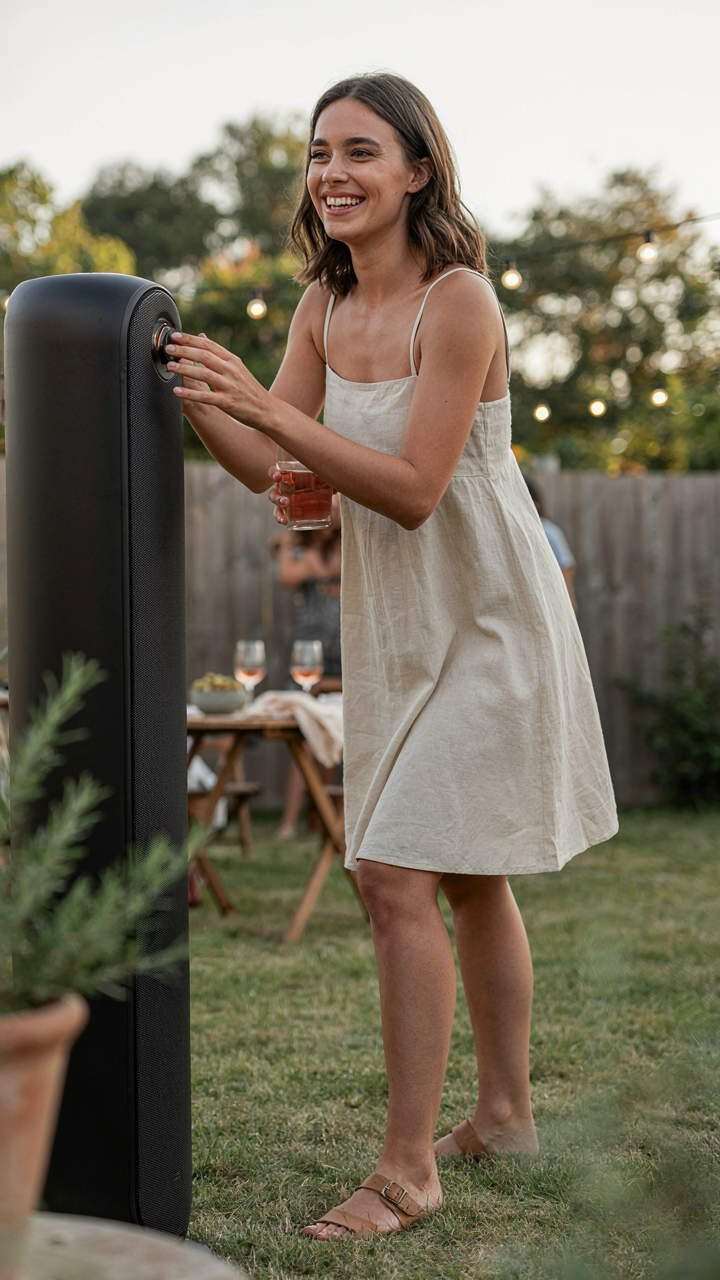
You don’t lack information. You lack permission to prioritize your own experience over hypothetical neighbor complaints. The best backyard party speaker setup starts when you stop treating sound quality like a guilty pleasure and start treating it like a design decision. Walk outside right now and actually test your current setup at party volume instead of imagining it. Most people never do this. The gap between good sound and great sound isn’t equipment. It’s the willingness to optimize for what you want instead of what you fear.