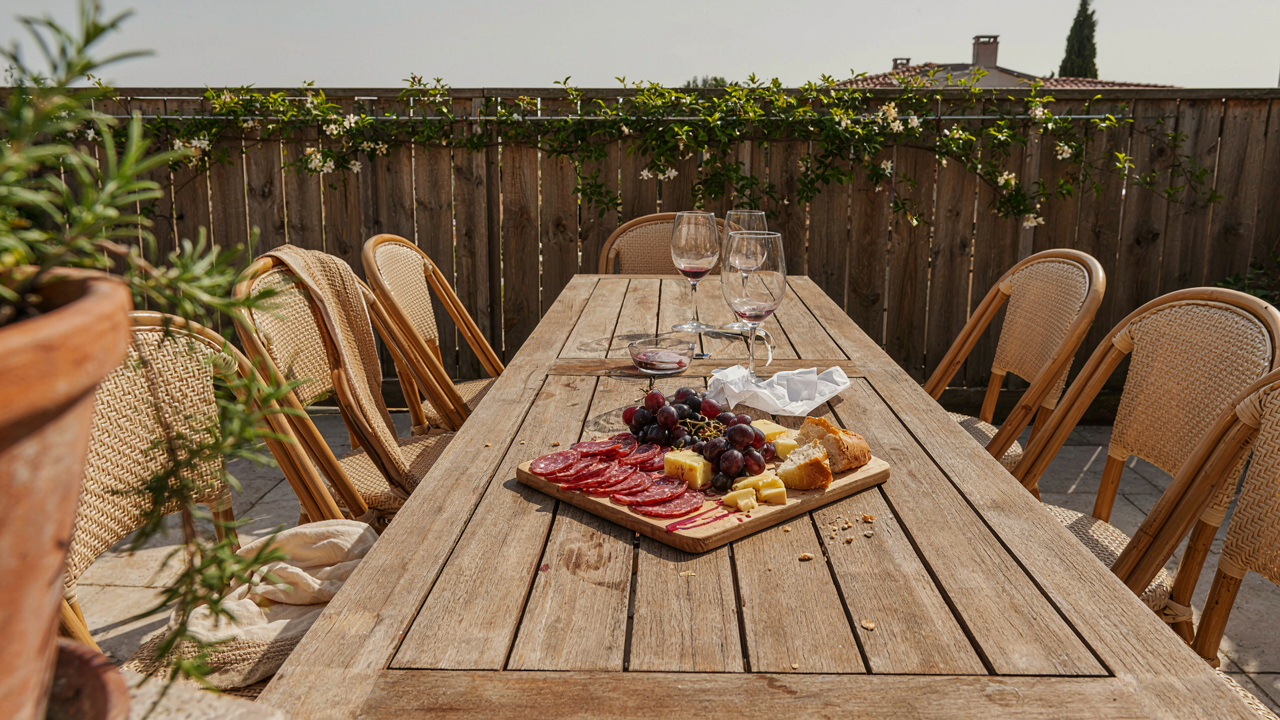
The “Effort Paradox”: Why More Prep Equals Less Party

When You Stop Being The Host
You think more preparation means a better party. It doesn’t. You’re actually trading your presence for the illusion of control, and your guests feel the absence more than they notice the details. Borrowed from operations management, this is “overcapacity planning”—preparing for a worst-case scenario that rarely occurs while sacrificing the actual value you deliver. The mechanism is simple: every hour you spend on logistics before guests arrive is an hour you’re not present during the event. A distracted, exhausted host kills momentum faster than any logistical hiccup.
The problem isn’t wanting things to go well. The problem is confusing preparation with presence. Most first-time hosts schedule themselves into the background. They obsess over table placement, cooler positioning, and contingency plans for weather that might not happen. Then when guests arrive, they’re too drained to actually engage. Your energy sets the tone. When you’re burnt out before the first person walks through the gate, everyone senses it and mirrors it back to you. The real work isn’t the setup. It’s showing up.
Simple Systems Beat Elaborate Setups
Unnecessary complexity in outdoor entertaining doesn’t create sophistication. It creates failure points. The common advice says “plan for every possibility.” That’s wrong. You can’t. What you can do is build systems so simple that you run them on autopilot, leaving your mind and energy available for actual hosting. Complexity scales linearly with problems. Fewer moving parts means fewer places things break down.
One ice station beats four. One beverage method beats offering twelve drink options. One seating area beats scattered furniture suggesting multiple zones. The fewer decisions your guests have to make, the faster they settle into conversation. The fewer systems you manage, the faster you stop managing and start hosting. Strip your setup down to what actually matters: shade, seating, drinks, food. Everything else is decoration for your anxiety. Before you add anything to your event, ask whether removing it would materially harm the experience. Most of the time, it wouldn’t.
The Sensory Economy Protocol For Backyard Party Success
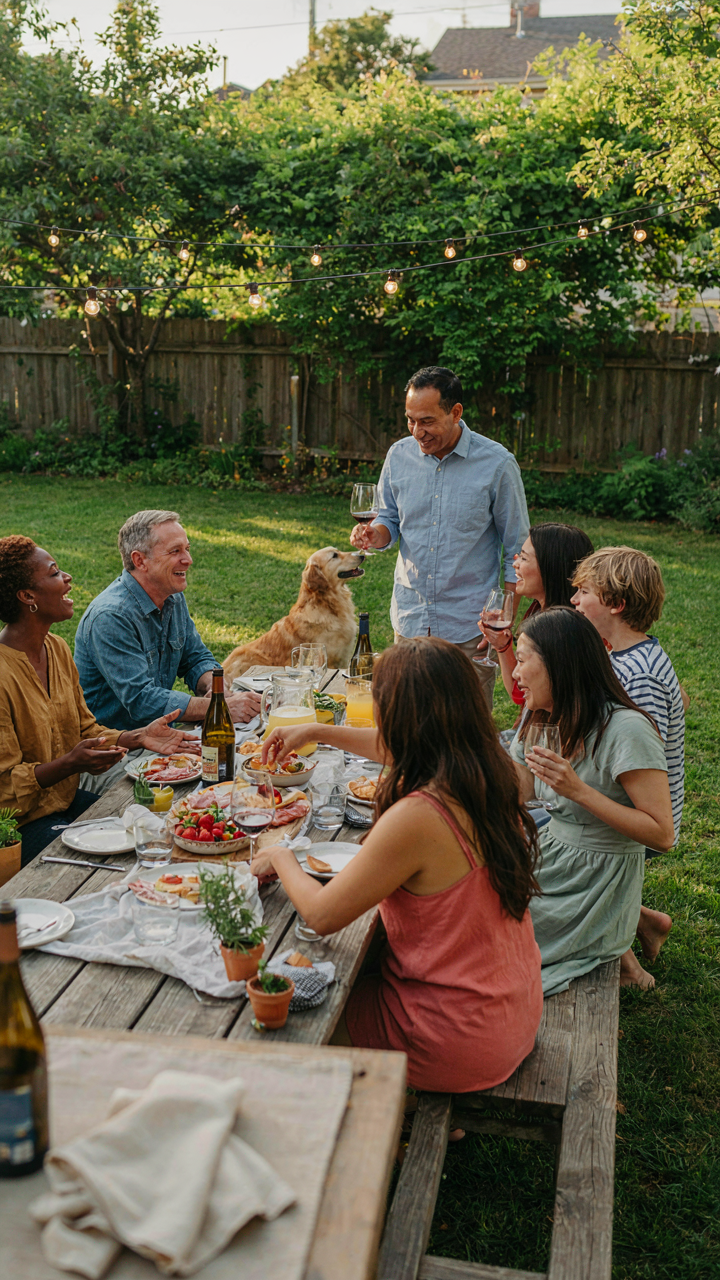
You’re Actually Competing For Attention, Not Just Food

You think a backyard party fails because the food ran out or someone got bored. That’s the symptom, not the disease. You’re really anxious about whether people will remember this gathering as worth their time, which means you’re competing for their attention against their phones, their tired bodies, and the parties they could’ve attended instead. Economics calls this scarcity of attention, and it operates exactly like a limited resource. Most hosts ignore this entirely and just cook more food.
The mechanism is brutal: guests have a finite amount of focus. You can’t expand it. You can only allocate it strategically by removing friction between them and the one or two experiences you’ve actually designed for. This isn’t about entertainment value. It’s about making specific moments impossible to ignore. The host who acknowledges this sets up one killer focal point instead of four mediocre ones and watches engagement spike immediately.
The Feedback Loop You’re Not Running
Cybernetics teaches feedback loops: systems that self-correct based on real-time signals. Most hosts throw a party and hope guests send signals through osmosis. They don’t. You have to build a mechanism to read the room and adjust mid-event, or you’re operating blind. The common advice says “pay attention to body language,” which is useless without a system. Body language tells you what’s broken, not what to do about it.
Set a concrete check-in protocol: scan the yard every fifteen minutes for clusters of people standing still, checking phones, or drifting toward the door. These are your feedback signals. If you spot clustering in one zone, the other zone lacks a reason to exist there. Consolidate. If phones appear, your current activity has dropped below baseline entertainment. Initiate the next planned element. This isn’t intuition. It’s a system that prevents the slow death of parties that feel like they’re limping along.
Debunking Decorating Mistakes: Less Is More For Outdoor Dining

The Pinterest Trap Costs You Presence

You want guests to think you’re refined. That’s the real driver. But here’s the mechanism: excessive decoration functions like noise in a signal-processing system. Your brain—and your guests’ brains—can only process so much visual information before ambient attention collapses. The harder you work to impress, the less anyone actually experiences the space or each other.
Most hosts layer decorations assuming more equals better. String lights, table runners, centerpieces, place cards, floral arrangements, candles everywhere. The result? Visual chaos that pulls focus away from food and conversation. Restraint signals control and intentionality. Overcrowding signals anxiety. Guests feel the difference immediately, even if they can’t name it.
Decor That Actually Works
Skip the advice about “themed tablescapes” and seasonal accents. That’s decoration theater. Real outdoor entertaining decor solves a functional problem first and looks intentional second. Task lighting beats ambient clutter. A single strong focal point beats scattered trinkets.
Start with what your guests need: light after sunset, a clear sightline to the food, shade if the sun’s brutal, and a reason to focus on each other instead of scanning the yard for visual stimulation. String lights serve this. A simple table runner with weight holds napkins down in wind. One centerpiece per table—not five. Candles in glass holders eliminate the fire hazard and the visual mess of flames everywhere. This is what functional decor means: each piece removes friction from the gathering, not adds decoration debt.
The Flow State Fallacy: Letting Go Of Control In Your Outdoor Party
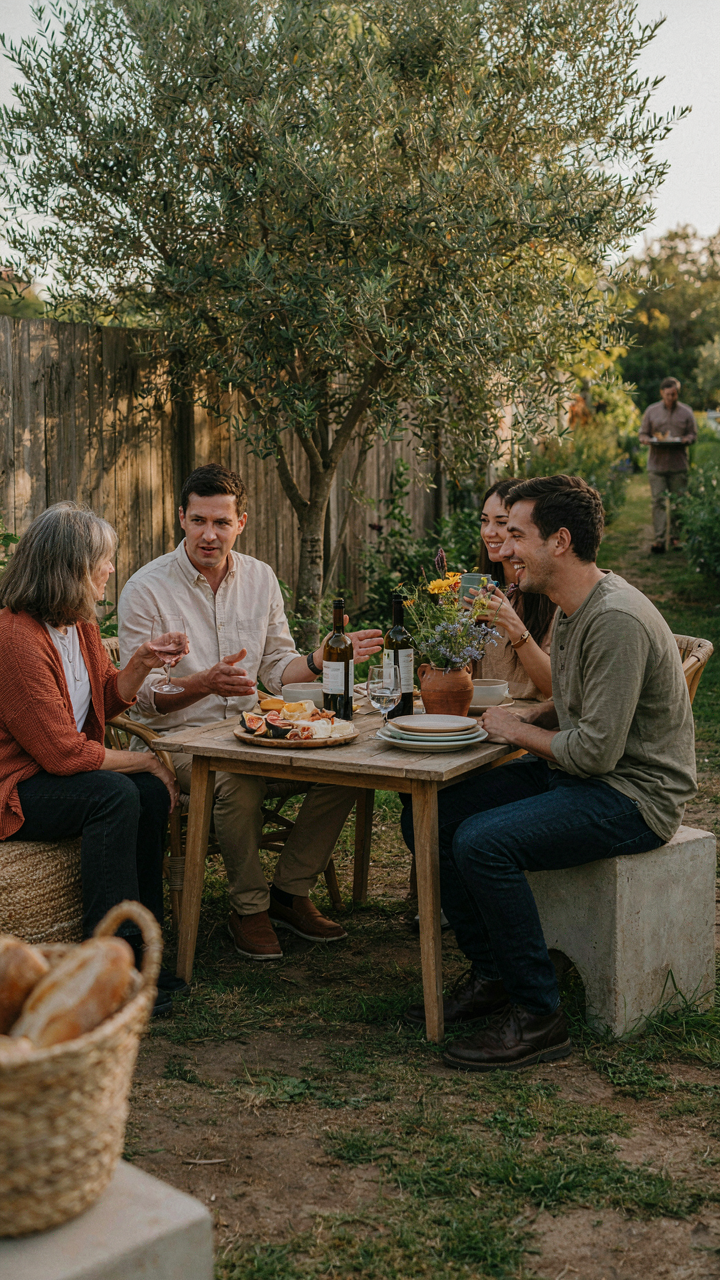
When Your Plan Becomes The Prison

You want guests to remember your party as effortless. That’s the real fear underneath every over-planned outdoor gathering: the dread that people will sense your anxiety and judge you for it. The mechanism is simple—control is the enemy of flow. When you script every moment, you eliminate the gaps where actual human connection happens. Those gaps are where people relax, find their people, and decide whether they had a good time.
Over-planning kills spontaneity before it starts. You assign seating, curate the music playlist down to the second, time appetizer service like a airline boarding process. The result is a rigid structure that breaks the moment anyone deviates from it. Guests feel the tension. They sense they’re moving through your checklist rather than enjoying themselves. The party becomes a performance you’re directing instead of an event you’re hosting.
The Unscripted Moment Is Where People Connect
Flow states don’t emerge from structure—they emerge from constraints plus freedom. Borrow a concept from systems design: you need boundaries, not blueprints. Set the actual logistics: when food arrives, where people can sit, what the basic timeline is. Then stop. Don’t choreograph conversations. Don’t predetermine who talks to whom. Don’t fill every silence with curated music or activities.
The parties people remember aren’t the ones where everything went according to plan. They’re the ones where unexpected things happened and the host let them happen. Someone brings a speaker and people migrate to a corner to dance. A conversation between two guests goes three hours deeper than you expected. The group decides to move the whole gathering to the backyard because the light is better. Your job is creating the conditions for this, not preventing it. The protocol: set your hard anchors (meal time, music volume baseline, when you stop serving), then make yourself available to facilitate without controlling.
Culinary Overreach: Easy Entertaining Without The Gourmet Gauntlet
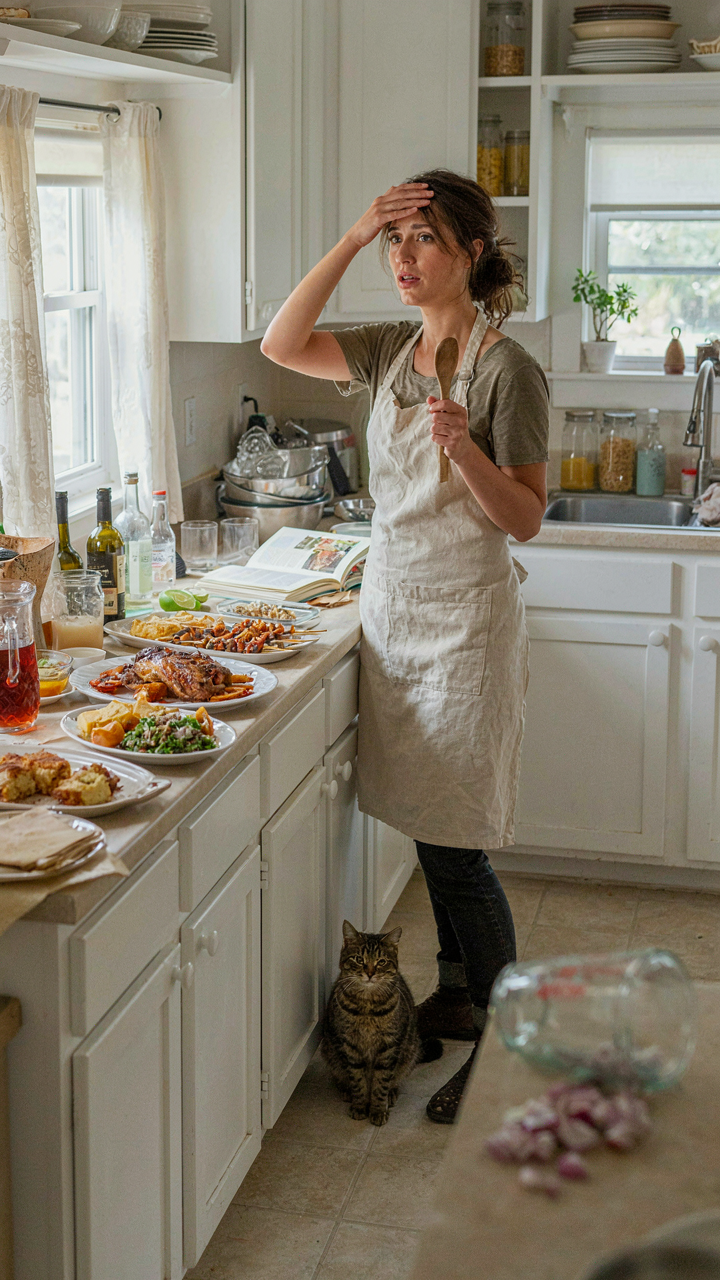
The Myth Of The Elaborate Outdoor Feast

You want your guests to think you’re competent, so you plan a menu that signals effort. Here’s the mechanism: you’re confusing your anxiety with your guests’ expectations. Nobody came to your backyard to watch you execute a restaurant kitchen’s output in an open-air environment with half the equipment and twice the variables. They came for food that tastes good and doesn’t require you to vanish into stress for six hours before they arrive.
The elaborate outdoor feast fails because outdoor cooking introduces uncontrollable friction. Wind affects grilling times. Sun heats serving surfaces unpredictably. Guests cluster in one spot instead of dispersing, creating bottlenecks around food stations. You run out of ice. A dish that works indoors falls apart outdoors. Most hosts plan as if weather and logistics don’t exist, then scramble when reality hits.
What Actually Works Outdoors
Build your menu around foods that survive neglect and benefit from simplicity. Pulled pork, grilled chicken thighs, and slow-smoked brisket tolerate temperature swings and sitting time. Cold pasta salads, grain bowls, and marinated vegetables actually taste better made ahead. Dips and spreads require zero timing precision. The constraint isn’t sophistication, it’s predictability.
- Grilled proteins with built-in moisture: Chicken thighs, ground beef patties, and fatty cuts of pork stay edible even if held warm longer than planned. Lean proteins dry out and signal failure to guests.
- Make-ahead sides: Salads, slaws, beans, and grain dishes prepared the morning of or night before eliminate last-minute plating stress and free your time for actual hosting.
- Temperature-forgiving dips and spreads: Hummus, guacamole, salsa, and cheese boards work at any temperature and require no cooking during the event itself.
- Grilled vegetables and bread: Summer squash, corn, peppers, and crusty bread take direct heat well and pair with any protein without competing for cooktop space.
- Simple desserts: Brownies, cookies, fruit platters, and ice cream sandwiches eliminate the need for plating finesse and actually benefit from casual presentation outdoors.
The real win is this: pick three components max, nail each one, then stop. Your guests measure success by whether they ate well and felt welcomed, not by whether you executed a seven-course progression. Execute the menu you can cook while talking to people. That’s the only metric that matters.
The Guest Autonomy Principle: Empowering, Not Micromanaging, Your Outdoor Dinner Party
Provide Options, Not Rules

You want control because you’re afraid something will go wrong and people will blame you. Here’s the mechanism: the moment you start directing guests where to sit, what to eat first, or how to pour their own drink, you’ve positioned yourself as the traffic cop instead of the host. Economics calls this the principal-agent problem. You’re the principal trying to control the agent’s behavior through rules. Guests feel the friction. They stop enjoying themselves because they’re now managed, not welcomed.
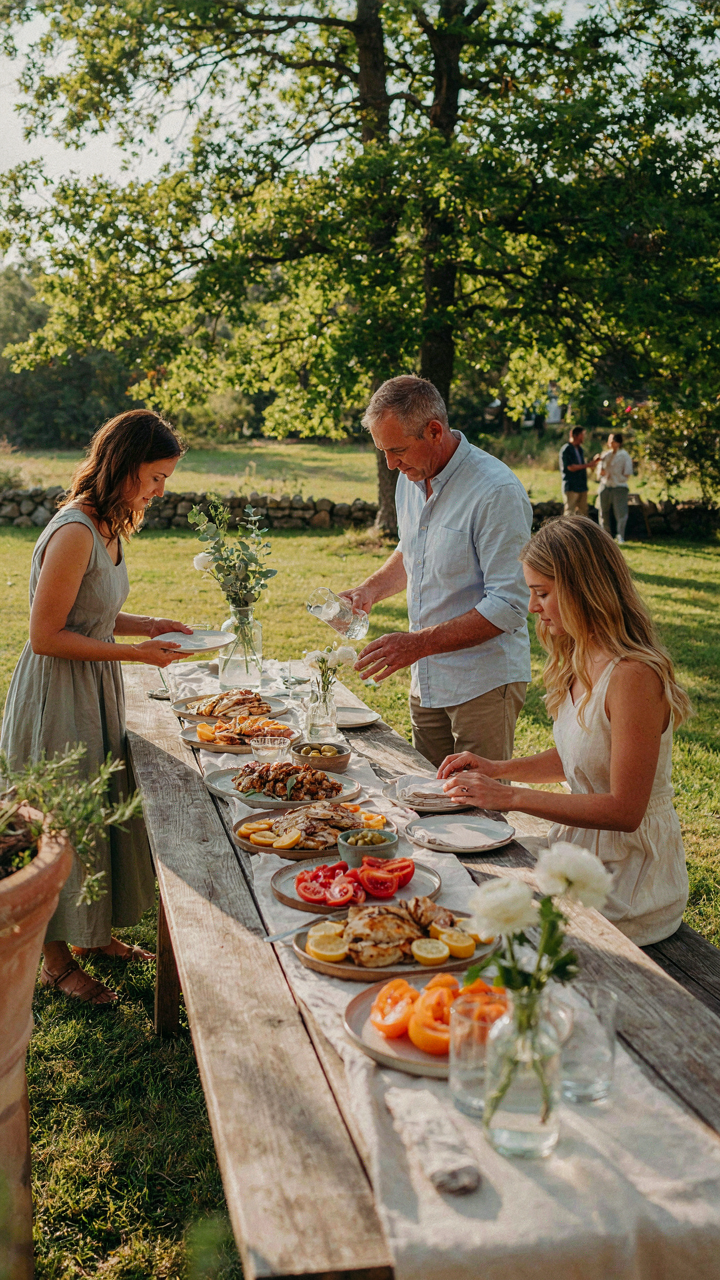
The fix is counterintuitive. Offer three beverage stations instead of playing bartender. Set out five appetizer options instead of announcing what people should eat. Suggest seating areas without assigning seats. When you remove the directive layer, guests make their own choices and own the outcome. They feel agency. That feeling converts to relaxation, which spreads to everyone else at the table. You’ve shifted from micromanager to facilitator in one move.
Self Serve Stations Lower The Friction
This isn’t about laziness, though it helps with that too. Psychology research on choice architecture shows people prefer having access to options without needing permission. A self-serve drink station means guests hydrate when they’re thirsty, not when you notice their glass is empty. A food station means someone with dietary restrictions grabs what works instead of waiting for you to accommodate them.
Build three zones minimum: drinks, appetizers, and condiments. Stock each zone fully before guests arrive, then leave it alone. Don’t hover. Don’t restock constantly. Don’t announce what’s available. Guests who want something will find it. This removes the transaction cost of asking you for anything. You stop being needed for every small task, which sounds like a loss until you realize it’s actually freedom. You can now have an actual conversation instead of running a logistics operation.
Weather Worship Vs. Adaptability: The Real Outdoor Entertaining Setup Tips
The Forecast Trap

You’re checking the weather app because you want permission to cancel. That’s the real mechanism. Perfect conditions feel like a safety net—they absolve you of the work of actually hosting. But outdoor entertaining isn’t fragile. It’s resilient systems thinking: build redundancy into your setup so one variable failing doesn’t crater the entire event. The hosts who execute well aren’t the ones praying for sunshine. They’re the ones who removed the weather’s power to ruin the day.
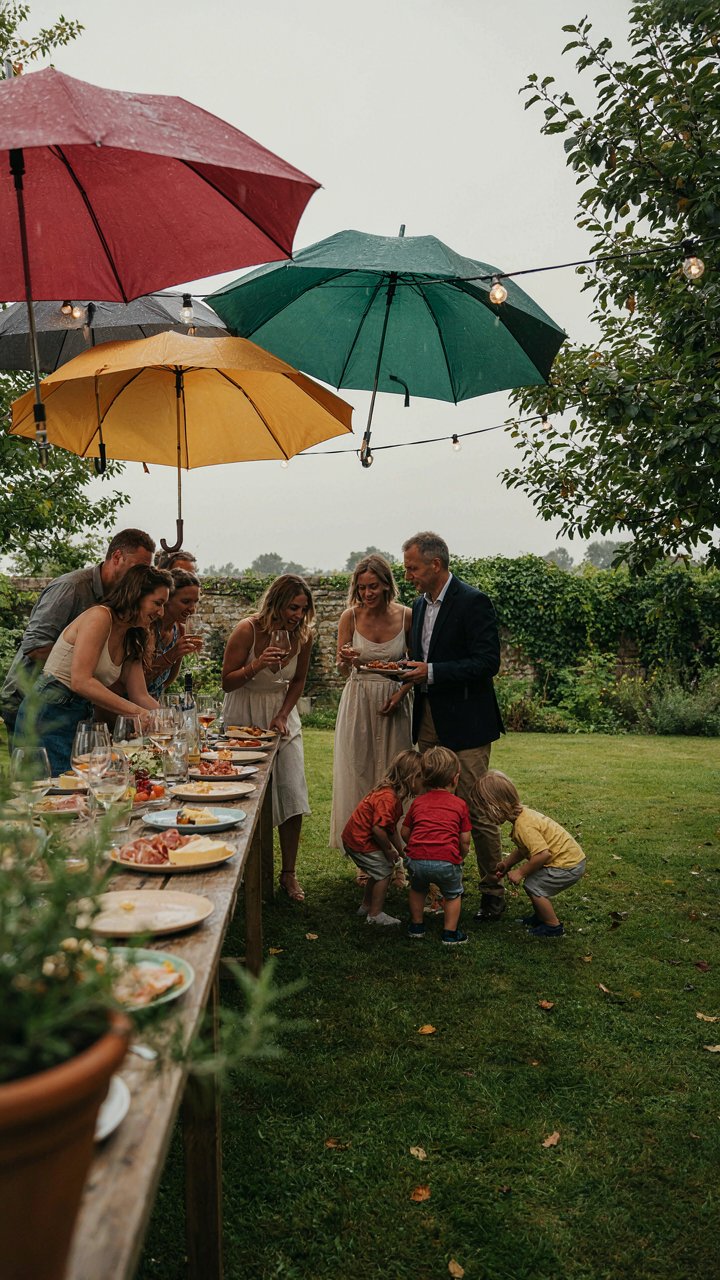
Most first-time hosts treat weather like a pass-fail test. It either cooperates or doesn’t. This is lazy. The actual decision tree is whether your setup survives wind, rain, heat, or cold without guests noticing the difference. A tent isn’t a backup plan. It’s infrastructure. Shade structures, heaters, windbreaks, and covered serving areas aren’t optional upgrades for the paranoid—they’re the difference between hosting and hoping.
Plans That Don’t Panic
Contingency planning fails when you build it as a separate worry. You end up with a basement full of unused tarps and emergency supplies that feel burdensome. Instead, integrate your adaptations into the original design. Your seating arrangement should allow for tent deployment without reconfiguration. Your serving table should have a weather-protected version positioned nearby. Your guest flow should route people toward shelter naturally, not as a retreat.
The protocol is simple: before you set a date, map the three weather scenarios most likely for that season and time of day. For each scenario, walk through your event timeline and identify the two to three points of failure. Then build the fix into your setup, not your panic folder. A propane heater positioned at the gathering spot costs less than it weighs. A tent rented in advance beats scrambling for one the morning of. The contingency that works is the one you’ve already paid for and positioned.
The Real Mistake? Thinking It’s About Them, Not The Experience

Most first-time hosts obsess over impressing people. That’s backwards. The outdoor entertaining mistakes that kill your gatherings stem from that ego play. Stop optimizing for their judgment and start designing for their comfort. Pick one thing today that makes your space easier to move through or more comfortable to exist in. Remove one friction point. That’s the shift. People don’t remember perfect appetizers or flawless table settings. They remember whether you made them feel welcome or made them work for it.