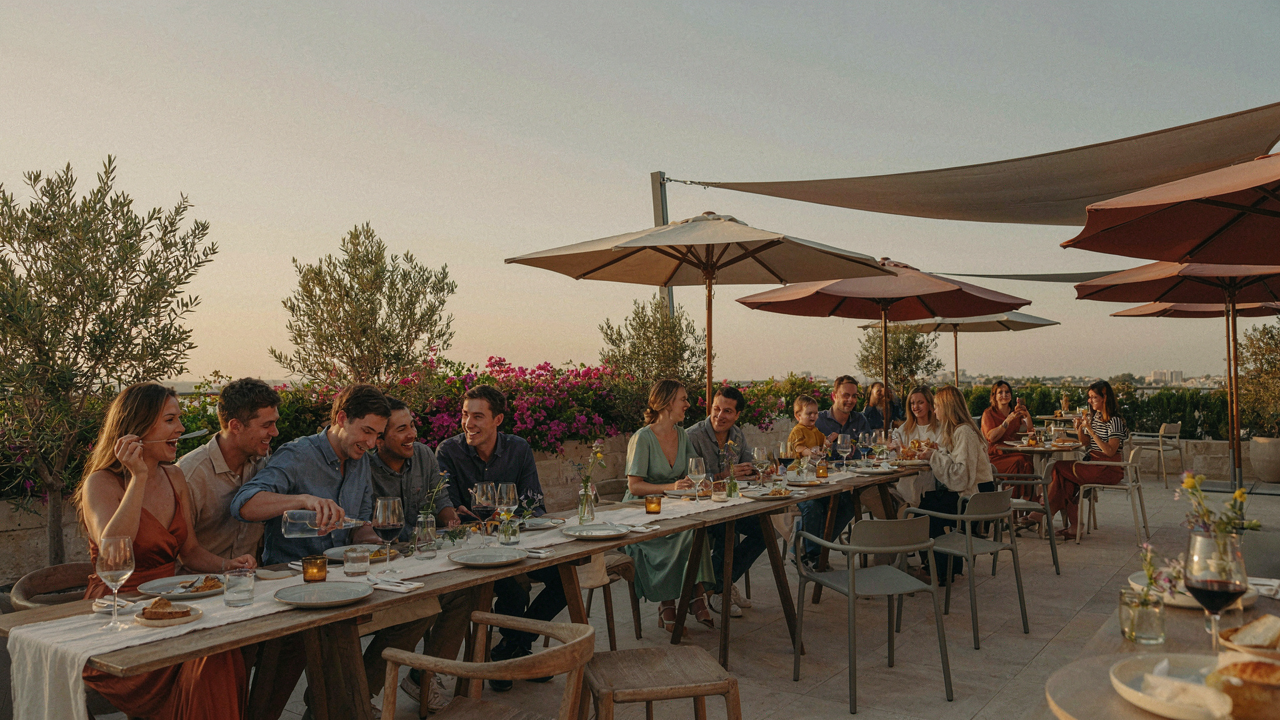
The Thermal Comfort Fallacy: Why Your Shade Fails
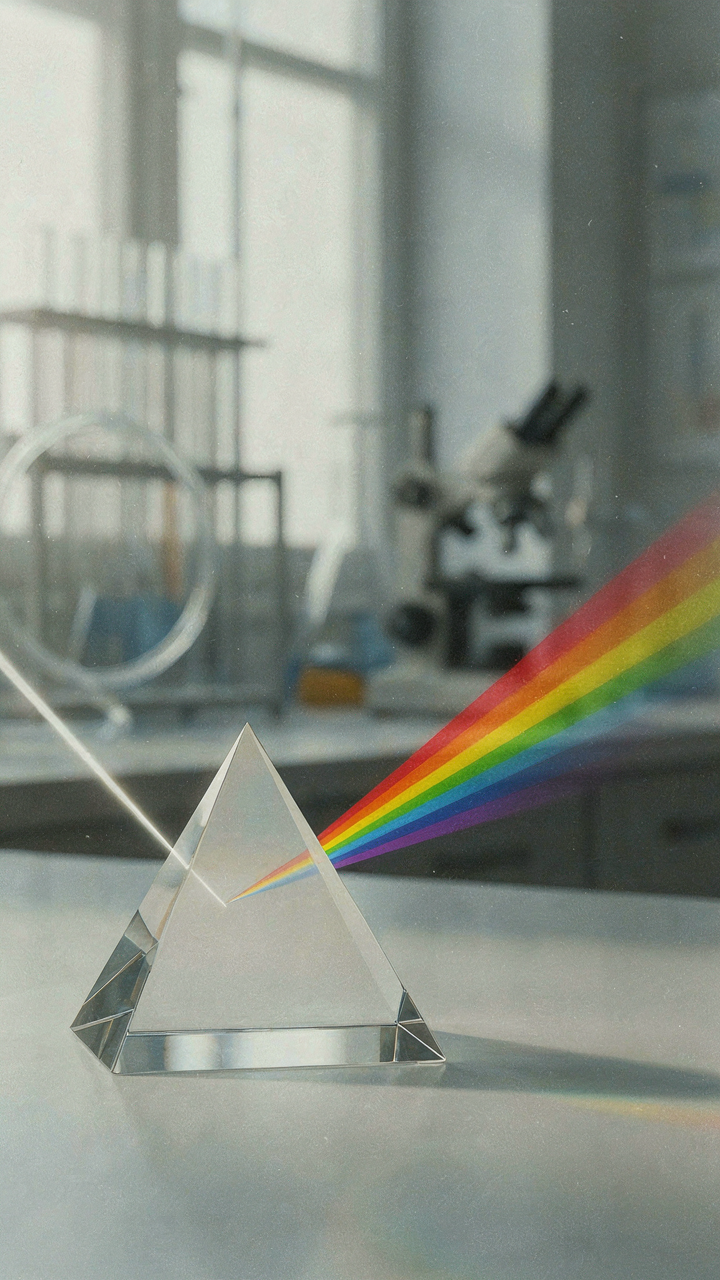
Radiant Heat Dominates The Equation
You want shade to work because you’ve spent money on it and you’re tired of guests complaining. Here’s the problem: you’re treating heat like a single force when it’s actually three separate mechanisms. From physics, we borrow the concept of radiation dominance—and it applies directly to outdoor dining. On a clear day, the sun delivers roughly 1000 watts per square meter to earth’s surface. Most of that energy arrives as radiation, not heated air. A standard umbrella or fabric canopy blocks direct radiation but misses the mechanism that matters most after the sun moves.
Radiant heat bounces off surrounding surfaces and reaches your guests from angles your shade doesn’t cover. Light-colored pavement, concrete tables, and even white umbrellas reflect solar radiation back up into the dining area. The air temperature might be 85 degrees, but the radiant load makes it feel like 95. This is why moving to shade doesn’t always feel as cool as you’d expect. The ambient air under your canopy is still warm because it’s being heated by reflected radiation from the ground and nearby structures, not just by direct sun exposure.
Surface Temperature Management Controls Comfort
The common fix—just add more shade—ignores the real problem. Shade stops direct radiation but does nothing about the thermal mass below your guests. A dark asphalt surface under an outdoor dining area absorbs solar energy all day and releases it as radiant heat even after sunset. Your canopy creates a greenhouse effect by trapping this upwelling radiation. Concrete, pavers, and dark finishes act as thermal batteries, storing heat and radiating it back into the shaded zone for hours.
Controlling guest comfort means managing the temperature of the surfaces they’re sitting on and eating from. Light-colored materials reflect instead of absorb. Permeable surfaces like gravel or wood decking reduce thermal mass. Shade structures work best when paired with reflective ground surfaces and materials that don’t store heat. The shade itself must also reflect radiation rather than absorb and re-emit it—which is why white or light-colored canopy fabric outperforms dark fabrics in the same location. Measure surface temperature, not just air temperature, to diagnose why your dining area still feels hot under shade.
Backyard Shade: The Hidden Profit Multiplier
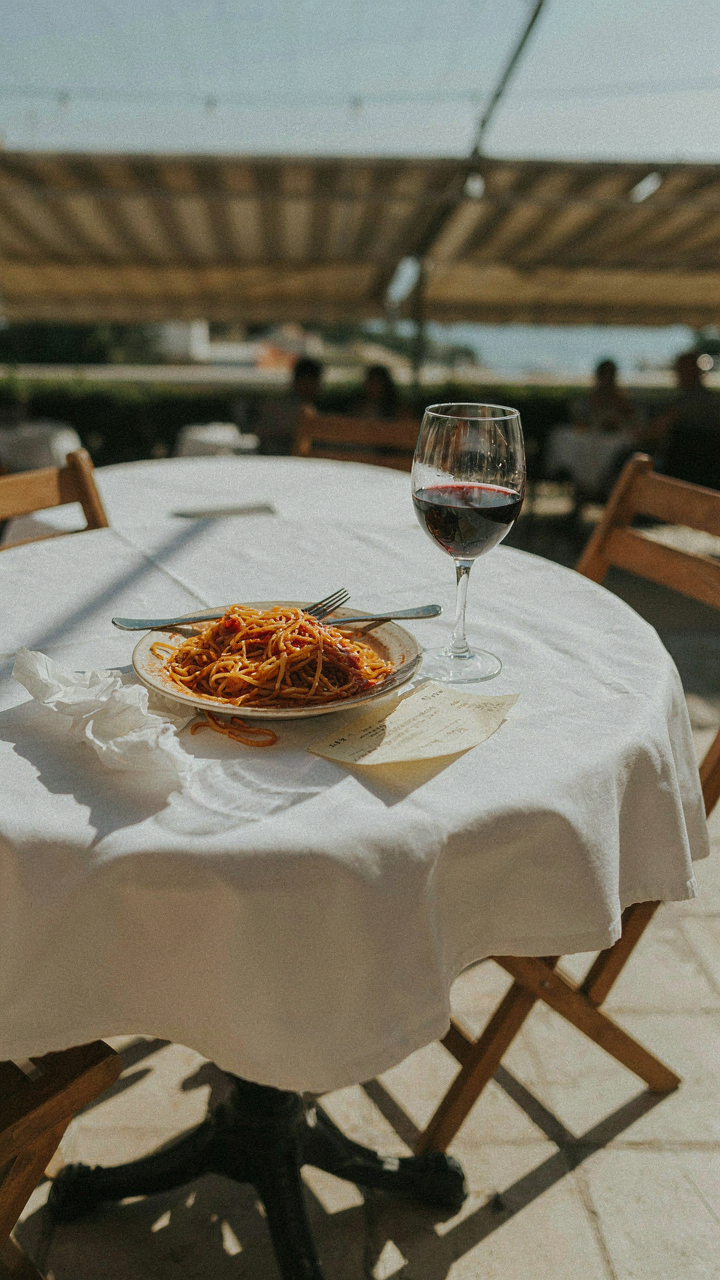
People Stay Longer When They’re Not Dying

You want shade because you think it looks nice. That’s the lie you tell yourself. You want it because uncomfortable guests leave early, and early guests spend less money. This is behavioral economics at work: temperature discomfort triggers avoidance behavior, and avoidance behavior kills revenue per customer.
The mechanism is simple. A guest sitting in direct sun experiences thermal stress within 15 to 20 minutes. Their body signals distress. They finish their drink faster, decline appetizers, skip dessert, and manufacture an exit. A shaded guest has no competing signal demanding escape. They linger. They order another round. They add a second course. Extended dwell time correlates directly to increased spending because the guest moves past the initial transaction and into the relaxation phase where discretionary purchases happen.
Shade Cuts Your Air Conditioning Load
Everyone says shade “helps with cooling.” That’s incomplete. Here’s what actually happens: shade reduces radiant heat gain on outdoor surfaces and guests themselves, lowering the thermal burden on any mechanical cooling system you’re running in adjacent indoor spaces or under structures. This is thermodynamic load reduction, not decoration.
When direct solar radiation hits a patio or pergola without shade, that surface temperature climbs 30 to 50 degrees above ambient air temperature. That heat radiates into nearby structures and radiates off guests’ skin and clothing, forcing your AC system to work harder to compensate. Shade fabric or structures intercept that radiation before it reaches the surface. Lower surface temperature means lower radiant load. Your cooling system cycles less frequently. You use less electricity. You extend equipment lifespan by running it at lower strain. The operational cost difference compounds monthly and annually.
The Shade Canopy Ideas Strategic Placement Protocol
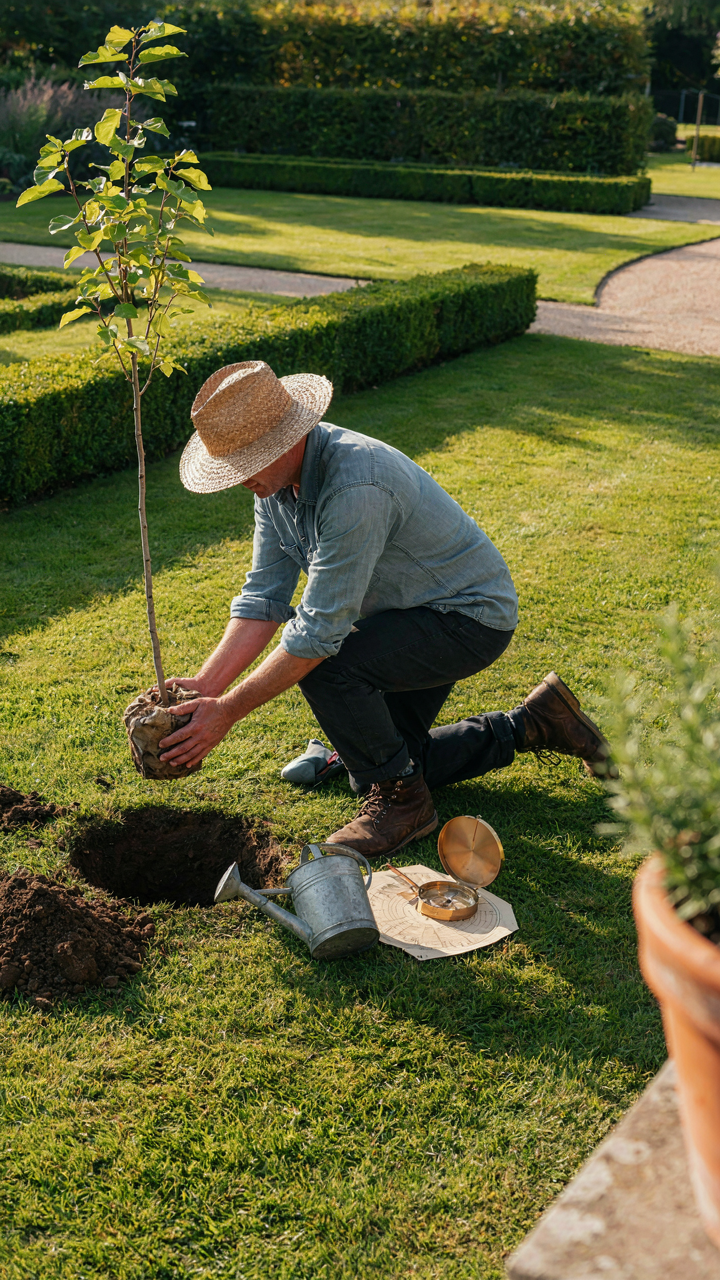
Where The Sun Actually Goes

You want shade placement to look intentional rather than feel like you’re hiding from a mistake. Here’s the mechanism: the sun moves on a predictable arc that changes with latitude and season, and most operators ignore this entirely and plant shade structures in random spots. Borrowing from astronomy, think of shade placement as charting celestial positions, not just dropping umbrellas where they look balanced. Your dining area has a shadow envelope that shifts hourly.
Map your site’s solar path using the sun’s altitude and azimuth at your peak service times. East-facing patios get hammered in morning hours; west-facing zones peak in late afternoon when UVB radiation intensifies. Sketch the shadow patterns cast by existing structures, trees, and terrain during lunch service and dinner service separately. This reveals the actual problem zones, not the imagined ones. Many venues waste budget on shade where guests aren’t eating.
Shade Coverage For Active Dining Windows
The standard advice is to cover your entire dining area equally, which wastes material and leaves your peak hours exposed. Real coverage means mapping backwards from when guests actually sit down. During peak dinner hours, a single umbrellas or fixed canopy should cast shadow across 70% of table surfaces. During lunch service, your shadow needs may shift entirely because the sun angle differs dramatically.
Test placement by standing where guests sit at your target service times. Note which tables fall into direct sun and which already benefit from building shade or tree cover. Build your canopy strategy to fill those gaps, not to create symmetry. Permanent structures should anchor corners; portable elements should slot into high-exposure zones. This approach cuts material costs and delivers comfort where it matters most.
Beyond Awnings: Dynamic Shade Systems As Investments
Retractable Systems For Variable Conditions

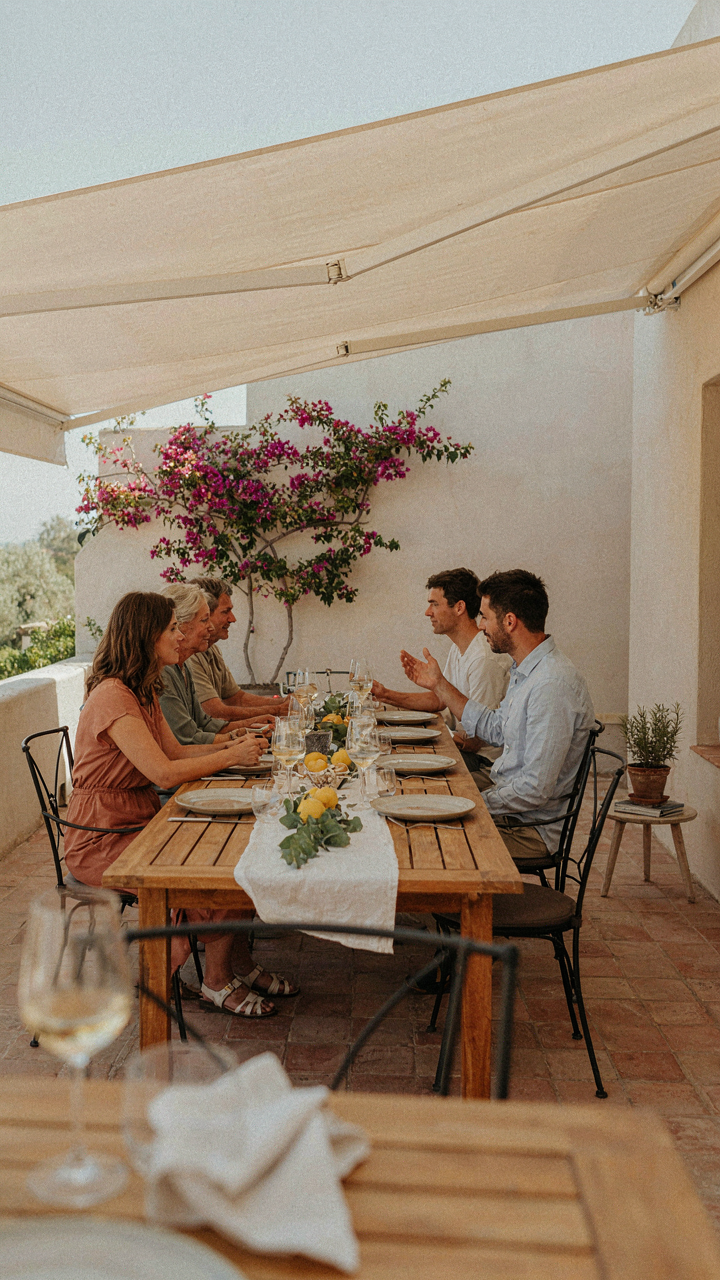
You want this section because you’re hoping someone finally explains why a fixed structure isn’t enough and you’re willing to spend more if it actually works. Here’s the mechanism: retractable systems operate on the economic principle of optionality—you pay upfront for the ability to adjust output based on real-time conditions. Morning sun angle differs from evening. Weather shifts mid-service. A fixed awning commits you to one thermal position all day. A retractable system lets you close when needed and open when the shade becomes liability instead of asset.
Manual crank systems remain the budget option, though they require staff discipline and timing awareness. Motorized retractable shade structures—typically aluminum frames with fabric panels—can deploy or retract in thirty seconds to three minutes depending on span width. This speed matters operationally because your kitchen heat and guest comfort change faster than you can physically move a permanent structure. The fabric itself usually runs solution-dyed acrylic or high-performance polyester, materials chosen because they resist UV degradation and moisture without constant maintenance, meaning the system stays functional across seasons without monthly repair cycles.
Automated Controls And Smart Shade Integration
Most venues install automation backward, treating it as convenience theater instead of operational efficiency. Real automation solves a specific problem: shade deployment decisions require real-time data inputs you cannot track manually. A smart shade system measures solar angle, wind speed, humidity, and guest feedback simultaneously. It then deploys shade predictively rather than reactively. When wind exceeds safe operating thresholds, the system retracts autonomously to prevent structural stress. When UV index peaks at certain hours, deployment happens without staff intervention.
Integration with existing systems means connecting shade controls to your building management platform or restaurant operating system. Some operators link it to reservation software so high-occupancy seatings trigger automatic shade deployment five minutes before guests arrive. Others sync it to kitchen exhaust fans—when outdoor heat climbs, shade closes while ventilation ramps up, managing both guest comfort and cooling costs simultaneously. The installation typically requires low-voltage wiring, a control module, and wind sensors. Your shade becomes infrastructure that adapts to demand rather than static geometry you hope works.
Modern Backyard: Material Science Of Shade Efficiency
Why Material Matters More Than Size

You want your shade to work because you’re tired of sweating through dinner and looking uncomfortable in front of people who matter. The real lever isn’t how big your canopy is. It’s what the material does with solar radiation before that heat ever reaches your guests. Physics calls this emissivity and reflectivity. In shade design, these properties determine whether your fabric stops heat or simply redirects it downward like a heat lamp.
Most fabric shade solutions perform identically because nobody reads material specs before buying. A white polyester shade and a dark one placed side by side will feel different by 10 to 15 degrees Fahrenheit, not because of color psychology but because white fabric reflects 70 to 80 percent of incoming solar radiation while dark fabric absorbs 60 to 70 percent of it and converts that energy into heat. Low emissivity materials shed absorbed heat faster through radiation. High emissivity materials hold it. Choose accordingly based on your climate’s radiant intensity, not aesthetics.
Air Movement Stops Heat Stacking
Static shade traps heat like a closed car. The mechanism is simple: air under your canopy warms, has nowhere to go, and radiates back down onto your table. Ventilation prevents this. The worst advice you’ll hear is that solid shade is better. It’s not. A shade structure that allows cross-ventilation or permits some solar transmission through semi-transparent fabric moves warm air up and out instead of concentrating it.
Wind speed matters more than you think. Even 2 to 3 miles per hour of air movement under a shade structure reduces perceived temperature by 3 to 5 degrees. Position your dining shade where prevailing breezes flow through it rather than treating it as a sealed box. Mesh fabrics and open-frame designs with strategic gaps outperform solid covers in hot climates. Test your setup by placing a thermometer 3 feet above your table and another 3 feet outside the shade. If the difference is less than 8 degrees, redesign for airflow.
The “Modern Outdoor Dining Sets” Microclimate Engineering Principle
How Shade Structures Reshape Local Air Conditions

You want this section because you’re hoping there’s a magic setup that solves heat without looking cheap. There isn’t one, but the mechanism is real. Ecology calls this niche construction: organisms modify their immediate environment to survive better. Your shade structure does the same thing. It doesn’t cool the air globally. It creates a localized zone where temperature, humidity, and radiation behave differently than the surrounding space.
A pergola, sail, or fabric canopy intercepts solar radiation before it reaches your dining surface and guests. This prevents radiant heat from accumulating in the zone below. The structure also slows wind movement, which changes evaporative cooling dynamics. Material choice matters here: dense weave fabrics stop more radiation than loose weaves. The geometry of the structure determines how effectively it blocks sun angles at different times of day and seasons.
Material Selection Determines Heat Dissipation Performance
Common advice says “pick a color” and call it done. Wrong. Thermodynamics gives us the real lever: emissivity and thermal mass. Materials don’t just block heat. They absorb it, store it, and radiate it away. A white polyester sail stops incoming radiation better than dark fabric, but it radiates heat less effectively because white has lower emissivity in the infrared spectrum.
Aluminum frames conduct heat away from shade structures fast, which prevents buildup that radiates back down onto your guests. Fabric materials with higher thermal mass, like solution-dyed acrylic, absorb more heat during peak sun hours and release it gradually after sunset, keeping the microclimate stable. Metal mesh or open weave structures balance radiation blocking with air circulation. Install shade structures with frames oriented to allow wind passage underneath without compromising coverage overhead.
Pergola Patio Retractable Shade: Blending Form And Function
How Retractable Systems Anchor Into Existing Patios

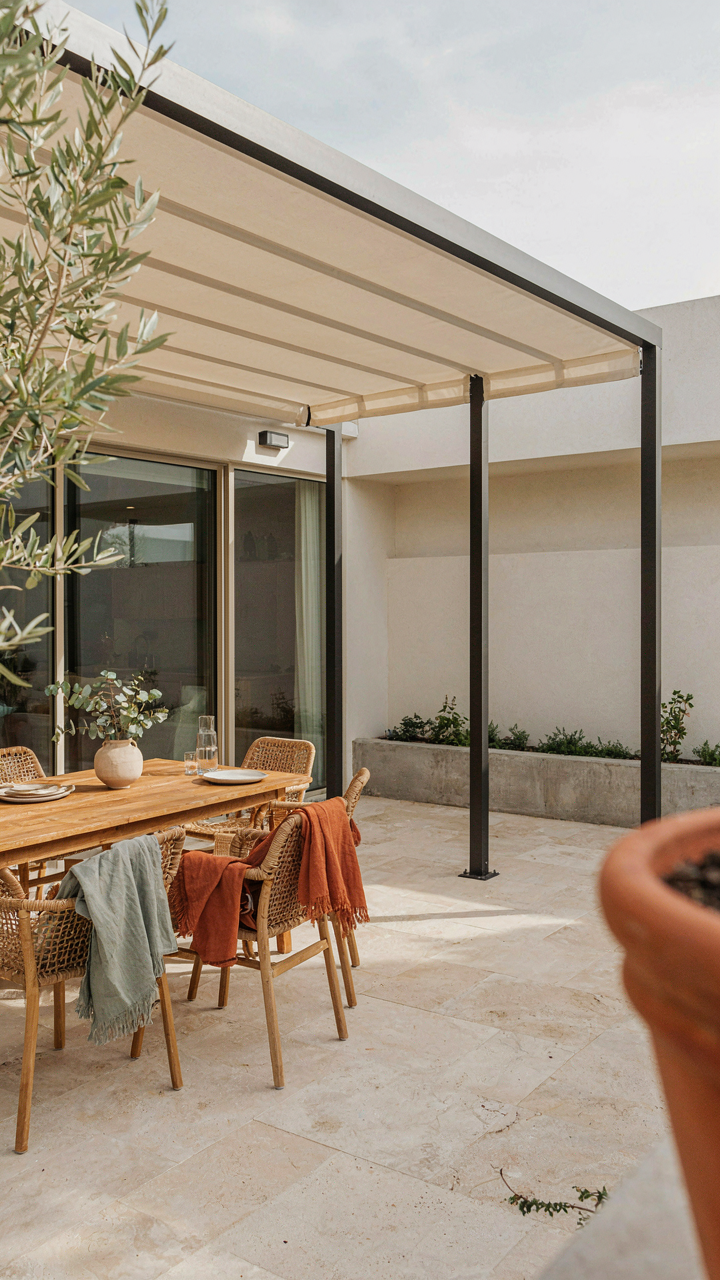
You want this to look intentional, not bolted on. That’s the real reason you care about integration. The mechanism is load distribution. A retractable pergola transfers weight through posts or fascia attachment points, and those points must align with your patio’s existing structure or you’re either over-engineering the install or creating a visual scar. Posts sink into footings set below frost line depth for your climate. Fascia mounts require header beams capable of handling lateral stress from wind and fabric tension.
The common advice here is wrong: you don’t just “match the material.” You need the attachment method to echo the patio’s original construction logic. If your patio used post-and-beam framing, new retractable posts integrate as extensions of that system. If your patio is concrete slab with no posts, you’re either drilling anchor bolts or adding freestanding posts nearby. The structural engineer defines the visual story before the designer picks finishes.
Design That Performs Under Pressure
Retractable fabric systems force a choice nobody states directly: tensioning defeats aesthetics, but slack fabric fails functionally. This is applied engineering discipline, the same principle structural engineers use when designing load paths. Tight fabric rolls smoothly, extends evenly, and resists billowing in wind. Loose fabric wrinkles, catches unevenly on tracks, and flaps like failure. Most residential installs sacrifice 20 percent of usable shade because the fabric tension sits between extremes.
Aesthetic appeal comes from hardware disappearing into the design hierarchy. Aluminum tracks mount flush to pergola beams or fascia. Motors hide in beam cavities or motor boxes clad in matching material. Fabric color should contrast enough to signal shade presence without screaming. Deploy retractable systems only when your patio’s sightlines and guest movement patterns stay consistent—if the shaded zone shifts hourly, a fixed pergola costs less and performs better.
Sail Shade Ideas Backyards: Flexible Design, Superior Performance
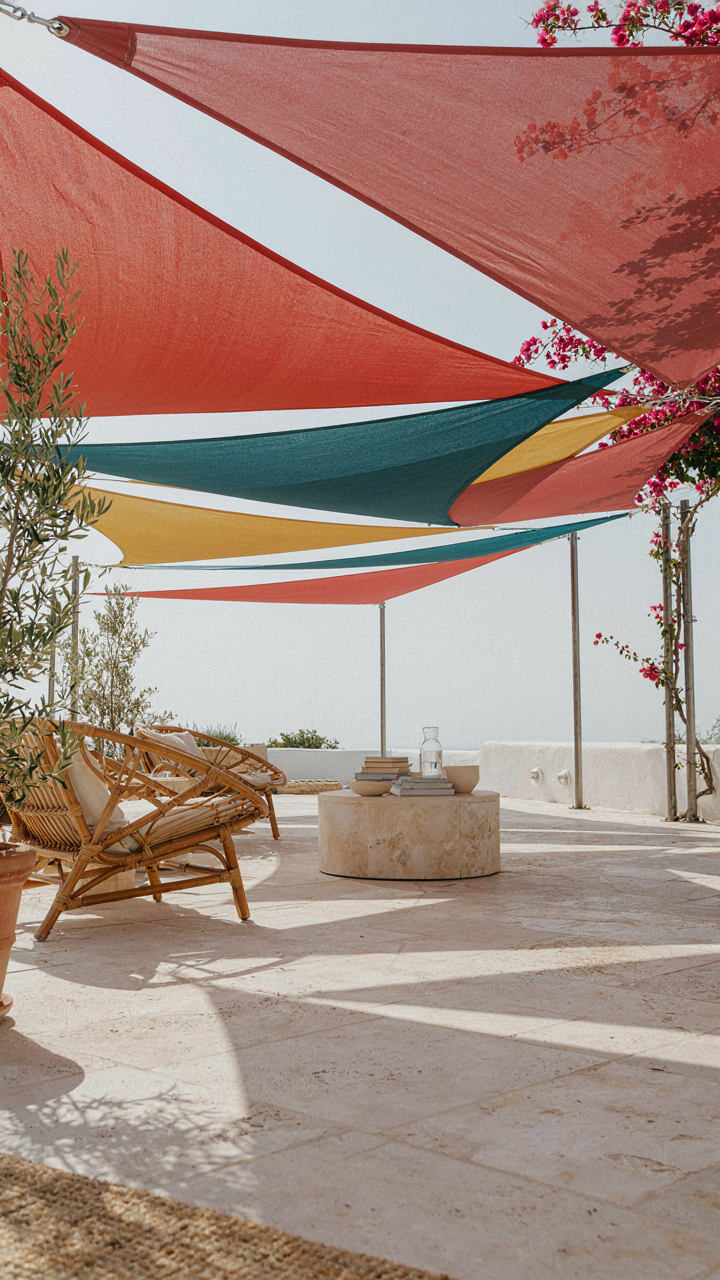
How Tension Fabric Manages Heat And Airflow
You want sail shades because they look intentional, like you didn’t just bolt a box to your deck. Here’s the actual mechanism: tension fabric structures work through fluid dynamics. Air moves around the fabric perimeter, not just under it. The fabric itself blocks direct solar radiation while allowing convective cooling underneath. This is the physics principle of boundary layer separation applied to outdoor dining. Fabric choice matters more than people admit. High-density polyethylene stops 90 percent of UV rays while remaining porous enough to permit airflow. Looser weaves sacrifice sun protection for cooler air movement. Dense weaves trap heat.
The angle you mount the sail determines performance. A 45-degree angle captures wind and channels it downward across the dining surface. Vertical mounting blocks sun but kills airflow. Most people mount sails wrong because they optimize for aesthetics instead of thermodynamics. The fabric sags at shallow angles, creating pockets where hot air collects. Tension must remain consistent across all anchor points to maintain this angle and prevent pooling.
Anchoring Systems That Withstand Wind Load
Installation fails because builders treat wind like a theoretical problem instead of a measurable force. Your local wind speed determines the anchor grade you need. A 20 mph average wind multiplies force differently than a 40 mph gust. Tension fabric experiences stress multiplication at connection points. Use stainless steel hardware throughout. Galvanized fasteners corrode in salt environments and fail within two seasons. Your anchor foundation must transfer load directly into structural mass. Concrete footings set below frost line prevent heave cycles from loosening bolts year after year.
Post diameter and depth matter more than people calculate. A 4×4 post set 3 feet deep withstands different wind loads than one set 2 feet deep. The lever arm principle applies here. A taller post with shallow depth acts like a spring, not an anchor. Diagonal bracing between posts eliminates this flex. Cable tension adjusters at connection points allow you to maintain fabric tautness as materials settle and expand with seasonal temperature changes. Check these every 90 days for the first year, then annually thereafter.
Relaxing Outdoor Spaces: The Data Driven Design Imperative

What Your Guests Actually Tell You

You want validation that your shade setup works so you can stop second guessing yourself. Here’s the mechanism: guest feedback isn’t opinion. It’s data about thermal comfort, glare reduction, and airflow that you can measure against temperature sensor readings. When a guest says “it’s cooler over there,” they’re reporting a real delta. Pair that with a wireless thermometer placed in shaded versus unshaded zones, and you stop guessing. The gap between perceived comfort and actual temperature reveals whether your shade structure is doing its job or just looking the part.
Most venues collect feedback as a throwaway compliment, not actionable intelligence. Record guest comments tied to time of day, shade position, and ambient temperature. A pattern emerges fast. Guests congregate in specific zones not because they prefer the view, but because those zones hit a thermal sweet spot. Your job is to identify that spot, measure it, and replicate it everywhere. Temperature sensors cost under fifty dollars. Guest surveys cost nothing if you ask during service. The combination tells you exactly which shade configuration, angle, and material density keeps people comfortable enough to linger and spend.
Adjusting Until It Works
Continuous improvement in outdoor shade design mirrors systems engineering. In that field, feedback loops are the mechanism that keeps outcomes aligned with intent. Your shade structure has one job: regulate temperature and light. Every adjustment cycles through observation, measurement, and recalibration. Move a retractable shade two hours earlier, measure guest time at tables, track ordering patterns. If check averages rise and table turnover slows, the timing worked. If not, shift it back. Iterate weekly through the season, not annually.
The common mistake is installing permanent shade and leaving it. Effective outdoor dining shade requires seasonal calibration, time-of-day adjustments, and material swaps. A shade cloth density that works in July suffocates airflow in May. A fixed overhead structure that blocks morning sun might block evening breeze routes. Test one variable at a time. Document everything: date, adjustment, temperature, guest feedback, revenue impact. After three months, you’ll have enough data to automate decisions. Your shade system becomes responsive, not static. Each cycle of feedback drives the next layer of precision until your space maintains comfort without constant manual intervention.
The Real Problem Isn’t The Sun; It’s Your Failure To Control The Microclimate

Most people buy outdoor dining shade and wonder why guests still sweat. They’re thinking about coverage when they should think about airflow, reflection, and thermal mass. Your shade structure isn’t just blocking light. It’s either trapping heat or dispersing it. The difference between a pergola that works and one that doesn’t is whether you engineered the space or just installed it. Measure your microclimate today. Place a thermometer in direct sun, under your current shade, and in the shaded spot where you want to sit. The gap tells you everything. You don’t have an outdoor dining shade problem. You have a physics problem.