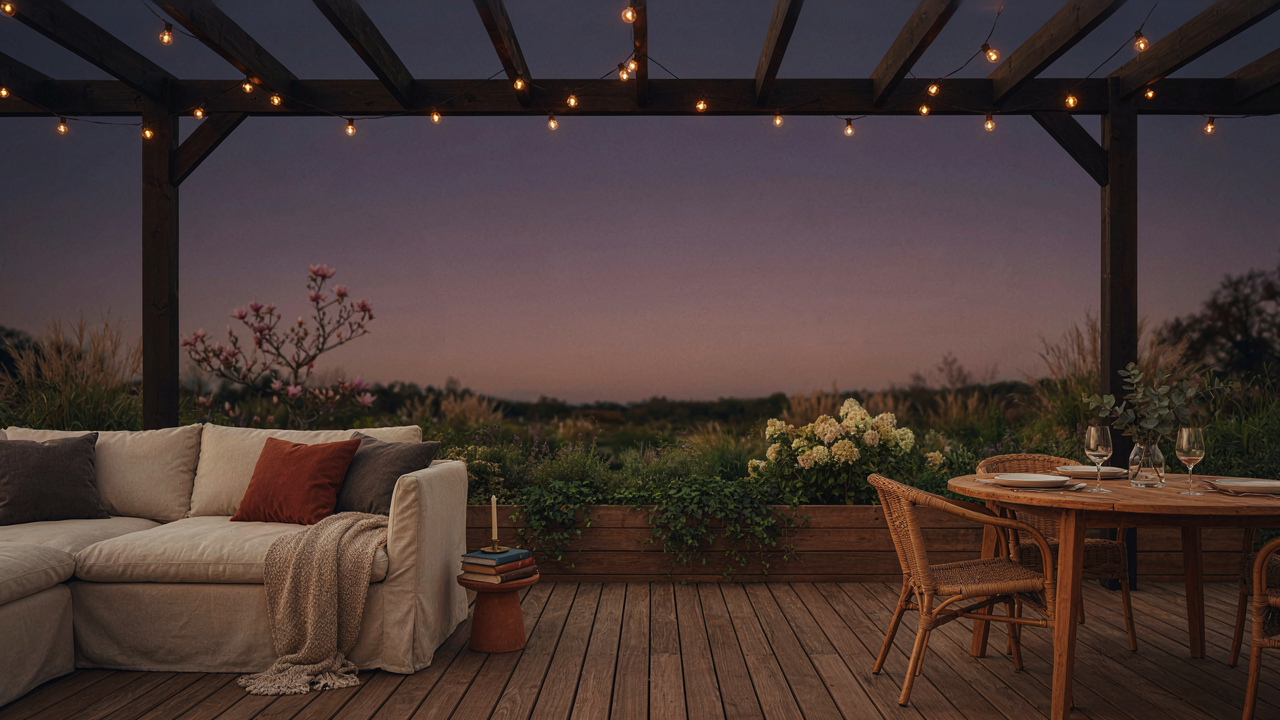
Beyond Ambiance: The Psychology Of Pergola Lighting

Color Temperature Controls Alertness, Not Just Mood
You want people to stay engaged at your event instead of checking their phones or leaving early. The mechanism is color temperature, measured in Kelvin. Warm light (2700K to 3000K) slows neural activity and reduces cortisol. Cool light (4000K and above) increases alertness and dopamine. String lights over a pergola typically come in warm or neutral tones because that’s what sells the fantasy, not because it’s optimal for flow.
The practical move: use 2700K warm lights for seated dining or conversation zones where you want people relaxed and present. Switch to 3500K neutral-white for cocktail areas or standing mingling spaces where you need people energized and mobile. Your guests won’t consciously notice the difference. Their behavior will shift immediately. The temperature of light literally alters how their nervous system responds to the environment.
Brightness Creates Invisible Boundaries
Everyone repeats the rule about layering light. Nobody explains what it actually does. Brightness functions like a navigation system for human attention. Brighter zones draw focus and foot traffic. Dim zones signal retreat or transition. In behavioral psychology, this is called environmental affordance. When you vary the brightness of string lights over a pergola, you’re not decorating. You’re architecting movement.
Install brighter strings (800 to 1200 lumens per fixture) along pathways and gathering points. Drop to 200 to 400 lumens in seating alcoves or perimeter areas. Your guests will naturally flow toward bright zones and settle into dim ones without a single verbal instruction. This is how restaurants and bars control crowd density. You’re applying the same principle to your outdoor space. The layout drives behavior before anyone arrives.
The Luminary Layering Protocol For String Lights Under Pergola
Overhead String Lights Set The Spatial Foundation

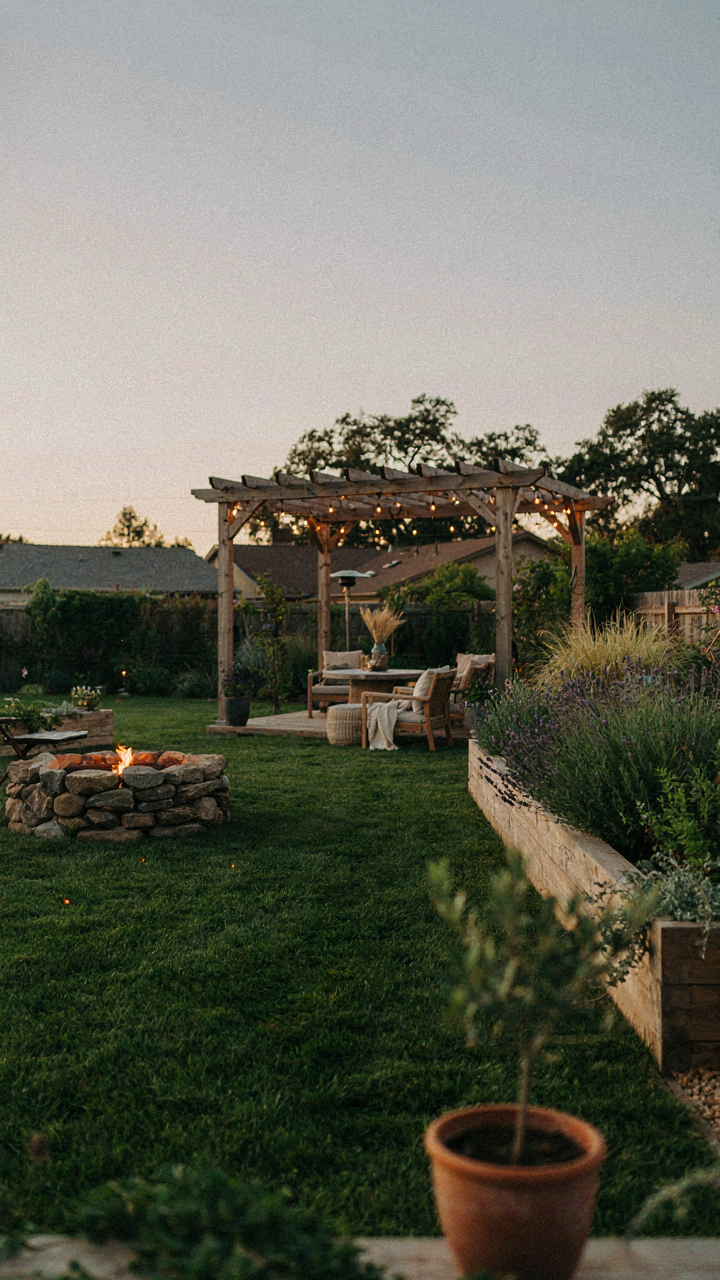
You want people to feel like they’re in an intentional space, not wandering through your backyard. That’s the real problem you’re solving. Overhead string lights work because they establish a perimeter and tell the eye where the “room” begins and ends. From an architectural standpoint, they function as a ceiling plane—the same principle that makes a low soffit feel intimate and a high cathedral feel vast. The light source position matters more than brightness here.
Run your primary string lines parallel to the pergola structure, either following the beams or spanning perpendicular across them. Space them 18 to 24 inches apart for even coverage without harsh shadows. A single line feels incomplete and sparse. Two to three parallel lines create definition. Position them at roughly 7 to 8 feet high if your pergola allows it, so the light spreads across the entertainment zone without glare in seated eye level.
Accent Lighting Adds Depth Through Contrast
People think accent lights just make things look prettier. They actually create focal points by breaking visual monotony and controlling where attention lands. Use accent lights to highlight architectural features—the pergola posts, climbing plants, or a seating arrangement—while your overhead lights handle general visibility. This layering prevents the space from feeling flat and one-dimensional. Contrast is the mechanism.
Position accent fixtures low and directional: stake lights at ground level pointing upward into foliage, or clip spotlights onto lower pergola beams angled toward specific elements. Keep accent brightness noticeably dimmer than overhead lights, typically 30 to 50 percent of primary output. This prevents visual chaos and keeps the hierarchy clear. The overhead lights remain the dominant layer, and accent lights support them by adding shadow and dimension where the main illumination falls flat.
Hanging String Lights On Pergola: The Engineering Of Aesthetics
Load Distribution Prevents The Sag

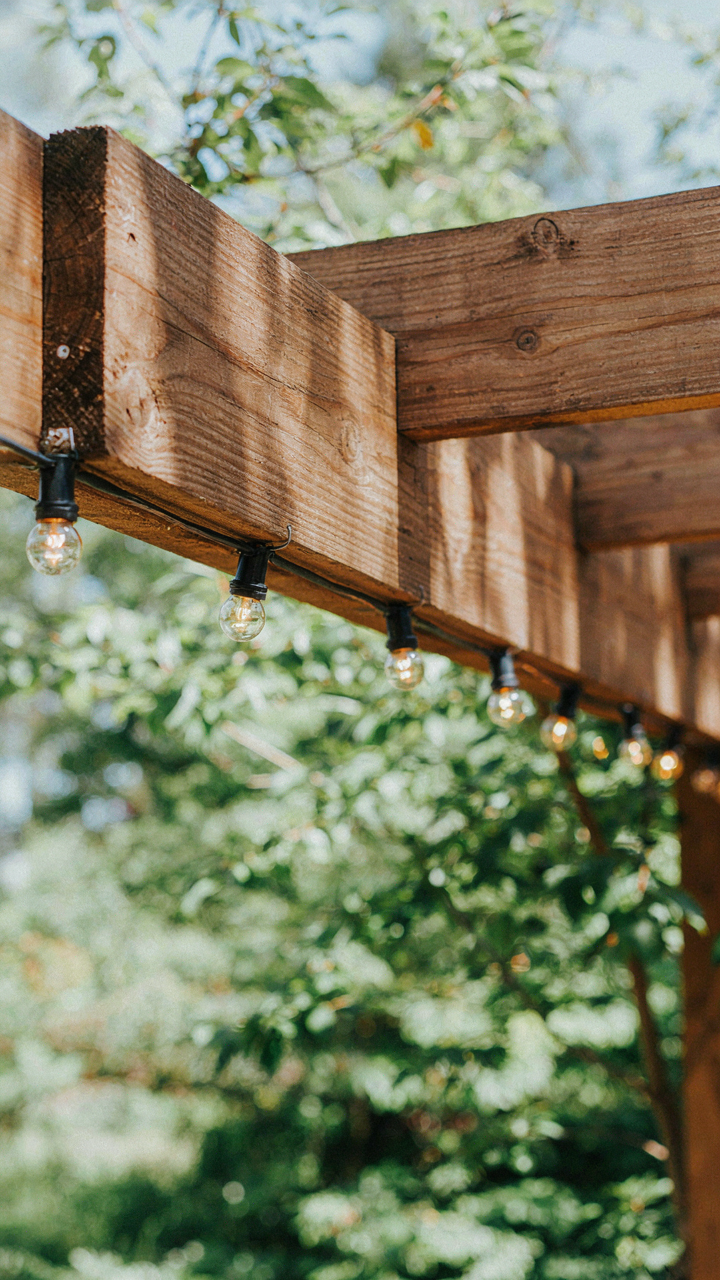
You want this to look intentional, not like you ran out of money mid-project. The real problem nobody names: string lights fail because people treat pergolas like infinite load-bearing structures when they’re not. Think of your pergola frame as a suspension bridge. The cables (your string light wires) transfer weight across spans, and if you don’t account for where that weight concentrates, you get the sag that screams neglect.
Standard pergola lumber spans 8 to 12 feet between posts. Heavier gauge wire and more frequent attachment points distribute load instead of creating stress peaks. Run lights parallel to the longer structural beams, not perpendicular across open spans. Attach every 2 to 3 feet rather than every 6. The math is simple: more anchor points equal lower tension per point, which means your frame stays true and your lights stay taut for years.
Hidden Wiring Looks Like Intentional Design
Everyone recommends “routing wires along the frame,” which is lazy talk for making your setup look like it was installed by someone who knew what they were doing. The distinction matters because visible wiring reads as an afterthought. Route all connections through the pergola’s structural members, not across open areas. Use wire clips rated for exterior use and space them 12 inches apart on horizontal runs, 8 inches on vertical drops.
Plan your electrical path before you hang a single light. Identify where your power source sits, trace the cleanest route to your first fixture, then plan branching from there. Most people install lights first and retrofit wiring second, which creates visible runs and amateur proportions. If you’re using modular string light sets, connect them end-to-end and run the combined trunk line as one consolidated path. Professional installers do this because it’s faster and looks deliberate, not because it’s obvious.
The Kinetic Light Map: Applying Military Strategy To Patio Lighting

Where Your Eyes Go, People Follow

You want your guests to feel like they’re in a curated space, not wandering a parking lot. Military doctrine calls this “lines of sight” – controlling what soldiers see to direct their movement and attention. String lights over a pergola work the same way. The light vectors you create pull the eye toward what matters and away from what doesn’t.
The mechanism is simple: humans follow light. A string of lights strung horizontally across your pergola doesn’t just illuminate the space. It creates a visual hierarchy. Your guests’ eyes land on the lit zone first, then linger there because the contrast is real. Run lights along one edge of the pergola, not scattered everywhere. This prevents cognitive load and makes the space feel intentional rather than decorated.
Separating Conversation From Movement
You’re not designing one space. You’re designing overlapping zones with different social weights. Military strategy uses “zones of influence” to define areas of control. String lights create these zones by intensity and placement. Dense lighting creates intimate gathering spots. Sparse lighting creates transition areas where people naturally flow without stopping.
Mount lights above seating areas at full density. Run single strands along pathways at lower density. This isn’t aesthetic choice. It’s behavioral engineering. People sit where light is concentrated and move through where it’s diffuse. The physics is basic: eyes seek brightness. You exploit this by mapping your pergola into a conversation zone with tight light clusters and a perimeter zone with minimal strings. This forces function before decoration.
Strategic Placement: Maximizing Patio String Lights Utility
Task Lighting For Work Zones

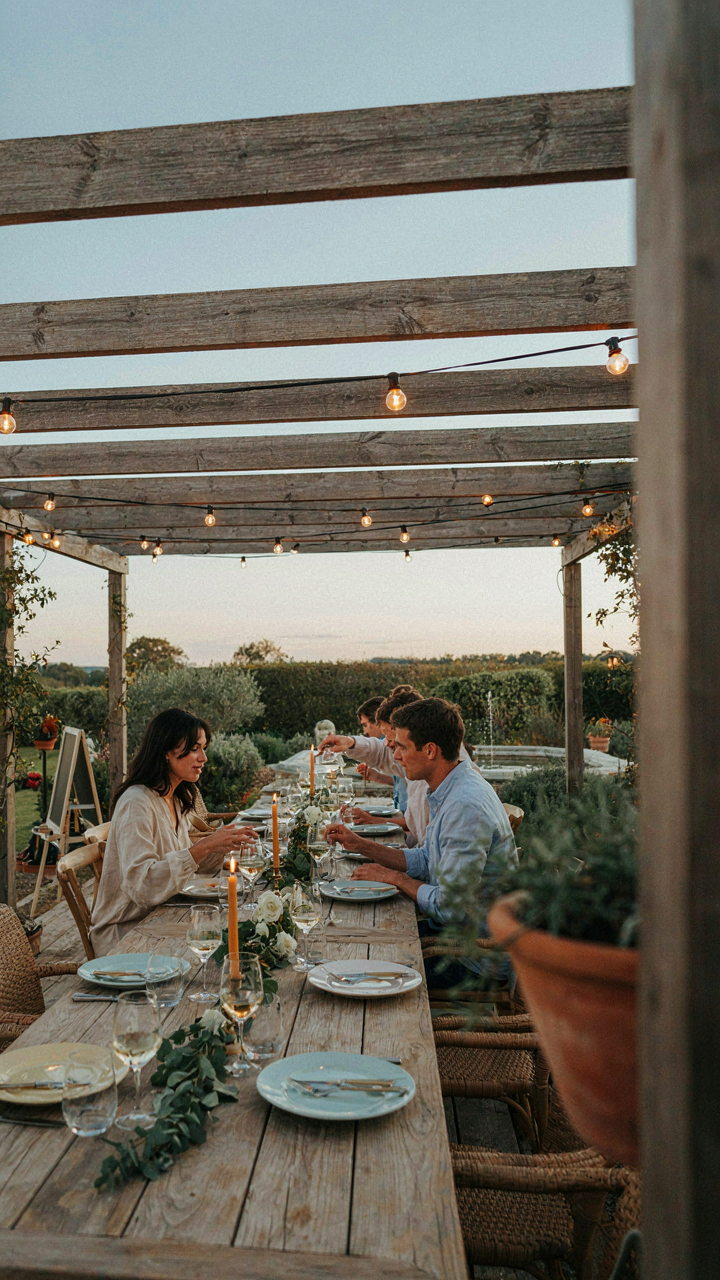
You want people to think your entertaining is effortless, which means hiding the actual work. That’s the mechanism. String lights over a pergola solve this by turning task lighting into ambient design. Position lights directly above food prep surfaces and seating areas where guests actually need visibility. This prevents the two-tier problem: dim romance lighting paired with a dark countertop where someone’s squinting at a cutting board.
Mount lights 7 to 8 feet above work zones to cast useful illumination without glare in anyone’s eyes. This height creates soft overhead light that mimics natural evening conditions. Spacing lights 4 to 6 feet apart along prep lines ensures even coverage. Skip the recessed fixtures under pergola beams—string lights work because they’re visible, decorative, and functional simultaneously. The added benefit: guests see where they’re walking and where the food actually is.
Spatial Definition Through Light Architecture
Lighting geometry matters more than people admit. The military uses light to establish perimeter control—you’re doing the same on your patio, just with aesthetics. String lights create visual boundaries that make a 20-by-20 space feel intentional rather than scattered. Run parallel lines across the pergola to compress space psychologically, or angle them diagonally to suggest expansion.
The actual mechanism is contrast and line weight. Dark corners feel hostile. A pergola lit with deliberate line patterns tells guests where the entertaining zone ends and the yard begins. Install lights in patterns that mirror the pergola’s structure: if beams run perpendicular, follow that same direction. This creates visual continuity instead of random decoration. The result is a patio that feels designed, not decorated—and people linger longer in spaces that feel intentional.
Durability Over Decor: Investing In Pergola With String Lights
Weather Resistance Matters More Than Aesthetics

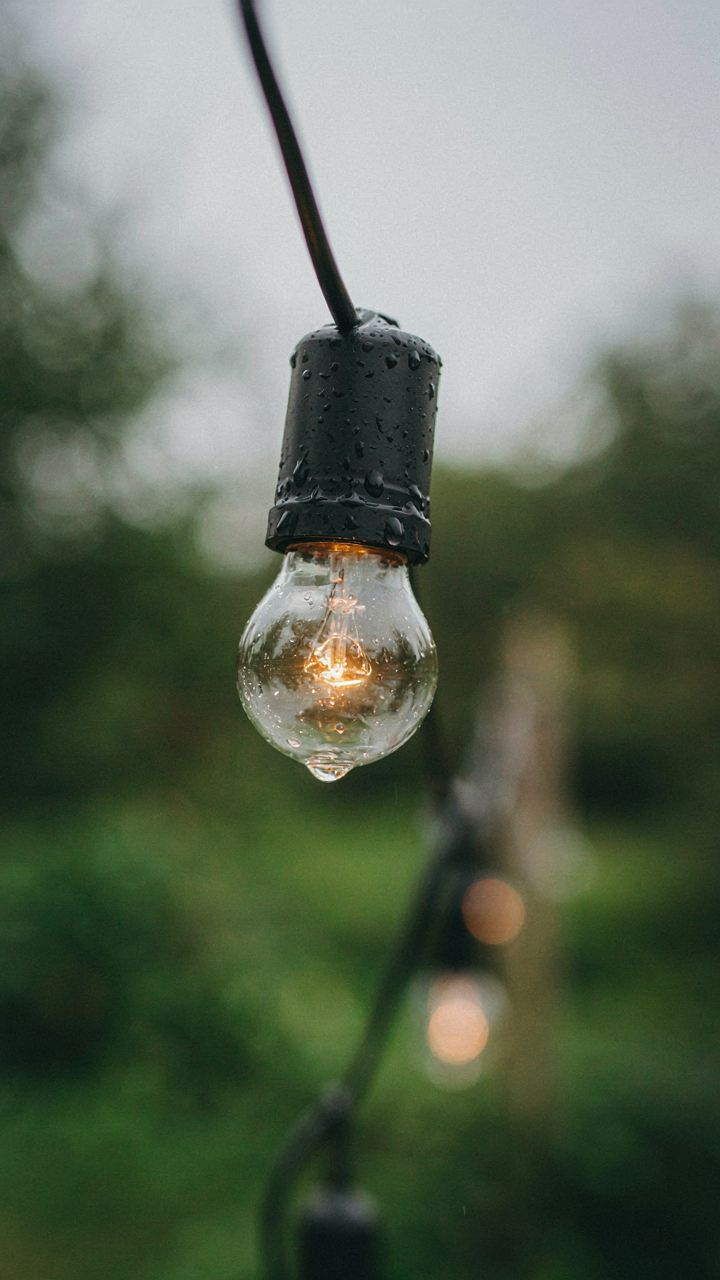
You want your setup to look good in photos. What you actually need is something that doesn’t fail mid-party. IP ratings work like insurance claims: they’re boring until you need them. IP65 means the fixture survives jets of water from any angle. IP44 handles splashing. Anything below IP44 is a gamble in a humid backyard. The rating tells you exactly what environment the light survives, not what looks premium in a catalog.
- IP Rating 65: Protects against direct water jets. Survive rain, sprinklers, and hosing down the deck without failure.
- IP Rating 44: Resists splashing and light spray. Adequate for covered pergolas or areas with minimal direct water exposure.
- Polycarbonate Fixtures: Resist UV degradation and stay clear longer than plastic. Won’t yellow or become brittle in direct sun within one season.
- Stainless Steel Hardware: Prevents rust on bulb sockets and mounting brackets. Galvanized alternatives corrode faster in humid climates.
- Silicone Gaskets: Seal connections against moisture infiltration. Check gaskets annually because they degrade from UV exposure.
Material quality determines lifespan more than brand name. Wire insulation fails from heat cycling and UV exposure, not from being “cheap.” Examine the jacket: thick rubber or silicone lasts five to seven years outdoors. Thin PVC cracks within two seasons. Fixture bodies should be polycarbonate or die-cast aluminum, never thin plastic. The mechanism is simple: materials that resist UV and temperature swings stay functional.
LED Efficiency Shifts The Economics
Everyone says LEDs save money. They do, but not how you think. An incandescent string uses 5 watts per bulb. LED equivalents use 0.5 watts. Run fifty bulbs nightly for six months and incandescent costs roughly forty dollars in electricity. LED costs four dollars. The real mechanism is heat: incandescent burns power as heat, making them fail faster in humid conditions. LED’s cooler operation extends wire life and fixture lifespan by years.
The upfront cost gap matters less than replacement frequency. Incandescent bulbs cost two dollars each and fail every eighteen months in outdoor conditions. LED bulbs cost eight dollars and last three to five years. Buy fifty incandescent bulbs twice in five years. Buy fifty LEDs once. The total cost favors LED after one replacement cycle. Buying better upfront beats replacing cheap gear repeatedly.
The Automated Pergola Lighting System: Beyond The Switch
Control Your Lights Without Walking

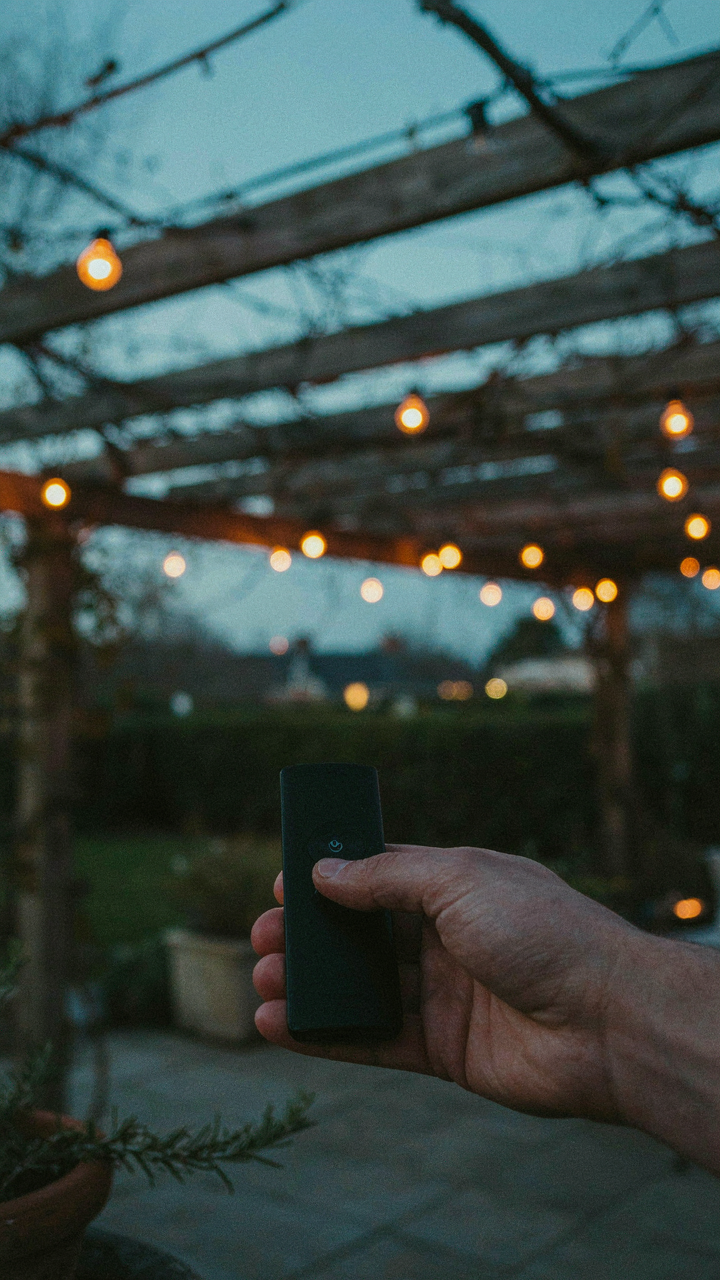
You want automation because you’re tired of manual labor dressed up as entertaining. The real mechanism is this: smart controls eliminate the friction between intention and execution. A dimmer, timer, or remote lets you adjust mood without leaving your seat or fumbling for a wall switch across the yard. Standard string light setups force you to choose one brightness level at installation and live with it. Smart bulbs and controllers invert this. You set the mood in real time, which means your pergola lighting adapts to conversation phase, time of evening, and guest arrival without you thinking about it.
The practical setup demands two decisions upfront. First, choose bulbs with integrated smart capability or retrofit standard sockets with smart adapters. Second, pick a control method: app-based systems like Philips Hue or Nanoleaf, standalone remote controllers, or WiFi-enabled dimmer switches wired to your outdoor circuit. The dimmer approach is the most reliable for pergola installations because it doesn’t depend on WiFi stability. A hardwired dimmer gives you instant control and zero lag. Timers eliminate the forget-to-turn-off problem that drains batteries on rechargeable systems and runs up electricity costs on permanent installations.
Activation Without You
Sensor integration solves the problem most people refuse to name: you forget to turn things on. Motion sensors trigger lights when guests arrive on the patio. Dusk-to-dawn sensors activate lights automatically as daylight fades, which matters because “sunset” shifts 45 minutes across a season. These aren’t optional upgrades. They’re the difference between a pergola that lights itself and one that requires you to remember a sequence of actions during hosting mode, when your attention is elsewhere.
The constraint here is that sensors need clear sight lines and proper placement to avoid false triggers or missed activations. Motion sensors mounted on pergola posts work better than ceiling-mounted options because they detect movement at guest height, not just overhead activity. Dusk-to-dawn sensors must avoid light pollution from surrounding fixtures or they’ll stay dormant too long. Test both sensor types before committing. Install motion sensors with a 5-10 second delay so brief movements don’t cause erratic flickering. Pair dusk-to-dawn activation with manual overrides so you can turn lights off during daytime gatherings or force them on during overcast evenings.
How To Hang Lights On Pergola: The Anti Flimsy Blueprint
Anchor Points And Secure Attachment Methods

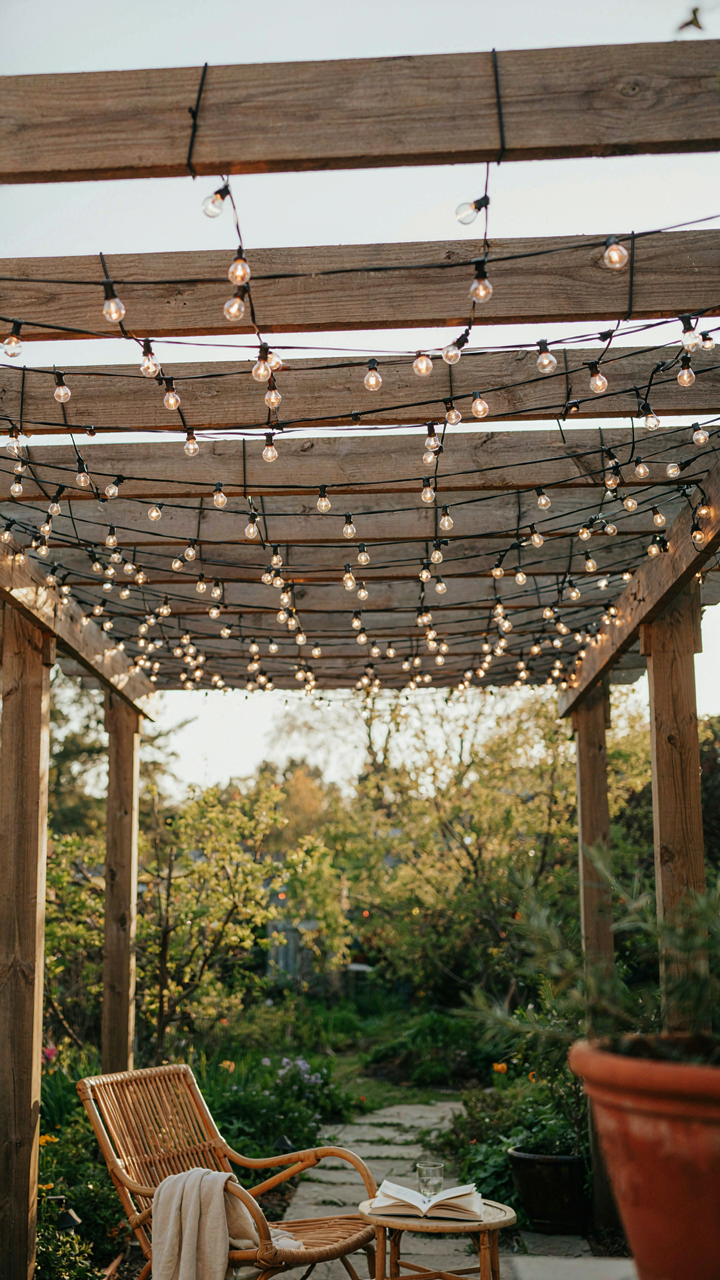
You want this to look effortless because you’re afraid it will fail mid-party. The mechanism is simple: string lights fail when attachment points lack redundancy and distribute load unevenly across weak connection types. Wood pergolas need through-bolts or lag bolts rated for lateral stress, not surface-mounted hooks. Metal pergolas need U-bolts or welded brackets that transfer tension directly into the frame, not hang from it.
The common advice is to screw in eye bolts anywhere convenient. Wrong. Eye bolts pull straight down; string lights pull sideways under their own tension and wind load. You need anchor points positioned at corners and along beams where the structure already channels force. Install bolts perpendicular to the direction of pull, torque them to spec, and use stainless steel or galvanized hardware to prevent rust that weakens the connection over time.
Tensioning Systems That Hold Under Wind And Load
Physics calls this “catenary tension,” the curve a cable forms when suspended between two points. String lights form that same curve, which means tension increases exponentially as you tighten them. One inch of sag difference changes the force vector on your anchor points by ten to twenty percent. Loose lines fail in wind. Over-tensioned lines rip out anchors and snap conductors.
Install turnbuckles or ratchet tensioners on at least one end of each run, never both ends. Tension to the point where the line moves slightly under palm pressure, then stop. Check tension after the first rain and every month during heavy use season because wood moves and metal expands. The mechanism that prevents failure is controlled slack, not rigidity.
The True Failure Isn’t Dim Lighting; It’s A Dim Understanding Of Human Behavior In Illuminated Spaces
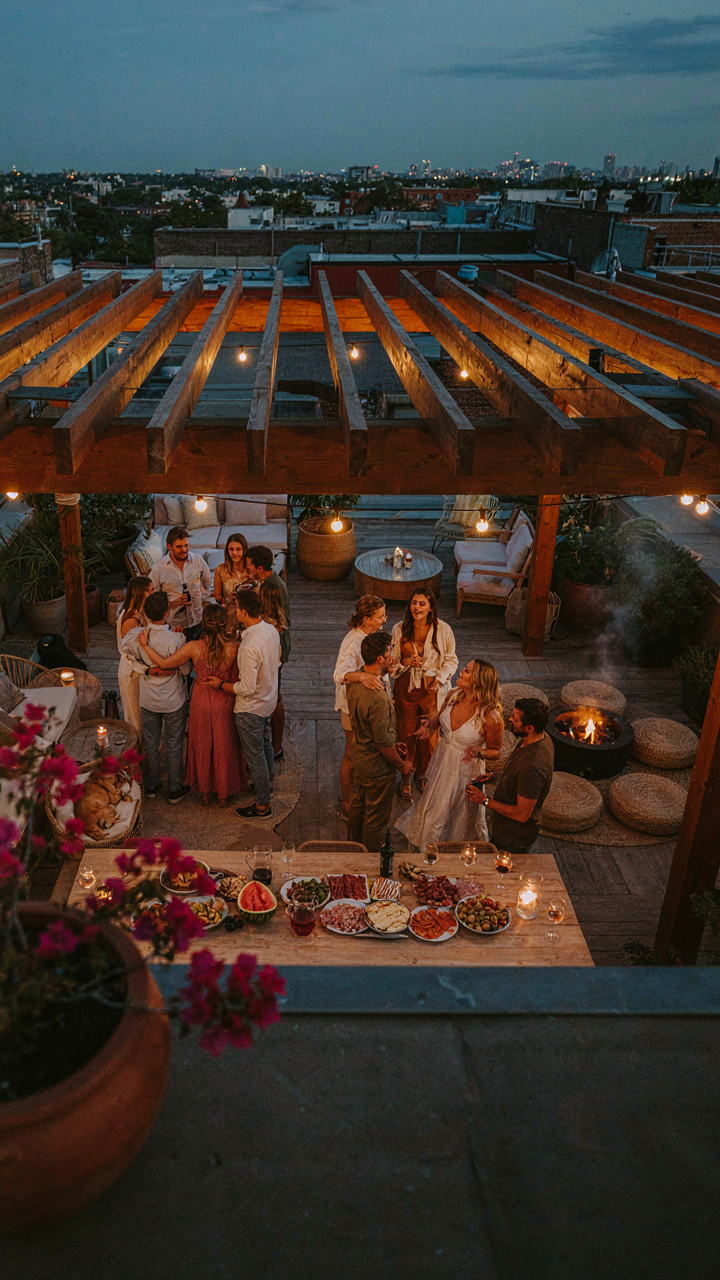

Most people buy string lights over a pergola and forget they’re designing for psychology, not just ambiance. You’re controlling how guests feel, how long they stay, where they gather. The layout determines everything. Stop thinking about pretty and start thinking about behavior. Grab a flashlight tonight, walk your space at dusk, and mark where shadows kill conversation. That’s your real design problem. Light doesn’t just brighten a space. It builds an invisible architecture that makes people want to stay.