The Intentional Entry: Beyond Generic Farmhouse Porch Decor
What Your Porch Actually Does
You want guests to think you have your life together before they step inside. Here’s what people won’t tell you: your porch is a filtering mechanism. It communicates whether someone entering will encounter chaos or control, rushed or deliberate. Farmhouse porch decor works when it signals competence through restraint, not abundance. Most people get this backward and treat the porch like a decoration problem instead of a communication problem.
A porch filters light, weather, and energy before it reaches your interior. This physical function mirrors a social one. The porch creates a threshold. Guests pause there, unconsciously reading signals about who you are before entering private space. When you apply industrial design thinking here, you realize: every object on a farmhouse porch must justify its presence by either managing the threshold physically or reinforcing a specific message about the home. Remove anything that does neither.
Function Before Trend Cycles
The advice to layer textures and mix vintage finds is incomplete. That approach works only if each piece serves a structural purpose first and aesthetic purpose second. Most farmhouse porch decor fails because people see a Pinterest image, buy the elements, and arrange them decoratively. This creates visual noise instead of intentional space.
Benches work. Hooks work. Lighting that illuminates the entry works. A collection of decorative lanterns that don’t light anything doesn’t work, regardless of how weathered they look. Start with what the porch actually needs: safe passage, clear entry sight lines, protection from elements, and a place to transition from outside to inside. Once those functions are met, you add layers. Until then, you’re just filling square footage.
The Echo Chamber Effect: Why Your Farmhouse Porch Ideas Fail
When Matching Pinterest Replaces Thinking

You want proof your taste is correct before guests arrive. That’s the real reason you’re scrolling farmhouse porch inspiration. The mechanism at work is consensus collapse. In economics, consensus collapse happens when everyone buys the same asset, drives the price up, then exits simultaneously, leaving the last buyer holding worthless stock. Your porch works the same way. When you copy what everyone else copied from the same five influencers, you don’t create a welcoming entry point. You create a showroom nobody remembers.
The mistake isn’t that you’re taking inspiration from others. The mistake is thinking inspiration means replication. Most farmhouse porch decor fails because it treats design like a costume. You see a rustic ladder leaning against white shiplap, a vintage metal sign, three lanterns in descending heights, and you assume that formula equals farmhouse. It doesn’t. A porch built on borrowed aesthetics signals that you didn’t think about what actually works for your home, your guests, or the way you live.
Your Porch Needs A Point Of View
Stop hunting for the right aesthetic and start hunting for the reason someone should notice your porch at all. The common advice says “mix high and low, vintage and new, textures and tones.” That’s incomplete. The real answer is simpler: your porch needs to reflect a decision you made, not a decision someone else made for you on Instagram. When every porch has the same whitewashed wood, the same milk can planters, and the same distressed metal signs, none of them stand out because they’re all saying the same thing: “I followed the rules.”
Reclaiming individuality means identifying what’s actually true about your home and your guests’ experience before they step through the door. If your house sits on a working property, your porch should reflect that. If your guests arrive from a busy street, your porch should acknowledge the transition they’re making. If your climate is humid or harsh, your materials should perform, not just photograph. The mechanism is simple: stop decorating for approval and start decorating for function. Function is what guests notice first, even if they don’t know they’re noticing it.
The Biomimicry Of Welcome: Engineering Your House Front Porch

How Ecosystems Design Entry Points

You want guests to feel at ease before they knock. That’s not hospitality—that’s status management. Ecology calls this “edge habitat design,” where transitional zones between two environments reduce friction and signal safety. Your porch functions as that edge. The mechanism works because humans are pattern-recognition animals. When a space follows natural organizational principles—clear sightlines, graduated density, accessible focal points—the nervous system registers it as navigable. Farmhouse porches leverage this by mimicking how nature structures approach paths: wide at entry, narrower toward intimacy, with defined stopping points that feel deliberate rather than accidental.
The porch works hardest when it acknowledges approach vectors. A guest arriving by car has a different cognitive load than one walking from the street. The best farmhouse porches handle both simultaneously through layered spatial depth. Start with open railings that maintain sightlines into the space rather than solid barriers that create psychological walls. This isn’t decoration—it’s information architecture. The visitor’s brain processes: Is this space open to me? Am I welcome to move forward? Answering these questions before conscious thought lands guests in a receptive state.
Spatial Rhythm And Intuitive Navigation
Every porch has a decision point. Most porches hide it or make it ambiguous. Farmhouse design solves this through rhythm, not signage. The layout guides guests through pulse and pause. A seating grouping creates the first pause. A planter line creates secondary rhythm. A door mat defines the final pause before entry. These aren’t random placements. They’re visual beats that telegraph: you are progressing toward purpose.
Walk distances matter mechanically. A porch that stretches ten feet creates uncertainty about approach speed. A porch that reveals the front door within six feet of entry feels decisive. Farmhouse aesthetics compound this through material choice: wide plank flooring establishes a rhythm visitors naturally synchronize to. The grain patterns and board widths create visual metronome effects. Wicker seating and wooden railings reinforce this through texture continuity. The concrete mechanism is repetition at human scale. Every element that recurs creates neural efficiency. Your guests’ brains spend less energy decoding the space and more energy recognizing they belong in it.
The Curated Canvas: Rustic Porch Elements That Speak Volumes

Authenticity Over Trend

You want guests to think you inherited this stuff, not ordered it from a catalog. Here’s the mechanism: authenticity signals restraint and stability. Mass-produced farmhouse decor broadcasts the opposite—that you bought taste instead of earning it. Real weathering tells a story of time and use. Fake distressing tells the story of a warehouse and a return policy.
Start with items that have actual history. Old wooden chairs from estate sales, genuine cast iron that shows use patterns, vintage milk cans from actual dairy operations. These pieces carry physical evidence of function, not just aesthetic intention. The patina comes from real friction, real weather, real hands. Guests read this unconsciously and adjust their behavior accordingly.
The Imitation Problem
Everyone says distressed finishes add character. They don’t. They add cost and reduce credibility. Manufacturers sand, stain, and chip wood specifically to look old. This is theater masquerading as authenticity, and people can feel the difference on a subconscious level.
Genuine wear patterns are asymmetrical and specific to function. A rocking chair wears where hands grip it and where feet rest. A fence post weathers on one side if that’s where rain hits. Artificial distressing applies damage uniformly, like it came from a treatment process instead of decades of actual use. Source real pieces with genuine histories, even if they’re rougher or less “designed.” The truth reads faster than the lie.
The Guest Engagement Protocol: Beyond Just Pretty Front Porch Ideas

Create Friction That Feels Like Invitation

You want people to linger on your porch because it makes you look like you have your life together. Here’s what actually works: borrow from retail design’s concept of “dwell time.” A porch that demands nothing from a guest is a porch they walk past. A porch that poses a small, solvable puzzle keeps them there.
The mistake everyone makes is assuming farmhouse porch decor should be passive scenery. Wrong. Your porch needs to present micro-choices that feel optional but rewarding. A rocker positioned at an angle toward the entry. A small side table at arm’s reach. A lantern hung at eye level. These aren’t decorations. They’re interaction points.
- Seating arranged in conversation angles: Position rockers or a bench so guests naturally orient toward each other or the entry, not parallel to the street or house wall.
- Weathered wood surfaces at varied heights: A console table, a plant stand, a low stool create stopping points where hands have somewhere to rest or eyes have layers to scan.
- Lanterns with visible light sources: Hung or placed at different levels, they create visual depth and draw focus without requiring explanation or instruction.
- Baskets or containers with one clear purpose: A blanket basket near seating or a tool caddy by the door signals “this thing is here for you to use,” reducing ambiguity.
- Pathways with subtle definition: Gravel, stepping stones, or border plantings that guide foot traffic create natural pause points between the street and your entry door.
The porch that works is the one where a guest naturally knows what to do without asking. They sit. They pause. They feel like they belong there before they cross the threshold.
The Pause Before Arrival
You’re not decorating a porch. You’re engineering the psychological moment between “I’ve arrived” and “I’m inside.” Guests who pause on your porch before entering have already shifted mentally from the outside world to your space. That shift changes how they behave once they’re in your home.
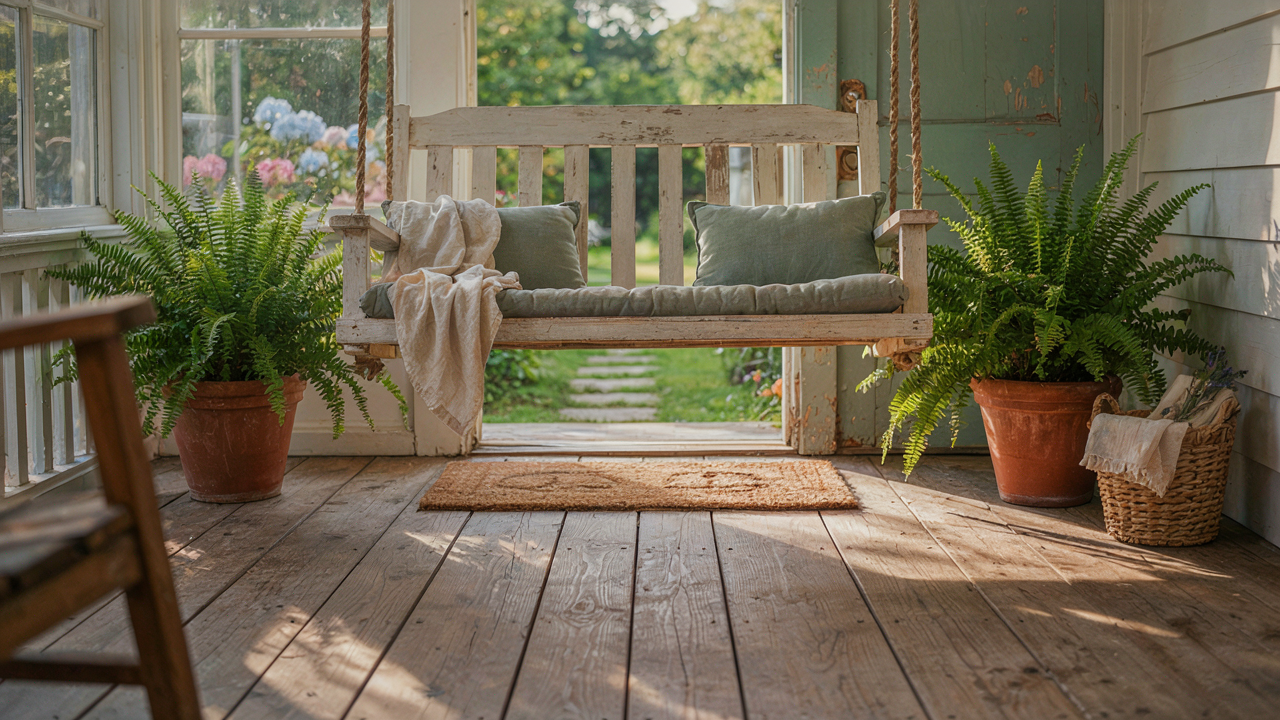
The mechanism is simple: create tactile and visual reasons to stop moving forward. A porch swing doesn’t just look good. It’s an obstacle that says “maybe sit for thirty seconds.” A weathered side table with a small plant gives hands something to do. A woven rug defines a threshold zone where it’s reasonable to stand still. None of these require explanation. Guests read them automatically.

The Understated Art Of Rustic Front Porch Utility

When Function Stops Being Invisible
You want your porch to look effortless, like utility and style merged without effort. That’s the real fear: guests will see your porch as a staging ground, not a lived space. The mechanism is borrowed from industrial design: form follows function, but function must come first. A porch that hides its purpose reads as fake. A porch that owns its purpose reads as honest.
Farmhouse design emerged from necessity, not aesthetics. Early American porches existed because people stored tools, sat during work breaks, and conducted business outside. The visual appeal came from how well materials handled their jobs. Wood railings weren’t pretty because carpenters tried to make them pretty. They were pretty because they were proportioned to stop people from falling. That distinction matters more than any decorating rule.
Purpose Precedes The Palette
The common advice treats utility as decoration’s unwanted cousin. Wrong. Utility is the skeleton. Decoration is the skin that only works when the skeleton is strong. A farmhouse porch needs to function as a transition zone, a storage buffer, and a gathering point before it can function as anything else.
Start with what the porch must do, then select materials and placement that serve those functions with zero compromise. A bench near the door serves foot traffic and provides seating. Hooks on the wall hang coats and tools without taking floor space. A small table holds deliveries, plants, or seasonal items. These aren’t decorative choices. These are functional decisions that happen to look right because they solve real problems. The porch that welcomes guests is the porch that works first.

The Microclimate Method: Optimizing Your Farmhouse Porch

Read The Environment First
You want your porch to look intentional, not neglected. The real mechanism is this: your porch’s microclimate determines what survives and what dies, which determines what your guests see. You can’t decorate what won’t grow. Sunlight patterns shift throughout the day and seasons. Morning sun on an east-facing porch burns intense for two hours, then softens. West-facing porches bake from afternoon through sunset. North-facing gets reflected light only. South-facing gets everything. Wind accelerates moisture loss from soil and plant foliage. A porch exposed to prevailing winds dries out faster and damages delicate elements.
Shade from your house, overhanging roof, or nearby trees modifies these patterns. An eave that blocks rain also blocks half the usable light. Trees nearby create moving shadow patterns that change monthly. Most farmhouse porch failures trace to someone planting shade-loving plants in direct sun or vice versa, then blaming the plant. Measure your porch’s light at three times of day: sunrise, midday, sunset. Note which areas stay dry during rain and which collect water. This data determines everything you place there.
Position For Permanence And Comfort
Furniture placement and planter positioning follow the same principle: put items where their needs match what the microclimate provides. Heavy furniture on an exposed west-facing porch gets hammered by heat and fades faster than on an east-facing porch. Plants in low-wind corners survive better than on exposed edges. Wicker and natural wood deteriorate differently depending on moisture exposure. A bench in a wind tunnel ages faster than one tucked against a wall.
Guests notice comfort before aesthetics. If they’re too hot, too cold, or buffeted by wind, your decor means nothing. Position seating in areas that offer natural wind protection. Place potted plants where they receive appropriate light and stay protected from drying winds. Heavy planters go on flat, level surfaces away from traffic patterns. Delicate decor elements like wreaths or hanging baskets need protection from prevailing wind direction. The porch that welcomes guests is one where they can sit comfortably without squinting or shivering, which only happens when placement matches the actual conditions you’ve measured.

The Unseen Narrative: Your Farmhouse Porch As Biography

Where You Actually Come From
You want people to think you belong there. That’s the real motive behind caring about porch narrative. The mechanism works like archaeology: objects on a porch function as artifacts that signal continuity, roots, and authenticity to anyone who steps onto it. A guest reads your porch before they read you. Everything visible either confirms or contradicts the story you’re telling about who you are and where you come from.
Farmhouse porch decor became a design category precisely because it signals provenance. The style emerged from actual working farms in the American South and Midwest, not from interior design trends. Real farmers and their families kept rockers, watering cans, and weathered wood on porches because those objects worked. When you recreate that environment intentionally, you’re not copying aesthetics. You’re borrowing the authority that comes from functional history. The porch becomes a statement about your relationship to land, labor, and continuity.
Seasons And Stability
Objects that change with seasons tell a more believable story than static decoration. Winter requires different visual weight than summer on a farmhouse porch. A wreath hung in November, then removed in April, reads as connected to actual rhythms. Corn stalks tied to porch posts in October then swapped for bare branches in January creates narrative momentum. Guests recognize the difference between decor that follows the calendar and decor that just sits there. The seasonal rotation proves you’re paying attention to something larger than aesthetics.
Weathering matters more than newness on a functioning farmhouse porch. Wood that shows age, metal that’s developed patina, and fabrics that fade from sun exposure all communicate that this space has earned its appearance through time. A deliberately distressed rocker purchased last month looks false next to one that actually has twenty years on it. The solution isn’t to buy aged items. It’s to let the items you already own deteriorate naturally through use, then position those worn pieces as the anchors of your porch narrative.

The Authenticity Audit: Redefining Farmhouse Porch Ideas
Stop Decorating For The Instagram Version
You want people to think your porch is effortlessly authentic, but you’re actually terrified it looks cheap or tries too hard. That fear drives you to buy more, not less. The real mechanism is this: authentic farmhouse porches work because every object solves a problem or holds genuine use value, not because you’ve assembled a mood board. Remove the performance, and what remains works.
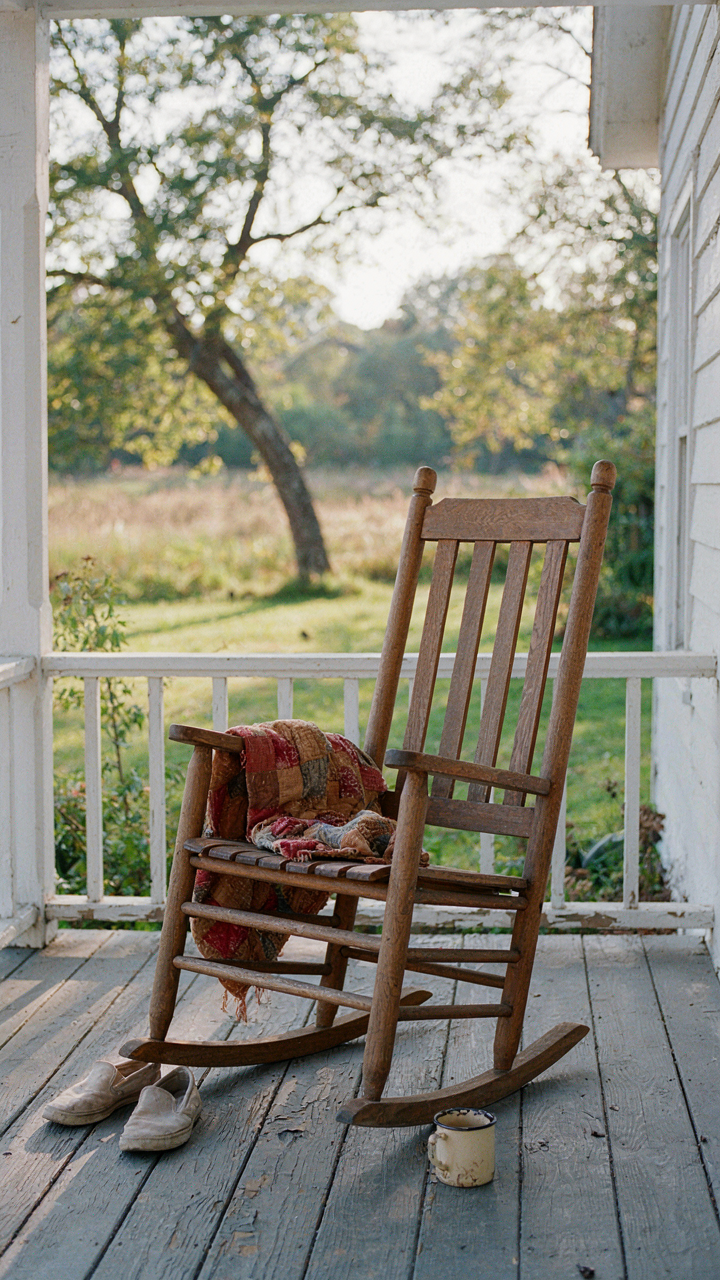
Evaluation means walking your porch as a stranger. Ask what each item does. A rocking chair lets people sit. A weathered bench holds jackets. Lanterns provide light. If an object is purely decorative and doesn’t connect to function or history, it’s noise. Most porches fail because owners confuse “looks farmhouse” with “functions like a farmhouse.” The first is performance. The second is a working porch that happens to look the part.
Strip Away Everything That Doesn’t Earn Its Place
The common advice to “layer textures and materials” is incomplete and misleading. Layering works only when each layer solves a problem. A rope-wrapped post looks intentional when it protects wood from rope wear during hitching. Burlap accents make sense near storage areas where they regulate humidity and insects. Decorative burlap hanging on a wall serves no function and signals you’re trying.
Walk through your porch and remove anything without purpose. A welcome mat prevents dirt inside. Planters hold plants that provide visual breaks from solid structure. A side table holds drinks or keys during gatherings. A coat rack serves guests. Everything stays or everything goes based on utility, not sentiment. This is how you stop looking like you’re performing farmhouse and start looking like you live it.
Your Porch Isn’t Unwelcoming; It’s Indistinct. The Real Problem Isn’t Lack Of Decor, It’s Lack Of Conviction
Most porches fail because owners decorate by committee, cramming in trends instead of building a point of view. Your farmhouse porch decor works when every piece serves the story you’re telling, not when you own the most stuff. Pick one element today—a weathered bench, vintage lanterns, a specific color palette—and commit to it. Build around that choice. The difference between a forgettable porch and one guests remember isn’t more decor. It’s deciding who you actually are when people walk up.