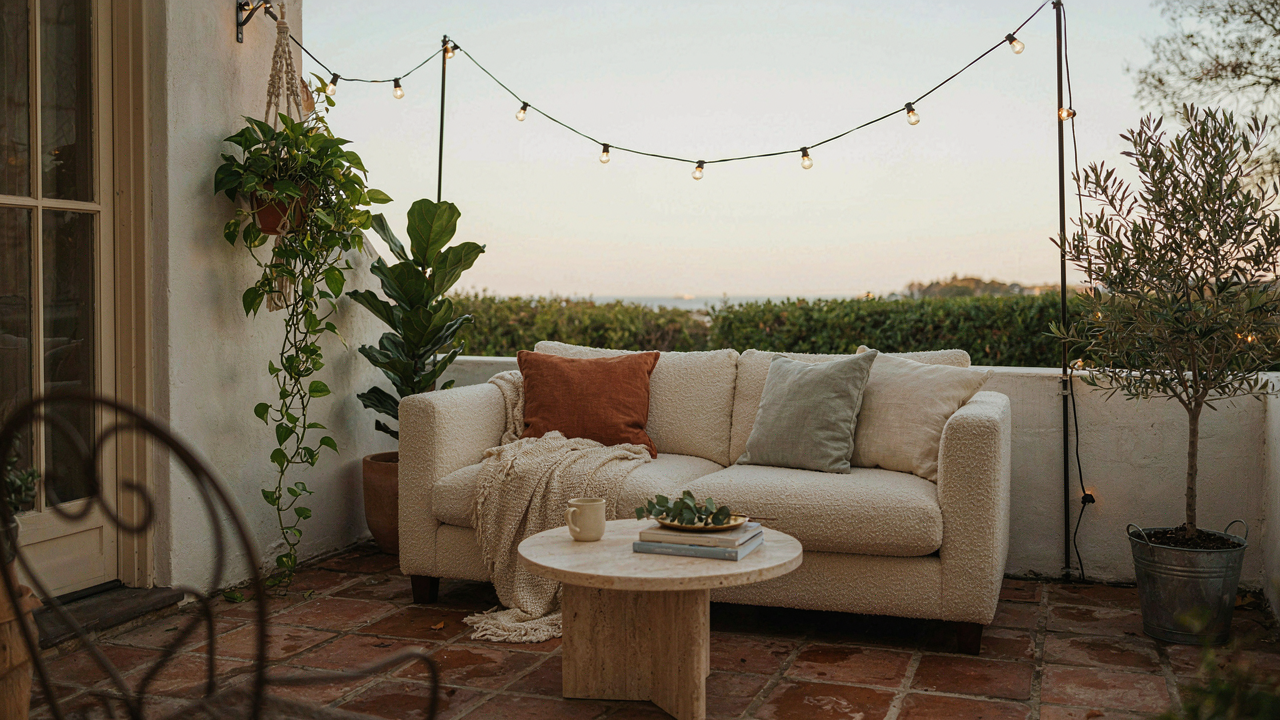
The “Scarcity Sells” Principle For Small Patio Design
Curated Minimalism Over Clutter
You want people to think you have taste and money, which is why you’re reading this instead of just throwing plants everywhere. The mechanism is scarcity. In economics, scarcity creates perceived value. A tiny patio with five intentional objects reads as designed. The same patio with fifteen reads as cramped. Your constraint is your advantage, but only if you treat it like one.
Most people fill small spaces because empty space feels wasteful. It’s the opposite. Every item you remove increases the visual weight of what stays. A single weathered wooden bench becomes a statement. Three mismatched planters become clutter. The metric that matters: can you move around the space without negotiating around objects? If no, you have clutter. If yes, you have design.
One Strong Focal Point Changes Everything
A focal point isn’t optional decoration. It’s the reason someone’s eye lands somewhere specific instead of scanning blankly. A tiny patio needs exactly one. Not a wall color, not ambient lighting, not vibes. A physical object that commands attention. This stops the visual noise that makes small spaces feel smaller.
A weathered stone basin, a large ceramic pot with sculptural form, or a simple water feature works because it gives the eye a destination. Everything else supports it. Small plants cluster near it. Seating faces toward it. The focal point absorbs the visual budget that clutter would otherwise waste. Install the focal point first, then decide what fits around it. Nothing else matters if this isn’t clear.
Beyond Beige: The Power Of Color And Texture
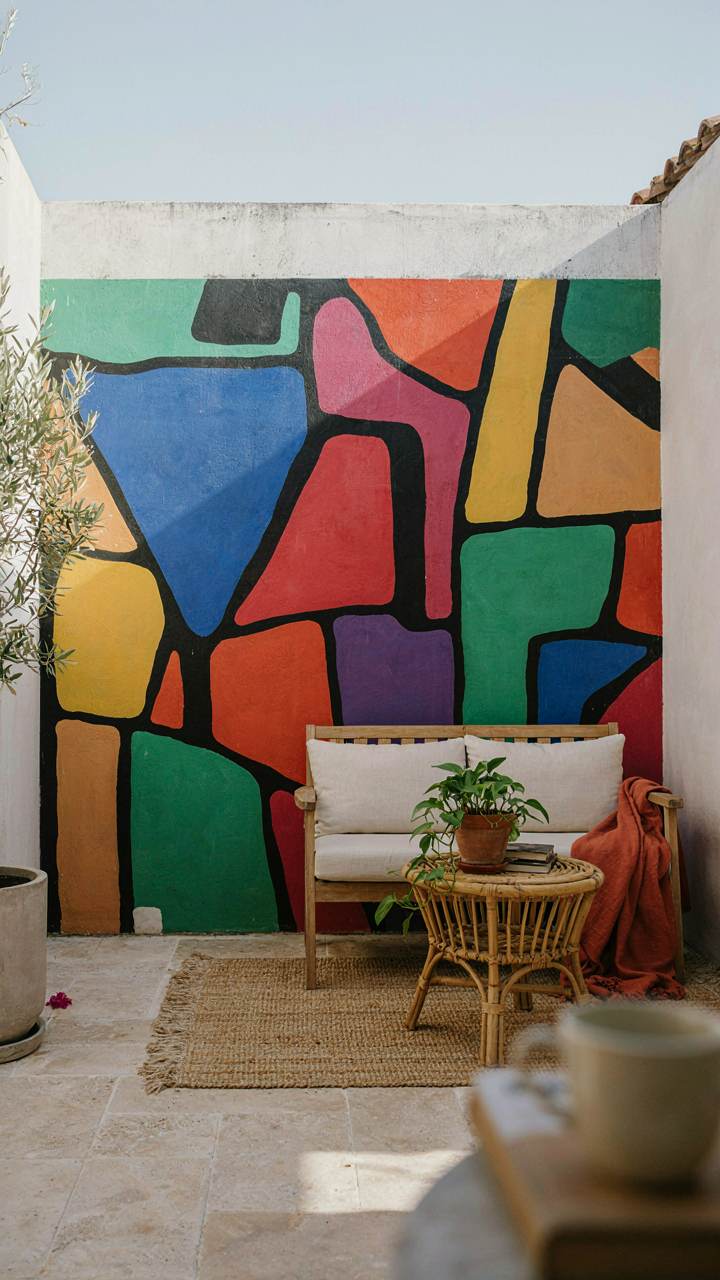
How Color Tricks Space Into Feeling Bigger

You want people to think your patio is larger than it actually is. That’s the real reason this matters. Color operates like perspective in photography: it compresses or expands perceived distance. Light colors recede. Dark colors advance. This is physics, not opinion. Walls painted in soft whites, creams, or pale grays push back visually, making a six-by-eight foot space feel less claustrophobic. The mechanism is straightforward: your eye reads lighter surfaces as farther away because they reflect more light and lack shadow definition.
Stop listening to advice that says “just go bright.” Brightness without strategy wastes the effect. A single accent wall in deeper tone—charcoal, forest green, or warm terracotta—creates focal depth without consuming the space. The remaining surfaces stay light. This contrast does the work for you. Paint the back wall one tone, the side walls another. Your eye travels and settles, which resets the spatial boundaries your brain perceives. Start with the back wall, then test accent placement before committing to paint.
Texture Breaks Up Visual Monotony And Hides Imperfection
Flat surfaces read as smaller. Texture creates shadow play that makes dimensions feel richer. Concrete pavers, rough-hewn stone, stucco finishes, or even simple wooden slats interrupt light and create visual interest. The material doesn’t need to be expensive. A textured patio surface costs the same as smooth concrete but performs harder. Your eye lingers longer on texture, which stretches perceived time and space. This is the opposite of a blank wall that announces its smallness immediately.
Layer materials strategically. Use one texture for flooring, another for walls or screens, a third for furniture or plantings. Jute rugs, woven outdoor cushions, or rough wooden frames add tactile complexity without clutter. The combination signals intention and craft. Cheap furnishings survive texture layering because texture itself becomes the dominant visual element. Your attention distributes across surfaces rather than landing on any single inadequate piece. This is why expensive patios often feel curated rather than decorated.
The “Illusion Of Grandeur” Method: Light, Mirrors, And Sound
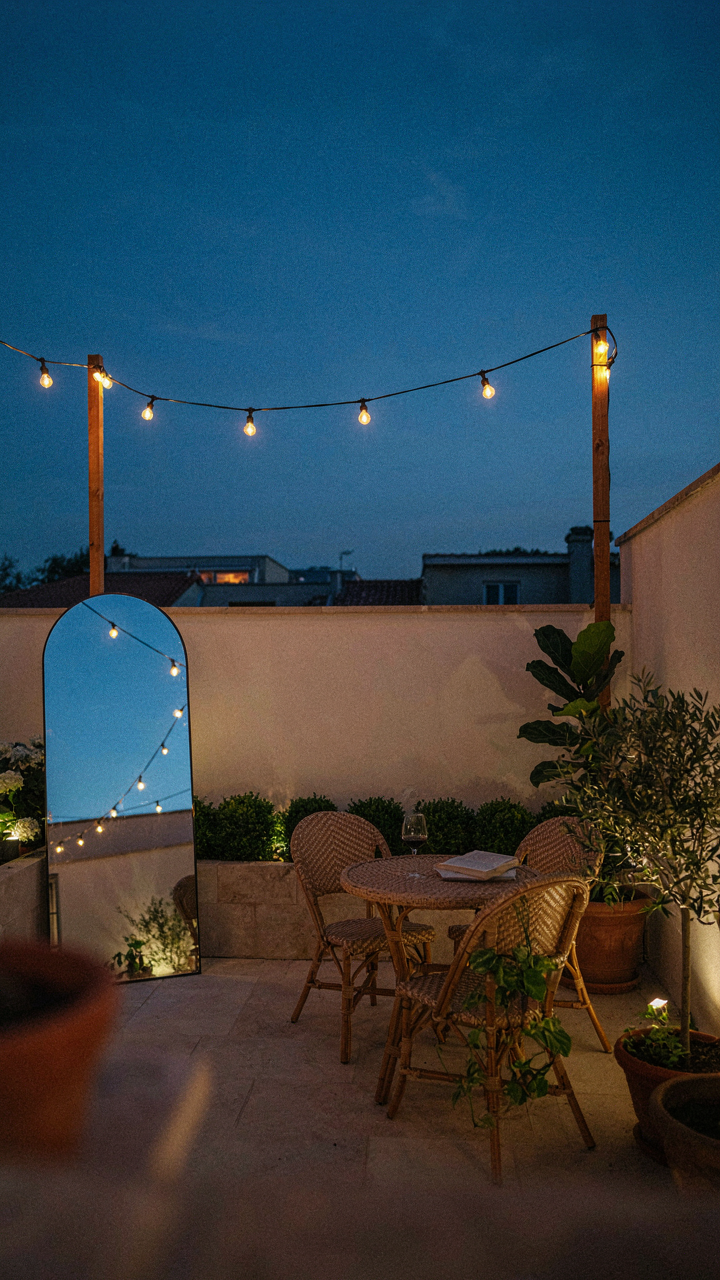
Strategic Lighting For Ambiance And Scale

You want people to feel like your patio is bigger than it actually is. That’s the real driver here. Most advice tells you to “add layers of light” without explaining why this works mechanically. Lighting operates on a principle from architectural psychology: humans perceive depth through contrast and shadow gradation. A tiny patio lit evenly feels cramped. A tiny patio with strategic pools of light and shadow creates perceived depth that doesn’t actually exist.
The mechanism is simple. Place a warm-toned uplighter behind plants or against a back wall. Position overhead string lights or a pendant to create visual separation between zones. The eye naturally travels from bright to shadow to bright again, and your brain interprets that journey as distance. Color temperature matters here too. Warm light (2700K or lower) feels intimate and luxurious. Cool light (above 4000K) feels institutional. Choose warm. Install lights on dimmers so you control the depth effect nightly.
Mirrors And Soundscaping For Perceived Space
Mirrors are the obvious play here. What’s not obvious is placement strategy. Most people stick a mirror on one wall and expect it to work. That reflects light, sure, but it doesn’t expand perceived space unless it reflects something worth looking at. Position a mirror to catch and bounce light from your primary light source toward the back of the patio. Better: angle it to reflect plants or architectural details, not empty wall. The reflection becomes a visual anchor that makes the space feel active and layered.
Sound gets ignored in tiny patio design, but it shouldn’t. A water feature, even a small tabletop fountain, adds an acoustic anchor that makes a space feel larger by engaging more senses. Humans perceive space through multiple inputs. Sound traveling across the patio creates the impression of distance your eyes can’t confirm alone. A small recirculating fountain costs thirty to seventy dollars and runs on battery or solar power. Install it in a corner opposite your primary seating to draw attention across the full depth of your space.
Strategic Plant Placement For Cozy Outdoor Patios
Going Vertical When Square Footage Dies

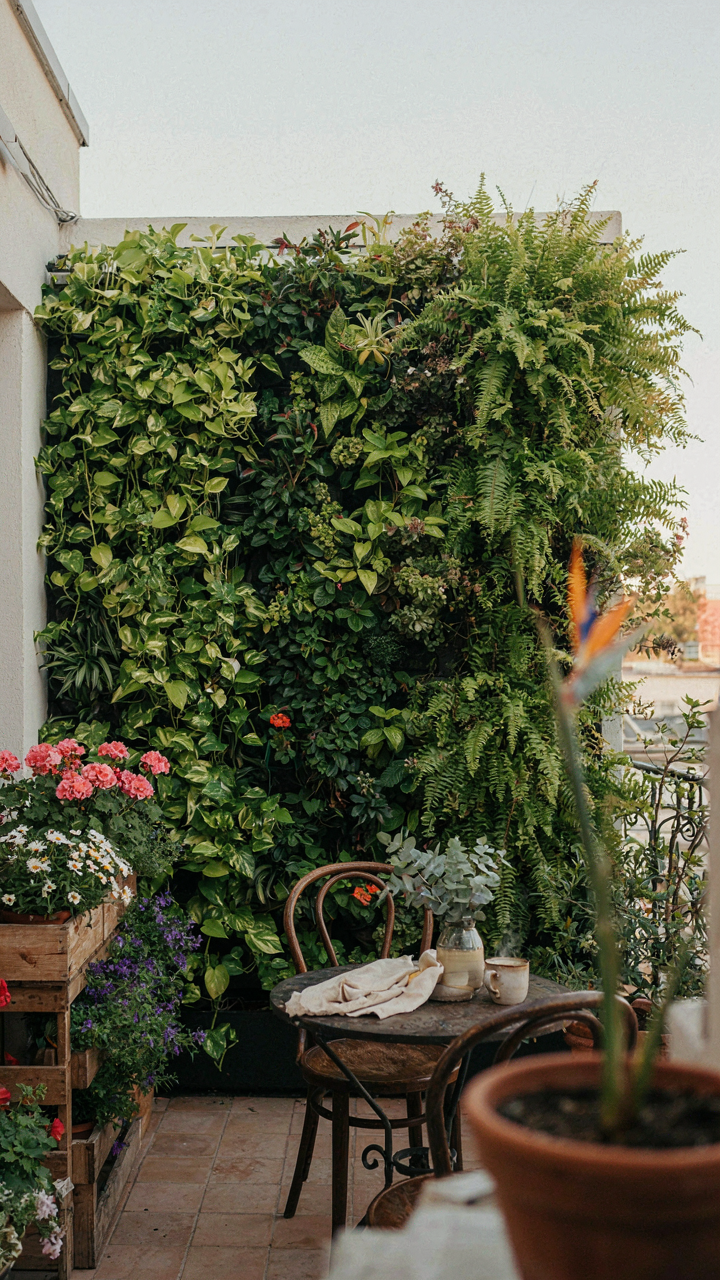
You want your patio to feel bigger without admitting space is your constraint. The mechanism is simple: vertical gardening trades floor real estate for wall real estate, and walls are free. Tiered planters work the same way. You stack plants upward instead of spreading them outward, which compresses perceived depth while multiplying visual complexity. Dense, layered planting makes small spaces read as intentional, not cramped.
Vertical systems work because they exploit layering from landscape design. The foreground, middle ground, and background compress into a single wall or corner. Use wall-mounted planters, trellises with climbing plants, or stepped tiered planters along one edge. This kills two birds: you add greenery and create depth without consuming floor space. The patio stays navigable while looking planted.
Plants That Work Harder Than You Do
Everyone recommends low-maintenance plants, then lists twenty species. That’s incomplete advice. Real low-maintenance plants must survive neglect, tolerate partial shade or full sun depending on your patio orientation, and deliver visual impact without pruning. Tough foliage plants like ornamental grasses, ferns, or structural evergreens do this. They don’t flower and disappear. They sit there, looking intentional, month after month.
Pick plants based on your patio’s light exposure first, not aesthetics. A shaded patio needs shade-tolerant foliage like Heuchera or Japanese forest grass. Full sun needs Mediterranean herbs like rosemary or ornamental grasses like Stipa. The plant either survives your conditions or it dies and wastes your money. One plant thriving beats three plants barely breathing. Install them in clusters of three or five of the same species, not scattered singles. Repetition compounds visual impact without adding cost.
The “Patio Layout” Protocol: Optimize Every Inch
Furniture That Earns Its Square Footage

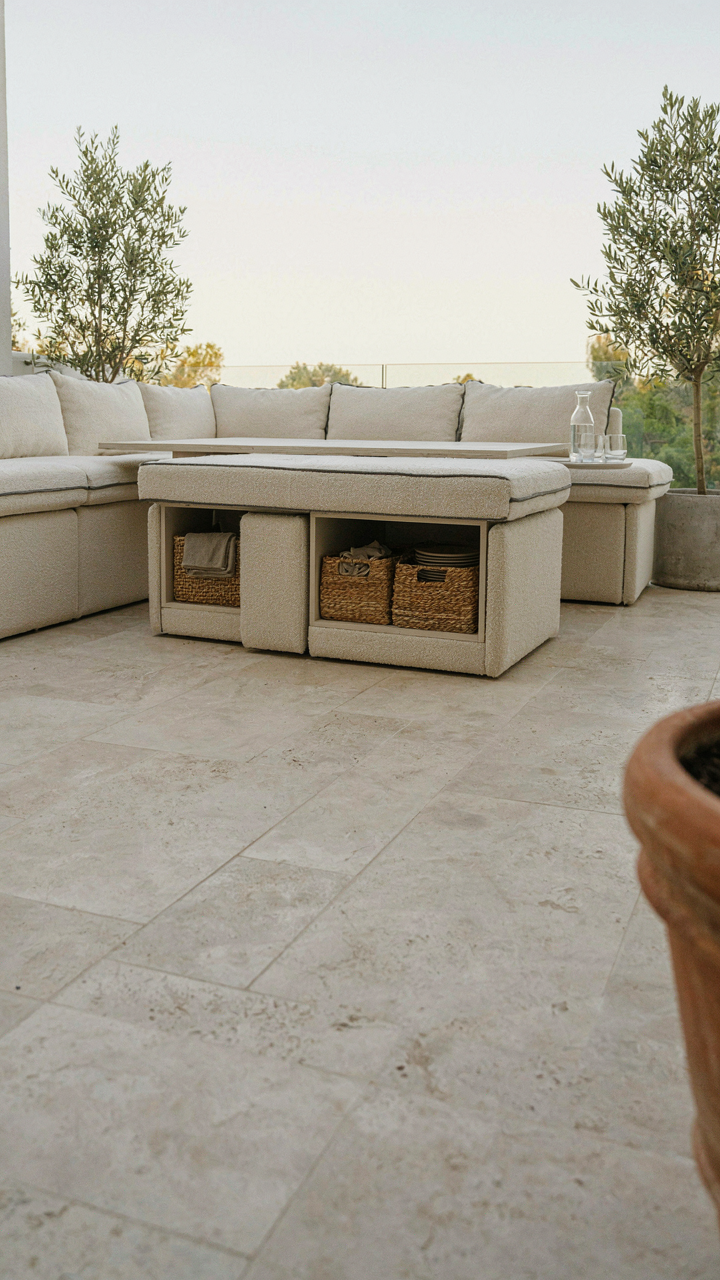
You want people to think you have more space than you do. The mechanism is simple: every piece must justify its footprint by doing multiple jobs. Generic advice says “buy small furniture.” That’s incomplete. Small furniture in a tiny patio still wastes space if it only serves one function. A bench with storage underneath, a side table that nests, a planter that doubles as seating—these compress utility into minimal real estate. The math works because you’re stacking purposes, not stacking objects.
Modular furniture is how you stay flexible without buying more stuff. A sectional designed in pieces lets you reconfigure based on how you use the space that week. Storage ottomans hold cushions, tools, or overflow items while providing a footrest or extra seating. Folding chairs hang on a wall when unused. The key is buying pieces specifically designed to do this work—not improvising with random furniture and hoping it works. Buy once, configure many times, and never feel trapped by your layout.
Creating Zones Without Walls
Zone creation borrows from urban planning: you’re essentially building neighborhoods in miniature. Just as a city district has distinct functions without physical barriers, your patio needs visual and functional separation using only arrangement and materials. Common advice ignores this and just says “define spaces with rugs or plants.” That’s surface-level. The real mechanism is about redirecting foot traffic and attention through strategic placement.
Use a change in flooring material—gravel, pavers, or composite decking—to signal where one zone begins and another ends. Planting creates natural boundaries without consuming as much space as furniture. A tall potted plant or trellis acts as a psychological divider between the lounge area and a dining zone. Lighting draws the eye to specific areas and makes each zone feel intentional, not like leftovers. The layout should make someone’s eyes move through the space with purpose, not bounce around confused.
The “Behavioral Economics” Of Perceived Value
How First Impressions Lock In Price Perception

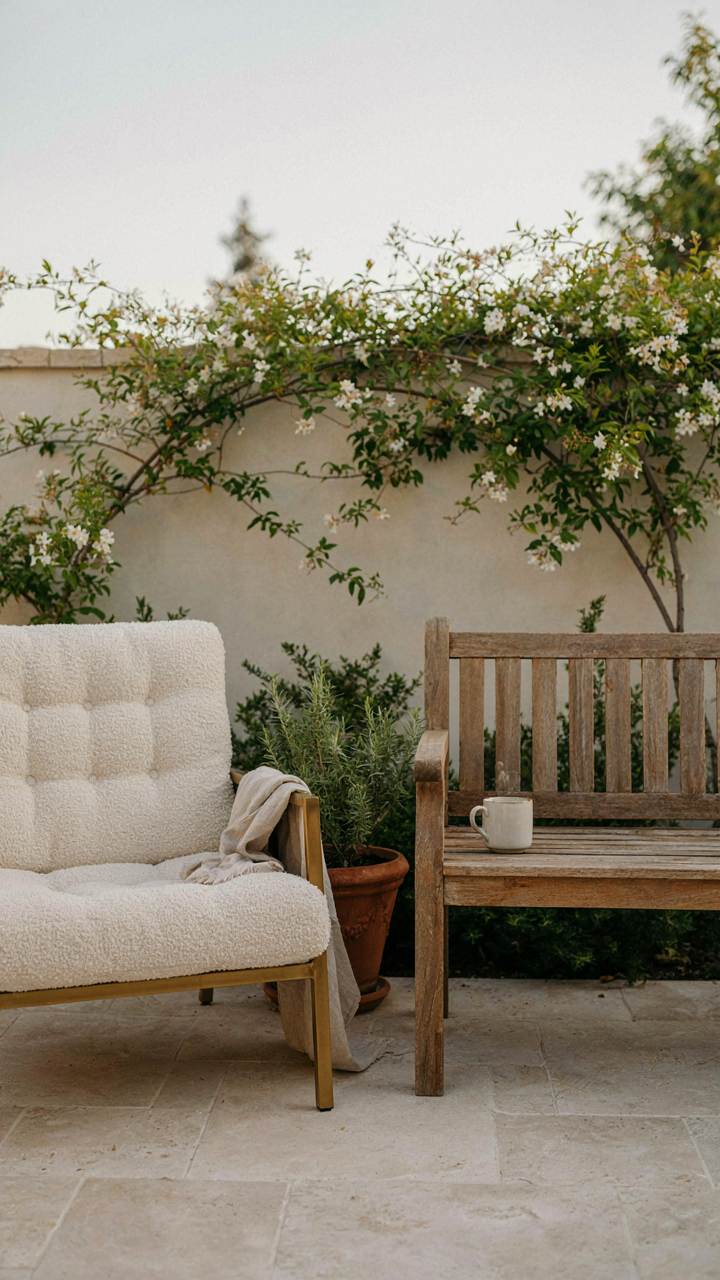
You want people to think you spent more than you did. That’s the real reason you’re reading this. Anchoring, borrowed from behavioral economics, is the mechanism that makes this possible. The first material or piece someone notices sets a mental price baseline for your entire patio. Everything after gets compared to that anchor, not to actual cost. A high-end stone or hardscape element introduced first makes budget choices later feel like intentional restraint, not necessity. A cheap element first poisons the entire perception downward, no matter what follows.
Material selection order matters more than material choice itself. Place your anchor element where eyes land first: the seating area, the floor plane, or a focal feature. Concrete pavers cost less than travertine, but if you introduce concrete as your primary visual anchor, visitors mentally classify your patio as budget-conscious before examining anything else. Reverse the sequence: use a single travertine or composite deck element as the entry point, then fill in the rest with concrete or crushed stone. The anchor effect does the heavy lifting. Visitors recalibrate upward, and your actual spend stays low.
Restraint Disguised As Curation
Scarcity is not about having less. It’s about showing less. The economic principle of scarcity—borrowed straight from supply and demand theory—applies directly to patio design: the fewer distinct materials and objects you display, the more intentional and valuable each one appears. Cramming your tiny patio with five plant varieties, seven furniture pieces, and ten decorative objects signals indecision and low-end catalog shopping. Museums don’t fill rooms with every artifact they own. They curate ruthlessly. Your patio is smaller than a bedroom. Act like it matters.
Social proof enters here, but backwards from how most people use it. Don’t copy what everyone else puts on their tiny patio. Do the opposite. A minimalist patio with two plant species, one seating arrangement, and one focal point becomes memorable precisely because it breaks pattern. You’re not trying to prove you belong to a group. You’re proving you have taste by leaving space alone. Edit down to three to five core elements maximum. What you remove is what creates the perception of value.
DIY Hacks For A Stylish Patio (Without Looking Cheap)
Turn Trash Into Conversation Pieces

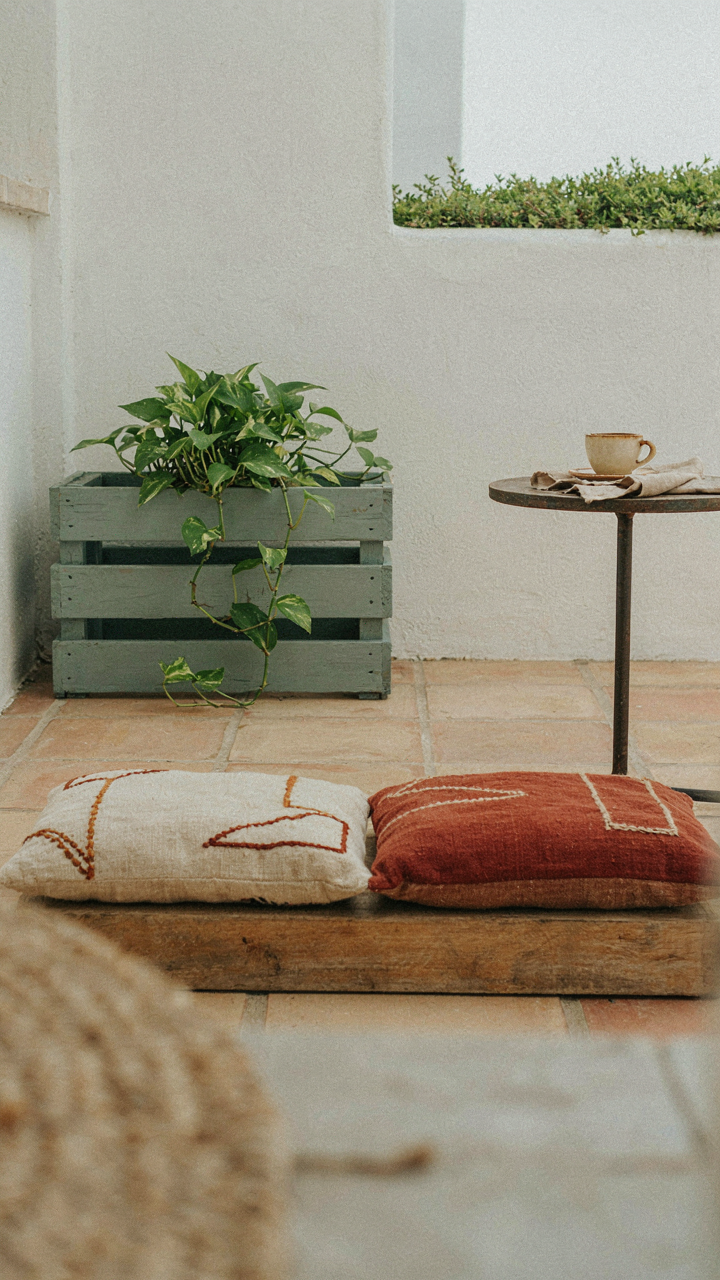
You want people to think you spent money you didn’t spend. That’s the real reason this matters. The mechanism is inversion: instead of buying finished pieces, you source raw materials and apply finishing technique to them. A weathered wooden crate becomes a side table the moment you sand it, stain it with quality finish, and add steel legs. The labor transforms perception.
Thrift stores and salvage yards stock the inventory designers use. Old metal grates become planters. Reclaimed wood becomes wall art. Concrete pavers get sealed and arranged as modular seating. The difference between junk and design is surface treatment and intentional placement. One coat of exterior paint and proper mounting changes everything. You’re not creating something from nothing—you’re editing what already exists.
The Right Materials Actually Cost Less
Common advice says go cheap on materials to save money. That’s backwards. Cheap materials fail within one season, forcing replacement. You end up spending more. Economics calls this the “replacement cost trap”—like armor with low durability that needs constant repair versus quality armor you buy once.
Pressure-treated lumber costs slightly more than untreated but survives weather for a decade. Composite decking costs more upfront but doesn’t rot, warp, or need staining every few years. Sealed concrete outlasts painted concrete. Here’s what wins: materials that age gracefully instead of degrading visibly.
- Pressure-treated wood: Resists rot and insect damage for 15+ years. Higher initial cost pays back through zero replacement cycles during your ownership window.
- Composite decking or edging: Doesn’t splinter, fade unevenly, or require maintenance. Costs more than wood but eliminates refinishing labor.
- Sealed concrete: Protects against water infiltration and staining. A single sealing application every 2-3 years beats constant cleaning and eventual replacement.
- Powder-coated metal furniture: Resists rust and chipping better than paint alone. Handles weather cycles without visible degradation.
- Exterior-grade fabrics: UV-resistant cushion covers and outdoor textiles maintain color and integrity. Cheaper fabrics fade within one season, signaling poor maintenance.
The math is simple: spend 20% more now or 100% more in replacements within three years. Quality materials photograph the same as cheap materials on day one. They photograph better on day 365.

Small Outdoor Patio Ideas Townhouse: Urban Elevation
Privacy Without Walls
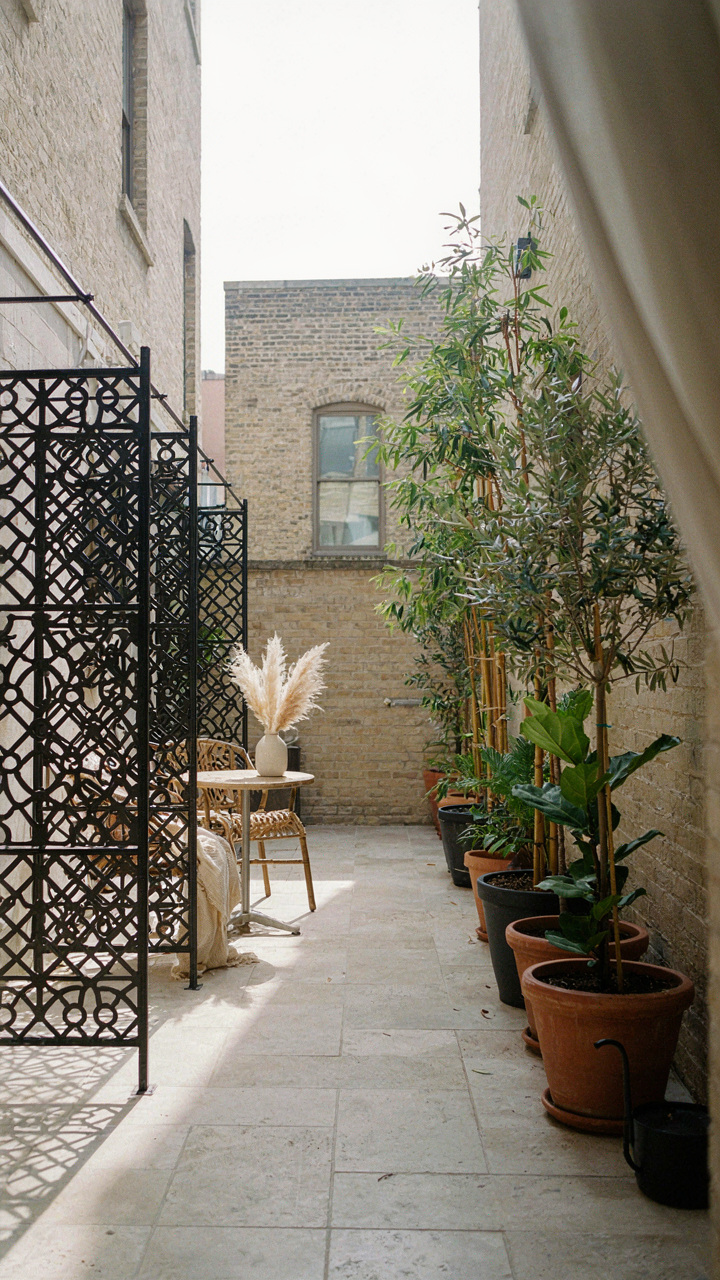
You want neighbors to stop seeing into your life. The real mechanism is sightline interruption, not blockage. Most people throw up a fence or plant trees and call it done. That’s incomplete. You need to break the direct visual path at multiple depths, which forces the eye to work harder and eventually give up looking.
Layering achieves this through distance and obstruction. Place a trellis with climbing vines at the perimeter, a planter box with tall ornamental grasses at mid-depth, and a low bench or seating area deeper into the patio. Each layer blocks a different angle of view from neighboring windows and ground level. You’re not creating a solid barrier; you’re creating visual friction that makes voyeurism exhausting rather than effortless.
Acoustic Disruption In Dense Areas
Noise reduction is urban physics applied to patio design: sound travels in waves and bounces off hard surfaces. Your patio is surrounded by reflective materials like brick, concrete, and glass that amplify neighbor noise and project your own sounds outward. The fix isn’t quietness; it’s absorption and diffusion.
Install acoustic panels disguised as functional objects. Wooden slatted screens absorb mid-range frequencies. Dense hedge plantings, while slower to mature, actually block low-frequency rumble better than fences because they have depth and internal structure. A water feature creates competing sound that masks unwanted noise without being silence, which feels unnatural in cities. Place the water element closest to the noise source, not in the center of your patio where it only masks what you’re trying to hear.

The Only Thing Truly Budget About Your Patio Is Your Mindset

Most people treat a tiny patio like a problem to solve cheap. You treat it like a canvas to dominate. The difference isn’t money. It’s whether you see constraints as limitations or as permission to get creative. Pick one element today, one thing you’ll upgrade first, and commit to making it look intentional. The size of your patio doesn’t determine its impact, your refusal to settle does.