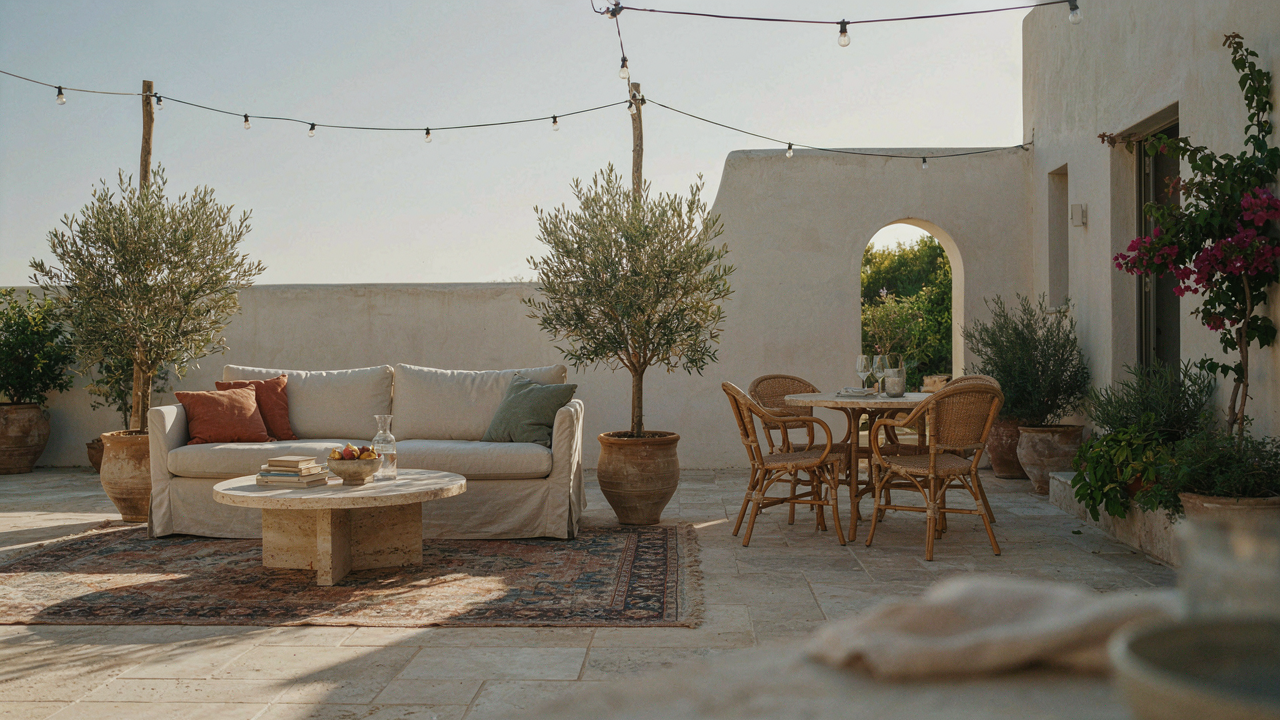
The Scale Fallacy: Why Your Outdoor Rug Looks Like A Postage Stamp
Furniture Footprint Determines Rug Territory
You’re worried the rug will look too big. That’s the real concern here, and it’s costing you the entire visual effect. In spatial design, we call this the “anchor problem”—a rug only works when it ties furniture together into one zone. A small rug does the opposite: it isolates each piece, turning your patio into a waiting room instead of a living space. The rug should ground at least the front legs of your seating, not float in the middle like decoration.
Most patios fail because the rug is 30 to 40 percent smaller than the furniture arrangement requires. Measure the perimeter of where you want people to sit. Your rug should extend 18 to 24 inches beyond the outer edge of that arrangement on at least three sides. If your seating is 12 by 14 feet, you need a rug closer to 9 by 12 feet minimum, not 5 by 7. The rug doesn’t need to cover everything—it needs to claim the territory underneath the gathering space.
The Generic Color Trap
Matching your rug to trend reports or copying what other patios look like kills any chance of cohesion with your actual space. Design magazines show neutral rugs because they photograph well and offend nobody, but they also create visual voids. Your rug should reference something permanent in your outdoor environment: the deck material, the house trim color, or the natural stone in your hardscape. This isn’t about creativity—it’s about preventing the rug from looking like you bought it and forgot about it.
The real error is treating the rug as interchangeable. If your deck is warm gray, a cool gray rug creates tension. If your patio stones lean rust-toned, a blue-dominant rug appears disconnected. Pull a paint chip from your permanent outdoor materials and use that as your starting point for undertone, not interior design trends. Your rug anchors the space only when it speaks the same visual language as what surrounds it.
The Gridiron Protocol: Maximizing Your Outdoor Patio Rug Coverage
Extend Beyond The Seating

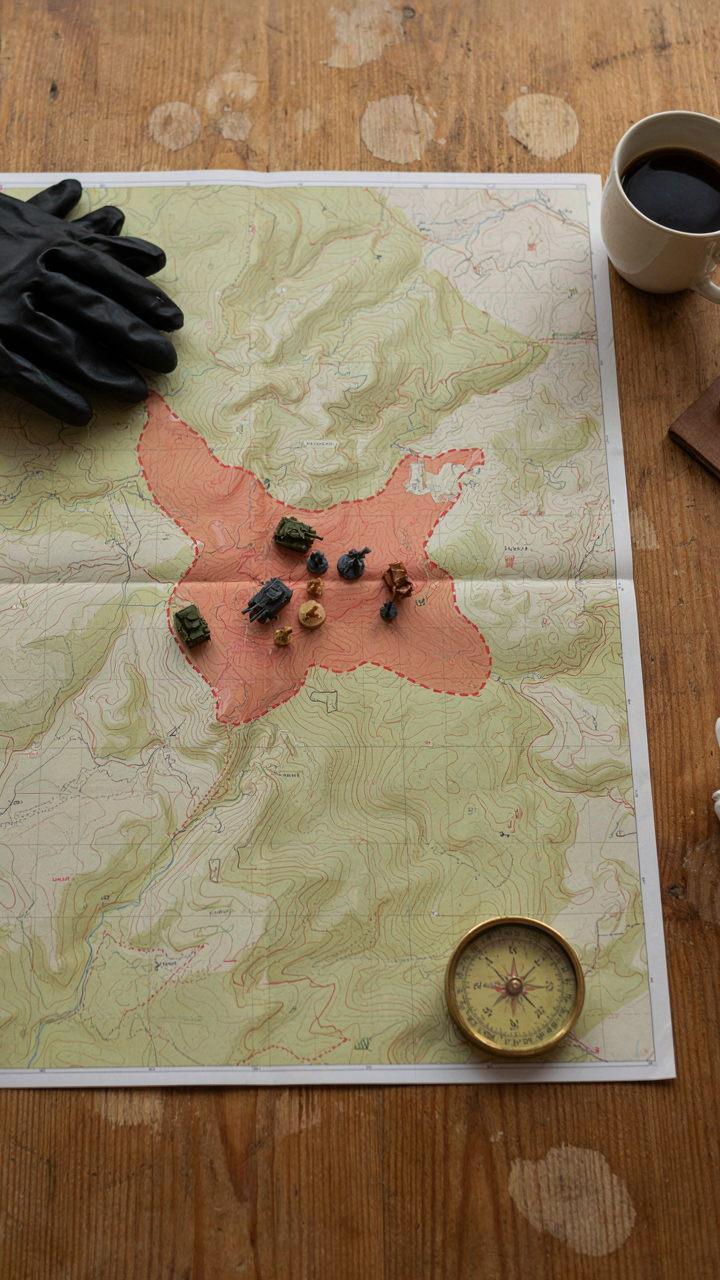
You want your patio to look intentional, not like you ran out of money halfway through. The real mechanism here comes from military strategy: the buffer zone. In tactics, you don’t place your perimeter at the edge of your most valuable asset. You push it outward. The same logic applies to outdoor rugs. Most people size their rug to fit exactly under their furniture. This creates visual containment instead of visual expansion. The patio shrinks because the eye has nowhere to travel.
The two-foot rule works because it resets the spatial boundary. Extend your rug two feet beyond where your seating ends, in at least one direction. This pulls the eye toward the rug’s edge rather than the patio’s edge. A six-by-nine rug under a sofa and two chairs feels cramped. An eight-by-ten rug in the same configuration feels like you planned the space. The rug becomes a platform, not an afterthought. Measure from your furthest furniture piece, then add the buffer before you buy.
Create A Unified Outdoor Rug Zone
Most outdoor rug advice tells you to “anchor” your space without explaining what gets anchored to what. The actual mechanism is convergence. Your rug doesn’t unify a space by sitting under furniture randomly. It unifies by creating a floor plane that furniture references, not covers. Every piece should touch the rug or face toward it, not float in the middle of it.
This means committing to the rug footprint before you position anything. Lay the rug down first, mentally or physically. Then place your seating so legs land on the perimeter or just inside it. Place accent tables so at least one edge lands on the rug. Side tables positioned entirely off the rug break the zone. Coffee tables that sit half-on, half-off signal indecision. The rug becomes a unifying floor only when furniture acknowledges its boundaries as intentional.
Color Theory, Not Color Guessing: Strategic Outdoor Rug Choices
When Light Colors Disappear Into Distance

You want your rug to anchor the space, not vanish into it. Most people reverse-engineer this wrong. Atmospheric perspective comes from physics: light wavelengths scatter as distance increases, making distant objects appear lighter and less saturated. Apply this to your patio. Light rugs recede because they reflect more light and create visual distance. Dark rugs advance because they absorb light and compress space psychologically. A cream rug in a sprawling backyard reads as wallpaper. A charcoal rug in the same space becomes a floor.
The mistake people make is treating outdoor rugs like indoor ones. Sunlight intensifies everything. A medium gray that grounds an indoor room becomes invisible on a patio at midday. You need contrast or depth relative to your hardscape and furniture, not relative to what looks balanced in a catalog photo. Measure your actual patio dimensions and sun exposure before choosing. Light colors work only when you need to expand perceived space in a small, shaded area. Otherwise, go darker.
Define Space Or Expand It Deliberately
This is where most people fail through indecision. You either use your rug to mark a boundary between zones, or you use it to soften edges and merge spaces. You cannot do both effectively. Contrast creates definition. A rug with high color or tonal difference from surrounding materials cuts a clear perimeter around your seating area. Your eye stops at the edge. Blend erases that boundary. A rug that matches your deck or pavers in tone extends the visual floor plane. Space feels larger because there is no interruption.
Pick one. A dark rug on a light deck creates a “room” feeling. It says this zone is separate and intentional. A taupe rug on a taupe deck erases the rug as an object and reads as floor extension. The mechanism is edge detection in human vision. Your brain processes visual contrast faster than solid color. So contrast demands attention and compresses perceived space. No contrast releases attention and expands it. Decide whether you want your patio to feel cozy and contained or open and continuous, then match your rug choice to that goal.
The Material Deception: Why Your Patio Rug Ages You
Durability And Aesthetics Demand Different Materials

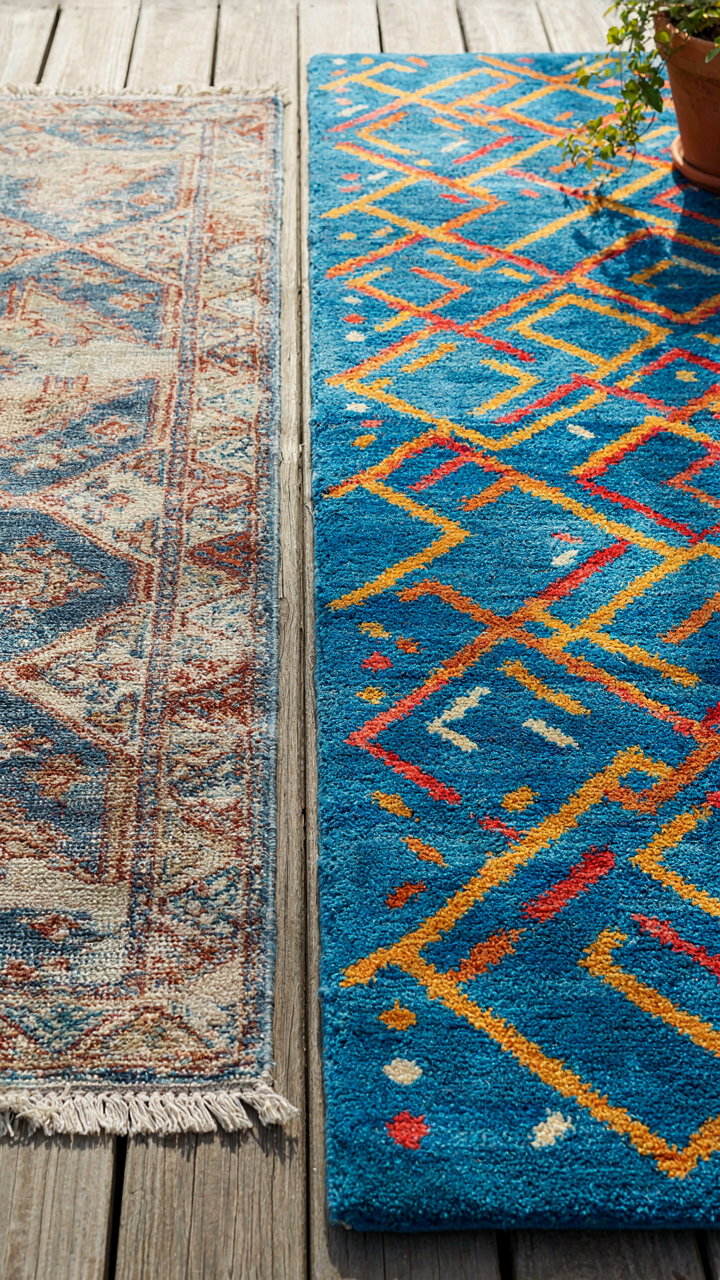
You want the rug that looks expensive without replacing it in three years. That’s the real tension here, and it drives most patio rug purchases into failure. The mechanism is simple: synthetic materials that resist weather also resist dye uptake, forcing manufacturers to use surface treatments that fade fast. Natural fibers absorb color deeply but break down in UV and moisture. You cannot optimize for both without accepting trade-offs nobody states plainly.
Polypropylene holds color longer than wool because the material itself rejects water and sun damage. Wool fades faster but ages with character instead of looking weathered. Jute and sisal crack and bleach within a season in direct sun. The choice isn’t between durability and beauty. The choice is between fading gracefully and failing structurally. Pick your failure mode first, then choose material.
Weave Patterns Shape How Space Reads
Texture operates like visual density in perception studies. A tight, uniform weave makes a patio appear smaller because the eye reads it as a solid mass. A loose, open weave creates visual breathing room by allowing sight lines through the material. This isn’t preference. This is how human vision processes mass and volume. Most people buy dense rugs thinking they anchor a space when they actually compress it.
High-pile rugs flatten your patio visually. They consume the ground plane. Low-pile or flatweave rugs preserve spatial depth by keeping the eye moving across the surface rather than stopping at a textured wall. If your patio is under 200 square feet, a flatweave rug with open gaps between fibers will read 15 to 20 percent larger than a plush alternative at identical dimensions. Measure your patio first, then select weave density as a corrective tool for perceived size, not as decoration.
Pattern Psychology: Using Outdoor Rug Design To Manipulate Space
Linear Designs Direct Attention

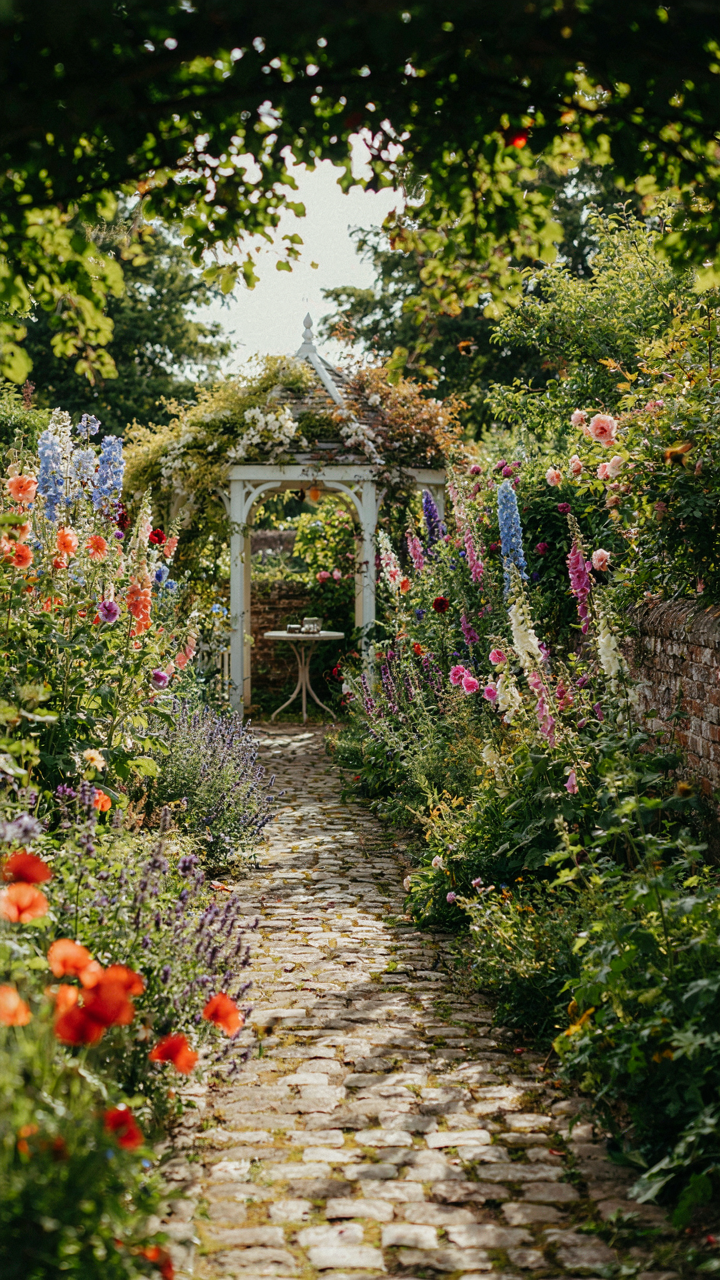
You want people to notice your patio is intentional, not accidental. Here’s the mechanism: the eye follows lines the same way it follows a path. In visual perception, linear elements create what designers call “leading lines.” They compress or expand perceived distance depending on direction and placement. A rug with stripes or geometric lines running perpendicular to your seating area makes that area feel larger. Lines running parallel to it compress the space. You control how people experience your patio’s dimensions before they consciously register it.
The common mistake is treating the rug’s orientation as decorative instead of structural. Diagonal stripes, horizontal bands, chevron patterns all function as arrows. A striped rug pointed toward your focal point (fire pit, view, dining table) pulls attention there and elongates sightlines. Conversely, stripes running across the width of a narrow patio make it feel wider. Measure your actual space first, identify what needs to appear larger or smaller, then select pattern direction accordingly. This is not opinion. This is how visual hierarchy works.
Fractal Complexity Creates Psychological Depth
Fractal patterns repeat at different scales, which your brain interprets as depth even on a flat surface. Moroccan and Persian rugs use this principle naturally through their nested geometric structures. When a rug contains pattern within pattern, your eye takes longer to process it, making the space feel more inhabited and considered. This cognitive engagement prevents the patio from feeling sparse or temporary. The fractal effect tricks perception into believing there’s more visual information than there actually is.
Most people buy fractal-patterned rugs for aesthetic reasons and never touch the real mechanism. Use fractal density strategically: high-complexity patterns in smaller patios make confined spaces feel intentional and layered. Lower-complexity patterns in large open spaces prevent visual chaos and keep focus on furniture arrangement. A dense geometric rug on a ten-by-twelve patio anchors the space and prevents it from feeling empty. The pattern becomes a second furniture layer. Select rugs where patterns nest inside each other, then place them where negative space would otherwise dominate.
The Echo Chamber Effect: When All Your Patio Style Blends
Your Rug Needs An Anchor Point, Not Just Coverage

You want your patio to feel intentional because an intentional space signals that you’ve thought about something beyond yourself. The real problem is this: most people treat rugs as passive floor covering instead of active focal points that organize the entire visual hierarchy. In architecture, this is called establishing a primary plane. Your rug either becomes that plane or it disappears into the background while everything else competes for attention.
A rug without a focal point job creates visual noise instead of visual order. Place your rug to anchor furniture groupings, not just fill empty square footage. The rug should define what matters on your patio, which means it needs to support a seating arrangement, outdoor dining area, or conversation zone with enough visual weight to pull the eye there first. When your rug sits disconnected from a functional purpose, it reads as decoration. When it anchors a space, it reads as design.
Forgotten Spaces Need Integration, Not Abandonment
Corners and edges that stay bare force your rug to work alone, which exhausts its visual capacity and fragments the patio. Instead of leaving perimeter zones empty, extend your rug strategy to those neglected areas with intentional placement of planters, side tables, or smaller secondary rugs that echo the primary rug’s color or pattern. This doesn’t mean covering every inch, but it means acknowledging that abandoned corners undermine the focal point your main rug establishes.
The mechanism is straightforward: scale. A patio with scattered, unconnected zones feels smaller because your brain processes fragmentation as constraint. When you integrate peripheral areas through rug-adjacent styling decisions, the entire space reads as cohesive and larger. This is why secondary rugs or complementary textiles in corner seating nooks, under drink stations, or beside planters matter. The integration completes the visual circuit your primary rug started.
Beyond The Border: External Elements And Your Outdoor Rug
Where Your Rug Lives In The Landscape

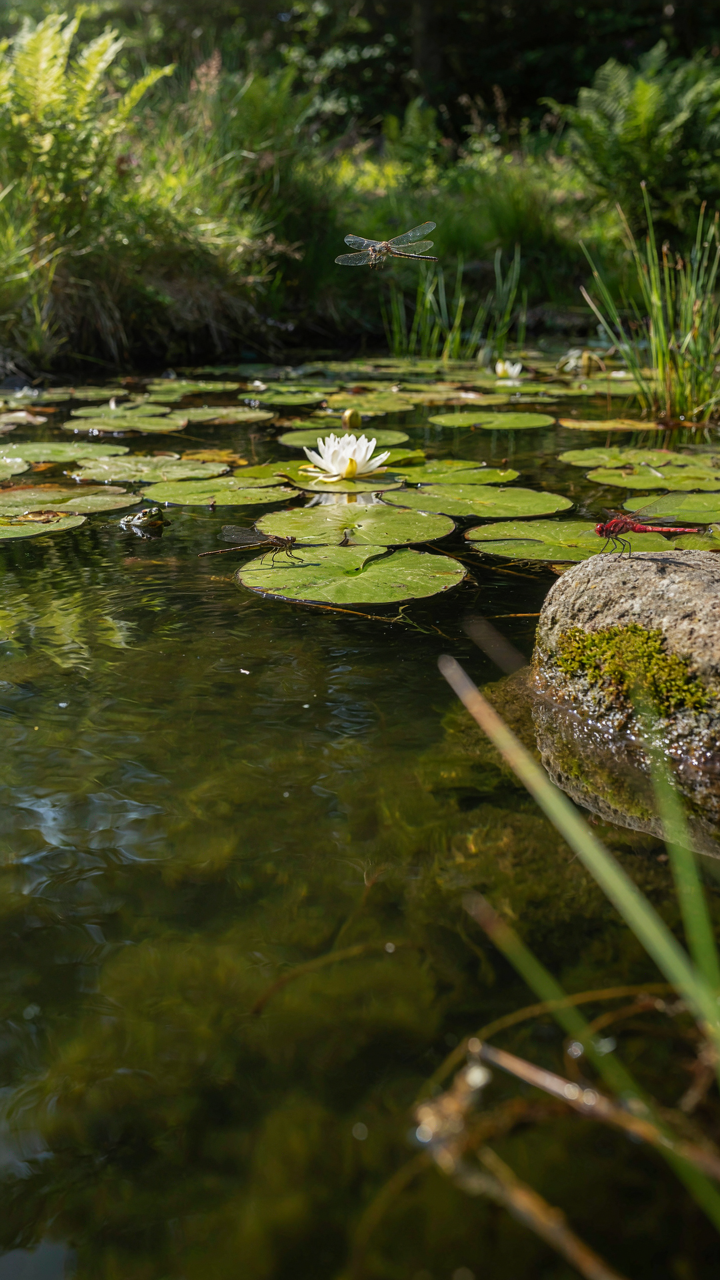
You want the rug to look intentional, not abandoned. The real issue is that most people treat their rug as a standalone object instead of an ecological niche—borrowing from biology, your rug occupies a specific space where it either coexists with its surroundings or competes against them. The rug doesn’t exist in isolation. It shares visual real estate with plants, hardscape, furniture, and sightlines from inside the home.
The mechanism is simple: a rug integrates into the landscape when its material, scale, and position create harmony with what surrounds it, not contrast. Place a light neutral rug near dark planting beds and the rug becomes a visual anchor that frames the space rather than fighting it. Position the same rug away from any grounding element—surrounded only by deck boards or concrete—and it floats, disconnected, shrinking your patio’s perceived size. The rug’s success depends on what it neighbors.
When The Rug Demands Too Much Attention
Most design advice says “let your rug be a statement piece.” That’s incomplete. A statement piece works only when everything else surrenders visual dominance to it. Your rug’s fight for dominance fails the moment you add competing focal points—a bright umbrella, a busy plant arrangement, patterned throw pillows, and a high-contrast rug all at once means nothing wins. The eye fragments. The patio shrinks.
Rug styling mistakes happen because people layer visual weight instead of distributing it. The rug should either anchor the space (commanding attention) or complement it (supporting the furniture or landscape). Choose one. If the rug carries pattern and color, keep furniture neutral and plants structured. If furniture brings drama, use a solid or tonal rug that recedes. The patio expands when one element owns the narrative, not when four compete for it.
The Investment Paradox: Cheap Rugs, Expensive Mistakes
Cost Per Use Beats Initial Price Tag
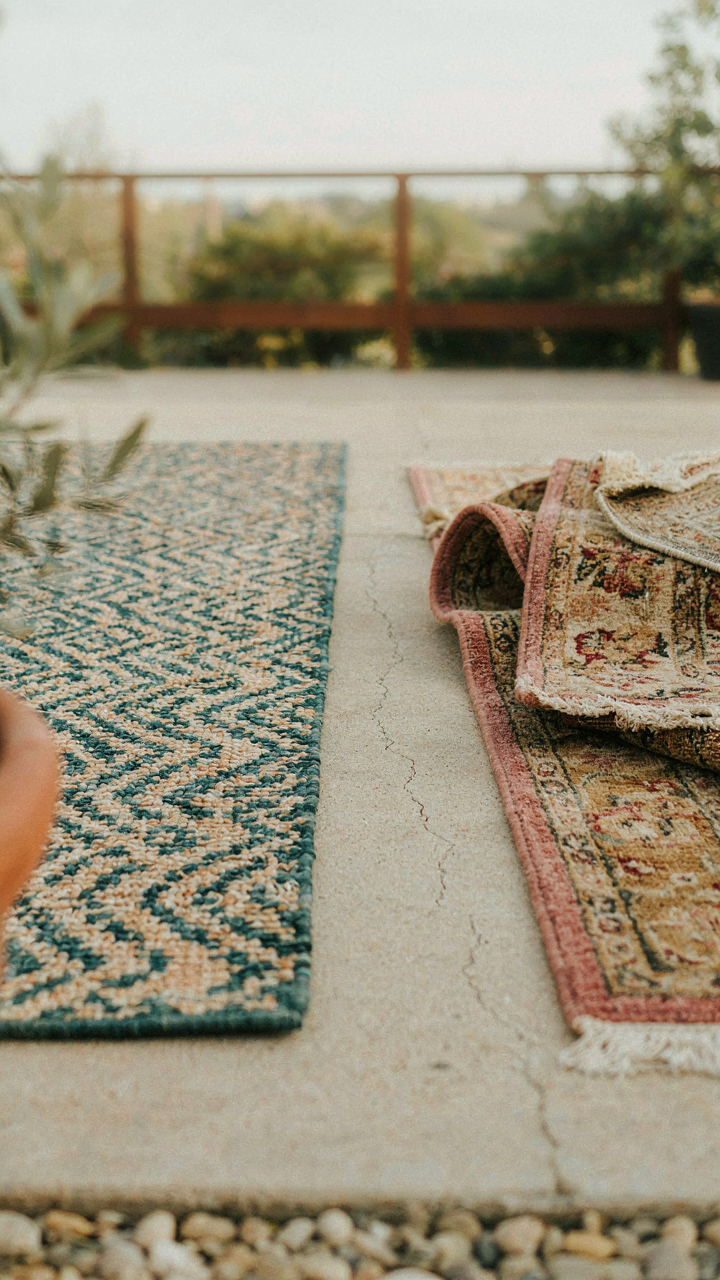
You’re afraid you’ll waste money. That fear is exactly what makes you buy cheap rugs and replace them every two years. Economics calls this “amortization”—spreading total cost across actual lifespan. A $300 rug lasting three years costs $100 annually. A $900 rug lasting nine years costs $100 annually. The cheap rug isn’t cheaper. It’s just slower at revealing its true cost.
Outdoor rugs fail because of UV degradation, moisture retention, and material breakdown. Polypropylene fades in 18 to 36 months under direct sun. Solution-dyed wool holds color for five to seven years minimum. Natural fiber blends deteriorate faster in wet climates. The initial price difference disappears the moment you factor in replacement labor, disposal hassle, and the aesthetic damage of a faded rug mid-season. Buy once. Buy for the climate you actually have.
Design Quality Creates Resale Momentum
Ignore the claim that outdoor rugs don’t hold value. That’s lazy thinking. A well-chosen rug becomes part of your patio’s visual architecture. Buyers notice intentional design choices. They notice neglect too.
A rug with timeless proportions, neutral tones, and durable construction adds perceived value to outdoor living space. Trendy colors, overwrought patterns, and visible wear subtract it. When you sell your home, the patio staging matters. A cohesive outdoor rug that matches your furniture and sight lines signals that the entire space was maintained with intention. The buyer’s confidence in that space translates to higher offers. Choose rugs designed to last, and the investment pays forward.
The Real Enemy Isn’t Your Patio Size, It’s Your Scarcity Mindset
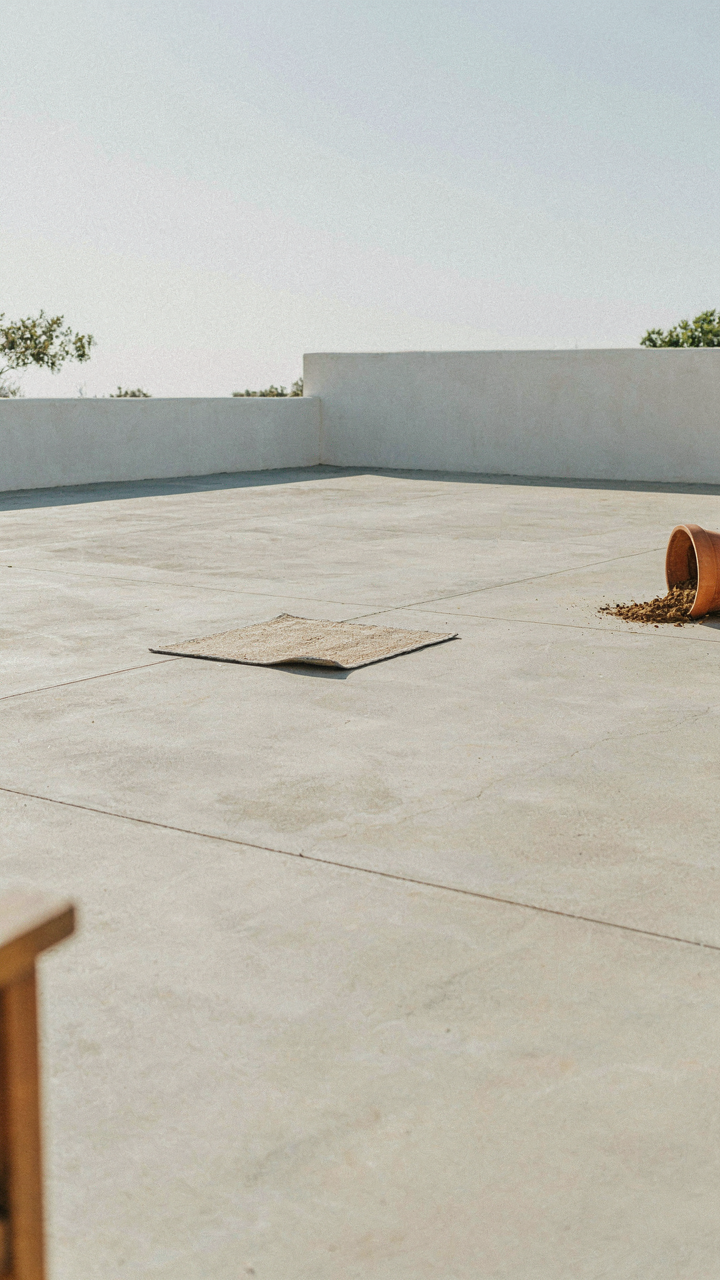

Most people treat their outdoor rug like a museum piece. They’re terrified to commit. They buy small, play it safe, and wonder why their patio feels cramped. The real problem? You think you can’t afford to be bold. You can. Stop overthinking the size, the color, the placement. Pick a rug that makes you actually want to sit outside. Put it down today. Your patio didn’t shrink because of the rug you chose, it shrunk because you chose nothing.