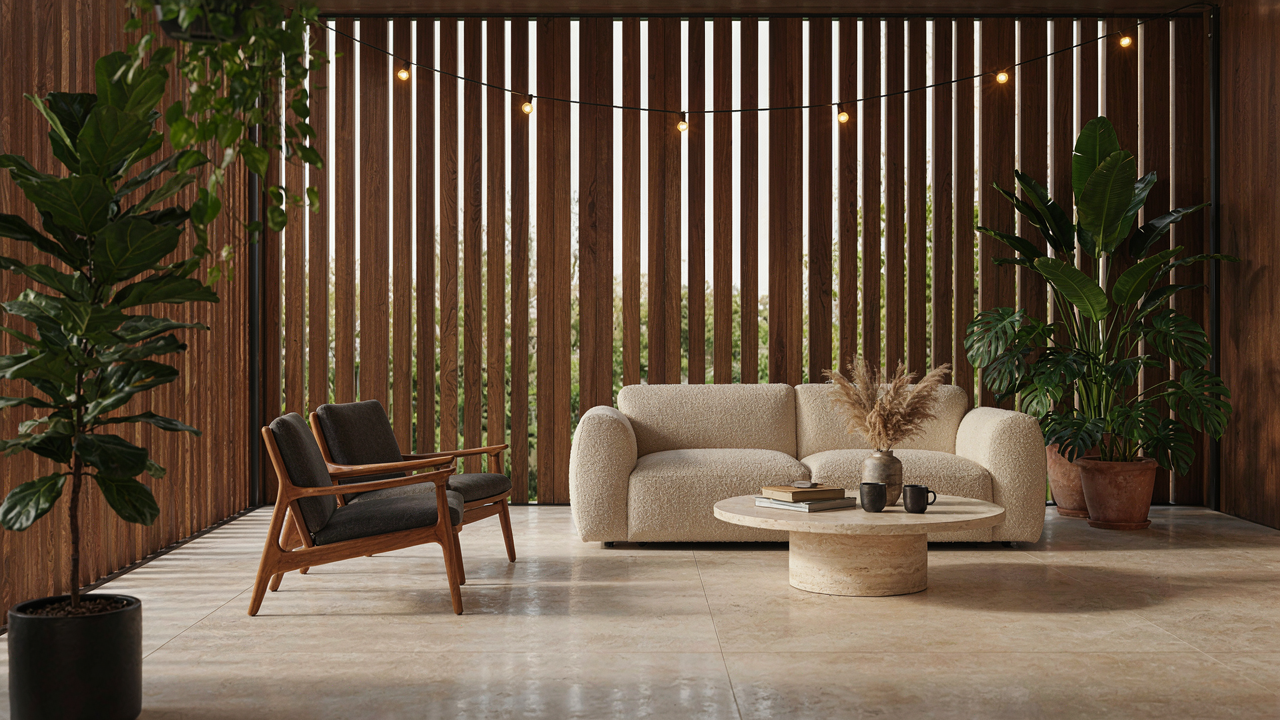
The Panopticon Problem: Why Your “Private” Patio Isn’t
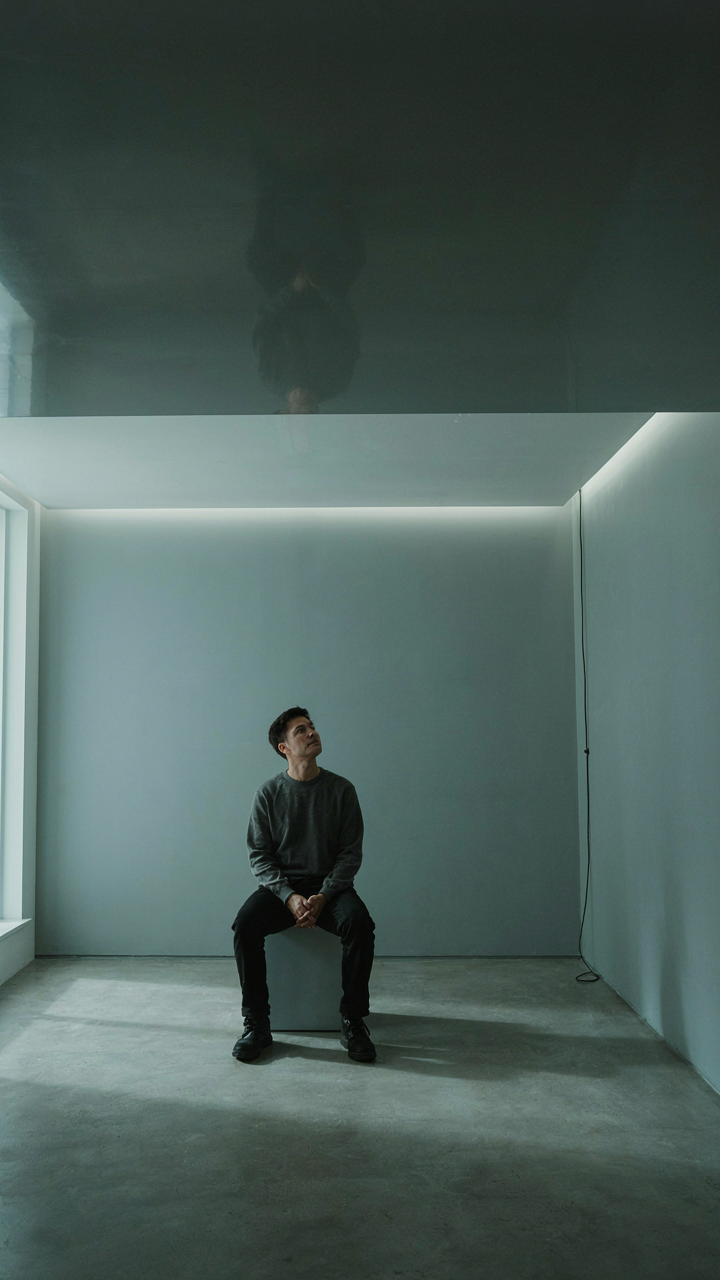
The Gaze Of Others Unconscious Observation
You care about this because being watched erodes your sense of control, and control is what you’re actually buying when you buy privacy. The mechanism here comes from surveillance architecture: a space loses its privacy the moment someone can see into it without effort, regardless of whether they actually look. Your neighbors don’t need to stare constantly. The possibility alone changes your behavior.
The human nervous system detects potential observation faster than conscious thought. You sit on your patio and feel exposed not because someone is actively watching, but because your brain registers that they could. This isn’t paranoia. It’s pattern recognition built into your nervous system over millennia. A fence you can see through, a patio visible from the street, or a layout exposed to adjacent homes creates what designers call “visual connectivity.” It’s the opposite of what you want, and most people ignore it entirely.
True Privacy Versus The Feeling Of It
The common advice pretends these are the same thing. They’re not. Perceived privacy and actual privacy operate on different mechanics, and you can have one without the other. True privacy means no one can see in, period. Perceived privacy means you feel unwatched even if technically someone could climb and look. Most patio solutions prioritize the feeling because it’s cheaper and easier to sell.
This matters because the feeling of privacy degrades under stress or scrutiny. Once you know a neighbor can see in if they want to, the illusion collapses every time you notice movement next door. Real privacy works even when you’re anxious. Real privacy means you’ve eliminated the line of sight entirely, not hidden it behind something that looks opaque from your angle but transparent from theirs.
The “Scarcity Zone” Protocol: Engineering Exclusion
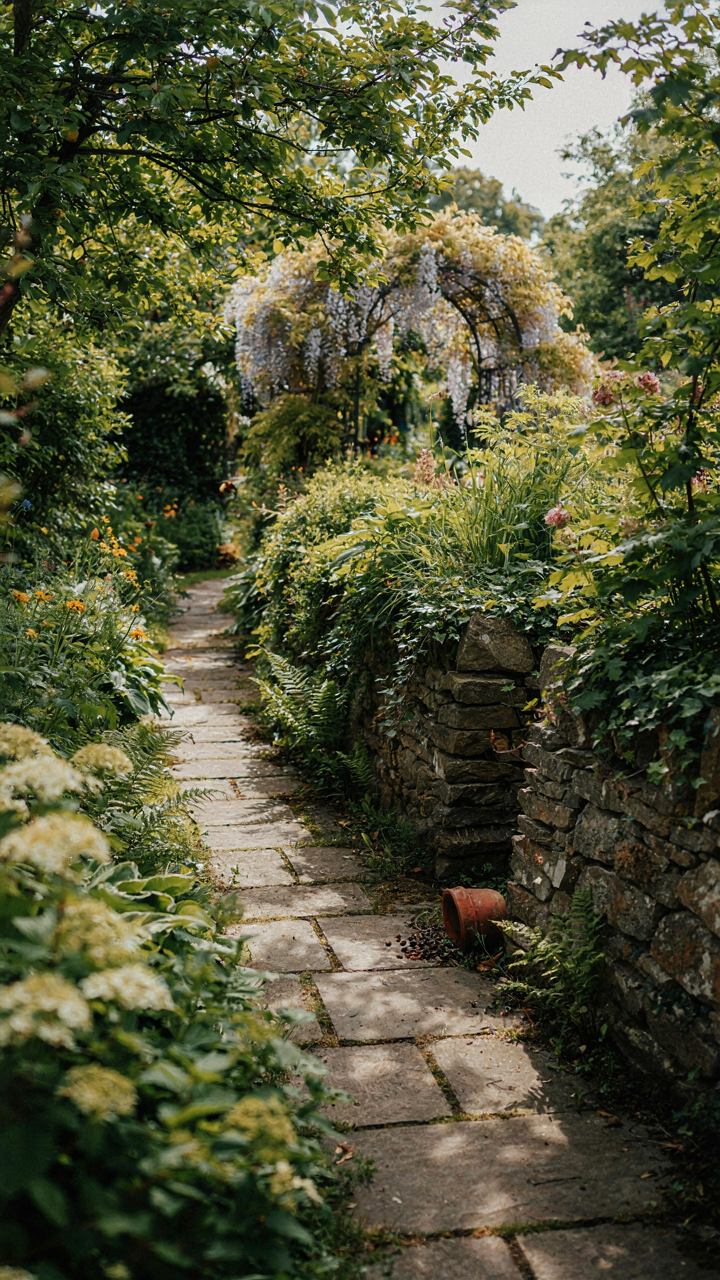
Strategic Barriers Control Sightlines And Sound

You want people to assume your patio is harder to access than it actually is. That’s the real reason you care about this section. Sightlines work like military cover and concealment doctrine: you eliminate the enemy’s ability to observe your position by breaking their line of sight. On a patio, you’re doing the same thing. A neighbor 20 feet away can’t feel excluded if they can see directly into your space. Barriers interrupt that visual corridor.
Sound carries differently than sight, but the principle mirrors the same mechanism. Dense barriers absorb and redirect sound waves. A solid fence or hedgerow stops noise from traveling straight across your property line. Strategic placement matters more than total coverage. Position barriers where the sightline from adjacent properties naturally forms. A fence running parallel to your patio’s front edge blocks more effectively than scattered plantings. This stops the cognitive trigger that makes people feel watched.
Density Of Elements Creates Visual Impedance
Most privacy advice talks about “layering” as if stacking different materials is the goal. That misses the physics. What you’re actually building is visual impedance, borrowing from electrical engineering where resistance blocks current flow. A single fence stops sight. Multiple elements at varying depths and densities stop sight more completely while allowing air and light through. The human eye can often find gaps in a single barrier. Multiple layers force the eye to work harder, eventually giving up.
Density works on a spectrum, not a binary. A 6-foot solid fence creates total blockage but also feels like a prison. A fence combined with staggered plants at different heights creates the same effective privacy with more visual interest and retained light. The key mechanism: offset your barriers so gaps in one layer align with solid material in another. A fence with a living wall planted three feet in front creates layered depth. This combination stops sightlines without creating the trapped feeling of full enclosure.
Beyond The Screen: Architectural Misdirection
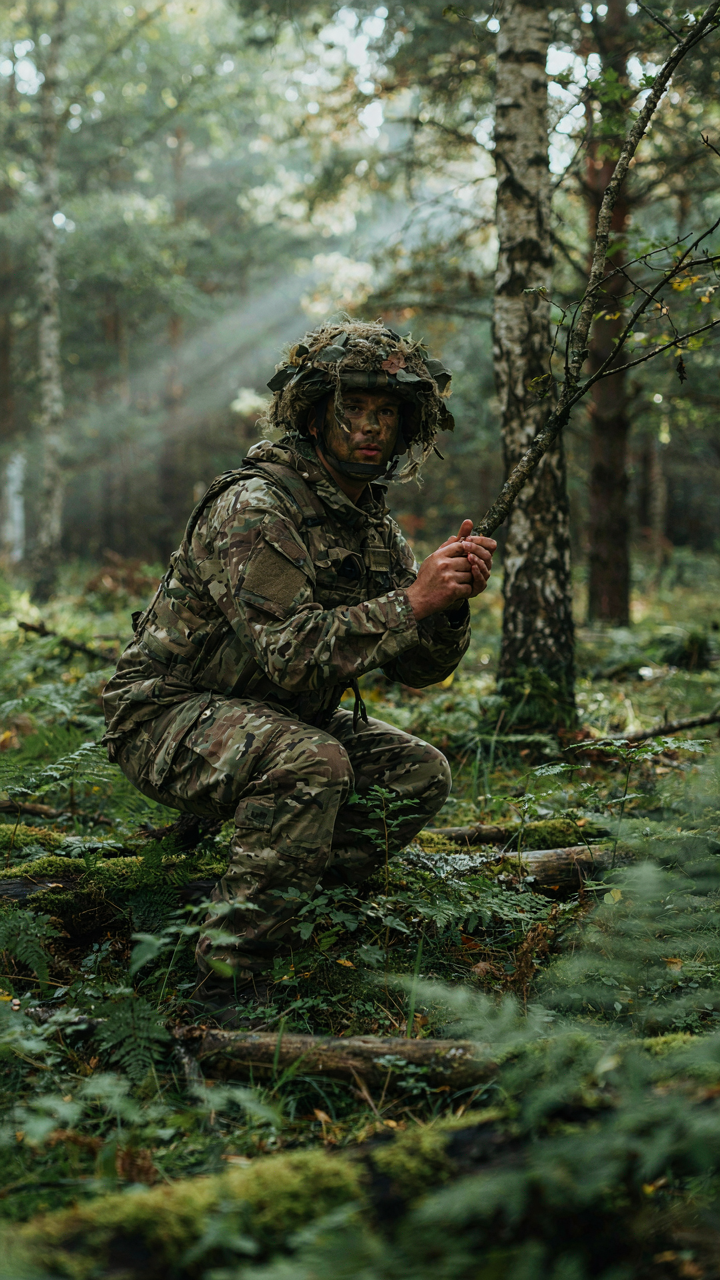
Structural Framing Redirects Attention, Not Blocks It
You want privacy without looking paranoid. That’s the real tension here, and most people solve it wrong by stacking solid barriers everywhere. Borrow from military camouflage doctrine: concealment works through disruption, not opacity. A pergola doesn’t hide you—it fragments sightlines. Your eye stops tracking movement the moment it hits vertical posts spaced rhythmically. The neighbor’s gaze breaks up before reaching your seating area. Solid fencing guarantees you look like you’re hiding something. Framed structures make privacy feel intentional, architectural, refined.
The mechanism is visual interruption at regular intervals. Spacing matters more than material density. Posts at 4 to 6 foot intervals create enough cognitive load that eyes don’t track across them smoothly. Lattice frames, slatted screens, and post-and-beam structures exploit this. You’re not blocking the view—you’re making it require conscious effort to maintain. Neighbors stop trying after a few seconds. The patio feels secluded because the visual pathway collapses naturally, not because you erected a fortress.
Layered Pathways Guide Movement And Perception
Entry points control what people see when they enter your space. Landscape architects call this axial planning: the viewer’s perception shifts based on how you route them through space. Most patios fail because they’re fully visible from every angle immediately. Instead, plant dense screening near the entry, then open the view inward as you move deeper into the patio. This layering creates psychological depth. Visitors spend cognitive energy navigating transitions instead of scanning for neighbors.
The practical execution: position your entry gate or opening away from direct sightlines to your main seating zone. Use a curved pathway or staggered plantings to delay full visibility. The first 6 to 8 feet acts as a buffer. Beyond that, open your patio intentionally. This staging removes the impulse to look outward. People focus inward because their eyes already adjusted to the immediate environment. The seating area feels removed even though you didn’t build walls everywhere.
Acoustic Camouflage: The Sound Of Silence (or Not)
Sound Dampening Materials: The Real Barrier

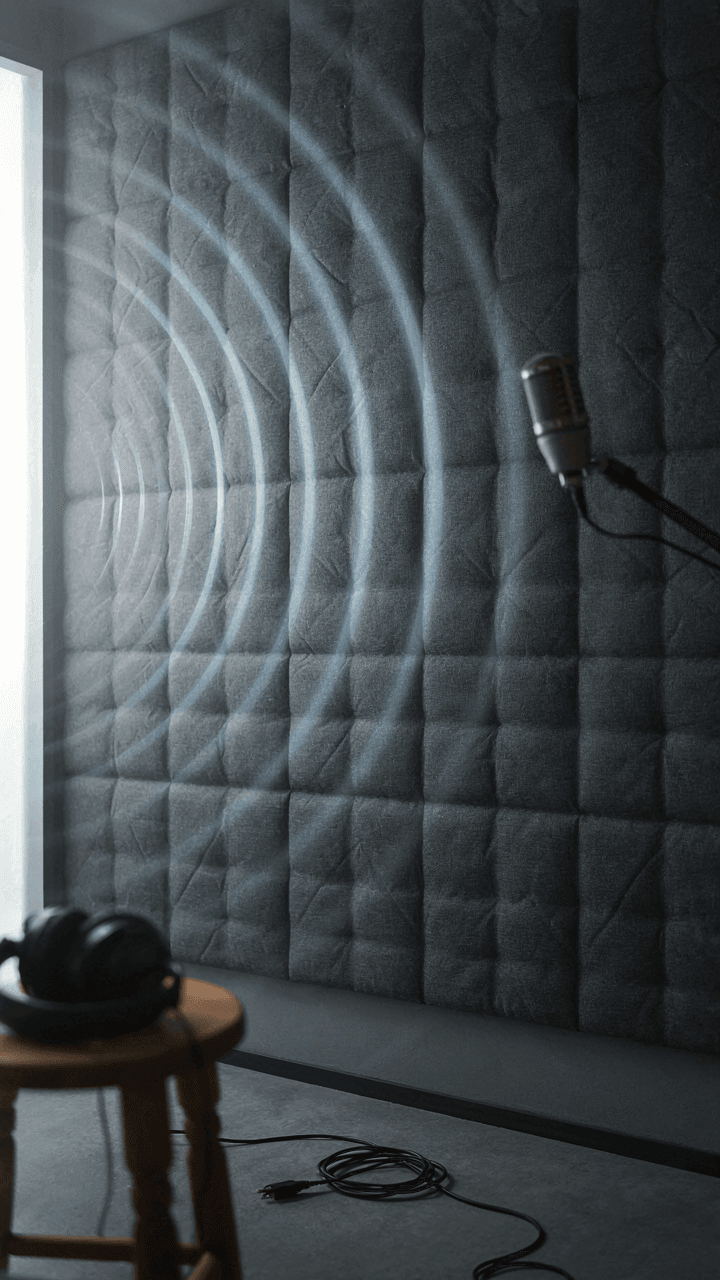
You want privacy but won’t admit you’re bothered by your neighbor’s noise. The mechanism is simple: sound travels in waves that bounce off hard surfaces and carry. Dense materials interrupt this path. This isn’t philosophy—it’s physics. Absorption works because materials with air pockets trap sound energy and convert it to heat rather than reflecting it back into your space.
Fabric and fibrous materials dominate here because they work. Heavy outdoor curtains, acoustic panels designed for exterior use, and layered textiles kill sound before it reaches your ear. Plant material like bamboo or dense hedge walls adds absorption too, though slower. The placement matters more than the material itself. Position absorptive layers between the noise source and your seating area, not behind where you sit.
White Noise Generators: Masking The Gap
Most advice treats white noise as optional ambiance. It’s not. White noise generators work by occupying the acoustic space your brain would otherwise fill with neighboring sounds. The mechanism: your auditory cortex can’t process two complex sound sources simultaneously with equal focus. Strategic noise masks the unwanted signal.
Outdoor speakers playing consistent, non-intrusive sound—rain, flowing water, ambient tones—create a sonic floor that raises the effort required to hear neighbor conversations or traffic. Volume matters less than consistency. Set the generator at a level that feels natural to conversation, then calibrate down slightly. The goal is threshold masking, not drowning out. Place the speaker at the center or far edge of your patio so sound radiates evenly rather than from one focal point.
The Visual Vortex Technique: Drawing The Eye Inward
Create A Magnetic Center Point

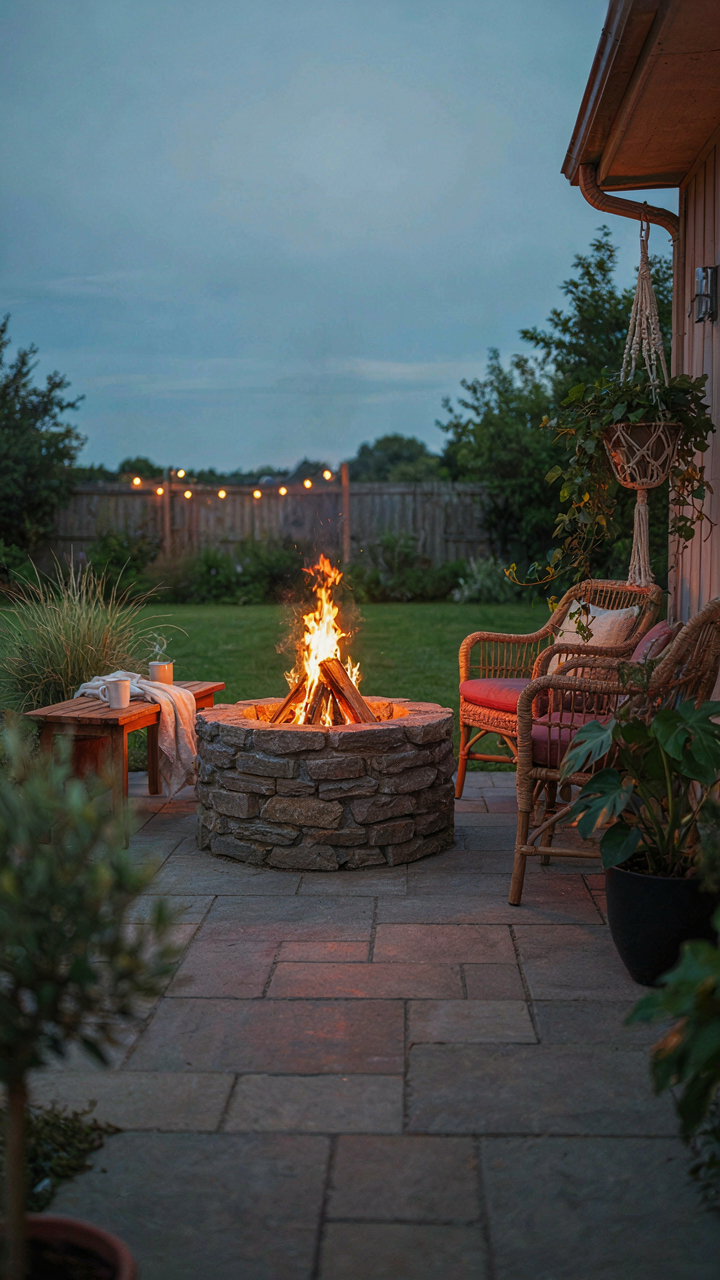
You want privacy without looking paranoid, so you build it by controlling where people’s eyes land. This is basic attention economics: the eye moves toward contrast and stops at compelling objects. Use a fire pit, water feature, sculpture, or seating arrangement positioned at the patio’s heart. The stronger the focal point, the less cognitive load your brain spends scanning the perimeter. This mechanism works because human attention is finite. Your neighbor’s fence disappears from consciousness when something more interesting occupies the foreground.
Place your focal point slightly off-center rather than dead middle. This creates visual tension that holds attention longer than symmetry. A fire pit on one side with tiered seating facing it pulls the eye inward and down, away from sightlines to adjacent yards. The object must have texture, movement, or light to function—a blank patio table won’t cut it. Install the focal point first, then build privacy elements around it, not the reverse.
Blur The Boundaries With Strategic Depth
The real privacy mistake isn’t weak barriers, it’s failing to obscure the edges where your patio meets the outside world. In photography, depth of field keeps the subject sharp while rendering the background soft and unclear. Apply this to your patio: place plantings, screens, or structures in graduated layers moving outward. Close layers stay detailed, far layers dissolve into visual noise. Your eye follows the depth gradient and stops registering what lies beyond the final layer.
Use tall plantings or screens at mid-distance, not just the perimeter. A single row of bamboo at the edge is visible background noise. Three staggered rows at ten feet, fifteen feet, and twenty feet create atmospheric perspective that makes your eye lose focus before reaching the actual boundary. Combine evergreen shrubs with ornamental grasses for textural variation that absorbs sight lines rather than blocking them. Layer varied plant heights from three feet to eight feet, then drop to low ground cover at the outer edge. This gradation makes the far boundary irrelevant to what you perceive.
The Biotensegrity Of Seclusion: Nature’s Engineering
How Animals Hide In Plain Sight

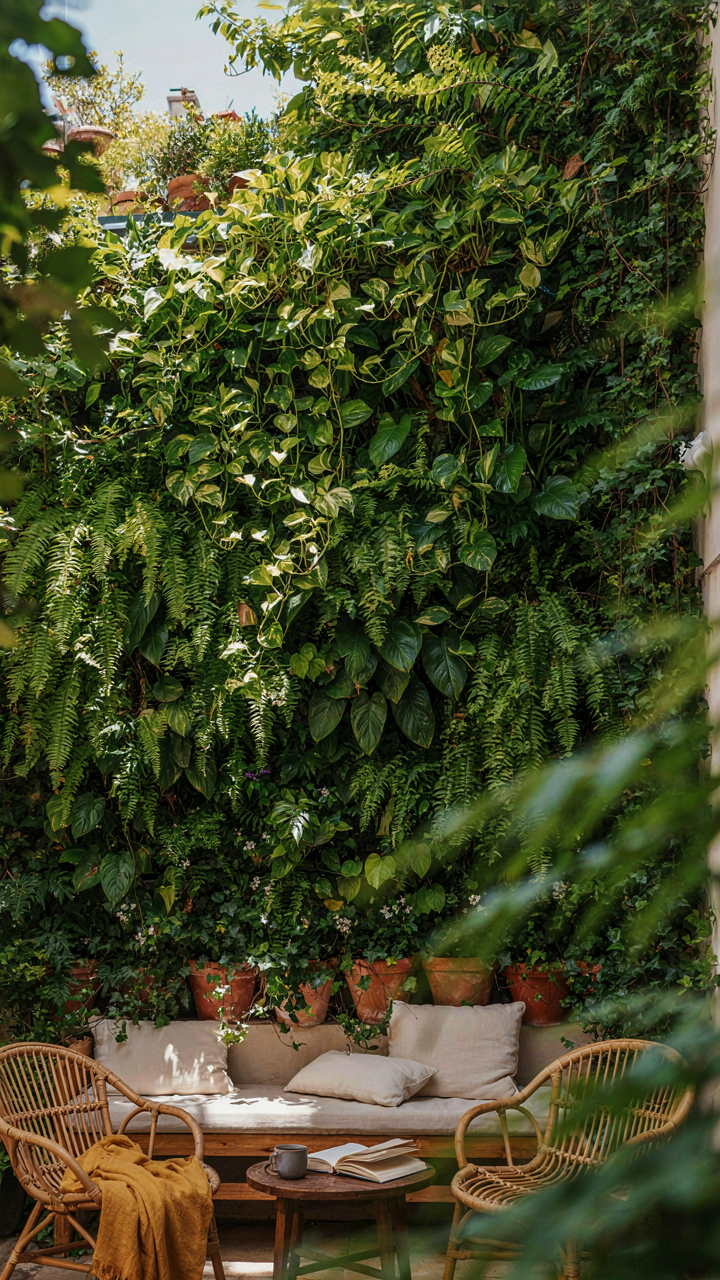
You want privacy because you’re tired of feeling exposed—and you’re right to be bothered by it. Evolutionary biology calls this “predator avoidance architecture,” and it applies directly to your patio: the goal isn’t walls, it’s breaking sightlines through layered density. Animals don’t hide behind one solid object; they nest inside overlapping visual interruptions. Your patio needs the same structure.
Nature doesn’t build single barriers. It stacks them. Dense brush, varying heights, texture changes, and offset angles create what biologists call “edge complexity.” A predator scanning for prey can’t lock onto movement when the visual field fragments. Apply this to patios by rejecting the common mistake of thinking one fence solves privacy. You need depth, not height alone.
- Offset Layering: Place screens, plants, and structures at different distances from your seating area rather than in a single line, forcing sightlines to navigate multiple planes.
- Height Variation: Mix tall elements with mid-range plantings and low groundcover so no single eye-level view penetrates the space.
- Textural Interruption: Combine solid surfaces (fence panels, screens) with semi-transparent barriers (lattice, open weave) to fragment rather than block vision.
- Depth Over Perimeter: Build privacy inward from edges instead of relying on a single outer boundary, creating nested zones of concealment.
- Angle Breaks: Position screens and plantings at non-perpendicular angles to prevent direct sight lines from adjacent yards or street approaches.
Most people install a fence and wonder why they still feel watched. The problem: a single plane of obstruction doesn’t mimic natural concealment. Your eye needs multiple visual interruptions to lose track of movement. The mechanism is opacity through accumulation, not opacity through mass.
Living Screens That Adapt Year Round
Don’t plant a hedge and assume your privacy stays constant. Living screens require honest assessment of seasonal performance, growth patterns, and maintenance demands. Deciduous plants lose leaves. Evergreens thin with age. You need species selection tied to your specific privacy failure—not general landscaping instinct.
Fast-growing plants like bamboo, privet, and certain willow species create privacy quickly but demand aggressive pruning or they become overgrown liabilities. Slower growers like yew, boxwood, and arborvitae hold their form longer but take years to reach functional height. The real mechanism: match your screen to the specific sightlines you’re blocking. A 6-foot hedge stops vehicle-level views but misses elevated views from a second-story neighbor. Stack two plant layers at different heights instead. Dense at ground level for ground-eye sightlines, then sparse mid-level, then dense again at 8-10 feet for elevated angles. This breaks every conceivable angle of approach and requires no structural installation.

Strategic Lighting: The Art Of Disappearance
Uplighting Vs Downlighting: Controlling Visibility
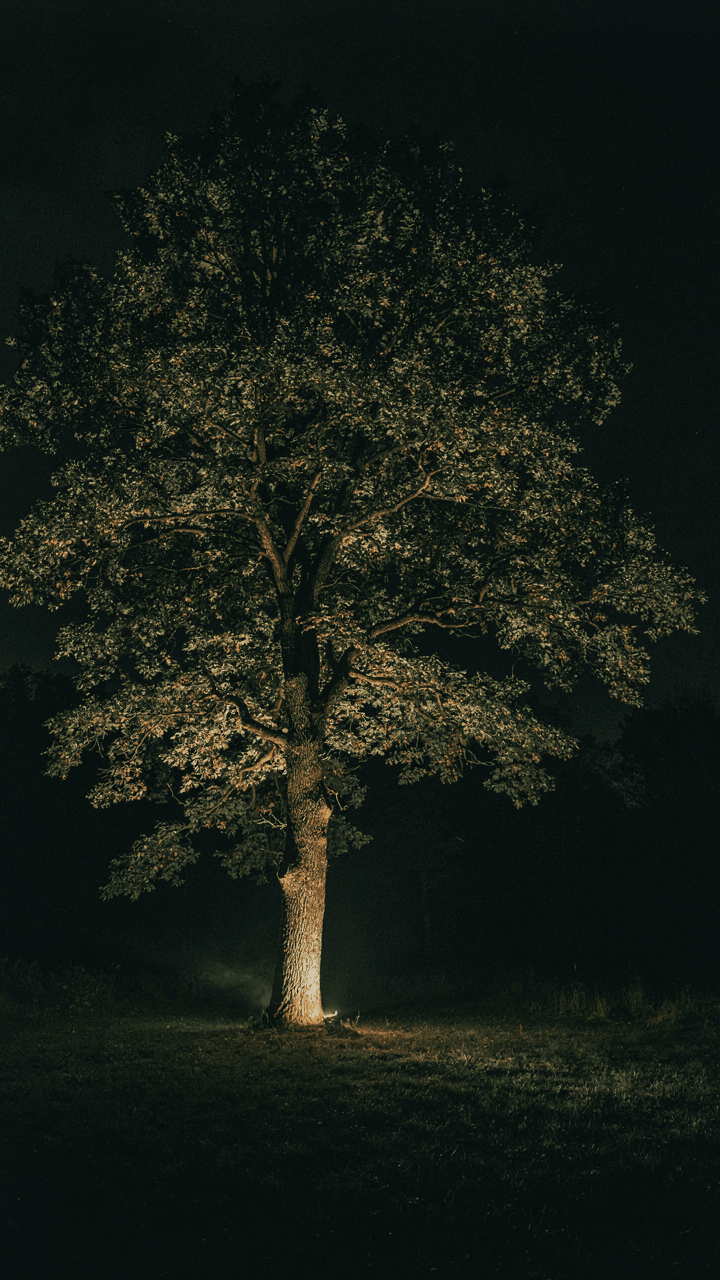
You want people to stop seeing into your space. That’s the real problem here, not the aesthetics. Lighting controls visibility because light direction determines what eyes can actually process. Uplighting, borrowed from theatrical lighting design, bounces illumination upward onto surfaces and foliage rather than across horizontal sightlines. This reverses the normal downlighting trap where fixtures illuminate the ground plane, creating a lit stage visible from neighboring yards. Uplighting on trees, walls, or fence structures keeps the beam above eye level, rendering your patio interior invisible to external observers while keeping your seating area functional.
Downlighting has its place, but conventional wisdom buries the mechanism. Downlighting reveals; it broadcasts. When you mount lights overhead pointing down, you light what matters to outsiders: movement, faces, activity. Uplighting works because it exploits a basic visual principle: most neighbors won’t scan above their natural sight line unless motivated. Position uplighting at ground level behind or within landscape elements, pointing upward. This preserves your functional light for walking and sitting while eliminating the visibility window that makes neighbors aware you’re even out there.
Shadow Play: Creating Depth And Illusion
Shadows function like visual fog. They break up space and collapse perceived distance through layered obstructions. The principle comes from military camouflage theory, where discontinuous patterns and depth prevent recognition of enclosed areas. On a patio, strategic shadow creation works the same way: multiple light sources at different angles and heights, combined with vegetation or screens, fragment the visual field from outside vantage points. This doesn’t make your patio invisible. It makes it unreadable. A neighbor sees shadow, then branches, then shadow again, rather than a clear seated figure.
Create layered shadows by combining uplighting on far-back trees with mid-level lights on fence lines, leaving the seating zone itself in relative darkness. Your eyes adjust downward in low light, so you perceive your immediate area clearly while external observers see only fragmented shapes and ambient glow. The depth illusion works because human vision struggles to parse complex three-dimensional shadow layers at distance. Install lights on a dimmer or timer system so you control shadow intensity without adding more fixtures. Shadows require no permission, no HOA approval, and no structural modification to existing hardscape.
The “Sensory Deprivation” Chamber: Micro Environments
Enclosed Structures Creating Intimate Spaces
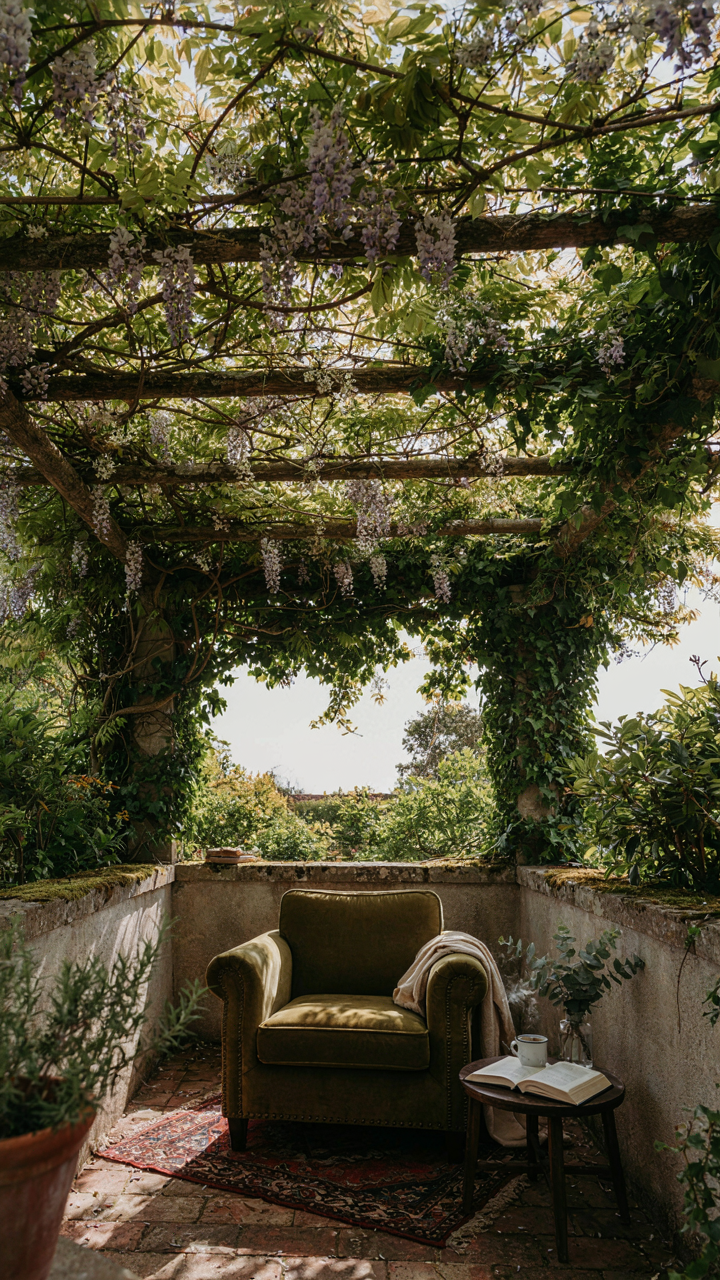
You want privacy because you’re tired of performing for neighbors. The mechanism is enclosure. Behavioral psychology calls this “territorial compression”—humans perceive smaller, bounded spaces as inherently private even when they’re technically still exposed. A pergola doesn’t block sight lines. A fully enclosed structure does. The difference isn’t subtle. Louvered panels, shade cloth, or polycarbonate walls create visual and psychological barriers that register instantly. Your brain stops scanning for watchers when vertical planes enclose the horizontal plane you occupy.
Most people build half-measures: open-sided structures that look nice but solve nothing. Real enclosure requires decisions. Louvered systems let you control sightlines from specific angles without total darkness. Polycarbonate offers 80 to 95 percent opacity depending on density and color. High-density polyethylene shade cloth runs 30 to 90 percent opacity. Measure the angle where neighbors’ sightlines enter your patio, then choose materials that intercept those specific vectors. Enclosure works because it eliminates the visual stimulus that triggers the “being watched” response in your nervous system.
Material Textures Tackling Isolation
Isolation isn’t just visual—it’s acoustic and tactile. Texture interrupts sound waves before they travel far. Hard surfaces like concrete or untreated wood bounce noise around and amplify it. Rough, porous materials absorb it. Expect a 3 to 5 decibel reduction per surface layer. Natural cork, bamboo slats, and loosely woven fabrics all perform this function. The texture also signals “boundary” to your brain. Rough surfaces feel different under your hand and eye, which subconsciously marks the space as distinct from what lies beyond it.
The mistake is treating materials as decoration instead of functional barriers. Choose based on acoustic and thermal properties, not appearance. A 2-inch cork backing under lattice absorbs midrange frequencies where most neighbor noise sits. Bamboo screening layers sound dampening better than thin metal. Woven outdoor rugs under seating zones ground the acoustic environment and add tactile separation from the surrounding yard. Install materials in layers. Single-layer solutions rarely work. Each material type intercepts different frequency ranges and creates more sensory distinction between your patio and the world outside it.

The Invisible Fence Doctrine: Psychological Boundaries
Subtle Cues Communicate Do Not Disturb
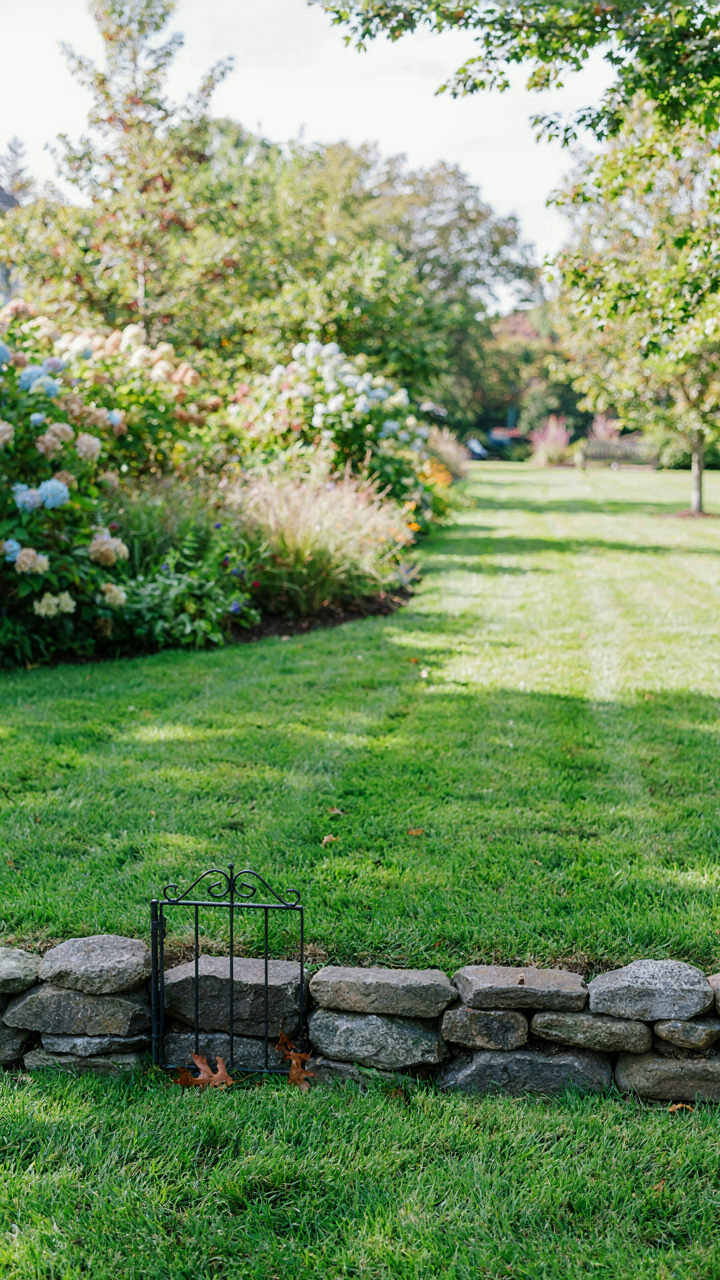
You want strangers to know this space belongs to you without saying a word. Psychology calls this “territorial marking”—the same mechanism animals use to signal ownership. Humans read it the same way. A defined edge, a shift in material, a change in elevation, a planted threshold: these aren’t decoration. They’re signals that tell passersby their mental map ends here.
The mistake most people make is thinking privacy requires opacity. It doesn’t. A low fence with visibility through it stops foot traffic better than a wall because it broadcasts intention. Sight lines matter less than the artifact itself. A single row of defined planters, a level change of six inches, even a change from grass to pavers—these micro-signals work because they require conscious navigation to cross. The harder you make it to cross without thinking, the fewer people will.
Implied Ownership Becomes Psychological Deterrence
Implied ownership works through cognitive load—a term from decision science. The human brain avoids spaces where crossing them requires justification. You don’t need signage. You need visual markers that say “this requires intention.” Furniture placement, lighting that marks a boundary, material transitions, a pergola overhead—these create a perceptual threshold.
Furniture arrangement is the strongest tool here. A grouped seating area signals occupation more effectively than any fence line. Place chairs in conversation clusters. Add a side table. Install a small ground-level light. These objects say “someone uses this deliberately” instead of “this space is available.” The psychology is simple: people avoid spaces that look inhabited by active choice. Deploy your own presence as the deterrent, and arrange the physical space to reinforce it.
The Illusion Of Privacy Isn’t Built With Screens, But With Strategic Scarcity

Most people throw money at patio privacy ideas hoping something sticks. The real move? Make your space feel worth protecting. When you control what people can actually see, you control whether they even look. Measure your sightlines today. Identify the one angle that kills your privacy. Block it. Everything else becomes noise. Privacy isn’t about building walls. It’s about making people lose interest in looking over yours.