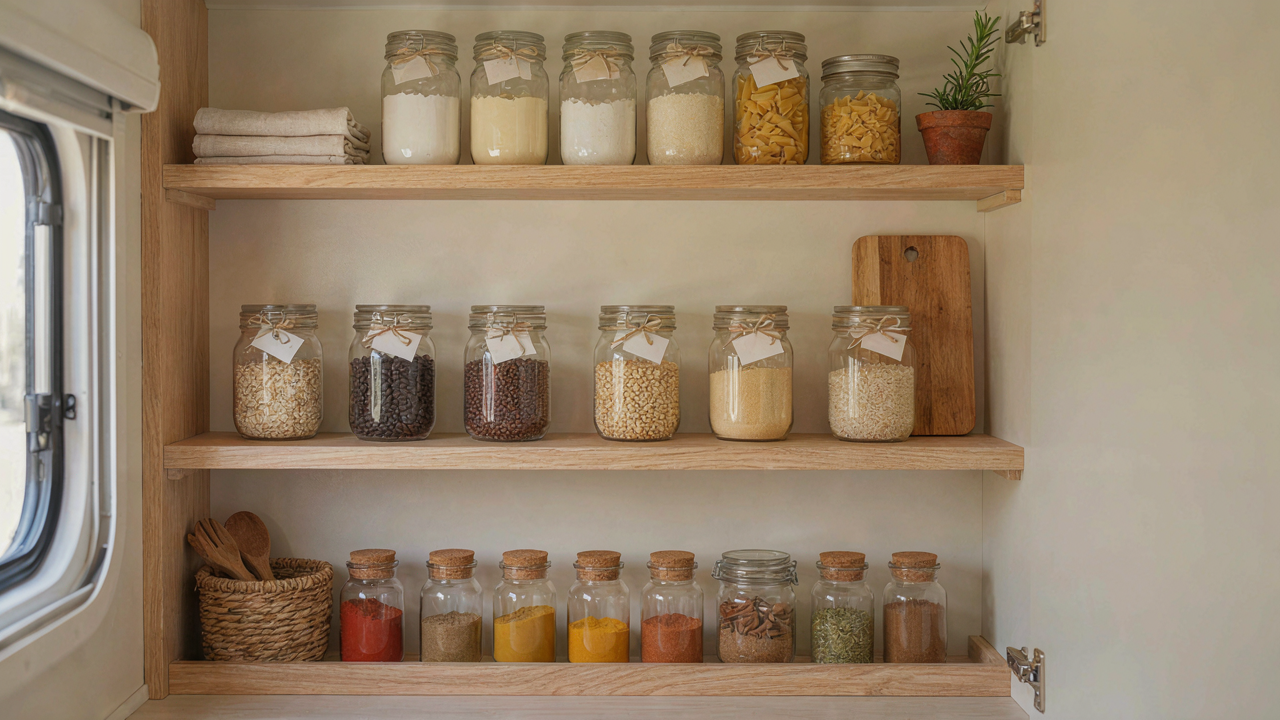
The “RV Pantry Organization” Lie: Why More Space Doesn’t Solve Your Problems
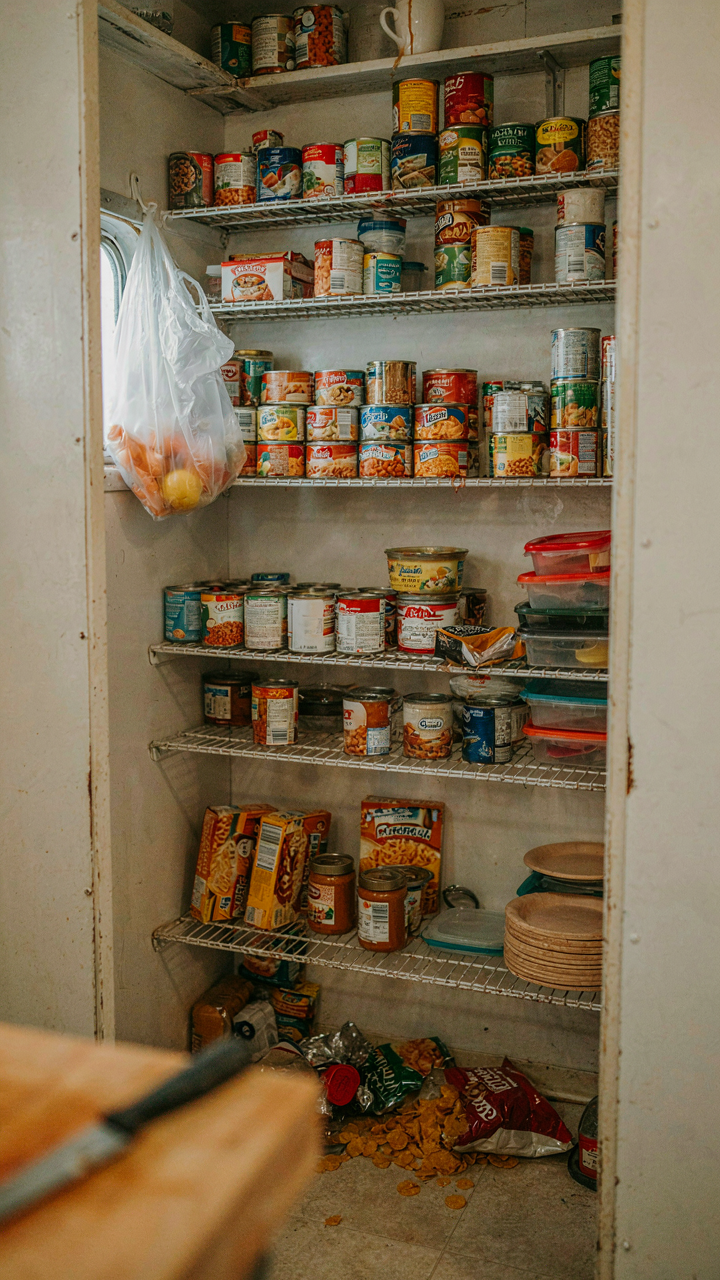
Food Waste, Money Waste, Time Waste
You think a bigger pantry or better containers will fix this. It won’t. The real issue is that you cannot see what you have, so you buy duplicates, forget about items before they expire, and spend twenty minutes every morning hunting for breakfast. On the road, this compounds. You’re stationary for three days, then moving, then stationary again. Your pantry becomes a graveyard of good intentions and forgotten groceries.
Disorganization in an RV pantry operates like entropy in a closed system. Everything tends toward chaos. You stock items without inventory. You place new purchases in front of old ones. You pull from multiple locations without restocking the same location. Within two weeks, you’ve wasted fifteen to twenty percent of what you bought. That’s not a convenience problem. That’s a cash bleed.
Decision Fatigue On The Road
The mental cost of a disorganized pantry is something generic advice never touches. You’re already managing navigation, propane levels, water tanks, and driving shifts. Your brain is allocated. Every time you open the pantry, you need thirty seconds to figure out what’s actually available. Every meal prep starts with a search instead of a decision. Repeat this twenty times a trip and you’ve burned through decision-making capacity that should go toward actual driving safety or route planning.
Clutter creates friction at the exact moment you can least afford it. When you’re tired from driving, you grab the first thing visible rather than the optimal meal. Inventory management dies. The pantry becomes a reactive space instead of a planned one. To fix this, establish a single entry point for all pantry items. Every new grocery goes to one designated shelf. You inspect and restock from that shelf in sequence. This removes the decision from the equation entirely.
The Minimalist’s Manifesto: Ruthless RV Kitchen Inventory Culling

Dead Weight Detection

You want to feel organized without actually making hard choices. Here’s what actually happens: you pack items you’ve never used, convince yourself they might matter someday, and waste cubic inches that money can’t buy back in an RV. The mechanism is simple. Every object in your pantry competes for finite space. Items that don’t earn their position create friction. A garlic press, unitasker slow cooker, specialty cake pan—these aren’t luxuries in a fixed volume. They’re thieves.
Identify what you haven’t touched in the last six months of regular cooking. Single-purpose gadgets fail the first cut. Multi-use tools survive. A can opener works. A dedicated chip clip doesn’t—a rubber band does the job. Be specific about frequency. “Might use” is not a valid category. If you haven’t reached for it, your brain already knows it’s optional.
One In, One Out, No Exceptions
This is borrowed from inventory management in manufacturing—the principle of throughput constraint. Your RV pantry has a fixed carrying capacity. Add something new without removing something old and you’ve just increased system friction without solving the core problem. The rule works because it forces a decision every single time. You can’t accumulate without sacrifice. Most people ignore this and slowly fill their rig until they’re moving cans around like Tetris.
Enforce this before you leave. New spice blend comes aboard? Something already open or redundant goes. New snack for the trip? Old energy bar gets tossed or eaten. The mechanism is accountability in real time, not regret three weeks in when space runs out. Make the removal decision at the moment of addition. This prevents the slow creep of “just this one more thing” that crashes every organizational system.
The First In First Out FIFO Protocol For RV Pantry Management
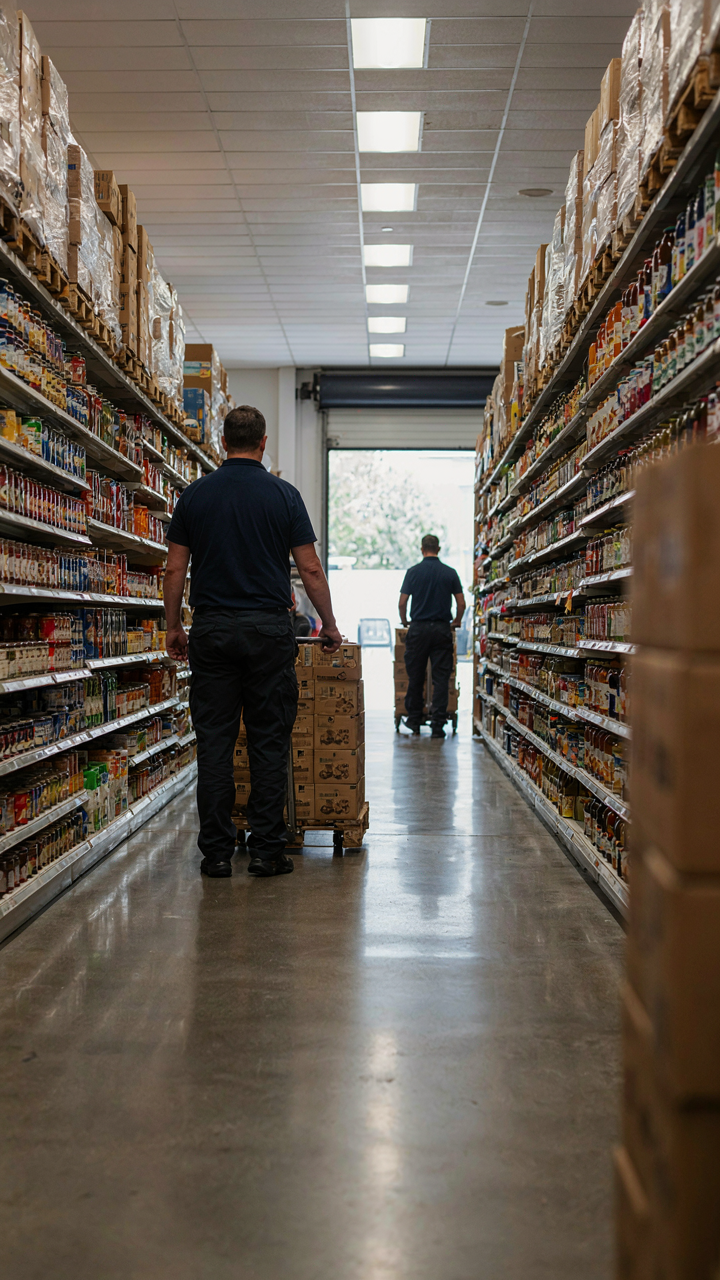
Rotate Stock So Old Items Face Forward

You want to believe your system will prevent waste. The real mechanism is simple: visibility determines consumption. In supply chain management, inventory turnover measures how fast goods move. In an RV pantry, turnover prevents the slow decay of forgotten cans behind the new ones. You place older stock forward because human eyes grab what’s accessible first. That’s not laziness. That’s how brains work.
The mechanics are straightforward. When restocking after a trip or resupply, move everything forward. Place new items behind existing stock. This sounds elementary because it is. Most people know this rule but don’t execute it because they stock from the front, not the back. The RV layout forces this decision: limited space makes the back hard to reach, so you’d rather not. Fight that impulse. Reach back anyway. It takes thirty seconds and saves food waste across weeks.
Track Dates Without Adding Chaos
Labeling systems fail when they’re too detailed. You don’t need the purchase date, expiration date, and a color-coded category system. That’s bureaucracy masquerading as organization. What works is marking only the expiration date on every packaged item the moment it enters the pantry. Use a permanent marker on the package itself or on painter’s tape if the surface resists ink. One date per item. Done.
The act of marking forces a mental checkpoint: you register what you bought and when it expires. Your brain now has a stake in the item. When you scan the pantry later, dated items create instant priority sorting. Items expiring sooner get used sooner. Items expiring later can wait. The label isn’t the system. The mark creates decision speed every time you open the door.
Gravity Defying RV Storage Ideas: Engineering Your Mobile Kitchen

Go Vertical Before You Go Wide

You want to feel like you have control over your space. The real mechanism is this: RV pantries fail because people treat them like apartment kitchens and arrange food horizontally. Apply the physics concept of load distribution. Vertical stacking uses wall real estate that stays unused while floor and counter space shrinks fast. Tension rods between cabinet shelves hold lightweight items like chip bags and cereal boxes. Command hooks anchor to cabinet doors for mugs, utensils, or cloth bags. Magnetic strips on cabinet sides hold metal containers or tin cans. The goal is converting dead wall space into active storage lanes.
Each vertical system must account for RV movement. Bumps and turns create lateral force. Tension rods prevent items from sliding forward. Hooks need surfaces that support pull force, not just weight. Magnetic systems work on metal surfaces only, limiting placement options. Test each setup by driving a route with turns before loading it fully. The failure point comes when you overload one system thinking vertical means unlimited. Start light, verify stability, then add incrementally.
Lock Everything Down Or Lose It
Most RV pantry advice treats securing items as optional. It is not. Acceleration and deceleration during normal braking create forces that turn loose objects into projectiles. Anti slip mats go on every shelf. They prevent sliding during stops and turns. Adjustable dividers create compartments that stabilize items without relying on friction alone. Bungee cords or cabinet straps secure shelves themselves to the cabinet frame, not just items to shelves. This matters because RVs flex and shift during travel in ways stationary homes do not.
The protocol is simple: categorize by weight and fragility, then secure accordingly. Heavy canned goods on low shelves with dividers preventing shift. Lighter boxed items higher up with bungee cords across the front. Oils and liquids in spill proof containers seated on anti slip mats with secondary containment below. Test your system by driving in an empty parking lot and accelerating hard, then braking. If items move, your setup failed. Adjust before you leave your driveway.
The Culinary Logistics Model: Optimizing Your Camper Kitchen Workflow
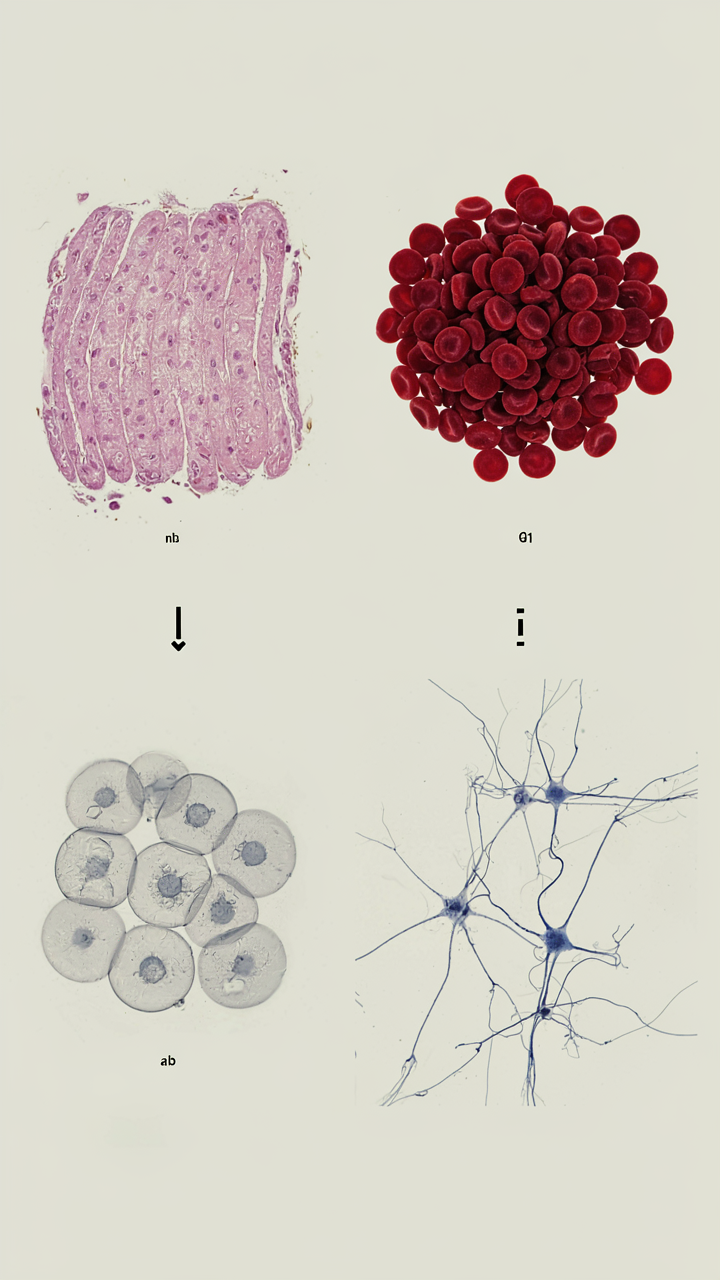
Ingredient Clustering By Cooking Function

You want to feel like you have your life together on the road, but really you’re just trying to stop wasting fifteen minutes searching for paprika while your pan gets cold. Biology teaches us that cells cluster by function, not by random proximity. Your RV pantry works the same way: group ingredients not by cuisine or meal type, but by the actual cooking operation they serve. Baking ingredients live together. Proteins stay together. Aromatics cluster. This reduces decision fatigue and physical movement in a confined space.
The mechanism is simple: every time you cook, you move through a sequence of actions. Prep aromatics. Brown protein. Build sauce. Each phase requires specific ingredients within arm’s reach. When cumin, coriander, and chili powder sit near your stove instead of scattered between three shelves, you cook faster and grab the right item on the first reach. Speed compounds over hundreds of meals. Store your ingredients by function, not by meal theme or alphabetical order, which wastes both time and space in an RV where space is the constraint that kills organization systems.
Prep Zone, Cook Zone, Storage Zone
Most RV owners think “organization” means everything fitting in the cabinets. That’s the wrong frame entirely. Efficient kitchen design separates three zones: where you break down raw ingredients, where heat and tools live, and where everything waits. Your galley can’t replicate a house kitchen, but it can replicate the principle. The prep zone sits near your cutting board and water source. The cook zone centers on your stove. The storage zone holds everything else. This separation prevents the collision of cold and hot tasks.
When you design these zones, you eliminate backtracking. You cut vegetables at the prep zone. You move the cut vegetables to the cook zone. You finish cooking and return items to storage. No crouching to grab salt while standing at the stove. No reaching across hot burners for a spatula. Small RVs demand ruthless zoning because movement is literally measured in steps. Map your actual galley layout right now. Mark where prep happens. Mark where cooking happens. Mark where dry goods and cold storage sit. Then organize each zone independently, with no bleed between them.
Beyond The Bin: Smart Solutions For Small RV Pantry Organization
Stealing Storage From Other Categories

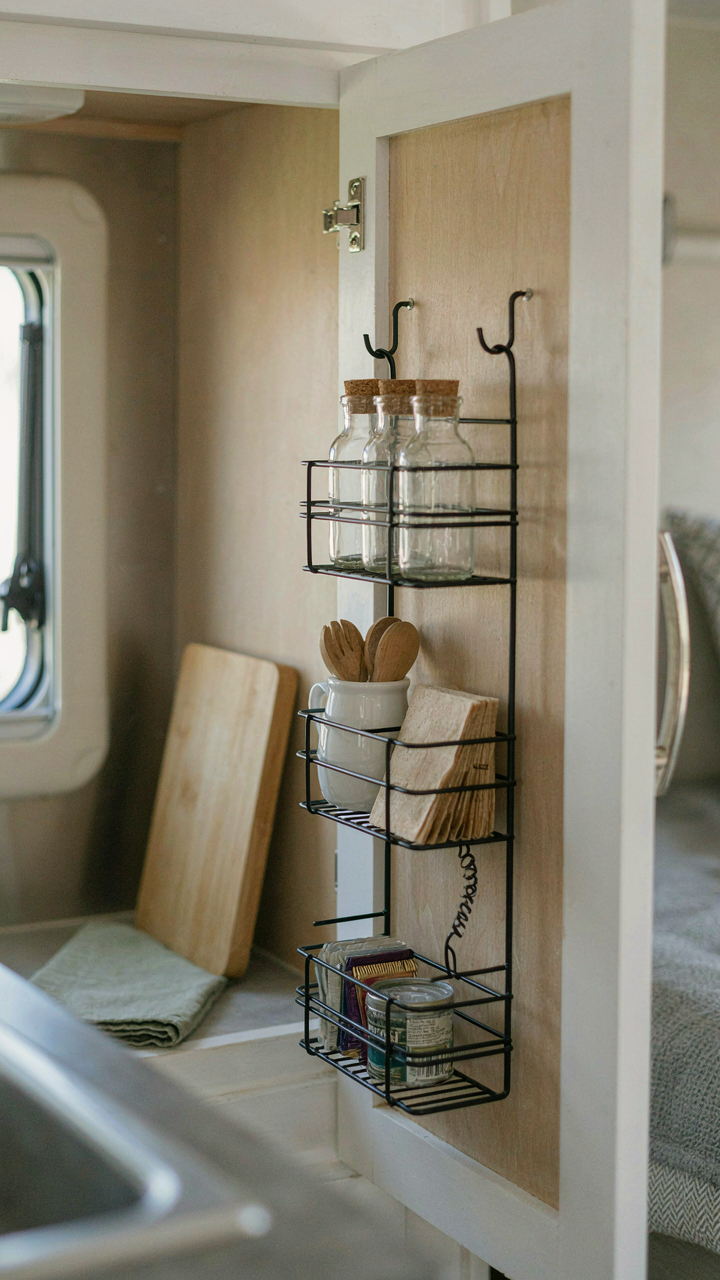
You want to feel resourceful without admitting you’re fighting basic math: an RV has less square footage than most people’s closets. The real mechanism is category overlap. A shower caddy isn’t storage innovation—it’s recognizing that food compartments and bathing compartments both need vertical stacking with drainage consideration. You’re not being creative; you’re applying the same spatial logic across different zones.
Shoe organizers work because they force portion control by architecture. Each slot holds a specific quantity, which prevents the psychological trap of “I’ll just squeeze more in.” Over-the-door shoe racks mount in dead space—the back of cabinet doors, the inside of pantry entries—where you wouldn’t normally store anything. This removes decision fatigue about placement because the location is predetermined by the organizer’s design.
Collapsible Containers And The Stacking Principle
First paragraph goes here—50 to 75 words about collapsible and stackable containers.
Collapsible containers operate on a physics principle: volumetric efficiency through temporary compression. When full, they occupy fixed space. When empty, they collapse to 10 to 20 percent of their original height, freeing cubic inches for rotation. RV pantry organization fails when people treat containers as permanent fixtures rather than as tools that compress and expand based on inventory cycles.
- Silicone collapsible bowls: Nest inside each other when empty, hold dry goods when full, survive temperature swings in RVs without cracking like rigid plastics do.
- Vacuum-seal bags with hand pumps: Reduce cereal and snack volume by 60 to 70 percent, stack flat in overhead cabinets, eliminate oxygen exposure that causes staleness.
- Stackable plastic containers with matching lids: Create uniform height increments so you can calculate exactly how many units fit per shelf without trial and error.
- Collapsible fabric bins: Frame themselves when empty, collapse flat for storage, fit irregular shelf spaces where rigid containers leave gaps and wasted area.
- Nesting measuring cups and bowls: Replace single-purpose items, take up one-third the space of conventional sets, double as serving and storage vessels.
The tactic is inventory rotation tied to container capacity. When a collapsible container reaches full, you’ve hit your storage limit for that item category. Refusal to stack beyond that signals you’ve exceeded RV pantry capacity, forcing you to consume inventory before restocking. This prevents the slow creep of expired goods that happens when people can’t see what they own.

The “Prep Ahead” Advantage: Minimizing On Road Camper Kitchen Chaos

Prep Work Beats Real Time Decisions
You’re afraid of wasting food in a confined space. That fear drives you to buy conservatively, then scramble at mealtime because you lack options. The real mechanism is decision fatigue. Every meal on the road forces you to problem-solve with limited counter space, incomplete inventory visibility, and zero margin for error. Pre-chopping, pre-measuring, and pre-cooking collapse that decision load into one focused session before you leave. Your brain handles complexity once, not repeatedly.
Pre-prepped ingredients eliminate the gap between hunger and execution. You chop vegetables at home where you have space, light, and a real cutting board. You measure grains and proteins into labeled containers. You cook base components like rice or beans that anchor multiple meals. When you’re parked and hungry, assembly replaces creation. This isn’t about convenience; it’s about removing the friction that kills meal consistency and blows through your pantry budget on workaround purchases.
The Dedicated Meal Plan Stops Impulse Waste
Most RV pantry advice skips this: a meal plan isn’t motivational theory, it’s inventory control. Economics calls this reducing “information asymmetry” between supply and demand. You know exactly what you’ll eat each day, so you buy exactly what you need, nothing more. Impulse buys happen because you haven’t committed to a sequence. You see something appealing at a rest stop or small-town market and rationalize it into your pantry. Two days later it competes with your planned meals and loses.
Write your meal plan before provisioning. Anchor it to the length of your trip and realistic cooking constraints. Include breakfast, lunch, dinner, and snacks for every single day. Cross-reference your pantry against this plan. Buy only what the plan requires. When you’re on the road and tempted by an unplanned purchase, the plan acts as your filter. You either replace something already planned or you skip it. This discipline keeps your RV pantry from becoming a graveyard of good intentions.

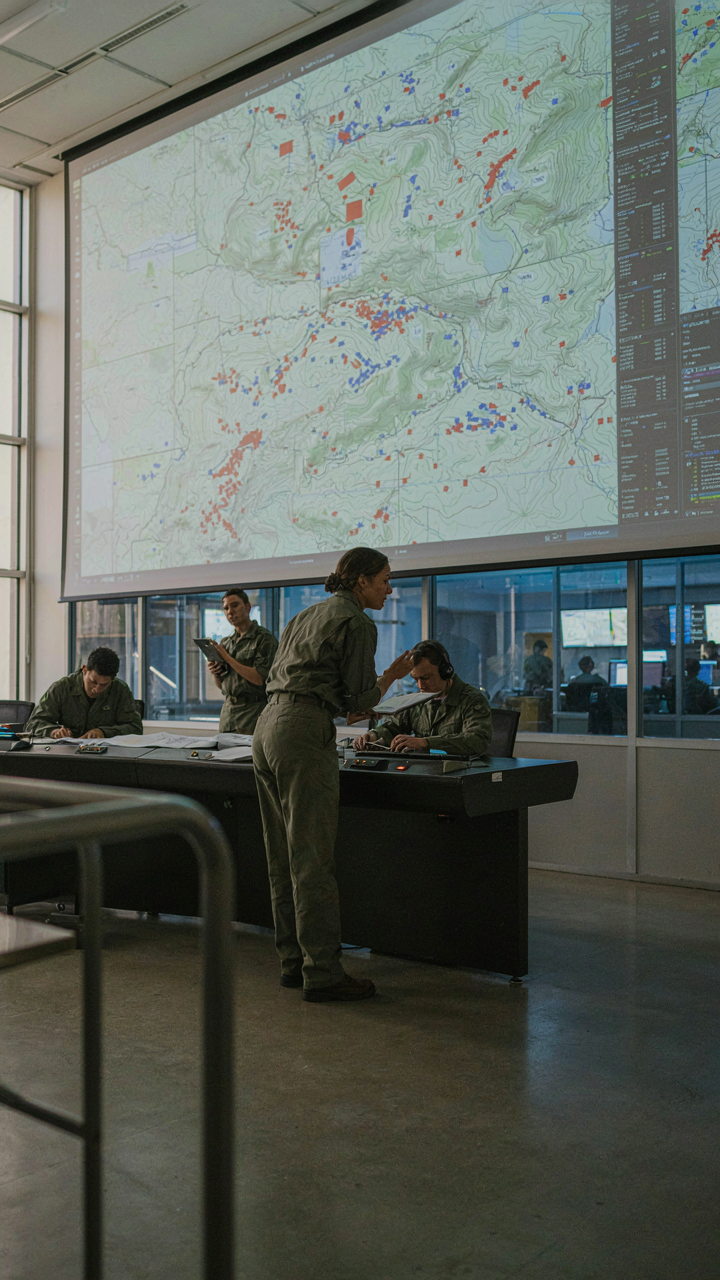
Your RV Kitchen Is A Battlefield: Win The War Against Clutter
The Five Minute Reset Habit
You want to believe your system works without maintenance because you don’t want to admit you’ll fail at discipline. The real mechanism here is entropy: disorder accelerates itself. A messy pantry compounds daily. Each forgotten item creates a precedent for the next one. Five minutes every evening reverses that momentum before it takes hold.
This reset is non-negotiable because it stops the cascade. You move items back to their zones, wipe surfaces, return strays to their containers. The goal is not perfection. The goal is interrupting the decay cycle. Do this at the same time each day. Make it automatic, like brushing teeth. When reset becomes routine, your pantry stays functional instead of becoming a salvage operation.
One Touch Rule Stops Friction
Friction is the enemy. Most RV pantry problems don’t stem from bad organization. They stem from poor placement of decisions. You encounter something, decide to deal with it later, and create a debt. One touch means you handle it the moment you touch it. Back on the shelf. Cap sealed. Container closed. No staging area. No “I’ll deal with this tomorrow.”
The mechanism is simple: more touches equal more failure points. Every decision deferred is energy wasted and entropy gained. Put items away immediately after use, not in a “to be organized” pile. This eliminates the secondary sorting task entirely. Your pantry stays ordered because nothing ever leaves order in the first place. Make this your rule, not your aspiration.

Stop Organizing. Start Curating Your Mobile Culinary Command Center
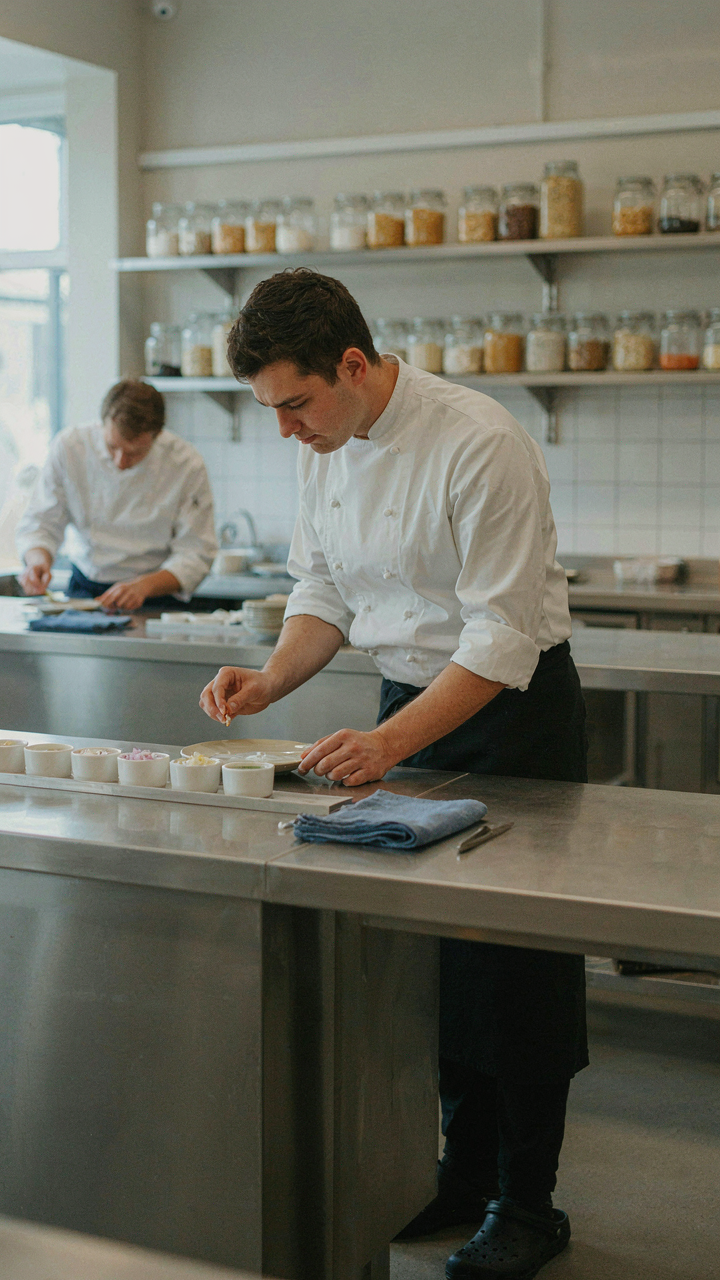
Most people treat RV pantry organization like a chore. They buy containers, label everything, then wonder why they still can’t find what they need. The real shift is this: your pantry isn’t storage. It’s a system that either saves you time or costs you time. Design it around what you actually cook, not what you think you should cook. Pull out your meal plan right now and build backwards from there. Your pantry either works for your life or it doesn’t, and nothing else matters.