The Illusion Of More: Why Adding Fails

What You’re Actually Storing
You think you need more space, but you’re really afraid of looking poor. The mechanism is simple: RV bathrooms fail because owners treat them like land homes and pile in duplicates of everything they own. Toothbrush holders, soap dispensers, extra towel racks, cabinet organizers—each one takes real square footage and fractures your sightline into a dozen competing objects. A 24-square-foot bathroom can’t handle visual noise the way a master bath can.
The real problem isn’t the shower. It’s that you’re storing items that serve the same function. Two shower caddies. Three types of soap. Four towels when you rotate laundry weekly. Every duplicate steals depth perception and makes walls feel closer. Remove redundancy first. Then the space stops fighting you.
Overstimulation Shrinks The Room
Neuroscience calls it cognitive load, and tiny spaces amplify it—your brain processes clutter as threat, triggering a compression response that makes dimensions feel smaller than they measure. An RV bathroom with visible bottles, hooks, mirrors, and fixtures creates sensory overload that contracts your perception of the room in real time. You’re not imagining the squeeze. Your nervous system is registering too many stimuli.
The fix isn’t adding shelves or organizers. It’s cutting stimuli by 40 to 50 percent. Hide what you can behind cabinet doors. Keep countertops bare except one item in use. Your brain needs visual rest to perceive actual space. The moment you enter a cleared RV bathroom, your shoulders drop and your eyes can move without stopping. That’s the spatial shift you’re chasing.
The Spartan Method: Radical Decluttering
Stop Pretending You Need It

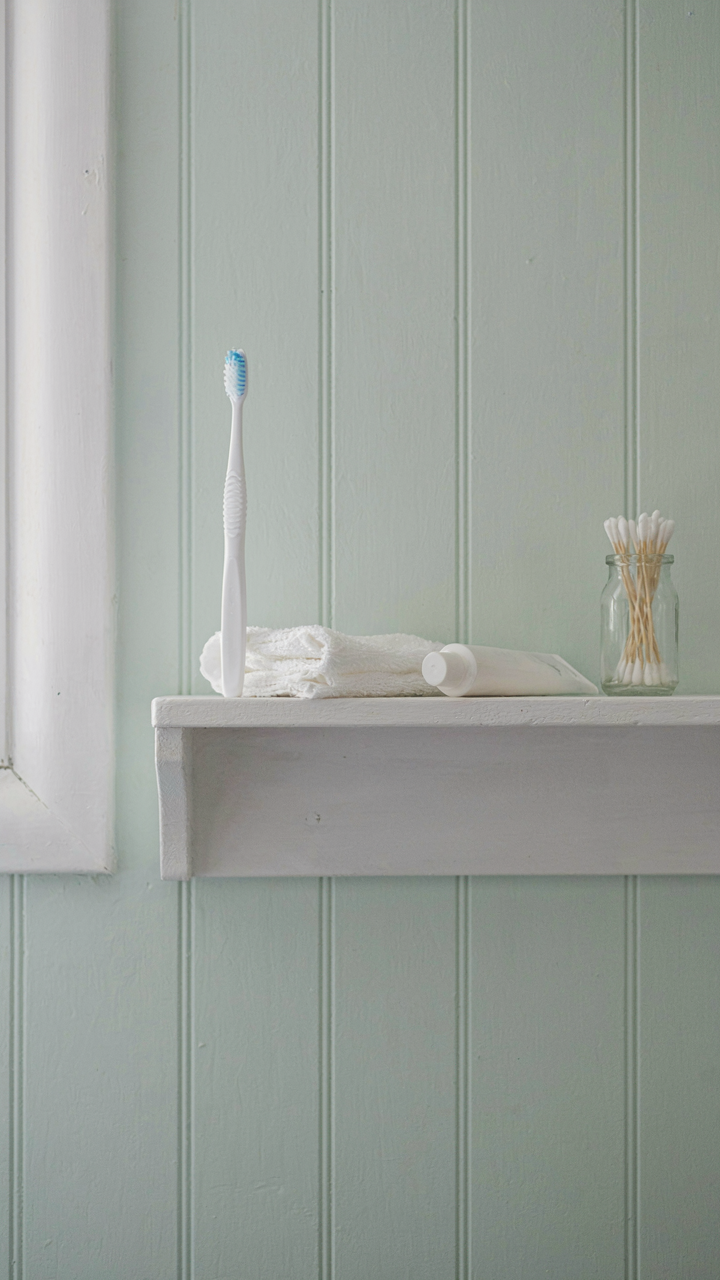
You want to believe your RV bathroom feels small because of the space itself. It doesn’t. You want to avoid the real work: admitting you brought things you don’t use. The mechanism is simple. Clutter taxes your brain’s visual processing before you even shower. Your eye lands on a dozen items, your mind catalogs each one, and the room shrinks. Remove the items, remove the cognitive load, and the space expands without moving a wall.
Most people declutter wrong. They move things around, reorganize, buy containers. That’s theater. Real decluttering means identifying what you actually use in a shower and removing everything else. Count your days in the RV per month. If you use something less than once per trip, it’s dead weight. A hair tool you touch twice yearly? Gone. Backup bottles of products? One per item, maximum. The RV bathroom is not your primary home bathroom. Stop treating it that way.
The Rotation Protocol
The one-in-one-out rule is borrowed from inventory management in lean manufacturing, but the principle applies to RV storage like unit economics applies to a failing business. You bring one new item in, one old item exits immediately. This isn’t about sacrifice. It’s about preventing the slow creep that kills your space. Most RV owners ignore this and wonder why their bathroom deteriorates over twelve months.
Set the rule before you leave the driveway. When you add a new shower product, a toothbrush holder, or a cleaning supply, you remove something of equal or greater volume. Not tomorrow. Not next week. The moment you acquire it. This keeps the bathroom static at maximum usable space and forces intentional decisions about what stays. Your future self will shower in a space that breathes instead of chokes.
Multi Functional Design: Every Item Earns Its Keep
Things That Do Two Jobs

You’re hoping the bathroom won’t feel like a coffin. That’s the real fear underneath this section. The mechanism is simple: RV bathrooms fail because people treat them like land homes shrunk down. They bring single-purpose items into a 35-square-foot box. The solution is industrial design’s core principle: eliminate redundancy. Every object must solve two problems or it leaves.
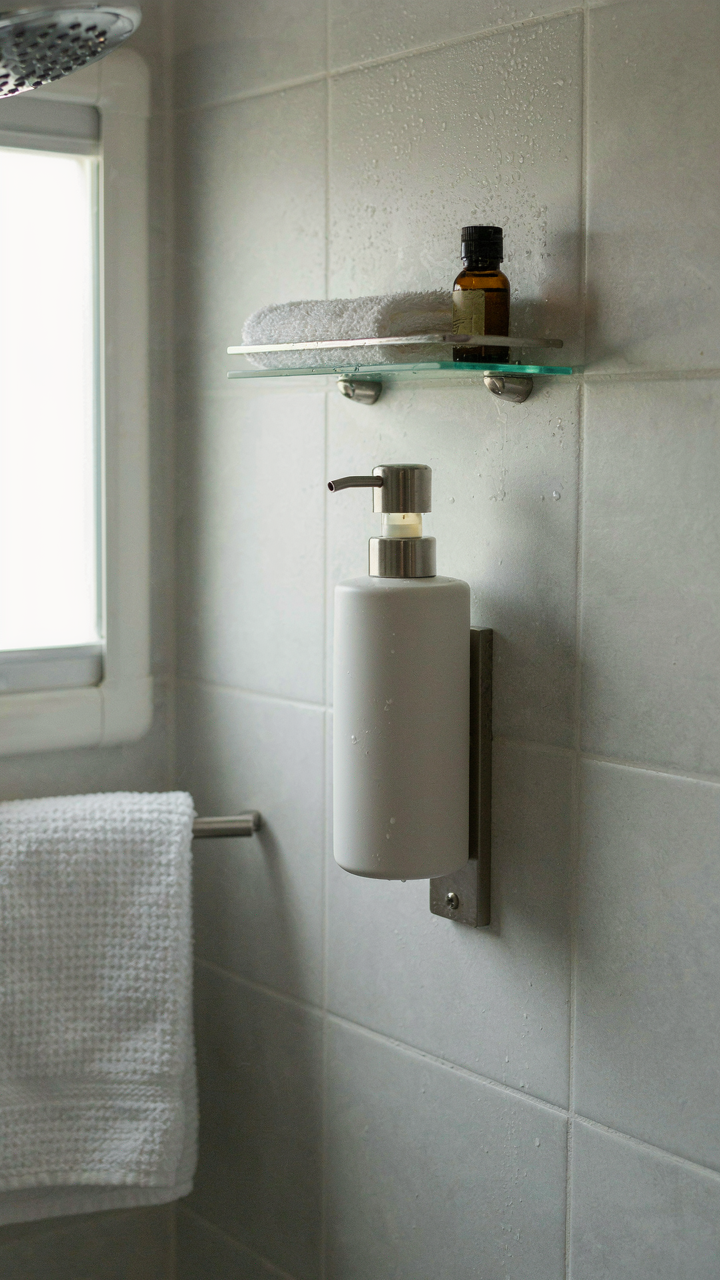
A shower caddy isn’t just storage. It’s also your towel bar, your shelf above the toilet, and your organizational system that prevents water pooling on the floor. Magnetic strips on the shower wall hold metal grooming tools and free up drawer space simultaneously. Combination items work because they collapse the number of fixtures you need. You stop buying things and start buying systems.
Things That Shrink When You’re Not Using Them
- Collapsible storage bins: Stack flat against walls when empty, expand to hold toiletries, linens, or cleaning supplies. Choose clear plastic so you see contents without opening.
- Foldable shower seat: Doubles as a step stool and seat. Collapses to hang on a wall hook, taking zero floor space when stored.
- Silicone dish racks: Collapses completely flat. Holds wet items during shower without occupying cabinet real estate when packed away.
- Expandable tension rods: Adjusts to fit your shower width without permanent installation. Remove and collapse to nothing for transport or replacement.
- Rolling drawer organizers: Slides under sink, pulls out for access, compresses back. Maximizes dead space without modification to RV structure.
The reason this works is volumetric efficiency. When items collapse, they occupy 10 to 20 percent of their expanded footprint. An RV bathroom has roughly 12 cubic feet of usable storage if you optimize vertically. Stackable, collapsible items let you use that space twice over. Your shower feels bigger because clutter disappears when it’s not needed. The mechanics are hydraulic: expand for function, contract for space.
The “Zero Gravity” Principle: Wall Mounted Storage
Stop Wasting Floor Real Estate
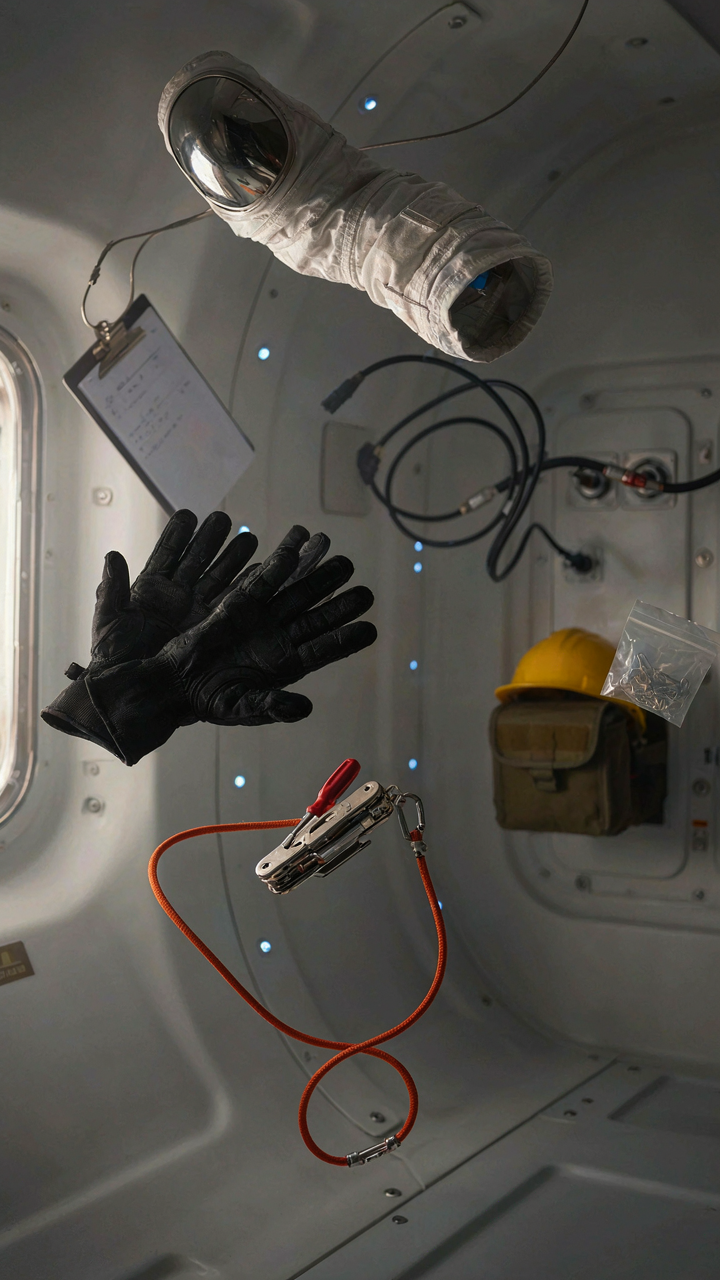
You want your shower to feel bigger because you’re tired of feeling cramped. Most people miss the actual problem: they’re treating the shower walls like decoration. In physics, zero-gravity environments force everything vertical because horizontal space becomes irrelevant. RV bathrooms work the same way. The moment you claim wall space instead of fighting for floor inches, the entire room breathes differently. Suction cups fail in RVs because vibration and temperature swings break the seal. Adhesive strips work longer, but they’re permanent. 3M Command hooks designed for damage-free removal handle both: they hold weight through micro-adhesive technology and actually release cleanly when you need them gone.

The real move is choosing your mounting method based on what you’re storing and how often you’ll move it. If you’re rotating bottles or razors seasonally, adhesive strips are overkill and wasteful. For permanent fixtures like toothbrush holders or soap dispensers, adhesive is the only option that survives months of moisture and movement. Install strips at eye level and slightly above, not below the shower head where water spray degrades adhesion faster. Measure twice, apply once, and wait the full 24 hours before loading weight.
Metal Items And Magnetic Discipline
Forget adhesive solutions when you can use magnetic strips to anchor metal containers. Magnetic strips exploit a material property most people overlook: they require zero surface preparation, no curing time, and they reversibly hold objects. You can move, remove, and rearrange without damaging walls or leaving residue. RV bathroom walls can handle 3M magnetic strips designed for lightweight storage. The mechanism is simple: ferromagnetic materials attract, adhesive bonds the strip to the wall, and weight distributes across the strip’s length rather than a single point.
Install strips horizontally along the wall at 12 to 18 inches apart if you’re stacking magnetic containers. Test the adhesive bond by gently pulling sideways before hanging anything heavy. Metal soap dispensers, razor holders, and small tool organizers work perfectly here. The strip itself costs less than replacement adhesive hooks, and you’ll stop replacing them annually. This is your storage solution that actually scales with how much stuff accumulates.
Light And Reflection: Expanding Perception
Mirrors And Light Amplification
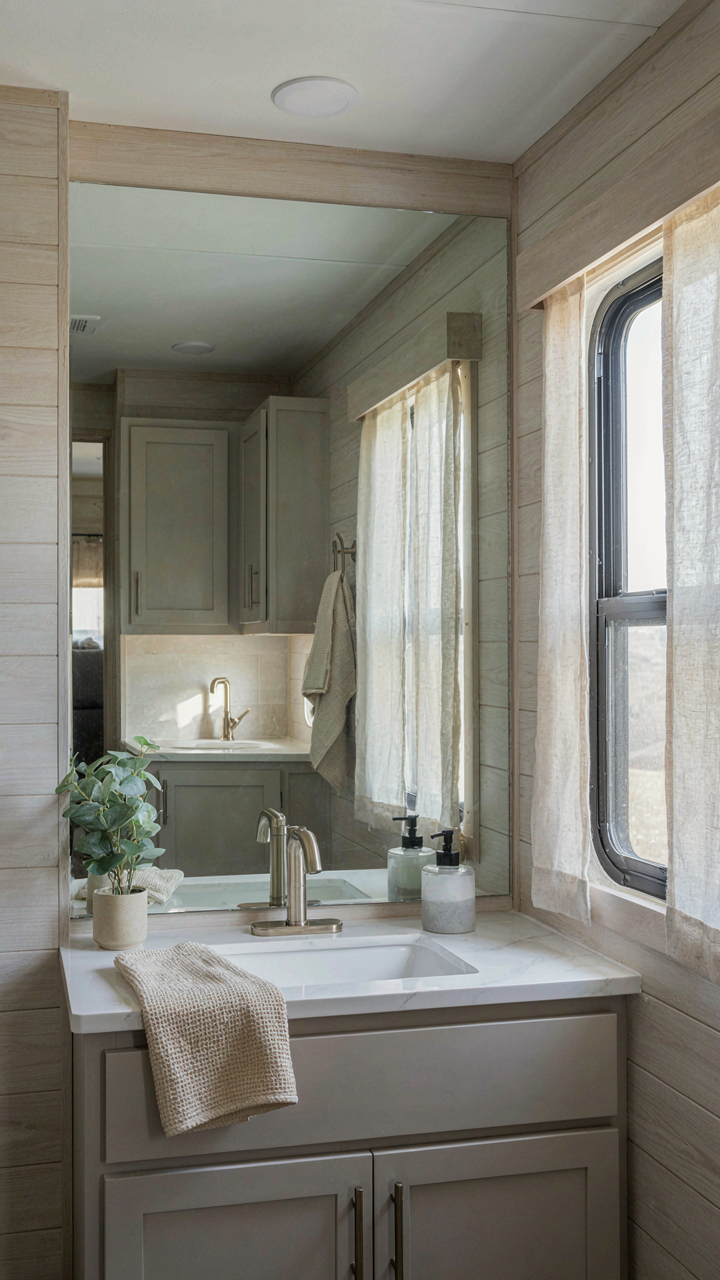
You want your bathroom to feel bigger because feeling cramped triggers a low-status response in your brain. The mechanism is optical: mirrors don’t actually expand space, they manipulate perceived depth through reflection. Positioning a mirror opposite your light source forces light to bounce twice instead of once, doubling illumination without adding fixtures. This is basic physics applied deliberately.

Most RV owners slap a medicine cabinet mirror on one wall and call it done. Wrong move. Mount a full-length mirror on the wall opposite your shower entrance, angled slightly downward. This creates a sightline that extends beyond the actual bathroom boundary. Pair it with a bright LED strip behind or above the mirror, and you’ve weaponized reflection. The light bounces off the mirror surface and fills dead corners that stay dark in standard setups.
Under Cabinet Lighting For Perceived Depth
Depth perception relies on shadow and light contrast, not raw brightness. Install thin LED strips under your sink vanity, running the length of the cabinet. Keep them warm-white (3000K), not daylight (6500K). Warm light under surfaces creates visual separation between the vanity and wall, a design principle borrowed from architecture. Your eye reads this as “more space between objects.”
Position strips on the underside lip of cabinets so light spills onto the floor, not directly into your eyes. This indirect illumination prevents glare while casting the floor as a separate visual plane. Run the strips along the bottom edge of any shelving above the toilet too. These pockets of light break up the visual weight of a small room and make the eye travel vertically instead of stopping at walls. Install strips on a separate switch so you control them independent of overhead lighting.
The “Invisible” Shower: Curtains And Doors
Clear Curtains Control Perceived Space
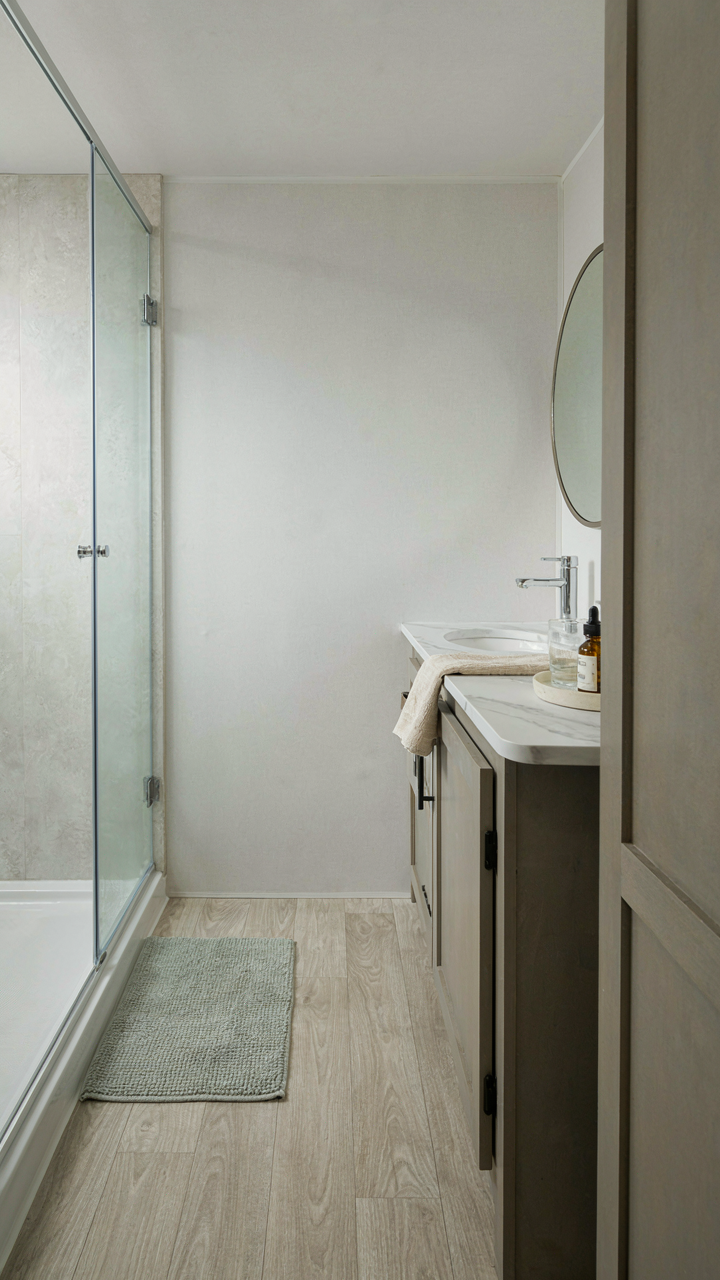
You want the shower to disappear so the bathroom doesn’t. That’s the real mechanism at play here, and it works through a principle borrowed from architecture called “visual continuity”—the eye doesn’t stop at a barrier, so the space feels unbroken. A clear vinyl or PEVA curtain lets sightlines travel through the shower enclosure to the wall beyond. An opaque curtain cuts the room in half psychologically, even if the actual square footage stays the same.

Most RV bathroom advice tells you to pick whatever you can find. Wrong. The material matters because it dictates whether light bounces or gets trapped. Clear curtains let ambient light and reflections flow through the shower zone. Frosted or semi-transparent options work if you need privacy but still allow sight lines to continue. Opaque curtains should only exist if your RV’s bathroom gets natural light from elsewhere and you need full visual separation for privacy reasons.
Sliding Doors Over Swing Space
Retractable and sliding doors don’t require the swing radius that hinged enclosures do, so they’re the mechanical answer to tight quarters. A standard hinged shower door needs clearance equal to its arc of rotation. A sliding track door moves parallel to the wall, consuming almost no extra floor space. This is why they dominate small RVs—not because they look modern, but because they’re the only option that doesn’t steal usable bathroom real estate.
Install sliding doors or retractable curtain tracks on the wall plane itself, not recessed. Recessed tracks add depth to the shower footprint and eat into already tight bathroom layouts. Surface-mounted tracks run parallel to the wall and keep the shower’s actual footprint minimal. When a door or curtain stays flush against the enclosure, the open bathroom square footage doesn’t shrink when you’re not showering.
Harnessing Biomimicry For Tiny Spaces

How Nature Packs Infinite Complexity Into Finite Space
You want your RV bathroom to feel larger because you’re spending money on a vehicle that fails at the one job it promises: comfort. The mechanism biology uses is fractal packing, and it applies directly to how you arrange your shower. Fractals repeat the same pattern at different scales. Trees do this: branches split into smaller branches that split again, fitting maximum reach into bounded volume. Your shower works the same way.

Every object in your RV bathroom occupies both physical space and visual weight. Most people clutter horizontally, which steals the sense of openness. Instead, use vertical repetition at decreasing scales: install one large organizer, then medium-sized caddies inside it, then small bins inside those. This mirrors how nature maximizes capacity. The eye reads depth instead of crowding. You’re not storing more efficiently. You’re making the brain process information in layers, which trades horizontal sprawl for vertical density.
What A Beehive Teaches About Volume Efficiency
Beehives don’t waste space on hallways or redundant chambers. Every cell serves a specific function with zero wasted perimeter. Your RV shower has the same constraint: limited cubic footage, fixed walls, one door. The difference is that most people design for comfort, not throughput. Beehives design for function first.
Assign every surface a single, dense purpose. Install a magnetic strip for metal tools on the shower wall itself rather than a cabinet that eats floor space. Use the gap between your toilet tank and wall for a slim rolling cart that slides in and out. Use your mirror’s back surface with adhesive hooks instead of adding shelving. The goal isn’t minimalism. The goal is that every square inch of your shower performs exactly one job and performs it completely.
The Minimalist’s Arsenal: Essential RV Bathroom Organization

One Product, Multiple Jobs
You’re stressed about space because you’re still thinking like someone with a house. The real mechanism is substitution. Economics calls this “factor substitution”—when one input replaces multiple inputs in a production process. In an RV bathroom, one multipurpose product replaces five single-use items, which directly shrinks your inventory footprint and eliminates decision paralysis at the sink.

Bar soap works as body wash, shampoo, and hand soap. Coconut oil handles skin, hair, and even minor cuts. Vinegar cleans mirrors, deodorizes tanks, and cuts soap residue. The constraint of limited space forces you to stop buying redundancy. Your shower doesn’t feel cramped because products are organized—it feels bigger because fewer products exist in it.
Smaller Containers, Actual Space
Everyone says to buy travel sizes. That’s incomplete advice. Travel sizes still take up shelf real estate and cost more per ounce. The real move is decanting—transferring liquids from their original bottles into containers small enough to fit a shower caddy or cabinet corner, then storing the bulk bottles in your external storage or under a seat.
A 2-ounce or 3-ounce silicone squeeze bottle holds enough shampoo for two weeks and occupies roughly 10 percent of the space a standard pump bottle requires. Pill bottles work for solid products like deodorant or lip balm. The discipline here is straightforward: measure what you actually use per week, then buy containers half that capacity, and refill on your schedule. This eliminates visual clutter and gives you 40 percent more perceived counter space.
Beyond The Shower: The Holistic Camper Bathroom
Merge Storage With Living Zones
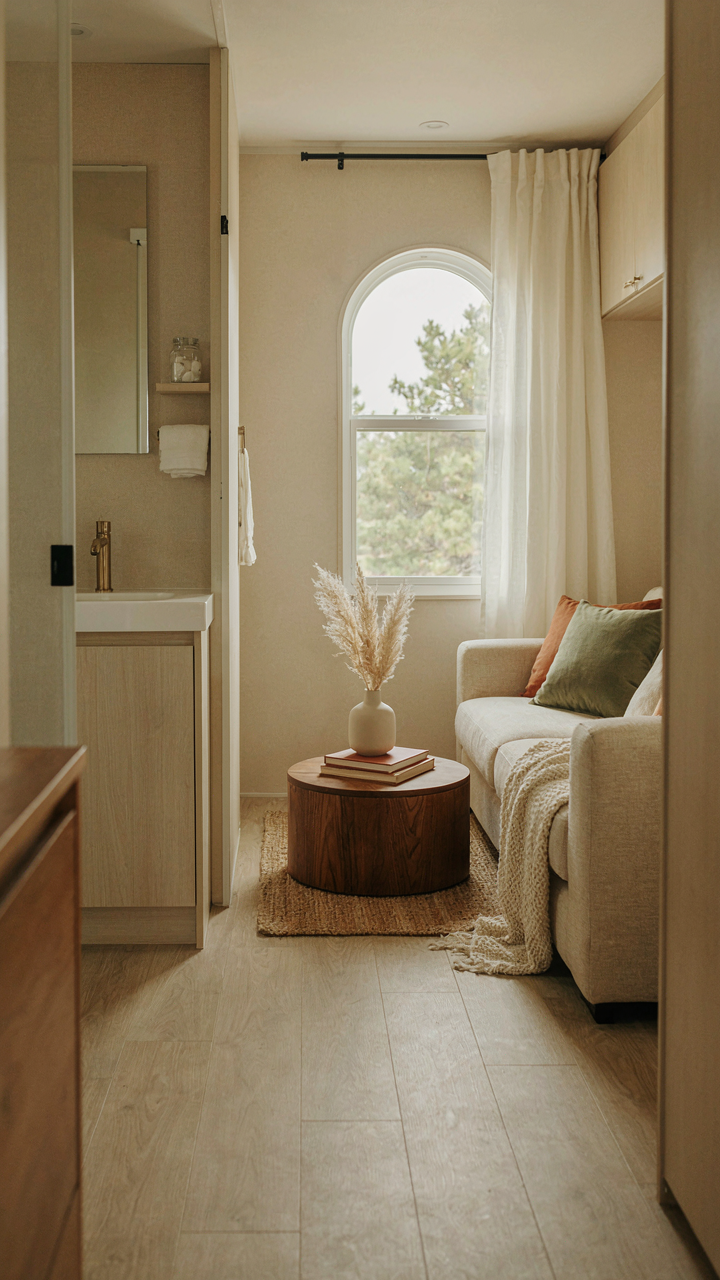
You want your bathroom to feel bigger because you’re actually worried about feeling trapped. The mechanism is simple: perception of space expands when you stop treating the bathroom as isolated real estate. RVs use what architects call layered adjacency. Your bathroom storage doesn’t have to live in the bathroom. Install overhead cabinets that span from the bedroom into the bathroom threshold. Use the wall behind the toilet tank for recessed shelving that extends into the hallway. This isn’t decoration. You’re borrowing volume from zones where nobody measures tightness.

The bathroom shrinks again the moment you cram everything inside it. Pull your daily-use items into the bedroom or kitchen prep zone instead. Keep grooming supplies in a wall-mounted caddy that clips to the bedroom side of the door. Store bulk toiletries in galley storage. The shower and toilet remain. Everything else migrates. Your brain stops counting the bathroom as your storage problem, and the walls feel further apart.
External Vaults For Dead Weight
Bulky items that never move are the real space thief. A full-size shower caddy, extra towels, cleaning supplies, and backup paper products don’t belong inside. RVs have exterior compartments specifically for this. Install a weatherproof storage box on the rear ladder or mount a wall-mounted cabinet on the outside panel directly behind the bathroom wall. Use these for items you restock monthly, not daily. The rule is direct: anything heavier than five pounds that you touch fewer than five times weekly goes external.
Heat and humidity corrode bathroom storage from inside. Mold creeps in. Smells compound. Moving bulky items outside solves both problems and creates actual floor space. Install a hinged exterior cabinet with rubber gaskets, not a basic bin. Put your paper stock, extra towels, and cleaning compounds there. Check it every two weeks during wet seasons. Your interior bathroom becomes a functional space instead of a storage unit with a toilet attached.
The Sustainable RV Bathroom: Less Is More
Concentrated Products, Zero Waste Mindset
You want to feel like you’re making the right choice without actually changing your behavior. The real mechanism is packaging volume. Most RV bathroom waste isn’t the product itself—it’s the container taking up finite storage space you don’t have.
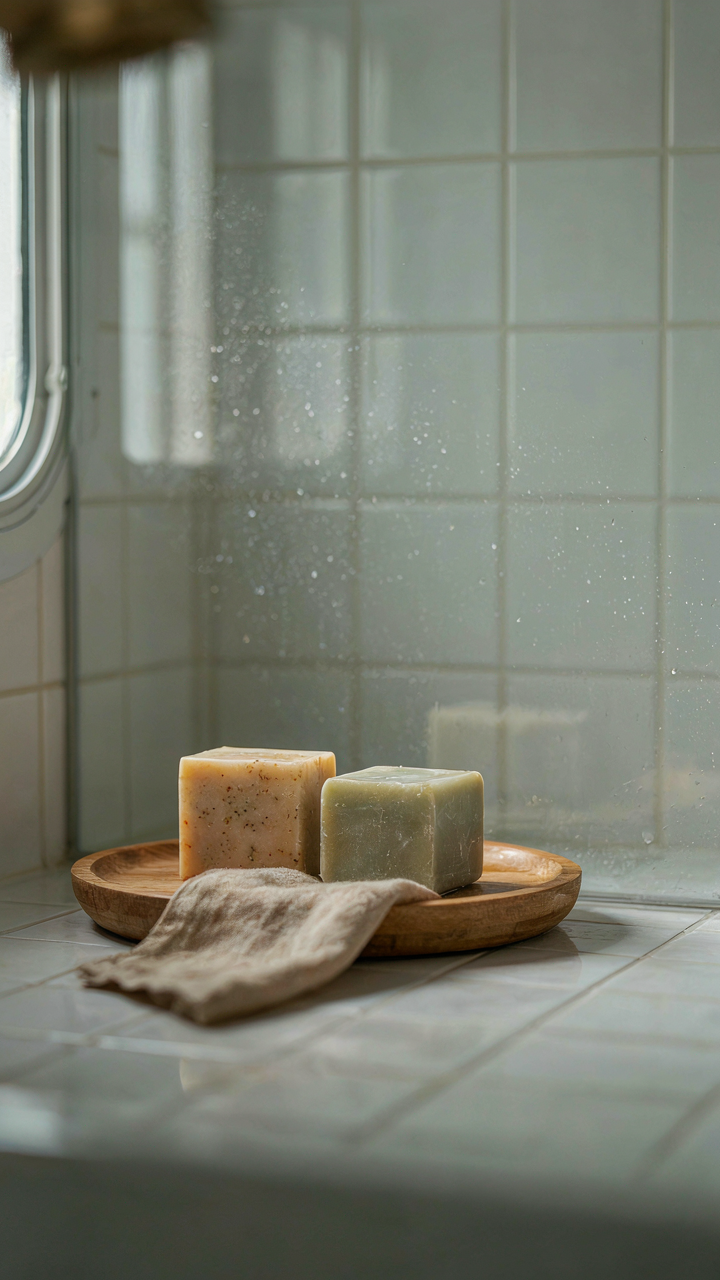
Concentrate your supplies. Bar soap replaces liquid soap bottles. Solid shampoo bars eliminate half-full containers. Powder deodorant compresses into a fraction of the space a stick or spray requires. One small jar of multipurpose cleaner handles surfaces, shower walls, and mirrors. You’re not buying into eco-theater; you’re solving a math problem. Less volume in means less volume out, and your cabinet doesn’t become a graveyard of half-empty bottles.
Greywater Management Without Illusions
Greywater systems borrowed from agricultural irrigation use gravity and filtration—the same principle governs how you reduce waste in an RV. Water flows downhill; you catch it where it naturally collects. Install a simple greywater diverter valve on your shower drain to capture water before it enters the main tank.
That captured water stores in a secondary container and serves for toilet flushing or exterior tank rinsing. You need less freshwater, fewer dump station visits, and extended boondocking capacity. The protocol is straightforward: divert, store, redirect. No fantasy about purity—just mechanical reduction of consumption. Your water tank stays fuller longer because you recycled what you already used.
The Real Obstacle Isn’t The Size Of Your RV Bathroom; It’s Your Attachment To Excess
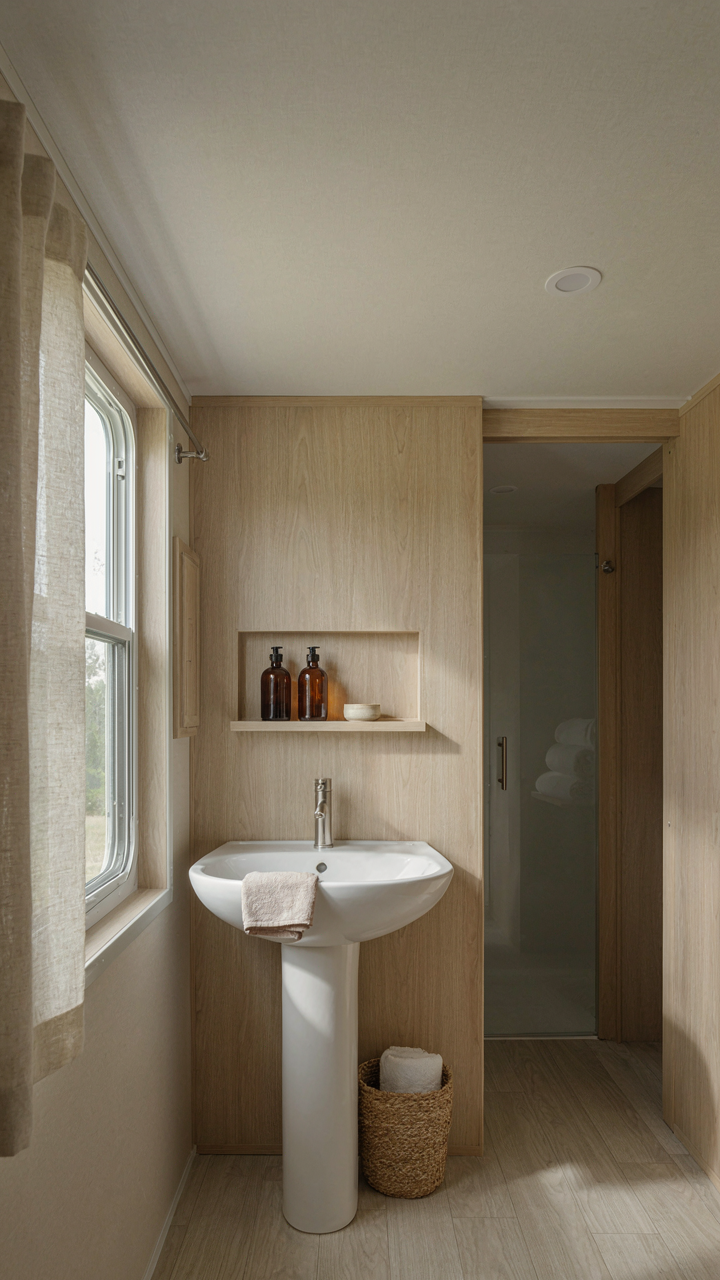
You don’t need more space. You need less stuff. The people living comfortably in RV bathrooms aren’t reorganizing cabinets every week. They eliminated what they don’t use. That’s the real hack. Stop treating your RV bathroom like a land home and start treating it like a choice. Pull everything out today and ask one question: does this actually get used? Keep what stays. Throw the rest away. A cramped bathroom with intention beats a sprawling one stuffed with junk you forgot you owned.