The Illusion Of Escape: Why “Perfect” Destroys Connection

When The Moment Becomes The Prop
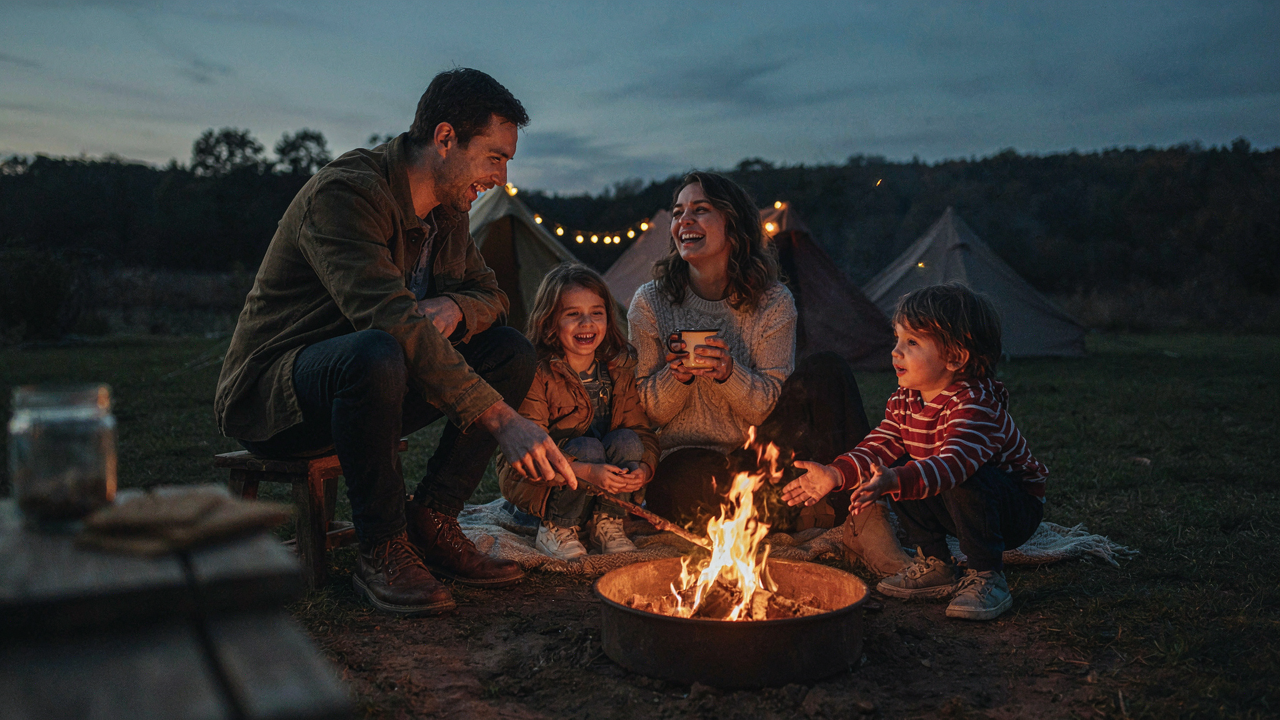
You want proof that your family is close. That’s the real reason you’re planning this. You’re not actually after connection—you’re after evidence of it, something to hold up and say it happened. This is why backyard camping fails before the tent goes up. You’ve already decided what the memory should look like, which means you’re not actually present for what it becomes. The mechanism is simple: the more you curate the experience, the more your attention goes to capturing it instead of living it. Your phone becomes a filter between you and the actual moment. Kids notice this instantly. They stop being themselves because you’ve signaled they’re being documented. The campout becomes a performance instead of a thing that just happens.
Most advice tells you to “unplug and be present.” That’s incomplete. The real issue is that you’ve internalized Instagram’s staging logic without realizing it. You’re not planning a backyard campout—you’re producing content about one. The distinction matters. When you stop trying to make the moment perfect, you stop interrupting it. Your kids relax. Conversations meander into weird places. Someone tells a stupid joke that lands different because nobody was waiting for it. This shift happens the moment you decide the evening doesn’t need to be documented to be real.
The Friction Is The Feeling
A meal that takes two hours to cook because someone burns the hot dogs and the fire won’t cooperate creates something a perfect dinner doesn’t: a shared problem to solve together. This is basic systems design applied to human connection. In systems theory, redundancy and friction are what create resilience and engagement. A perfectly executed backyard campout has neither. It’s sterile. The minor failures, the waiting around, the boredom punctuated by unexpected moments—those are where actual memory forms.
Stop planning for perfection. Plan for conditions where imperfection has to happen. Leave gaps in the schedule. Bring food that requires actual cooking, not just reheating. Use a fire pit that’s harder to start than a propane grill. These aren’t inconveniences to overcome—they’re the actual experience. When the marshmallows fall in the dirt and your kid picks them up and eats them anyway, that’s the memory. When you’re all sitting in darkness because the lantern battery died, that’s when someone says something true. Build the campout around friction, not around avoiding it.
The “Chaos Engineering” Protocol For Backyard Campouts
Small Failures Build Actual Connection

You want the campout to run flawlessly because you think smooth execution proves you’re a good parent. It doesn’t. Cybernetics—the study of systems and feedback loops—teaches us that micro-failures are the mechanism for bonding, not obstacles to it. When the tent stake bends, when the cooler tips, when someone can’t find the flashlight, you get a problem to solve together. That’s where memory forms.
Smooth camping trips fade. The ones where something broke and everyone pivoted together become stories your kids repeat at dinner ten years later. The mechanism is simple: shared adversity under low stakes creates psychological safety. Your family learns they can handle unexpected problems without panic. Plan for the friction, not against it. Let a few small things go slightly wrong on purpose.
Predict Glitches Before They Happen
The common advice says “prepare for everything.” That’s incomplete. Pre-mortems—a technique from project management—flip the question: imagine the campout already failed, then work backward to identify what broke. This isn’t pessimism. It’s pattern recognition. Sit down three days before with your family and ask what could go wrong.
The cooler might drain overnight. The sleeping bags might feel cold at 3 AM. Someone might get bored. Kids might argue over tent space. Once you name these scenarios, you build countermeasures that feel like solutions, not nagging rules. The pre-mortem turns your family into a planning team instead of you trying to prevent chaos alone. Write down three potential glitches and one fix for each, then brief everyone the night before camp starts.
Essentialism Over Excess: What You Don’t Need (Backyard Campout)

The Gear You Actually Use

You’re loading up because you’re afraid of looking unprepared. The mechanism is simple: more stuff signals competence to observers, so you pack redundancy you’ll never touch. This backyard setup borrows from supply chain design, where “just-in-time” delivery eliminates waste by matching inventory exactly to demand. You need the same ruthlessness.
Here’s what actually earns its place:
- Shelter: One tent rated for your region’s weather. Overkill specs waste money and setup time. Match the season, not the catalog description.
- Sleeping system: Sleeping bag and pad rated for the lowest temperature you’ll face. A pad prevents ground cold better than any blanket layering.
- Light: One flashlight or headlamp with spare batteries. Multiple light sources create decision paralysis and dead batteries.
- Cooking: One pot, one pan, one utensil per person. Most families overthink this and carry restaurant-grade equipment for beans and hot water.
- Fire: Matches or lighter in a waterproof container. Forget the ferro rod unless you’re testing your ego, not feeding your family.
Every other item competes for backpack real estate and attention span. Kids remember the fire and the stars, not whether you had three types of rope. Strip your list until removing one more thing breaks the trip.
The Presence You Gain When Distraction Stops
Minimalism isn’t about deprivation. It’s about friction removal. Fewer decisions, fewer items to manage, fewer reasons to reach for your phone to solve a problem that doesn’t exist. The real currency here is undivided attention with your family for six consecutive hours without logistical friction.
When you’re not adjusting gear or troubleshooting setups, you’re present. Your kid notices you notice them. Conversation deepens because there’s nothing else demanding your cognitive load. This is the actual product you’re buying. Set camp in under thirty minutes, then stay there until morning without touching your gear bag.

The “Controlled Discomfort” Method: Building Resilience (Camping In Backyard Ideas)
Minor Friction Points Teach Real Adaptation
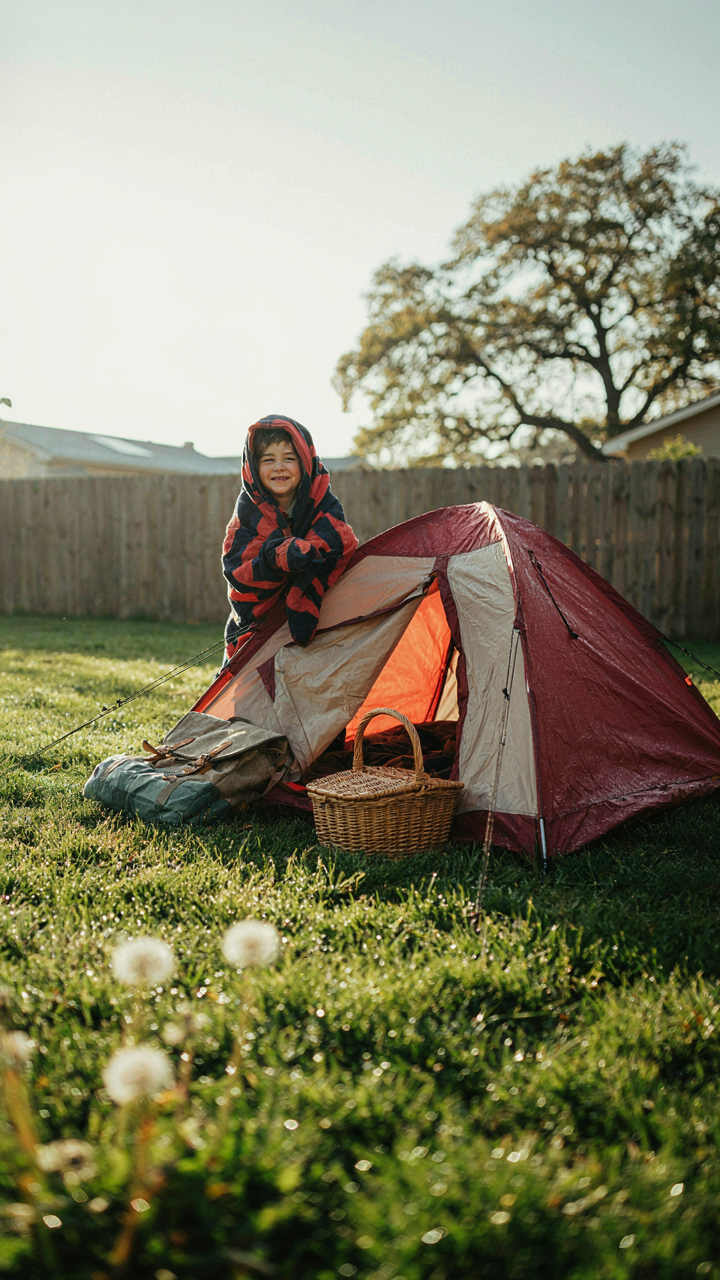
You want your kids to remember this as the night they got tough. That’s the real reason you’re reading this. Here’s the mechanism: stress inoculation, borrowed from immunology. Expose a system to small doses of a stressor, and it builds resistance without breaking. A backyard campout does exactly this. Cold sleeping bags, no bathroom steps away, sleeping on ground instead of mattresses, limited phone signal. These aren’t bugs to eliminate. They’re the entire point.
Most advice says to make camping comfortable. That’s backwards. Your instinct to eliminate every friction point kills the learning. A kid who sleeps perfectly in her own bed learns nothing about her own capacity. A kid who shivers for twenty minutes, adjusts her layers, realizes she’s fine anyway, learns something about herself that sticks. The discomfort needs to be real enough to notice, mild enough to survive, and short enough to end by morning.
Shared Struggle Creates Lasting Connection
When your family hits a real problem together during a backyard campout, you’re not just passing time. You’re forging a specific memory architecture that individual comfort never creates. Cooking over fire together, figuring out how to waterproof the tent when rain comes, dealing with the neighbor’s dog getting curious about your setup at midnight. These aren’t interruptions. They’re the connective tissue.
The mechanism is simple: shared adversity creates shared identity. Everyone survived something together. You’re no longer just a collection of people living in the same house. You’re a unit that solved a problem. This bonds in ways generic “family time” never will. Establish one specific role per person before the campout starts: one person manages fire, one manages water, one manages food, one manages tent integrity. When something goes wrong, you solve it as a team, not as a parent fixing things while kids watch. That’s where the real memory locks in.

Beyond S’mores: Igniting Genuine Engagement
Activities That Demand Actual Participation
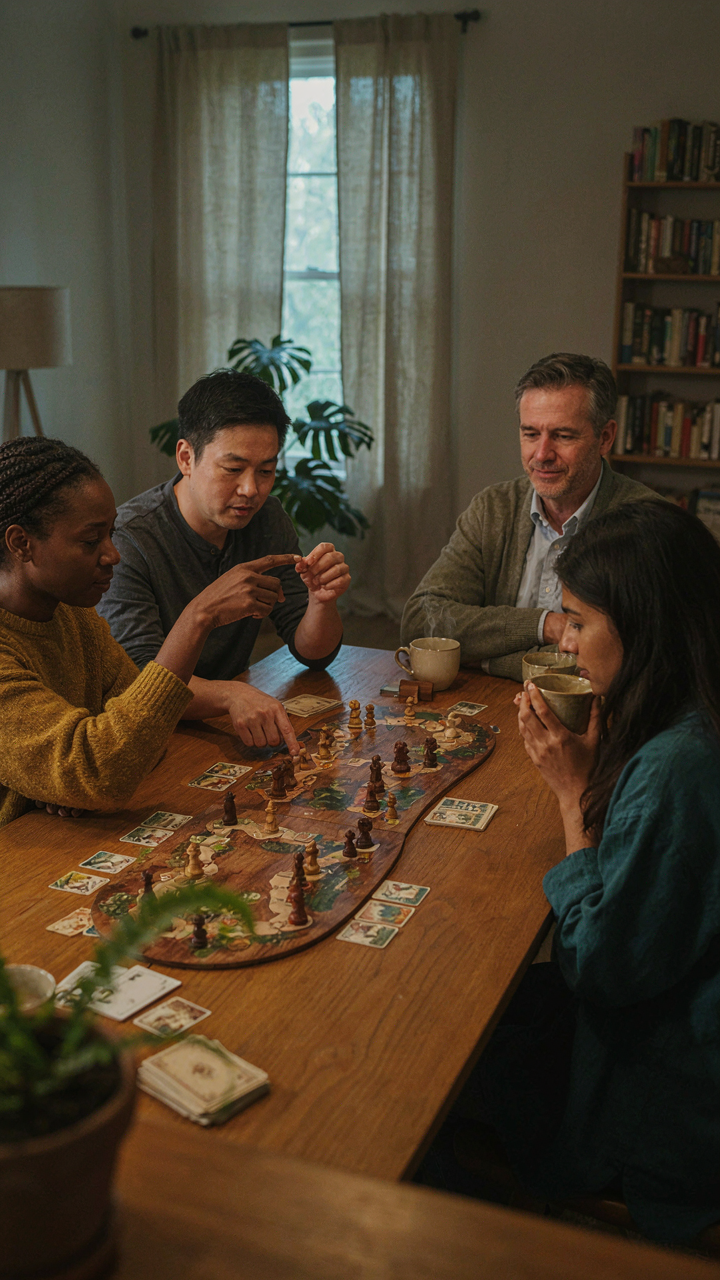
You want proof your family still functions as a unit, not just people who share rent. The mechanism here mirrors game design: engagement requires immediate feedback and rising difficulty. Your backyard campout needs activities that force real-time interaction, not passive consumption.
- Flashlight tag or shadow theater: Physical movement and decision-making in real time. Kids respond to rules that shift mid-game. Adults remember why they liked their kids.
- Collaborative cooking over fire: Assign roles that require communication. One person manages heat, another handles prep, another watches timing. Mistakes happen visibly and get solved together.
- Scavenger hunt with observation tasks: Not just collecting items. Include “find three things that make different sounds” or “locate something older than grandpa.” Demands attention and conversation.
- Storytelling with mandatory additions: One person starts a story. Each person adds exactly two sentences before passing it on. Unpredictable and requires listening to what came before.
- Constellation mapping with actual research: Bring a star chart or download an app. Find constellations together, share the mythology. Knowledge becomes the currency of the interaction, not small talk.
The activities that stick are the ones where someone has to make a call, adjust course, or defend a choice. That’s where memory forms. Not from passive comfort, but from minor friction resolved in real time.
The Device Reset Protocol
Most advice on unplugging is naive. You can’t just announce “no phones” and expect compliance or results. The mechanism is dopamine replacement, not willpower. You’re competing with an engineered product designed by the smartest engineers on Earth to be impossible to ignore.
Replace the device before you remove it. Set up the campout so the activities themselves generate stimulation. The storytelling, the fire management, the competitive games, the sensory novelty of sleeping outside. These create genuine alternatives, not deprivation. Announce the digital boundary at setup, not after kids reach for their phones. Frame it as part of the campout rules, the same way you’d explain tent boundaries. Give them something specific to do in the first thirty minutes while their nervous system adjusts. The reset works when you fill the void faster than the urge arrives.

The “Backyard Safari” Protocol: Reclaiming Your Space (Backyard Camping)

Seeing What You Already Own
You want permission to act like your backyard matters. Here’s the mechanism: familiarity breeds invisibility. You walk past the same trees, fence line, and corner shadows every day until they stop registering as terrain. A backyard campout forces a reset. You’re not discovering new land. You’re rediscovering the one you’ve ignored. Stake a tent where you’ve mowed grass a hundred times. Suddenly that slope has drainage implications. The tree shade becomes a resource. The night sounds separate into distinct sources.
This shift from resident to observer happens only through sustained presence in unfamiliar conditions. Daylight camping teaches nothing. Night camping teaches everything. Your eyes adjust. Your ears calibrate. Your kids notice the same fence post looks different at dusk. The mechanism is constraint: remove electricity, remove your bed, remove your normal exit strategy, and the familiar becomes navigable terrain. That’s when planning becomes real.
Reading The Ecology You Live In
Ecology operates on a principle of niche utilization—every organism occupies a specific functional role within a system. Your backyard is a microecosystem with defined niches, and a camping protocol means mapping them. Most advice says “pick a flat spot.” That’s incomplete. A flat spot tells you nothing about water flow, wind patterns, pest concentration, or temperature gradients between open ground and tree canopy.
Spend one evening before the campout observing simple facts: where does rain collect after a storm? Where do insects concentrate at dusk? Which direction does wind come from in your neighborhood? Does your yard stay wet or drain fast? This isn’t naturalist romantics. It’s data collection. Mark the dry zone. Note the wind corridor. Identify the microclimate that stays coolest when the sun peaks. Your campsite isn’t determined by convenience. It’s determined by these ecological facts. Set your tent where the data points to survival, not where it looks good from the kitchen window.

Weathering The Unexpected: The Stoic Camper’s Guide

When Rain Shows Up
You want to believe your backyard campout will go exactly as planned because the alternative—admitting you can’t control everything—feels like failure. Here’s the mechanism: rain isn’t a disaster; it’s information. In military strategy, commanders distinguish between “mission” and “conditions.” Your mission is a memorable family night. Rain changes conditions, not mission. The real skill is decoupling the two.
Rain transforms a backyard campout from a test of perfect weather into a test of resourcefulness. Most families cancel. That’s not stoic—that’s avoidance. A tent holds water out. A tarp rigged above the fire pit keeps the gathering dry. Your kids remember the campout where you adapted, not the one that never happened. Bring backup shelter from the start, not as contingency thinking but as standard equipment.
Flexibility Beats Rigidity
Adaptability isn’t a personality trait you’re born with. It’s a protocol. Bring a second activity that requires zero setup: card games, a thermos of hot chocolate, stories. Plan the campout in phases instead of one fixed schedule. Phase one is arrival and setup. Phase two is the meal. Phase three is the fire. Each phase has a backup if conditions shift. This isn’t overthinking; it’s removing the single point of failure.
The moment something deviates from plan, you decide in real time whether to adapt or abort. Not everything deserves a workaround. If lightning strikes nearby, you move inside. If bugs are brutal, you adjust timing or location next year. If a kid gets cold, you have layers ready. Document what actually happened during the campout. Next time, you build on what worked and cut what didn’t. That cycle is how backyard camping becomes a repeatable skill, not a one-off gamble.

The “Camp Out Sleepover Party” Deconstructed: True Fun Vs. Manufactured Fun

The Unscheduled Moment Wins
You want proof your backyard campout worked. That’s the real reason you care about this section. You need evidence. Here’s the mechanism: fun in childhood operates like attention in economics—scarcity creates value. The moment you schedule every activity, you eliminate scarcity. Kids get bored not because nothing happens, but because everything is prescribed. Boredom triggers creativity. Creativity triggers the memories that actually stick.
Scheduled activities feel productive. They’re easier to defend to other parents. But they’re the enemy of genuine enjoyment at a backyard campout. The best moments happen in gaps. A kid wanders off, finds a stick, builds something with it. Another kid joins. No adult designed this. It costs nothing and creates an hour of total engagement. The common advice says “plan tons of activities.” Ignore it. Plan the frame, not the content. Provide the tent, the fire, the space. Let them fill it.
Letting The Unplanned Take Over
Serendipity isn’t luck. It’s the result of removing constraints. When you over-schedule a backyard campout, you kill the conditions that produce surprise moments. Kids need idle time—not downtime, which implies rest. Idle time is the operational state where curiosity activates. A flashlight in their hand becomes a tool for exploration. A stick becomes a weapon, a wand, a back-scratcher. You’re not watching for magic. You’re removing the obstacles that prevent it.
The protocol is simple: build 60 to 70 percent empty time into your night. Two structured activities at most. Everything else stays open. This creates pockets where kids organize their own play, resolve minor conflicts, discover what bores them and what grabs them. You’ll notice they return to certain things repeatedly—that’s the real signal of what matters to them. The backyard campout works when your job is managing the environment, not directing behavior.

Post Campout Debrief: Extracting Value

The Stories You Actually Tell
You want proof the campout mattered, and you’re afraid it’ll vanish into the same blur as every other weekend. Here’s the mechanism: memory without narrative is just sensation. Your brain doesn’t store events. It stores the story you told about them afterward. The campout lives or dies based on what you discuss in the week that follows, not what happened under the stars.
Sit down within three days and ask specific questions. Not “did you have fun?” That’s useless. Ask what surprised them, what they’d do differently next time, what they want to tell their friends. Write down their exact words. This becomes the actual memory, the thing that compounds into family mythology. You’re not journaling for sentiment. You’re encoding experience into language so your kids reference it for years.
What Worked, What Didn’t
Everyone says to “reflect on what went well,” which is vague advice designed to make you feel productive without changing anything. Real iteration demands you name the failure first. What broke? What took longer than expected? What did someone hate? Write these down without softening them. This is your data, not a performance review.
Then reverse-engineer why. Did the fire pit location drain heat too fast because of wind exposure? Did the sleeping setup fail because of ground moisture, not the tent? Did kids get bored at hour four because there was no structured activity transition? Each answer becomes a specific change for next time. Not “we’ll plan better.” You’ll relocate the fire pit or add a nighttime game or bring a tarp. Precision beats intention every single time.
The Real Win: Why Imperfection Is The Goal
Failure As Information, Not Shame
You want this campout to look effortless because you’re terrified your family will see you as incompetent. Here’s the mechanism: in systems theory, entropy is the natural state. A backyard campout will generate problems. The difference between memorable and forgettable is how you treat those problems when they appear.
The common advice says “plan everything.” That’s incomplete. Planning reduces surprise, but it doesn’t eliminate it. A tent stakes loosen. Someone gets cold. The fire won’t start. These aren’t failures of preparation. They’re data points. Families that handle friction well create stories worth retelling. Families that panic and apologize create awkwardness. The shift isn’t about preventing problems. It’s about treating them as normal, solvable events instead of personal failures.
Connection Lives In The Real Moment
Shared vulnerability builds trust faster than shared comfort ever will. When you admit the sleeping bag is rated wrong and you’re all going to be cold, then huddle closer for warmth, you’ve just created a memory nobody can manufacture with perfect planning. Manufactured experiences feel hollow. Real ones, with friction intact, feel like belonging.
Stop treating imperfection as something to hide from your family. Treat it as the actual content of the experience. The kids won’t remember the flawless setup. They’ll remember the moment you all laughed because the cooler tipped over, or you burned the hot dogs, or the rain came and you figured it out together. That’s the mechanism: shared problem solving, in real time, with people you love, builds the bond you were actually after when you decided to camp in the first place.
The Real Barrier To Connection Isn’t The Backyard, But The Expectation Of A Perfect Experience
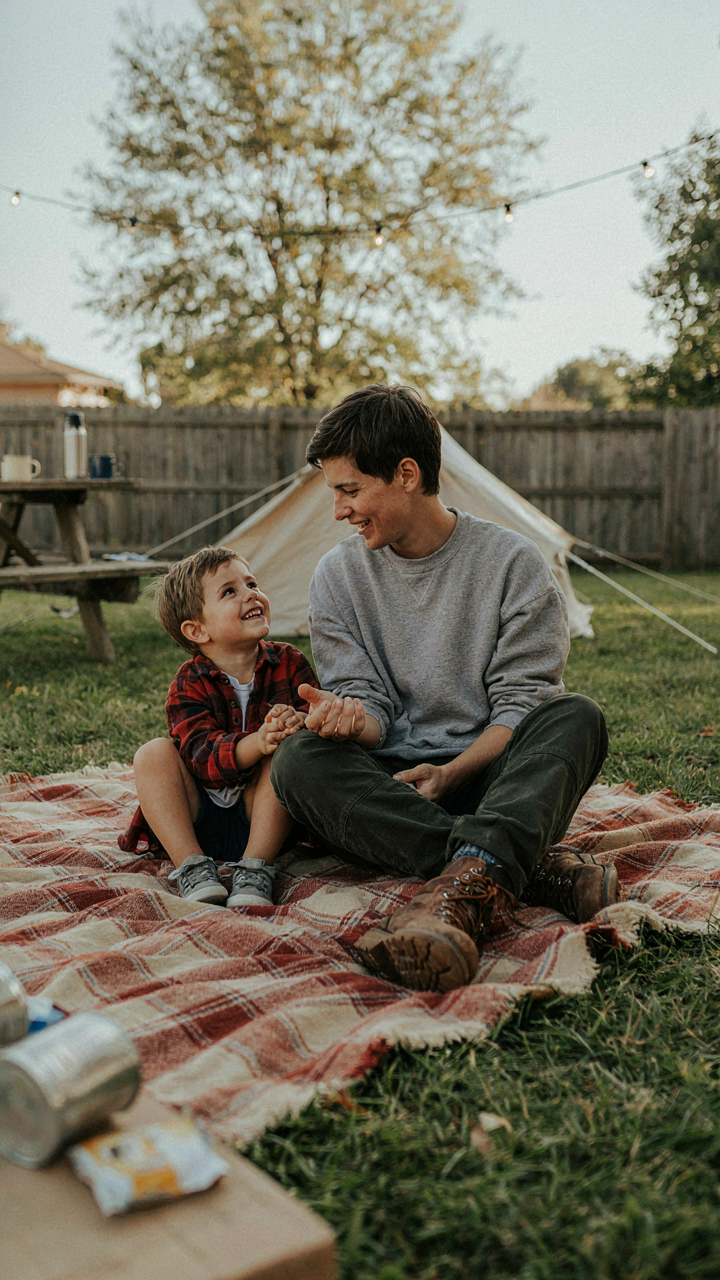
Stop waiting for the ideal weekend. Stop planning the flawless setup. Your family doesn’t remember the s’mores or the tent quality. They remember you chose them over your phone. They remember you stayed present when things got boring or messy. Text your family right now and pick a date. Imperfection is the only experience worth having.