The Less Is More Backyard Birthday Party Protocol

Invite Only People Who Actually Matter
You want permission to exclude people without feeling guilty about it. Here’s the mechanism: constraint forces intentionality. In economics, scarcity pricing works because limited supply increases perceived value. A backyard birthday brunch operates on the same principle. A six-person guest list where everyone talks creates more memorable moments than twenty people standing in clusters ignoring each other. Fewer bodies means better sightlines, easier food logistics, and actual conversation.
The real cost of a large guest list isn’t the food. It’s the attention tax. You’ll spend the entire brunch managing chaos instead of enjoying it. With eight to twelve people maximum, you control the energy. You know who’s coming. You prepare accordingly. You actually host instead of referee.
One Centerpiece Dish, Everything Else Minimal
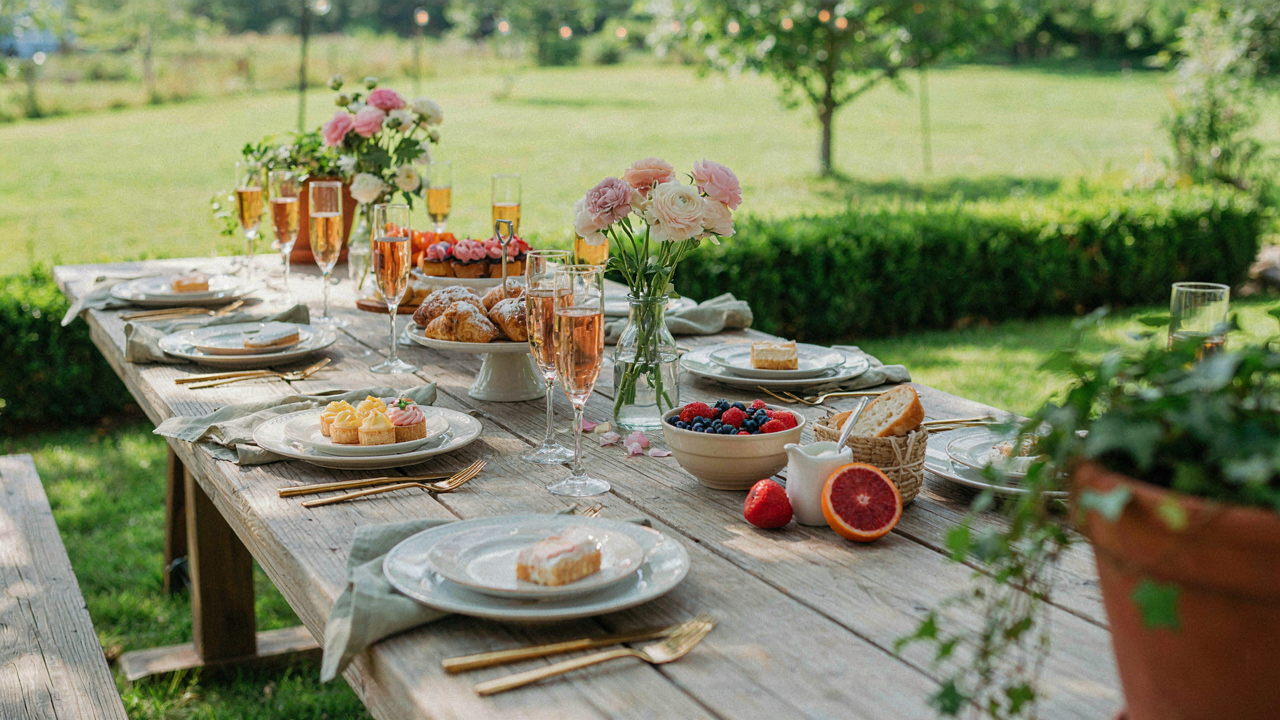
Everyone gives the same advice here: make a spread. That’s wrong. A buffet creates decision paralysis for guests and turns you into a short-order cook. Instead, build around a single anchor dish that’s substantial enough to justify a meal. Eggs benedict. A frittata. Smoked salmon and bagels. One thing you’ve practiced. One thing you can make ahead or assemble without breaking focus.
This doesn’t mean serve one item total. You add toast, fruit, a salad, coffee. But the psychological weight lands on one dish. Guests eat it. They feel satisfied. You spend your prep time perfecting one execution instead of half-executing five mediocre things. Make the signature dish sixty percent of what you serve, and you’ve solved the entire operation.
Brunch Party Outdoor: Strategic Site Selection
Where The Sun Actually Goes

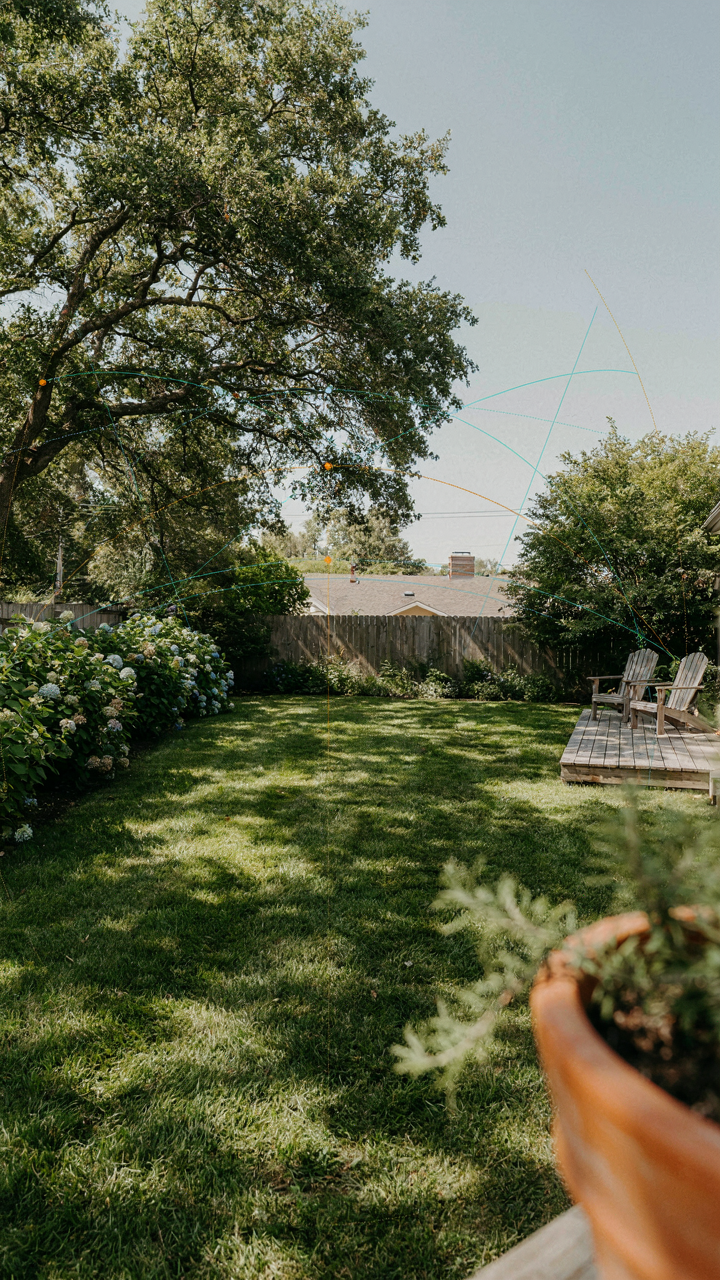
You want your guests comfortable so they stay longer and enjoy the food you spent time preparing. That’s not shallow—it’s logistics. Sun path mapping is borrowed from architecture and solar design: the sun’s trajectory changes by latitude and season, which means your backyard has a specific window of usable shade that shifts throughout the year. On your brunch date, the sun moves from east to west in a predictable arc. Map this before you set up.
Scout your space two weeks prior at the exact time your brunch starts. Identify where natural shade exists from trees, structures, or fences. Plan your seating so guests face away from direct sun and eating areas stay shaded during peak UV hours (10 a.m. to 2 p.m.). If shade is sparse, portable solutions like umbrellas or shade sails become non-negotiable. Test whether your planned spot actually works by standing there at brunch time on a similar day. Comfort drives engagement, and engagement drives whether people eat the food you prepped.
Wind Eats Your Logistics
Wind direction matters because it determines whether your carefully arranged food stays fresh, hot, or even on the plate. This is basic aerodynamics applied to a backyard. Wind carries heat away from hot dishes, accelerates evaporation from beverages, and can push lighter items off tables entirely. Check historical wind patterns for your region on your brunch date and time—weather services track prevailing winds by season and hour.
Position food tables perpendicular or parallel to wind direction rather than directly in its path. Place heavier platters and bowls downwind from lightweight items. If wind consistently blows from the north, orient your setup so the buffet table faces south and you’re not losing steam off coffee or scrambled eggs. Cover dishes with fitted lids or cloths between service rounds. The mechanism is simple: wind control directly extends your make-ahead food’s shelf life and prevents the frustration of resetting scattered napkins and plates every five minutes.
Brunch Party Ideas Decoration Outdoor: The Sensory Economy

What Actually Stops The Eye

You want people to notice your effort without feeling like you tried too hard. That’s the real tension. The mechanism is contrast: your brain locks onto breaks in pattern, not repetition. One focal point per zone beats scattered decorations everywhere. A clustered table display with height variation, intentional color, and breathing room commands attention. Scattered balloons and string lights become wallpaper your guests stop seeing after five minutes.
Identify three zones in your yard: entry, food station, seating area. Each gets one visual anchor. A tall floral arrangement at the food table, a banner or sign at entry, a centerpiece cluster at the main seating zone. Anchor means something taller than eye level or deliberately bold in color. This pulls focus without requiring volume. Your guests’ eyes land on these spots on arrival and during movement, which feels intentional rather than decorated.
Sound Design Shapes Behavior
Music isn’t background. In acoustic terms, it fills dead space and controls pacing. Silence makes people uncomfortable and kills energy fast. Most backyard brunches fail here because hosts default to streaming playlists with no strategy. Wrong tempo kills conversation and makes the vibe feel corporate or awkward. You control rhythm and mood through BPM and song selection.
Build a 90-minute playlist at 90-100 BPM for brunch. This tempo keeps energy steady without forcing people to shout. Include songs with clear vocals and minimal bass so conversation stays possible. Skip aggressive drops, heavy percussion, or anything that screams “party.” Start at lower volume during arrival and eating, increase slightly during the main social hour. Test your speaker placement beforehand so sound reaches all zones evenly, not blasting one area while the patio stays quiet.
The “Anticipation Engine” Make Ahead Method

Why You’re Actually Prepping Early

You want to look like you didn’t stress. The mechanism is simple: prep work done the night before removes the visible scramble on game day, which makes guests perceive you as someone who has control. Psychology calls this the “effort heuristic”—people judge competence by the absence of visible strain, not by the actual difficulty of the task. When you move prep to overnight, you shift from reactive mode to host mode by morning.
The real win isn’t just time saved. It’s mental space freed up. You’re not managing a task list while greeting people. Your cortisol drops. You actually enjoy the event. This compounds: relaxed hosts create better atmospheres, which guests remember. The prep work isn’t busywork—it’s the scaffolding that lets you perform at your best when it counts.
Overnight Dishes For Morning Ease
Make-ahead food strategy borrowed from commercial kitchens uses the principle of “mise en place”—everything in its place. In a backyard brunch, this means dishes that actually improve when refrigerated overnight hit harder than anything you cook fresh and rushed that morning.
- Strata or breakfast bake: Assemble the night before, refrigerate uncovered for 8 hours so bread absorbs custard, then bake while guests arrive. Temperature carries over from fridge to oven predictably.
- Cold grain salads: Mix grains, vegetables, and dressing 12-24 hours ahead. Flavors meld and grains fully hydrate. No last-minute assembly needed.
- Cured or marinated proteins: Bacon jam, smoked salmon preparations, or marinated chicken absorb flavors overnight. Texture and taste profile peak by morning.
- Fruit compotes or coulis: Cook fruit down the night before. Serve cold or gently warm. Volume reduces, sweetness concentrates, and you remove a hot-stove task entirely.
- Doughs and batters: Pancake batter, waffle batter, or biscuit dough mixed overnight actually produces better rise and texture. Cold fermentation breaks down gluten naturally.
The morning sequence becomes mechanical. Heat what needs heating. Plate what’s already done. This eliminates decision fatigue—you’re executing a predetermined order, not improvising while managing a crowd. Your only real job that morning is timing heat and presenting food with intention.
Brunch Party Outside: The “Flow State” Layout
Clear Zones Stop Decision Paralysis

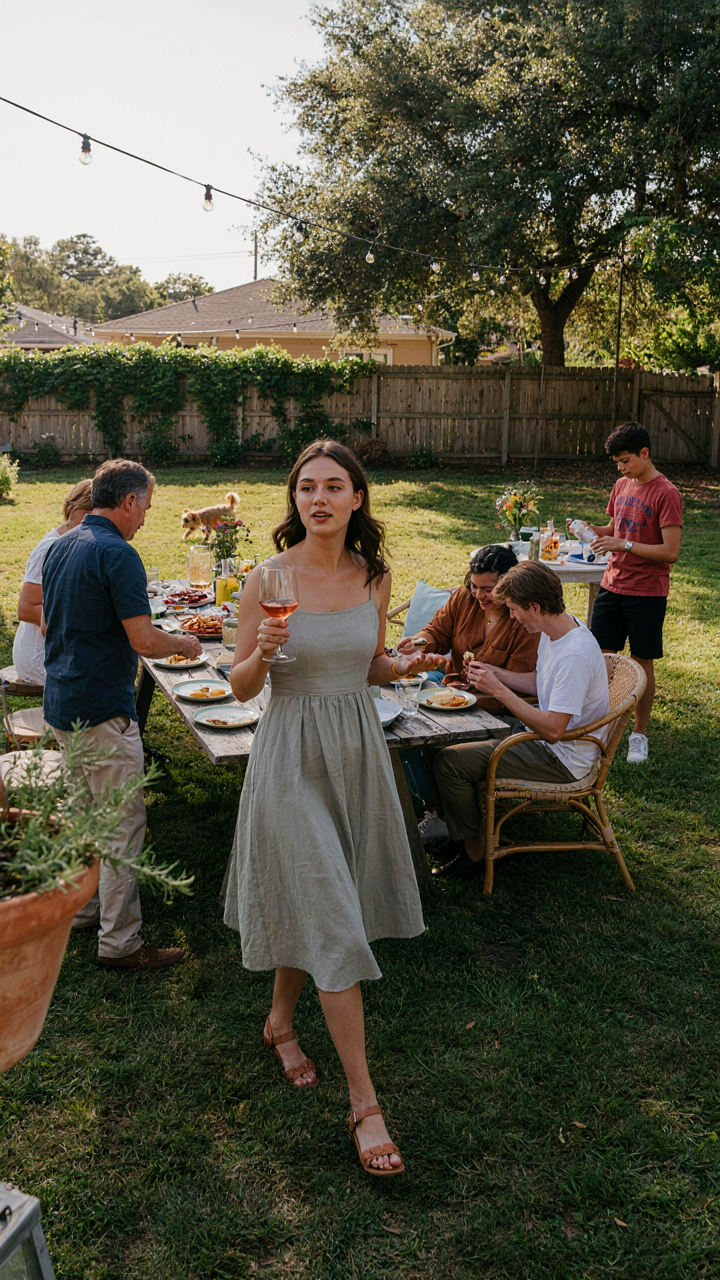
You want people to think you have your life together, so you obsess over the layout. Here’s what actually matters: your guests’ brains are running on glucose and caffeine. The moment they arrive, they’re deciding where to go, what to eat, and where to stand. Every decision point drains their mental battery. The mechanism is simple. Reduce friction by making the path obvious. Designate separate stations for drinks, food, and seating. Each station should answer one question only. No mixing. No ambiguity. No “is this where I grab coffee or where I sit.”
The practical setup works like a production line. Drinks station near the entrance, so guests grab something immediately upon arrival. Food tables perpendicular to foot traffic, forcing a natural pause point. Seating 10 to 15 feet away from food, creating a clear destination after eating. Don’t cluster everything. Clustering creates bottlenecks, and bottlenecks create the awkward standing around that kills momentum. Your guests move through the space like water finding the path of least resistance, not like they’re reading a map.
Geometry Creates Conversation
Social physics tells us that proximity and angle determine interaction. In crowd dynamics, facing angles matter more than distance. Two people standing side-by-side at 90 degrees talk more than two facing head-on at 2 feet. This applies to your brunch setup. Arrange tables so chairs angle toward each other at 45 to 90 degrees, not directly across. Avoid long rectangular tables that create hierarchies and dead zones. Round or clustered seating breaks eye contact tension and lets people join conversations naturally.
The seating math is brutal and honest. Groups of four to six chairs per cluster work. Larger groups exclude newcomers. Smaller groups feel exclusive. Place clusters so walking paths don’t cut through them. This prevents the awkward “excuse me” shuffle that kills conversation momentum. Leave small gaps between clusters, maybe two or three feet. Enough space for people to move and for new arrivals to choose a group without hovering. The goal isn’t mingling theater. It’s removing the friction that makes your guests feel like intruders in their own social space.
Backyard Brunch Birthday Party: Drink Station Dominance
Batch Cocktails Beat Individual Orders

You want guests to think you’re sophisticated without actually tending bar all afternoon. The real mechanism is volume throughput: one person making drinks one at a time becomes the bottleneck that kills your party’s momentum.
Batch cocktails apply assembly line logic to hospitality. Mix one large batch before guests arrive, chill it, and let people pour their own. A batch of mimosas (champagne plus fresh orange juice in a 1:1 ratio) takes five minutes to combine in a pitcher and serves twelve. Individual pours of the same drink take forty-five minutes spread across the event while you’re stuck holding a bottle.
- Mimosa batch: Combine champagne and fresh orange juice in equal parts the morning of the party, store in a pitcher with ice, refresh ice every ninety minutes.
- Sangria batch: Mix wine, brandy, fresh fruit, and sparkling water the night before, chill overnight, stir before serving, makes enough for fifteen to twenty guests.
- Bellini batch: Puree fresh peaches with a touch of lemon juice, combine with prosecco in a large dispenser one hour before guests arrive, keep on ice.
- Paloma batch: Combine tequila, fresh grapefruit juice, lime juice, and club soda in a large pitcher, pre-batch the non-carbonated elements, add soda water right before service.
- Bloody Mary bar base: Mix tomato juice, hot sauce, Worcestershire, and vodka in advance, let guests customize with celery, olives, and rim options at the table.
The math is simple: batch service scales without additional labor. Set the pitcher on a table with cups and a small scoop of ice. Guests help themselves. You stay free to cook, manage the space, and actually enjoy your own party instead of playing bartender for three hours.
Hydration Hubs Stay Invisible Until Needed
Most hosts forget that hydration stations do their job best when guests don’t think about them at all. Water, coffee, and simple juices sit separate from alcohol, so people can pace themselves without announcing it to everyone watching.
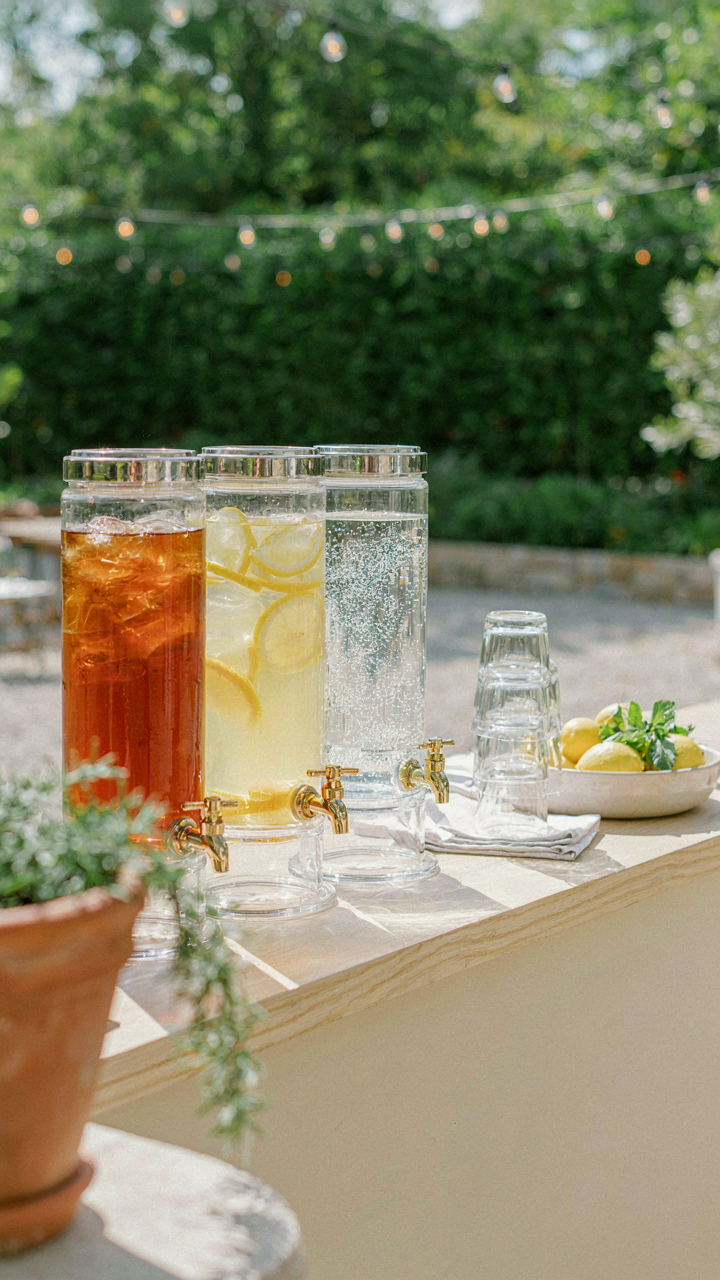
Set up three zones: cold water with lemon slices and ice in a large dispenser on the left side of your yard, hot coffee in a thermal carafe on a small side table near seating, and room-temperature fresh juice (apple or cranberry) in narrow glasses on the main serving surface. Water should be accessible from multiple angles so no line forms. Coffee stays away from the food table to avoid congestion. Juice functions as a palate cleanser and gives non-drinkers an option that feels intentional, not obligatory. Guests regulate their own intake without interruption, and you avoid the awkward conversation where someone asks for plain water and you scramble to find a glass.

Outdoor Birthday Brunch: The “Self Serve Sanctuary”
Make Food Accessible Without Hovering
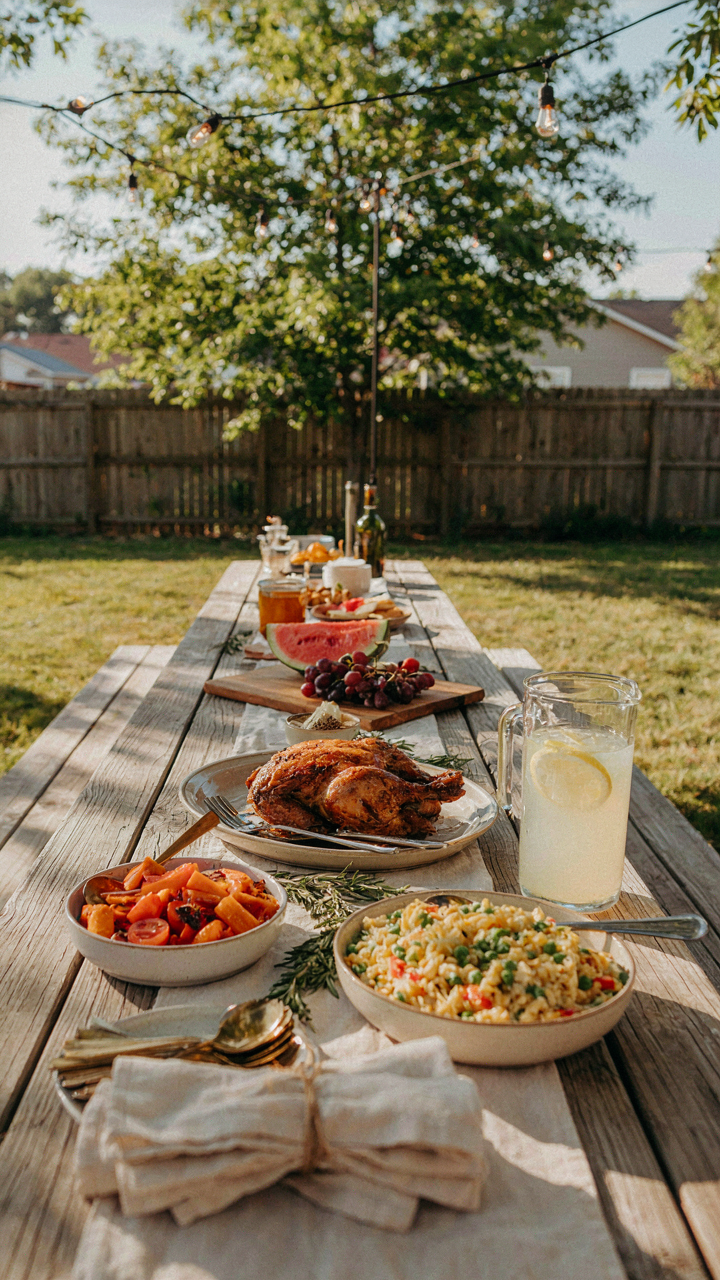
You want people to think you’re relaxed, but you’re actually terrified of looking like you didn’t plan. The mechanism is simple: self-service architecture removes the host from the transaction. In economics, this is called reducing friction in the supply chain. You apply it by positioning food and drinks where guests can reach them without asking or searching. Station the coffee setup on a side table with mugs stacked nearby. Place mimosa ingredients in one zone so people mix their own ratios. This isn’t laziness. It’s intentional design that signals competence.
When guests serve themselves, they stop waiting for permission. Bowls of fruit, platters of pastries, and chilled juices need clear sightlines and elbow room. The worst move is clustering everything near the kitchen door, which creates a bottleneck and forces people to hover. Instead, spread stations across the yard. One corner for hot items, another for cold drinks, a third for pastries. Make the layout obvious enough that no one needs instructions. The host who disappears to refill plates looks scattered. The host who set it up so guests never needed refilling looks in control.
Enjoy Your Own Party Like A Regular Guest
Nobody states this plainly: if you spend the brunch working, you’ve failed the event before it started. Your presence is the actual product your guests came for, not your labor. The play here is strict role separation. You greet people for the first fifteen minutes, then transition into guest mode completely. This means eating actual food, sitting down, and talking without jumping up every two minutes. Make ahead dishes handle this perfectly because nothing requires last-minute attention or plating.
Set a timer for any hot food that needs rotation or refresh, then leave your phone in your pocket while it counts down. When the timer buzzes, you handle it like a guest would at a restaurant: step away briefly, address it, return. Guests don’t notice a five-minute absence. They notice a host who’s tense and mobile all afternoon. You’ve already done the real work by making dishes that survive room temperature and by designing the setup so refilling happens by default, not by demand. The brunch works when you’re sitting at the table with everyone else.

Brunch Outside Ideas: The “Weather Resilience” Contingency
Creating Cool Zones With Shade
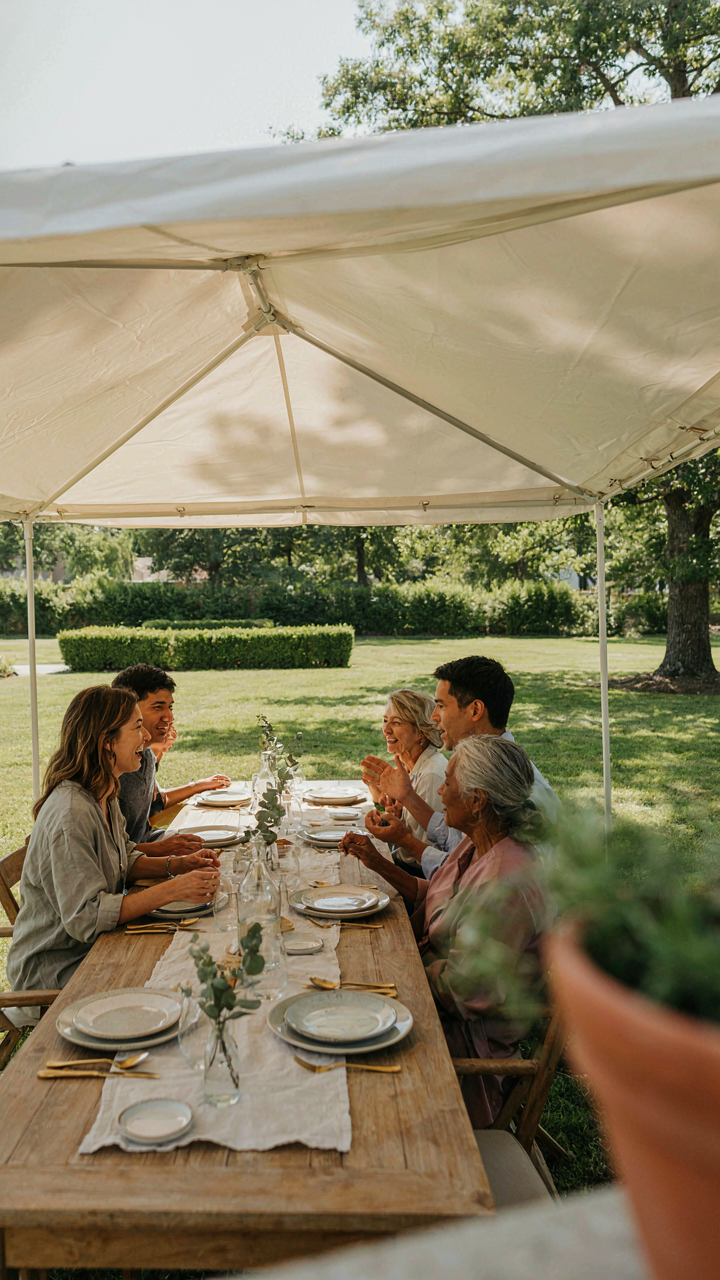
You’re worried about looking unprepared if the sun turns your backyard into a griddle. Here’s the mechanism: shade structures operate on thermal mass principle from architecture. They intercept direct radiation before it hits skin or food, dropping ambient temperature by 10-15 degrees Fahrenheit in the shaded zone. This isn’t decoration. This is temperature control.
A 10×10 pop-up canopy anchored at all four corners handles 95% of backyard brunches. Position it northwest to southeast, blocking afternoon sun while preserving morning light. String shade cloth over a wooden frame if you want permanence. The goal is creating distinct cool zones where guests naturally migrate to eat and linger. Measure your yard’s sun pattern the day before. Note where shade exists at 10 AM, noon, and 2 PM. That’s where your food stations go.
Executing An Indoor Pivot When Rain Hits
The standard advice here is wrong. Most people say “just move everything inside if it rains.” That’s vague and creates chaos. What you actually need is a sequential transition protocol triggered by specific weather thresholds, not emotion or guessing.
If rain begins more than 60 minutes before the scheduled start, cancel or postpone entirely. If rain arrives within 30-60 minutes of start time, move all food preparation and setup indoors, then serve guests in a staged indoor-outdoor flow. If rain starts mid-brunch, execute immediate shelter for food and transition to standing-room indoor service. Your contingency isn’t a backup plan. It’s a predetermined decision tree with time triggers that you decide before guests arrive.

Garden Themed Brunch: The “Nature Integration” Imperative
What You Already Have Works Better
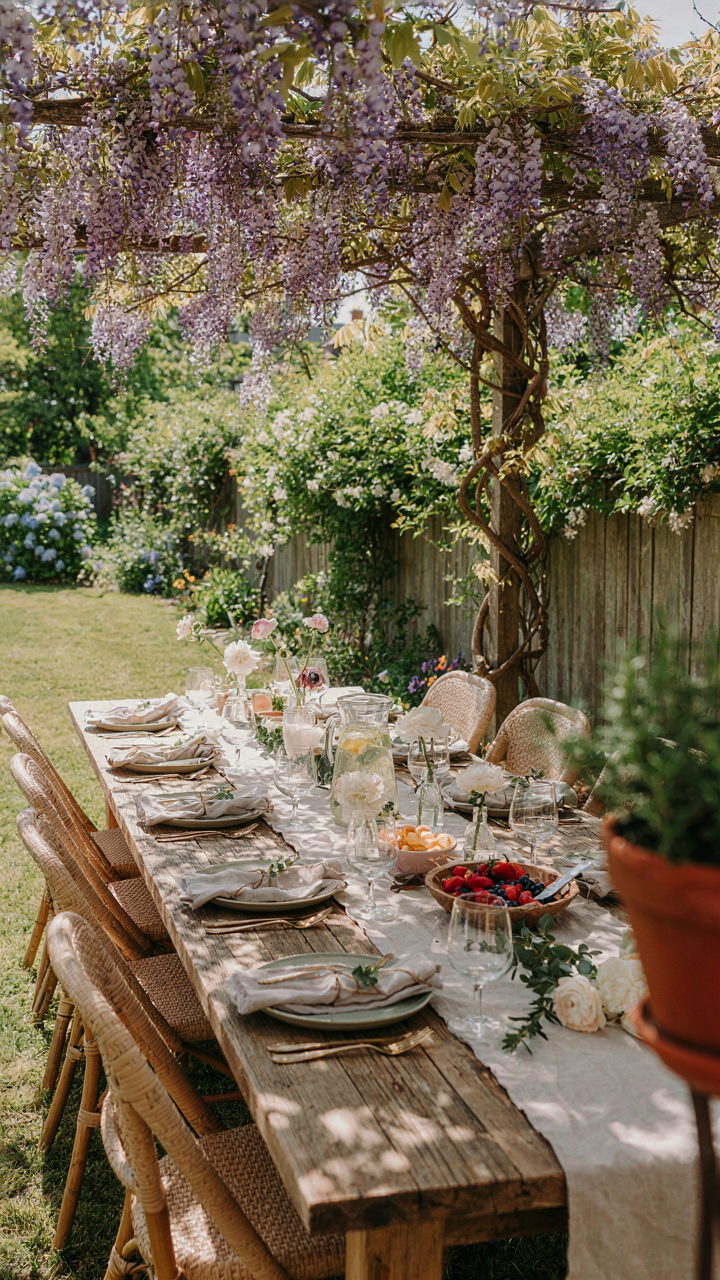
You want people to think your setup is effortless because effort signals desperation, and that kills the vibe before guests arrive. Here’s the mechanism: existing plants and trees already have visual weight and texture your bought decor can’t match. Landscape architects call this “site analysis”—using what’s already present as your design foundation instead of fighting it. Your mature trees, hedges, or shrubs are the anchor. They frame the space, cast natural shadows that create depth, and require zero maintenance during the event. Stop trying to make an empty yard look intentional. Start making an inhabited yard look curated.
The difference between a yard that feels dressed up versus a yard that screams “I tried too hard” lives in this one choice: do you add to what exists, or do you feature what exists? Existing flora solves your biggest problem—visual interest without adding surface clutter. Your guests see a garden that happens to have a brunch, not a brunch that borrowed some plants. Use tree trunks as table backdrops. Use shrub lines to define zones. Use mature growth to block sightlines to neighboring yards. This is not decoration. This is structure.
Restraint As The Design Move
Most backyard brunch advice tells you to “add pops of color” or “create focal points with decor.” That’s backwards and makes yards feel busy. The real move is constraint: pick one supplemental element and let existing nature do the rest. A single strand of bistro lights through tree branches. One potted plant series along a table edge. Small hurricane candles matching your table runner. Nothing more. Industrial designers call this “signal-to-noise ratio”—every addition either communicates something or it clutters. Your job is cutting everything that doesn’t earn its place.
When you remove the urge to fill every gap, the yard gains clarity. Guests notice the mature oak, not competing with ten different centerpiece styles. They see open ground and breathing space. They register calm, not stimulation. The protocol: one week before, walk your yard and remove anything that doesn’t frame existing flora or serve the food setup. That means one decorative decision, maximum two. Your make-ahead food sits on tables the plants have already made beautiful. Let the infrastructure work for you instead of against you.
Backyard Brunch Ideas: The Post Party Decompression Protocol
Station Your Waste Before Guests Arrive
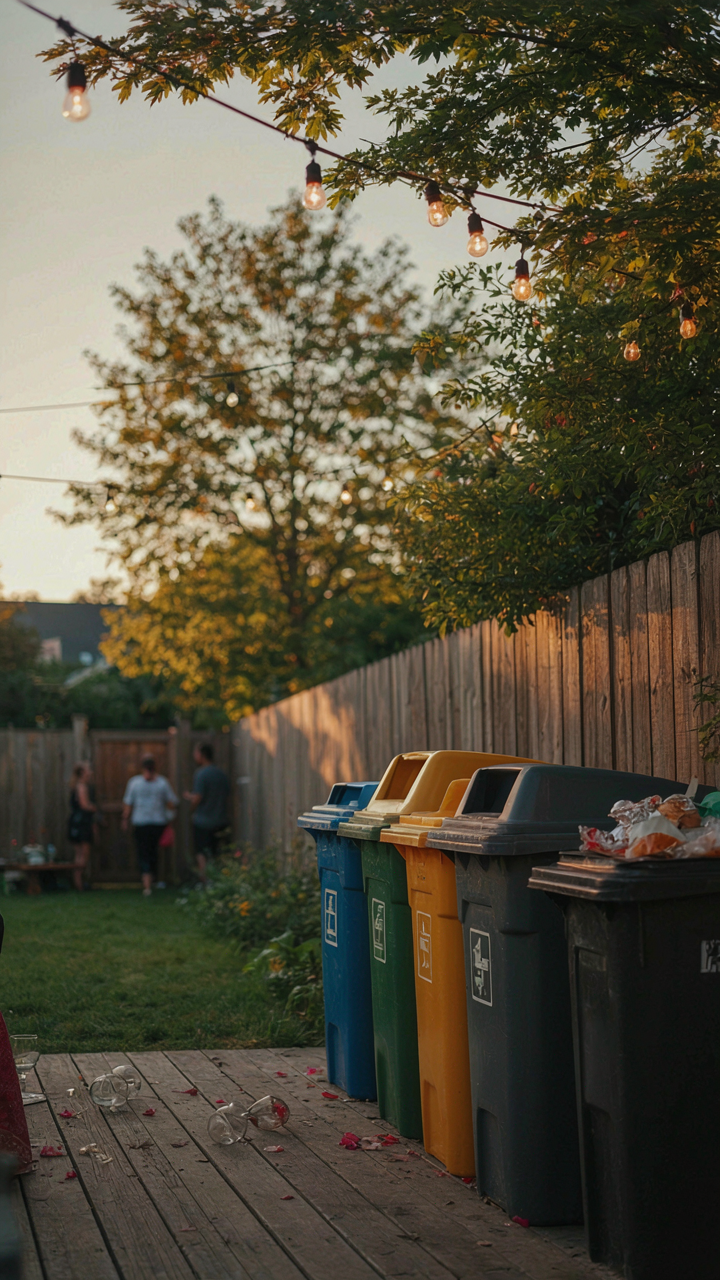
You want people to think you’re organized without watching you scramble. That’s the real fear underneath this section. The mechanism is simple: humans follow visible systems. Place labeled bins at the exit point of your party zone, not hidden behind the garage. Guests will use them because the friction to do so vanishes. This cuts cleanup time by roughly half because you’re not sorting through mixed waste later.
Set up three stations minimum: compost, recycling, and trash. Position them near where people naturally leave the eating area, not near the entrance. Most people won’t search for a trash can. They’ll hold their plate and look for the nearest bin. Your system only works if it meets them where they already are. The difference between “cleanup takes four hours” and “cleanup takes ninety minutes” lives in this single decision.
Assign Tasks Before The Party Starts
Common advice says delegate during cleanup. That’s wrong. Assigning tasks mid-party, when people are tired and thinking about leaving, generates friction and resentment. Asking someone to help when they’re already mentally checked out feels like a request, not a collaboration. Tell them three days before the event. Give them one specific role: manage the coffee station, monitor the mimosa pitcher, clear plates every twenty minutes. One task beats vague help.
Use a group text or simple email to confirm roles twenty-four hours before. People need the reminder. State exactly what time help is needed and for how long. “Cleanup from 2 to 3 PM” works. “Stick around to help” doesn’t. When people know their role and duration beforehand, they either commit or decline early enough for you to find someone else. You avoid the awkward ask entirely.
The Real Obstacle Isn’t Your Budget Or Time, But Your Addiction To Unnecessary Complexity

You’ve convinced yourself a backyard birthday brunch demands perfection. It doesn’t. Stop adding dishes nobody asked for. Stop buying specialty equipment. Pick three make-ahead foods, set them out, and let people eat. The real move is removing decisions, not multiplying them. Today, text one friend and ask what two things they actually want at a brunch. Build your menu around their answer. Constraints breed clarity, and clarity breeds execution.