Beyond Pinterest: The “Anti Theme” Adult Birthday Party

What You’re Actually Avoiding
You want people to remember this party for the right reason, not dismiss it as a costume-box cliché. The mechanism is simple: rigid themes signal low effort disguised as effort. They’re scaffolding for hosts with no conviction. Adults smell the difference between a party built around a real constraint and one assembled from party supply store inventory.
Stop chasing the “Roaring Twenties” or “Tropical Escape” templates that float through Pinterest. These work against you because they demand guests to perform a role the moment they arrive. Everyone shows up as themselves. A theme forces them to choose between authenticity and compliance. You lose both.
Atmosphere Built On Constraint, Not Costume
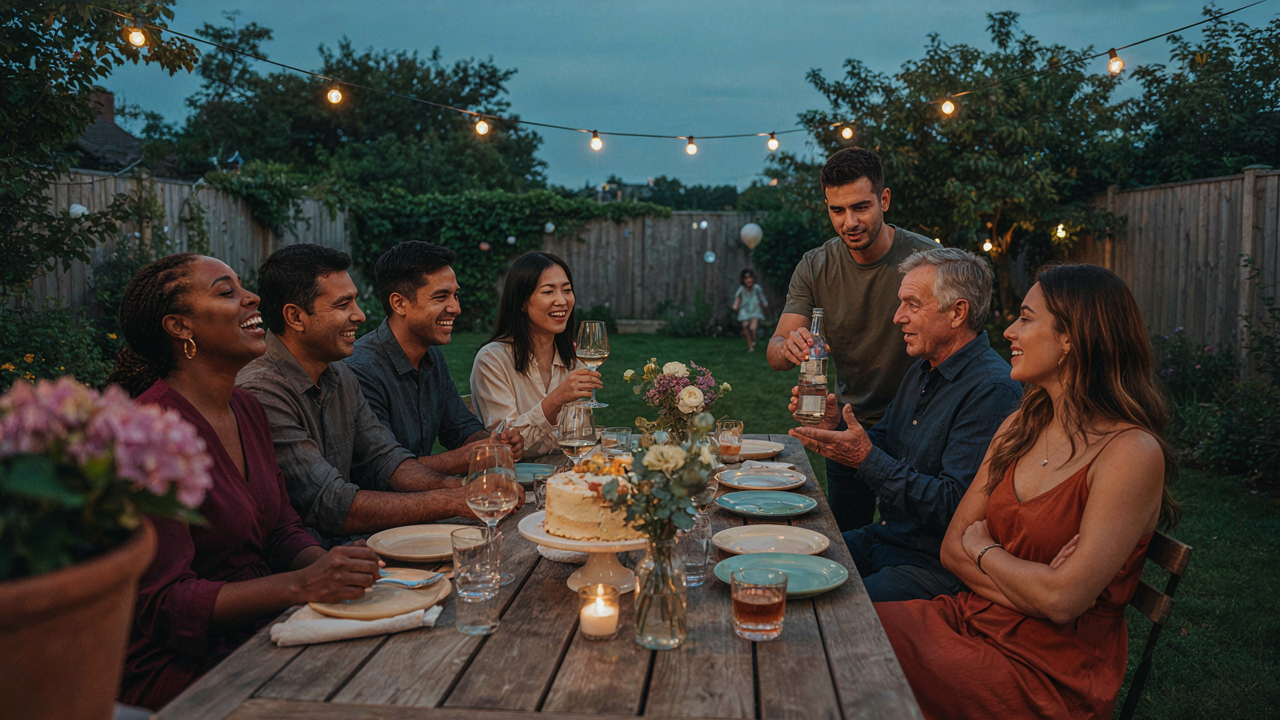
Use systems thinking here. In constraint-based design, you don’t add elements; you remove them strategically. A backyard birthday for adults works best when three variables are locked down tight: lighting, sound, and sightline. These create the actual experience. The “theme” becomes invisible but shapes everything guests feel.
Warm overhead string lights at dusk shift perception more than a themed tablecloth ever will. A curated playlist with one clear vibe beats a DJ following a theme template. Removing visual clutter from the backyard forces guests to focus on conversation and each other. These aren’t decorations. They’re the operating system the party runs on.
The Experience Economy: Why Your Backyard Birthday Needs A Narrative
Build A Through Line For The Night

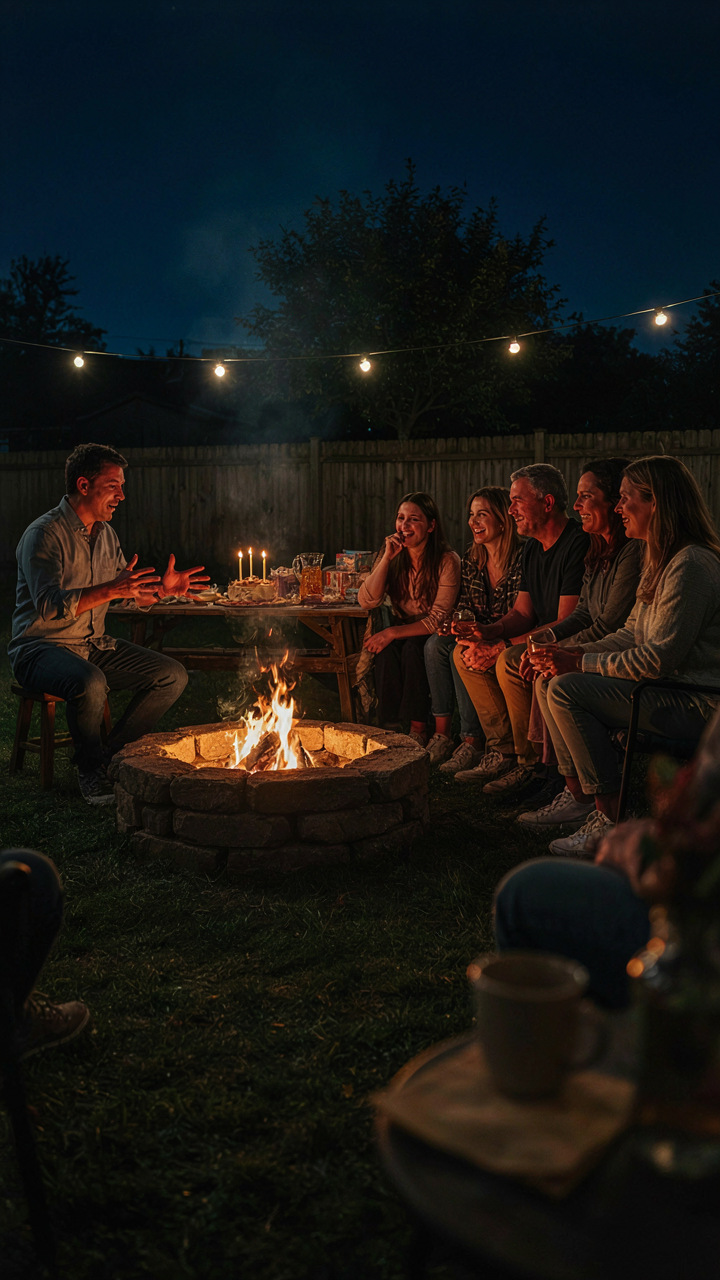
You want people to remember this party and talk about it, which means you need them to feel like something happened, not just that they showed up. The experience economy operates on a simple principle: people pay for and remember moments that have structure and progression, not static environments. Your backyard needs a narrative arc with a clear beginning, middle, and end.
Start by choosing one theme or loose story that threads through the entire evening. This isn’t about costumes or forced roleplay. It’s about giving your guests a reason to move through the space and interact differently at each point. A “travel through decades” party moves guests through different music eras and décor zones. A “progressive dinner” shifts food and conversation focus every hour. The mechanism is simple: progression creates memory. Without it, people stand in clusters, check their phones, and leave forgetting what they did.
Make Guests Part Of The Action
The difference between decoration and experience is whether your guests remain audience or become participants. Most backyard birthday advice stops at “put up lights and food”—which creates a backdrop, not a memory. Interactivity doesn’t mean party games that make adults uncomfortable. It means designing stations, transitions, or challenges that pull people into the story you’ve built.
Set up one focal activity that directly connects to your narrative. If your theme is a “year in review,” create a photo wall where guests contribute their own moment from the past year. If it’s a travel night, have a passport where people collect stamps by visiting different zones. If it’s a milestone birthday, a live interview or roast rotation keeps energy focused. The action forces social interaction beyond small talk and gives everyone a shared reference point by the end of the night.
Outdoor Party Setup Ideas: The “Less Is More” Landscape
Light Creates Behavior, Not Just Ambiance

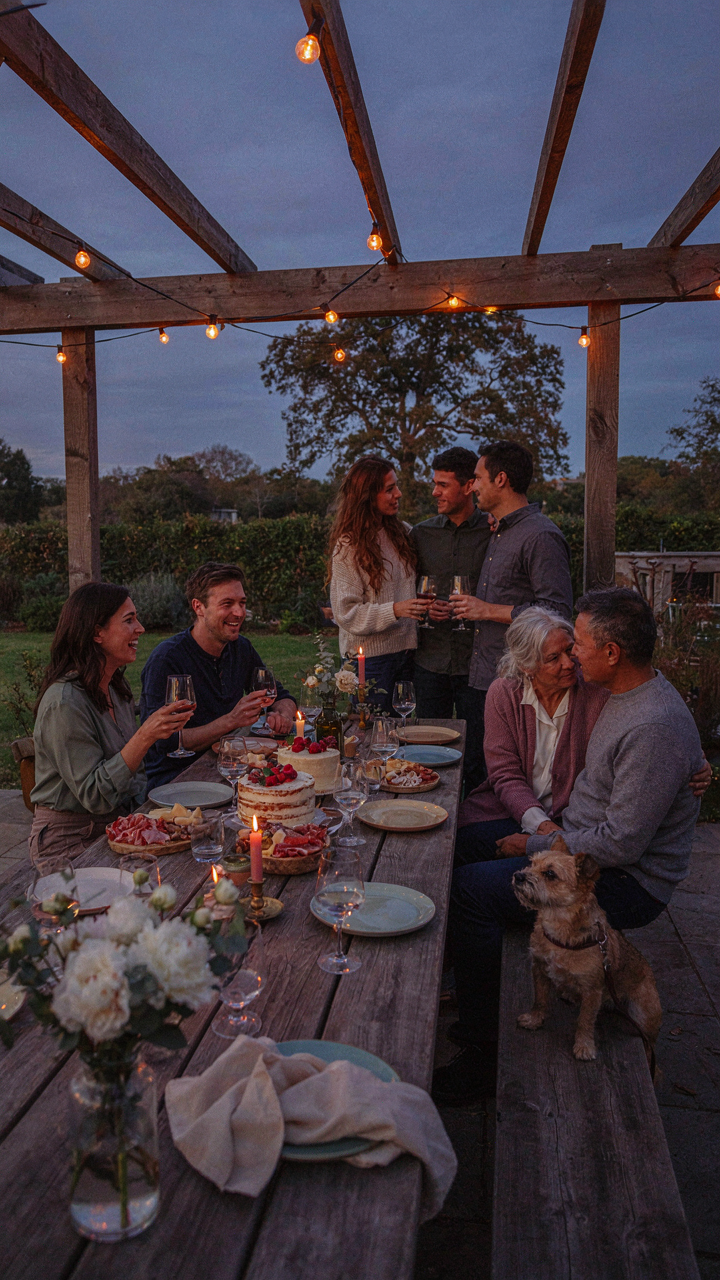
You want your backyard to look intentional so people assume you’re worth their time. Here’s what nobody says: lighting is a control mechanism from theater design. Dim, warm light physically slows people down and clusters them closer together. Bright overhead light spreads people out and makes them squint at their phones. String lights at eye level or slightly above work because they create horizontal reference points that make the space feel contained and deliberate, not like you just left the porch light on.
The mistake is treating lighting as decoration. Install warm bulbs on a dimmer before the party, not scrambling with a ladder while guests arrive. Aim for 20 to 40 foot-candles of light in your main gathering zone, which is bright enough to see faces but dim enough that nobody feels exposed. Skip uplighting that washes trees unless that’s your actual aesthetic. One string line or a few strategic standing lamps will do more work than scattered fixtures everywhere.
Seating Patterns Drive Conversation Flow
Most people buy too many chairs and arrange them in rows or circles like a waiting room. Real flow comes from removing the option to sit passively and face outward. Backyard parties stall because people default to perimeter positions where they watch instead of participate. Use height variation: a bench, some low stools, a couple of proper chairs. Position seating in clusters of three to four, not eight. Angle them toward each other, not toward a focal point.
The rule is simple: every seat should have a view of either one or two other seats, never more than that. This forces eye contact and makes splitting conversations feel natural instead of rude. Leave gaps between clusters so people can move through without squeezing past legs. If someone wants to stand or grab a seat later, the density wasn’t high enough to begin with. The actual mechanism is scarcity. When seating is limited, standing becomes a choice, not a failure to find a spot.
The “Scarcity Principle” Bar: Elevating Your Drink Offerings
Quality Over Quantity Signals Intention

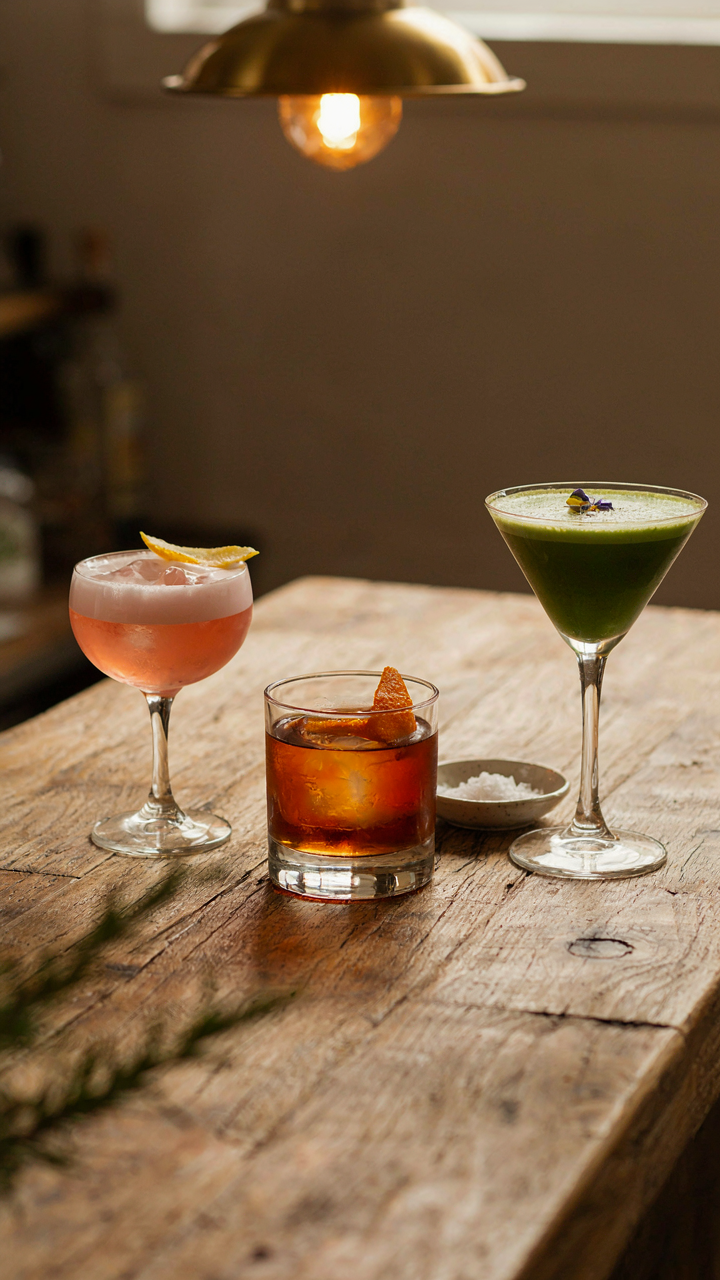
You want people to think your party cost more effort than it did. That’s the real driver here. Economics calls this scarcity: when options shrink, perceived value rises. Offer three excellent drinks instead of eight mediocre ones, and guests assume you curated the experience deliberately rather than grabbed whatever fit in the cooler.
The common advice says stock variety. Wrong. Variety signals indecision and overhead. A intentional bar—craft cocktail, premium beer, natural wine—tells guests you thought about what they’d actually want. Preparation beats abundance. Guests remember the one drink you made well, not the six you didn’t think through.
Glassware And Setup Create Luxury On Demand
Presentation mechanics matter more than ingredient cost. Use matching glasses, not a stack of mismatched cups. A simple wooden serving surface, ice bucket, and garnish station transform a backyard into somewhere guests feel considered. The setup does the selling work before anyone tastes anything.
Proper glassware costs less than most people think. Coupe glasses run five to ten dollars each if you buy a basic set. The payoff is immediate: a drink served in the right vessel tastes different to the brain before the mouth even registers it. Station everything at a defined bar point so guests can’t miss the intention.
Backyard Birthday Cuisine: Ditching The Buffet Line
Make Food A Participation Event

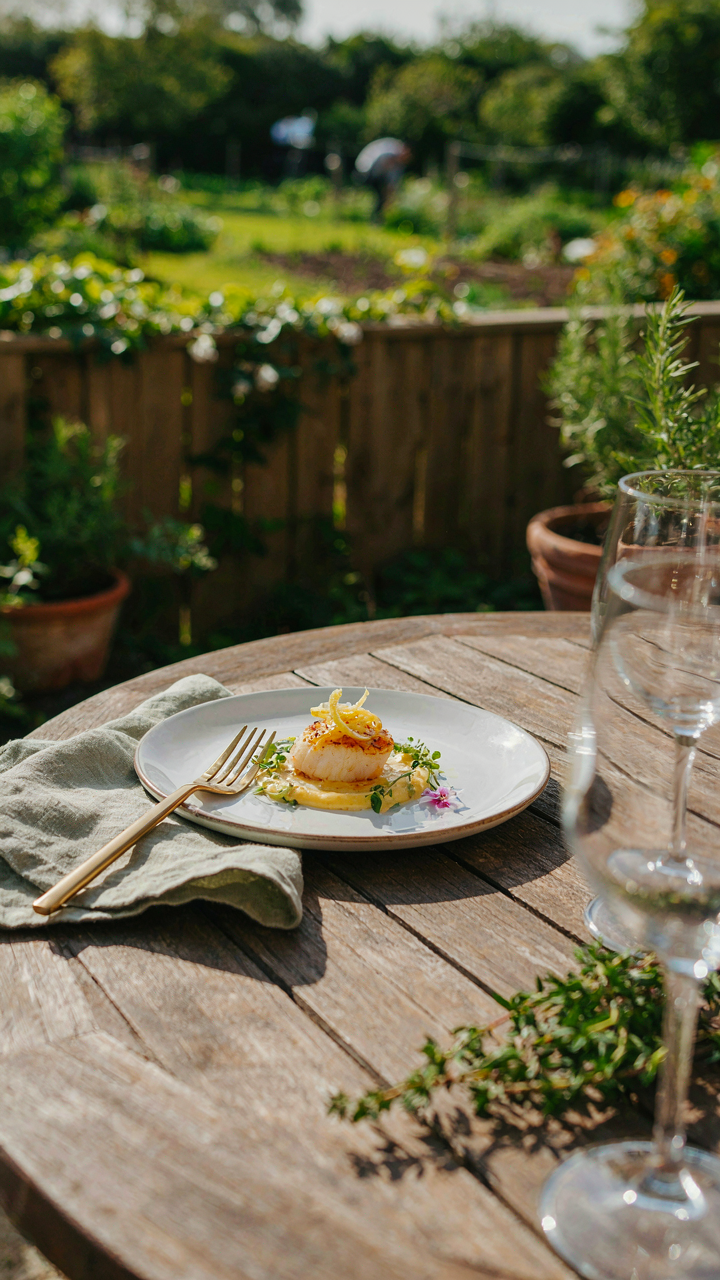
You want people to remember this party was different from every other one they’ve attended, and food is where you prove it. The mechanism here comes from behavioral economics: people assign higher value to experiences they help create. A buffet line is consumption. Hands-on food is participation. Set up a taco station, a charcuterie build-your-own, or a pizza assembly setup where guests construct their own plate. This shifts the social dynamic from standing around eating to actively doing something together in small groups.
The logistics are cleaner than you think. You prep components in advance, arrange them on a table with clear instructions, and let people move through at their own pace. No timing issues. No cold food. No watching a single person hold up the line while they decide between potato salad and coleslaw. Guests eat when they’re hungry, chat while they build, and the food becomes a reason to interact instead of an obstacle to conversation.
Build Around One Dish Worth Remembering
Most backyard birthday advice tells you to make “a variety of options” so everyone finds something they like. That’s wrong. The real principle is culinary focus: do one thing so well that it becomes the event’s centerpiece. Pick something that takes genuine skill or time, not something anyone can grab at a grocery store. Think smoked brisket, fresh pasta made that afternoon, or slow-roasted lamb. Something that makes people ask how you did it.
This single standout dish solves multiple problems at once. It gives you a clear anchor for the menu instead of scrambling to fill gaps. It reduces your actual cooking burden because everything else can be simple sides or store-bought. It creates the social moment you’re after because people remember the food they couldn’t have made themselves. Your job is prep work in advance, then execution during the party. Have that one dish resting, plated, or ready to serve within thirty minutes of guests arriving.
The Social Feedback Loop Protocol For Guest Engagement

Build Momentum Through Designed Interaction

You want people to feel like something is happening at your party, not just standing around. That’s the real fear underneath caring about this section. Here’s the mechanism: in cybernetics, feedback loops are how systems self-regulate and amplify. At an adult backyard birthday, you create positive feedback when one interaction triggers another, which triggers another. A guest laughs at something, others notice, they join in, the energy compounds. You’re not manufacturing fun. You’re designing the conditions where small social signals reinforce themselves into genuine momentum.
Most advice says “just have good food and drinks.” That’s incomplete. Food is table stakes. What matters is architecting moments where people witness other people having a good time, then want in. Start with a single high-energy activity early that visibly draws people. Once three to four guests engage, others observe the feedback loop and join. The loop only works if new arrivals see evidence of ongoing engagement, not isolated clusters sitting quiet.
Recognize And Amplify What’s Already Working
Stop trying to control the party’s direction. Parties that feel alive are parties where you notice what guests naturally gravitate toward, then remove friction from it. If four people are asking each other questions about a topic, lean into that instead of redirecting everyone to your planned activity. People are social creatures seeking connection, not entertainment consumers waiting for you to deliver it. Your job is pattern recognition, not forced curation.
Watch for emergent conversational patterns in the first thirty minutes. Someone tells a story that lands. A guest discovers they share an obscure interest with another. Two people bond over something you didn’t plan. The moment you spot these threads, protect them. Seat those people near each other if they move locations. Keep distractions minimal around that conversation zone. Reference their story later so others lean in. You amplify emergent patterns by noticing them first and removing obstacles second.
Outdoor Party Decorations Backyards: The Art Of Subtle Enhancement
Work With What Already Exists

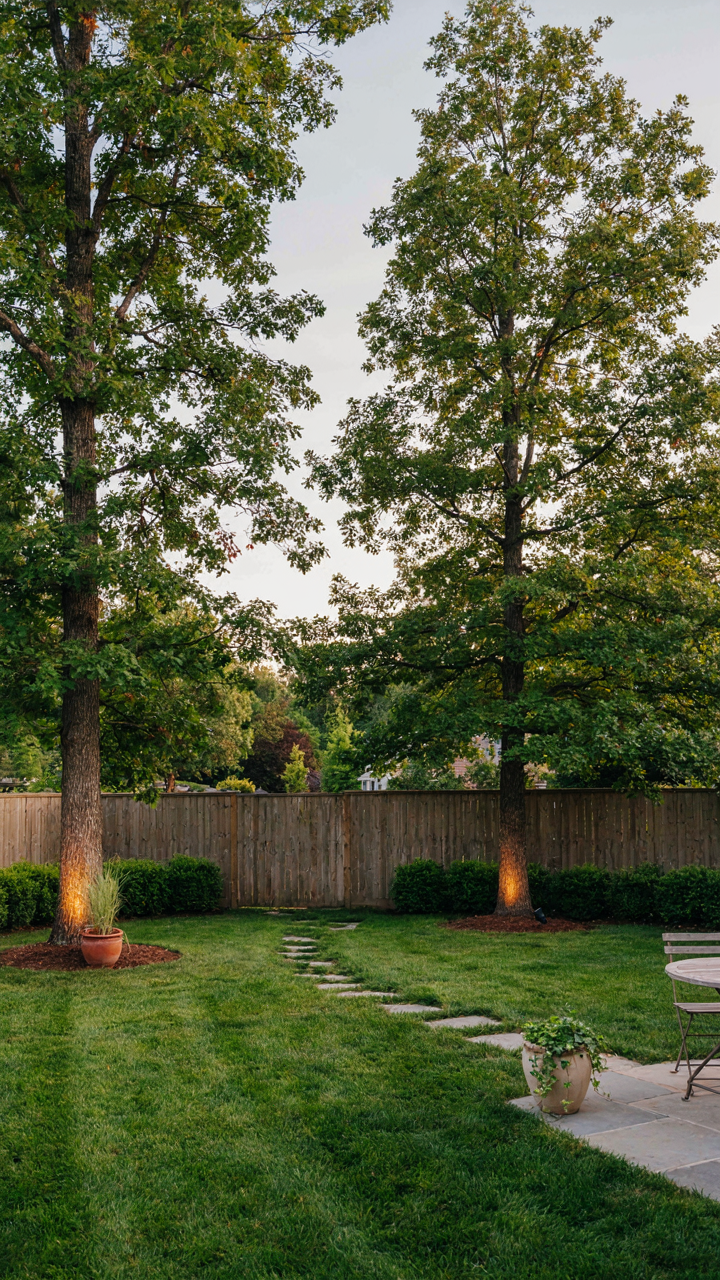
You want people to think you didn’t try too hard. That’s the real fear underneath all decoration talk—looking desperate or overdone. The mechanism is constraint. In architecture, constraint forces intentional design. You don’t decorate a backyard by fighting it. You amplify what’s already there. A mature tree becomes structure. Existing fencing becomes backdrop. The grass line becomes a natural stage. Most people default to buying decorations because they think the space is blank. It isn’t. The space already has bones.
Start by walking the yard and naming what’s fixed. Trees, elevation changes, existing shade patterns, fence lines, hardscape. These become your design anchors. You’re not adding decoration to emptiness. You’re editing the space that exists. String lights in a tree land differently than lights on a pole. A table positioned near the fence perimeter feels intentional instead of floating. This shift from addition to curation cuts your decoration budget by half while making the space feel designed rather than dressed up.
One Thing Worth Looking At
The scattering instinct kills adult parties. You see this everywhere: lights in three zones, decorations on four surfaces, a banner here and a centerpiece there. Visual noise reads as anxiety. Instead, create one clear focal point. This comes from graphic design—the principle of hierarchy. Every view from every angle should lead somewhere. Not multiple somewheres. One somewhere.
Choose one area that gets full attention. A decorated table at the party’s center. A statement arch or structure. A lit perimeter of the main gathering zone. Everything else stays minimal or neutral. Guests navigate toward the focal point naturally because your eye design pulls them there. The rest of the yard recedes. This approach requires saying no to seventeen decoration ideas and committing to one. That discipline is what separates an adult party from an event that looks desperate to fill space.
Adult Birthday Party Themes: The “Un Theme” Approach To Entertainment

Let The Music Breathe

You want a theme because you think it solves the problem of awkward silence. It doesn’t. The real mechanism at work here is energy management, borrowed from audio engineering: you need dynamic range, not static volume. Most playlists flatten the night into one emotional tone. That kills momentum.
Start the evening with instrumental or ambient music at low volume while people arrive and eat. This isn’t background noise—it’s permission to talk without shouting. As the crowd settles, shift to music with recognizable vocals and faster tempo. Around hour three, when energy dips naturally, introduce something that demands attention: a song people know, a beat that moves bodies. End the night quieter again as people wind down.
The evolution matters more than the choice. You’re not entertaining with music. You’re steering the room’s nervous system through the hours. Assign someone to handle transitions, or use a simple rule: switch every thirty to forty minutes based on what’s actually happening in the yard, not a preset schedule. The playlist becomes a tool that responds to the room, not a backdrop that plays regardless.
Create Reasons To Talk Without Forcing It
The conventional move is icebreaker games. Wrong. They signal that natural conversation can’t happen, so we need scaffolding. That kills the vibe for adults. What works instead is creating structural reasons for small groups to form and dissolve organically.
Set up distinct activity zones in your yard: a food and drink station, a seating cluster with a fire pit or heater, a lawn game area if people gravitate toward it. Don’t announce zones. Don’t herd people. Just make them visible and accessible. People naturally cluster around things with purpose. A group playing cornhole talks differently than a group standing in the middle of the yard. Conversation emerges from proximity and shared focus, not from forced prompts.

Position yourself as a connector between zones, not a game master. When you notice two clusters, mention a shared reference between them. Introduce someone from one group to someone from another based on something specific you know about them. The party self-organizes when you remove the pressure to perform entertainment. Check in every thirty minutes, add people to conversations that need expansion, and let weak clusters dissolve without intervention.
The Post Party Decompression Strategy
Make Cleanup The Closing Act
You want cleanup done fast so you don’t spend the next week staring at red cups in your yard. The mechanism is simple: cleanup momentum dies the moment guests leave. Energy flattens. You’re tired. Suddenly that pile of plates feels like a personal failure.
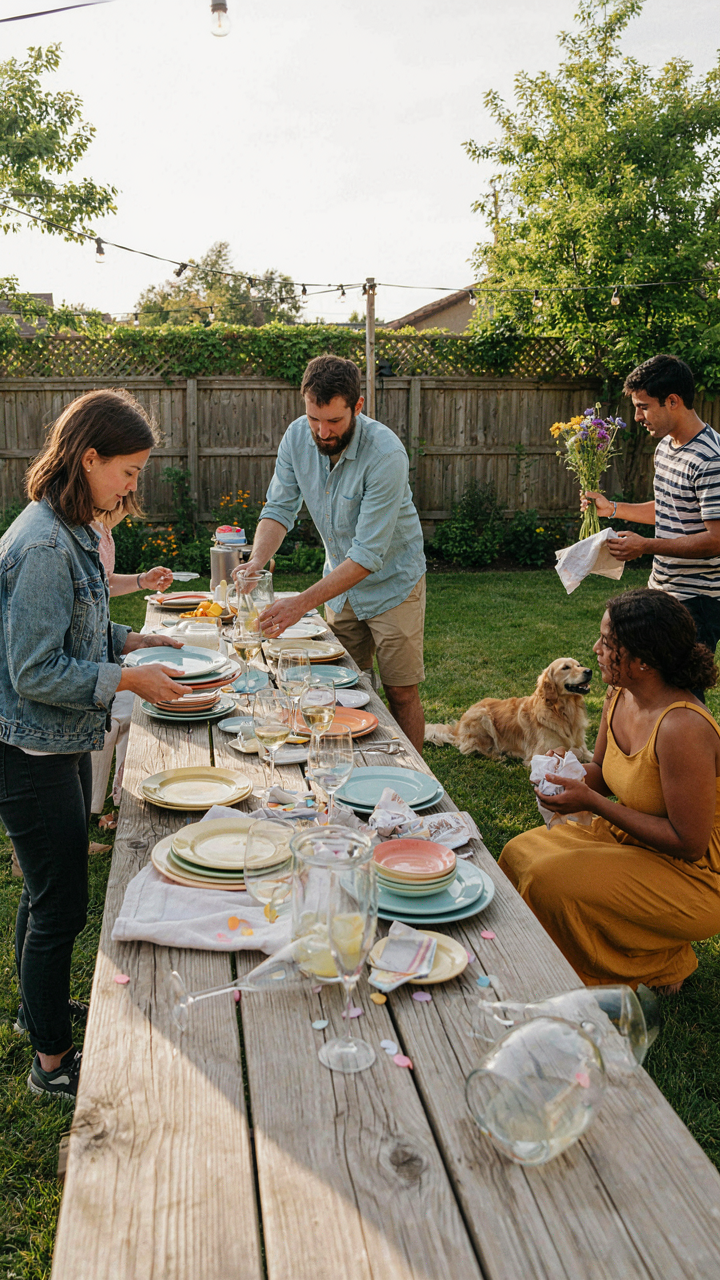
Design cleanup into the party’s final 30 minutes while people are still present. Assign zones to small groups instead of soloing it after everyone leaves. Use disposable plates and cups from the start, not as a sign of laziness but as a time-management tool. Clear tables in stages as courses finish, not all at once at the end. You’ll have 80 percent done before the last guest walks out.
The Actual Measure Of Success
What matters after an adult backyard birthday isn’t whether you counted heads or tracked who stayed longest. You’re confusing event metrics with actual outcomes. Real success is whether someone had a conversation they didn’t expect to have, or whether you learned something new about a person you’ve known for years.
Run a basic mental audit 24 hours later: did anyone say something to you they wouldn’t have said anywhere else? Did you have one conversation that felt different from the usual surface talk? Write down one specific moment per person if you can. That becomes your benchmark for whether the party actually worked, which determines whether you do this again.
The Only Real Party Foul Is Caring What Others Think

Most adults throw boring parties because they’re terrified of looking stupid. They play it safe. They order catering. They follow the script everyone else follows. But you’re building something different. Stop asking permission from people who aren’t even coming. Text three friends today and lock in a date for your backyard. Make one decision that actually excites you instead of one that looks good in photos. Your party won’t be memorable because it’s perfect. It’ll be memorable because it’s unmistakably yours.