
The Un Setup Why Your Campervan Office Needs Less Not More
Minimalist Gear Choices Maximum Impact
You want a setup that looks capable so people take your work seriously. Here’s what actually matters: constraint is a filtering mechanism. Every tool you add creates maintenance overhead, decision fatigue, and physical clutter that degrades focus. Van life forces this truth faster than any office ever could. You have limited power, limited space, limited weight capacity. Those constraints aren’t obstacles. They’re your screening criteria for what genuinely works versus what you thought you needed.
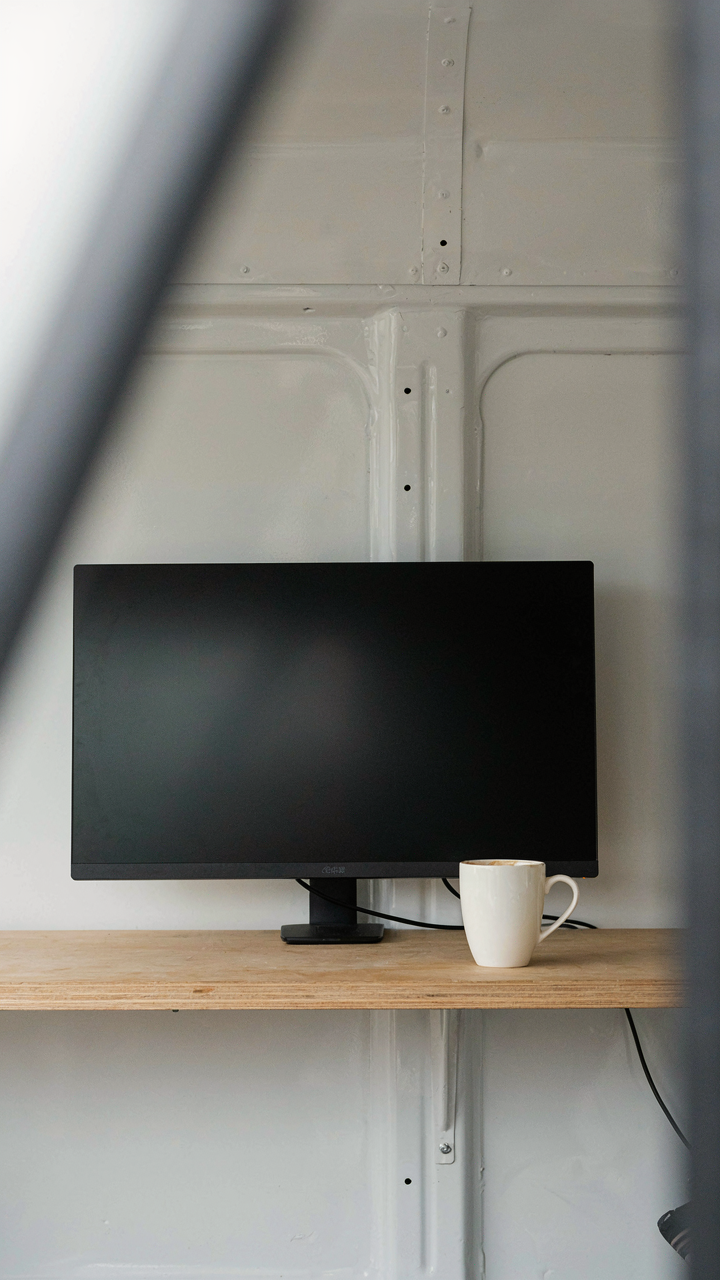
Most van workers make the same mistake. They load a setup that mirrors a stationary office desk, then wonder why they feel cramped and inefficient. A monitor arm bolted to plywood. Multiple charging cables. A full keyboard and mouse. External hard drives. Cable management solutions for cables managing other cables. None of that scales in a 120-square-foot workspace. Start by identifying one tool per function, not multiple backups. One monitor or none. One keyboard or the laptop keyboard. One charging solution that handles three devices. The gear you keep must earn its weight.
Deconstructing The Ideal Van Office Setup
The “ideal” setup narrative comes from marketing, not from people actually working in vans. Desk organizers, monitor stands, ergonomic chairs, task lighting, noise-canceling headphones, wireless everything. That’s the consensus dream. It’s also financially stupid and spatially wasteful for a moving workspace. Apply principles from systems design: a system is elegant when it handles maximum complexity with minimum components. Your van office should mirror that. One surface does multiple jobs. One power solution handles multiple devices. One audio solution beats isolation. Remove assumed requirements and you remove the spending.
Most people keep gear because they paid for it, not because it performs. Audit your current setup by use frequency. If something sits unused for a week in a van, remove it. Your actual workspace needs: a stable surface at elbow height, power management that doesn’t trip breakers, internet that doesn’t require troubleshooting daily, and lighting that doesn’t drain batteries before 3 PM. Everything else is negotiable. Start there. Everything else you add after solving those four problems must demonstrably increase output or disappear.
The Cognitive Load Crusher: Your Van Workspace As A Focus Fortress

Design For Flow States, Not Instagram Likes

You want people to think your van setup is impressive because you believe that proves you’re serious about remote work. Here’s what actually matters: flow states depend on removing friction between your brain and the task. Neuroscience calls this cognitive load reduction. In a van, every design choice either funnels attention toward work or scatters it. Most people optimize for the wrong metric.
The standard advice is to make your space look minimal and clean. That’s incomplete. A truly focused van workspace removes decision points before you sit down. Your desk height, monitor position, keyboard placement, and chair support should require zero adjustment once work starts. If you’re tweaking ergonomics mid-morning, you’ve already lost the neurological window for deep work. The setup does the thinking so your brain doesn’t have to.
Eliminate Visual And Auditory Chaos
Sound in a van travels. The metal walls amplify external noise and bounce your own movements back at you. This isn’t just annoying. Constant audio stimulation keeps your nervous system in a low-level alert state, which burns mental resources before you type a single word. Soundproofing materials like mass-loaded vinyl or acoustic foam don’t require a full renovation. Strategic placement behind your work zone stops the ambient highway noise from derailing focus.
Visual clutter works the same mechanism. Your peripheral vision picks up movement and disorder automatically. Each item in your line of sight that isn’t essential to the current task competes for processing power. Keep your desk surface empty except for the one tool you’re using right now. Store everything else in closed containers. The moment you sit down, your visual field should contain only what moves the work forward. This is why many remote workers in vans use wall-mounted monitors and external keyboards. Fewer objects in view means fewer cognitive distractions before noon.
The Sprinter Van Office De Comfort Protocol

Standing Desk Over Soft Seating

You want the setup that looks effortless from Instagram. That’s the trap. Your body doesn’t work better when it’s cradled in comfort, and van life forces you to admit what office culture hides: stillness kills output. Borrow from ergonomics, where stress concentration refers to how force distributes across a surface. In a van, a standing desk concentrates your metabolic load, forcing your core to stabilize instead of atrophy against memory foam.
A standing desk in a Sprinter works because the constraint is built in. You can’t recline. You can’t sprawl. Your legs stay engaged, your posture stays honest, and your work output tracks directly to your positioning. Mount a desk at elbow height against the wall or use a fold-down unit. Stand for ninety minutes, move for ten. Your mind stays sharper because your body refuses to negotiate.
Comfort Is A Productivity Killer
The conventional advice says optimize for comfort so you work longer. That’s backwards. Comfort is the anesthetic that masks wasted hours. When you remove it, you stop pretending to work and start actually working. A hard stool, a desk at the right height, minimal padding, and full visibility of your workspace create friction that forces intentionality. You sit down to do one thing, not to exist in an ambient state of pseudo-work.
Comfort kills productivity because it allows task-switching and mental drift without physical feedback. A van forces decisions: you can stay focused and uncomfortable, or you can leave the workspace. There’s no third option of lounging while claiming you’re still working. Your body becomes the alarm system. When discomfort rises, you’ve either finished or you need a break. Set your desk height so your elbows sit at ninety degrees, use a stool without back support, and keep your workspace visible from the driver’s seat so leaving the desk is a deliberate act, not a drift.
Energy Scarcity Mindset: Powering Your Camper Van With Office
Every Watt Is A Decision

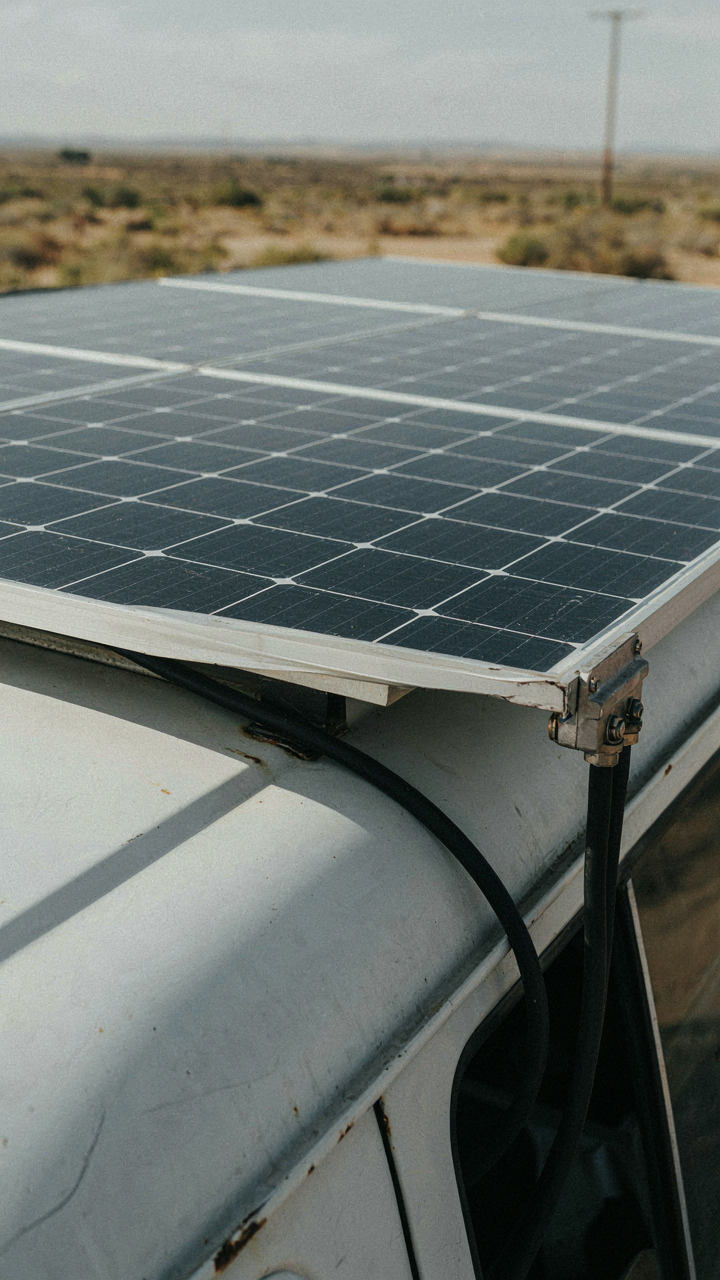
You want to believe your van setup is self-sufficient so you don’t have to think about power limits. That’s denial. Physics doesn’t negotiate. In thermodynamics, energy states move toward entropy—disorder increases, and efficiency always declines. Your battery bank is a closed system. Every device you run accelerates the inevitable depletion. There is no hiding from the math.
A laptop uses 60-100 watts under load. A monitor adds 30-50 watts. A small heater pulls 750-1500 watts and collapses your system in minutes. Your 200-amp-hour lithium battery stores roughly 2.56 kilowatt-hours of usable energy. That looks abundant until you run three devices at once for eight hours. The scarcity is real. Accept it first, then plan around it.
Battery Life As A Ruthless Prioritization Tool
Your battery isn’t a resource to manage—it’s a constraint that forces you to choose what actually matters. Most van workers fail here because they treat power like office electricity: abundant, invisible, unlimited. It isn’t. Battery depletion is your real deadline, not your calendar.
- Laptop and external monitor only: A dual-screen setup with efficient routing draws 90-120 watts under load. This is your core work bandwidth. Anything else erodes runtime.
- Phone charging from 12V auxiliary: Skip the 120V inverter for small devices. Direct 12V charging loses less power in conversion and preserves battery life by 10-15 percent per charge cycle.
- Heating via passive layering first: A space heater or heated blanket will drain your system faster than any office tool. Work in layers, relocate to sunnier positions, or embrace cooler work hours.
- Lighting limited to LED task lights: Overhead cabin lights pull steady draw even at low brightness. Task lights consume 5-10 watts and let you work in one defined zone instead of illuminating unused space.
- Water pump and refrigerator on timer blocks: Run these during peak solar hours only, not throughout your workday. Stagger their operation to avoid simultaneous demand spikes that trigger inverter cutoffs.
The single best prioritization rule: work during peak solar generation hours, roughly 10 AM to 3 PM in most climates. This aligns your heaviest power draw with your system’s strongest output. Run laptop work then. Batch administrative tasks and communication for dawn or dusk when solar production drops. Your battery will thank you with an extra 30 percent usable cycle life over a season.
The Environmental Resistance Method: Working From A Van Office Conversion

Natural Elements As Focus Architecture
You want permission to romanticize van life instead of admitting you need external constraints to actually work. Here’s the mechanism: environmental resistance in behavioral psychology shows that friction—imposed by conditions outside your control—eliminates decision fatigue and anchors attention. Rain hammering the van roof isn’t motivation. It’s a stimulus that overrides your ability to context-switch. Wind pushing against the shell, temperature shifts, light changes. These aren’t distractions if you design your workspace to acknowledge them rather than fight them.
Most van builders treat weather as something to insulate against completely. Wrong move. The goal isn’t a sterile climate-controlled box. It’s a space where environmental input becomes your work timer. Position your desk so you see and hear weather shifts directly. Windows that face prevailing winds. Roof vents that let you sense barometric pressure changes. Your nervous system registers these shifts faster than any timer app. The mechanism: your brain stops treating work as optional when external conditions make it feel like an imposed structure.
Weather Patterns As Accountability Schedule
The common advice says “keep a consistent schedule no matter where you are.” That’s generic and it fails because willpower is a daily resource. Weather doesn’t care about your willpower. Rain forecasts give you a forced productivity window. You work harder the day before a storm hits because the van becomes unusable. Clear skies for three days means you’ve got a defined work sprint. This isn’t motivation. It’s imposed scarcity that makes priorities obvious.
Track your actual van location weather patterns for two weeks before settling workspace design decisions. High wind days become your admin and meeting days. Stable, clear mornings become your deep work blocks. Low visibility weather locks you in—use those hours for tasks requiring sustained focus. The protocol: pull a seven-day forecast for your current location every Sunday and build your work calendar around it. No flexibility. No interpretation. Weather decides your schedule, and your workspace design accommodates that rhythm instead of fighting it.
The “Single Tool, Multi Purpose” Office: Van Office Setup Ideas

Tools That Earn Their Weight

You want to believe a $300 desk will solve your productivity problem. It won’t. The real mechanism here comes from industrial design: constraint forces specificity. When you have limited cubic feet, every object must justify its existence through multiple functions or it becomes waste. A surface that only holds a laptop is a luxury you don’t have.
The best van workspaces treat the entire interior as one modular system. Your bed becomes your desk. Your storage becomes your standing surface. Your window ledge becomes your monitor stand. This isn’t compromise—it’s the actual architecture of functional space. You eliminate dead objects and dead zones simultaneously.
From Fixed Desk To Dynamic Surface
Most van life advice sells you a “compact desk” bolted to the wall. That’s wrong. A fixed desk in twelve square feet of living space creates a dead zone that costs you 40% of your usable area the moment you stop working. You need surfaces that move, fold, or disappear entirely.
A quality lap desk, hinged wall shelf, or rollout cart works because it occupies space only when active. Your bed becomes work surface when you add a solid board across your lap. Your dinette converts with a slim plywood topper. The mechanism is reduction: remove the object when the task ends, reclaim the room. This single decision transforms how you actually use the van versus how you imagine using it.
The Human Element: Solitude, Connection, And Your Campervan Office

Isolation Is Where Deep Work Happens

You want to believe van life is about freedom and adventure. What you actually need is permission to disappear. Deep work requires what neuroscience calls “sustained attention”—the brain’s ability to hold a single problem without switching tasks. A van provides this naturally because the cost of distraction is literal: you have to leave your workspace. Office workers interrupt themselves every eleven minutes on average. In a van, interruption means stepping outside or driving somewhere. The boundary hardens.
The mechanism is friction. When your bedroom, kitchen, and office occupy 120 square feet, you’ve created a choice architecture that discourages shallow engagement. Meetings become optional because scheduling them requires deliberate action, not calendar acceptance. Your phone stays in another room not from discipline but from physical distance. Deep work doesn’t demand motivation—it demands an environment where distraction is harder than focus.
Deliberate Breaks Unlock The Next Cycle
Common advice says take breaks to recharge. That’s incomplete. Neurobiology calls this “task switching”—cycling between focused attention and diffuse processing modes. The focused mode solves problems. The diffuse mode reorganizes what you’ve learned. Switching between them fast doesn’t work. You need genuine environmental change. Leave the van entirely. Walk for thirty minutes. Work from a café. Swim if water is nearby.
The protocol is non-negotiable: work in focused three-hour blocks, then break the location. Don’t work at the van desk, then stretch at the van window. Move your body to a different place. This regenerates your attention span faster than sitting still. When you return to the van, your brain has processed the problem unconsciously. The next cycle produces better ideas than fatigue ever allows.
Security Theater Vs. Real Protection: Your Mobile Workspace
The Hygiene Model For Your Digital Life
You want to feel safe. That’s the real driver here, not actual safety. Cybersecurity operates on a hygiene model, not a fortress model. You don’t need impenetrable walls. You need consistent, boring practices that prevent the 99% of threats that exploit neglect, not genius. A van workspace amplifies this: your perimeter is smaller, your exposure is higher, and your defaults matter more than your defenses.
Most remote workers treat security like an afterthought they’ll handle when something goes wrong. That’s backwards. In a van, you don’t have IT infrastructure absorbing your mistakes. Your laptop is your entire business. VPN usage, password managers, and two-factor authentication aren’t optional features. They’re operating procedures, same as brushing your teeth. One unencrypted coffee shop session can expose client data or financial credentials. The hygiene habit prevents the crisis before you feel threatened.
Invisibility Beats Locks And Cameras
Fortifications attract attention. A van covered in security cameras and reinforced doors signals value to people looking for targets. Physical security in mobile workspaces works through the opposite mechanism: be boring enough that you’re not worth the effort. Your real protection is not being memorable or interesting to the person passing by.
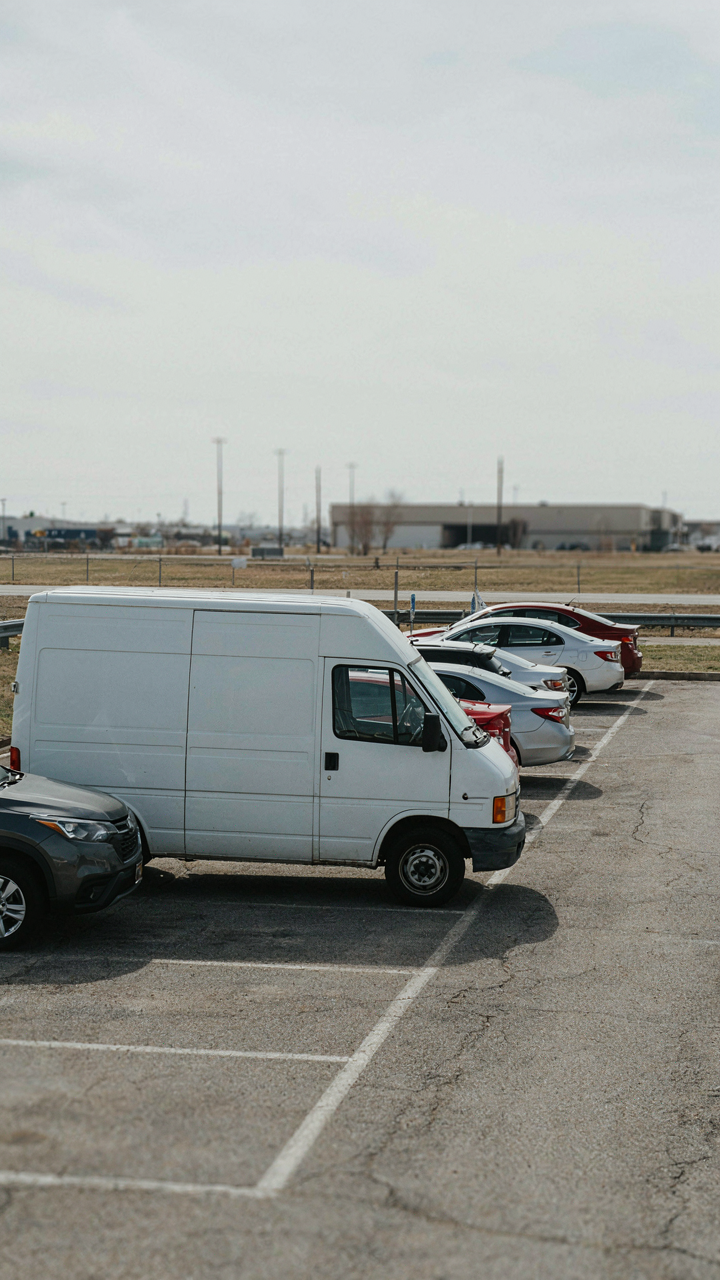
Move your van location every few days. Use window coverings that match neighboring vehicles. Don’t work visibly from the driver’s seat with expensive equipment framed in the window. Park in populated, well-lit areas rather than isolated spots where you feel safer but are actually more vulnerable. Store gear in unmarked bags. The goal is complete visual anonymity—indistinguishable from every other van in the lot. When you’re invisible, you eliminate the threat before it identifies you as a target.
The Real Obstacle Isn’t Your Limited Square Footage; It’s Your Unlimited Capacity For Self-sabotage


You don’t need a better desk setup. You need to stop treating your van like a temporary experiment. The people who make van life workspaces function aren’t smarter or richer. They decided their environment serves their output, not the other way around. Today, move one item in your van that’s been sitting in the wrong spot for a month. That friction you feel? That’s where your real work begins. Your workspace doesn’t fail you. Your commitment to it does.