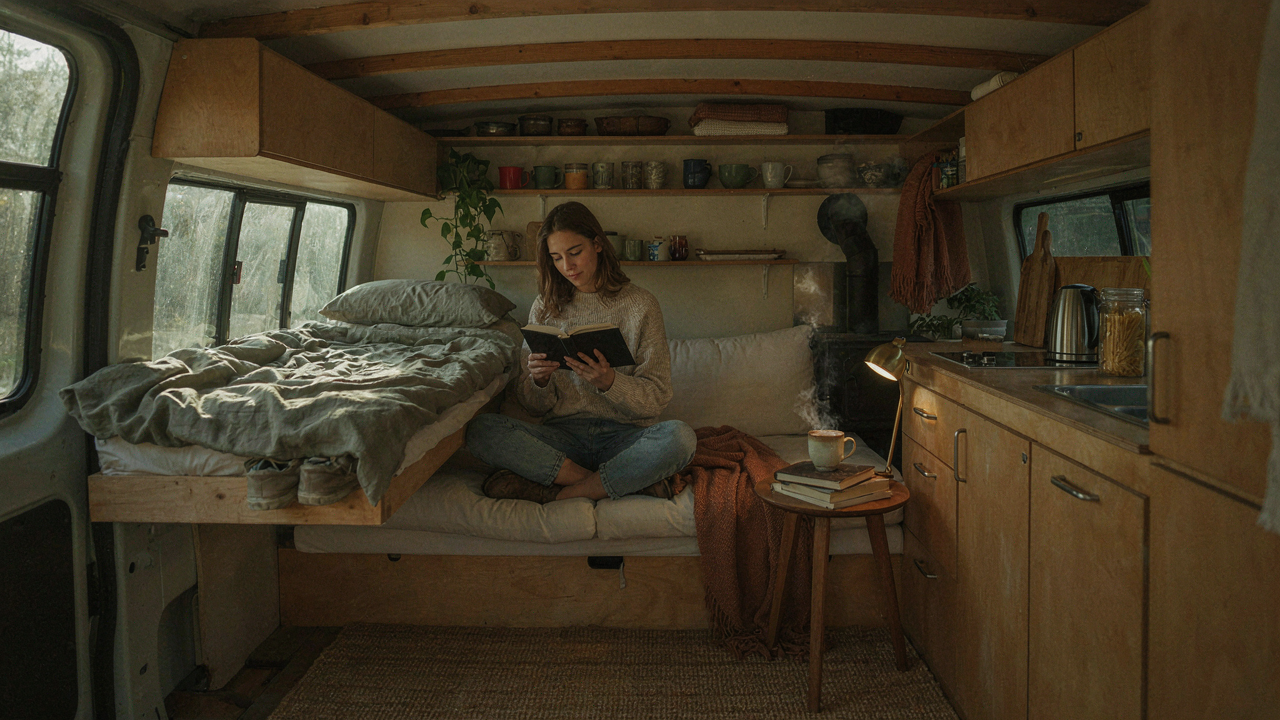
The Unseen Cost Of “Cute” Van Decoration
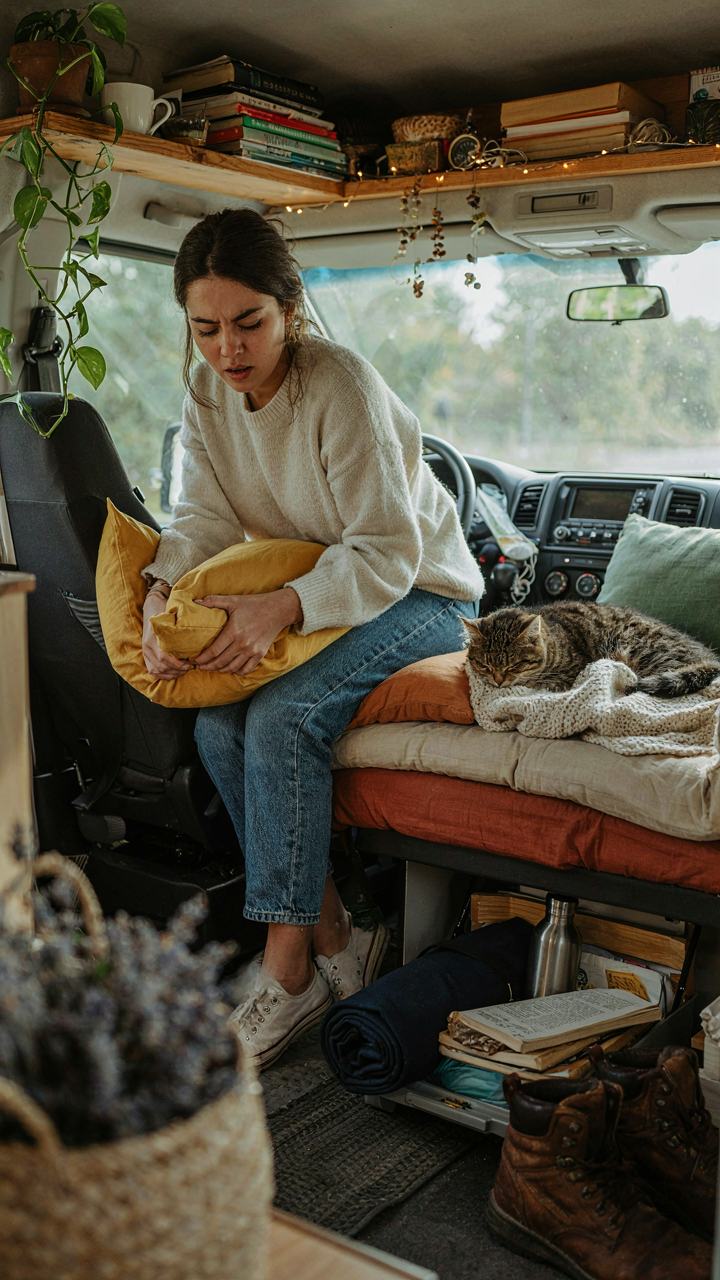
Function Over Form Wins Every Time
You want your van to look intentional, not like you’re roughing it. That’s status anxiety talking, and it’s the reason most people buy decorative items that don’t earn their weight. Borrowed from industrial design, we can call this the “load-bearing principle”: every object in a constrained space must carry structural weight—either literally or functionally. A decorative throw pillow carries zero weight. A pillow that doubles as back support during driving carries two functions in one unit.
The mechanism is simple. Cute items feel productive because buying them feels like progress. You’re not solving the actual problem—maximizing usable space—you’re solving the feeling of being unprepared. Real van decoration solves problems: poor lighting becomes task lighting, dead wall space becomes storage, wasted corner real estate becomes a spice rack. Function first filters out ninety percent of the garbage you’d otherwise bring inside.
Clutter Erases Mental Real Estate
Instagram aesthetics hide the truth about small spaces: fewer items means more usable square footage, and more mental clarity in an environment where you can’t escape. Clutter in a van isn’t just visual noise. It’s cognitive load. Your brain processes every object in your field of vision, and a van gives you nowhere to hide from that processing cost. One extra decoration multiplied across shelves, walls, and surfaces creates friction that compounds daily.
The protocol is ruthless. Before bringing anything into the van, ask: does this serve function, beauty that I use daily, or both? If it’s pure decoration, it costs more than it delivers. Most van dwellers discover this after six months when they realize they’re moving items around to access what actually matters. Strip to essentials first. Then add only pieces that solve specific problems or bring deliberate visual rest—not noise masked as personality.
The Minimalist’s Manifesto For Camper Van Interior Ideas
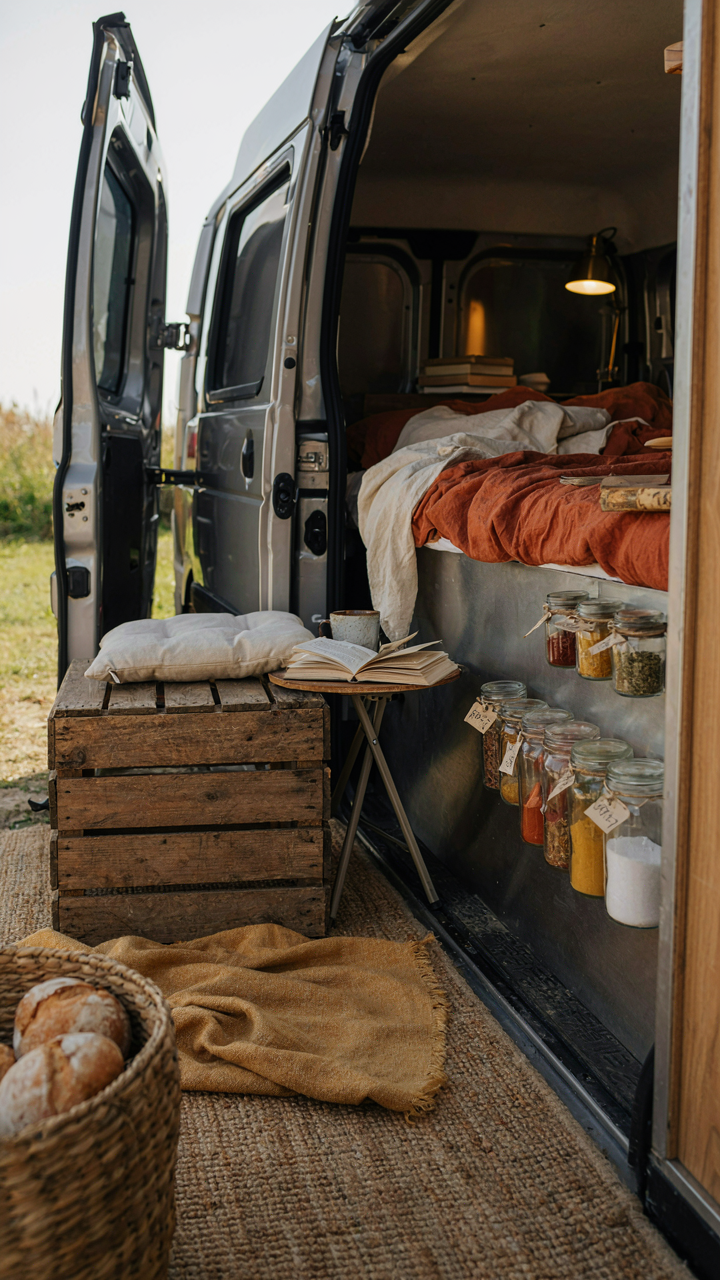
One Item, Multiple Uses: The True Hack

You want van life decor to feel intentional without admitting you’re broke and have no storage. Here’s the mechanism: in confined spaces, every object carries weight. Borrowing from industrial design’s concept of “form follows function,” you stack functions onto single objects. A wooden crate becomes seating, storage, and a nightstand. A rolled jute rug doubles as wall art and floor coverage. This isn’t minimalism as aesthetic choice. This is math. You cannot afford visual or spatial waste.
The objects that survive in a van are the ones that earn their square footage three times over. A magnetic spice rack mounts to metal surfaces and organizes tools. Nesting bowls collapse into themselves. A canvas storage cube holds blankets, folds flat, and props open a skylight. When you select an item, ask: what are the three jobs this does? If you cannot name three, it stays behind.
Culling: What Truly Serves You?
Most van life advice tells you to “keep only what brings you joy.” This is emotional nonsense that leaves you with a van full of sentimental junk and no actual living space. The real question is mechanical: does this object reduce friction in your daily system? A throw pillow does not. A fitted mattress topper that prevents sliding does. A framed photo does not. A headlamp that mounts to your bed frame does.
Ruthless culling means one pass, no sentimentality, no “I might need this.” Pull everything out. Touch each item and decide: does this solve a problem I actually have right now? Does it enable a recurring activity? Donate the rest. What remains is not your personality. It is your operational toolkit. A van decorated with only functional objects will feel more like home than one cluttered with symbolic ones because you can actually move through it and use it.
Beyond Storage: The Flow State Van Hacks Protocol

Ergonomics Of A Tiny Home

You want your van to feel effortless because you’re afraid that living small will exhaust you. The real mechanism is ergonomics borrowed from manufacturing: every repeated motion either compounds fatigue or eliminates it. Your setup either forces you to contort for basic tasks or it doesn’t.
Most van lifers treat ergonomics as an afterthought, cramming things where they fit. The result is a space that works against your body. Your cooking station, bed height, storage reach, and seating distance from the windshield determine whether you’re efficient or wrecked after two weeks. Map your daily sequences: coffee, work, meals, sleep. Each motion should flow without adjustment or compromise.
Psychology Of Space Layout
The layout of your van operates on the same principle as territorial psychology in animals: density and sightline control your nervous system before your conscious mind registers it. Closed-off nooks feel like cages. Open sightlines feel like escape routes.
Van lifers often cluster everything because space is finite. This creates visual clutter that signals threat to your brain regardless of actual room availability. Separate your zones by function and sightline, not just by storage density. Your sleeping zone should not have your work desk visible when you’re resting. Your kitchen should not dominate your peripheral vision when you’re stationary. The moment you can see a clear line through your space without obstruction, your nervous system downshifts and you stop feeling trapped.
Strategic Lighting: More Than Just Illumination In Your Mobile Home Living
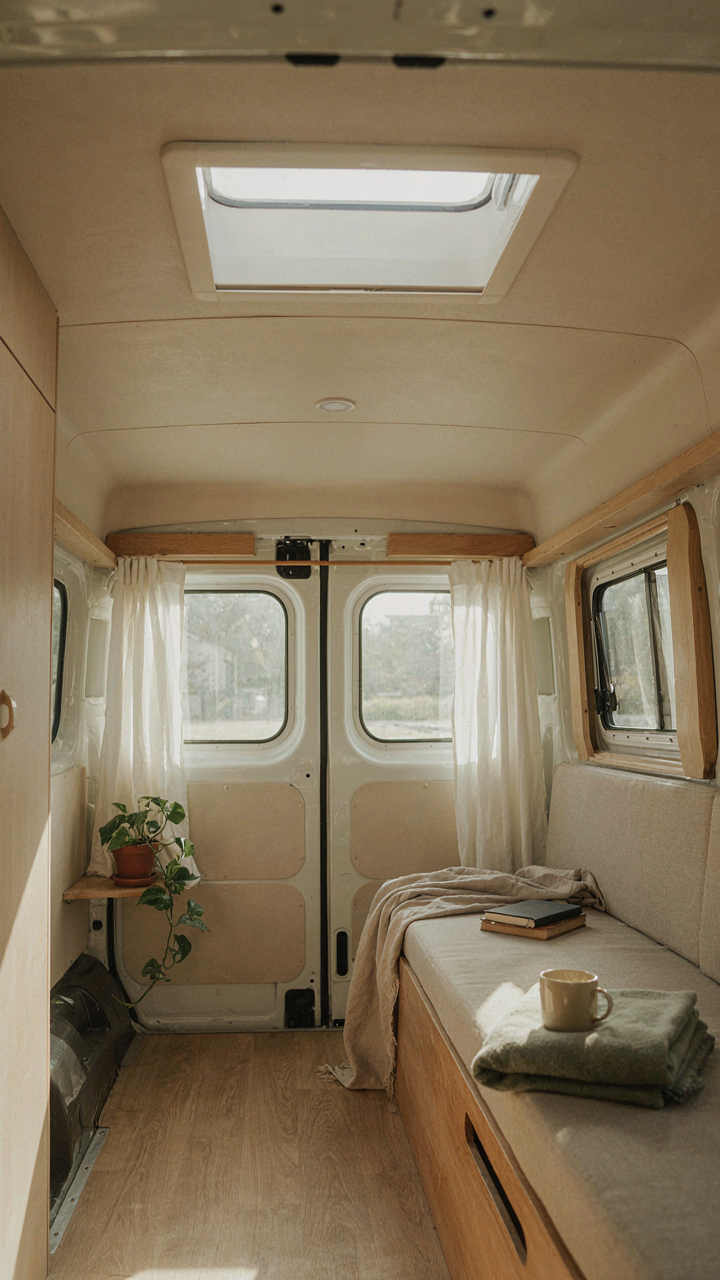
Natural Light Is Your Cheapest Square Footage

You want natural light because it makes your van feel bigger without costing money or weight. This is physics: the human eye perceives depth and volume through light distribution, not through actual dimensions. A small van flooded with direct sunlight reads as spacious. A dark van the same size feels like a cave. The mechanism is perceptual, not physical.
Window placement and size determine how much light enters and where it lands. South-facing windows capture consistent daylight. Skylights over sleeping areas eliminate the cave feeling during the day without requiring artificial power. Reflective interior surfaces, particularly light-colored walls and ceilings, bounce natural light deeper into the van rather than absorbing it. The goal isn’t more windows. The goal is strategic windows that maximize light reach while minimizing heat loss and weight.
Layered Artificial Lighting Separates Function From Feeling
The common advice here is wrong: most van dwellers treat lighting as one problem instead of two distinct problems. Task lighting handles the work you do. Ambient lighting handles how the space feels when you’re not working. Mixing them kills both. You need separate circuits or at minimum separate fixtures you can control independently.
LED strips provide directional task light where you need it: above the sink, over the bed, around the stove. Warm-toned bulbs between 2700K and 3000K handle ambient mood in living areas and sleeping zones. Cool-toned bulbs above 4000K belong only in work areas because they suppress melatonin and keep your nervous system alert when you need rest. Install dimmers on ambient circuits. The mechanism is this: control brightness independently from fixture placement, and you create the psychological separation between “work mode” and “rest mode” without requiring a larger space.
Texture And Materiality: The Sensory Science Of Camper Interior Design

Your Nervous System Knows When You’re Faking It

You want your van to feel intentional, not like a storage unit with a bed. Your skin registers material quality before your mind forms an opinion. Biology calls this haptic feedback—the nervous system’s direct channel for sensing texture, temperature, and density. The mechanism is simple: low-quality materials trigger a subconscious stress response. High-quality materials calm your parasympathetic nervous system. In a van, this distinction determines whether you relax or feel trapped after eight hours inside.
Cotton canvas, natural wool, and untreated wood send different signals than polyester, acrylic, and plastic-wrapped particle board. Touch every material you consider before buying. Run your hand across it multiple times. If it feels cheap, it will feel cheap every single day. Your body won’t adjust to mediocrity—it will fight it. The van’s interior becomes your sensory environment. Poor tactile quality compounds with spatial compression. Select materials your hands want to touch repeatedly.
Design Patterns That Already Work In Nature
Biomimicry isn’t mysticism—it’s engineering borrowed from organisms that solved spatial and sensory problems millions of years before humans existed. Birds build lightweight structures with maximum insulation. Tree bark creates thermal regulation without active systems. Honeycomb geometry maximizes space while minimizing material weight. These aren’t metaphors. Apply them directly to van interiors through material selection and layout choices.
Exposed wood beams mimic tree branch architecture and create visual depth without occupying floor space. Layered textiles (like tree bark) regulate temperature and absorb sound simultaneously. Woven wall coverings distribute visual weight evenly, preventing the hard-edge monotony that makes small spaces feel claustrophobic. The principle: nature stacks functions into single materials. Don’t add a separate insulation layer, sound dampener, and aesthetic finish when one material can accomplish all three. Your van becomes denser with information but lighter in material and cost.
The Color Palette Deception For Your Vw Campervan Interior
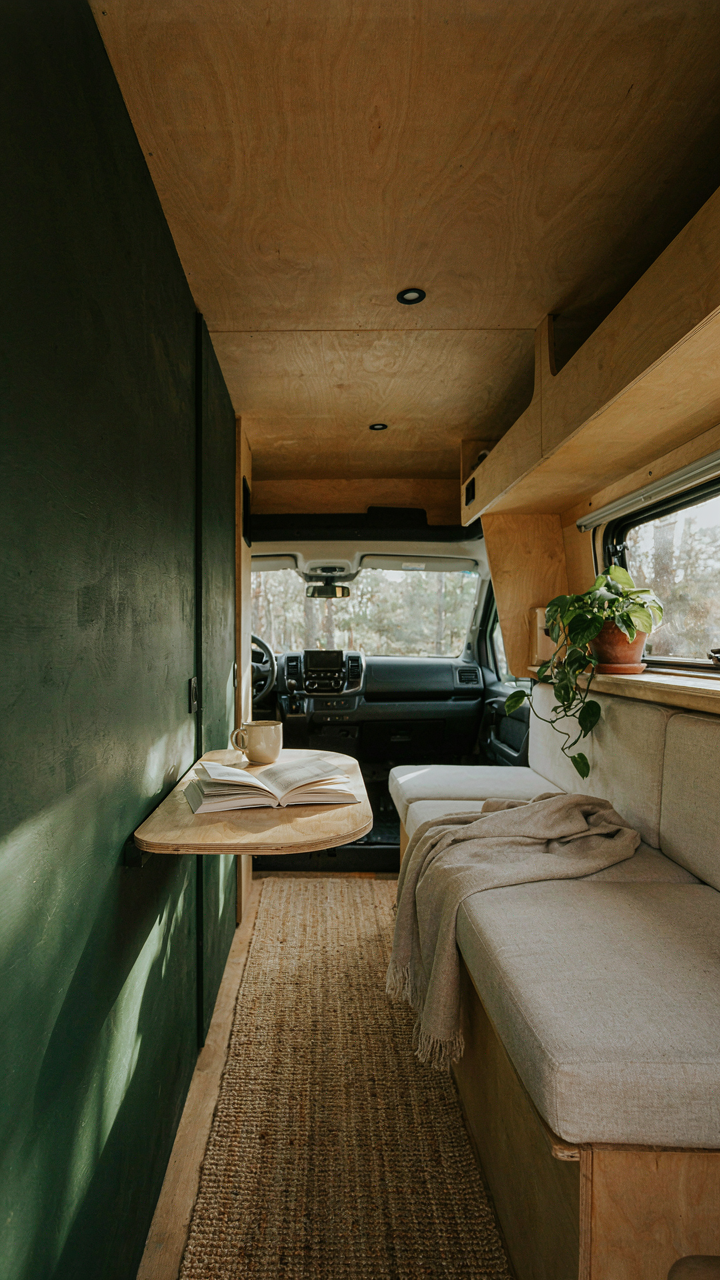
Color Psychology Beyond Making It Look Bigger

You think you need light colors because you’re afraid the van will feel like a coffin. That’s not actually the mechanism at work. Color psychology operates like territorial design in architecture: you’re not trying to expand space optically, you’re trying to establish psychological ownership of the environment. The common advice—paint everything white or cream—is incomplete. It solves for visual expansion but ignores the sensory anchoring that makes a small space feel deliberate rather than constrained.
Dark accent walls in a van don’t shrink the space because your brain isn’t measuring the room by wall color alone. It’s registering intentionality. A deep charcoal or forest green applied to one wall signals that you chose this, not that you defaulted to what was available. Neutrals dominate van interiors because they’re safe, not because they’re optimal. The real lever is contrast paired with intention. Your eye lands on deliberate color choices and interprets them as design authority, which makes 80 square feet feel inhabited instead of compromised.
Your Authentic Aesthetic Over Trend Compliance
Stop decorating for the Instagram van life image and start decorating for the person who actually lives there. The gap between those two audiences creates decision paralysis that wastes money and mental energy. You’ll see countless van builds with warm minimalism or boho textiles because those aesthetics photograph well, not because they match how the inhabitant actually lives. This is a visibility problem, not a design problem. What you see documented is survivorship bias filtered through algorithmic preference.
Your color palette should track one fact: what colors and textures make you want to spend time in the space when you’re alone. Not tired. Not performing. Not hosting. Test this by spending three full days in your van before committing to paint. Note which moments you feel at ease and which moments the interior feels generic or borrowed. Then apply colors that echo those moments. Repaint one wall or add removable wallpaper to test before final commitment. Your authentic aesthetic emerges through iteration, not inspiration boards.
The Integration Imperative: Live In A Van, Don’t Just Sleep In One
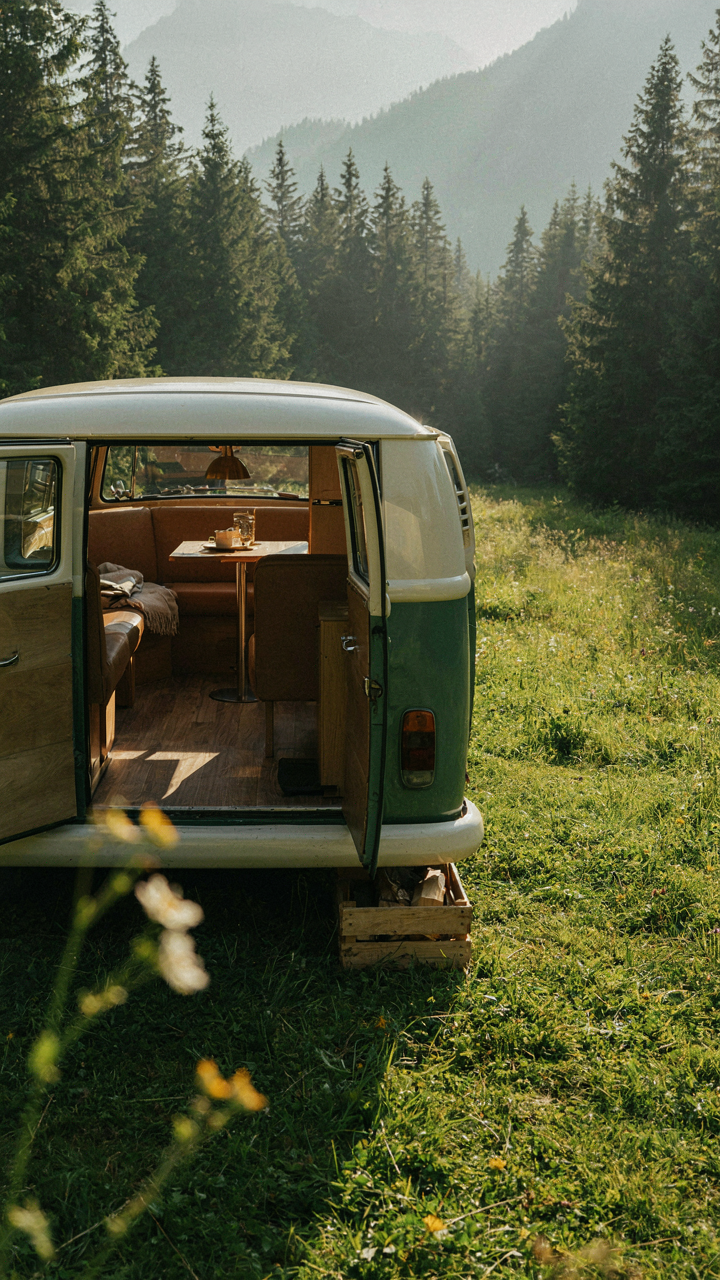
Seamless Indoor Outdoor Living

You want the van to feel bigger because you’re afraid it won’t work. The mechanism is visual continuity. When your eye travels unbroken from inside to outside, your brain calculates available space differently. It’s not about more square footage. It’s about eliminating visual boundaries that make you feel trapped.
Matching flooring materials between interior and exterior creates this effect. Use the same outdoor rug color inside near the van door, or extend decking materials visually through windows. Transparent or semi-transparent door panels amplify this. Keep the exterior immediately adjacent to your door clean and considered as part of your living zone, not a separate afterthought. Your eye doesn’t stop at the threshold when there’s continuity.
Multi Functional Zones Defining Areas Without Walls
The common advice is to use rugs and furniture placement to define zones. That’s incomplete. Real zone definition uses vertical elements and material changes because they signal function without consuming floor space in a cramped environment.
- Fabric panels or curtain rods: Create flexible boundaries that separate sleeping areas from living zones without blocking light or airflow permanently.
- Raised platform sleeping: Elevates the bed and signals that space as distinct from the ground level living area below.
- Wall mounted shelving at different heights: Organizes storage while visually breaking the space into functional layers rather than flat zones.
- Wood or metal dividers: Freestanding screens partition areas while remaining removable and allowing partial sight lines to maintain perceived openness.
- Material transitions on walls: Paint, wood paneling, or fabric changes mark where zones shift without requiring permanent structure or taking up usable floor area.
Each zone needs a single clear function and a material or vertical marker that signals it. Your sleeping area should feel distinct from your work area from your eating area. The van becomes livable when your brain knows what each corner is for. Define zones through what you see vertically and what materials change beneath your feet, not through what eats your floor.
Personal Artifacts: Curating Your Story, Not Your Clutter

When Sentiment Becomes Weight
You want to keep things because they matter, not because you’re afraid to let them go. That’s the real tension here. Economics calls this the endowment effect: you assign inflated value to objects simply because you own them. In a van, this bias kills you. Every item you keep costs space, and space in 120 square feet isn’t abstract—it’s your ability to move, sleep, and function without claustrophobia setting in.
The mechanism is brutal but clear. You don’t need to keep the physical object to keep the memory. What you actually need is the story. Write it down. Take a photo of the item before you part with it. Store the image in a folder labeled by year or person. This costs zero weight, zero space, and zero mental load. You’ve preserved what matters—the meaning—and discarded what doesn’t: the bulk. The hard choice isn’t between keeping and losing the memory. It’s between keeping the object and keeping your sanity.
Intentional Display Stops The Spiral
Most van dwellers accumulate souvenirs like they’re building a museum, then shove them into overhead bins or cubby holes where they vanish anyway. That defeats the purpose. Display with intention, not volume. One carefully positioned artifact beats twenty buried ones. Choose pieces that anchor your space visually and tell a story you actually want to live inside.
The rule is simple: if you display it, it earns its footprint. A single framed photo on a wall bracket, a woven textile hung from a tension rod, a carved object on a shelf with actual sight lines—these work because they’re seen. Everything else is just clutter masquerading as meaning. Your van reflects your identity in what’s visible, not what’s stored. Rotate seasonal pieces quarterly if you need variety, but never let sentiment override the math of square footage.
The Real Obstacle Isn’t The Size Of Your Van, But The Clutter In Your Mind

Daily Rituals For Maintenance Keeping The Peace

You’re hoping that the right furniture arrangement will solve the tension you feel about living in 200 square feet. It won’t. The mechanism is this: a van forces you to see every object you own every single day. Most people cannot handle that visibility. They pretend the problem is design when the problem is accumulation.
The maintenance ritual that matters is a weekly inventory. Sunday evening, walk through your space and identify one item you haven’t touched in two weeks. Remove it. This isn’t about minimalism as philosophy. It’s about eliminating decision fatigue. Every object you keep is a daily micro-negotiation with your attention. Fewer items mean your actual decor choices get space to breathe and work.
Your Van As A Tool For Freedom
Psychology borrows from economics the concept of sunk cost fallacy: we overvalue things because we’ve already invested in them, not because they serve us now. You’re applying this to your van interior. You bought that plant or that wall hanging months ago, so you keep it even though it doesn’t function. Stop.
A van is a filtering mechanism. It strips away decorative excess because real estate costs attention, not money. The items worth keeping are those that either serve a function or actively improve your mood when you look at them. No neutral passengers. This isn’t deprivation. It’s clarity. Evaluate your decor monthly: does this object make the space better, or does it just occupy it? Keep only what earns its place.
The Real Obstacle Isn’t The Size Of Your Van, But The Clutter In Your Mind

You don’t need another storage hack or minimalist guide. You need to stop treating your van like a problem to solve and start treating it like a statement you’re making. Most people fail at van life decor because they’re decorating for the space they wish they had, not the one they live in. Today, remove one thing that doesn’t serve you or make you feel something. That’s it. Your van won’t feel like home until you stop apologizing for its size and start owning its constraints.