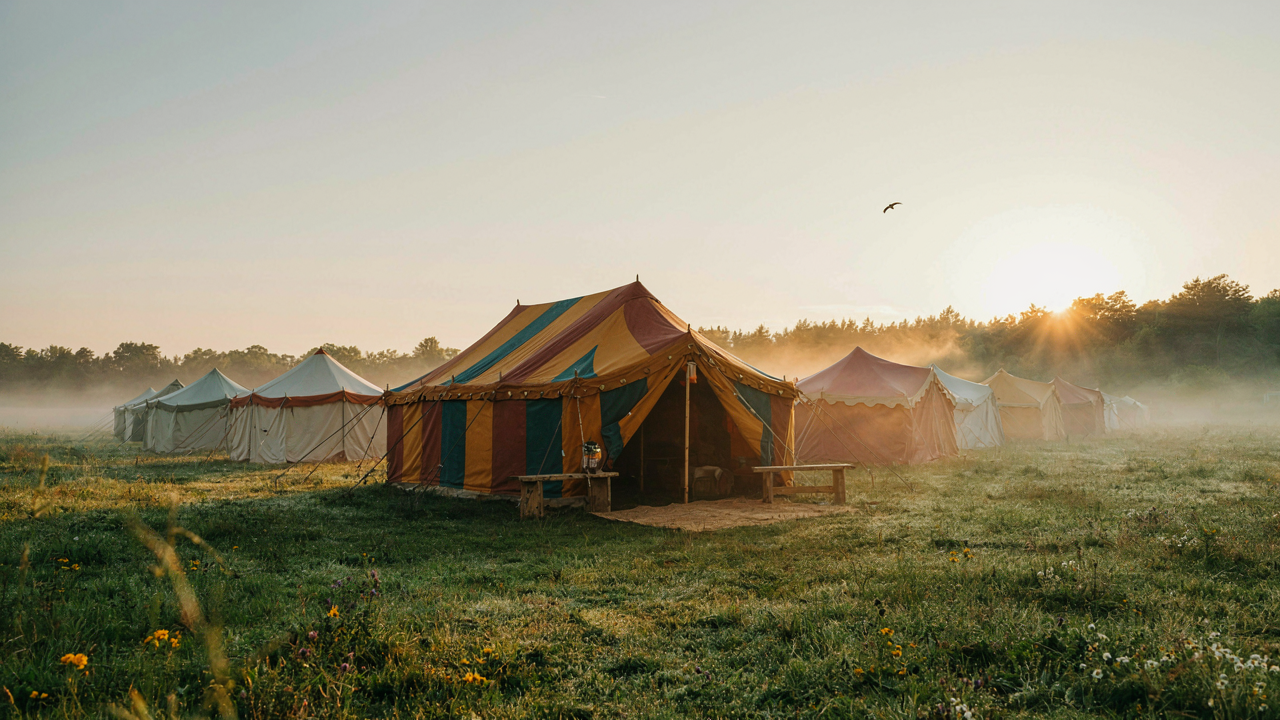
The Pre Festival Tent Setup Reconnaissance Protocol

Ground Truth Before You Arrive
You want to believe showing up early gives you an advantage. It doesn’t, not really. The advantage belongs to whoever understands the land before the first tent stake goes in. Most festival guides tell you to “check the weather” and call it scouting. That’s lazy. Real reconnaissance means understanding microterrain: how water moves across the field, where wind funnels, which patches hold moisture longer, where the soil compacts versus stays soft.
The mechanism is topography. Even a field that looks flat contains invisible slopes measured in inches. Rain doesn’t stay where it lands; it migrates downhill. A tent pitched two meters away from a shallow depression will flood while one upslope stays dry. Arrive early enough to walk the grounds without crowds, trace the fall lines with your eyes, and mark the high zones. That walk takes twenty minutes. It saves your sleeping bag.
The Unseen Variables That Wreck Setup
Weather forecasts lie by omission. They predict temperature and rain odds but ignore the variables that actually determine comfort: ground temperature differential, wind direction relative to the field’s terrain features, and dew formation patterns specific to that location. Soil type matters enormously but never appears in a forecast. Clay holds water and stays cold. Sand drains fast but offers no insulation. Grass-covered ground keeps temperature more stable but compacts under foot traffic into mud channels.
Visit the site during the same season, if possible, or talk to past attendees about what actually happened on the ground. Ask one direct question: where did people abandon tents because of water or wind? That information is worth more than any weather app. Once you know the soil type and past problem zones, you position your tent for drainage first, wind second, and social access third. Comfort is not about location among friends; it’s about physics working for you instead of against you.
The Anti Compromise Tent Selection: Festival Tent Ideas

Know Your Actual Sleep Requirements

You want the tent that makes you look committed to the festival experience without admitting you need real sleep. Here’s the mechanism: tent comfort maps to three measurable variables—floor space, headroom, and ventilation—and most people optimize for the wrong one. Festival sleep debt compounds fast. A dome tent with two square meters of floor space feels cramped after hour three. You lie awake calculating how many hours remain. The real cost isn’t discomfort; it’s cognitive load the next day when you’re supposed to enjoy music.
Matching tent to sleep reality means starting with how you actually rest, not how you think you should rest. Side sleepers need width. Hot sleepers need cross ventilation, not just a mesh panel. Cold sleepers need insulation and wind blocking, which eliminates single-wall tents. Write down your non-negotiables before shopping. Many people buy compact tents because festivals feel temporary, then spend 40 hours uncomfortable in a space they bought to avoid packing weight. The calculation is wrong. Pick a tent that lets you sleep five to six hours without waking irritated, and you’ll extract real value from the festival, not just attendance points.
Tent Feature Claims That Don’t Translate
The marketing around festival tents inverts reality. Brands claim waterproofing as primary when ventilation prevents 90 percent of moisture problems. Festival weather rarely produces sustained heavy rain; it produces condensation—water vapor from your breath and sweat that condenses on cold fabric at night. A fully sealed tent traps this vapor. You wake in a puddle. Double-wall construction with a breathable inner layer and waterproof fly controls condensation, not sealed seams alone. Your breath creates more interior moisture than rain creates exterior pressure.
Most advertised features solve vanity problems, not actual ones. Reflective guy lines look professional in photos. They don’t matter. Quick-setup mechanisms shave five minutes off installation—irrelevant when you’re setting up once per festival. What actually matters: fabric weight distribution prevents sagging, which means rain pools instead of running off. Adequate stake points matter because wind at festivals can gust hard, especially on open fields. Ventilation vents positioned high matter because hot air rises. Test condensation by breathing heavily into a closed tent for three minutes, then looking at the fabric. If droplets form fast, that tent is incompatible with festival sleep.
The Festival Camp Ideas Unpacking Algorithm

How To Organize Gear For Speed

You’re worried you’ll waste time fumbling through bags when you should be relaxing. The real mechanism is spatial memory. Your brain doesn’t retrieve items by thinking through a mental list. It retrieves them by remembering where you placed them in physical space. When gear lives in dedicated zones, your hands move without conscious thought.
Divide your tent into functional quadrants before unpacking. Sleeping zone gets bedding only. Hygiene zone gets toiletries and towels. Clothing zone stays separate from food and cooking tools. Use the same quadrant layout every festival. Your setup time drops because you’re not deciding where things go each time. You’re executing a known pattern.
Where Setup Fails Without Preparation
The common advice says “practice your tent beforehand.” That’s incomplete. What actually matters is eliminating friction points during assembly. A friction point is any moment where you need to stop, reposition, or problem-solve before moving to the next step. Think in terms of manufacturing process flow. Each step must flow directly into the next without interruption or backtracking.
Stake out your tent location first, then lay the footprint. Then assemble poles. Then attach poles to fabric. Then raise the structure. Never move the tent once the footprint is down. Never retrieve poles after starting fabric attachment. The sequence matters more than speed. When you follow one unbroken sequence, setup takes half the time and leaves half the energy for actual rest.
The “Festival Set Up Ideas” Ground Game: Beyond The Footprint

Your Tent Isn’t A Home, It’s A Territory

You want your space to feel like yours because you’re about to spend 48 hours in a muddy field surrounded by strangers, and that matters more than you’ll admit. The mechanism at work here is psychological anchoring. Your brain registers familiar markers—specific placement, orientation, visible landmarks—and converts anxiety into ownership. This isn’t about decoration. It’s about reducing the cognitive load of “where am I” so you can actually relax.
Position your tent entrance to face a fixed visual reference: the main stage, a distinctive tree, a recognizable vehicle. Camp facing the same direction as your neighbors when possible, creating visual rhythm that your brain reads as “this is established territory.” This isn’t arbitrary. Early festival camps that survived successfully used sight lines to landmarks. Your tent’s relationship to the landscape determines whether your nervous system treats the space as safe or exposed. Face east toward rising sun when weather permits—you’ll wake naturally and your tent interior won’t heat as aggressively during afternoon hours.
Ground Protection Stops Water Before It Reaches You
The mistake everyone makes is thinking a tent footprint is optional padding. It isn’t. A footprint is a vapor barrier that intercepts capillary water rising from the soil below. This is how moisture transport works in physics: water moves upward through soil particles, not just horizontally from rain. Your tent floor is only waterproof from direct rainfall, not from ground saturation.
Lay your footprint before staking anything. Trim excess material so it doesn’t extend beyond your tent perimeter and funnel water underneath. Position it perfectly flat with no wrinkles or air pockets where water pools underneath. Stake your tent directly over the footprint, creating one integrated system. If you don’t have a footprint, use a heavy tarp or painter’s plastic cut to size. This single layer prevents 80 percent of ground moisture issues. Ground moisture ruins gear faster than rain ever will.
The Thermal Regulation Command Center: Festival Camping Setup Ideas

Exploit The Temperature Gradient

You care about this because sleeping cold destroys the entire festival experience, and you won’t admit you’re willing to pay for comfort. Here’s the mechanism: temperature doesn’t distribute evenly in a tent. Physics calls this stratification. In your tent, warm air rises and pools at the top while ground-level air stays cold. Your sleeping bag sits where the coldest air collects. Position your body to intercept rising heat and block ground cold transmission simultaneously by elevating your sleep surface fifteen to twenty centimeters off bare earth using a foam pad or air mattress. This single decision cuts heat loss by half.
Ground contact drains body warmth faster than air exposure because soil acts as a heat sink. Most people skip the pad entirely or use one too thin to matter. Your pad’s insulation rating, marked as R-value, directly correlates to ground cold rejection. An R-value below 2 leaves you vulnerable to overnight temperature drops. Pair your pad with a sleeping bag rated five to ten degrees lower than the coldest night you’ll face. Layering these barriers creates a thermal envelope that functions independently of tent design.
Control Moisture Before It Kills Your Setup
Internal tent climate fails because moisture accumulates invisibly until condensation appears on fabric. Your breath and skin release water vapor all night. In a sealed tent, that vapor has nowhere to go except the coldest surface: your tent’s roof and walls. Condensation then drips onto your gear, wetting the insulation in your bag and destroying its R-value. The fix requires active management, not hope. Open your tent’s vents, even slightly, to create passive air exchange. Position the tent entrance away from prevailing wind but angle it to allow slight airflow without direct gusts hitting your sleeping area.
Ventilation alone doesn’t solve the problem if you’ve trapped moisture inside before sleep. Keep wet gear outside the tent entirely. Shoes, damp jackets, and sweaty clothes go in a separate bag. Change into dry layers before entering your sleeping bag. Place a moisture-absorbing material like unscented cat litter in a breathable bag near the tent’s highest point to capture rising vapor before it condenses. Check the litter each morning and replace it when visibly saturated. This protocol prevents the scenario where you wake to a sleeping bag damp enough to lose thirty percent of its insulating power overnight.
The Festival Camp Strategic Fortification Protocol
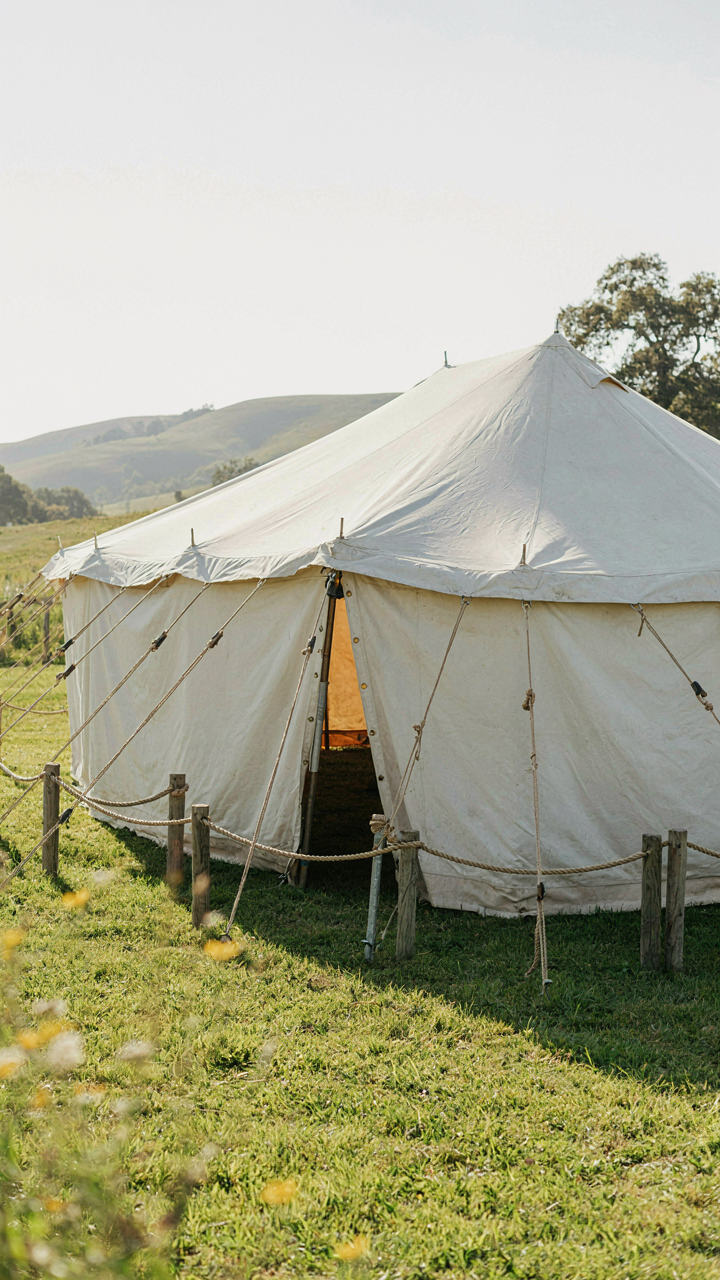
Perimeter Threats And Real Countermeasures

You want to feel secure because theft and intrusion wreck the entire experience, not because you’re paranoid. Here’s the mechanism: festivals operate in temporary lawlessness where social enforcement disappears and opportunity flooding hits maximum. Treat your campsite like a security perimeter with defined entry points and visibility lines. Most people ignore sightlines entirely, then blame bad luck when theft happens. Position your tent entrance to face the main camp corridor or gathering area, not hidden in dense clusters. This shifts you from prey to observer. Place high-value items inside your tent at night and take irreplaceables with you during the day. Establish a visual anchor other campers recognize as yours, making your space psychologically less anonymous to potential thieves.
Gear anchoring prevents both theft and wind loss simultaneously. Use guy lines on all four corners of your tent, not just two. Drive stakes at 45-degree angles away from the tent body to maximize tension against lateral force. In shared camping zones, the tents that move or sag attract attention and signal disorganization. Keep your tent footprint tight and intentional. Clip any external gear to the tent frame with carabiners rather than leaving it scattered. This creates a unified perimeter that communicates “occupied and maintained” to everyone passing through. A secure campsite is a boring target.
Mental Space Through Layout Design
Your brain’s threat detection system never shuts off at festivals, so you control it through environmental design, not willpower. Military strategy uses the concept of defensive depth to slow attackers and create decision points. Apply this to your tent layout by establishing buffer zones between your sleep space and foot traffic. Position your tent at least two meters from the main pathway and adjacent tents. This creates psychological distance even when physical distance is limited. The space itself becomes your perimeter. Add a small rug or mat at your entrance to define where the outside ends and your space begins. This threshold marker signals transition and makes intrusions feel obvious rather than incidental.
Compartmentalize your camp functions into zones: sleep zone in the tent, social zone in front with seating, gear zone to one side. This separation preserves your tent as a recovery space, not a thoroughway or storage shed. Use low windbreaks or fabric screens to close sightlines into your tent without full enclosure. You’re not building a fortress. You’re creating enough visual separation that people don’t wander in out of curiosity or see your setup as an extension of communal space. The moment your tent becomes invisible to foot traffic, your mental load drops and your calm increases.
The Festival Tent Setup Illumination Doctrine
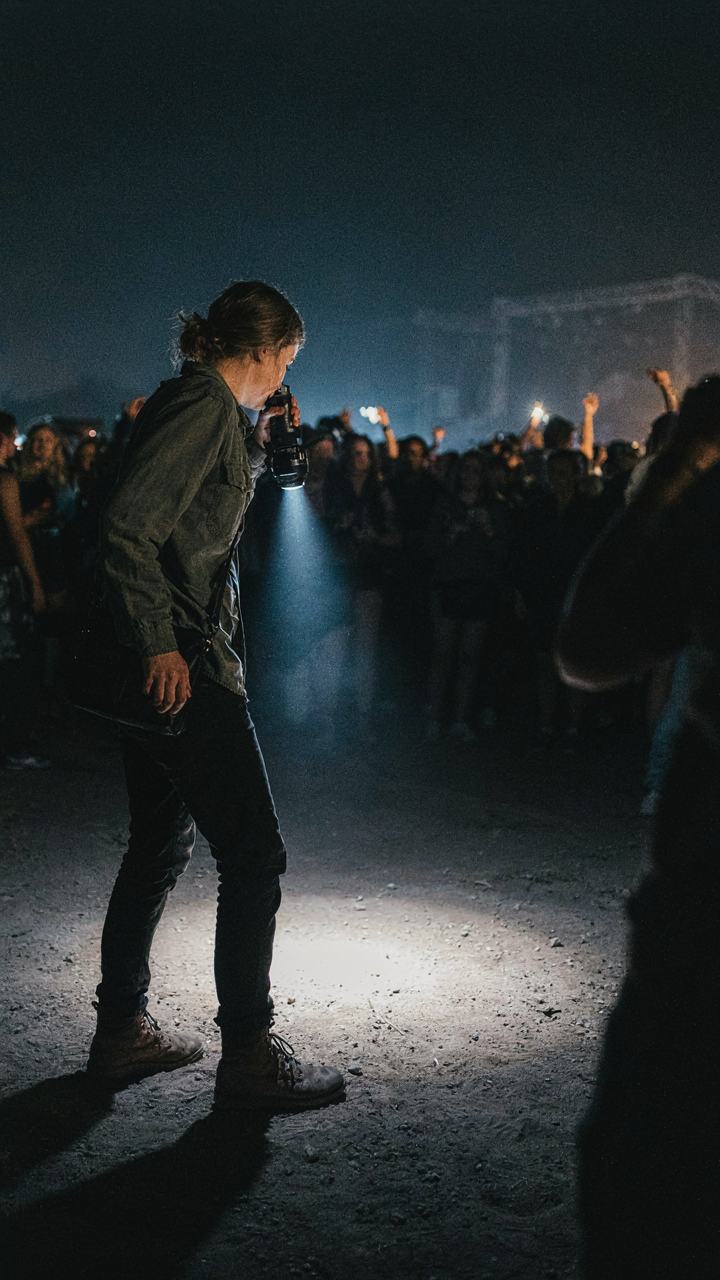
Light For The Work, Not The Instagram
You want your tent lit so people think you’re competent. That’s the real reason. But here’s the mechanism: light serves function first, and anything else follows from that clarity. In physics, we call this the principle of candela—directional intensity. Apply this to your tent setup: every light source must have a primary job. Task lighting eliminates shadows where you move. Ambient lighting keeps you oriented. Decorative lighting is what remains after both demands are met, not the other way around.
Most festival guides reverse this order. They sell you string lights and lanterns as the starting point, then pretend a flashlight will handle the rest. This leaves you squinting at your phone at 2 AM because the glow doesn’t reach the tent floor. Use a headlamp or clip light mounted at head height for reading and grooming. Add a battery lantern at ground level if you’re hosting people. Skip the rest until those two jobs work without compromise.
The Spill Problem Nobody Names
Light pollution at a festival tent isn’t about the environment. It’s about your sleep quality tanking because your neighbors’ LED strips flood your space at midnight. Use directional lights instead of omnidirectional ones—lights that aim down or toward a specific surface rather than radiating equally in all directions. A clip lamp on your tent pole beats a hanging globe every time. The difference is measurable: directional light gives you 80 percent of the brightness with half the spillover, meaning your neighbors see nothing and your sleep stays intact.
Colored bulbs solve nothing here. The real play is light placement and angle. Position your lantern or clip light so the beam hits only the area you need. If you’re using battery lights, choose 400-600 lumens for task lighting and 100-200 for ambient. Anything brighter than 600 lumens creates unnecessary spill and drains batteries fast. At festival setup, mounting your light source 3-4 feet high and angling it downward eliminates most bleed into neighboring tents and keeps your interior lit for actual use.
The “Hippie Camping” Waste Management System: Beyond The Bin

Stop Pretending Your Tent Site Stays Clean

You want to believe waste management is someone else’s problem so you can focus on the experience. It’s not. The mechanism is simple: a festival tent generates waste at a predictable rate, and that waste migrates outward in all directions unless you contain it first. You control the radius. Pre-emptive reduction works because you’re making the decision before the moment of consumption arrives. Buy less packaged food. Bring reusable containers. Fill water bottles instead of buying cans. Every item you don’t bring is zero waste you don’t manage later. The hippie camping ethos got one thing right: the person who brings it in controls what leaves the site.
Discipline at the entry point saves hours at the exit. Most festivals operate on a “pack it in, pack it out” principle, but that principle only works if you’ve already rejected half the garbage before your tent stakes hit the ground. Your site footprint determines your waste footprint. A smaller consumption footprint means a smaller cleanup footprint. This isn’t philosophy. It’s logistics.
The Real Cost Of Post Festival Cleanup
Cleanup after a festival is the logistical nightmare nobody plans for because the planning happens when you’re already exhausted. The damage is already done. By the time you’re breaking down your tent, you’ve forgotten where you threw things three days ago. Wind has scattered small waste across adjacent sites. Organic matter has started decomposing in corners you didn’t clean daily. The common advice says “just pack everything at the end.” That’s incomplete. Here’s what actually works:
- Daily waste consolidation: Designate one corner of your site for all waste each evening. This prevents scattering and makes final collection systematic rather than frantic.
- Separate wet from dry waste: Organic waste and beverage containers break down differently and attract different pests. Keep them in separate bags to speed up final sorting.
- Mark your perimeter at setup: Use stakes or rope to define exactly where your site ends. This prevents cleanup bleeding into neighboring sites and clarifies your responsibility zone.
- Use a second, exterior bag for daily empties: Keep bottles and cans outside your tent vestibule. This stops the smell from building inside your shelter and keeps rodent activity at the perimeter, not inside.
- Set a 30-minute pre-breakdown audit: Walk your entire site 30 minutes before you start packing. Pick up everything visible. This catches forgotten items before they get buried under packed gear.
The real cost is time, not money. A disorganized site takes three times longer to clear because you’re searching, not executing. The mechanism is simple: waste scattered across a site requires exponentially more time to locate than waste consolidated in one location. Cleanup speed is proportional to waste containment density.
The Data Driven Comfort Optimization For Music Festival Camping
Learn From What Actually Happened

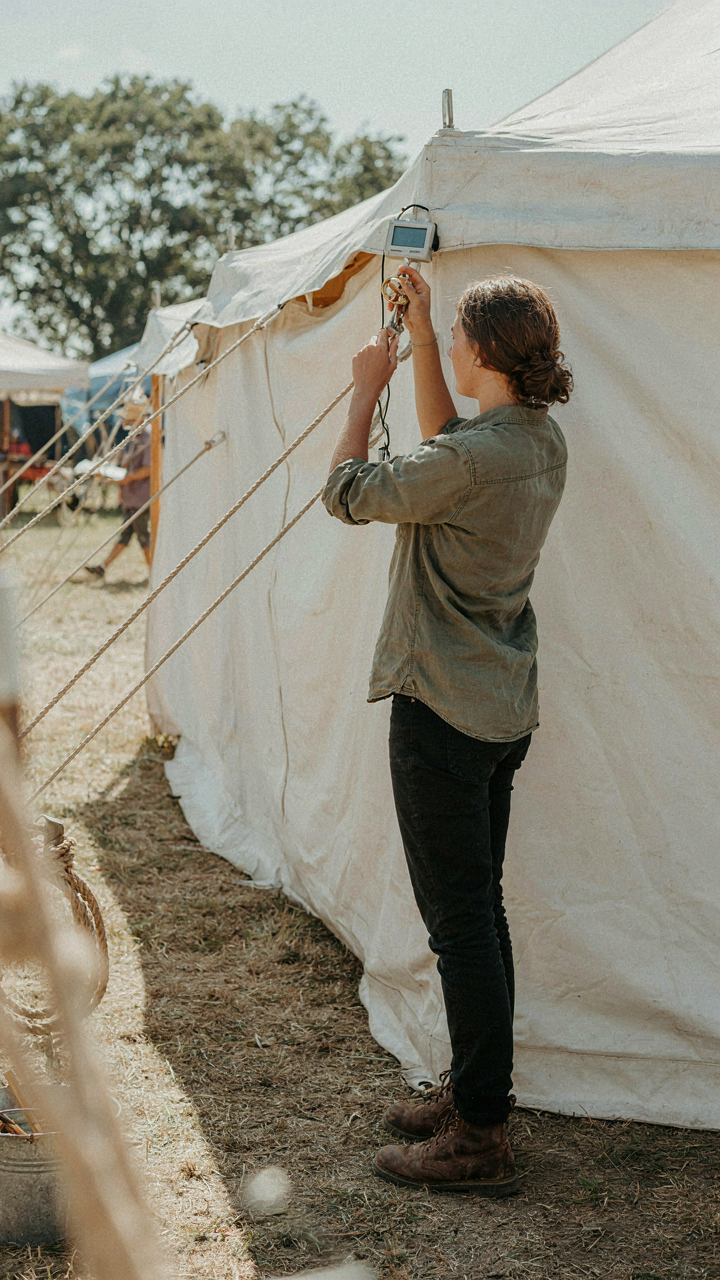
You want to believe your setup will work perfectly the first time. It won’t. Cybernetics, the study of feedback systems, teaches us that any complex system improves only through observable results feeding back into the next iteration. Your tent setup is a system. Temperature swings, condensation patterns, ground pressure points, and wind vectors all generate data every night you camp. Most people ignore this data entirely and repeat the same mistakes at the next festival.
Document three things before you pack up: where you woke sweating, where moisture pooled, and which guy lines held under wind gusts. Write these down. Not mentally. Actually write them. This becomes your input for the next setup. The festival environment changes yearly, but your body’s response patterns remain predictable. You’re building a personal protocol, not following generic advice.
Measure Against Your Own Baseline
The common advice says “bring a quality tent” and “set it up right.” This is incomplete garbage. Quality matters less than knowing your specific comfort threshold for temperature, humidity, and pressure distribution. Measure what actually happens inside your tent using cheap tools: a thermometer, a moisture meter, a pressure-sensitive mat or phone app that detects ground contact points.
Run two setups at the same festival if possible. Vary one variable per test: ground insulation type, ventilation angle, stake depth, or flysheet tension. Record internal temperature and humidity every two hours. After three festivals using this method, you’ll know exactly which inputs control your comfort output. Stop adjusting blindly. Adjust based on numbers from your previous experience.
The Post Festival Decompression Chamber For Festival Tent Setup
Breaking Down Gear Before Damage Sets In
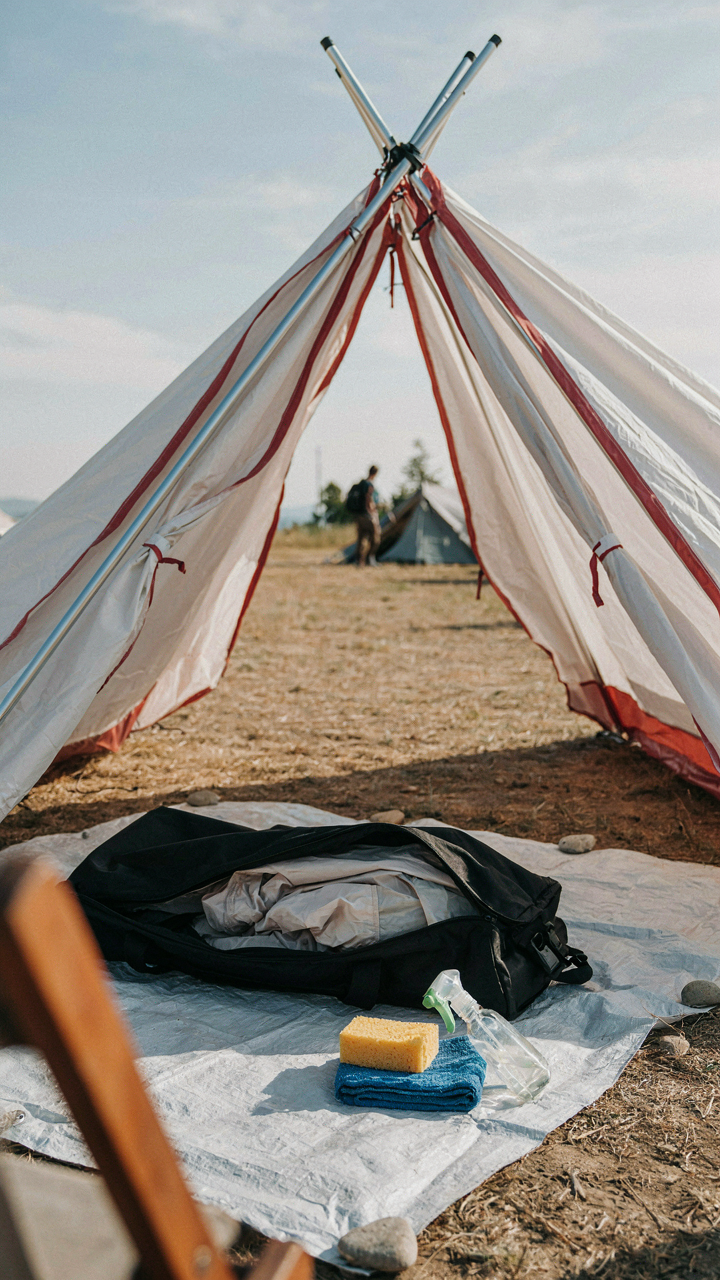
You want this section because you’re terrified of losing money on equipment you overpaid for. Here’s the mechanism: moisture and salt residue don’t care about your intentions. They work on physics. The moment you pack a wet tent, mildew colonizes the fabric within 48 hours. Breakdown isn’t optional maintenance—it’s asset preservation.
Start the teardown while the site is still operational. Remove stakes methodically, inspecting each one for bent tips or corrosion. Stack poles in their original sleeves without forcing them. Let fabric air-dry completely before storing, even if it takes an extra day. A damp tent stored sealed becomes a biological disaster zone within weeks.
Recovery Without Burnout Cycles
Most advice says “rest and hydrate”—useless noise. Your body accumulated a specific debt: electrolyte depletion, sleep fragmentation, and localized muscle fatigue from ground pressure. Treat this as a staged return, not an on-off switch. The first 24 hours demand intentional dehydration reversal and elevated sodium intake, not water alone.
Sleep in your own bed the night after. Your nervous system needs the environmental reset more than your muscles need extra cushioning. On day two, light walking accelerates recovery better than complete stasis. Return to normal eating patterns immediately—your metabolism is elevated and needs the fuel. The decompression happens through structured normalcy, not through passive recovery.
Your Festival Tent Setup Isn’t The Problem, Your Approach To Discomfort Is

Most people treat tent discomfort like weather. You don’t. Stop accepting cold nights and sweaty mornings as festival dues. Your setup determines everything—airflow, insulation, moisture. You control these variables. Pick one weak point in your current setup today. Fix it before your next festival. The difference between miserable and memorable isn’t luck. It’s intention.