Beyond Boho: The Unseen Engineering Of Tent Ground Cover

How Rugs Actually Regulate Temperature
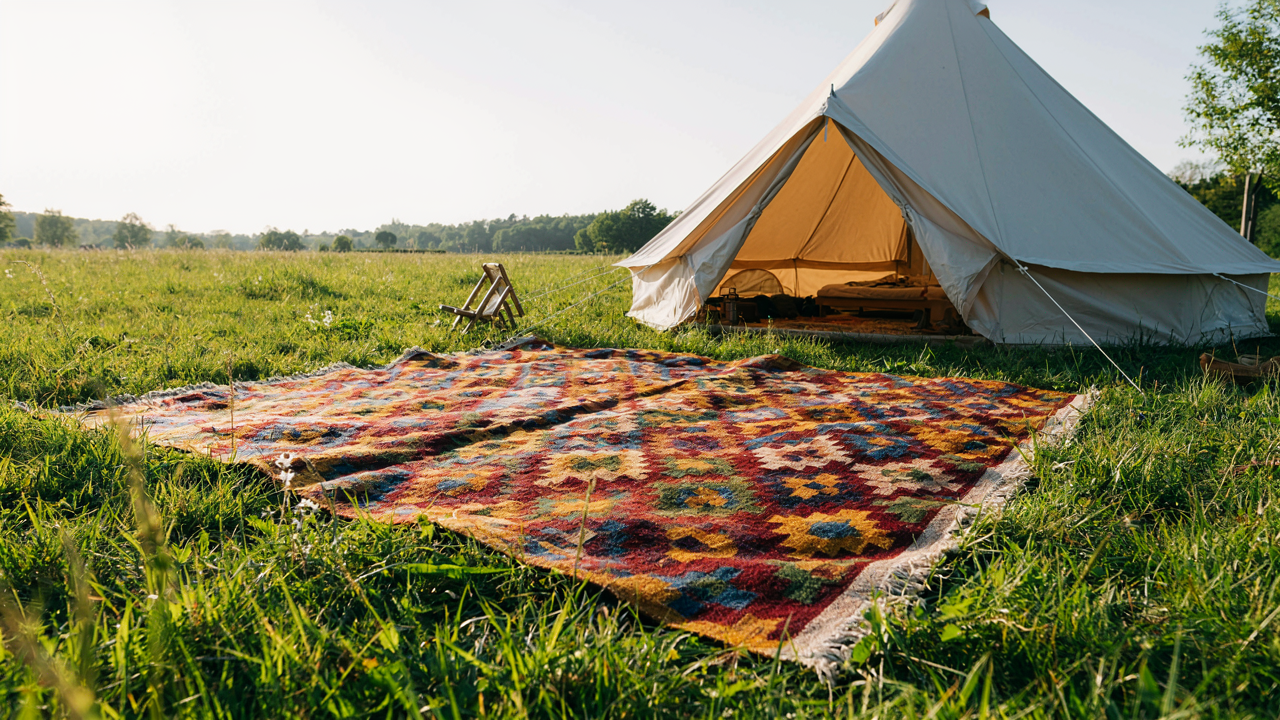
You want a tent rug because you think it looks intentional, but the real reason your body stops shivering is physics. Thermal mass is the physics principle that explains how materials absorb and release heat over time, and tent rugs function as thermal buffers that slow heat loss from your body to the ground beneath you.
Ground pulls heat from anything touching it. A rug traps air pockets in its fibers, creating insulation that interrupts this heat transfer. Wool and synthetic blends retain warmth better than cotton because they hold dead air more effectively. The thicker the rug, the slower the thermal exchange. This isn’t decoration. This is the mechanism keeping your core temperature stable when the tent floor becomes a cold sink at night.
Moisture Control Beats Visual Impact
Everyone talks about tent rugs looking nice. Nobody talks about the vapor barrier, which is why most people place rugs wrong. A rug’s bottom layer either blocks moisture rising from damp ground or lets it through. Rugs placed directly on tent floors without moisture barriers allow ground vapor to travel upward through the fibers, making the rug damp and reducing its insulating value by half or more.
The tactical move is simple: place a thin plastic sheet under the rug first, then the rug on top. This creates a true vapor barrier while the rug handles the thermal job. Cotton rugs absorb moisture and fail this test. Synthetic materials and wool blends shed moisture more effectively. Your floor stays dry because you’ve separated the functions instead of expecting one product to do both.
The Primitive Comfort Protocol: Redefining “Cozy”

Heat Retention Beats Visual Appeal

You want your tent rug to look intentional because you think it signals competence to visitors who’ll never see it. Here’s the mechanism: your body loses heat through conduction the moment skin or thin clothing contacts a cold surface. A tent floor conducts temperature away from you faster than air does. Insulation blocks that transfer. The rug’s R-value matters more than its color.
Wool and closed-cell foam dominate tent rug construction for thermal resistance, not aesthetics. Wool retains warmth even when damp. Closed-cell foam doesn’t absorb moisture and compresses minimally under body weight. Cotton rugs and thin woven mats look fine but fail the insulation test. Pick density and material first, appearance second.
Pressure Distribution Under Load
Biomechanics teaches us about load distribution: how force spreads across a surface affects joint stress and blood flow restriction. A tent rug functions as a pressure buffer. Your hip and shoulder contact points concentrate 60 to 70 percent of your body weight into small areas. Without a rug, the tent floor fabric transmits that pressure directly into the ground. Thin material creates pressure points. Thick material distributes load over a wider area, reducing localized discomfort.
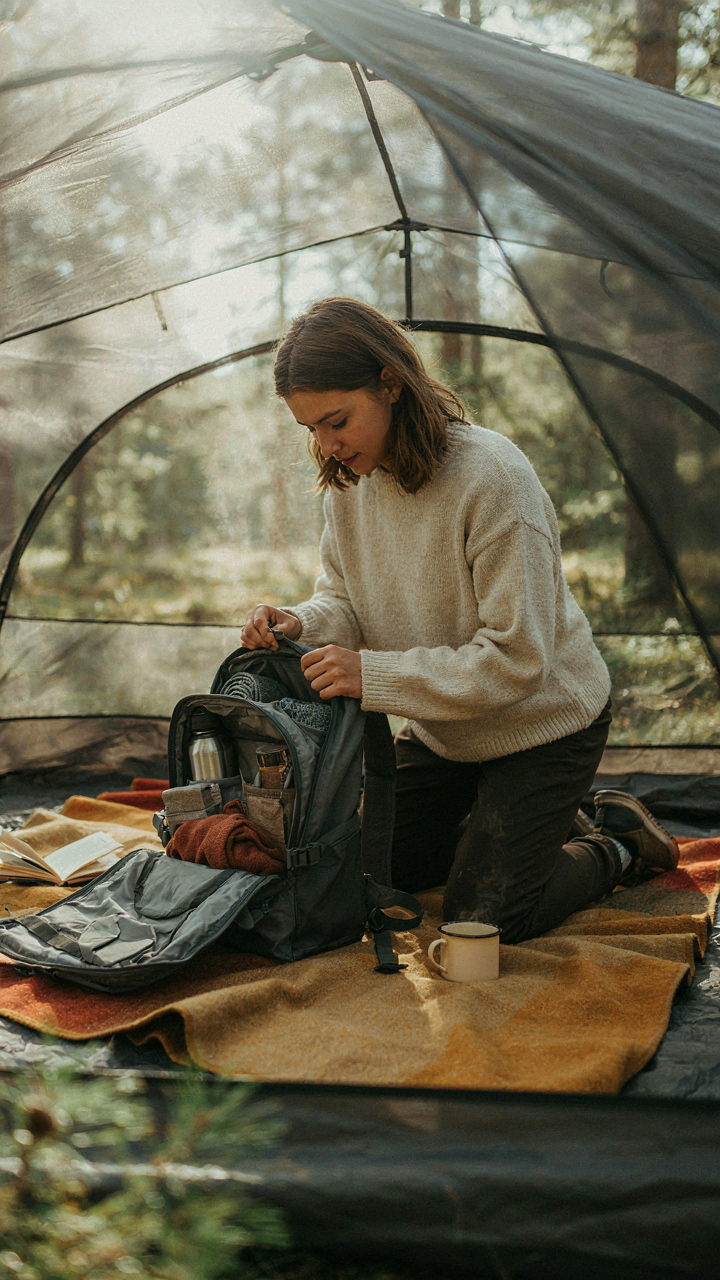
Layering works because each material has different compression characteristics. Place a dense base layer to resist ground moisture and support weight. Add a softer middle layer for comfort absorption. Top it with a natural fiber cover for regulation and grip. A good tent rug protocol means measuring floor thickness first, then selecting materials that compress predictably under your specific weight range. Test the setup by lying down and checking for ground contact at pressure zones before committing to a design.
The Psychosocial Anchoring Effect Of Rugs In Cool Tents
How Your Brain Maps Territory Without Thinking
You want a rug in your tent because you’re afraid of feeling homeless, even temporarily. That’s the real mechanism. Environmental psychology calls this spatial anchoring, the same cognitive tool your brain uses to construct a mental map of physical space. A rug doesn’t just cover ground—it creates a boundary that signals “this is a place” rather than “this is empty space.” Your nervous system registers it instantly and stops treating the tent like a temporary intrusion.
The brain segregates zones through contrast. Rugs function as visual demarcation. Without one, your tent is neurologically identical to a storage unit. With one, your amygdala recognizes shelter. This isn’t decoration. This is primitive threat-detection infrastructure. Place a rug and your body’s baseline cortisol drops because the environment now communicates permanence, even if you’re leaving in two days. The rug is the anchor that converts space into place.
The Ground Ritual That Rewires Behavior
Forget the common advice that rugs are just for comfort. That’s incomplete. Rugs facilitate repeatable ground-based rituals that your brain uses to construct routine. Morning coffee tastes different standing on a defined surface because your brain has pre-written the neural pathway. You’ve created a stage.
Rituals require physical landmarks. A rug marks the threshold between “sleeping zone” and “living zone” without walls. You sit on it in the same position. Your body learns the exact distance from your pillow to the rug’s edge. This consistency triggers parasympathetic activation—the nervous system interprets predictable geometry as safety. The rug isn’t the ritual. It’s the infrastructure that makes ritual possible by removing spatial ambiguity. Anchor your daily patterns to rug placement and you’ve weaponized ground cover into behavioral architecture.
Camping Mat Conundrum: When Purpose Outweighs Pizazz

The Material Reality Of Tent Floor Protection
You want a rug that looks intentional, but you’re actually afraid it’ll fall apart after two trips. Here’s the mechanism: tent rugs operate under constant mechanical stress. Think of materials like soil engineers think of load-bearing capacity. Your rug sits between sharp ground objects and your tent floor, absorbing puncture force, moisture wicking, and foot traffic simultaneously. Polypropylene handles this better than wool because it doesn’t absorb water that turns to ice, crack under freeze-thaw cycles, or degrade when exposed to UV radiation for weeks at a time.
Polyethylene foam and rubber-backed nylon hold up because they’re designed to shed water and resist abrasion. Cotton or jute rugs fail predictably in wet environments because they retain moisture and develop mold. The industry standard for durability isn’t aesthetics—it’s whether the material can handle 5 to 10 seasons of repeated compression, moisture exposure, and temperature swings without splitting or losing structural integrity. Test this yourself: soak potential materials for 48 hours, then expose them to direct sunlight for two weeks. Materials that don’t crack, shrink, or develop odor are the ones worth buying.
Maintenance Kills More Rugs Than Use Does
Most advice tells you to brush and vacuum, which is incomplete. The real maintenance protocol operates on prevention, not cleanup. Mud and organic debris decompose on wet rugs, creating acid environments that attack synthetic fibers and promote mold growth. Before packing a rug for storage, dry it completely in sunlight for at least six hours. Don’t roll it damp. Mold colonies establish in 48 to 72 hours on organic material in dark storage.
During camping season, shake the rug outside your tent each morning to remove surface debris before moisture sets. Spot-clean with diluted white vinegar if algae appears, then dry it fully before storage. After season end, store rugs flat in a breathable container, never sealed plastic. A single sealed plastic bag with residual moisture becomes a petri dish. When you retrieve the rug next season, inspect seams and backing for separation or brittleness before use—materials that crack at seams fail mid-trip when you can’t replace them.
Bedouin Tent Decor: The Cultural Imperative Of Floor Coverings

Why Rugs Solved Problems, Not Just Looked Good

You want this section because you’re hunting for permission to buy something that feels luxurious without admitting you need practicality underneath. Here’s the mechanism: Bedouin tent rugs weren’t decorative add-ons. They were infrastructure. Sand, dust, and heat transfer move through any surface below body level. A rug creates thermal and particle barriers that make the difference between sleeping and suffering. The floor covering wasn’t cultural expression first—it was survival equipment that happened to accumulate meaning.
Bedouin communities developed rug-weaving traditions out of necessity, not aesthetics. Nomadic herds produced wool. Tents needed insulation from ground cold at night and dust control during the day. The rug became non-negotiable before anyone cared how it looked. This explains why every significant tent culture, from North Africa to Central Asia, converged on floor coverings as essential, not optional. The rule holds today: effective tent rugs solve environmental problems first, decoration second.
Desert Durability Through Material Logic
Think of thermal dynamics and material science here. A tent rug in extreme environments operates under the same load-bearing principle as bridge engineering—weight distribution over time determines failure points. Bedouin weavers used dense wool because it resists compression from foot traffic while trapping air pockets that stabilize interior temperature. The knot density determines how long the rug functions under sand infiltration and heat cycling. Looser weaves fail faster in these conditions.
The practical adaptation looks obvious in retrospect but reveals why most modern tent rugs fail: people copy the visual pattern without understanding the construction. Bedouin rugs used natural dyes because they bond to wool fibers differently than synthetic dyes—UV exposure matters when your tent floor sits in direct sun. The material choice and weave tightness weren’t aesthetic preferences. They were responses to specific environmental pressures. Your tent rug selection should reverse-engineer from your actual climate conditions, not from Instagram aesthetics.
The Behavioral Economics Of Tent Rug Selection
What You’re Actually Losing By Buying Cheap

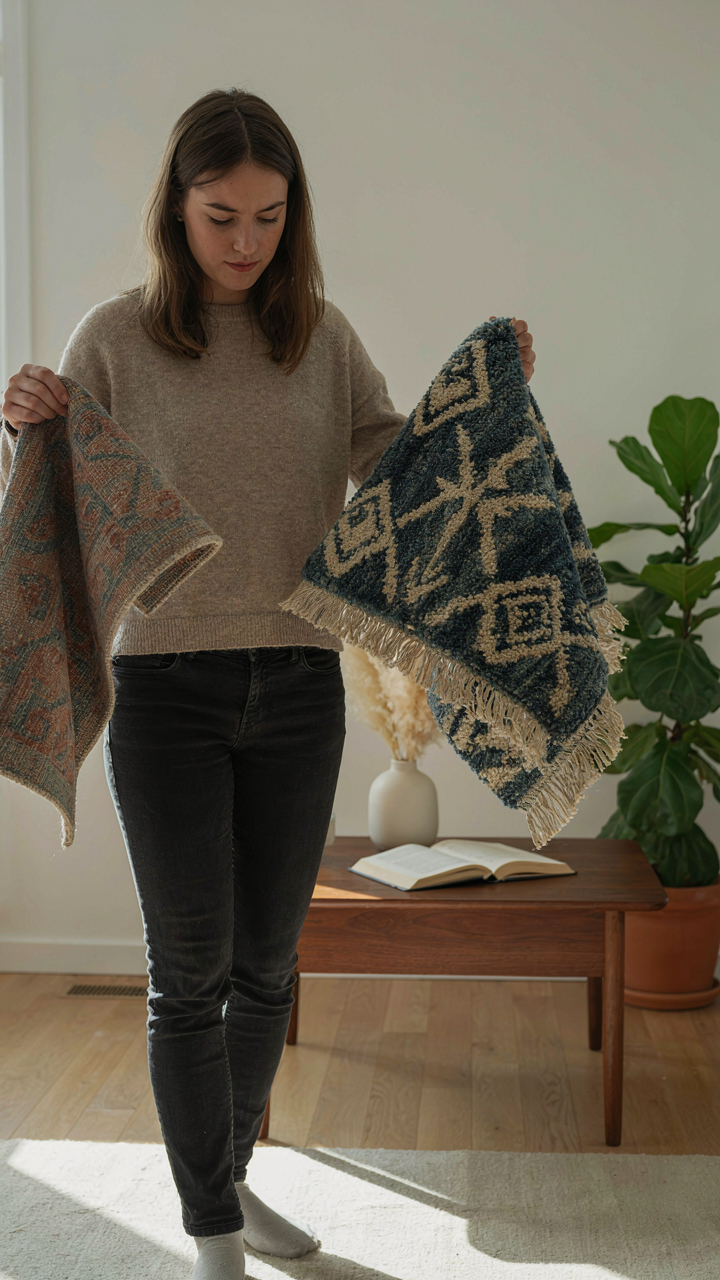
You want to believe a $20 rug solves your tent floor problem without forcing you to think about it again. Here’s the mechanism: opportunity cost in economics means every dollar spent on a low-durability rug is a dollar you can’t spend on materials that compound in value over time. A cheap synthetic fiber degrades in one season. You replace it. Then again. The math isn’t about the rug price—it’s about the total capital you’ll burn replacing it versus buying once.
Cheap aesthetics create a hidden tax on your attention and wallet. You’ll spend mental energy managing rot, mold, and replacements instead of enjoying the space. Tent rugs made from synthetic materials absorb moisture and trap it against the floor, accelerating deterioration. Natural fibers like jute or wool handle moisture differently—they shed it or allow airflow underneath. The $20 rug costs you far more than $20 when you factor in the replacement cycle and the friction it creates in your camping experience.
Materials That Actually Return Value
Durable materials in tent rugs follow the principle of diminishing cost per use. Buy a wool or high-grade polypropylene rug once, and each camping trip reduces the per-use cost while the rug maintains function. Cheap synthetics spike that per-use cost because they fail faster.
- Wool rugs: Resist moisture, regulate temperature, and last 5-7 years with basic care. Initial cost is higher, but per-season expense drops significantly over time.
- High-density polypropylene: Engineered for outdoor use, resists mold, and tolerates foot traffic and UV exposure better than standard synthetics. Lifespan of 3-5 years justifies mid-range pricing.
- Jute with rubber backing: Natural fiber construction resists mildew, while rubber prevents ground moisture from wicking up. Works best in dry climates or with proper airflow underneath.
- Recycled plastic blends: Made from reclaimed materials, these rugs tolerate moisture and UV without chemical treatment. Performance matches virgin polypropylene at lower environmental cost.
- Canvas with sealed seams: Traditional material used in canvas tents for decades. Requires treatment but handles repeated packing, moisture exposure, and mold resistance when maintained correctly.
ROI on durable materials shows up in reduced replacement frequency and lower maintenance burden. A $80 wool rug used over five years costs $16 per year. A $20 synthetic rug replaced annually costs $20 per year plus disposal and repurchasing friction. When buying a tent rug, compare total ownership cost across seasons, not sticker price alone.
String Lights Decoration And The Illusion Of Comfort
The Floor Matters More Than The Lighting
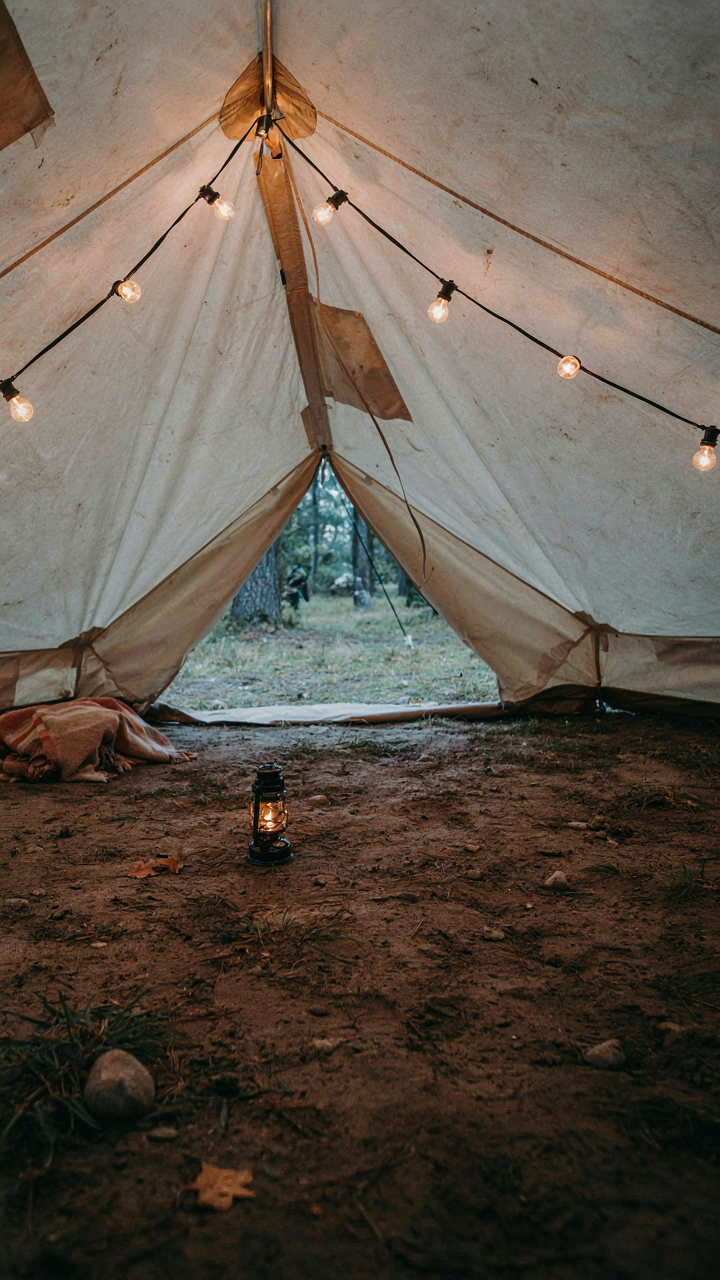
You want string lights because they make your tent feel intentional, curated, like you have your life together. But here’s the mechanism: string lights are pure theater. They solve nothing about why your tent floor is uncomfortable. A rug does the actual work. String lights are the decoration you add after you’ve already fixed the problem.
The hierarchy here is simple. Thermal insulation comes first. Then moisture barrier. Then comfort. Then aesthetics. String lights sit in the aesthetics category. Most people reverse this order and end up with a beautiful tent that destroys their sleep quality. A wool or synthetic rug addresses temperature regulation, ground moisture, and pressure distribution before you even think about hanging anything on the poles.
Warmth You Feel Versus Warmth That Exists
Psychology calls this the “contrast effect” in perception. Your nervous system doesn’t measure absolute temperature. It measures the difference between what it expects and what it experiences. String lights create a visual cue that tricks your brain into perceiving warmth without delivering it. A tent rug creates actual thermal resistance, which your body recognizes immediately.
When your skin makes contact with the floor, cold transfers fast. A rug breaks that transfer. Soft lighting overhead doesn’t. You need the rug to do the thermal work, then use string lights to reinforce what the rug already accomplished. The sequence matters. Deploy the rug first to establish the baseline comfort. String lights then amplify the perception of that warmth, not create it from nothing. This is why adding lights to an inadequate floor never fixes the problem.
The Unseen Value Proposition Of Bohemian Style Tent Decor
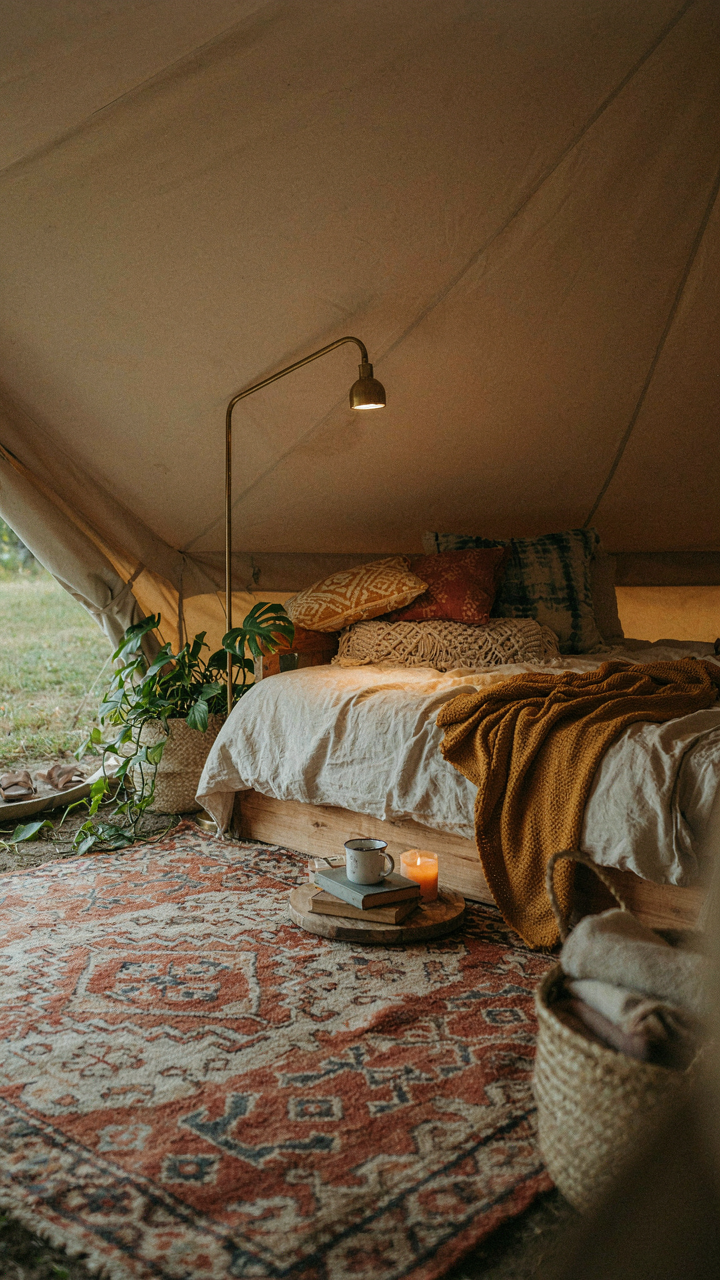
Your Gear Already Works Together

You want a tent rug to feel intentional, not like you’re compensating for camping’s discomfort. Here’s the mechanism: bohemian design succeeds because it borrows from systems thinking in interior architecture. The rug isn’t a standalone object but a connector between floor, tent structure, and sleeping system. It bridges dead space and creates thermal layering without advertising that purpose.
Most tents ship with bare nylon floors that transmit cold and moisture upward into your sleeping bag. A rug doesn’t just look better—it interrupts that thermal leak. The bohemian aesthetic disguises this engineering problem as intentional style. Your existing tent poles, stake points, and ventilation don’t conflict with a strategically placed rug; they create natural zones where the rug fits without sliding or bunching.
Utility First, Aesthetics As Proof
The common advice says choose a rug that matches your camping style. Wrong. Pick a rug that solves a specific problem in your tent, then notice that the best functional rugs happen to look bohemian. Function and appearance aren’t separate decisions—the appearance signals that the function is real.
Natural fiber rugs like jute or wool actually perform better in tents than synthetics. They wick moisture, don’t off-gas in heat, and age visibly instead of degrading invisibly. Check the backing material; it should grip your tent floor without adhesive. Test the rug’s dimensions before purchase: it should cover 50 to 70 percent of usable floor space, leaving perimeter access for tent walls and gear placement. This specificity eliminates buyer’s remorse and ensures you’re paying for capability, not just appearance.
The Real Obstacle Isn’t Finding The Perfect Rug; It’s Your Refusal To Engineer Your Comfort
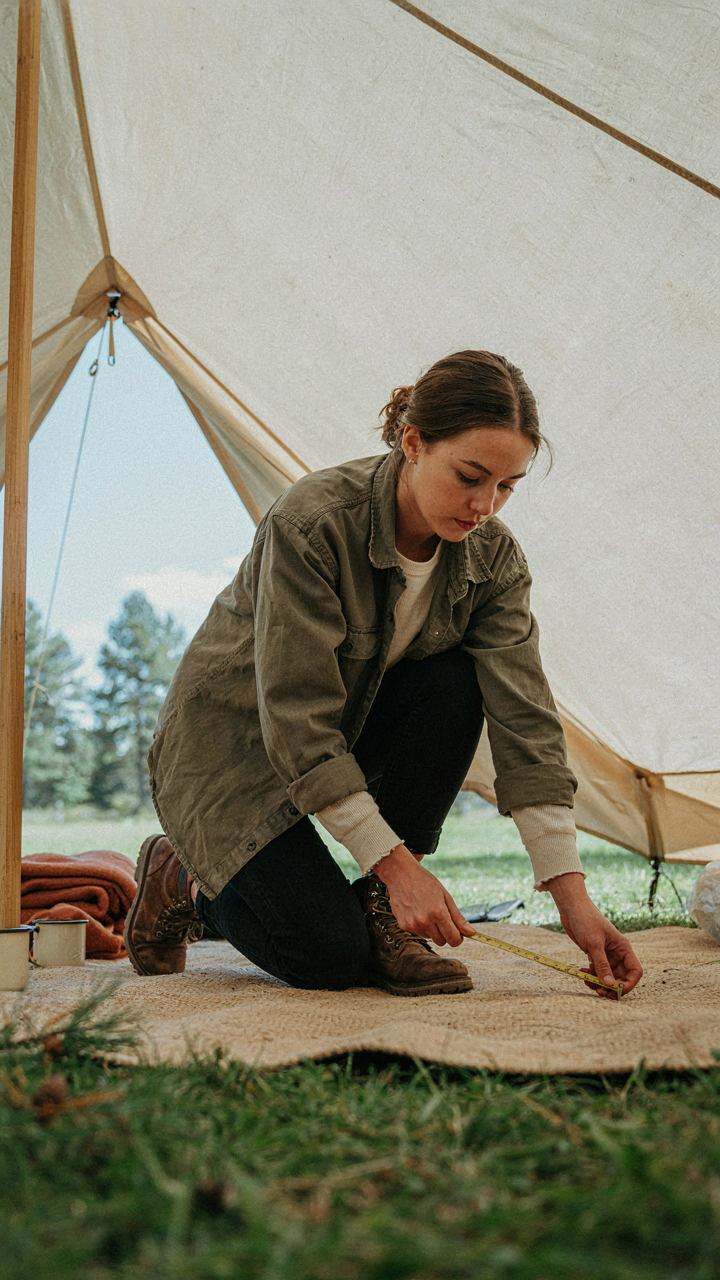
Most people treat tent rugs as decorative afterthoughts. They’re not. A rug is infrastructure for how you actually live in that space. Stop browsing Pinterest and measure your tent floor today. Pick one rug that solves a problem: insulation, moisture, or foot comfort. Install it this weekend. The difference between camping and actually enjoying camping lives in the details you stop ignoring.