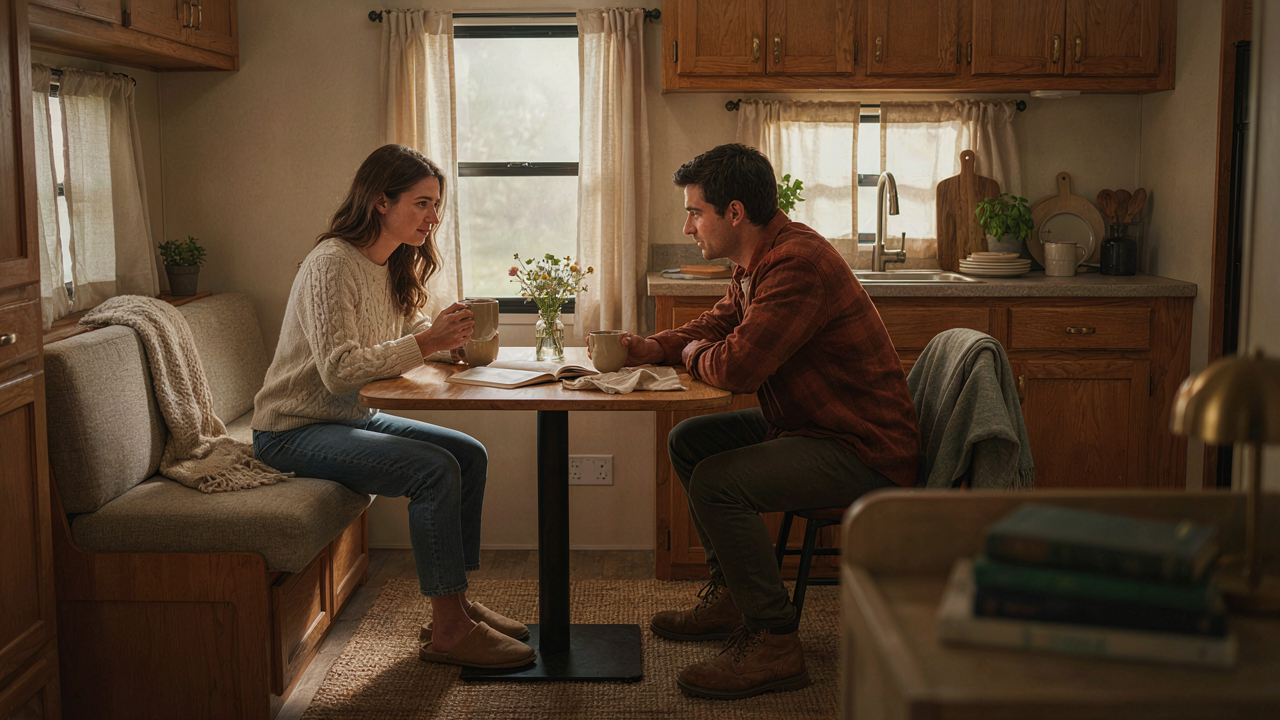
The “RV Interior Design” Delusion: Why Most Advice Is Useless
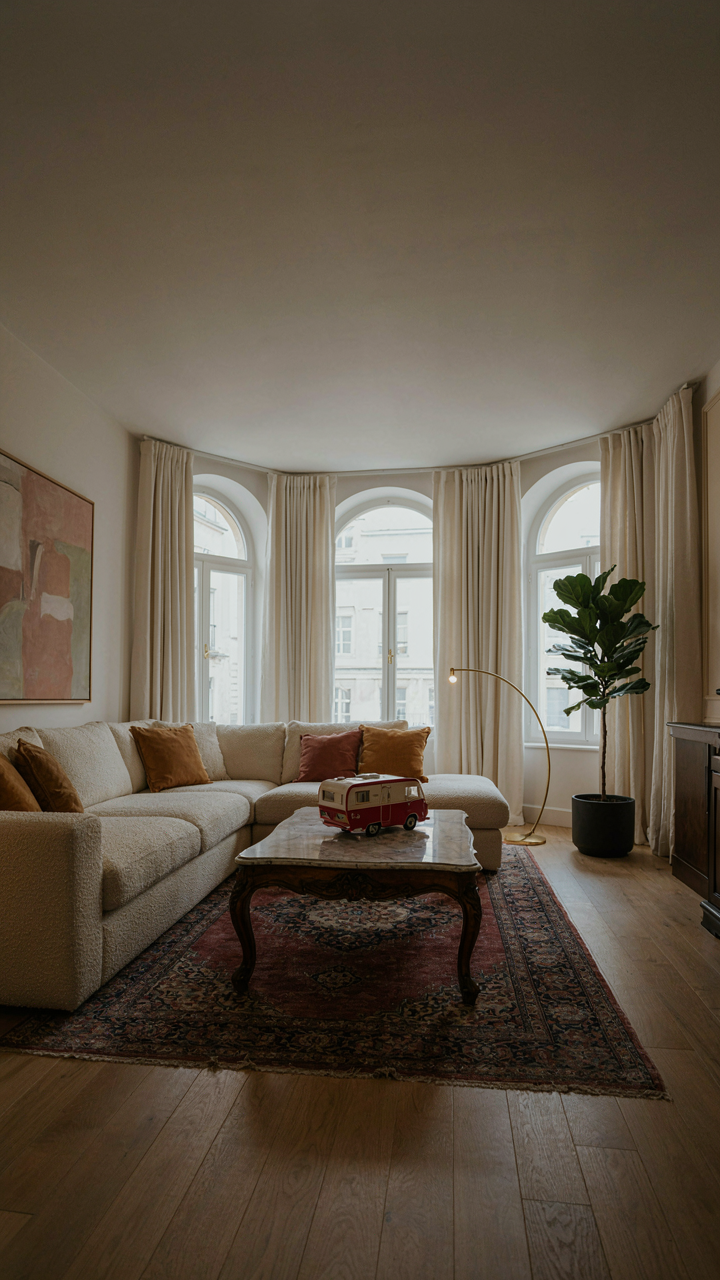
Generic Advice Ignores Your Real Constraints
You want permission to believe that RV decorating works like apartment decorating—same rules, same results, different square footage. It doesn’t. Most design advice treats space as the only constraint. RV living adds weight limits, electrical draw, moisture management, and thermal efficiency. Ignore these and your “cozy” addition becomes a fire hazard or money pit. The mechanism is simple: constraints breed better decisions than freedom does.
Standard interior design advice fails in RVs because it optimizes for aesthetics first and function second. Magazine-worthy setups look great in photos but create maintenance nightmares, reduce usable space, or exceed your rig’s capacity. You can’t bolt a gallery wall to an RV wall without understanding studs, insulation, and structural load paths. Don’t follow the trends. Follow the physics of your specific box on wheels.
Durability Over Trends Wins Every Time
Function-first design isn’t trendy, so nobody talks about it. Every decor choice in an RV must answer one question: will this survive constant vibration, temperature swings, and use? Particle board nightstands fail faster in an RV than in a house because movement breaks glue bonds. Real wood costs more upfront but holds up to repeated flexing. The economics of RV decor reward durability, not aesthetics.
A faded fabric that still performs beats pristine upholstery that sheds or stains after six months of travel. You’re not furnishing a space you’ll show off monthly. You’re building a functional environment you’ll inhabit daily across varying climates and road conditions. Durability isn’t about spending more everywhere—it’s about spending strategically on pieces that take the most abuse.
The Scarcity To Abundance RV Decor Protocol
Start By Removing, Not Adding

You want permission to buy things. That’s the real reason you’re reading this section. Here’s the mechanism: abundance in constrained spaces doesn’t come from acquisition—it comes from subtraction. In economics, this is called opportunity cost. Every item you keep in an RV occupies finite square footage and competes for visual attention. That competition is what makes an RV feel cluttered, not the absolute number of objects.
Walk through your RV and catalog everything that isn’t functional or doesn’t spark genuine use. That framed print from your cousin’s gift shop? The decorative bowl you haven’t touched in six months? The throw pillow that doesn’t match anything? Remove it. Sentimentality is a tax you pay in wasted space. Most people keep items because they feel guilty about waste, not because they add value to daily life.
Items That Do Two Jobs At Once
Multi-functional furniture isn’t trendy advice—it’s geometric necessity. An RV has roughly 25 to 40 percent of the floor space of a small apartment. That means every piece must justify its existence through utility, not decoration alone. A storage ottoman works as seating, a side table, and hidden storage. A wall-mounted fold-down desk becomes a dining surface or workspace without consuming permanent floor real estate. A bed skirt with pockets stores seasonal items underneath. This is how budget decor compounds—each item performs multiple roles simultaneously.
The math is simple: if you own eight decorative items that do nothing, you’ve wasted eight purchasing slots and multiplied your clutter. If you own four items that each serve three functions, you’ve covered twelve needs while using half the space. Source these pieces from estate sales, Facebook Marketplace, or IKEA’s storage line rather than RV-specific retailers, which charge premiums for the same functionality. The protocol is this: before purchasing any decor item, name two functions it must perform.
Beyond Pinterest: Sourcing RV Decor Ideas With A Purpose

Thrift Store Gold: Overlooked, Underpriced, Unique Finds
You want to feel like you’ve discovered something nobody else has. That’s not shallow—it’s the mechanism behind why thrift stores work for RV decor when big-box retail fails. Thrift stores hold inventory nobody curated for mass appeal, which means you’re shopping from actual variation instead of algorithmic repetition. Small end tables, lamps, and wall art cost 80 percent less than new equivalents and arrive with character because they’ve existed before you bought them.
The real advantage isn’t just price. You’re buying items made during different eras and manufacturing standards, which means better construction on average than what you’ll find new at comparable cost. Wood furniture from the 1970s and 1980s uses solid materials, not particleboard veneers. Brass fixtures and ceramic pieces don’t degrade the way modern imports do. Hit Goodwill and Salvation Army locations near retirement communities—that’s where estate sales funnel their overflow, and the quality gap widens dramatically.
Skill Acquisition Over Cost Reduction
DIY isn’t about saving money. It’s about sovereignty over your space—you control the outcome instead of consuming someone else’s design decision. Think of it as applied problem-solving: you identify a gap (bare wall, inadequate storage, poor lighting), then you acquire the specific skill to close it. Upholstering a cushion, refinishing a nightstand, or building a floating shelf teaches you what actually works in a confined space because you’re making trade-offs yourself, not following instructions from someone who’s never lived in an RV.
Skill acquisition compounds. Learn to use a power drill for one project and you unlock shelving, wall-mounting, and hardware installation for everything downstream. The cost of tools is a one-time investment that pays for itself across multiple projects and across years of living on the road. Start with YouTube tutorials on specific techniques, not general DIY channels, then commit to one small project before scaling to larger work. The mechanism is simple: you build competence, reduce dependency on retail solutions, and stop treating your RV like a temporary space because you’ve physically invested in shaping it.
The “Small Campers” Optimization Framework: Maximizing Every Inch

Going Vertical Beats Going Wider

You want your RV to feel spacious without spending money on structural changes. The real mechanism is this: human perception of space correlates directly with ceiling-height visibility, not floor square footage. Most RV owners waste vertical wall real estate because they think horizontally, treating walls like they’re in a house. They’re not. In an RV, walls are prime inventory.
Install floating shelves at eye level and above without drilling into studs. Use the space between cabinets and ceiling for shallow open shelving or wall-mounted baskets. This costs under fifty dollars and creates perceived depth. A single vertical storage column transforms a cramped corner into functional living. Mount tension rods inside existing cabinet doors for hanging lightweight items. The principle comes from architecture: the Modernist movement proved that vertical lines draw the eye upward, literally expanding how large a confined space feels.
Mental Load Reduction Through Strategic Subtraction
The common advice says “add storage solutions.” That’s incomplete and often wrong. Clutter tax operates like cognitive load in neuroscience: every visible item demands processing power from your brain, whether you notice it consciously or not. An RV amplifies this effect because confined spaces concentrate visual stimuli. Remove what you don’t use weekly. This single rule eliminates forty to sixty percent of typical RV clutter without purchasing anything.
Visible clutter in small spaces doesn’t just feel bad, it degrades decision-making capacity and increases cortisol response. Adopt a containment protocol: every category of item gets one designated home with defined boundaries. Books go in one cabinet. Hygiene products fit in one drawer. Seasonal items live in labeled bins under the bed. When everything has a fixed location and visible quantity limit, your brain stops flagging your environment as chaotic. Close cabinet doors. Hide your stuff. The space itself becomes the decor.
Camper Remodel On A Budget Is A Mindset, Not A Project

Small Spaces Work Like Biological Systems
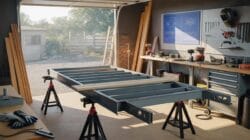
You want permission to spend less and still feel proud of your space. That’s the real ask here. Evolutionary biology shows us that successful organisms don’t maximize every resource at once—they allocate ruthlessly to survival first, then optimize within constraints. Your RV operates the same way. The constraint isn’t stupidity or cheapness. It’s the principle that drives every effective small habitat: every element must earn its place by serving multiple functions simultaneously.
The common mistake is treating an RV like a scaled-down apartment. You buy a decorative item, then another, then more accessories to fill gaps. Each addition feels logical alone. But in a 200-square-foot space, you’re actually competing for visual real estate and mental load. Organisms that thrive in small niches don’t add redundancy—they stack functions. A storage ottoman doesn’t just hold blankets. It becomes seating, a table surface, and visual anchor. A wall-mounted shelf doesn’t just display. It redefines the spatial proportion of the room. Start asking: what three jobs does this single object need to do before it enters the RV?
Needs Dictate, Wants Negotiate
Separate what keeps you functional from what you think will make you happy, because that boundary determines your budget and your sanity. Needs are non-negotiable: sleeping, storage for gear, task lighting for cooking, climate control. Everything else competes for the remaining budget. Most people fail here because they blur the line by calling wants “needs”—then run out of money mid-project and abandon the whole thing.
The mechanism is simple resource allocation under constraint. First, price out every genuine need without compromise. That’s your floor. Then, whatever remains is your actual decorating budget. Work within it. This isn’t deprivation—it’s clarity. You stop wasting time researching options that were never affordable. You stop second-guessing purchases because you know exactly why each one exists. Small budget decisions compound fast in small spaces. One smart choice clarifies the next one.
RV DIY That Actually Adds Value (and Doesn’t Look Terrible)
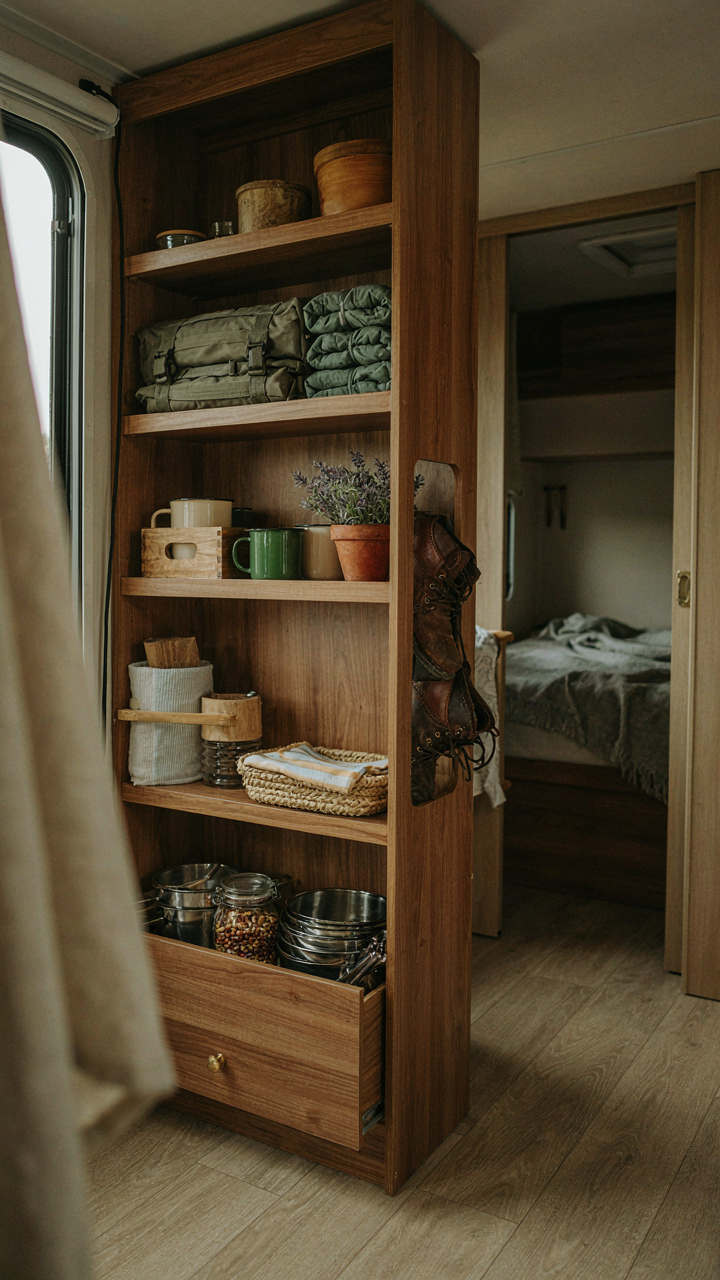
Function Before Aesthetics

You want to feel like you made a smart choice with your money, not just decorated a box on wheels. The mechanism is simple: upgrades that solve actual problems create satisfaction. Aesthetic-only changes fade into the background noise of your space within weeks.
Start with systems. Improved ventilation reduces mold and extends the life of cabinetry and upholstery. Better lighting cuts eye strain during work or cooking and makes the space feel larger without adding square footage. Water pressure regulators protect plumbing and fixtures from damage. These moves improve function first, appearance second. The visual upgrade follows naturally because the space works better.
Essential Tools And Materials
You don’t need a workshop. RV DIY works with a tight constraint: weight and storage space matter as much as cost.
- Cordless drill: Handles cabinet assembly, trim work, and fixture installation. Lithium-ion models weigh under five pounds and run on rechargeable batteries stored anywhere.
- Stud finder: Locates frame behind walls for secure mounting of shelves, mirrors, and cabinets. Prevents puncturing water lines or electrical conduit behind panels.
- Caulk gun and silicone sealant: Seals gaps around windows, vents, and trim. Silicone resists moisture better than acrylic and remains flexible as the RV expands and contracts.
- Adjustable wrench and socket set: Handles plumbing connections, cabinet hinges, and hardware adjustments. Keep a mini set under 10 pieces to save space.
- Peel-and-stick vinyl and contact paper: Covers cabinet faces, walls, and shelving without permanent adhesive. Removable and affordable, with zero commitment if you change your mind.
Store tools in a shallow plastic bin that slides under a bed or behind a seat. Compressed air in a small can removes dust from tight spaces where vacuums can’t reach. Materials stay accessible, projects stay manageable, and you avoid paying someone $50 an hour to install something you can do in 20 minutes.
Lighting And Texture: The Unsung Heroes Of RV Interior
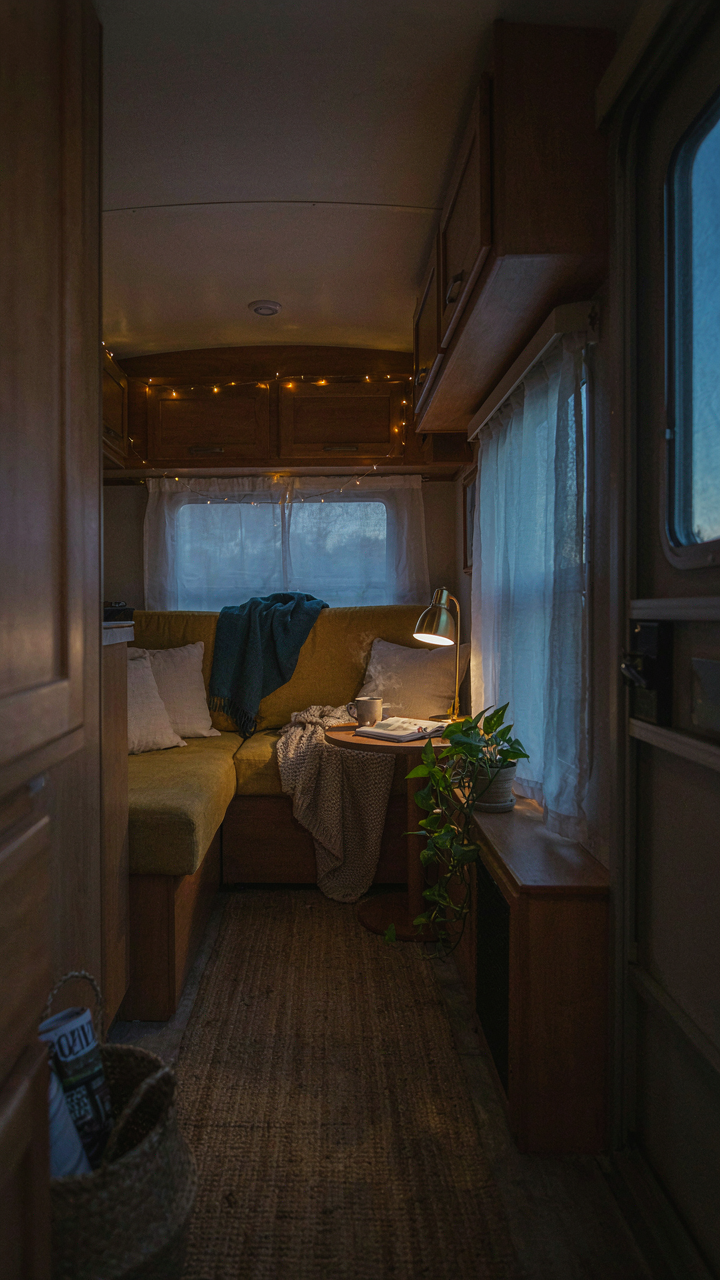
Strategic Lighting Creates Ambiance With Minimal Footprint

You want your RV to feel intentional instead of temporary, but you’re afraid cheap lighting will expose that it isn’t. The mechanism: layered light sources work like acoustic design—they control how sound (or in this case, visual noise) bounces around a confined space. Multiple weak sources beat one harsh overhead light.
LED strip lights mounted under cabinets or along baseboards cost twelve to thirty dollars and draw almost no power. They eliminate the flat, fluorescent dread that makes RVs feel transactional. Warm color temperature (2700K or lower) matters more than brightness. One recessed reading light over a seating area, combined with ambient strips, creates the illusion of depth in a box.
Textural Depth Builds Visual Interest Without Adding Bulk
Most RV advice says “add throw pillows and blankets” then stops. That’s incomplete. Texture works because it disrupts flat surfaces and creates shadow play, which your eye reads as dimension. In a small space, this is the only way to avoid visual monotony without cramming in furniture.
Layering different materials costs almost nothing if you source them right. A cotton throw with visible weave over a solid upholstered seat creates contrast. A macramé wall hanging or woven basket catches light differently than painted drywall. Linen curtains filter light instead of blocking it, adding depth to the walls themselves. The goal isn’t collecting objects—it’s breaking up reflective uniformity by introducing materials that absorb and redirect light at different angles.
Camper Upgrades: The Minimalist’s Guide To Smart Investments
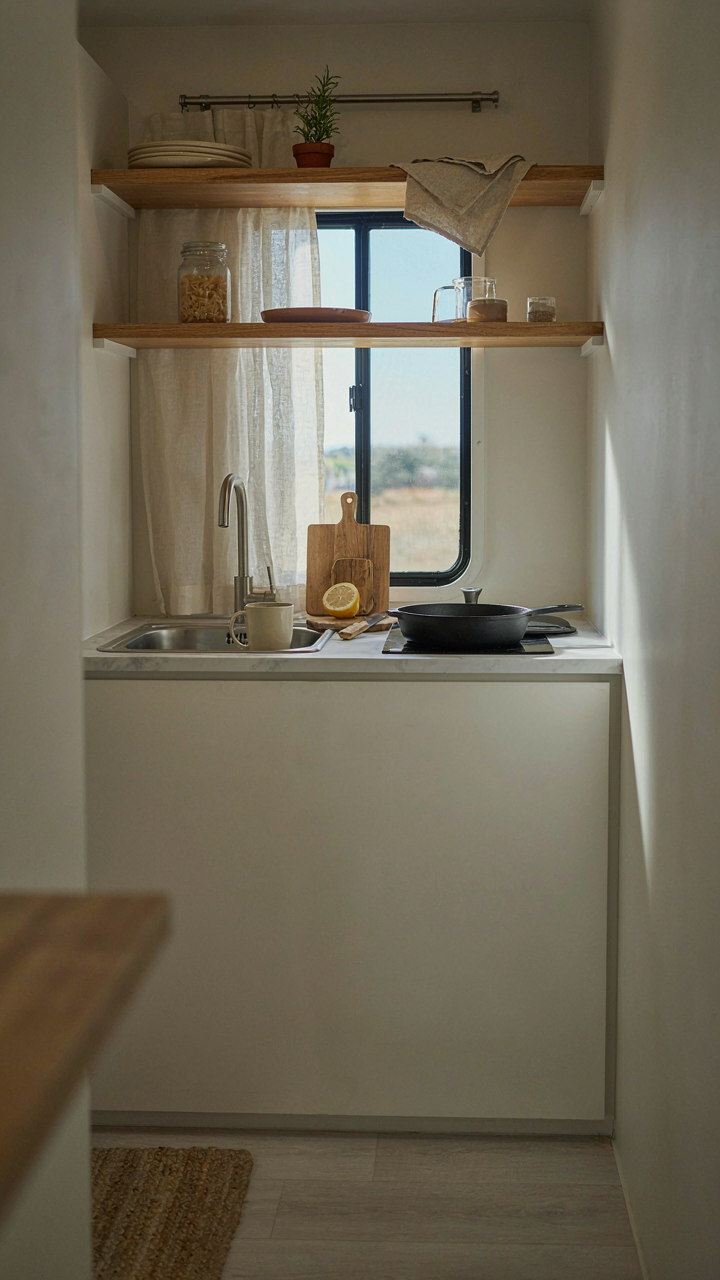
Function First, Aesthetics Second

You want upgrades that signal you have your life together. The real mechanism is this: every dollar you spend on decor that doesn’t solve a problem is a dollar that makes your space feel more cluttered, not less. Constraint forces clarity. The RV forces you to decide what actually matters because you have nowhere to hide excess.
Start by auditing what breaks the experience. Bad lighting makes the space feel smaller and dimmer than it is. Thin mattresses wreck sleep. Poor ventilation creates moisture and smell. Cheap cabinet hinges fail mid-trip. These aren’t nice-to-haves. They’re the load-bearing walls of comfort. Upgrade these first, aesthetics follow naturally.
The Real Cost Of Trend Chasing
People scroll interior design accounts and feel pressure to match someone else’s RV aesthetic. This is a category error. Those accounts exist to generate engagement, not to solve your actual problems. The trap isn’t that trends are bad. The trap is treating someone else’s solution like your solution.
Stick to materials that work in an RV: marine-grade vinyl, sealed wood, stainless steel hardware. These last. They don’t warp from humidity swings. They don’t require constant maintenance to look decent. When you buy based on what endures in your specific environment, not based on what looks current, you spend less over time and feel less pressure to refresh constantly. That’s the actual win.
The Anti Aesthetic: Building A Resilient RV Decor
Materials That Survive Actual Use

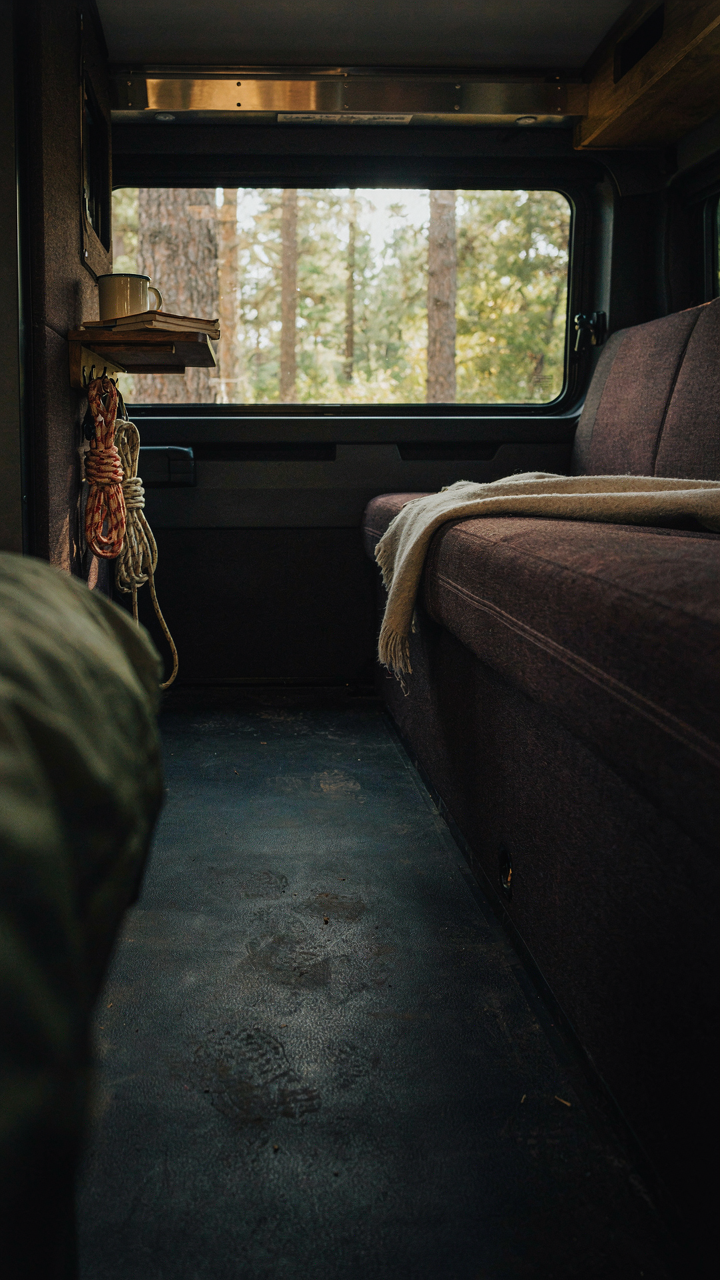
You want your RV to look intentional because looking intentional signals you have your life together. But the real mechanism is this: soft fabrics, delicate finishes, and light colors fail in a mobile environment. They fail fast. Dust settles differently in a moving box. Vibration degrades weak joints. Moisture moves through enclosed spaces unpredictably. Choose materials engineered for commercial or marine use, not residential showrooms.
Vinyl, sealed wood, powder-coated metal, and solution-dyed fabrics aren’t trendy. They’re the actual answer. Vinyl flooring handles spills and foot traffic without warping. Sealed plywood and hardboard resist humidity swings that crack veneered surfaces. Microfiber upholstery resists staining better than cotton. These materials cost the same or less than what fails, but they last years instead of months. Buy once.
Maintenance As Your Design Language
Everyone says “easy to clean” like it’s a bonus feature. It’s not. On a budget, maintenance IS the design. The less time you spend scrubbing, the more time the space feels livable. This is basic resource allocation. You have limited hours and budget. Spend both on durability, not on managing decay.
Flat surfaces beat textured ones. Removable cushion covers beat fixed upholstery. Wipe-down cabinets beat stained wood. Sealed grout beats porous tile. Dark or patterned fabrics beat light solids. The goal isn’t perfection. It’s choosing finishes that don’t telegraph every spill, dust particle, or repair. When your RV interior requires maintenance work, design it so repairs are accessible, parts are standard, and replacements don’t demand specialized tools.
The Real Obstacle Isn’t Your Budget; It’s Your Inability To Define Home Beyond Aesthetics

You’re stalling because you don’t know what home actually means to you. A throw pillow won’t fix that. Stop scrolling Pinterest and write down three moments that made your RV feel alive. Not pretty. Alive. Your decor budget unlocks the second you stop buying what Instagram sells and start building what you actually live in. Home isn’t something you buy. It’s something you decide.