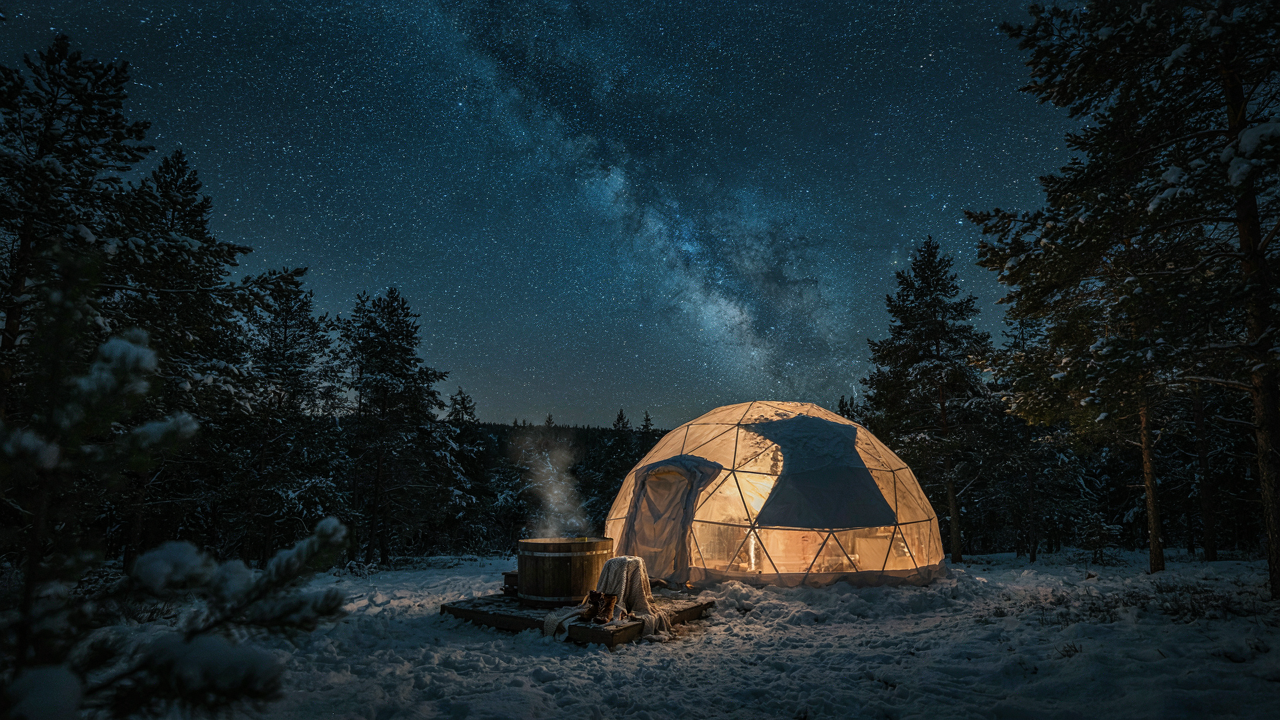
The Inconvenient Truth Of “Cozy” Glamping
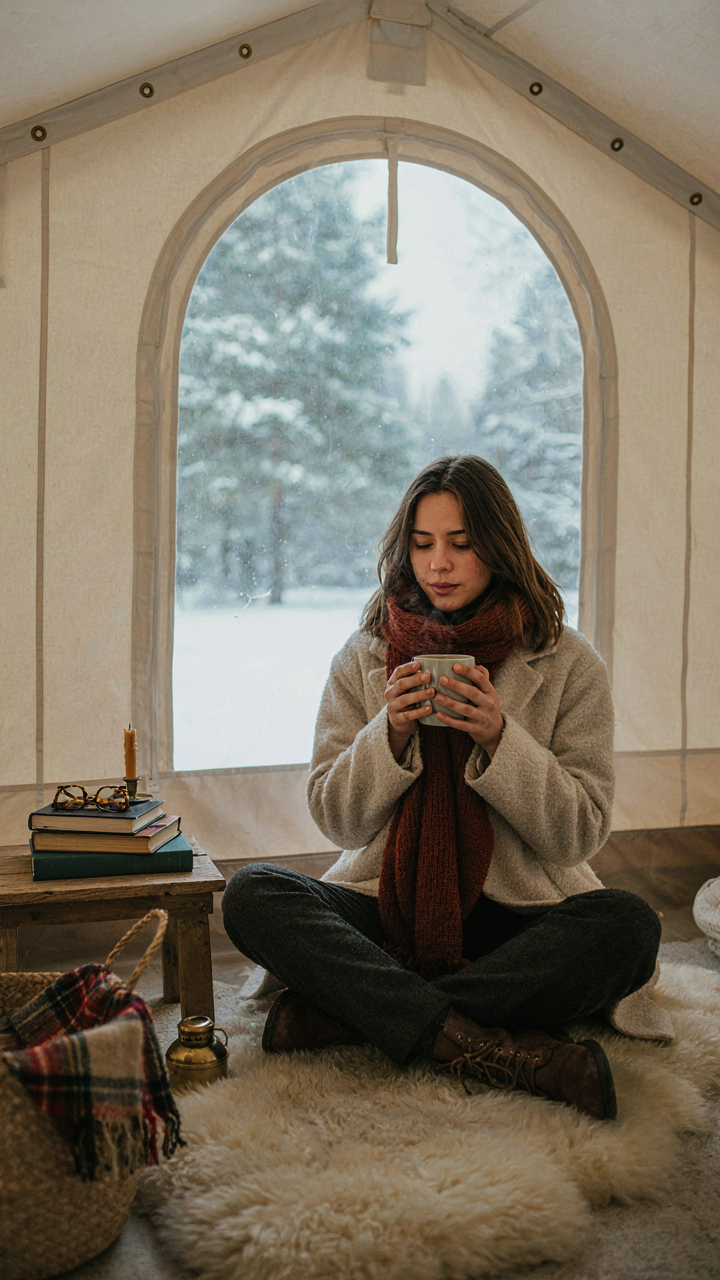
What “Warm” Actually Means In Canvas
You want the Instagram version of winter camping without admitting you’re terrified of being cold. Here’s the mechanism: thermal comfort isn’t a feeling, it’s a physics problem. The hospitality industry borrowed from thermodynamics the concept of “thermal resistance,” measured in R-value. Canvas tents have an R-value between 0.5 and 1.5. A heated bedroom in your house operates at R-30 or higher. You’re not buying warmth when you book glamping. You’re buying insulation theater with a space heater underneath.
Most glamping operators quote “heated” as their main feature without specifying the actual heat source, BTU output, or how they manage the temperature differential between inside and outside. A 1,500-watt heater in a 300-square-foot bell tent doesn’t create uniform warmth. It creates a microclimate near the heater and cold corners where you’ll actually sleep. The canvas conducts cold from the ground and walls faster than the heater can replace it. You end up in a tent that’s technically above freezing but feels worse than a sleeping bag would.
How Most Setups Lose Heat
The standard glamping bed sits on the ground or a thin platform. Heat rises, but it doesn’t matter if your body is directly on a thermal highway to frozen earth. Ground temperature stays near 32 degrees Fahrenheit regardless of air temperature inside the tent. Most operators stack blankets on top of you instead of insulating underneath. This is backward engineering. You need at least six inches of insulation between your body and the ground, not additional blankets creating dead air that traps moisture.
Ventilation kills heat faster than poor insulation. Canvas breathes. That’s the marketing angle. In reality, it also lets warm air escape while cold air creeps in through seams, zippers, and the inevitable gaps where the tent meets the platform. A single poorly sealed seam loses more heat than insulation gains in a four-hour window. Most glamping sites use canvas because it’s cheaper than alternatives and easier to heat temporarily with a central heating system. That system can’t maintain consistent temperatures when the structure itself is designed to breathe.
The Thermal Envelope Protocol: Your Glamping Fortress
What R Value Actually Means For Your Tent
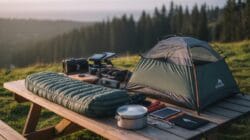
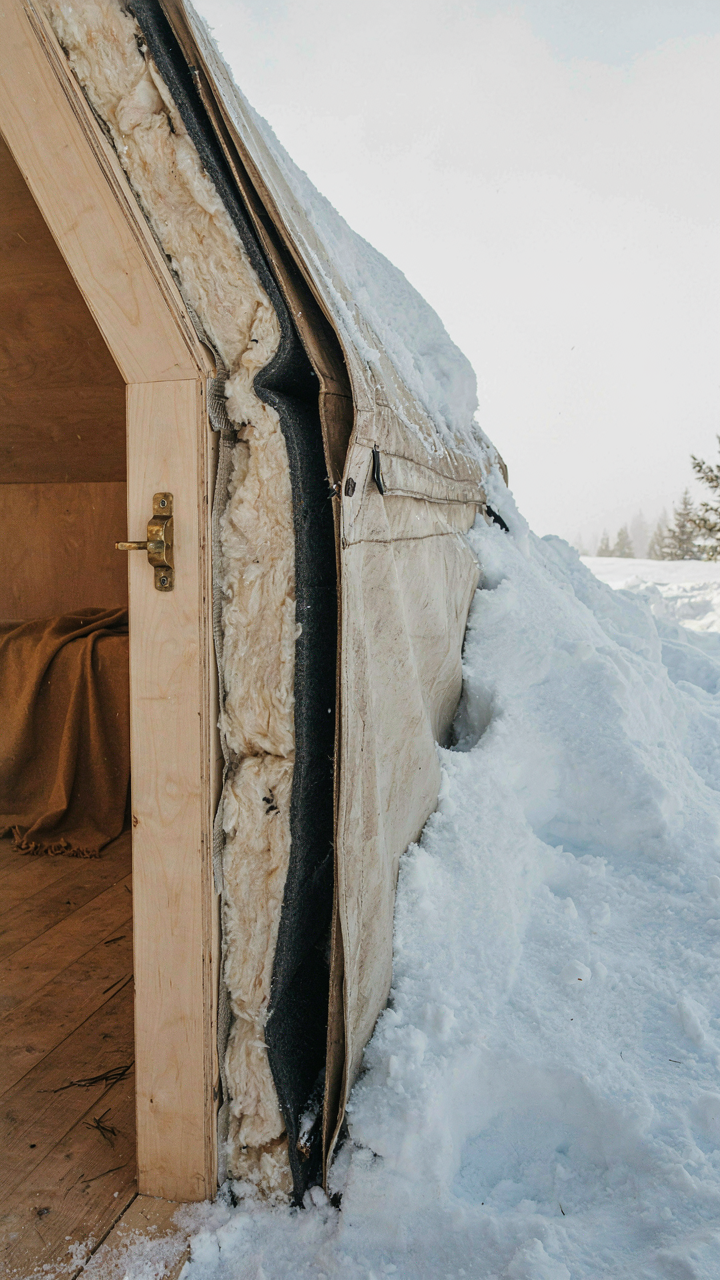
You want to know you won’t freeze because the idea of paying for a glamping experience and then being cold is worse than just staying home. Here’s the mechanism: R-value measures resistance to heat flow, borrowed from thermodynamics. Every material has a number. Higher number stops heat loss better. A standard tent fabric has an R-value around 1. Wool blankets sit around 3 to 4. Fiberglass insulation runs 3.2 per inch. Double-layer canvas with air gap achieves 5 to 6. Winter glamping structures need at least 5 to stay genuinely warm without constant heating.
Most glamping sites quote “insulation” without stating actual R-values, which means they’re hiding weak performance. The real move is demanding specs before booking. A proper winter glamping structure uses multiple materials in layers: canvas exterior, air gap, then wool or recycled denim batting, then interior lining. This stacking compounds resistance. A single-wall tent, no matter how “premium,” cannot hit the thermal threshold needed for sleeping comfort below freezing. Verify the total R-value reaches minimum 6 before committing money.
Stopping Air Movement Is The Only Defense That Works
Draft sealing beats insulation in winter conditions because moving air bypasses material resistance entirely. A tiny gap around a door frame can negate hours of heating through wind chill alone. Physics calls this convection. Glamping needs convection elimination first. Silicone weatherstripping, door flaps with magnetic seals, and ground-contact skirts create a barrier envelope. Canvas tents with zippered entry tunnels outperform rigid structures with gaps. The gap size matters more than the insulation thickness around it.
The common fix of closing vents does half the work. Real sealing means eliminating every path for air exchange: door seals, window frames, pipe penetrations, and the base perimeter. Winter glamping sites that don’t mention draft mitigation haven’t solved the problem. Check physical access to these seals before arrival. A single unsealed corner costs as much thermal performance as removing a full R-value layer. Inspect the door frame gasket, test the zipper track, and confirm the ground skirt extends fully under the structure edge to stop infiltration.
Heat Generation: Beyond The Propane Heater
Safe And Efficient Heating Solutions For Winter Tents
You want to know this because you’re afraid of dying in your sleep from carbon monoxide poisoning, and you should be. The mechanism that kills people in winter glamping isn’t the cold itself—it’s the belief that sealing your structure and running an unvented heater will keep you warm. Unvented propane heaters consume oxygen and produce carbon monoxide and water vapor simultaneously. That moisture condenses on your walls and gear. You suffocate slowly while thinking you’re just tired.
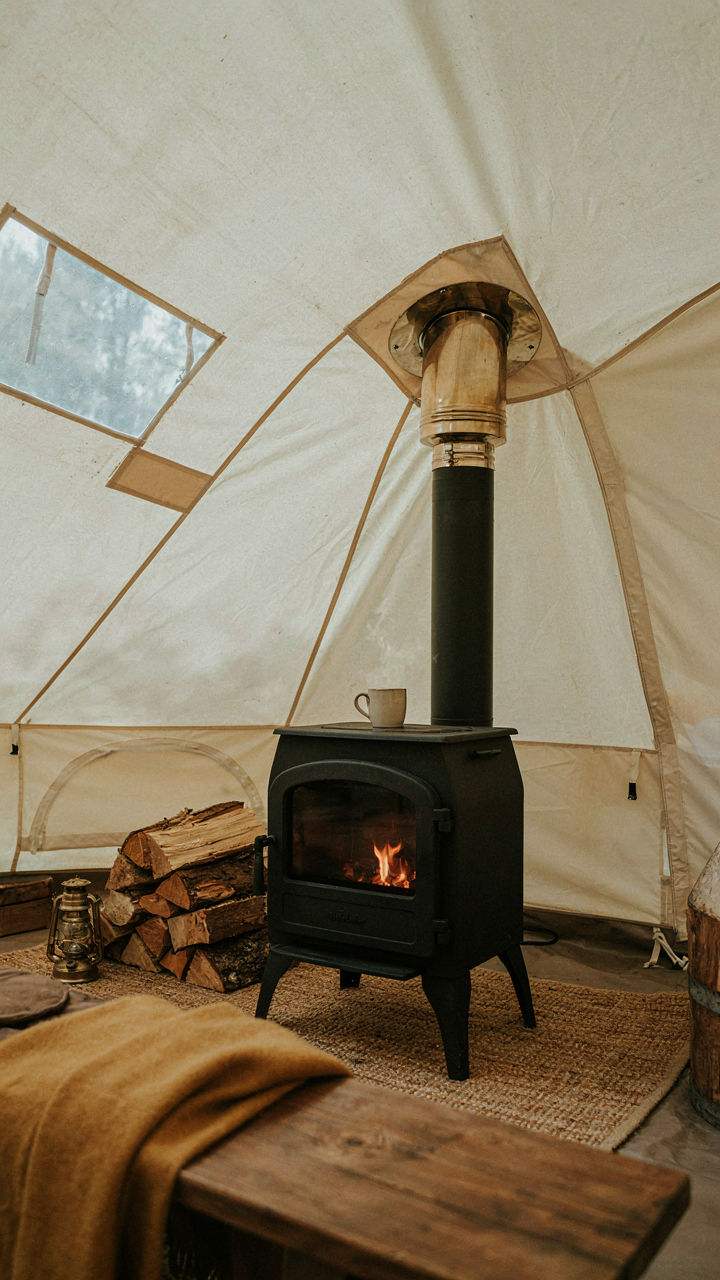
Vented heating is non-negotiable. A wood stove with proper chimney installation draws combustion exhaust outside while pulling fresh air in. A catalytic propane heater rated for indoor use produces fewer emissions than unvented models, but it still depletes oxygen in an enclosed space. The math is simple: sealed tents plus any combustion device equals risk. Install venting, accept heat loss, stay alive. Radiant heaters and ceramic heaters designed for indoor spaces work because they warm objects directly without burning fuel inside the tent structure.
Optimizing Heat Distribution Within Your Glamping Structure
Heat rises and pools in dead zones. Use thermal dynamics here: warm air seeks cold surfaces, so placement determines efficiency. Position your heater low and central, not tucked against the tent wall where it creates a hot pocket above your head while your feet stay cold. Reflective barriers behind the heater bounce radiant energy back into the space instead of wasting it on the exterior fabric.
Airflow design matters more than heater output. A small fan pulling warm air from the ceiling and pushing it toward ground level maintains even temperature across your sleeping area. This prevents the common scenario where your torso sweats while your legs shiver. Use thermal mass strategically: water bottles, stones, or metal canisters heated during the day release warmth slowly at night. The mechanism is simple physics—objects with high heat capacity act as passive radiators, extending your active heating cycle and reducing fuel consumption.
The “Bio Thermoregulation” Model For Snowy Camping
Your Skin Doesn’t Insulate—Air Pockets Do
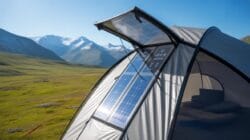
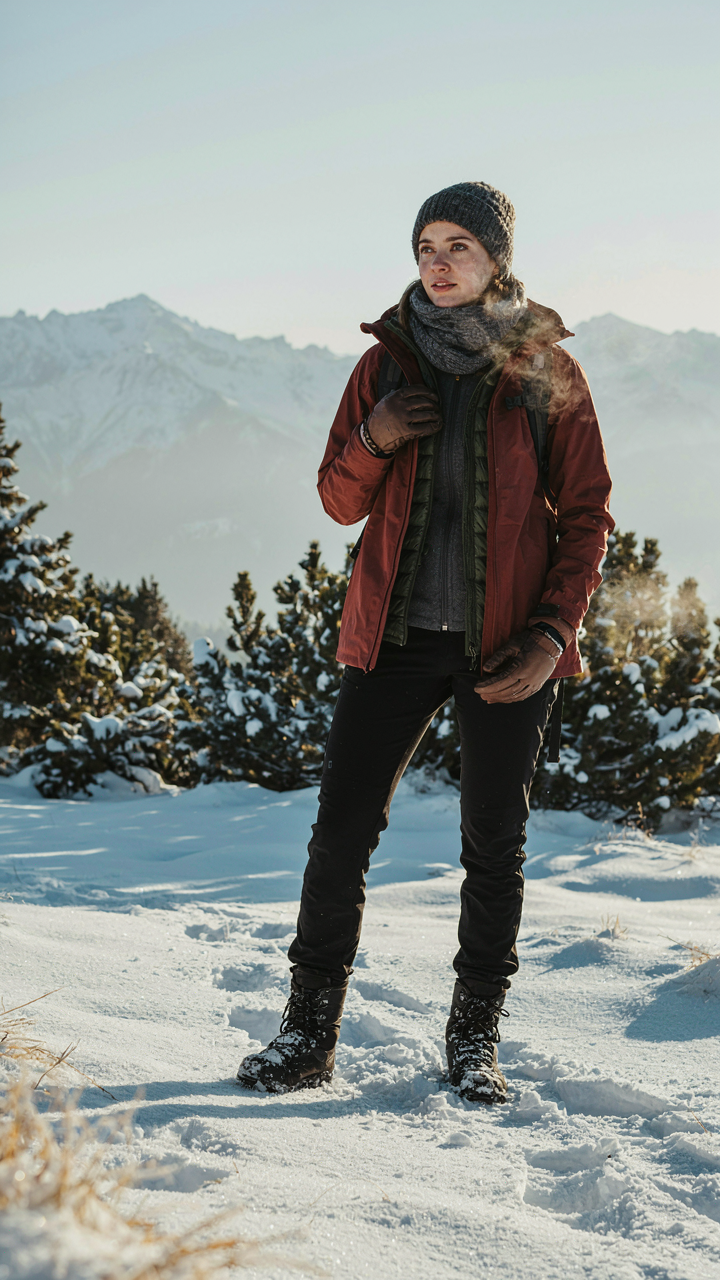
You want to feel tough while staying warm. That’s the real sell here. But the mechanism is simple: your body loses heat through conduction, convection, and radiation. Layering strategy borrows from thermodynamics—the principle of creating dead air spaces between barriers. Merino wool, synthetic fleece, and down trap still air. Still air doesn’t move. Moving air steals heat. The glamping setup that wins isolates you in static pockets of warm air, not in fabric thickness alone.
Most people layer wrong because they use cotton or tight-fitting pieces that compress insulation into uselessness. Your base layer shouldn’t be cotton—it wicks moisture but holds it against skin, accelerating heat loss. Merino wool or synthetic bases move moisture away without trapping it. Mid-layers need room to breathe and create air gaps. Your shell blocks wind but must allow vapor to escape, or you sweat, get damp, and freeze faster. Stack layers with intention: base, mid-layer, insulation, shell. Each one plays a role in maintaining core temperature, not just adding thickness.
Feed The Furnace Correctly
Internal heat generation isn’t romantic or mysterious—it’s fuel conversion. Your body burns calories to maintain 98.6 degrees Fahrenheit. In cold, you burn more. Eating carbohydrates raises metabolic heat faster than fats or proteins because your body processes them with higher thermic effect. A glamping meal plan that works fuels continuous low-grade thermogenesis, not just fills your stomach.
Most winter glampers eat like they’re on vacation, not like they’re running a biological heating system. You need consistent caloric intake throughout the day—not one large dinner. Hot liquids matter less for warmth than people think; the real driver is caloric density. Fats digest slower but sustain heat longer. Carbs spike metabolism immediately. Your evening meal should emphasize both: complex carbs for immediate burn, fats for sustained release. Eat every three hours while awake in camp. Skipping meals in cold drops your metabolic rate and kills your natural heat production faster than any wind will.
Site Selection: Exploiting The Elements For Winter Camping
Wind Protection And Solar Gain

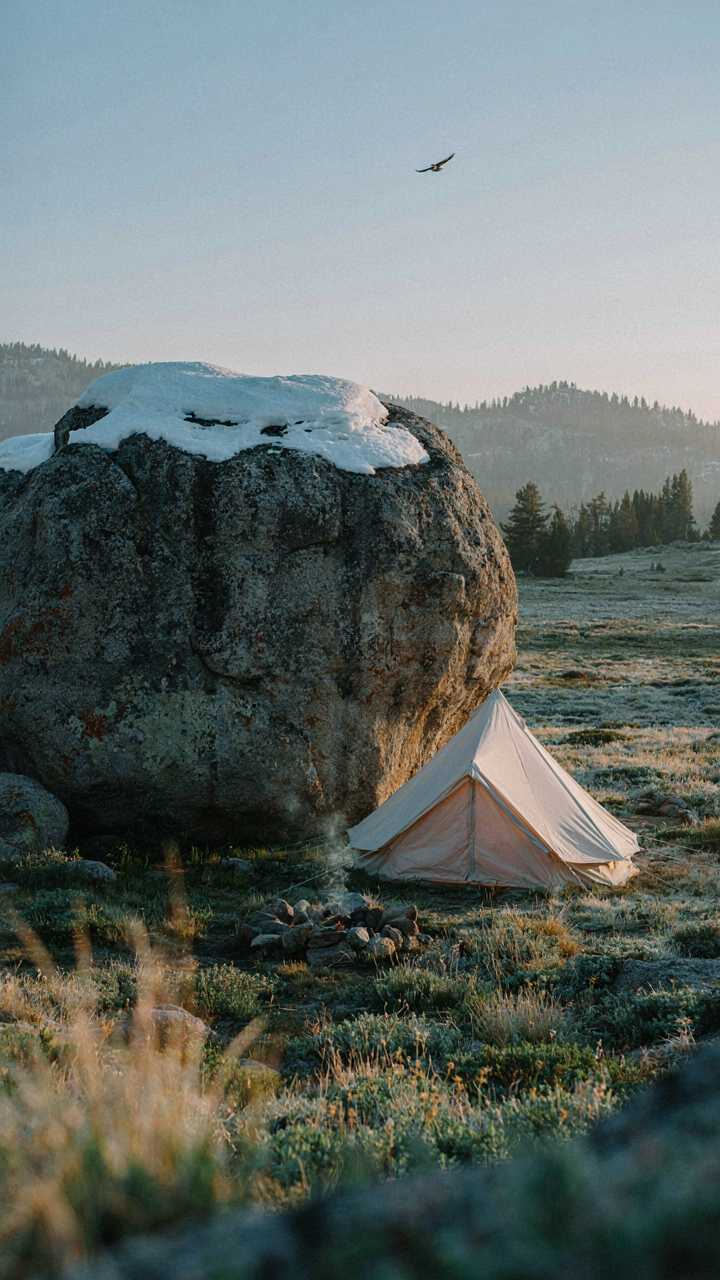
You want your site to feel intentional, not like you’re roughing it. That comes down to positioning. Using physics terms: you’re creating a thermal mass by blocking convection while capturing radiation. Winter sites live or die on these two variables. Most glampers ignore the second one entirely, which is the real mistake.
Position your structure on the south side of natural barriers—dense tree lines, rock formations, or terrain slopes. This blocks the north wind that strips heat fastest and captures low winter sun that actually warms the structure during the day. East-facing orientation catches morning sun to warm interior spaces after a cold night. Never position due north unless you have zero other options. Test the site at different times of day before committing.
Thermal Mass Through Natural Features
The landscape itself is your insulation system. Trees provide wind shear and reduce radiant cooling at night. Ground elevation and rock proximity store heat during sun exposure and radiate it back after dark. This isn’t poetic—it’s thermodynamics. Most glampers rely only on equipment insulation and miss the free advantage of site topology.
Elevate your glamping structure slightly above ground level to allow air circulation underneath, which prevents moisture buildup and ground-conducted heat loss. Place it near but not directly against rock faces or dense vegetation—proximity provides protection without creating humidity traps. Dense evergreen trees on the west side reduce afternoon wind exposure while maintaining southern sun access. Scout locations where natural features already funnel heat patterns toward your intended structure placement.
Gear For The Unflinching Glampers: Tents Camping Glamping
The Cold Chain That Actually Works

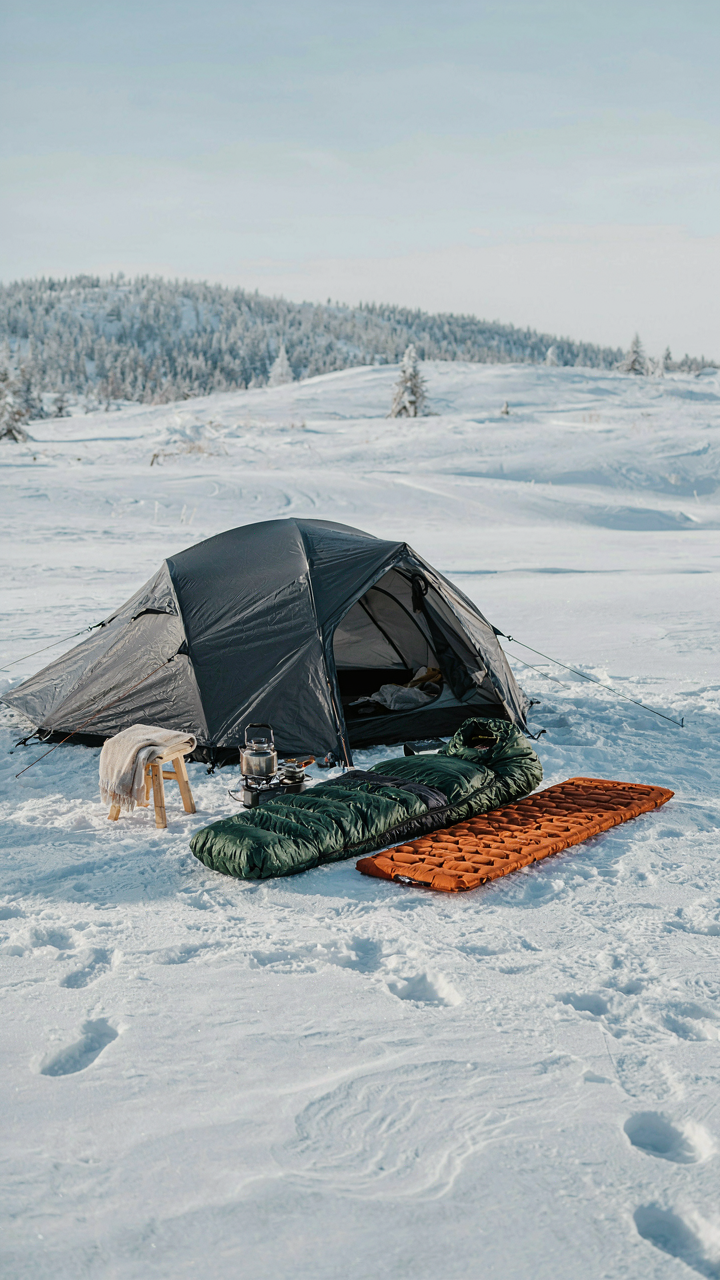
You want to know if you can sleep warm without freezing your money away. The real mechanism here borrows from thermodynamics: heat always moves from hot to cold, and your body loses it through conduction, convection, radiation, and evaporation. Stop treating your sleeping system as separate components. The bag, pad, and tent work as one sealed environment. Get one wrong and the other two fail. Most glampers buy an expensive bag then skip the insulated pad, which is backwards because the ground steals more heat than air does.
Winter sleeping systems rank by R-value, which measures insulation resistance. A quality rated bag rated for your actual temperature plus a pad with R-value 4 or higher creates the foundation. Synthetic fill performs better than down when wet, but down compresses less over time. The bag alone won’t save you. The pad underneath stops conductive loss, and the tent shell stops wind from stripping heat away. Layer these right and cold becomes irrelevant.
The Accessories That Prevent Failure
Real winter comfort requires systems that handle moisture, not items that promise coziness. The list below addresses the mechanisms that actually kill sleep in winter cold.
- Vapor barrier liners: Separate your perspiration from insulation to prevent moisture accumulation inside the bag. Cotton or nylon liners cost under fifty dollars and extend sleeping system life.
- Thermal mattress toppers: An extra layer of foam or wool over your pad adds R-value without bulk. Use this when your pad alone rates below R-5 for deep winter.
- Heated water bottles: Hot water bottles placed at feet and core retain heat for hours. Refill them before sleep, not during, to maintain consistent temperature through the night.
- Insulated sleeping bag covers: These shells trap air around the bag itself and add 5-10 degrees of effective warmth. They work best with quality bags, not as standalone fixes.
- Balaclava and neck gaiters: Heat loss from the head and neck reaches 40 percent in cold. Merino wool balaclavas regulate moisture better than synthetic versions and last longer.
Test your full system at home before the trip. Set up your tent indoors, layer your bag and pad, climb in with a thermometer. This reveals gaps nobody catches in the field. Cold exposure reveals the truth fast.
Winter Glamping Retreat: Mastering The Mental Game
Finding Calm In Empty Space
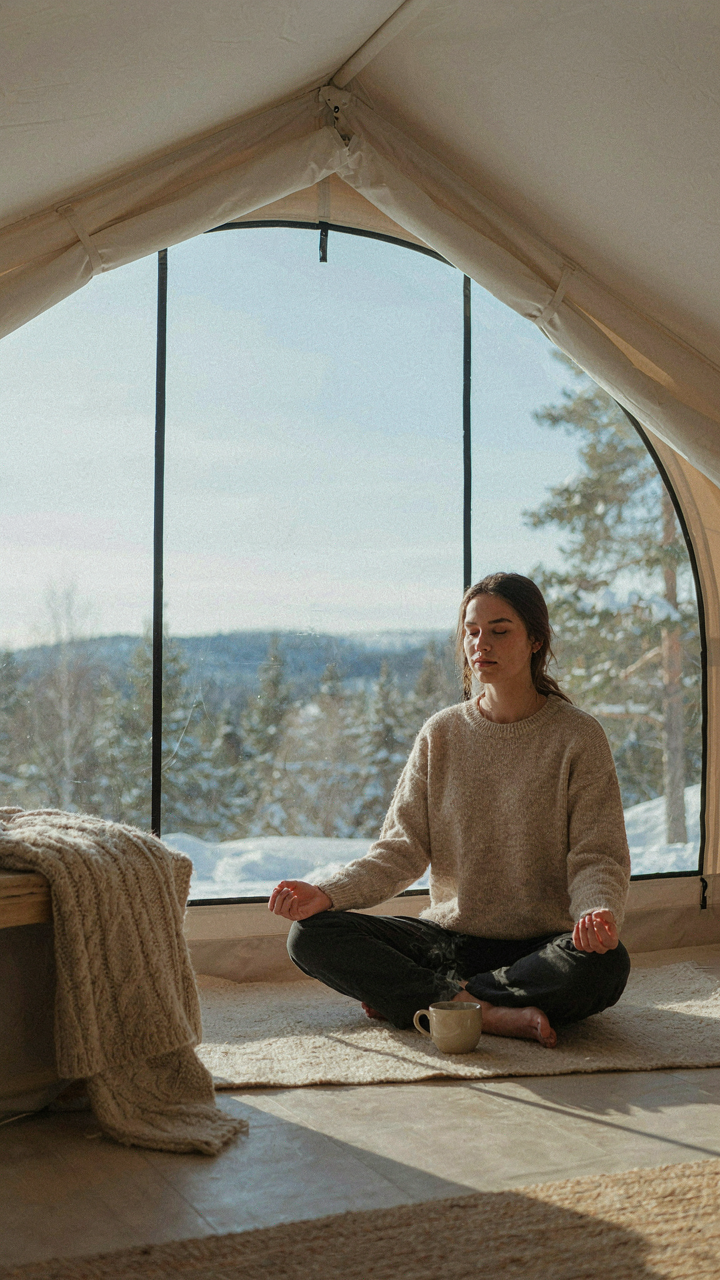
You want this section because you’re worried silence will feel like boredom, and boredom means your expensive retreat failed. Here’s the mechanism: winter glamping strips away distraction by design. The stark landscape forces attention inward. Cold air sharpens sensory input. Darkness arrives early and stays. This isn’t poetic. It’s neurological. Your brain defaults to processing what remains when external stimulus drops. Most people misread this as boring. It’s actually the reset you paid for.
The beauty of winter’s bareness works against you if you resist it. The common advice says to “embrace nature” or “find yourself.” Wrong framing. You’re not finding anything. You’re experiencing sensory contrast. A glacier’s bleakness registers differently than a green forest because your visual cortex has fewer patterns to process. Silence feels profound because your auditory system isn’t filtering competing sounds. This clarity is temporary. The retreat works because you use it, not because the location is special.
Building Strength Through Discomfort
Resilience in psychology isn’t built by comfort. It’s built by controlled stress followed by recovery. Winter glamping provides both halves of that equation. You face real environmental friction: temperature swings, limited daylight, potential isolation. These are stressors. Then your glamping setup absorbs the load. Heated floors, thick insulation, proximity to shelter. The stress stays real enough to matter. Your system adapts. This is stress inoculation, the exact mechanism the military uses for training. Small doses of manageable difficulty build capacity.
Most glamping sites hide this intentionally. They market warmth and luxury as escape from difficulty. They’re selling the wrong thing. The actual value is that you choose the difficulty level. You control the thermostat. You can leave. This voluntary constraint creates psychological ownership that pure comfort never does. Your nervous system recalibrates because it knows danger is real but managed. Build resilience by setting your retreat temperature three degrees lower than comfortable for the first three days. Track your tolerance shift. That shift is the product you’re buying.
Beyond The Instagram Filter: Real Glamping, Real Winter
When Comfort Actually Matters

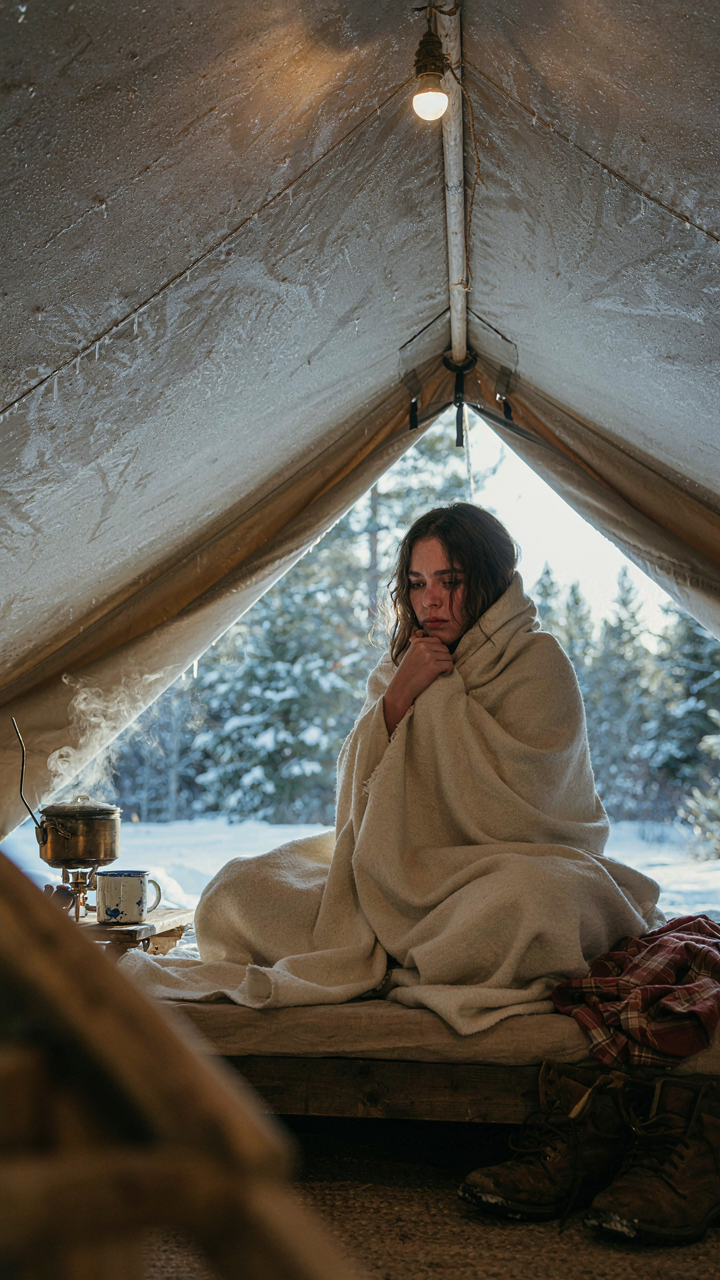
You’re reading this section because you’re worried you’ll book something that looks perfect in photos but freezes you at 2 AM. That’s the real concern underneath the aesthetic question. Winter glamping fails when form overrides function, and function in cold means insulation, heating capacity, and backup systems. Borrow from engineering: redundancy is your safety margin. A heated glamping structure needs primary heat, secondary heat, and emergency backup. Most glamping operations skip this because a backup heater doesn’t photograph well.
The difference between glamping that works and glamping that fails shows up when temperatures drop below freezing. Thick canvas with proper thermal liners outperforms thin fabric with trendy finishes. Yurt and bell tent operators who succeed invest in military-grade insulation methods rather than aesthetic upgrades. Propane heaters, wood stoves with proper ventilation, and heated flooring systems are non-negotiable. Your booking research should prioritize these specifications over Instagram aesthetics. Ask for heating capacity in BTUs and backup power sources before you book anything.
Leaving Less Behind Than You Found
Winter glamping sits in wilderness that’s fragile during off-season when recovery cycles slow. Sustainable practice here means understanding what regenerates and what doesn’t in frozen ecosystems. Don’t waste resources on decorative elements that degrade local environments. Use leave-no-trace principles adapted for cold: compact waste, avoid trenching for utilities where possible, and use established sites rather than expanding footprint.
Responsible operators install permafrost-friendly pathways, use grey water systems that don’t damage soil chemistry, and source heating fuel efficiently rather than wastefully. Propane consumption matters because leaks in winter don’t dissipate fast in cold air. Wood-burning operations need certified sustainable sourcing, not harvesting from surrounding land. Your responsibility as a guest starts with asking your operator about their waste management protocol and energy source. Request specifics: Where does their fuel come from? How do they manage wastewater? If they deflect or give vague answers, book elsewhere.
The Real Warmth Isn’t In The Heater, But In Shedding Your Soft Assumptions
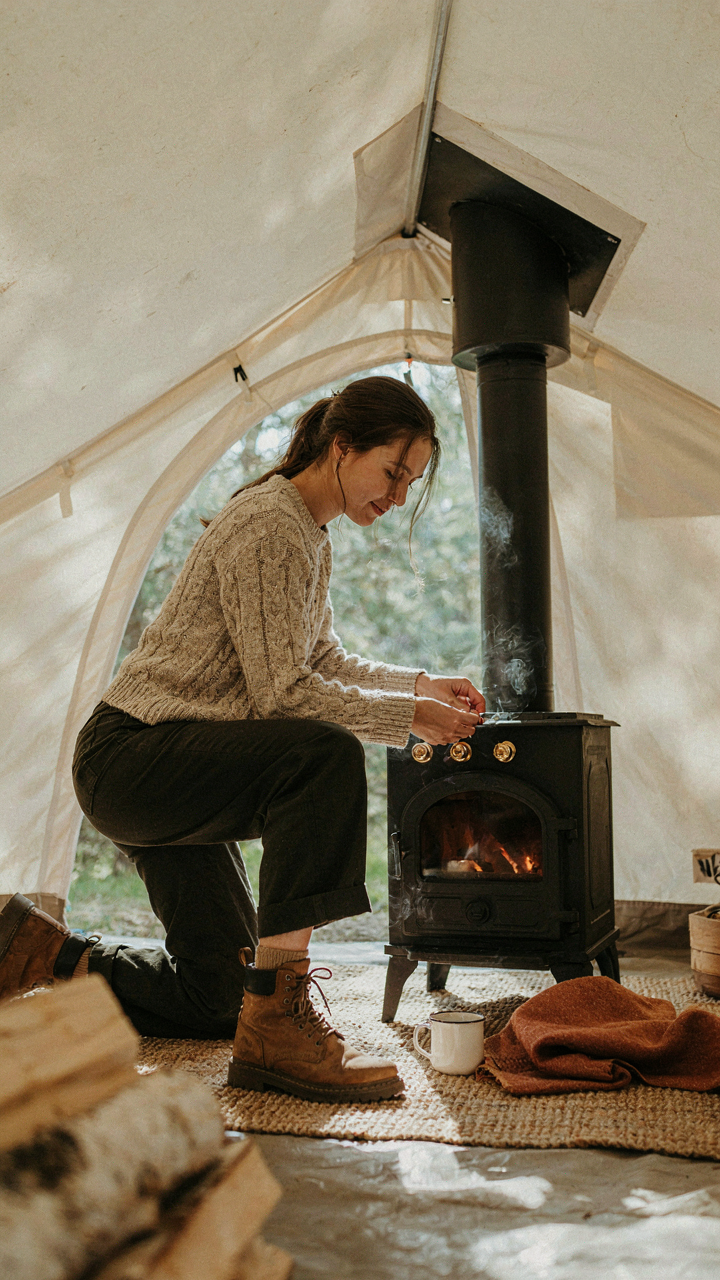

Most people think winter glamping means luxury to escape the cold. Wrong. It means choosing discomfort on your own terms. You control the experience. You pick the location, the duration, the temperature. That control rewires how your brain processes the cold. Stop searching for the perfect heated dome. Book a site this week that scares you slightly. The comfort you’re actually chasing isn’t warmth—it’s proving you’re harder than you believed.