
The Myth Of The “Budget Friendly Van Purchase”

What Actually Fails On Used Vans
You want to believe a cheap van exists because admitting the truth costs you time and money you’ve already mentally spent. Here’s the mechanism: used vans fail in the same predictable sequence regardless of mileage. Rust doesn’t announce itself. It hides in floor panels, frame welds, and the undercarriage. By the time you see it, replacement costs exceed the van’s purchase price. Inspect the frame rails, wheel wells, and every seam where two metal pieces meet.
Engine and transmission problems matter less than people think because they’re visible and fixable. The real killers are structural. Get under the van with a flashlight and a screwdriver. Push on suspect areas. Soft spots mean rot. Check for water damage inside cabinets and under the sink. Previous owners cover water damage with new paint and caulk, not repairs. If the van smells even slightly musty after sitting, walk away.
Conversion Kits Are Markup Machines
The advice to “buy premade kits to save money” is incomplete trash. Conversion kits exist to move inventory and maximize margin, not to serve your budget. A kit vendor buys materials at wholesale, bundles them with installation labor you don’t need, and marks it up 40 to 60 percent. You pay for their overhead, their showroom, their sales team’s commission. The materials inside are commodity items you can source separately for half the price.
You don’t need a kit. You need a spreadsheet. List every component you actually want: insulation type, wall panels, flooring, bed frame, water system, electrical. Get quotes from building supply stores, RV part retailers, and online vendors. Buy the cheapest compliant option per component, not a bundled experience. Installation is YouTube and a weekend for most people. The vendor’s margin becomes your savings account.
Van Life Budget: The “Free Camping” Delusion

Boondocking’s True Operating Cost

You want free camping because you’re running from the rent trap, not because it’s actually free. The mechanism is simple: boondocking trades visibility for time. You park on Bureau of Land Management land or national forest roads, pay nothing for the spot, and lose hours to finding legal ground, verifying regulations that change by county, and managing the psychological weight of being asked to leave.
The real cost emerges in fuel burned scouting locations, data charges confirming legality on spotty cell service, and the vehicle wear from rough roads. A week of boondocking often burns 30 to 50 dollars in gas alone if you’re driving to validate spots beforehand. Add the cognitive load of tracking 14-day limits, seasonal closures, and local enforcement variance, and you’re spending mental currency that paid campgrounds eliminate for 15 to 25 dollars per night. The math doesn’t favor free when you factor in the work.
Stealth Camping And The Legal Friction
Nobody tells you the actual legal risk because it’s not dramatic enough to monetize as content. Stealth camping—parking on private or public land without permission after hours—carries real consequences: trespassing citations run 100 to 500 dollars depending on jurisdiction, impound fees begin at 150 dollars, and a record complicates future employment or housing applications. The police discretion here is enormous and geographic.
You avoid stealth camping by accepting that budget van life means choosing between paid parking options strategically rather than disappearing into walmart lots and residential streets hoping nobody notices. Campendium, iExit, and Allstays let you map legal spots within your daily fuel range before you park. The protocol: identify three legal options before sunset, pick the one requiring least driving time, commit to the 14-day limit or posted duration, then move on schedule rather than reactive to enforcement.
How To Start Van Life: The “Minimalist” Overspend

Essentials Versus Instagram Ables

You want people to know you’re doing this right, which means you’re about to buy things you don’t need and call them necessities. The mechanism is simple: you confuse status signals with survival gear. A portable espresso machine isn’t essential. A composting toilet that photographs well isn’t essential. Insulation, water storage, and a working electrical system are. The gap between those two categories is where most van lifers hemorrhage money in year one.
Separate your needs into two columns before you buy anything. One column lists what keeps you alive: shelter from elements, fresh water, food storage, basic power. The other lists what makes van life feel like a choice rather than deprivation. Aspirational gear like solar panels, heated mattress toppers, and custom cabinetry funds themselves later once you actually know how you live. Buy the essentials first. Everything else is a debt you’re borrowing against a lifestyle you haven’t tested yet.
DIY Versus Professional Build Trade Offs
The common advice says DIY saves money. That’s incomplete. DIY saves money only if you have the skill, the tools, and the time to not destroy the van. Most people have zero of those. Professional builders charge what they charge because mistakes in a moving metal box get expensive fast. Water damage from poor insulation sealing costs more to fix than hiring someone to seal it right. Electrical fires aren’t cheap to recover from.
The real trade-off isn’t money versus no money. It’s front-loaded cost versus hidden costs spread across ownership. A professional build costs more upfront but delivers a functional vehicle immediately. DIY costs less upfront but often requires a second build, repairs, and months of learning on your own dime. If you have genuine carpentry or electrical experience, DIY makes sense for specific components like cabinetry or shelving. If you’re learning as you go, hire professionals for structural work and do cosmetic finishing yourself. This splits the difference without gambling on systems that could fail mid-road.
Budget Friendly Van Living Setup: The “Solar Savior” Fallacy

What Your Solar Panels Actually Produce

You want solar panels because they promise freedom from the grid, but the real mechanism is psychological: you’re buying the narrative of self-sufficiency, not the kilowatt-hours. Here’s the thermodynamic reality. A 400-watt solar array in direct sunlight generates roughly 400 watts peak output for maybe four hours daily in summer, less in winter. That’s 1,600 watt-hours on a good day. Most van dwellers need 50-100 amp-hours from their battery daily. The math doesn’t close the gap as cleanly as marketing suggests.
Panel degradation, angle losses, and cloud cover reduce output another 20-30 percent in real conditions. You’ll generate adequate power for lights, fans, and phone charging. You won’t run a microwave, shower pump, or heater from solar alone. Budget builders treat panels as supplementary, not primary. The actual move is accepting that solar extends your battery’s working hours, it doesn’t eliminate your need for one or for shore power hookups during winter camping.
Battery Bank Reality: Lifespan And True Cost
Lithium batteries get marketed as the upgrade, and they do last longer than lead-acid, but cost-per-usable-cycle tells the real story. A 200Ah LiFePO4 battery costs 3,000 to 5,000 dollars and survives 3,000 to 5,000 charge cycles. Lead-acid costs 400 to 800 dollars but yields 500 to 1,000 cycles. On a per-cycle basis, lithium wins long-term, but the upfront capital requirement forces budget van lifers toward lead-acid or small lithium hybrids, not full lithium systems.
Battery longevity depends on depth-of-discharge discipline, not battery chemistry alone. Discharging to zero every night kills any battery fast. Keeping discharge between 20 and 80 percent extends lifespan by years. The protocol is simple: size your battery bank so daily draws never hit full depletion, then build a secondary charging method (alternator, solar, shore power) to top it back to 80 percent daily. That single habit matters more than which brand you buy.
Budget Camper Van: The “Roadside Repair” Trap
Preventative Maintenance Wins Over Crisis Repair

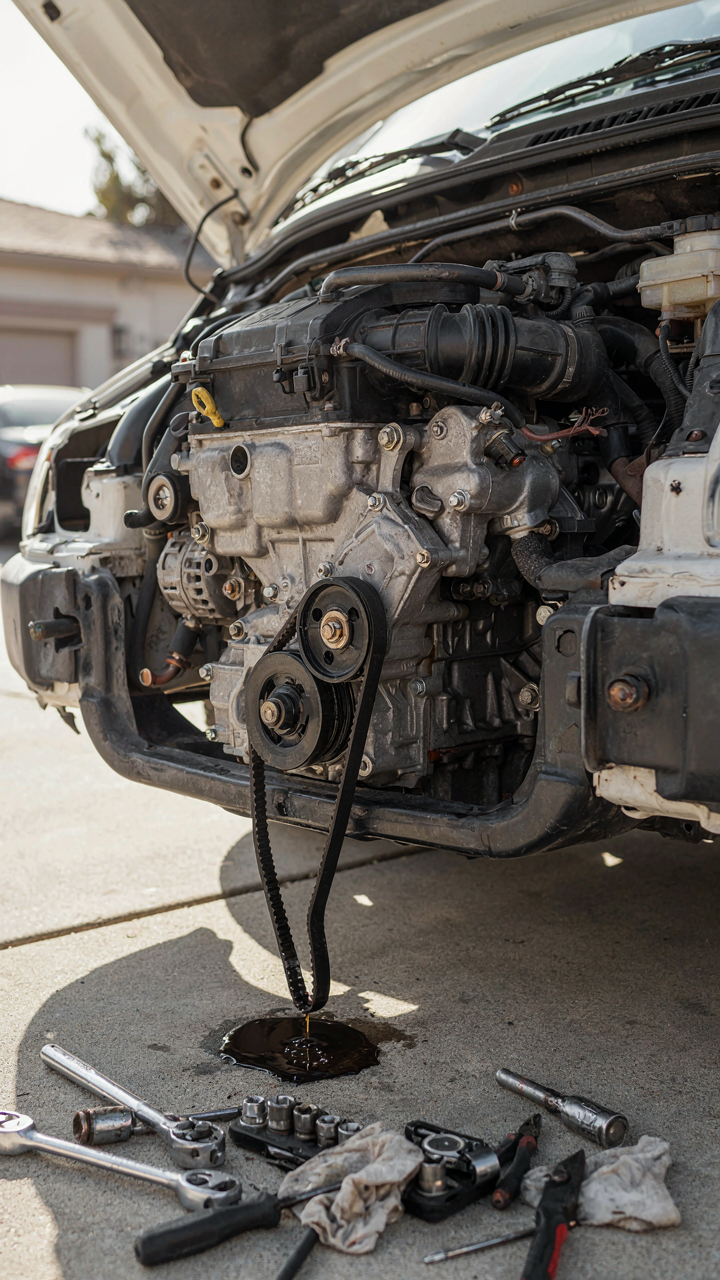
You want to believe you’ll dodge mechanical failure through luck and frugality. Here’s the mechanism: van engines don’t degrade linearly. They fail in clusters. One worn belt causes extra load on the alternator, which drains the battery faster, which strains the starter on cold mornings, which forces a jump-start that damages cells. Five hundred dollars in preventative work stops a three-thousand-dollar cascade.
Oil changes, belt inspections, and fluid top-offs cost time and money now. Roadside repair costs exponentially more because you pay labor rates from a mobile mechanic, replacement parts at dealer markup, and towing fees that dwarf any component. A seized engine from skipped oil changes turns a budget van into scrap. The math is simple: prevention divides your repair costs by five or more.
Build An Emergency Fund Before You Leave
Most budget van guides skip this because it sounds boring. It’s actually the difference between living in a van and abandoning one in a parking lot three states from home. Economics calls this a liquidity buffer, and a van needs one more than a house does because problems compound faster in close quarters. No transmission fluid for a week means overheating. Overheating for a day means a seized transmission.
Set aside one thousand dollars minimum before your first trip. This isn’t savings. This is operational capital that stays untouched for breakdowns. When you hit that fund, you rebuild it before taking another long stretch. The protocol is simple: fund depletes, you stop moving and work local until it refills, then resume. Breaking this rule means financing repairs at credit card rates, which erases any budget advantage you gained.
Budget Friendly Van Life Solutions: The Connectivity Black Hole

How To Optimize Data Plans Without Overpaying

You’re hoping someone will tell you the magic carrier to switch to, so you feel smarter about your setup. Stop. The mechanism is throttling: carriers deliberately slow your speeds after you hit a data cap, making unlimited plans feel worthwhile when they’re not. Budget van lifers hit this trap by paying for “unlimited” when a tiered plan costs half as much.
The math is brutal. Most van lifers use 10-20GB monthly if they’re streaming or working remotely. A carrier’s “unlimited” plan runs 75 to 100 dollars. Their 20GB tiered plan runs 40 to 55 dollars. You overpay 20 to 60 dollars every single month to feel secure about something you’ll never use. Buy the tiered plan, disable auto-play on video apps, and use cellular only for navigation and messaging when you have WiFi access. That’s your budget move.
Your Security Gets Worse When You Chase Free WiFi
Every public network you connect to is an open door. Coffee shop WiFi, library networks, and truck stop hotspots don’t encrypt your traffic. Anyone on the same network can see your login credentials, banking passwords, and financial data in real time. The consensus says use a VPN. That’s incomplete.
A VPN masks your traffic from other network users, but it won’t stop a man-in-the-middle attack if the network itself is compromised. The real protocol: never access financial accounts or email on public WiFi, period. Use your phone’s hotspot instead, which costs nothing extra on your data plan. If you must use public WiFi, use it for reading only, not logins. This removes the attack surface entirely instead of just reducing it.
How To Budget For Vanlife: The “Self Sufficiency” Illusion

You’re Not Actually Independent

You want to believe van life removes you from the system. It doesn’t. You’re chasing the fantasy of self-sufficiency while ignoring that every cost you cut has an external dependency hiding underneath. Solar panels need replacement parts shipped from manufacturers. Water systems break and require hardware store trips. Propane comes from distributors. You haven’t eliminated costs—you’ve just relocated them and pretended you haven’t.
The real budget killer is treating vanlife like a closed loop when it’s actually a network dependent on external supply chains. Every dollar you save by “going off-grid” gets spent on maintenance, repair travel, or replacement equipment. The vanlifers who budget correctly aren’t the ones bragging about self-sufficiency. They’re the ones accounting for the dependency chain and pricing it in upfront.
The Loneliness Tax You’re Not Budgeting For
Social isolation has a direct financial cost, and you’re not tracking it. Every week alone in a parking lot without human contact increases the likelihood of impulsive spending, poor decisions about vehicle maintenance, or overspending on entertainment and food to break the monotony. Humans aren’t wired for extended solitude—we compensate for it with purchases.
Budget for regular meetups with other vanlifers, temporary stays near friends, or co-working spaces with actual people in them. This isn’t optional wellness spending. It’s preventative accounting. The cheapest van budget fails because it eliminates the social costs and doesn’t account for how isolation shifts spending behavior. Add the contact back in and watch your actual spending stabilize.
Affordable Van For Travel: The “Nomadic Work” Scam

Your Income Isn’t Stable Enough For This

You want van life to feel like freedom, but you’re actually terrified of income collapse. Here’s the mechanism: remote work sounds portable until a client fires you or your contract ends. You’re now stationary in an unfamiliar place with zero income, full van expenses, and no safety net. Most people gloss over this because admitting it means confronting whether their work actually travels with them or just their laptop does.
Income instability in van life operates like supply chain vulnerability in logistics. One disruption upstream cascades downstream into survival mode. Freelancers and creators assume their skills stay monetized everywhere, but client relationships, timezone friction, and WiFi dependency create real failure points. If your income depends on consistent output and you’re dealing with fuel costs, mechanical issues, or slow internet, you’re not running a business from a van. You’re gambling with overhead.
Tax Obligations Digital Nomads Actually Owe
Nobody talks about this because accountants aren’t sexy. But the IRS doesn’t care where your laptop lives. If you’re a U.S. citizen earning income, you owe federal taxes regardless of van location. State residency rules vary wildly, and claiming no domicile creates compliance nightmares. Many nomads skip this entirely, which is fine until an audit happens and penalty interest compounds faster than your fuel budget.
The real cost isn’t just taxes owed, it’s back-taxes plus penalties plus the time to fix it. Self-employment tax alone runs 15.3 percent on net income. Foreign earned income exclusion exists, but you need days worked outside the U.S., paperwork, and a clean filing history to claim it. Keep receipts, track mileage for deductions, and file quarterly estimates. File quarterly estimates or face underpayment penalties that make your van budget irrelevant.
The Van Life Paradox Protocol

Freedom Has An Actual Cost

You want van life cheap because you think it frees you from money. That’s backwards. The real mechanism is opportunity cost. Economics defines this as what you give up to get something else. In van life, you trade location flexibility, career growth, and relationship proximity for lower rent. That trade only works if you actually use the freed capital for income-producing assets or skills. Most people don’t. They just spend less and call it freedom.
The math is simple: a van saves you 500 to 1200 dollars monthly on housing. That’s 6000 to 14000 dollars yearly. If you pocket that money without redirecting it toward income generation, skill development, or equity building, you’ve just chosen to be poor slower. The van didn’t free you. It just gave you a smaller cage. Your job is to treat that monthly savings like a line item that gets deployed into something that compounds.
Constraints Build Resilience, Not Deprivation
Biology teaches antifragility through stress. Nassim Taleb mapped this onto systems: exposure to small shocks makes systems stronger, not weaker. Van life on a budget works the same way. Limited space forces you to eliminate waste. Limited budget forces you to solve problems instead of buying solutions. Limited comfort forces you to build tolerance. These aren’t sacrifices. They’re training.
The people who fail at van life cheap expect comfort first, then savings. The people who succeed expect constraints first, then adaptation. Your tight budget isn’t a limitation you endure. It’s the structure that teaches you which expenses actually matter and which ones you invented out of habit. When you rebuild your life in a vehicle with 120 square feet, you learn what humans actually need versus what marketing convinced you to want. That knowledge compounds into every future decision you make.
Van Life On A Budget: The “Adventure” Industrial Complex

The Influencer Gap Between Selling And Living
You want to believe van life is cheaper than normal life because admitting it requires discipline you don’t want to develop. The mechanism is simple: platforms reward aesthetics over economics. Instagram shows you the van, not the spreadsheet. A creator with 200k followers makes money from sponsorships, affiliate links, and course sales. Their van is a content production asset, not a housing solution. Your van is just housing.
This distinction matters because it shapes what gets promoted. A $40k sprinter van with premium solar, heated floors, and a composting toilet gets algorithm traction. A $12k Ford Transit with basic insulation and a bucket toilet doesn’t look good on video. The industry profits from the gap between what looks aspirational and what actually costs less. You’re seeing the highlight reel of people whose primary income comes from selling you the idea of van life, not from living it cheaply.
The Sponsored Product Illusion
Most van life gear recommendations aren’t based on durability or value. They’re based on commission rates. A YouTuber pushing a $3k portable power station makes more per video than someone recommending a $400 deep cycle battery and a basic inverter. The advice isn’t wrong exactly, but it’s filtered through financial incentive. You end up buying premium when adequate would work.
The real move is separating “what creators use because it’s sponsored” from “what actually solves the problem cheaply.” Read the product links in descriptions. Check which ones have affiliate codes. Cross-reference recommendations across creators who don’t share the same sponsors. Buy used versions of the same gear. A $1200 lithium battery from six months ago works the same as a $1200 lithium battery today, but costs half as much on the secondhand market. Your decision framework should be: what problem am I solving, not what product is getting pushed this week.
The Only Thing Expensive About Van Life Is Your Desire To Prove Something

You don’t need the Instagram van. You need a vehicle that moves and a plan that works. Most people sabotage their van life budget by comparing themselves to someone else’s curated content. Stop asking what you should buy and start asking what you actually need to survive comfortably. The gap between those two answers is where your money disappears. Open your notes app right now and write down three things you think you need for van life. Delete two of them. Start there.