
The Unspoken Truth: Most Van Life Showers Are A Joke

Water Volume Beats Water Pressure Every Time
You want to believe your van shower will feel normal because admitting it won’t is admitting you’re trading comfort for freedom, and that trade stings. Here’s the mechanism: water systems work on two variables—pressure and volume. Pressure makes water feel like a shower. Volume is how much water exists before it runs out. Most van builds obsess over pressure (installing pump upgrades, fidgeting with nozzles) while ignoring volume, the actual constraint.
A standard house shower uses 2.5 gallons per minute. A van freshwater tank holds 40 to 80 gallons total. Do the math: you get 16 to 32 minutes of shower time if you’re not sharing. But you’re also using water for cooking, cleaning dishes, and flushing the toilet. Real shower duration on a van is four to eight minutes before you start rationing. No amount of pump pressure changes this fact.
Elaborate Systems Fail Because They Ignore Feedback Loops
The common advice says to build a heated shower with recirculation pumps, tankless water heaters, and grey water recovery systems. This is incomplete advice from people who rarely live in their vans long enough to maintain complexity. Every additional component creates a failure point: hoses freeze or crack, pumps burn out, heating elements corrode from mineral buildup, grey water tanks clog.
The mechanism here is system brittleness. Complex systems require constant maintenance in confined spaces. Your shower becomes something you troubleshoot instead of use. The real move is reducing components to the absolute minimum: a simple spray nozzle with an on-off valve, a gravity-fed tank or manual pump, and cold water you heat on the stove when needed. Simplicity survives neglect. Complexity requires discipline you won’t maintain on the road.
Embrace The Dry Flush: The Superior Camper Van Bathroom Ideas
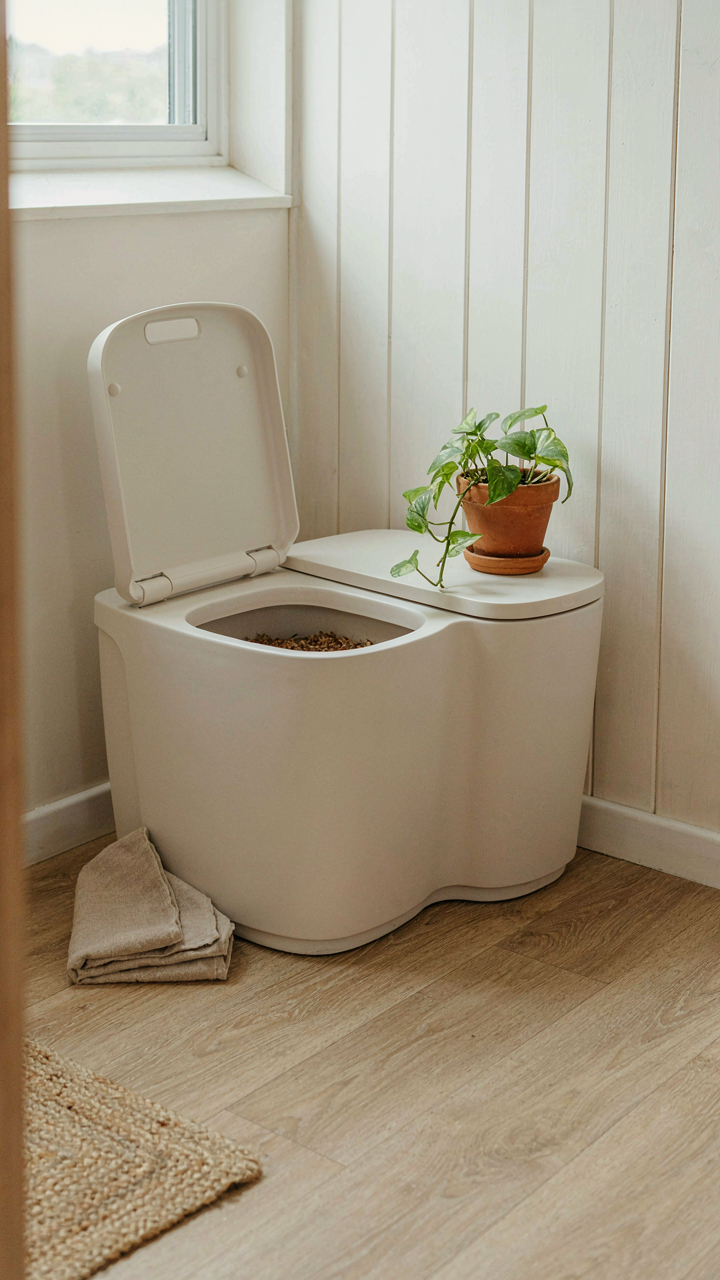
How Composting Toilets Actually Work

You want composting toilets because they sound environmentally righteous and because you’re afraid of chemical toilets. Here’s what actually happens: a composting toilet separates urine from solids using gravity or a divider. Microorganisms break down feces in an aerobic environment—meaning with oxygen present. This is a biology problem, not a magic problem. The toilet needs ventilation, carbon material like sawdust or peat, and time. Without airflow, you get anaerobic decomposition, which smells like a gas station bathroom.
The mechanism is simple: solids drop into a chamber below the seat while liquid drains separately. You add carbon material after each use to maintain the carbon-to-nitrogen ratio that microbes need. Temperature matters. Cold slows decomposition. Most van dwellers empty composting toilets every two to four weeks depending on usage and chamber size. The output isn’t sterile compost—it’s partially decomposed material that needs proper disposal, usually in a regular toilet or designated dump station.
The Real Waste Hierarchy For Van Living
Most van life advice treats all waste disposal options as equal. They’re not. The hierarchy isn’t about ethics—it’s about system reliability and your actual freedom on the road. Gravity-flush toilets with holding tanks are the baseline: they work everywhere, require minimal maintenance, and integrate with standard campground infrastructure. Composting toilets demand discipline and suitable disposal. Bucket systems are fallback options, not primary solutions. Dry flush technology sits between composting and traditional systems, using enzyme or gel cartridges to lock waste without water or decomposition.
Your choice determines where you can park and how often you must move. A holding tank lets you stay longer in dispersed camping. A composting toilet requires you to find proper dump locations and understand local regulations about disposal. Dry flush systems need cartridge resupply chains. The mechanism that matters: pick the system that matches your actual travel pattern, not the one that sounds most sustainable. A holding tank in a van designed for it beats a composting toilet you’ll abandon after three months.
The Gray Water Gambit Protocol
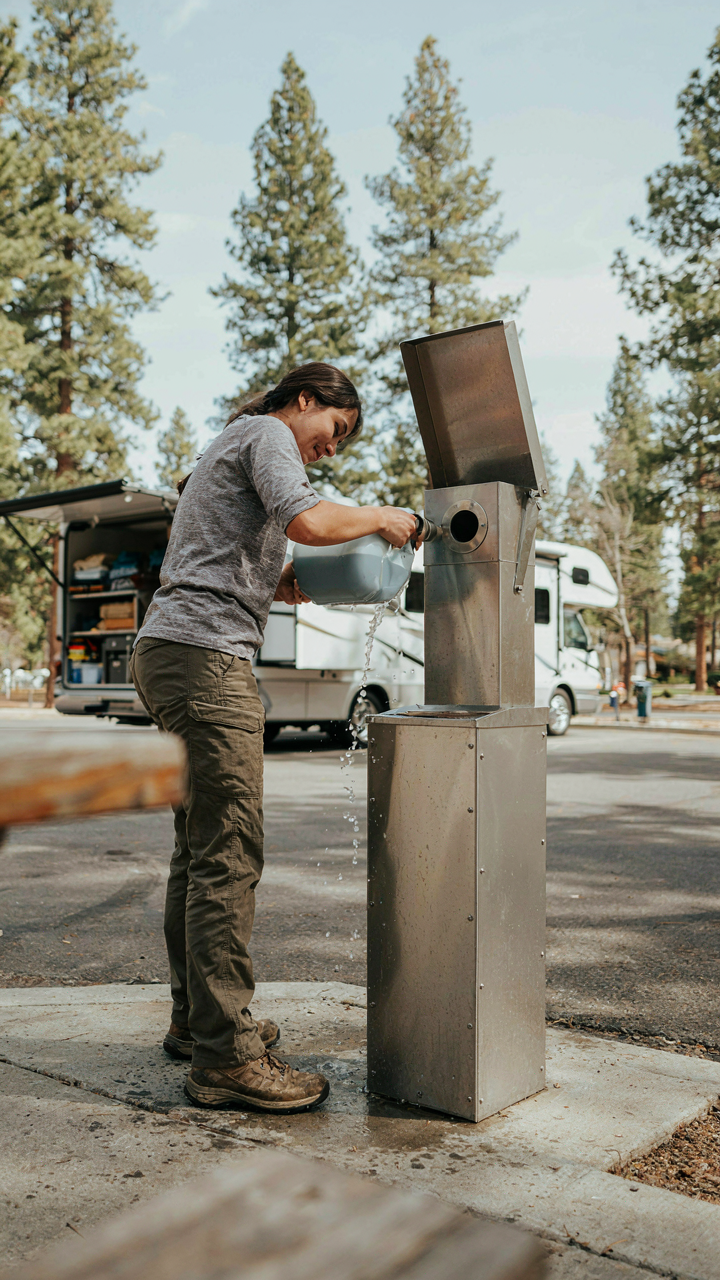
Start Before The Drain

You want this section because you’re afraid of becoming that van dweller everyone avoids at the campground. Here’s the mechanism: gray water problems stem from treating your van bathroom like a house bathroom. In a house, unlimited water supply and municipal sewage mean waste. In a van, every liter matters because your tank fills fast and empties slowly. The real constraint isn’t water availability, it’s tank capacity and your willingness to manage it daily. Start by auditing what actually needs water versus what you default to using it for.
Most people shower daily in a van. That’s the leak. You produce one to two gallons per shower, and that volume hits your gray tank immediately. Switching to a Navy shower cuts this to half a gallon. Wash your face and hands with a basin instead of running water. Rinse your toothbrush once, not three times. These aren’t sacrifices, they’re friction removers that buy you three extra days between tank dumps.
Filtration First, Disposal Second
Gray water looks manageable until you dump it three times and realize particles have settled into your lines. This is a civil engineering problem: sediment travels differently at different flow rates. Slow flow keeps solids suspended. Fast flow lets them drop. Your tank sits still most of the time, which means everything settles.
- Sink strainer basket: Catches hair and food debris before water enters the tank, reducing buildup that clogs shower drains and gray tank valves.
- Grease trap or filter: Intercepts cooking oils and soap residue that thicken as they cool, preventing valve blockages and tank sludge.
- Shower drain cover: Prevents hair from entering the gray tank system where it combines with soap to form clogs that are nearly impossible to clear.
- Tank inspection port or cleanout: Allows you to physically remove settled solids and debris rather than waiting for a professional dump station with equipment.
- Dump station with flush capability: Choose facilities that offer a full tank rinse after emptying, which suspends remaining sediment for complete drainage.
Disposal happens at dump stations, but most van dwellers dump reactively when the tank fills. Dump proactively every five days whether full or not. This keeps solids in suspension and prevents them from cementing into a plug. Never dump into unauthorized spots, dry camping areas, or private land. The legal consequence matters less than the mechanism: dumping in the wrong place starts a chain reaction where locals restrict access for everyone, eventually killing legitimate camping options in that region.
Beyond The Built In: Van Shower Ideas That Actually Work

Portable Showers: Pressure, Heating, And Privacy

You want a shower that doesn’t require you to strip down behind a curtain in a parking lot, and that’s the real friction point nobody names. The mechanism is simple: portable showers trade flow rate for portability, and most people misunderstand what “pressure” actually means in this context. Pressure isn’t about how hard the water hits you. It’s about overcoming gravity to move water upward and outward from a reservoir. A 12-volt pump generates 40 to 60 PSI maximum, which feels thin compared to home water pressure (60 to 80 PSI), but it’s workable for rinsing.
Heating matters more than pressure. You can carry 5 gallons of hot water from a kettle or portable heater and mix it into your shower stream. A basic submersible heater costs thirty to fifty dollars and takes 20 minutes to warm five gallons to 110 degrees Fahrenheit. Privacy solves itself with a shower enclosure tent (six sided, freestanding models) and a tarp underneath. The real problem isn’t the shower itself. It’s that most people buy a pressurized tank system, use it twice, then default to wet wipes because setup exhausts them.
Solar Showers: Efficiency And Limitations
Solar showers sound efficient until you map the thermodynamic reality: a black bag sitting in sunlight captures heat, but it doesn’t capture enough or fast enough for reliable hot showers outside summer months or equatorial regions. A five gallon solar shower bag reaches 95 to 105 degrees Fahrenheit on a clear day in eight to ten hours. That’s tepid, not hot. You’ll supplement with kettle heat or accept cold showers. The physics term is thermal mass. Van life borrowed this from architecture. Your solar bag has minimal thermal mass, so it cools rapidly once you remove it from direct sun or the moment you introduce cool water.
The actual utility of solar showers isn’t replacing conventional heating. It’s reducing heating load on your propane or electric system. In summer, a solar bag preheating water saves propane. In winter or cloudy regions, it provides nothing reliable. Use solar showers as a supplemental strategy, not a primary system. If you’re in van life year round across multiple climates, you need a propane or electric water heater as your base layer and treat solar as occasional assistance. Treat solar showers as summer convenience, not year round solution.
The Stealth Factor: Van Life With Shower (Without Announcing It)

Not Drawing Attention In Parking Lots

You’re worried people will judge you or call authorities on you. Here’s the mechanism: visibility creates conflict. In game theory terms, you’re managing your information asymmetry. The goal isn’t to hide your van life existence. It’s to avoid broadcasting bathroom activity in spaces where it triggers social friction or legal scrutiny. Most advice tells you to “just be confident.” That’s useless. Confidence doesn’t stop a property manager from asking questions.
The tactical move is timing and location separation. Take showers during off-peak hours when foot traffic is minimal. Position your van where bathroom windows don’t face pedestrian paths or storefronts. Use window coverings that block interior light without looking suspicious. Avoid parking near residential neighborhoods where people monitor unfamiliar vehicles. The stealth isn’t about shame. It’s about operational security. You’re reducing variables that create unnecessary friction with locals or authorities.
Smell Management Without Chemical Cover Ups
Most vanlifers default to air fresheners and spray. That’s backwards. You’re treating the symptom, not the source. Odor control in compact spaces works like HVAC load management. You reduce generation first, then control dispersal. Eliminate the source: ventilation during and immediately after showers prevents moisture buildup that breeds bacterial growth. Crack your roof vent or open windows for fifteen minutes post-shower. Don’t wait for smell to appear.
Secondary controls follow. Baking soda absorbs odors in your gray water tank. One cup per tank emptying cuts ammonia smell by seventy percent. Enzyme-based treatments break down organic matter instead of masking it. Store used towels in sealed bags until laundry day. Shower before bed so moisture escapes overnight while you’re stationary. These steps stack. Nobody notices odor because you interrupted the chain that creates it, not because you sprayed something that smells stronger.
Winter Is Coming: Camper Van Shower In Cold Climates

Vapor Barriers Stop Your Van Rotting

You’re worried about freezing pipes, but the real threat is mold eating through your walls before spring arrives. Thermodynamics governs this: warm air holds moisture; cold surfaces condense it. A shower in a van creates a humid microclimate that immediately hits cold walls and condenses into liquid water that sits there.
Install a vapor barrier on interior walls before insulation. Closed-cell spray foam works, but so does basic plastic sheeting sealed at seams. The barrier prevents moisture from migrating into wall cavities where it pools and breeds rot. Without it, insulation absorbs water, loses R-value, and decays from inside out. You won’t see the damage until structural integrity fails.
Heat Water Without Draining Batteries
Nobody admits this: most van dwellers run their batteries dead trying to heat water electrically in winter. Energy transfer efficiency is the real mechanism here. A 2000-watt electric heater running for 30 minutes in cold weather will pull 60 amp-hours from a typical lithium battery. That’s two days of total capacity gone on one shower.
Diesel heaters or propane systems transfer thermal energy by combustion, not electrical resistance. They produce the same hot water output using a fraction of battery capacity. Mount a propane on-demand tankless heater outside the van with insulated lines running to your shower. The upfront cost is $500-800, but it eliminates the math problem of trying to shower without killing your power system.
Van Bathroom Ideas: Maximizing Space, Minimizing Fuss
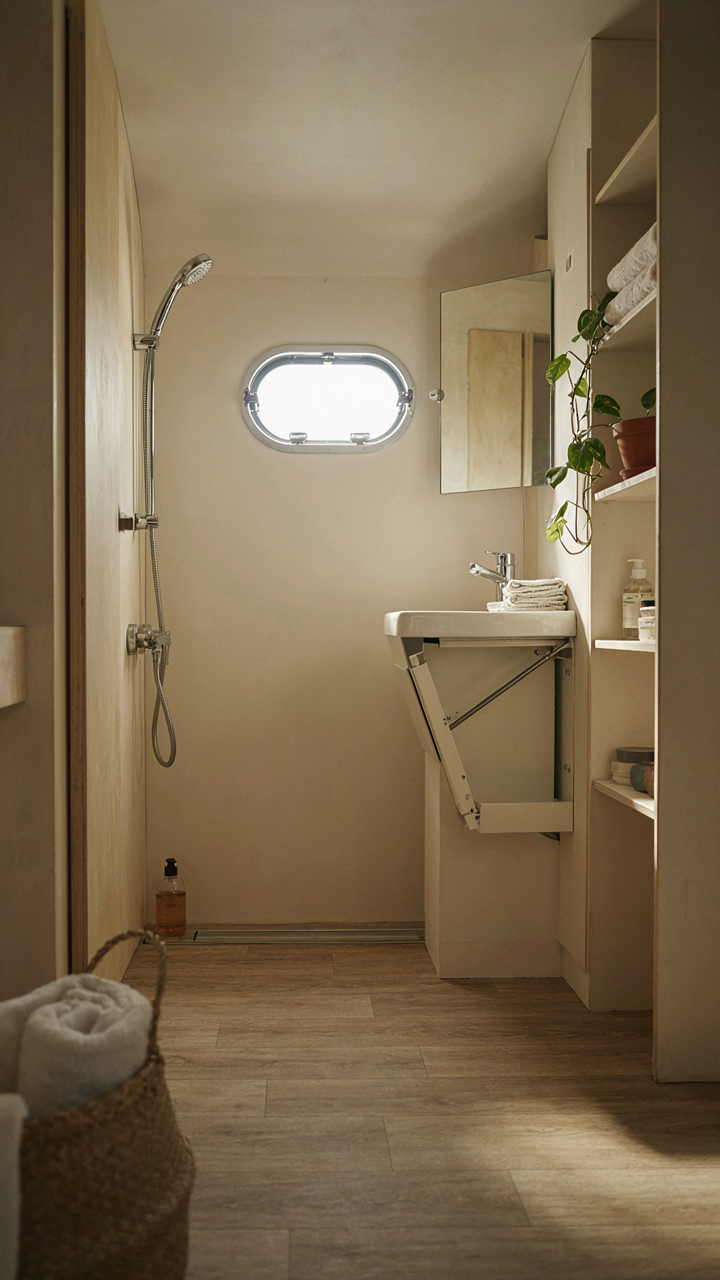
Design That Works In Layers

You want your bathroom to feel bigger than it is because a cramped bathroom makes you feel trapped, and trapped feels like failure. The real mechanism is constraint-based design from architecture: you build vertical instead of horizontal, stack functions instead of spreading them out. A van bathroom works when every surface does at least two jobs. Your sink cabinet holds storage underneath. Your mirror mounts on the wall instead of taking counter space. Your toilet seat becomes a step stool for reaching upper shelves. This isn’t clever—it’s the only way a 40-square-foot space becomes livable.
The difference between a functional van bathroom and a claustrophobic mistake is intentional layering. Place your tallest storage behind the door or along walls, not in the center. Mount shelves above your toilet. Use corner space aggressively because corners are dead space in most van builds. Recessed medicine cabinets save inches. The cabinet above your sink should extend nearly to the ceiling. Your shower area doesn’t need full headroom everywhere, only where you actually stand. Build down from the ceiling first, then up from the floor, then fill the middle.
Toiletries Storage That Actually Works
Most van dwellers waste money on decorative organizers when they need systems that compress volume. You need dense storage, not pretty storage. Magnetic strips on the walls hold metal grooming tools and free up drawer space. Vertical drawer dividers prevent the jumble that makes you feel disorganized. Wall-mounted caddies with drain holes keep shower bottles from creating a water problem. PVC organizers with labeled compartments stack medications and first aid supplies vertically. The goal is retrieval speed: you should find anything in three seconds without moving other items.
Drawer space is your premium real estate, so treat it like inventory management. Group by frequency of use: daily items in the most accessible drawer, weekly items in the next layer, monthly items below. Use small sealed containers for loose items like cotton swabs and nail clippers. Magnetic containers stick to any metal surface inside cabinets, maximizing vertical volume. Your medicine cabinet should hold exactly what you use, nothing more. When you stock enough for six months instead of two weeks, you’ve created a storage problem disguised as preparedness. Check your system every three months and remove anything you haven’t touched.
The Eco Conscious Campervan Bathroom Ideas: Leave No Trace

What Actually Works In Biodegradable Products

You care about this because calling yourself eco-conscious costs nothing and feels like progress. Here’s what matters: biodegradable products work through enzymatic breakdown, a biology term meaning microorganisms consume the material’s structure over time. Most “biodegradable” soaps break down in months in proper conditions. The mechanism fails when you dump them into holding tanks where anaerobic bacteria dominate and nothing degrades fast.
Real biodegradable products contain plant-based surfactants instead of petroleum chains. Brands like Dr. Bronner’s and Seventh Generation actually list their surfactant sources. The catch: biodegradable doesn’t mean harmless to aquatic ecosystems if you dump concentrate directly into water. Dilution ratio matters more than the label. Use a quarter-cap per wash, not a full dose, and you reduce phosphate load to near-zero levels while extending tank life.
Managing Waste Water Without Creating Problems
The common advice is wrong: “just dump it where dispersal happens naturally” is both illegal in most jurisdictions and the exact reasoning that destroyed hundreds of remote camping areas. Here’s the mechanism: greywater holds suspended solids and soap residue that concentrates in soil. Over weeks, it kills root systems and acidifies ground water.
Legal disposal requires using designated dump stations or RV facilities that route water through municipal treatment systems. If boondocking, invest in a waste tank rather than treating the ground like a sewer. The protocol: fill tanks to capacity before moving, never exceed three-quarters full to avoid spillage, and dispose at licensed facilities only. This single constraint prevents the regulatory backlash that closes camping areas.
Maintenance Matters: Keeping Your Van Bathroom Hygienic
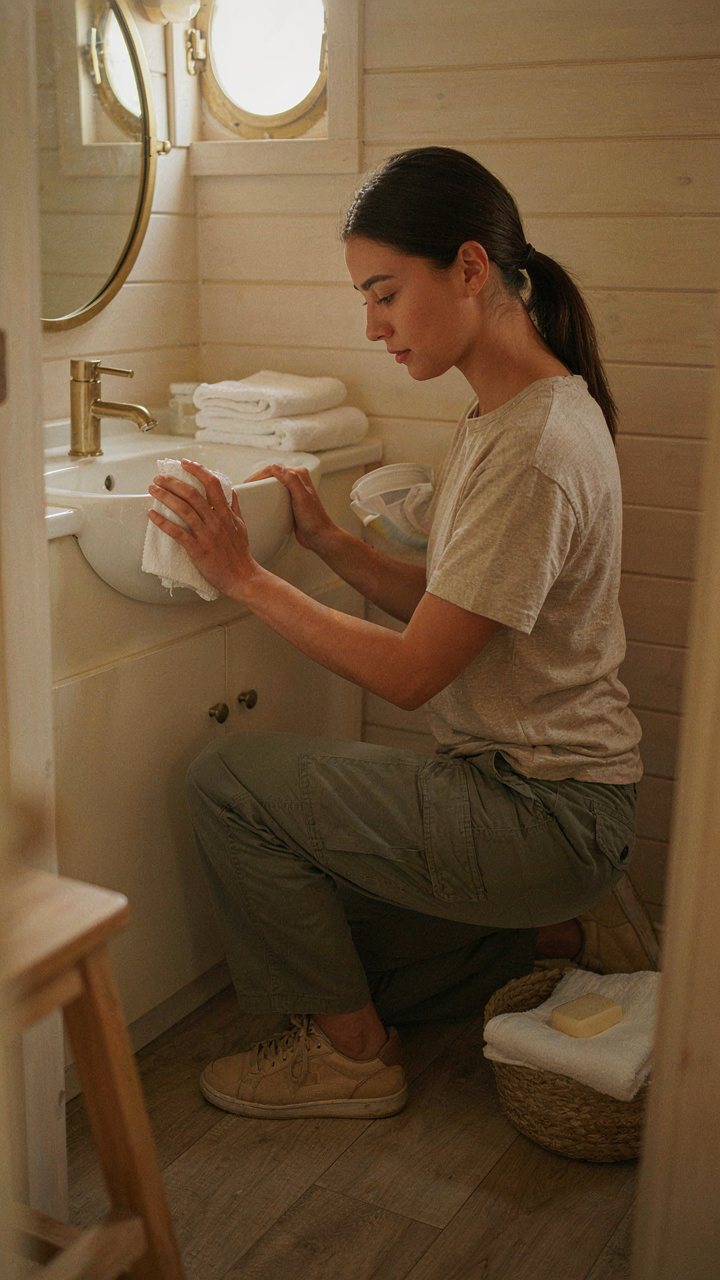
The Daily Clean That Prevents Decay

You care about this because a compromised bathroom forces you off the road. The mechanism is biological: moisture plus organic matter plus heat equals bacterial bloom and mold colonization. You stop this by interrupting the cycle daily, not weekly. Wipe surfaces after use. Empty the toilet. Ventilate aggressively. This isn’t optional hygiene theater. It’s the difference between a functional space and a biohazard that smells like decay and forces you to break your travel rhythm.
Water sitting in corners becomes a petri dish within hours. Mold spores need only darkness, moisture, and time to establish themselves in fiberglass or wood trim. The standard advice of “clean when it gets bad” is incomplete. By that point, the problem has already migrated into seals and ventilation ducts where you can’t reach it. You maintain daily to prevent the expensive extraction work that comes after negligence. Keep a squeegee mounted inside. Use it after every shower. Wipe the floor and bench. Takes three minutes. This discipline compounds into months of operational bathroom life.
Solving Failures Before They Strand You
The common breakdown points are predictable: clogs in black tanks, water leaks from corroded fittings, and mold in ventilation. These aren’t mysteries. They’re mechanics you can diagnose and prevent with protocol. A clogged tank doesn’t happen from normal use. It happens from flushing non-flushable items or from not adding enough water with waste. Your toilet paper dissolves. Everything else doesn’t. Tank treatments break down tissue, but they don’t disintegrate plastic or wipes. Know what goes down and what doesn’t.
Water leaks in van bathrooms usually originate at connection points where plastic tubing meets fittings. Repeated vibration from driving loosens compression fittings over time. Inspect every fitting monthly by hand. Tighten what moves. Keep a spare universal compression coupling and a roll of plumber’s thread seal tape in your repair kit. Ventilation mold requires active airflow. Install a roof vent and run it during and for thirty minutes after showers. Passive vents don’t move enough air. Active fans create the pressure differential that forces moisture out of the enclosure before it condenses on surfaces.
The Only Real Obstacle Is Your Ego, Not Your Effluent
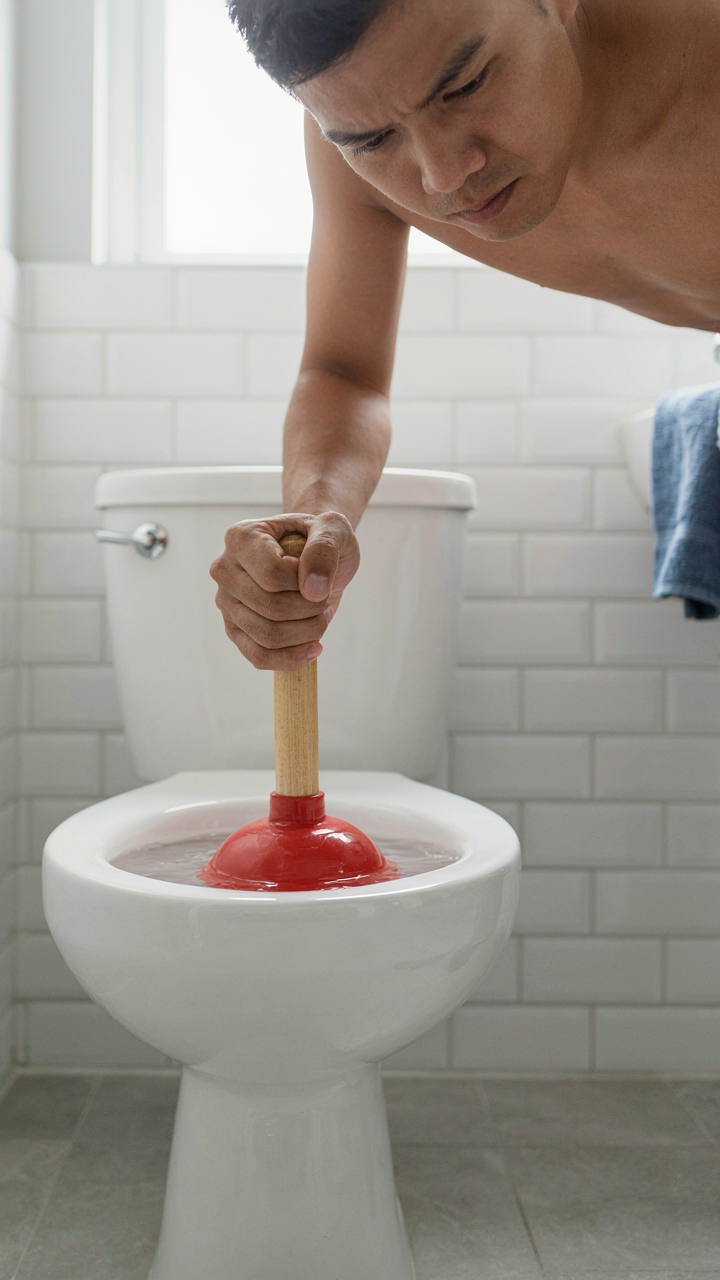
Most people won’t build a van life bathroom because they’re disgusted by the thought of it, not by the logistics. You’ve used a gas station toilet. You’ve unclogged a friend’s drain. You’ve survived worse. The shift happens when you stop pretending cleanliness requires plumbing and start treating your waste system like any other vehicle maintenance. Open your grey tank tomorrow. Watch it drain. That discomfort you feel isn’t danger, it’s just unfamiliarity wearing off. Everything changes when you touch the thing you fear.