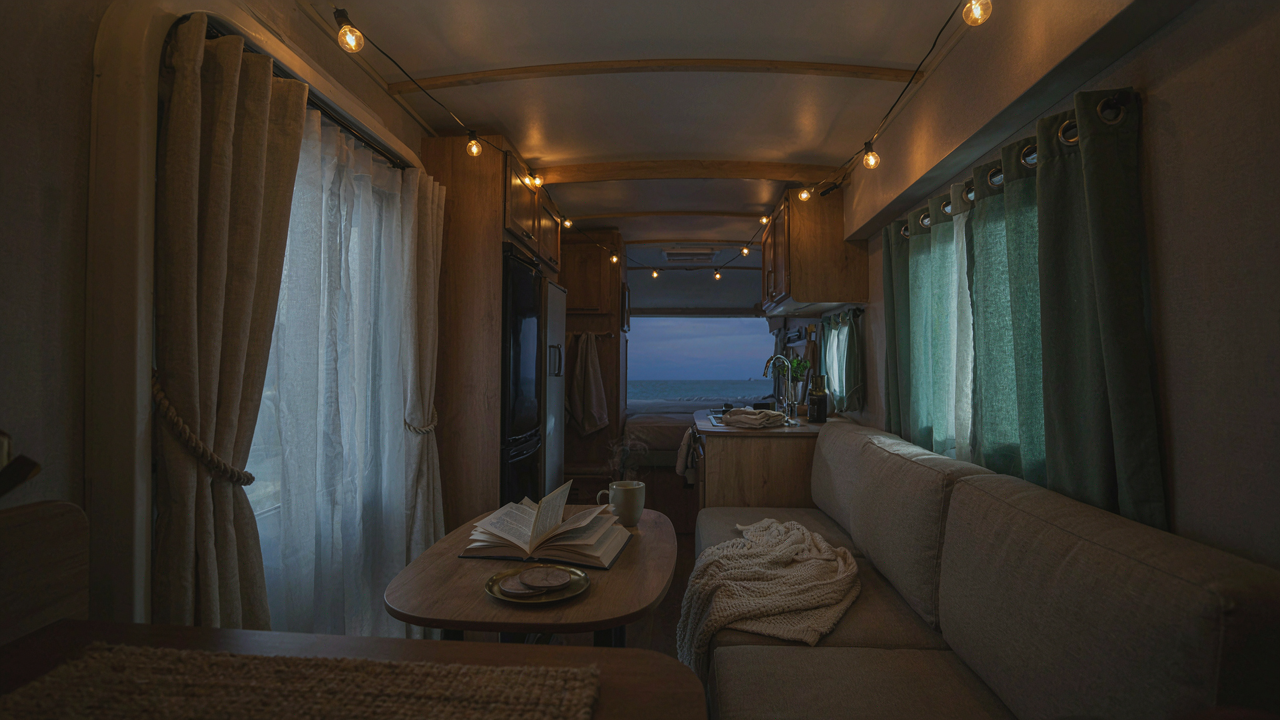
The Illusion Of Privacy: Why Your Current Curtains Fail You

What Your Curtains Actually Hide
You care about this because sitting exposed in a metal box while strangers walk past triggers primal discomfort. But most RV curtains fail at their actual job because people confuse opacity with privacy. A curtain blocks light. Privacy requires blocking sight lines, sound transfer, and thermal signature. Standard RV curtains do one of these three things poorly. The mechanism is simple: thin fabric stretched across a window frame creates a visual barrier but leaves gaps at edges, allows silhouettes to show through backlighting, and transmits both sound and heat without resistance. Your curtains aren’t failing you aesthetically. They’re failing you functionally because the installation method and material choice prioritize ease over engineering.
Real privacy in an RV hinges on three variables working together: material density, edge sealing, and mounting depth. Most factory curtains use single-layer polyester or cotton blends that measure under 200 GSM, which transmits detail even when fully closed. The rods mount flush to the window frame, leaving quarter-inch gaps where light and sound leak through. At night, interior lighting casts your silhouette directly onto the fabric for anyone standing outside. Fixing this requires understanding that curtains function as acoustic and thermal barriers first, then as visual screens second. This reframes the entire selection and installation process.
The Physics Of Feeling Watched
Psychology borrows from signal detection theory to explain why perceived exposure creates anxiety regardless of actual threat. In RV terms, a “signal” is any indication that someone outside can detect you through the window. Your nervous system doesn’t distinguish between real observation and mere possibility of observation. A thin curtain generates false signals constantly: shadows moving, light shifts, the knowledge that a silhouette is technically visible. This creates hypervigilance during vulnerable moments, which compounds over time.
The nervous system doesn’t care about your rational assessment that most people aren’t looking. It responds to environmental factors that suggest exposure risk. Gaps in curtain coverage, translucent materials, and uneven closure all register as uncontrolled exposure points. The mechanism here is biological, not psychological. Your brain treats an incomplete privacy barrier as an incomplete defensive perimeter. Fix this by eliminating ambiguity: use materials that create absolute opacity, seal all edge gaps with magnetic tape or velcro, and install depth-mounted rods that keep fabric taut and centered. When your curtains close, nothing should be visible from outside at any angle or time of day.
Beyond Blackout: The Light Manipulation Protocol
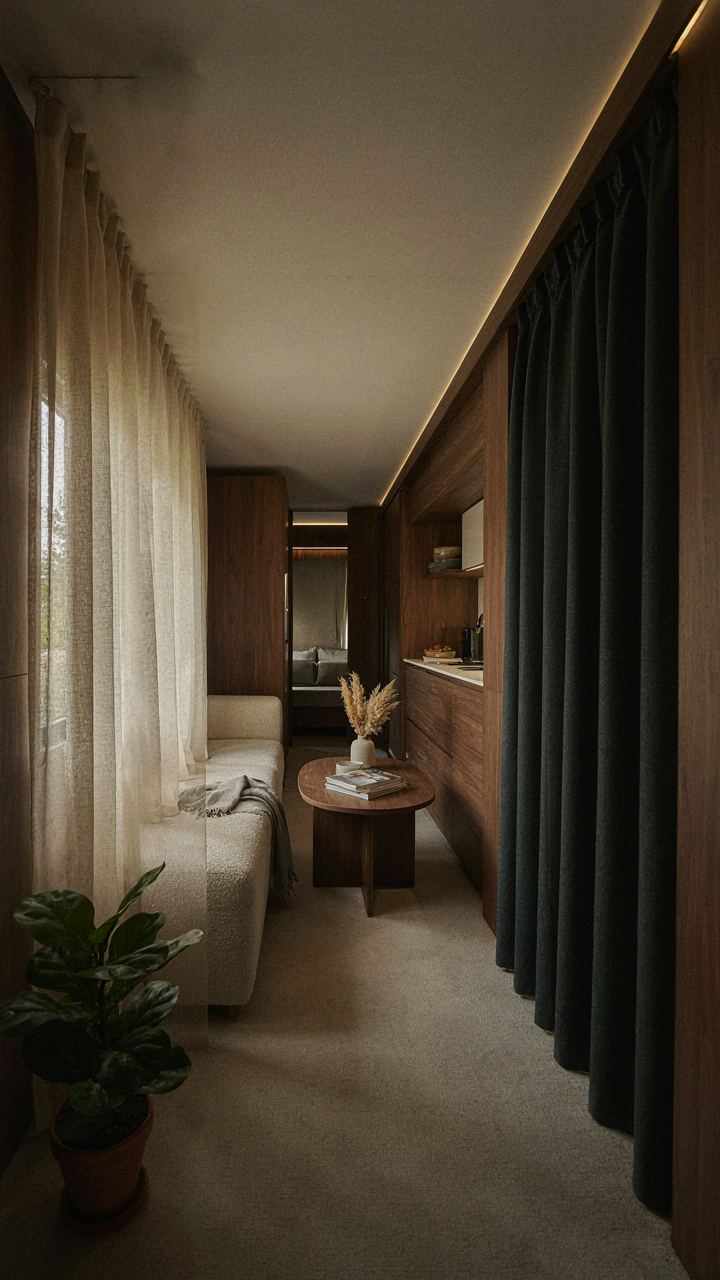
Strategic Light Control For Mood And Utility

You want this section because you’re tired of feeling like a passenger in your own space. Here’s the mechanism: light doesn’t just illuminate—it regulates your circadian rhythm, affects perceived space size, and determines what you can actually do inside the RV. Most people treat curtains as binary: open or closed. That’s lazy thinking. The real play is layering your light control so you can dial the environment to match your immediate need, not just block or allow everything at once.
Borrowed from architecture, this is called zoning—spatial control through graduated intervention. Your RV curtain strategy works the same way. A single heavy blackout curtain forces you into an all-or-nothing choice. Instead, stack two layers: a sheer or semi-transparent option for diffused daylight that keeps your interior visible but softens glare, plus a full blackout layer you deploy only when you need genuine darkness. This gives you three distinct states without swapping fabrics or rigging new hardware.
Daylight Harvesting Versus Total Darkness
The advice about “maximizing natural light” misses what actually matters. You don’t want maximum light—you want usable light. Daylight harvesting is an energy term meaning capturing available daylight to reduce artificial load. Apply that logic here: in most RV layouts, you can position semi-sheer curtains to bounce ambient light deeper into the living space without creating harsh shadows or heat buildup. That’s the real win, not romance-novel sunbeams.
Total darkness serves one purpose: sleep. Deploy blackout curtains only during sleep windows or when you’re running AC and need to cut solar heat gain. Running blackout all day kills your ability to regulate natural circadian signals, which hammers sleep quality that night anyway. The protocol: use semi-transparent or light-filtering curtains as your default state, switch to blackout for sleep blocks only, and treat daylight as a controllable resource, not a constant you manage around.
Thermal Regulation: Curtains As Climate Control
How Insulation Works In Metal Boxes

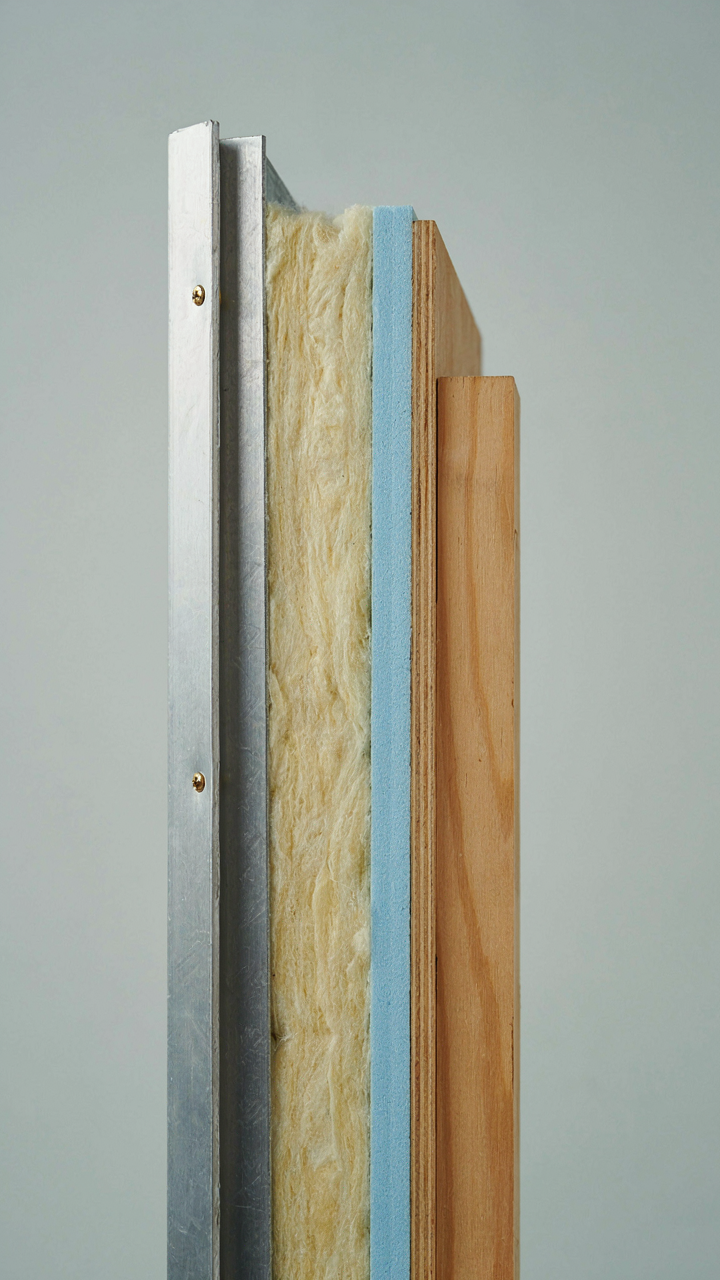
You want RV curtains because you’re tired of sweating at night or waking up cold, but you won’t admit the real problem: an RV is a metal box with no thermal mass. Physics doesn’t care about your comfort preference. Thermal resistance, or R-value, measures how well materials slow heat transfer. Curtains create dead air space between fabric layers and the window, which is where the actual insulation happens. The material itself matters less than the gap it creates. Polyester-lined curtains beat thin cotton every time, not because polyester is magic but because the lining traps still air against the glass.
Single-pane RV windows lose heat fast. A window pulls thermal energy from inside in winter and pushes it in from outside in summer. Curtains interrupt this transfer by adding resistance. Blackout fabric works because the weave is tight and dense, which kills air circulation across the glass surface. Honeycomb cellular curtains perform better than flat designs because the honeycomb structure creates multiple air pockets. The gap between curtain and window matters as much as the curtain itself. Mount curtains close to the window frame and seal edges with tension rods or velcro to eliminate bypass airflow.
Passive Energy Management Through Strategic Coverage
Most RV owners think curtains are decoration. They’re not. Curtains are HVAC equipment that reduces generator or battery drain by managing solar gain and heat loss. In summer, closed curtains lower interior temperature by 5 to 10 degrees by blocking direct sun before it enters the RV. In winter, they reduce heat loss through windows by 20 to 30 percent depending on fabric weight. This isn’t marginal. Lower interior temperatures mean your AC runs fewer hours. Less AC runtime means less fuel burned or battery capacity consumed. That’s the mechanism.
The practical protocol is simple: close south and west-facing curtains during peak sun hours in summer, close all curtains at night in winter. Use light-colored curtains on sun-facing sides to reflect heat outward in summer, and heavy thermal curtains on all sides at night to trap interior warmth. Mount curtains to cover the entire window frame edge to edge, top to bottom. Leave no gaps. Gaps bypass the insulation entirely and kill your efficiency gains. Measure twice, order once, and test fit before installation to confirm thermal seal.
The Acoustic Buffer: Muffling The Mobile Chaos
What Fabric Weight Actually Controls

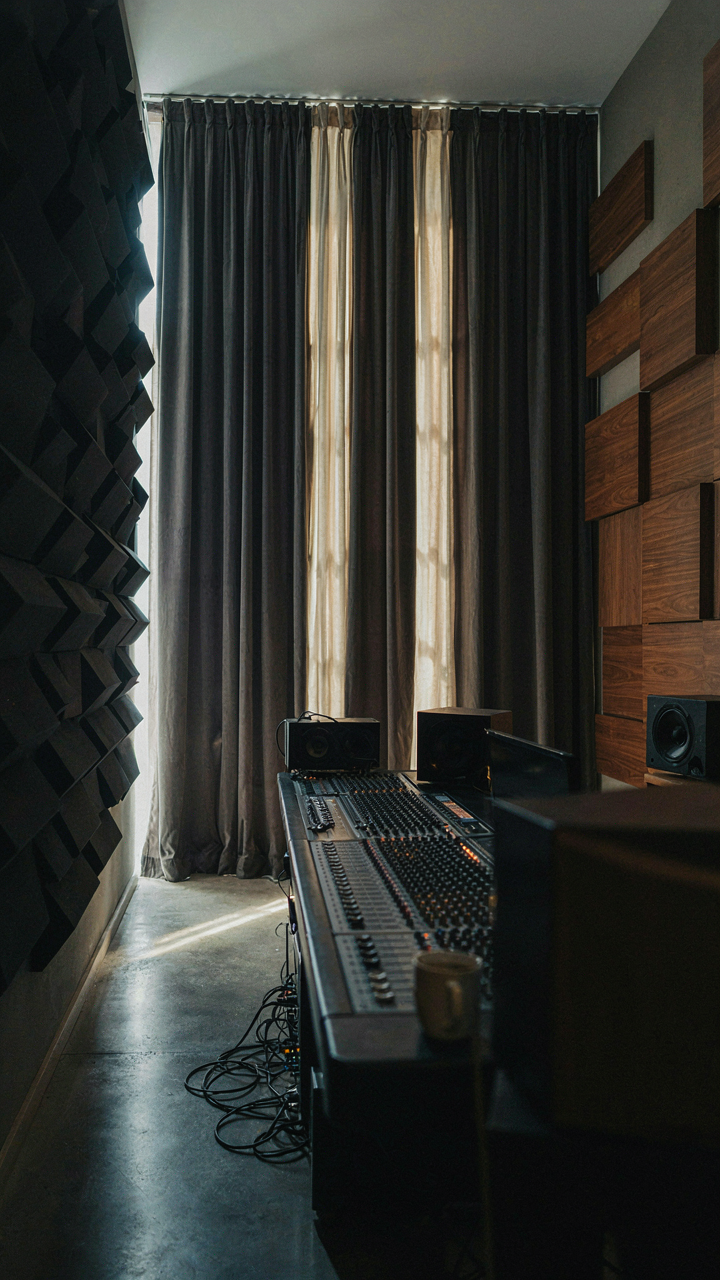
You want quiet because noise kills sleep, and sleep deprivation makes you ineffective. The mechanism is mass. In acoustics, heavier materials absorb more sound energy by converting vibrations into heat through friction. RV curtains work the same way: fabric weight determines how much external noise gets stopped before it reaches your ears.
Thin polyester curtains block almost nothing. They move with sound waves rather than against them. Blackout curtains rated at 280 to 300 gsm (grams per square meter) provide genuine noise reduction because the weave density forces sound to lose energy passing through. This isn’t subjective. Denser fabric equals lower decibel penetration.
Strategic Placement Over The Roof Line
Most RV owners hang curtains and call it done. That misses the real problem: sound enters through every gap, and the roof is your worst vulnerability. Metal panels amplify noise like a drum. Install curtains on an interior ceiling track running parallel to your roof seams, creating an air cavity between fabric and metal. This trapped air space acts as a secondary absorption layer.
The installation matters more than the curtain itself. Secure the track to your rig’s frame, not loose to walls. Seal the edges with weatherstripping so air cannot bypass the fabric. When sound hits the metal roof, it loses force in the dead air space, then gets absorbed by the fabric mass. You create a compound defense, not a single one.
Diy Camper Curtain Ideas: Engineering Your Own Solution

Pick Your Fabric Like You Pick Your Armor

You want DIY curtains because you think it saves money, but the real mechanism is control: you’re tired of generic RV window treatments that don’t fit your specific layout or light needs. Material selection works like thermal engineering—you’re managing heat transfer, light blocking, and moisture resistance simultaneously. Pick wrong on any axis and your curtain fails its job in weeks.
- Blackout Fabric (100% Polyester Blend): Blocks 95-99% of light, ideal for daytime sleeping in bright climates. Heavier weight resists mildew in humid RV environments. Standard weight runs 250-300 gsm.
- Ripstop Nylon: Lightweight, durable, resists tearing from vibration and movement. Offers modest light blocking. Excellent for high-traffic windows near entry doors where durability matters most.
- Cotton Canvas: Breathes well, reduces condensation buildup on windows. Moderate light blocking. Absorbs moisture faster than synthetics, requiring regular ventilation to prevent mold.
- Vinyl-Backed Cotton: Combines cotton’s breathability with moisture barrier on rear face. Prevents condensation from pooling behind fabric. Heavier, requires reinforced mounting hardware.
- Thermal Insulated Fabric: Multi-layer construction traps air pockets, reduces heat transfer. Adds R-value to windows. Bulkier when retracted, demands wider storage space above or beside windows.
Stop buying fabric at general retailers. Sourcing from outdoor gear suppliers or marine fabric distributors gives you materials engineered for movement, temperature swings, and humidity—not just aesthetic curtain weight. Your RV vibrates constantly while driving; generic curtain fabric wasn’t built for that stress.
Simple Fastening That Actually Holds
Most RV curtain failures happen at the hardware, not the fabric. People use tension rods or cheap adhesive hooks expecting permanence in a moving vehicle. The real solution uses redundant attachment points and leverages the window frame itself rather than fighting it. Your goal is zero flex, zero rattle.
Mount a wooden dowel or aluminum rod using L-brackets bolted directly into the window frame’s aluminum extrusion—not the wall behind it. The frame withstands vibration; drywall doesn’t. Use stainless steel hardware to resist corrosion from condensation and temperature cycling. Secure the curtain hem with a separate bottom tension cable threaded through a sewn pocket, preventing billowing during driving. This creates a three-point contact system: top mounting, fabric body, and bottom tension line.
Camper Curtains: The Kinetic Energy Of Space Transformation
How Curtains Control Air And Light Flow

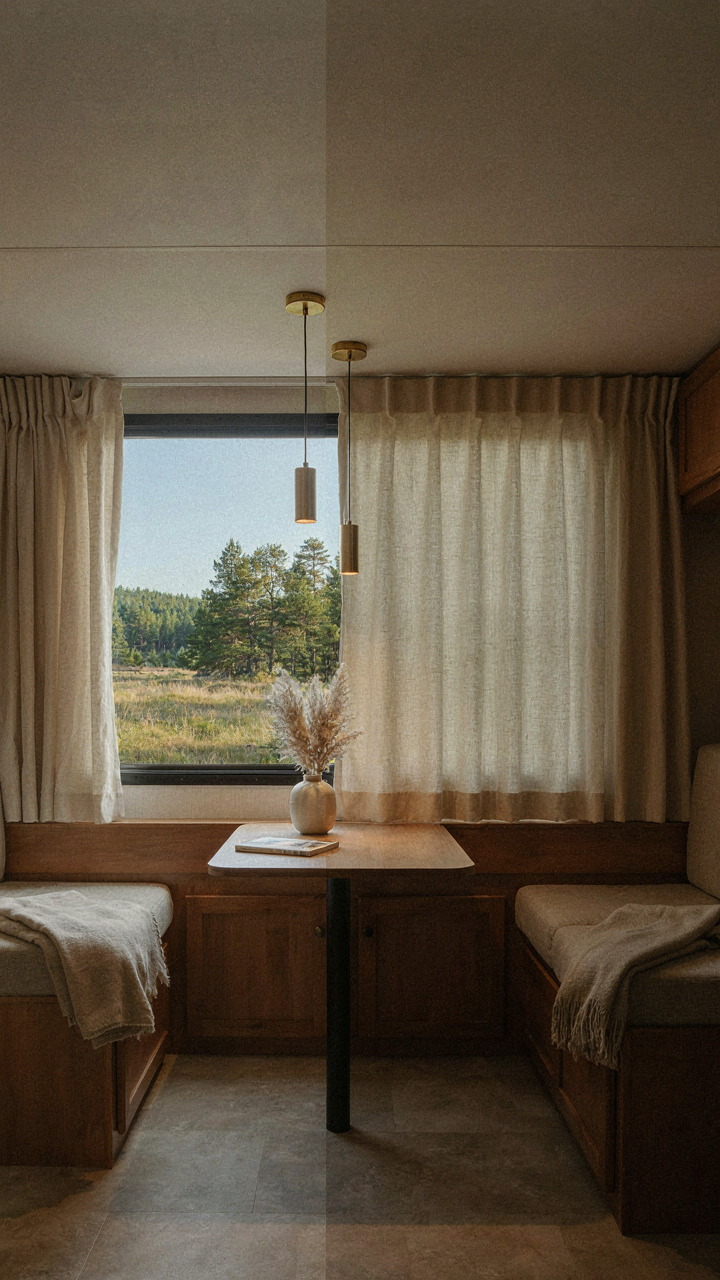
You want your RV to feel bigger than it is. That’s the real driver here, and curtains solve this through spatial manipulation, not decoration. Borrow a term from fluid dynamics: curtains function as flow controllers, managing how light and air move through a confined space. Strategic placement redirects natural light to expand perceived volume and channels airflow to prevent dead zones where heat or stale air pools.
The common mistake is treating curtains as static barriers. They’re not. Light penetration through translucent fabrics creates layering—sheer curtains diffuse sunlight evenly across walls, reducing harsh shadows that compress visual space. Blackout curtains in sleeping areas darken efficiently without blocking airflow at vents. Positioning matters: curtains hung ceiling-to-floor create vertical emphasis, making low ceilings feel higher. Airflow control happens through fabric weight and gap management between curtain edges and walls.
Movement And Mechanical Efficiency
Robotics teaches us that repeated manual tasks waste energy better spent elsewhere. Apply this principle: automated or semi-automated curtain systems reduce friction in daily RV life. Motorized curtain rods powered by 12-volt systems (standard RV electrical) eliminate the repetitive motion of hand-drawing heavy fabric. Roller mechanisms and magnetic track systems move curtains with minimal force, preserving battery capacity and freeing mental bandwidth.
The standard approach of basic rod and rings is inefficient for frequent opening and closing. Magnetic catch systems hold curtains in place without hardware, reducing wear and vibration during travel. Spring-loaded tension rods prevent sagging that creates wrinkles, which absorb light and visually clutter space. Install tracks that allow smooth gliding by mounting them into structural beams rather than drywall, ensuring stability when the RV moves. Test the mechanism during daylight hours before relying on it during darkness.
RV Curtains Window Treatments: Beyond Fabric Drapes
What Replaces Traditional Drapes

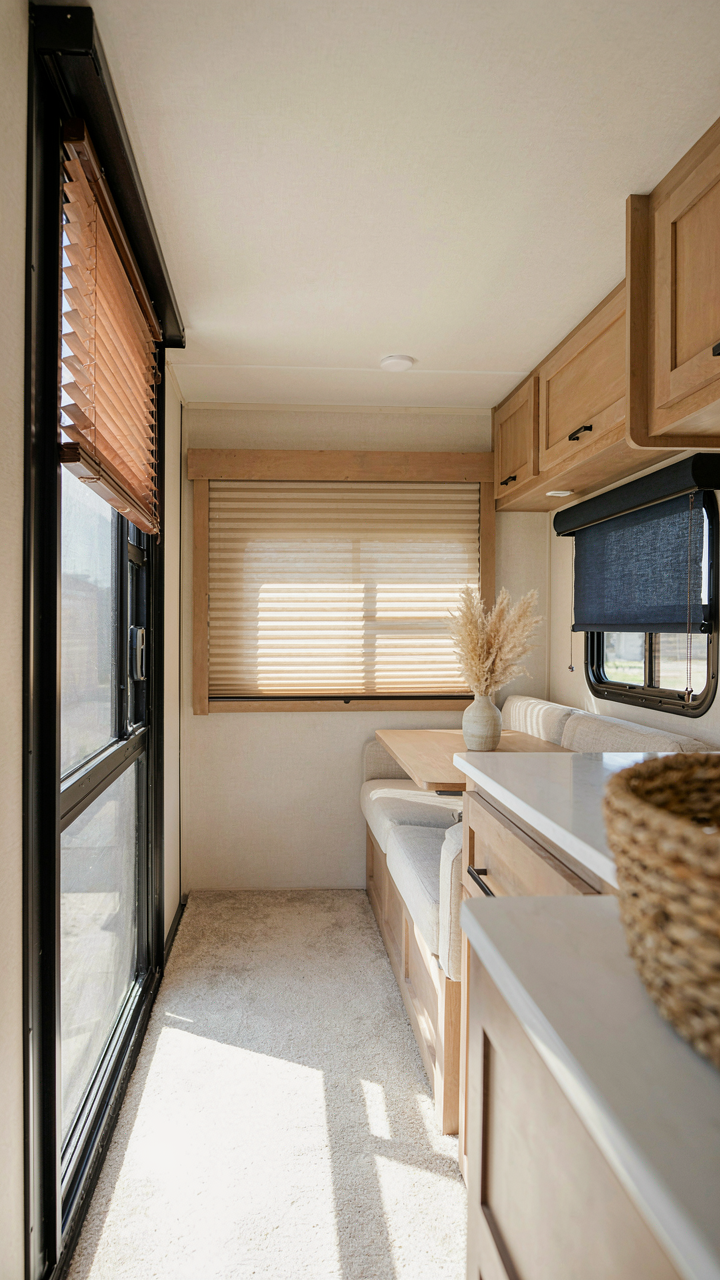
You want to feel like you made a deliberate choice instead of defaulting to what every other RV owner hangs. Here’s the mechanism: fabric drapes collect dust, sag under vibration, and degrade from UV exposure faster than people admit. Roller shades, cellular shades, and panel systems solve this because they use tension and structure instead of hanging weight. They last longer, require less maintenance, and actually perform their stated function without degrading every season.
Cellular shades use a honeycomb design that traps air, which manufacturers engineered for thermal insulation decades ago. The same principle applies to RVs. They block heat, reduce noise, and compress flat when not in use. Roller shades mount inside or outside the frame and operate via spring tension or cordless mechanisms. Panel systems slide across windows like sliding doors, offering full blackout coverage without the dust accumulation of traditional fabric.
Fitting Odd Window Shapes And Sizes
RV windows aren’t standard. Most RVs use a combination of fixed panes, small sliding windows, and panoramic curved windows that don’t fit retail curtain dimensions. This forces people into custom solutions, which costs more but performs better than forcing a standard product into a non-standard space. The real constraint is measurement accuracy and material selection, not design complexity.
Measure twice before ordering. Use the exact height, width, and depth of your window opening, accounting for interior trim and any fixtures that protrude. For curved or panoramic windows, consider motorized cellular shades or custom-cut acrylic panels instead of fabric. For fixed windows, magnetic curtain rods paired with blackout fabric deliver privacy and thermal control without permanent installation, allowing you to adjust coverage seasonally or remove them when you sell the RV.
Curtain Ideas For Camper: Maximizing Storage And Utility
Curtains As Hidden Storage

You want your RV to feel bigger without admitting you’re living in a box. The mechanism is simple: curtains can act as architectural camouflage while creating dead space you actually use.
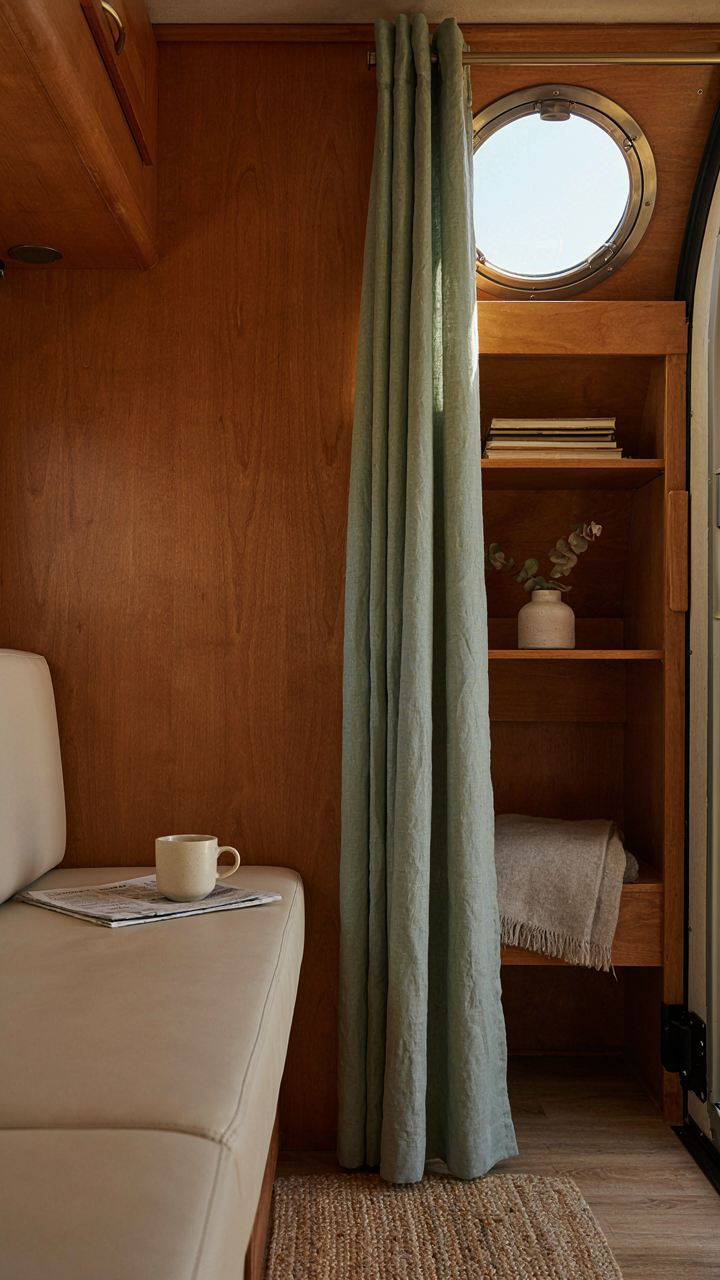
Pocket curtain rods mounted inside window frames let you hang fabric that doubles as a storage barrier. Behind the curtain, you tuck seasonal gear, documents, or items you don’t want visible. The fabric absorbs light and noise, so the storage feels intentional rather than cluttered. Thermal curtains serve this dual purpose especially well because they’re already dense enough to hide depth.
Magnetic curtain tracks let you reposition panels without drilling new holes. This matters in RVs where wall space determines resale value. You can close off a bunk area to create a storage nook, or use curtain tension to secure loose items during transit. The magnetic system holds fabric steady without fasteners that compromise structural integrity.
Multi Functional Curtain Designs
Blackout curtains in RVs do more than block light: they regulate temperature, reduce noise from outside, and create visual separation in open floor plans. But most people treat them as decorative, not structural.
Thermal blackout fabric cuts cooling costs by reflecting heat and reduces AC load during hot months. The same fabric muffles highway noise and engine sound, which matters in smaller rigs where auditory fatigue gets real. You control microclimate zones without upgrading your HVAC system. Install them on a tension rod that you can remove quickly during travel to reduce weight, then reinstall at camp.

Layered curtain systems give you control. Use a lightweight privacy curtain as your first layer, then add blackout fabric behind it when you need temperature or light control. This setup lets you adapt to different climates and seasons without storing multiple curtain sets. The front layer handles social privacy, the back layer handles thermal and acoustic work. Measure your window frames precisely before ordering, because RV windows vary by model year and manufacturer.
The Aesthetics Of Intent: Form Follows Function In Camper Curtain Ideas
Decoration First Is A Tax On Your Space
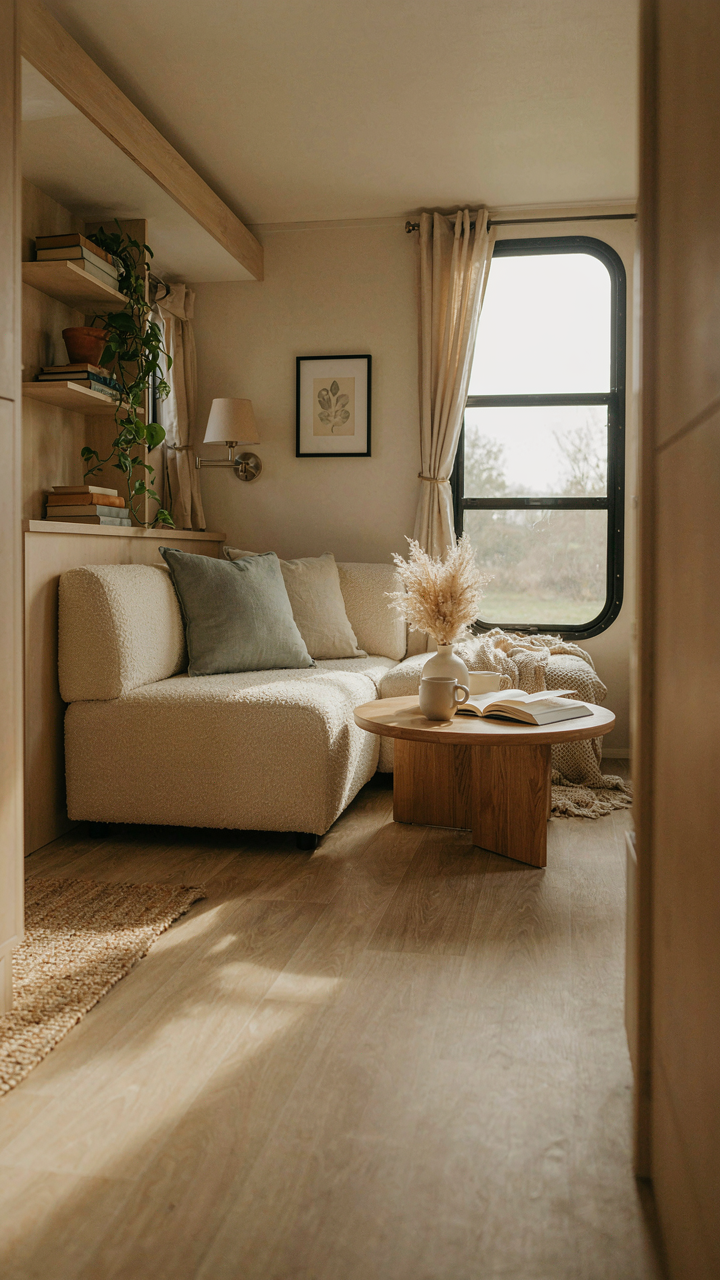
You want curtains that look intentional because you’re worried your RV interior will feel cheap. Here’s the real mechanism: decorative-first thinking creates a false choice between privacy and aesthetics when the actual problem is task misalignment. In industrial design, this is called “form follows function”—the principle that an object’s shape should derive from its purpose, not the reverse. Most RV curtain advice inverts this. People pick fabric color or pattern first, then hope it blocks light and insulates. That’s backward. Your curtains have three jobs: thermal regulation, light blocking, and privacy. Everything else is accidental benefit.
The moment you accept that utility is the primary aesthetic, you stop wasting mental energy on decorative compromise. A blackout thermal curtain in solid gray performs better than a patterned curtain in a trendy fabric that lets light bleed through. The performance itself becomes the style statement. When your curtains actually do their job—trap air for insulation, eliminate light leaks, maintain privacy without gaps—they look professional because they work. That coherence is what reads as intentional design in a space where every square foot matters.
Optimized Utility Creates Its Own Visual Language
Style through optimization means selecting materials and hardware that solve problems so completely that aesthetics emerge from their efficiency. Heavy-duty magnetic closure systems, for example, eliminate the visual clutter of dangling ties or incomplete coverage. Tension rods mounted flush to walls create clean lines because they’re installed to function precisely, not to be decorative. The best RV curtains use multiple layers—a blackout liner inside, thermal insulation in the middle, a finished fabric outside—which creates depth and visual sophistication as a side effect of thermal performance.
Build your curtain system around this protocol: identify the specific light leaks in your rig, measure them precisely, then select materials rated for those dimensions and heat transfer. Mount hardware first based on structural points and tension requirements, never aesthetics. Choose your visible fabric last, after the functional layer is locked in. This inverted sequence forces you to design around what actually works, and the visual result will always outperform decoration-first choices because it’s solving real problems rather than just referencing other people’s style choices.
Camper Window Coverings Ideas: Durability And Longevity
Material Selection For Harsh Environments
You want your curtains to last because replacing them every season feels like failure. The real mechanism is this: RV curtains fail not from use but from UV exposure, temperature swings, and moisture cycling. Think of material selection like structural engineering—you’re choosing materials that resist fatigue, the repeated stress that breaks down weaker fabrics over time. Cotton absorbs moisture and mildews in enclosed spaces. Polyester blends with tight weaves block UV and shed water instead of trapping it. Blackout liners made from acrylic or vinyl don’t degrade when exposed to sun and temperature shifts the way natural fibers do.
The curtains that survive longest use solution-dyed polyester or acrylic blends rated for outdoor use. These materials have color molecules bonded into the fiber itself, not dyed onto the surface, so they don’t fade as the sun breaks down surface-level pigment. Vinyl-backed or acrylic-lined curtains add another layer against moisture penetration. When selecting materials, check if they’re designed for marine or RV environments, not just general home use. The difference is UV stabilizer content and weave density. Install them with stainless steel hardware, not zinc-plated, because zinc corrodes faster in the damp environment of a parked RV.
Maintenance Protocols For Extended Performance
Most RV owners treat curtain maintenance like it doesn’t exist, then act shocked when mold appears or fabric weakens. Maintenance is prevention, not repair—it stops degradation before it becomes visible. Dust accumulation on curtains traps moisture and creates conditions for mildew growth. Wipe curtain surfaces monthly with a dry microfiber cloth to remove dust before it settles into fibers. When the RV sits parked for extended periods, crack windows slightly while curtains remain closed to allow air movement without direct sun exposure.
Clean curtains twice yearly with mild soap and cool water, never hot water, which accelerates synthetic fiber breakdown. For blackout liners, vacuum the back side where dust concentrates. If you spot mold spots, treat them immediately with a solution of one part white vinegar to three parts water, apply to affected area, let it dry completely, then wipe clean. Store curtains fully closed when the RV is stationary for months to prevent uneven sun fading. After each trip, inspect hardware connections and tighten any loose fasteners before corrosion starts.
Your RV’s Limitations Aren’t Shackles; They’re Design Parameters For Intentional Living
Most people see a small space and freeze. You should see constraint as permission. The 200 square feet forces you to choose what matters instead of drowning in options. Stop scrolling curtain galleries today. Pick one material, one color, one style that actually reflects how you live. Constraints don’t limit you. They force you to build something real instead of something generic. The smallest space demands the most honest design.