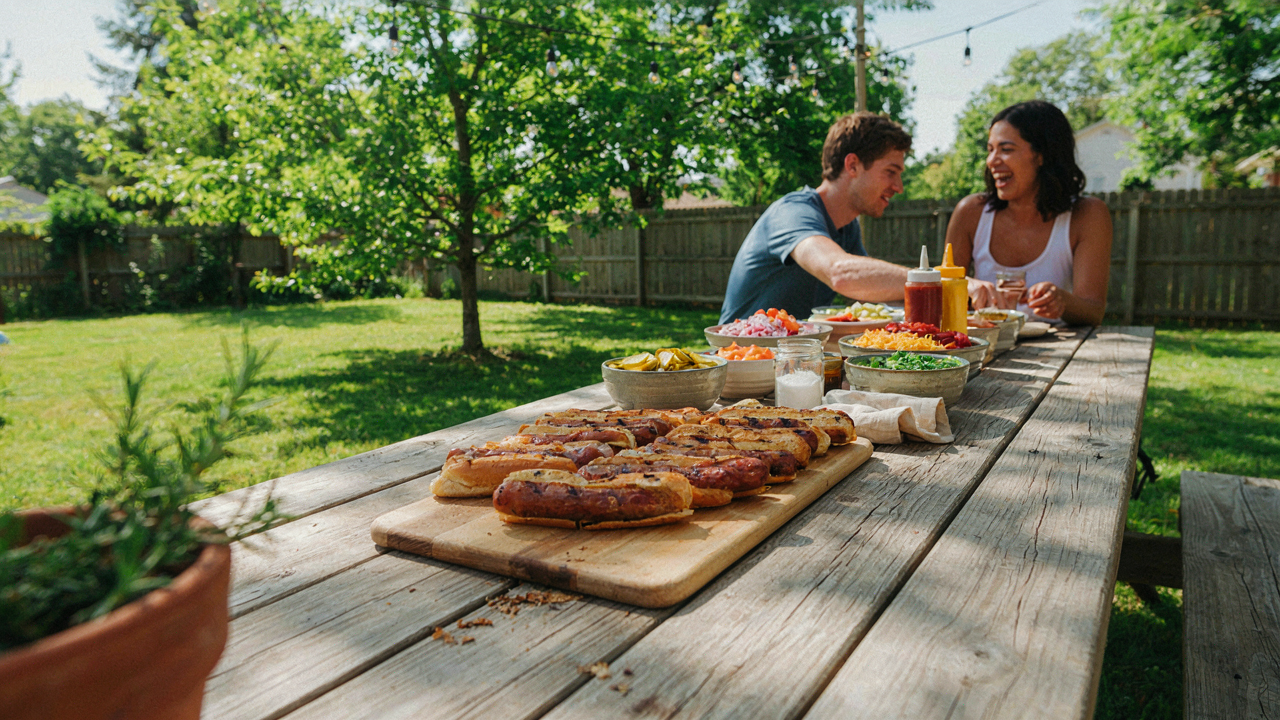
The “Effortless” Hot Dog Bar Myth: Why Simplicity Is A Lie
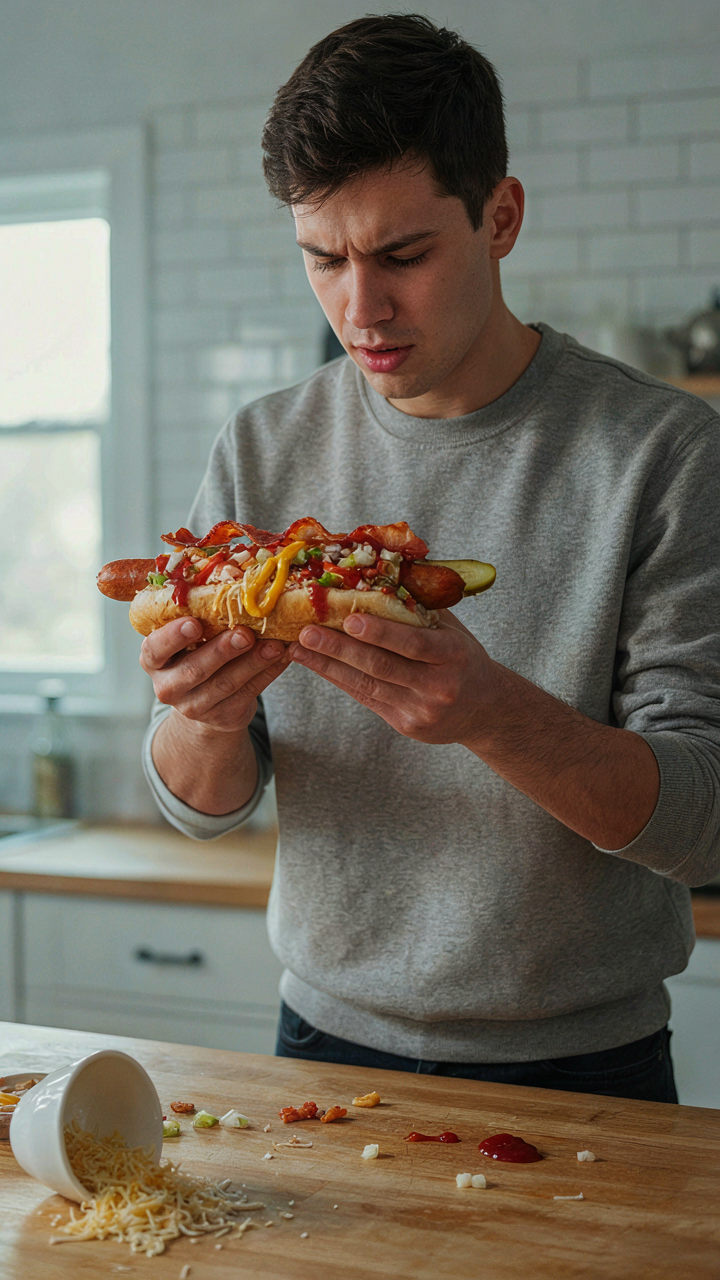
What Everyone Gets Wrong About Easy Setup
You want to believe a hot dog bar is simple because you’re afraid of looking unprepared in front of guests. Here’s the mechanism: people confuse the final visual output with the work required to create it. A hot dog bar looks minimal. That’s the trap. The absence of visible complexity doesn’t mean absent labor. It means the labor moved upstream, into planning and prep. You’re not saving work. You’re just hiding it before people arrive.
Most advice tells you to “just throw out some hot dogs and toppings.” This is incomplete. Setup simplicity is a design problem, not an effort problem. Every element you remove from view requires you to remove it from the timeline of the party itself. That’s where the actual work lives. You’re trading real-time stress for pre-party stress, which is smarter, but it’s still stress. The question isn’t whether you work hard. It’s when you work hard.
The Labor Nobody Mentions During Setup
Temperature control is the hidden load that kills casual hot dog bars. Hot dogs cool fast. Cold hot dogs kill the entire experience, which means you need either a holding system (chafing dish, slow cooker, insulated container) running before guests arrive, or you need to batch-cook throughout the party. Neither is invisible. One demands equipment and electricity. The other demands your attention every twelve minutes. Most people choose the second option and resent the guests for existing.
Topping organization appears simple until you actually do it. Each topping requires a vessel, a serving utensil, and a location that prevents cross-contamination and collapse under foot traffic. Condiments separate from toppings. Wet toppings away from dry ones. Onions away from everything else because their smell migrates. Napkins positioned so they’re not buried under hands. This isn’t decoration. This is logistics. The bar fails when someone’s sauerkraut drips onto the mustard and the whole system becomes unusable. When you set up properly, guests think nothing happened.
The Hot Dog Flight Protocol: Curate, Don’t Accumulate
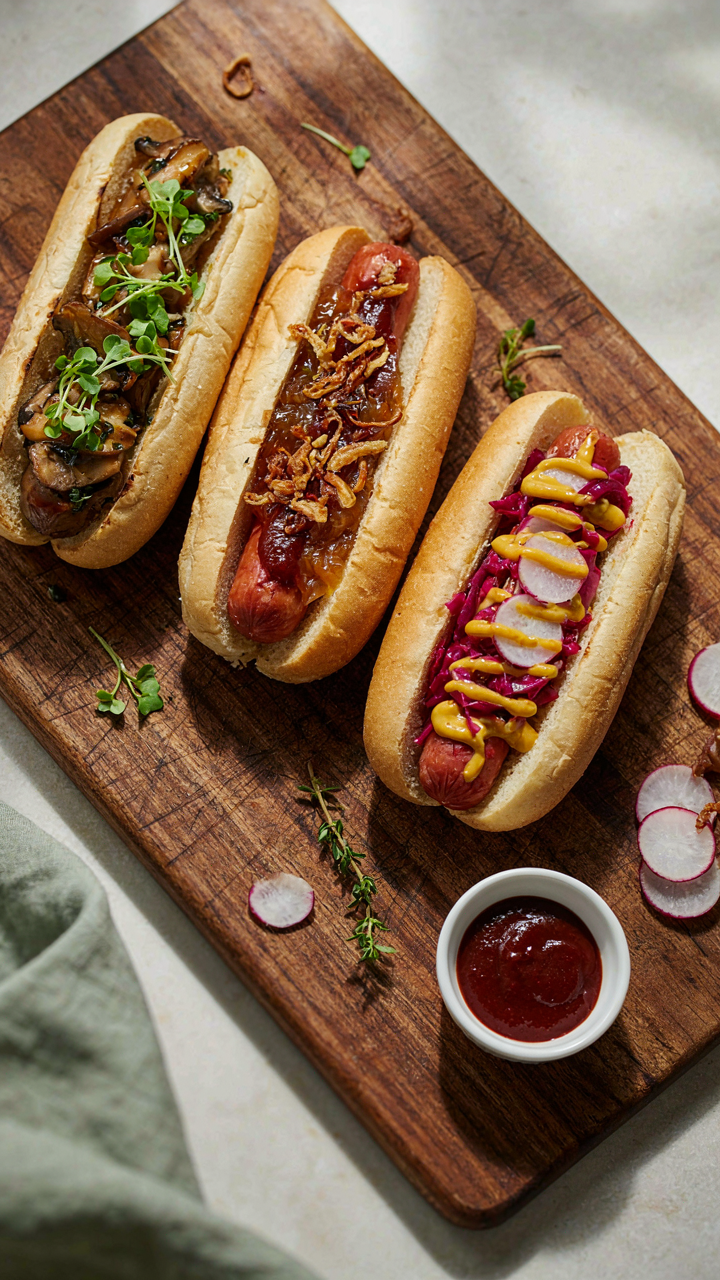
Build Around Contrast, Not Coverage

You want people to think you put thought into this. That’s the real reason you’re reading about hot dog selection strategy instead of just throwing eight types on a table. The mechanism is simple: constraint creates perception of intentionality. Retail psychology calls this the “paradox of choice.” Too many options paralyze guests and make your spread look like indecision. Three to five distinct hot dog types force you to make deliberate pairings. Each type should occupy a different position on the spectrum: beef versus pork, traditional versus regional, mild versus spiced. This isn’t about exhausting every option. It’s about making every option matter.
The classic Chicago dog, the Nathan’s Famous beef frank, a regional specialty like a Detroit Coney, a pork-forward option like a bratwurst, and one departure from convention. That’s your framework. Each occupies mental real estate. Guests don’t compare five dogs against an imaginary ideal. They compare them against each other, which is the only comparison that moves the needle. The structure itself signals competence before anyone tastes anything.
Coordinate Toppings As Systems, Not Sides
Most people dump all toppings in bowls and call it a bar. That’s noise. Toppings should be architected around each hot dog type, not scattered randomly. This is logistics thinking. Each hot dog has optimal load-bearing capacity and flavor compatibility. A Nathan’s Famous beef frank handles aggressive toppings: chili, sharp cheddar, jalapeños. It won’t collapse. A bratwurst already carries fat and richness, so you pair it down: sautéed onions, whole grain mustard, maybe kraut. A Chicago dog has its own rigid protocol: mustard, relish, onions, tomatoes, pickles, peppers, celery salt. Don’t fight regional standards. Respect them and build around them.
The second principle: label what goes with what. Not because guests can’t figure it out, but because naming the pairing makes it feel intentional rather than convenient. “Coney Topping Set” versus “those red onions over there.” One signals curation. The other signals leftovers. Organize toppings in physical clusters near their corresponding hot dog type. The guest moves through a decision tree, not a buffet gauntlet.
Beyond Condiments: The Hot Dog Bar Toppings Strategy
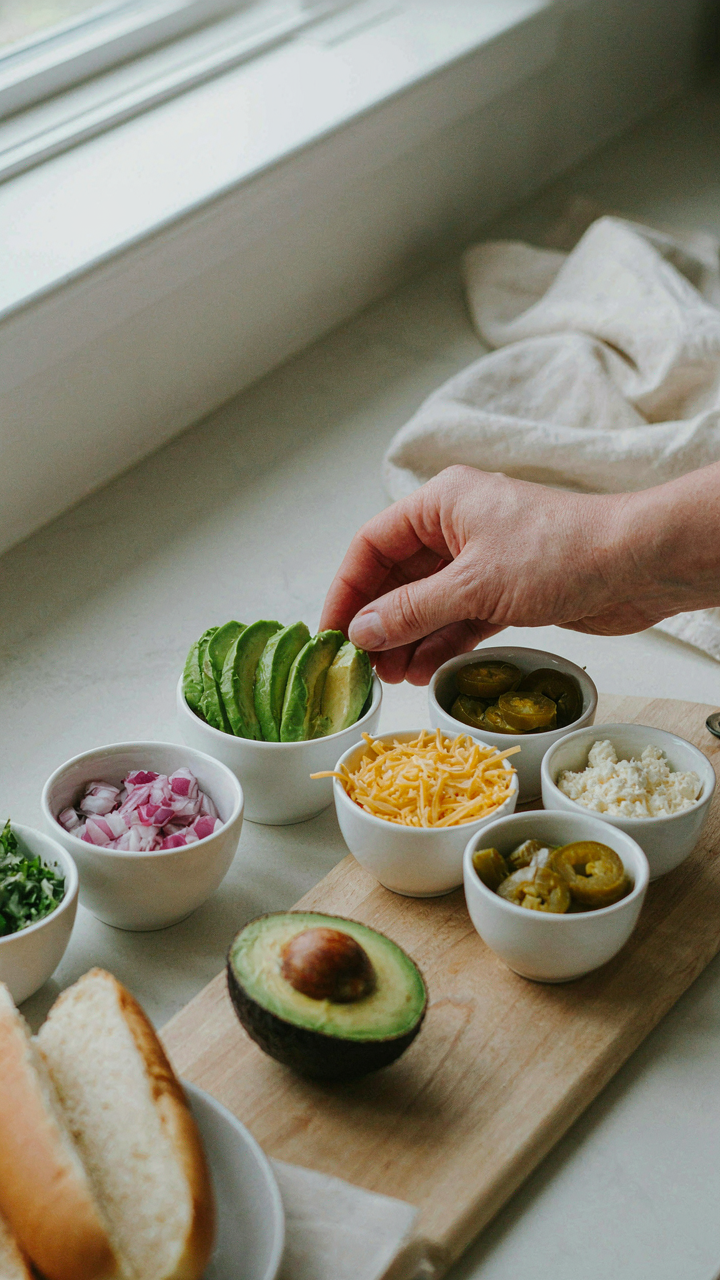
The Three Topping Layers

You want people to think you put thought into this, but you’re actually avoiding the paralysis that comes with unlimited choices. The mechanism here borrows from economics: constraint drives decision velocity. Fresh toppings, pickled toppings, and sauces operate as three distinct layers, each serving a different neurological function at the moment someone grabs a hot dog.
Fresh toppings deliver texture and immediate satisfaction. Pickled toppings add acid and complexity that cut through richness. Sauces provide the final binding element that makes the whole thing cohere. This separation prevents the visual chaos of forty bowls competing for attention. When someone scans the bar, they see structure instead of noise, which means they actually use more toppings because the decision path is clear.
Quality Over Volume Wins
The common advice says offer variety. That’s incomplete. Offering fifteen mediocre toppings creates decision fatigue without creating satisfaction. Your guests will spend three minutes deciding between seven types of relish that all taste the same, then leave disappointed because nothing stood out.
Better approach: choose five toppings you actually enjoy eating, then execute them properly. Fresh onions must be diced small and kept crisp. Pickled jalapeños need real vinegar, not syrup-forward sweetness. Mustard matters more than ketchup because it has structural flavor. When people taste quality, they remember the bar itself, not the quantity. Set your toppings out in shallow bowls with separate spoons for each, refill twice during the party, and you’ve built a functional system that scales without collapsing.
The Logistics Of “Casual”: Hot Dog Bar Ideas Food Stations
Where People Actually Stand

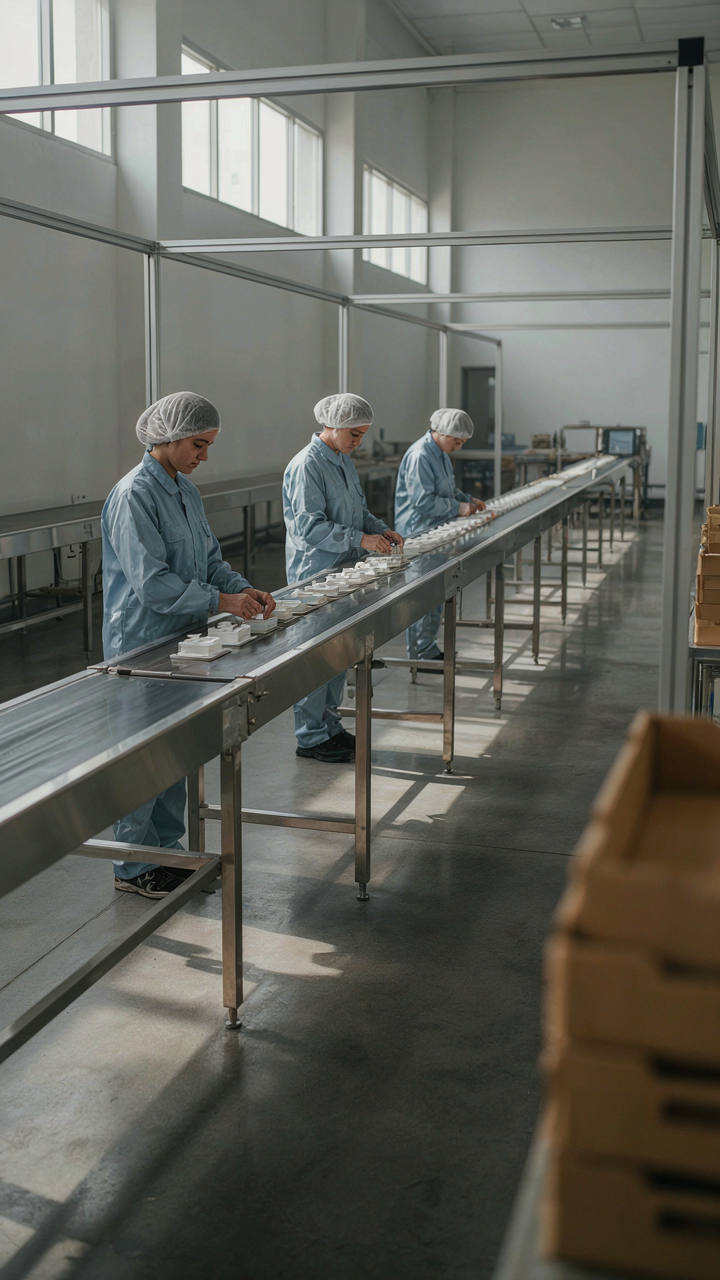
You want your guests to move through without bottlenecking because you’re afraid of looking disorganized. The real mechanism here is friction. Treat your hot dog bar like a production line—theft of time kills the mood faster than anything else. Set your station in a single-file flow: buns first, then dogs, then toppings left to right. This isn’t decoration theory. It’s applied geometry.
Place the station perpendicular to traffic patterns, not parallel. Most people default to lining it against a wall, which creates a collision point where guests crowd to assemble. A perpendicular setup lets people approach from one side, move through, and exit without backtracking. Put condiments at the end, not the start. Someone holding a loaded dog doesn’t need to squeeze backward past others reaching for mustard. The constraint creates the order—not signage, not hope.
Keeping Food Safe When It’s Hot Outside
Temperature control isn’t about being cautious. It’s about the mechanism that actually kills people: bacterial growth accelerates exponentially above 40 degrees Fahrenheit, with the danger zone peaking between 60 and 90 degrees. A hot dog left out for four hours at 75 degrees is a liability, not a snack.
Use two separate stations. Hot dogs stay in a slow cooker set to 170-180 degrees, kept in shade. Buns go on a separate table. Toppings that spoil—mayo-based sauces, guacamole, anything dairy—stay in a cooler with ice underneath, not beside. Serve cold toppings from shallow pans, replacing them every 90 minutes. The protocol is simple: measure time, rotate stock, verify temperature. Don’t rely on memory or visual checks.
The “Build Your Own Hot Dog” Fallacy: Guide, Don’t Abdicate
Suggest, Don’t Overwhelm

You want guests to feel in control because you’re afraid of judgment if the setup looks restrictive. Here’s the mechanism: choice paradysis is real, and abundance of options triggers decision fatigue before people even reach the condiments. Neuroscience calls this the “paradox of choice”—beyond four to six meaningful options, satisfaction drops and regret climbs. Your hot dog bar isn’t a democracy. It’s a curated experience you’re hosting.
Present three to four toppings as the main lineup, not twelve. Lead with what works: mustard, grilled onions, relish, jalapeños. Add one unexpected element like crispy bacon or caramelized garlic. Guests still feel agency because they choose which combination, but they’re not paralyzed by thirty jars. The constraint is the feature, not the limitation.
Arrange For Flow, Not Confusion
Most guides tell you to “arrange toppings by type” or “put sauces at the end.” This misses the actual problem: guests need to move through the setup without bottlenecking or second-guessing their choices mid-assembly. Physical arrangement determines behavior. Place the hot dog first, then toppings in left-to-right order of application, finishing with sauces. Cold toppings before hot ones. Heavy items before light ones. One clear path from start to finish prevents guests from circling back or blocking each other.
Label each topping with a small card or marker. Not fancy, just legible. This removes the “What is this?” pause that kills momentum. Set out utensils—small spoons for spreads, tongs for vegetables—so people don’t use their hands and trigger the next guest’s hesitation. The system moves people through like a line, not like a buffet scrum.
The “Hot Dog Party” As A System: Applying Cybernetics
How Guests Actually Signal What They Want

You care about this because a chaotic hot dog bar kills your credibility as a host. Cybernetics teaches us that systems survive through feedback loops, and a hot dog bar functions as a negative feedback mechanism where guest behavior corrects your setup in real time. Watch where people cluster, what they skip, how long they linger. The toppings nobody touches aren’t failures of taste, they’re data points telling you the ratio is wrong.
The mechanism works like this: guests communicate satisfaction through consumption patterns, not compliments. Empty condiment bowls mean demand exceeded supply. Abandoned toppings mean poor placement or miscalibration of what your specific crowd wants. Set up your bar to make these signals visible. Use shallow bowls so you see depletion fast. Position the most-used items where people naturally reach first. Check every fifteen minutes. Adjustment happens continuously, not after the party ends.
The Self Regulating Appetite
Most guides tell you to put out “enough food” and hope it works out. That’s incomplete. A well designed hot dog bar regulates consumption through friction and choice architecture, not portion size. Cybernetics calls this self regulation, and it applies here directly. When you space items far apart, guests make deliberate choices instead of grabbing everything. When you limit topping portions to small bowls that require refilling, you create natural pacing.
The constraint is the feature. If you load one massive bowl of relish, people overfill their dogs and feel stuffed after two. If you use three small bowls spaced across the table, guests take what they need, move through the line faster, and eat more dogs overall. Your goal isn’t to run out of food. Your goal is to make the system self correct so guests consume at the pace your setup allows. Stock toppings incrementally. Refill before depletion, not after. The bar manages appetite through design, not through scarcity theater.
Hot Dog Bar: Why Your Buns Are Failing You
Bun Freshness Determines Everything

You care about this because bad buns make you look unprepared, and guests notice details you think don’t matter. Bun quality operates on the same principle as structural integrity in engineering: the foundation fails first, and everything collapses after. A stale bun absorbs no heat, tears under pressure, and makes even premium hot dogs taste like cardboard. Most setups ignore this entirely because buns seem interchangeable. They aren’t.
Buy buns the morning of your event, not the day before. Store them in a sealed bag at room temperature until thirty minutes before guests arrive. Never refrigerate buns—cold accelerates staling through a process called retrogradation, where starch crystals reform and harden. The window between purchase and service is your only lever. Many hosts treat buns as an afterthought and wonder why everything tastes wrong.
Grilling Versus Steaming Changes Texture Entirely
The conventional advice says grill everything for flavor. That’s incomplete. Grilling dries the bun exterior while the interior stays soft, creating a structural mismatch that causes collapse under toppings. Steaming hydrates the bun uniformly, but produces a dense, gummy texture that feels wrong in your mouth. The real mechanism: moisture penetration speed.
Grill buns cut-side down for thirty to forty-five seconds maximum, then move them immediately off heat. The goal isn’t browning—it’s surface moisture evaporation that creates a barrier. This barrier lets toppings sit without soaking through. Steaming works only if you steam for under fifteen seconds and serve within two minutes. Most failures happen because hosts grill too long or let buns sit after cooking. Time the window precisely or choose neither method and serve at room temperature.
The Hot Dog Buffet Party: Efficiency Over Extravagance
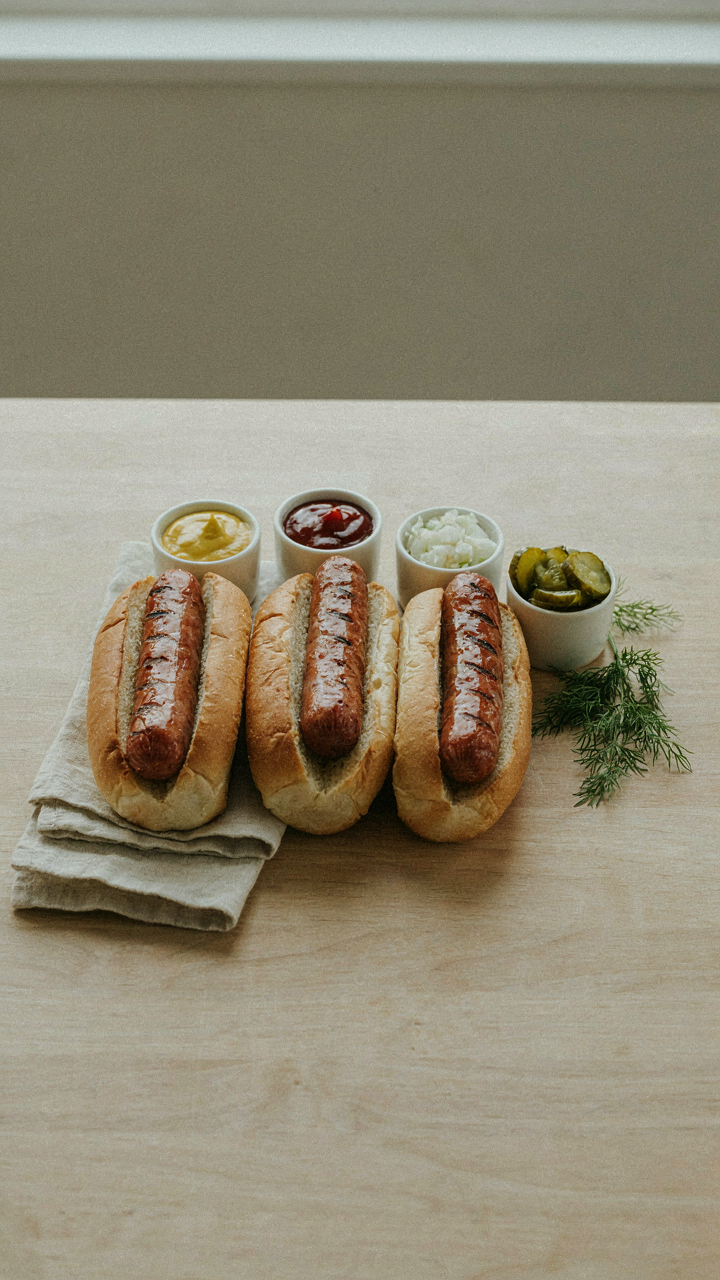
Minimize Dishes, Maximize Flow

You want people to think you’re organized, not stressed. The real mechanism here is friction—every extra bowl, spoon, or serving vessel creates a decision point where guests slow down and the line backs up. Treat this like a production bottleneck from manufacturing: reduce stations, not variety.
- One condiment station per four guests: Cluster mustard, ketchup, relish, and onions in a single zone to prevent guests wandering between multiple bowls looking for toppings they half-want.
- Pre-portioned serving utensils: Use one spoon per topping, not three. Label each spoon by topping so guests don’t cross-contaminate mayo into the relish.
- Shallow bus tubs instead of deep bowls: Guests reach items faster and you refill more frequently—but guests never wait on empty bowls.
- Single trash receptacle near the exit: Place it where guests naturally finish, not scattered around the party. This becomes your actual line manager.
- Small plates or napkin stacks at the start: Guests grab these first, then move to dogs and toppings. Prevents the awkward hand-holding-food moment.
The system works because you’ve eliminated decisions. Guests move through, grab, eat, and clear the zone for the next person. This isn’t hospitality—it’s logistics dressed up as a casual party.
Prep Everything Before Guests Arrive
Pre-chopping beats on-demand prep. Most people claim fresh is better, but that’s wrong for a party context. Fresh topping prep during service pulls you away from monitoring stock and refilling depleted items. You become reactive instead of present.
Chop onions, tomatoes, pickles, and jalapeños two hours before guests arrive. Store them in separate sealed containers in a cooler. The flavor difference between pre-cut and freshly cut is imperceptible at a party where people are eating fast and talking louder. What guests notice is whether toppings are there when they want them, not the theoretical freshness of a garnish they eat in five seconds.
The only exception: condiments in squeeze bottles. Mustard and mayo stay fresher in the bottle and pour faster without spoon drama. Everything else prepped? Done. Set timers to refresh items every twenty minutes or when you see empty space. That’s your protocol.

Mastering The Casual: Hot Dog Bar Ideas Beyond The Obvious
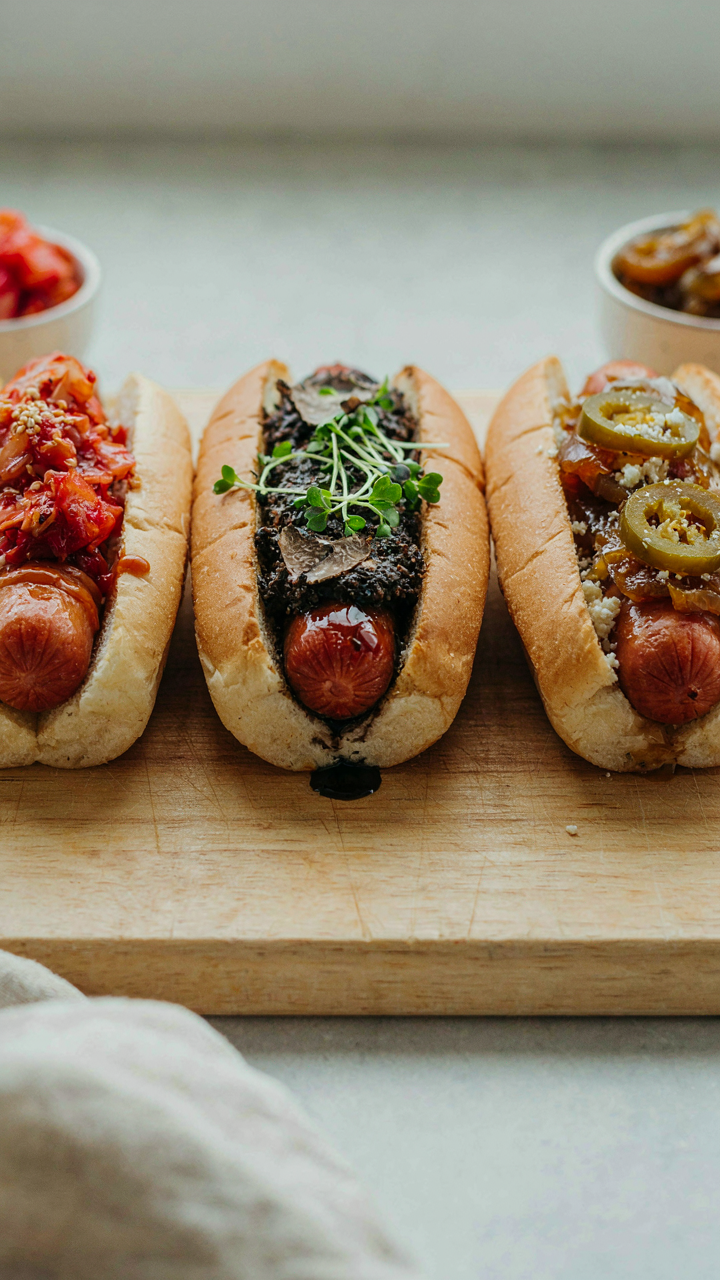
Unexpected Condiment Pairings That Actually Work
You want people to think you put thought into this, but condiment pairings feel too small to matter. Here’s what you’re missing: condiments aren’t decoration. They’re the variable that makes the same hot dog feel different to different people. Boring pairings signal laziness. Intentional ones signal control.
The mistake everyone makes is treating condiments as toppings instead of flavor mechanisms. Acid cuts richness. Salt amplifies umami. Fermentation adds complexity without heaviness. A hot dog bar needs fermented elements because they don’t compete with the meat and fat already there. Kimchi, sauerkraut, or pickled onions work where mayo-based sauces create confusion. Pair these with something bright and thin like a lime crema or a mustard vinaigrette. The structure matters more than the novelty.
The Temperature That Changes Everything
Most people forget the one element that determines whether guests actually use your setup: the bun temperature. A cold bun makes the whole thing feel abandoned. A properly heated bun signals competence and changes how people engage with the bar.
Toast buns lightly on a flat griddle or cast iron for thirty seconds per side before service starts, then hold them in a closed cooler or wrapped in foil. Don’t use a toaster. You need the contact heat to warm the inside without drying the outside. This single detail forces guests to eat hot dogs while they’re hot instead of assembling them and letting them sit. When people eat faster, they eat more and they remember the experience better than if they’d grazed. Prepare buns in batches of twelve every fifteen minutes throughout the party.
The Real Problem Is You Overthink Food. Serve Good Dogs, Good Company Wins
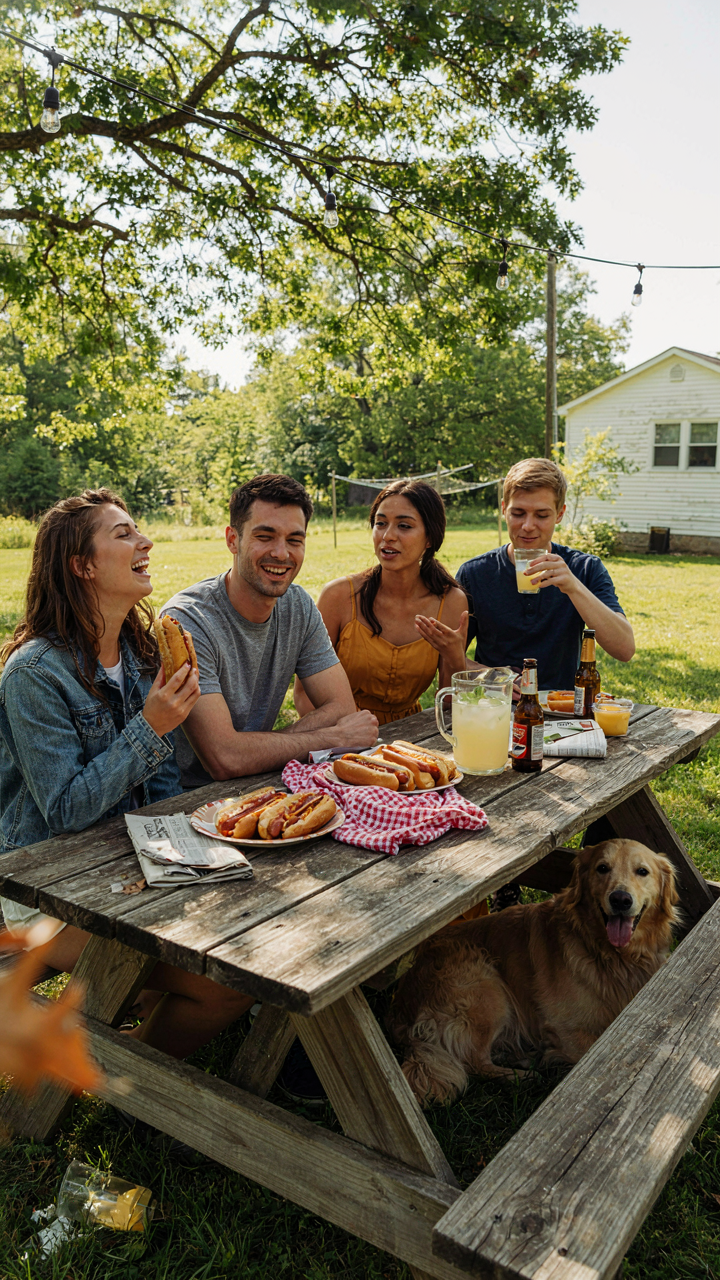
Most people sabotage their parties by designing the experience instead of enabling it. A hot dog bar works because it removes friction between hunger and satisfaction. Your job isn’t to impress anyone. It’s to get out of the way. Buy quality meat, set up toppings, and let people eat. Text three friends right now and set a date. The best party you throw this year won’t be remembered for the food anyway, it’ll be remembered because you actually showed up and fed people without making it weird.