The Cognitive Load Tax: What Your Current System Costs You

Every Decision Before You Leave Drains The Trip Before It Starts
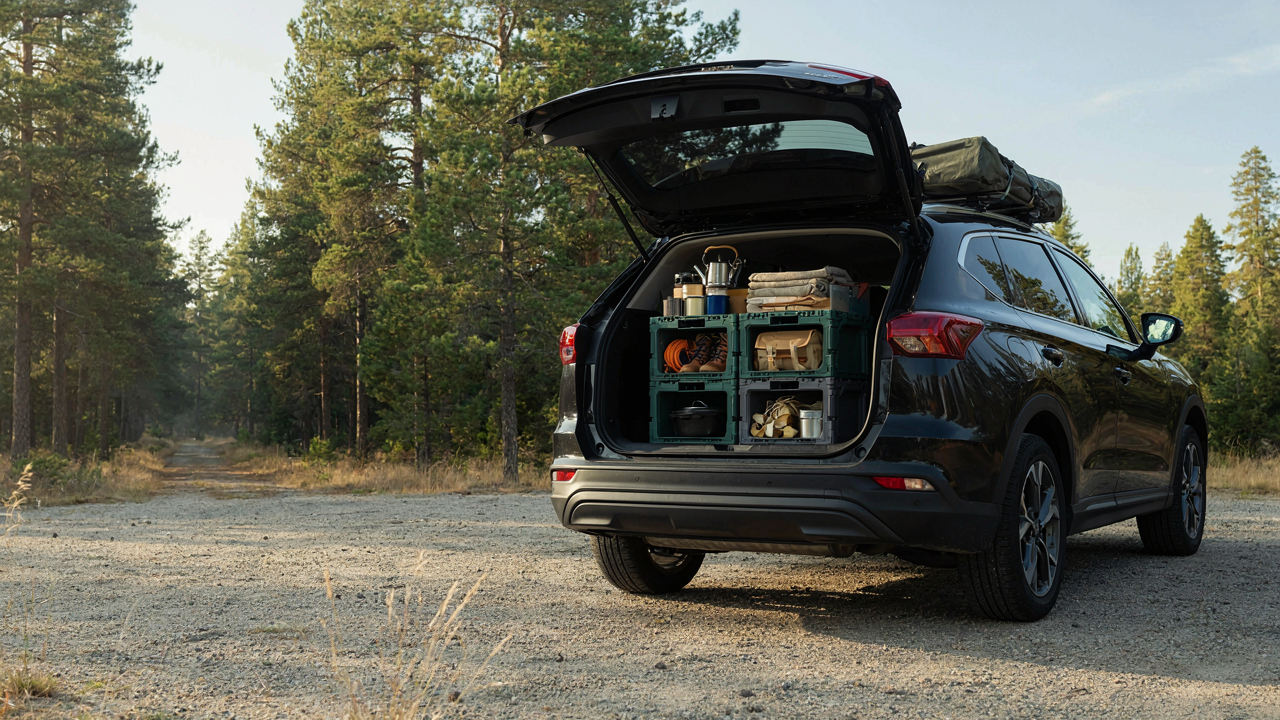
You’re afraid you’ll forget something critical and look unprepared. Here’s what actually happens: your brain treats gear inventory as an open loop. Each item you can’t locate instantly becomes a micro-stressor that compounds. You think through where things might be, whether you packed them, what you might need instead. This isn’t laziness. It’s a tax on working memory that neuroscience calls cognitive load. A camping crate system transfers that tax from your brain to a physical structure.
Disorganized gear creates friction at every decision point. You pack, unpack, repack. You question whether the tent stakes are in the car or the garage. You grab things you don’t need because you doubt what you have. Each of these micro-decisions fires up the same neural pathways used for actual problem-solving on the trail. You arrive depleted before you’ve done anything.
The Time You Burn Before You Even Leave
The common advice says “make a checklist.” That’s incomplete. Checklists help you remember what to bring. They don’t solve the real problem: finding what you’ve already brought takes time you didn’t budget for. Economics calls this opportunity cost. You lose the hours you could spend prepping meals, sharpening tools, or sleeping before the drive.
Most people spend 30 minutes to 2 hours the night before a trip locating and verifying gear. A camping crate system collapses that to under five minutes because everything lives in one place year-round. You don’t repack. You don’t hunt for the stove. You don’t question whether the sleeping bags are in the loft or the basement. You grab the crate. The mechanism is simple: reduce search time to near zero by making the location fixed and the contents visible or logged.
The “Gear Room” Illusion: Why More Space Isn’t The Answer
Dedicated Spaces Still Fail Readiness

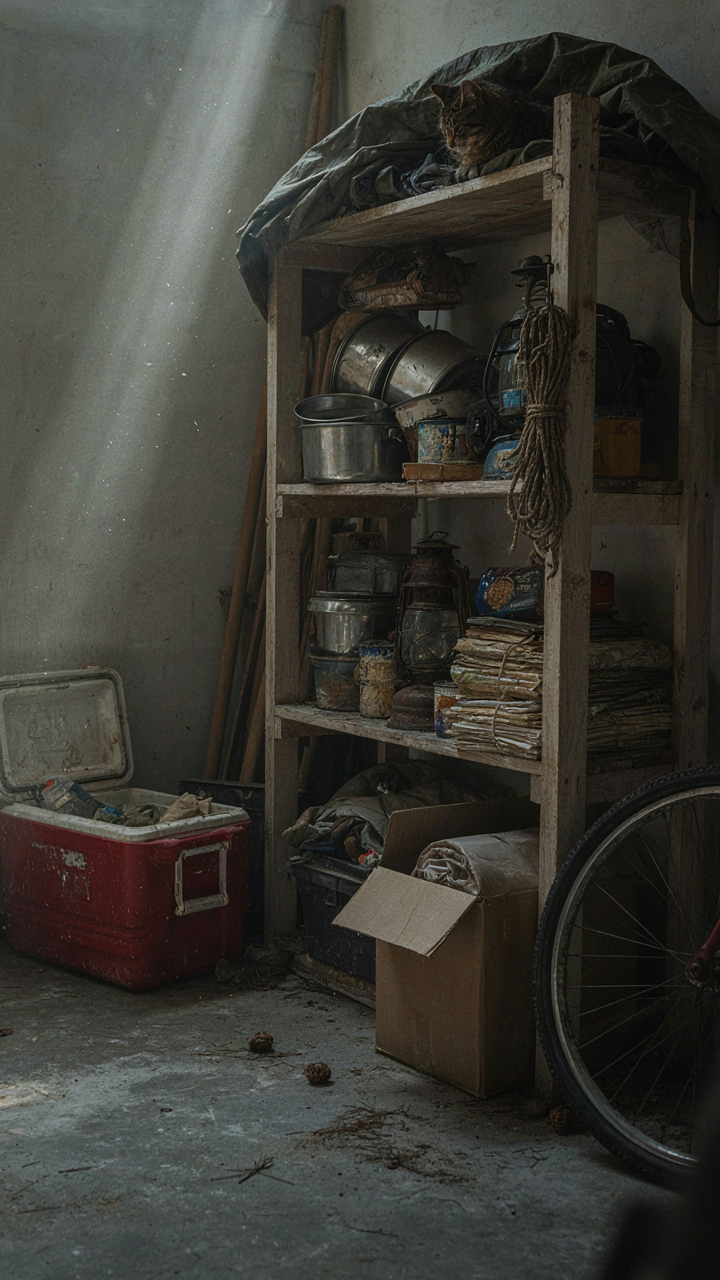
You want a designated gear room because it sounds organized, which feels like control. But control is the illusion. Borrowed from systems thinking in logistics, the issue isn’t storage capacity—it’s visibility decay. A dedicated space lets gear disappear behind closed doors, into the back corner, under other items. You stop seeing it. Readiness requires constant friction with your equipment. A room solves the guilt problem, not the access problem.
The dedicated space creates a false permission structure. You think “it’s all in one place” means you’re ready. Instead, you’ve built a gear graveyard where items sit unused until you need them and can’t find them fast. The camping crate system works because it forces continuous visibility and rotation. Every item stays in the activation zone. A room lets you defer the hard decision about what stays accessible and what doesn’t.
The Myth Of Organizing It Later
The organizing-it-later mindset is just procrastination wearing professional clothes. You’ll never organize it later because later never arrives with the same energy or clarity you have today. The moment you defer organization decisions, you’ve already lost. Entropy compounds. Each new camping trip adds gear to the pile. Each season changes what you actually need. The gap between “good intentions” and “functional system” grows wider until your gear room becomes a storage unit.
Start with the crate system immediately. Decide now which gear rotates into crates based on season and trip type. Label everything. Set a container limit. This isn’t optional refinement—it’s the foundation. Once the system runs, maintenance takes minutes per trip instead of hours searching through chaos later.
The Modular Storage Manifesto: Systems, Not Just Boxes
Designing For Quick Deployment

You want to look like you have your life together without actually thinking about it. The real mechanism here is borrowed from manufacturing: the Japanese concept of “single-minute exchange of die” (SMED). Your crate system needs the same principle applied to gear access. Instead of storing items, you’re staging them. The difference is profound. A box holds stuff. A deployment system positions the exact items you need within arm’s reach, in the order you’ll grab them. Your first setup decides whether you spend five minutes or thirty finding what matters.
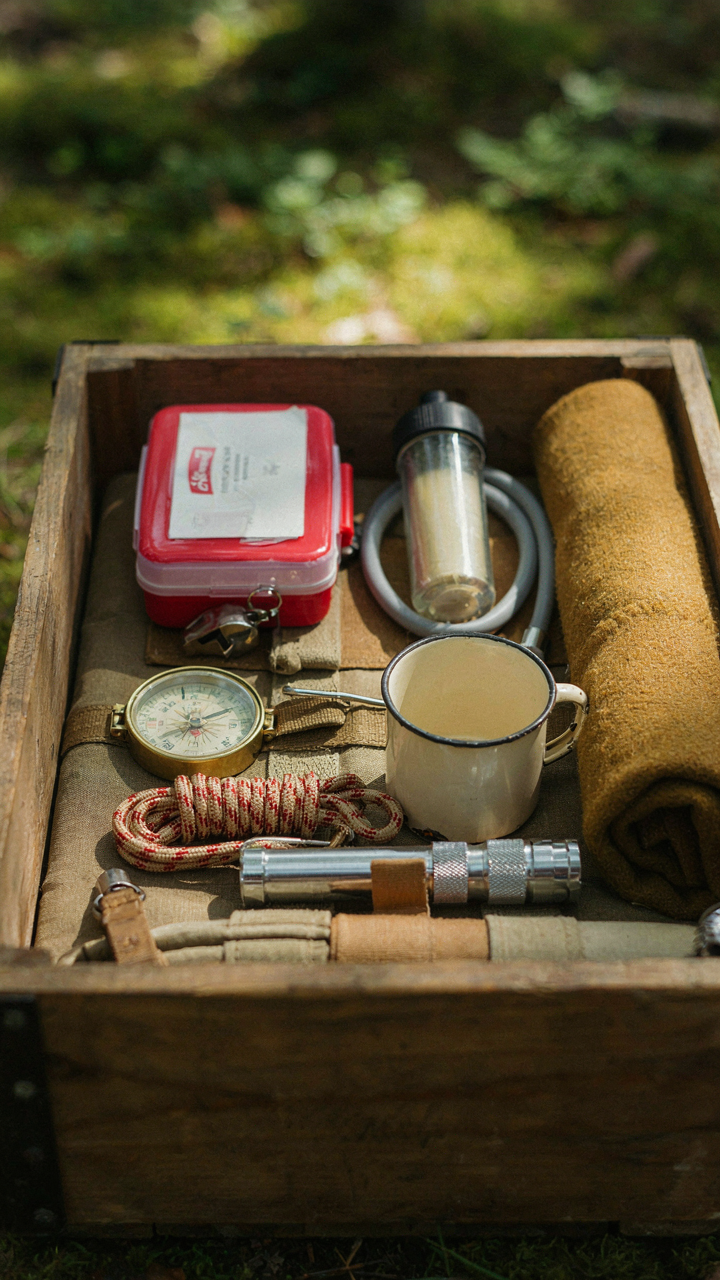
Most people treat crate organization like closet arrangement. Wrong. Think of it like a cockpit. Pilots arrange instruments by frequency of use and criticality, not by category or size. Your camping crate does the same thing. Frequently accessed items like first aid, water filtration, and emergency tools sit at eye level or on top. Seasonal gear rotates to the side. Backup equipment goes to the bottom. This hierarchy exists for a reason: it collapses setup time from ritual into reflex.
Interchangeable Components For Varied Trips
Swapping crate internals saves money and mental overhead, but most people just buy multiple crates instead. A modular crate system uses dividers, removable trays, and standardized container sizes so you actually extract and replace sections without touching the main frame. Weekend trips use one configuration. Extended backcountry trips use another. Same crate. Different interior layout.
The mechanism here is constraint-based design. By limiting yourself to compatible sizes and weights, you force decisions upfront instead of improvising in the field. A five-liter dry bag fits specific slots. A utensil organizer has fixed dimensions. This removes the friction of “does this fit?” and replaces it with instant yes or no. Your crate becomes a language instead of a container. When you swap components, you’re not reorganizing chaos. You’re speaking a dialect your hands already understand.
The Camping Box Paradigm: Single Purpose Efficiency
Dedicated Boxes Beat Multi Use Containers

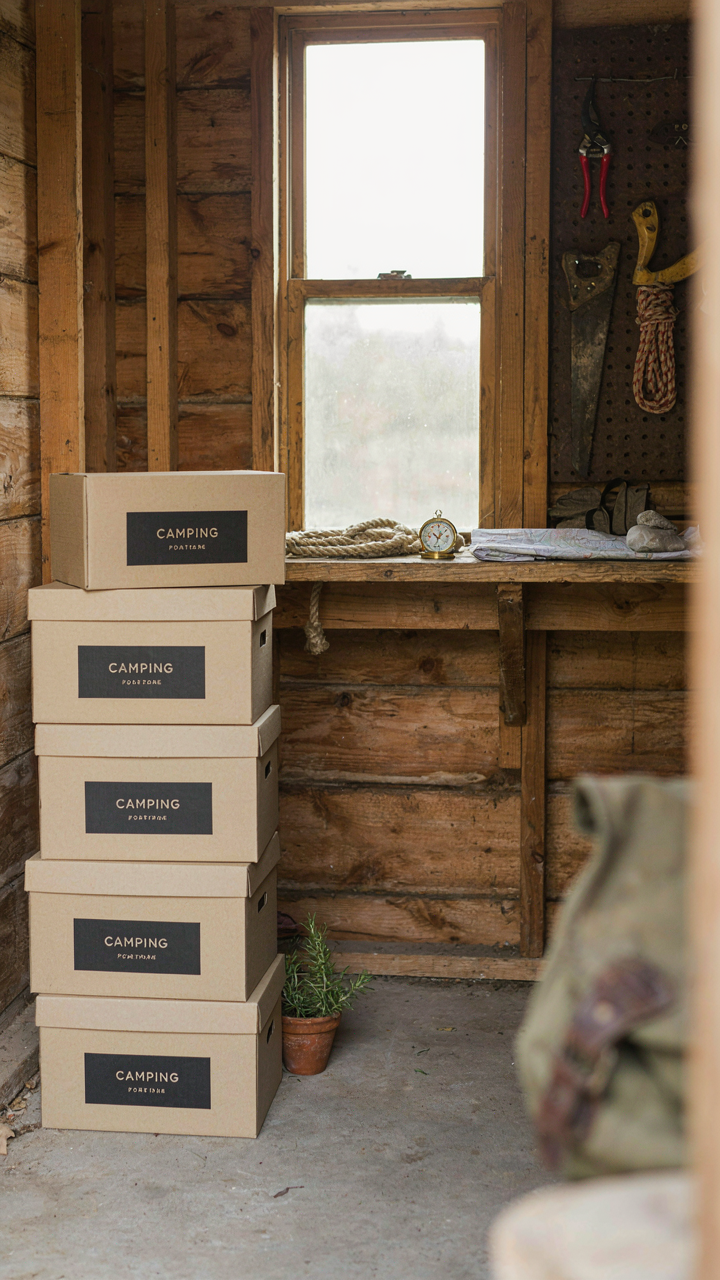
You want to believe one container can handle everything because it feels efficient. It doesn’t. The mechanism is simple: when you mix gear types, you optimize for none of them. A box holding sleeping bags, cookware, and first aid simultaneously forces compromises in how you pack, access, and protect each category. Dedicated boxes eliminate negotiation. Each one gets designed around one function, which means better protection, faster grabbing, and zero wasted space searching through unrelated items.
The camping industry treats this casually, offering generic storage bins and calling it solved. That’s wrong. Military logistics proved this decades ago: segregation by mission type reduces setup time and error. Your camping crate system works the same way. A sleeping system box stacks efficiently because all contents share similar dimensions and fragility. A cooking box can position heavy items low without crushing anything underneath. When you grab one box, you know exactly what you’re holding and why.
Preventing Cross Contamination Of Gear Types
Cross-contamination in camping gear happens when oil from a cooking stove soaks into a sleeping bag, or when dirt from hiking boots embeds itself in camp clothing. You can’t unsee that once it starts. Dedicated boxes stop this through physical separation. Each container becomes a boundary that prevents one gear type’s problems from traveling to another.
Dedicate one box to wet and dirty items like boots and towels. Keep cooking supplies sealed separately from sleeping gear. Food storage stays isolated from clothing. The rule is mechanical, not aspirational: if two gear types have conflicting storage needs, they live in different boxes. You don’t need willpower to maintain this system. You need architecture that makes mixing physically inconvenient enough that you stop trying.
The “Camping Crate Ideas” Protocol: Curating For The Mission
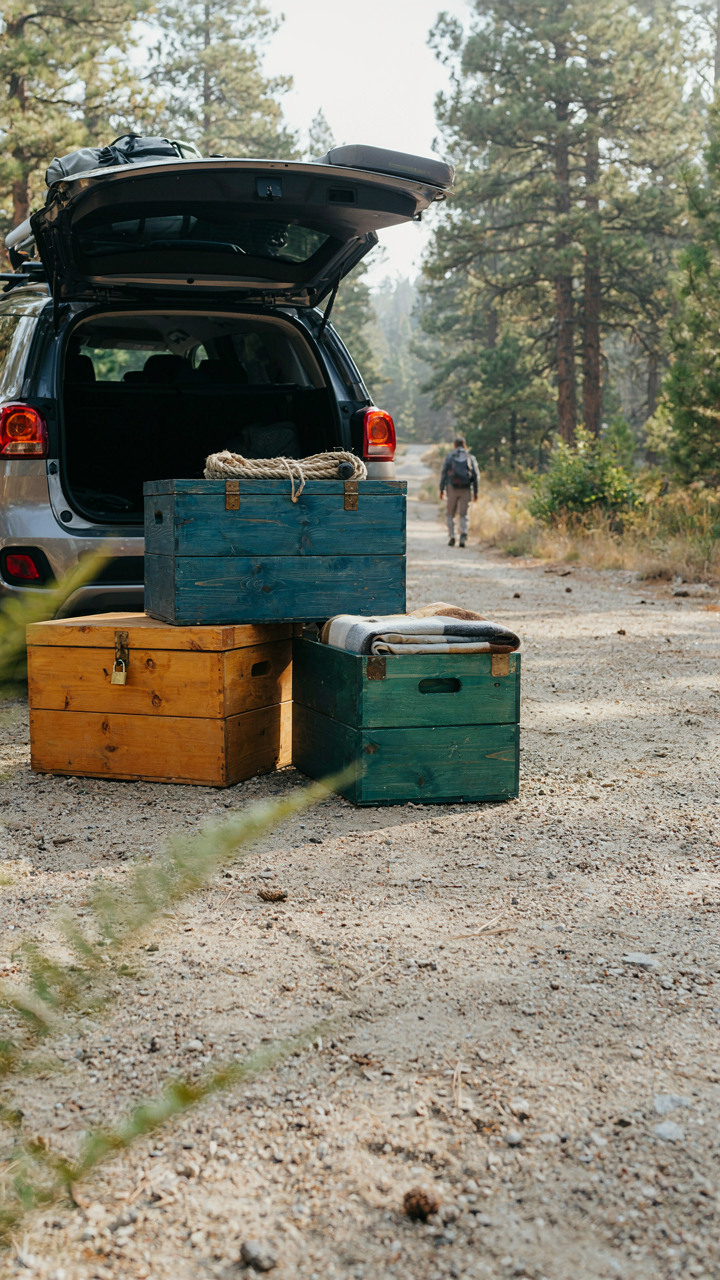
Organize By Mission, Not By Thing
You want to feel prepared without actually thinking through what prepared means. Here’s the mechanism: most people sort gear by category (cooking, shelter, safety) when they should sort by the actual trip they’re taking. Fishing trip needs different priorities than car camping with kids. A scrambling expedition needs different priorities than both. When your brain can grab “the fishing crate,” you skip the mental tax of deciding what matters. Activity-based sorting forces you to make that decision once, then forget it.
The difference between a useful crate system and a junk drawer on wheels is specificity. Generic camping crates work for nobody because camping isn’t generic. You either need gear for a specific terrain, season, or group. Build your crate taxonomy around those actual variables. If you own a car and a tent, you have at least three different trips you make. Each one gets its own logic. Don’t compromise that clarity for the sake of “versatility.”
Pre Packed Kits For Specific Scenarios
The real work happens before you pack. Most people grab gear in a panic the night before a trip, miss half of it, then complain that crates don’t work. Pre-packed kits eliminate that failure point. You decide what each trip requires, pack it once, then refresh the consumables. The system only works if you actually execute it.
- Water Crate (Day Trips): Contains hydration containers, electrolyte packets, water filter or tablets, collapsible jugs. Grab and go without deciding how much water you need.
- Cooking Crate (Car Camping): Stove, fuel, pots, utensils, matches, basic spices, cleaning supplies. Everything for meal prep lives in one place.
- Emergency Crate (All Trips): First aid, flashlight, batteries, knife, rope, emergency blanket, fire starter. Packed quarterly, never opened unless needed.
- Vehicle Crate (Overlanding): Air compressor, recovery gear, spare belts, fuses, jumper cables, tire repair kit. Stays in the vehicle permanently.
- Climate Crate (Seasonal): Layer rotation for your region. Winter gets insulation and hand warmers. Summer gets sun protection and cooling gear.
The mechanism is friction removal. When everything for a specific trip is already assembled and labeled, you grab the crate instead of spending 90 minutes building a pile. Refresh the consumables every three months regardless of whether you used them. Your pre-packed kits only work if they’re actually ready to grab.
Camping Storage Bins: The Biosphere Model
Self Contained Ecosystems Of Gear

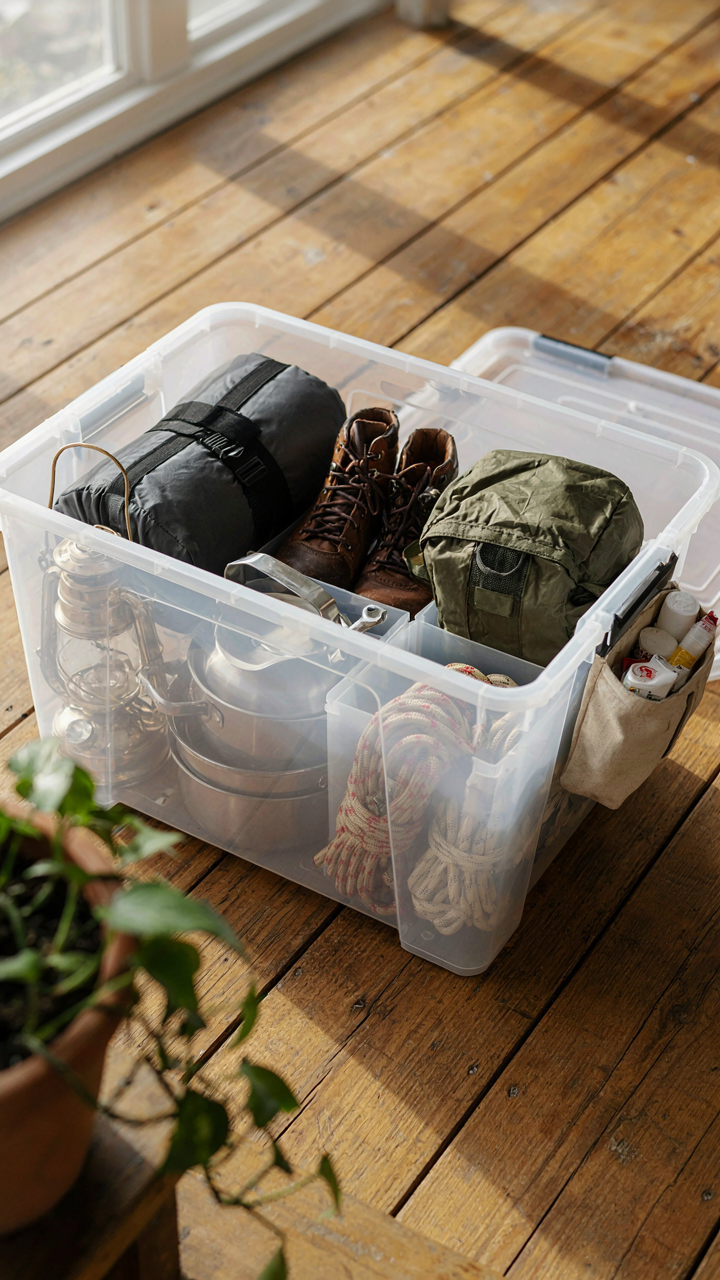
You want your gear to feel organized so you stop second-guessing yourself before trips. That’s not about aesthetics. It’s about eliminating decision fatigue at the moment you need to move fast. Ecology teaches us that closed systems survive because each organism occupies a specific niche. Apply this to crates: each bin becomes a self-contained ecosystem where gear types stay separated by function, not randomly stacked. This containment prevents cross-contamination of systems and forces you to know exactly where everything lives.
The moment you break this rule, your system fails. You’ll find a sleeping bag in the cooking bin or a rope coiled near the first aid supplies. This happens because humans default to “close enough” when bins lack clear boundaries. Each crate must declare a single purpose before you load the first item into it. The payoff: you pack the same way every time, which means you never forget what matters.
Each Bin A Micro Environment
Every crate operates as a closed loop where internal conditions support specific gear and nothing else. A cook kit bin has heat-resistant walls, waterproof flooring, and organized compartments for fuel, utensils, and pots. A shelter bin maintains flat storage to prevent fabric creasing and protects poles from crushing other equipment. These aren’t preferences. They’re structural requirements that determine whether your gear stays functional or deteriorates between trips.
Design your bin’s internal layout first, then assign gear to it. Don’t reverse this process. Decide whether items need to stack vertically or lay flat. Determine if moisture control matters. Ask if any gear could damage others through friction or weight. Only after you’ve mapped these conditions do you load items. This prevents the common mistake of cramming bins first and rearranging second, which wastes time and creates chaos when you’re already at the trailhead.
Camping Bins: The “One Touch” Philosophy

Grabbing Gear Without The Collapse

You want to look competent in front of other people without actually spending mental energy organizing things. The mechanism that solves this is borrowed from warehouse logistics: the principle of “pick density” – how many items you can access without moving anything else. A camping crate system lives or dies on this metric. High pick density means you reach in, grab one sleeping bag, and nothing shifts. Low pick density means you’re excavating.
The difference is vertical stacking versus horizontal layering. Most people stack everything flat and call it organized. Then they pull out a tent and three other items tumble forward. A real crate system uses dividers, compartments, or variable-height zones so each item has its own column of space. You’re not moving containers. You’re moving individual items only.
The Shortest Path To What You Need
Contact points kill efficiency. In manufacturing, this is called “touch labor” – every time a hand touches a product adds cost and risk. Your camping crate works the same way. Every unnecessary item you touch to retrieve your stove is a failure of the system. Minimize contact points by grouping only items you actually grab together, and by keeping those groups at the top or front of the crate.
The practical protocol: assign one zone per category and keep frequently used items in the front third of the crate. Store your stove and fuel together in an accessible corner. Keep your sleeping bag in a separate compartment so retrieving it never requires moving cookware. The goal isn’t aesthetics. The goal is your hand moving directly to the target object every time.
Hiking Supplies Integration: Seamless Transition
From Basecamp To Trail Without Repacking

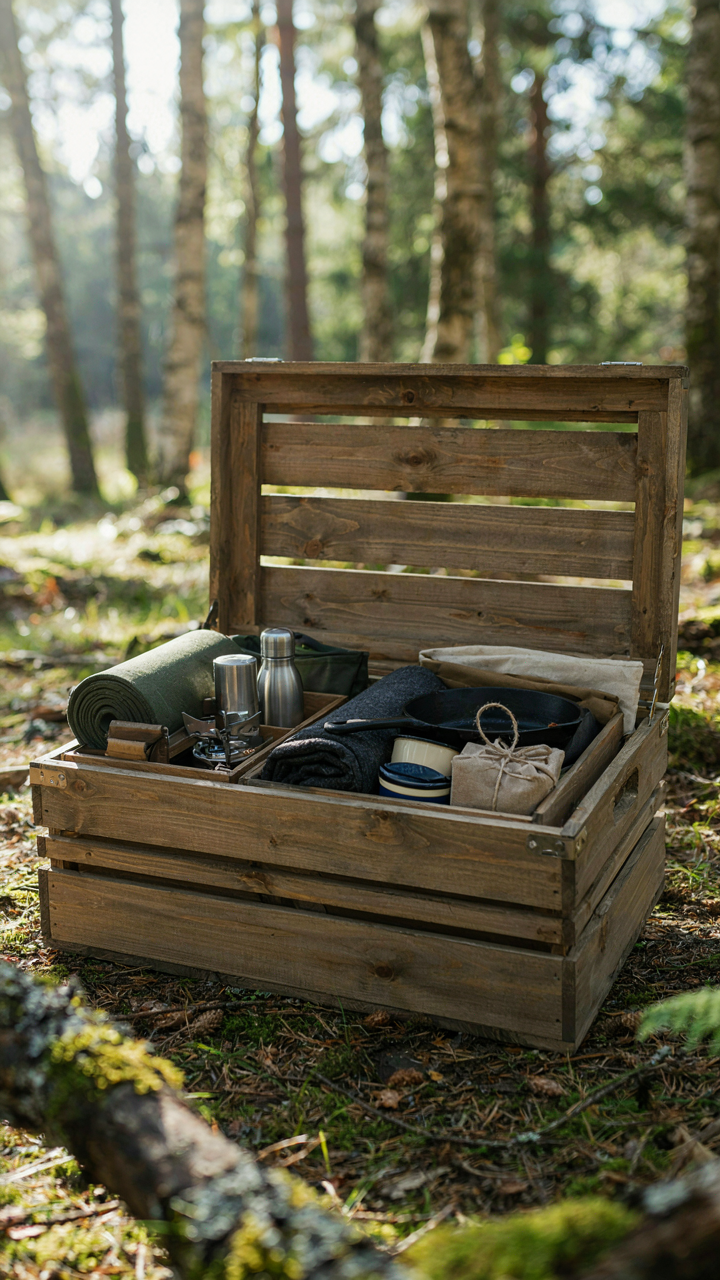
You want to feel organized without the friction of reorganizing gear every single trip. The real mechanism here is this: a camping crate system only works if your basecamp crate and your trail load share the same physical containers. Most people fail because they treat the crate as storage and then repack into different bags for hiking. That creates duplicate handling, lost items, and wasted time.
The solution is modular containment. Your main crate holds nested smaller crates or bins that function as independent trail units. A day hike crate pulls straight out. An overnight crate does the same. You’re not transferring items between vessels; you’re removing pre-assembled modules. This design pattern mirrors the military concept of unit cohesion, where smaller teams operate independently but remain part of the larger structure. Your crate system uses spatial organization instead of loose logistics.
The Overlap Zone: What Stays, What Goes
Most advice tells you to “keep essentials always packed.” That’s incomplete. The real distinction is between items that exist in a permanent state of readiness versus items that rotate based on trip type. Core overlap items include water filtration, first aid, and fire starter. These never leave their designated crates. Trip-specific gear, like a sleeping bag for overnight hiking, moves with you only when needed.
The mechanism is predictability. When you establish which items never leave the basecamp crate’s sub-modules, you create a baseline of preparedness. Everything else becomes intentional addition, not assumption. A camping crate system succeeds when someone else can load a trail crate by following physical placement, not by consulting a checklist. Document your overlap zone by photographing each crate’s contents after a successful trip, then use that image as your packing template for the next one.
Best Camping Gear: The “Readiness” Metric
Speed Of Deployment Beats Feature Count

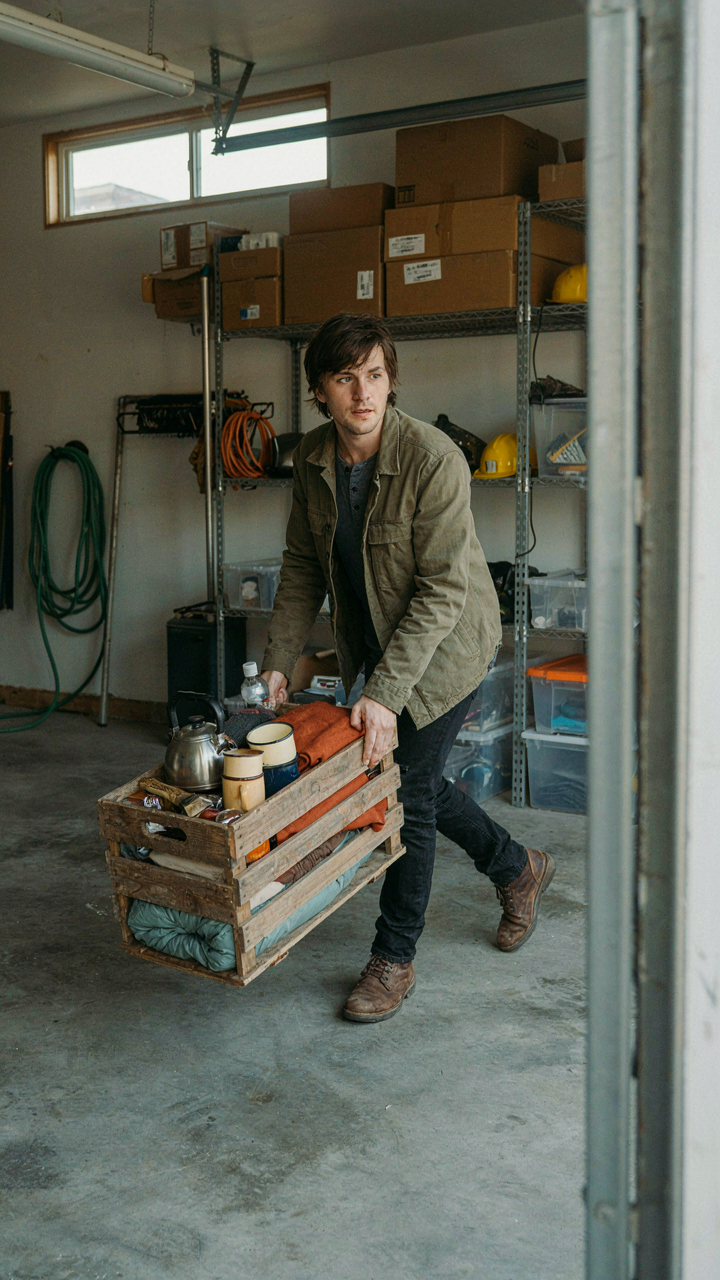
You want to feel like you made a smart purchase. That feeling comes from specs, not from whether your gear actually deploys when you need it. Here’s the mechanism: gear sitting in a garage for months exists in a state of theoretical usefulness. A camping crate system applies logistics thinking to this problem. In supply chain language, your gear has a “lead time” between decision and deployment. Crates eliminate that friction by keeping everything staged and visible. You grab the crate, not a mental inventory list of items spread across five storage locations. The fastest gear is always the gear you can actually reach without problem-solving first.
Most advice treats gear selection as a features game. It isn’t. A tent rated for winter storms means nothing if you need three minutes to find the rain fly. A stove with eight heat settings is dead weight if it’s nested inside a cooler behind other equipment. The real metric is how many seconds pass between “we should go camping” and “the gear is loaded.” A well-organized crate system cuts that time from thirty minutes to three. You measure gear quality by what it does on trip day, not what the manual claims.
The Real Cost Of Gear That Isn’t Ready
Most people calculate gear cost as purchase price divided by use. That’s incomplete accounting. The true cost includes every hour you waste searching for items, every trip you skip because setup feels like work, every moment of friction that makes camping feel like a project instead of a choice. A crate system has one job: eliminate that friction tax. When gear lives in chaotic storage, you pay continuously. You pay in decision fatigue deciding what to bring. You pay in frustration hunting for the camp stove. You pay in cancelled trips because the mental load feels too high.
The financial cost of unready gear shows up as abandoned hobbies. You buy a sleeping bag, then camping happens once before life crowds it out. Five years later you’ve spent two hundred dollars on something that got used ten nights. A crate system doesn’t sell you more gear. It makes the gear you already own actually usable. That transforms a two-hundred-dollar purchase from a closet ornament into a tool you deploy monthly. Every crate component you add should reduce one specific friction point. When you identify that point first, you buy only what cuts deployment time. That’s how you stop buying camping gear and start actually camping.
The Anti Clutter Imperative: A Minimalist Approach

Eliminate Items That Never Leave The Crate
You want to believe you’re ready for anything, so you pack for scenarios that never happen. That’s the real reason this section matters. The mechanism is simple: items that stay in the crate for entire seasons are dead weight eating space. They create friction when you grab the crate, force you to reorganize around them, and signal you don’t actually know what trips demand. Audit your crate quarterly. If something hasn’t been used in two camping seasons, it doesn’t belong in the system.
The camping crate system only works when it reflects actual trips, not fantasy trips. Remove the backup stove you never touch. Pull the specialty gear for conditions you don’t encounter. Strip down to what you’ve deployed. This ruthlessness compounds because each removed item improves access speed for items you actually use. Your grab time drops. Your decision load drops. The system stays tight.
Every Item Must Justify Its Footprint
Weight economics from engineering teaches us that every component carries a cost relative to its output. Apply that directly to crate placement: an item’s value equals the frequency of use divided by the space it consumes. Low frequency plus high volume is your enemy. High frequency plus compact form is what stays. Items that justify their place in the system pull their weight through repeated deployment or enable critical function. The rest contaminate your grab and go flow.
Establish a simple rule: if an item serves one trip type and nothing else, it needs to prove exceptional utility or it gets stored separately. Niche gear belongs in secondary storage, not your main crate. Your primary system holds items that work across multiple trip types and compact designs that save space without sacrificing function. Check every item before it enters the crate. Check again every quarter. The crate improves when you remove more than you add.
Your ‘Ready To Grab’ Gear System Isn’t For Convenience; It’s Your Defense Against Decision Fatigue, Preserving Mental Energy For The Wild
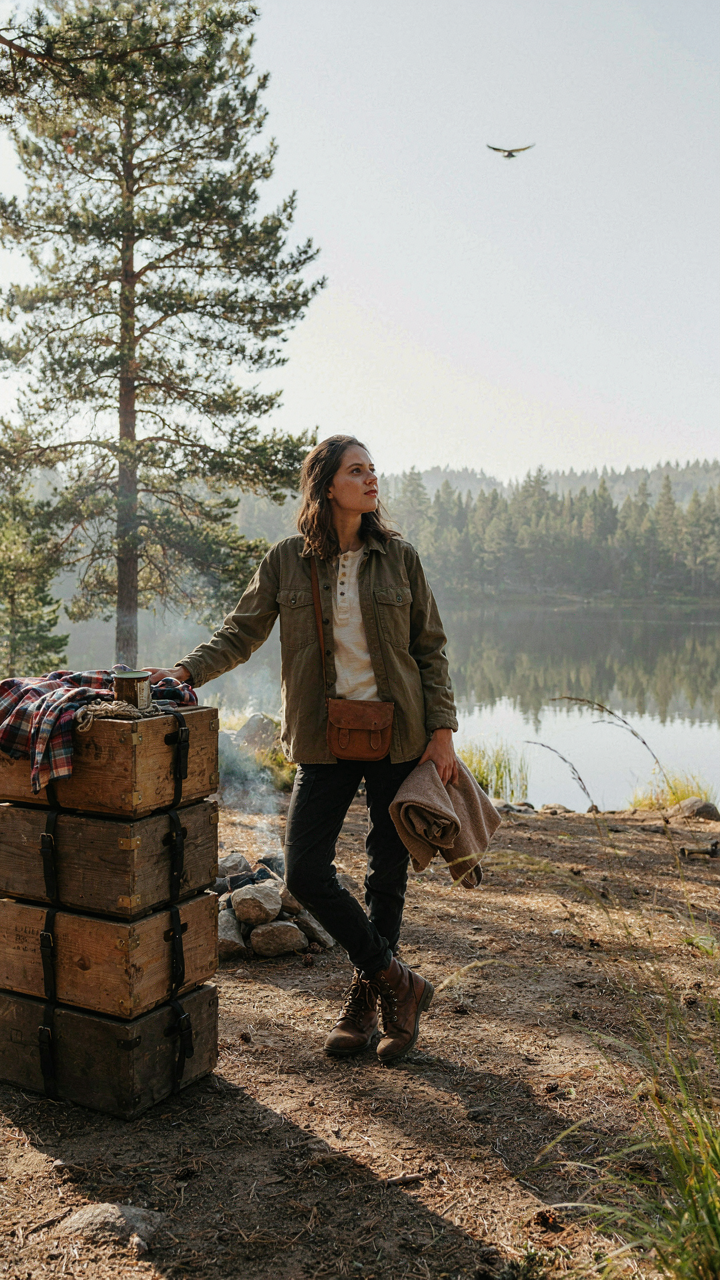
Most people think a camping crate system saves time. Wrong. It saves your brain. Every decision you eliminate before the trip is mental energy you keep for actual survival. Pick one crate today. Fill it completely. Don’t overthink it. The moment you stop deciding what to bring is the moment you start deciding how to live out there. Your gear doesn’t organize itself, and neither does your mind.