The Illusion Of Abundance: Why More Blooms Is Often Less
When Clutter Costs You Credibility
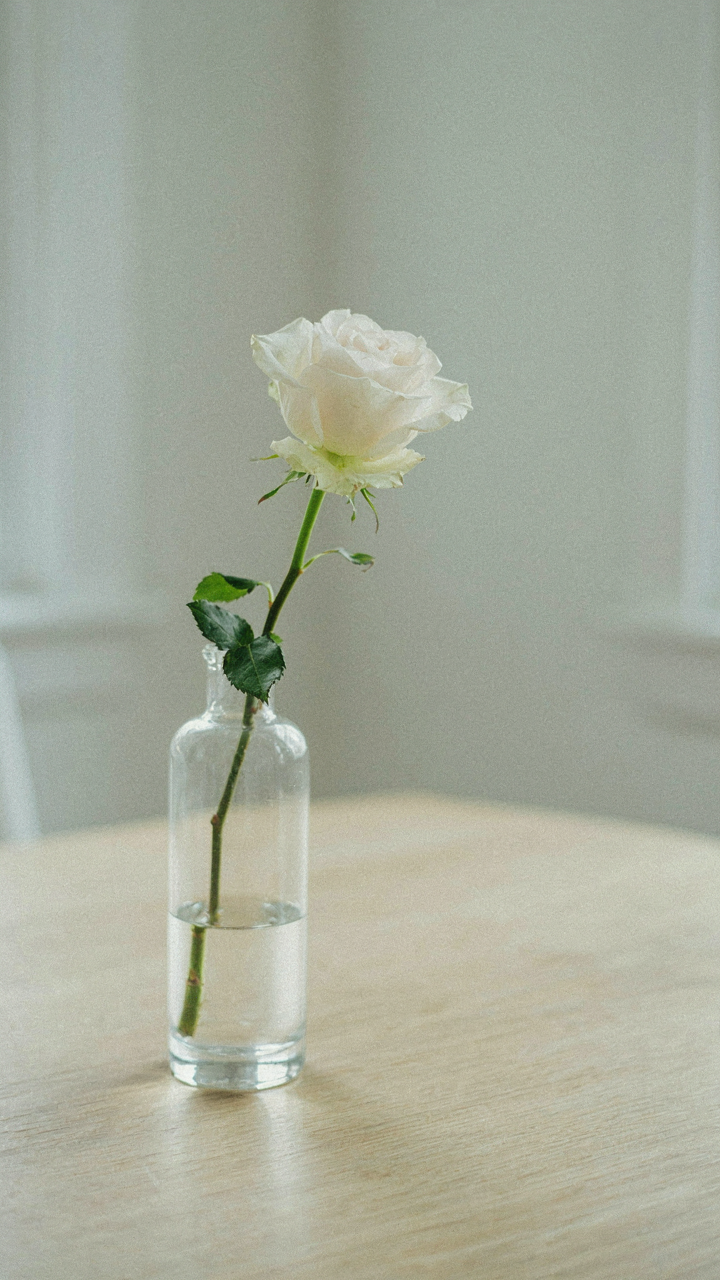
You want people to think you spent time on this. That’s the real fear—that a sparse arrangement reads as lazy or cheap. The mechanism is visual noise. Your eye has limited processing capacity. When stems compete for attention, none win. You’ve created static instead of a focal point. Professional florists don’t pack arrangements. They subtract.
The common mistake is treating a garden party arrangement like a floral wall. Dense, maximalist, everything visible at once. This fails because human attention works like a spotlight, not a flood lamp. When thirty stems fight for dominance, the brain shuts down and catalogs the whole thing as “flowers.” No hierarchy. No memory. The arrangement becomes furniture instead of design.
Single Varietal, Singular Power
Constraint is design physics. A single flower type repeated creates visual weight through repetition, not volume. One stem matters. One hundred stems of the same flower matter differently—they establish rhythm and mass without confusion. This is why high-end events use monochromatic or single-varietal centerpieces. The eye knows what it’s looking at immediately.
Most advice says variety creates interest. That’s incomplete. Variety creates complexity. Interest comes from proportion, scale, and containment. A garden party centerpiece of twenty David Austin roses in a low vessel stops conversation. A centerpiece of twelve roses, eight ranunculus, six hypericum, and four branches of ruscus disappears into the wallpaper. Deploy restraint as your primary tool.
The Seasonal Scarcity Protocol: Maximizing Impact With Minimalist Choices
Source Locally, Think Like Economics

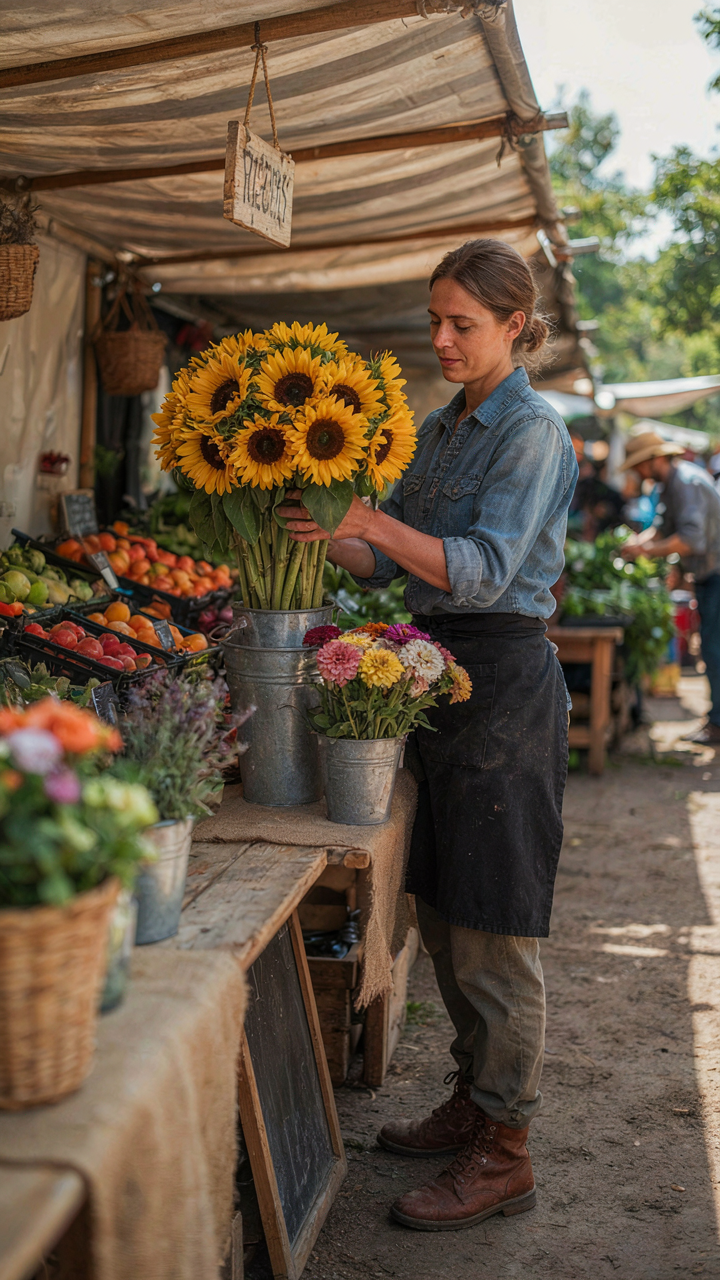
You want to source locally because you’re afraid of paying premium prices for wilted imports that arrived three days ago. Here’s the mechanism: apply the economic principle of comparative advantage to your flower sourcing. Local growers have lower transportation costs and faster turnaround, which means fresher blooms at better prices. More importantly, they grow what thrives in your climate zone, not what looks exotic in a catalog. The flowers last longer because they’re acclimated to your conditions.
Exotic imports arrive with hidden decay already underway. The logistics chain introduces stress to stems and petals before they hit your table. Local sourcing eliminates that friction. Your florist or farmer’s market vendor cut those peonies yesterday, not six days ago. When you build relationships with local growers, you gain access to varieties bred for regional success, not global aesthetics. This is the real advantage nobody mentions: you’re not paying for someone else’s supply chain inefficiency.
Know Your Region’s Bloom Calendar
Most people treat seasonal availability like a limitation instead of a strategy. It’s the opposite. A seasonal bloom calendar is your constraint that forces creative decisions, which produces arrangements with actual coherence instead of random expensive flowers thrown together. Spring brings tulips, ranunculus, and bleeding heart. Summer dominates with roses, dahlias, zinnias, and lavender. Fall demands dahlias, goldenrod, chrysanthemums, and hypericum berries. Winter forces you toward evergreens, hellebores, and dried materials that create stronger silhouettes.
Seasonal availability creates predictability in pricing and quality. You know exactly what will be abundant, cheap, and at peak freshness during your event date. This eliminates waste and the temptation to overspend on out-of-season specimens. Build your garden party arrangement around what your region produces at that exact moment. The protocol is simple: identify your event month, source the blooms that naturally peak then, and anchor your design around those varieties rather than fighting against availability.
The “Economy Of Force” In Garden Party Florals
Where Your Visual Dominance Comes From

You want people to notice your arrangement without exhausting yourself or your budget. That’s the real calculation here. Military strategy calls this the center of gravity: the single point that, if controlled, collapses the opponent’s entire position. In florals, your center of gravity is one focal flower type that commands the visual field. Everything else serves it.
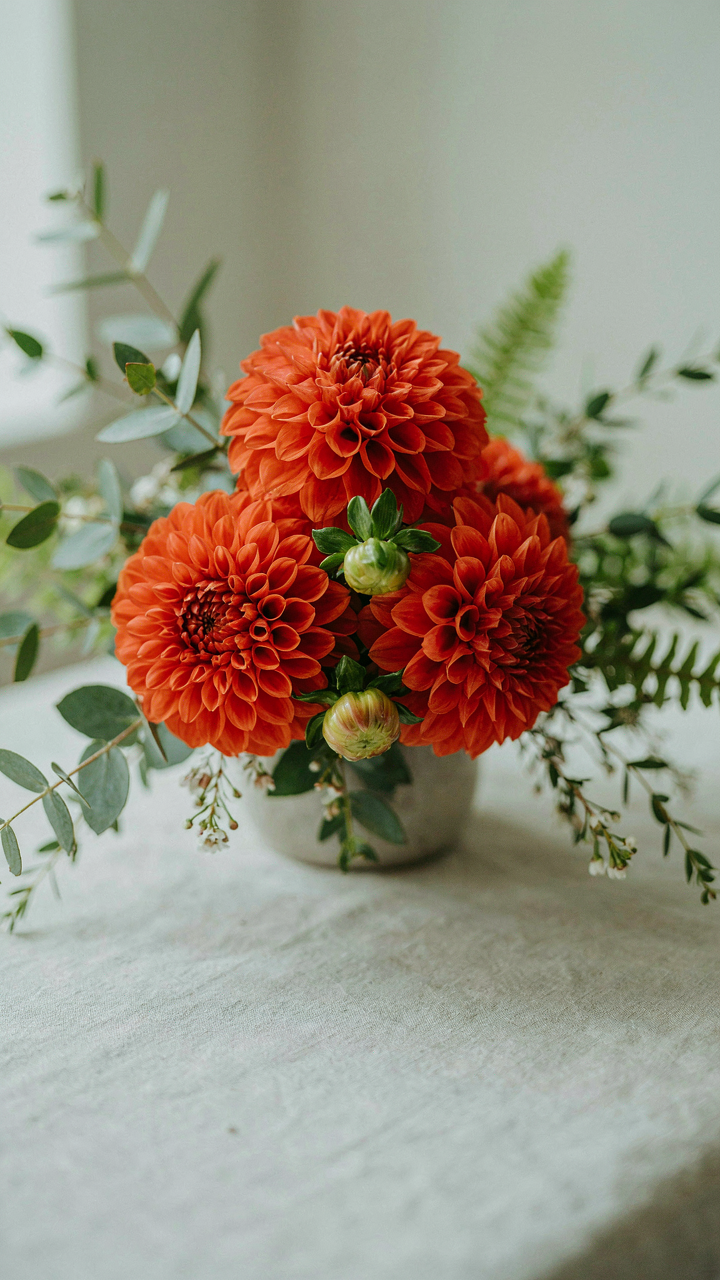
Most garden party advice says “use variety” or “layer different textures.” That’s wrong. It scatters force. Pick one dominant bloom—garden roses, dahlias, or peonies depending on season—and deploy it in the highest-traffic sight line. The supporting cast of filler, secondary color, and foliage doesn’t compete for attention. It channels attention toward your chosen focal point. This is not decoration. It’s visual hierarchy through constraint.
Placement Determines Impact More Than Volume
You don’t need more flowers. You need better positioning. Resource allocation in florals means knowing which blooms go center-mass, which go perimeter, and which stay completely out of sight. A single stem of garden rose placed at eye level in a focal position reads stronger than three scattered throughout a loose arrangement.
Seasonal blooms have predictable sizes and vase lives. Spring tulips are shorter and fade faster than summer roses, so front-load them for immediate impact. Summer dahlias command space naturally, so use fewer stems and let air around them do the work. Fall chrysanthemums cluster densely, so deploy them at the arrangement base as structural foundation. Your constraint is the vase opening and the sight lines from where guests will stand. Work backward from that.
Beyond The Mason Jar: Crafting Authentic Backyard Seating Arrangements
The Right Container Shifts The Entire Visual Weight

You want people to think you have taste without admitting you studied it. That’s the real reason container choice matters. Here’s the mechanism: the vessel functions like a frame in portrait photography. It either competes with the flowers or disappears. Ceramic, glass, and metal don’t all recede equally. Material density, gloss level, and color saturation all determine whether the arrangement reads as intentional or accidental.
The common advice says match your dishes or pick something neutral. That’s backwards. Your best move is choosing a container that contradicts the flowers’ visual weight. Dense blooms like hydrangeas need light vessels that create negative space. Sparse stems like delphiniums need containers with actual presence. A terracotta urn with peonies reads heavy and static. The same peonies in a clear cylinder shift the visual balance entirely. You’re not decorating with the flowers alone. You’re composing tension between two objects.
Placement Creates Sightlines Before You Arrange
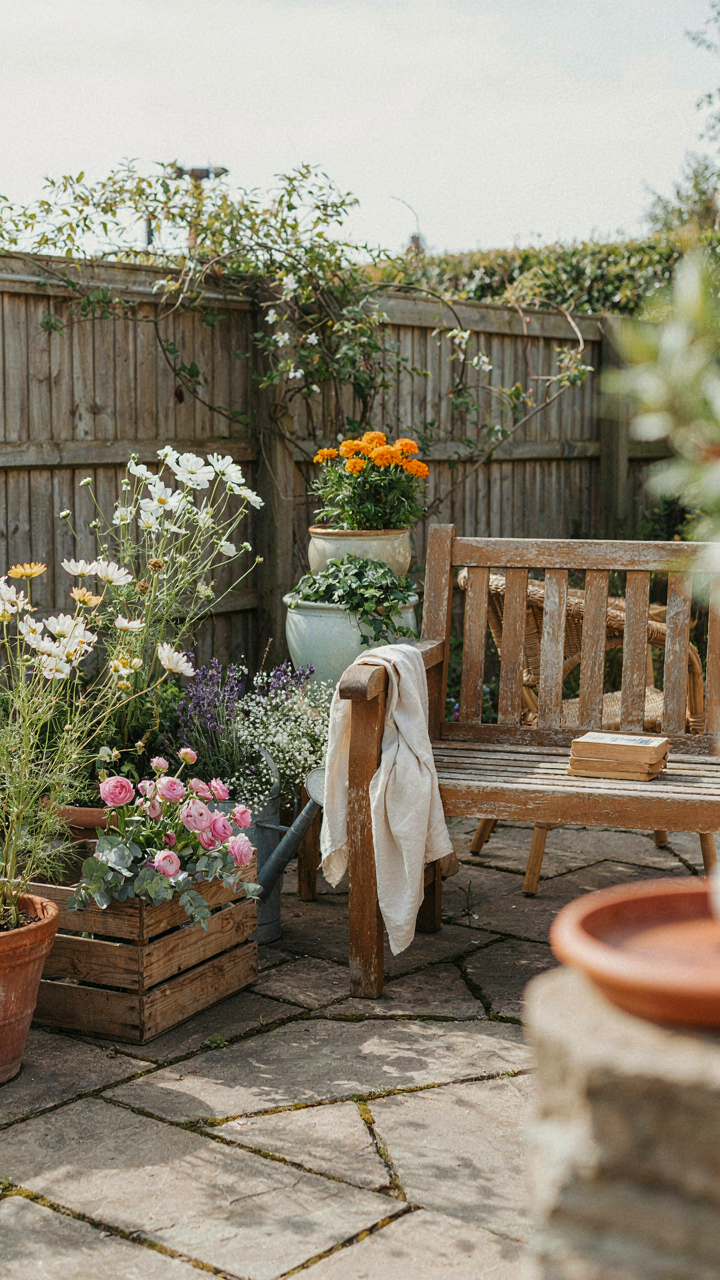
Location strategy pulls from architecture, not floristry. Architects call this “hierarchical composition,” and it means you establish focal points through spatial relationships, not decoration. Most people cluster arrangements in the center of tables or along a line. Wrong move. You place containers to frame natural features already present. A medium arrangement positioned where it catches late afternoon light through trees creates depth. Guests orient themselves toward it unconsciously. The arrangement isn’t the feature. The light through it is.
Backyard seating arrangements work best when they sit where conversation naturally pauses. Between two seating areas. At the end of a sightline from the main gathering point. Never dead center on a table where people have to move it to talk. Secondary arrangements go in the negative space—corners, edges, transitions between lawn and structure. Position each vessel so it enhances what’s already there rather than demanding attention. This single protocol change transforms arrangements from decorative objects into compositional elements that make the entire space feel designed.
Wildflower Wedding Theme: The Controlled Chaos Approach
Foraging Versus Cultivating: Managing Expectations

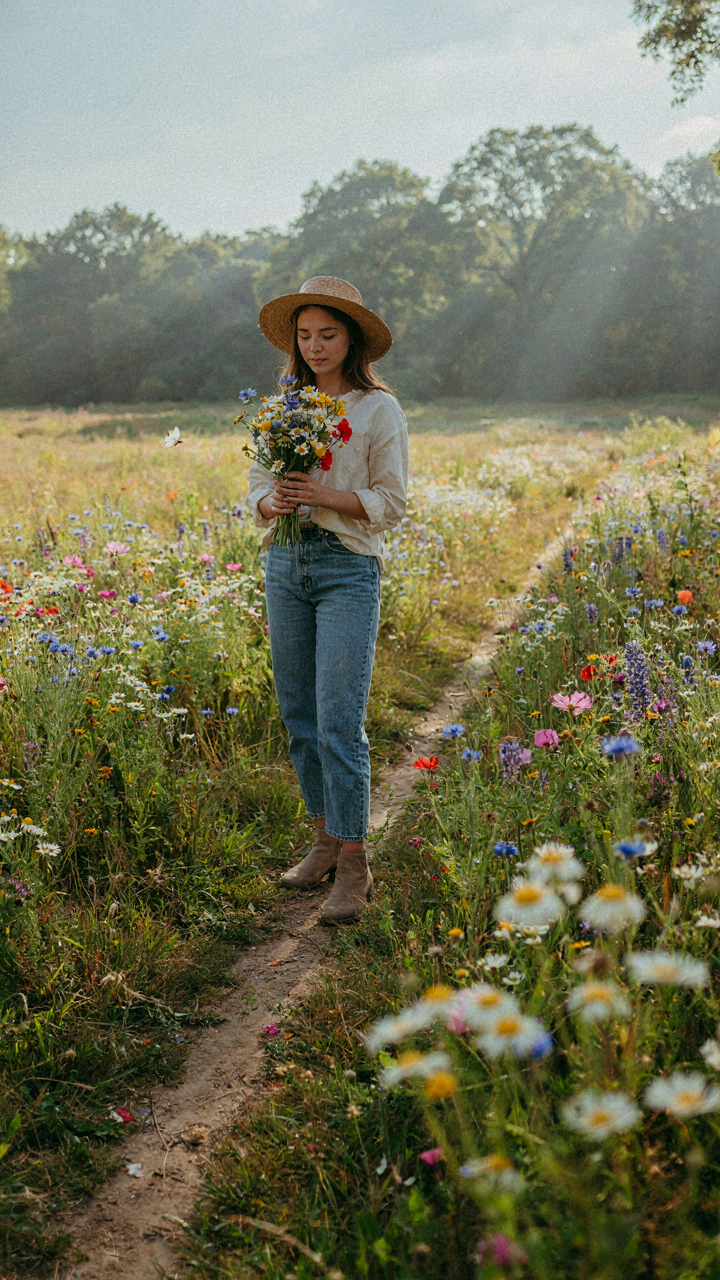
You want wildflowers because they signal authenticity and cost less than a florist’s markup. Here’s the mechanism: foraging wildflowers puts you at the mercy of bloom cycles, legal restrictions, and scarcity. Cultivating wildflower seeds in your garden gives you control and repeatability. Most people conflate the two and end up disappointed when native species don’t flower on their party date or when they’ve stripped a protected meadow.
Foraging works only if you start six months prior, scout locations repeatedly, understand local harvest laws, and have backup species identified. Cultivating requires seed starting twelve to sixteen weeks before your event, which means committing to the date and garden space now. The practical choice depends on your timeline and whether you own or control land. Foragers fail because they treat it like a last-minute errand. Cultivators fail because they underestimate germination variance. Neither path is casual.
Natural Asymmetry: Embracing Imperfect Beauty
Asymmetry in floral design borrows from the Japanese principle of Ma, the concept of negative space and imbalance. In arrangement terms, Ma means one side of your display holds more visual weight or height than the other, creating tension that reads as intentional rather than sloppy. This is not randomness dressed up as sophistication. It’s a deliberate structure that most people confuse with “just throw things in.”
Controlled asymmetry requires you to establish a focal point, then build unequal arms around it. One arm stays shorter and denser. The other extends longer with sparser material. Your wildflower mix amplifies this because varied stem lengths and bloom sizes do the work for you. The mistake everyone makes: they assume imperfection means no rules. Apply the asymmetrical framework consciously or your arrangement reads as neglected, not curated. Test your composition from multiple angles before guests arrive.
The Unspoken Language Of Garden Party Decorations
Restraint Wins Where Excess Fails

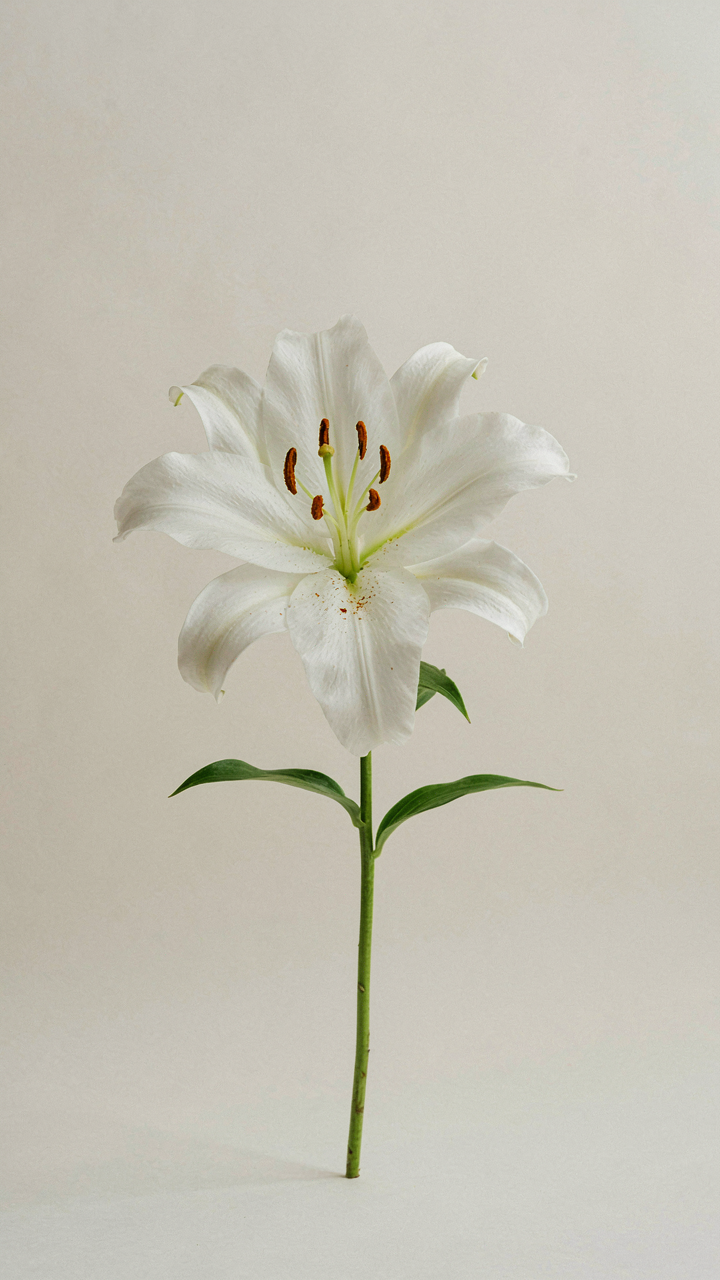
You want people to think you have taste. That’s the real reason you’re reading this section. The mechanism is simple: constraint communicates control. In design, this borrows from signal theory in communications. The clearest signal cuts through noise by removing everything that doesn’t matter. Most garden party arrangements fail because they try to do too much. A overstuffed centerpiece screams insecurity. A restrained one signals deliberation.
The mistake people make is confusing “garden party” with “floral explosion.” You don’t need every color that blooms in summer. You need three colors maximum, repeated throughout the space. Pick one dominant flower, one secondary filler, one accent. This creates visual rhythm instead of visual chaos. Restraint forces you to choose what actually matters, and your guests notice the difference immediately.
Working With What Already Grows There
Your existing landscape is free design infrastructure. Most people ignore it and start from zero, which wastes money and creates arrangements that look imported rather than inevitable. The goal is to make your additions seem like they were always part of the garden’s natural architecture.
Walk your property one week before the party. Note what’s already in peak bloom. Work with those colors as your palette. If you have established shrubs with purple tones, your cut flowers should echo that, not fight it. If mature trees cast shadows across tables, place darker blooms there so they read clearly. You’re not decorating your garden. You’re orchestrating what’s already there to perform differently.
The Anti Trend Guide To Pretty Flowers
Why Pinterest Ruins Your Arrangements

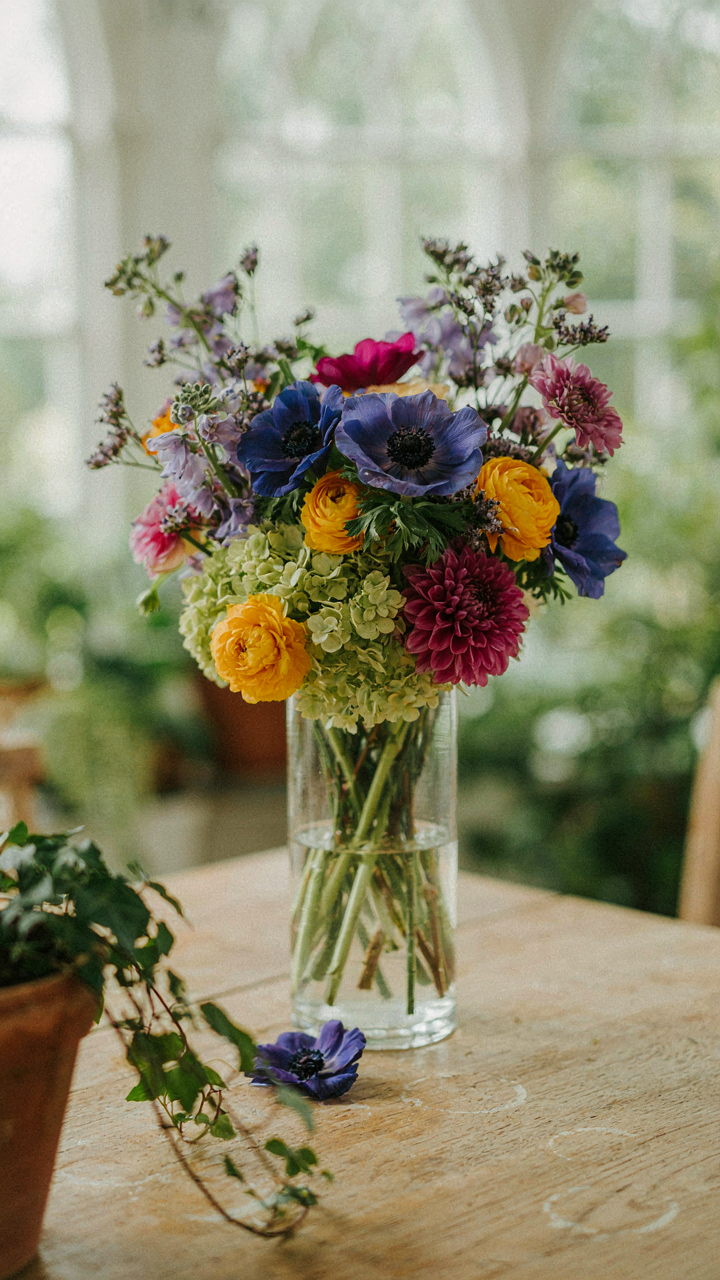
You want permission to break the rules without looking like you don’t know them. Here’s the mechanism: Instagram and Pinterest train your eye toward monoculture—the same color palettes, the same flower combinations, the same geometry repeated until it becomes invisible. This isn’t taste. It’s pattern recognition hijacked by algorithms that reward engagement, not originality.
The real constraint isn’t taste. It’s that you’ve never sat with unfamiliar flowers long enough to understand their architecture. Trending arrangements use forgiving flowers: roses, peonies, eucalyptus. Their forms are stable and photograph well. Everything else gets filtered out of your peripheral vision. You stop seeing what’s actually available to you.
Building Taste Through Friction
Design systems borrow from military strategy the concept of “economy of force”—deploying resources only where they matter most. Your garden party arrangement works the same way. You don’t add flowers because they’re popular. You add them because they solve a specific structural or color problem in that particular setup.
Common advice says follow your gut. That’s wrong. Your gut is trained. Start by working with one unfamiliar seasonal bloom per arrangement. Phlox in summer. Hypericum berries in fall. Ranunculus in spring. Learn how it actually behaves in water, how it lasts, what angles its stems naturally take. This friction teaches you more than ten trending arrangements ever could. Each arrangement becomes a protocol: identify the gap, select the flower that fills it, place it where it functions rather than where it looks safe.
Longevity Hacks For Your Garden Party Florals
Prepare Stems Before Display

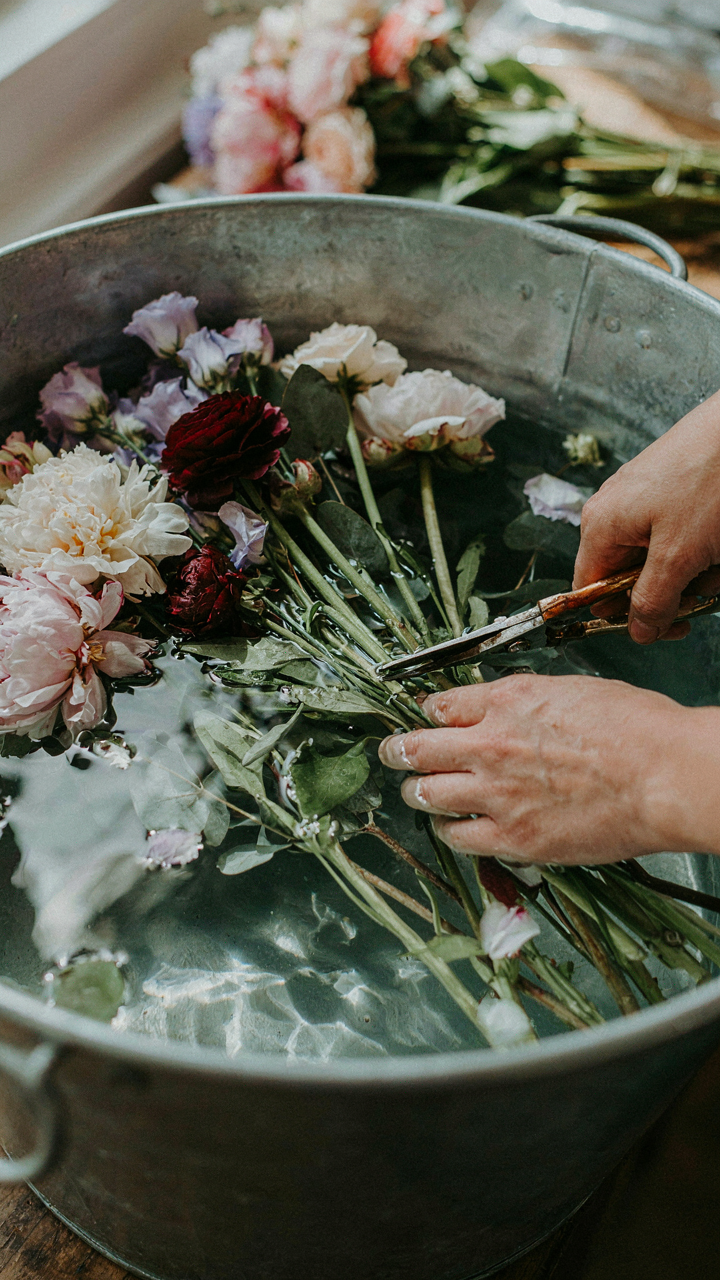
You want flowers to last through the party without replacing them halfway through. The mechanism is simple: flowers absorb water through cut stem tissue, and that tissue dies the moment it contacts air. Pre-arrangement conditioning resets this clock by creating fresh absorption surfaces and removing the biological barriers that slow water uptake.
- Cut at a 45-degree angle underwater: Air enters stem vessels when cut above water. Cutting submerged prevents air pockets from blocking capillary action, which is how stems transport water to petals.
- Strip all foliage below the waterline: Leaves submerged in water rot and become bacterial breeding grounds. Bacteria clog the stem’s vascular tissue and accelerate decay of the entire arrangement.
- Use a sharp knife, not pruners: Pruners crush stem tissue and collapse the water-conducting vessels. A clean knife cut preserves the cell structure needed for efficient water movement.
- Remove thorns and guard petals: These protective outer layers on roses and peonies serve the plant in the field, not in a vase. Removing them opens access to fresh stem and reduces water waste on non-display tissue.
- Recut stems every two days: The bottom quarter-inch dies and hardens as it sits in water. A fresh cut reopens the absorption surface and extends arrangement life by several days.
Most florists skip this because it takes ten minutes. The flowers sit in room-temperature water for two to four hours before arrangement, which allows stems to fully hydrate and become rigid. This hydration stabilizes the entire arrangement, makes stems easier to position, and creates a water reserve that carries the display through heat and movement.
Navigate Temperature And Light To Prevent Collapse
Heat accelerates transpiration, which is the rate at which water evaporates from petals and leaves. Think of it in physiological terms: every degree above 65 Fahrenheit doubles the speed at which a flower loses moisture. You cannot fight physics, so you move the arrangement away from direct sun, heat sources, and foot traffic that radiates body heat onto the display.
Wilting happens not because there is no water in the vase, but because flowers cannot absorb water faster than they lose it to the air. A garden party under afternoon sun can kill an arrangement in three hours even if the vase is full. Place arrangements in shade, against a north-facing wall, or under a tent. Keep them away from heating vents, grills, and clusters of guests who stand in one spot for extended periods. Check water level every two hours on warm days, and refresh it with cool water, not room temperature. The shock of cool water slows transpiration and buys you time.
Context Decoding: Beyond The Language Barrier Of Good Taste
Color Weight And Spatial Tension

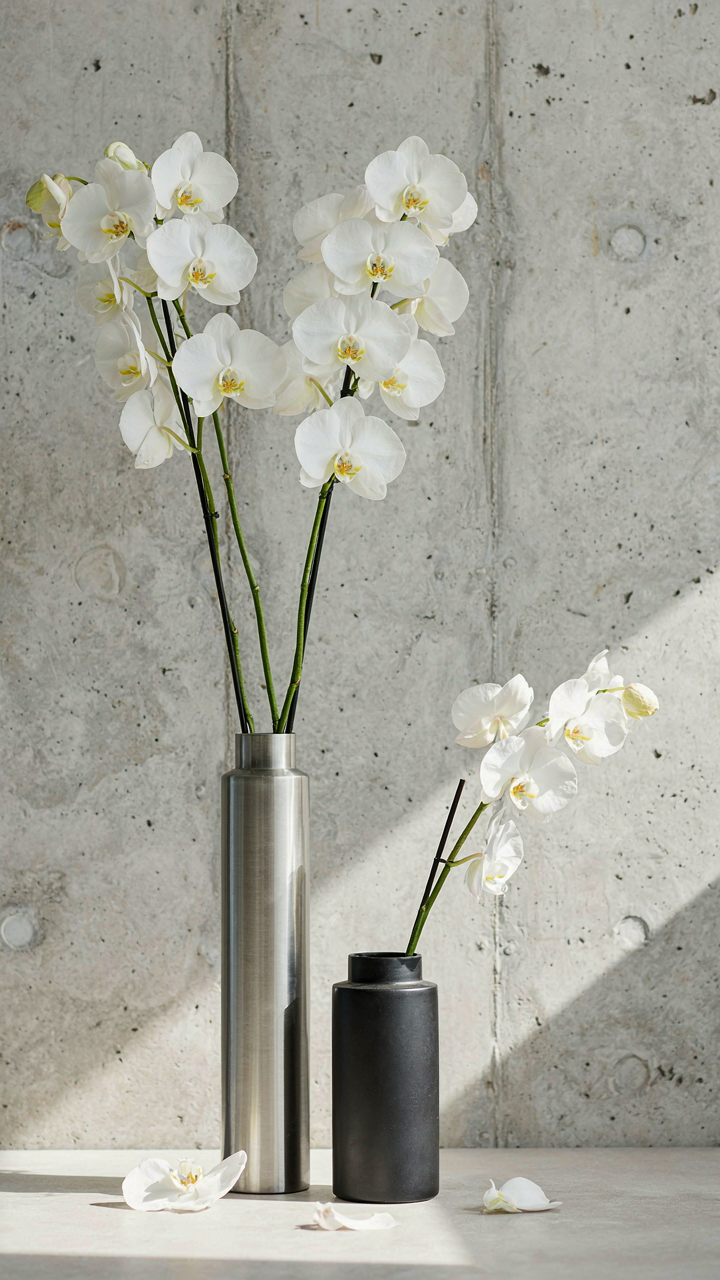
You care about this section because you’re worried your arrangement will look like the default option everyone else picked. The real mechanism is contrast, borrowed from physics—where tension between opposing forces creates stability. In florals, this means the visual weight of deep colors must balance against light ones across actual distance, not just exist in the same container. A heavy burgundy peony on one side requires either multiple pale blooms spread across the opposite side or one high-impact white element positioned to arrest the eye.
Beginners place all dark flowers together, creating a visual pit that pulls everything toward one point. The arrangement collapses inward instead of holding space. Distribute saturated colors as anchors—not clustered. Pale flowers do structural work: they move the viewer’s gaze and create breathing room. When you place a cream-colored dahlia across from a deep red rose with space between them, you’re not being decorative. You’re building a sightline that makes the whole arrangement register as intentional, not accidental.
How Regional Aesthetics Operate As Preference, Not Truth
Japanese ikebana prioritizes negative space and line over density. European garden arrangements fill voids. Both systems work because they match the spatial logic of their environments. A Japanese tea garden uses minimalism because every element reads against open air. A Victorian parlor used density because ornament signaled cultural wealth. Neither approach is objectively superior—they’re solutions to different visual problems.
The mistake is importing one framework wholesale without reading the context of your actual space. A garden party in an open yard doesn’t need the massed denseness that works in a small foyer. Dappled sunlight changes how color registers compared to interior gallery lighting. Identify whether your venue reads as empty space that needs anchoring or crowded space that needs relief. Then choose a regional tradition that solves that specific problem, not the one that photographs best on Instagram.
Your True Constraint Isn’t Seasonality; It’s Your Scarcity Mindset
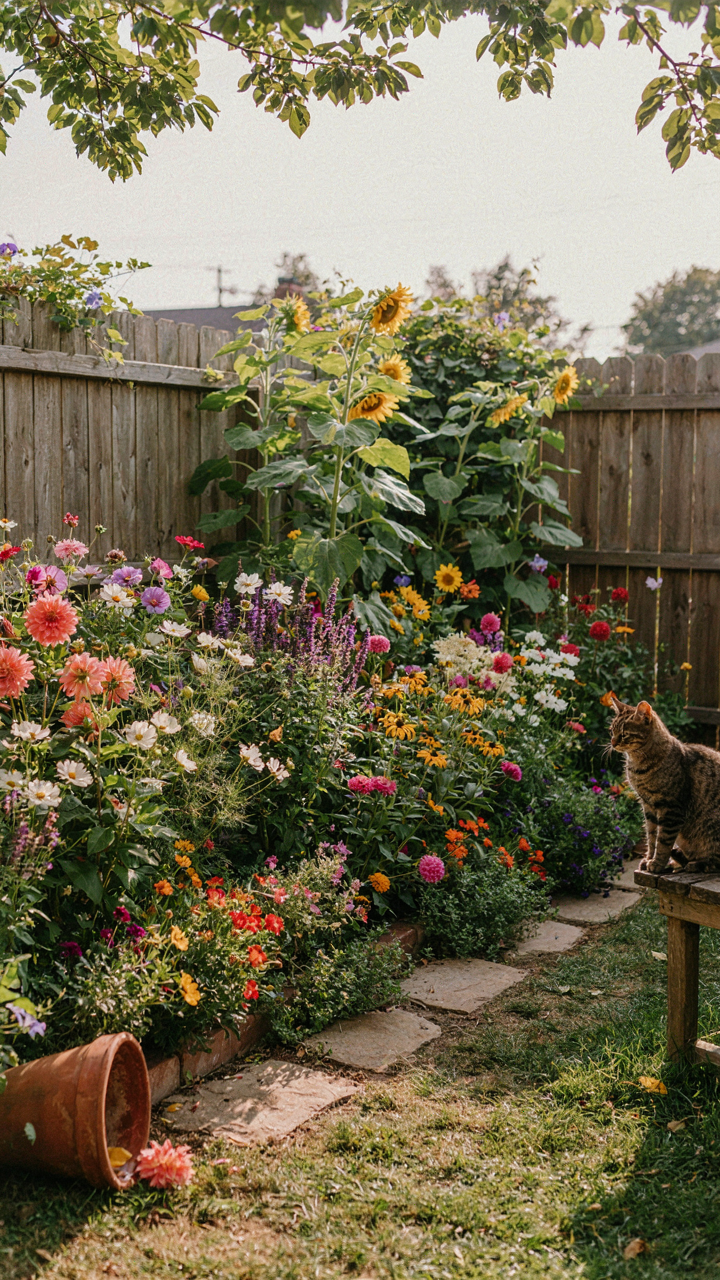
Most people botch garden party flower arrangements because they wait for “the perfect season” instead of working with what’s available now. You have flowers blooming right now. Use them. Stop treating seasonal blooms like rare artifacts and start treating them like your actual toolkit. The real skill isn’t matching seasons to flowers. It’s deciding to build something with the materials in front of you instead of the ones in your head. Go outside today and cut three stems from whatever’s growing. Arrange them. That single act beats another article. Your garden doesn’t care about your plan; it only knows what you’re willing to touch.