The Cognitive Load Fallacy: Why Too Many Chairs Fail
The Paradox Of Choice Kills Comfort
You want to look thoughtful by offering options. That’s the real reason you’re reading this. But here’s what actually happens: when guests face more than three seating types in a small space, decision paralysis sets in. This is cognitive load from choice architecture. Your brain allocates resources to deciding where to sit instead of relaxing. Fewer options force faster decisions. Fast decisions free mental energy for conversation and presence.
The standard advice says “offer variety to suit all preferences.” Wrong. Variety without constraint creates friction. A guest sees a bench, two chair styles, blankets, and stools—then spends minutes evaluating trade-offs instead of joining the party. The mechanism is simple: each additional option requires comparison. Comparison burns cognitive fuel. Depleted fuel means stiff posture, guarded conversation, and early exits. Limit your seating vocabulary to two, maybe three types maximum per gathering.
Interaction Density Over Seating Variety
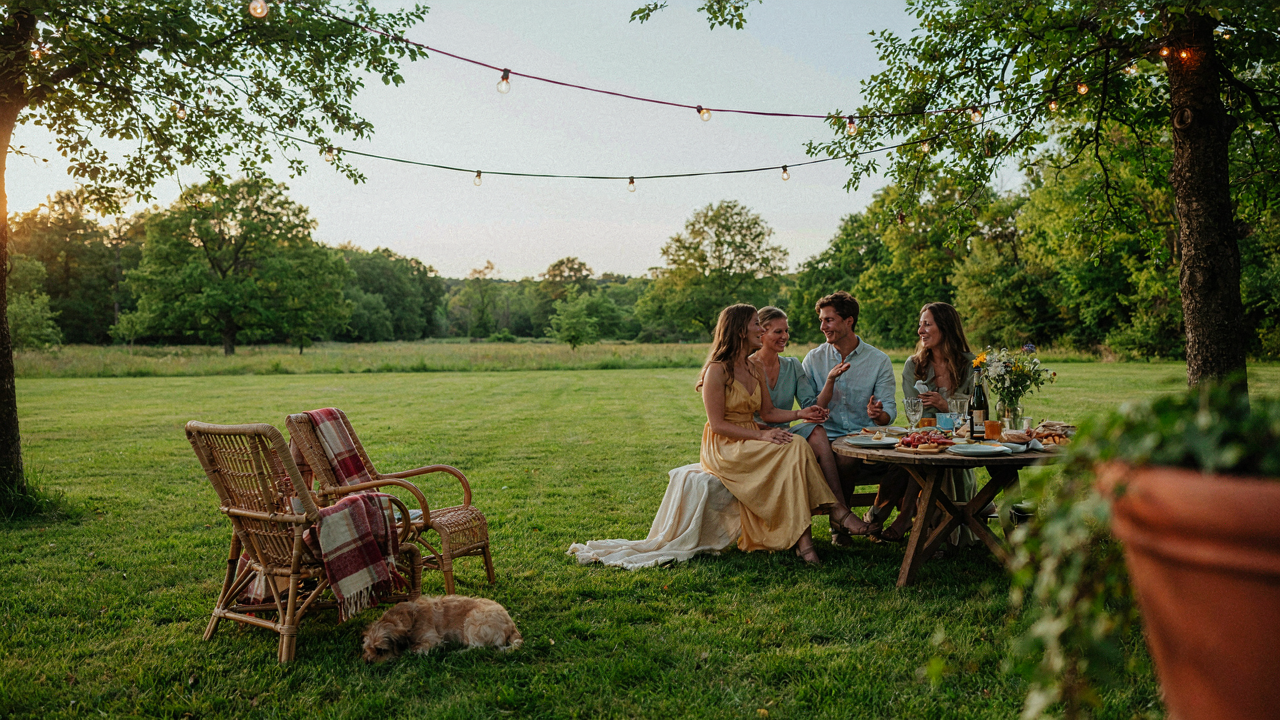
When guests don’t burn mental cycles choosing seats, they engage with other people instead. This is the actual win. Most hosts obsess over comfort details while missing that seating arrangement controls who talks to whom. Close proximity forces interaction. Forced interaction builds the energy that makes a party feel full. Scattered chair options push people apart. Bundled seating (blankets with benches, chairs in tight clusters) pushes people together.
The mechanism works through spatial constraint. A guest on a solo chair six feet from others has an exit strategy. A guest on a blanket section with two benches bracketing it cannot leave without awkwardness. That friction creates stickiness. Stickiness is what transforms a gathering into an actual event. Set your seating density first. Then choose your materials. Density compounds the effect of every chair you place.
The “Chaos Engineering” Approach To Outdoor Party Seating
When Your Setup Fails Under Real Conditions

You want to avoid looking unprepared. Here’s what actually matters: most seating arrangements break the moment guests arrive in clusters instead of trickling in solo. Chaos engineering, borrowed from software infrastructure testing, means deliberately introducing variables to find where your seating collapses. You’re not arranging chairs for an imaginary party where people distribute evenly. You’re stress-testing configurations against how humans actually behave in groups.
Set up your blankets, benches, and mixed chairs as you plan them. Then place half your expected guest count in the space at once. Don’t guide them. Watch where congestion forms, where people stand because sitting feels awkward, and which seating pieces get ignored. Bottlenecks appear immediately: too-narrow pathways between blankets, benches facing dead air instead of conversation centers, chairs isolated so singles won’t claim them. This single run reveals what photographs and floor plans hide.
Where Your Seating Actually Breaks
The common mistake is assuming failure points happen during peak occupancy. They don’t. Failure happens during transition moments: when early arrivals cluster, when the food table draws a crowd, when weather shifts and people migrate. The real weak points are always at the edges of your arrangement, not the center. Nobody sits at the uncomfortable threshold between two seating zones. Blankets placed perpendicular to benches create dead zones. Chairs scattered without visual anchor points sit empty while people crowd onto benches.
Map your actual failure points by observing traffic patterns during that stress test. Mark where guests hesitate before sitting. Note which pieces feel isolated or misaligned with natural gathering spots. Then adjust one variable at a time: rotate the bench, move chairs closer to blankets, eliminate the orphaned seat. Test again with a smaller group. The goal is zero hesitation zones where guests feel forced to choose between awkward seating or standing. Your setup succeeds when people sit immediately without calculating comfort trade-offs.
The Asymmetrical Seating Advantage: Blankets, Benches, And Power Dynamics
Height Variance Controls Conversation Direction

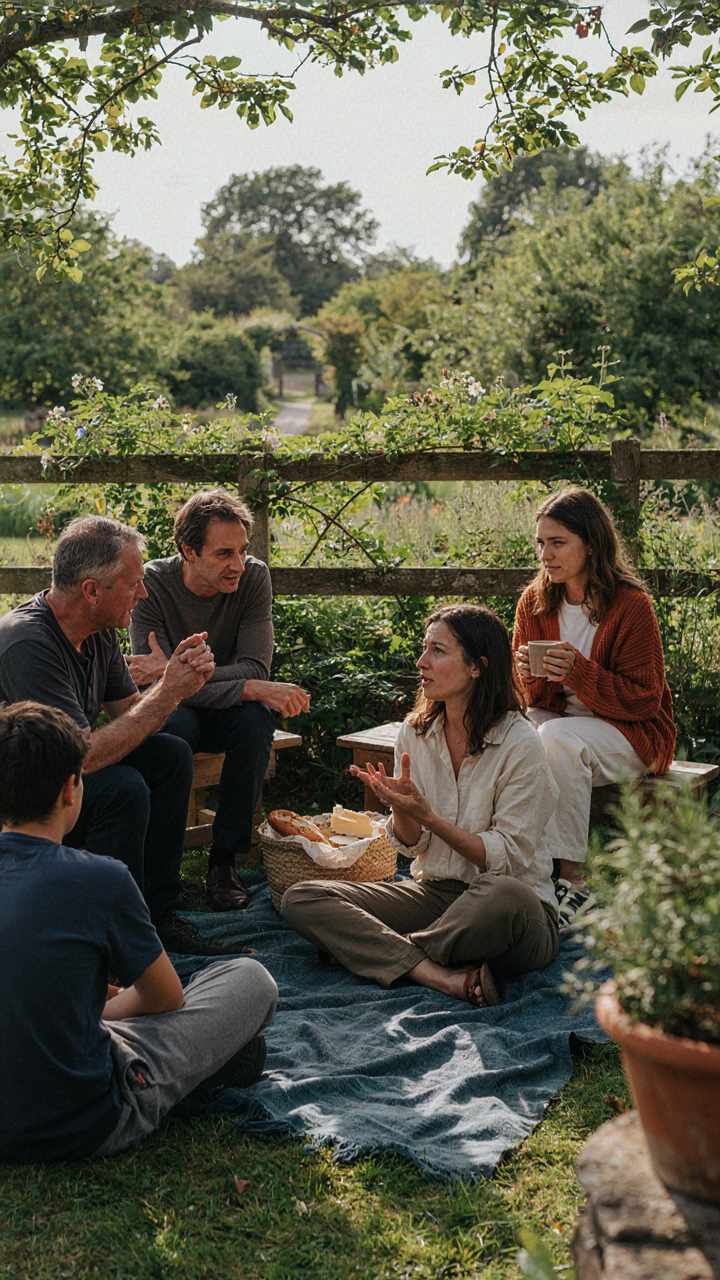
You want people to notice you’re the person who orchestrated something. That’s the real reason you care about seating mechanics. Here’s how it actually works: conversation clusters operate on a physics principle called sightline advantage. When people sit at different heights, they naturally orient toward whoever sits highest. A bench elevated 18 inches above ground-level blankets creates an optical hierarchy that functions without anyone stating it openly.
Blankets force people down. Benches place them at mid-torso height. Chairs elevate them to full standing eye level. This vertical stagger isn’t decoration. It’s infrastructure. The person on the bench becomes the focal point for the blanket group without appearing dominant. They speak, others listen upward. The mechanism is biological—humans unconsciously weight information from higher sightlines as more authoritative. Deploy this by clustering a bench with surrounding blankets rather than placing seating at uniform heights.
Placement Geometry Predetermines Who Talks To Whom
The common advice says “arrange seating in circles for inclusion.” That’s incomplete. Circles only work if everyone has equal sightline access, which blankets and benches destroy by design. Strategic placement uses geometry to channel conversation flow before guests arrive. Position your bench perpendicular to blankets on its left, parallel blankets on its right. The perpendicular group faces the bench occupant head-on. The parallel group sees them at an angle. One gets direct engagement. One gets ambient presence.
The mechanism here is sight-based clustering. People talk longest with those they face directly and see peripherally second. When you place a bench 6 feet from blanket clusters instead of 3 feet, you force guests to either lean in or disengage. Leaning in signals interest and commitment to conversation. Placement distance controls energy expenditure. Tighter clusters with mixed chair heights around a central bench create a micro-community that feels distinct from looser blanket-only areas, naturally segmenting your party by conversation intensity without assigning people roles.
The “Scarcity Principle” In Garden Party Seating Ideas
Prime Real Estate Forces Decisions

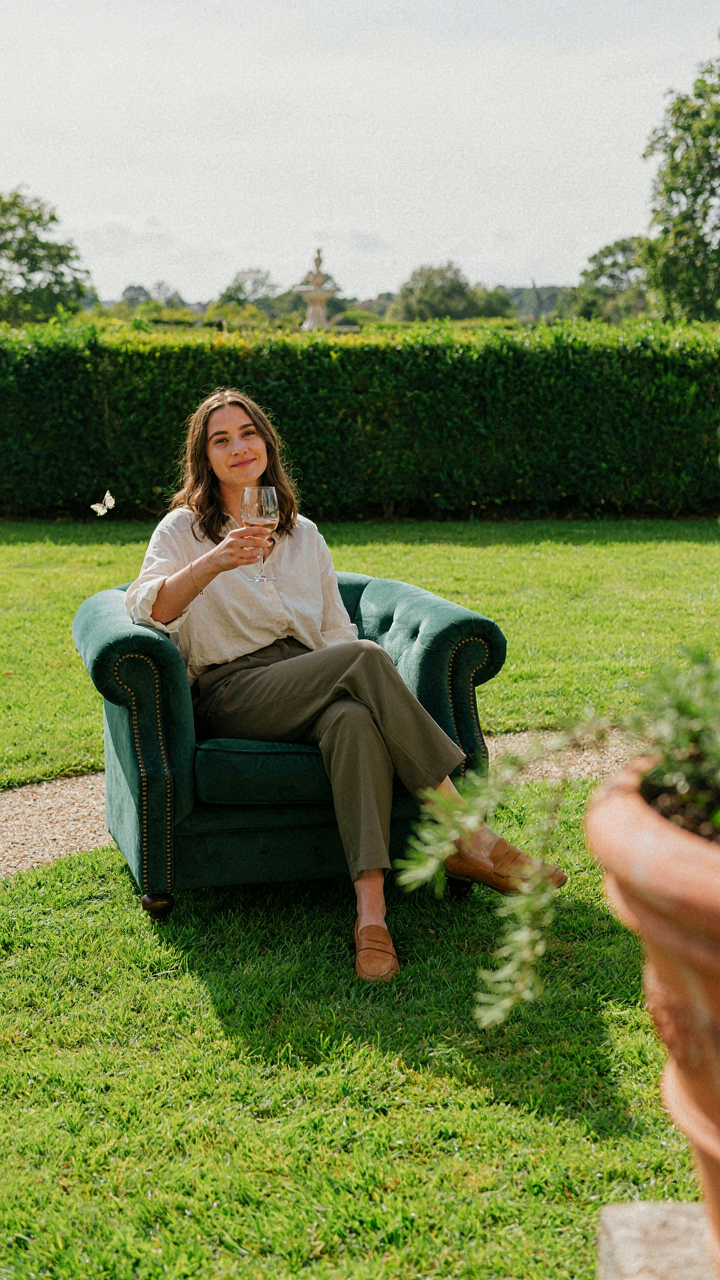
You want people to notice where they sit and feel like they landed somewhere worth having. That’s the real stake. Economics teaches us about scarcity driving value, and garden seating works the same way: the fewer comfortable spots available, the higher their perceived worth becomes. A blanket spread on grass matters less than a bench positioned near the garden’s focal point. Guests compete for these spots unconsciously. You control which seats feel scarce by placement alone.
The mechanism is pure positioning. A single bench under mature trees becomes prime real estate not because the bench is exceptional, but because shade is limited and proximity to the garden’s best views creates natural demand. Place three mismatched chairs in random yard corners and they blend into the background. Place two carefully positioned benches as anchors and guests will navigate toward them, cluster around them, and feel status in claiming them first. Scarcity doesn’t require fewer chairs overall. It requires concentrated, visible comfort that forces a choice.
Desired Seating Through Strategic Placement
Most advice tells you to “spread seating throughout the space” for flow. That’s incomplete. You need some seats to feel deliberate and desirable while others remain functional backups. The bench near blooming hydrangeas competes for attention with the blanket-and-cushion setup on the patio. Neither is objectively better. But one feels discovered, and the other feels like the default landing spot. Strategic placement creates a hierarchy of desirability without announcing it.
The work is deciding what makes a spot worth having: shade, view, proximity to food, social position relative to the host, or combination. Once you identify this, concentrate your best seating there. Position one weathered bench as the focal point of the seating arrangement. Place mixed chairs in supporting roles around it. Use blankets to define secondary zones that feel intentional, not leftovers. Guests self-select into these zones based on perceived value, which means your seating layout does the social work for you without friction.
The “Resource Allocation” Blueprint For Outdoor Party Seating
Economics Of Seating Density

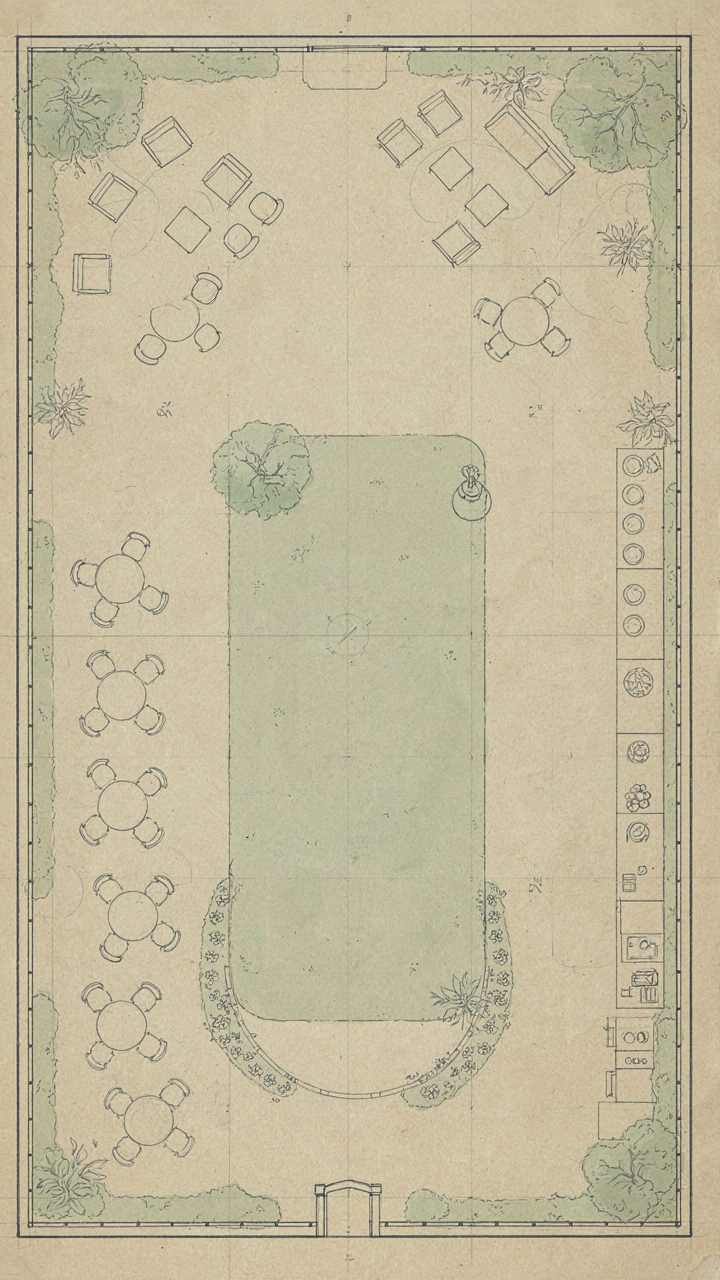
You want people to think your setup is effortless, when really you’re solving a constraint problem. Treat seating like economists treat scarce resources: you have limited space, limited budget, and competing demands. Allocate seats by actual usage patterns, not by trying to seat everyone simultaneously. Most garden parties don’t need chairs for every guest at once. Some people stand by the food table. Others cluster on blankets. The real mechanism is this: calculate your peak seated occupancy at thirty percent of total guests, then build toward that number with mixed furniture types that compress or expand based on flow.
The mistake everyone makes is buying uniform seating and arranging it symmetrically, which wastes ground and locks you into rigid configurations. Economics teaches you to match supply with demand curves. Blankets service low-friction seating where people self-organize. Benches handle groups that want to stay put. Chairs work as overflow or conversation nodes. Deploy your resources where behavior actually concentrates, not where theory says they should be. This removes the false urgency to acquire more furniture than your space can absorb.
Maximizing Function Per Square Foot
Comfort per square foot is a real metric, not marketing language. One blanket twenty by twenty feet seats six to eight people in shifting positions and handles multiple configurations. One bench sixty inches long seats three to four people fixed. One chair occupies roughly fifteen square feet of functional space including approach angles. Blankets win on efficiency because they let people recline, shift weight, and self-regulate without demanding the full footprint a chair requires. Calculate your actual yard perimeter and usable flat ground. Divide that into zones. Assign furniture types that match zone purpose and traffic patterns, not aesthetic preference.
The protocol is straightforward: measure your available space in square feet, subtract fixed obstacles like trees and structures, then map zones for dining, conversation, and movement corridors. Blankets should occupy the largest zones where people naturally cluster for longer stays. Benches work along sight lines where groups want visual connection. Chairs become strategic accent pieces near shade or focal points. This isn’t decoration. It’s logistics. When you know your square footage and your actual guest behavior, you stop guessing and start placing furniture where it actually functions instead of where it looks balanced.
The “Mixed Modality” Protocol For Party Seating
Ground, Low, And High Create Actual Flow

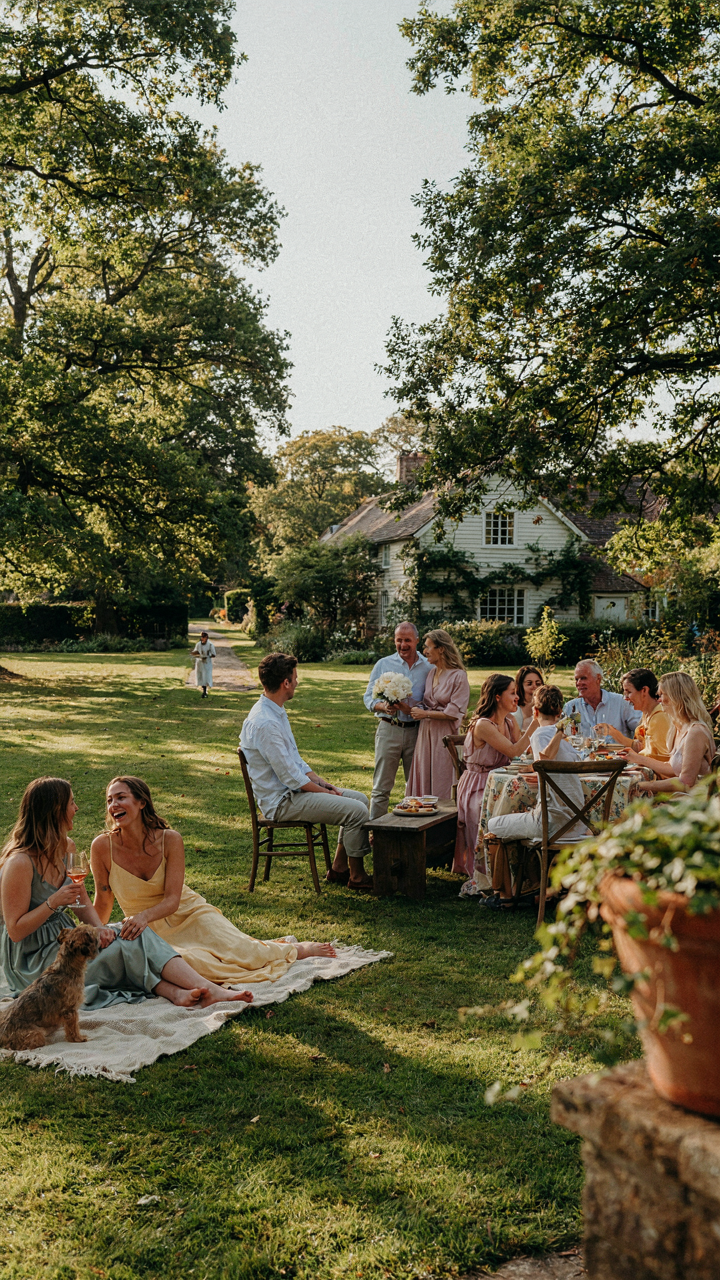
You want your party to feel intentional, not like you threw furniture at a lawn. The real mechanism here is borrowed from traffic flow design: you’re creating movement vectors. Ground seating (blankets, floor cushions) anchors social clusters. Low seating (benches at knee height) creates transition zones. High seating (standard chairs) acts as endpoints where conversation naturally resolves. Without this vertical hierarchy, guests cluster at standing height and nobody sits.
The mistake most people make is treating all seating equally. Blankets on grass work only if they’re positioned to pull people down and inward, creating defined gathering spots that feel separate from the main flow. Benches function best between blanket clusters and chair zones, forcing guests to choose whether they’re settling in or passing through. Position high seating at the party’s edges, not the center. This keeps the active social space organized and prevents dead zones where people stand awkwardly between furniture.
Strategic Seating Combinations For Every Setup
The common advice is “mix and match for visual interest.” That’s incomplete. You’re actually solving a capacity and conversation problem simultaneously. Different seating types serve different group sizes and social states: blankets work for tight groups of three to five; benches for four to eight; chairs for one to three or for people who need back support.
- Blankets in clusters of two to three: Creates intimate pods that feel like separate parties but remain part of the larger event. Space them five to seven feet apart.
- Benches as social corridors: Position perpendicular to blanket clusters, never parallel. They become natural conversation bridges between ground-level and standing groups.
- Chairs in pairs or threes: Place at ten to twelve feet from blanket clusters. Guests seeking quieter talk or needing support naturally migrate here without leaving the party.
- One high-back option per twenty guests: A single substantial chair or loveseat anchors the space and gives people with mobility needs a dignified option without singling them out.
- Buffer zones of two to three feet minimum: Prevent furniture from creating a maze. Clear sightlines keep the party feeling open rather than obstacle-course-like.
Mixed seating only works if you treat it as a choreography, not decoration. Each piece has a job: move people, settle them, or give them an exit. When you nail this spacing and type combination, guests seat themselves exactly where you intended without feeling managed.
The “Minimum Viable Comfort” For Outdoor Floor Dinner Party
What Actually Matters On The Ground

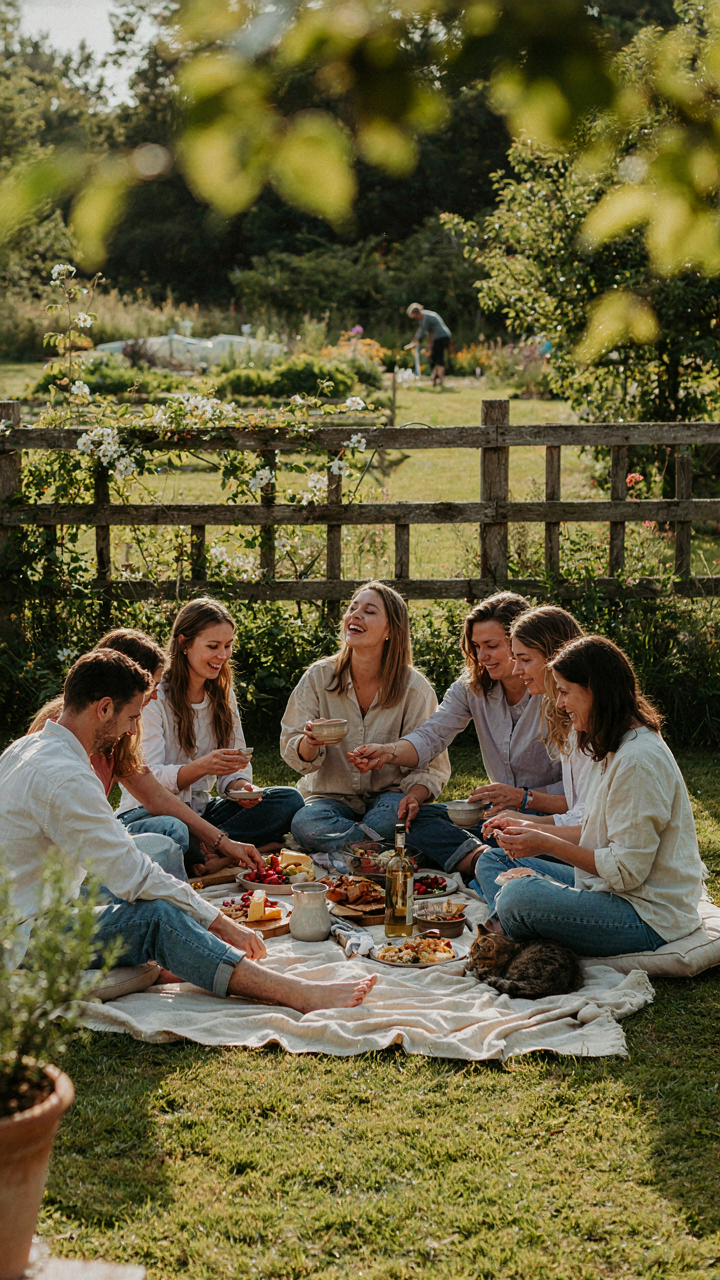
You want this to feel intentional, not like you ran out of chairs. Here’s the mechanism: your body doesn’t distinguish between “rustic charm” and “I’m uncomfortable” after twenty minutes. Ground-level dining works when you solve the three friction points—back support, seat height consistency, and thigh clearance from the table—before guests arrive. Everything else is decoration.
Blankets alone fail because they compress under weight and create uneven surfaces. A proper ground setup uses a blanket as a perimeter boundary, then layers a bench or low seating piece on top of it. The blanket doesn’t provide comfort; it signals the dining zone and protects furniture from dirt. Your actual comfort comes from a structure with defined edges and a stable base.
Stripping Away The Unnecessary Layer
Most advice tells you to “mix and match” seating for visual interest. That’s incomplete. The real constraint is function: every seat must place the diner’s thighs parallel to the ground when they lean against a backrest. Misaligned heights force guests to twist their spine or hold themselves up with their arms. That’s exhausting, not charming.
You need one anchor piece—typically a bench—that sets the height standard. Other seating (cushioned chairs, floor poufs, low stools) must fall within a 2-3 inch range of that benchmark. When a guest sits, their knees should angle slightly downward or stay level. A blanket spread flat beneath everything hides the awkward transitions and contains spills. Test the setup with your own body before the first guest sits down.
The Environmental Psychology Of Outdoor Party Seating Ideas Cheap
How Surroundings Shape What Feels Comfortable

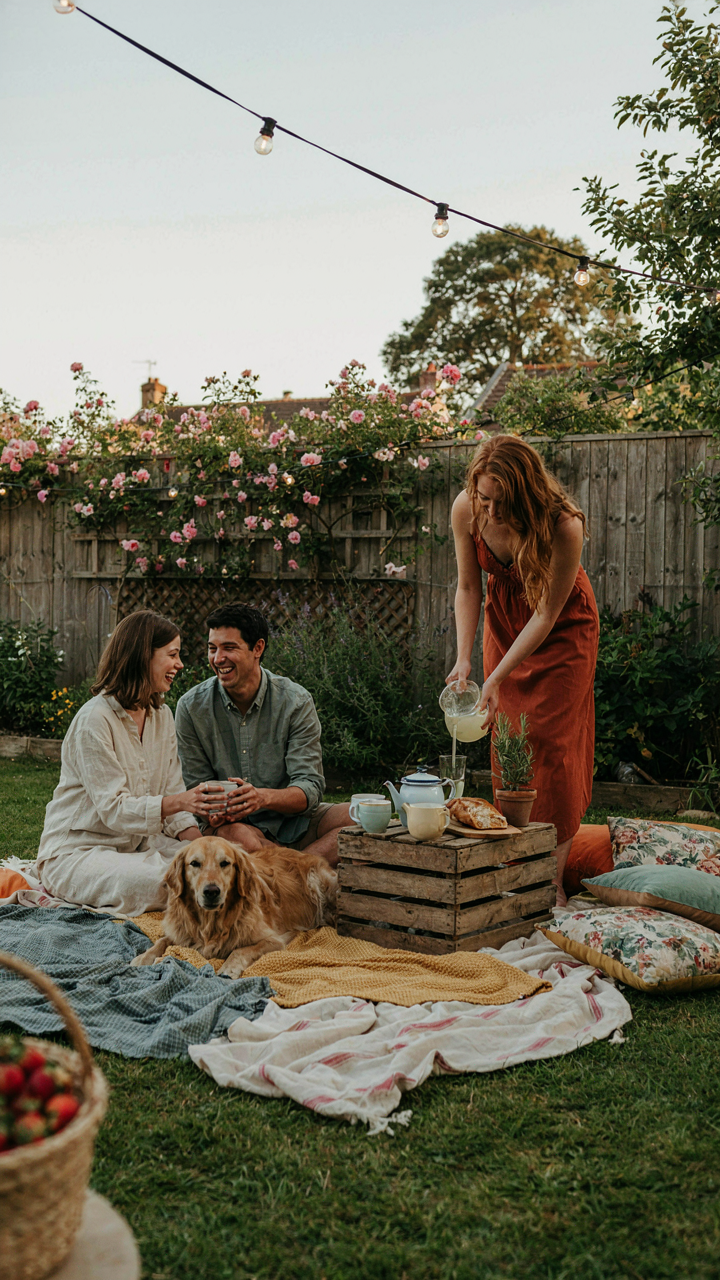
You want to know this because you’re worried your guests will judge your setup as cheap or poorly planned. Here’s what actually matters: environmental psychology proves that the brain doesn’t evaluate comfort in isolation. It evaluates it relative to context clues. A blanket on grass with string lights overhead reads as intentional design. The same blanket in harsh daylight with no framing reads as a budget shortage. The mechanism is contrast and anchoring. Your surroundings set the baseline for what guests expect and accept.
Sightlines control perception more than material cost. When guests sit, their eye naturally travels to what frames the space. A brick wall behind seating feels contained and intentional. Open yard beyond creates unease and makes cheap chairs look abandoned. Low-cost fixes work because they address this directly. Position blankets near focal points like gardens or structures. Use mixed seating heights so the arrangement appears curated rather than hodgepodge. The guest brain reads intention as value, not price tag.
Perceived Value Through Strategic Material Choices
Most advice tells you to buy matching sets or upgrade to expensive options. That misses the actual lever. Environmental design research shows that perceived quality increases when materials feel purposeful rather than uniform. Mixing one quality bench with secondhand chairs and blankets reads as eclectic design. Buying six identical plastic chairs reads as budget constraint. The difference is narrative, not dollars spent.
Textiles drive perceived comfort disproportionately. A worn linen blanket costs five dollars but signals care and thoughtfulness. Throw it over a bench or use it as ground coverage. Add mismatched outdoor cushions in complementary colors. Skip the temptation to match everything. Create visual rhythm through repetition of materials instead. Use the same blanket color across two different seating areas, or repeat a cushion fabric on both chairs and ground seating. This costs less and reads as intentional curation.
The “Entropy Management” Of Your Garden Party Seating
Systems Design Before Aesthetics

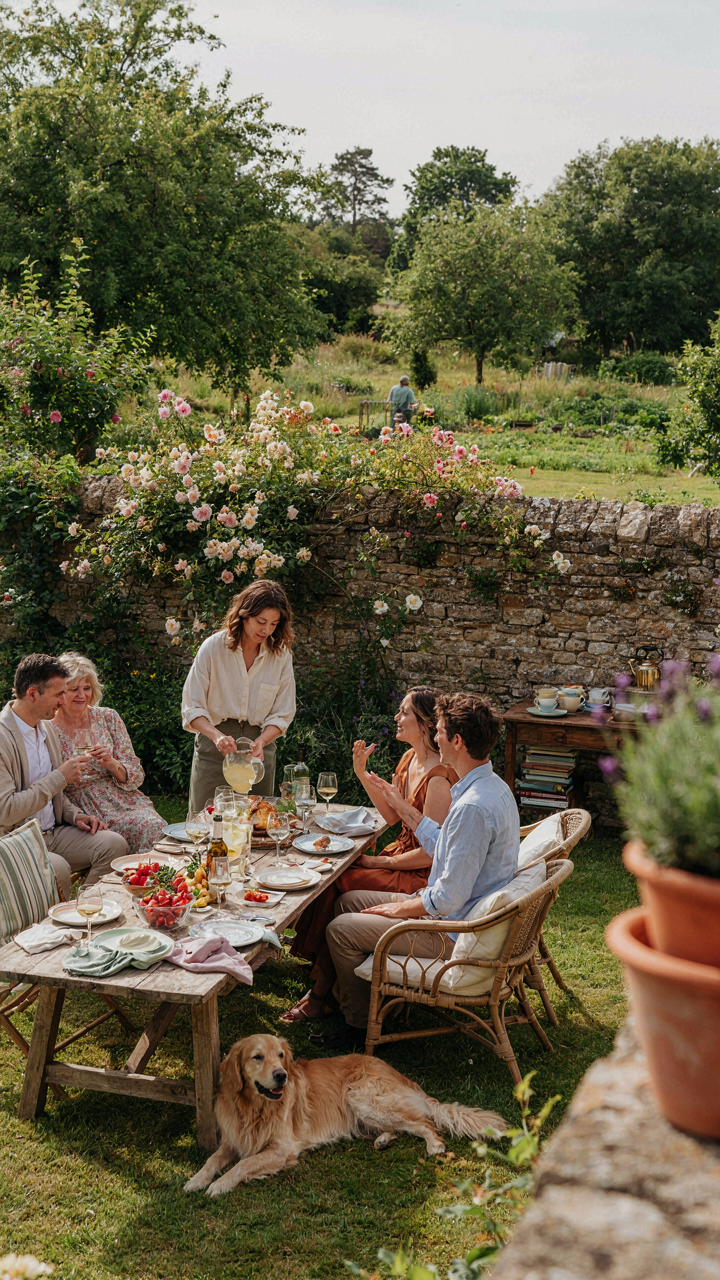
You want your garden party to look intentional without looking controlled, and that matters because it signals you have taste without appearing neurotic. Cybernetics teaches us about negative feedback loops: systems that correct their own drift toward disorder. Your seating layout is that system. Benches, blankets, and mixed chairs function as anchors that absorb and distribute social clustering naturally, preventing the chaos of everyone standing or huddling near the food table. Place fixed seating at spatial intervals that make sense geometrically, not symmetrically. The mechanism is simple: repeatable friction points reduce entropy.
Randomness at a garden party isn’t freedom. It’s waste. When guests lack clear seating options, they bunch up, create dead zones elsewhere, and the party fragments into uncomfortable micro-groups. Fixed seating elements—a bench along the perimeter, blankets in clusters of three, individual chairs at varied angles—give the nervous system of your party something to organize around. You’re not dictating where people sit. You’re eliminating the cognitive load of figuring it out. That’s the real win.
Movement Flows Where Friction Decreases
Good garden party seating guides spontaneous movement through material placement, not instructions. Blankets work better than benches for this because they create soft boundaries that people read as optional rather than official. A bench says “this is where you sit.” A blanket says “this is available.” Benches anchor conversation; blankets create flexibility. Mix them intentionally. Place blankets in the garden’s natural traffic pathways—between food service and viewing areas, near shade transitions. This channels movement without signage or awkward herding.
The common advice here is wrong: people don’t want “flow.” They want choice. Your job is reducing the friction of choosing without removing choice itself. A single bench in the wrong spot creates a bottleneck. Three blankets and two chairs distributed across the garden create decision points. Guests self-organize around these anchors. They move between them based on conversation, sun, and social comfort. The protocol is this: map your garden’s natural movement lines first, then place your heaviest seating (benches) perpendicular to flow, not parallel to it. Light seating (blankets, individual chairs) follows the paths people already want to take.
The Adaptability Index For Backyard Party Seating Ideas
Build Systems That Survive Plan Changes
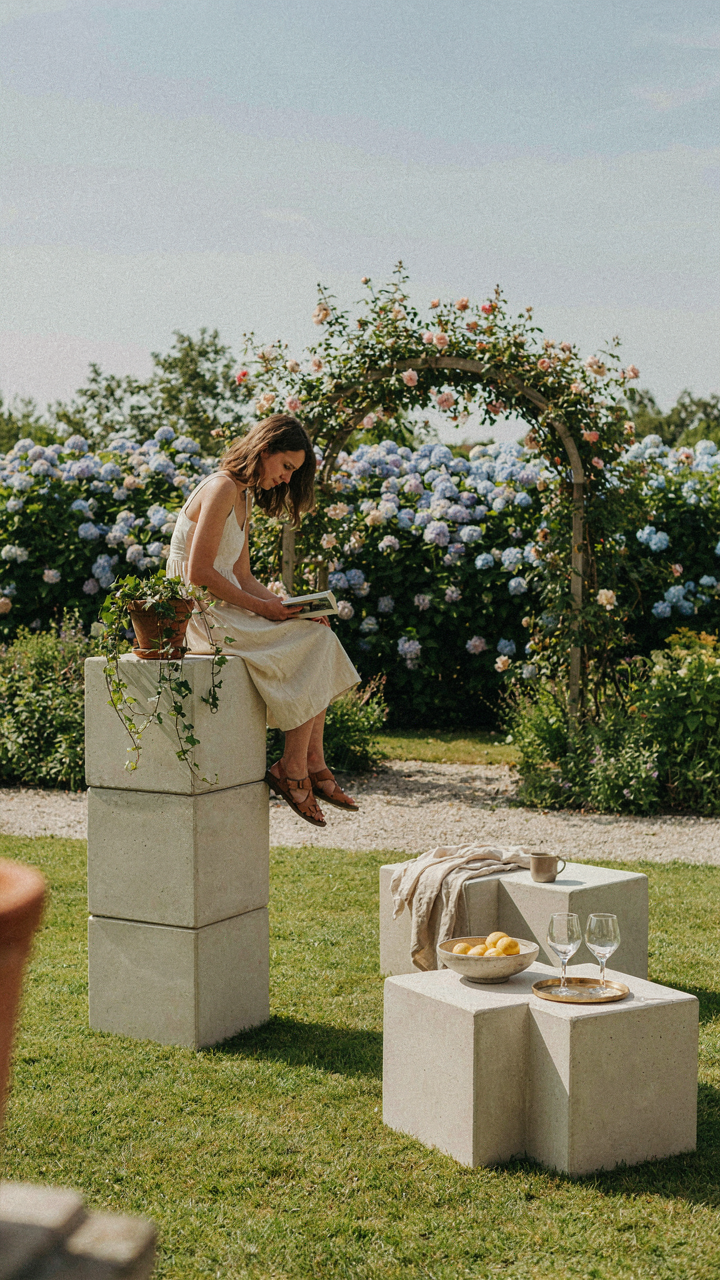
You want this section because you’re afraid you’ll buy the wrong setup and look stupid when circumstances shift. Here’s the mechanism: seating that works is modular, not permanent. Borrow from systems engineering—think of your backyard as having “nodes” instead of fixed positions. Blankets create soft boundaries that move. Benches stack or rotate. Mixed chairs cluster and scatter. Each element solves one problem, not all problems at once.
The common advice says “buy versatile pieces.” Wrong. Versatility is too vague. What matters is whether each item handles a specific state change: more guests, fewer guests, weather, time of day, activity shift. A picnic blanket doesn’t adapt because it’s versatile. It adapts because you can roll it, reposition it, or remove it in ninety seconds. Same with stackable benches. Same with Windsor chairs that nestle under tables. Design around velocity, not flexibility.
Account For Guest Flow Before It Happens
Most people treat a garden party like a static painting—everyone sits, nothing moves. Reality runs different. Guests arrive staggered. Some stand and talk. Some eat standing. Some want to leave a group and find another. Your seating arrangement either channels this flow or creates collision zones. The mechanism is spatial reservation: you’re not just placing chairs, you’re predicting traffic patterns and leaving escape routes open.
Blankets on grass work because they’re informal. People join them, leave them, drift between them without the social friction of moving a chair. Benches work when they’re positioned perpendicular to sightlines, not facing dead air. Mixed chair heights create natural clusters that break conversations into smaller groups, which means better flow and easier exits. Test your setup with a mental walkthrough: where do people stand waiting? Where do they bottleneck? Where can they retreat? Position your seating to answer those questions before guests arrive.
The Real Problem Isn’t Your Seating; It’s Your Fear Of An Unoptimized Experience

You don’t need a perfect seating arrangement. You need permission to stop overthinking it. Most people sabotage their garden parties by chasing some invisible standard instead of asking what their actual guests want. Throw a blanket down. Grab whatever chairs you have. Invite people you like talking to. Do that today, and watch how quickly your anxiety vanishes. The best garden party seating is the one that lets you actually enjoy your guests instead of managing logistics.