The Illusion Of The Perfect Campfire Coffee Setup
Instagram Aesthetics Betray Real Wilderness Utility
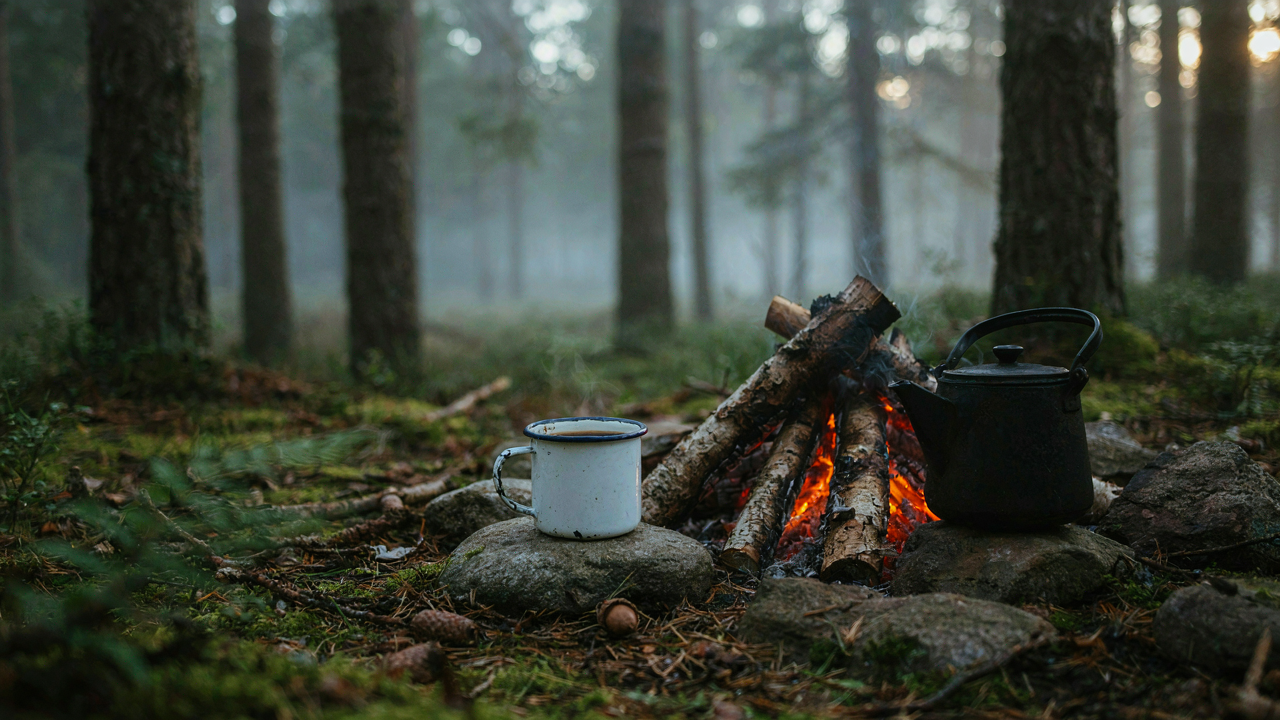
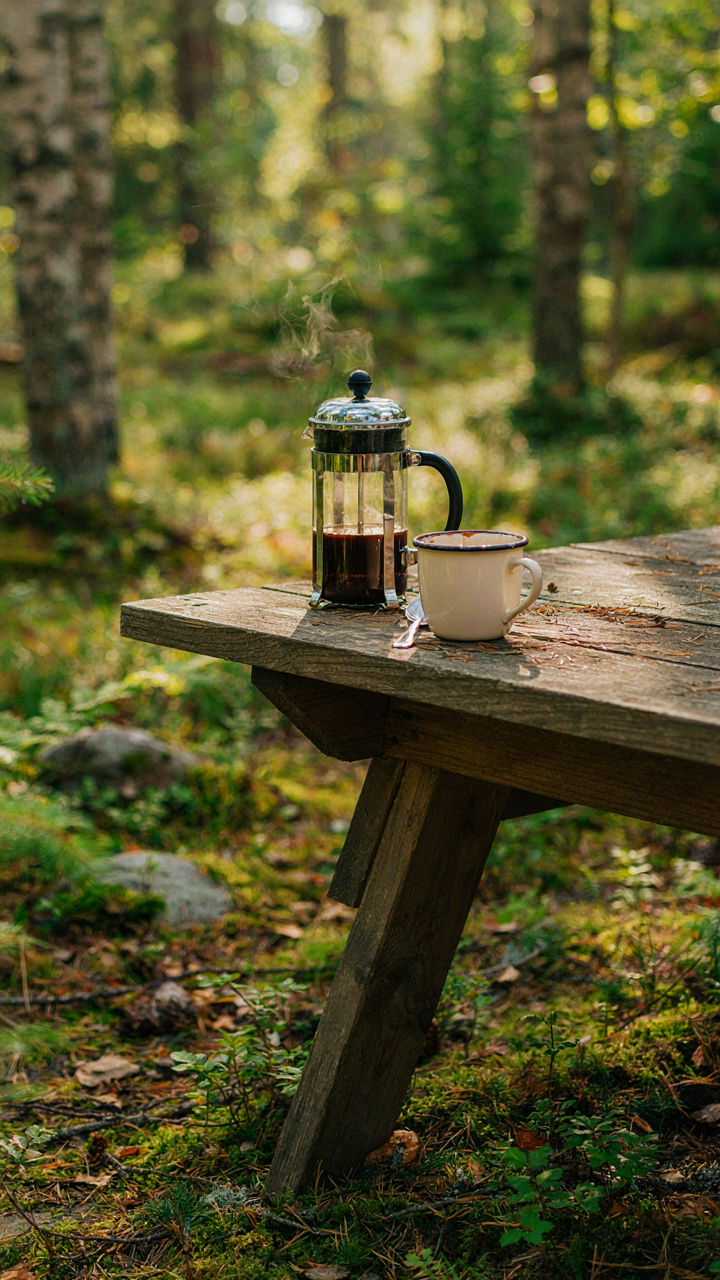
You want people to think you’re the type of person who does this well. The real issue: Instagram campfire coffee photos show setups that fail the moment conditions shift. A tripod positioned for the camera angle collapses under uneven ground heat. A pour-over staged on a flat rock tips when the fire settles. Aesthetic arrangement and functional arrangement are not the same thing.
Utility comes first, always. The best campfire coffee setup looks unremarkable in a photo because it solves for wind, heat distribution, and stability before it solves for appearance. A bent stick lashed to rocks works better than a polished titanium tripod on rough terrain. The mechanism is simple: friction and mass beat design when your foundation isn’t level. Function that looks plain is function that survives.
The Hidden Cost Of Unnecessary Gear
Gear bloat in the camping world operates like scope creep in project management: each new tool promises to solve a problem the previous tool created, and you end up carrying solutions to nonexistent problems. Buy a fancy gooseneck kettle, then buy a stand for it, then buy a heat diffuser because the stand doesn’t work right. You’ve now packed three items to boil water that a single dented pot handles alone.
Eliminate backwards from the outcome, not forwards from the catalog. You need hot water and coffee grounds in a cup. Everything else is negotiable. The second item you add to a two-item system doubles your failure points and your pack weight. When you’re three miles from the trailhead before sunrise, the difference between carrying six ounces and two pounds determines whether you actually brew coffee or skip it. Strip the setup to its mechanism: heat source, vessel, filter medium. That’s the real campfire coffee setup.
The Minimalist Brew Protocol For True Mornings
Pack Only What Controls Temperature

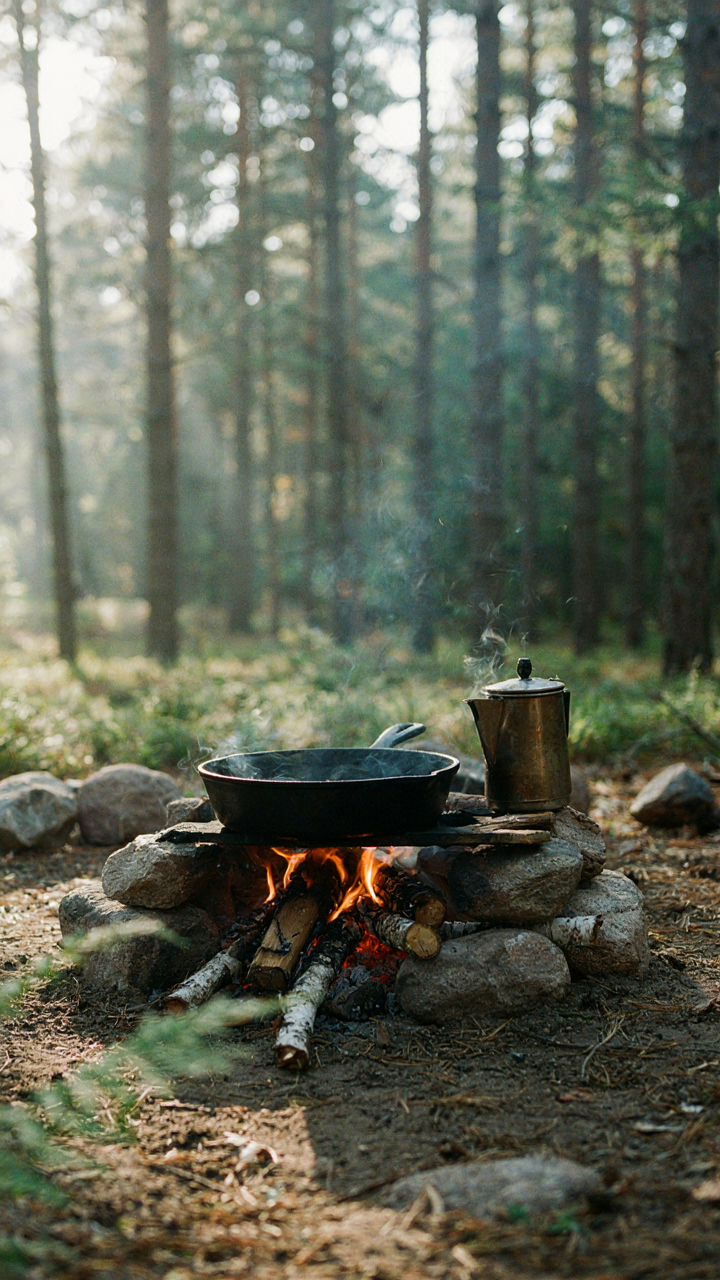
You want to feel like you’re living deliberately, but you’re actually just afraid of making bad coffee in front of other people. The real mechanism is thermal mass. In physics, thermal mass determines how quickly a system loses heat. Your campfire coffee setup needs one thing: something that holds temperature long enough for extraction to finish without babysitting the flame.
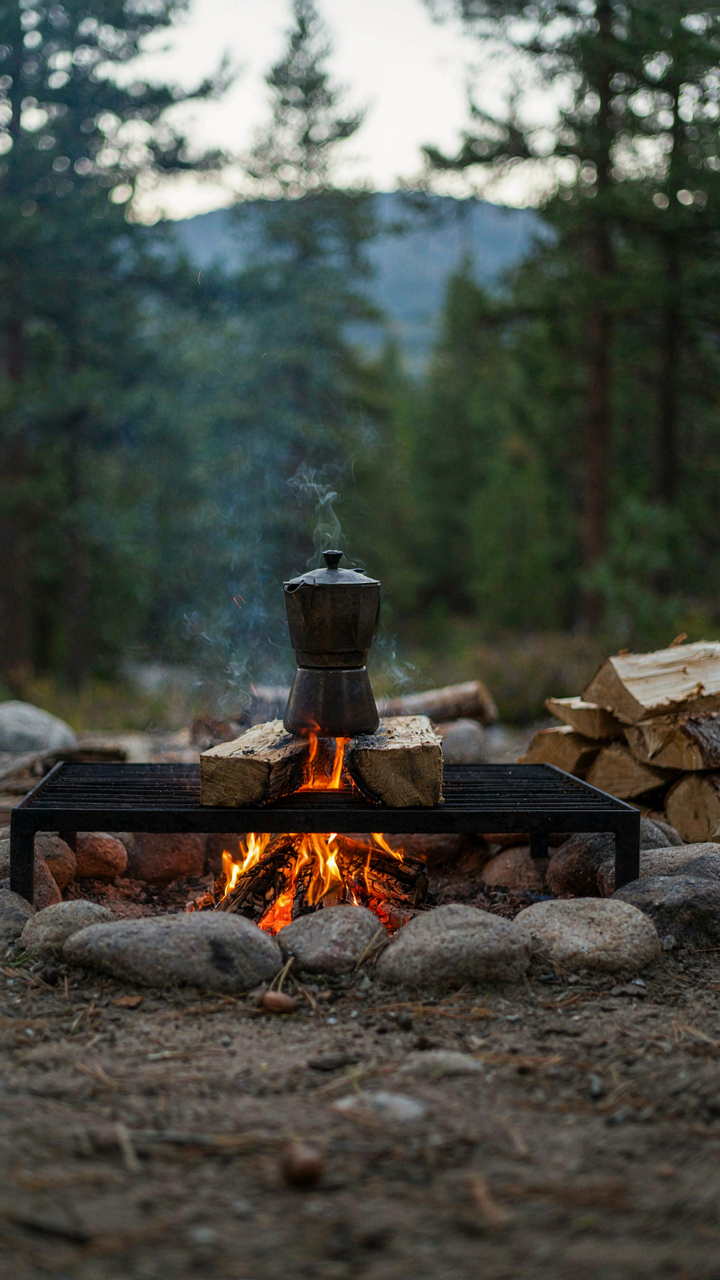
A gooseneck kettle or basic metal pot does this job. A tripod or adjustable grill grate gives you height control so you’re not guessing at heat. Everything else—the fancy burner, the precision thermometer, the backup kettle—is friction masquerading as options. Strip it down to what moves heat from fire to water to grounds and back again.
Brew While Fire Stabilizes
The common advice is to wait for coals. That’s incomplete. You want to start brewing during the transition phase when flames die but heat stays consistent. This lets you use the fire’s natural cooling curve instead of fighting it. Pour water while flames are still present, let the grounds steep as the fire settles, and finish extraction when heat has naturally dropped to the sweet spot around 160 to 180 degrees Fahrenheit.
Use a pour-over cone or a simple cloth filter sitting on your cup. Grounds in, water in, four to six minutes of zero intervention. The fire does the timing work for you. You’re not managing temperature—you’re working with the fire’s existing rhythm. By the time you pour the last cup, the coals are exactly where they need to be for the next task.
Fire Science: Mastering Your Heat Source, Not Decor
Understanding Heat Transfer For Optimal Brewing
You want this section to make you look competent around other campers. But the real reason you’re here is you’ve burned coffee before, and you don’t know why. Heat transfer is physics applied directly to your pot. The mechanism that matters: you’re not brewing with flame. You’re brewing with radiant heat traveling from coals through metal into water. Most people aim for visual drama instead of thermal precision, then wonder why their coffee tastes scorched.
The metal pot acts as your thermal conductor. Water at the base needs to reach 195 to 205 degrees Fahrenheit for proper extraction. Coals radiate this heat more consistently than flames do. Position your pot four to six inches above the coal bed, not above active fire. Your hand should tolerate the heat underneath for five seconds maximum. This distance prevents violent boiling that extracts bitter compounds and destroys the coffee’s actual flavor profile.
Fuel Efficiency: Maximizing Burn For Taste, Not Show
Everyone talks about hardwood versus softwood, then picks whatever burns prettiest. That advice skips the actual problem. Softwoods like pine contain high resin content that creates inconsistent heat and leaves acrid smoke flavoring your water. Hardwoods like oak and maple burn longer, hotter, and cleaner. You need coals that hold stable temperature for twenty to thirty minutes, which is how long proper brewing takes from start to finish.
Build your coal bed first, never cook directly over open flame. Let wood burn down to glowing coals before placing your pot. A coal bed the size of a dinner plate under your pot delivers steady radiant heat. One palm-sized log added every five minutes maintains your coal supply without spiking temperature. Keep your coffee pot off direct flame and your brew stays balanced instead of tasting like smoke and burnt grounds.
The Bean Bureaucracy: Simplifying Your Coffee Choice
Ground Coffee Versus Whole Bean
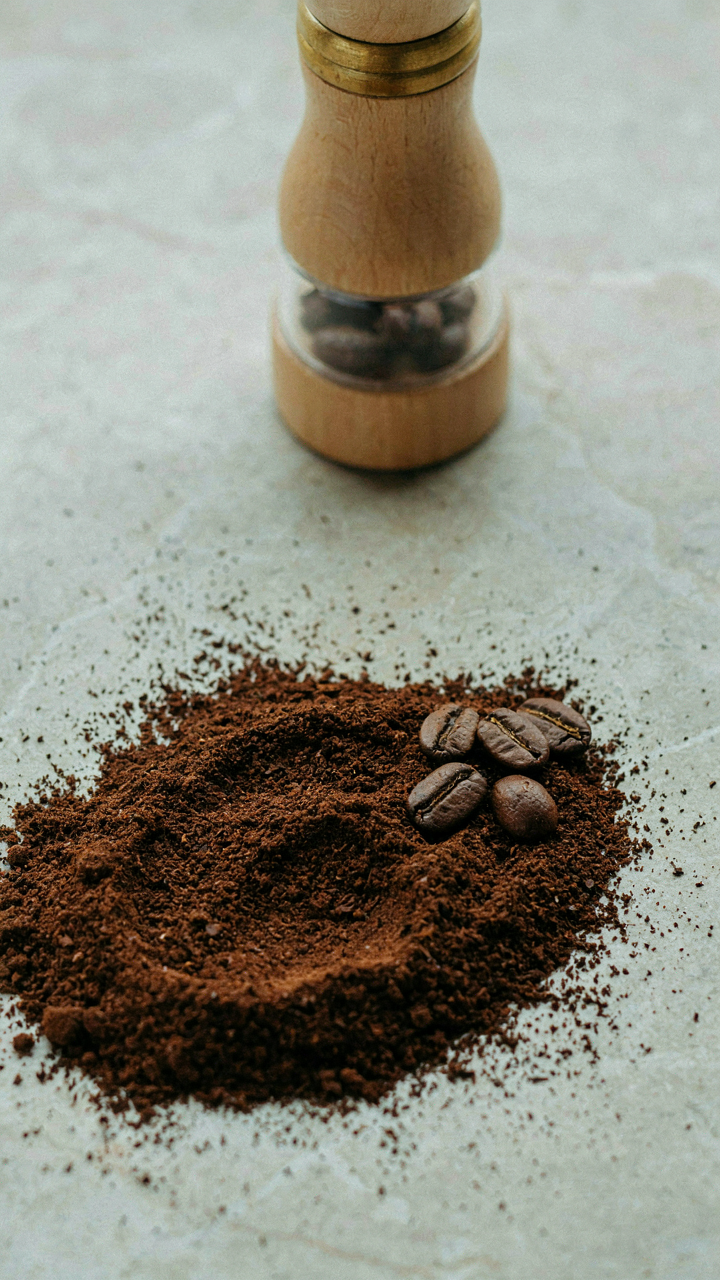
You want whole bean to feel like the premium choice because that’s what specialty coffee culture sold you. Here’s the mechanism: surface area determines extraction speed. Pre-ground coffee has exponentially more surface exposed to water, so it extracts faster and more aggressively. At a campfire where temperature control is imprecise, pre-ground beans often over-extract, tasting bitter. Whole beans stay fresh longer because oils oxidize slower with less exposed surface.
The real trade-off isn’t quality versus convenience. It’s consistency versus shelf life. Pre-ground works fine for camp if you’re brewing a full pot and drinking it quickly. Whole beans matter when you’re camping multiple days and need your coffee tasting the same on day three as day one. Buy whole bean, grind it camp-side with a hand grinder, and you eliminate the stale-bean problem entirely. The grinder weighs almost nothing.
Keeping Your Beans From Going Stale
Stale beans don’t matter if you consume them within two weeks. Most people don’t. Oxidation is the enemy, not light or heat alone. Coffee oils break down when exposed to oxygen, and a partially-used bag in your kitchen cabinet is just a slow-motion tire leak. Store whole beans in an airtight container, remove as much oxygen as possible before sealing, and keep them away from temperature swings. For camp trips longer than a few days, pack only what you’ll use.
A vacuum-sealed bag or glass jar with a tight seal works. Don’t bother with special coffee canisters unless you already own one. When you arrive at camp, transfer your beans into a small airtight container and keep it closed between brewing sessions. This single habit preserves flavor better than any other storage method. Seal the container immediately after measuring your beans.
Moka Pot Mastery: Beyond The Espresso Fantasy
How Water Vapor Becomes Your Lever
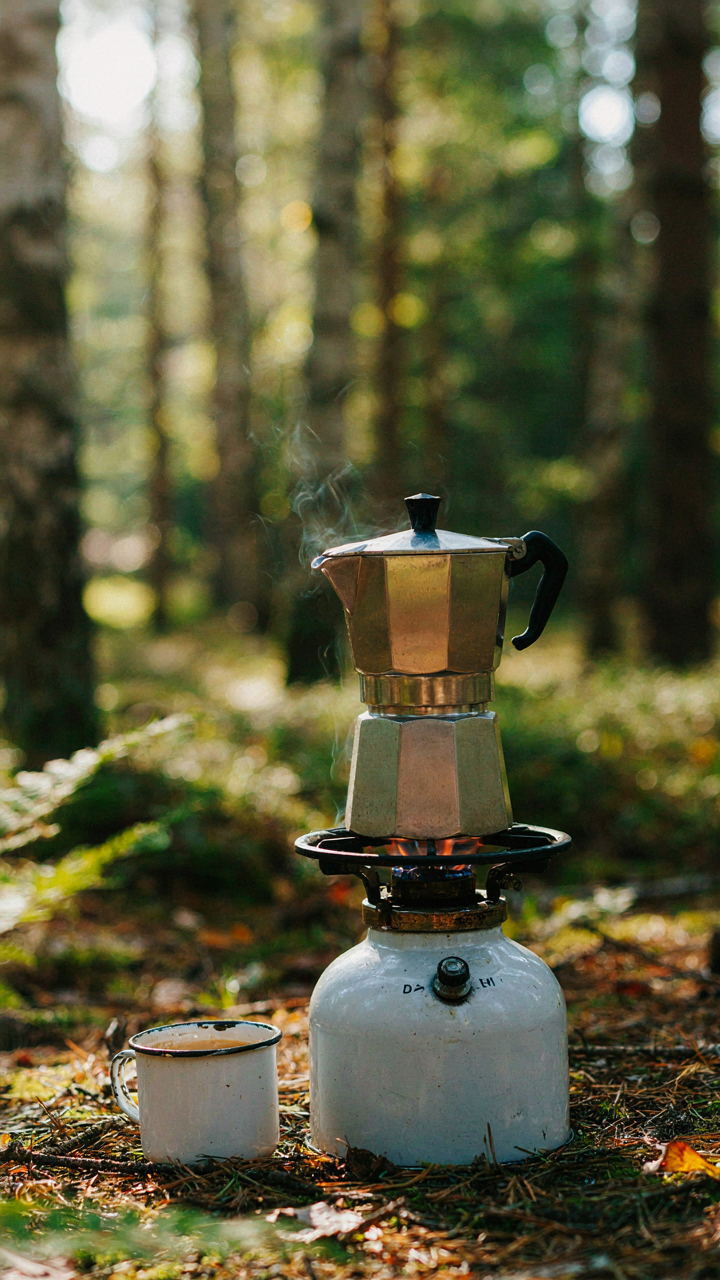
You want the Moka pot because it sounds sophisticated and beats instant coffee without effort. Here’s what actually matters: a Moka pot is a thermodynamic engine. Physics governs it entirely. As heat rises from the campfire, water in the lower chamber converts to vapor. That vapor builds pressure, forcing liquid up through the coffee grounds and into the upper chamber. You’re not brewing. You’re weaponizing steam.
Most people treat the Moka pot like a pour-over that happened to have three chambers. Wrong. The pressure differential is everything. Too little heat and vapor pressure stalls, leaving you with weak, over-extracted coffee sitting in the lower chamber for ten minutes. Too much heat and the seal fails or the pot boils dry. You need sustained, moderate heat that maintains steady vapor production without violence. Campfire coals are unpredictable by design. This is why controlling heat matters more than the pot itself.
Controlling Vapor Pressure Over Flame
Pressure builds only when temperature rises steadily inside the sealed lower chamber. You need consistent heat that lets vapor accumulate without scorching the coffee or creating dangerous pressure spikes. Camp stoves give you this. Campfires don’t, unless you engineer the setup deliberately.
Use a grill grate positioned at least eight inches above coals. Never put the pot directly on flame. Position it on the edge of the grate where it catches ambient heat, not direct fire. This slower heating lets pressure build predictably. The coffee rises slowly, meaning full extraction without bitterness. When you hear a gentle hiss and the coffee starts flowing into the upper chamber, pull the pot back slightly or remove it entirely if your fire is too hot. The moment flow stops, the pressure has equalized. Lift the lid to verify the upper chamber is full.
Water Wisdom: The Unsung Hero Of Outdoor Coffee
Where Your Water Actually Comes From

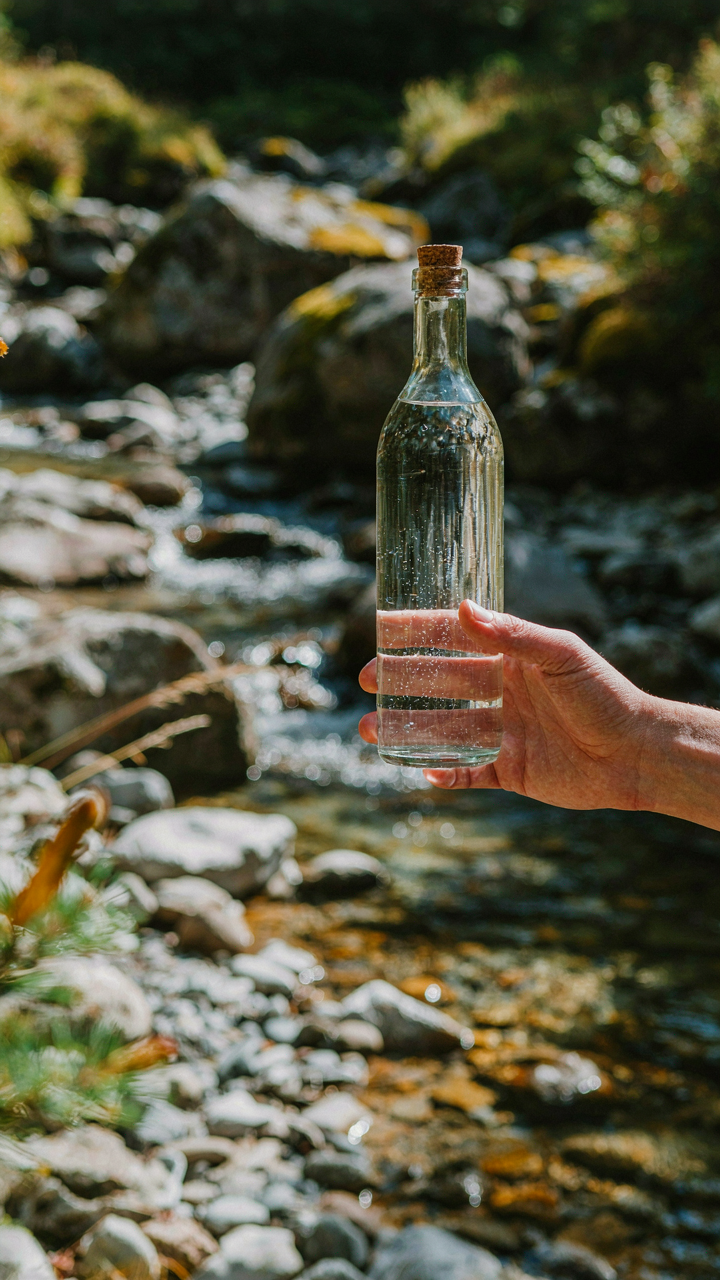
You care about this because bad water will sabotage expensive beans before you even taste them, and you’ll blame the setup instead of the source. Water is the medium, not the messenger. Sourcing matters more than method. Most campers grab whatever runs from a stream or fill up at a spigot without thinking. That’s the mistake. Mineral content, pH, and sediment determine extraction. Pure water extracts flat. Hard water extracts harsh. You need balance, which means knowing what you’re starting with before you boil it.
Treating water on site means filtering sediment first, then considering mineral addition if you’re working with distilled or extremely soft water. A basic gravity filter removes particles and organic matter. Boiling kills microbes but doesn’t remove dissolved minerals or chemicals. If you’re pulling from natural sources, filter before heat. If you’re using municipal water from a campground spigot, you’re already in decent shape, but sediment still accumulates in transport. Keep it simple: filter, then boil, then brew. The order matters because you can’t filter boiled water effectively.
Heat Without The Myth
Common advice says bring water to a rolling boil and you’re done. That’s incomplete. The mechanism is extraction kinetics, borrowed from chemistry. Temperature controls the rate at which compounds dissolve from grounds into water. Too cool and extraction stalls. Too hot and extraction accelerates past optimal, pulling bitter compounds that ruin the cup. The target is 195 to 205 degrees Fahrenheit for most methods. A rolling boil sits at 212 degrees, which overshoots and burns the coffee.
Remove water from heat the moment it reaches a full boil, then wait 30 to 45 seconds before pouring onto grounds. This simple pause drops temperature into the extraction sweet spot without requiring a thermometer. A thermometer is useful at home. In camp, the visual cue is your guide: boil, remove, count to thirty, pour. This protocol works for pour-overs, immersion, and cowboy methods because the principle stays constant. Temperature control determines whether your setup delivers clean flavor or bitter disappointment.
The “Cozy Camping Coffee Setup” Deception
What They Actually Sell You

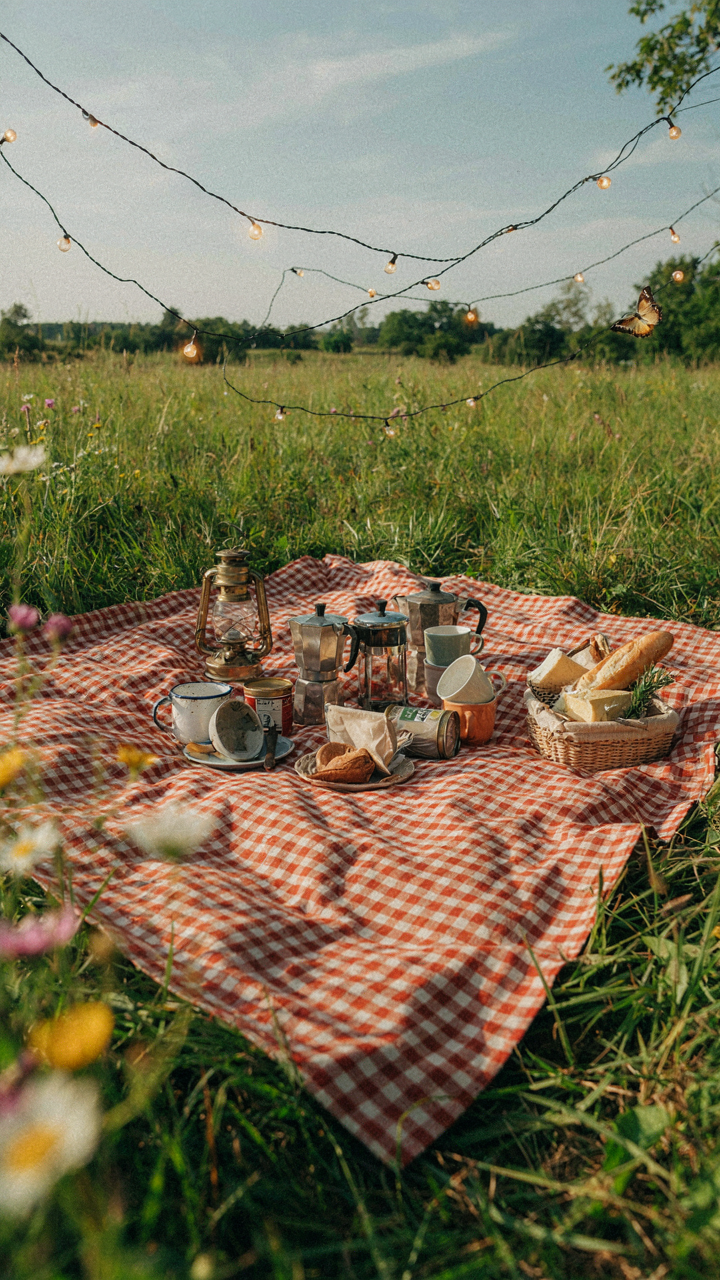
You want to believe a certain aesthetic signals relaxation, and the gear industry knows it. The “cozy campfire coffee” narrative isn’t about brewing better coffee—it’s a status play dressed up as simplicity. Brands sell you the image of slowness because slowness photographs well. The mechanism is borrowed from luxury marketing: position constraint as choice, then charge premium prices for the constraint itself. A cast iron pour-over isn’t inherently superior to any other brewing method; it just looks intentional in an Instagram frame.
This matters because you’ll spend real money on gear designed to fail at its actual function while succeeding at its social function. The narrative promises peace but delivers performance anxiety instead. You’ll find yourself managing the aesthetic rather than enjoying the coffee. Real comfort requires stripping away the identity performance and building a setup that works whether or not anyone sees it.
Comfort That Actually Works Versus Performance For An Audience
Real comfort and Instagram comfort operate on opposite principles. One solves for your actual needs in the moment; the other solves for how the moment will be perceived later. The difference shows up immediately when conditions get difficult.
- Wind management: A windscreen around your heat source matters more than vessel material. Blocks gusts that kill flame and waste fuel regardless of what’s brewing inside.
- Heat consistency: Metal grate height above coals determines brew temperature stability. Three inches works better than aesthetic spacing; physics wins when gear fails.
- Hands-free operation: A tripod setup that holds your vessel frees you to manage fuel and heat. Holding gear steady for thirty minutes beats looking polished while burning your forearms.
- Water temperature control: A simple thermometer takes guesswork out of brewing. Thirty seconds to verify 195-205 degrees prevents sour or over-extracted coffee every time.
- Breakdown speed: Gear that cools quickly and nests efficiently cuts camp-to-trail time in half. Function-first designs pack in five minutes; aesthetic setups take twice as long.
When setup prioritizes function, the aesthetic follows naturally. A well-positioned tripod looks intentional because it is. A windscreen reveals dirt but prevents spills. The real cozy emerges from competence, not from owning the right objects. Once your hands know the steps, once you stop adjusting for appearance, the coffee tastes better because you’re actually present.
The Portable Camping Coffee Setup That Works
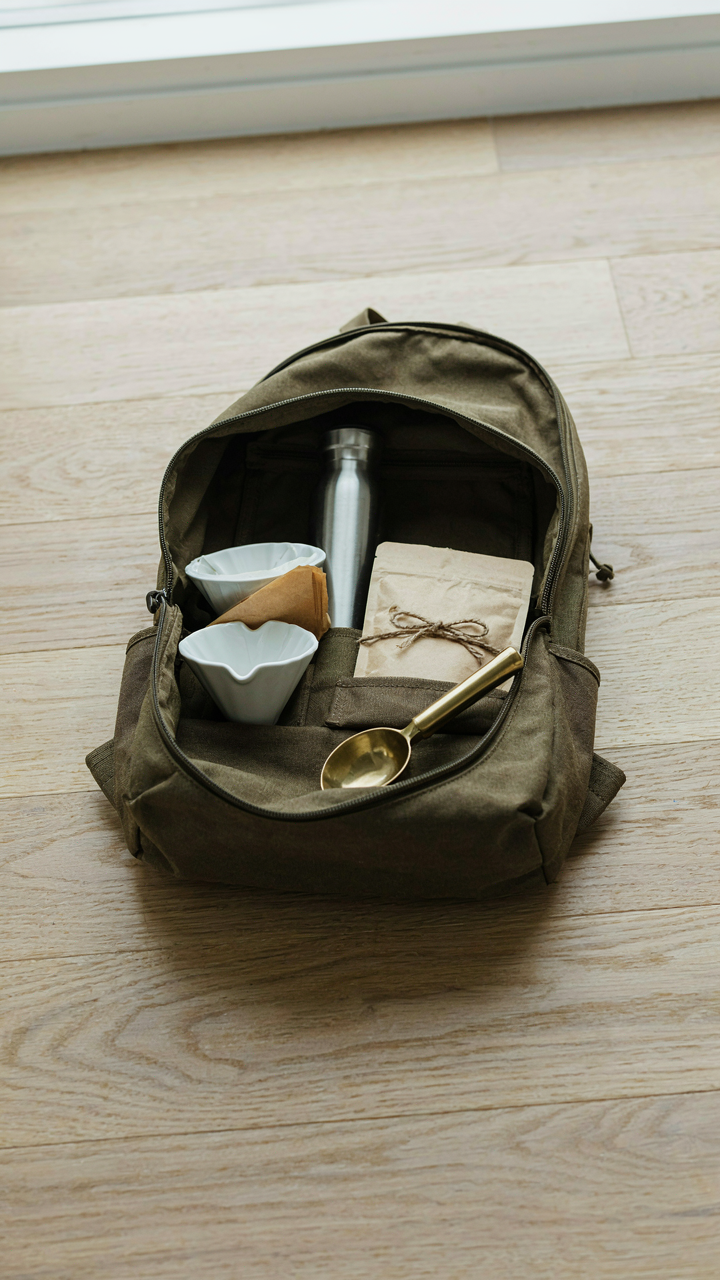
Pack What Doesn’t Take Space
You want to look like someone who has their life together at camp. The real mechanism is weight distribution and dead space elimination. Most people pack coffee gear as if they’re moving into a cabin. They bring redundant items, oversized containers, and equipment that serves one function only.
The strategy comes from logistics: minimize the footprint while maximizing utility per ounce. Use a small cloth bag instead of a bulky case. Buy whole beans in a vacuum-sealed pouch, not a large canister. Grind at home or bring a hand grinder that fits in your palm. Store a metal pour-over cone or collapsible dripper in a sandwich bag. One lighter, not three. These choices compound. You save five pounds and twelve inches of pack space without sacrificing a single morning.
Gear That Pulls Double Duty
Military equipment design teaches us one principle: redundancy kills missions. Apply the same logic to camp coffee. A single pot serves as your coffee brewer and your cooking vessel. A metal bowl grinds beans when you tap it with a stick if your grinder fails. Your camping stove heats water for both coffee and washing. Your thermos keeps coffee hot but also stores hot water for tea, instant oatmeal, or cleaning gear the next morning.
Don’t buy a dedicated coffee kit. Buy overlapping gear that each does two things. A grill grate works for brewing a cowboy pot and cooking breakfast. A sturdy cup becomes your measure, your drinker, and your hand warmer. This approach cuts gear volume by forty percent and removes the decision paralysis of “which item do I actually need.” The test: if a piece of equipment only makes coffee, it stays home.
The Only Truly Slow Camp Morning Is The One Where You Stop Trying To Optimize An Experience
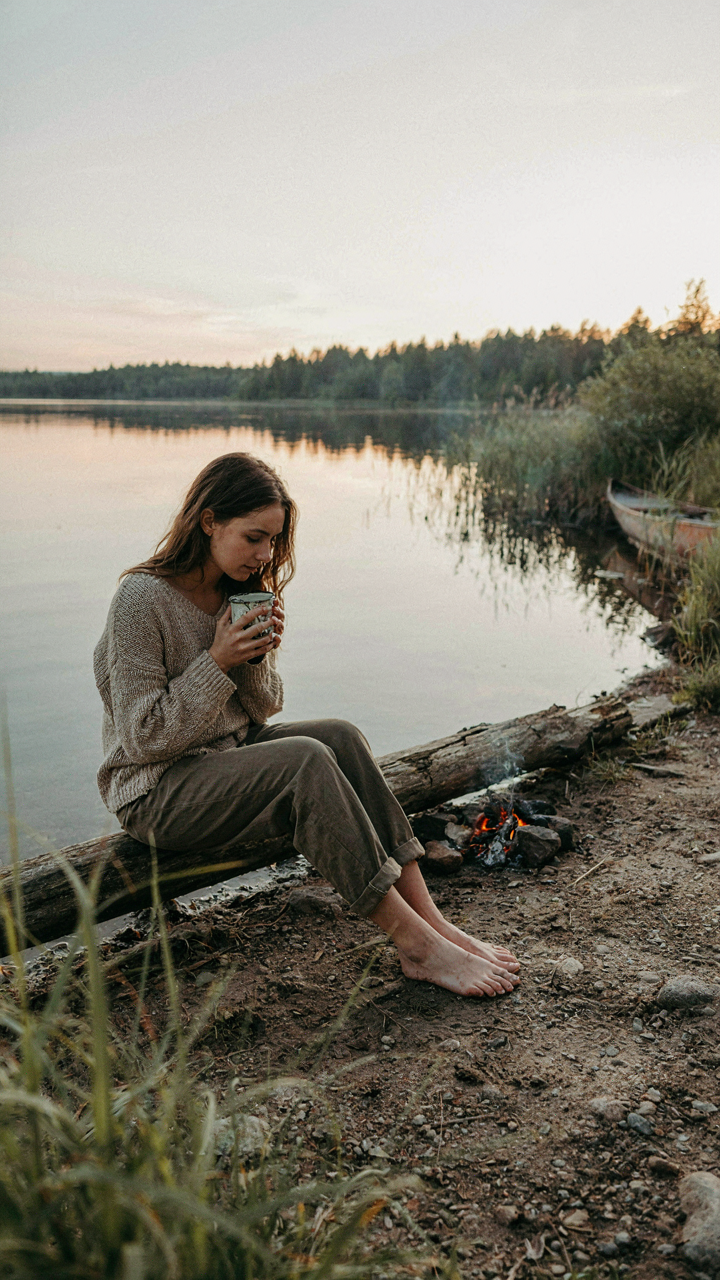

You came to the woods to escape the tyranny of efficiency, not rebuild it over a campfire. Every gear upgrade and technique hack you chase is just optimization wearing a different costume. Your campfire coffee setup stops mattering the moment you decide the point is the coffee itself, not the ritual. Tonight, throw away one piece of equipment you think you need. The best camp morning isn’t the one you perfected. It’s the one where you forgot to check the time.