
The Minimalist Mindset: Not Just Budget, But Leverage

Intentional Design Beats Discount Shopping
You want to feel like you’re making a smart financial move, but the real trap is thinking “budget” means buying cheap versions of everything you think you need. It doesn’t. Budget is a design constraint, not a spending limit. Constraint forces clarity. In product design, constraints eliminate features that don’t matter. A minivan camper conversion under constraint forces you to ask one question per item: does this solve a specific problem or just fill space? Most gear fails this test.
The difference between a budget build and a broke build is ruthless subtraction. You’re not looking for the cheapest sleeping bag. You’re asking whether you need a sleeping bag at all, or if a quality blanket and tight van insulation solve the same problem for less weight and less money. This mindset rewires how you shop. You stop hunting for deals and start hunting for overlapping function. A good power bank charges devices and runs a small fan. A roof vent pulls heat and lets you crack a window without rain entry. One piece does two jobs. That’s leverage.
Freedom Scales With Weight, Not Stuff
Less gear means a lighter van, which means lower fuel costs, easier parking, less wear on suspension, and the ability to boondock in places heavier rigs can’t reach. The mechanism here is straightforward: every pound of unnecessary cargo is money leaving your tank and freedom leaving your options. You feel freer because you actually are freer.
The secondary effect is maintenance and decision fatigue. A minivan with four core systems runs simpler than one loaded with redundant gadgets. You spend less time troubleshooting broken equipment and more time moving. You also make faster decisions about where to go because your van handles more terrain. Intentional minimalism isn’t about suffering or proving something to yourself. It’s about building a system that doesn’t require constant management. Strip your build to the essential layer, then test it. That’s when you add back only what genuinely failed, not what you thought you might need.
Minivan Camper Conversion: The Unconventional Advantage

Why You Don’t Need A Box Truck

You think you need a bigger van because you’re afraid of feeling cramped, but that fear is expensive and misplaced. The real mechanism at work here is constraint optimization from systems engineering: smaller vehicles force smarter design decisions. A minivan’s dimensions force you to eliminate waste before it becomes a problem. You learn what you actually use versus what you thought you’d need. A Toyota Sienna or Chrysler Pacifica gives you enough interior cubic footage to sleep, cook, and store gear without the fuel penalty, maintenance costs, or campground rejection that full-size vans invite.
Most new travelers overestimate their space needs because they’ve never lived in a confined area. A minivan forces clarity. You can’t carry a full kitchen, a luxury bed, a workout station, and a work desk. You pick what matters. This constraint creates a tighter, more functional setup than someone with a 24-foot box truck who never had to choose. The minivan also enters parking spaces full-size vans cannot. You access trailheads, beach towns, and urban areas that become logistics nightmares in a Transit or Sprinter.
The Stealth Benefit Nobody Mentions
Minivans disappear in parking lots because they’re ordinary. A Sprinter van screams “expensive equipment inside, come investigate.” A minivan reads as a family taking a weekend trip. You park it on residential streets, near trailheads, and in regular parking spots without drawing police attention or theft interest. The conversion also costs 40 to 60 percent less than building out a full-size van because the base platform is cheaper and you’re working with less space to outfit.
The maintenance savings compound fast. Minivans use common parts. A fuel pump, alternator, or water pump costs half what you’d pay for a Transit equivalent. You find mechanics who know the platform without explaining what a camper van is. The resale value holds because you’re selling a used minivan, not a niche vehicle with a specialized interior nobody else wants. If the travel experiment fails after three months, you convert it back to normal use or sell it straightforward. A full-size van conversion becomes a financial anchor you can’t unload quickly.
The Essentials Only Protocol For DIY Van Conversions
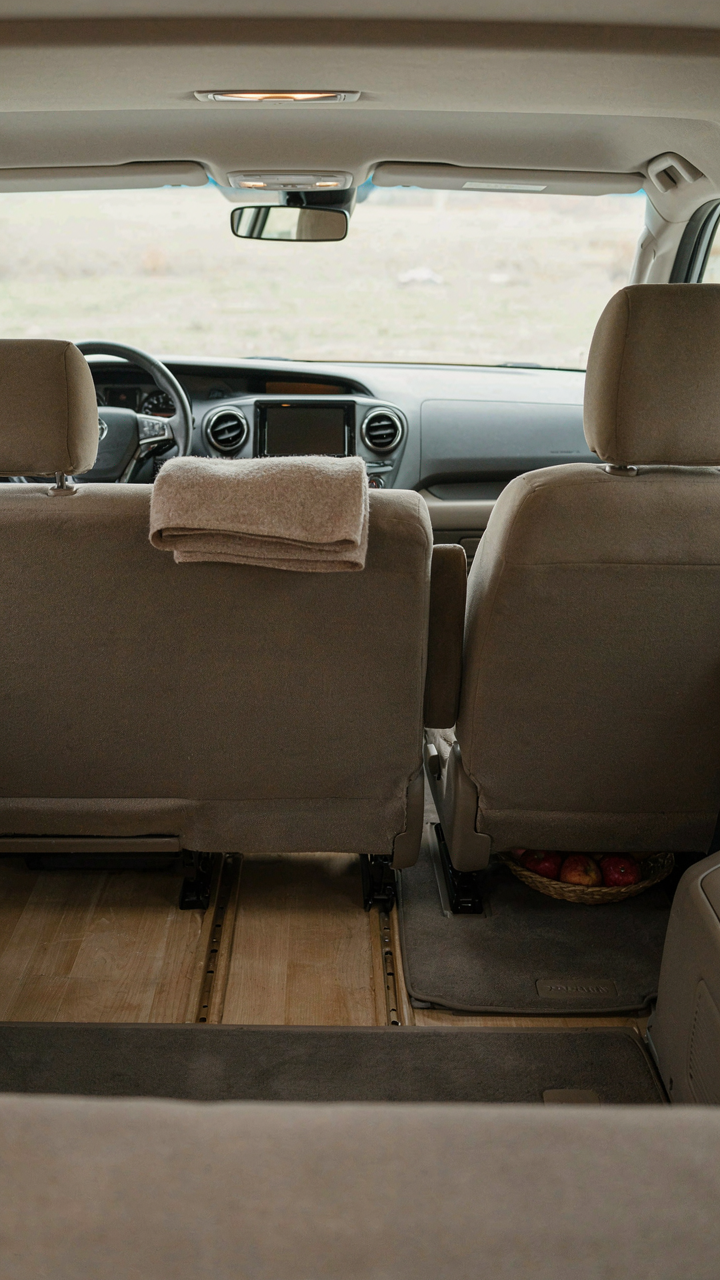
Function Beats Aesthetics Every Time

You want your minivan to look like the Instagram version because you’re afraid it won’t feel legitimate otherwise. That’s the real problem here. The mechanism is simple: aesthetics are a tax on your budget that solves zero survival problems. A minivan camper that works beats a minivan camper that photographs well. You’ll spend 80% of your time inside it solving problems like temperature, water access, and storage. None of those improve because you added accent lighting or recessed shelving.
Strip the conversion to what keeps you alive and comfortable on the road. Insulation handles temperature. A water system handles hydration and sanitation. Battery power handles devices and lights. Ventilation handles moisture and air quality. Everything else is decoration masquerading as necessity. The builders who last on the road aren’t the ones with the best-looking rigs. They’re the ones who fixed the power system at mile 200 because they prioritized electrical function over cabinet finishes from the start.
What Actually Belongs In Your Rig
The first layer of your minivan camper setup determines whether the second layer matters. Insulation and ventilation come before everything else because they prevent mold, condensation damage, and temperature extremes that wreck both your rig and your health. Without these, no amount of storage organization saves you.
- Insulation (walls and ceiling): Closed-cell foam or rigid foam boards reduce heat loss and condensation. Install before any walls or cabinetry to prevent mold growth in hidden spaces. Thickness depends on your climate zone, typically 1 to 2 inches minimum.
- Ventilation system: Roof vent, intake louvers, or small 12-volt fan. Manages moisture and prevents the greenhouse effect that kills electronics and fabric. A single vent won’t work alone; you need air exchange, not just extraction.
- Battery and charging system: 100-200 amp-hour lithium or AGM battery with a 30-40 amp charger. Powers lights, devices, and water pump. Undersizing here creates constant power stress and forces you to choose between charging your phone and running your fridge.
- Water system: 15-25 gallon tank, pump, sink, and grey tank. Solves basic hydration and sanitation without external dependence. A 5-gallon jug is not a system; it’s a placebo that delays plumbing another year.
- Lighting (12-volt LED): Ceiling lights and reading lights connected to your battery. Keeps you functional after dark without eating fuel or generator runtime. Multiple circuits prevent single-point failure.
These five systems form your actual infrastructure. Everything else shelves, storage racks, cabinetry, decor is optimization that happens after the core works. Most first-time converters install cosmetic elements first and realize too late they’re ripping them out to fit the wiring they should have planned from day one. Build systems first. Arrange them second.
Powering Your Freedom: Beyond Solar Panels

The Math Before The Panels

You want solar panels because they feel like freedom. They’re not. They’re a tax on poor planning. Energy math starts with honest consumption: measure your fridge runtime, your laptop charge cycles, your lighting hours. Most people skip this and buy panels that can’t deliver what they promised themselves.
Start with a kill-a-watt meter. Track what you actually draw for three days of normal use. Minivans have tight roof space, so every watt matters. A 400-watt solar array costs time and money you might not have. Your real number is probably half what you think.
Charging The Dumb Way First
Alternator charging works because your engine already runs. Plug a DC-DC charger into your cigarette lighter or battery terminals and let the engine idle charge your house battery while you sit parked. Cost: 80 dollars. Solar panels cost 600 and take 8 hours to replace what 30 minutes of idling delivers.
The friction is mental, not mechanical. People reject alternator charging because it sounds cheap and requires running the engine. That’s exactly why it works. Mount a 100-amp alternator charge controller under the seat, connect it to a quality house battery, and use shore power or alternator charging as your base layer. Add solar after you confirm you need it.
Smart Storage: The Tetris Effect In Mini Van Living

Every Cubic Inch Counts

You want to feel like you’re not sacrificing comfort, which means you need storage to disappear. Here’s the physics: volume has hard limits in a minivan. A Honda Odyssey interior is roughly 150 cubic feet. You don’t gain more space by wishing. You gain usable space by eliminating dead zones where items sit unused or inaccessible.
The standard mistake is buying storage containers first, then forcing them into corners. Reverse this. Map your actual belongings and measure what you actually reach for weekly versus monthly versus never. A galley kitchen takes up floor real estate but saves you from eating out constantly. Vertical wall storage on the sliding door interior costs nothing and reclaims floor space for sleeping or movement. Build around what you use, not around what looks organized in a catalog.
Adaptable Systems Beat Fixed Setups
Modular design comes from systems thinking: build components that connect and disconnect without permanent attachment. A minivan’s interior changes function hourly. You need beds that fold flat, tables that mount and unmount, storage that slides rather than bolts.
Plywood and aluminum track systems let you reconfigure in minutes. Install L-track along the walls early. Everything else clips or bolts into that one permanent grid. When your life changes, your van changes. When you discover a setup wastes space or motion, you fix it without destruction. This adaptability costs more upfront but saves money on rebuilds and modifications you’d otherwise make after three months on the road.
Ford Transit Connect Camper: The Underestimated Workhorse

Why This Van Wins On Paper And In Reality

You want to believe the Transit Connect is too small, because admitting it works destroys the excuse to spend more money. Here’s the mechanism: the Connect occupies the gap between a full-size van’s fuel consumption and a cargo van’s interior volume. Ford designed it for European delivery fleets where fuel costs money and space efficiency matters. That same constraint becomes your advantage on a budget build.
The Connect rides on a 104-inch wheelbase with 148 cubic feet of cargo space. That’s roughly 40 cubic feet less than a full Transit, but the fuel efficiency difference is real. A Connect averages 19-22 mpg highway. A full Transit averages 12-15 mpg. Over a month of travel, you pocket savings that go directly into better insulation, a real bed frame, or propane tanks. The van’s roof height sits at 77 inches interior, which kills standing room for most adults, but solves the problem differently: you go horizontal instead of vertical.
Strategic Modifications That Change Function
Everyone talks about adding solar and insulation like those are the bottlenecks. They’re not. The real constraint is water management and temperature regulation working against each other. From an engineering standpoint, think of your camper as a thermal system: heat must escape in summer, and cold must not penetrate in winter. Insulation alone creates condensation problems. Ventilation alone bleeds heat. The Connect demands you choose which problem you solve first based on your climate.
Start with roof vents, not insulation. A maxxfan or similar intake vent costs 300 to 500 dollars and runs off a standard 12-volt battery. Install it immediately. This gives you a mechanism to push moisture and hot air out before humidity builds. Only after the ventilation system works do you add wall insulation, typically three to four inches of closed-cell spray foam or rigid board. This sequence prevents mold. Skip it and you’ll spend winter nights watching water bead on windows while your insulation gets worthless. The plumbing comes last because you now know where condensation actually pools.
Security And Stealth: Mini Camper Ideas For Peace Of Mind

Why Your Minivan Doesn’t Look Like A Camper

You want to park without drawing attention because you’re afraid of theft, harassment, or police moving you along—and that fear is rational. The mechanism is simple: a vehicle that reads as “family transportation” stays invisible. A minivan already has this advantage over an RV or cargo van. You’re not fighting visibility; you’re leveraging it. Tinted windows, interior blackout curtains, and keeping the exterior stock matter less than your behavior. Don’t modify the outside. Let the stock minivan do the work it was designed for.
The real security is operational, not aesthetic. Park in high-traffic areas near businesses, not isolated lots. Sleep in your van during actual operating hours of that location, not at 2 AM. Remove visible gear before you step out. A minivan with a roof rack full of bikes or kayaks stops reading as a commuter vehicle. The moment someone assumes you’re living in it, you’ve lost the stealth advantage. Your job is to maintain plausible deniability: you’re on a road trip, not living mobile.
Locks, Cameras, And What Actually Stops Theft
Everyone talks about door alarms and dash cams as if they prevent theft. They don’t. Alarms notify you after the crime. Cameras record what already happened. The real deterrent is making your van harder to access than the next option available. Thieves operate on efficiency. A minivan with aftermarket locks and a steering wheel lock is annoying enough that someone moves to a vehicle without them. That’s the entire mechanism.
Install a secondary lock on the sliding door and deadbolt the entry door. A basic steering wheel lock costs thirty dollars and takes ten seconds to deploy. Motion-sensor lights inside the van trigger when someone reaches for a window. These aren’t sophisticated—they’re just friction in the criminal’s decision tree. Keep the interior empty of visible items. An empty van isn’t worth the risk. Your insurance doesn’t prevent loss; your design does.
The Rookie’s Roadmap To Minivan Camping Mastery

Your First Month On The Road

You want certainty that this won’t blow up in your face. Here’s what actually happens: the first 30 days expose every assumption you made during the build. Your water system works until it doesn’t. Your ventilation plan fails the first humid night. Your storage layout makes sense until you try to cook dinner.
Expect to spend those first weeks fixing things that looked fine in your driveway. You’ll discover your fridge draws more power than your battery can sustain. You’ll realize your mattress setup creates condensation. You’ll learn that “tested it once” is not the same as “it works when you need it.” This isn’t failure. It’s the actual learning curve. Budget mental energy for tweaks, not just fuel.
Common Traps First Timers Walk Into
Everyone tells you to start small and figure it out as you go. They’re partially right and partially wrong. Starting small is smart. Figuring it out as you go is how you waste money and time you could’ve saved with 15 minutes of research before you left.
The real trap is treating your conversion like a permanent setup when it’s actually a prototype. First-timers bolt things down, fill tanks all the way, and commit to destinations before testing basic systems. Instead, take a local overnight trip first. Test your heating, cooling, and power draw. Check for leaks. Practice your water and waste routines. Only then do a longer trip. This protocol catches 80 percent of problems before they strand you.
The Real Cost Isn’t In The Van; It’s In The Life You Refuse To Live


You’re not afraid of a minivan camper conversion. You’re afraid of being the person who actually does it. The budget doesn’t matter. The perfect van doesn’t matter. What matters is that you stop waiting for permission and start draining your savings account this week. Pick one component today—buy the battery, the solar panel, the bed frame—anything that makes this real instead of theoretical. You don’t build a life by thinking about it. You build it by committing to something before you’re ready.