
The Myth Of Instant Gratification In Your Cargo Van Conversion
Quick Fixes Create Long Term Debt
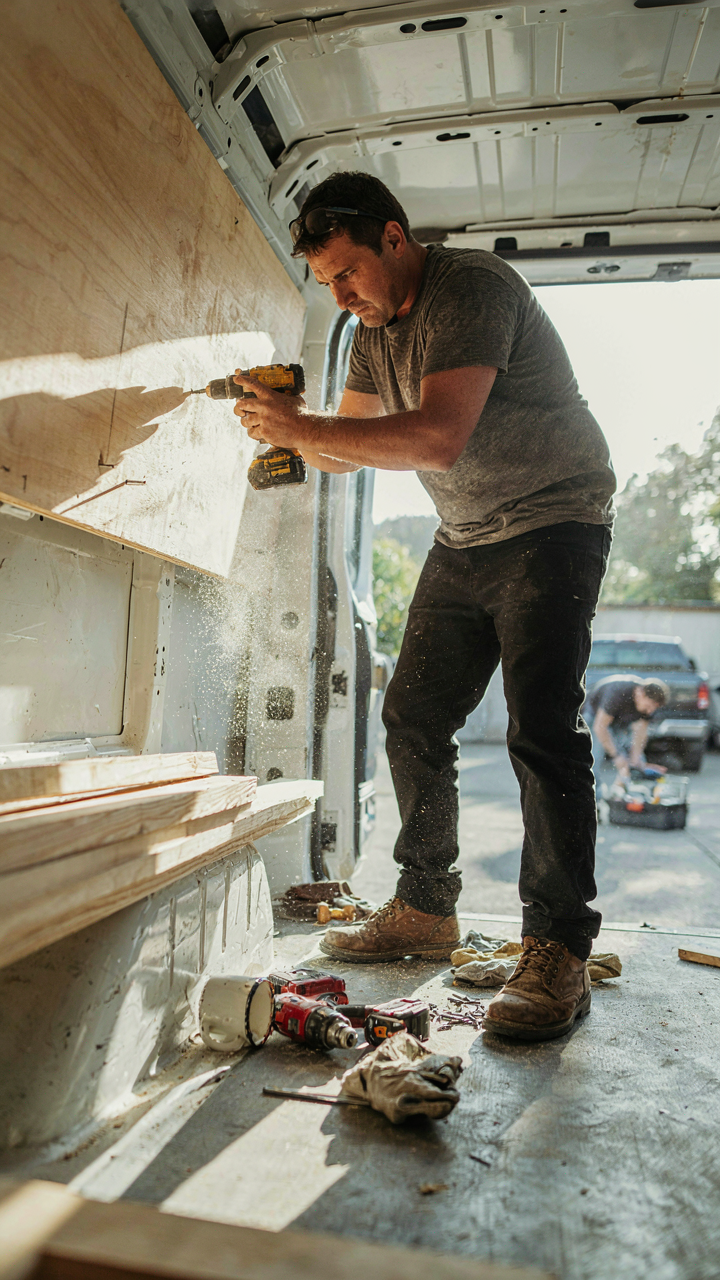
You want to feel like you’re building something immediately because sitting with incomplete work feels like failure. Here’s the mechanism: rushing early decisions trades present comfort for future rework. You install cheap insulation, skip proper ventilation planning, or bolt down furniture before finalizing your layout. Six months in, you’re tearing it apart because the decisions you made fast didn’t account for how you actually live in the space.
The real cost isn’t the money you waste. It’s the compounding inefficiency. Every rushed installation becomes a constraint on the next decision. Poor electrical routing forces you to rewire. Inadequate water management ruins your subfloor. You end up spending twice the time and money fixing what you should have planned the first time. The build timeline extends because you’re solving problems instead of building solutions.
The Real Price Of Rushing Your Build
Economics calls this the sunk cost fallacy, and van conversions exploit it ruthlessly. You buy a van, spend money on materials, then feel obligated to finish fast to justify the expense. That pressure makes you skip the research phase and ignore design trade-offs that matter. You install a heater that works but produces condensation you didn’t plan for. You mount storage that looked good but makes the van feel smaller than it is.
The hidden costs materialize as opportunity costs. Time spent fixing mistakes is time not spent traveling. Money spent on rework is money you can’t spend on upgrades that actually improve your weekend trips. Frustration compounds because the van never feels finished, just perpetually compromised. Your protocol should be this: spend two weeks minimum on layout planning before any material touches the van. Draw it. Live with the drawing. Only then cut and install.
The Minimalist’s Cargo Van Camper Manifesto: Less Is Actually More

What You Actually Need For Two Days

You want to feel like you have your life together in a confined space. That’s the real motive, and it drives people to pack 40 pounds of gear for a 48-hour trip. The mechanism is simple: you confuse preparation with security. You don’t need more stuff. You need a decision framework that filters ruthlessly.
Weekend travel has a hard constraint: time. You’re gone Friday evening through Sunday afternoon, roughly 60 hours. This time boundary kills 90 percent of what people think they need. The question isn’t “what might I want?” It’s “what breaks the trip if it’s missing?”
- Sleep system: Insulated sleeping bag rated 10-15 degrees below expected low, sleeping pad for ground insulation. Non-negotiable.
- Clothing: One set for activity, one for sleep, one backup layer. Merino wool base layers work in multiple seasons.
- Cooking: Single-burner stove, one pot, one pan, utensils. No griddles, no specialty tools.
- Water and food: Two-liter capacity container, cooler for perishables, non-perishable staples for two days, coffee or tea setup.
- Navigation and safety: Phone with offline maps downloaded, basic first aid kit, headlamp with extra batteries, multi-tool.
Everything else competes for the same cubic feet. A second set of shoes, a portable speaker, a backup phone charger—these are weight taxes on movement. Weekend van life isn’t about comfort optimization. It’s about testing what you can live without.
Space Economy Requires Ruthless Subtraction
Most cargo van conversion advice ignores the hard truth: you’ll fill whatever space you build. This is Parkinson’s Law applied to physical containers. You allocate 50 cubic feet, you’ll pack to use 50 cubic feet, and you’ll resent the weight every time you drive.
Start by building 60 percent of what you think you need. Your instinct will scream that it’s too small. Ignore that. Take three weekend trips and document what stayed packed. Those items go. What you actually opened and used gets prioritized in the next build iteration. This empirical approach beats speculation every time. After two van weekends, you’ll know more than six months of planning.

The Unspoken Truth About Self Build Campervan Budgets

What The Budget Actually Costs
You want to know the real number so you can tell people at dinner parties you built a van for less than they think. Here’s the mechanism: every cargo van conversion budget splits into three tiers that operate independently, and most people only acknowledge the first one. The visible tier is materials: insulation, plywood, cabinets, electrical components. The invisible tier is tools you don’t own yet. The third tier is time converted to money, which kills most honest assessments.
A legitimate self-build runs between eight and fifteen thousand dollars when you account for the van itself, materials, and tools you’ll actually need but don’t have. Most Instagram conversions quote four to eight thousand and either owned tools already, did unpaid labor they’d normally charge for, or skipped costly systems like proper water heating and ventilation. The cost breakdown matters less than understanding that the gap between quoted budgets and actual spend comes from hidden assumptions, not from being a smarter builder than the person who spent more.
The Financial Traps Nobody Names
People frame this as a money problem when it’s actually an assumption problem. You budget based on what you think you’ll do, not what you’ll actually do once you’re inside the build. The real pitfall isn’t overspending on materials, it’s the false economy of buying cheap components that force you to rebuild or replace them mid-project.
The specific trap: buying a wet bath system from Amazon for three hundred dollars, installing it, then discovering it doesn’t fit your fresh water capacity or your plumbing logic, then pulling it out and buying the right system for seven hundred. Or installing budget solar without understanding your actual power draw, then adding more panels later at worse per-watt pricing. Start by calculating your actual system needs first, then price components that match those requirements, not the reverse. This prevents the compounding cost of false starts.

The “Weekend Warrior” Cargo Van Camper Conversion Protocol

Build Around Removal, Not Installation
You want permission to feel like your build is “done” so you can stop spending money and start using it. That’s the real problem here. The mechanism that actually works is inverse: design every system so you can remove it without destroying the van or the component. This means no permanent adhesive on structural surfaces, no drilling into load-bearing walls, no integrated plumbing that requires cutting holes you can’t patch cleanly.
Think in terms of naval architecture. Ships separate systems into modules that bolt or clamp in place—they survive decades of stress and weather because nothing is fused to the hull. Your van’s metal frame is your hull. Bolt your bed platform to the floor with removable fasteners. Mount your electrical panel on a sliding rail. Run propane through quick-disconnect couplers, not soldered copper. When you sell the van or upgrade a component, you extract it intact. This approach costs more upfront and saves catastrophic money later.
Systems That Shrink With You
Weekend trips don’t require the infrastructure of month-long expeditions, and pretending otherwise wastes payload and floor space. Build your initial setup for two nights without hookups: battery capacity to run lights and charge devices, a portable stove instead of a built-in range, fresh water in jerrycans instead of a tank, a simple foam mattress instead of a platform bed. These components cost less, weigh less, and you can swap them for permanent versions if your usage pattern actually changes.
The protocol is literal: start with 30% of what you think you need. Do three actual trips. Document what you use versus what sits idle. Only then commit money to permanent installation. Most people build the fantasy conversion they imagine needing, then abandon van life because the reality is different. You avoid this by treating your van as an experiment with a six-month decision gate, not a finished product on day one.

Beyond Instagram: Real Van Storage For Real Adventures

The Storage Formula That Actually Works
You want storage hacks because you’re afraid of looking unprepared or feeling cramped on the road. Here’s what actually matters: treat your van like a ship’s hold, not a bedroom closet. Naval architects solved this problem centuries ago—they stack by weight, frequency, and access. Bottom heavy, daily items at arm’s reach, seasonal gear locked down low. Every cubic inch serves a purpose or it leaves. The difference between a functional van and a rolling panic room is ruthless categorization.
Most weekend travelers overstuff the visible space and waste the vertical real estate nobody talks about. Your walls are free storage if you commit to wall-mounted systems early. Magnetic strips, tension rods, and plywood backing create zones before you add a single item. The actual hack isn’t a product you buy—it’s deciding what doesn’t come with you. Weekend trips don’t need half of what people pack.
Locking Down Gear During Movement
Unsecured cargo becomes a weapon when you brake hard or turn sharp. Physics calls this inertia, and it doesn’t care about your intentions. A 40-pound toolbox moving at 30 mph hits like a battering ram. Everything bolts down or straps down, period. Most people skip this step until something expensive breaks or someone gets hurt. Ratchet straps are cheap insurance, but they’re only half the equation.
Your storage system needs anchor points built into the frame before the walls go up. Through-bolts into metal studs, not just drywall screws, distribute load across the structure. Tie-down rails run the length of the floor if you plan to move heavy gear regularly. The protocol is simple: measure what you’re securing, calculate the force it generates under acceleration, then overkill the restraint by a factor of two. Install your anchor points while the van is still a skeleton.

The Inconvenient Truth Of Tiny Van Conversion Systems

Power Management: What You Actually Need
You want a system that runs everything like home because admitting your van has real limits feels like failure. The mechanism here is load capacity, borrowed from electrical engineering: amperage is your constraint, not voltage. Most weekend travelers pull 30-50 amps continuous draw max before battery collapse. Your lithium or lead-acid bank doesn’t care about your ambitions.
A 100Ah LiFePO4 battery sounds infinite until you run a microwave, space heater, and laptop simultaneously. Real math: a 2000-watt inverter on a 48V system demands 42 amps at full load. Add a 30-amp charger and you’re already cutting into available amperage. Weekend travelers don’t need 10kWh of storage. They need 3-5kWh, a modest solar array (400-600W), and honest constraints on simultaneous loads.
Water Systems: Simplicity Over Complexity
The common advice pushes grey water tanks, hot water heaters, and recirculation pumps because complexity sells products. Discard that thinking. A weekend van needs fresh water, a way to heat it on demand, and a single drain. Gravity does the work that pumps pretend to handle better.
Install 25-40 gallons of fresh water in a tank mounted high enough for natural pressure. Use a simple propane tankless heater or solar shower bag for hot water. One drain line to the ground. No grey tank, no recirculation loop, no sensors that fail. The constraint becomes daily awareness: when your tank empties, you resupply or move on. That friction is the feature, not a bug.

GMC Vans Vs. The Hype: Choosing Your Battleground
Brand Loyalty Won’t Solve Your Problem
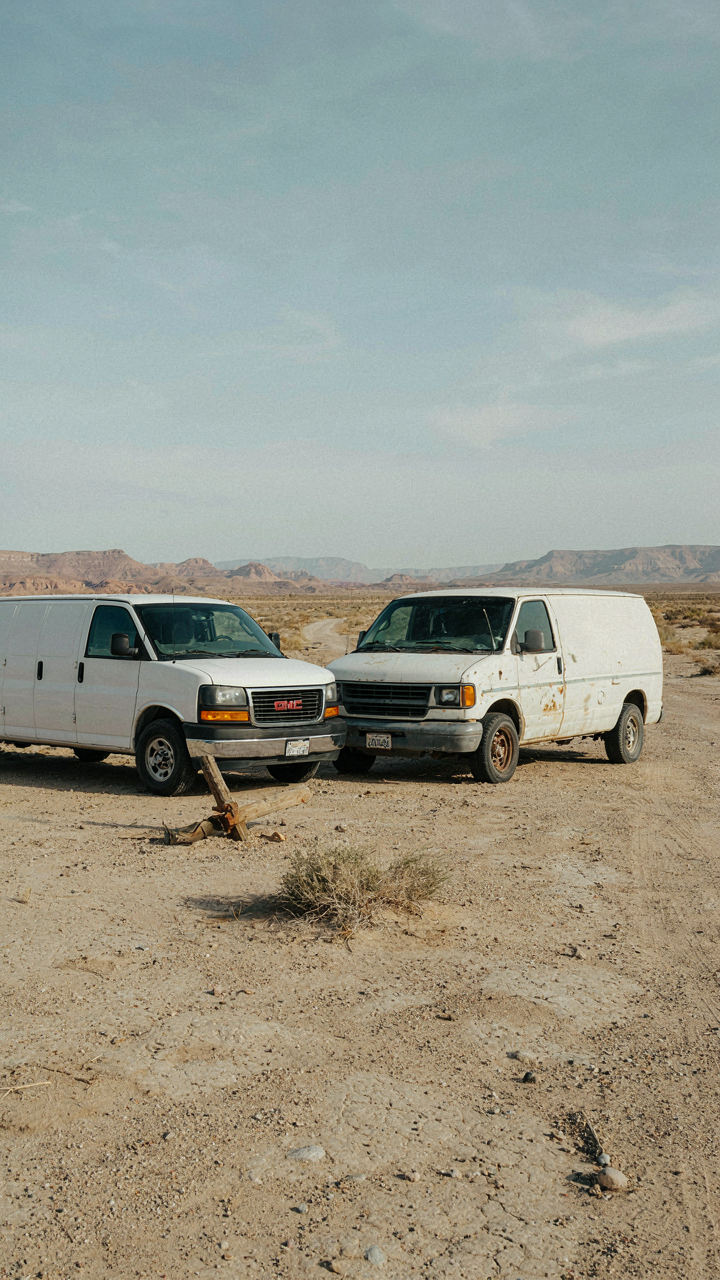
You want GMC because someone on Instagram made it look good, or because the badge feels safer than knockoffs. That’s not a reason to choose a van—it’s status anxiety pretending to be research. The mechanism is simple: GMC doesn’t own the conversion space. Ford Transit, Mercedes Sprinter, and Promaster owners convert their vehicles at the same scale. What matters isn’t the nameplate. It’s the platform underneath: wheelbase, roof height, payload capacity, and parts availability in your region.
GMC offers Savana and Sierra platforms. Savana comes in extended wheelbase with decent headroom and Ford Transit-competitive dimensions. The problem nobody states plainly is that GMC dealers charge more for used stock, parts cost more, and fewer conversion shops stock Savana-specific solutions. You’re paying a brand premium for no functional advantage. Your actual job is finding the cheapest, most available platform that meets your dimensions and payload needs—then building on it.
Match Specs To Movement Patterns, Not Dreams
Weekend travel demands different specs than full-time nomading, and full-time nomading demands different specs than work vans. The distinction matters because you’re optimizing for different constraints. A weekend traveler needs sleeping room and storage. They don’t need shower plumbing or extended battery capacity. Matching specs to actual use patterns is constraint optimization from operations management: you allocate resources to the binding constraint.
For weekend travel, your binding constraints are: can you sleep two people flat, can you stand up inside, can you access storage without unpacking everything, and does the van fit in standard parking? A Savana extended wheelbase at 170 inches does all four. A Promaster 159 inches does all four. A Transit 148 inches does the first three but parking becomes tight. The mechanism is deciding your constraint first, then measuring vans against it. Don’t reverse-engineer specs from what you wish the van looked like on social media.

Building A Camper Van: The Evolutionary Advantage Method

Systems Survive When They Adapt To Pressure
You want to feel like you made a smart decision, not a desperate one. That’s the real motive here. But here’s the mechanism: biology teaches us that organisms don’t survive by being static. They survive by responding to environmental pressure faster than their competition. In cargo van conversion, this is natural selection applied to design. Your van either handles real conditions or it fails. Materials that fail get abandoned. Layouts that create problems get redesigned. The builders who ignore this principle end up with dead projects.
Your van operates under three constant pressures: temperature swings, vibration from movement, and moisture from human occupation. Most conversion advice ignores these pressures entirely. It focuses on aesthetics instead. Pressure reveals what actually works. Build systems that respond to these three forces and you eliminate the majority of problems before they materialize. Start with insulation that handles temperature extremes, fastening that survives road vibration, and ventilation that removes moisture. Everything else is secondary.
Design Choices That Eliminate Failure Points
The common advice tells you to insulate, ventilate, and organize. That’s incomplete. Real design mimics which solutions survive repeated stress, then reverses engineers why they work. Spray foam insulation fails in vans because it traps moisture against the metal shell. Fiberglass batts compress under vibration. Closed-cell rigid foam works because it resists both moisture and compression. That’s not opinion. That’s observable failure data.
Your design choices must survive three tests: a hot summer day with windows closed, a freezing night with four people breathing, and six months of highway vibration with every screw and seam under load. Choose materials based on how they fail under these specific conditions, not on cost or convenience. Stainless steel fasteners don’t corrode. Sealed penetrations don’t leak. Rigid connections don’t rattle loose. Build redundancy into critical systems: dual propane shutoffs, backup power isolation, removable floor sections for access. When one component fails, the van still functions.

The Illusion Of Perfect In Your Travel Van Build

Build, Test, Refine In Real Conditions
You want the build to be complete before your first trip because incompleteness feels like failure. That’s the mechanism: you’re confusing a finished product with a functional one. Systems thinking calls this premature optimization, and cargo vans demand the opposite. You don’t know what you actually need until you live in the space for three days. Most builders guess at water tank size, power draw, and storage depth, then spend six months retrofitting.
The only way to know what works is exposure. Book a trip before the build is truly done. Take the van out with 80 percent completion and live the gaps. You’ll discover that your shower setup wastes water, your fridge placement blocks airflow, or your bed height makes claustrophobia real. These aren’t failures. They’re data. Capture them, return home, modify, then test again. The builds that age well aren’t perfect from day one. They’re responsive.
Experience Dictates What Happens Next
Every weekend trip generates a list of actual problems, not imagined ones. Your current comfort level, climate exposure, and usage patterns will show you exactly where to spend modification budget. A builder in Arizona won’t need the same insulation strategy as someone in Vermont, yet generic advice treats all conversions as identical. This is where most plans fail: they’re built on someone else’s priorities, not yours.
After each trip, document three things: what frustrated you, what surprised you positively, and what you never used. That data becomes your modification roadmap. If you never touch the auxiliary battery monitor, it’s a distraction. If dust constantly enters through a particular seal, that’s next month’s project. Build a protocol: trip completion, review session, single modification, repeat. This iterative cycle is how functional vans emerge. Skip it, and you’re just guessing with money.
Stop Planning, Start Doing: Your Cargo Van Conversion

The Research Trap Never Ends
You’re waiting for perfect information before you commit, which really means you’re waiting for permission to fail without looking stupid. The mechanism at work here is the same one economics calls diminishing returns. Each additional YouTube video or forum thread gives you less new information than the last, but your brain keeps treating it like progress. You’ve crossed the threshold where more planning actively delays your start.
Paralysis compounds because the van conversion market rewards attention-seeking content over accuracy. Influencers post $50,000 builds with financing they don’t mention. Forums contain equal parts gold and outdated assumptions. You’re gathering noise and calling it data. The real cost of waiting isn’t the research time itself, it’s the months you lose once you finally begin and realize half of what you read doesn’t apply to your specific van, budget, or use case.
Begin With Your Van’s Actual Constraints
Pick a van first. Not the theoretical perfect van, the van you can buy in the next two weeks. Specific constraints force real decisions, which generate real learning. This is how you short-circuit the planning phase and move into the doing phase. Dimension the interior yourself with a tape measure. Check frame rust underneath. Run the engine and listen for knock. Document everything with photos.
Your first build decisions emerge directly from this van’s condition and geometry, not from what someone else built. If the floor has soft spots, you’re reinforcing before you install cabinets. If headroom is tight, your roof vent placement changes. If the electrical system is failing, you budget for rewiring now. Start with one complete system. Most conversions stall because people try to build everything at once. Pick water or electrical or sleeping platform. Build it entirely. Then move to the next system.
Your Van Isn’t The Problem; Your Fear Of Commitment Is
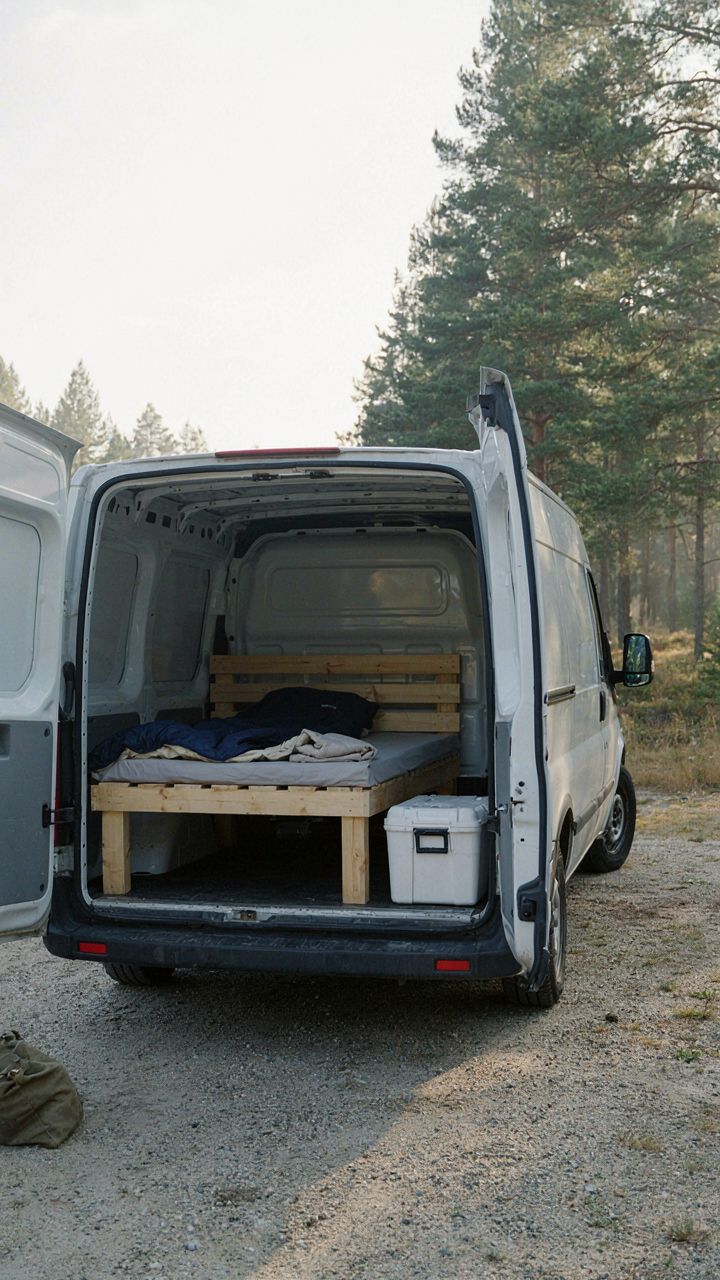
Most people don’t convert a van because they’re waiting for the perfect plan. They’re waiting for certainty that doesn’t exist. You already know what to do. Build a bed this weekend. Throw a cooler in the back. Take one trip. The conversion happens through doing, not thinking. Every successful van lifer you admire started exactly where you are right now, except they stopped planning and started driving. Your van becomes real the moment you stop treating it like a someday project.