The Illusion Of The Fixed Camper Restoration Budget

Why Initial Estimates Always Fail
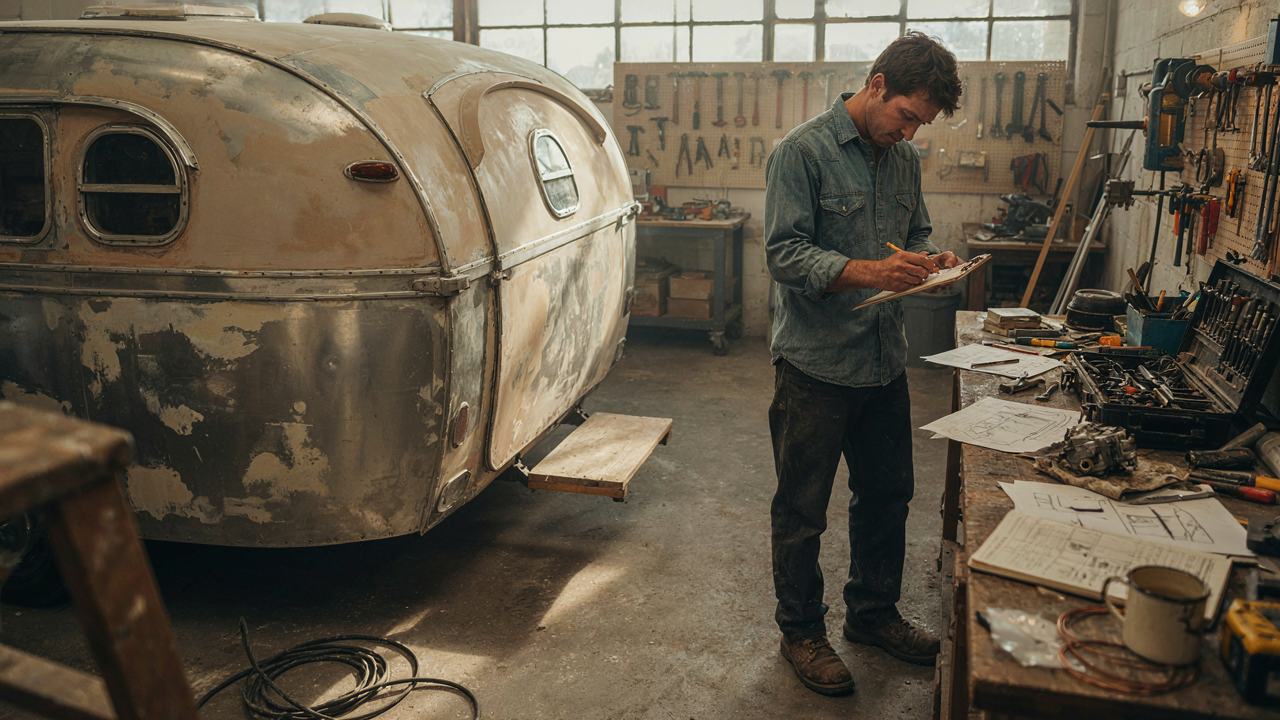
You want a number you can rely on so you don’t look foolish in front of your spouse or lender. The truth is harder: camper restoration budgets fail because you cannot predict what’s hidden inside the walls until you open them. A water-damaged floor panel looks fine from the outside. Once you cut into it, you discover rot that spreads through the frame. Your estimate was based on what you could see. The work expands into what you could not.
This is entropy from thermodynamics applied directly to restoration. Systems degrade unpredictably into disorder. You can estimate the visible damage. You cannot estimate the invisible damage until the visible damage is removed and inspected. Every layer you strip reveals new failures the previous owner covered or ignored. A realistic budget accounts for this by building in discovery costs, not by pretending initial estimates hold.
The Psychological Trap Of Sunk Costs
Common advice tells you to “stick to your budget” or “cut costs by doing it yourself.” This is useless because it ignores how your brain works under financial pressure. Once you’ve spent ten thousand dollars on a camper restoration, you feel compelled to finish it even if hidden rot means another fifteen thousand. Economists call this the sunk cost fallacy. You chase losses because the money already spent feels like a reason to throw more money after it.
The mechanism works like this: you stop evaluating the project on its actual merits and start evaluating it on what you’ve already lost. You tell yourself “I’ve come this far, I might as well finish.” This decision-making logic is backwards. What you spent is gone. Only future costs and actual value matter now. The only decision is whether spending the next dollar makes sense. Document each discovery phase separately so you can quit without emotional resistance if the project becomes uneconomical.
The Financial Flux Protocol: Embracing Variable Costs

Structural Integrity Before Aesthetics

You want to believe your camper’s bones are fine because admitting otherwise means debt you didn’t budget for. Here’s the mechanism: cosmetic work is reversible. Structural failure is not. In economics, this is called sunk cost protection—you protect the foundation before you decorate the surface. A leaking roof destroys plywood. Rotted floor joists collapse under weight. Both demand immediate capital before anything else gets touched.
Most first-timers reverse this priority. They see faded paint, worn upholstery, and think restoration means making it look new. This is backwards. Inspect the frame, tanks, seals, and floor first. Get a moisture meter. Look for soft spots in the subfloor. If water has penetrated the structure, that expense is non-negotiable. You cannot cosmetically fix what’s rotting underneath.
The Real Math On Surprises
The 80/20 rule borrowed from systems thinking applies directly here: 80 percent of your overruns will come from 20 percent of the problems you didn’t see. You budgeted for new curtains and flooring. You didn’t budget for the fact that removing old cabinetry reveals black mold in the wall cavity, or that the fresh water tank has pinhole leaks only visible after you drain it completely.
Every restoration has a hidden layer. Under the linoleum sits particle board swollen from decades of moisture. Behind the cabinets lives corroded wiring or failed plumbing joints. Budget 30 to 40 percent above your structural assessment estimate for what you’ll find once you start opening walls. Document everything with photos before demolition begins. This is not paranoia—this is how you stop surprises from becoming financial disasters.
Opportunity Cost Arbitrage In Small RV Camper Remodel DIY Ideas

Your Labor Has A Price You’re Ignoring

You think DIY saves money because you’re not writing a contractor check. That’s denial. Economics calls this opportunity cost, and it’s the real cost of your restoration budget. Every hour spent fixing cabinetry is an hour not spent earning or building something else. Most first-time owners refuse to calculate this because the answer is uncomfortable. The mechanism is simple: if your time generates income or value elsewhere, spending it on low-skill camper work destroys money, not saves it.
The split between DIY and delegation isn’t about difficulty. It’s about what pays better. Delegate work that requires specialized licensing or tools you’ll use once: plumbing, electrical, structural welding. These jobs demand precision and carry liability weight. Keep work that builds your skill or uses tools you already own: painting, cabinet refinishing, upholstery, layout design. Your restoration budget shrinks when you stop treating labor as free and start treating it as traded capital.
Salvage Materials As Inventory Arbitrage
Sourcing used components isn’t recycling. It’s buying at wholesale and reselling to yourself at retail. This works because RV parts markets are fragmented and information-asymmetric. A used window from a 1978 Airstream might cost $40 at a salvage yard but $180 new from a distributor. The gap exists because most buyers don’t hunt. Salvage yards, Facebook Marketplace dealer clearouts, and estate sales move inventory they don’t want to store. You collect it before anyone else recognizes the value.
The protocol: before buying new, search for the part used with three specific criteria: condition, era match, and core compatibility. A laminate countertop from a similar-generation camper saves fabrication time and money over custom work. Interior trim, cabinet frames, and hardware absorb reuse well. Avoid structural components, water systems, and wiring from unknown salvage unless you inspect them directly. Build a sourcing routine before the project starts, not during it. Start with local RV graveyards, then expand to online inventory. Your restoration budget gets controlled by what you find, not what you need.
The “Anti Fragile” Budget: Building Redundancy, Not Rigidity

Financial Buffer Zones Protect Against Reality

You want to feel in control. The real mechanism is that camper restoration projects deteriorate faster than you estimate because hidden damage compounds. Borrowing from engineering, “redundancy” means building slack into your system so one failure doesn’t cascade into collapse. Your camper restoration budget needs the same principle. Most first-timers allocate 10-15% contingency and call it done. That’s insufficient. You need 25-35% minimum because discovery always happens mid-project.
The math is straightforward. If your estimate totals $15,000, your actual contingency floor sits at $3,750 to $5,250. This isn’t pessimism. This is accounting for roof penetrations you didn’t see from ground level, structural rot hidden behind panels, electrical systems that fail once power flows again, and plumbing that was never code-compliant. Restoration reveals what was concealed. Build your contingency as a mandatory line item before you spend the first dollar, not as an afterthought.
Stress Testing Exposes Your Real Limit
Run the worst-case scenario backward from your total available capital. If you have $20,000 to spend, assume $5,000 goes to contingency immediately. That leaves $15,000 for planned work. Now double the material costs you quoted. Ask yourself if you can still close the project or if you’d be stuck mid-restoration with a gutted camper and no funds to finish. This is stress testing your budget against reality.
Most owners discover their actual limit only after hitting it. The real protocol is simpler: identify your true maximum spend, subtract 25-35% for contingency, and build your scope around what remains. If the numbers don’t work, scale back the project scope before you start. A fully completed, limited restoration beats an incomplete ambitious one. This is how you avoid financing traps or abandoning a half-restored camper in your driveway.
The “Iterative Refinement” Method For Travel Trailer Remodel DIY

Start Small, Then Adjust The Plan

You want to feel like you have control before you start spending. Here’s the mechanism: most first-timers budget as if they’re ordering from a catalog, then reality hits and they panic. The smarter move is to treat your budget like a feedback loop from physics. You gather data from the first phase, measure actual cost against estimate, then recalibrate. Don’t budget the entire project upfront as a fixed number.
Start with one discrete system: plumbing, flooring, or cabinetry. Set a hard spending cap for that phase, complete it entirely, document every cost, and only then forecast the remaining work. Your first estimate will be wrong. That’s not failure, that’s calibration. The gap between what you thought and what happened becomes your adjustment factor for phases two and three.
Learn The Cost Overrun Pattern Early
The common advice says “add 20 percent contingency.” That’s incomplete. Overruns don’t happen randomly. They cluster around unknowns you reveal only after opening walls or removing fixtures. A water-damaged subfloor beneath vinyl isn’t visible until you pull it up. Rotted framing behind a cabinet doesn’t show until you start demolition.
Track where every overrun occurred in phase one. Was it hidden damage? Supplier delays? Your own underestimate of labor hours? Build a lookup table. If hidden damage consumed 40 percent of your overruns, reserve accordingly in phase two. If labor underestimation was the culprit, adjust your hourly assumptions. You’re not padding the budget with vague percentages. You’re embedding what you actually learned into the next phase’s forecast.
Value Engineering Your Camper Remodel DIY: Beyond Just “Cheap”
Durability Over Discount Thinking

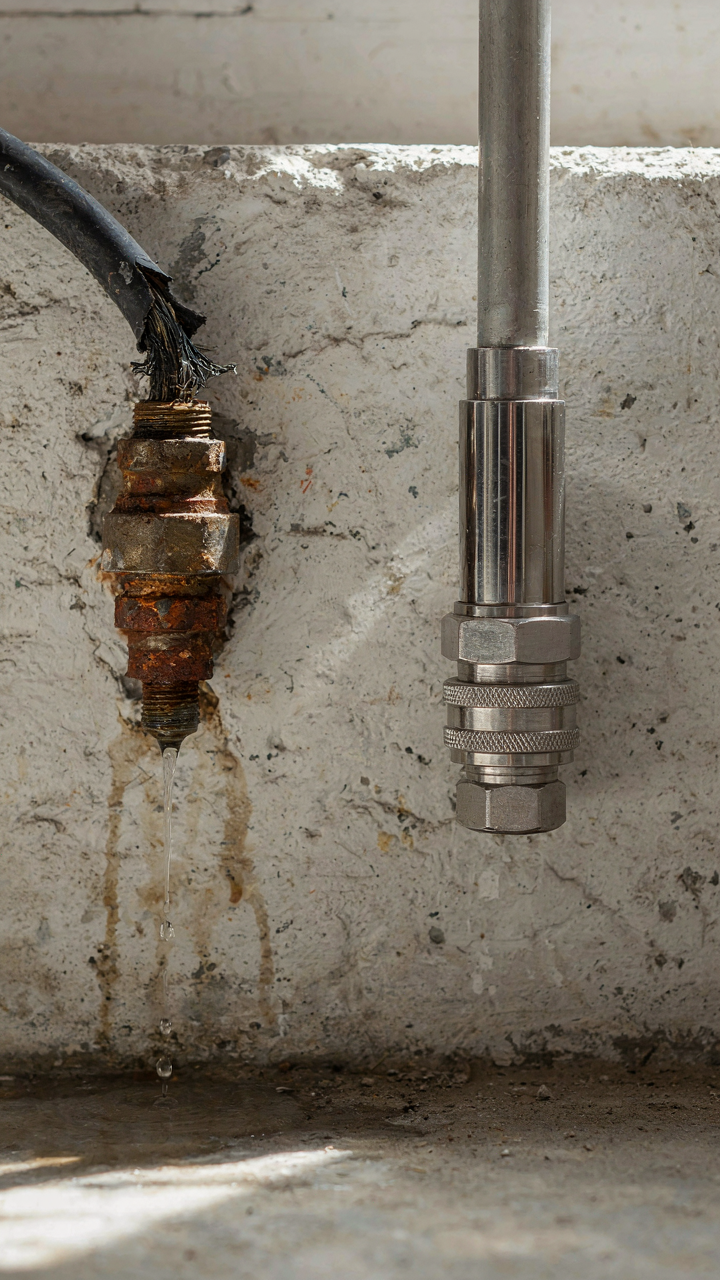
You want to feel smart about spending less, but cheap decisions today become expensive problems tomorrow. Think in terms of supply chain economics: the lowest-cost component is rarely the lowest-cost-of-ownership. A fifty-dollar faucet fails in two seasons and forces a full reinstall. A hundred-fifty-dollar faucet runs for a decade. The math is not complicated, but the psychology is: saving upfront feels like a win until it doesn’t.
Materials that endure in a camper face specific pressures: constant vibration from road movement, moisture cycling in enclosed spaces, UV degradation through windows, and temperature swings that destroy mediocre seals. Marine-grade or RV-specific products cost more because they address these conditions. Generic home depot versions do not. Calculate total cost of ownership by adding replacement intervals and labor. Then decide.
The High Leverage Moves Nobody Names
Most first-timers spend their entire budget on visible things: paint, cabinets, upholstery. They starve the systems that actually fail. The real value play targets what breaks first and costs the most to fix later: roof sealing, floor structure, and plumbing isolation. These are unglamorous. They do not photograph well. They matter infinitely more than new countertops.
Start with a structural inspection that identifies soft spots in the floor and roof condition. Seal compromised areas before touching anything else. Replace corroded water lines with PEX tubing, not original copper. These moves prevent the category of problems that force you to abandon a project halfway through. You are not being frugal. You are removing variables that kill camper restorations.
The Hidden Currency: Your Skills And Network In Camper Renovation

Trading Labor For Cash Savings

You want to believe sweat equity gets you a discount. It doesn’t. What actually happens is you replace cash outflow with time and relationship capital, which has real value only if you structure the exchange correctly. Bartering works because both parties avoid the tax man and gain liquidity where they lacked it. In economics, this is called counterparty risk mitigation through non-monetary exchange.
Find contractors or specialists who need work done outside their wheelhouse. An RV electrician might need drywall patched. A carpenter might need welding. You offer your skill or labor directly in exchange for theirs, documented loosely or not at all. The trick is finding people who value your time at a rate that actually moves your budget needle. One unfair trade wastes weeks and leaves you broke anyway.
Learning Specific Skills Before Hiring Them Out
Most advice says “learn as you go.” Wrong. Learning mid-project costs you money through mistakes, rework, and time. Real budget savings come from pre-learning the high-cost, high-frequency repairs before you touch your camper. Mechanical aptitude isn’t magic. It’s pattern recognition trained through repetition on lower-stakes objects first.
Start with YouTube documentation, used repair manuals, and hands-on practice on donor parts or similar campers before your restoration. RV-specific skills with the highest return: water system repair, basic electrical troubleshooting, slide-out mechanics, and appliance troubleshooting. Learn plumbing and HVAC work cuts your labor costs by 40-60 percent. You don’t need mastery. You need enough competence to handle 70 percent of issues yourself and know when to call a specialist.
The Asset Vs Expense Framework For RV Remodel
What Actually Holds Resale Value

You want to believe your restoration will pay for itself. It won’t. But some moves preserve equity while others evaporate money. This distinction comes from accounting’s capital asset principle: a capital improvement increases the underlying value of the property, while an expense consumes value immediately. Most first-time restorers treat both identically, then wonder why their camper sells for less than they spent.
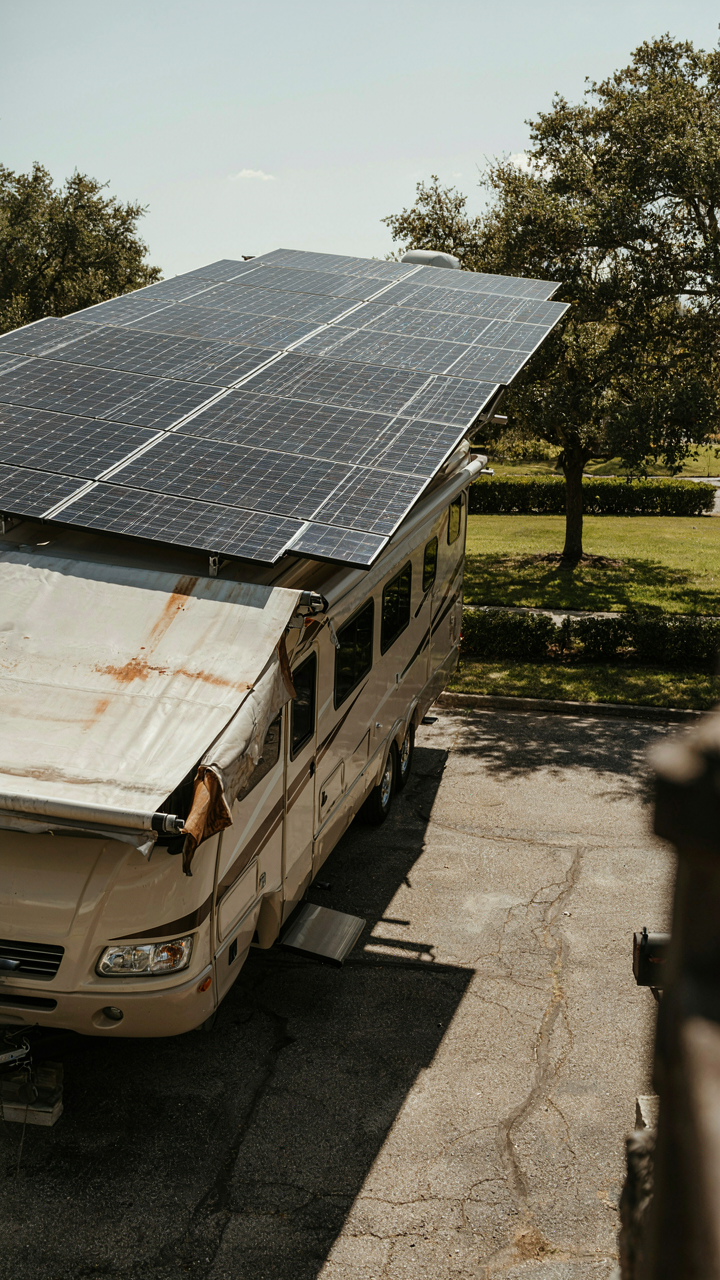
Structural repairs, functional system overhauls, and aesthetic work that matches market expectations are assets. A new roof, rewired electrical, fresh plumbing, rebuilt appliances—buyers expect these and will pay for them. Cosmetic customization—custom paint, boutique fixtures, personal design choices—functions as an expense. You enjoy it during ownership. The buyer doesn’t pay extra for your taste. Distinguish between what the market demands and what you prefer.
The Real Resale Math
Camper resale values reset based on age, mechanical condition, and market availability, not your labor or emotional investment. A 1985 Airstream in perfect condition sells at roughly 40-50 percent of what a comparable 2010 model commands, regardless of how much you spent on restoration. Older vintage models operate under different market logic than newer RVs. They compete on authenticity and novelty, not utility. Newer campers compete on function and reliability first.
Before budgeting a penny, research completed sales of the exact model year you’re restoring. Check RV market databases, dealer inventory pricing, and private listings from the past six months. Calculate the gap between your projected restoration cost and the likely sale price. If the gap exceeds 25 percent of final value, you’re funding a hobby, not an investment. This isn’t pessimism—it’s the actual mechanism of depreciation and market saturation that governs RV pricing.
The Only Real Budget Mistake Is Believing It’s About Money, Not Mastery
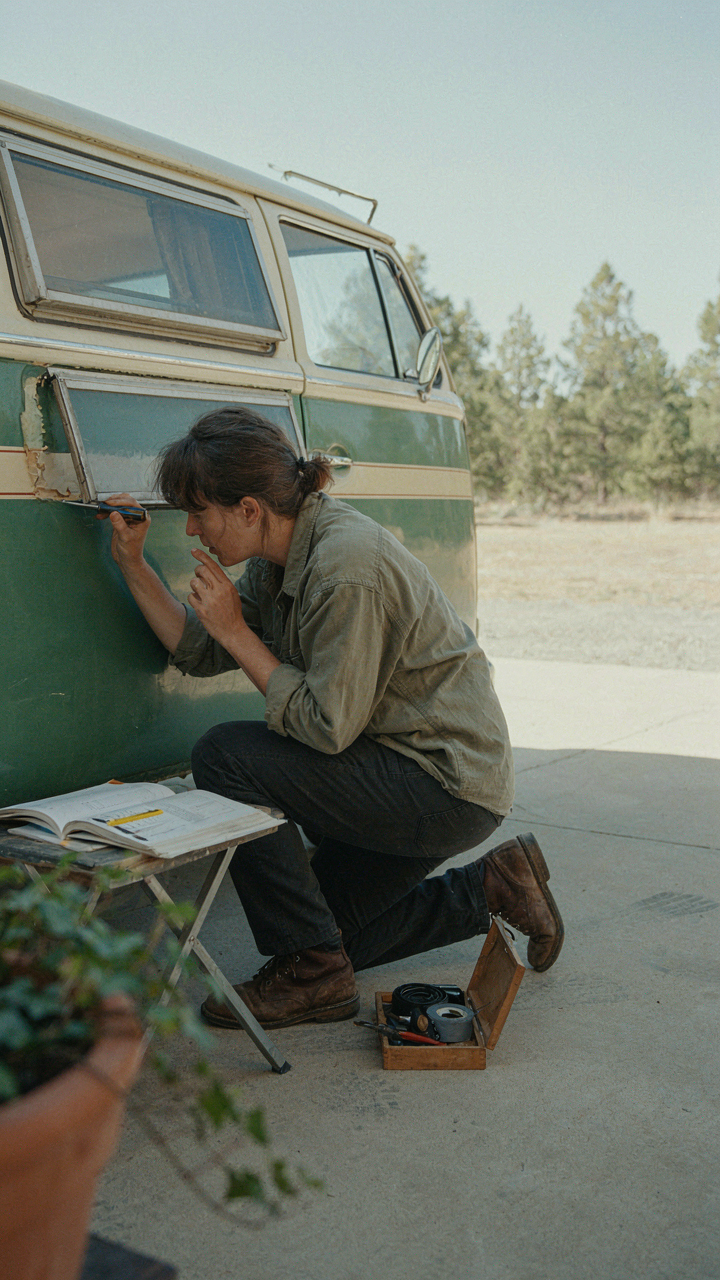

Most first-timers blow their camper budget because they chase lowest prices instead of understanding what they’re actually fixing. You don’t need more money. You need to walk through your camper today, write down what breaks you, and price three quotes for each problem. That single act kills fantasy budgets and builds real ones. Stop planning. Start pricing. Your budget isn’t a number you guess at. It’s intelligence you gather.