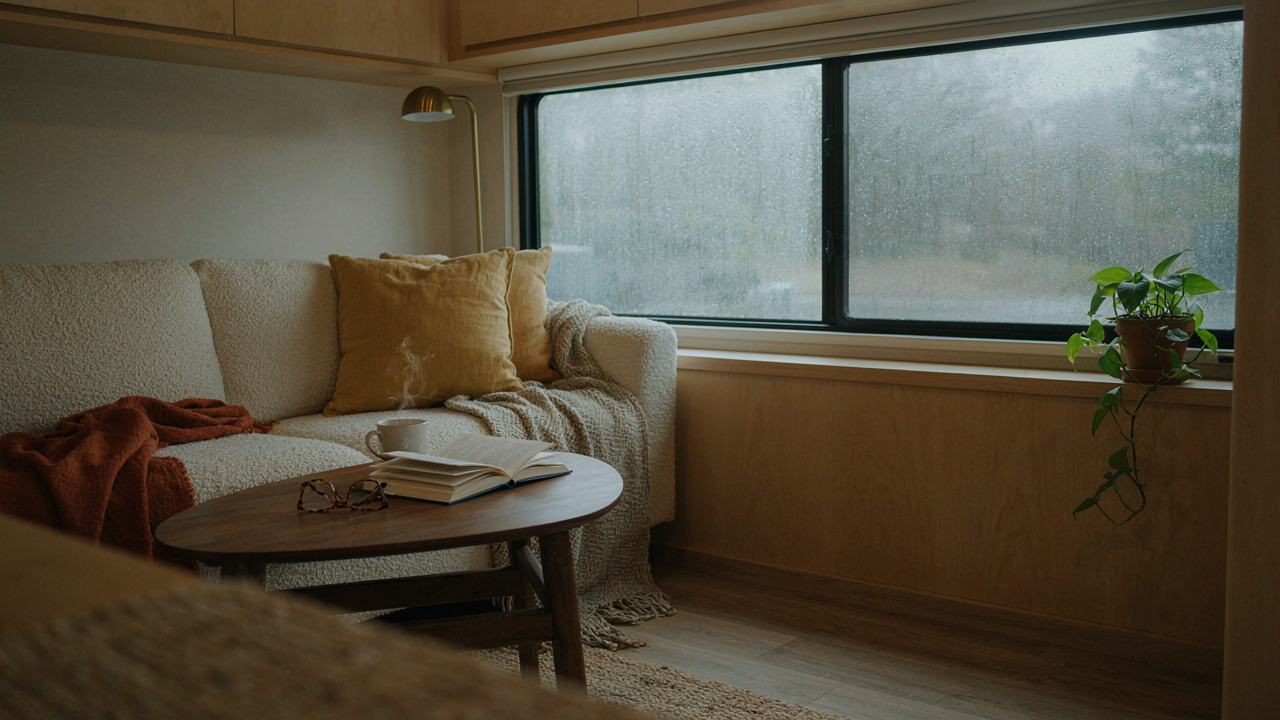
The Minimalism Mandate: Unlocking True RV Coziness
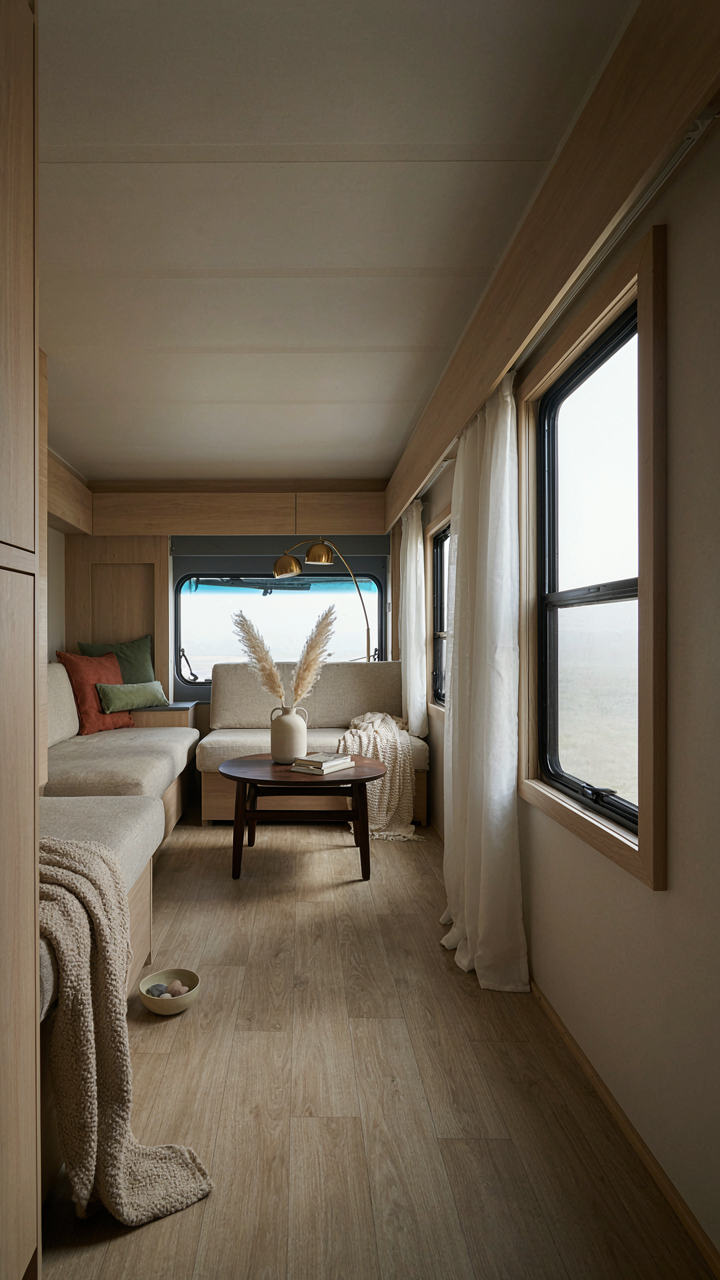
Ruthless Decluttering For Functional Space
You’re hoping that owning less stuff will somehow make you feel more in control, but the real mechanism is simpler: constraint forces intentionality. In an RV, square footage is fixed. Every object you keep occupies cubic inches that could absorb sound, create visual breathing room, or give you actual floor space to move through on a rainy day. Most people declutter by asking “do I use this?” The wrong question. Ask instead: “does this object earn its footprint by either serving function or creating the specific mood I want right now?”
The common advice here is garbage. Minimalism doesn’t mean stark or cold. It means every visible item pulls weight. A throw blanket isn’t decoration if you use it on rainy days. A side table isn’t filler if it holds your drink and book simultaneously. Remove the items that sit untouched for weeks: the decorative basket collecting dust, the chair you never sit in, the throw pillows that just migrate across the couch. Physical clutter depletes mental resources faster in small spaces. Once you’ve removed it, rainy day comfort scales immediately because your brain isn’t processing visual noise while you’re trying to relax.
Multi Functional Furniture: Every Inch Earned
Borrowing from industrial engineering, think of your RV living room as a closed system where redundancy is waste. Each piece of furniture must serve at least two distinct purposes or it’s stealing space. A storage ottoman isn’t seating that happens to store things. It’s a storage unit that happens to be comfortable. An armrest with built-in side storage isn’t a nice bonus. It’s the primary reason that armrest exists. A coffee table that raises or lowers isn’t versatile furniture. It’s a single piece that transforms your entire living room’s functionality between relaxation mode and workspace mode.
Standard RV furniture is engineered for survival, not for rainy day comfort. Upgrade or add specific pieces: a sofa with deep storage beneath, a nesting table set that collapses into half the footprint, wall-mounted shelving that replaces floor-standing units. The goal isn’t to fill the room with clever products. It’s to eliminate the choice between comfort and function. On rainy days when you’re confined, furniture that forces tradeoffs breeds resentment. Start by measuring your longest daily activity (reading, working, watching) and then buy one piece that serves that activity while simultaneously handling storage or another function you currently solve elsewhere in the RV.
The Weatherproofed Interior Protocol: Beyond Basic Insulation
Sound Dampening Kills The Anxiety You Won’t Admit

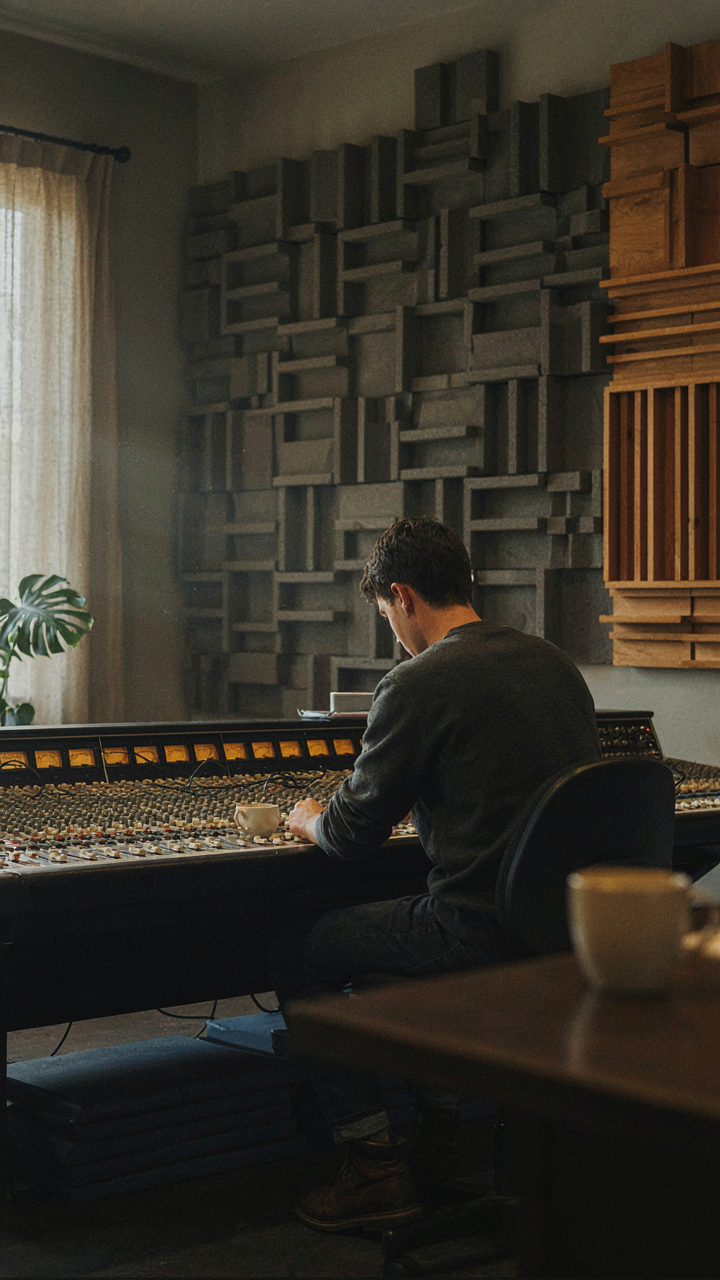
You want peace during rainy days because rain noise triggers a subconscious stress response you can’t control. Sound dampening in an RV works on the same principle as acoustic engineering in studios: absorb vibrations before they travel through solid surfaces. Standard RV walls transmit rain impact directly into the living space because they’re thin aluminum shells over minimal insulation. This isn’t a comfort issue. It’s a control issue.
The mechanism is straightforward. Rain hitting metal surfaces creates vibrations that travel through studs and frame members into your living area. Soft materials interrupt this transmission chain. Add mass-loaded vinyl behind wall panels, use rockwool batts between studs during construction or renovation, and layer fabric wall coverings in high-impact zones like above and around windows. The goal isn’t silence. It’s reducing perceived threat. A rainy day should feel enclosed, not under siege.
Humidity Control Stops The Damp Chill Before It Starts
Most RV owners treat humidity as a comfort problem when it’s actually a structural and health problem. Moisture accumulation damages wood framing, promotes mold growth, and creates the exact cold sensation you’re trying to escape on rainy days. The physics is simple: warm, moist air hits cool surfaces and deposits water. Your living room becomes a condensation trap because it’s the largest volume space with the most window surface.
Ventilation and active dehumidification are the two levers. Install a roof vent with a moisture sensor that activates automatically when humidity exceeds 55 percent. Run your RV’s furnace fan on low during rainy periods to circulate air across interior surfaces, preventing pooling. A portable dehumidifier pulling water from the air costs 200-400 dollars and pays for itself by preventing wood rot and mold remediation. The protocol: measure humidity with a digital hygrometer, set your target at 40-50 percent, and let mechanical systems maintain it rather than hoping ventilation alone solves it.
Lighting As Mood Control: The RV Interior Blueprint

Layered Lighting For Adaptive Ambiance

You want this section to work because bad lighting makes your RV feel like a prison, and you know it. The mechanism is simple: lighting isn’t decoration. It’s the control layer between your nervous system and your environment. In architecture and neuroscience, this is called stimulus hierarchy, and in an RV, it means you stack three independent light sources so you never get trapped in a single mood you didn’t choose.
Most RV advice tells you to get “enough light.” Wrong. Enough light for what? Working? Sleeping? Decompressing on a rainy day? The standard ceiling fixture floods your space uniformly, which creates visual monotony and makes small spaces feel smaller. Instead, create zones: overhead for task work, accent lighting for depth perception, and low ambient light for wind-down hours. Each should have independent control so you don’t compromise one mood to achieve another.
Warm Vs Cool Tones: Psychological Impact
Color temperature drives circadian response, which neuroscience has mapped extensively. Warm light (2700K to 3000K) suppresses cortisol and signals your body toward rest. Cool light (4000K and above) triggers alertness. In an RV, this isn’t theoretical. You’re confined, and your body relies on environmental signals. A rainy day already dampens your mood. Adding cool blue-white light forces your brain into work mode when you need the opposite.
The standard mistake is installing one color temperature throughout. This collapses your ability to signal different behavioral states to your nervous system. Install warm dimmers in seating areas and near sleeping zones. Reserve cooler light for kitchens and work surfaces where task accuracy matters. The transition between them should feel intentional, not accidental. Test this: sit in your RV at 2800K for thirty minutes, then switch to 5000K. Your body knows the difference immediately.
Sensory Engineering: The RV Living Room Experience

Natural Elements Ground Nervous Systems

You want this space to feel intentional because small rooms expose your failure to design them. Here’s the mechanism: biomimicry works because your nervous system evolved in natural environments for 200,000 years and spent 200 years in boxes. When you introduce elements that mimic nature, your brain downregulates threat response. Wood, stone, water sounds, and low-level green plant life aren’t decorative choices—they’re neurological inputs that shift your baseline state from alert to calm.
RV living rooms demand this more than fixed homes because the space is compressed and bounded. A single living wood accent wall, river rocks in a shallow tray, or a small potted ficus become load-bearing psychological infrastructure. The mechanism isn’t that nature is pretty. It’s that your body recognizes survival signals embedded in natural textures and responds by reducing cortisol production. This happens whether you consciously notice it or not.
Texture Selection Beats Visual Design
Most RV living room advice focuses on color and layout. That’s incomplete. Tactile input bypasses visual processing and hits your sensory cortex faster. When you run your hand across linen, wool, or untreated wood, you send calming signals to your brain that a photograph cannot match. Rainy days trap you indoors with limited visual novelty, so texture becomes your primary sensory tool. Texture creates engagement without demanding active attention.
Layer materials intentionally: a wool throw over a linen sofa, a jute rug underfoot, wooden side tables, ceramic mugs for hot drinks. Each surface should register differently under your hand. This prevents the monotony that kills RV comfort—the sense that all surfaces feel identical and therefore invisible. The protocol is simple: touch every potential material before installation. If it doesn’t create a distinct tactile memory, replace it with something that does.
Small RV Living Room Ideas: The Ergonomic Advantage

Flow That Doesn’t Trap You
You want your RV to feel bigger than it is. That’s the real motive. The mechanism is flow—borrowed from architecture and traffic engineering, where flow measures how efficiently people move through space without friction or dead zones. In an RV, dead flow happens when furniture blocks sight lines or forces you to sidestep to reach the kitchen. Every piece you place either opens the path or closes it.
Start by mapping your entry and exit routes. The door should open into a clear line of sight. Nothing blocks the path to the galley, bedroom, or bathroom. Furniture should sit perpendicular or parallel to walls, never at angles that create awkward corners. A sectional that wraps the corner eats square footage and traps movement. A bench seat against one wall with a small table opposite creates an open corridor. The difference is measurable: you save three to five seconds per crossing, which compounds across dozens of daily movements.
Seating Built For The Space You Have
Most RV couch advice is wrong. People say maximize seating. That’s a mistake. In an RV under 35 feet, more seating kills usability. Form follows function means the seat must match how you actually sit in a moving vehicle. You need a base that anchors the room and one backup piece that moves or folds away.
A wall-mounted or bolted dinette converts to sleeping space and eliminates a dead couch. A reclinable captain’s chair rotates to face the television or table. A lap-belt friendly bench with removable cushions stacks vertically when guests leave. Choose fabric that handles spills and sunlight without fading or staining—solution-dyed olefin or leather-look vinyl withstands moisture and heat better than standard upholstery. Mount one seat firmly and keep the second piece lightweight. This forces intention into your seating choice instead of defaulting to oversized furniture that chokes movement.
The “Command Center” Approach: Rainy Day Productivity

Designated Workspaces, Not Just Tables

You want to feel productive on rainy days because sitting idle in an RV feels like money wasted. Here’s what actually matters: the RV living room command center uses the military principle of operational staging, where specific zones perform specific functions rather than one surface trying to do everything. A table that doubles as dining, workspace, and storage fails at all three.
The real constraint in an RV is that your living room isn’t separate from your bedroom, kitchen, or hallway. You can’t build walls. So you build friction instead. Place your work materials (laptop, notebook, charger) in a storage caddy that lives under a specific seat or in a fixed cabinet. When you’re done working, that caddy closes and leaves the room visually clear. Your brain treats the space differently when work isn’t bleeding into relaxation territory.
Declutter The Unseen Layer
Most advice says organize your cables and apps, which is technically true but misses the actual problem: digital chaos sabotages focus more than physical mess does. Your RV living room command center fails if your laptop desktop is a graveyard of tabs, downloads, and notifications. You can have the perfect desk setup and still lose two hours to context-switching.
Spend one hour before rainy season even starts. Close all browser tabs except your work project. Create a single folder on your desktop labeled with the date and work type. Move every file into systems, not into “Documents” limbo. Delete apps you don’t use weekly. Turn off notifications except for one channel. The command center that works is the one where you open your laptop and start working in under 30 seconds, not the one where you spend 15 minutes finding your document and remembering what you were doing.
RV Decor Ideas: Purposeful Aesthetics

Keep It Minimal, Make It Count

You want your RV living room to feel intentional, not like you’re compensating for limited space with stuff. The real mechanism here is constraint forcing decision-making. In an RV, you cannot hide clutter behind closed doors or push it to another room. Every object either serves function or creates visual noise.
Start by identifying what actually matters to you, then build around that. A single piece of art you genuinely like beats five generic prints. One throw blanket beats a stack of them. One good lamp beats ambient lighting everywhere. The space works because nothing is accidental. Remove items that don’t earn their square footage through use or meaning.
The Color Trap: Stop Painting Everything Neutral
Color psychology treats hue as a direct input to emotional output, but most RV owners get it backwards. They think beige walls equal calm and therefore pick beige. Wrong. Beige actually signals resignation, not peace. The mechanism works through contrast and intention, not through statistical mood studies you’ve never verified.
Rainy days benefit from color that breaks monotony, not erases it. Deep greens work because they exist in nature and feel grounding without demanding attention. Warm grays hold more character than pure neutrals. Navy in small doses creates depth. The point is choosing colors that serve the specific atmosphere you want on day four of rain, then building textiles and furniture around that choice, not despite it.
Camper Living Room Ideas: Maximizing Small Spaces
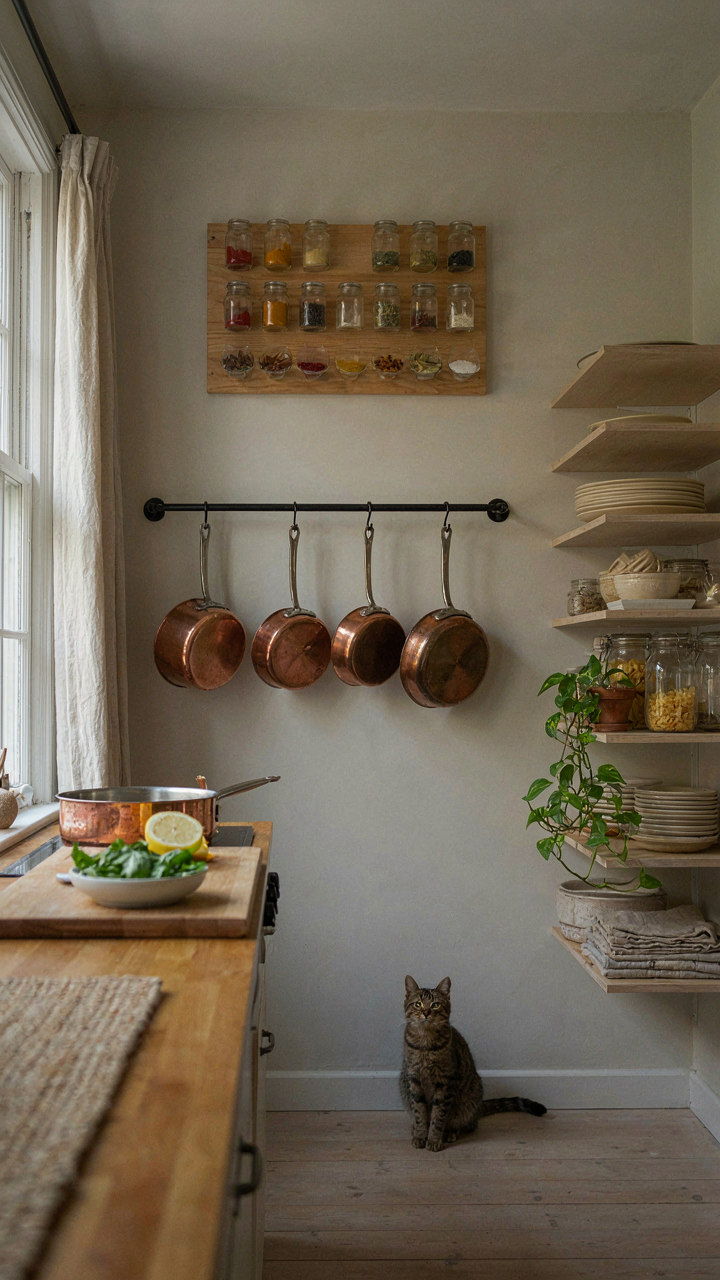
Wall Storage That Actually Works

You want to feel like you have space without admitting you’re living in a box. The real mechanism is this: gravity doesn’t care about your square footage. Wall storage takes the problem off the floor and moves it vertically, which is the only dimension RVs give you in abundance.
Install shallow shelving 12 to 16 inches deep along walls above seating. This depth range keeps items accessible without creating a cave effect. Secure everything with brackets rated for RV vibration. Mount shelves at eye level when seated to create visual balance and easy reach without requiring you to stand constantly.
Use magnetic strips for metal items, tension rods inside cabinets for hanging gear, and adhesive hooks for lightweight textiles. The goal isn’t aesthetic arrangement. The goal is moving weight off surfaces where you sit and live. Each vertical inch of wall space you claim back gives you psychological and functional room to breathe in a 200-square-foot footprint.
Living Zones Within One Room
Most advice says “define areas with rugs and furniture angles” as if those tricks create actual separation. They don’t. What works is functional zoning through furniture placement that serves two purposes simultaneously, borrowed from architecture’s concept of load bearing. Your sofa doesn’t just seat people. It also acts as a boundary.
Position your dinette perpendicular to your seating area rather than parallel or facing. This creates visual separation and forces traffic patterns that prevent the living room from feeling like a hallway. A console table or low storage unit behind the sofa acts as a spatial divider while providing functional storage or a work surface. The placement matters more than the object.

Use lighting to reinforce zones. Overhead lights flatten a space and merge all zones visually. Install task lighting over your dinette, ambient lighting behind seating, and keep them on separate switches. When you turn on only your seating lights at night, your brain registers that zone as distinct and intentional. Separate circuits create separate rooms psychologically.
The Cozy Trap: Your RV’s Living Room Is A Function Of Deliberate Design, Not Accidental Accumulation
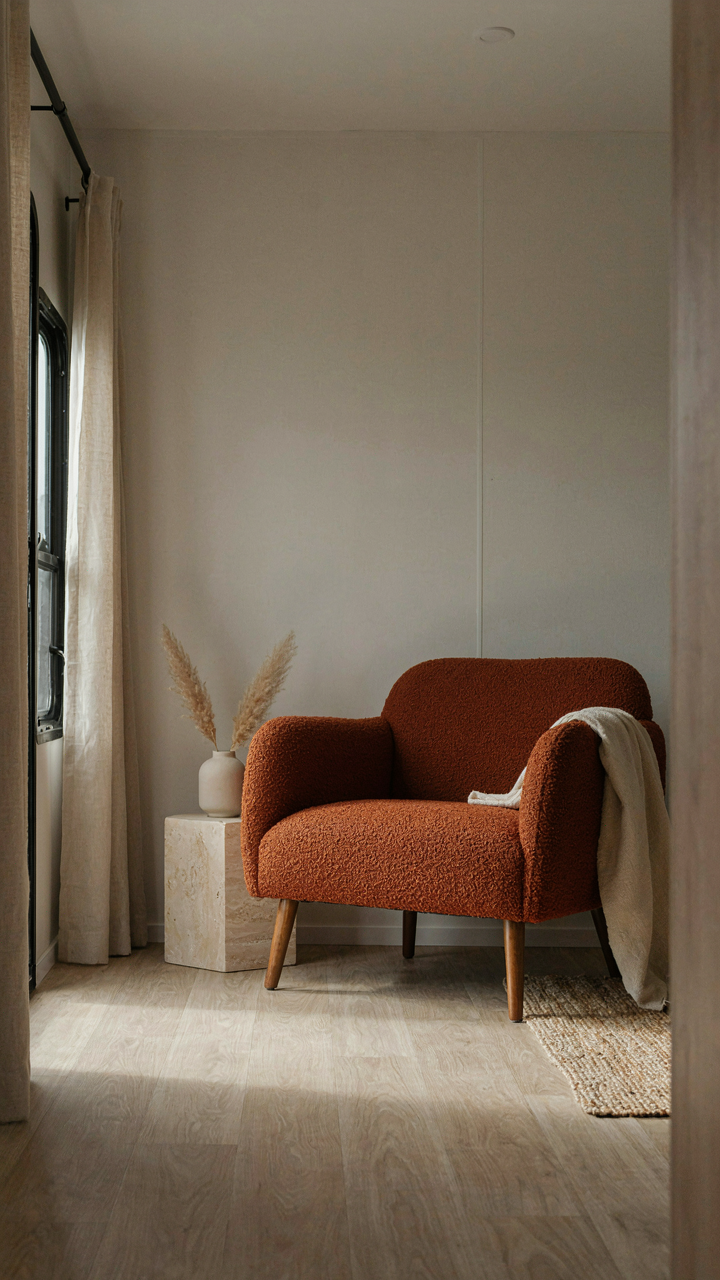
Most people fill their RV living rooms with stuff and call it cozy. You won’t. Pick one element today—lighting, seating, or texture—and upgrade it with intention. Remove something that doesn’t earn its weight. Your RV’s comfort isn’t about owning more. It’s about owning what actually works. A thoughtfully designed small space beats a cluttered mansion every time.